Centered nighttime view along Dotonbori Canal between neon-lined promenades.

Osaka

Osaka Osaka developed as an important commercial center during Japan’s early modern period, benefiting from its location along major transportation routes connecting inland regions with coastal trade networks. The city became known for its merchant culture and economic activity associated with domestic and international exchange. Urban development reflects the influence of both feudal governance and […]

Explore Portfolio
Low-angle view of Himeji Castle’s white keep above steep stone ramparts and autumn foliage.

Himeji Castle

Himeji Castle Himeji Castle is one of the best-preserved examples of Japanese feudal architecture, originally constructed in the fourteenth century and expanded during the early modern period. The castle’s defensive design reflects strategic considerations associated with political consolidation during Japan’s feudal era. Its white exterior earned it the nickname “White Heron Castle.” The complex includes […]

Explore Portfolio
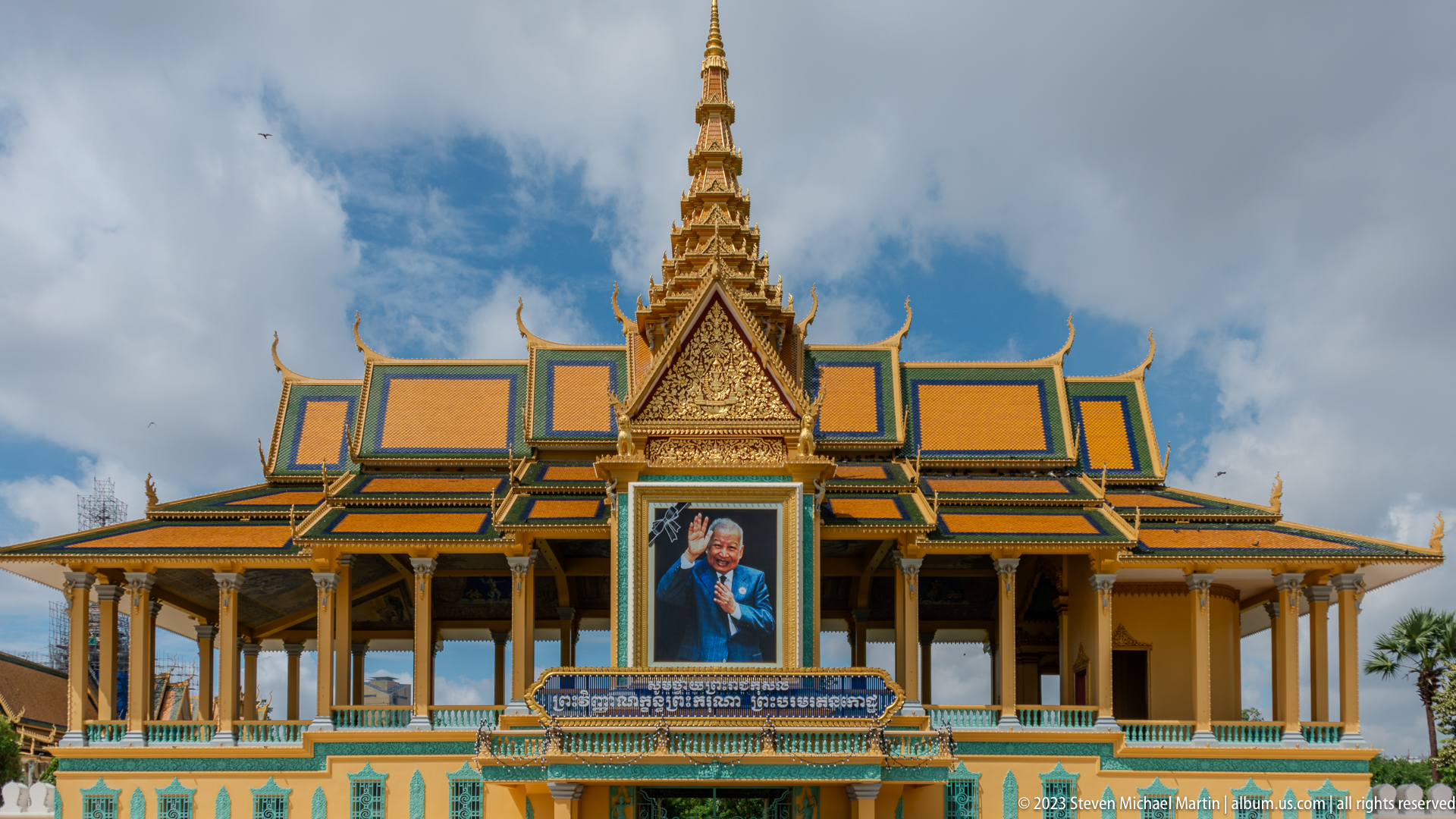
Royal pavilion with ornate Khmer roof, central spire, balcony, and a large portrait of King Norodom Sihamoni.

Royal Palace of Cambodia

Royal Palace of Cambodia The Royal Palace of Cambodia in Phnom Penh serves as the official residence of the Cambodian monarch and reflects architectural traditions associated with Khmer royal design. Constructed in the nineteenth century, the complex incorporates decorative elements influenced by classical Angkorian motifs. The palace illustrates the continuation of ceremonial architecture connected to […]

Explore Portfolio
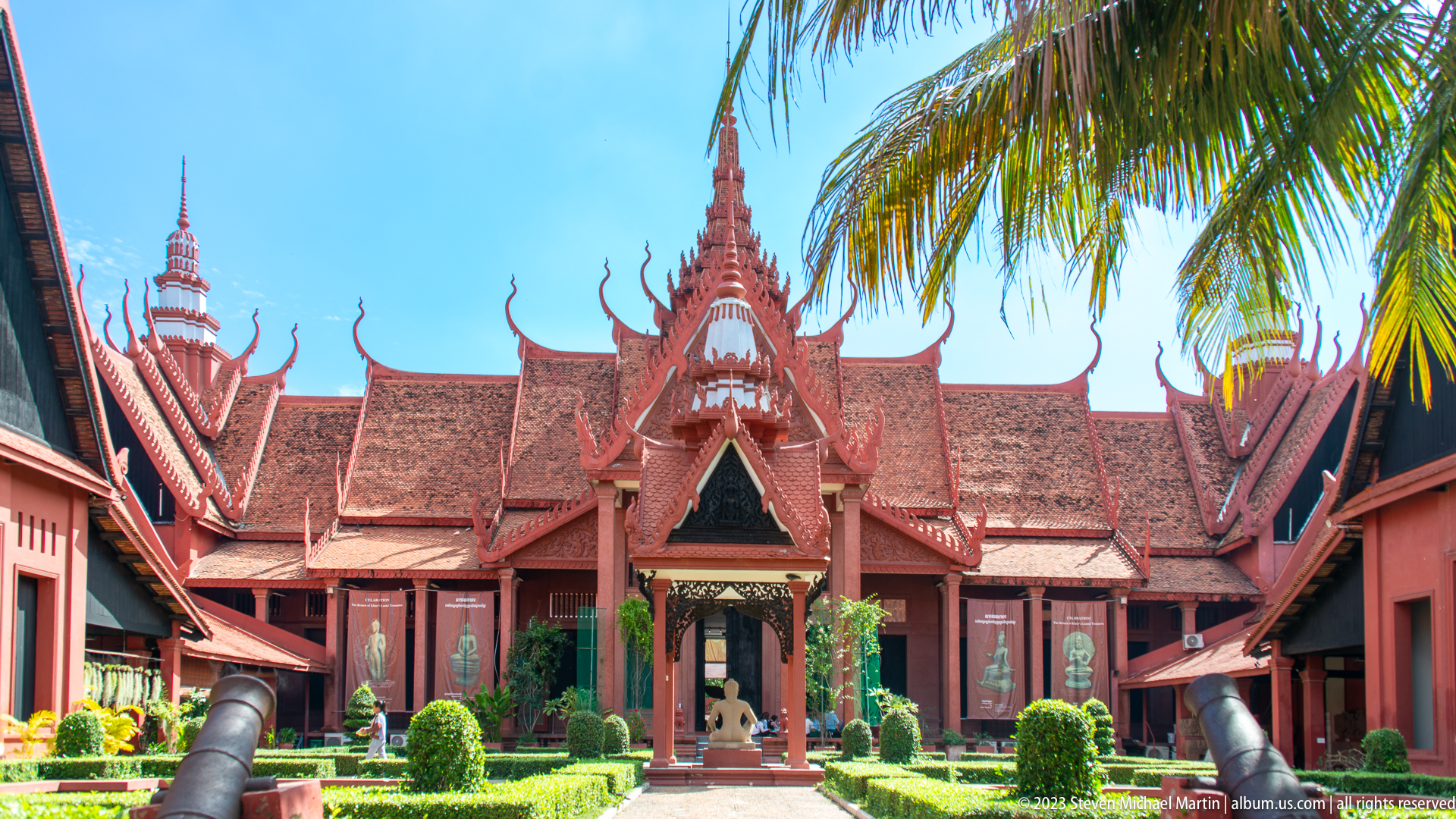
Formal museum entrance court with layered Khmer-style roofs, clipped hedges, central pavilion, and paired cannon.

National Museum of Cambodia

National Museum of Cambodia The National Museum of Cambodia houses one of the most significant collections of Khmer art and sculpture spanning more than a millennium of history. The museum’s architecture incorporates traditional Khmer design elements reflecting regional artistic heritage. Its collections provide important context for understanding the development of Angkorian civilization. Artifacts include stone […]

Explore Portfolio
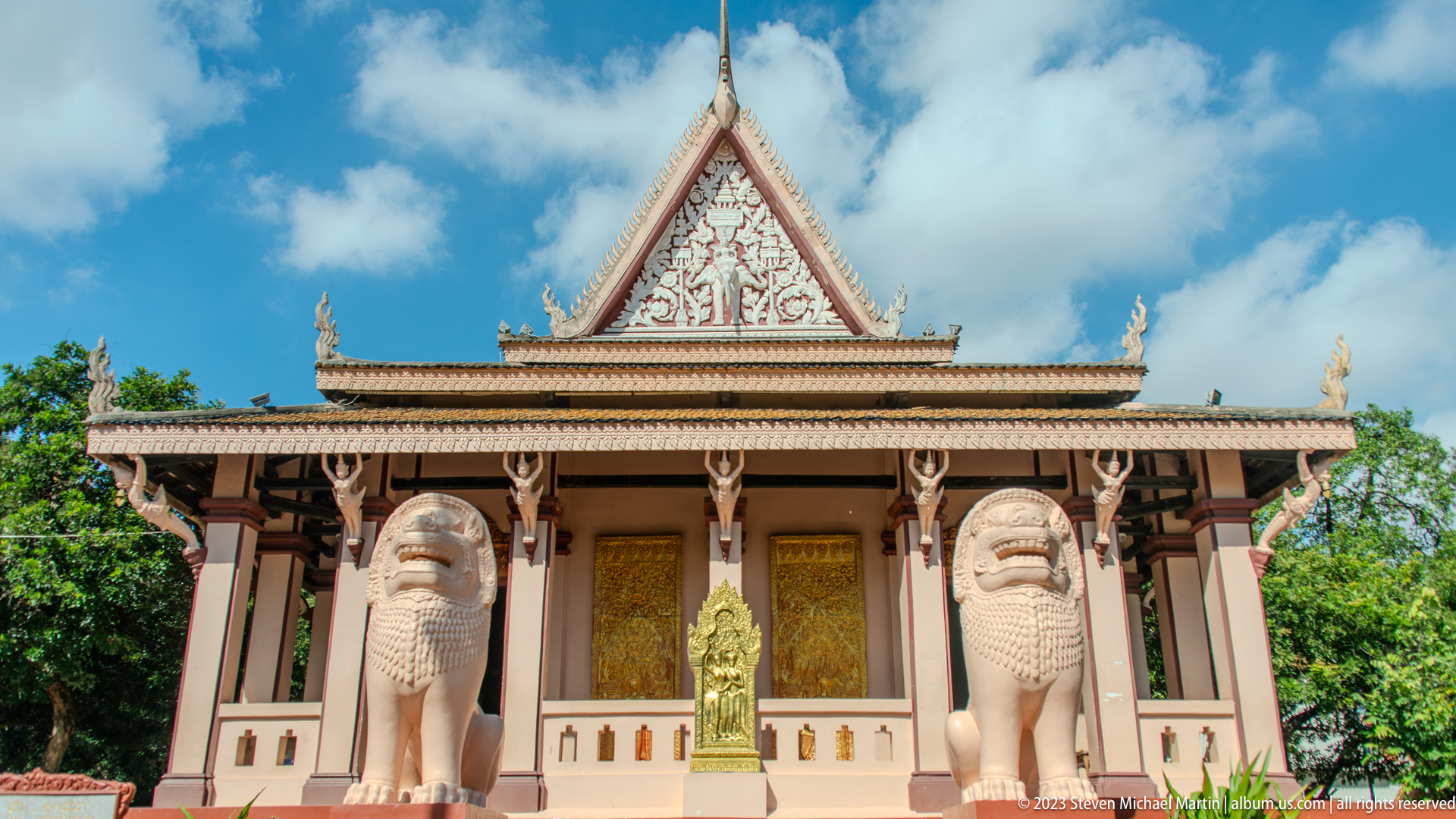
Front façade of Wat Phnom temple with decorated gable, columns, gilded doors, and paired guardian lions.

Phnom Penh

Phnom Penh Phnom Penh developed as the political and cultural capital of Cambodia and is located at the confluence of the Mekong and Tonle Sap rivers. The city’s position along major waterways contributed to its importance as a commercial and administrative center. Its historical development reflects both indigenous Khmer traditions and French colonial influence. Colonial-era […]

Explore Portfolio
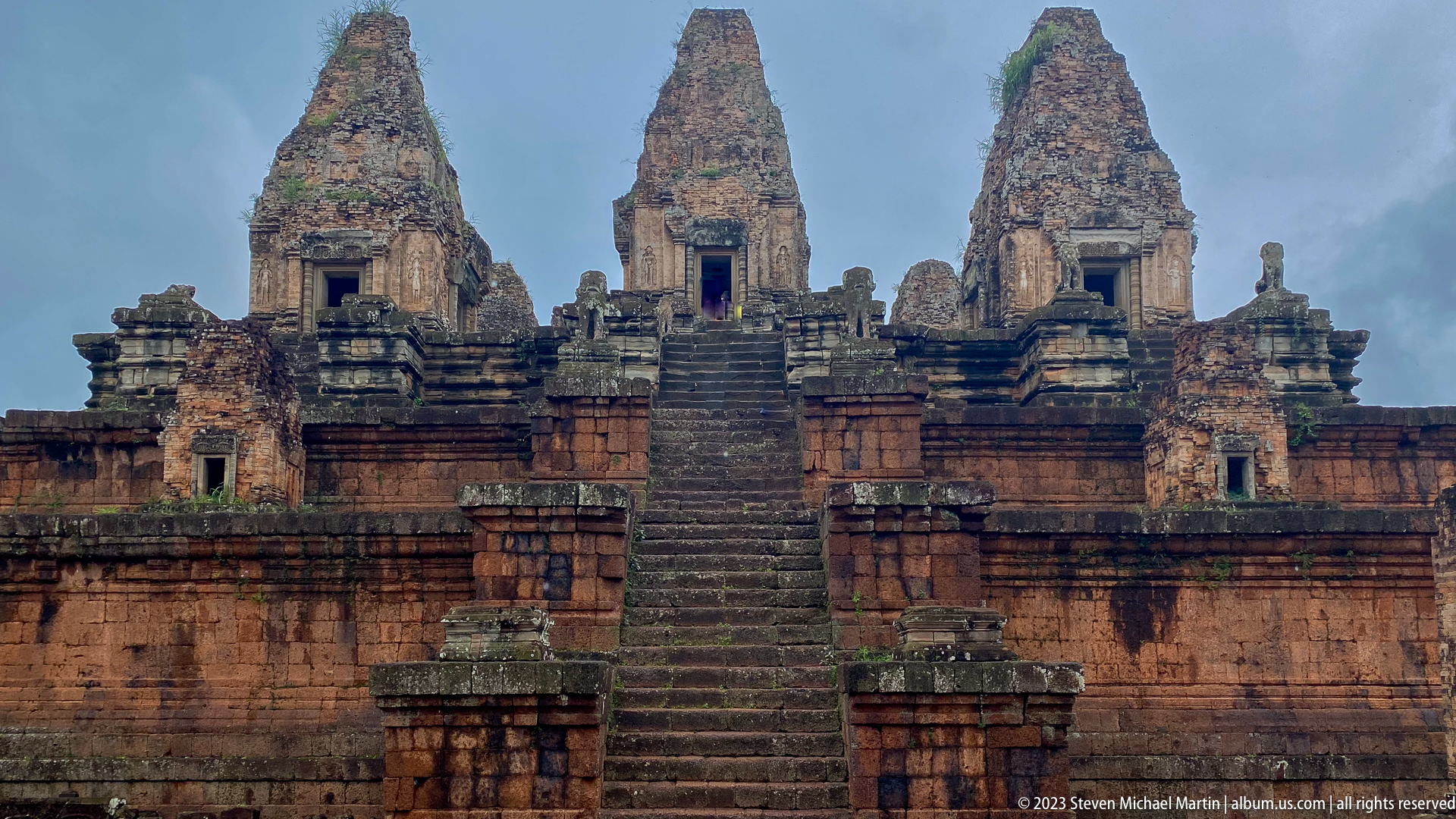
Wide frontal view of Pre Rup’s central staircase and three brick towers beneath a dark sky.

Pre Rup

Pre Rup Pre Rup is a tenth-century temple constructed during the reign of King Rajendravarman and dedicated primarily to the Hindu god Shiva. The temple is built as a stepped pyramid, symbolically representing Mount Meru, the sacred center of the universe in Hindu cosmology. Its elevated terraces and symmetrical design reflect architectural principles associated with […]

Explore Portfolio
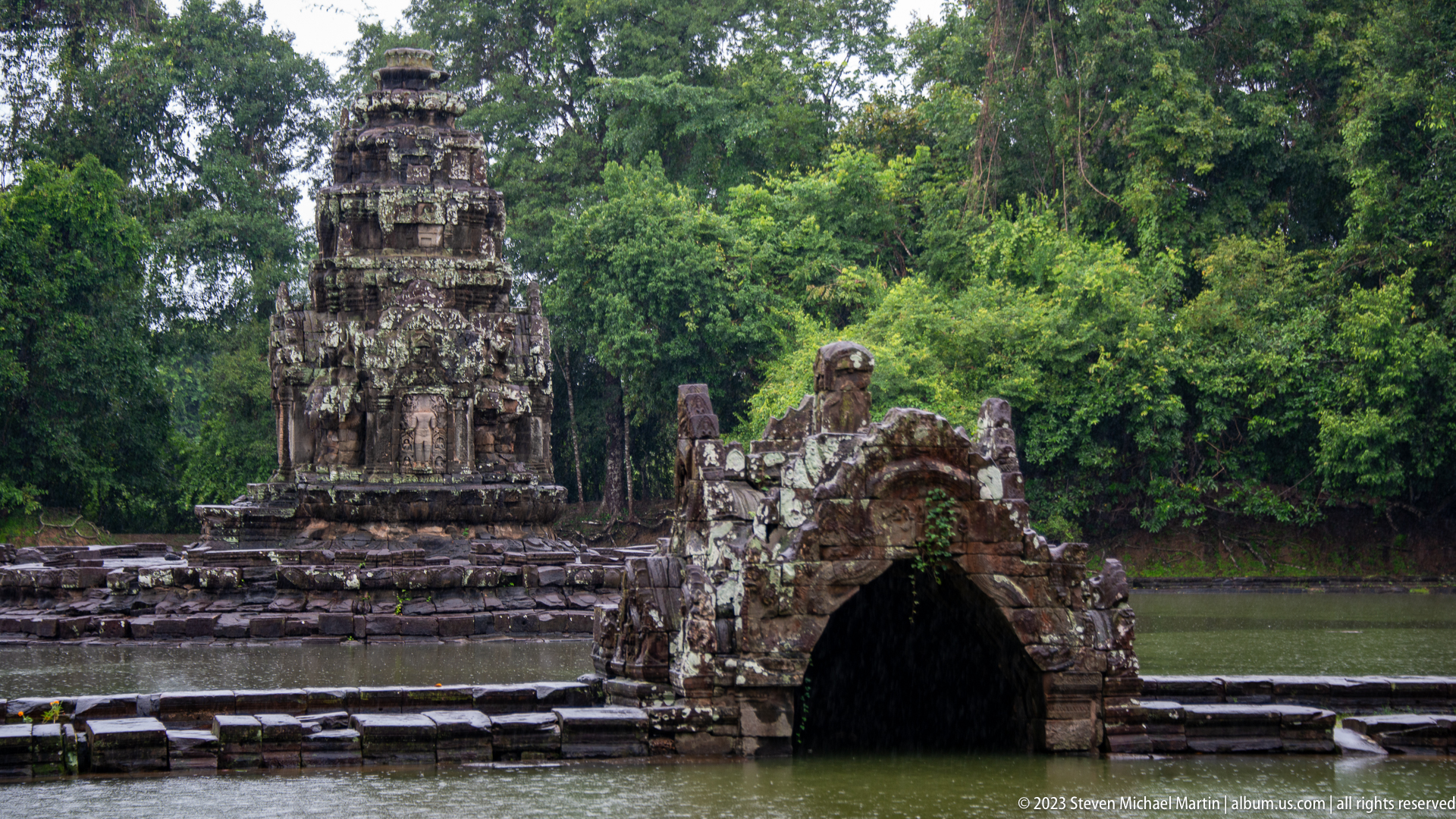
Stone naga bridge with sanctuary behind.

Neak Poan

Neak Pean Neak Pean is a Buddhist temple constructed during the reign of King Jayavarman VII and is located on an artificial island within a large reservoir. The temple’s design reflects symbolic associations with sacred lakes believed to have healing properties. Its architectural layout emphasizes balance and symmetry associated with Khmer cosmological concepts. The central […]

Explore Portfolio
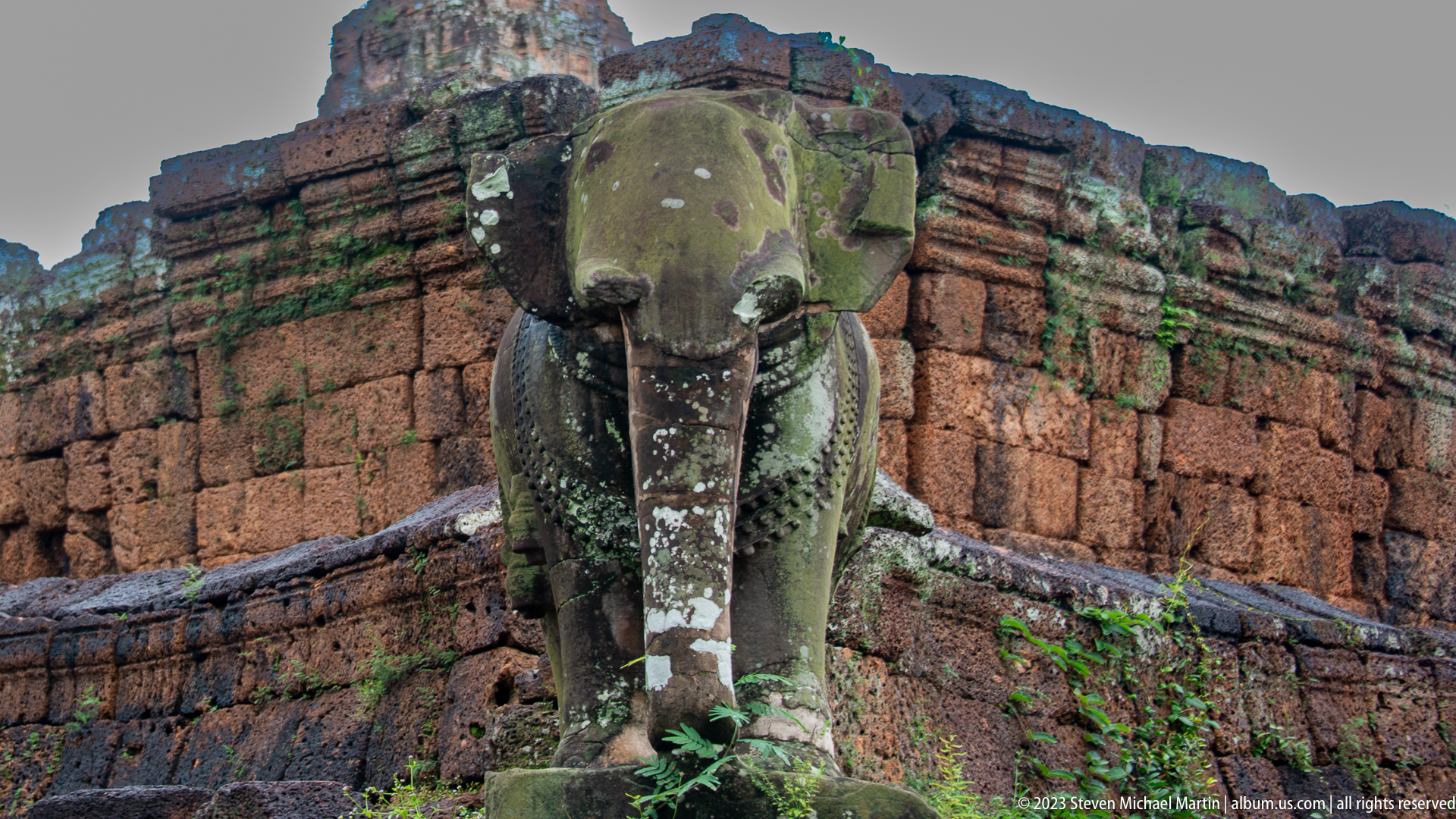
Frontal view of stone elephant atop temple corner.

East Mebon

East Mebon East Mebon was constructed in the tenth century during the reign of King Rajendravarman and was originally situated on an artificial island within the now-dry East Baray reservoir. The temple was dedicated to the Hindu god Shiva and reflects early Angkorian architectural style. Its elevated terraces emphasize symbolic representation of sacred mountains in […]

Explore Portfolio
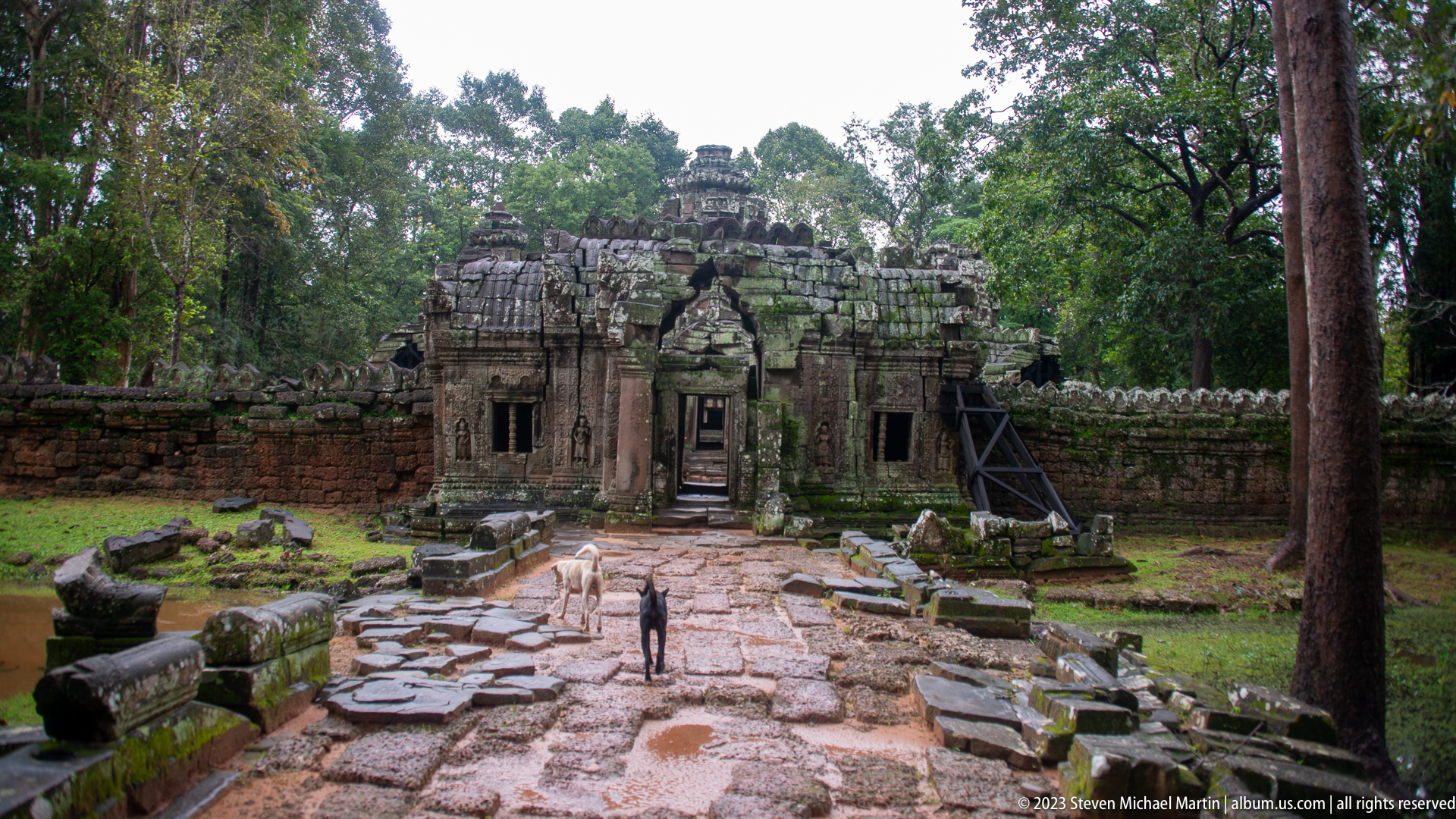
Two visitors walk across wet stone paving toward a ruined gateway in the forest at Ta Som.

Ta Som

Ta Som Ta Som is a late twelfth-century temple constructed during the reign of King Jayavarman VII and reflects the expansion of Buddhist influence within the Khmer Empire. The temple’s layout follows traditional Angkorian design principles, incorporating symbolic orientation and enclosed galleries. Its relatively modest scale allows visitors to observe architectural detail in a more […]

Explore Portfolio
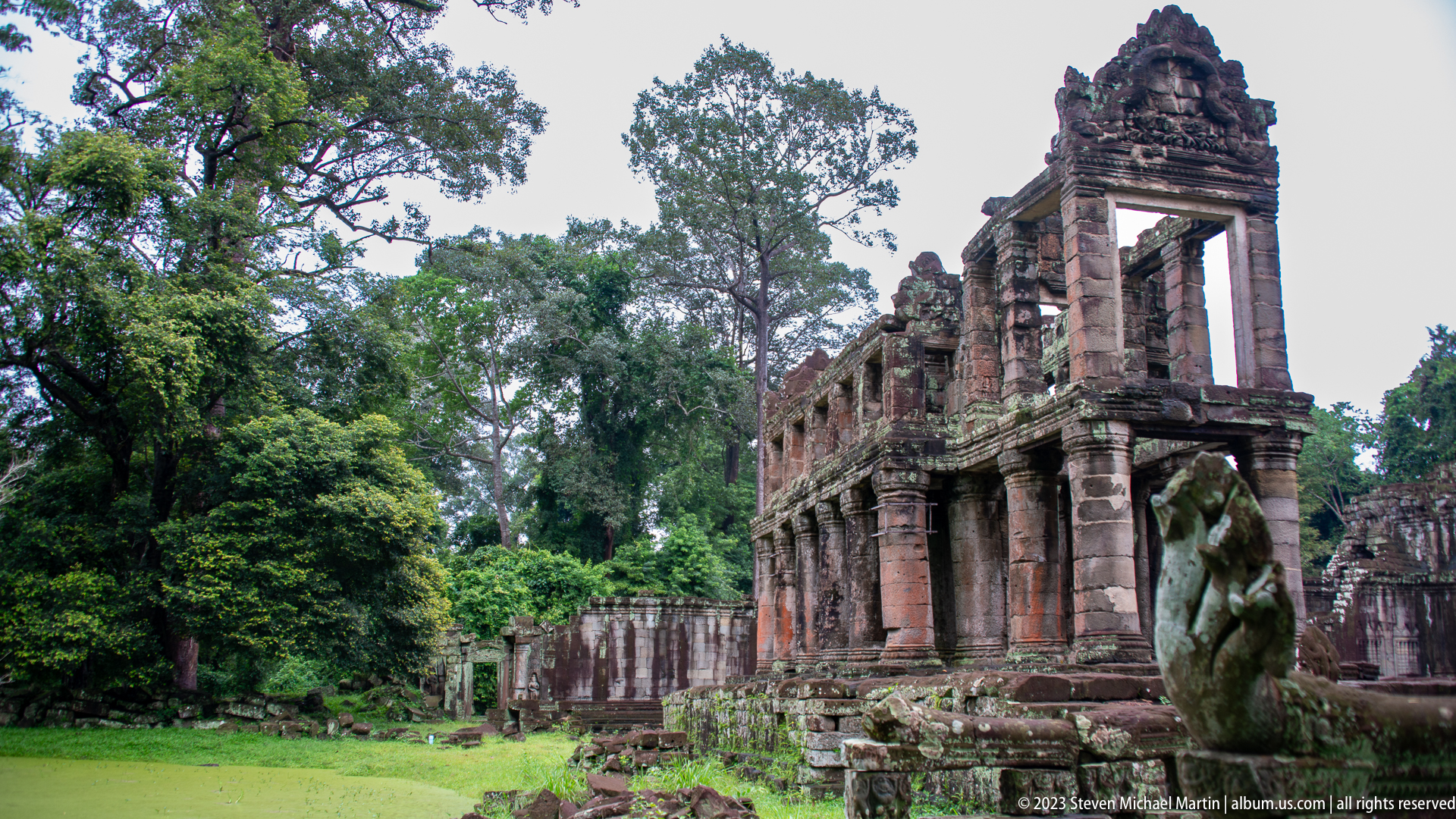
Lion guardian in front of a two-story columned sandstone building beside a green pond.

Preah Khan

Preah Khan Preah Khan is a large temple complex constructed during the reign of King Jayavarman VII and dedicated to both religious and educational functions. The site reflects the influence of Mahayana Buddhism within the Khmer Empire while incorporating elements of earlier Hindu architectural tradition. Its extensive corridors and courtyards illustrate the scale of Angkorian […]

Explore Portfolio