Muscat
Muscat Muscat, the capital of Oman, has long served as an important maritime trading center linking the Arabian Peninsula with […]
Explore Portfolio
Oman preserves a cultural landscape shaped by maritime trade routes that connected the Arabian Peninsula with East Africa, India, and the broader Indian Ocean world. For centuries, coastal settlements served as centers of commerce where merchants exchanged goods, ideas, and cultural traditions that contributed to the region’s distinctive architectural and social identity. Oman’s geographic setting along the Gulf of Oman helped foster a long tradition of seafaring activity that influenced both economic development and cultural exchange across multiple regions.
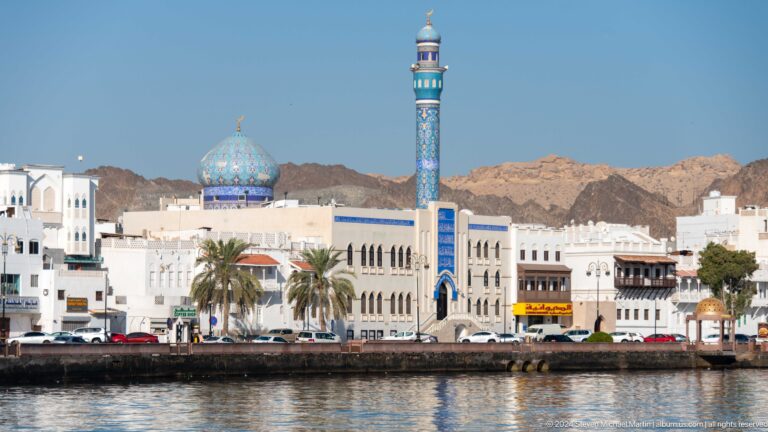
The capital city of Muscat reflects the interaction between historic defensive architecture and the surrounding coastal landscape, where forts, mosques, and civic buildings illustrate the strategic importance of natural harbors along maritime trade routes. The preserved historic district of Mutrah highlights traditional waterfront development, where narrow streets and market areas demonstrate the relationship between commerce and coastal geography that shaped daily life in the region.
Photographing Oman highlights the visual contrast between rugged mountain terrain and the calm waters of the Gulf, illustrating how geography influenced settlement patterns and architectural form. Together, Muscat and Mutrah reflect the continuity of cultural traditions shaped by trade, navigation, and the enduring relationship between the Arabian Peninsula and the wider Indian Ocean world.
The following itineraries include locations in this country:
