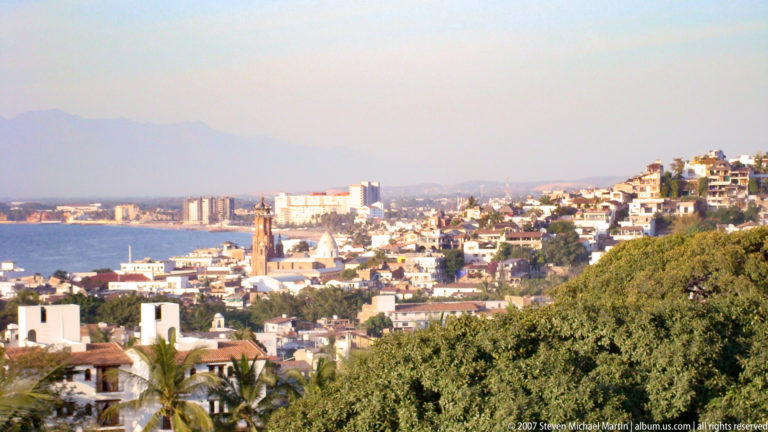
Puerto Vallarta, Mexico
Puerto Vallarta Puerto Vallarta occupies a dramatic position along Mexico’s Pacific coast, where the Sierra Madre Mountains descend toward the […]
Explore Portfolio
Mexico preserves a diverse range of landscapes and cultural traditions shaped by ancient civilizations, colonial history, and varied geography extending from arid deserts to tropical coastlines. Positioned between North and Central America, the country reflects a blend of Indigenous heritage and Spanish influence visible in architecture, language, and urban design. Coastal regions along the Pacific Ocean illustrate how geography continues to influence patterns of settlement, economic activity, and cultural identity.
The Pacific coastline documented in Puerto Vallarta demonstrates the interaction between mountainous terrain and coastal environments, where the Sierra Madre Mountains meet the waters of Bahía de Banderas. This geographic setting has shaped the development of port communities that historically supported trade and fishing while evolving into modern cultural destinations. The preserved character of historic districts alongside natural coastal landscapes reflects broader themes found throughout western Mexico.
Although represented here through a single location, the environments of coastal Mexico illustrate the country’s wider geographic diversity, where climate, elevation, and proximity to the ocean contribute to distinct regional identities. The combination of natural scenery and cultural continuity provides insight into how landscapes and human activity intersect across Mexico, connecting it to both North American and broader Latin American traditions.