Alhambra
The Alhambra is a palace and fortress complex constructed during the Nasrid dynasty and is one of the most important surviving examples of Islamic architecture in Europe. Situated on an elevated hill overlooking Granada, the complex combines defensive walls with refined palace spaces designed for royal residence. Its layout illustrates the integration of architecture, water, and landscape.
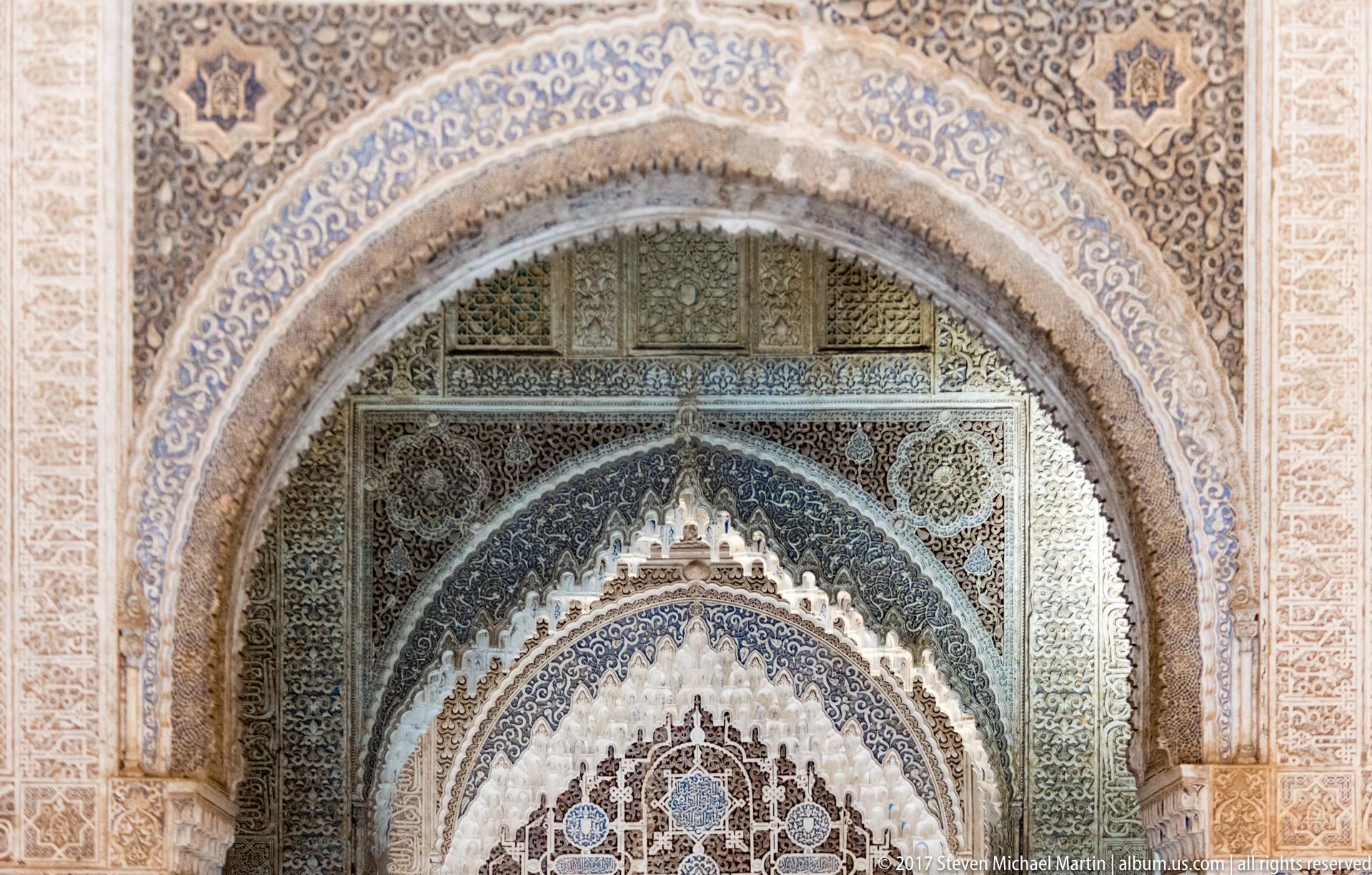
Decorative elements such as geometric tilework, carved stucco, and intricate calligraphy demonstrate the artistic sophistication of Moorish craftsmanship. Courtyards containing fountains and reflecting pools illustrate the importance of water symbolism in Islamic garden design. Architectural spaces emphasize balance, symmetry, and visual harmony.
The Alhambra represents the artistic and intellectual achievements of Al-Andalus prior to the completion of the Reconquista. Its preserved architecture reflects the cultural exchange that influenced artistic traditions across the Mediterranean world.