Neak Pean
Neak Pean is a Buddhist temple constructed during the reign of King Jayavarman VII and is located on an artificial island within a large reservoir. The temple’s design reflects symbolic associations with sacred lakes believed to have healing properties. Its architectural layout emphasizes balance and symmetry associated with Khmer cosmological concepts.
The central sanctuary is surrounded by smaller pools connected by stone channels representing the four great rivers of traditional Hindu and Buddhist cosmology. Sculptural details include serpent imagery symbolizing protection and spiritual transformation. The temple’s setting highlights the importance of water symbolism within Khmer religious tradition.
Neak Pean illustrates the integration of symbolic geography and spiritual belief in Angkorian architecture. The site reflects the cultural importance of water as both a physical and spiritual element in Khmer civilization.

Storm clouds hang over a broad flooded plain dotted with lotus flowers, aquatic leaves, and the bare trunks of drowned trees. The low horizon and open water create a stark environmental view distinct from the closer botanical studies. Pink blossoms in the foreground soften the austere silhouettes, showing the seasonal wetland through which visitors approach Neak Poan.
Caption
Storm clouds hang over a broad flooded plain dotted with lotus flowers, aquatic leaves, and the bare trunks of drowned trees. The low horizon and open water create a stark environmental view distinct from the closer botanical studies. Pink blossoms in the foreground soften the austere silhouettes, showing the seasonal wetland through which visitors approach Neak Poan.

Visitors carrying umbrellas follow the narrow boardwalk across the flooded landscape surrounding Neak Poan. The long, receding path establishes the temple’s watery setting, while lotus-covered shallows extend toward a dense tree line beneath a dark monsoon sky. Wet planks, reflective water, and clustered figures convey the practical experience of approaching the island sanctuary during heavy rain.
Caption
Visitors carrying umbrellas follow the narrow boardwalk across the flooded landscape surrounding Neak Poan. The long, receding path establishes the temple’s watery setting, while lotus-covered shallows extend toward a dense tree line beneath a dark monsoon sky. Wet planks, reflective water, and clustered figures convey the practical experience of approaching the island sanctuary during heavy rain.

Blooming lotus plants fill the foreground while the elevated boardwalk crosses the flooded landscape behind them. The composition combines botanical detail with the visitor approach through the rainy-season wetlands.
Caption
Blooming lotus plants fill the foreground while the elevated boardwalk crosses the flooded landscape behind them. The composition combines botanical detail with the visitor approach through the rainy-season wetlands.

A wider composition places the central sanctuary within its surrounding reservoir and forest. The increased distance emphasizes the monument's isolation on its island platform and the relationship between architecture and landscape.
Caption
A wider composition places the central sanctuary within its surrounding reservoir and forest. The increased distance emphasizes the monument's isolation on its island platform and the relationship between architecture and landscape.

The concluding view looks across the reservoir toward the central sanctuary of Neak Poan, with the carved naga bridge leading to the island monument. Dense tropical vegetation encloses the scene while rain-darkened sandstone and still water reinforce the tranquil setting that characterizes this Khmer temple within the Angkor archaeological landscape.
Caption
The concluding view looks across the reservoir toward the central sanctuary of Neak Poan, with the carved naga bridge leading to the island monument. Dense tropical vegetation encloses the scene while rain-darkened sandstone and still water reinforce the tranquil setting that characterizes this Khmer temple within the Angkor archaeological landscape.

A broad field of lotus leaves spreads across still, rain-darkened water near Neak Poan. Rounded leaves in varied sizes create a layered surface punctuated by upright pink buds and occasional blossoms. The oblique viewpoint emphasizes the density and irregular spacing of the aquatic vegetation, revealing how the temple’s surrounding waters function visually as both habitat and ceremonial landscape.
Caption
A broad field of lotus leaves spreads across still, rain-darkened water near Neak Poan. Rounded leaves in varied sizes create a layered surface punctuated by upright pink buds and occasional blossoms. The oblique viewpoint emphasizes the density and irregular spacing of the aquatic vegetation, revealing how the temple’s surrounding waters function visually as both habitat and ceremonial landscape.

The central sanctuary of Neak Poan rises beyond the distinctive naga bridge spanning the surrounding reservoir. Rain-darkened sandstone, calm water, and dense forest frame one of Angkor's recognizable island temples.
Caption
The central sanctuary of Neak Poan rises beyond the distinctive naga bridge spanning the surrounding reservoir. Rain-darkened sandstone, calm water, and dense forest frame one of Angkor's recognizable island temples.

Two lotus buds rise above large leaves, with the larger bud beginning to reveal bright pink petals. The shallow depth of field draws attention to the developing flowers while gently blurring the surrounding pond.
Caption
Two lotus buds rise above large leaves, with the larger bud beginning to reveal bright pink petals. The shallow depth of field draws attention to the developing flowers while gently blurring the surrounding pond.

Raindrops bead across overlapping lotus leaves, forming bright droplets that accentuate the waxy, water-repellent surfaces. The close overhead composition isolates differences in leaf size, color, and condition, from fresh green discs to mottled and browning edges. Dark water visible between the leaves provides contrast and turns a broader wetland scene into a detailed botanical study.
Caption
Raindrops bead across overlapping lotus leaves, forming bright droplets that accentuate the waxy, water-repellent surfaces. The close overhead composition isolates differences in leaf size, color, and condition, from fresh green discs to mottled and browning edges. Dark water visible between the leaves provides contrast and turns a broader wetland scene into a detailed botanical study.

A vivid pink lotus flower rises above the water beside a tall unopened bud, both surrounded by pale, rain-dappled leaves. Circular ripples register continuing rainfall, while the flower’s dark reflection elongates beneath it. The composition pairs two stages of growth—open bloom and closed bud—and uses the subdued gray water to intensify the saturated color of the petals.
Caption
A vivid pink lotus flower rises above the water beside a tall unopened bud, both surrounded by pale, rain-dappled leaves. Circular ripples register continuing rainfall, while the flower’s dark reflection elongates beneath it. The composition pairs two stages of growth—open bloom and closed bud—and uses the subdued gray water to intensify the saturated color of the petals.

A single pink lotus blossom stands in profile above the rain-streaked pond, its outer petals still cupped around the deeper folds within. The low viewpoint separates the flower from the muted water and nearby leaf, while its wavering reflection extends downward. Fine ripples and a slightly bowed stem preserve the atmosphere of the rainy visit without distracting from the flower’s sculptural form.
Caption
A single pink lotus blossom stands in profile above the rain-streaked pond, its outer petals still cupped around the deeper folds within. The low viewpoint separates the flower from the muted water and nearby leaf, while its wavering reflection extends downward. Fine ripples and a slightly bowed stem preserve the atmosphere of the rainy visit without distracting from the flower’s sculptural form.

A close architectural study records the upper levels of the sanctuary tower, emphasizing stacked sandstone courses, carved moldings, biological growth, and centuries of weathering.
Caption
A close architectural study records the upper levels of the sanctuary tower, emphasizing stacked sandstone courses, carved moldings, biological growth, and centuries of weathering.

Cluster of pink lotus flowers and broad leaves forms a small island within the flooded pond surrounding Neak Poan. The distant viewpoint emphasizes the wetland habitat and scattered blossoms across the calm water while preserving the broader environmental setting created during the rainy season.
Caption
Cluster of pink lotus flowers and broad leaves forms a small island within the flooded pond surrounding Neak Poan. The distant viewpoint emphasizes the wetland habitat and scattered blossoms across the calm water while preserving the broader environmental setting created during the rainy season.

A partially opened pink lotus blossom rests among overlapping green leaves covered with raindrops. Soft light and the enclosing foliage isolate the flower, highlighting the layered petals and lush vegetation typical of the wetlands surrounding Neak Poan.
Caption
A partially opened pink lotus blossom rests among overlapping green leaves covered with raindrops. Soft light and the enclosing foliage isolate the flower, highlighting the layered petals and lush vegetation typical of the wetlands surrounding Neak Poan.

Seen from the side, an opening lotus flower displays layered petals as it rises above the surrounding foliage. The composition emphasizes the elegant stem, developing bloom, and rich green backdrop created by the lotus bed.
Caption
Seen from the side, an opening lotus flower displays layered petals as it rises above the surrounding foliage. The composition emphasizes the elegant stem, developing bloom, and rich green backdrop created by the lotus bed.

Large raindrops bead across the waxy surface of a nearly circular lotus leaf, demonstrating the plant's water-repellent texture. The close botanical study contrasts sharply with the broader landscape photographs in the portfolio.
Caption
Large raindrops bead across the waxy surface of a nearly circular lotus leaf, demonstrating the plant's water-repellent texture. The close botanical study contrasts sharply with the broader landscape photographs in the portfolio.

A vivid pink lotus blossom fills the foreground while softly blurred leaves and flowers recede behind it. The tight composition highlights the layered petals, saturated color, and sculptural form of the sacred lotus.
Caption
A vivid pink lotus blossom fills the foreground while softly blurred leaves and flowers recede behind it. The tight composition highlights the layered petals, saturated color, and sculptural form of the sacred lotus.

Overlapping lotus leaves blanket the pond, each holding bright raindrops that accentuate the waxy surface. Variations in size, color, and age create a richly textured botanical study while dark water between the leaves provides contrast.
Caption
Overlapping lotus leaves blanket the pond, each holding bright raindrops that accentuate the waxy surface. Variations in size, color, and age create a richly textured botanical study while dark water between the leaves provides contrast.
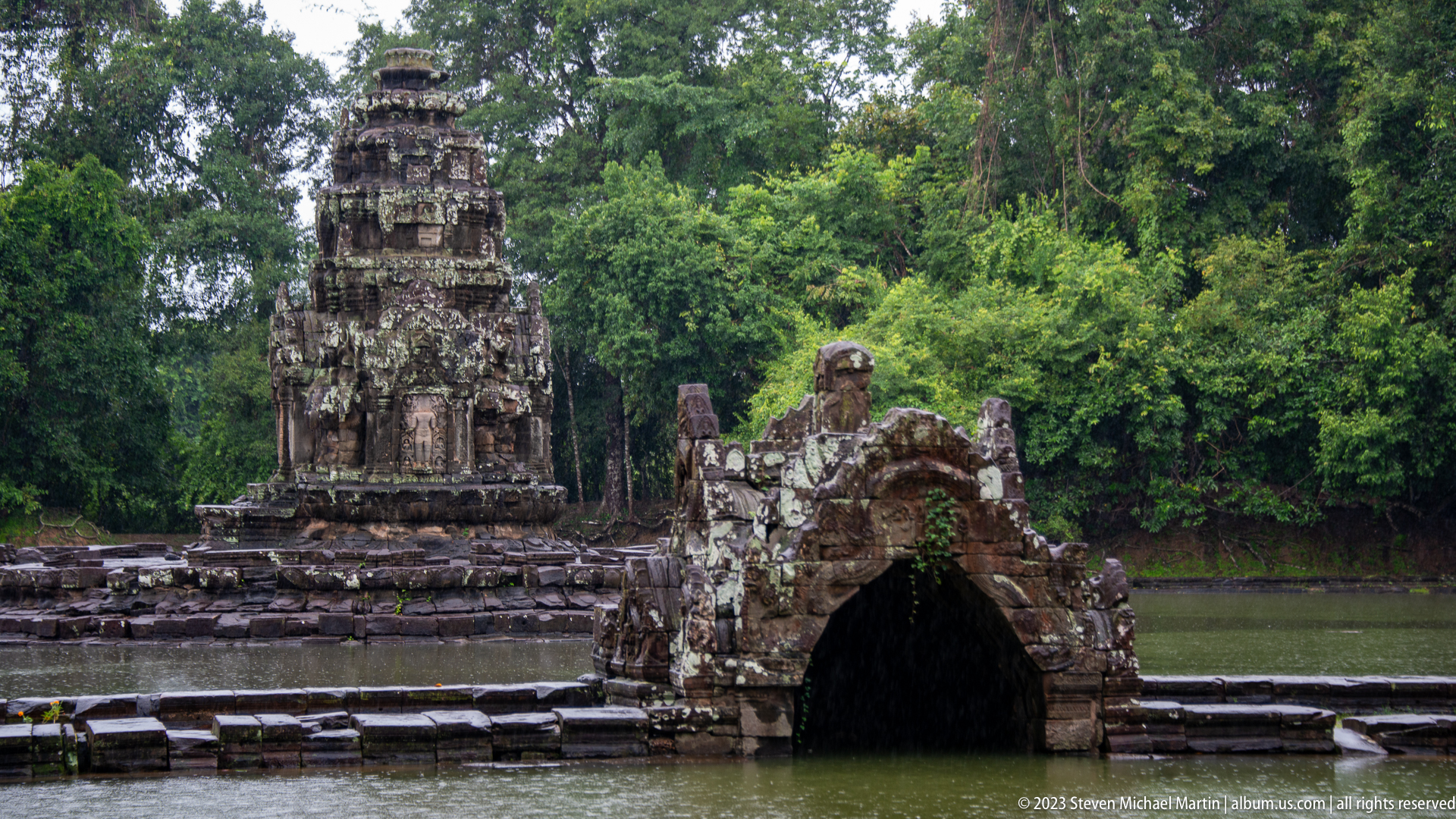
An oblique perspective highlights the carved naga bridge in the foreground while the central sanctuary rises behind it. Weathered stone and rain-darkened surfaces reveal centuries of exposure.
Caption
An oblique perspective highlights the carved naga bridge in the foreground while the central sanctuary rises behind it. Weathered stone and rain-darkened surfaces reveal centuries of exposure.

The bridge and sanctuary are presented together from farther away, emphasizing their spatial relationship across the reservoir. Dense tropical vegetation forms a natural backdrop for the Khmer monument.
Caption
The bridge and sanctuary are presented together from farther away, emphasizing their spatial relationship across the reservoir. Dense tropical vegetation forms a natural backdrop for the Khmer monument.

A close architectural study focuses on the weathered sandstone carvings decorating the naga bridge. Sculptural details and rain-darkened masonry illustrate the monument's age and craftsmanship.
Caption
A close architectural study focuses on the weathered sandstone carvings decorating the naga bridge. Sculptural details and rain-darkened masonry illustrate the monument's age and craftsmanship.

A frontal composition centers the carved naga bridge leading toward the island sanctuary at Neak Poan. Rain-darkened sandstone, symmetrical architecture, and the surrounding reservoir emphasize the ceremonial approach to the temple.
Caption
A frontal composition centers the carved naga bridge leading toward the island sanctuary at Neak Poan. Rain-darkened sandstone, symmetrical architecture, and the surrounding reservoir emphasize the ceremonial approach to the temple.

The central sanctuary rises from its island platform, completely surrounded by water and framed by dense tropical forest. Weathered sandstone blocks and biological growth reveal the monument's long history within Angkor.
Caption
The central sanctuary rises from its island platform, completely surrounded by water and framed by dense tropical forest. Weathered sandstone blocks and biological growth reveal the monument's long history within Angkor.

A weathered carved stone element projects above the reservoir, its lichen-covered surface contrasting with the smooth rain-dappled water. The isolated detail highlights surviving sculptural components associated with the temple complex.
Caption
A weathered carved stone element projects above the reservoir, its lichen-covered surface contrasting with the smooth rain-dappled water. The isolated detail highlights surviving sculptural components associated with the temple complex.

The long wooden boardwalk stretches across the flooded landscape toward Neak Poan, its wet planks reflecting the overcast sky. Strong linear perspective guides the eye toward the distant temple approach.
Caption
The long wooden boardwalk stretches across the flooded landscape toward Neak Poan, its wet planks reflecting the overcast sky. Strong linear perspective guides the eye toward the distant temple approach.