Siem Reap
Siem Reap developed as the principal gateway to the Angkor archaeological region, one of the most significant cultural landscapes in Southeast Asia. The city’s growth reflects its role in supporting exploration of Khmer temple complexes constructed between the ninth and fifteenth centuries. Its location near the Tonle Sap basin contributed to the development of trade networks and settlement patterns in the region.
The modern city blends contemporary Cambodian culture with influences from the historical Angkor period. Markets, temples, and colonial-era structures illustrate the interaction between traditional Khmer identity and later European influence. Siem Reap serves as a center for understanding the historical development of the Khmer Empire.
Siem Reap reflects the continued importance of Angkor as a cultural and historical destination. The city provides context for understanding the scale and influence of Khmer civilization within Southeast Asia.
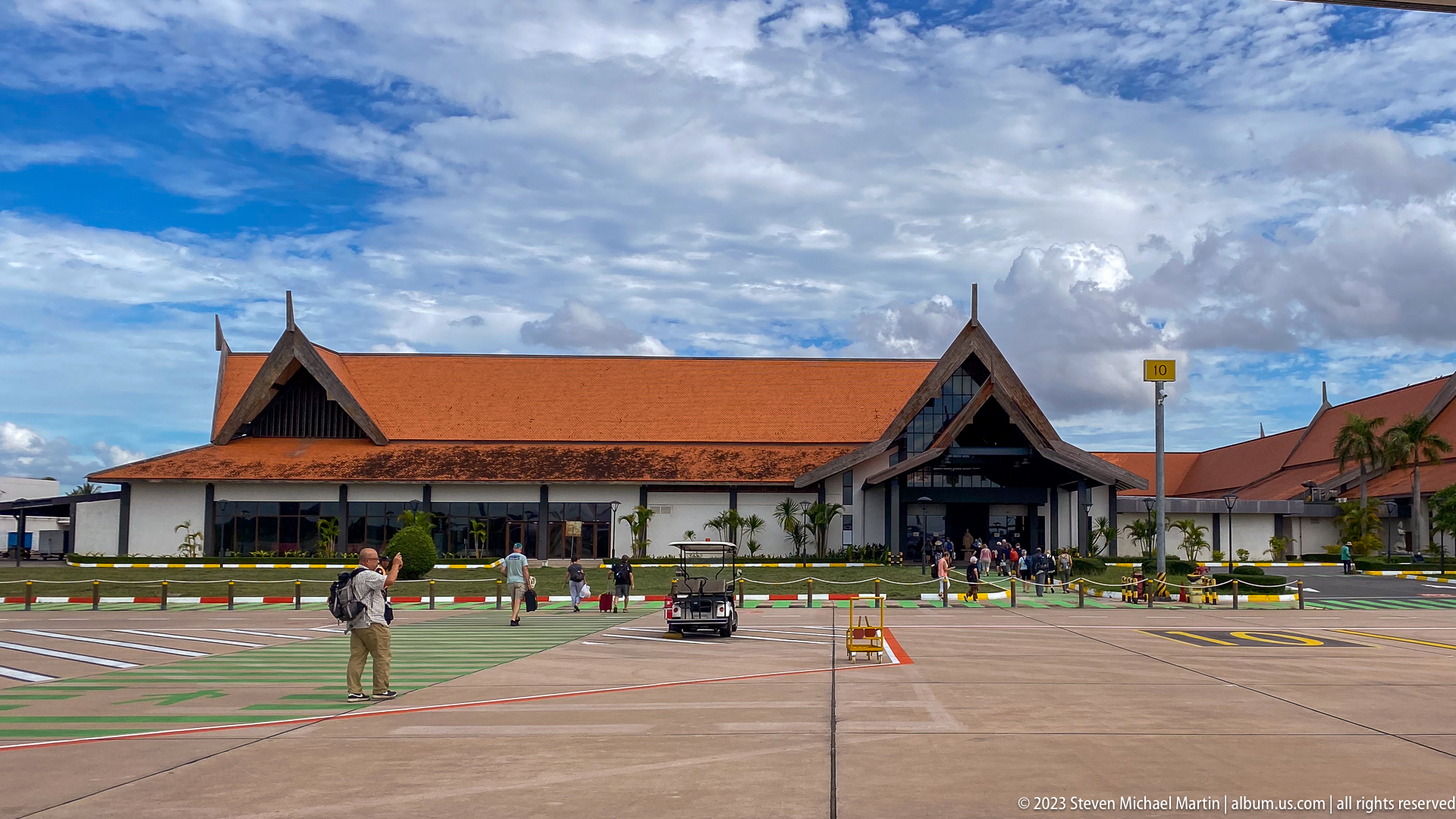
A low airport terminal with steep red-tiled roofs and Khmer-inspired gables stretches across the apron under a dramatic sky. Passengers, ground vehicles, and marked pavement identify the building as an active regional air terminal.
Caption
A low airport terminal with steep red-tiled roofs and Khmer-inspired gables stretches across the apron under a dramatic sky. Passengers, ground vehicles, and marked pavement identify the building as an active regional air terminal.
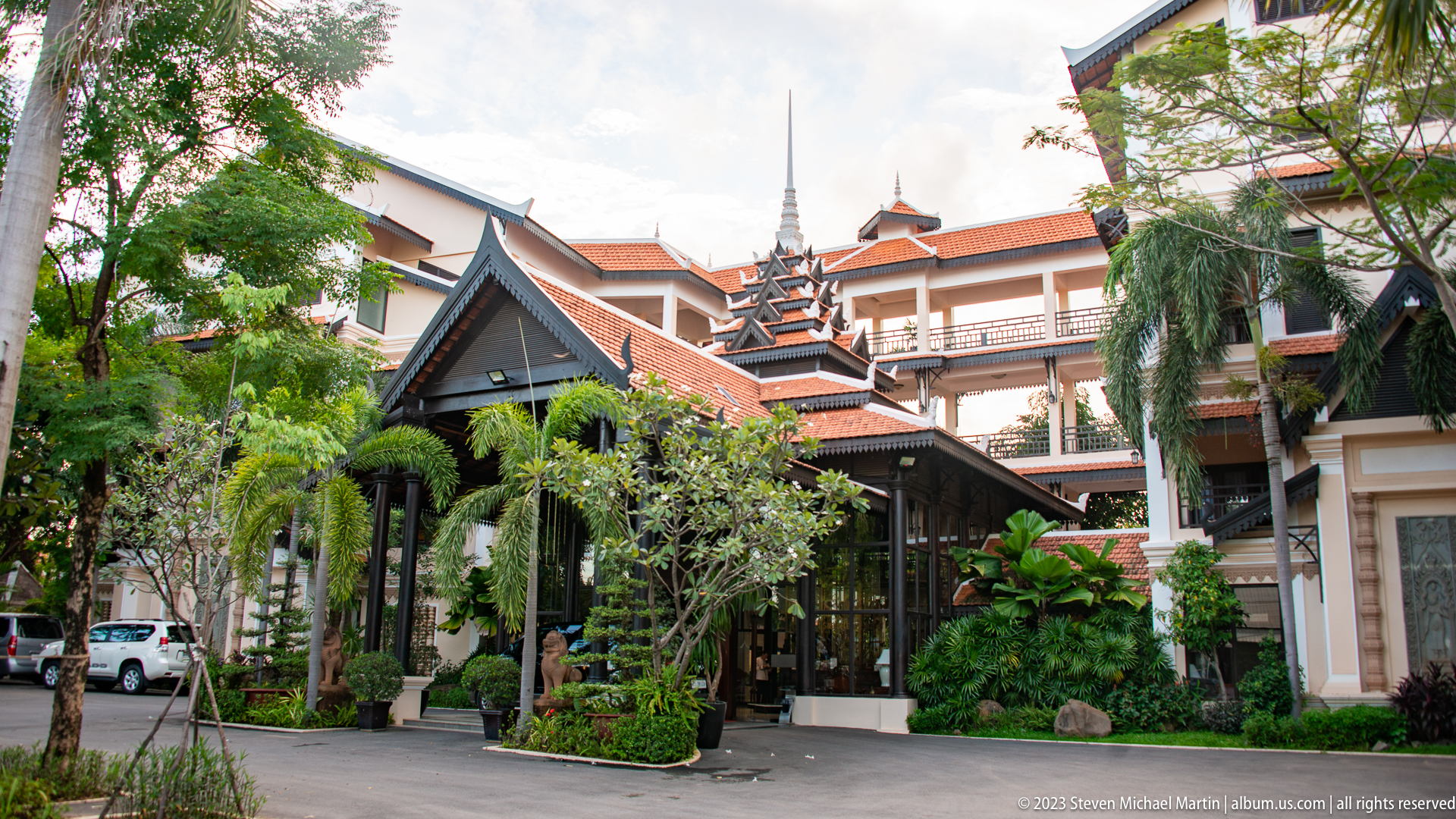
The entrance wing of Saem Siemreap Hotel combines steep Khmer-inspired gables, layered rooflines, timber details, and shaded verandas around a planted forecourt. The architecture adapts regional forms to a contemporary urban hotel complex.
Caption
The entrance wing of Saem Siemreap Hotel combines steep Khmer-inspired gables, layered rooflines, timber details, and shaded verandas around a planted forecourt. The architecture adapts regional forms to a contemporary urban hotel complex.
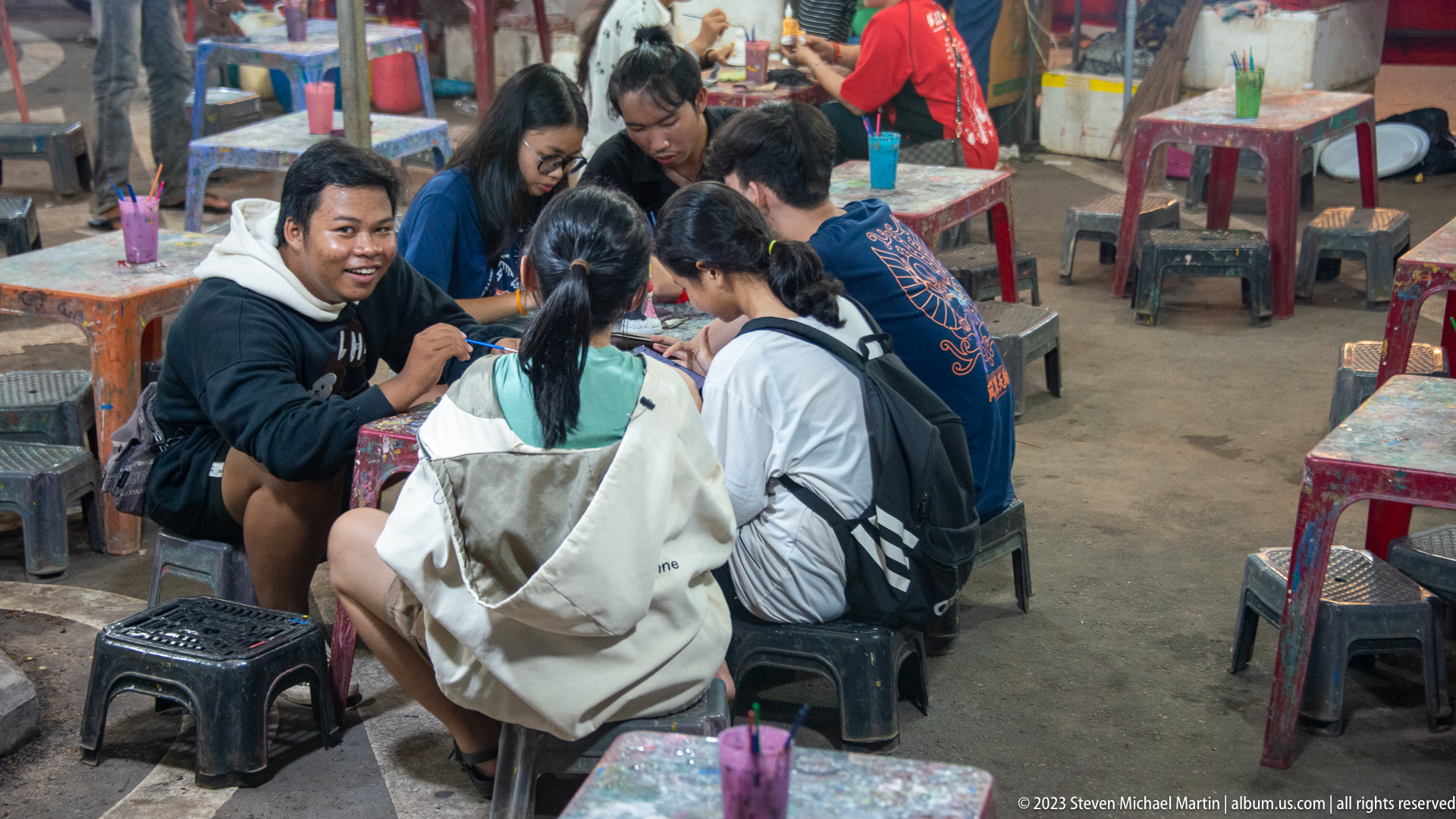
A group of young diners gathers closely around a low table in a casual open-air food venue. Small plastic stools, condiment bottles, baskets, and additional occupied tables create a lively, informal setting centered on shared food and conversation.
Caption
A group of young diners gathers closely around a low table in a casual open-air food venue. Small plastic stools, condiment bottles, baskets, and additional occupied tables create a lively, informal setting centered on shared food and conversation.

A woman seated in a casual neighborhood setting holds a wide-eyed young child on her lap. The direct gaze of both figures creates an intimate portrait, while plastic chairs and nearby patrons place the moment within everyday urban life in Siem Reap.
Caption
A woman seated in a casual neighborhood setting holds a wide-eyed young child on her lap. The direct gaze of both figures creates an intimate portrait, while plastic chairs and nearby patrons place the moment within everyday urban life in Siem Reap.

An aerial view reveals a flat patchwork of flooded fields divided by narrow roads, embankments, and drainage lines. The broad reflective surfaces suggest seasonal inundation or irrigated rice cultivation across the lowland landscape surrounding Siem Reap.
Caption
An aerial view reveals a flat patchwork of flooded fields divided by narrow roads, embankments, and drainage lines. The broad reflective surfaces suggest seasonal inundation or irrigated rice cultivation across the lowland landscape surrounding Siem Reap.
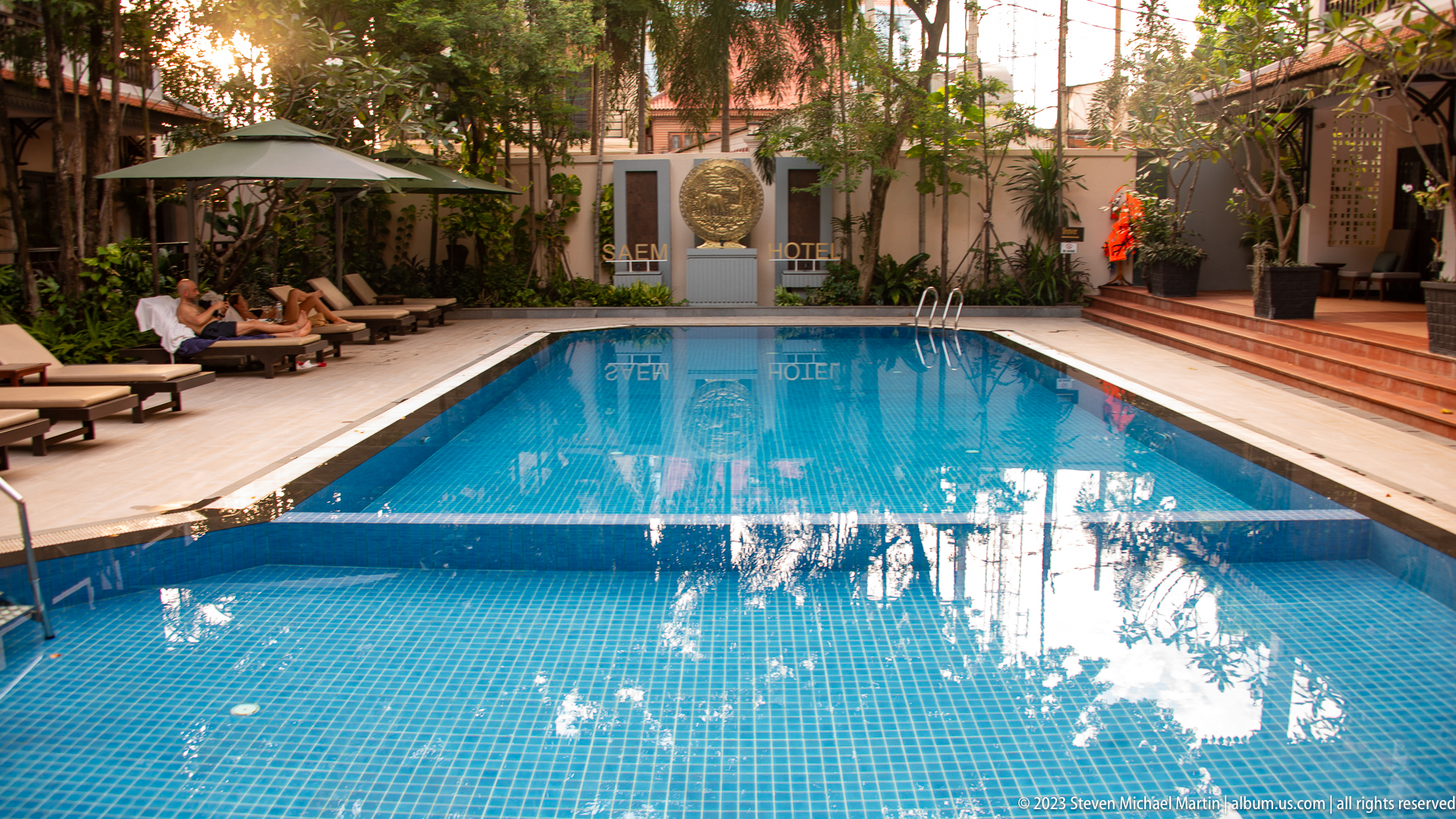
A rectangular swimming pool fills the landscaped courtyard of Saem Siemreap Hotel, bordered by timber decking, lounge chairs, and shaded seating. The enclosed arrangement, dense plantings, and close-set guest-room wings create an intimate resort environment within the city.
Caption
A rectangular swimming pool fills the landscaped courtyard of Saem Siemreap Hotel, bordered by timber decking, lounge chairs, and shaded seating. The enclosed arrangement, dense plantings, and close-set guest-room wings create an intimate resort environment within the city.
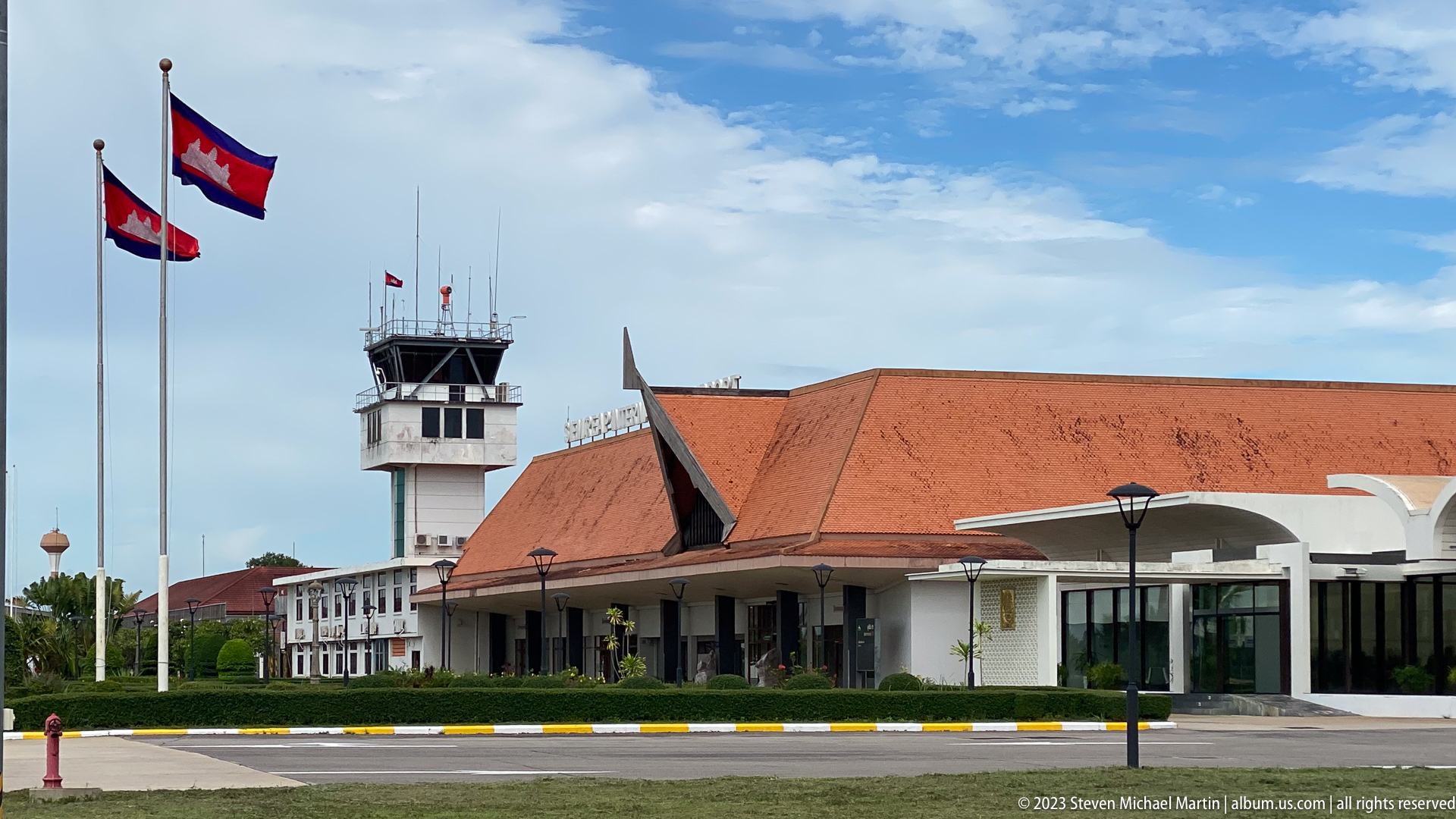
The airport control tower rises beside the long red-roofed terminal, Cambodian flags, and a modern glass-fronted entrance wing. The broad establishing view records the relationship between air-traffic infrastructure and the terminal complex.
Caption
The airport control tower rises beside the long red-roofed terminal, Cambodian flags, and a modern glass-fronted entrance wing. The broad establishing view records the relationship between air-traffic infrastructure and the terminal complex.
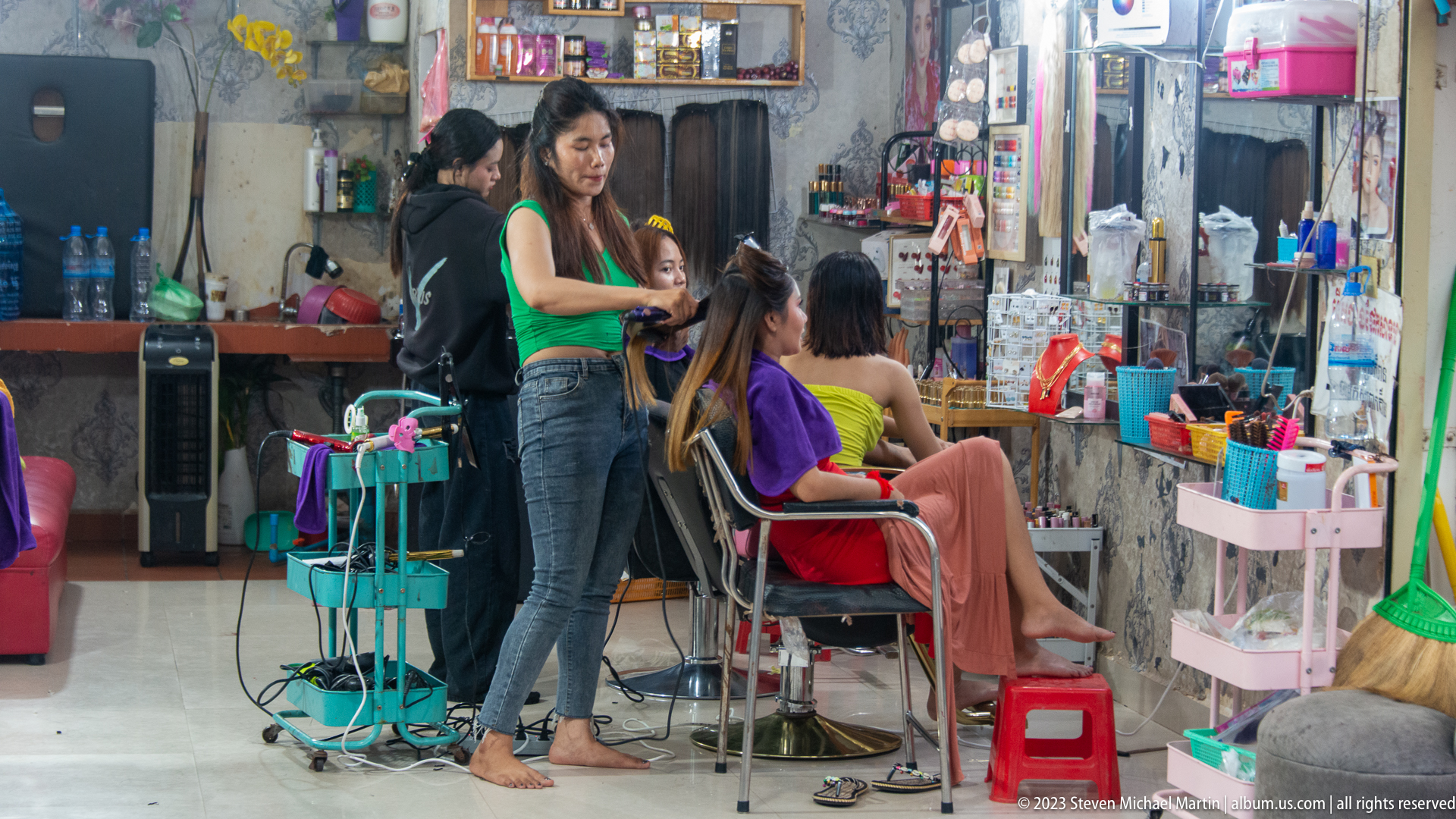
A stylist works on a seated customer’s hair inside a compact Siem Reap beauty salon. Mirrors, product shelves, stools, and wheeled equipment crowd the narrow workspace, offering a candid view of everyday service work in the city.
Caption
A stylist works on a seated customer’s hair inside a compact Siem Reap beauty salon. Mirrors, product shelves, stools, and wheeled equipment crowd the narrow workspace, offering a candid view of everyday service work in the city.
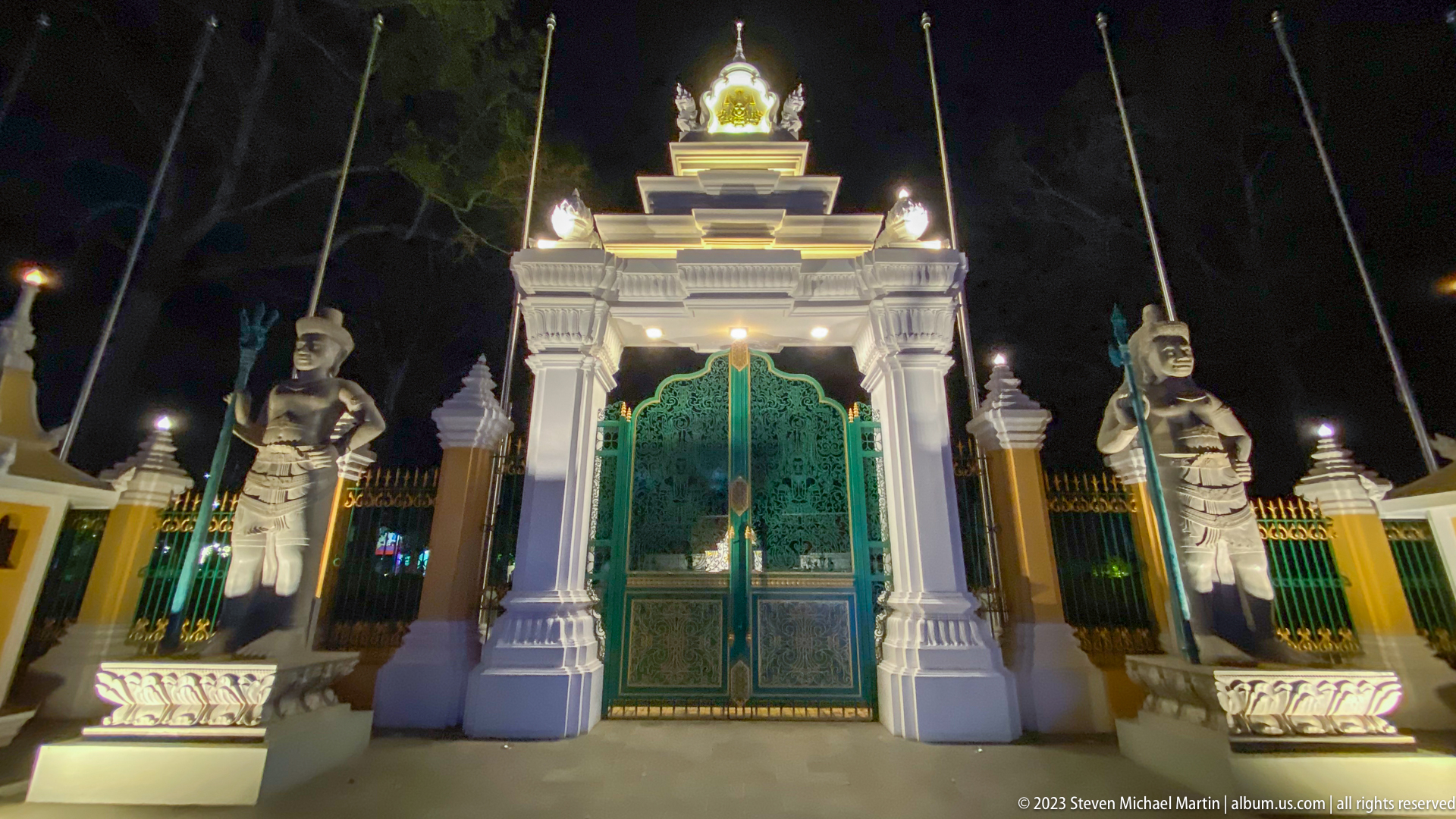
A wide view presents the illuminated white gateway centered between two monumental guardians holding staffs. Green ornamental doors, flanking fences, and symmetrical lighting create a formal nocturnal entrance composition.
Caption
A wide view presents the illuminated white gateway centered between two monumental guardians holding staffs. Green ornamental doors, flanking fences, and symmetrical lighting create a formal nocturnal entrance composition.
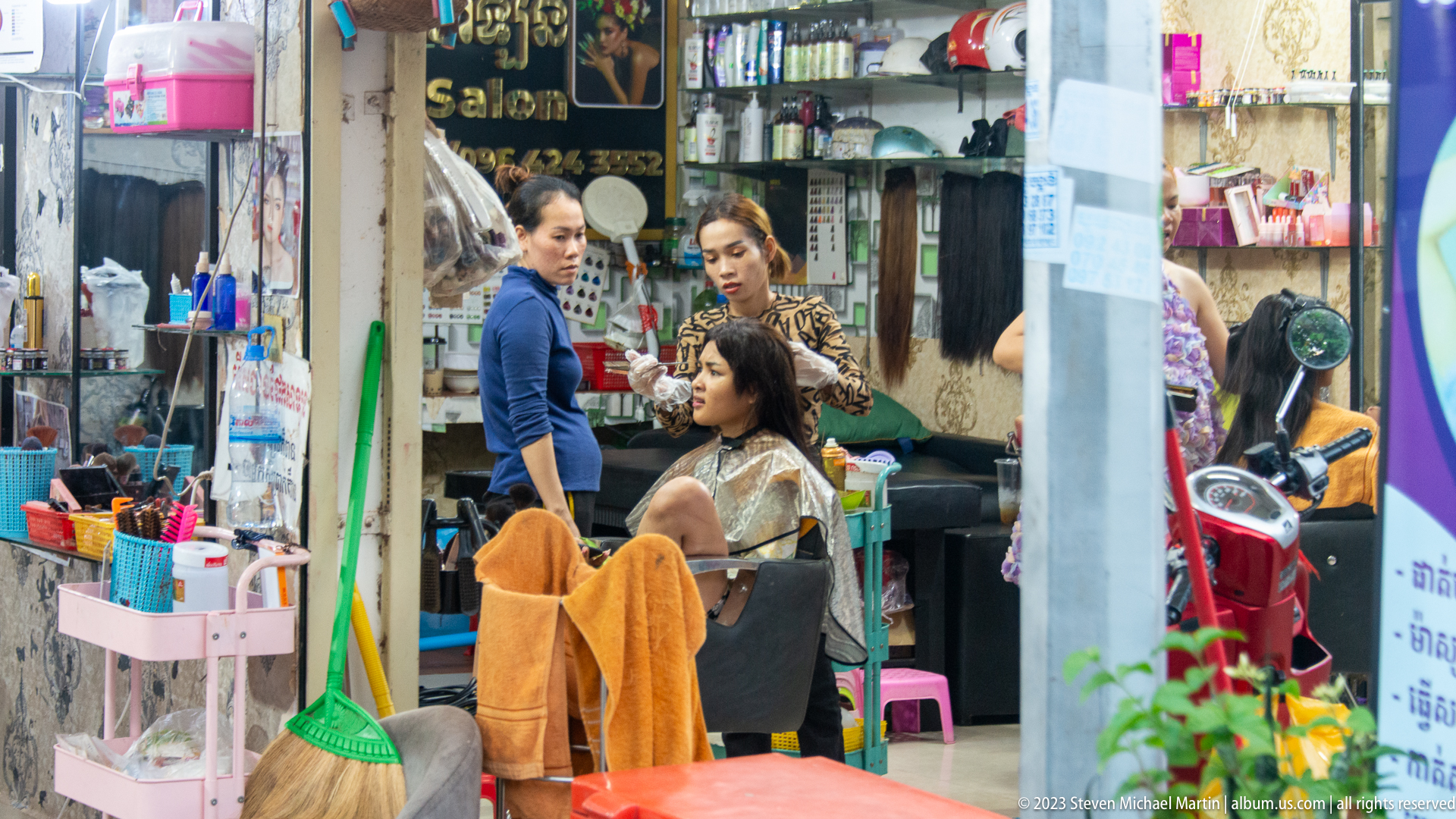
Three women gather around a seated salon customer in a busy Siem Reap storefront. Their interaction, reflected surfaces, product displays, and bright towels create a layered street-level scene of grooming, conversation, and small-business life.
Caption
Three women gather around a seated salon customer in a busy Siem Reap storefront. Their interaction, reflected surfaces, product displays, and bright towels create a layered street-level scene of grooming, conversation, and small-business life.
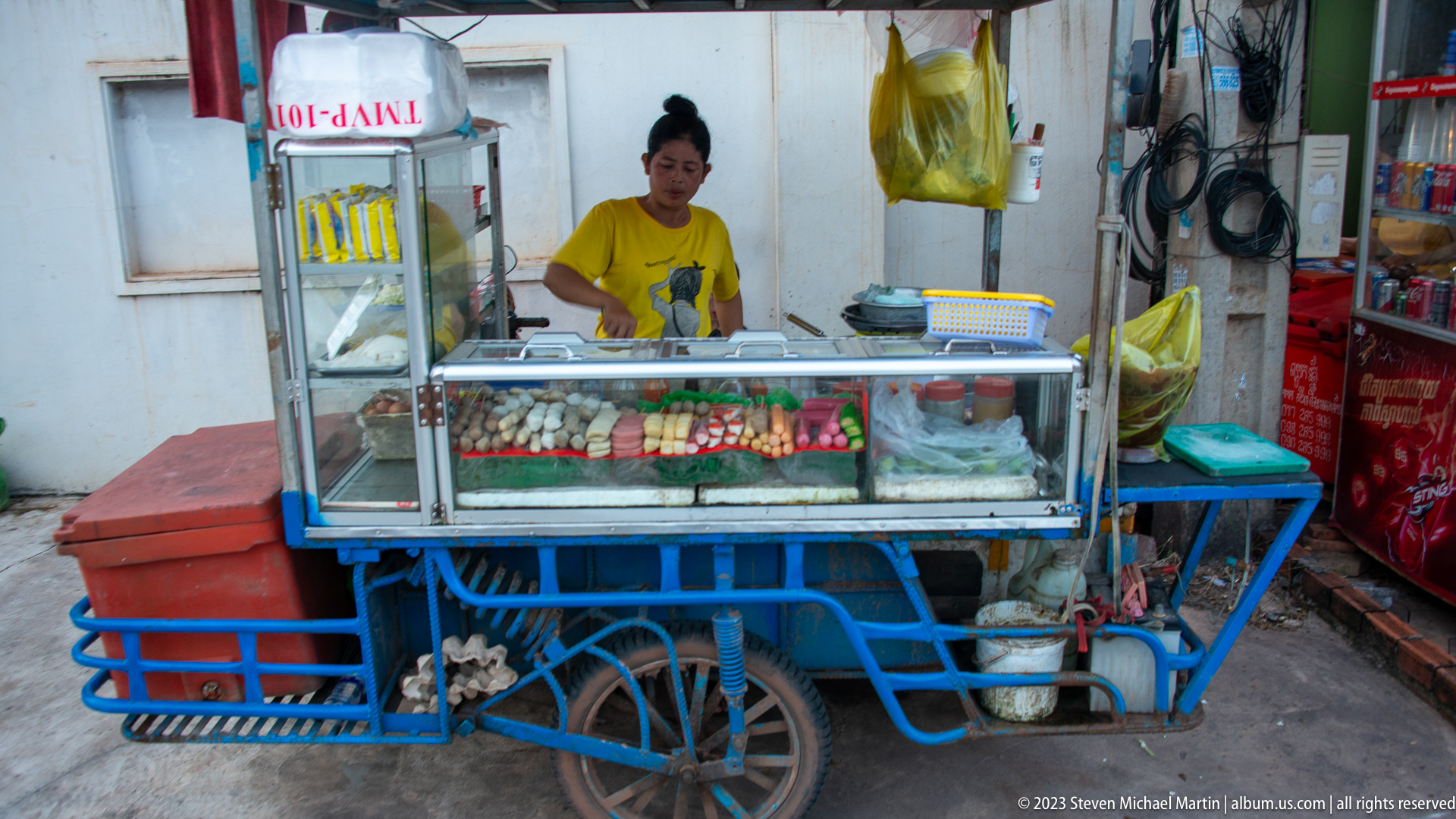
A vendor stands behind a blue pushcart fitted with a glass display case containing eggs and other prepared ingredients. Cooking equipment, hanging bags, and the improvised streetside setup illustrate the compact mobility of Siem Reap’s informal food trade.
Caption
A vendor stands behind a blue pushcart fitted with a glass display case containing eggs and other prepared ingredients. Cooking equipment, hanging bags, and the improvised streetside setup illustrate the compact mobility of Siem Reap’s informal food trade.

A mound of small cooked crabs is piled on a metal tray beside a large pot at a Siem Reap food stall. Their orange-red shells and tightly packed display emphasize abundance and the direct, ingredient-focused presentation of local street food.
Caption
A mound of small cooked crabs is piled on a metal tray beside a large pot at a Siem Reap food stall. Their orange-red shells and tightly packed display emphasize abundance and the direct, ingredient-focused presentation of local street food.

A neatly arranged guest room at Saem Siemreap Hotel features a dark wooden bed, green-and-white linens, bedside lamps, and a large interior window opening toward the bathroom. The polished wood furnishings and coordinated textiles establish the hotel’s contemporary Cambodian hospitality setting at the beginning of the Siem Reap portfolio.
Caption
A neatly arranged guest room at Saem Siemreap Hotel features a dark wooden bed, green-and-white linens, bedside lamps, and a large interior window opening toward the bathroom. The polished wood furnishings and coordinated textiles establish the hotel’s contemporary Cambodian hospitality setting at the beginning of the Siem Reap portfolio.
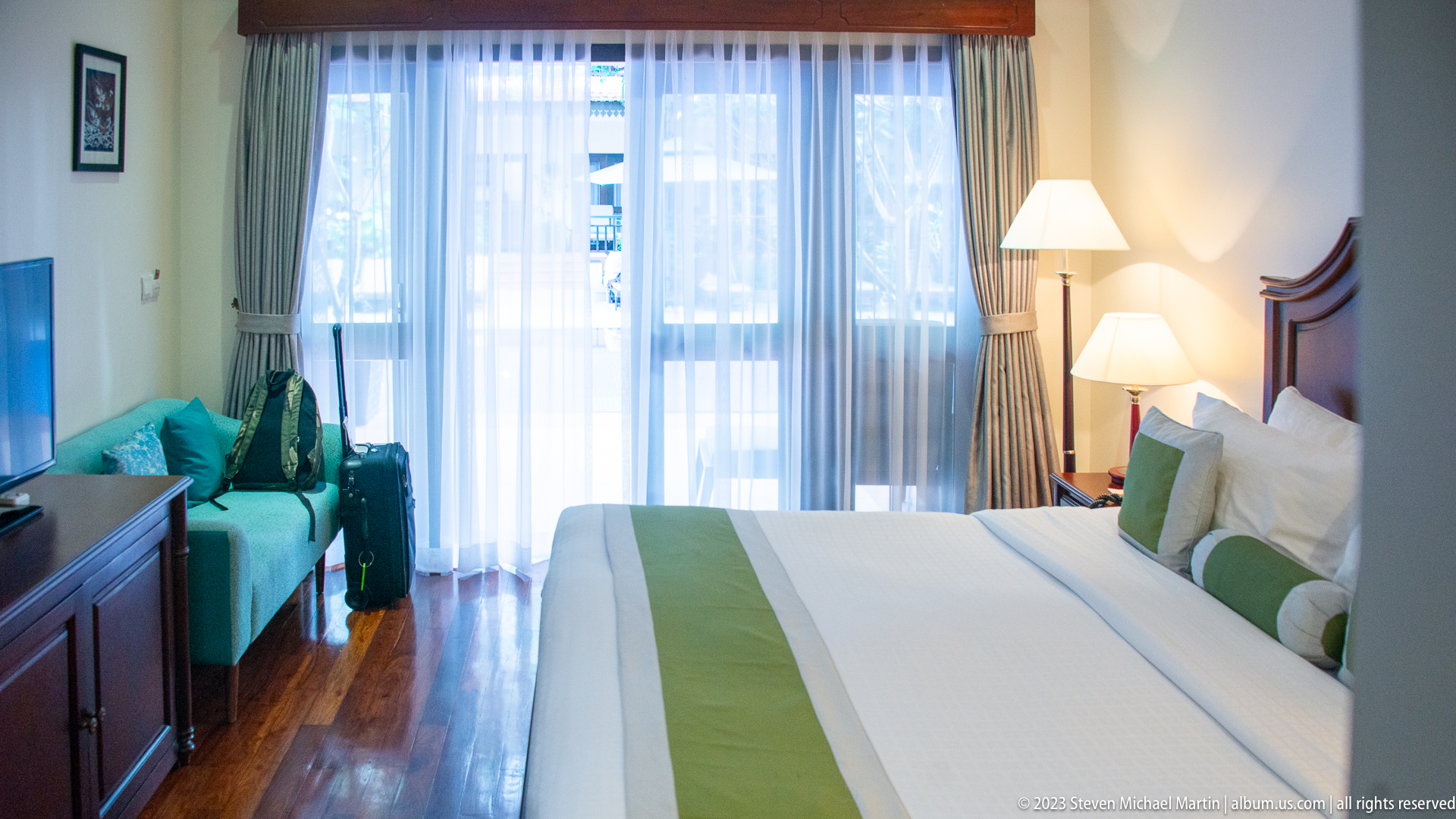
Viewed from near the room entrance, this Saem Siemreap Hotel interior opens toward sheer-curtained balcony doors. A bed occupies the right side while a turquoise bench, luggage, and dark wooden cabinet line the left, creating a clear record of the room’s compact circulation and natural-light orientation.
Caption
Viewed from near the room entrance, this Saem Siemreap Hotel interior opens toward sheer-curtained balcony doors. A bed occupies the right side while a turquoise bench, luggage, and dark wooden cabinet line the left, creating a clear record of the room’s compact circulation and natural-light orientation.

A large circular relief of elephants and forest vegetation forms the centerpiece of a wall display beside the Saem Hotel pool. Flanking vertical panels and the hotel name are reflected in the water below, linking Khmer-inspired decorative imagery with the property’s landscaped courtyard design.
Caption
A large circular relief of elephants and forest vegetation forms the centerpiece of a wall display beside the Saem Hotel pool. Flanking vertical panels and the hotel name are reflected in the water below, linking Khmer-inspired decorative imagery with the property’s landscaped courtyard design.
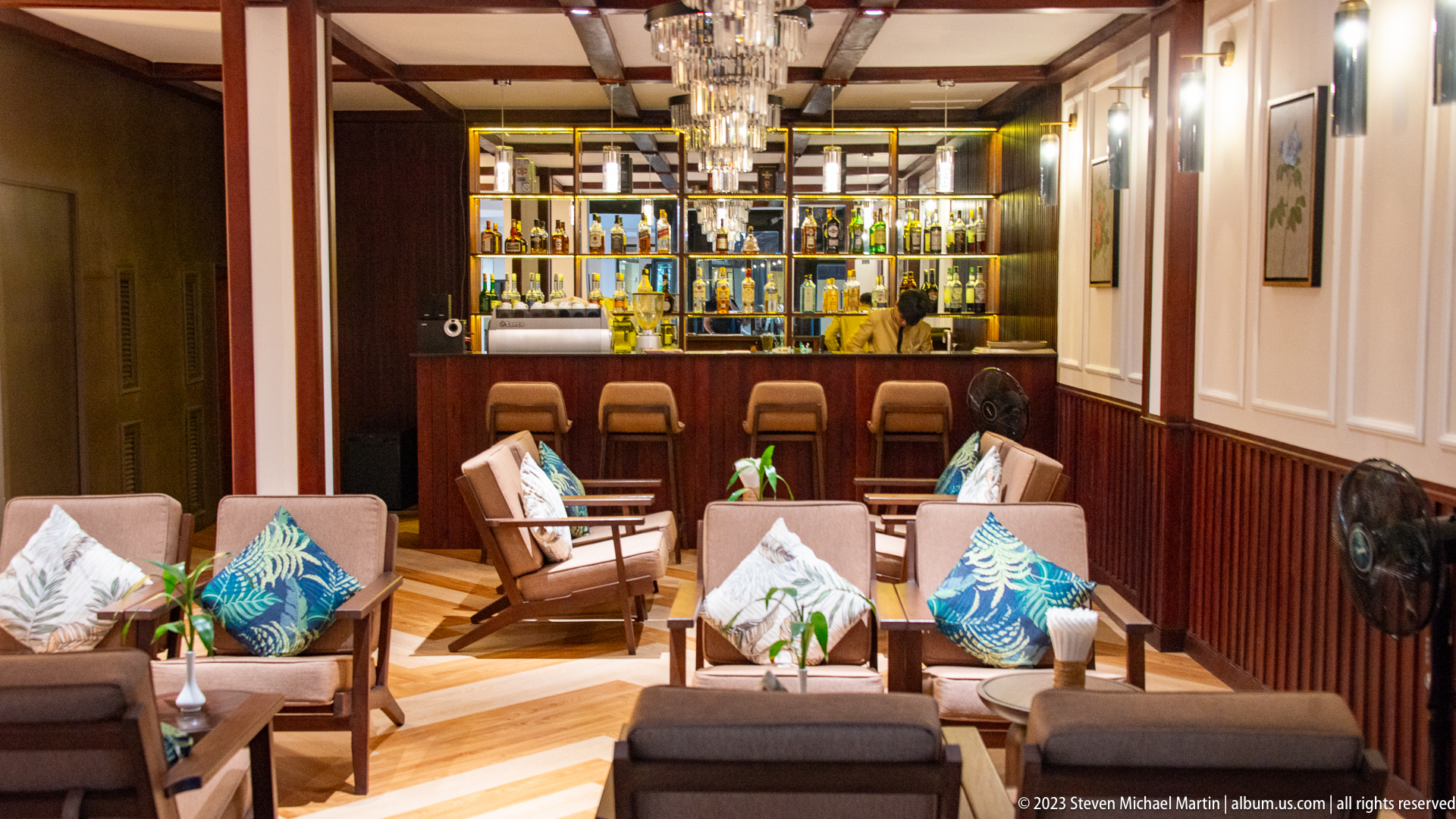
Upholstered armchairs and sofas are arranged around low tables in a warm wood-paneled lounge at Saem Siemreap Hotel. A chandelier and illuminated bottle display draw attention toward the bar, while tropical-patterned cushions add a relaxed resort character to the formal interior.
Caption
Upholstered armchairs and sofas are arranged around low tables in a warm wood-paneled lounge at Saem Siemreap Hotel. A chandelier and illuminated bottle display draw attention toward the bar, while tropical-patterned cushions add a relaxed resort character to the formal interior.
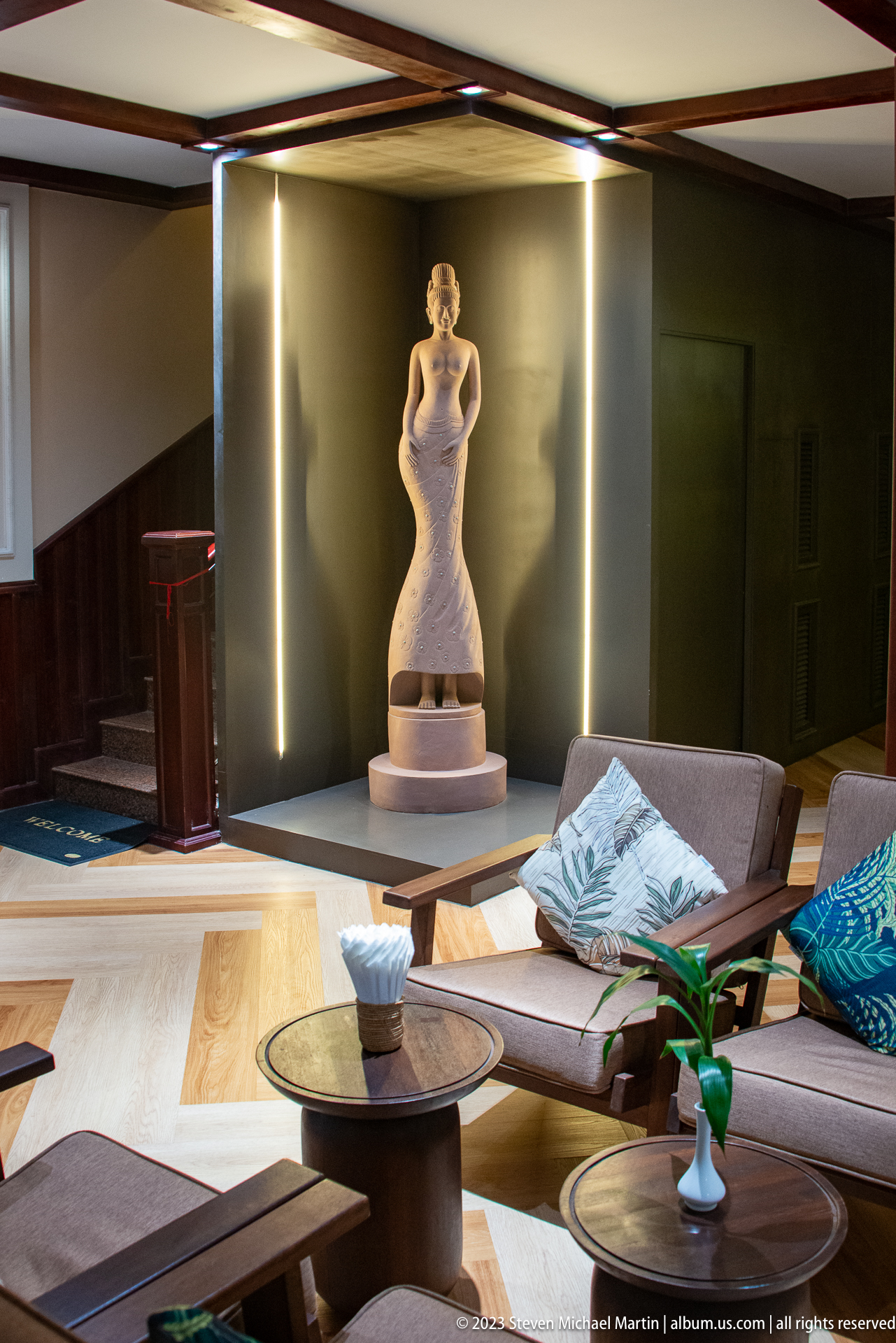
A softly lit lounge centers on a standing female sculpture set against a dark wall framed by vertical light strips. Low upholstered seating, patterned cushions, circular tables, and wood flooring create a contemporary relaxation area that blends modern hotel design with a sculptural focal point.
Caption
A softly lit lounge centers on a standing female sculpture set against a dark wall framed by vertical light strips. Low upholstered seating, patterned cushions, circular tables, and wood flooring create a contemporary relaxation area that blends modern hotel design with a sculptural focal point.

A gilded miniature shrine rises on a pedestal among tropical plants in the Saem Siemreap Hotel garden. Its tiered roof, pointed finials, columns, and raised platform identify it as a Cambodian spirit house, a familiar protective feature at homes and businesses.
Caption
A gilded miniature shrine rises on a pedestal among tropical plants in the Saem Siemreap Hotel garden. Its tiered roof, pointed finials, columns, and raised platform identify it as a Cambodian spirit house, a familiar protective feature at homes and businesses.
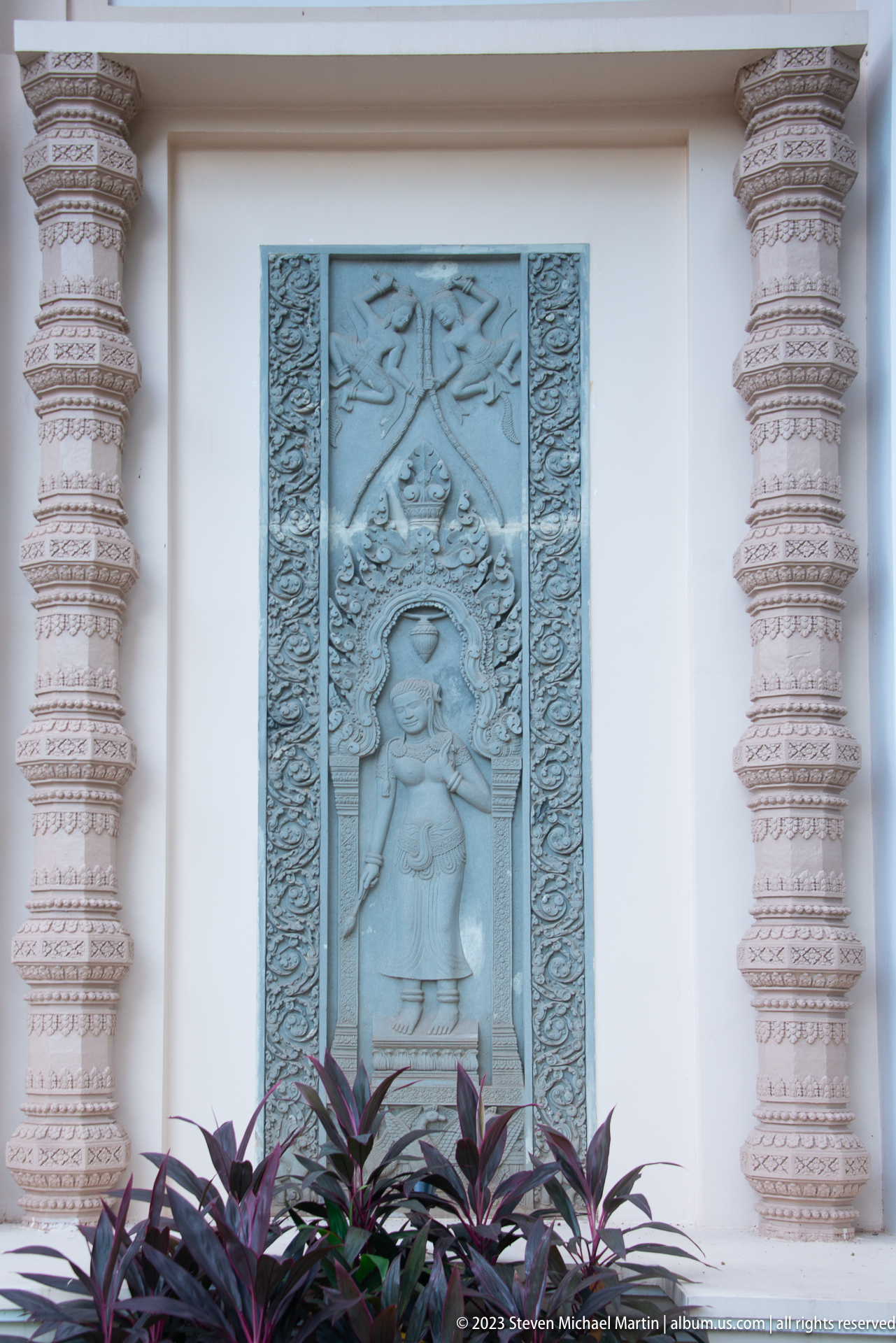
A blue-gray relief of a dancing female figure occupies a recessed wall panel framed by richly carved pale columns. The figure’s bent limbs and stylized pose recall Khmer apsara imagery, while the architectural framing makes the panel a formal decorative feature of the hotel.
Caption
A blue-gray relief of a dancing female figure occupies a recessed wall panel framed by richly carved pale columns. The figure’s bent limbs and stylized pose recall Khmer apsara imagery, while the architectural framing makes the panel a formal decorative feature of the hotel.
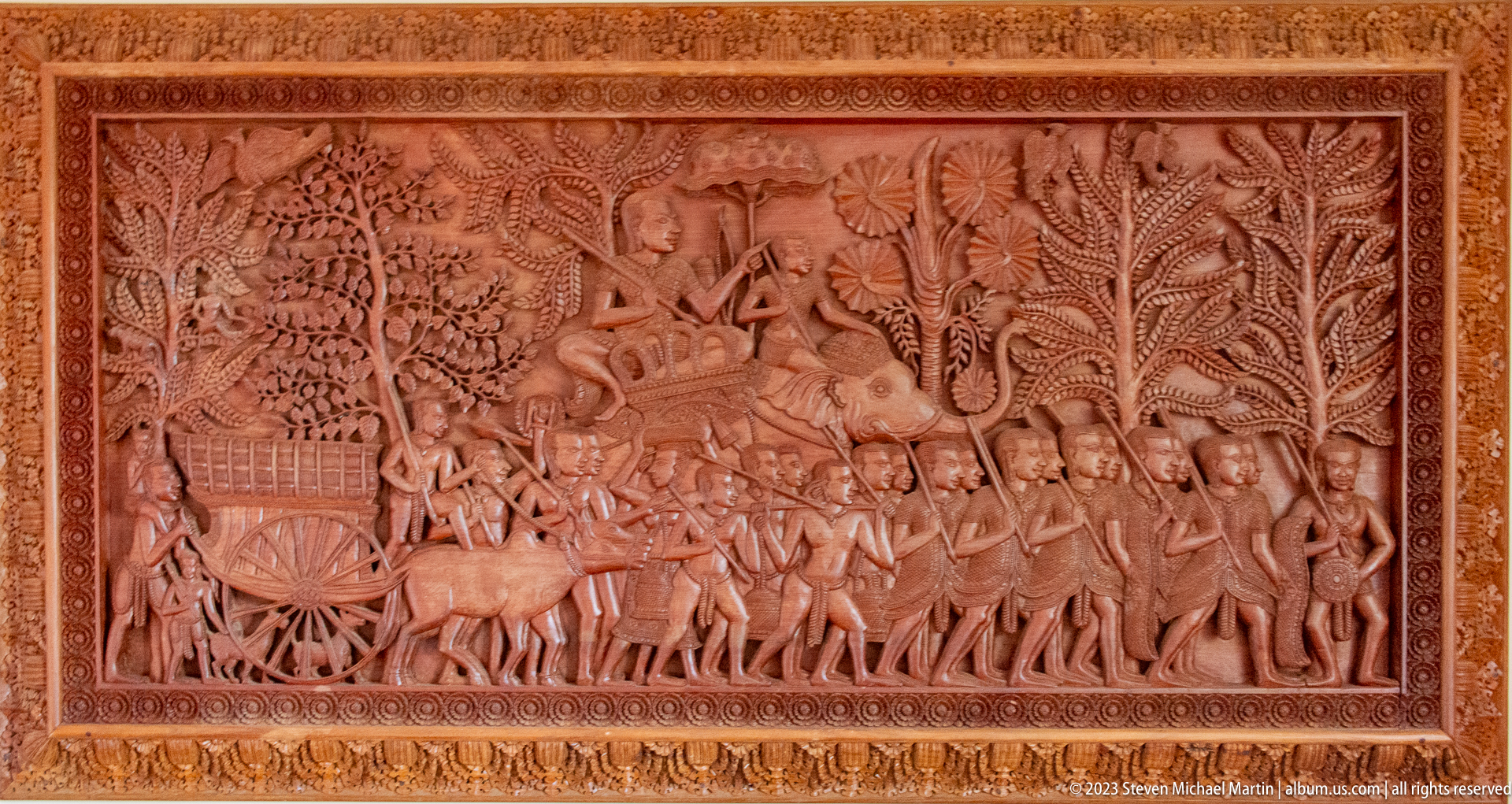
An intricately carved wooden panel shows a ceremonial procession with figures, an ox-drawn cart, trees, and architectural forms. The dense layered carving evokes Khmer narrative relief traditions while serving as decorative art within the Saem Siemreap Hotel.
Caption
An intricately carved wooden panel shows a ceremonial procession with figures, an ox-drawn cart, trees, and architectural forms. The dense layered carving evokes Khmer narrative relief traditions while serving as decorative art within the Saem Siemreap Hotel.
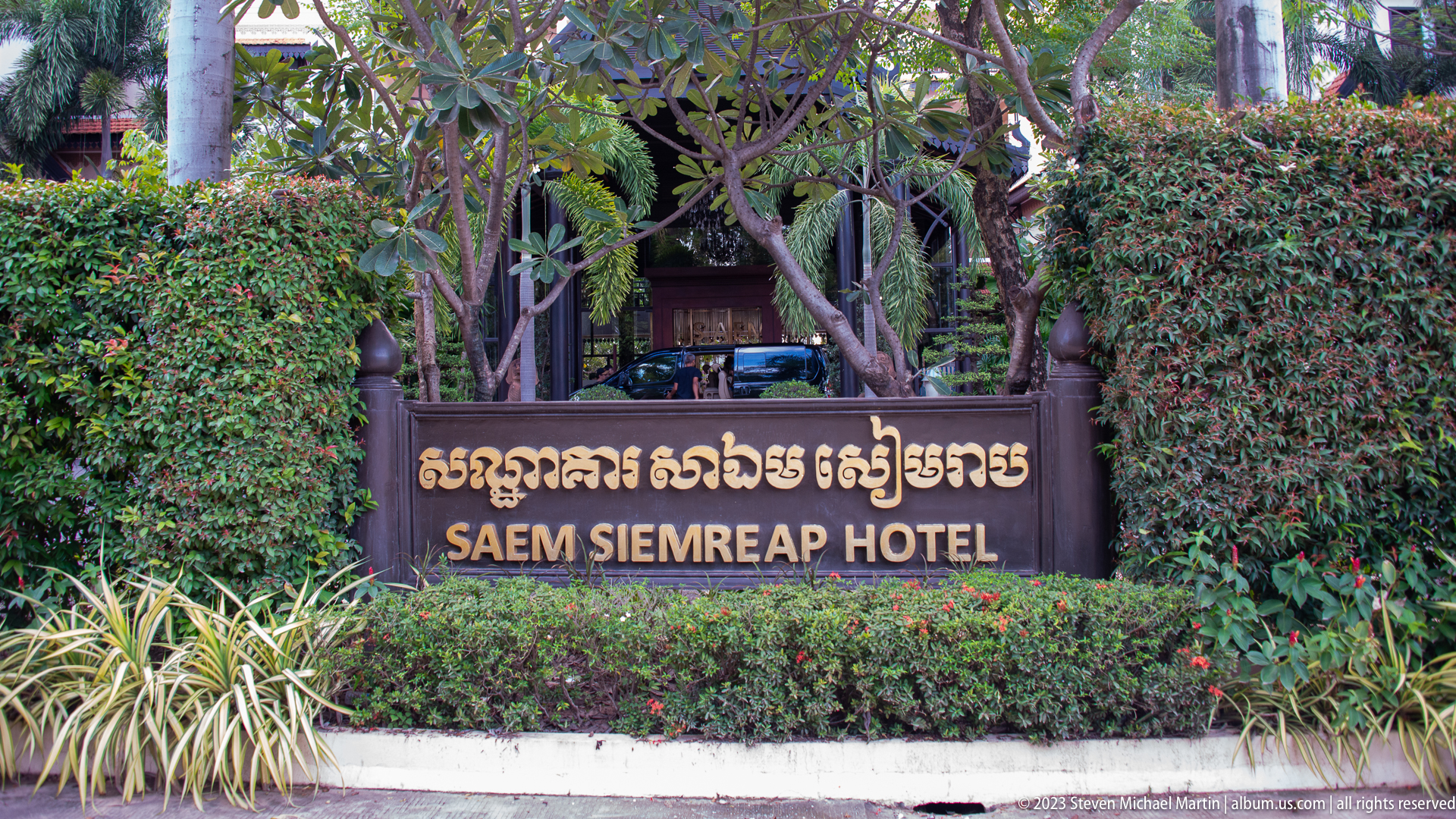
A dark wooden sign identifies Saem Siemreap Hotel in Khmer and English at the edge of a lush garden entrance. Dense shrubs, flowering plants, and branching trees partially enclose the sign, presenting the hotel as a landscaped retreat from the surrounding city.
Caption
A dark wooden sign identifies Saem Siemreap Hotel in Khmer and English at the edge of a lush garden entrance. Dense shrubs, flowering plants, and branching trees partially enclose the sign, presenting the hotel as a landscaped retreat from the surrounding city.
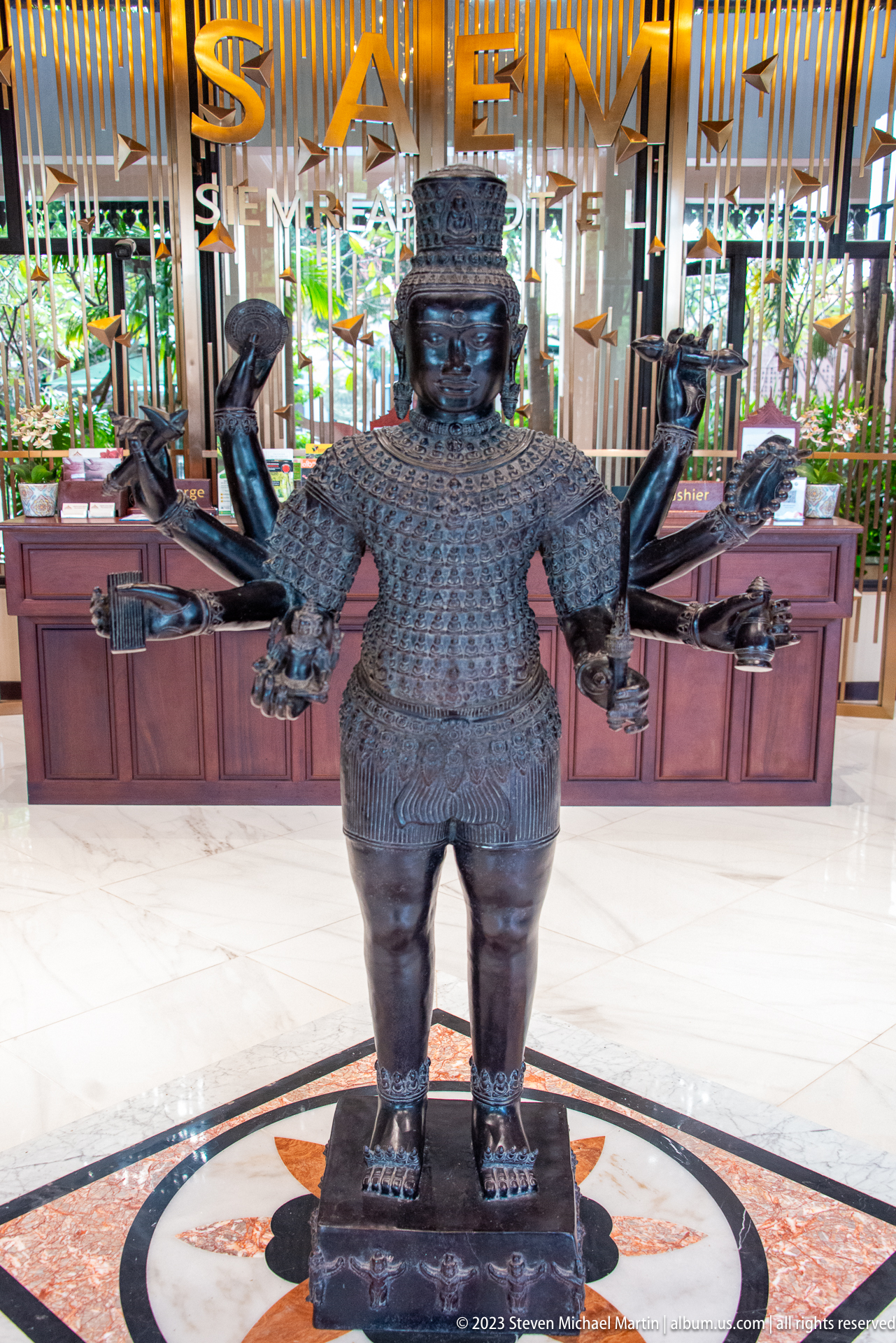
A dark, four-armed guardian-like figure stands on a circular patterned floor medallion in the Saem Siemreap Hotel lobby. Its broad stance, elaborate headdress, jewelry, and raised hands create a commanding centerpiece before the reception area.
Caption
A dark, four-armed guardian-like figure stands on a circular patterned floor medallion in the Saem Siemreap Hotel lobby. Its broad stance, elaborate headdress, jewelry, and raised hands create a commanding centerpiece before the reception area.
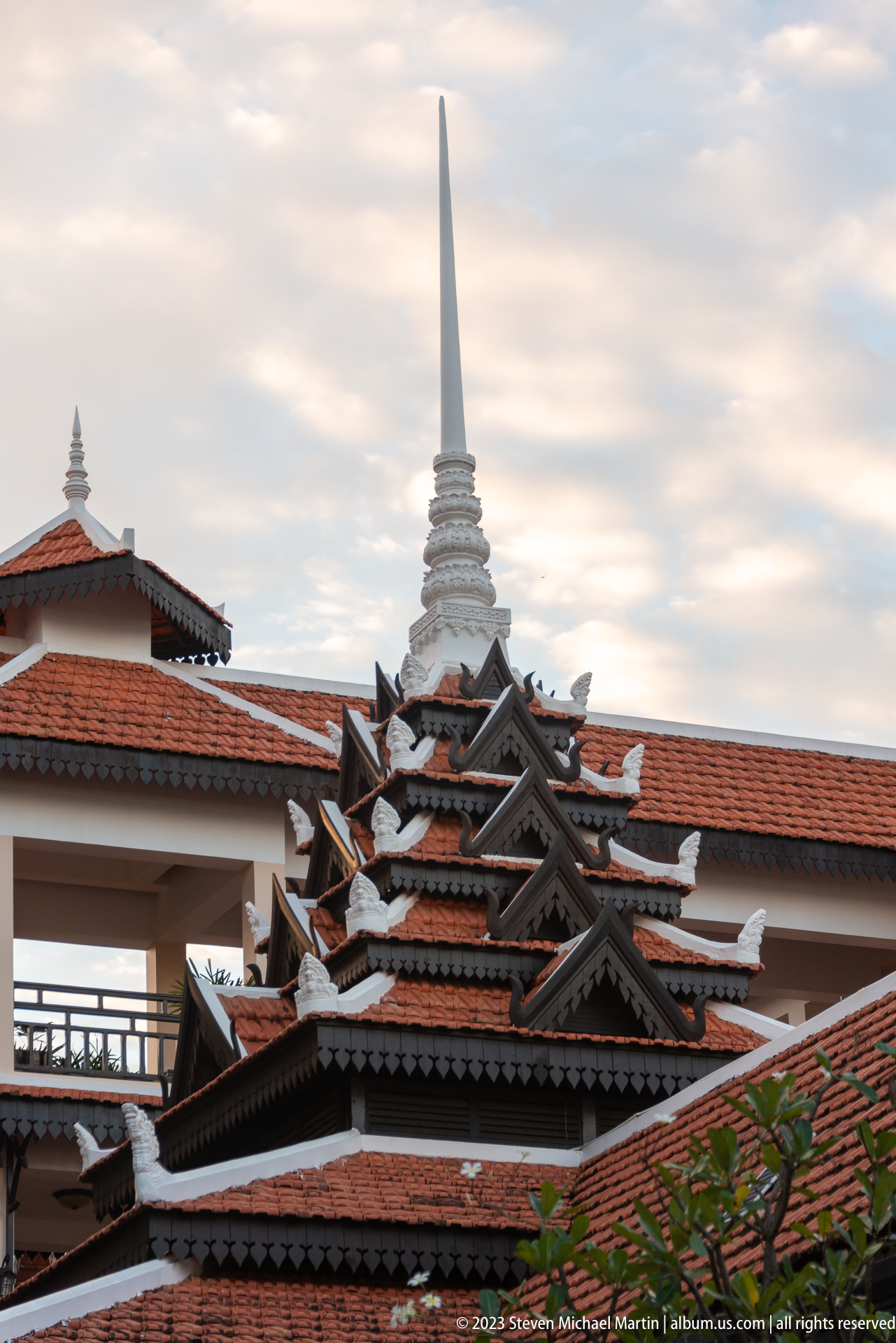
Layered dark gables rise above red tile roofs at Saem Siemreap Hotel, with a slender white spire visible beyond. The compressed view emphasizes the property’s use of stepped, temple-inspired roof forms against an overcast evening sky.
Caption
Layered dark gables rise above red tile roofs at Saem Siemreap Hotel, with a slender white spire visible beyond. The compressed view emphasizes the property’s use of stepped, temple-inspired roof forms against an overcast evening sky.
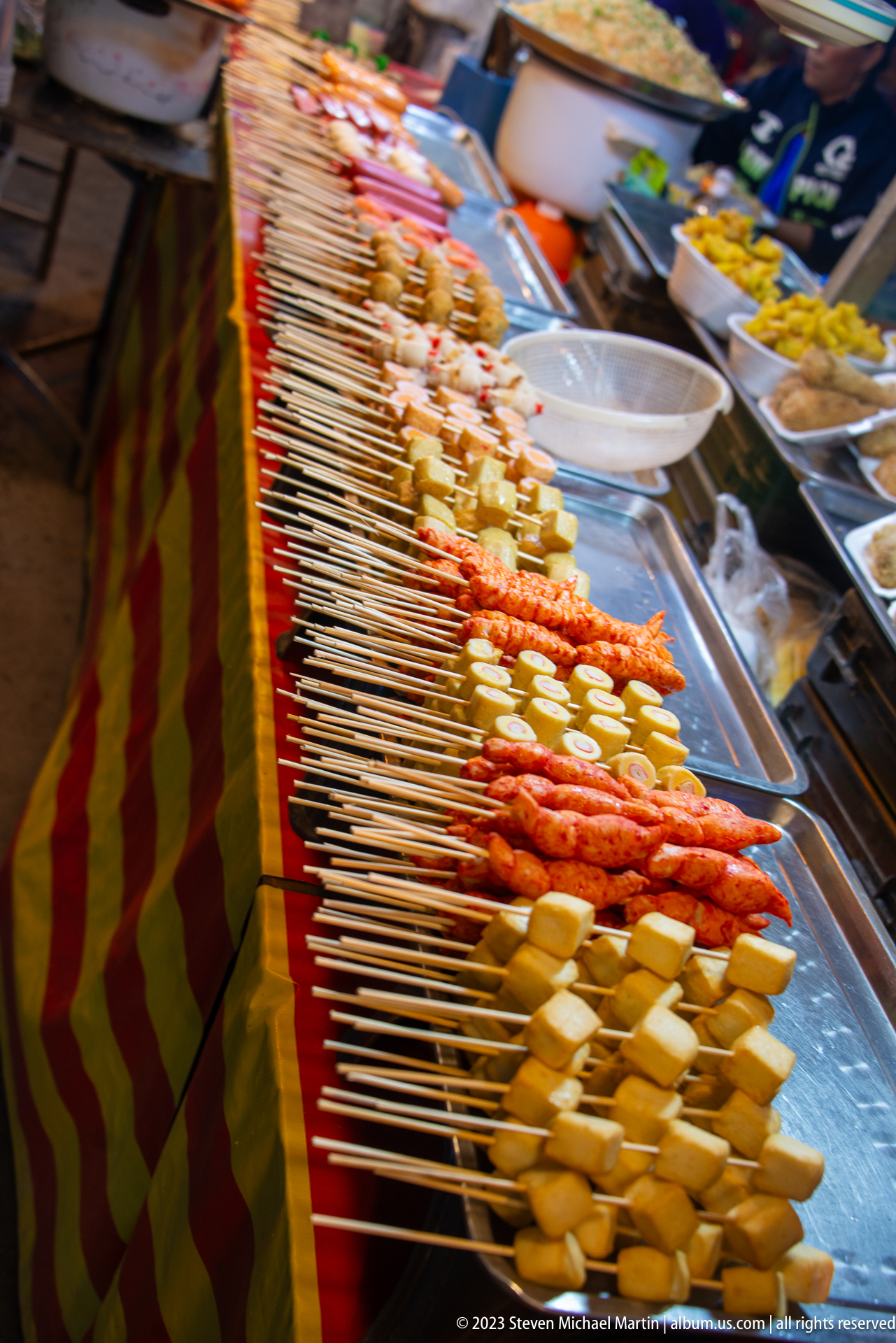
Wooden skewers loaded with sausages, fish balls, tofu, vegetables, and other prepared items stretch diagonally across a market counter. The long perspective compresses dozens of choices into a dense pattern of repeating sticks and brightly colored foods.
Caption
Wooden skewers loaded with sausages, fish balls, tofu, vegetables, and other prepared items stretch diagonally across a market counter. The long perspective compresses dozens of choices into a dense pattern of repeating sticks and brightly colored foods.
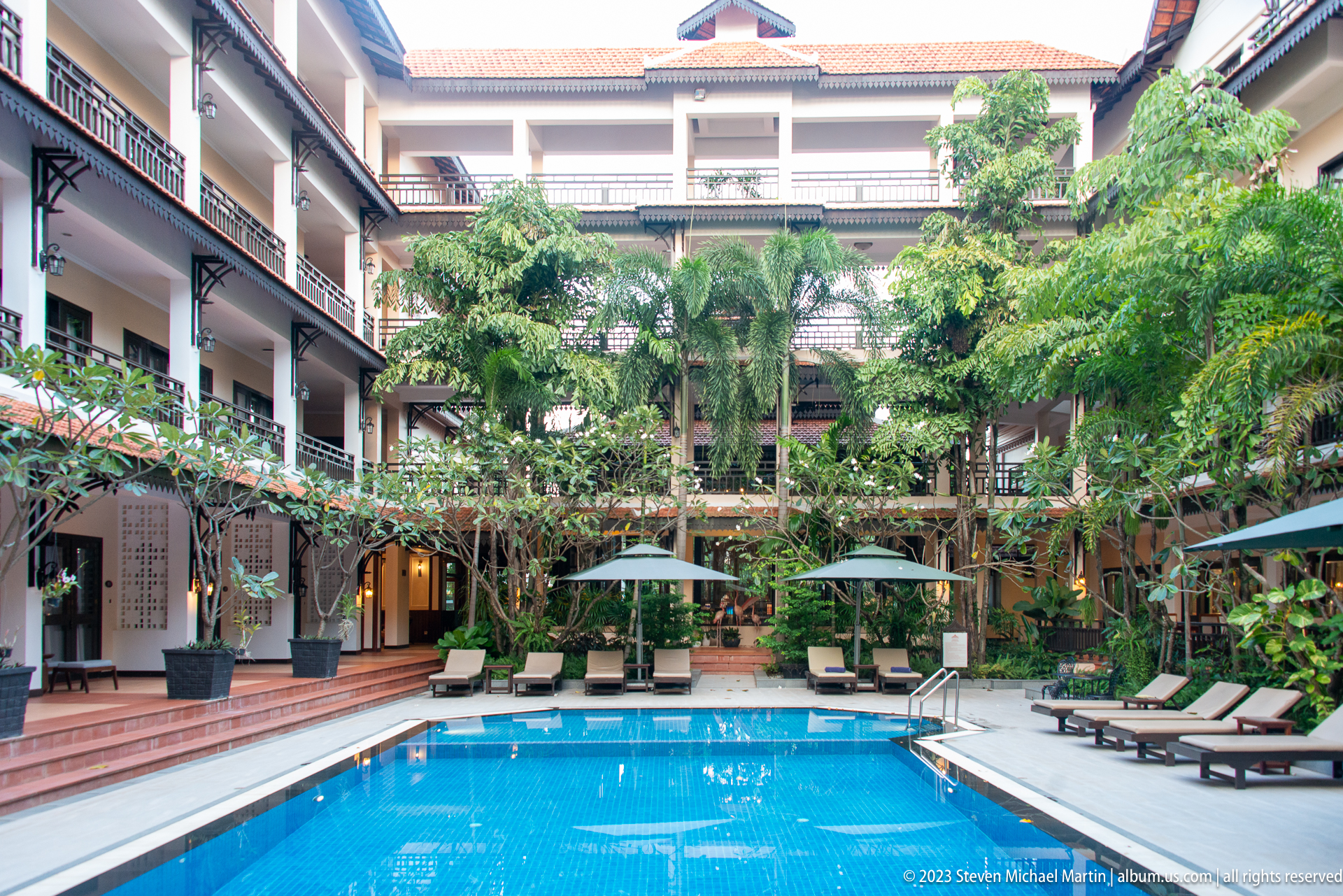
Guest-room balconies, shaded walkways, and mature tropical trees surround the central swimming pool at Saem Siemreap Hotel. This wider view clarifies how the property organizes circulation and leisure space around an enclosed, garden-like courtyard.
Caption
Guest-room balconies, shaded walkways, and mature tropical trees surround the central swimming pool at Saem Siemreap Hotel. This wider view clarifies how the property organizes circulation and leisure space around an enclosed, garden-like courtyard.
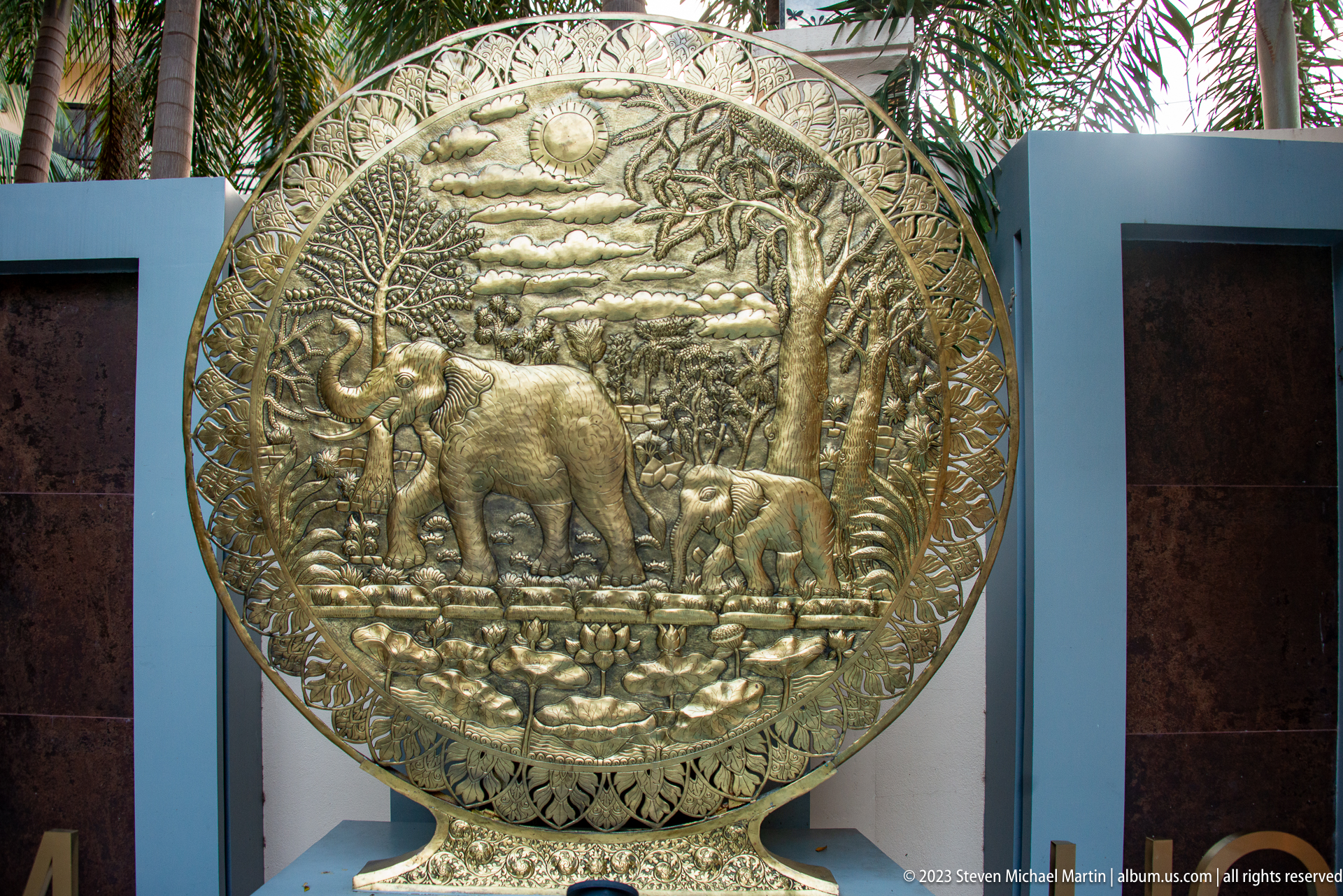
This close view of the hotel’s circular decorative relief reveals elephants moving through a densely patterned forest landscape. Raised foliage, birds, and border motifs create a richly textured surface that draws on Cambodian associations with elephants and tropical nature.
Caption
This close view of the hotel’s circular decorative relief reveals elephants moving through a densely patterned forest landscape. Raised foliage, birds, and border motifs create a richly textured surface that draws on Cambodian associations with elephants and tropical nature.
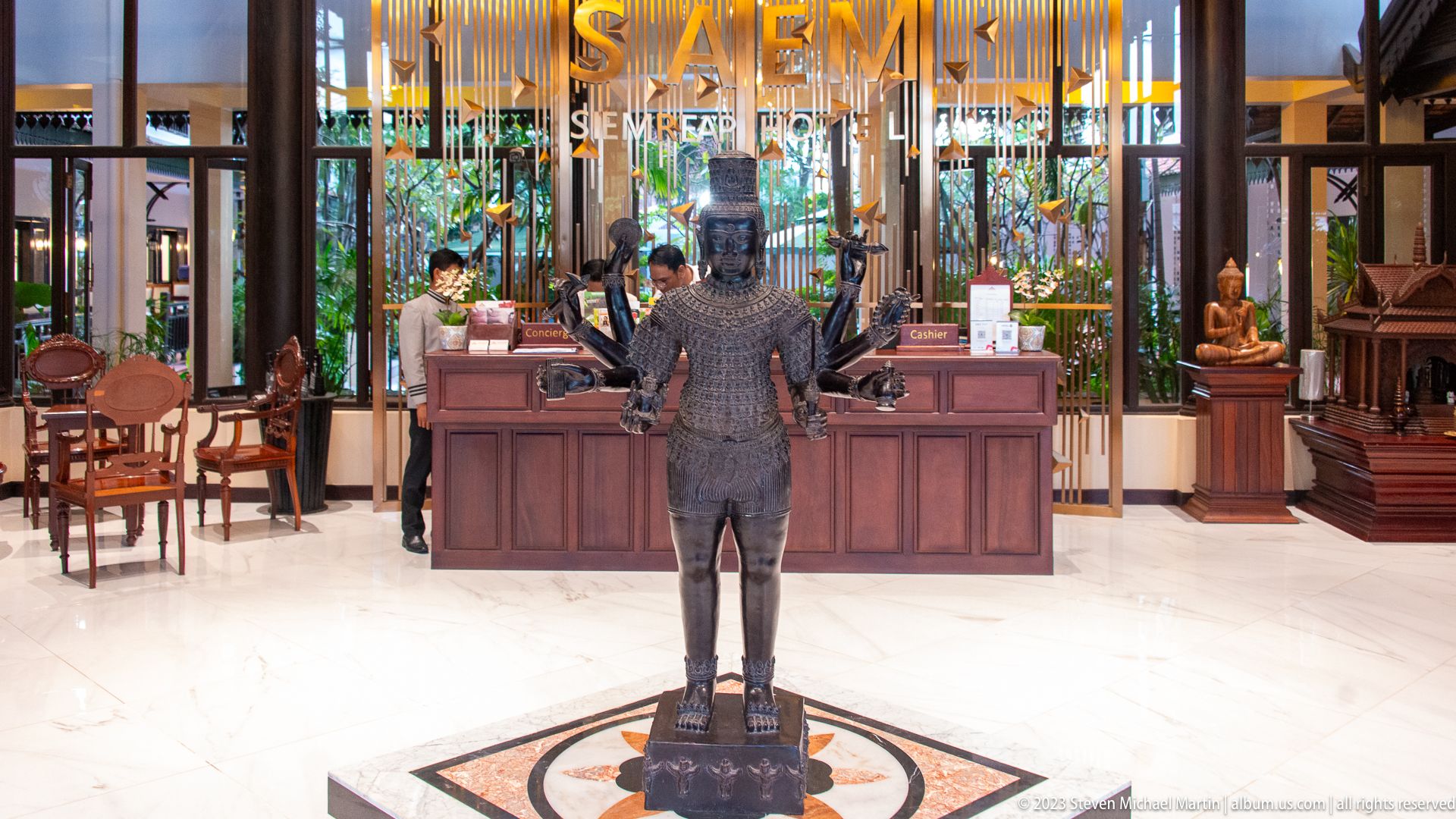
Seen from behind, the hotel’s four-armed sculpture faces the Saem Siemreap reception desk beneath a suspended gold-toned screen. The composition shows how the figure functions as a ceremonial focal point between the entrance and guest-services area.
Caption
Seen from behind, the hotel’s four-armed sculpture faces the Saem Siemreap reception desk beneath a suspended gold-toned screen. The composition shows how the figure functions as a ceremonial focal point between the entrance and guest-services area.
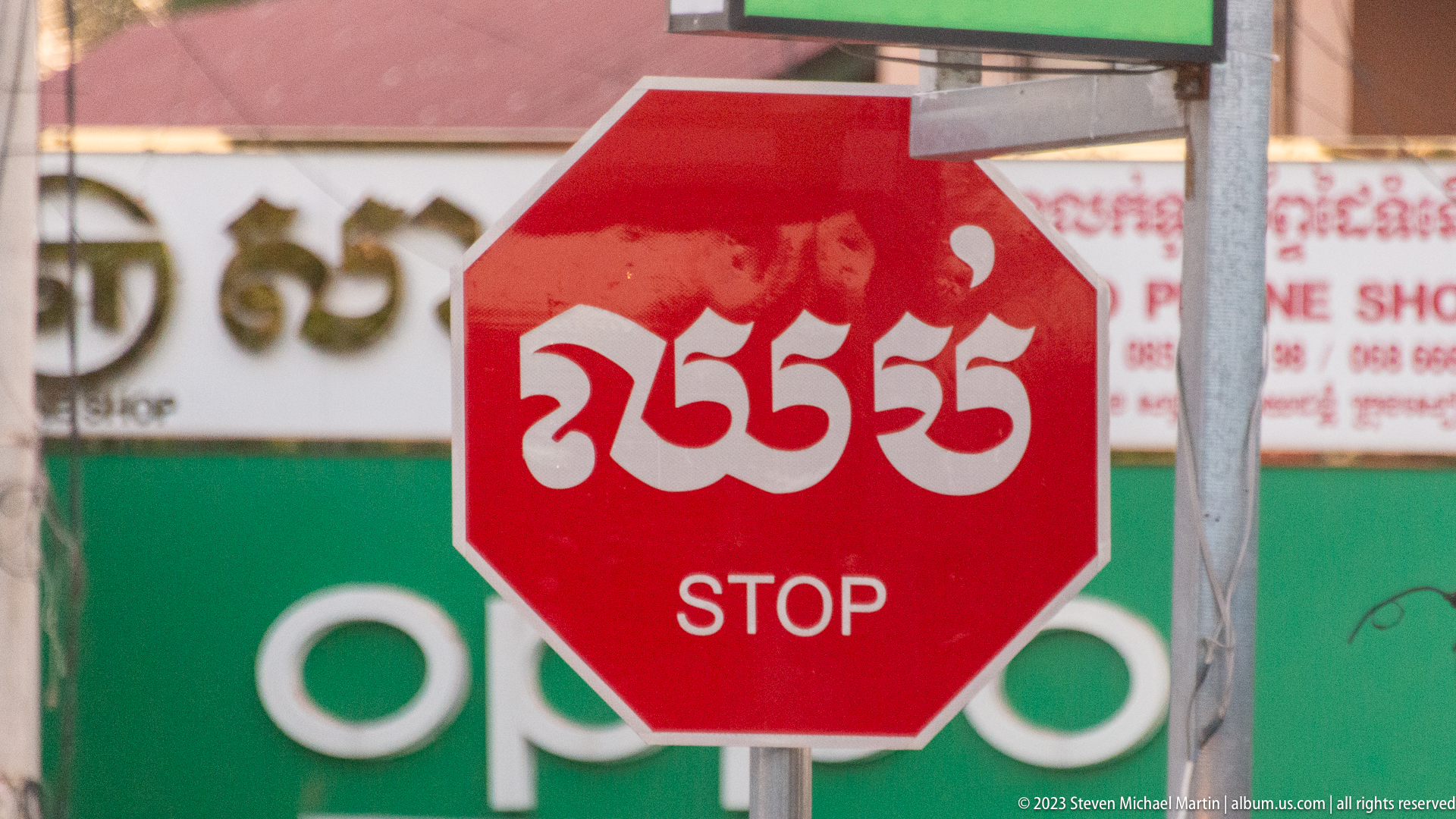
A red octagonal stop sign displays Khmer script above the English word “STOP” on a Siem Reap street. Commercial signage behind it places the familiar international road symbol within the city’s bilingual visual landscape.
Caption
A red octagonal stop sign displays Khmer script above the English word “STOP” on a Siem Reap street. Commercial signage behind it places the familiar international road symbol within the city’s bilingual visual landscape.
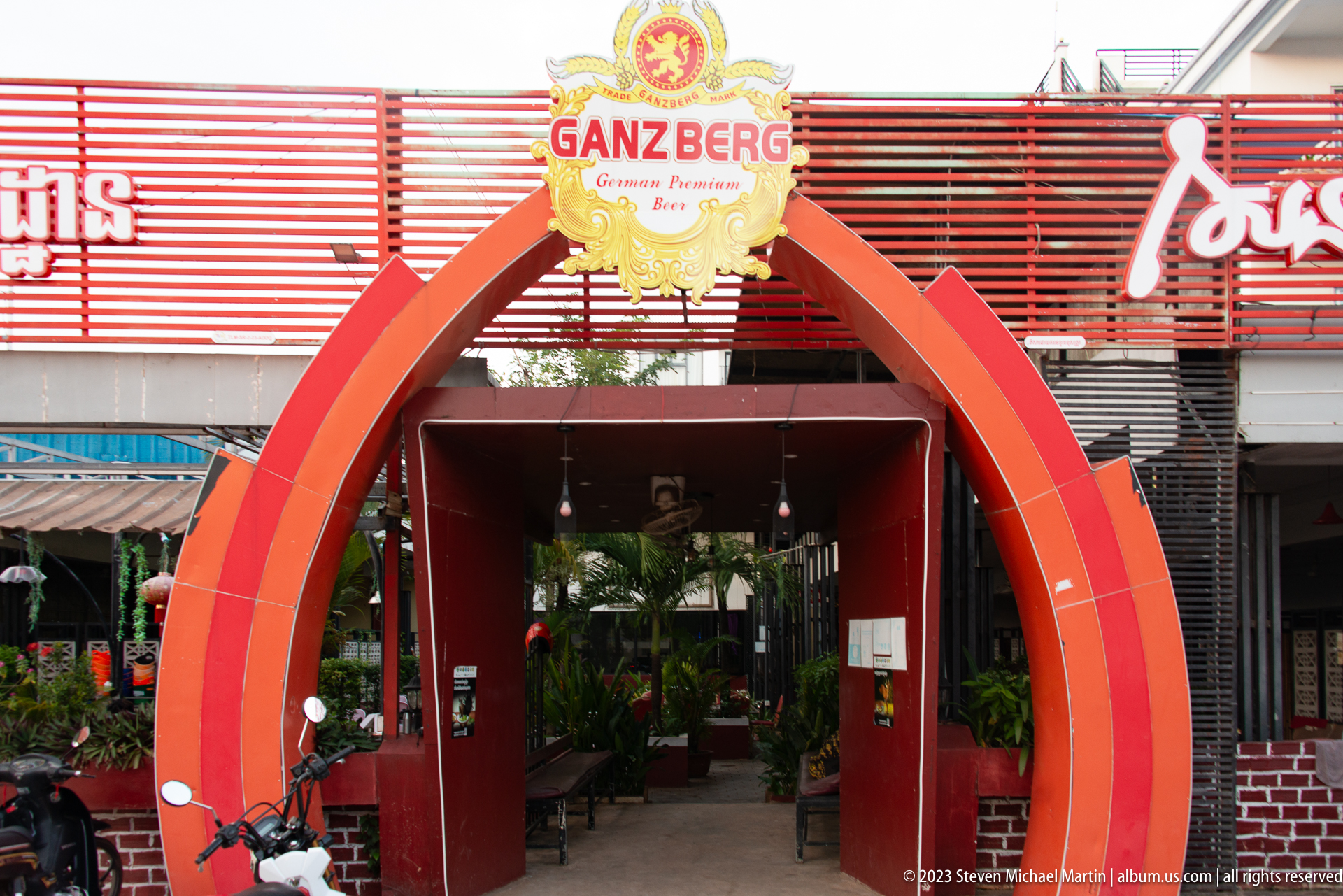
A bold red arched entrance marks a Siem Reap restaurant beneath prominent Ganzberg beer branding. Motorbikes parked along the frontage and Khmer lettering on surrounding signs situate the venue within the city’s active roadside commercial strip.
Caption
A bold red arched entrance marks a Siem Reap restaurant beneath prominent Ganzberg beer branding. Motorbikes parked along the frontage and Khmer lettering on surrounding signs situate the venue within the city’s active roadside commercial strip.
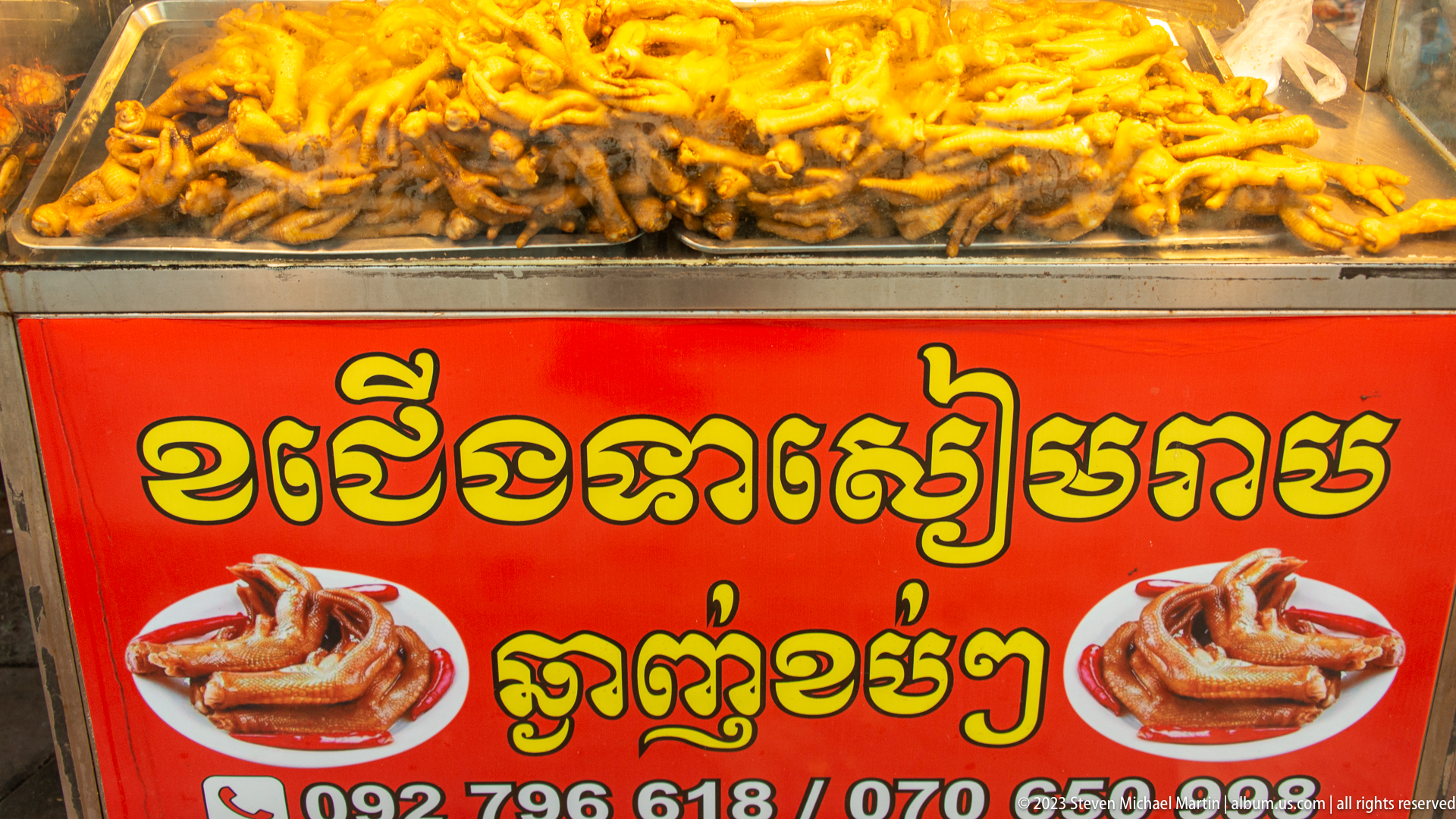
A vivid red food-stall sign uses large yellow Khmer lettering above photographs of fried dishes and two telephone numbers. Trays of prepared food visible along the top edge connect the advertising directly to the vendor’s street-side offerings.
Caption
A vivid red food-stall sign uses large yellow Khmer lettering above photographs of fried dishes and two telephone numbers. Trays of prepared food visible along the top edge connect the advertising directly to the vendor’s street-side offerings.
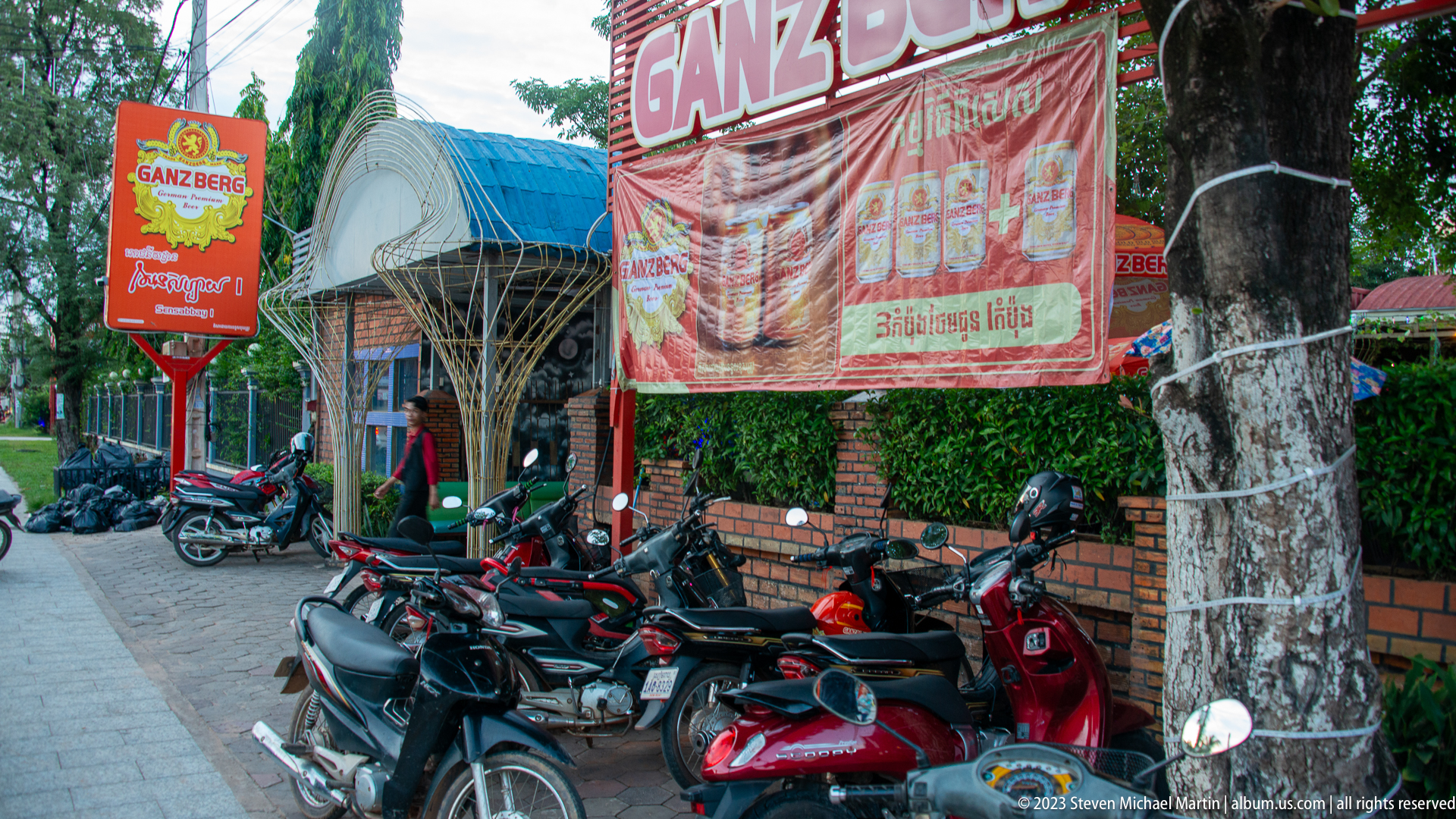
Rows of motorbikes line the sidewalk outside a Ganzberg-branded restaurant or entertainment venue in Siem Reap. Large red beer advertisements, trees, and the crowded curbside parking convey the importance of motorcycles to everyday urban mobility.
Caption
Rows of motorbikes line the sidewalk outside a Ganzberg-branded restaurant or entertainment venue in Siem Reap. Large red beer advertisements, trees, and the crowded curbside parking convey the importance of motorcycles to everyday urban mobility.

A motorcyclist tows an open utility trailer carrying several passengers along a Siem Reap road. The mixed passenger-and-cargo vehicle, captured in motion, shows an adaptable form of local transport used for short urban journeys.
Caption
A motorcyclist tows an open utility trailer carrying several passengers along a Siem Reap road. The mixed passenger-and-cargo vehicle, captured in motion, shows an adaptable form of local transport used for short urban journeys.
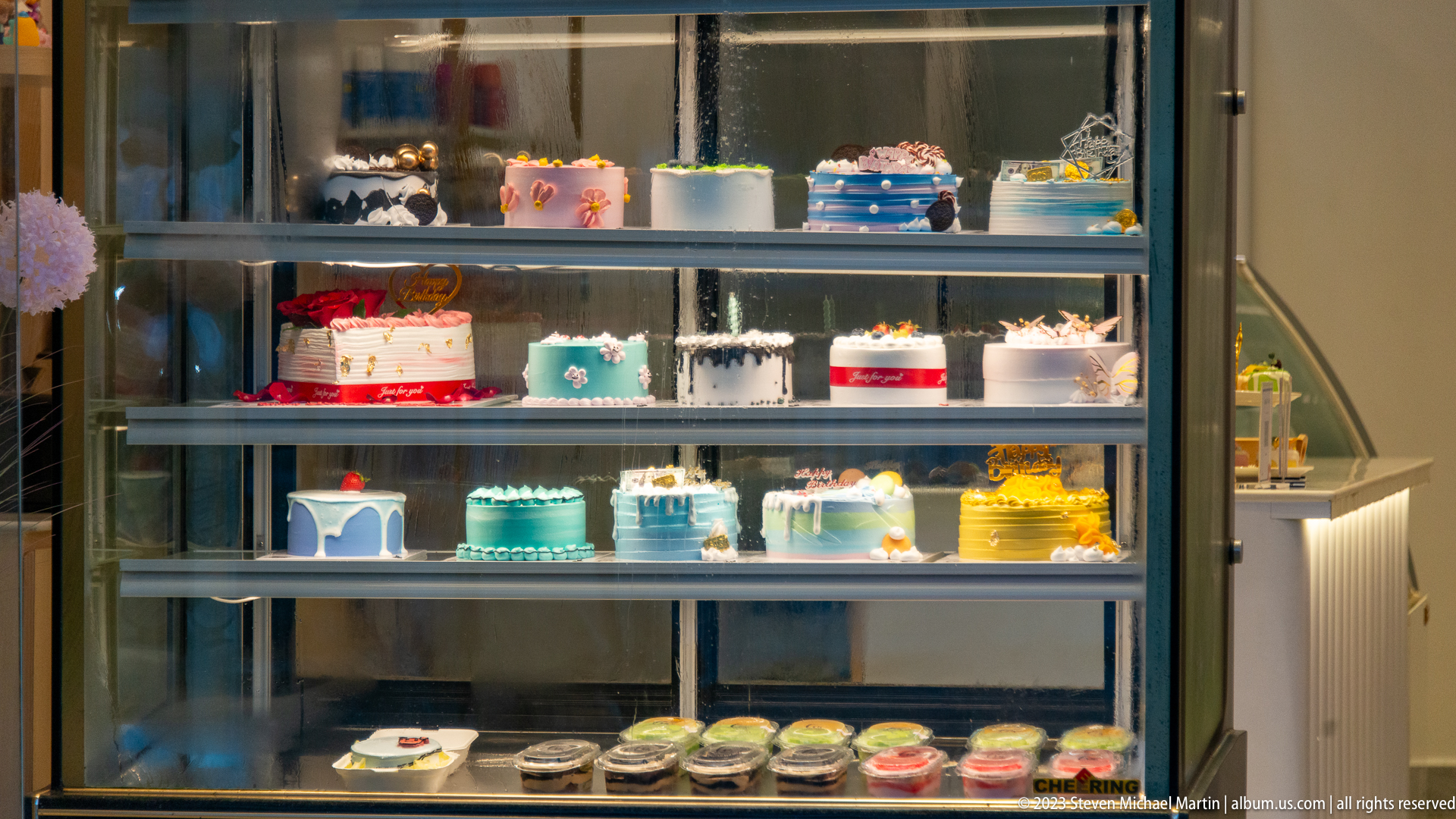
Colorful decorated cakes fill a refrigerated display case in a Siem Reap bakery. Tiered designs, piped frosting, pastel colors, and small individual desserts present a polished urban retail contrast to the surrounding street-food scenes.
Caption
Colorful decorated cakes fill a refrigerated display case in a Siem Reap bakery. Tiered designs, piped frosting, pastel colors, and small individual desserts present a polished urban retail contrast to the surrounding street-food scenes.
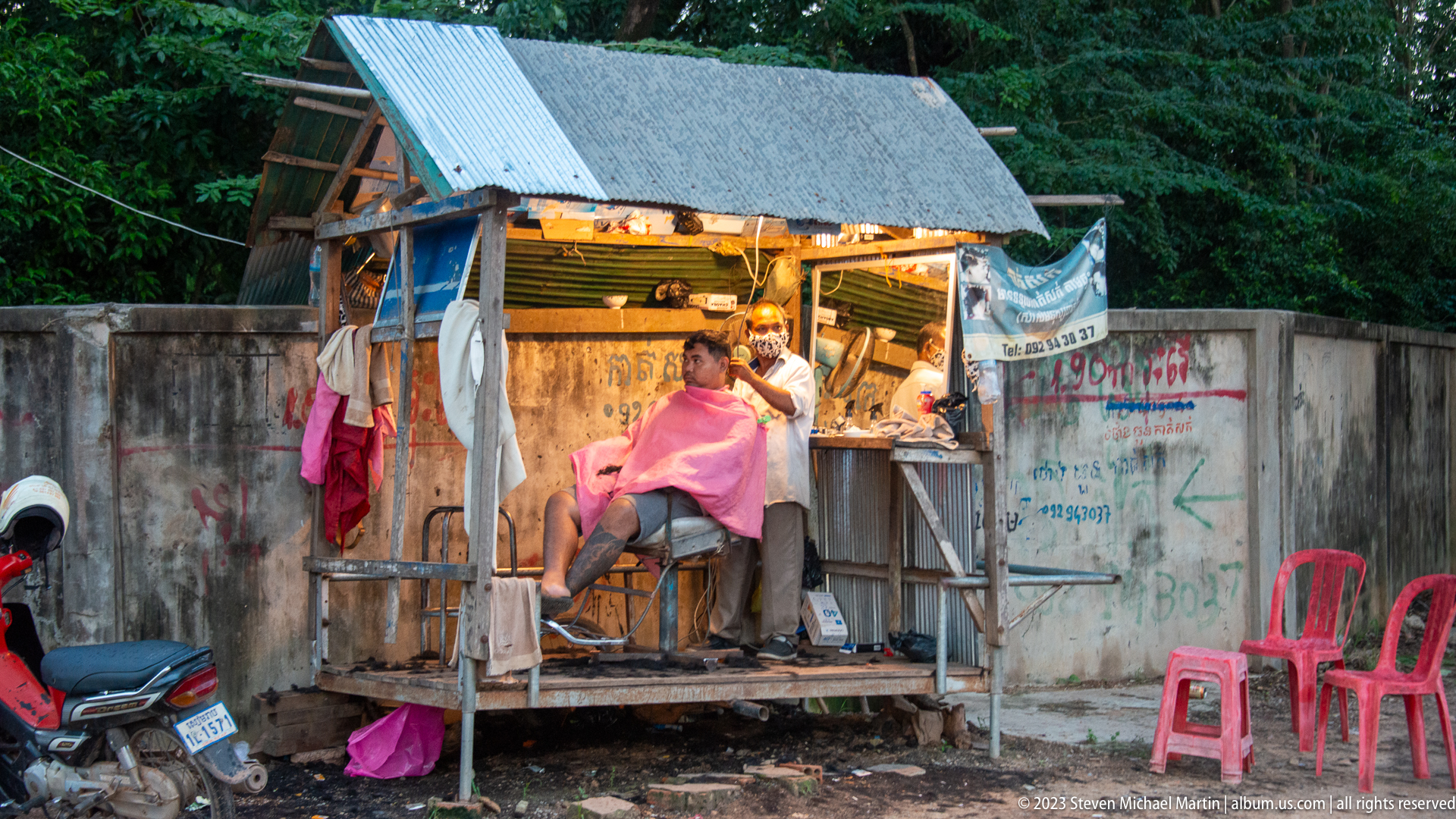
A customer receives a haircut inside a tiny open-front wooden barbershop beside a Siem Reap road. Corrugated roofing, improvised walls, handwritten notices, and plastic chairs reveal the modest scale and resourceful construction of the neighborhood business.
Caption
A customer receives a haircut inside a tiny open-front wooden barbershop beside a Siem Reap road. Corrugated roofing, improvised walls, handwritten notices, and plastic chairs reveal the modest scale and resourceful construction of the neighborhood business.
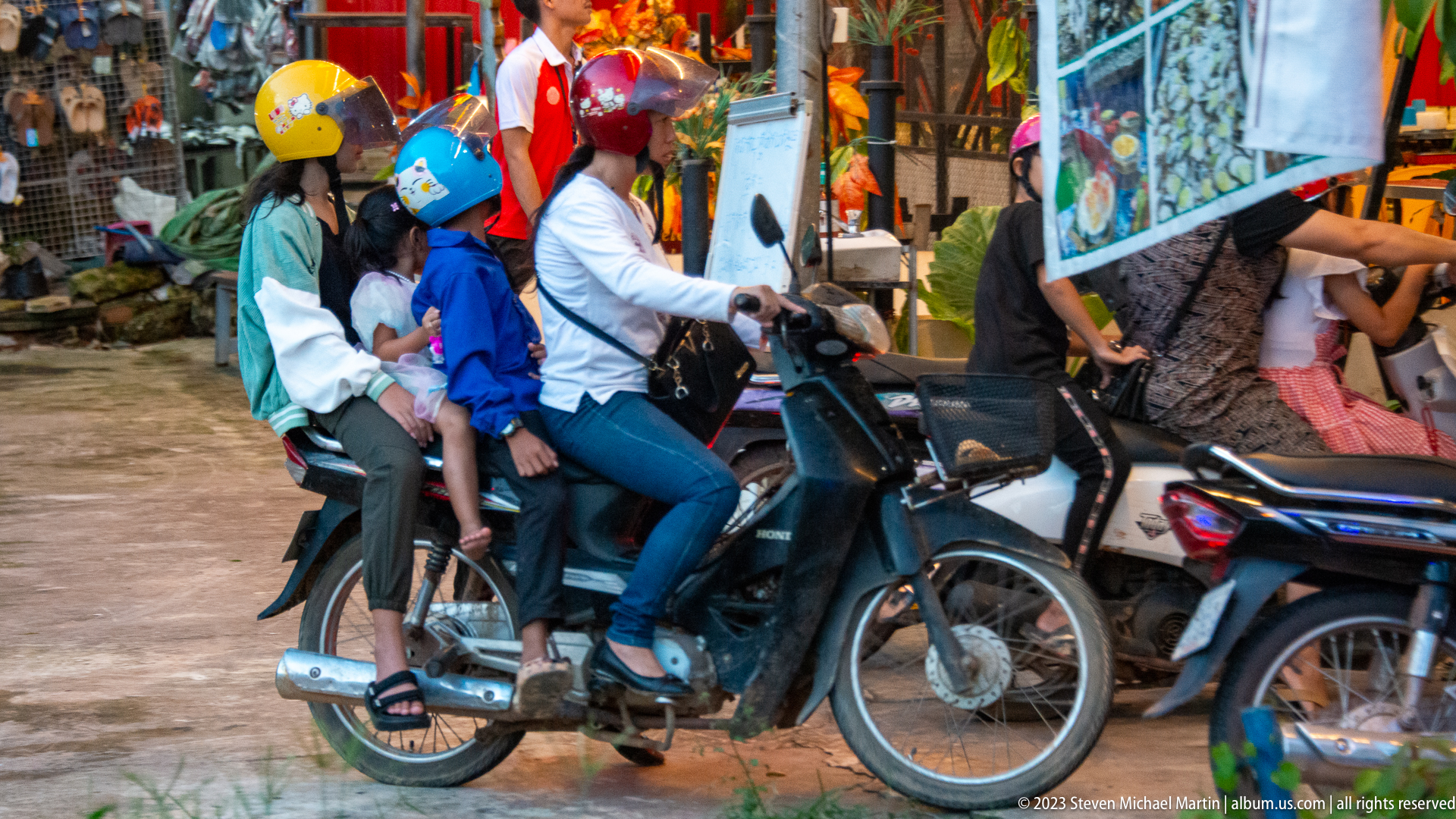
An adult rider carries several children on a motorbike through Siem Reap traffic. The tightly shared seat and forward motion provide a candid view of family transportation in a city where motorcycles are central to everyday mobility.
Caption
An adult rider carries several children on a motorbike through Siem Reap traffic. The tightly shared seat and forward motion provide a candid view of family transportation in a city where motorcycles are central to everyday mobility.
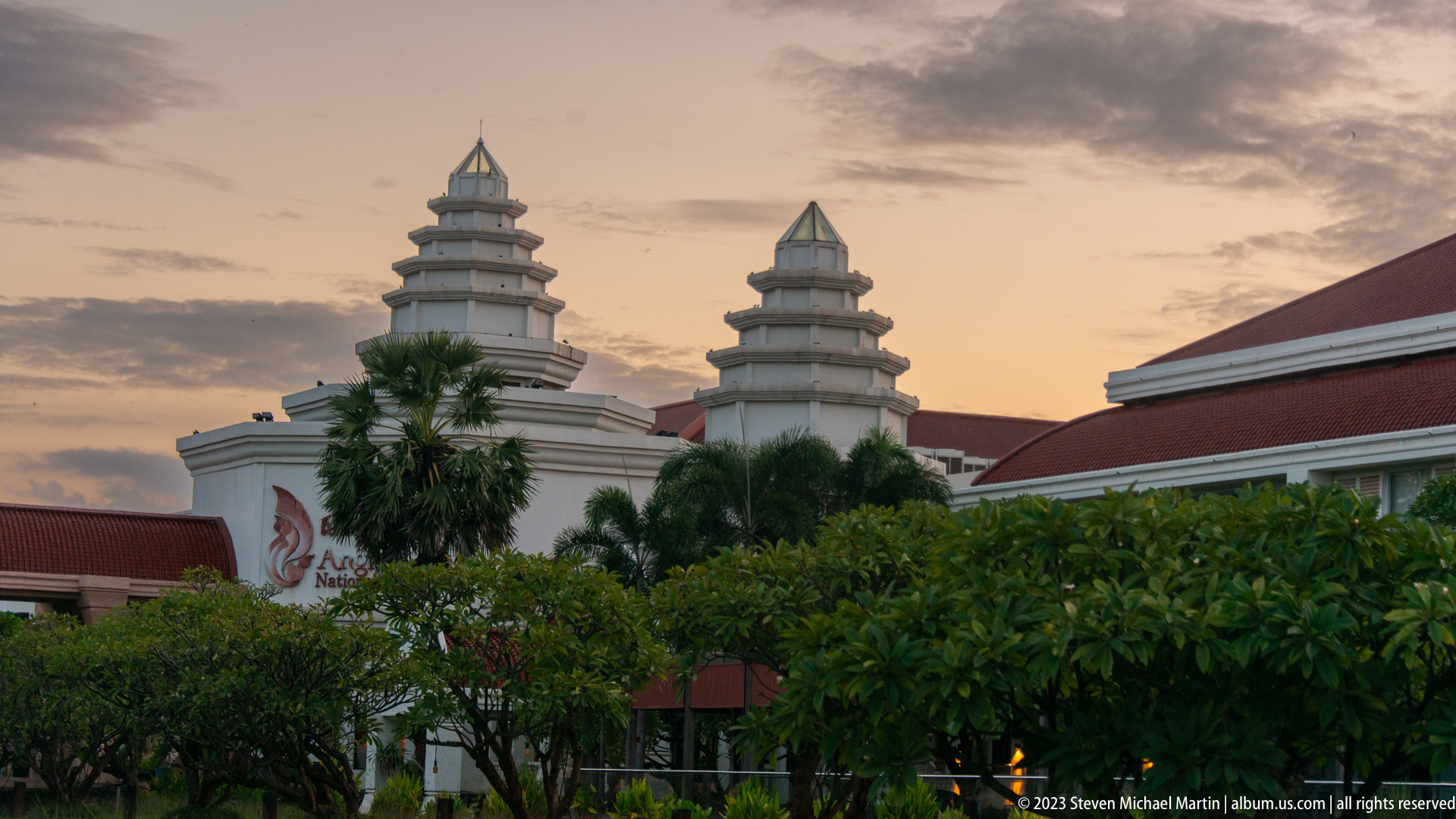
Twin stepped towers rise above the roofline of Angkor Paradise Hotel in Siem Reap as dusk gathers behind layered clouds. Palms and garden trees partially screen the façade, while the symmetrical tower forms give the resort a monumental Khmer-inspired silhouette.
Caption
Twin stepped towers rise above the roofline of Angkor Paradise Hotel in Siem Reap as dusk gathers behind layered clouds. Palms and garden trees partially screen the façade, while the symmetrical tower forms give the resort a monumental Khmer-inspired silhouette.
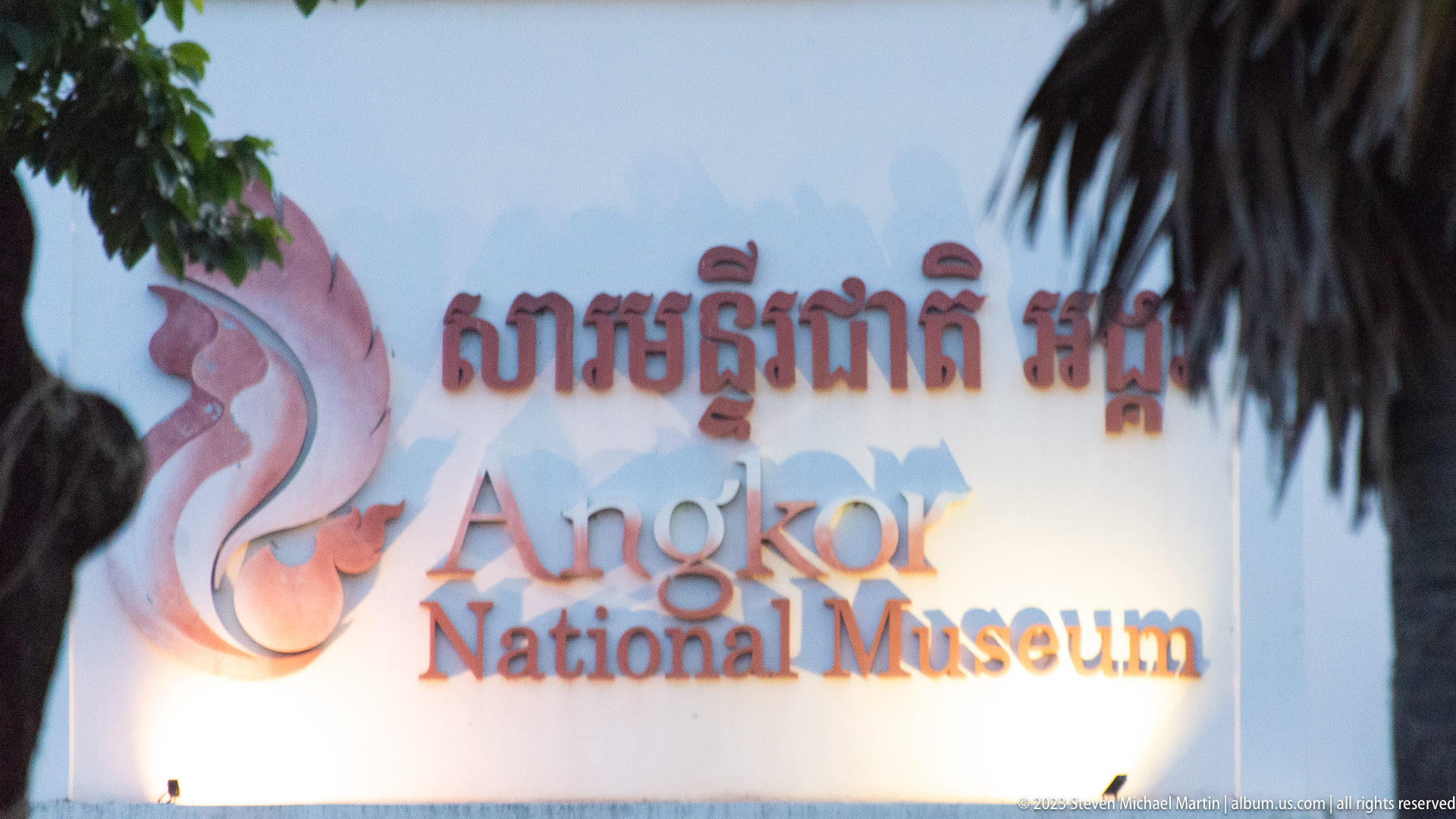
An illuminated wall sign identifies the Angkor National Museum in Khmer and English, accompanied by the museum’s stylized flame-like emblem. Palm fronds partly frame the view, while warm spotlights make the lettering stand out against the pale façade at night.
Caption
An illuminated wall sign identifies the Angkor National Museum in Khmer and English, accompanied by the museum’s stylized flame-like emblem. Palm fronds partly frame the view, while warm spotlights make the lettering stand out against the pale façade at night.
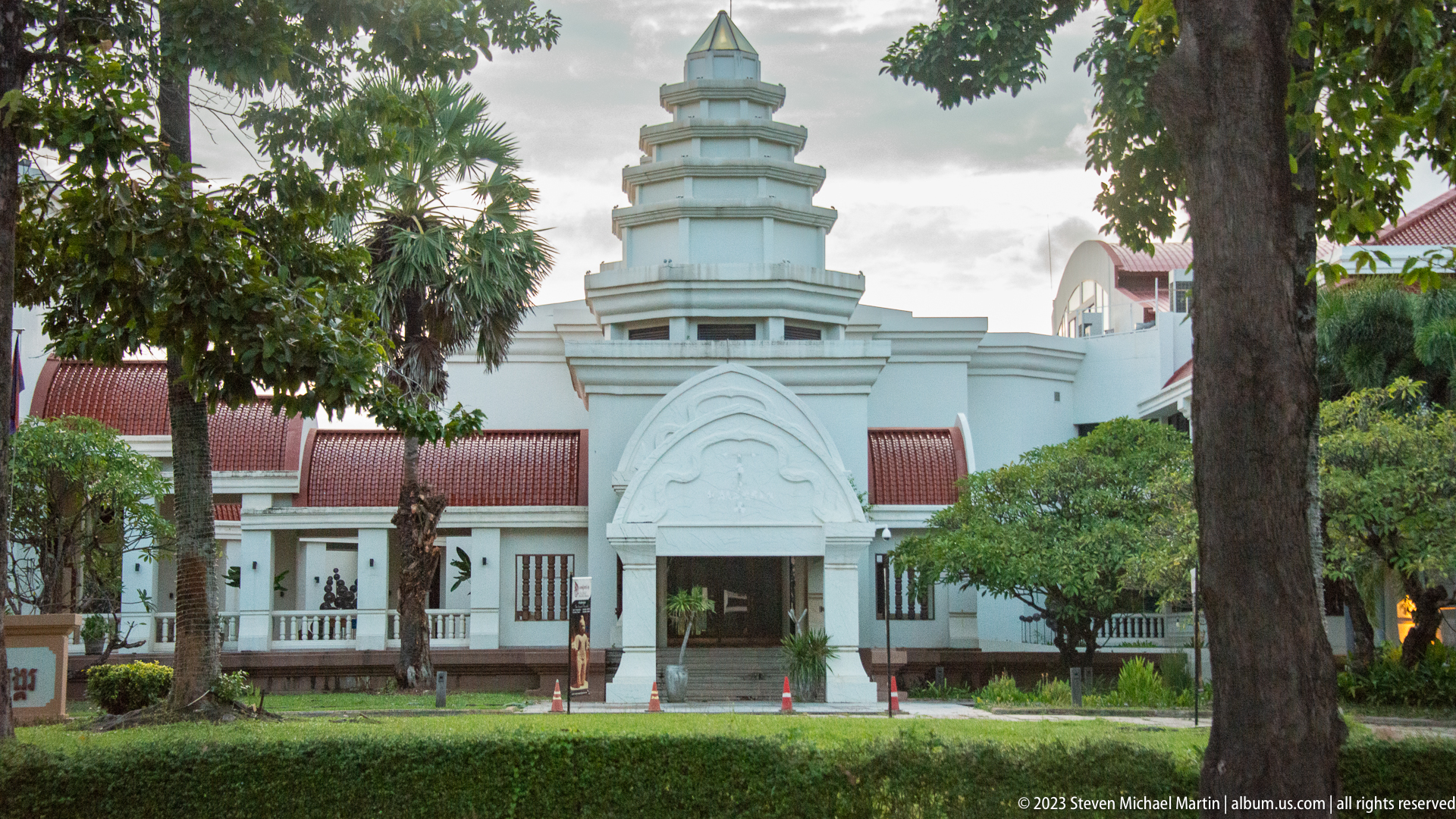
The entrance façade of the Angkor National Museum rises behind a formal lawn and clipped hedges. A tall, tiered central tower, white stucco walls, red tile roofs, and a recessed arched doorway adapt Khmer architectural motifs to a modern museum complex.
Caption
The entrance façade of the Angkor National Museum rises behind a formal lawn and clipped hedges. A tall, tiered central tower, white stucco walls, red tile roofs, and a recessed arched doorway adapt Khmer architectural motifs to a modern museum complex.
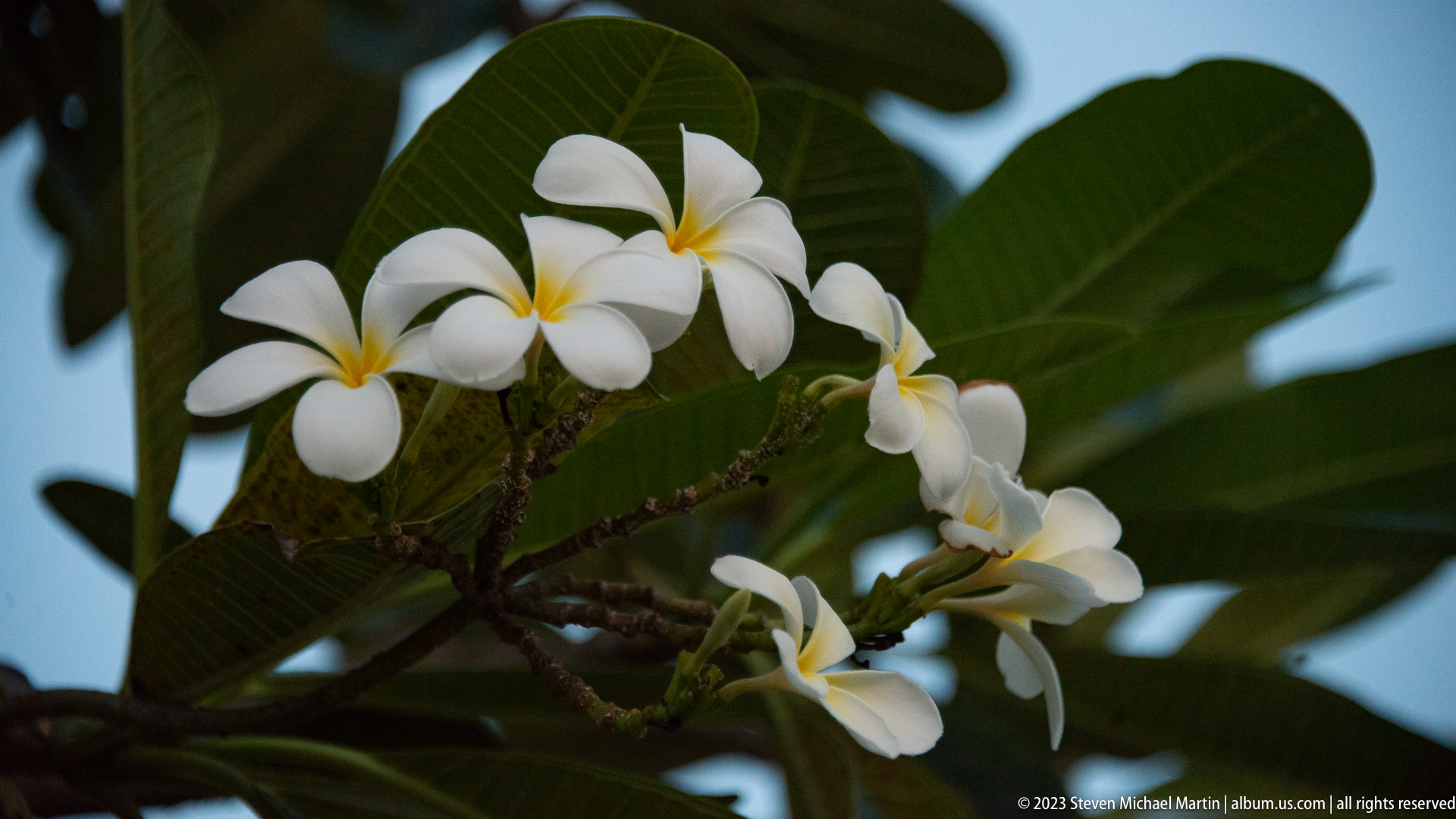
Clusters of white frangipani blossoms with yellow centers open against thick green leaves near the Angkor National Museum grounds. The close composition isolates the waxy petals and branching stems, adding a botanical detail to the architectural and street scenes of Siem Reap.
Caption
Clusters of white frangipani blossoms with yellow centers open against thick green leaves near the Angkor National Museum grounds. The close composition isolates the waxy petals and branching stems, adding a botanical detail to the architectural and street scenes of Siem Reap.
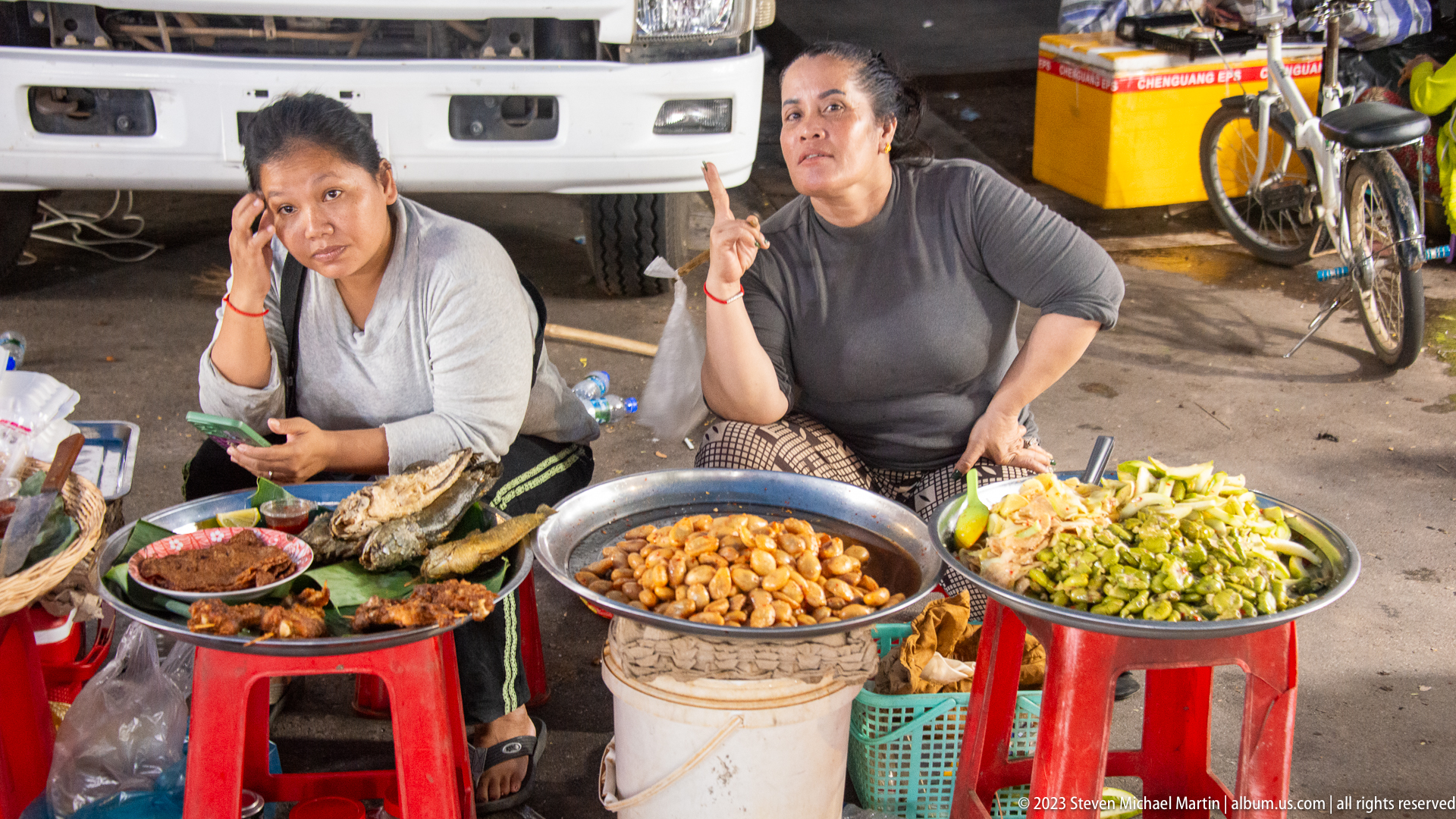
Two women sit behind bowls and trays of prepared foods at a Siem Reap night market. Pickled vegetables, eggs, sauces, and other dishes are arranged on low stools and containers, illustrating the compact presentation and personal scale of market vending.
Caption
Two women sit behind bowls and trays of prepared foods at a Siem Reap night market. Pickled vegetables, eggs, sauces, and other dishes are arranged on low stools and containers, illustrating the compact presentation and personal scale of market vending.

A large mound of crisp, finely shredded fried food is presented on banana leaves inside a woven basket. Small cups of red dipping sauce and water bottles sit behind the display, suggesting a ready-to-serve snack at a Siem Reap market stall.
Caption
A large mound of crisp, finely shredded fried food is presented on banana leaves inside a woven basket. Small cups of red dipping sauce and water bottles sit behind the display, suggesting a ready-to-serve snack at a Siem Reap market stall.
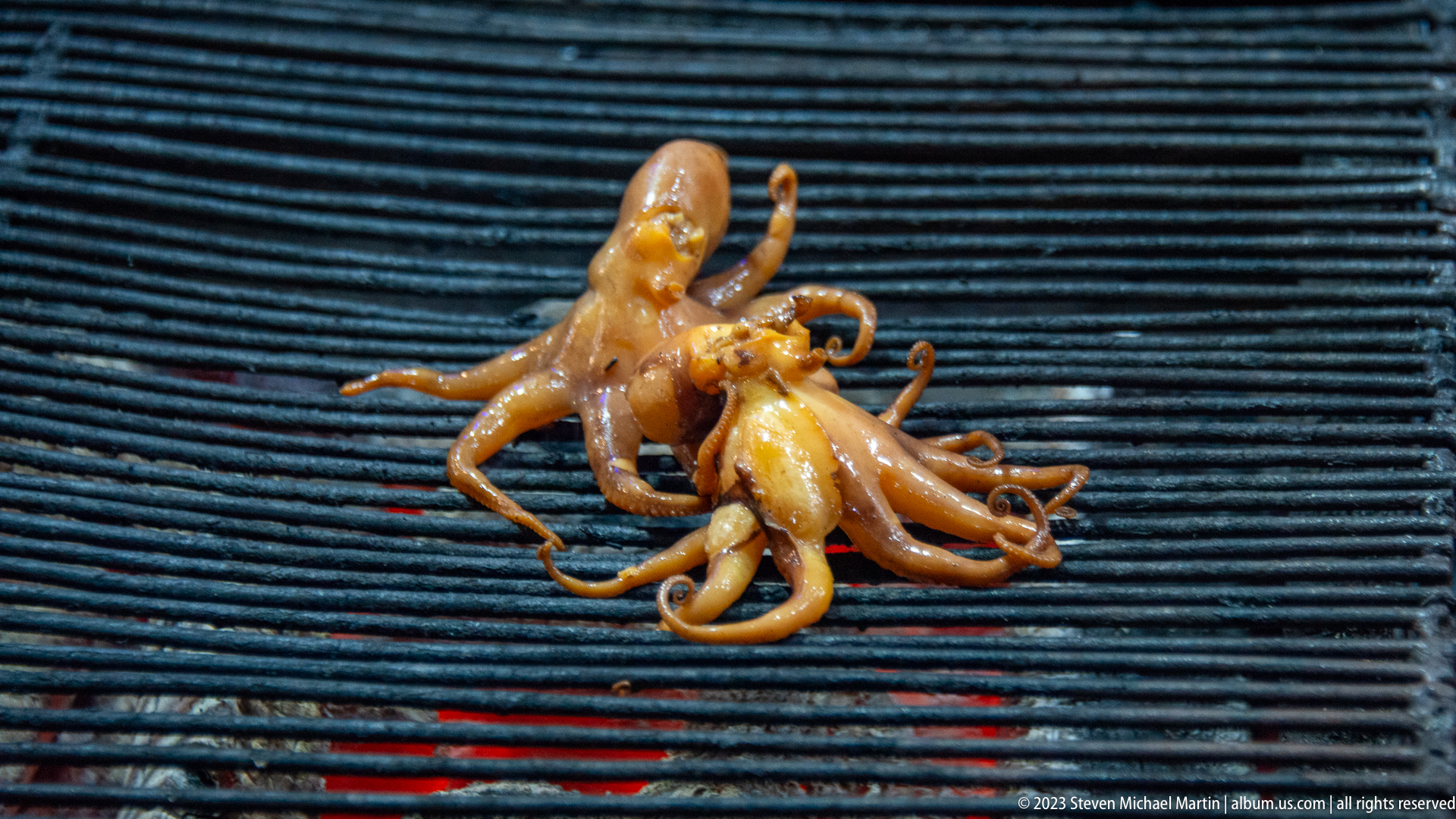
Two small whole octopuses cook directly on a metal grill above glowing charcoal. Their curled tentacles and glossy browned surfaces provide a close view of seafood preparation at a Siem Reap night-market stall.
Caption
Two small whole octopuses cook directly on a metal grill above glowing charcoal. Their curled tentacles and glossy browned surfaces provide a close view of seafood preparation at a Siem Reap night-market stall.
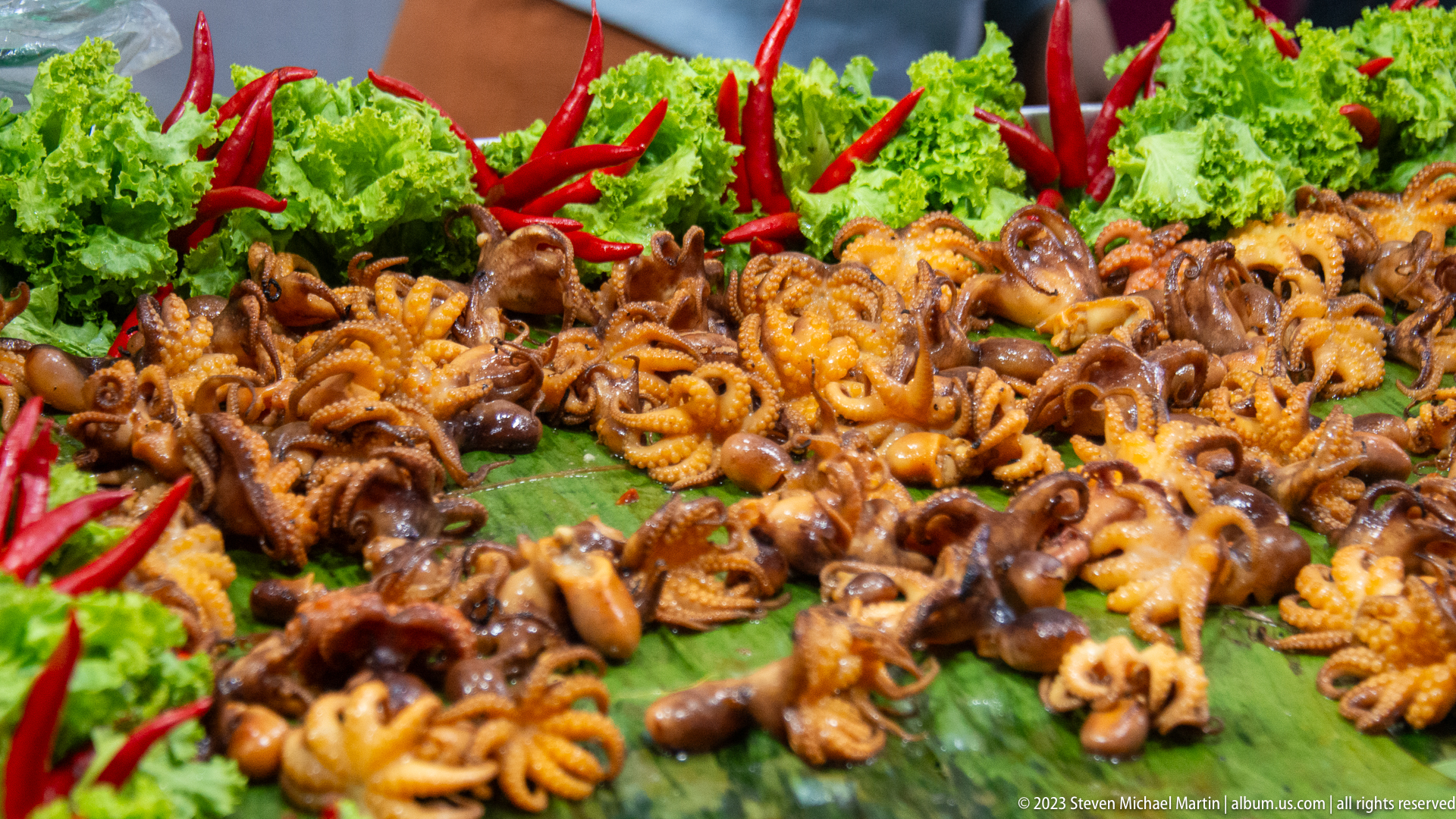
A generous display of cooked baby octopuses is arranged on banana leaves and framed by red chilies and curly lettuce. The glossy sauce and decorative presentation turn a night-market seafood offering into a vivid, carefully composed food display.
Caption
A generous display of cooked baby octopuses is arranged on banana leaves and framed by red chilies and curly lettuce. The glossy sauce and decorative presentation turn a night-market seafood offering into a vivid, carefully composed food display.

Rows of skewered snacks fill a Siem Reap market counter, including elongated breaded items, round pieces, and other coated or grilled foods. Their orderly arrangement in trays emphasizes variety and the quick-service format of the night-market stall.
Caption
Rows of skewered snacks fill a Siem Reap market counter, including elongated breaded items, round pieces, and other coated or grilled foods. Their orderly arrangement in trays emphasizes variety and the quick-service format of the night-market stall.
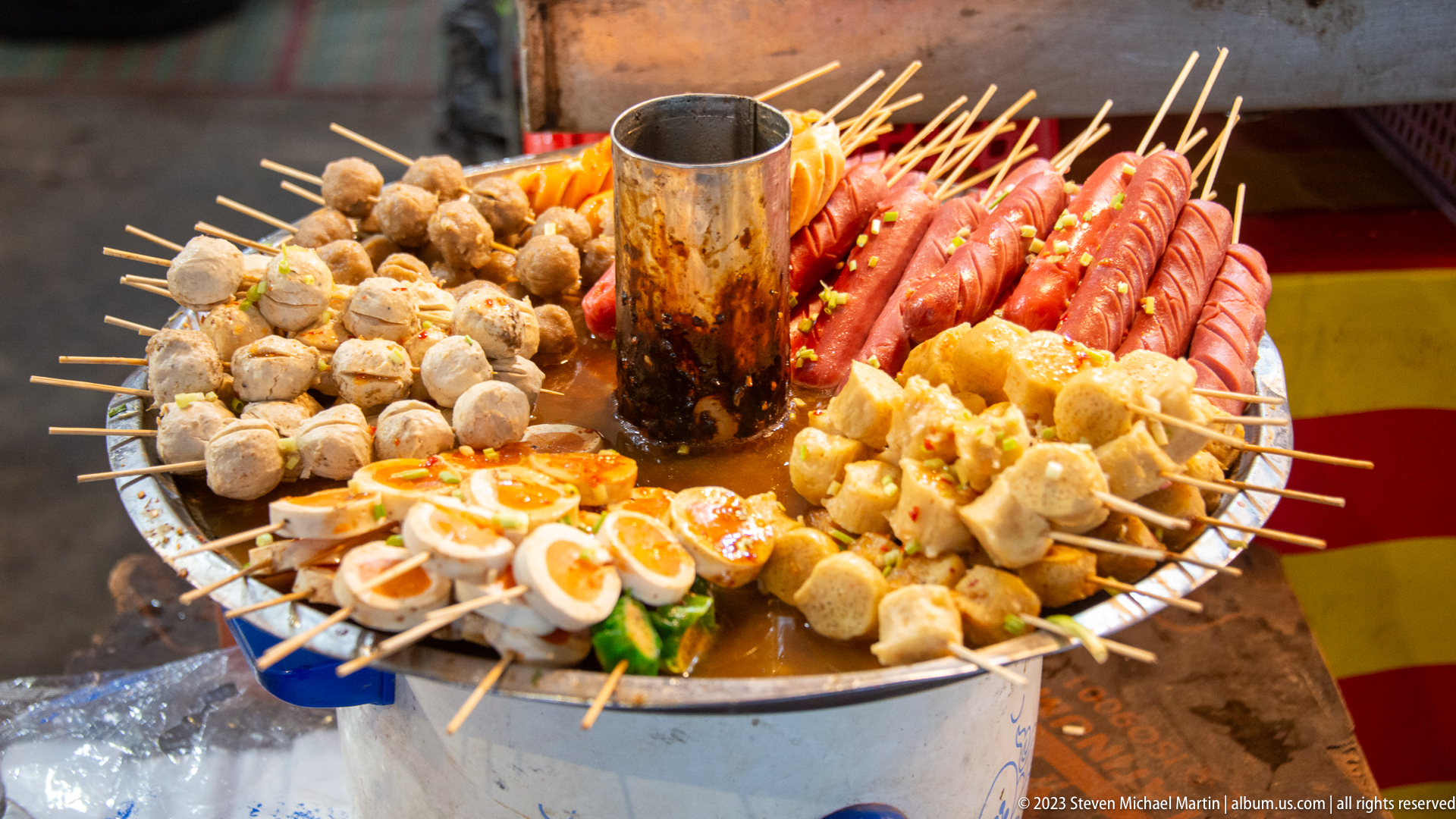
A circular cooking station radiates with skewers of sausages, meatballs, eggs, tofu, and other prepared foods around a central metal chimney. The arrangement combines cooking, display, and customer choice in a compact Siem Reap night-market setup.
Caption
A circular cooking station radiates with skewers of sausages, meatballs, eggs, tofu, and other prepared foods around a central metal chimney. The arrangement combines cooking, display, and customer choice in a compact Siem Reap night-market setup.
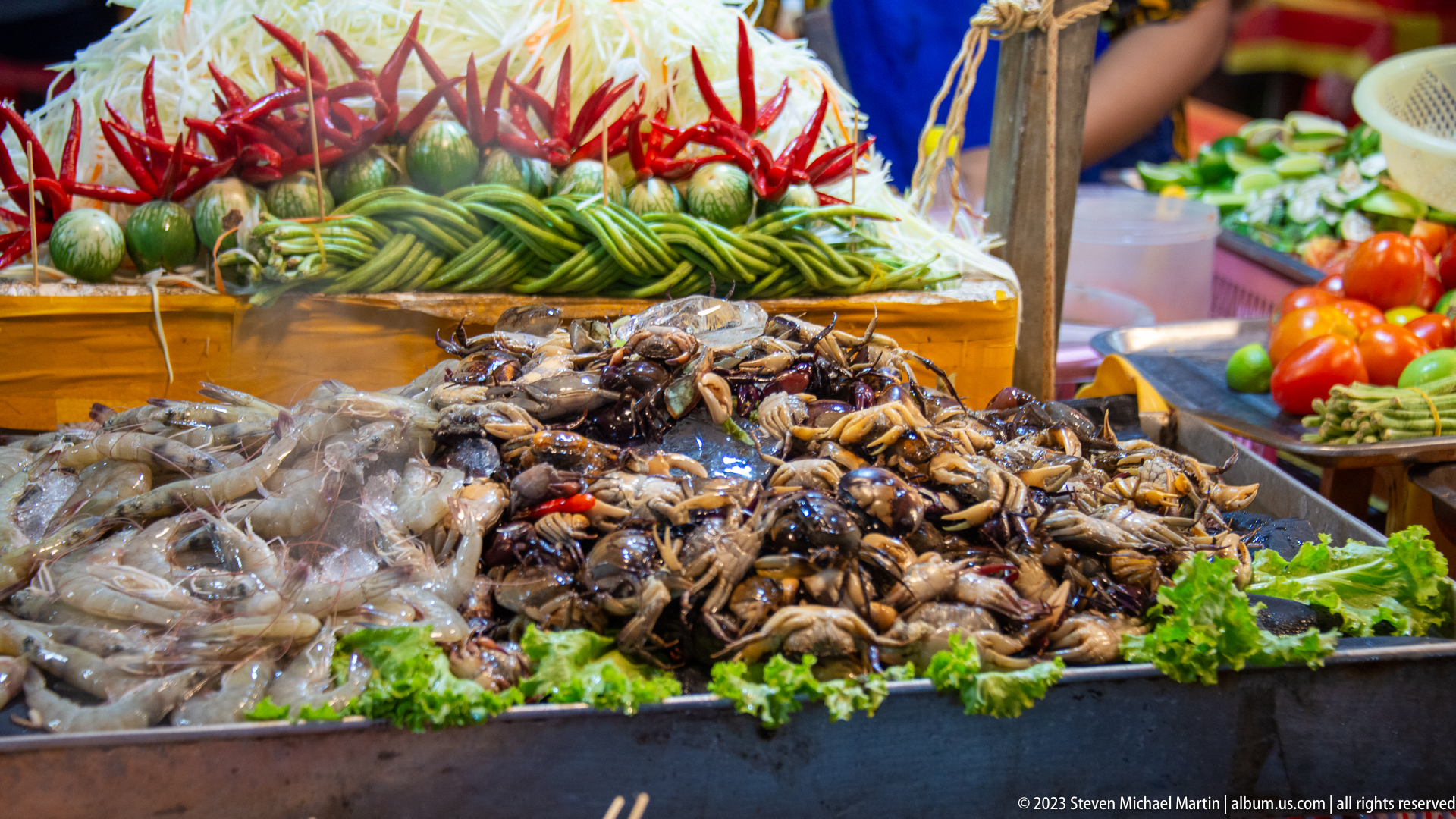
Piles of raw shellfish and other seafood occupy the foreground of a Siem Reap market stall, while tomatoes, cucumbers, limes, chilies, and shredded vegetables rise behind them. The layered display presents ingredients for made-to-order dishes in a dense, colorful arrangement.
Caption
Piles of raw shellfish and other seafood occupy the foreground of a Siem Reap market stall, while tomatoes, cucumbers, limes, chilies, and shredded vegetables rise behind them. The layered display presents ingredients for made-to-order dishes in a dense, colorful arrangement.
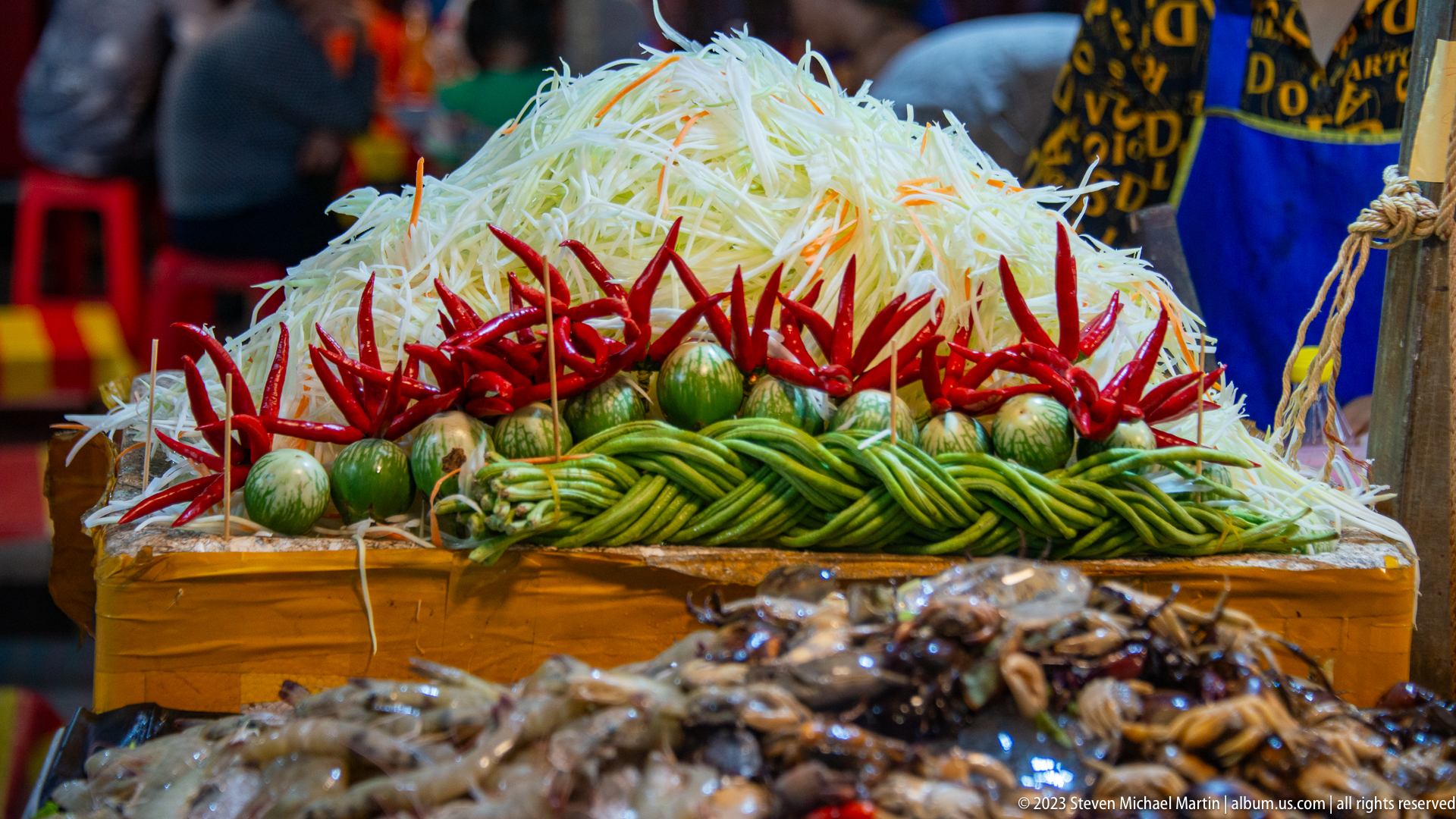
A carefully arranged mound of shredded green papaya is bordered by red chilies, small green limes, and coiled long beans. The symmetrical display highlights the fresh ingredients associated with made-to-order salads and market cooking in Siem Reap.
Caption
A carefully arranged mound of shredded green papaya is bordered by red chilies, small green limes, and coiled long beans. The symmetrical display highlights the fresh ingredients associated with made-to-order salads and market cooking in Siem Reap.
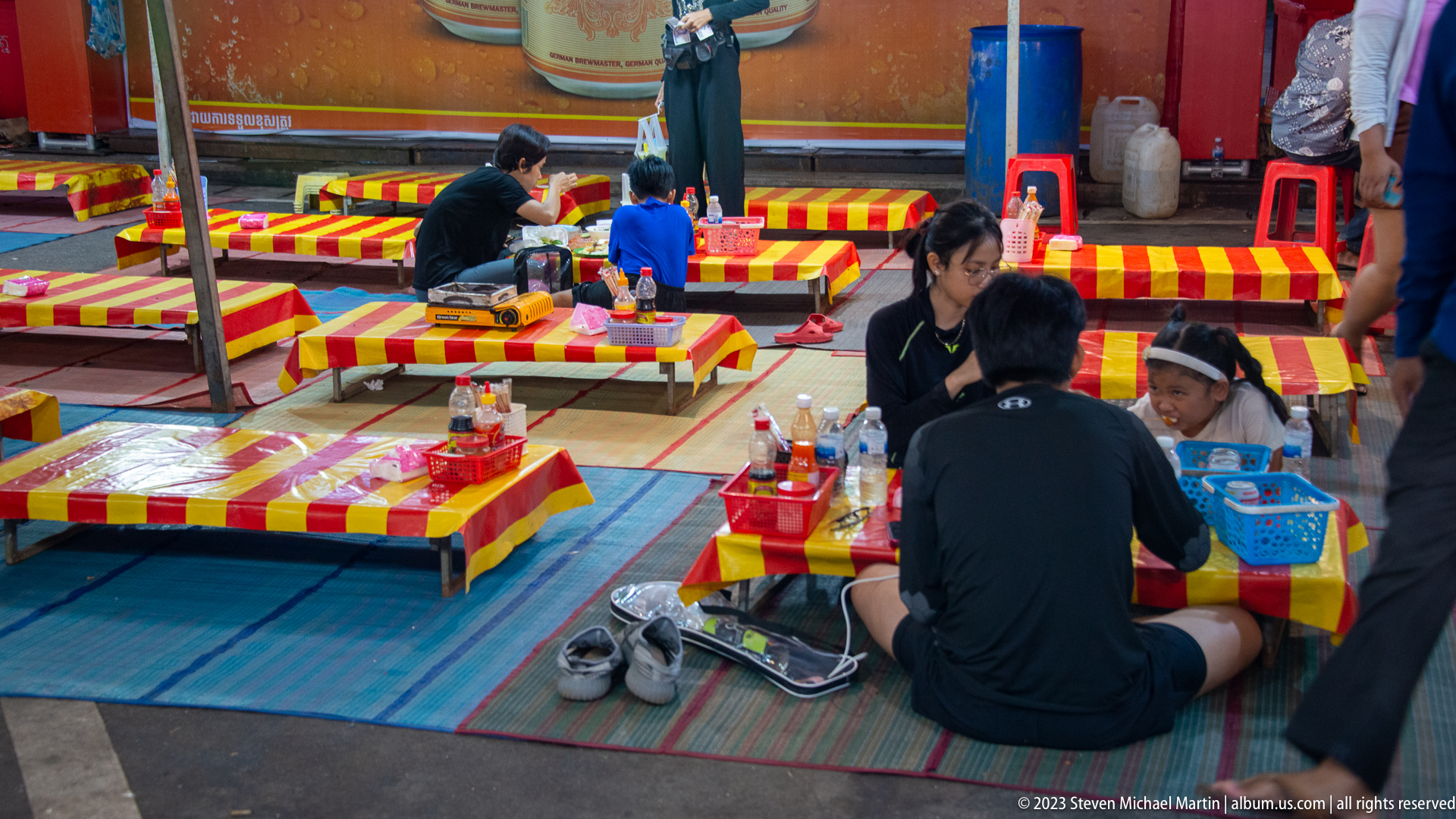
Families and small groups sit on floor mats around low tables covered with bright red-and-yellow cloths at a Siem Reap night market. Shoes left beside the mats and condiments placed at each table define an informal dining arrangement with a communal atmosphere.
Caption
Families and small groups sit on floor mats around low tables covered with bright red-and-yellow cloths at a Siem Reap night market. Shoes left beside the mats and condiments placed at each table define an informal dining arrangement with a communal atmosphere.
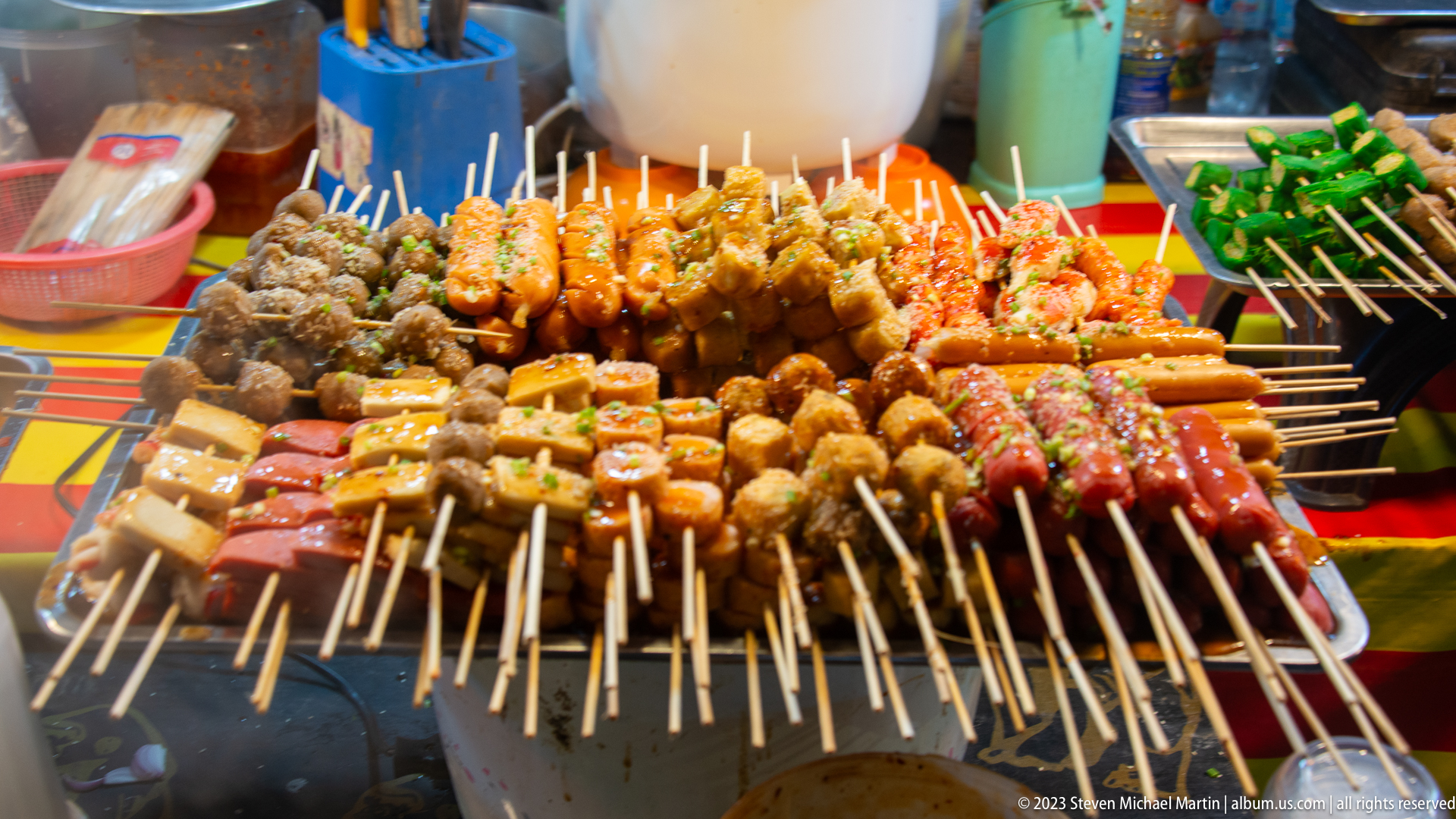
A crowded tray presents an assortment of marinated and partially cooked skewers, including meatballs, sausages, tofu, and seasoned meat pieces. The glistening sauces, chopped herbs, and varied textures show the range of quick-cooked foods offered at the night market.
Caption
A crowded tray presents an assortment of marinated and partially cooked skewers, including meatballs, sausages, tofu, and seasoned meat pieces. The glistening sauces, chopped herbs, and varied textures show the range of quick-cooked foods offered at the night market.
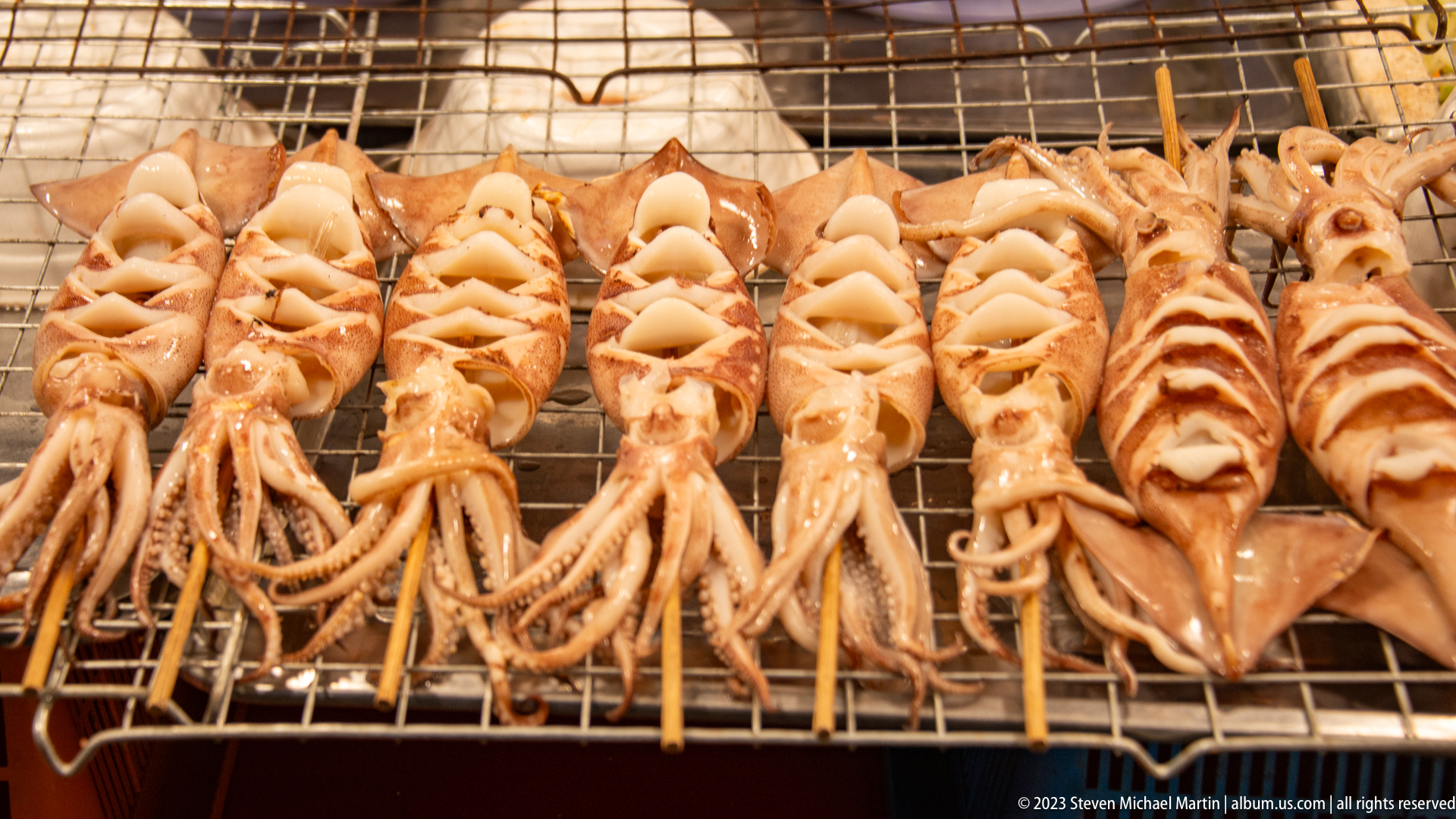
Whole cleaned squid are threaded lengthwise onto wooden skewers and lined across a wire grill. Diagonal cuts expose the pale flesh while tentacles extend below, preparing the seafood for rapid grilling at a Siem Reap night-market stall.
Caption
Whole cleaned squid are threaded lengthwise onto wooden skewers and lined across a wire grill. Diagonal cuts expose the pale flesh while tentacles extend below, preparing the seafood for rapid grilling at a Siem Reap night-market stall.
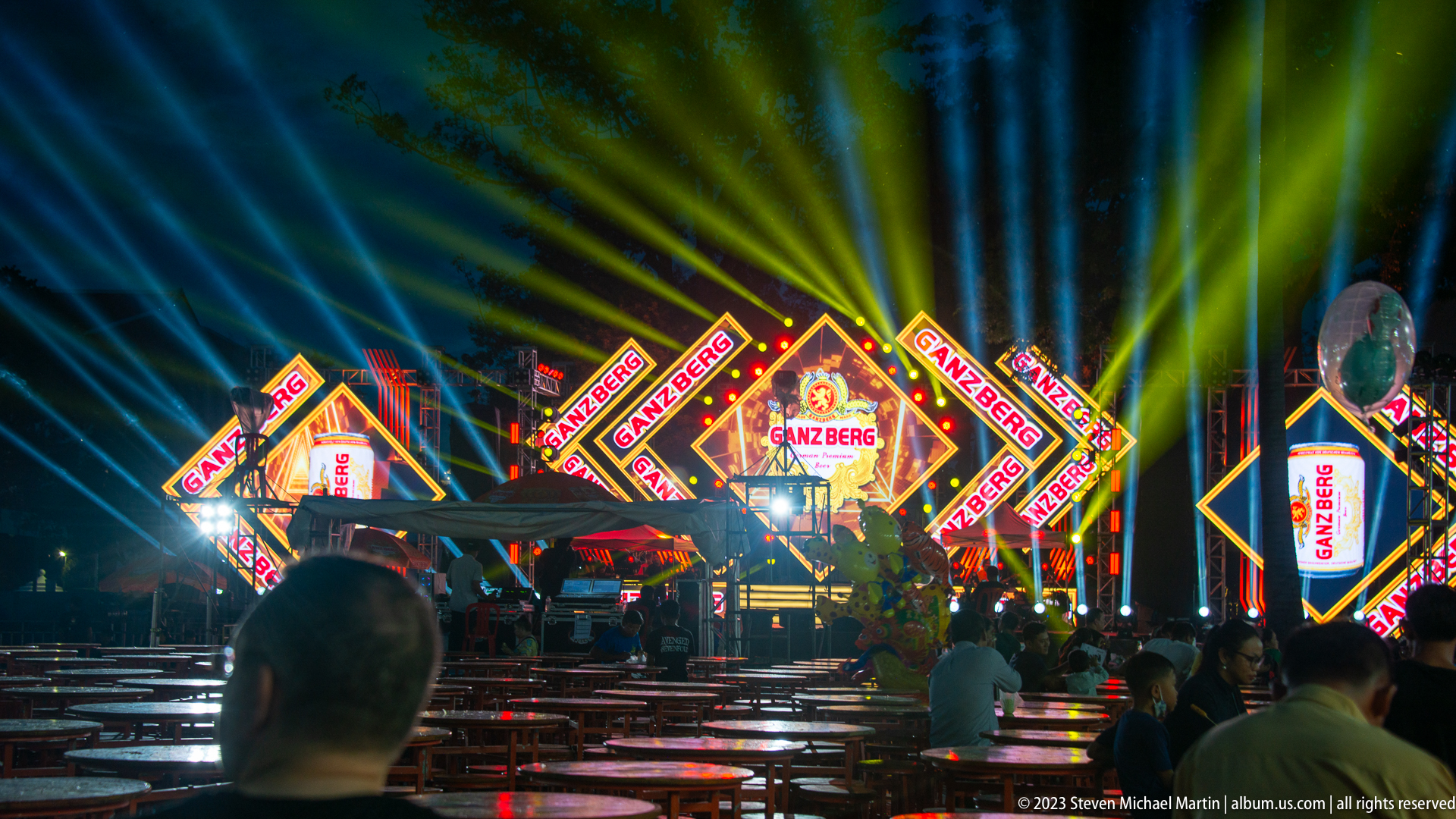
Blue, green, and yellow beams fan across a brightly illuminated Ganzberg-sponsored stage at a Siem Reap night venue. Geometric light panels frame the performance area while rows of mostly empty tables occupy the foreground.
Caption
Blue, green, and yellow beams fan across a brightly illuminated Ganzberg-sponsored stage at a Siem Reap night venue. Geometric light panels frame the performance area while rows of mostly empty tables occupy the foreground.
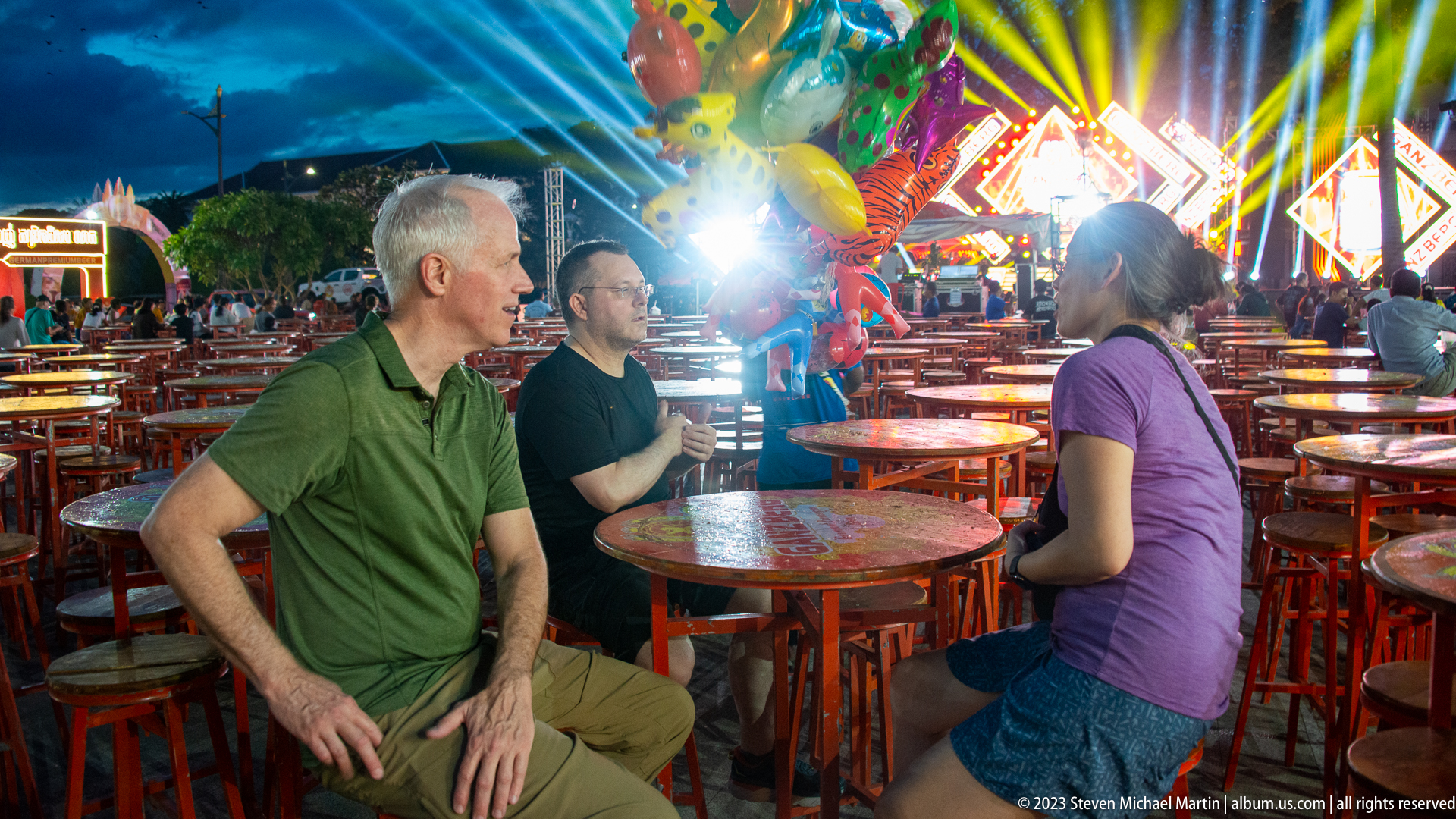
Three adult visitors sit around a round table at a brightly lit open-air venue in Siem Reap. Rows of red tables, colorful stage lights, and balloons in the background situate their conversation within a festive night-market or entertainment setting.
Caption
Three adult visitors sit around a round table at a brightly lit open-air venue in Siem Reap. Rows of red tables, colorful stage lights, and balloons in the background situate their conversation within a festive night-market or entertainment setting.
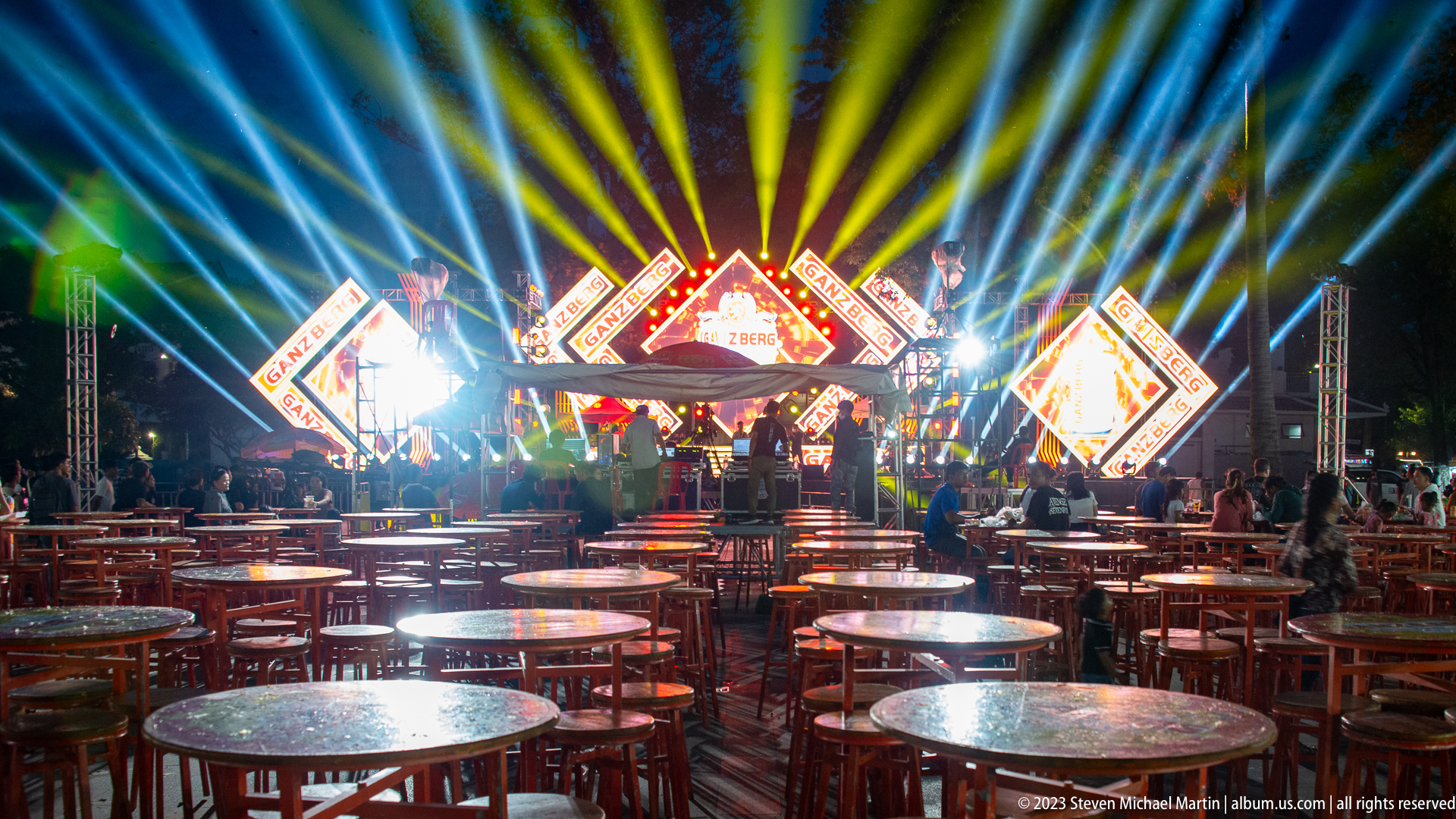
A frontal view across dozens of round tables leads toward a Ganzberg-branded stage exploding with white, blue, and yellow light beams. The symmetrical composition reveals the scale of the open-air entertainment venue before the crowd has fully gathered.
Caption
A frontal view across dozens of round tables leads toward a Ganzberg-branded stage exploding with white, blue, and yellow light beams. The symmetrical composition reveals the scale of the open-air entertainment venue before the crowd has fully gathered.
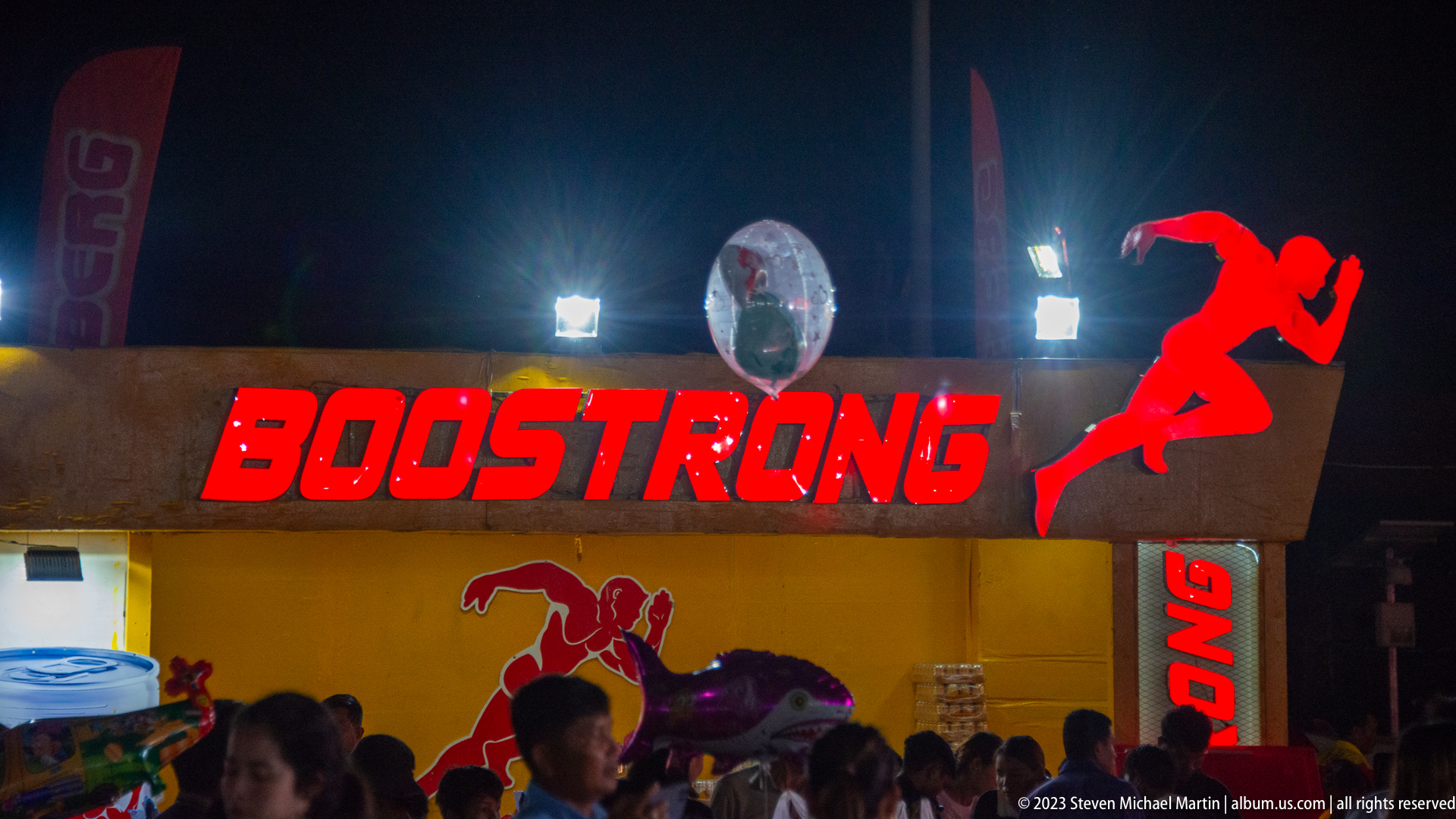
A red illuminated sign reading “BOOSTRONG” spans the top of a crowded vendor stall at the Siem Reap night venue. A running figure logo reinforces the energy-drink branding, while visitors pass beneath the bright display.
Caption
A red illuminated sign reading “BOOSTRONG” spans the top of a crowded vendor stall at the Siem Reap night venue. A running figure logo reinforces the energy-drink branding, while visitors pass beneath the bright display.
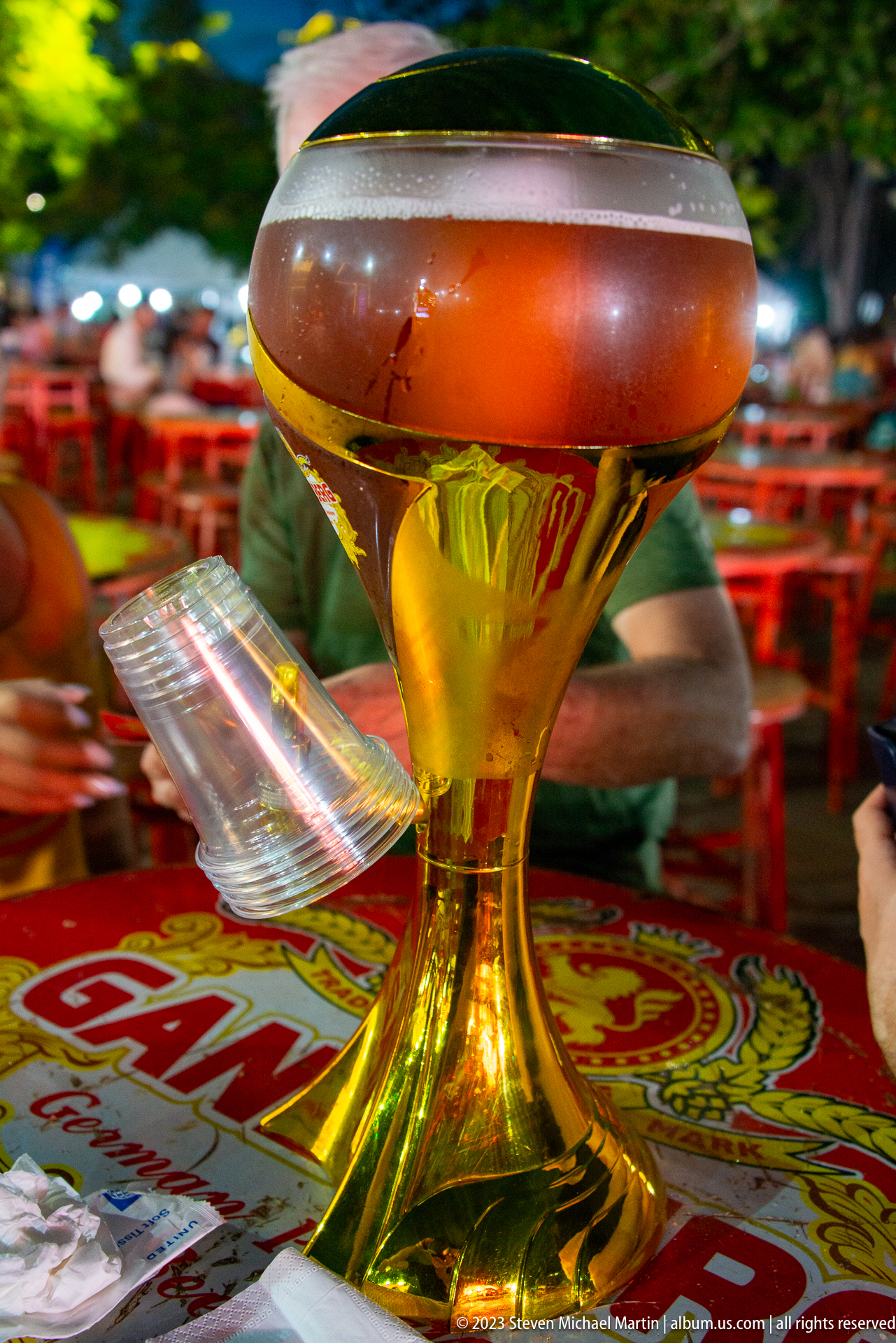
A translucent amber-and-white bowl or serving vessel sits on a gold-colored pedestal at a Ganzberg-branded table. Reflections from the surrounding event lights make the object glow against the busy red-table setting.
Caption
A translucent amber-and-white bowl or serving vessel sits on a gold-colored pedestal at a Ganzberg-branded table. Reflections from the surrounding event lights make the object glow against the busy red-table setting.
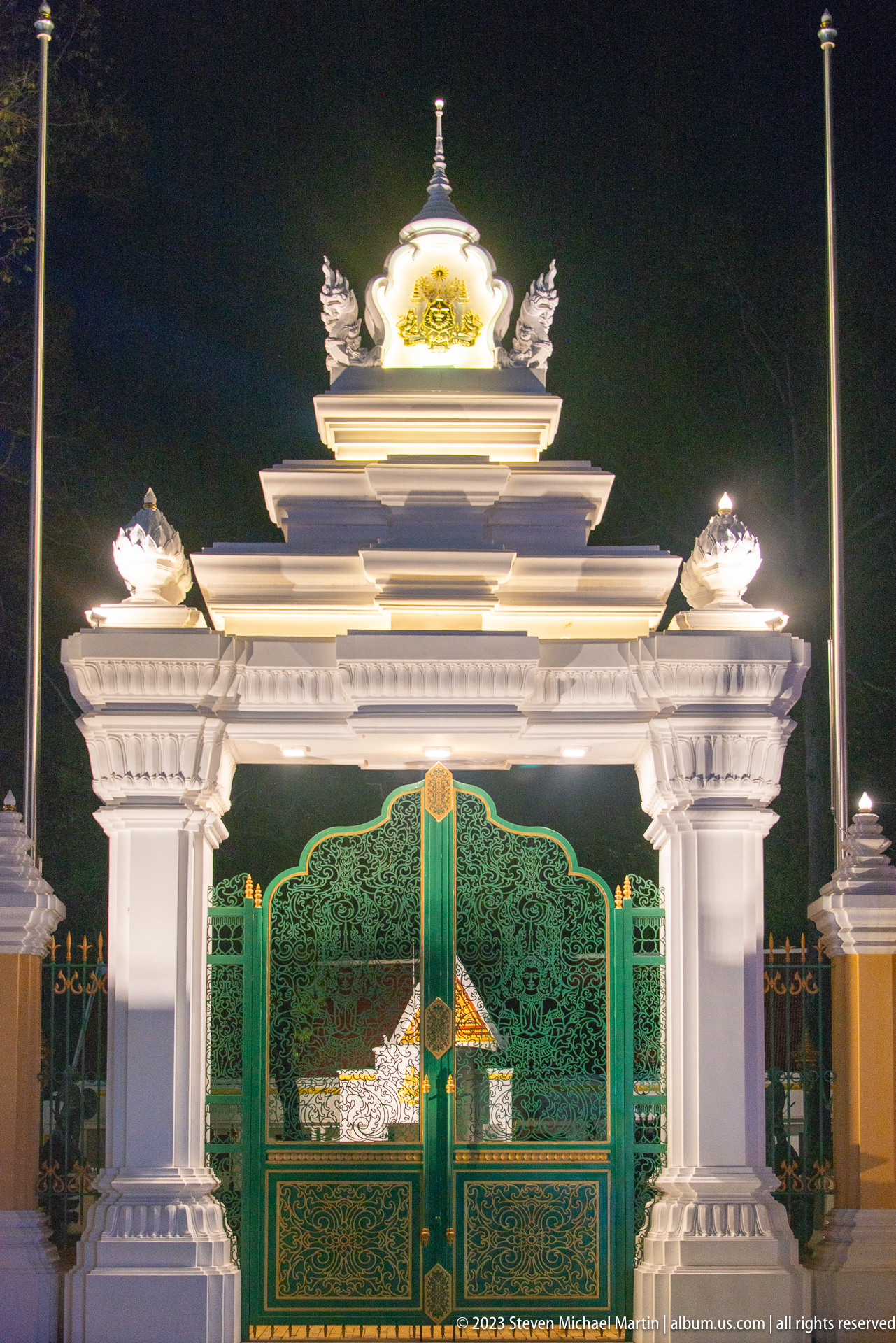
Ornate green metal doors fill the opening beneath a brilliantly illuminated white gate. The centered composition emphasizes layered lintels, projecting cornices, gilded crest details, and the contrast between the pale structure and dark night sky.
Caption
Ornate green metal doors fill the opening beneath a brilliantly illuminated white gate. The centered composition emphasizes layered lintels, projecting cornices, gilded crest details, and the contrast between the pale structure and dark night sky.
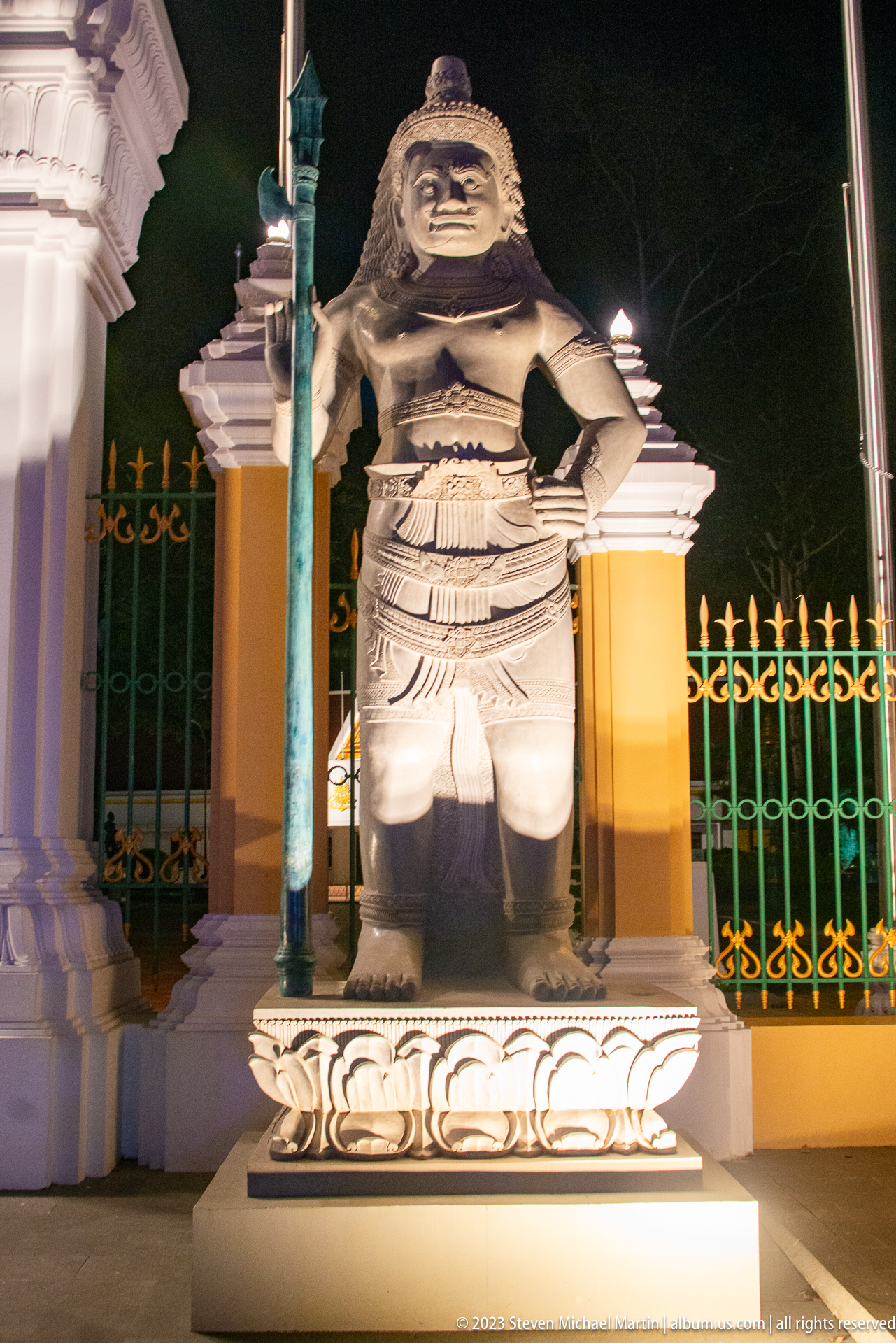
An illuminated guardian figure stands on a lotus-form pedestal beside the ceremonial gate, holding a tall green staff. Its broad stance, rounded face, layered costume, and prominent belt identify it as part of the paired protective sculpture program flanking the entrance.
Caption
An illuminated guardian figure stands on a lotus-form pedestal beside the ceremonial gate, holding a tall green staff. Its broad stance, rounded face, layered costume, and prominent belt identify it as part of the paired protective sculpture program flanking the entrance.
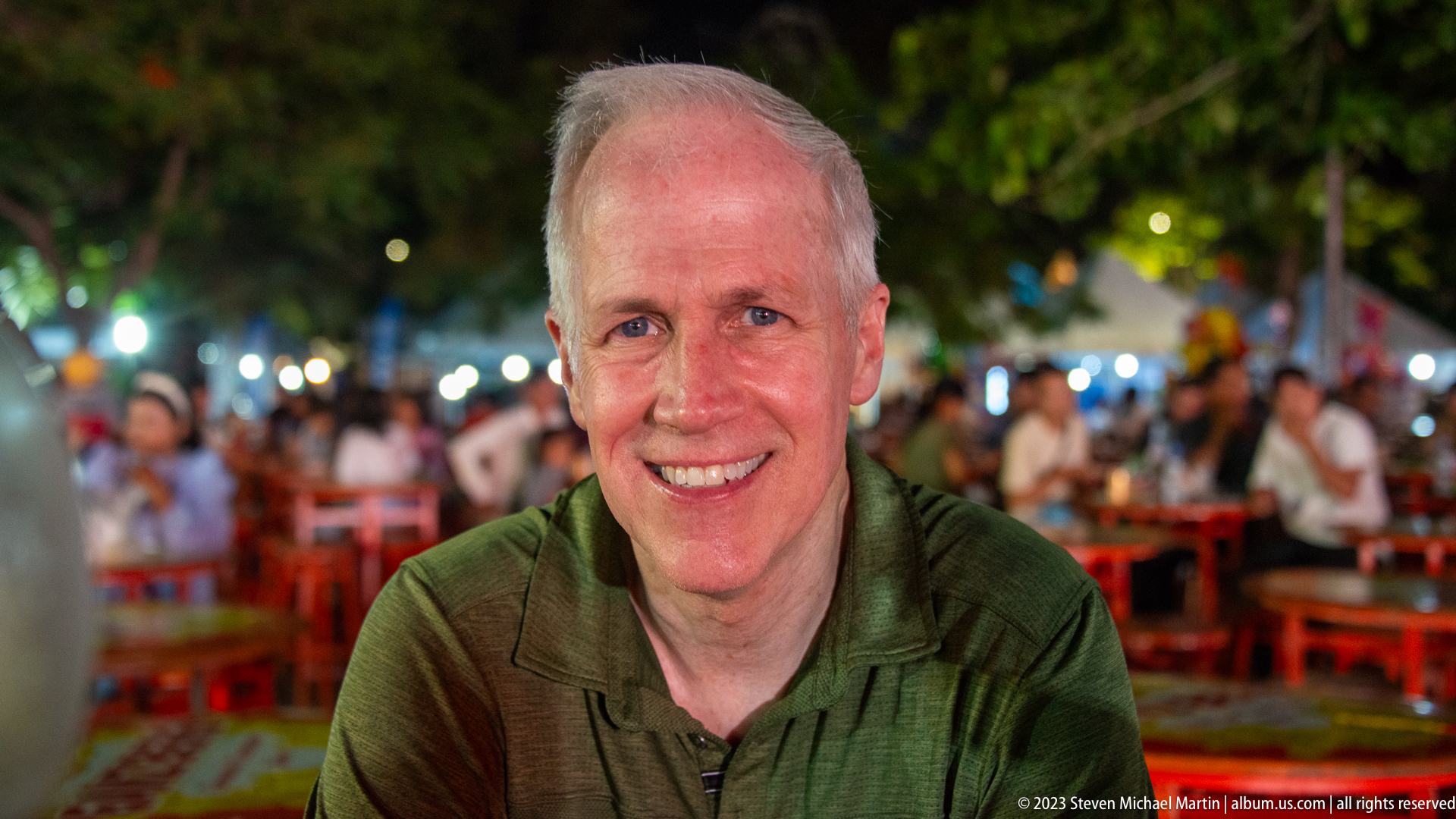
A gray-haired male visitor smiles directly toward the camera while seated at a crowded outdoor night venue in Siem Reap. Softly blurred lights, trees, and red tables isolate the portrait from the lively event behind him.
Caption
A gray-haired male visitor smiles directly toward the camera while seated at a crowded outdoor night venue in Siem Reap. Softly blurred lights, trees, and red tables isolate the portrait from the lively event behind him.

A visitor poses beside a large Ganzberg promotional backdrop featuring a white pickup truck, Khmer text, and the beer brand’s logo. The saturated red display resembles a prize or advertising photo station within the night event.
Caption
A visitor poses beside a large Ganzberg promotional backdrop featuring a white pickup truck, Khmer text, and the beer brand’s logo. The saturated red display resembles a prize or advertising photo station within the night event.
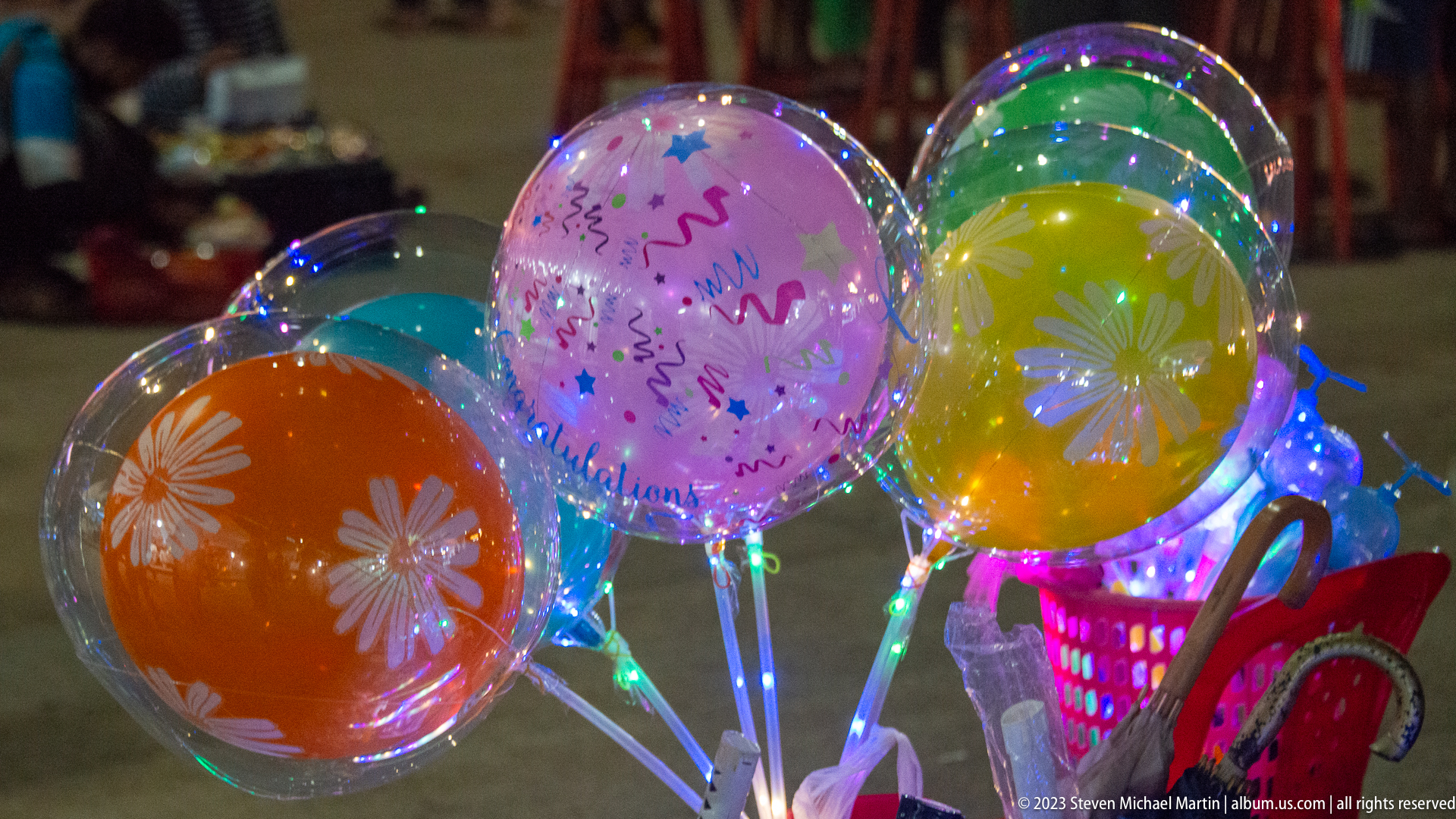
Transparent balloons containing smaller colored balloons glow with strings of LED lights at a Siem Reap night market. Printed stars, flowers, and celebratory text decorate the surfaces, creating a bright mobile display against the dark venue.
Caption
Transparent balloons containing smaller colored balloons glow with strings of LED lights at a Siem Reap night market. Printed stars, flowers, and celebratory text decorate the surfaces, creating a bright mobile display against the dark venue.
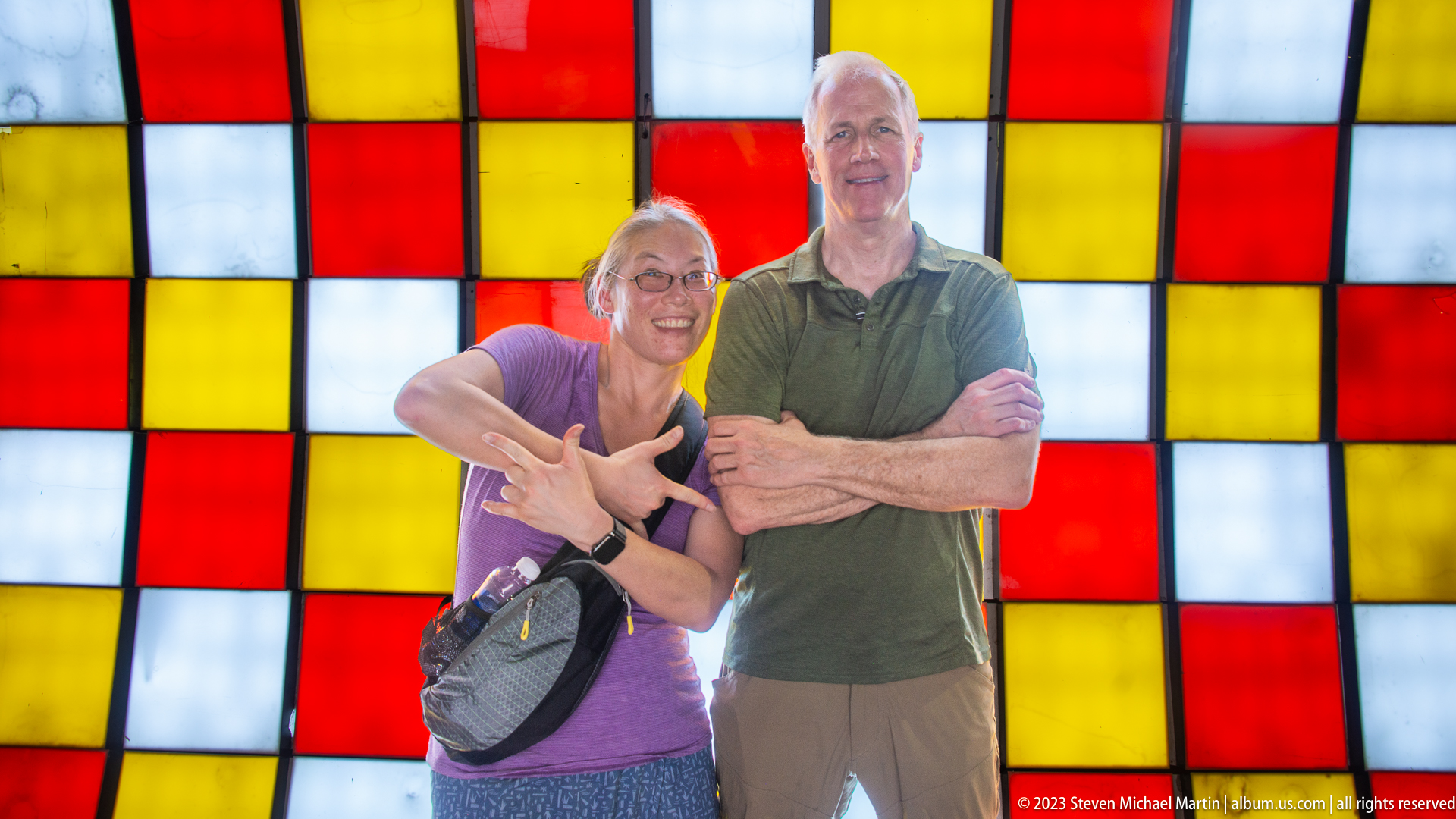
Two adult visitors pose playfully in front of a grid of glowing red, yellow, and white panels. Their crossed-arm gestures and broad smiles create a lighthearted portrait framed by the venue’s bold geometric backdrop.
Caption
Two adult visitors pose playfully in front of a grid of glowing red, yellow, and white panels. Their crossed-arm gestures and broad smiles create a lighthearted portrait framed by the venue’s bold geometric backdrop.
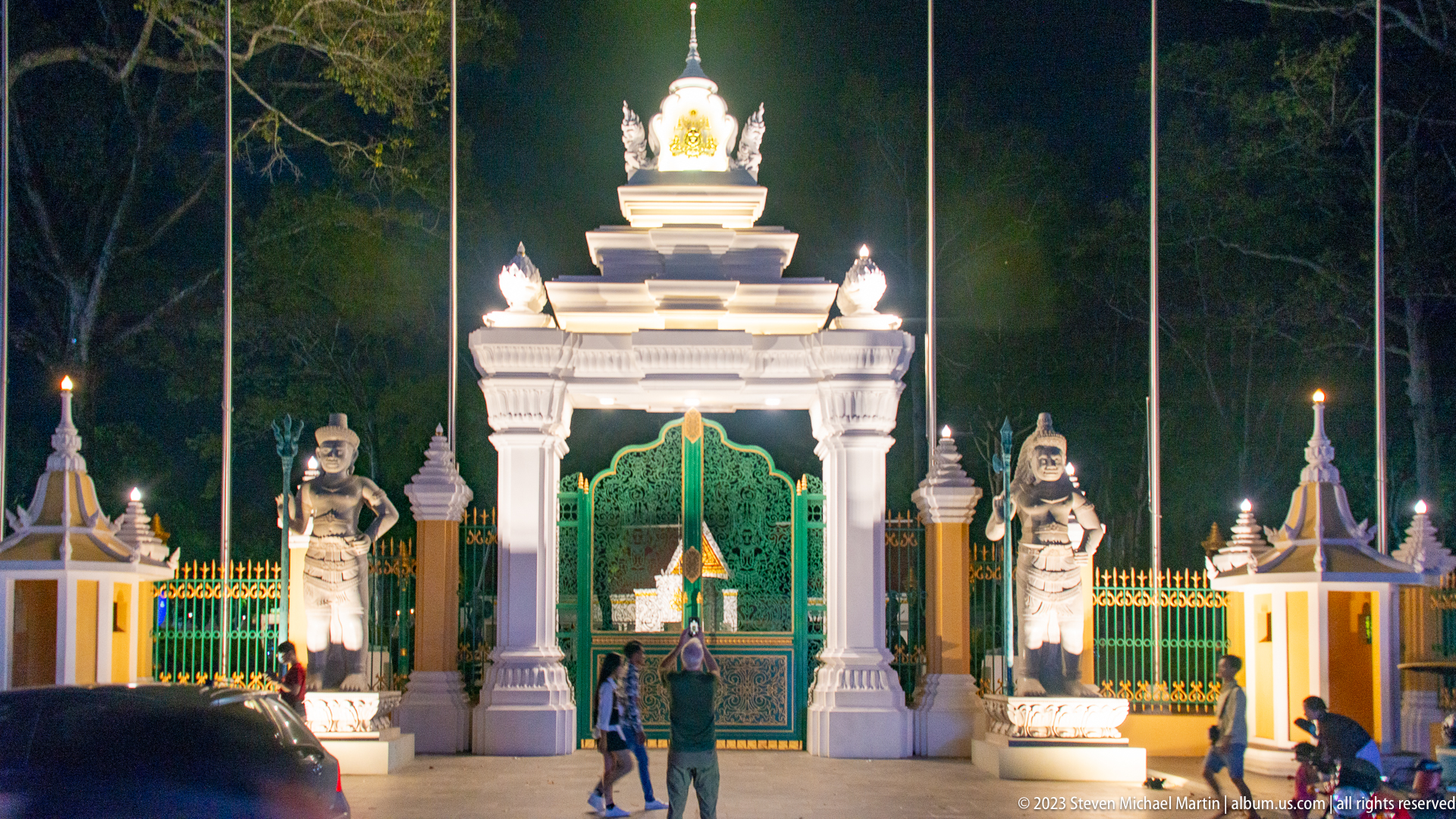
A white ceremonial entrance gate glows against the night, framing ornate green metal doors and flanked by two standing guardian statues. Layered roof forms, finials, and gilded details give the composition a formal Khmer-inspired character.
Caption
A white ceremonial entrance gate glows against the night, framing ornate green metal doors and flanked by two standing guardian statues. Layered roof forms, finials, and gilded details give the composition a formal Khmer-inspired character.
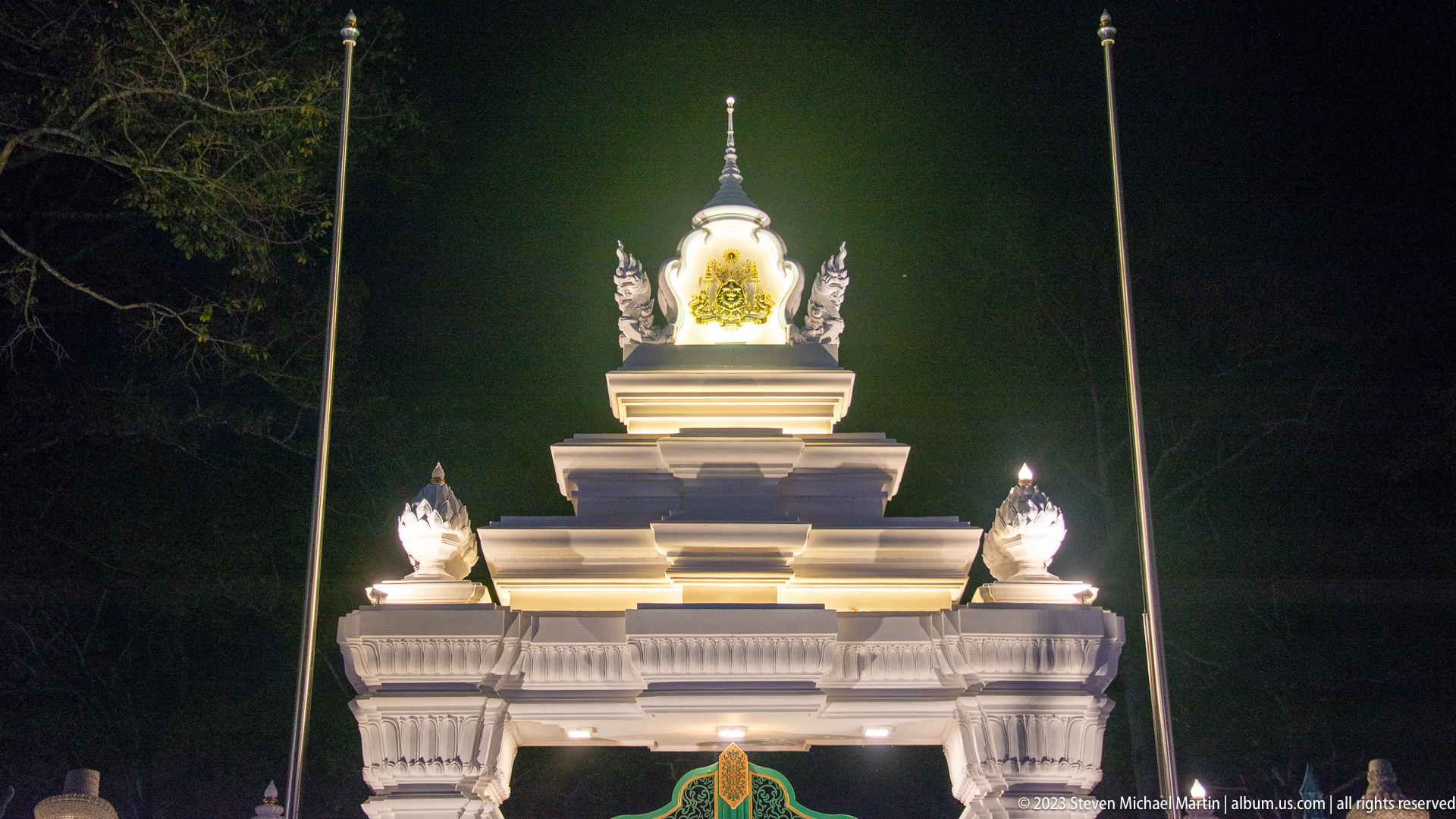
This close view isolates the upper tiers of the white ceremonial gateway, including projecting cornices, lotus-like finials, and a glowing central crest. The night framing emphasizes the layered architectural profile and decorative symmetry.
Caption
This close view isolates the upper tiers of the white ceremonial gateway, including projecting cornices, lotus-like finials, and a glowing central crest. The night framing emphasizes the layered architectural profile and decorative symmetry.
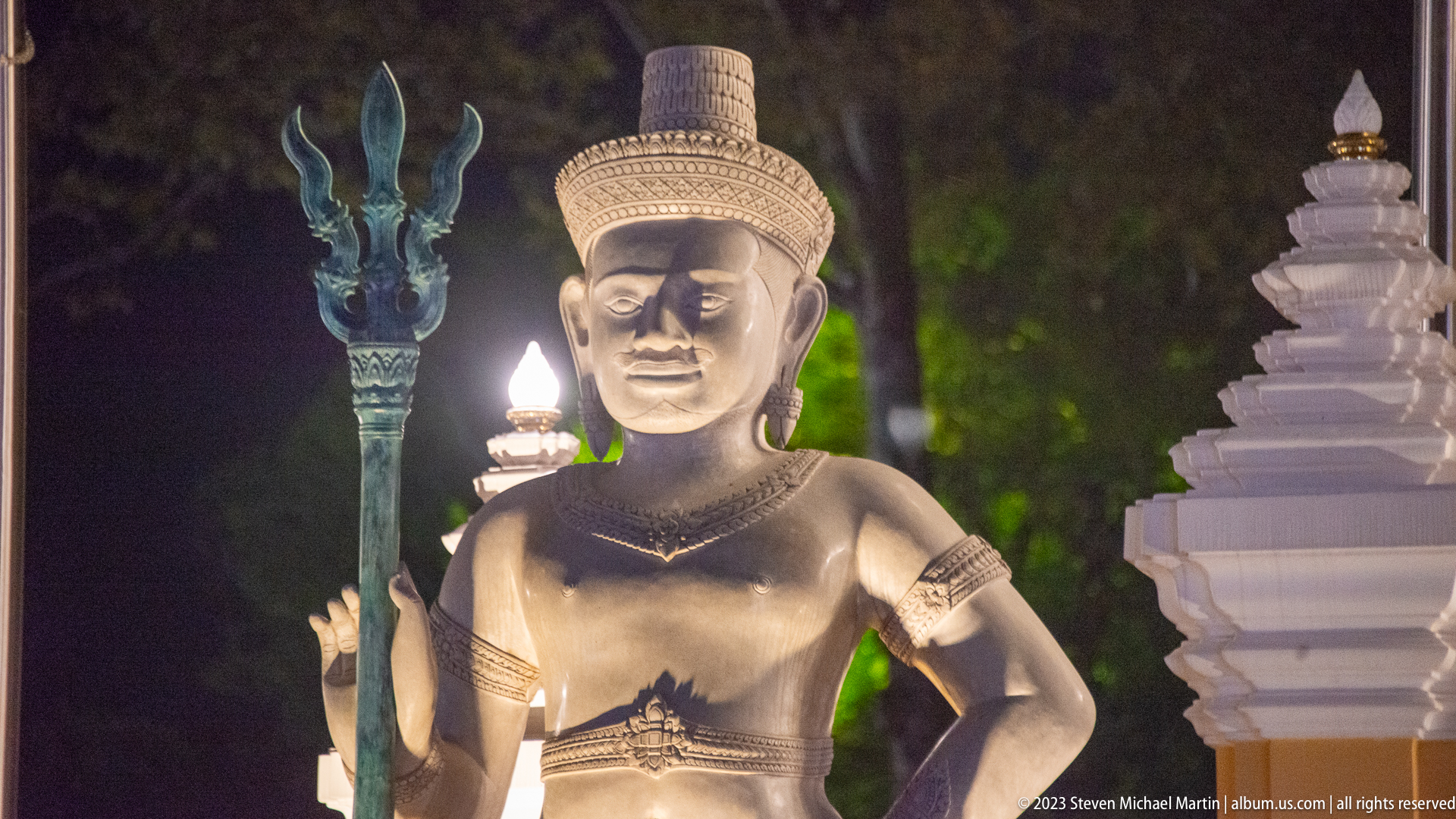
A monumental male guardian stands beside the ceremonial gate, holding a tall staff or weapon. His cylindrical headdress, jewelry, patterned armbands, and calm expression are dramatically modeled by upward night lighting.
Caption
A monumental male guardian stands beside the ceremonial gate, holding a tall staff or weapon. His cylindrical headdress, jewelry, patterned armbands, and calm expression are dramatically modeled by upward night lighting.
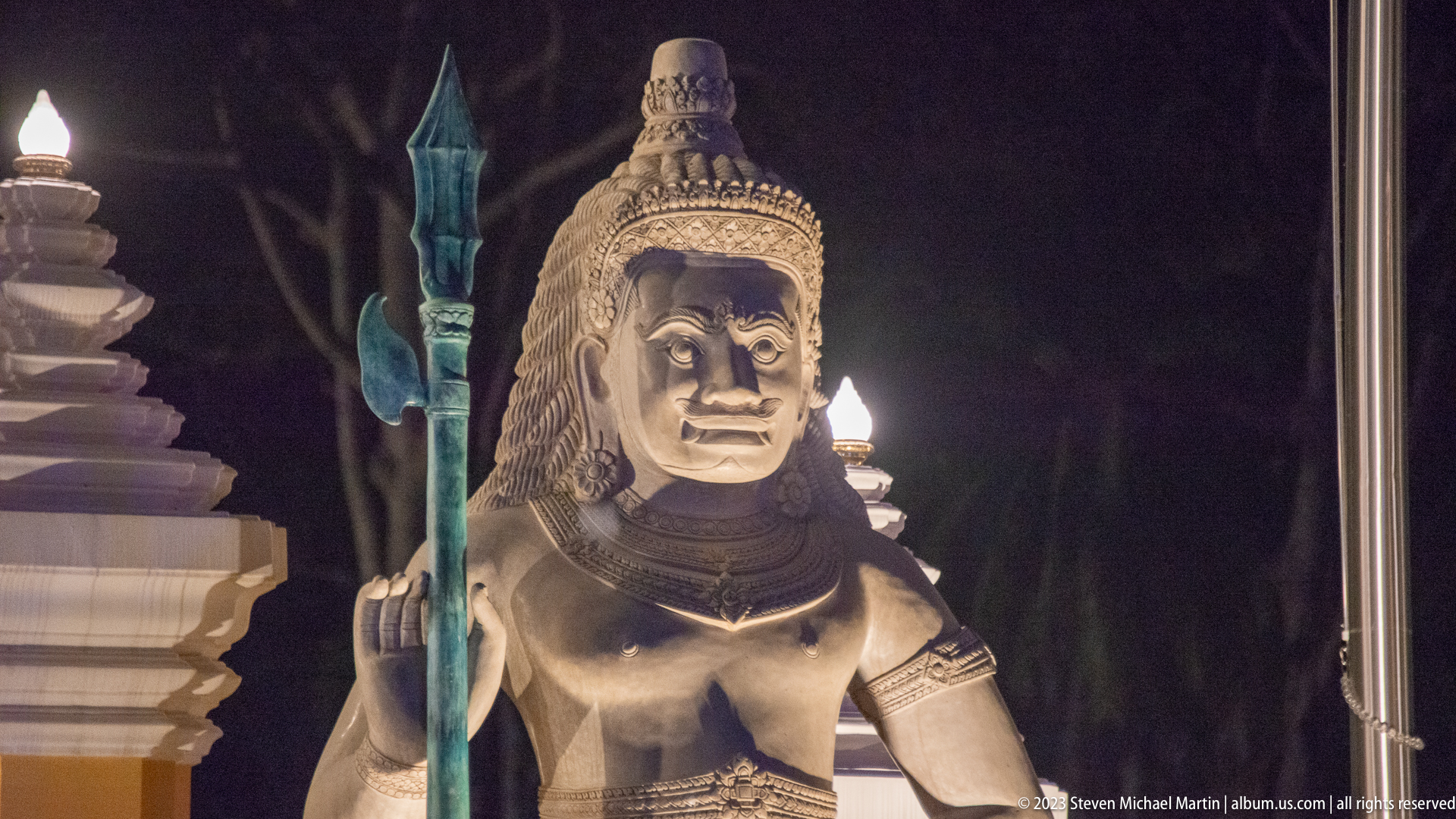
A second monumental guardian figure stands opposite the gate, gripping a tall staff and wearing an elaborate headdress and jewelry. Strong side lighting deepens the facial features and distinguishes this figure from the companion statue across the entrance.
Caption
A second monumental guardian figure stands opposite the gate, gripping a tall staff and wearing an elaborate headdress and jewelry. Strong side lighting deepens the facial features and distinguishes this figure from the companion statue across the entrance.
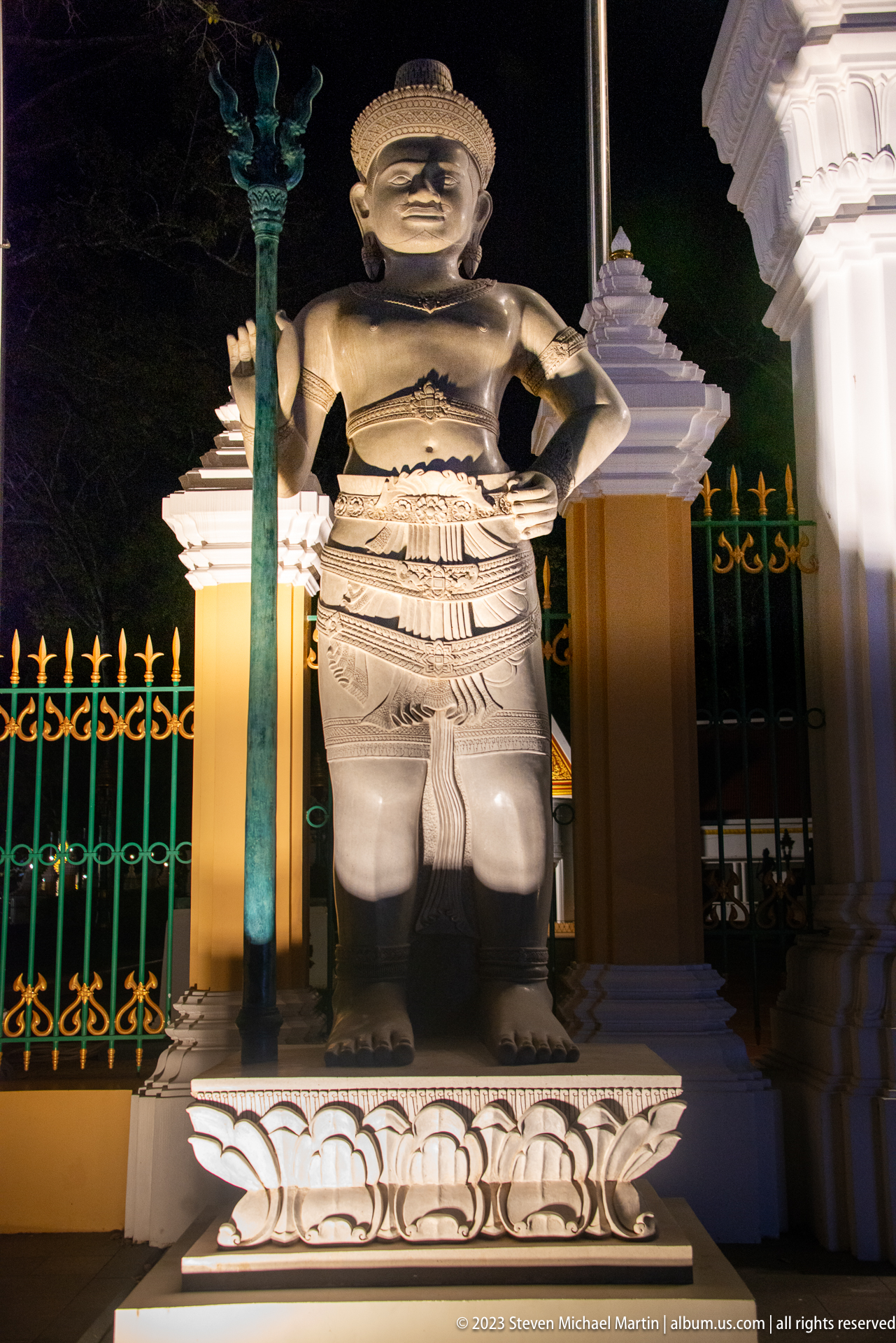
A second monumental guardian mirrors the figure opposite the gate, gripping a vertical staff and standing squarely on a carved pedestal. The paired arrangement, heavy ornament, and frontal posture reinforce the entrance’s ceremonial and protective character.
Caption
A second monumental guardian mirrors the figure opposite the gate, gripping a vertical staff and standing squarely on a carved pedestal. The paired arrangement, heavy ornament, and frontal posture reinforce the entrance’s ceremonial and protective character.

Seen from an angle, the illuminated white gateway frames richly patterned green metal doors beneath a tiered crown. The oblique viewpoint reveals the depth of the columns and side piers while a visitor at the base provides scale.
Caption
Seen from an angle, the illuminated white gateway frames richly patterned green metal doors beneath a tiered crown. The oblique viewpoint reveals the depth of the columns and side piers while a visitor at the base provides scale.
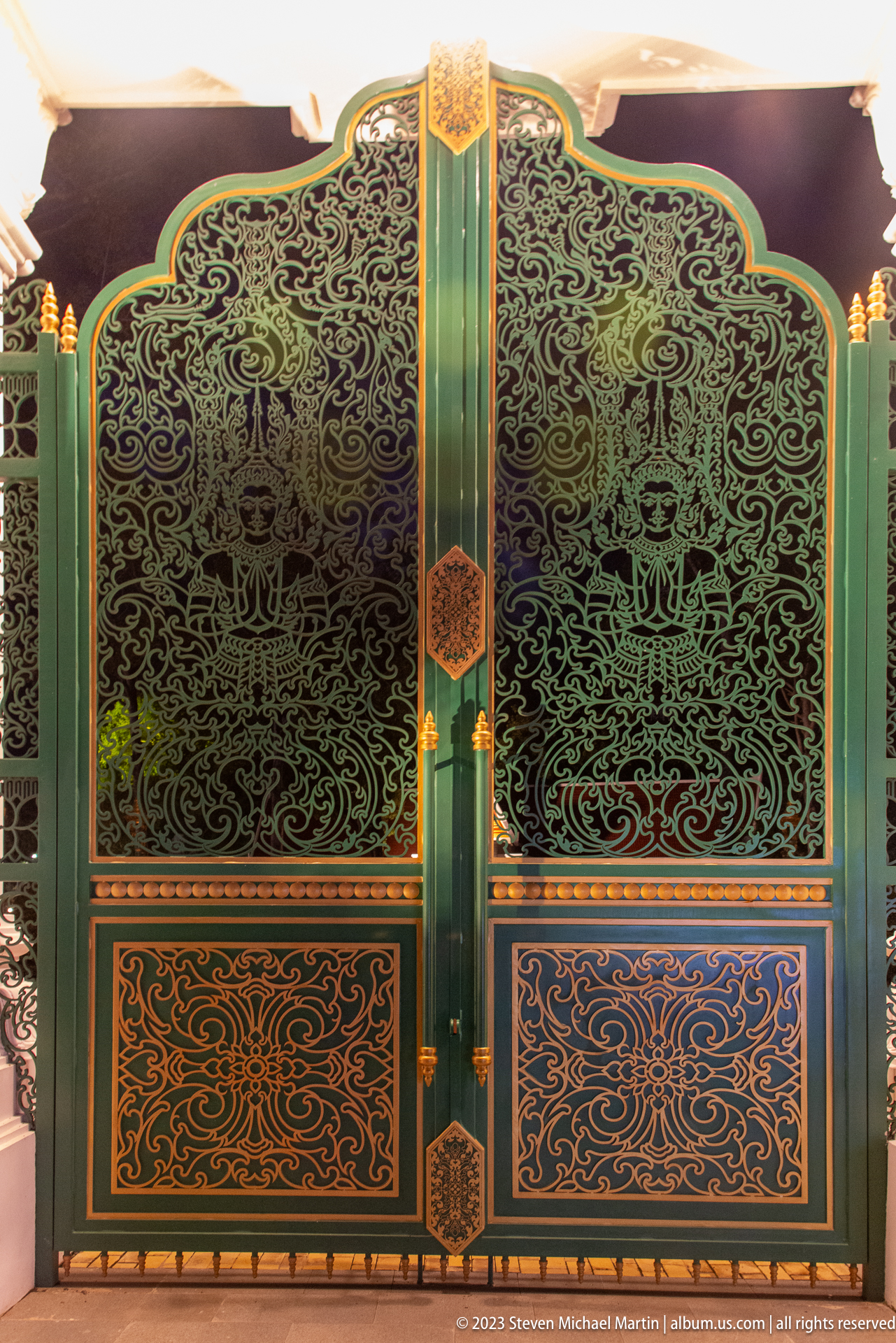
Richly worked green metal gates fill the frame with scrolling foliage, symmetrical animals, and central crest-like ornaments. Gold and blue lower panels add contrast, turning the closed entrance into an elaborate decorative screen.
Caption
Richly worked green metal gates fill the frame with scrolling foliage, symmetrical animals, and central crest-like ornaments. Gold and blue lower panels add contrast, turning the closed entrance into an elaborate decorative screen.
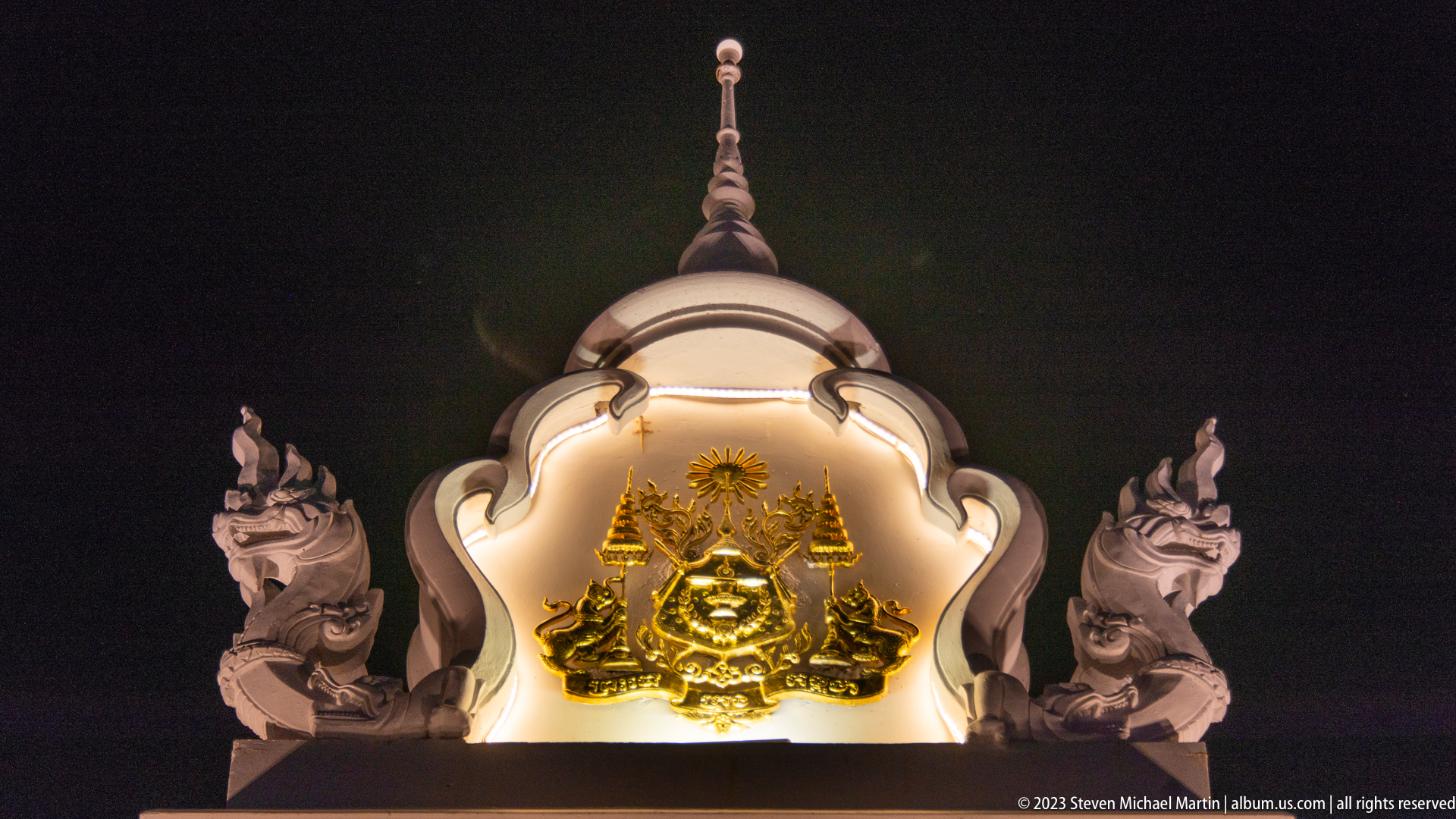
A gilded crest glows within a white cusped frame at the summit of the gateway, flanked by two sculptural creatures. The close view isolates the entrance’s symbolic crown against the black night sky.
Caption
A gilded crest glows within a white cusped frame at the summit of the gateway, flanked by two sculptural creatures. The close view isolates the entrance’s symbolic crown against the black night sky.

An illuminated portrait of a seated royal figure is displayed within an ornate freestanding frame edged with bulbs and flanked by sculptural finials. Steps, potted plants, and surrounding architectural forms give the installation the character of a formal commemorative shrine.
Caption
An illuminated portrait of a seated royal figure is displayed within an ornate freestanding frame edged with bulbs and flanked by sculptural finials. Steps, potted plants, and surrounding architectural forms give the installation the character of a formal commemorative shrine.
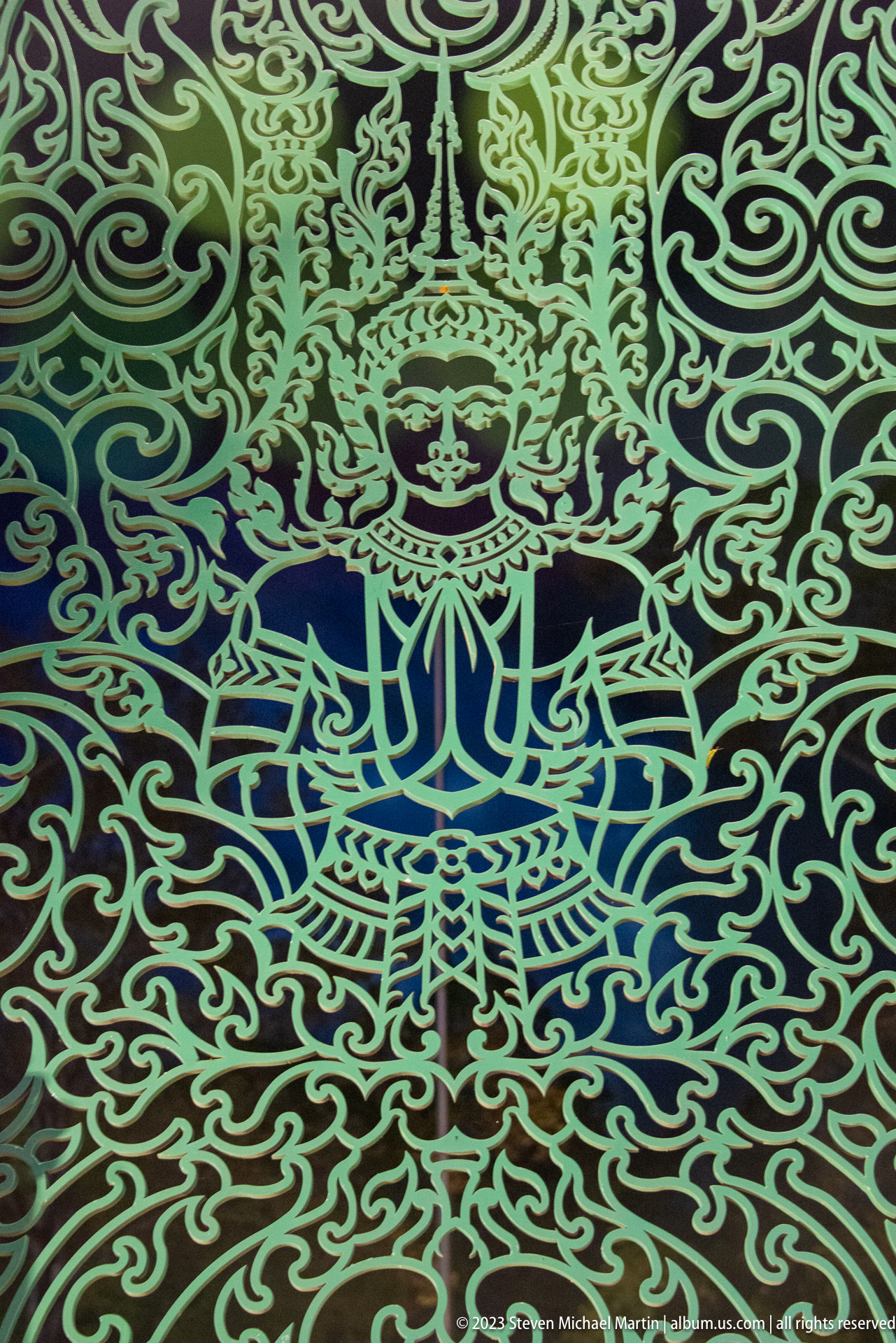
A close detail of the green gate reveals a stylized crowned figure set amid dense curling foliage. The symmetrical linear design and flat metal silhouette transform royal or mythic imagery into ornamental grille work.
Caption
A close detail of the green gate reveals a stylized crowned figure set amid dense curling foliage. The symmetrical linear design and flat metal silhouette transform royal or mythic imagery into ornamental grille work.
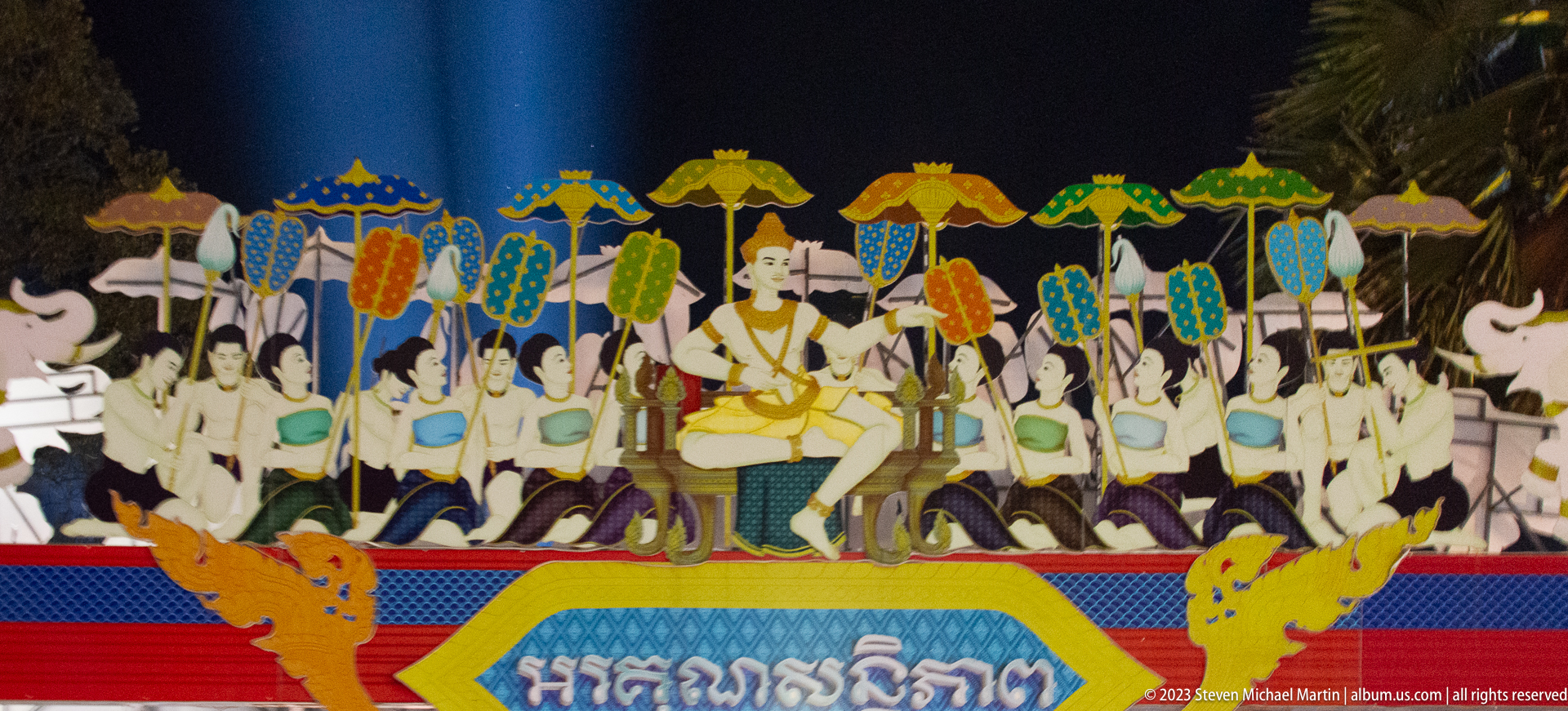
A colorful mural depicts a central royal or ceremonial figure surrounded by attendants carrying multi-colored parasols. The composition, arranged across a boat-like base with Khmer lettering, evokes a formal court procession or pageant.
Caption
A colorful mural depicts a central royal or ceremonial figure surrounded by attendants carrying multi-colored parasols. The composition, arranged across a boat-like base with Khmer lettering, evokes a formal court procession or pageant.
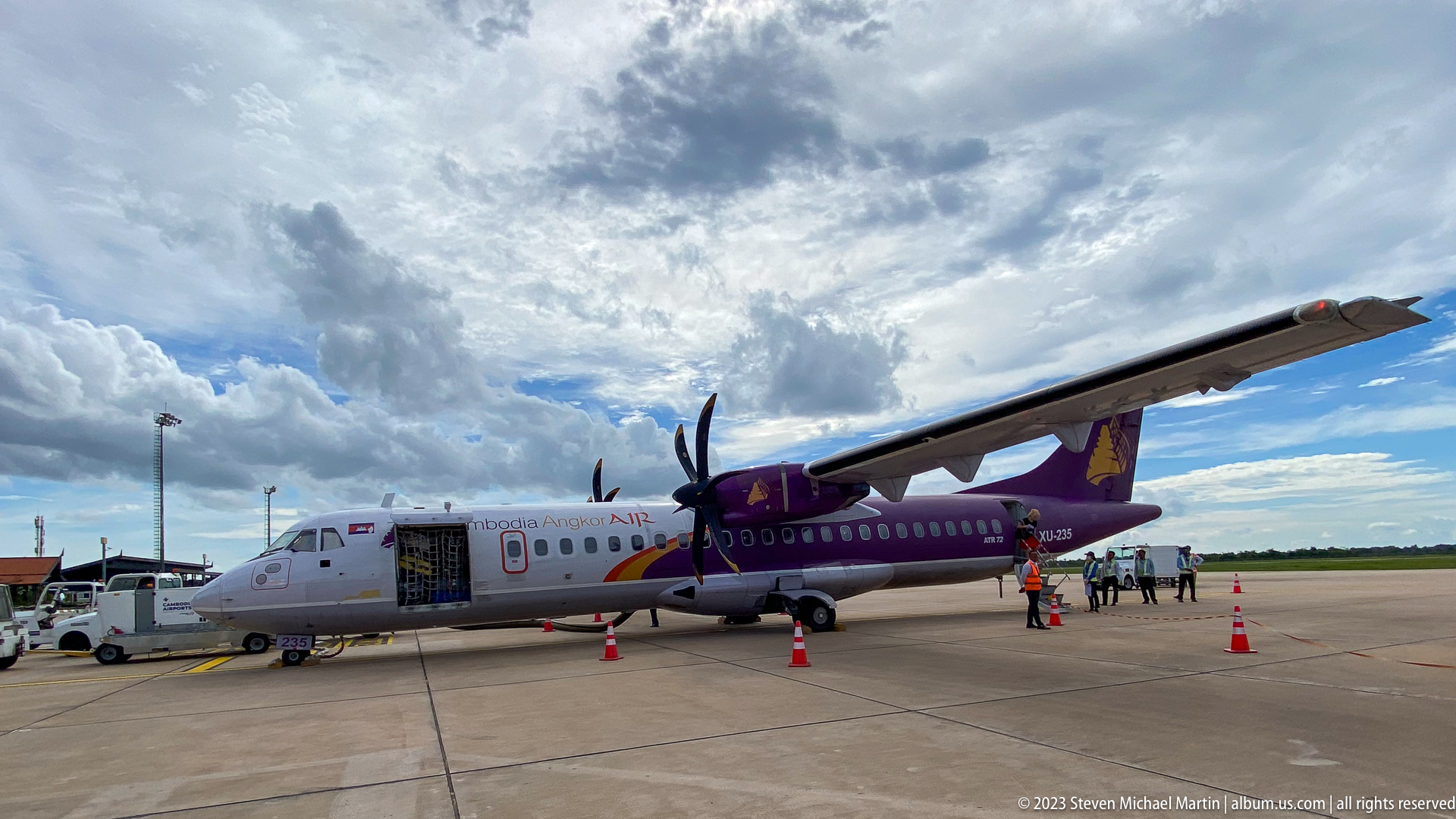
A purple-and-white twin-engine turboprop aircraft stands on the apron as passengers and ground crew move nearby. The high wing, large propellers, and compact fuselage identify the aircraft as a regional passenger plane suited to short-haul routes.
Caption
A purple-and-white twin-engine turboprop aircraft stands on the apron as passengers and ground crew move nearby. The high wing, large propellers, and compact fuselage identify the aircraft as a regional passenger plane suited to short-haul routes.

Steep gables, red tile roofs, and dark structural framing define the airport terminal’s side elevation. Palms, landscaped verges, and service infrastructure soften the long transport complex beneath heavy tropical clouds.
Caption
Steep gables, red tile roofs, and dark structural framing define the airport terminal’s side elevation. Palms, landscaped verges, and service infrastructure soften the long transport complex beneath heavy tropical clouds.
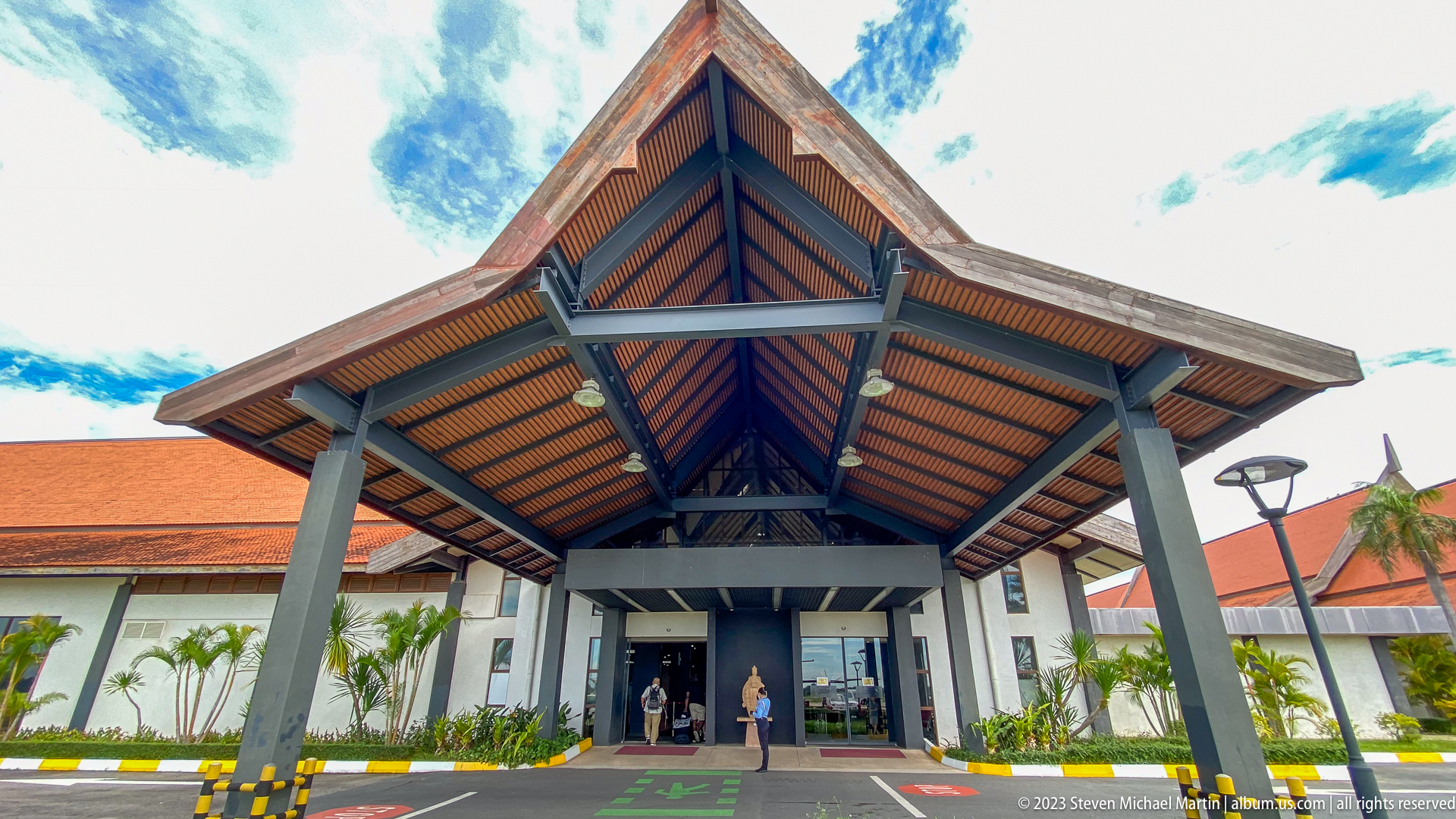
A dramatic peaked canopy projects over the airport entrance, supported by dark structural columns and lined with warm-toned roof panels. The open trusswork and broad overhang create a ceremonial arrival point adapted to tropical weather.
Caption
A dramatic peaked canopy projects over the airport entrance, supported by dark structural columns and lined with warm-toned roof panels. The open trusswork and broad overhang create a ceremonial arrival point adapted to tropical weather.

Yellow and blue beams radiate above a brightly illuminated Ganzberg stage, forming a fan against the night sky. The frontal composition emphasizes the geometric stage design and the spectacle of commercial entertainment at the Siem Reap night market.
Caption
Yellow and blue beams radiate above a brightly illuminated Ganzberg stage, forming a fan against the night sky. The frontal composition emphasizes the geometric stage design and the spectacle of commercial entertainment at the Siem Reap night market.
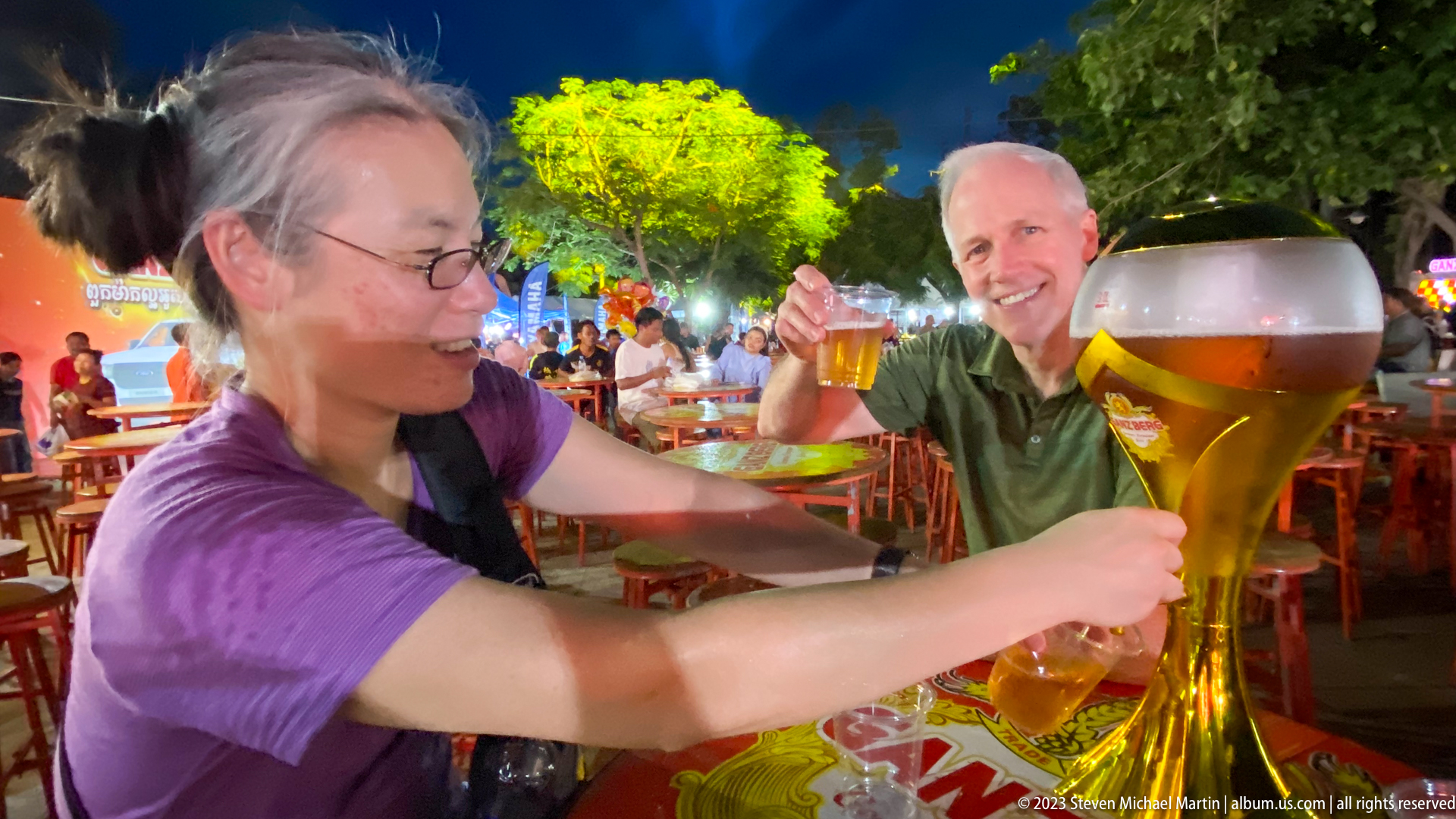
Two smiling visitors gather around an oversized beer tower at the night market, one holding a cup while the other reaches toward the dispenser. Bright lights, tables, and trees place the playful moment within the crowded evening venue.
Caption
Two smiling visitors gather around an oversized beer tower at the night market, one holding a cup while the other reaches toward the dispenser. Bright lights, tables, and trees place the playful moment within the crowded evening venue.
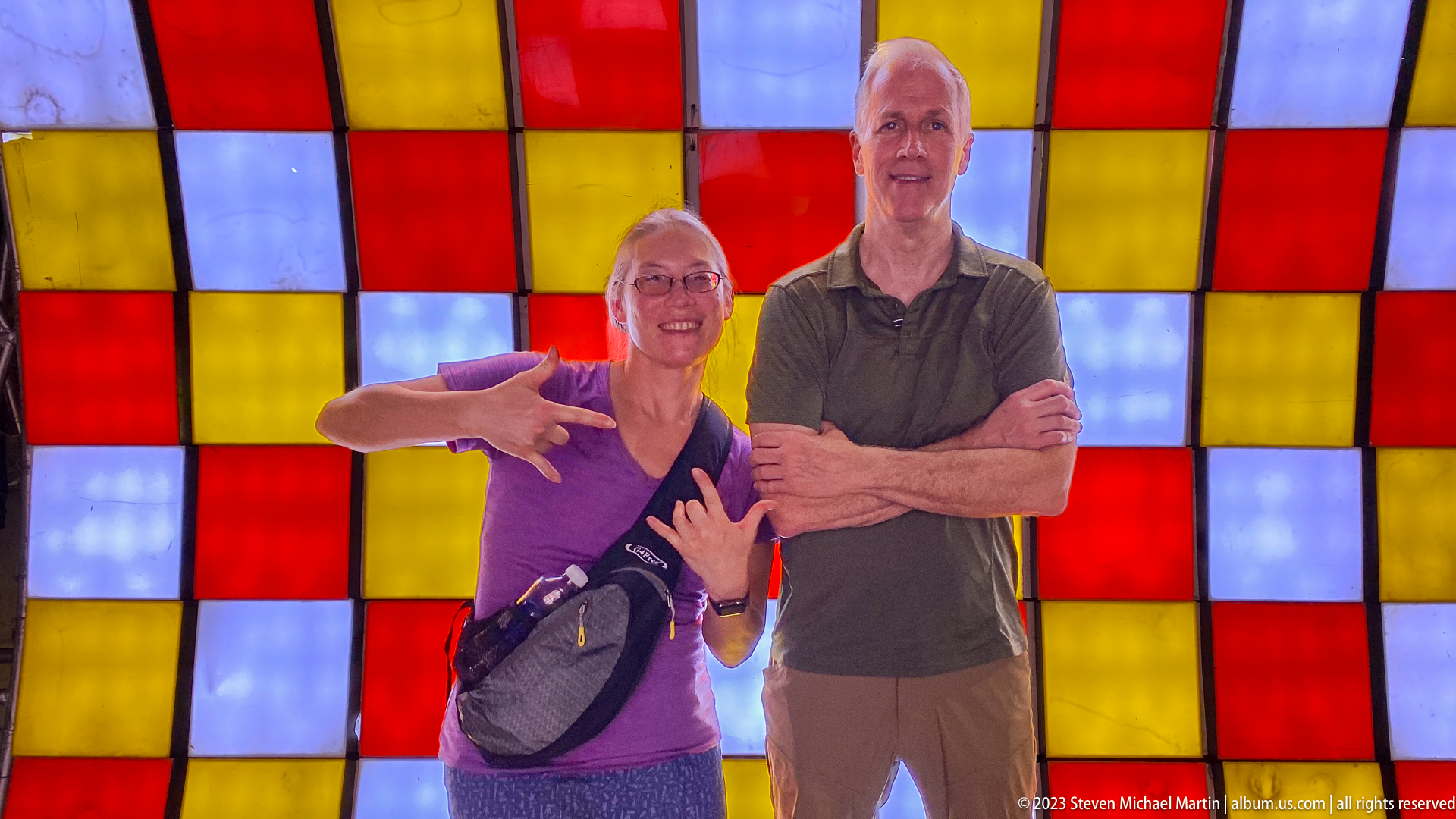
Two visitors repeat a playful crossed-arm pose before a grid of illuminated red, yellow, and white panels. The repeated portrait documents the night market’s photo-op installations as part of the social experience of the venue.
Caption
Two visitors repeat a playful crossed-arm pose before a grid of illuminated red, yellow, and white panels. The repeated portrait documents the night market’s photo-op installations as part of the social experience of the venue.
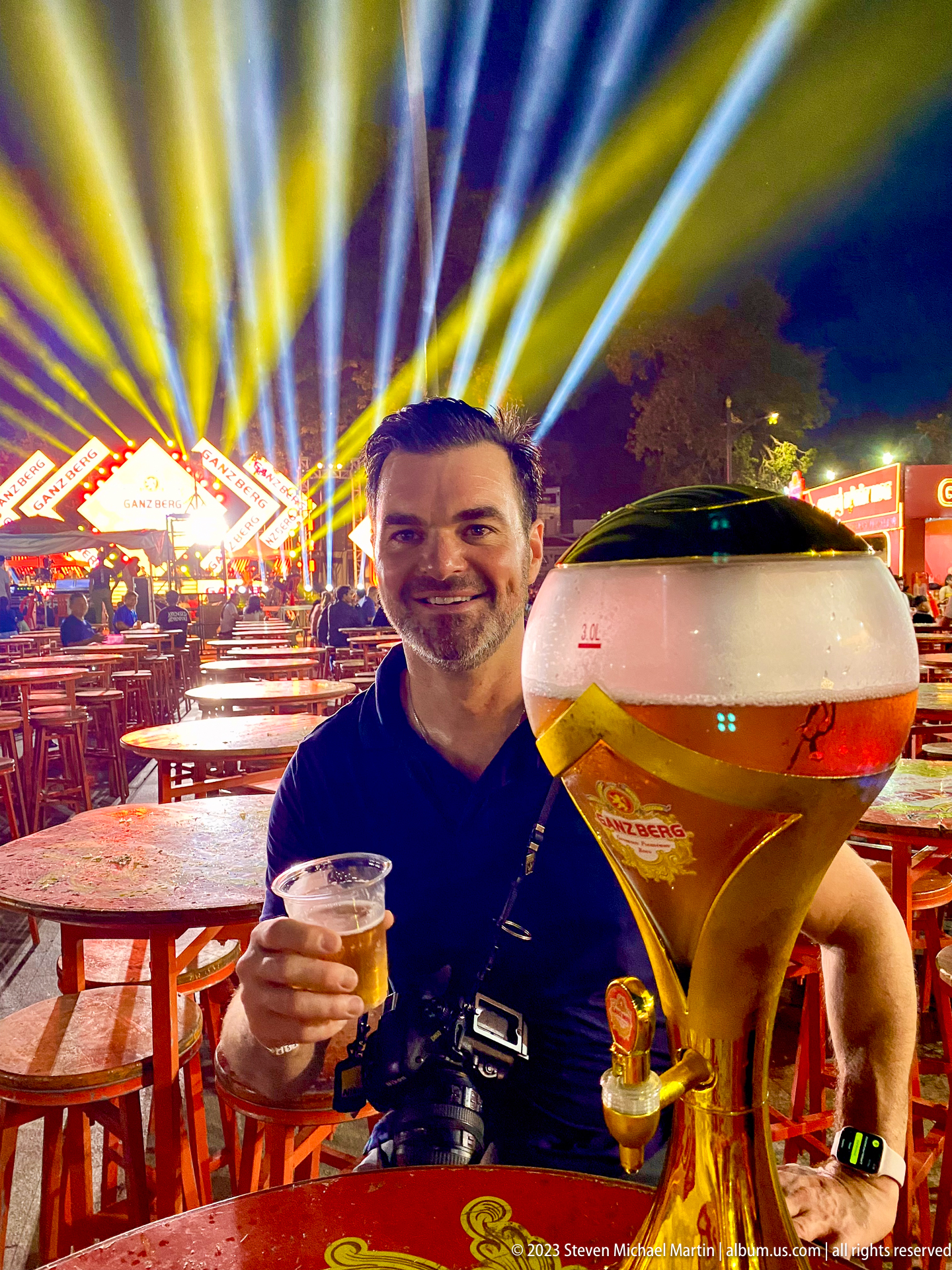
A male visitor smiles while holding a plastic cup of beer beside a large pedestal-style dispenser. Radiating stage lights and rows of market tables behind him connect the portrait to the festive nighttime setting.
Caption
A male visitor smiles while holding a plastic cup of beer beside a large pedestal-style dispenser. Radiating stage lights and rows of market tables behind him connect the portrait to the festive nighttime setting.

A smiling male visitor sits inside a restaurant wearing a folded red napkin as a playful hat. The portrait adds an informal personal moment to the portfolio’s sequence of dining and nightlife scenes.
Caption
A smiling male visitor sits inside a restaurant wearing a folded red napkin as a playful hat. The portrait adds an informal personal moment to the portfolio’s sequence of dining and nightlife scenes.
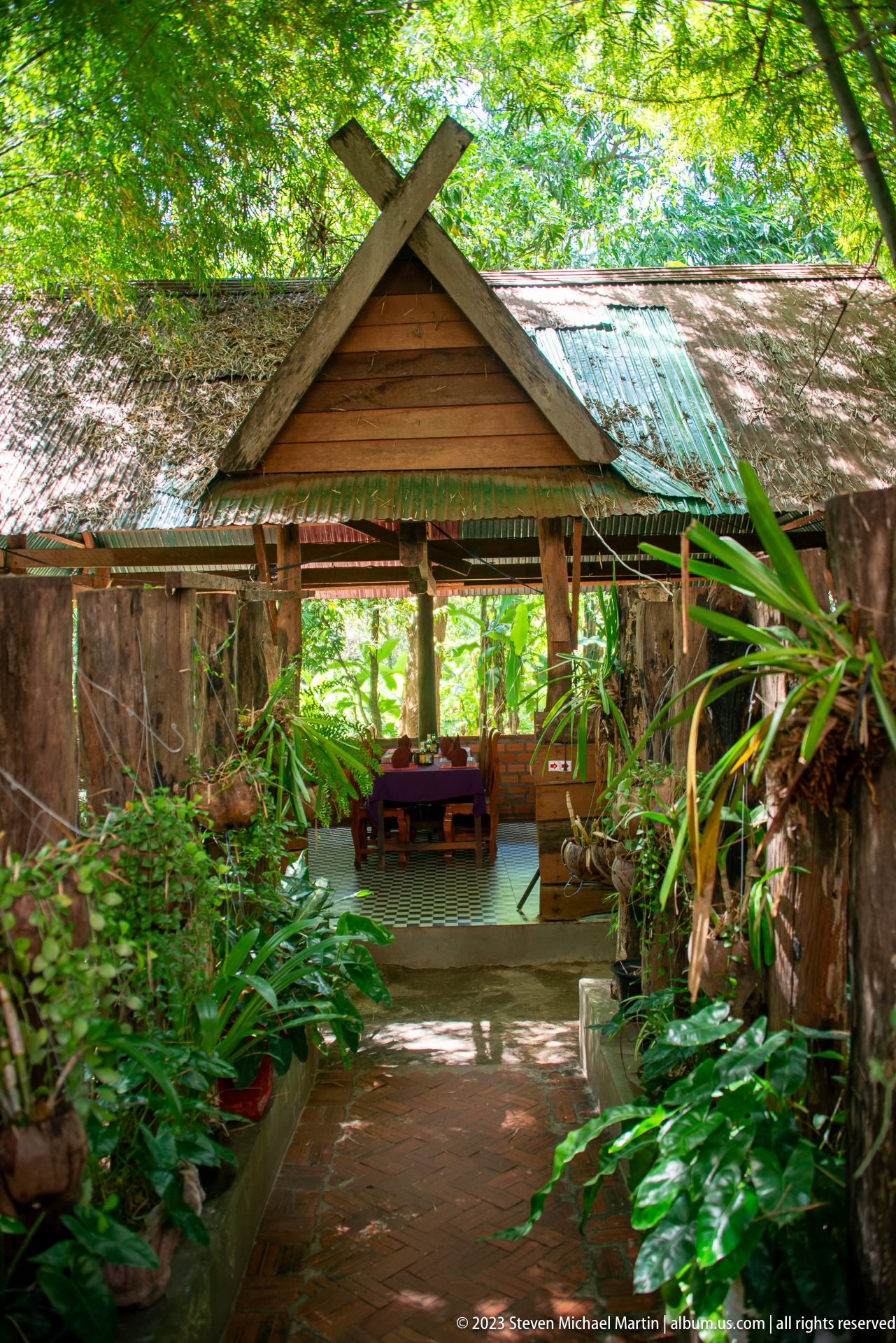
An open-sided wooden pavilion with a simple gabled roof sits within dense tropical planting. A bench at the center and shaded pathway suggest a quiet rest area integrated into the restaurant or hotel garden.
Caption
An open-sided wooden pavilion with a simple gabled roof sits within dense tropical planting. A bench at the center and shaded pathway suggest a quiet rest area integrated into the restaurant or hotel garden.
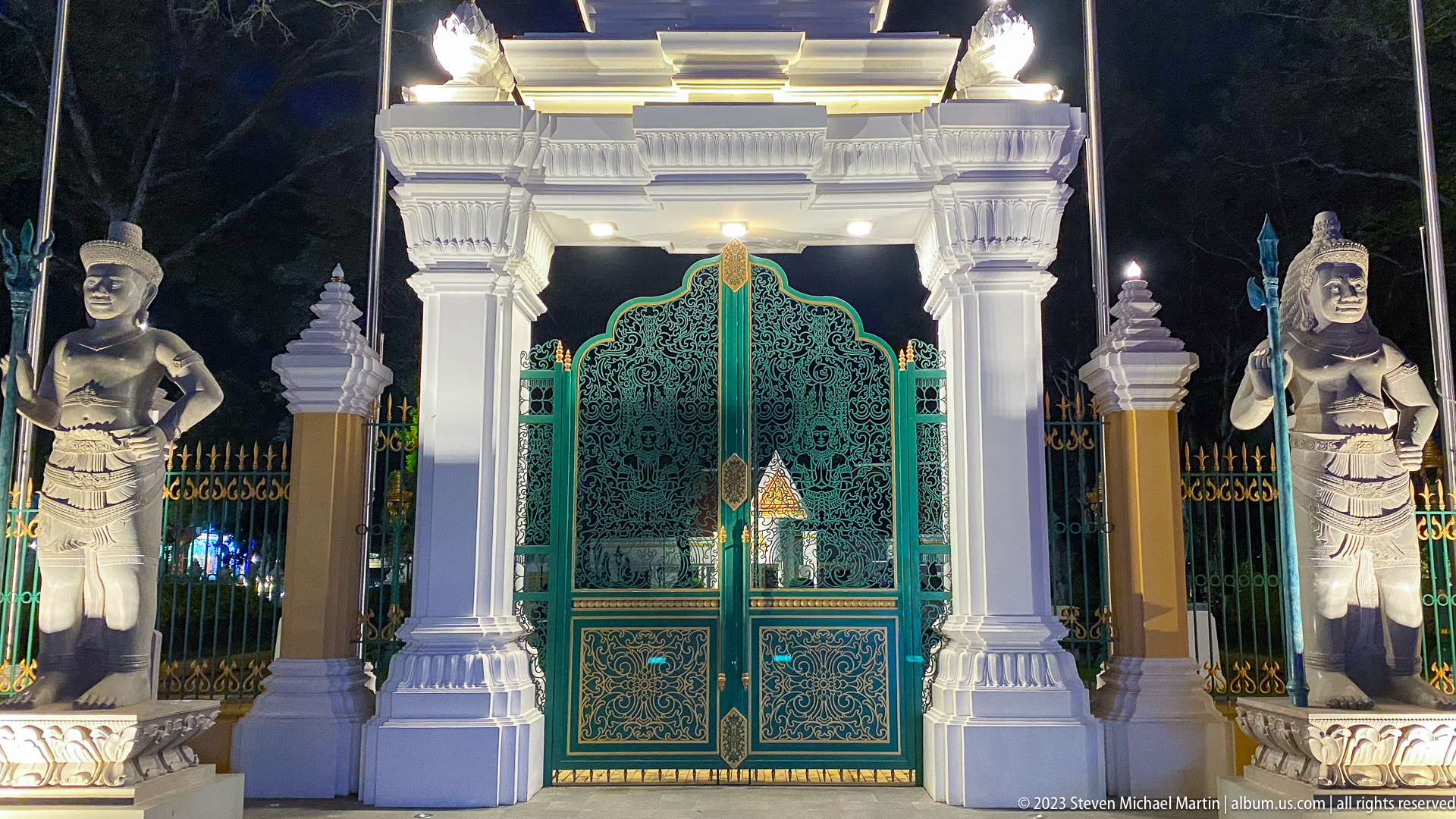
A closer frontal view aligns the ornate green doors beneath the white tiered gateway, with guardian figures standing symmetrically at either side. The tighter framing highlights the patterned metalwork and monumental scale of the entrance.
Caption
A closer frontal view aligns the ornate green doors beneath the white tiered gateway, with guardian figures standing symmetrically at either side. The tighter framing highlights the patterned metalwork and monumental scale of the entrance.
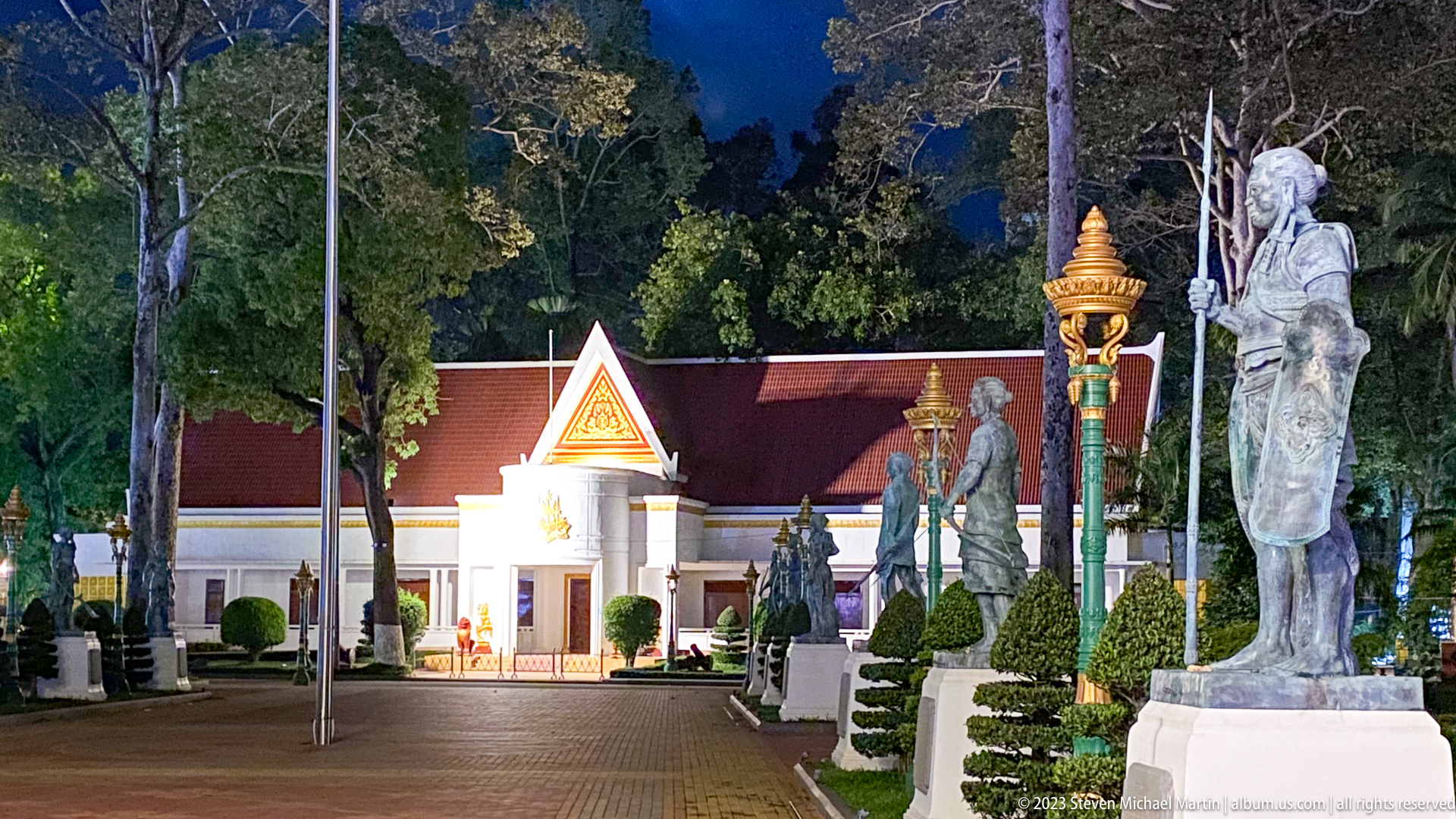
A paved avenue leads toward a brightly lit building with a steep triangular pediment, while tall standing statues and ornate lamp standards line the route. Trimmed shrubs, flagpoles, and mature trees reinforce the formal ceremonial character of the compound.
Caption
A paved avenue leads toward a brightly lit building with a steep triangular pediment, while tall standing statues and ornate lamp standards line the route. Trimmed shrubs, flagpoles, and mature trees reinforce the formal ceremonial character of the compound.
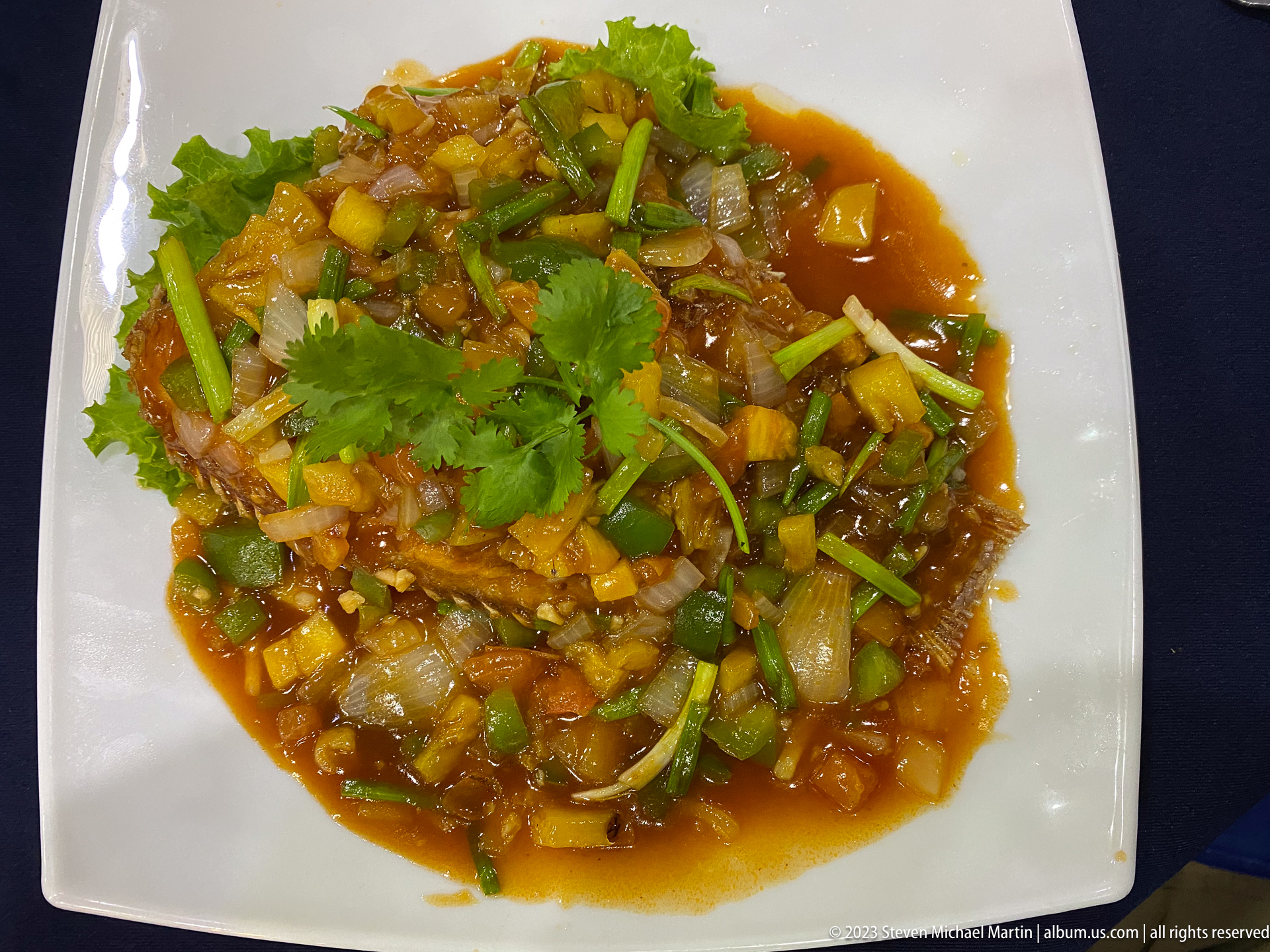
A white rectangular plate holds a glossy stir-fry of chopped vegetables, onions, green stems, and herbs in a brown sauce. Fresh cilantro on top adds color and suggests a savory restaurant dish served during the Siem Reap visit.
Caption
A white rectangular plate holds a glossy stir-fry of chopped vegetables, onions, green stems, and herbs in a brown sauce. Fresh cilantro on top adds color and suggests a savory restaurant dish served during the Siem Reap visit.
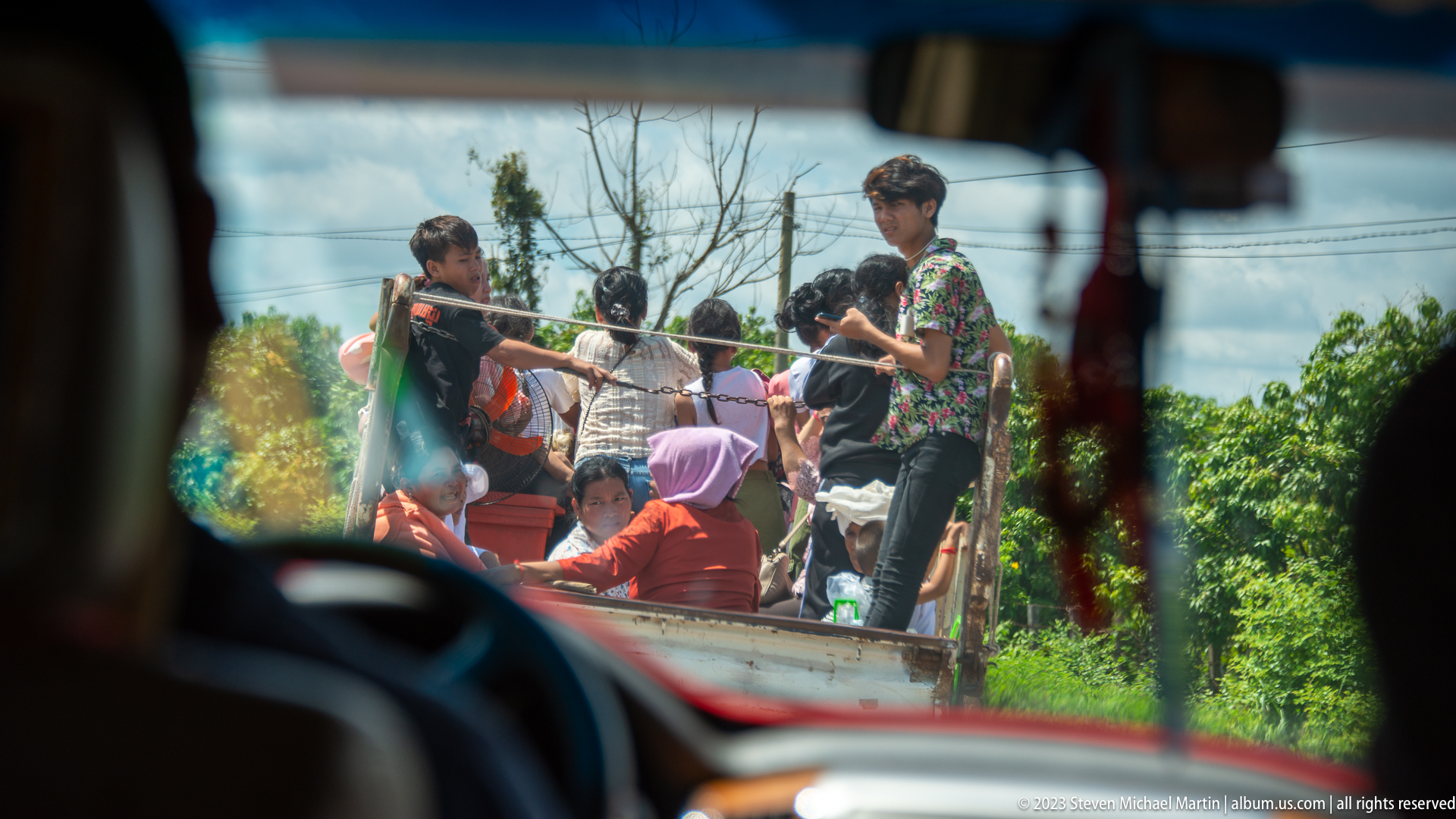
Viewed through a windshield, a crowded open vehicle carries standing and seated passengers along a rural road near Siem Reap. The framing emphasizes everyday mobility and the photographer’s position inside a following vehicle.
Caption
Viewed through a windshield, a crowded open vehicle carries standing and seated passengers along a rural road near Siem Reap. The framing emphasizes everyday mobility and the photographer’s position inside a following vehicle.
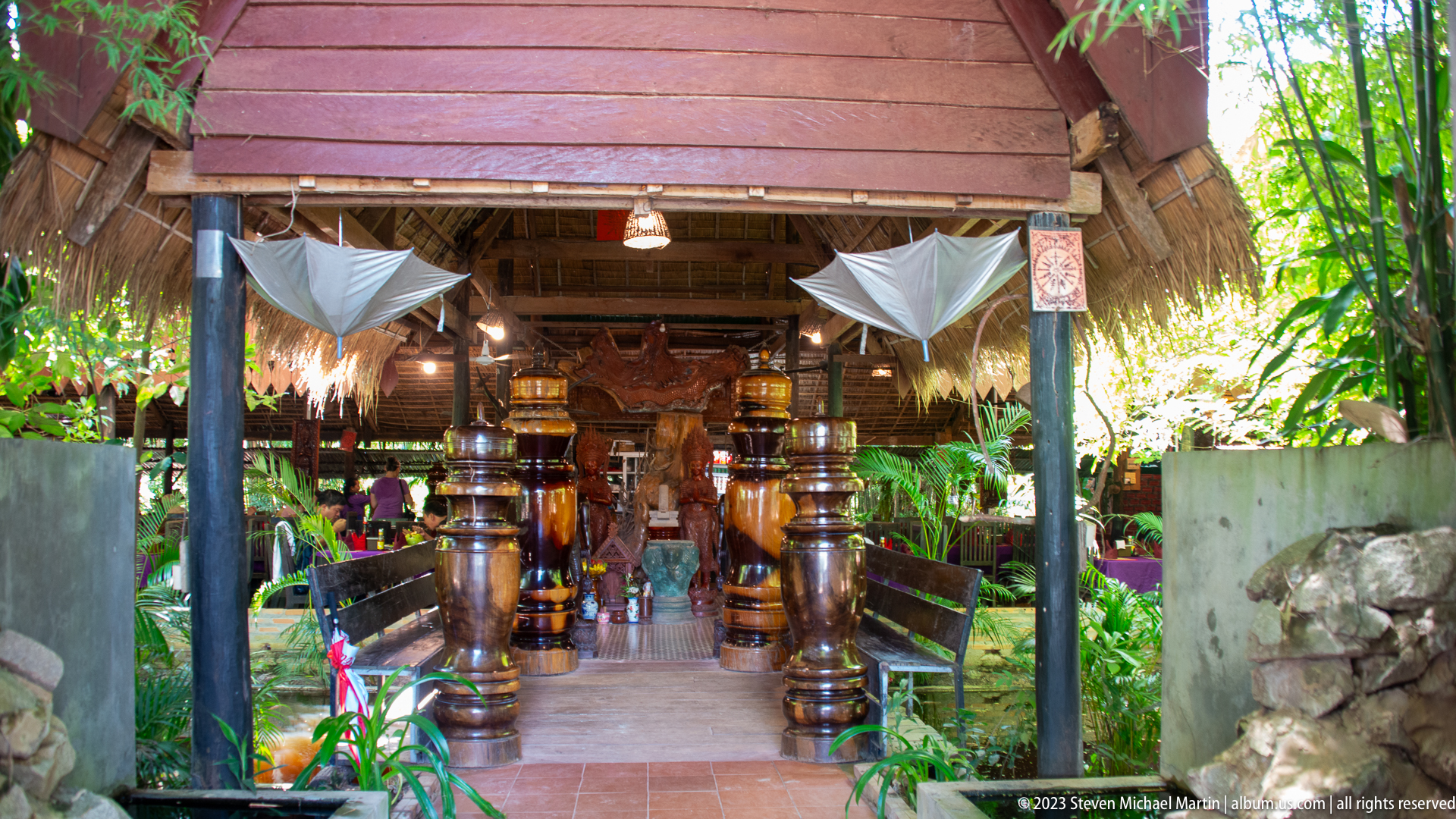
A shaded entrance of dark timber posts and a thatched roof opens into a lush restaurant interior. Large polished wooden columns guide the approach, while dense tropical vegetation and handcrafted details create a rustic garden setting.
Caption
A shaded entrance of dark timber posts and a thatched roof opens into a lush restaurant interior. Large polished wooden columns guide the approach, while dense tropical vegetation and handcrafted details create a rustic garden setting.
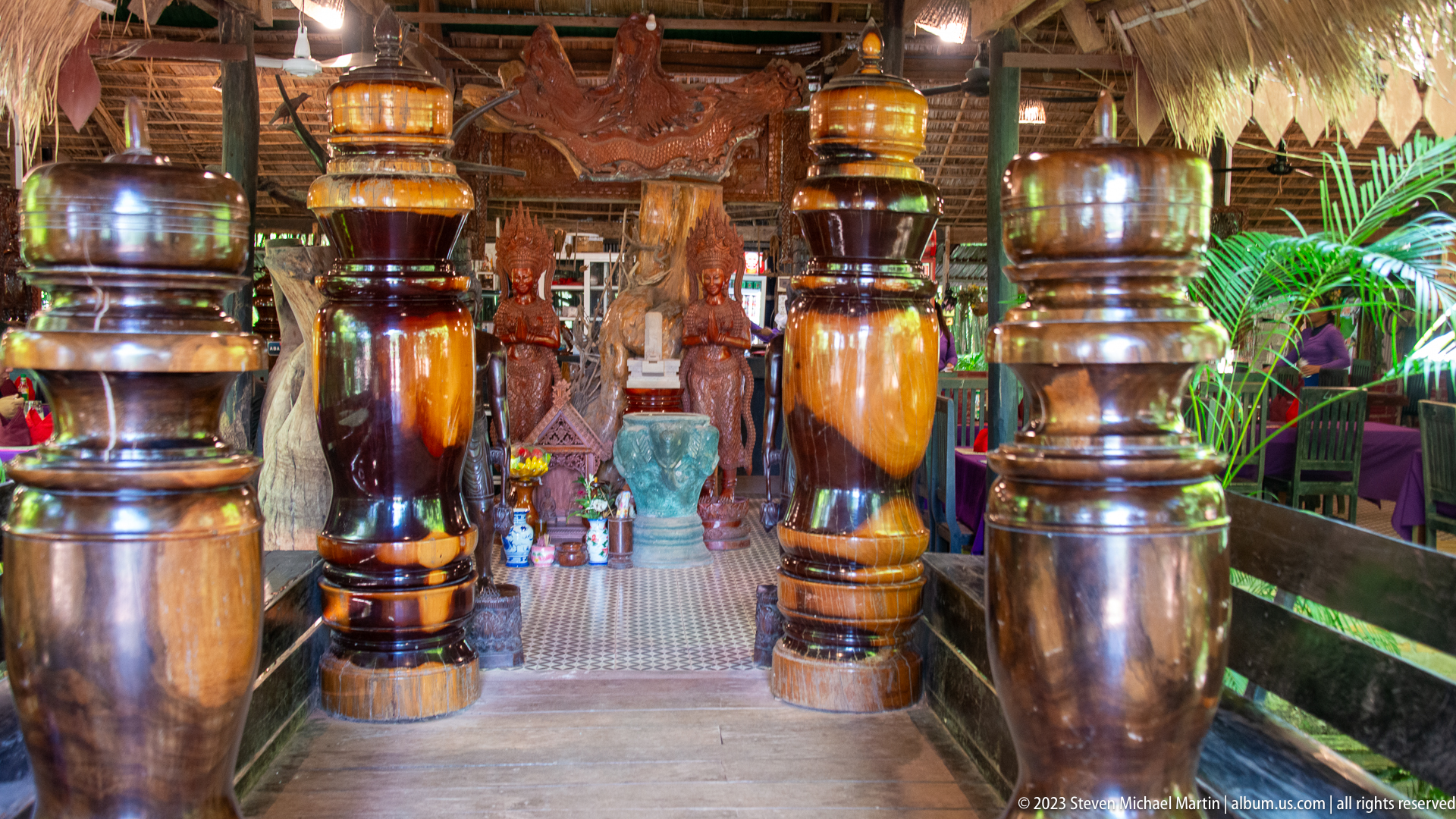
Massive turned wooden columns line the central aisle of a richly decorated restaurant interior. Carved figures, dark timber furniture, and patterned flooring extend the handcrafted aesthetic deeper into the dining space.
Caption
Massive turned wooden columns line the central aisle of a richly decorated restaurant interior. Carved figures, dark timber furniture, and patterned flooring extend the handcrafted aesthetic deeper into the dining space.
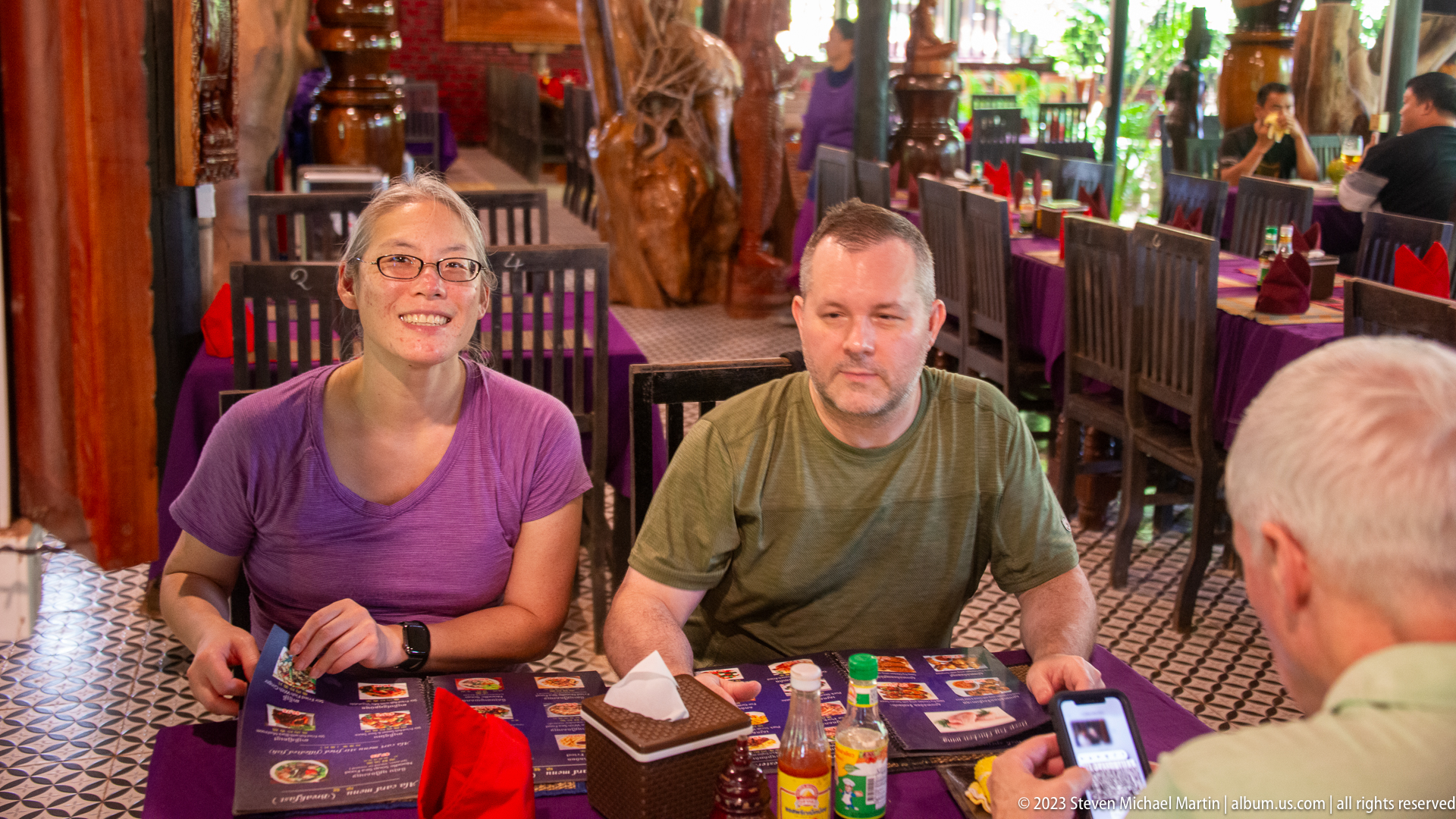
Two smiling visitors sit across a restaurant table set with menus, condiments, and a tissue box, while another companion is seen from behind in the foreground. Carved woodwork and purple table linens situate the group within the richly decorated dining room.
Caption
Two smiling visitors sit across a restaurant table set with menus, condiments, and a tissue box, while another companion is seen from behind in the foreground. Carved woodwork and purple table linens situate the group within the richly decorated dining room.
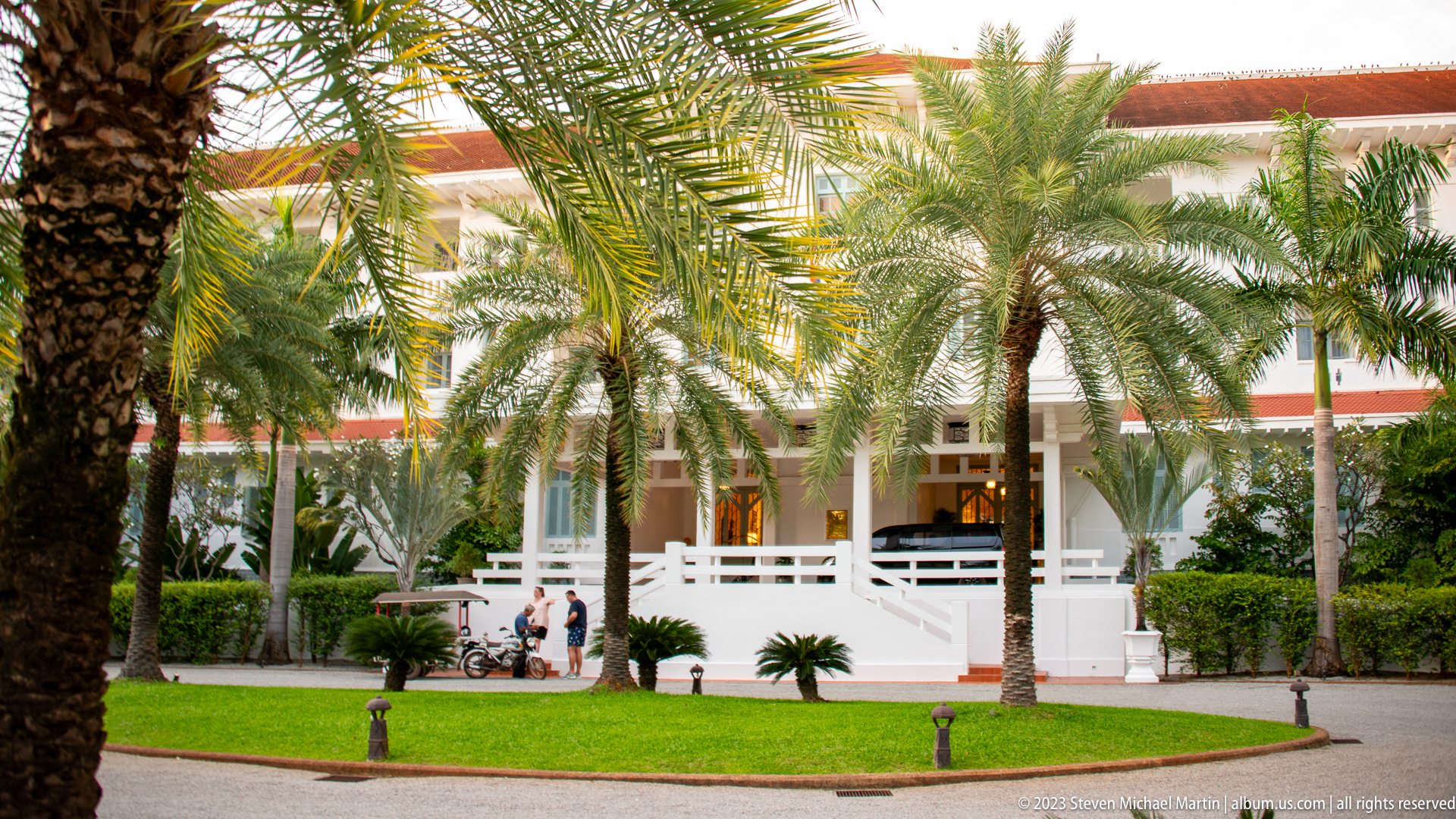
A long white building with shaded verandas, red roof tiles, and rows of columns stands behind a manicured lawn and tall palms. The formal landscaping and restrained façade evoke a colonial-era resort aesthetic adapted to the tropical setting.
Caption
A long white building with shaded verandas, red roof tiles, and rows of columns stands behind a manicured lawn and tall palms. The formal landscaping and restrained façade evoke a colonial-era resort aesthetic adapted to the tropical setting.
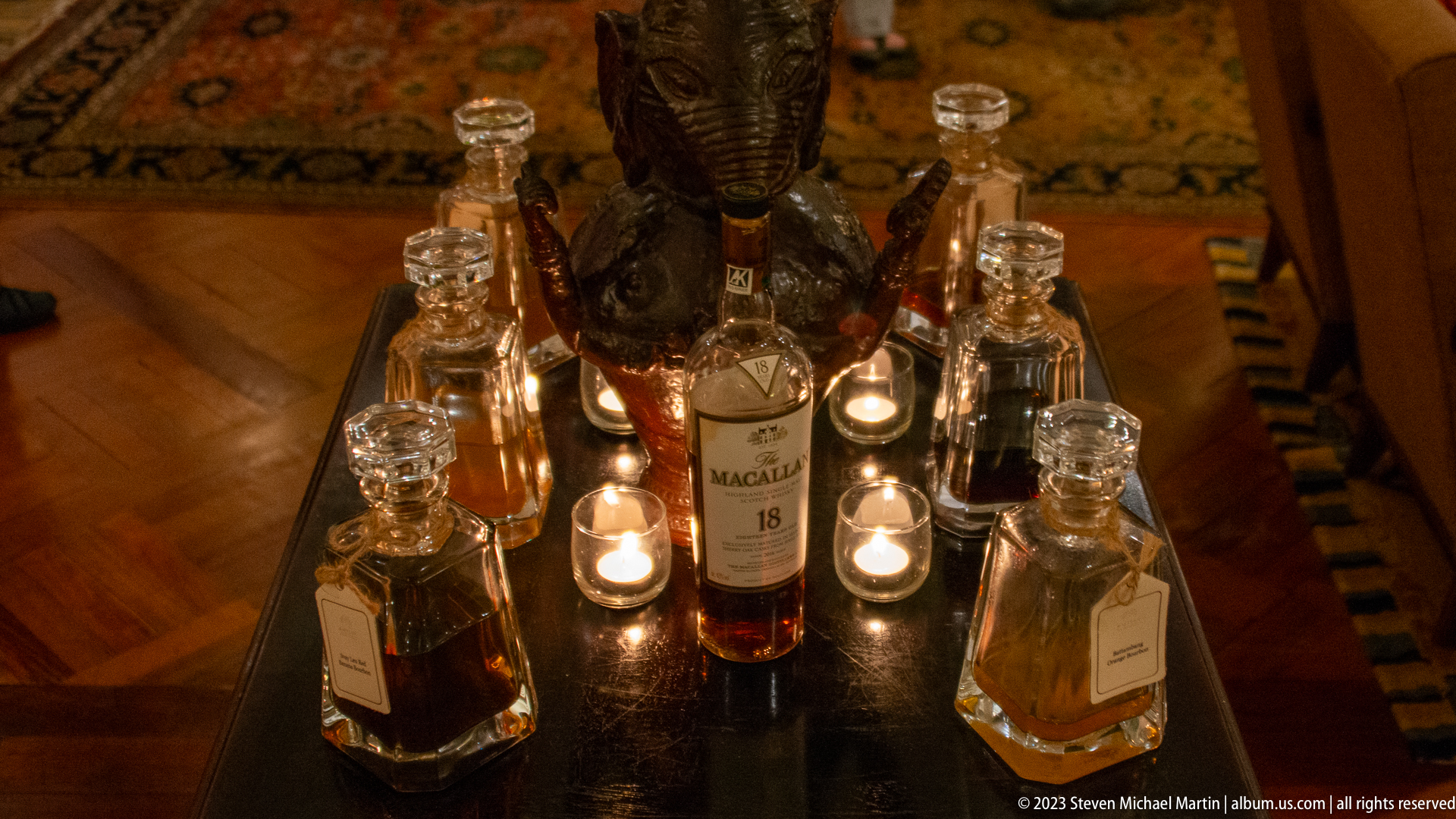
A bottle of The Macallan 18 stands at the center of a dramatic whisky display surrounded by crystal decanters, tasting glasses, and small candles. A dark sculptural figure behind the arrangement adds theatrical emphasis to the hotel or restaurant presentation.
Caption
A bottle of The Macallan 18 stands at the center of a dramatic whisky display surrounded by crystal decanters, tasting glasses, and small candles. A dark sculptural figure behind the arrangement adds theatrical emphasis to the hotel or restaurant presentation.
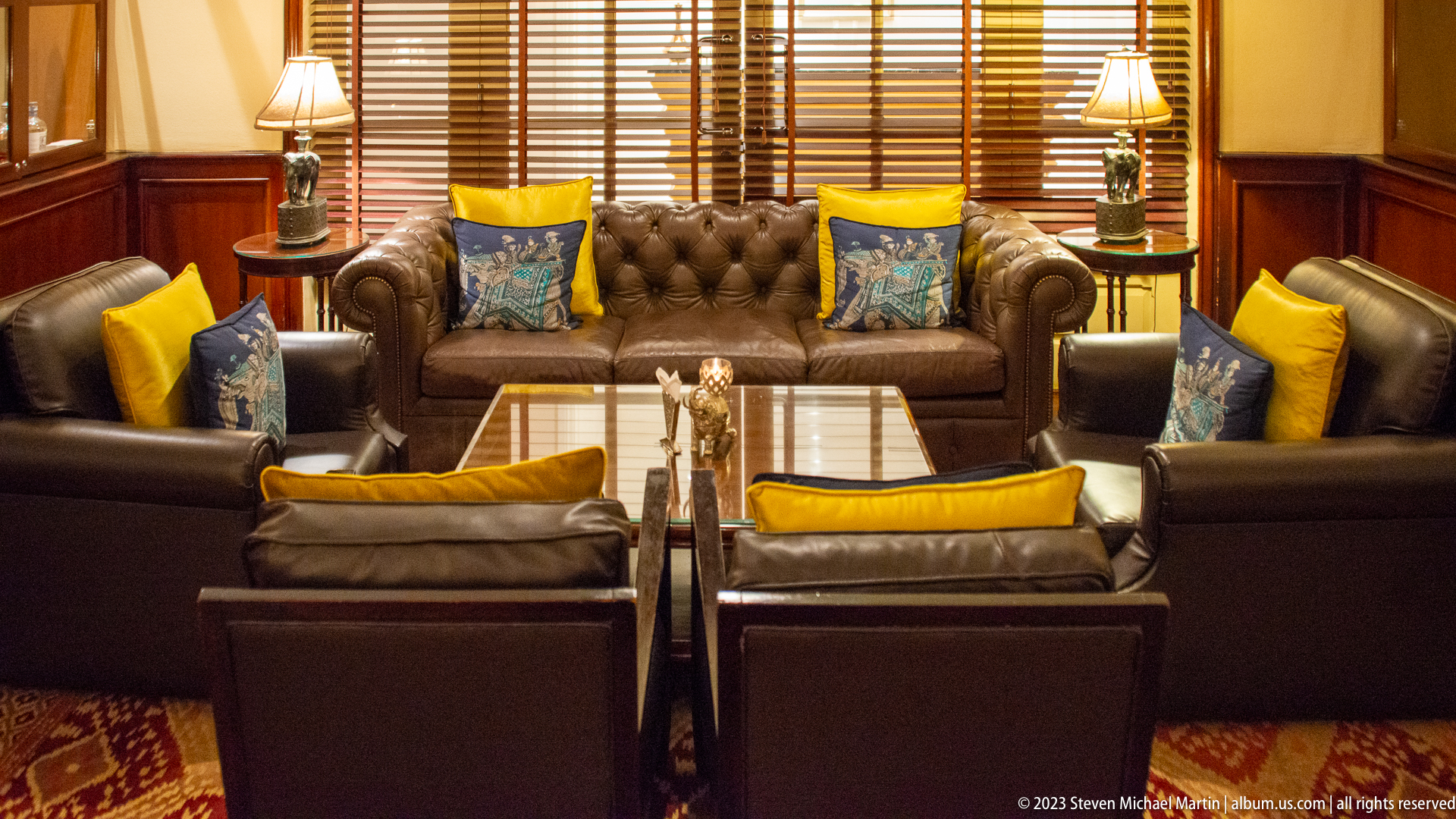
Dark tufted leather sofas and armchairs are arranged around a glass-topped table in a warm wood-paneled lounge. Yellow and blue accent cushions, table lamps, and horizontal blinds give the room a polished club-like atmosphere within a luxury hotel.
Caption
Dark tufted leather sofas and armchairs are arranged around a glass-topped table in a warm wood-paneled lounge. Yellow and blue accent cushions, table lamps, and horizontal blinds give the room a polished club-like atmosphere within a luxury hotel.
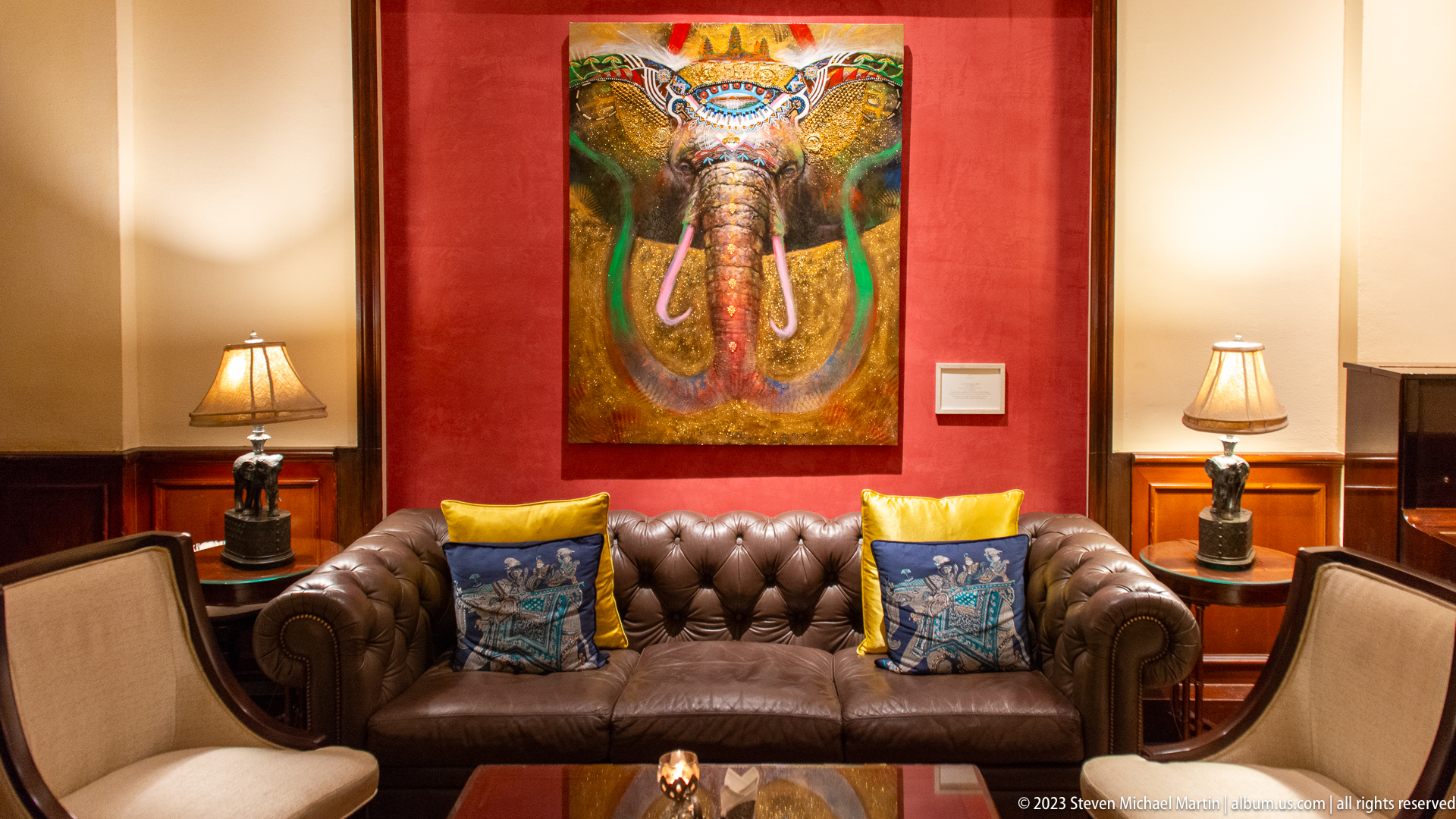
A colorful elephant painting anchors a red accent wall above a tufted leather sofa in the hotel lounge. Matching lamps, patterned cushions, and flanking armchairs create a symmetrical seating vignette that combines colonial-style furnishings with Cambodian-themed decoration.
Caption
A colorful elephant painting anchors a red accent wall above a tufted leather sofa in the hotel lounge. Matching lamps, patterned cushions, and flanking armchairs create a symmetrical seating vignette that combines colonial-style furnishings with Cambodian-themed decoration.
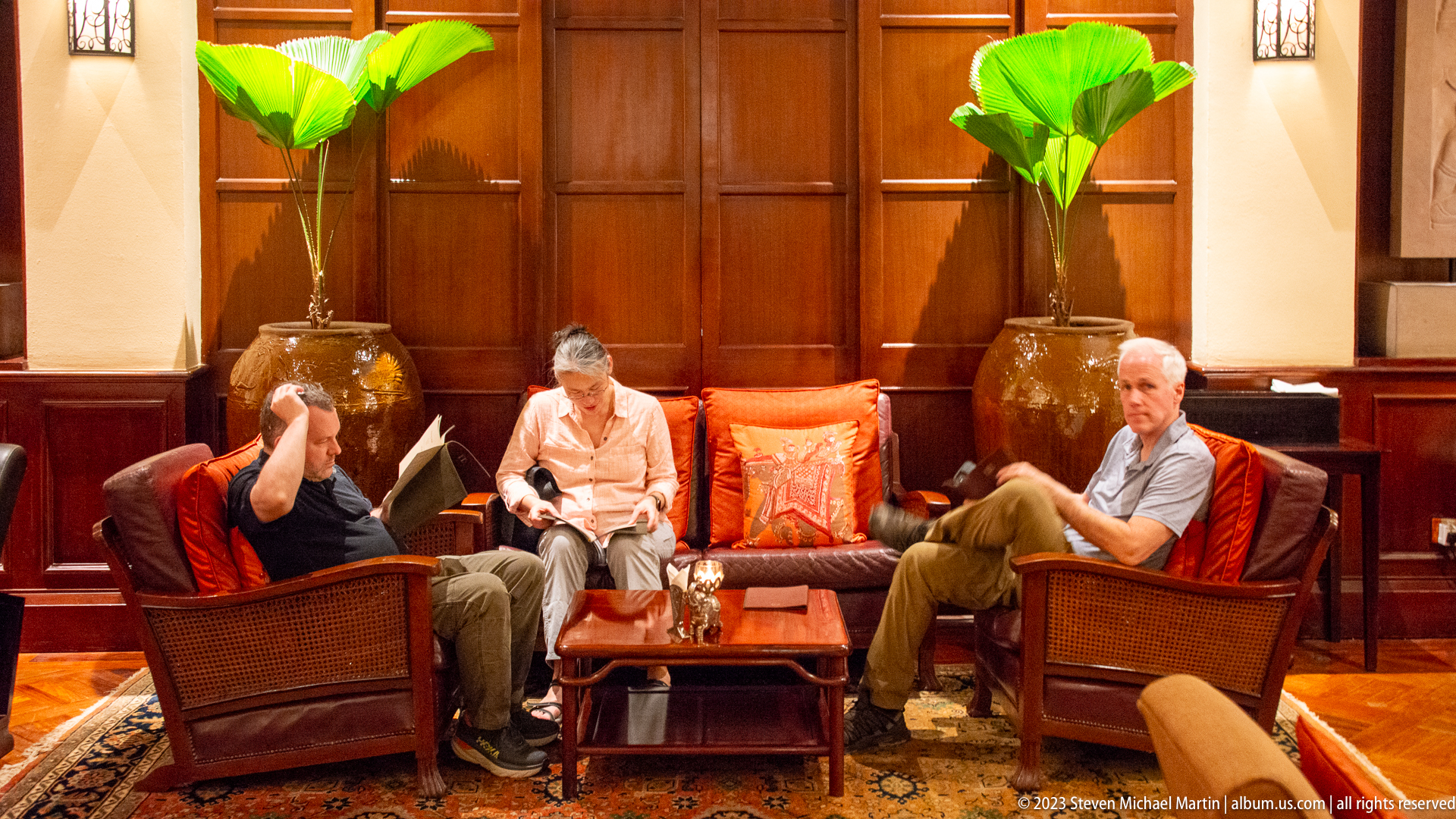
Three adult visitors sit in rattan armchairs around a small table beneath tall tropical plants and paneled wooden doors. Red patterned cushions and a carpeted seating area soften the formal hotel interior.
Caption
Three adult visitors sit in rattan armchairs around a small table beneath tall tropical plants and paneled wooden doors. Red patterned cushions and a carpeted seating area soften the formal hotel interior.
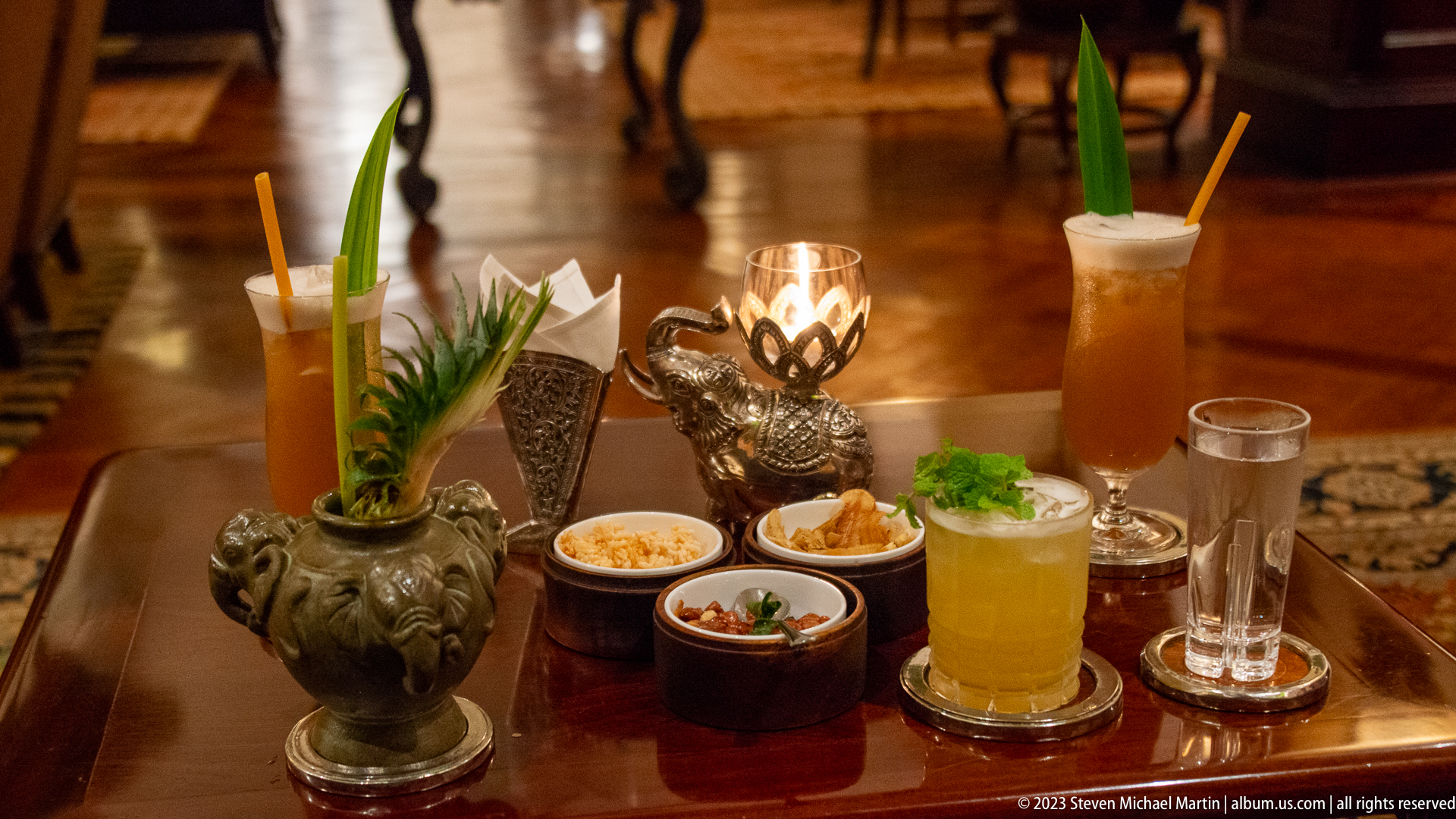
Two tall iced drinks, a yellow cocktail, and a sculptural pineapple-themed vessel are grouped with small bowls of snacks on a polished table. Decorative garnishes, glassware, and candlelight turn the refreshment service into a carefully staged hospitality presentation.
Caption
Two tall iced drinks, a yellow cocktail, and a sculptural pineapple-themed vessel are grouped with small bowls of snacks on a polished table. Decorative garnishes, glassware, and candlelight turn the refreshment service into a carefully staged hospitality presentation.
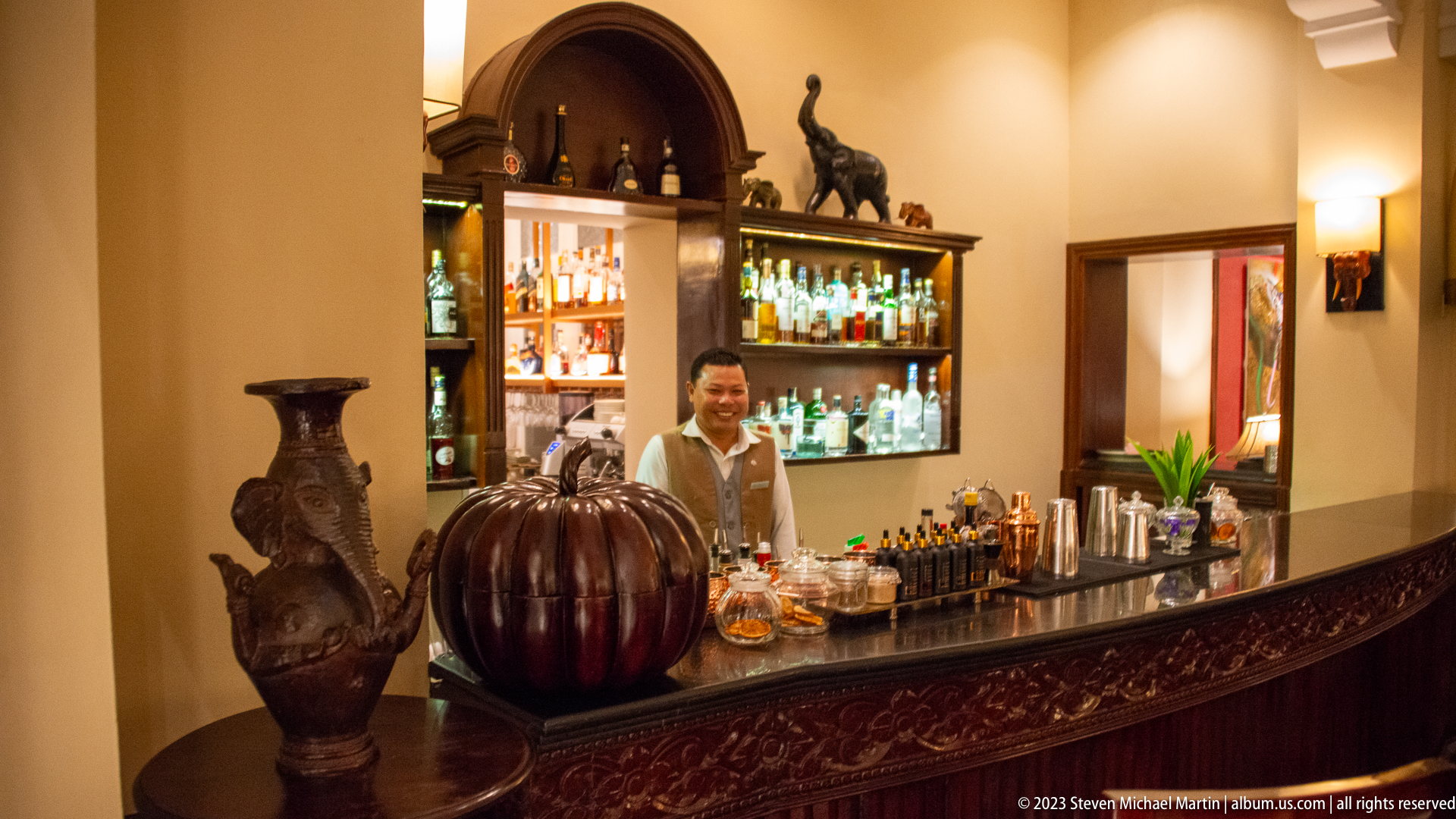
A bartender stands behind an ornate dark wooden bar backed by illuminated shelves of spirits. Carved panels, sculptural vessels, and elephant figures reinforce the richly decorated character of the hotel’s intimate bar interior.
Caption
A bartender stands behind an ornate dark wooden bar backed by illuminated shelves of spirits. Carved panels, sculptural vessels, and elephant figures reinforce the richly decorated character of the hotel’s intimate bar interior.
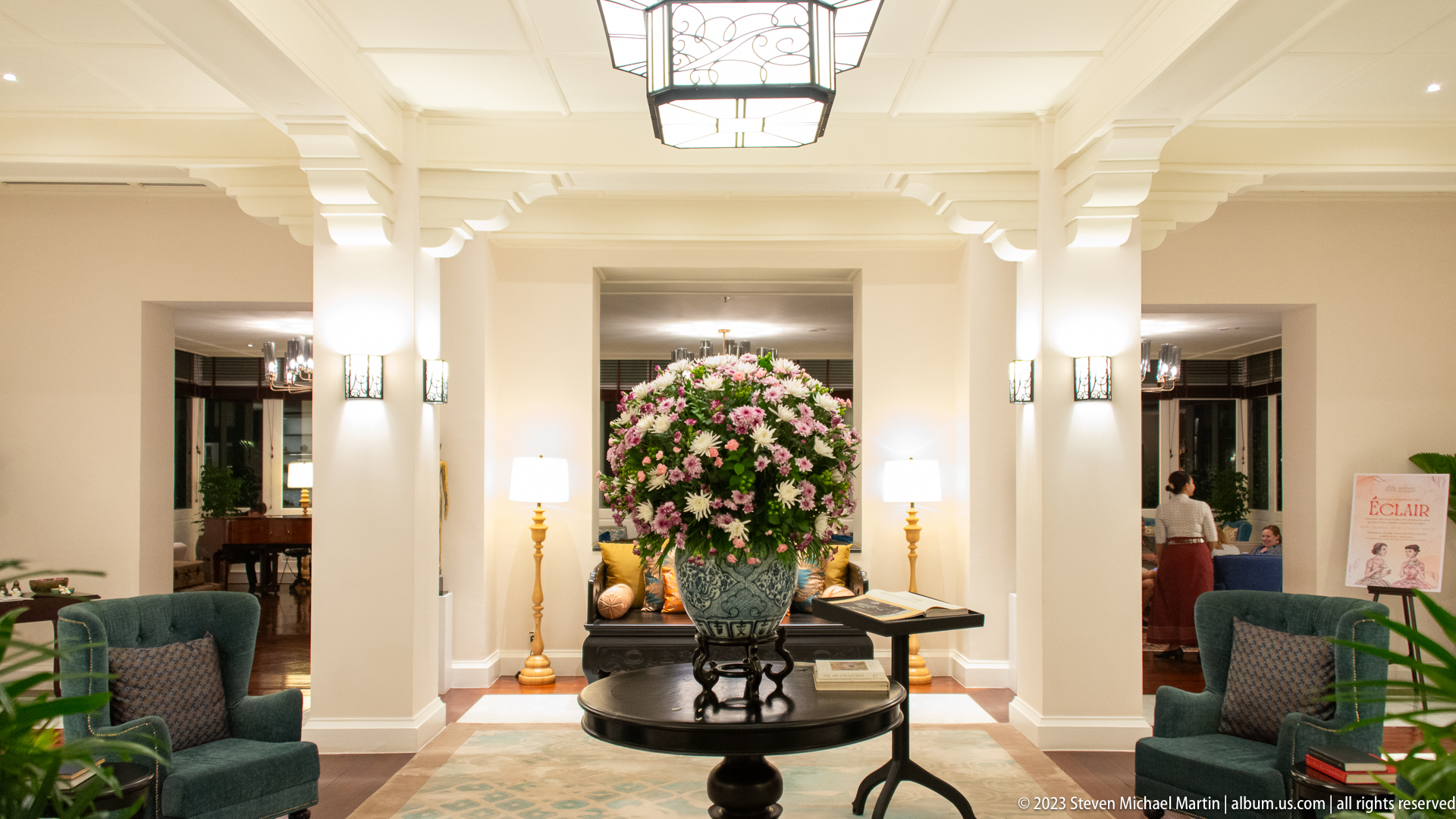
A large urn overflowing with pink and white flowers stands on a central round table in a bright, white-columned lobby. Symmetrical seating areas, pendant lighting, and coffered architectural details create a refined hotel reception space.
Caption
A large urn overflowing with pink and white flowers stands on a central round table in a bright, white-columned lobby. Symmetrical seating areas, pendant lighting, and coffered architectural details create a refined hotel reception space.

A polished brass plaque identifies the Grand Hotel d’Angkor as a Raffles International hotel. An embossed temple-inspired emblem and reflective aged surface give the sign the character of a historic institutional marker.
Caption
A polished brass plaque identifies the Grand Hotel d’Angkor as a Raffles International hotel. An embossed temple-inspired emblem and reflective aged surface give the sign the character of a historic institutional marker.
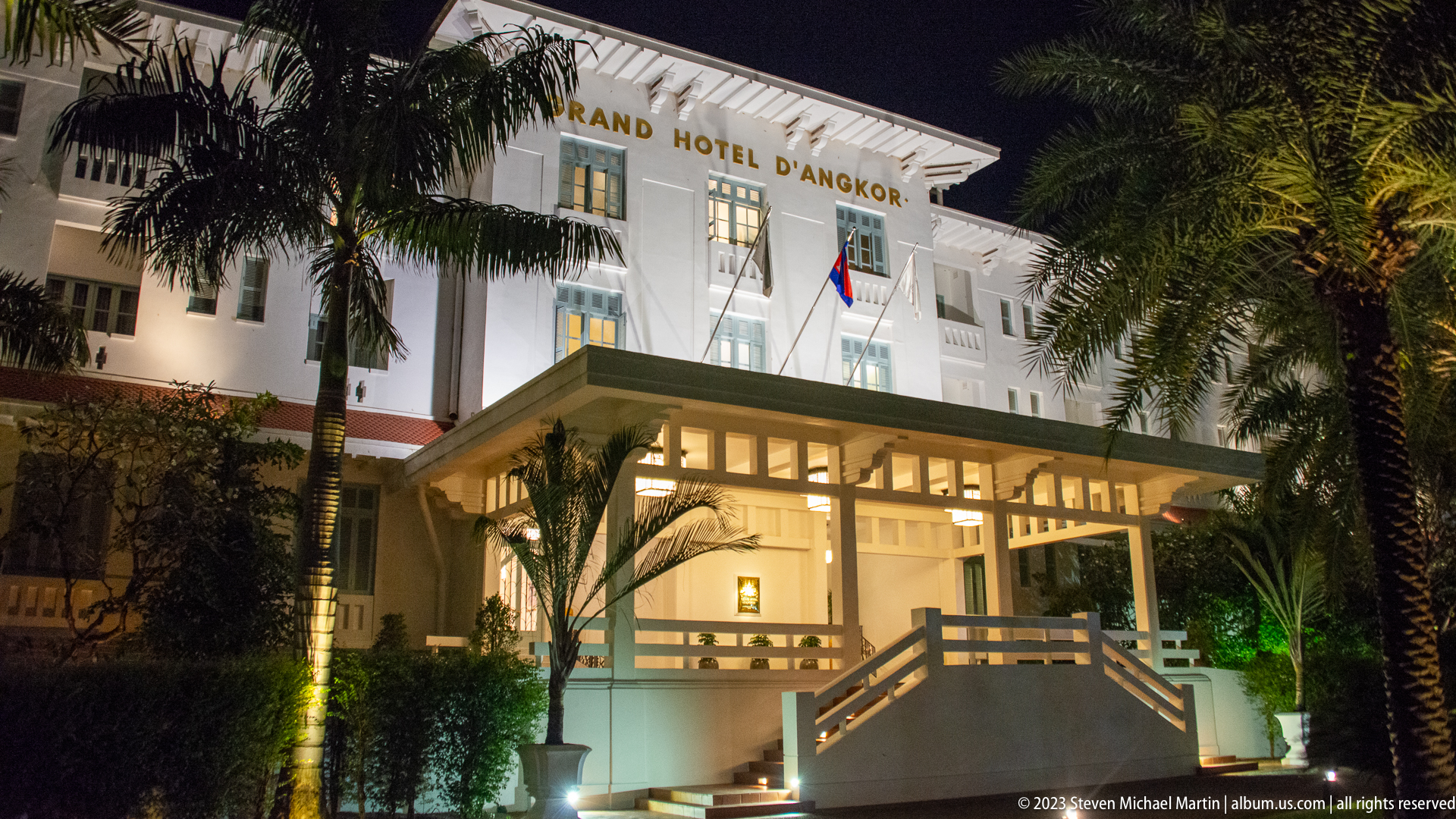
The illuminated entrance of Raffles Grand Hotel d’Angkor rises behind palms and a broad covered stair. The white multi-story façade, formal portico, and Cambodian flag convey the restrained colonial-era elegance associated with the historic hotel.
Caption
The illuminated entrance of Raffles Grand Hotel d’Angkor rises behind palms and a broad covered stair. The white multi-story façade, formal portico, and Cambodian flag convey the restrained colonial-era elegance associated with the historic hotel.
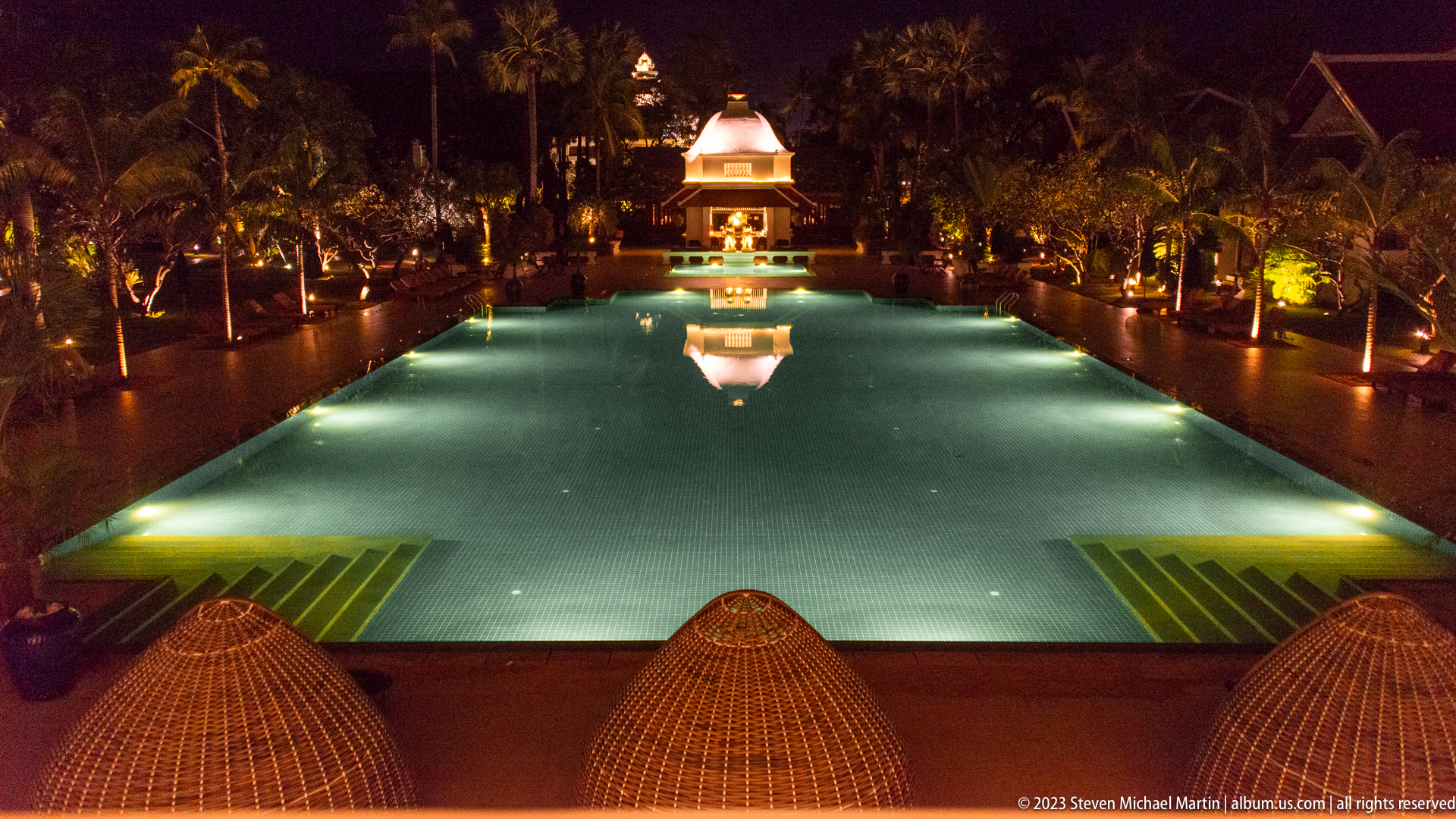
A long rectangular pool glows pale turquoise beneath the night sky, drawing the eye toward a lit pavilion at the far end. Palm trees, garden lighting, and evenly spaced underwater lamps create a formal axial composition.
Caption
A long rectangular pool glows pale turquoise beneath the night sky, drawing the eye toward a lit pavilion at the far end. Palm trees, garden lighting, and evenly spaced underwater lamps create a formal axial composition.

The white façade of Grand Hotel d’Angkor is mirrored across the dark turquoise surface of the swimming pool. Night lighting emphasizes the building’s symmetry, central entrance, and long horizontal massing.
Caption
The white façade of Grand Hotel d’Angkor is mirrored across the dark turquoise surface of the swimming pool. Night lighting emphasizes the building’s symmetry, central entrance, and long horizontal massing.
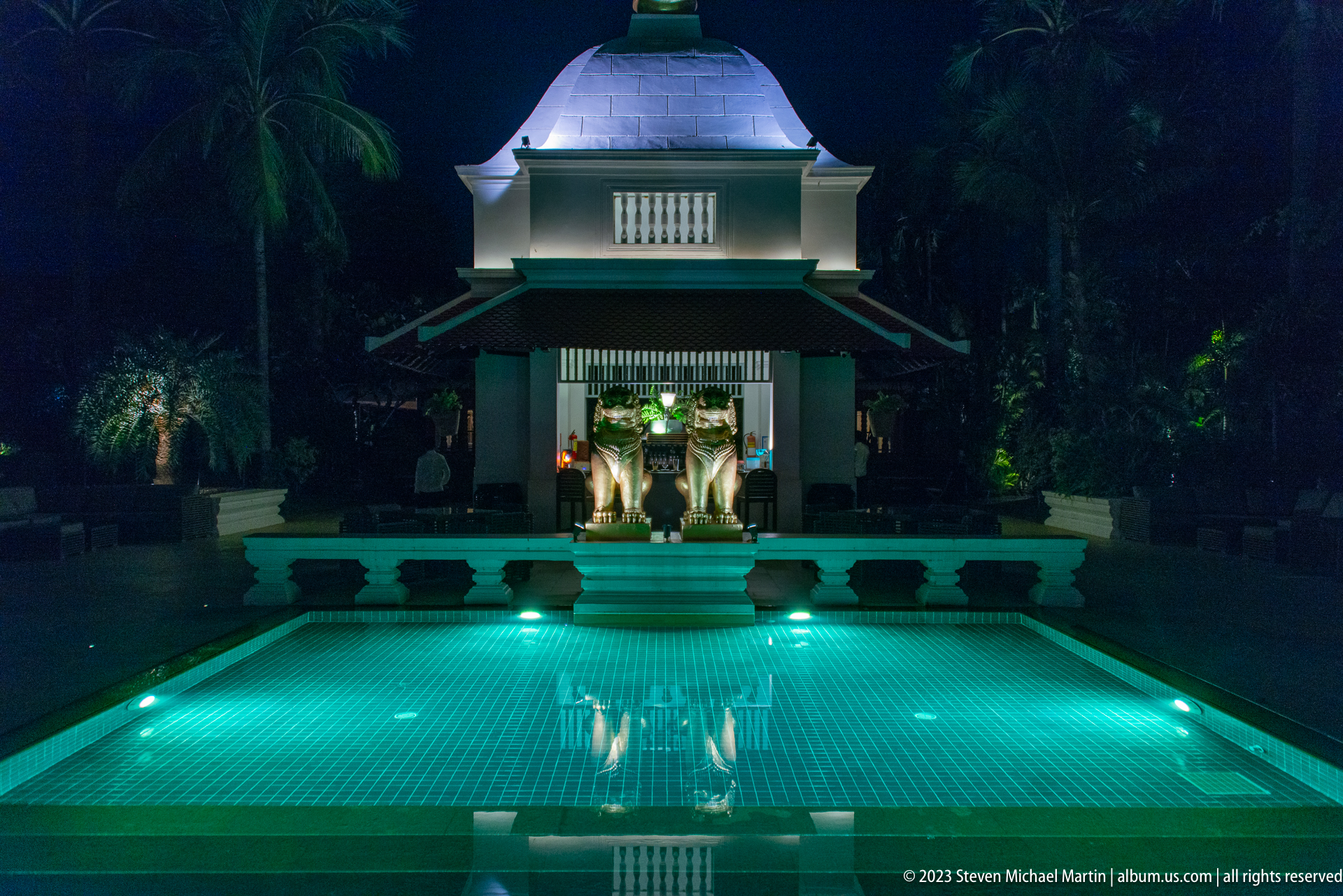
A compact pavilion with a domed roof stands at the far end of the illuminated pool, framed by dark tropical vegetation. Its reflection and centered placement create a quiet focal point within the hotel garden.
Caption
A compact pavilion with a domed roof stands at the far end of the illuminated pool, framed by dark tropical vegetation. Its reflection and centered placement create a quiet focal point within the hotel garden.

A bright lounge combines blue upholstered seating, polished dark tables, floral arrangements, chandeliers, and a bar at the far end. White walls and broad windows lighten the colonial-style interior while guests occupy small conversational groups.
Caption
A bright lounge combines blue upholstered seating, polished dark tables, floral arrangements, chandeliers, and a bar at the far end. White walls and broad windows lighten the colonial-style interior while guests occupy small conversational groups.

Colorful lanterns, neon signs, and projected light cover Siem Reap’s Pub Street as pedestrians move between bars, restaurants, and vendors. The dense signage and vivid illumination convey the entertainment district’s highly commercial nighttime character.
Caption
Colorful lanterns, neon signs, and projected light cover Siem Reap’s Pub Street as pedestrians move between bars, restaurants, and vendors. The dense signage and vivid illumination convey the entertainment district’s highly commercial nighttime character.
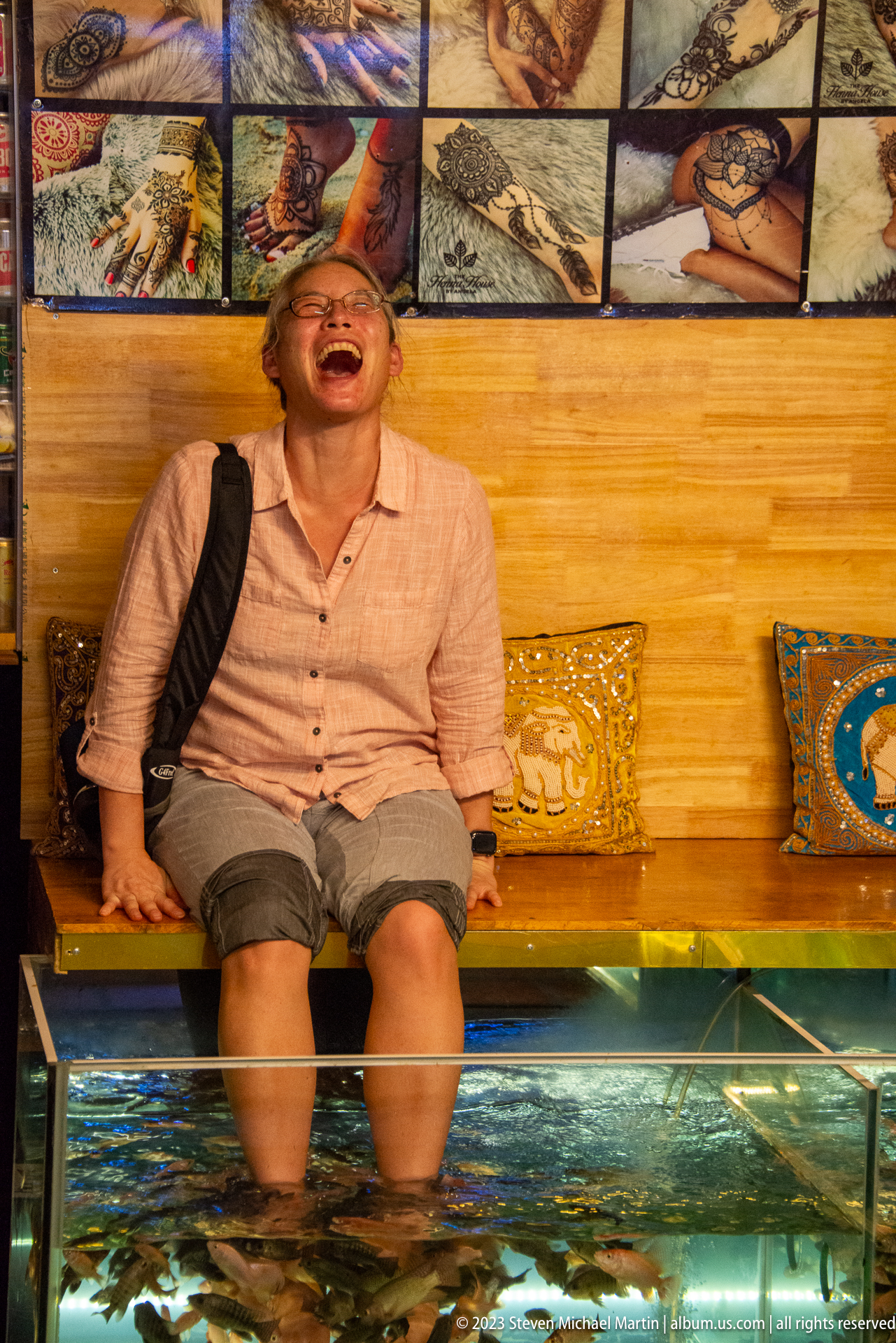
A laughing visitor sits with both lower legs immersed in a glass fish-spa tank while small fish gather around his feet. The playful reaction and aquarium-like bench setup capture a popular novelty treatment in Siem Reap’s nightlife district.
Caption
A laughing visitor sits with both lower legs immersed in a glass fish-spa tank while small fish gather around his feet. The playful reaction and aquarium-like bench setup capture a popular novelty treatment in Siem Reap’s nightlife district.
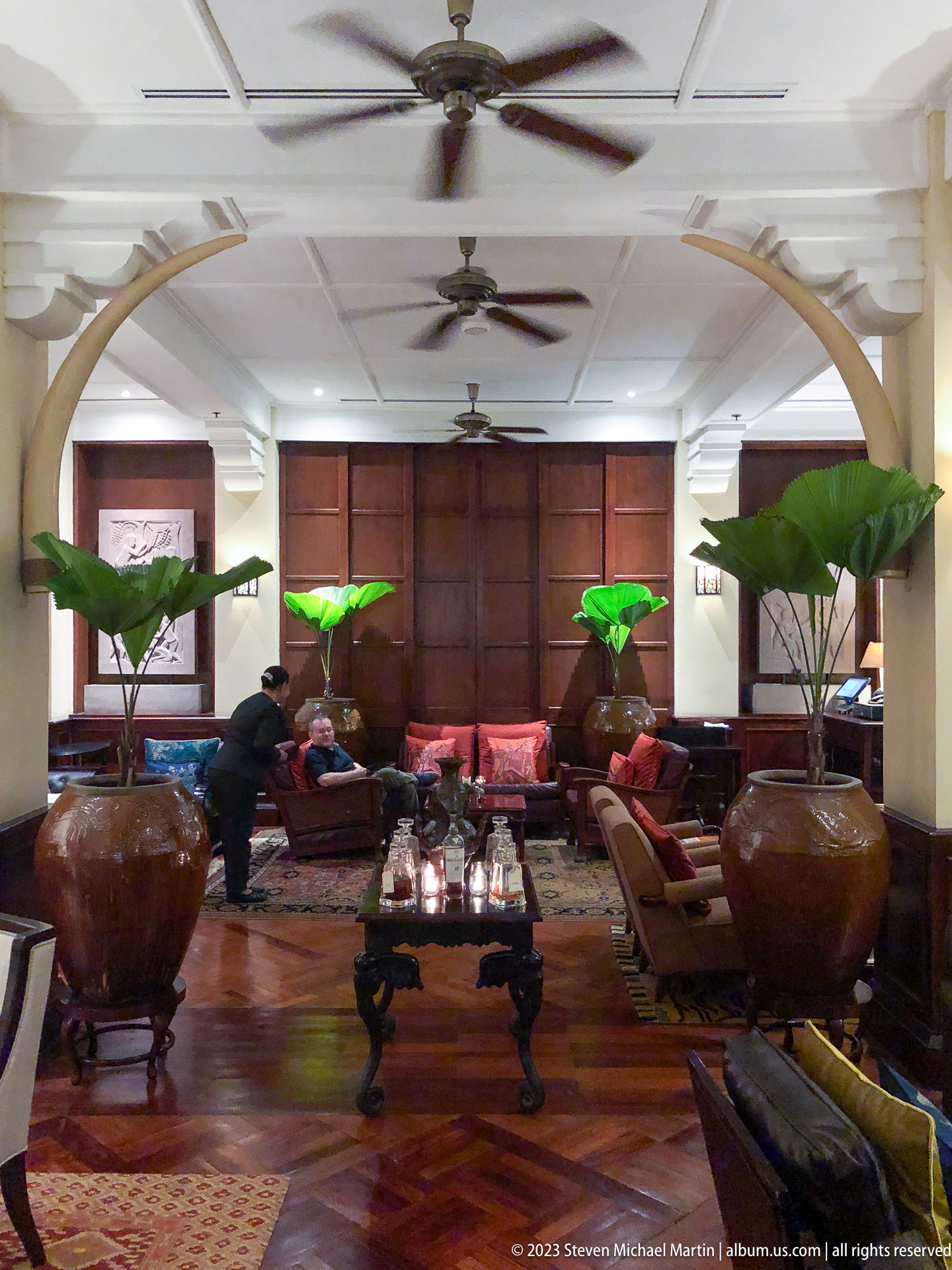
A symmetrical lounge is organized around a central table with candles and floral decor, flanked by deep seating and enormous glazed planters holding tropical plants. Curving arches, ceiling fans, dark wood, and warm lighting reinforce the hotel’s colonial-inspired interior style.
Caption
A symmetrical lounge is organized around a central table with candles and floral decor, flanked by deep seating and enormous glazed planters holding tropical plants. Curving arches, ceiling fans, dark wood, and warm lighting reinforce the hotel’s colonial-inspired interior style.
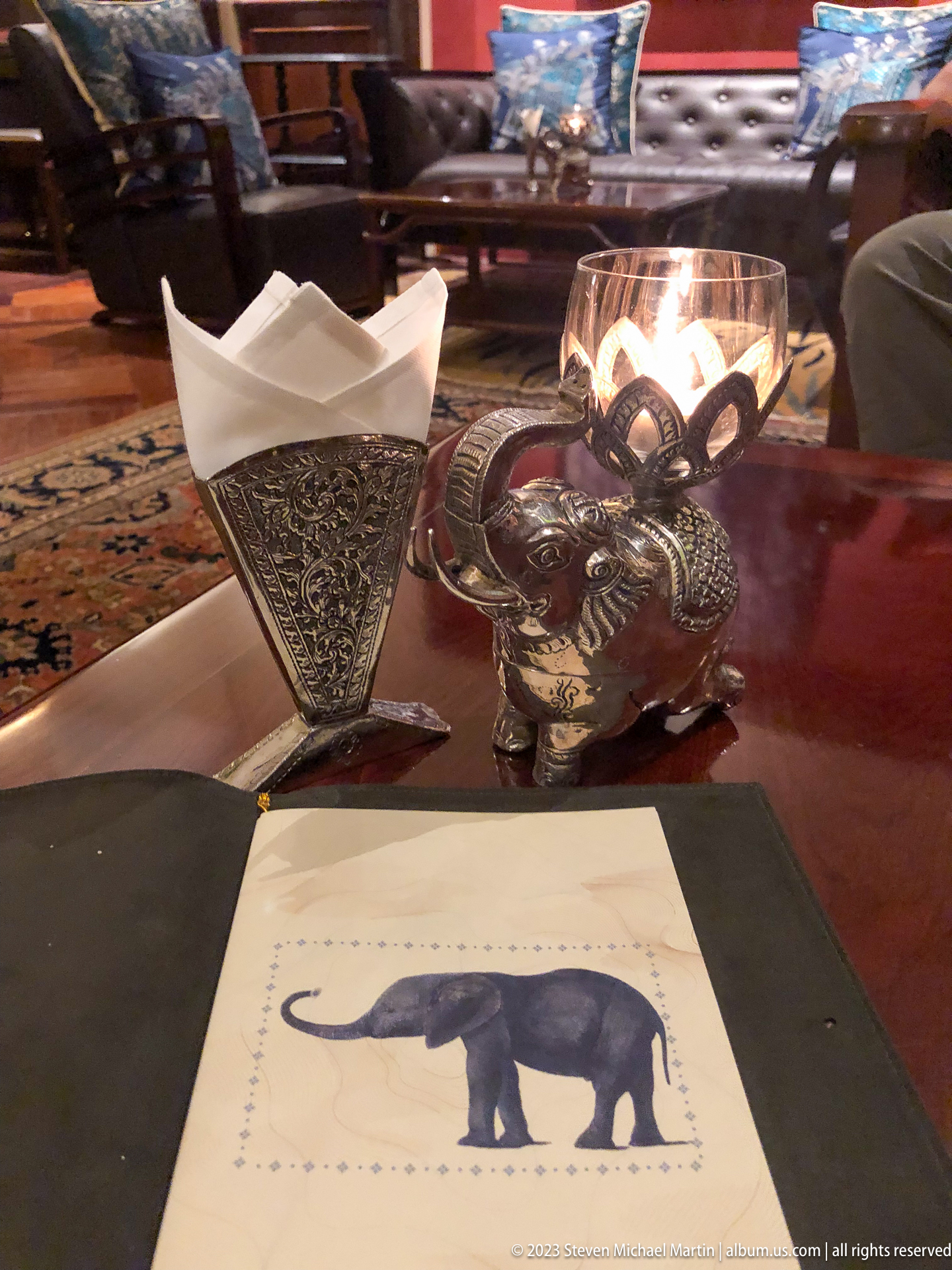
Elephant imagery appears across a tabletop arrangement that includes illustrated stationery, an ornate tissue holder, and a sculptural candle stand. The coordinated motif connects small hospitality objects to the hotel’s broader decorative identity.
Caption
Elephant imagery appears across a tabletop arrangement that includes illustrated stationery, an ornate tissue holder, and a sculptural candle stand. The coordinated motif connects small hospitality objects to the hotel’s broader decorative identity.
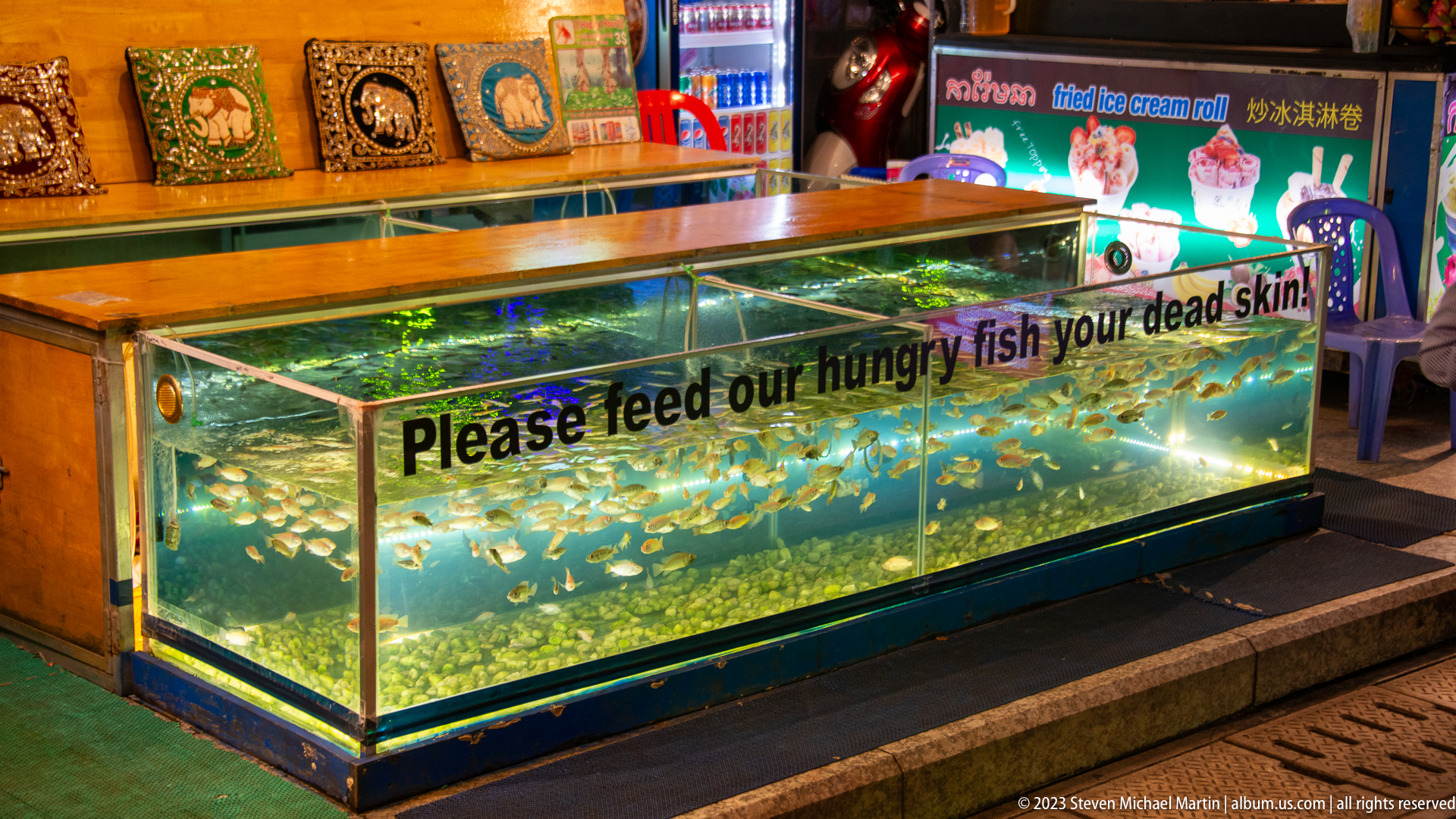
A rectangular glass tank filled with small fish advertises a street-side fish spa. The printed request to feed the fish with dead skin makes the treatment explicit, while nearby beverage and ice-cream signs place it within the busy nightlife economy.
Caption
A rectangular glass tank filled with small fish advertises a street-side fish spa. The printed request to feed the fish with dead skin makes the treatment explicit, while nearby beverage and ice-cream signs place it within the busy nightlife economy.
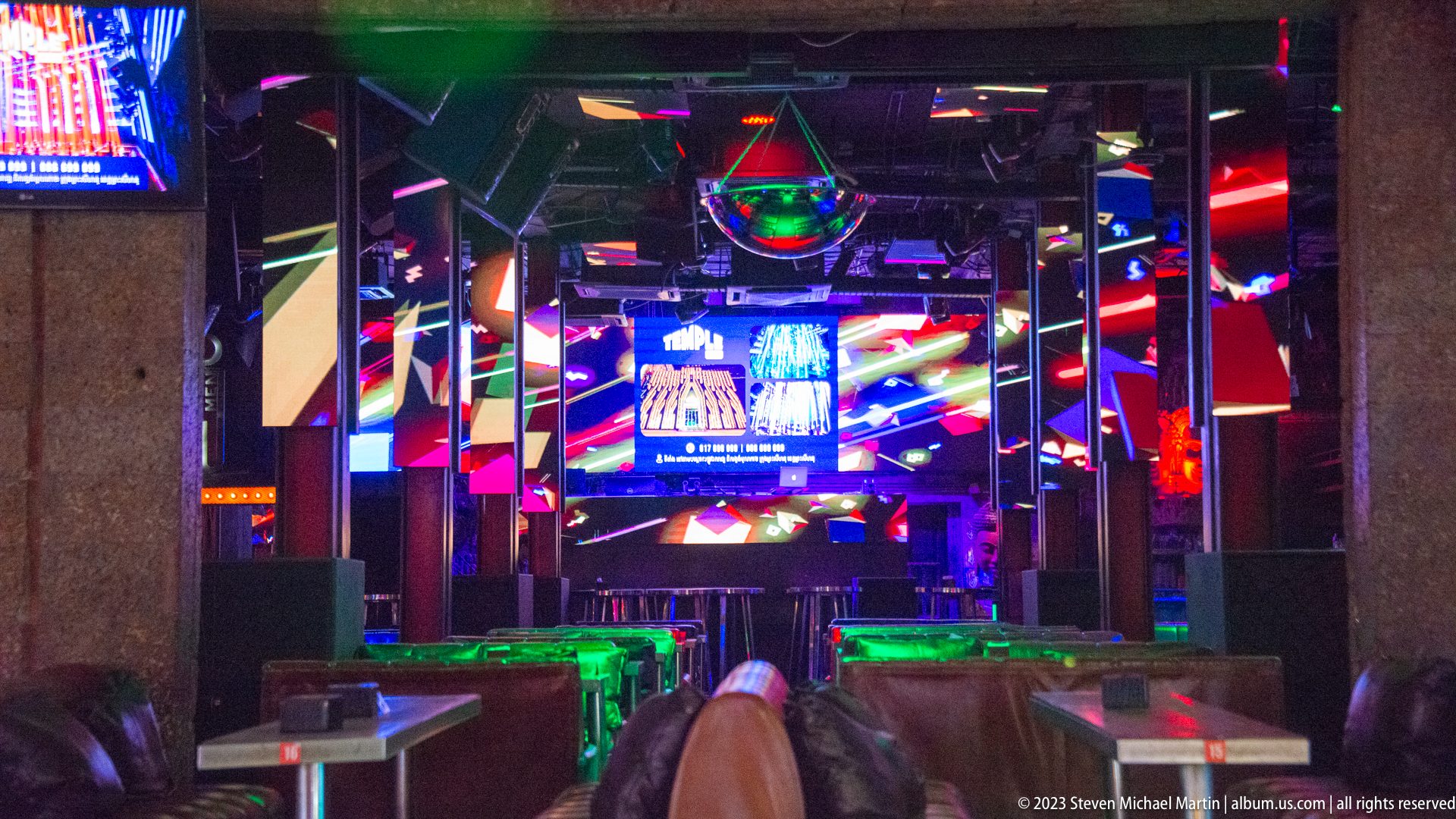
A nightclub interior glows with red, green, blue, and purple lighting reflected across mirrored columns and screens. Empty tables and stools face a brightly illuminated stage or video wall, presenting the venue before or between crowds.
Caption
A nightclub interior glows with red, green, blue, and purple lighting reflected across mirrored columns and screens. Empty tables and stools face a brightly illuminated stage or video wall, presenting the venue before or between crowds.
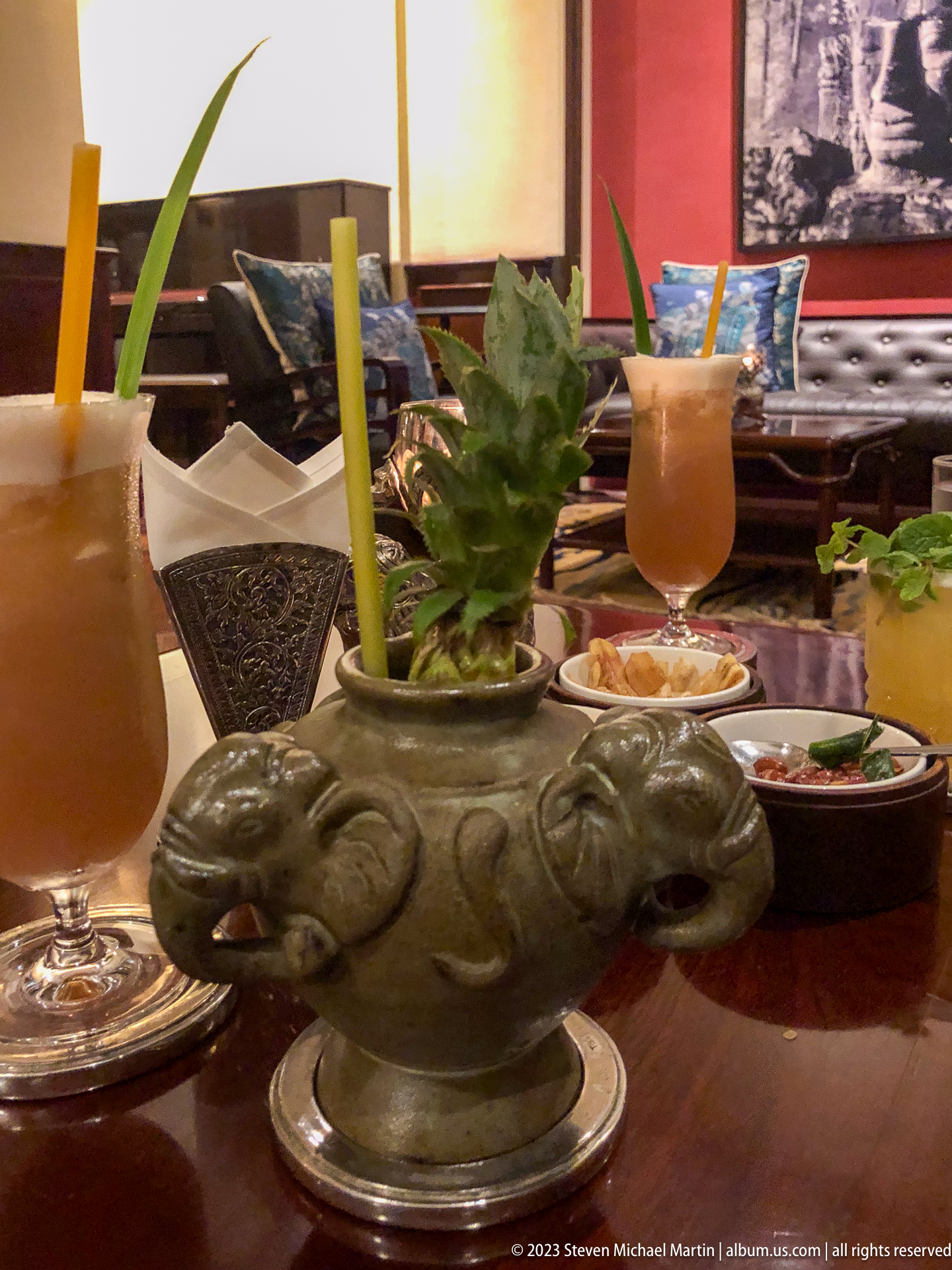
A tropical cocktail is served in a sculptural elephant-shaped vessel, garnished with pineapple leaves and accompanied by another tall drink and small dishes. The whimsical presentation extends the hotel’s recurring elephant motif into its beverage service.
Caption
A tropical cocktail is served in a sculptural elephant-shaped vessel, garnished with pineapple leaves and accompanied by another tall drink and small dishes. The whimsical presentation extends the hotel’s recurring elephant motif into its beverage service.
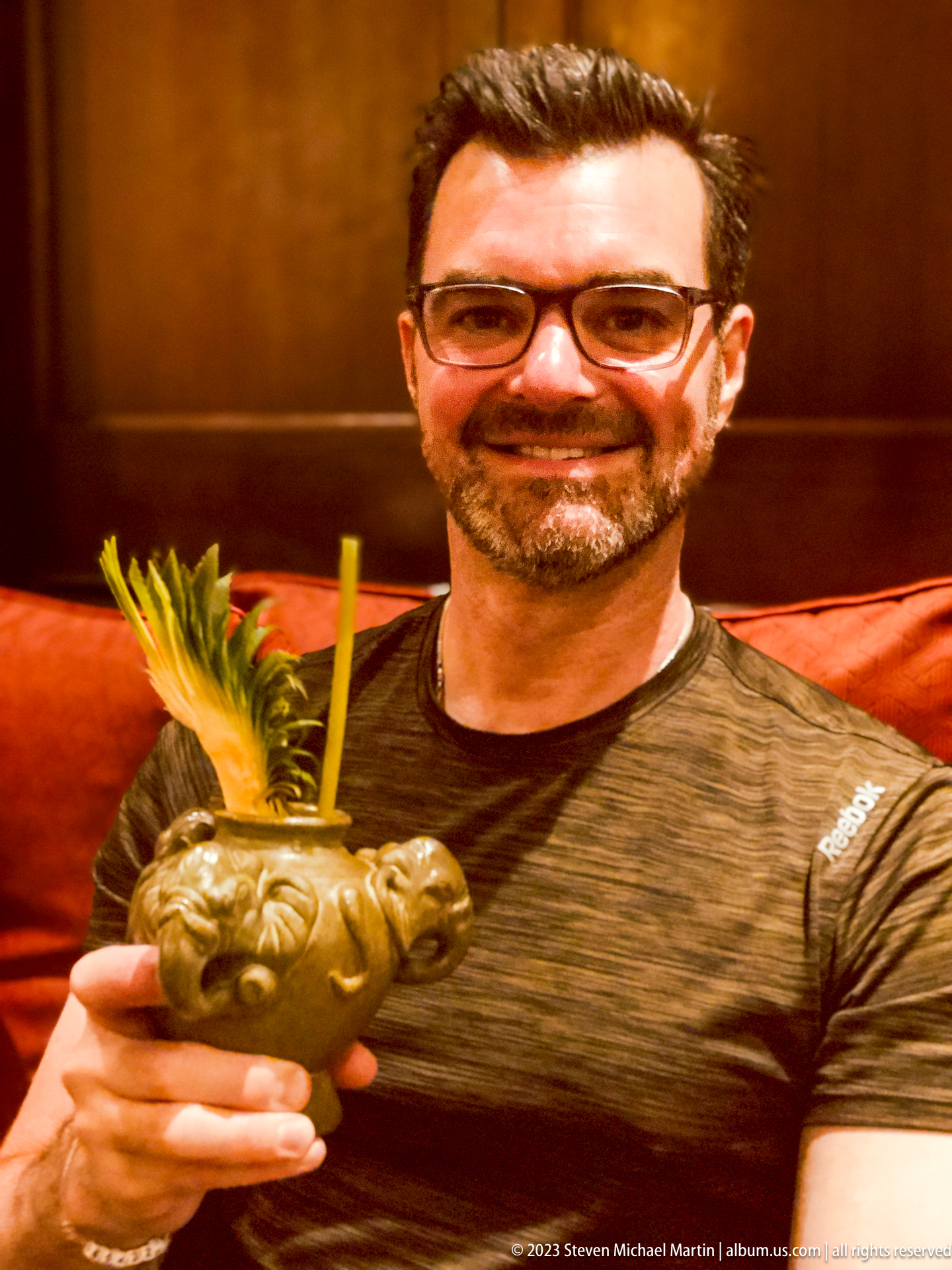
A smiling male visitor poses with the elephant-shaped cocktail vessel, its pineapple garnish rising beside his face. The close portrait emphasizes the playful presentation of the drink within the hotel lounge.
Caption
A smiling male visitor poses with the elephant-shaped cocktail vessel, its pineapple garnish rising beside his face. The close portrait emphasizes the playful presentation of the drink within the hotel lounge.

A male visitor sips through a straw from the elephant-shaped cocktail vessel, turning the novelty serving piece into an animated portrait. The pineapple garnish and sculpted elephant heads remain prominent in the close framing.
Caption
A male visitor sips through a straw from the elephant-shaped cocktail vessel, turning the novelty serving piece into an animated portrait. The pineapple garnish and sculpted elephant heads remain prominent in the close framing.
The proof sheet contains a labeled slot for attachment 94542, but no photograph is visible within the image area. The source file should be checked before publication or caption generation.
Caption
The proof sheet contains a labeled slot for attachment 94542, but no photograph is visible within the image area. The source file should be checked before publication or caption generation.

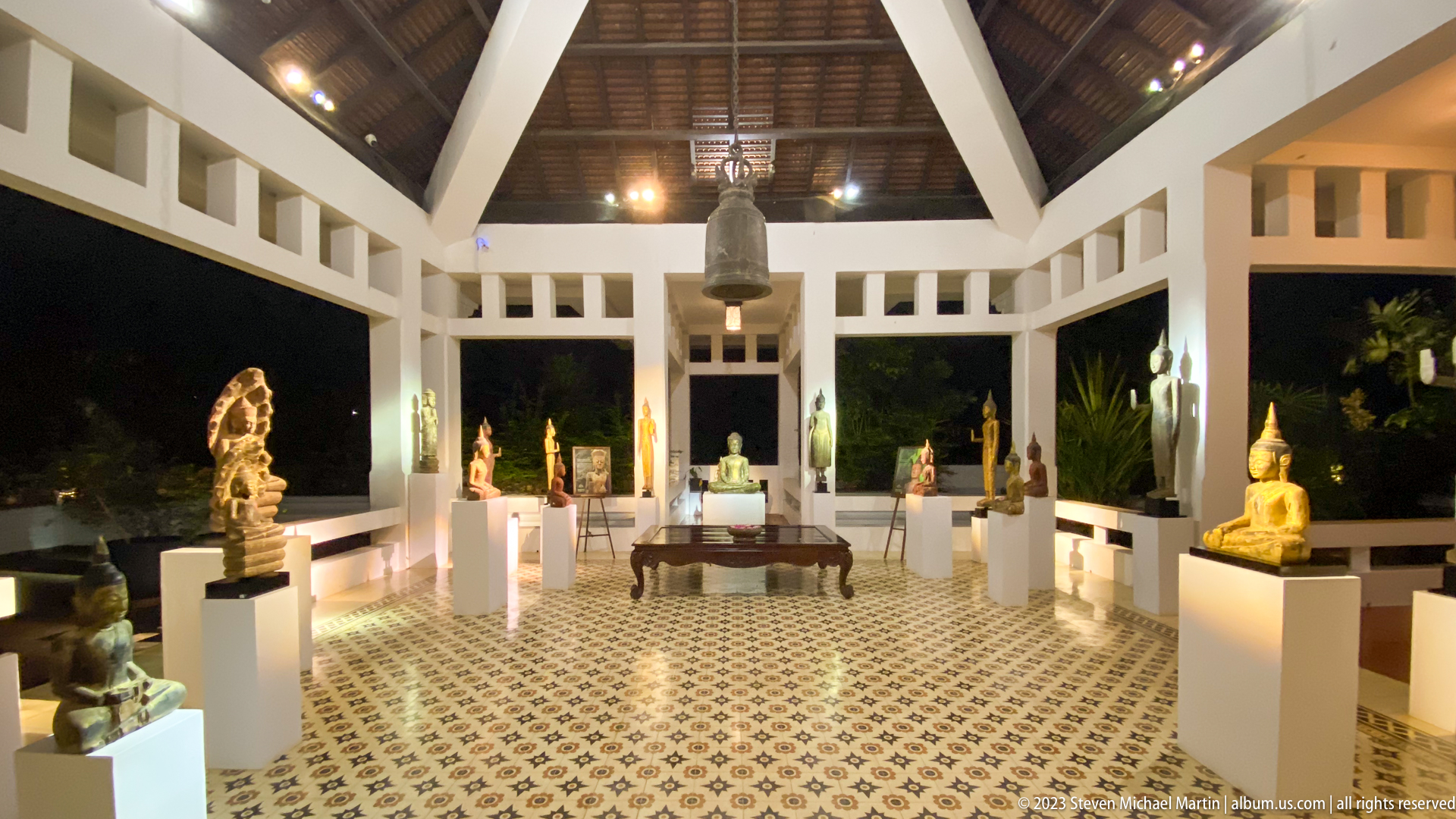
An open white pavilion centers on a seated Buddha displayed across a raised platform, with additional standing and seated figures at either side. A large low table, patterned floor, and surrounding darkness create a contemplative nighttime setting.
Caption
An open white pavilion centers on a seated Buddha displayed across a raised platform, with additional standing and seated figures at either side. A large low table, patterned floor, and surrounding darkness create a contemplative nighttime setting.
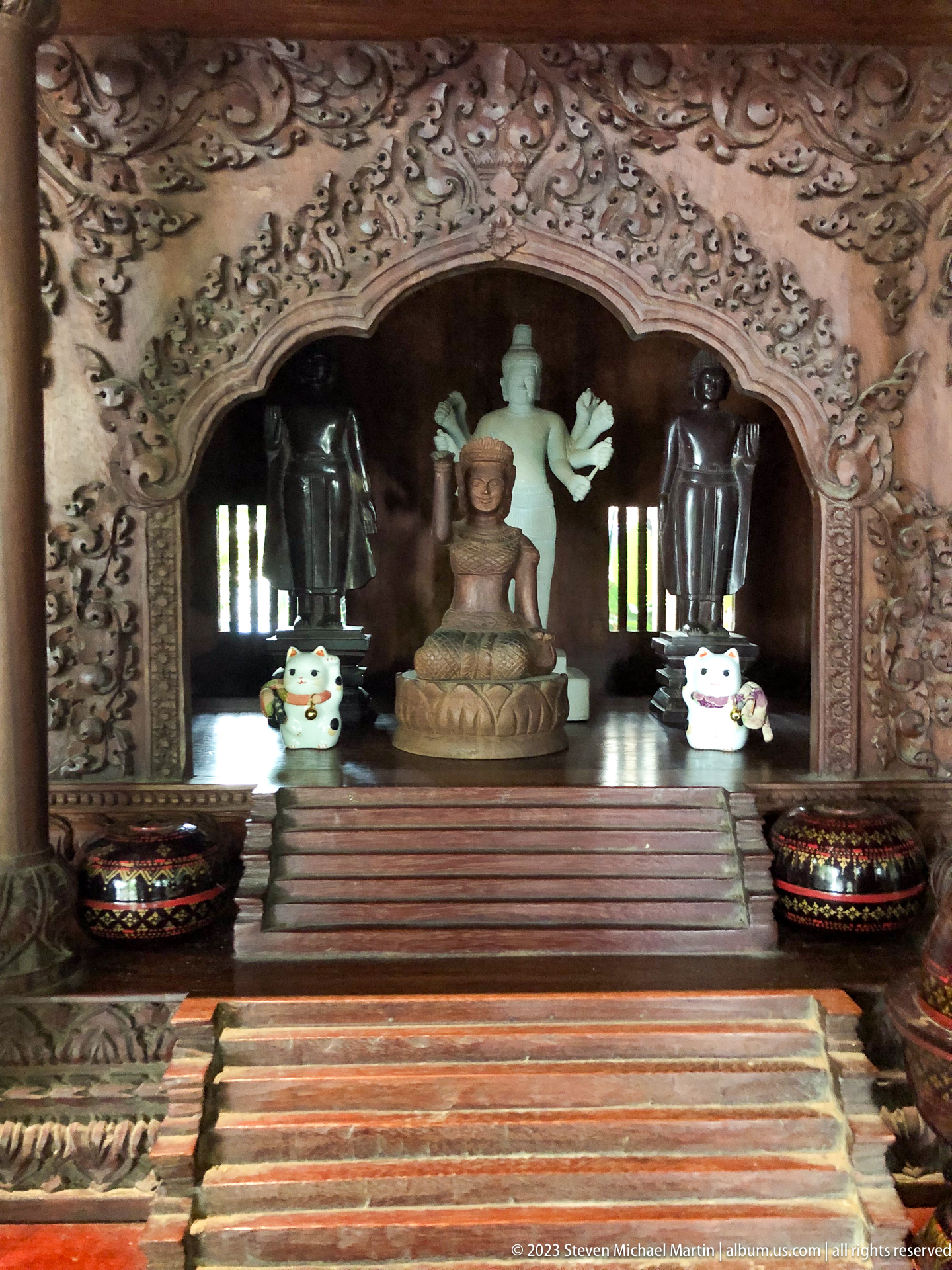
An ornate carved wooden shrine frames a seated Buddha figure and ritual objects.
Caption
An ornate carved wooden shrine frames a seated Buddha figure and ritual objects.
The proof sheet contains a labeled slot for attachment 94543, but the photograph itself is absent. The original attachment should be reviewed to determine whether the file failed to render or contains no usable image.
Caption
The proof sheet contains a labeled slot for attachment 94543, but the photograph itself is absent. The original attachment should be reviewed to determine whether the file failed to render or contains no usable image.
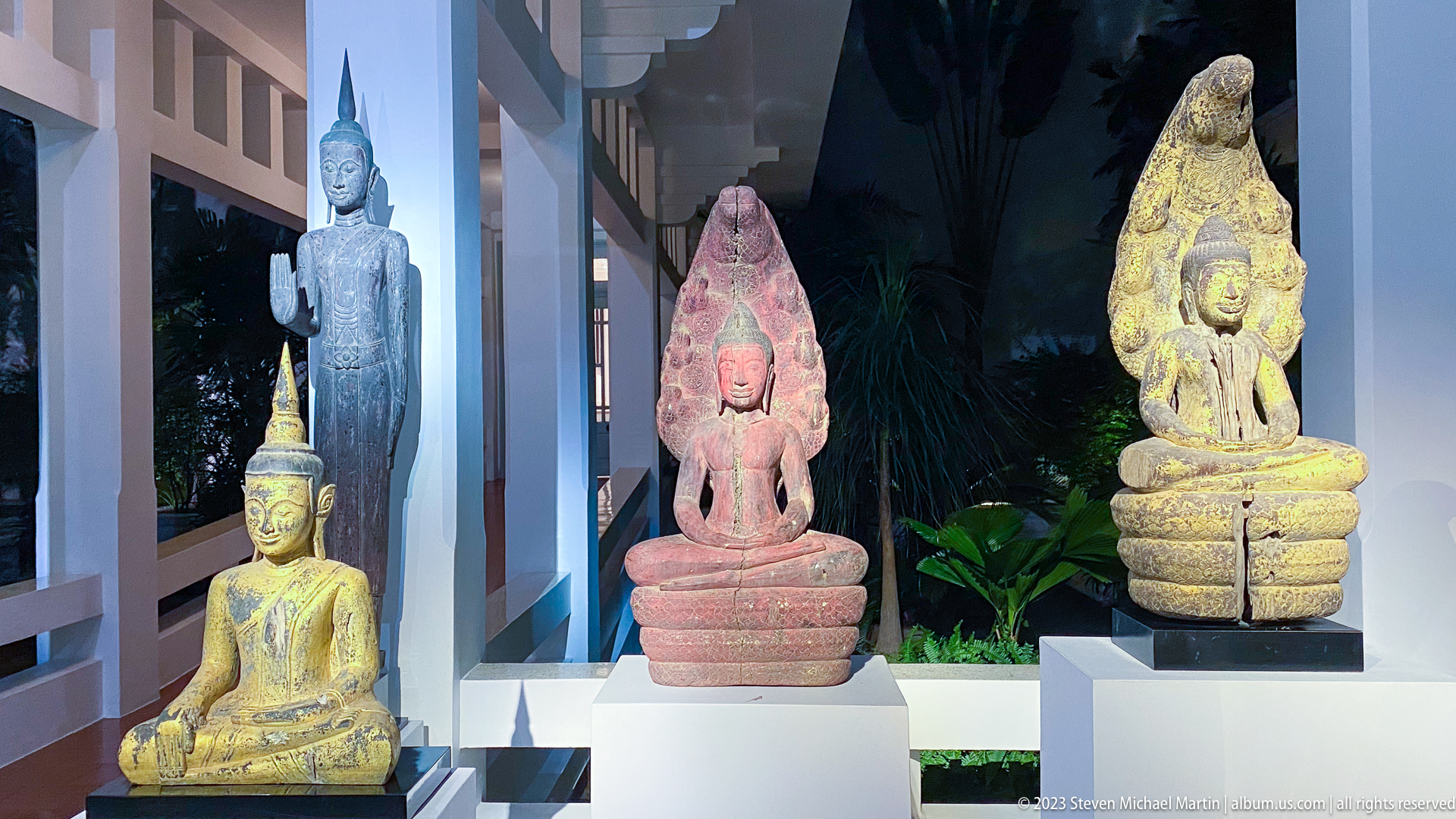
A group of Buddhist sculptures is arranged on white plinths in an open hotel corridor. Seated Buddha figures, standing images, and figures sheltered by multi-headed naga forms display varied materials, colors, and states of weathering.
Caption
A group of Buddhist sculptures is arranged on white plinths in an open hotel corridor. Seated Buddha figures, standing images, and figures sheltered by multi-headed naga forms display varied materials, colors, and states of weathering.
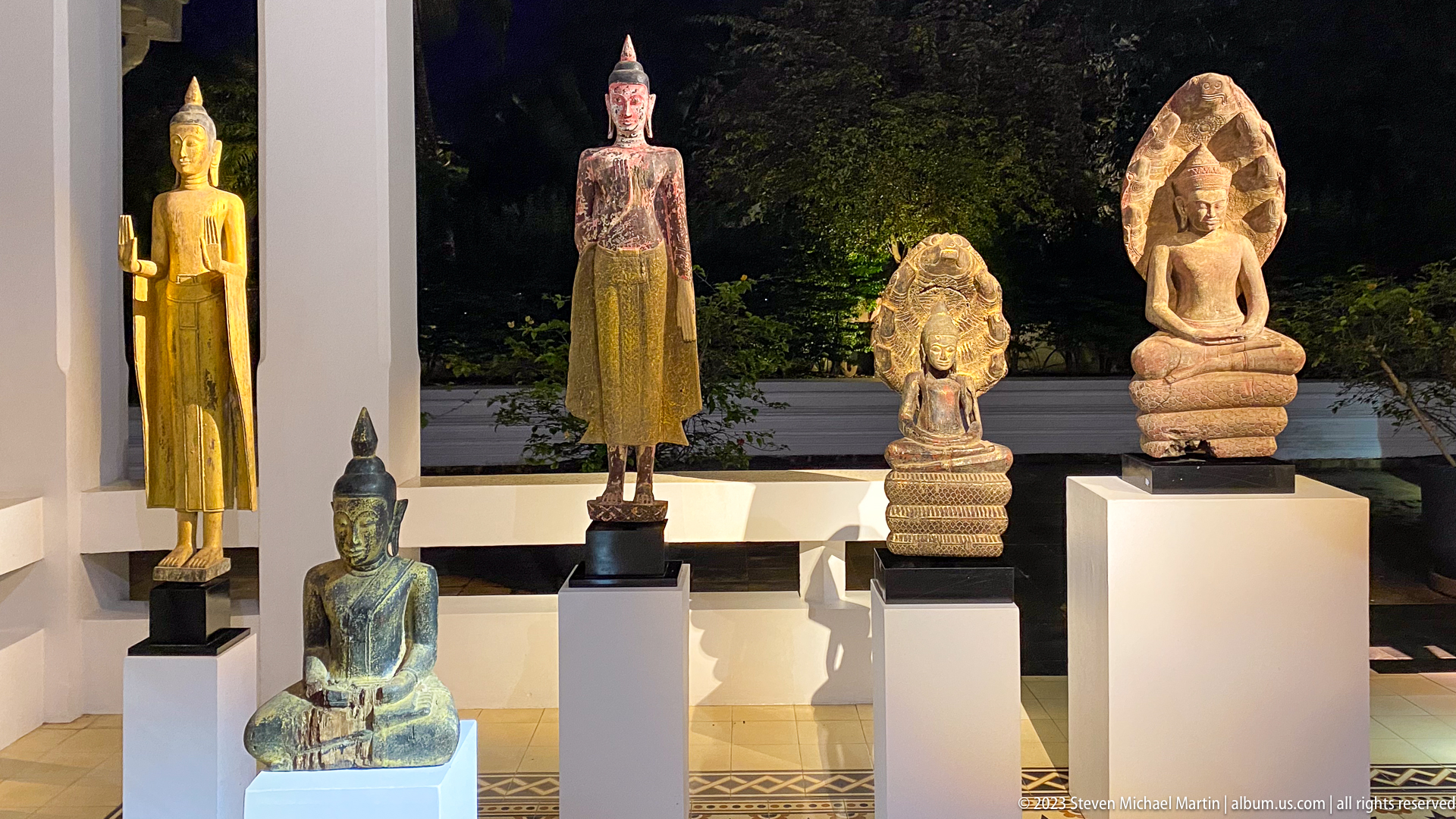
Standing and seated Buddha images are grouped with two serpent-canopied sculptures on individual white plinths. Differences in scale, color, surface wear, and posture give the display the character of a small comparative collection.
Caption
Standing and seated Buddha images are grouped with two serpent-canopied sculptures on individual white plinths. Differences in scale, color, surface wear, and posture give the display the character of a small comparative collection.
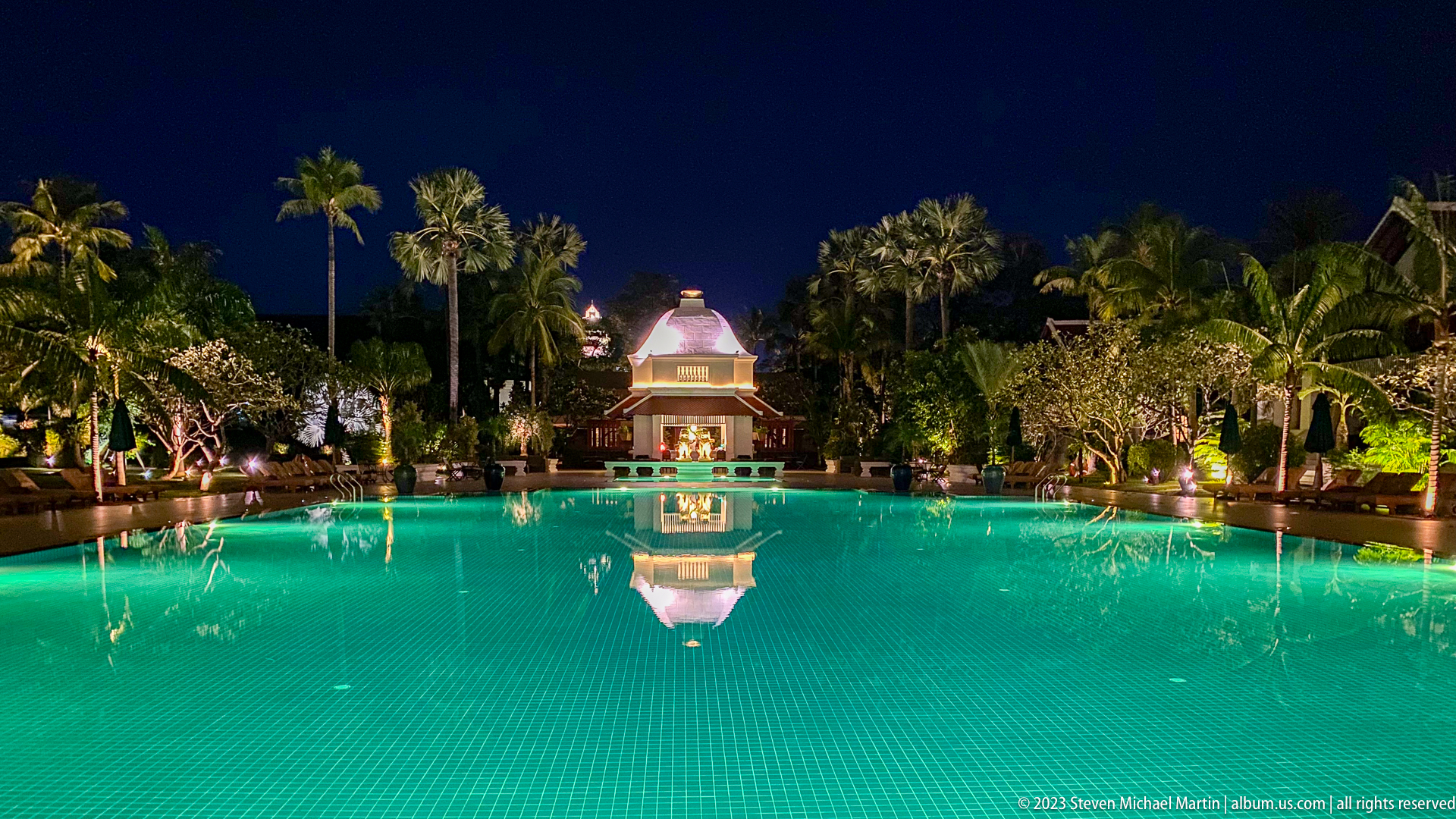
The long turquoise pool extends toward a softly lit pavilion framed by palms and tropical gardens. Reflections across the water and evenly spaced landscape lighting emphasize the formal central axis of the hotel grounds.
Caption
The long turquoise pool extends toward a softly lit pavilion framed by palms and tropical gardens. Reflections across the water and evenly spaced landscape lighting emphasize the formal central axis of the hotel grounds.
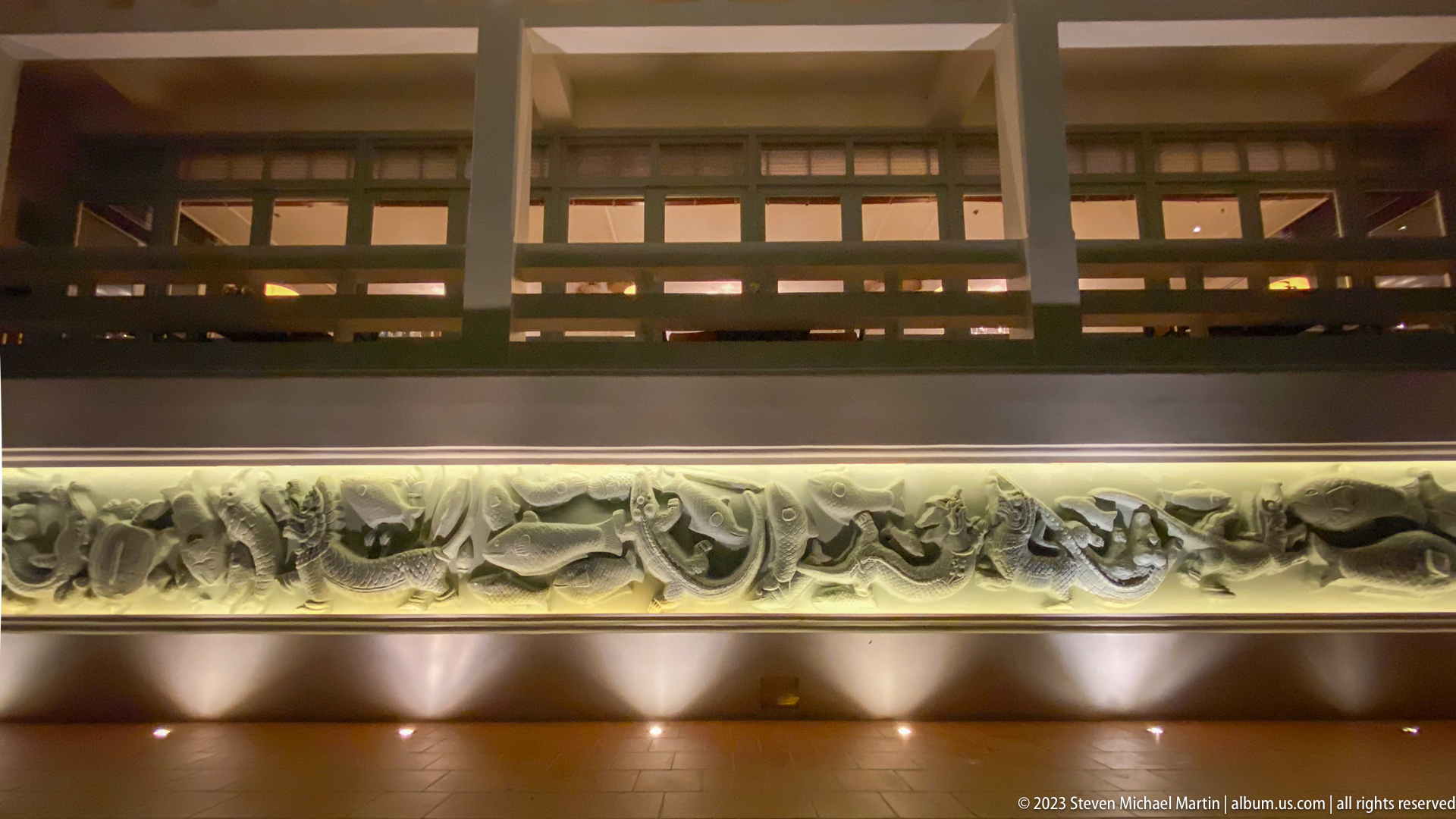
A long backlit relief runs beneath a hotel balcony, depicting intertwined aquatic or serpent-like creatures in shallow carving. The linear installation forms a decorative frieze between the dark floor and the upper railing.
Caption
A long backlit relief runs beneath a hotel balcony, depicting intertwined aquatic or serpent-like creatures in shallow carving. The linear installation forms a decorative frieze between the dark floor and the upper railing.
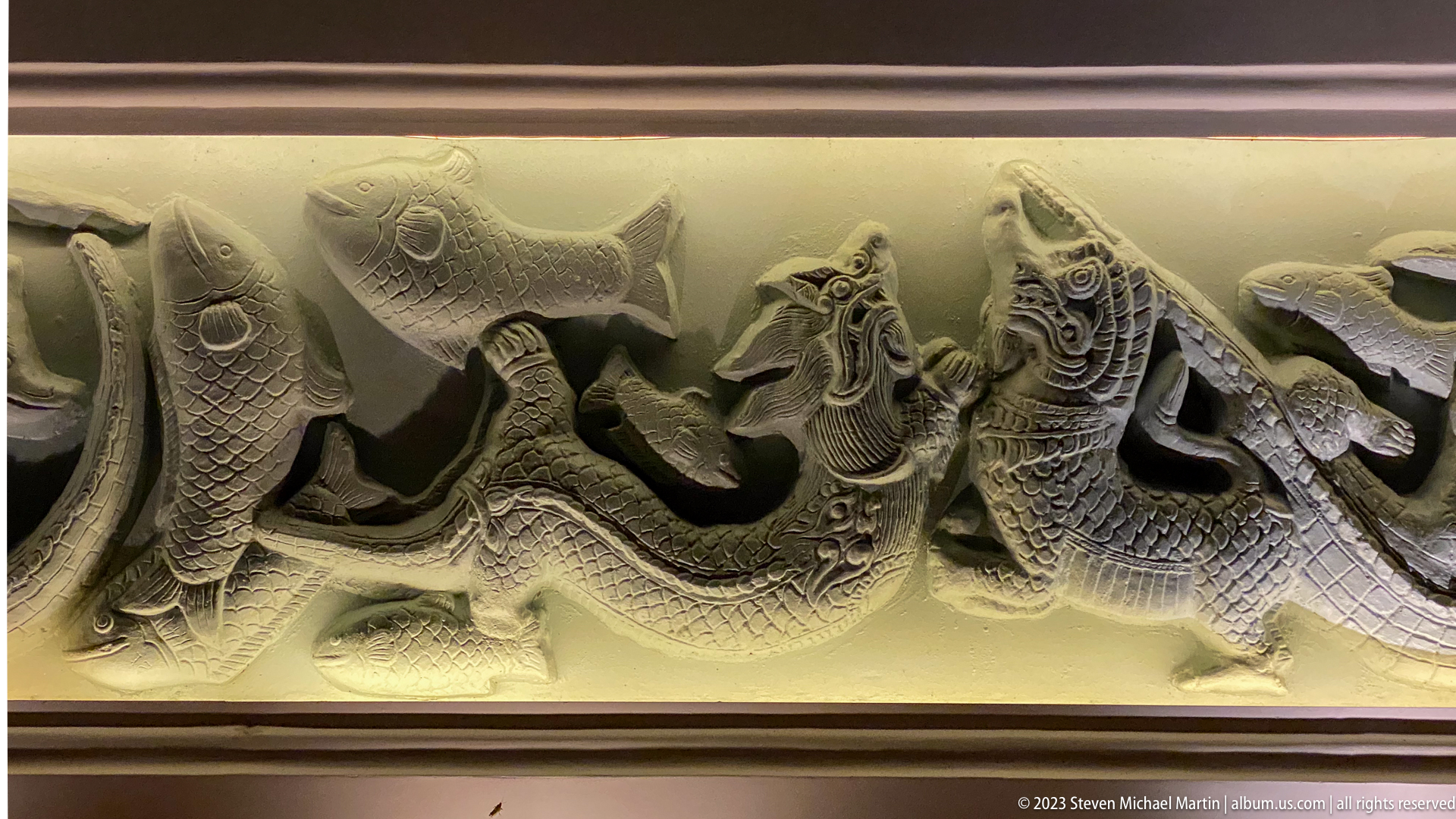
A close view reveals fish-scaled, dragon-like creatures twisting through the illuminated frieze. Their open mouths, curled bodies, and overlapping fins create a dynamic ornamental sequence inspired by aquatic or mythological imagery.
Caption
A close view reveals fish-scaled, dragon-like creatures twisting through the illuminated frieze. Their open mouths, curled bodies, and overlapping fins create a dynamic ornamental sequence inspired by aquatic or mythological imagery.

The illuminated entrance of Grand Hotel d’Angkor is seen across landscaped grounds and tall palm trees. The covered stair, white façade, and glowing windows present the historic hotel as a formal nighttime landmark.
Caption
The illuminated entrance of Grand Hotel d’Angkor is seen across landscaped grounds and tall palm trees. The covered stair, white façade, and glowing windows present the historic hotel as a formal nighttime landmark.
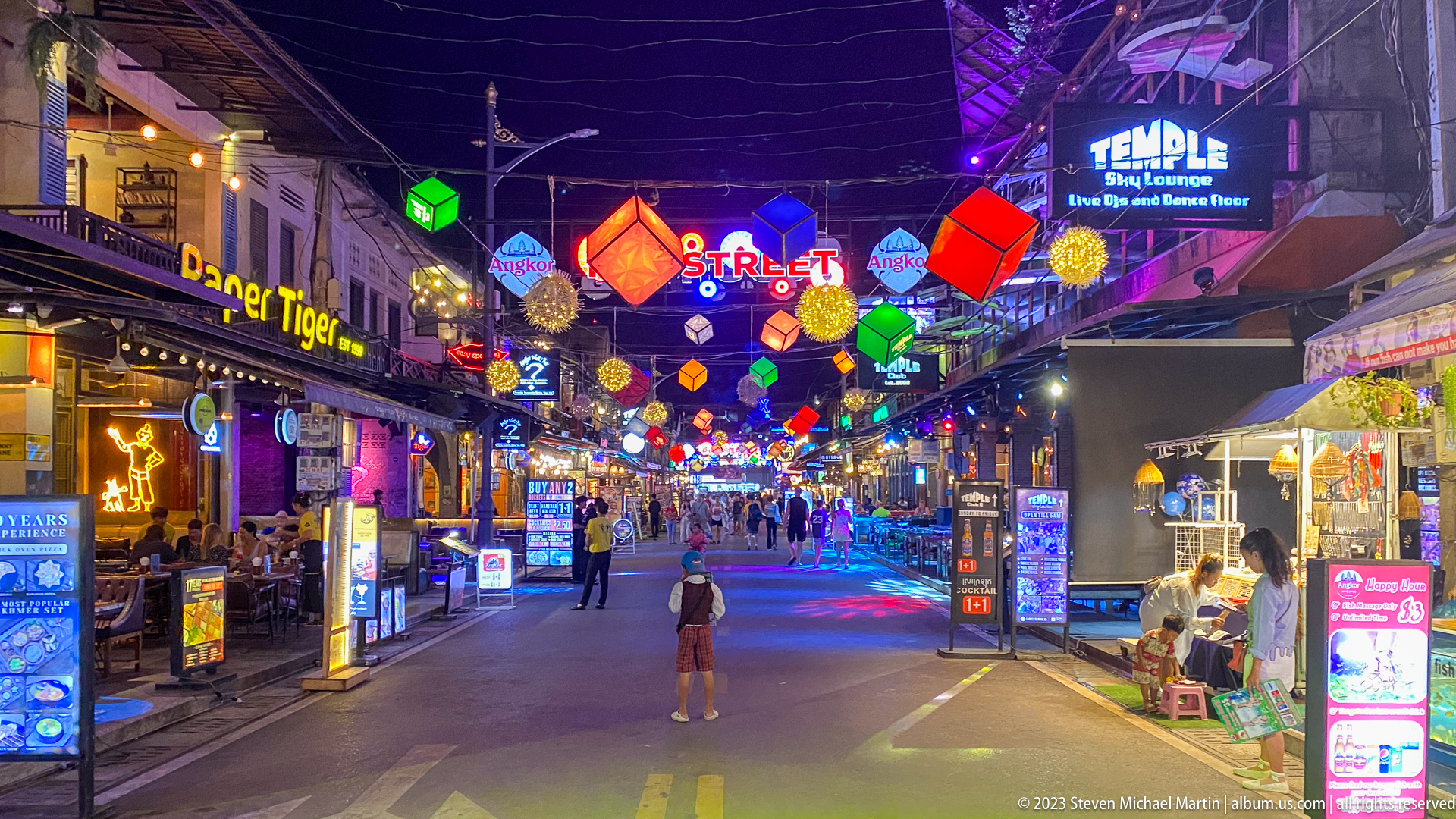
Pub Street glows beneath layers of lanterns, neon signs, and illuminated restaurant façades, illustrating the transformation of central Siem Reap into Cambodia's best-known evening entertainment district. Although the temples of Angkor define the region's archaeological importance, the city's contemporary identity is equally shaped by its lively pedestrian streets, open-air dining, music venues, and tourism economy that extends long after sunset.
Caption
Pub Street glows beneath layers of lanterns, neon signs, and illuminated restaurant façades, illustrating the transformation of central Siem Reap into Cambodia's best-known evening entertainment district. Although the temples of Angkor define the region's archaeological importance, the city's contemporary identity is equally shaped by its lively pedestrian streets, open-air dining, music venues, and tourism economy that extends long after sunset.
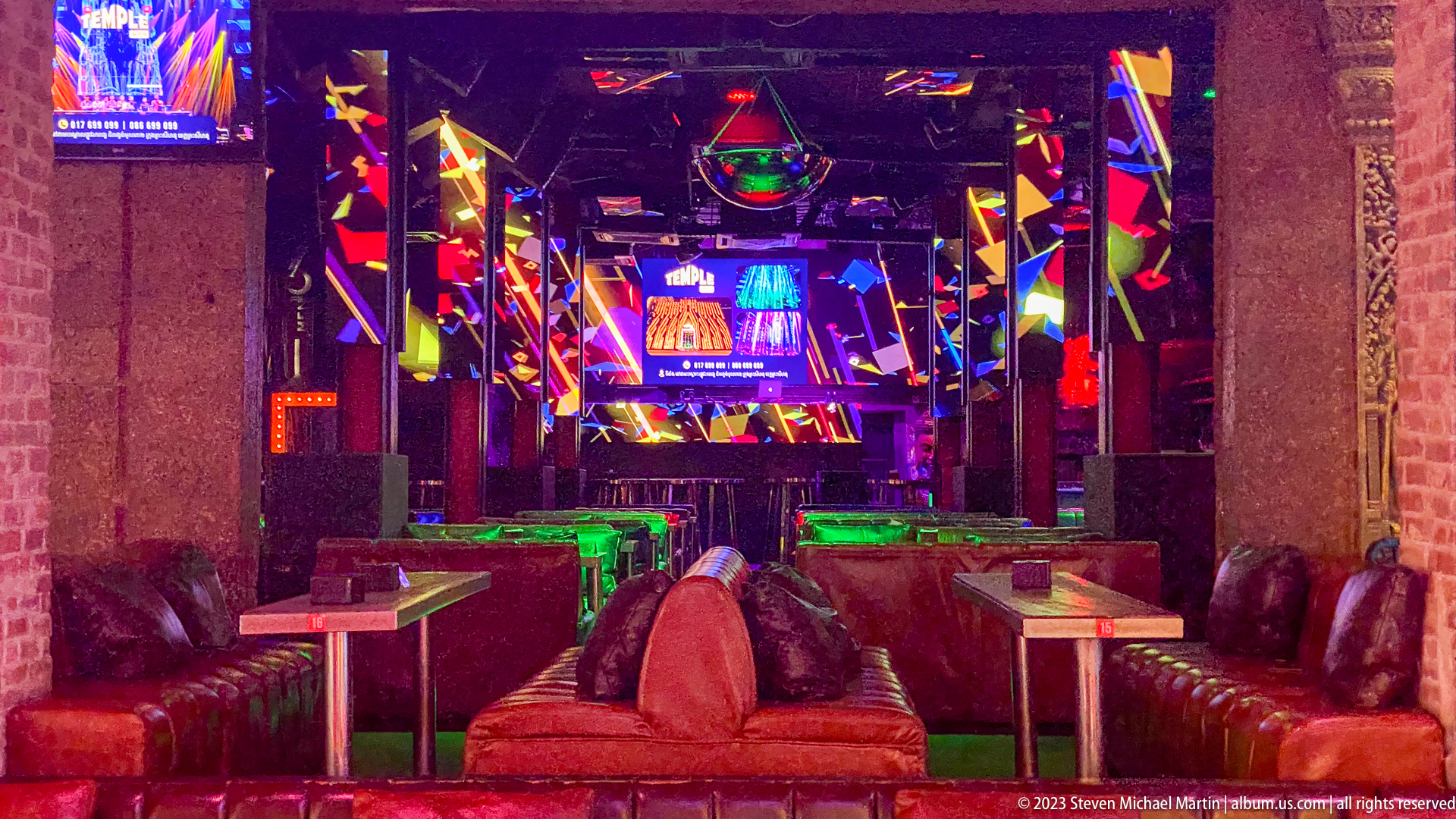
A contemporary bar interior combines theatrical lighting, reflective surfaces, and comfortable seating to create an atmosphere aimed at international visitors exploring Siem Reap after visiting the Angkor monuments. Colored illumination and mirrored architectural elements emphasize entertainment rather than traditional Cambodian design, illustrating the city's diverse hospitality offerings.
Caption
A contemporary bar interior combines theatrical lighting, reflective surfaces, and comfortable seating to create an atmosphere aimed at international visitors exploring Siem Reap after visiting the Angkor monuments. Colored illumination and mirrored architectural elements emphasize entertainment rather than traditional Cambodian design, illustrating the city's diverse hospitality offerings.
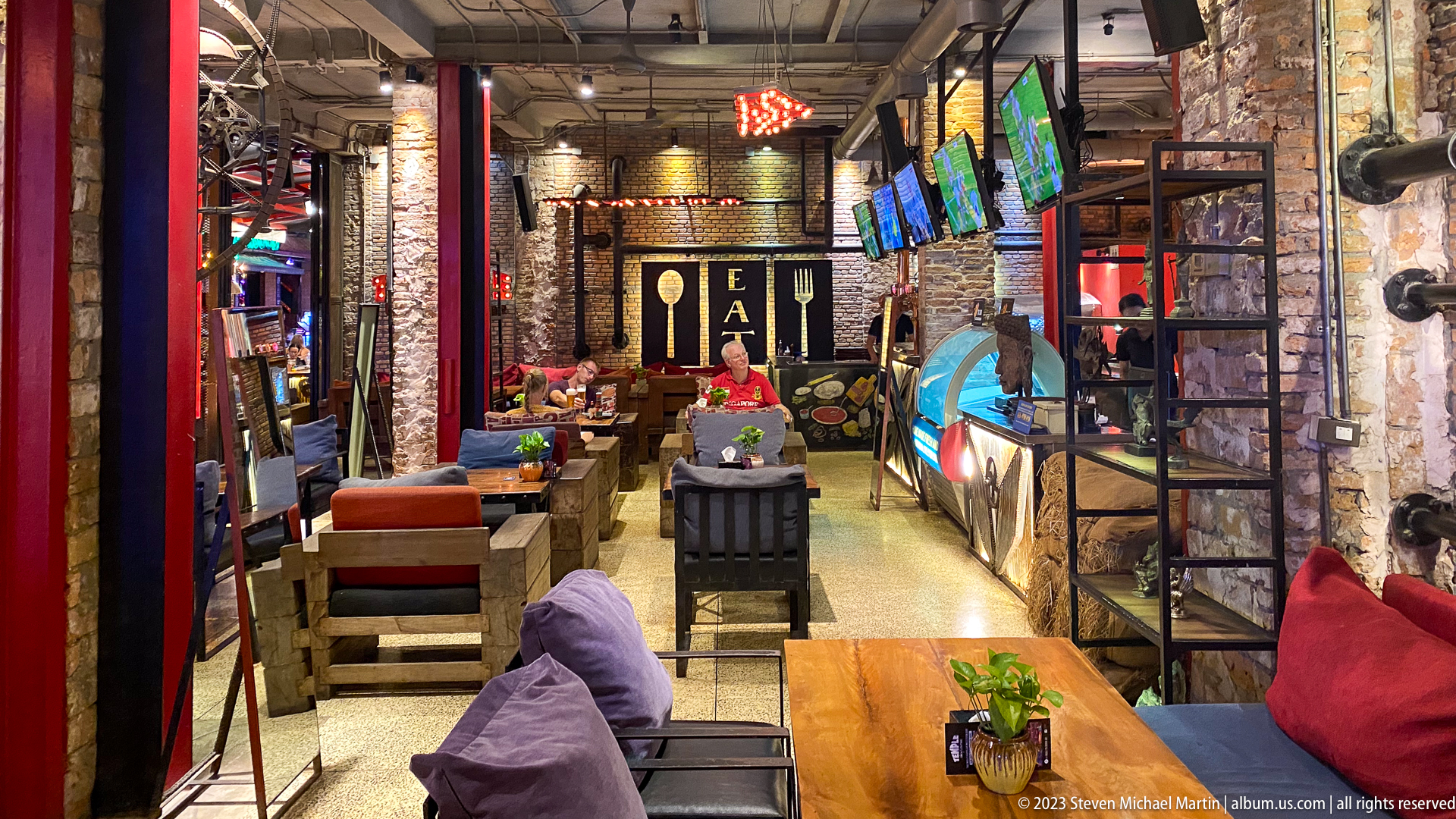
Brick walls, timber furnishings, television screens, and open seating create a contemporary restaurant interior.
Caption
Brick walls, timber furnishings, television screens, and open seating create a contemporary restaurant interior.
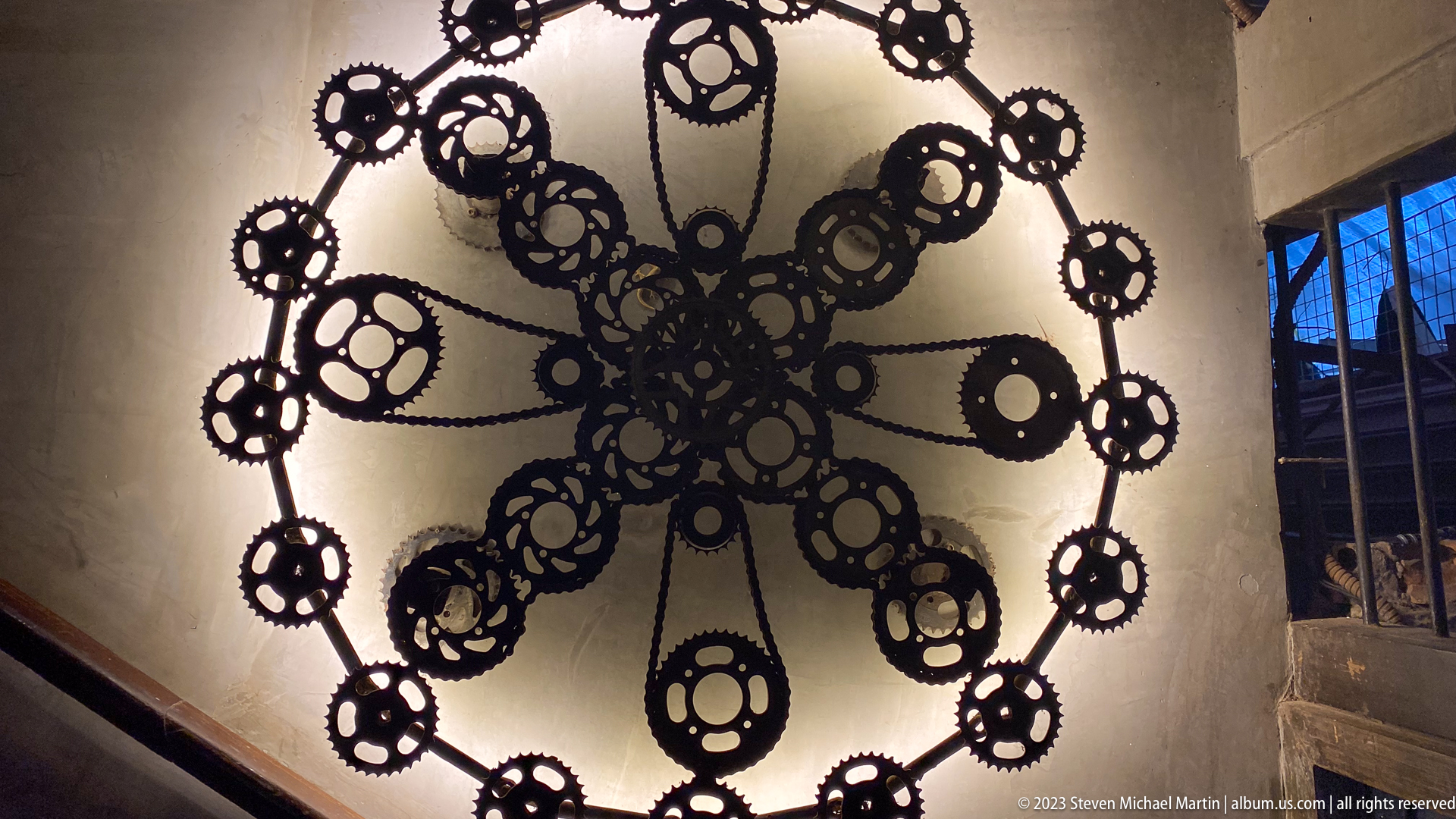
A ceiling light formed from circular gear-like elements creates a dramatic radial pattern.
Caption
A ceiling light formed from circular gear-like elements creates a dramatic radial pattern.
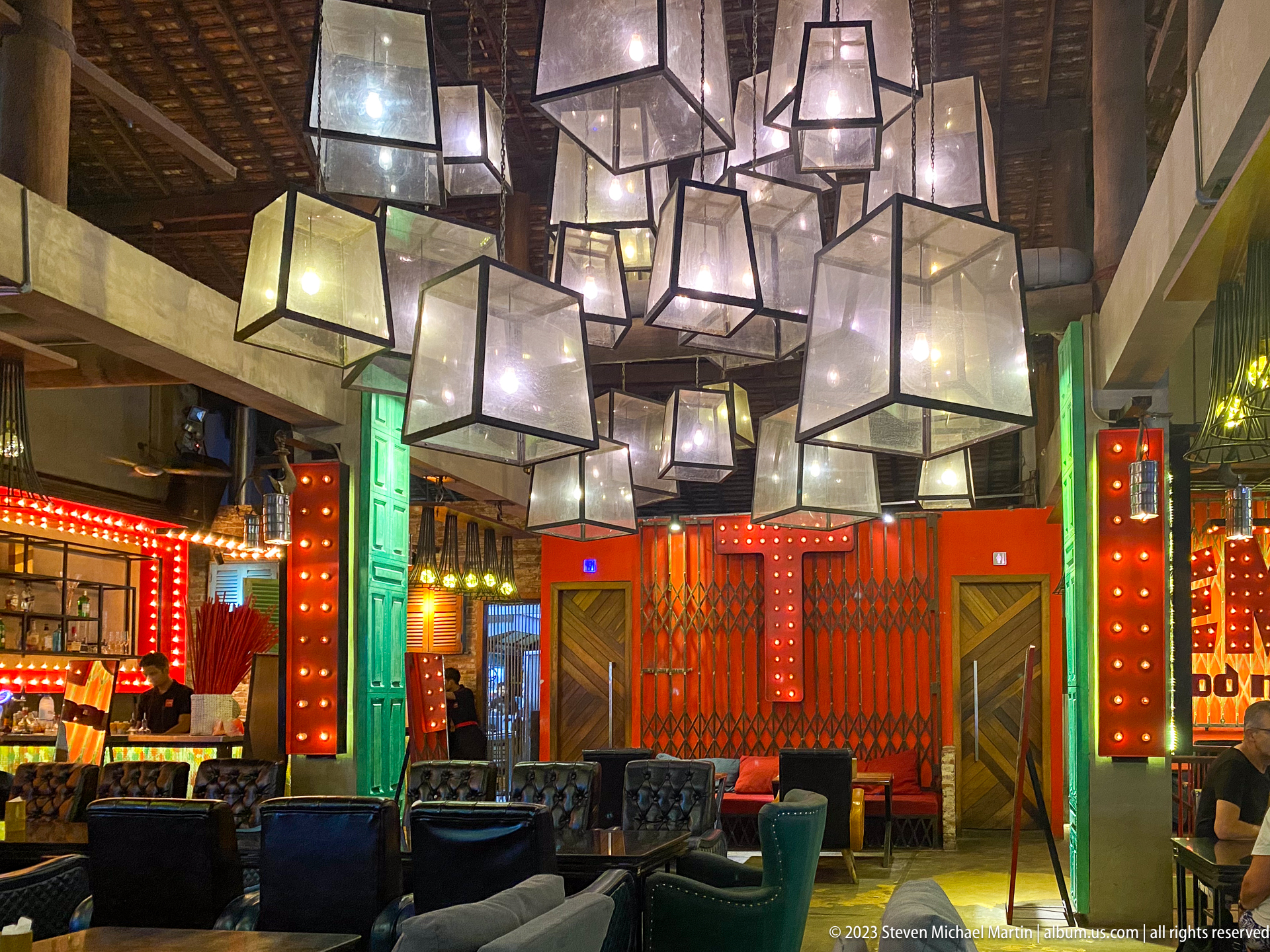
Large geometric pendant lanterns hang above colorful seating in a contemporary restaurant.
Caption
Large geometric pendant lanterns hang above colorful seating in a contemporary restaurant.
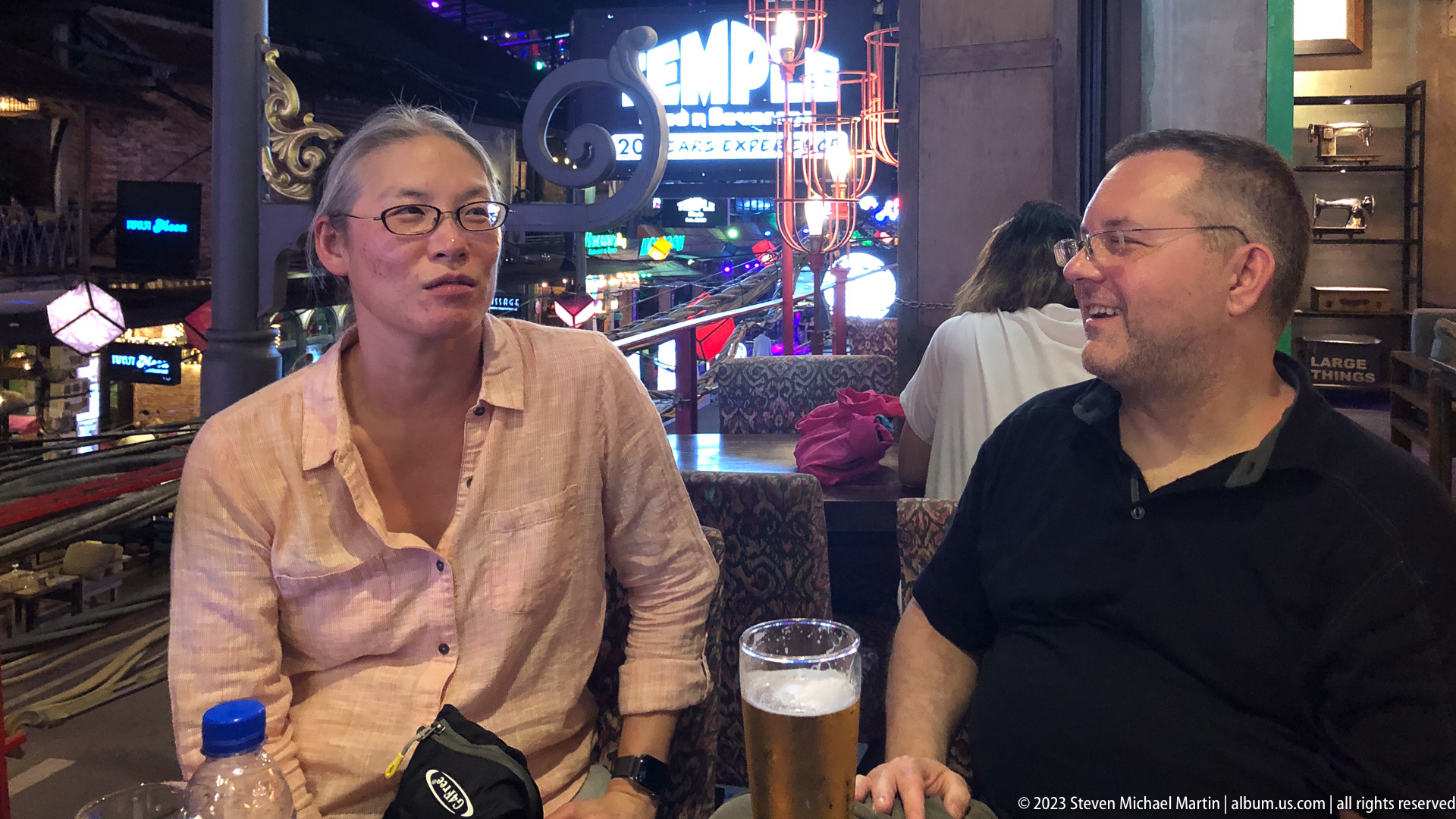
Two travelers converse over drinks beside the illuminated nightlife district.
Caption
Two travelers converse over drinks beside the illuminated nightlife district.
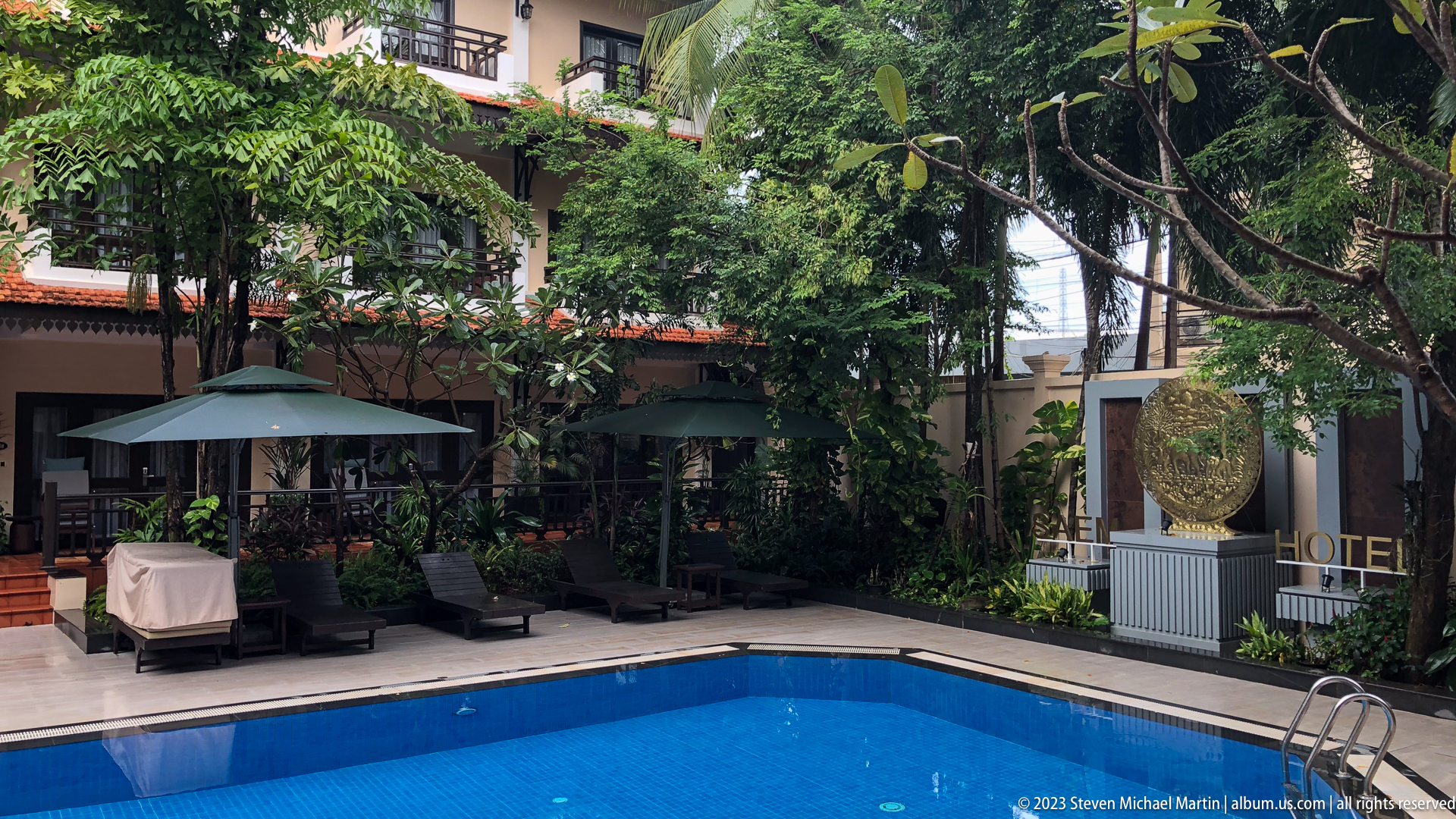
A landscaped swimming pool occupies the heart of a tropical hotel courtyard surrounded by mature vegetation and guest accommodations. The design reflects the resort tradition that developed alongside Siem Reap's emergence as an international gateway to Angkor, providing visitors with tranquil garden settings after exploring Cambodia's archaeological monuments.
Caption
A landscaped swimming pool occupies the heart of a tropical hotel courtyard surrounded by mature vegetation and guest accommodations. The design reflects the resort tradition that developed alongside Siem Reap's emergence as an international gateway to Angkor, providing visitors with tranquil garden settings after exploring Cambodia's archaeological monuments.
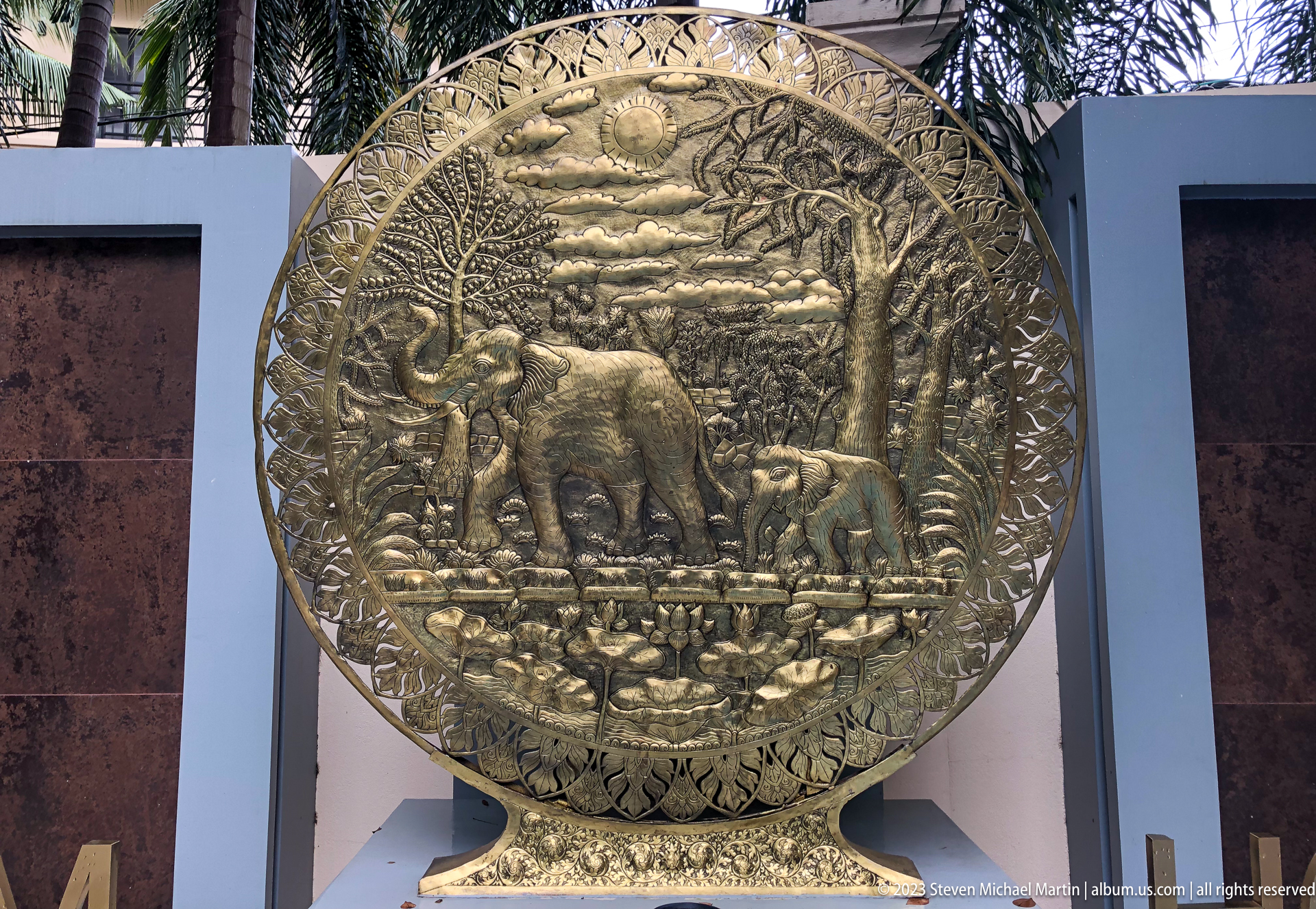
A monumental circular relief depicting elephants amid dense tropical foliage serves as a decorative focal point within the hotel grounds. Elephant imagery occupies an important place in Cambodian visual culture, recalling both the country's forests and the historical importance of elephants in royal ceremony, transport, and warfare.
Caption
A monumental circular relief depicting elephants amid dense tropical foliage serves as a decorative focal point within the hotel grounds. Elephant imagery occupies an important place in Cambodian visual culture, recalling both the country's forests and the historical importance of elephants in royal ceremony, transport, and warfare.

Balconies overlook a central pool framed by tropical vegetation.
Caption
Balconies overlook a central pool framed by tropical vegetation.
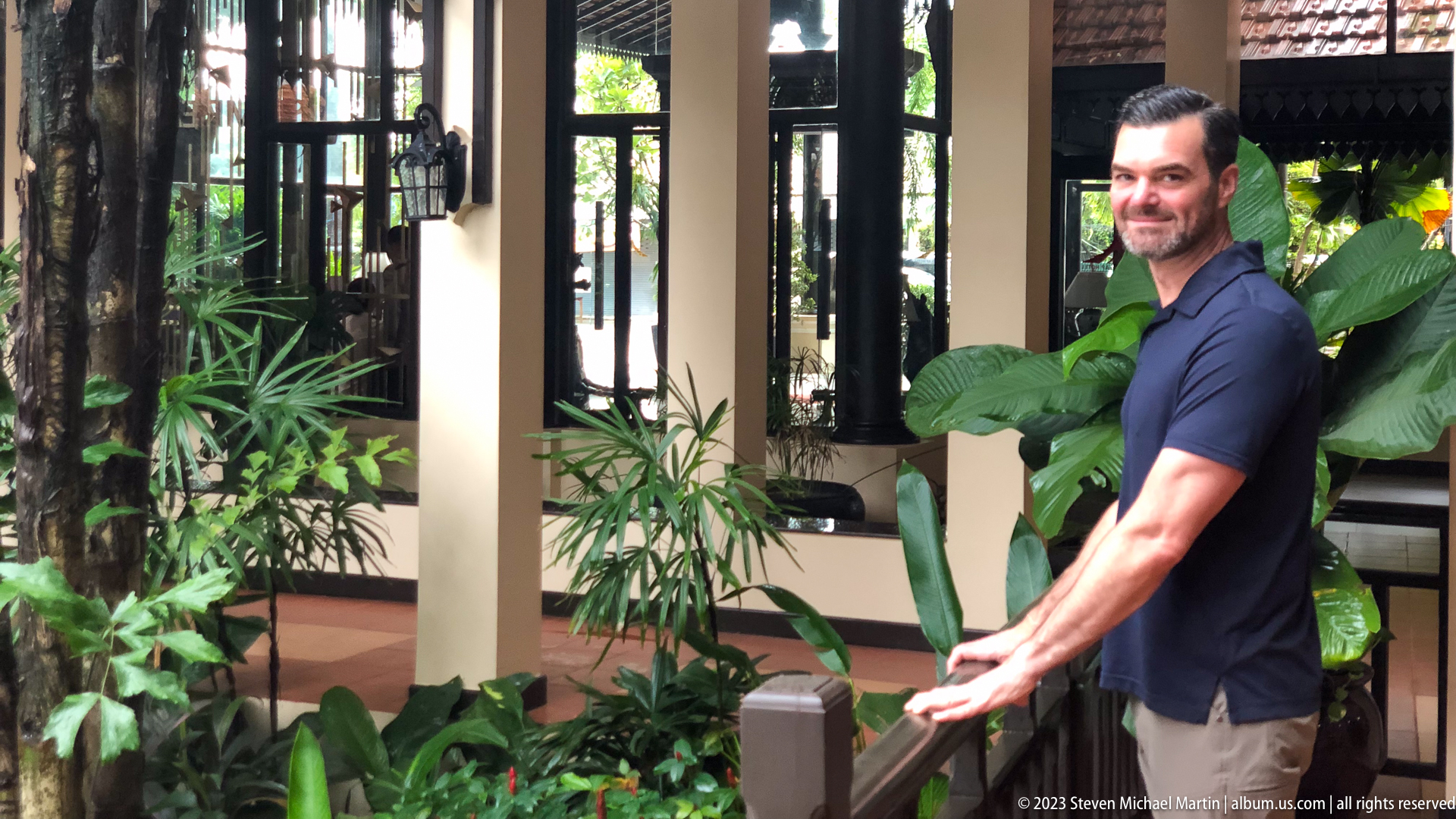
A visitor pauses beside lush tropical plants within the hotel courtyard.
Caption
A visitor pauses beside lush tropical plants within the hotel courtyard.
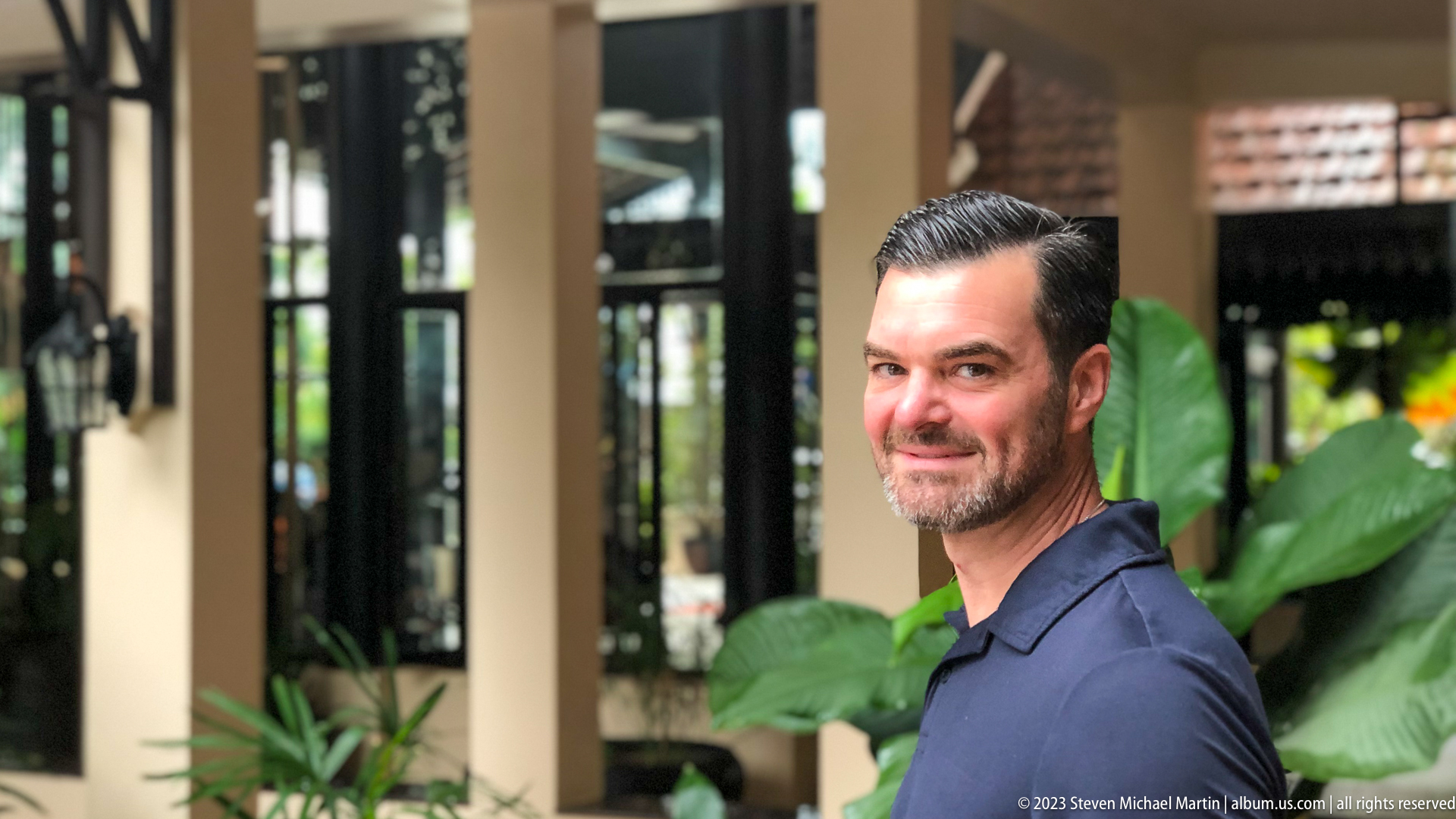
A closer portrait shows the visitor against the hotel's shaded architecture and greenery.
Caption
A closer portrait shows the visitor against the hotel's shaded architecture and greenery.
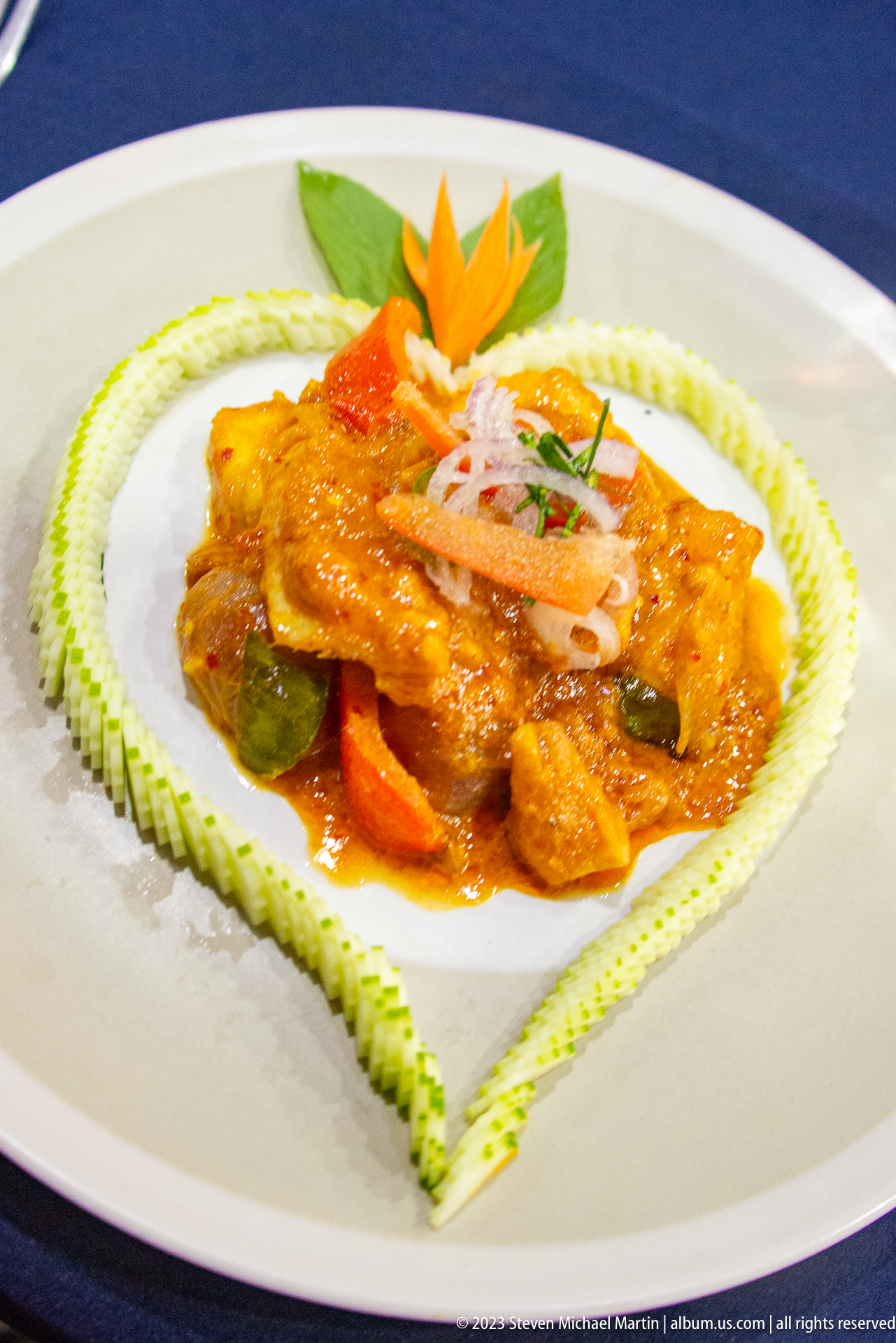
A carefully presented Cambodian entrée concludes the Siem Reap portfolio by highlighting another essential aspect of travel: regional cuisine. The balanced arrangement of the dish, decorative garnish, and restaurant presentation reflects the growing sophistication of the city's culinary scene, which complements the cultural experience provided by Angkor and the surrounding historic landscape.
Caption
A carefully presented Cambodian entrée concludes the Siem Reap portfolio by highlighting another essential aspect of travel: regional cuisine. The balanced arrangement of the dish, decorative garnish, and restaurant presentation reflects the growing sophistication of the city's culinary scene, which complements the cultural experience provided by Angkor and the surrounding historic landscape.