Bukhara
Bukhara is one of the most important historic cities along the Silk Road and served as a major center of Islamic scholarship, commerce, and culture for more than a thousand years. Located in present-day Uzbekistan, the city prospered due to its position connecting trade routes between Persia, Central Asia, and China. Its historic center preserves numerous mosques, madrasas, and marketplaces associated with Silk Road exchange.
Bukhara became known as an intellectual center where scholars studied theology, science, and philosophy. Architectural monuments illustrate the development of Islamic artistic traditions influenced by cultural exchange across Eurasia. The city’s preserved urban fabric demonstrates continuity in religious and commercial life.
Bukhara illustrates the importance of oasis cities in supporting long-distance trade across Central Asia. Its preserved monuments reflect the intellectual and commercial vitality of Silk Road civilization.
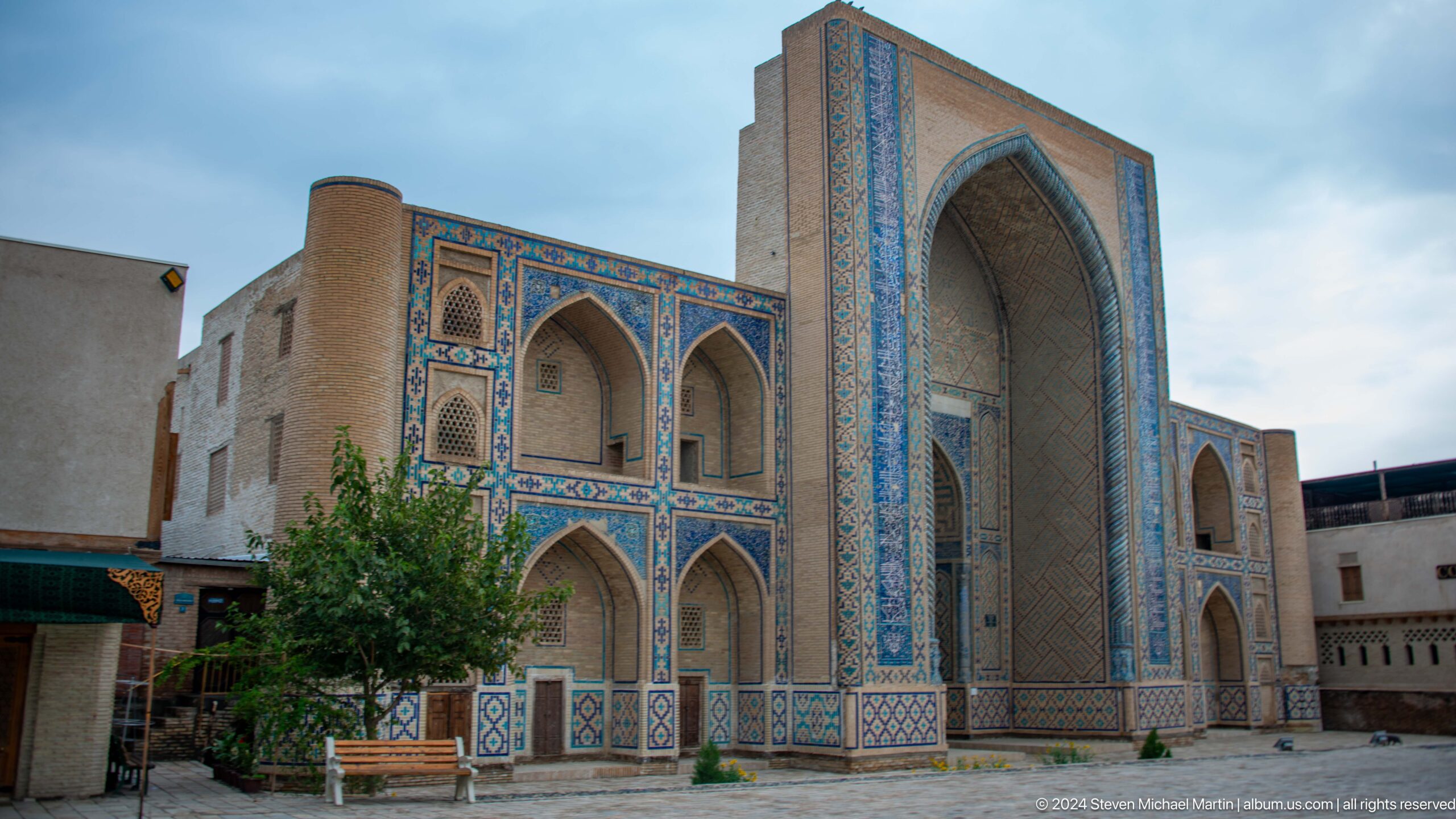
Bukhara madrasa exterior in the historic center of Bukhara. The photograph records large blue-tiled madrasa facade at angle, emphasizing the city's layered brick construction, ornamental traditions, and the close relationship between religious, commercial, and civic spaces that developed along Central Asian trade networks.
Caption
Bukhara madrasa exterior in the historic center of Bukhara. The photograph records large blue-tiled madrasa facade at angle, emphasizing the city's layered brick construction, ornamental traditions, and the close relationship between religious, commercial, and civic spaces that developed along Central Asian trade networks.

Ark of Bukhara gateway in the historic center of Bukhara. The photograph records frontal approach to white Ark gate, emphasizing the city's layered brick construction, ornamental traditions, and the close relationship between religious, commercial, and civic spaces that developed along Central Asian trade networks.
Caption
Ark of Bukhara gateway in the historic center of Bukhara. The photograph records frontal approach to white Ark gate, emphasizing the city's layered brick construction, ornamental traditions, and the close relationship between religious, commercial, and civic spaces that developed along Central Asian trade networks.

Ark of Bukhara main gate in the historic center of Bukhara. The photograph records monumental white gate in Ark fortress walls, emphasizing the city's layered brick construction, ornamental traditions, and the close relationship between religious, commercial, and civic spaces that developed along Central Asian trade networks.
Caption
Ark of Bukhara main gate in the historic center of Bukhara. The photograph records monumental white gate in Ark fortress walls, emphasizing the city's layered brick construction, ornamental traditions, and the close relationship between religious, commercial, and civic spaces that developed along Central Asian trade networks.
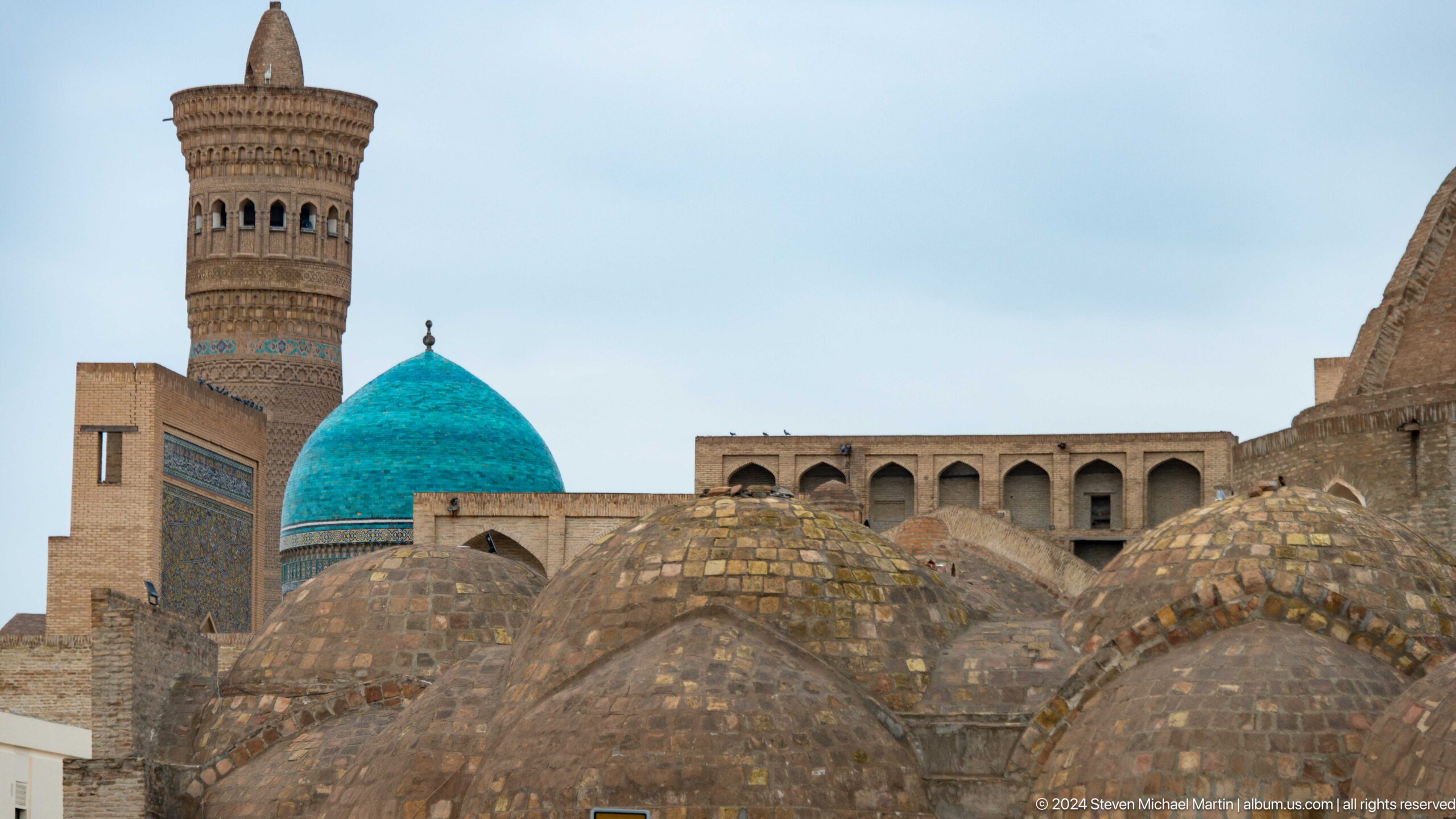
Bukhara skyline with dome and minaret in the historic center of Bukhara. The photograph records turquoise dome and minaret beyond brick roofs, emphasizing the city's layered brick construction, ornamental traditions, and the close relationship between religious, commercial, and civic spaces that developed along Central Asian trade networks.
Caption
Bukhara skyline with dome and minaret in the historic center of Bukhara. The photograph records turquoise dome and minaret beyond brick roofs, emphasizing the city's layered brick construction, ornamental traditions, and the close relationship between religious, commercial, and civic spaces that developed along Central Asian trade networks.

Covered trading passage in Bukhara in the historic center of Bukhara. The photograph records long vaulted bazaar corridor with bicycle rider, emphasizing the city's layered brick construction, ornamental traditions, and the close relationship between religious, commercial, and civic spaces that developed along Central Asian trade networks.
Caption
Covered trading passage in Bukhara in the historic center of Bukhara. The photograph records long vaulted bazaar corridor with bicycle rider, emphasizing the city's layered brick construction, ornamental traditions, and the close relationship between religious, commercial, and civic spaces that developed along Central Asian trade networks.
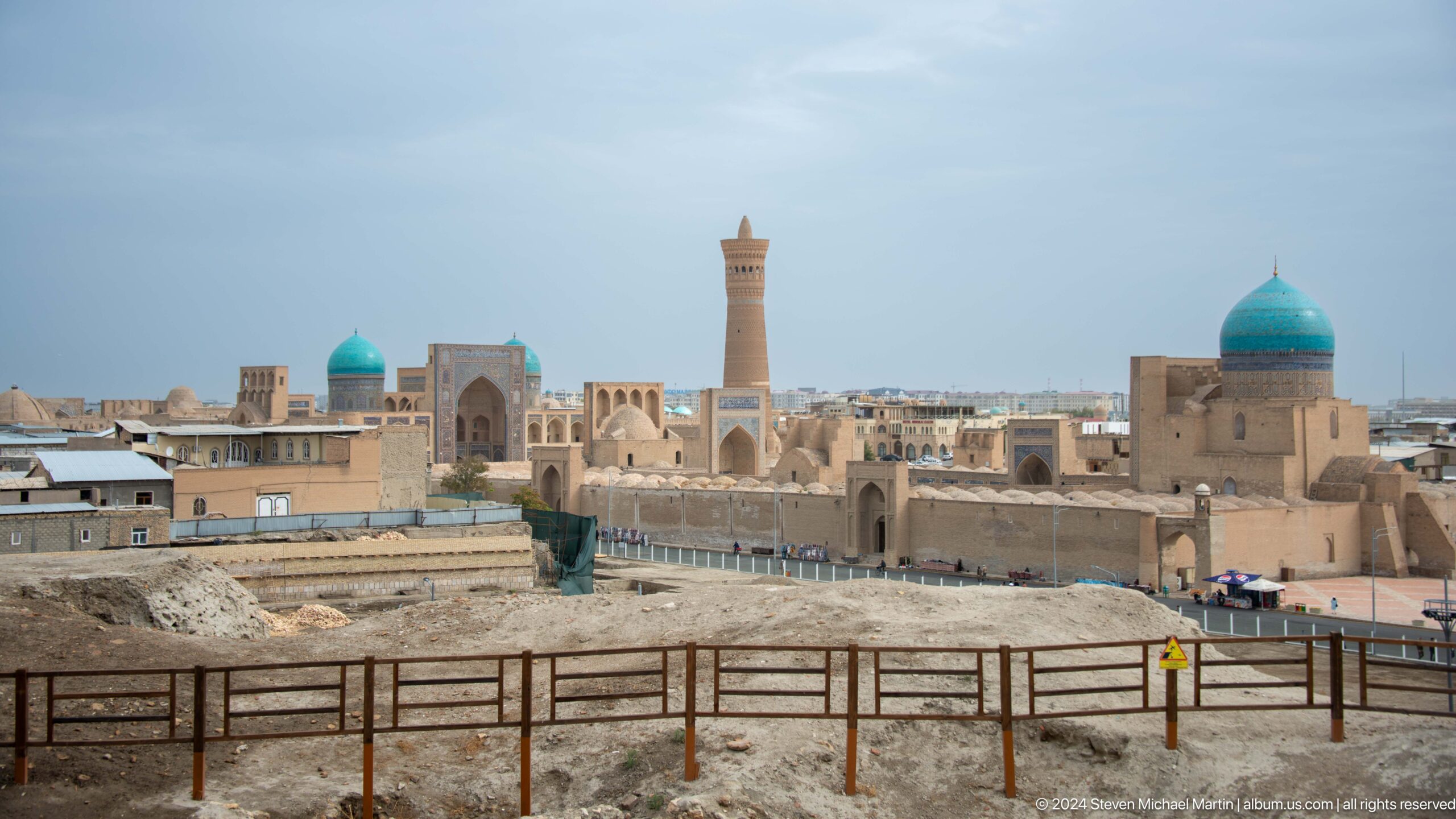
Bukhara skyline panorama in the historic center of Bukhara. The photograph records panoramic view across Bukhara monuments, emphasizing the city's layered brick construction, ornamental traditions, and the close relationship between religious, commercial, and civic spaces that developed along Central Asian trade networks.
Caption
Bukhara skyline panorama in the historic center of Bukhara. The photograph records panoramic view across Bukhara monuments, emphasizing the city's layered brick construction, ornamental traditions, and the close relationship between religious, commercial, and civic spaces that developed along Central Asian trade networks.
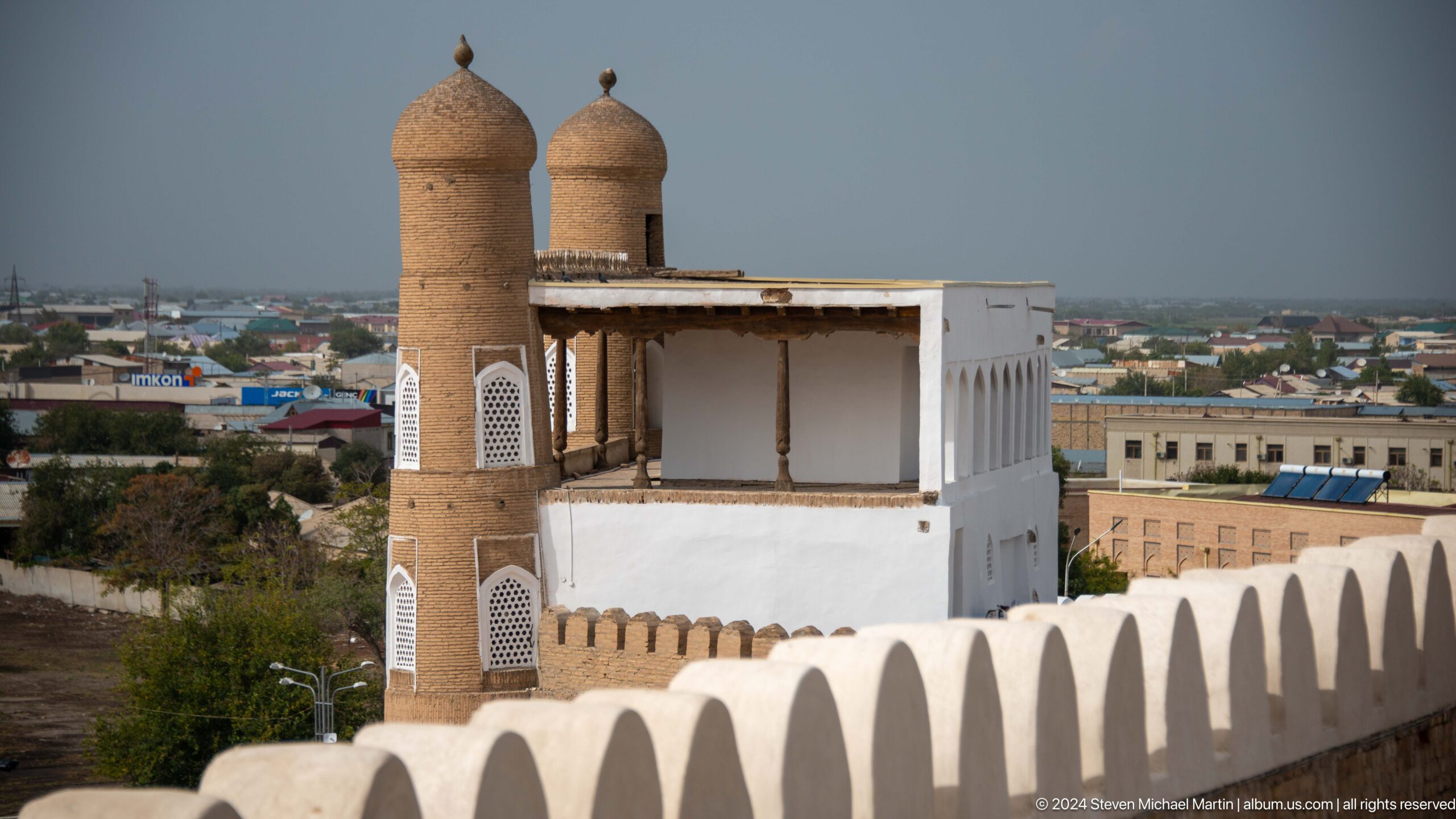
Ark of Bukhara watchtower in the historic center of Bukhara. The photograph records small watchtower and parapet above city, emphasizing the city's layered brick construction, ornamental traditions, and the close relationship between religious, commercial, and civic spaces that developed along Central Asian trade networks.
Caption
Ark of Bukhara watchtower in the historic center of Bukhara. The photograph records small watchtower and parapet above city, emphasizing the city's layered brick construction, ornamental traditions, and the close relationship between religious, commercial, and civic spaces that developed along Central Asian trade networks.
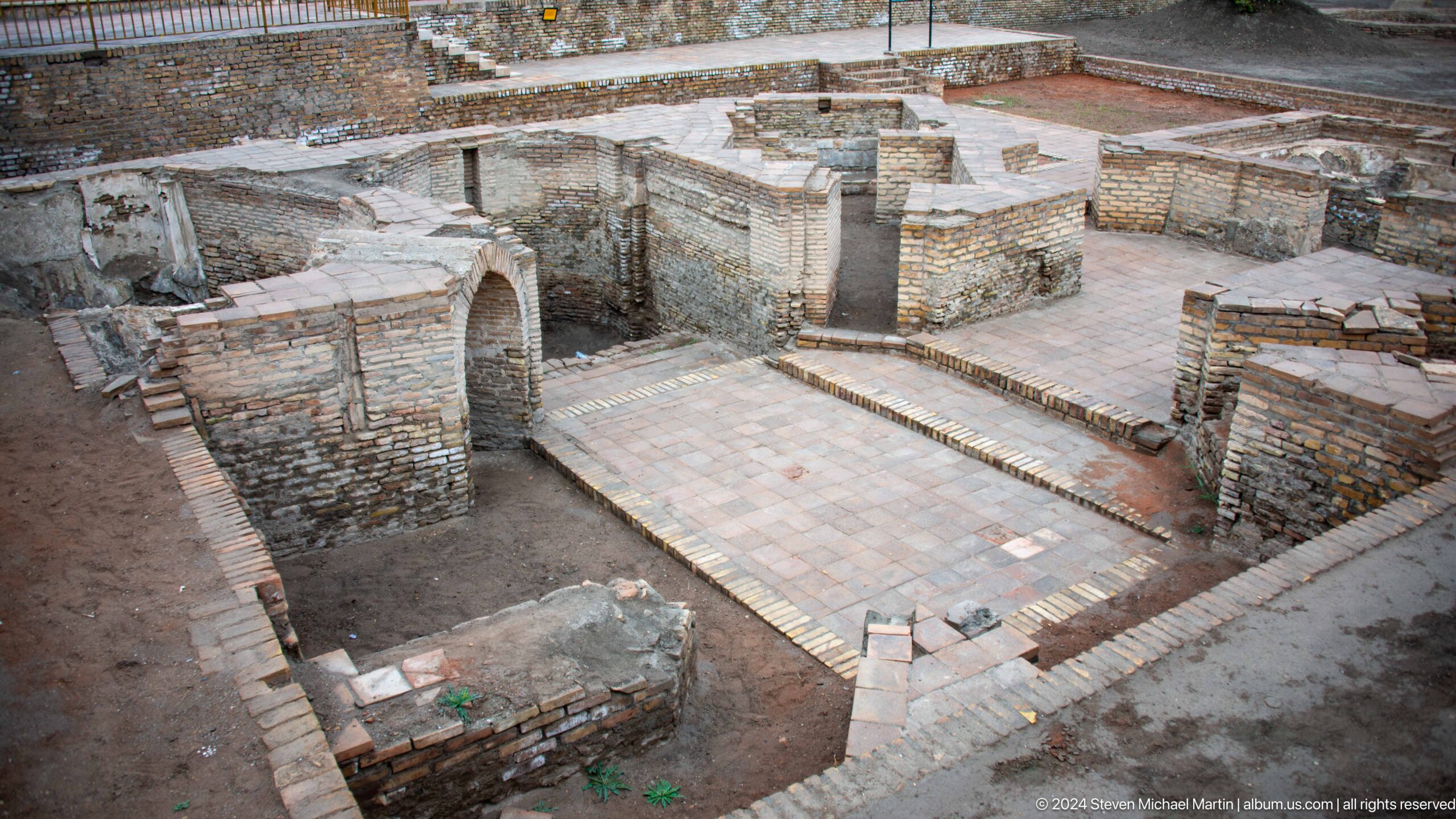
Archaeological remains in Bukhara in the historic center of Bukhara. The photograph records excavated brick foundations and low walls, emphasizing the city's layered brick construction, ornamental traditions, and the close relationship between religious, commercial, and civic spaces that developed along Central Asian trade networks.
Caption
Archaeological remains in Bukhara in the historic center of Bukhara. The photograph records excavated brick foundations and low walls, emphasizing the city's layered brick construction, ornamental traditions, and the close relationship between religious, commercial, and civic spaces that developed along Central Asian trade networks.

A traveler in a pink shirt stands at an elevated railing above Bukhara’s historic center. A turquoise dome and the edge of the Kalyan Minaret rise among the surrounding earthen buildings, placing the portrait within the city’s monumental skyline.
Caption
A traveler in a pink shirt stands at an elevated railing above Bukhara’s historic center. A turquoise dome and the edge of the Kalyan Minaret rise among the surrounding earthen buildings, placing the portrait within the city’s monumental skyline.

Historic Bukhara skyline in the historic center of Bukhara. The photograph records Bukhara skyline with domes and Kalyan Minaret, emphasizing the city's layered brick construction, ornamental traditions, and the close relationship between religious, commercial, and civic spaces that developed along Central Asian trade networks.
Caption
Historic Bukhara skyline in the historic center of Bukhara. The photograph records Bukhara skyline with domes and Kalyan Minaret, emphasizing the city's layered brick construction, ornamental traditions, and the close relationship between religious, commercial, and civic spaces that developed along Central Asian trade networks.
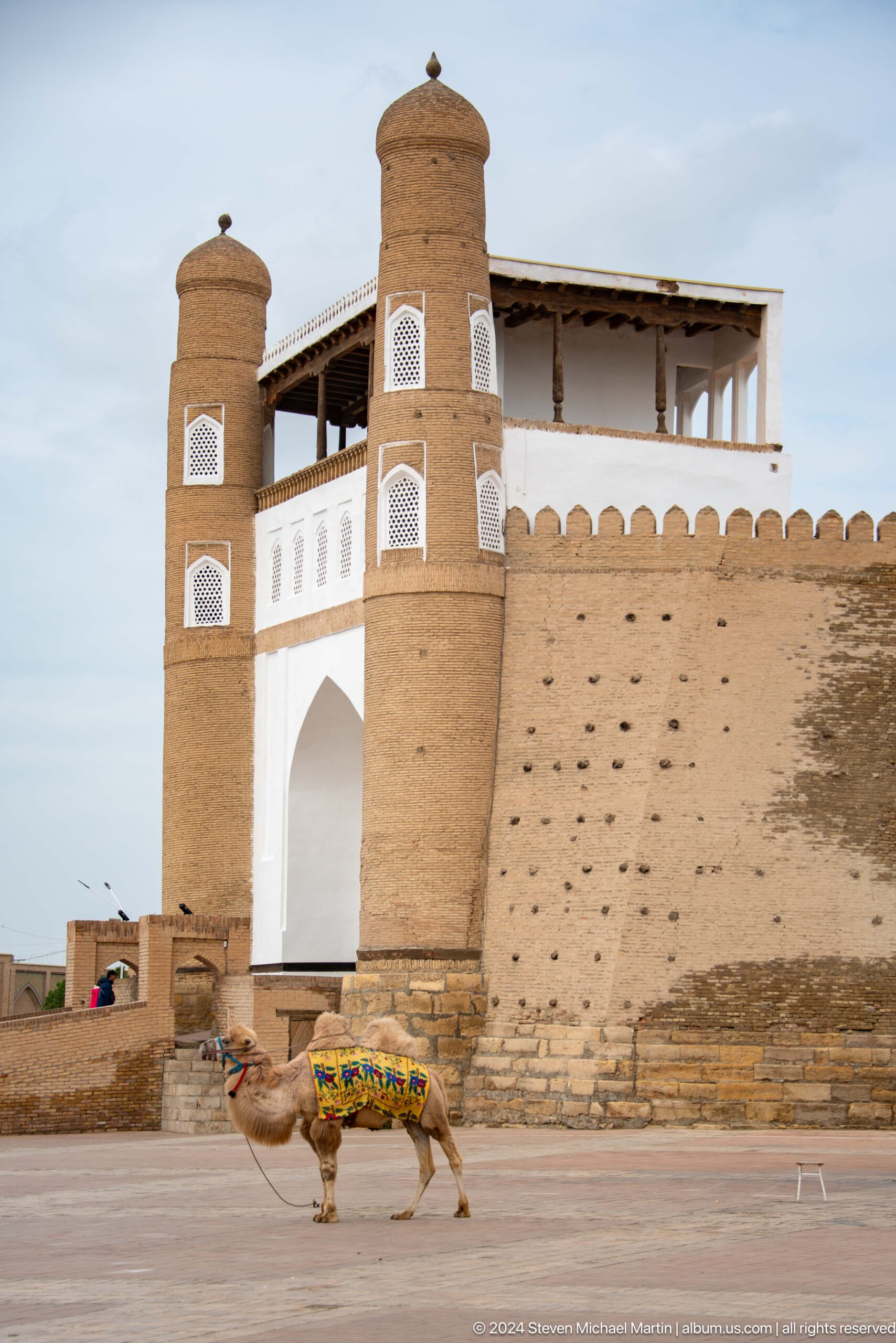
Ark of Bukhara gate in the historic center of Bukhara. The photograph records Ark gate tower and crenellated wall, emphasizing the city's layered brick construction, ornamental traditions, and the close relationship between religious, commercial, and civic spaces that developed along Central Asian trade networks.
Caption
Ark of Bukhara gate in the historic center of Bukhara. The photograph records Ark gate tower and crenellated wall, emphasizing the city's layered brick construction, ornamental traditions, and the close relationship between religious, commercial, and civic spaces that developed along Central Asian trade networks.
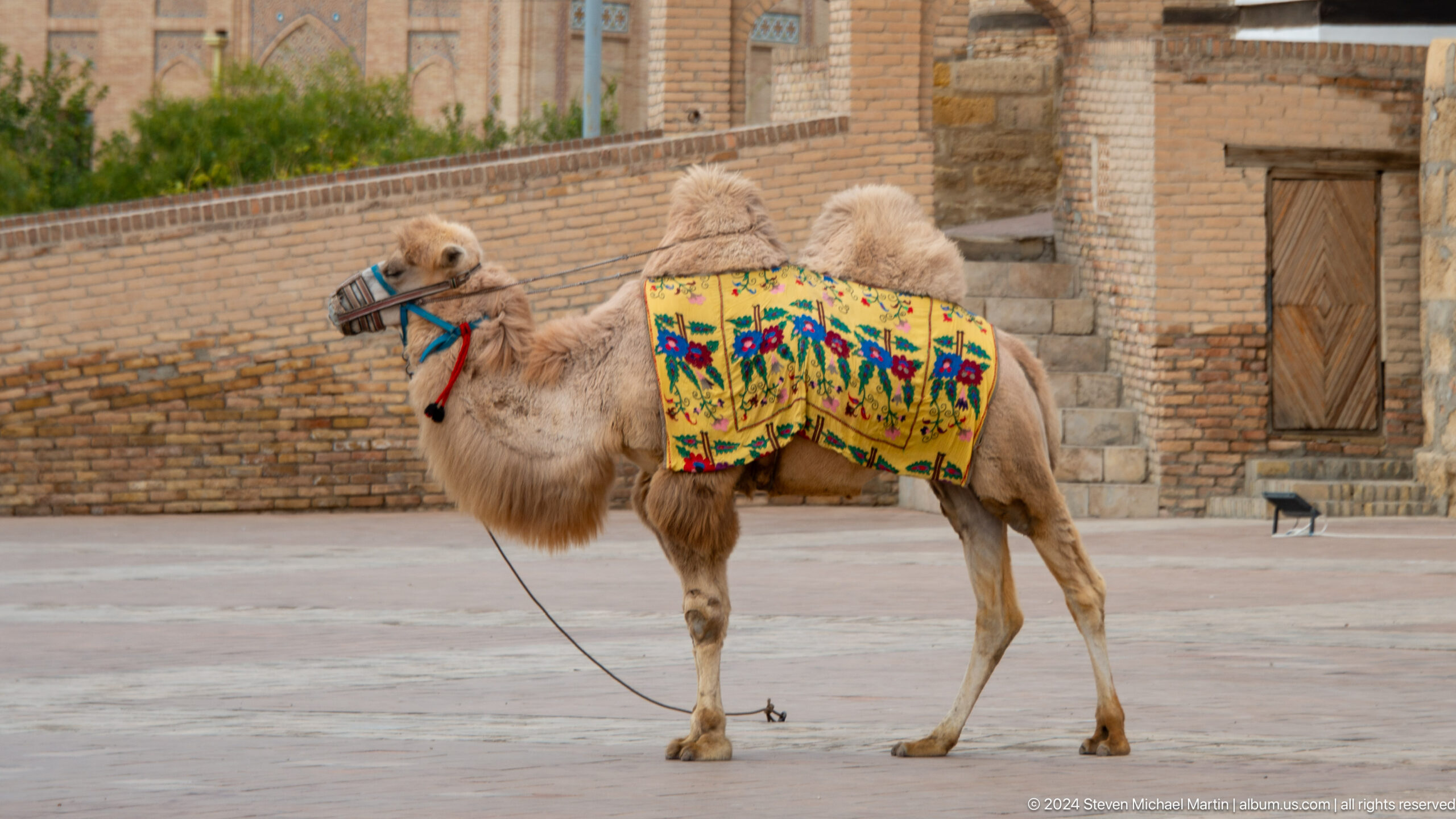
Tourist camel near Ark of Bukhara in the historic center of Bukhara. The photograph records decorated camel standing in plaza, emphasizing the city's layered brick construction, ornamental traditions, and the close relationship between religious, commercial, and civic spaces that developed along Central Asian trade networks.
Caption
Tourist camel near Ark of Bukhara in the historic center of Bukhara. The photograph records decorated camel standing in plaza, emphasizing the city's layered brick construction, ornamental traditions, and the close relationship between religious, commercial, and civic spaces that developed along Central Asian trade networks.

Carved wooden entrance doors in the historic center of Bukhara. The photograph records carved wooden double doors in brick wall, emphasizing the city's layered brick construction, ornamental traditions, and the close relationship between religious, commercial, and civic spaces that developed along Central Asian trade networks.
Caption
Carved wooden entrance doors in the historic center of Bukhara. The photograph records carved wooden double doors in brick wall, emphasizing the city's layered brick construction, ornamental traditions, and the close relationship between religious, commercial, and civic spaces that developed along Central Asian trade networks.

Traditional arched doorway in the historic center of Bukhara. The photograph records dark wooden arched doorway beneath pointed recess, emphasizing the city's layered brick construction, ornamental traditions, and the close relationship between religious, commercial, and civic spaces that developed along Central Asian trade networks.
Caption
Traditional arched doorway in the historic center of Bukhara. The photograph records dark wooden arched doorway beneath pointed recess, emphasizing the city's layered brick construction, ornamental traditions, and the close relationship between religious, commercial, and civic spaces that developed along Central Asian trade networks.

Brick facade with lattice opening and wooden door in the historic center of Bukhara. The photograph records wooden doorway below lattice window, emphasizing the city's layered brick construction, ornamental traditions, and the close relationship between religious, commercial, and civic spaces that developed along Central Asian trade networks.
Caption
Brick facade with lattice opening and wooden door in the historic center of Bukhara. The photograph records wooden doorway below lattice window, emphasizing the city's layered brick construction, ornamental traditions, and the close relationship between religious, commercial, and civic spaces that developed along Central Asian trade networks.
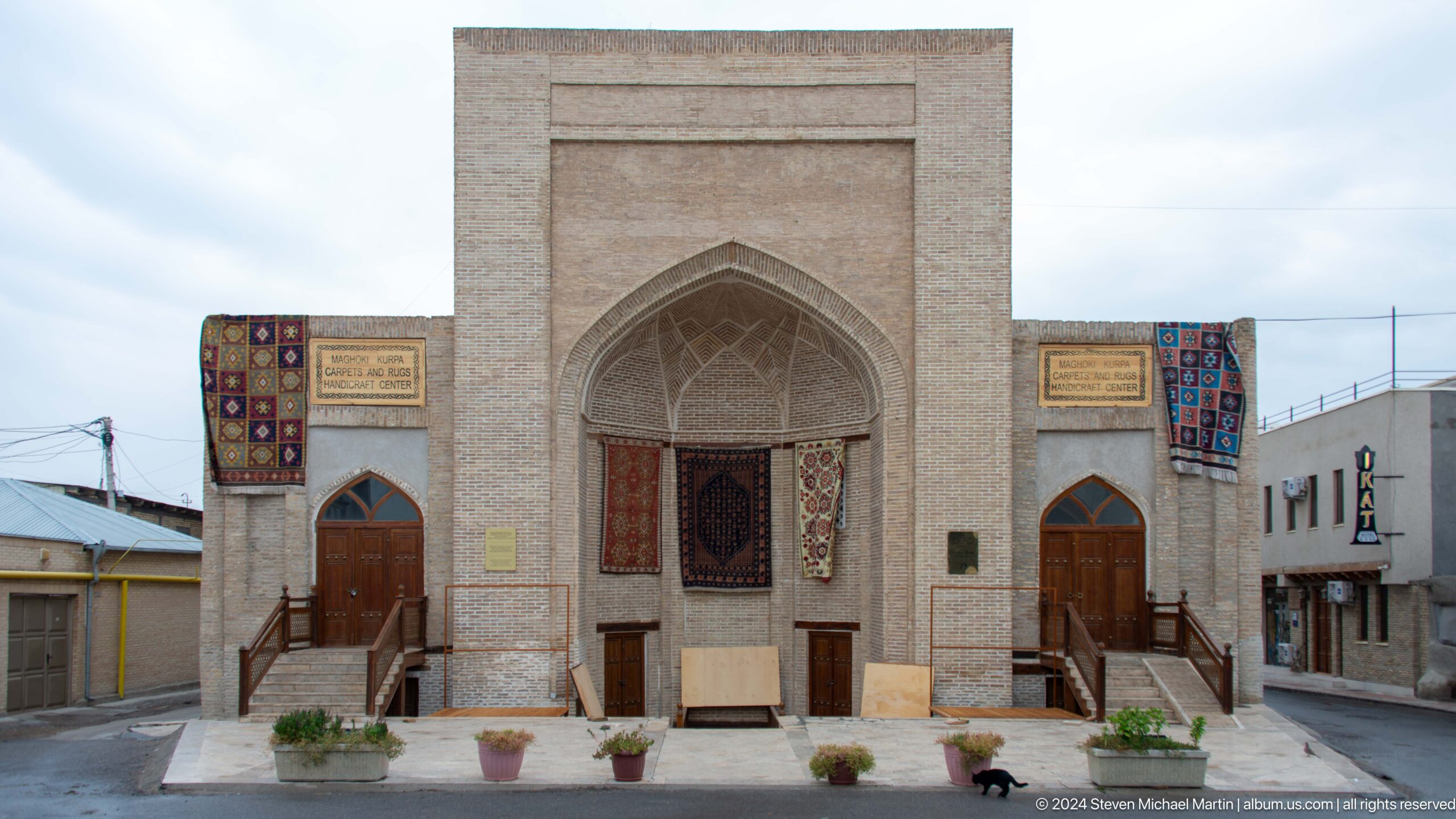
Historic madrasa or khanqah courtyard facade in the historic center of Bukhara. The photograph records symmetrical courtyard facade with central pointed portal, emphasizing the city's layered brick construction, ornamental traditions, and the close relationship between religious, commercial, and civic spaces that developed along Central Asian trade networks.
Caption
Historic madrasa or khanqah courtyard facade in the historic center of Bukhara. The photograph records symmetrical courtyard facade with central pointed portal, emphasizing the city's layered brick construction, ornamental traditions, and the close relationship between religious, commercial, and civic spaces that developed along Central Asian trade networks.

Traditional Uzbek carpets on display in the historic center of Bukhara. The photograph records three patterned carpets hanging on brick wall, emphasizing the city's layered brick construction, ornamental traditions, and the close relationship between religious, commercial, and civic spaces that developed along Central Asian trade networks.
Caption
Traditional Uzbek carpets on display in the historic center of Bukhara. The photograph records three patterned carpets hanging on brick wall, emphasizing the city's layered brick construction, ornamental traditions, and the close relationship between religious, commercial, and civic spaces that developed along Central Asian trade networks.
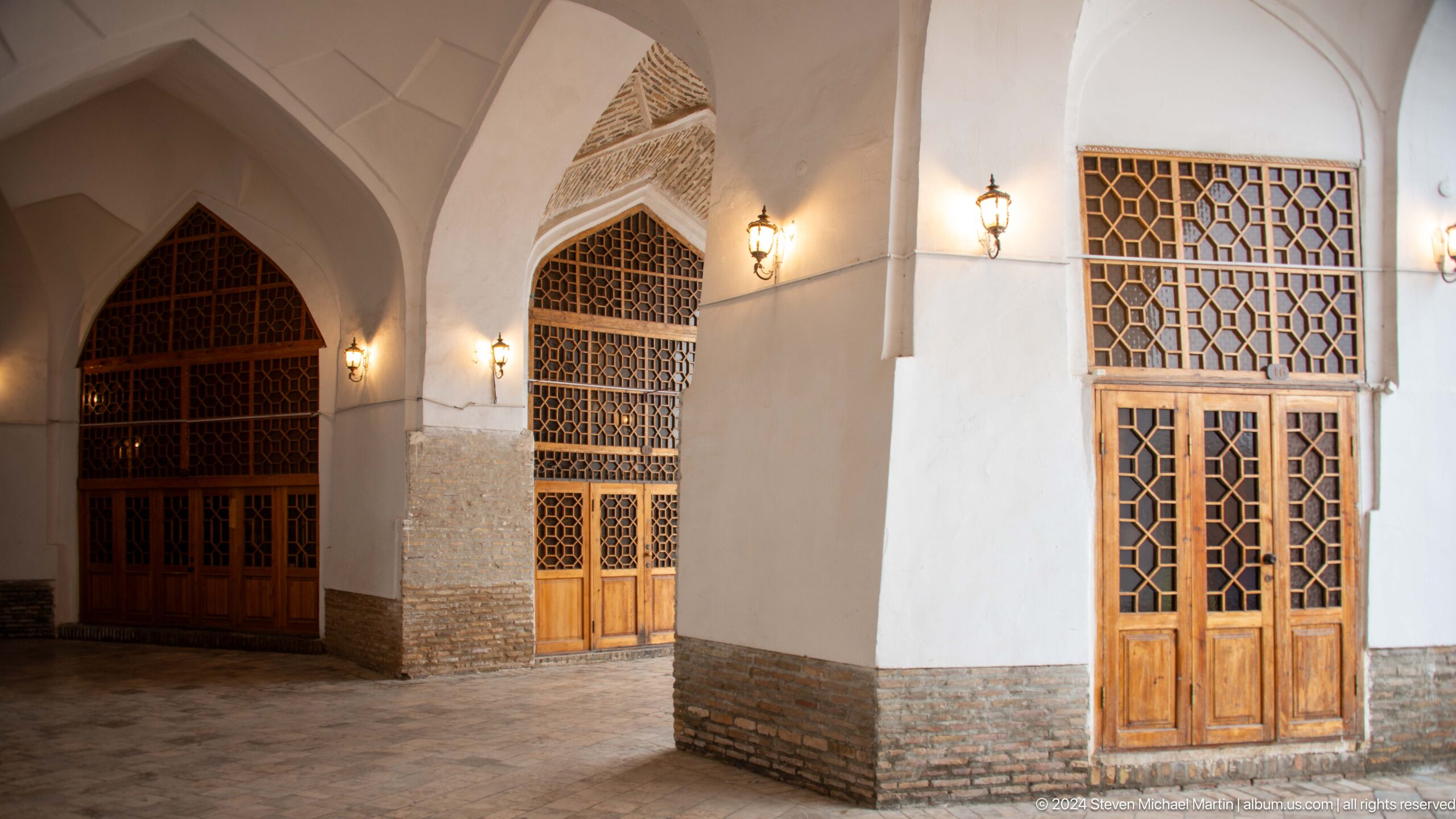
Historic covered passage interior in the historic center of Bukhara. The photograph records white vaulted interior with carved wooden doors, emphasizing the city's layered brick construction, ornamental traditions, and the close relationship between religious, commercial, and civic spaces that developed along Central Asian trade networks.
Caption
Historic covered passage interior in the historic center of Bukhara. The photograph records white vaulted interior with carved wooden doors, emphasizing the city's layered brick construction, ornamental traditions, and the close relationship between religious, commercial, and civic spaces that developed along Central Asian trade networks.
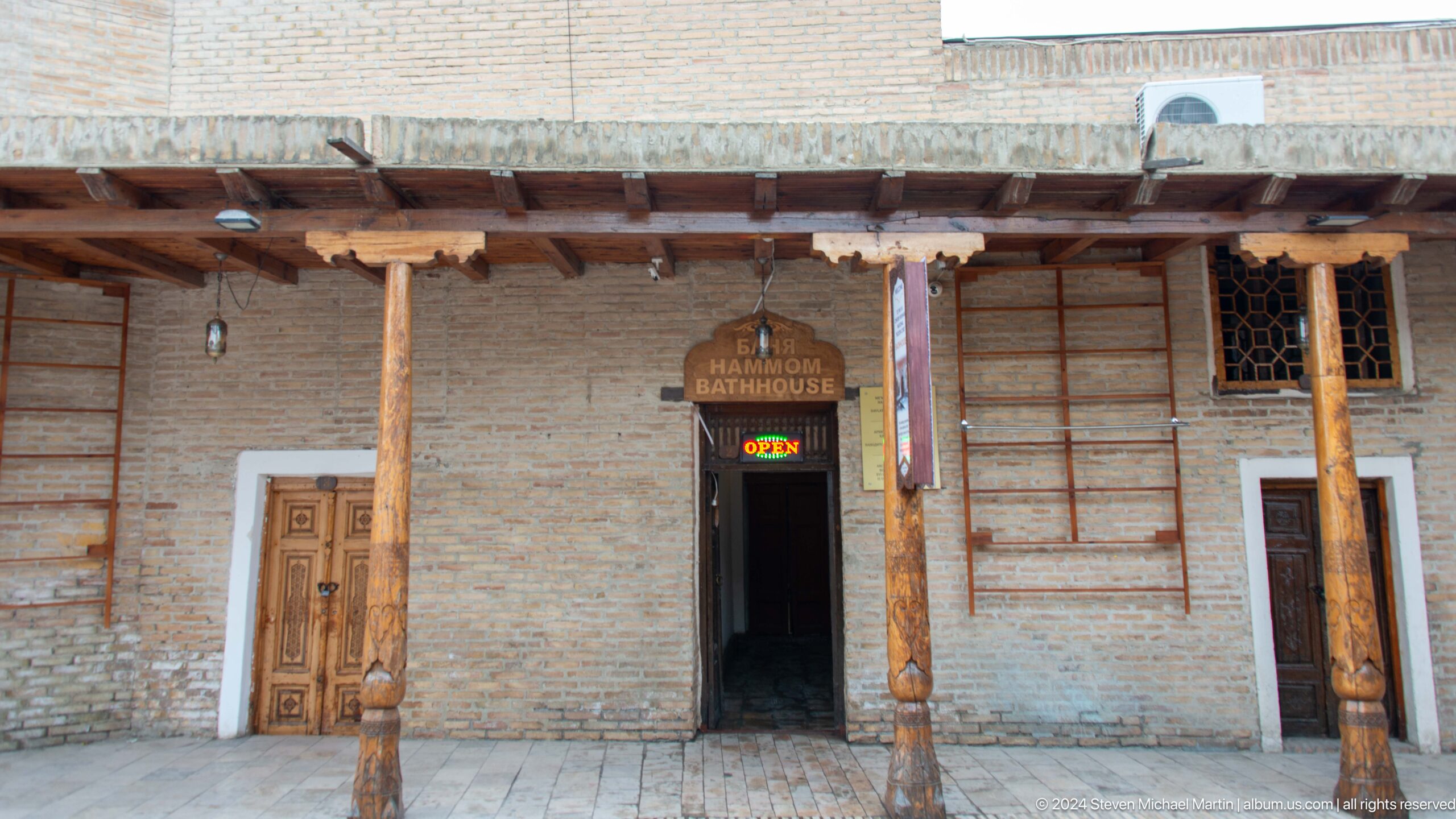
Traditional shopfront in the historic center of Bukhara. The photograph records timber-columned mud-brick shopfront, emphasizing the city's layered brick construction, ornamental traditions, and the close relationship between religious, commercial, and civic spaces that developed along Central Asian trade networks.
Caption
Traditional shopfront in the historic center of Bukhara. The photograph records timber-columned mud-brick shopfront, emphasizing the city's layered brick construction, ornamental traditions, and the close relationship between religious, commercial, and civic spaces that developed along Central Asian trade networks.

Textile market stall in the historic center of Bukhara. The photograph records market stall displaying clothing and textiles, emphasizing the city's layered brick construction, ornamental traditions, and the close relationship between religious, commercial, and civic spaces that developed along Central Asian trade networks.
Caption
Textile market stall in the historic center of Bukhara. The photograph records market stall displaying clothing and textiles, emphasizing the city's layered brick construction, ornamental traditions, and the close relationship between religious, commercial, and civic spaces that developed along Central Asian trade networks.
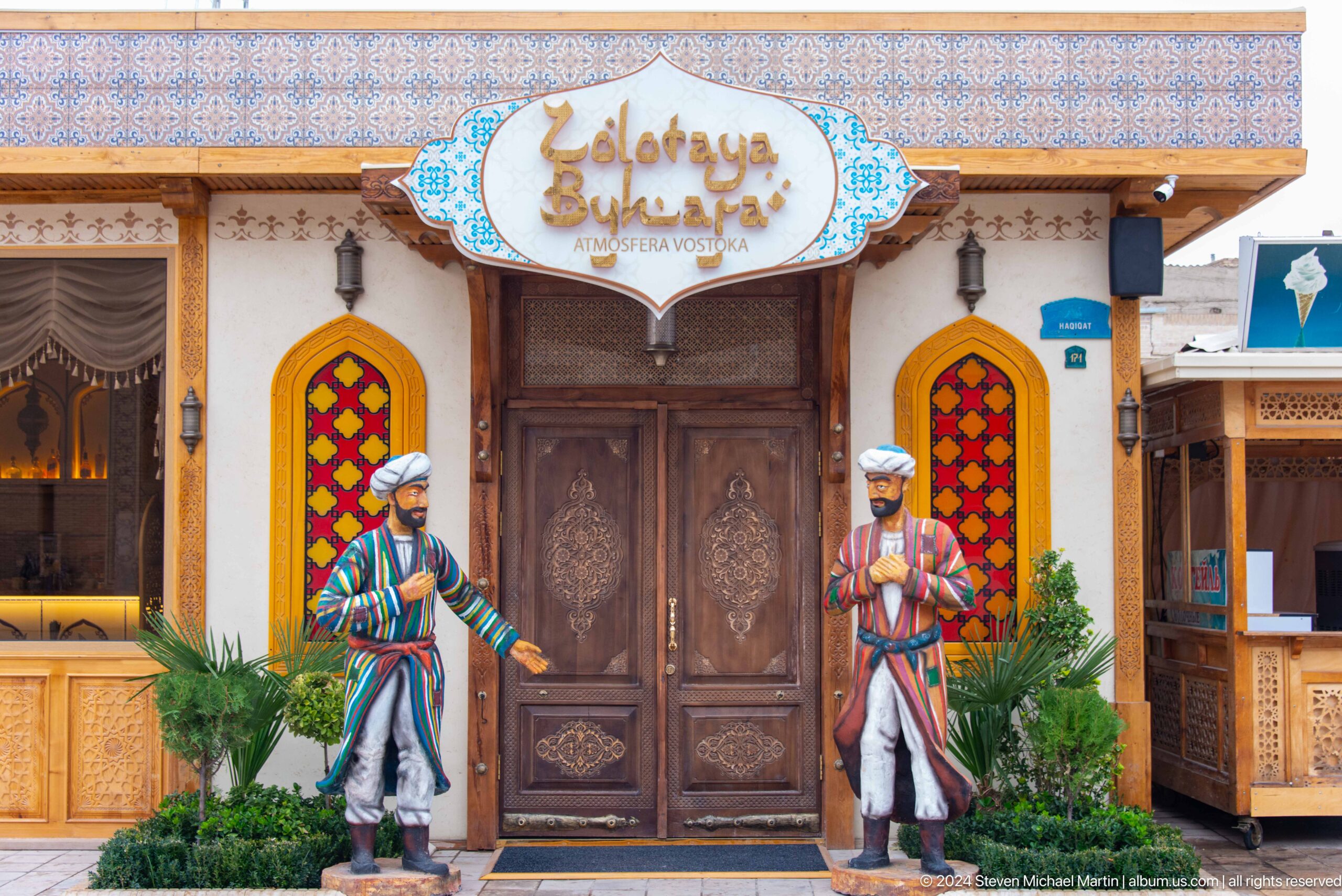
Decorated commercial entrance in the historic center of Bukhara. The photograph records decorative restaurant entrance with figures, emphasizing the city's layered brick construction, ornamental traditions, and the close relationship between religious, commercial, and civic spaces that developed along Central Asian trade networks.
Caption
Decorated commercial entrance in the historic center of Bukhara. The photograph records decorative restaurant entrance with figures, emphasizing the city's layered brick construction, ornamental traditions, and the close relationship between religious, commercial, and civic spaces that developed along Central Asian trade networks.
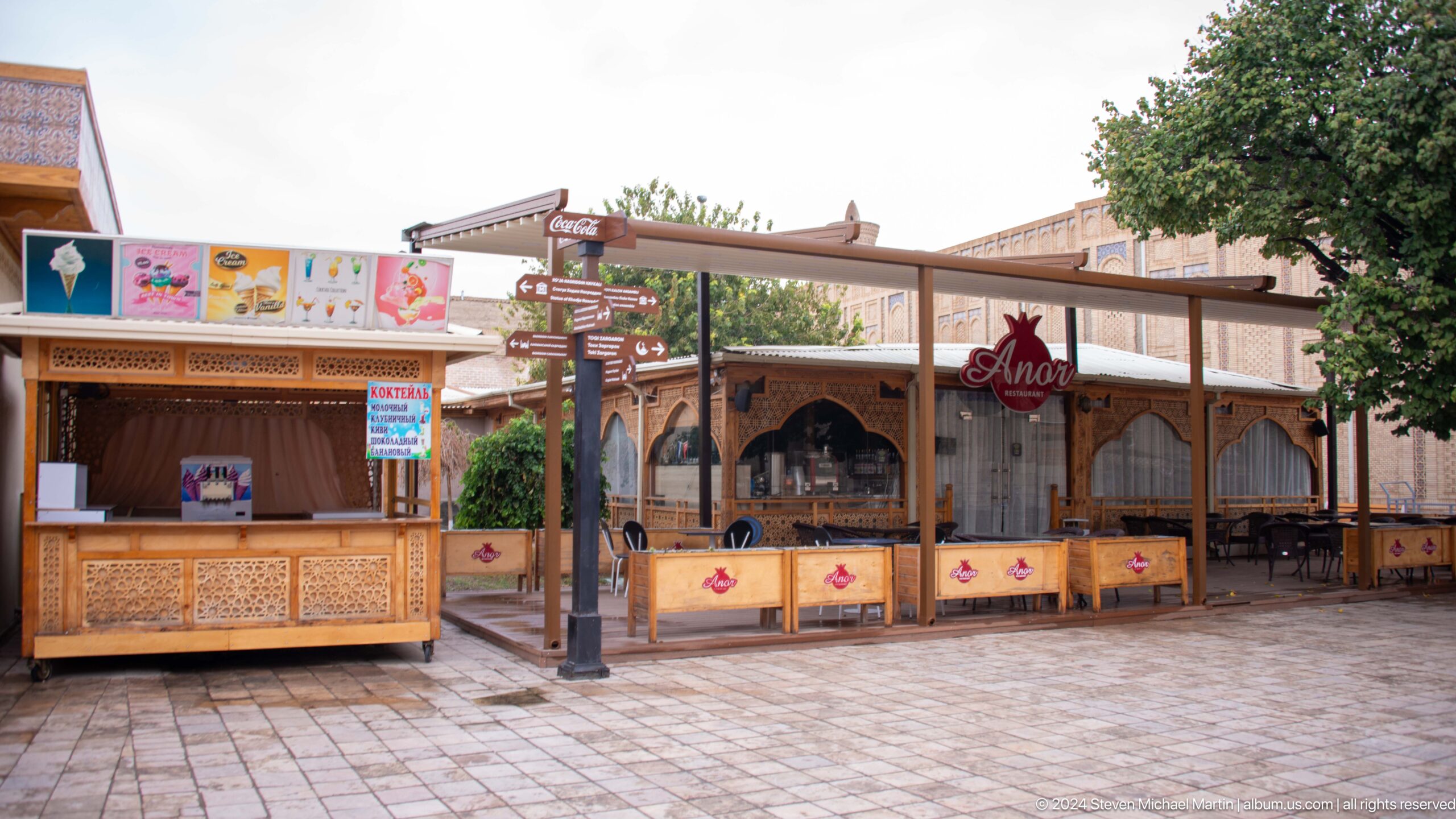
Courtyard dining area in the historic center of Bukhara. The photograph records open-air restaurant courtyard and kiosks, emphasizing the city's layered brick construction, ornamental traditions, and the close relationship between religious, commercial, and civic spaces that developed along Central Asian trade networks.
Caption
Courtyard dining area in the historic center of Bukhara. The photograph records open-air restaurant courtyard and kiosks, emphasizing the city's layered brick construction, ornamental traditions, and the close relationship between religious, commercial, and civic spaces that developed along Central Asian trade networks.

Monumental tiled madrasa portal in the historic center of Bukhara. The photograph records tall tiled entrance portal viewed from below, emphasizing the city's layered brick construction, ornamental traditions, and the close relationship between religious, commercial, and civic spaces that developed along Central Asian trade networks.
Caption
Monumental tiled madrasa portal in the historic center of Bukhara. The photograph records tall tiled entrance portal viewed from below, emphasizing the city's layered brick construction, ornamental traditions, and the close relationship between religious, commercial, and civic spaces that developed along Central Asian trade networks.

Visitors traveling by electric cart in the historic center of Bukhara. The photograph records passengers riding in small electric cart, emphasizing the city's layered brick construction, ornamental traditions, and the close relationship between religious, commercial, and civic spaces that developed along Central Asian trade networks.
Caption
Visitors traveling by electric cart in the historic center of Bukhara. The photograph records passengers riding in small electric cart, emphasizing the city's layered brick construction, ornamental traditions, and the close relationship between religious, commercial, and civic spaces that developed along Central Asian trade networks.

Traditional columned veranda in the historic center of Bukhara. The photograph records wooden-columned veranda before carved doorway, emphasizing the city's layered brick construction, ornamental traditions, and the close relationship between religious, commercial, and civic spaces that developed along Central Asian trade networks.
Caption
Traditional columned veranda in the historic center of Bukhara. The photograph records wooden-columned veranda before carved doorway, emphasizing the city's layered brick construction, ornamental traditions, and the close relationship between religious, commercial, and civic spaces that developed along Central Asian trade networks.

Historic merchant-house facade in the historic center of Bukhara. The photograph records two-story timber balcony facade, emphasizing the city's layered brick construction, ornamental traditions, and the close relationship between religious, commercial, and civic spaces that developed along Central Asian trade networks.
Caption
Historic merchant-house facade in the historic center of Bukhara. The photograph records two-story timber balcony facade, emphasizing the city's layered brick construction, ornamental traditions, and the close relationship between religious, commercial, and civic spaces that developed along Central Asian trade networks.

Glazed-tile facade detail in the historic center of Bukhara. The photograph records close view of tiled arched niches, emphasizing the city's layered brick construction, ornamental traditions, and the close relationship between religious, commercial, and civic spaces that developed along Central Asian trade networks.
Caption
Glazed-tile facade detail in the historic center of Bukhara. The photograph records close view of tiled arched niches, emphasizing the city's layered brick construction, ornamental traditions, and the close relationship between religious, commercial, and civic spaces that developed along Central Asian trade networks.
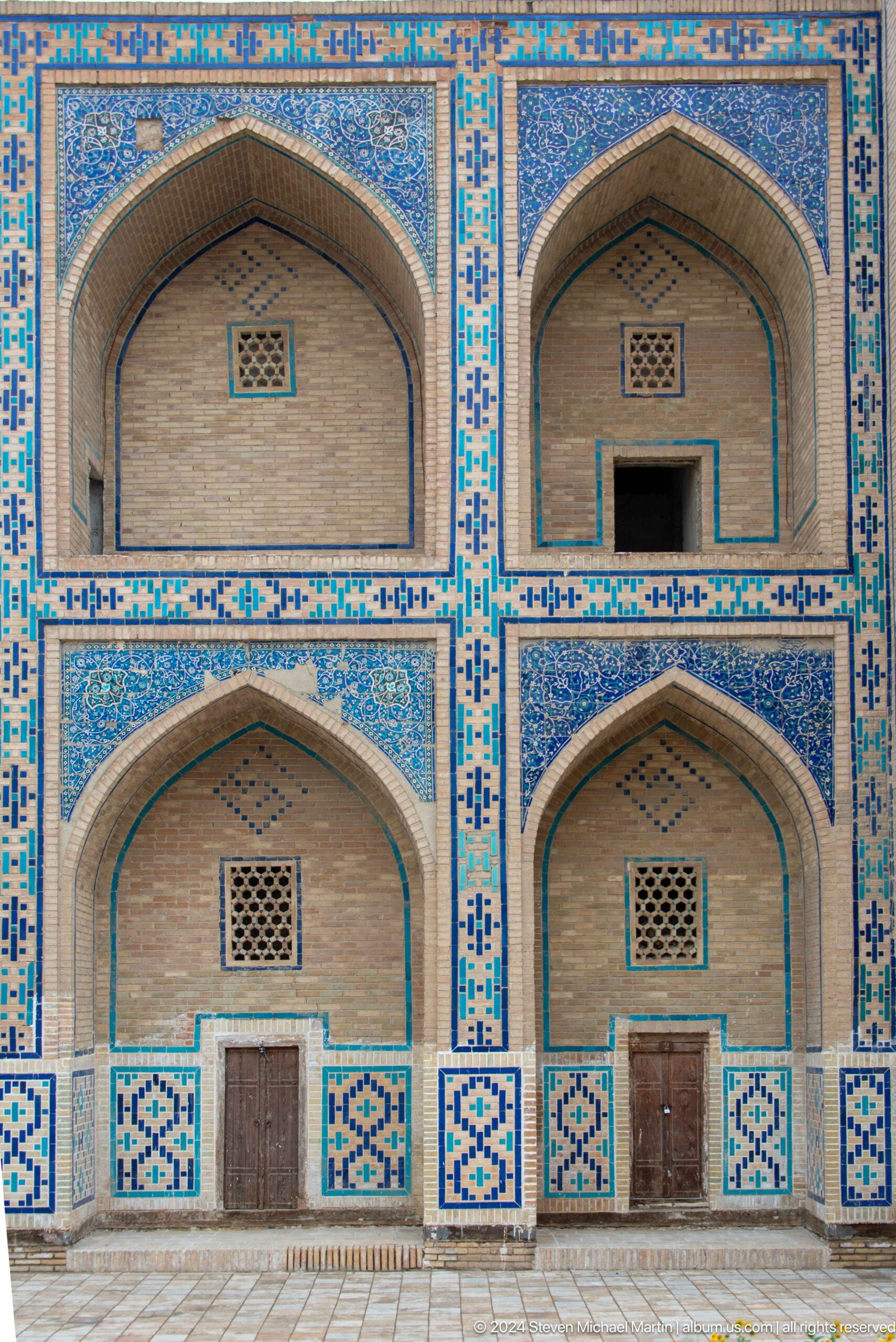
Tiled arcade detail in the historic center of Bukhara. The photograph records paired arched niches framed by blue tile, emphasizing the city's layered brick construction, ornamental traditions, and the close relationship between religious, commercial, and civic spaces that developed along Central Asian trade networks.
Caption
Tiled arcade detail in the historic center of Bukhara. The photograph records paired arched niches framed by blue tile, emphasizing the city's layered brick construction, ornamental traditions, and the close relationship between religious, commercial, and civic spaces that developed along Central Asian trade networks.

Glazed floral tilework in the historic center of Bukhara. The photograph records blue and yellow floral tile panel, emphasizing the city's layered brick construction, ornamental traditions, and the close relationship between religious, commercial, and civic spaces that developed along Central Asian trade networks.
Caption
Glazed floral tilework in the historic center of Bukhara. The photograph records blue and yellow floral tile panel, emphasizing the city's layered brick construction, ornamental traditions, and the close relationship between religious, commercial, and civic spaces that developed along Central Asian trade networks.

Timurid-style floral tilework in the historic center of Bukhara. The photograph records bright blue floral ceramic panel, emphasizing the city's layered brick construction, ornamental traditions, and the close relationship between religious, commercial, and civic spaces that developed along Central Asian trade networks.
Caption
Timurid-style floral tilework in the historic center of Bukhara. The photograph records bright blue floral ceramic panel, emphasizing the city's layered brick construction, ornamental traditions, and the close relationship between religious, commercial, and civic spaces that developed along Central Asian trade networks.

Muqarnas portal decoration in the historic center of Bukhara. The photograph records painted muqarnas beneath blue arabesque panel, emphasizing the city's layered brick construction, ornamental traditions, and the close relationship between religious, commercial, and civic spaces that developed along Central Asian trade networks.
Caption
Muqarnas portal decoration in the historic center of Bukhara. The photograph records painted muqarnas beneath blue arabesque panel, emphasizing the city's layered brick construction, ornamental traditions, and the close relationship between religious, commercial, and civic spaces that developed along Central Asian trade networks.
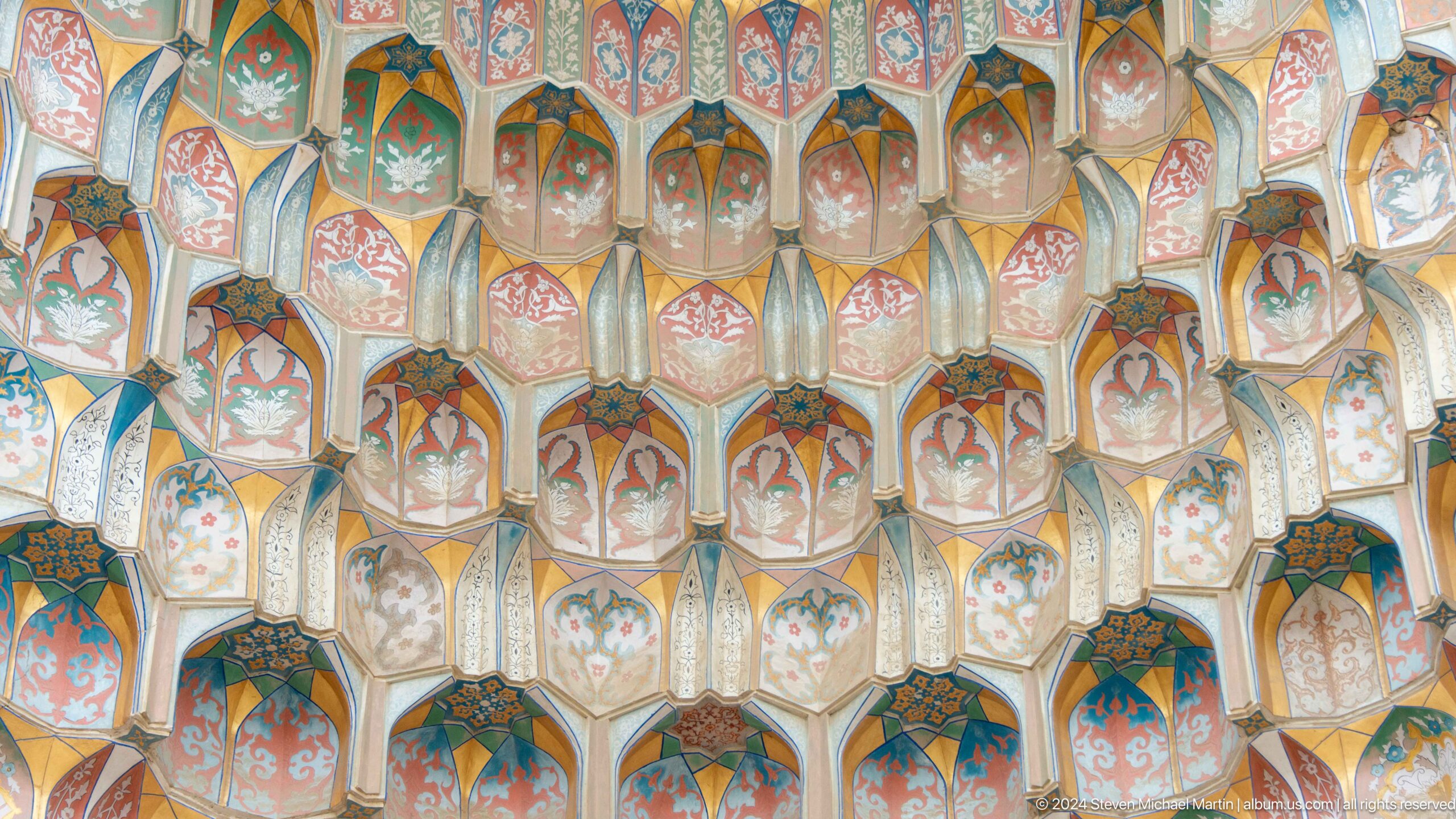
Painted muqarnas detail in the historic center of Bukhara. The photograph records close-up of multicolored muqarnas cells, emphasizing the city's layered brick construction, ornamental traditions, and the close relationship between religious, commercial, and civic spaces that developed along Central Asian trade networks.
Caption
Painted muqarnas detail in the historic center of Bukhara. The photograph records close-up of multicolored muqarnas cells, emphasizing the city's layered brick construction, ornamental traditions, and the close relationship between religious, commercial, and civic spaces that developed along Central Asian trade networks.

Decorated portal vault in the historic center of Bukhara. The photograph records muqarnas vault with small arched windows, emphasizing the city's layered brick construction, ornamental traditions, and the close relationship between religious, commercial, and civic spaces that developed along Central Asian trade networks.
Caption
Decorated portal vault in the historic center of Bukhara. The photograph records muqarnas vault with small arched windows, emphasizing the city's layered brick construction, ornamental traditions, and the close relationship between religious, commercial, and civic spaces that developed along Central Asian trade networks.

Historic painted ceiling decoration in the historic center of Bukhara. The photograph records faded geometric painted ceiling panels, emphasizing the city's layered brick construction, ornamental traditions, and the close relationship between religious, commercial, and civic spaces that developed along Central Asian trade networks.
Caption
Historic painted ceiling decoration in the historic center of Bukhara. The photograph records faded geometric painted ceiling panels, emphasizing the city's layered brick construction, ornamental traditions, and the close relationship between religious, commercial, and civic spaces that developed along Central Asian trade networks.
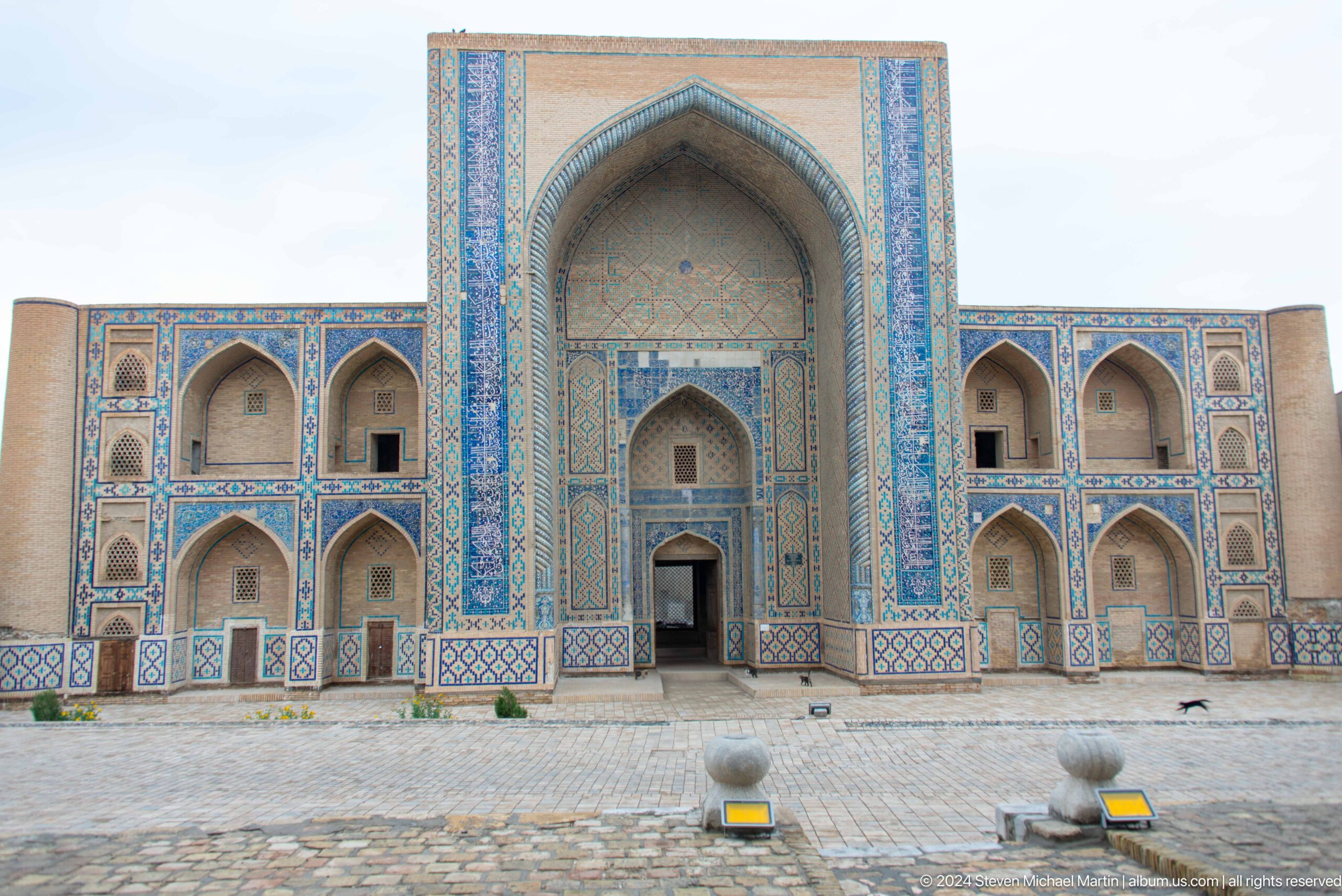
Madrasa courtyard elevation in the historic center of Bukhara. The photograph records broad madrasa courtyard facade with central iwan, emphasizing the city's layered brick construction, ornamental traditions, and the close relationship between religious, commercial, and civic spaces that developed along Central Asian trade networks.
Caption
Madrasa courtyard elevation in the historic center of Bukhara. The photograph records broad madrasa courtyard facade with central iwan, emphasizing the city's layered brick construction, ornamental traditions, and the close relationship between religious, commercial, and civic spaces that developed along Central Asian trade networks.
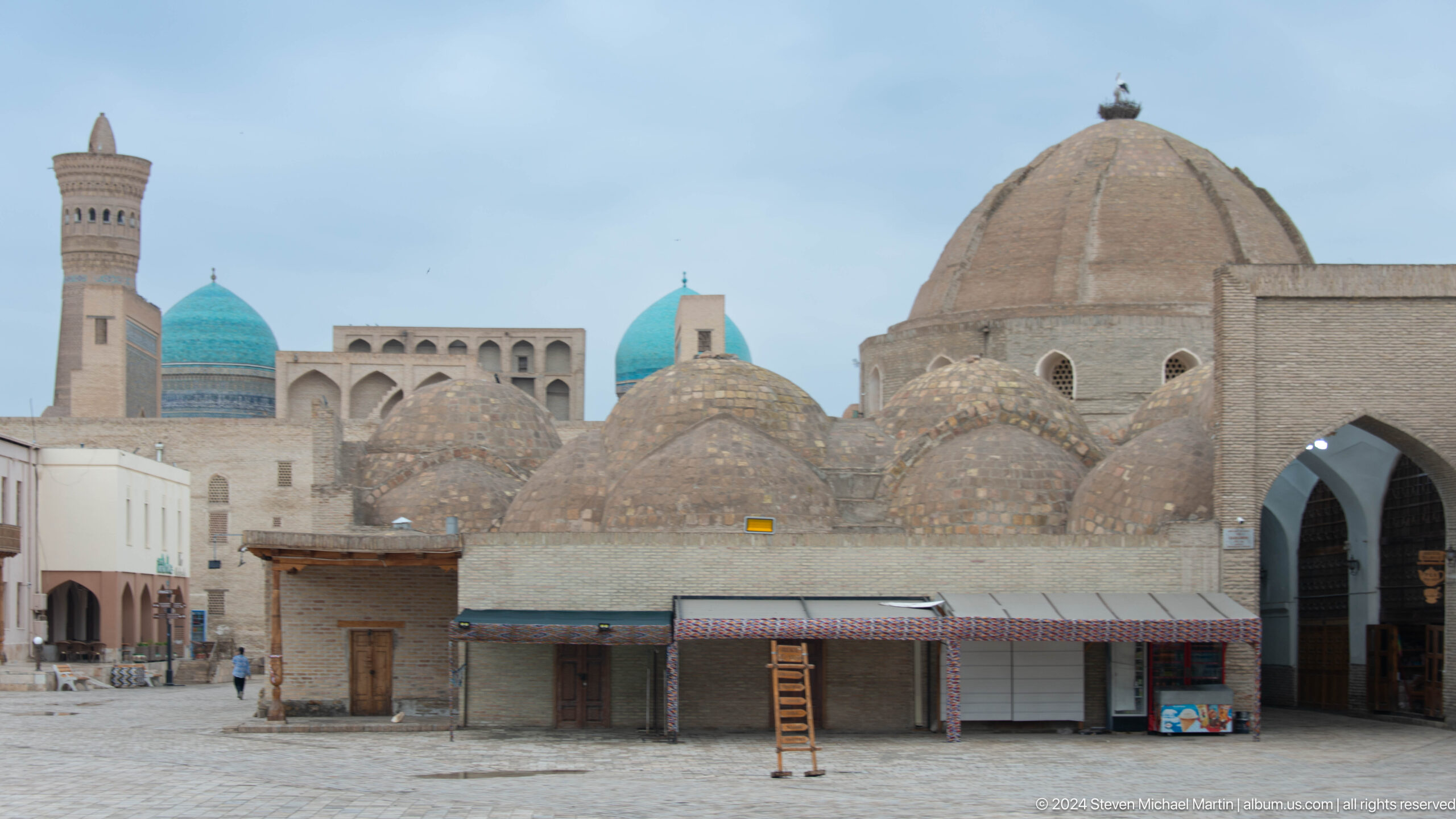
Historic trading domes in the historic center of Bukhara. The photograph records cluster of low brick domes above market roofs, emphasizing the city's layered brick construction, ornamental traditions, and the close relationship between religious, commercial, and civic spaces that developed along Central Asian trade networks.
Caption
Historic trading domes in the historic center of Bukhara. The photograph records cluster of low brick domes above market roofs, emphasizing the city's layered brick construction, ornamental traditions, and the close relationship between religious, commercial, and civic spaces that developed along Central Asian trade networks.

Tiled portal soffit in the historic center of Bukhara. The photograph records ornamented tiled arch soffit, emphasizing the city's layered brick construction, ornamental traditions, and the close relationship between religious, commercial, and civic spaces that developed along Central Asian trade networks.
Caption
Tiled portal soffit in the historic center of Bukhara. The photograph records ornamented tiled arch soffit, emphasizing the city's layered brick construction, ornamental traditions, and the close relationship between religious, commercial, and civic spaces that developed along Central Asian trade networks.

Street cats in historic Bukhara in the historic center of Bukhara. The photograph records three cats walking along brick ledge, emphasizing the city's layered brick construction, ornamental traditions, and the close relationship between religious, commercial, and civic spaces that developed along Central Asian trade networks.
Caption
Street cats in historic Bukhara in the historic center of Bukhara. The photograph records three cats walking along brick ledge, emphasizing the city's layered brick construction, ornamental traditions, and the close relationship between religious, commercial, and civic spaces that developed along Central Asian trade networks.
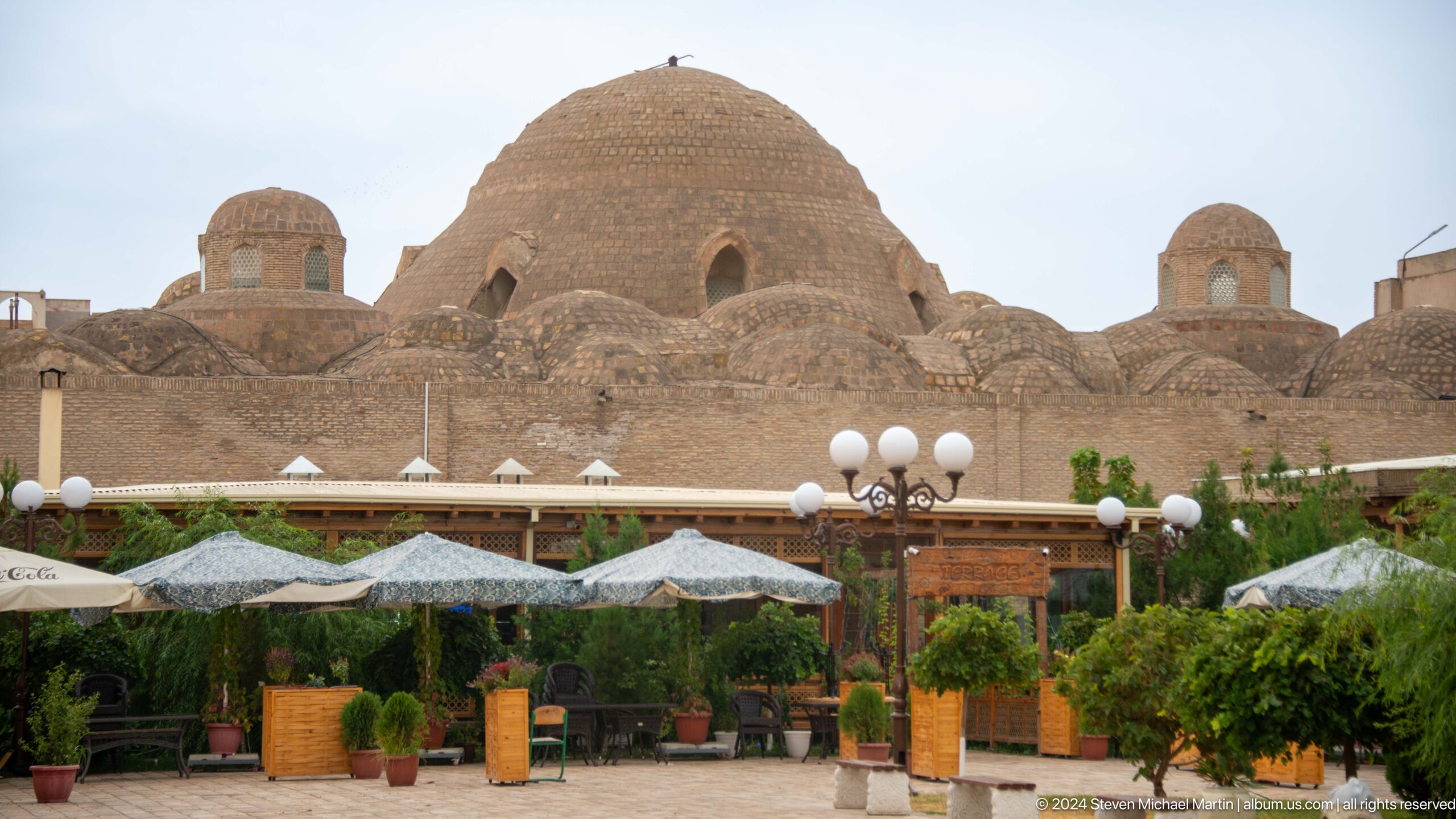
Historic trading dome in the historic center of Bukhara. The photograph records large brick trading dome behind cafe awnings, emphasizing the city's layered brick construction, ornamental traditions, and the close relationship between religious, commercial, and civic spaces that developed along Central Asian trade networks.
Caption
Historic trading dome in the historic center of Bukhara. The photograph records large brick trading dome behind cafe awnings, emphasizing the city's layered brick construction, ornamental traditions, and the close relationship between religious, commercial, and civic spaces that developed along Central Asian trade networks.
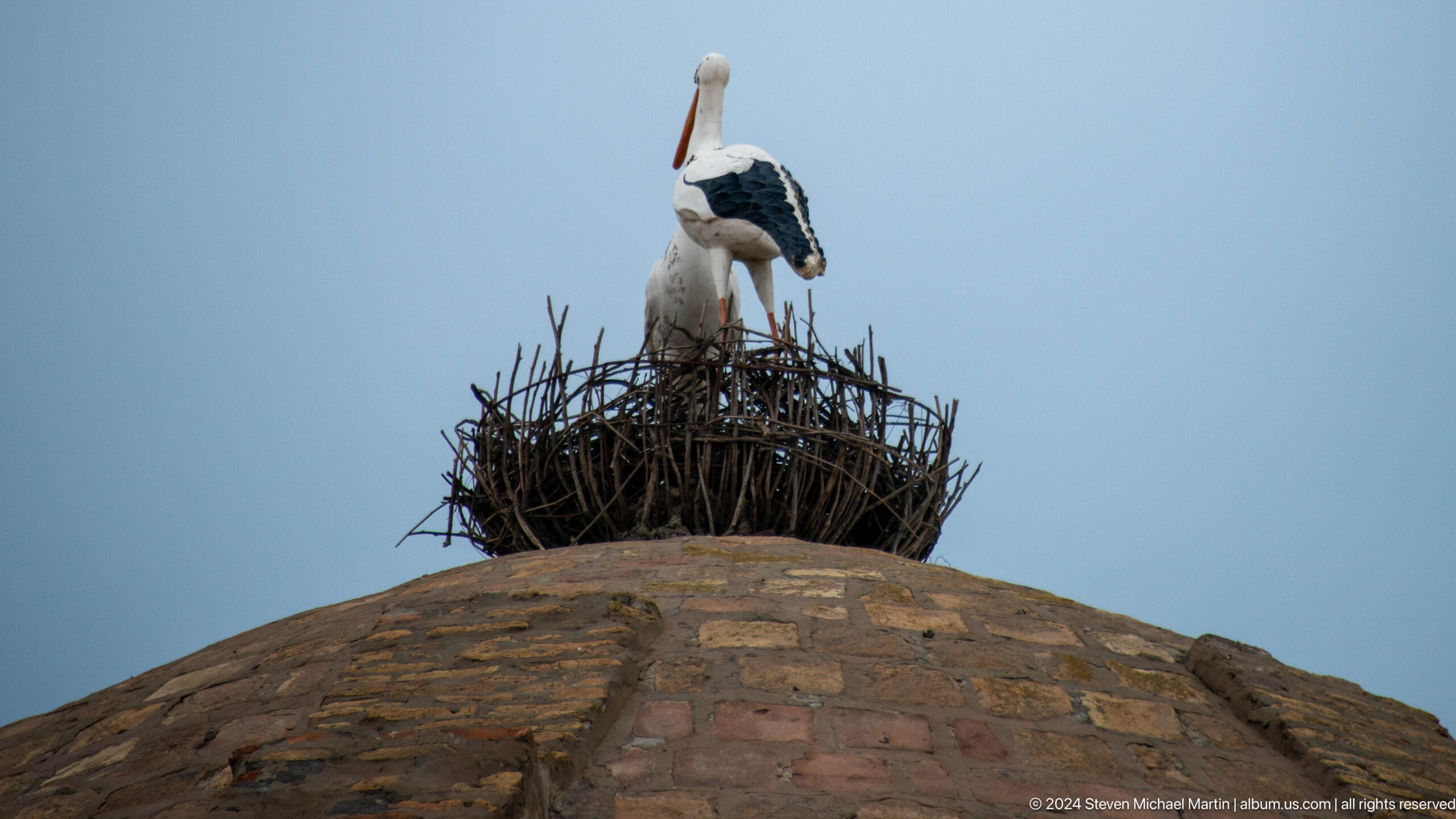
White stork nesting on historic dome in the historic center of Bukhara. The photograph records stork standing on nest atop brick dome, emphasizing the city's layered brick construction, ornamental traditions, and the close relationship between religious, commercial, and civic spaces that developed along Central Asian trade networks.
Caption
White stork nesting on historic dome in the historic center of Bukhara. The photograph records stork standing on nest atop brick dome, emphasizing the city's layered brick construction, ornamental traditions, and the close relationship between religious, commercial, and civic spaces that developed along Central Asian trade networks.
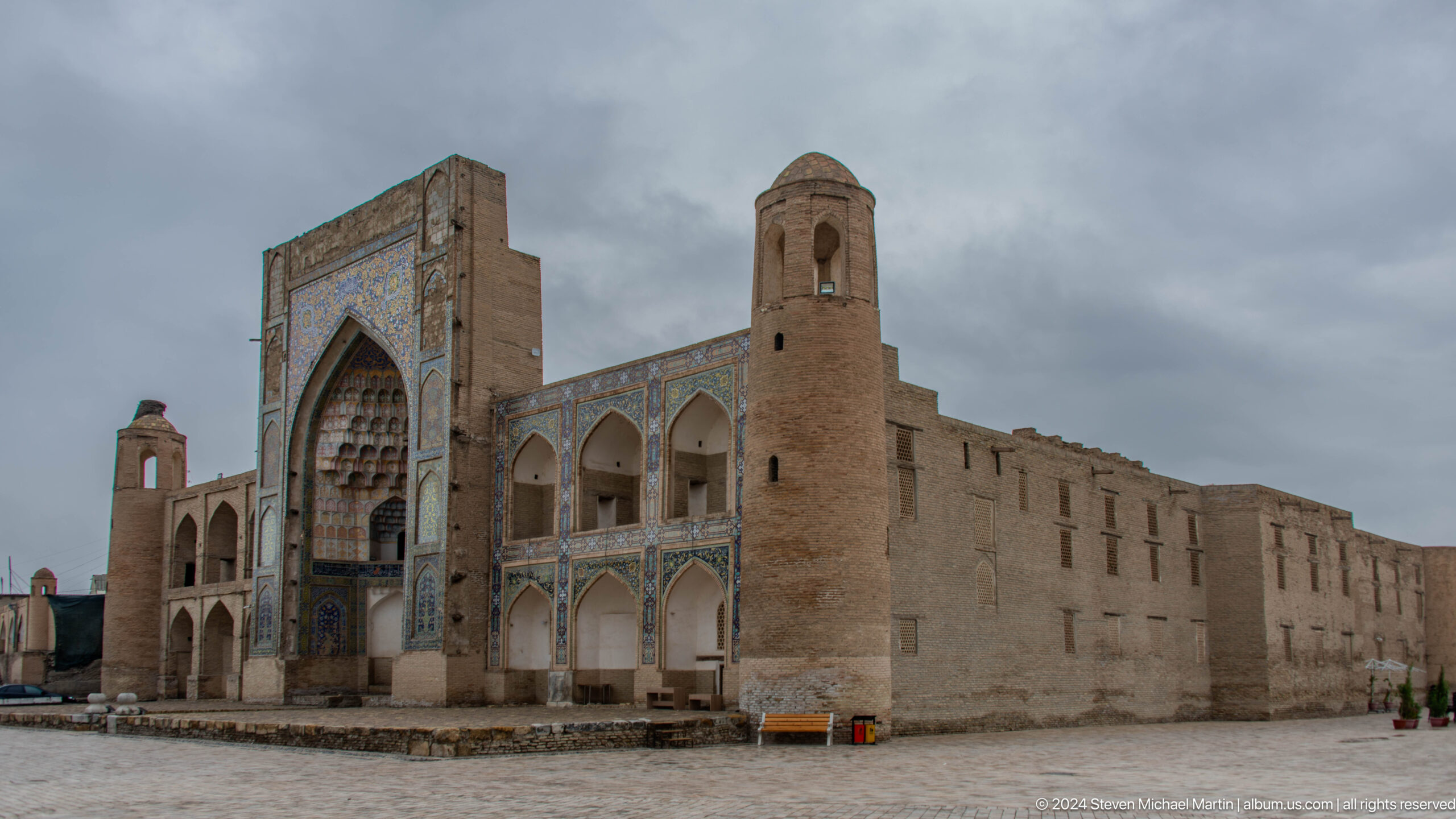
Poi Kalyan religious complex in the historic center of Bukhara. The photograph records monumental mosque facade and minaret under cloudy sky, emphasizing the city's layered brick construction, ornamental traditions, and the close relationship between religious, commercial, and civic spaces that developed along Central Asian trade networks.
Caption
Poi Kalyan religious complex in the historic center of Bukhara. The photograph records monumental mosque facade and minaret under cloudy sky, emphasizing the city's layered brick construction, ornamental traditions, and the close relationship between religious, commercial, and civic spaces that developed along Central Asian trade networks.

Islamic calligraphic tile panel in the historic center of Bukhara. The photograph records rectangular calligraphic tile panel above arch, emphasizing the city's layered brick construction, ornamental traditions, and the close relationship between religious, commercial, and civic spaces that developed along Central Asian trade networks.
Caption
Islamic calligraphic tile panel in the historic center of Bukhara. The photograph records rectangular calligraphic tile panel above arch, emphasizing the city's layered brick construction, ornamental traditions, and the close relationship between religious, commercial, and civic spaces that developed along Central Asian trade networks.

Kalyan Minaret in the historic center of Bukhara. The photograph records Kalyan Minaret between high brick walls, emphasizing the city's layered brick construction, ornamental traditions, and the close relationship between religious, commercial, and civic spaces that developed along Central Asian trade networks.
Caption
Kalyan Minaret in the historic center of Bukhara. The photograph records Kalyan Minaret between high brick walls, emphasizing the city's layered brick construction, ornamental traditions, and the close relationship between religious, commercial, and civic spaces that developed along Central Asian trade networks.

Mosaic-tiled entrance arch in the historic center of Bukhara. The photograph records pointed arch with dense blue mosaic tile, emphasizing the city's layered brick construction, ornamental traditions, and the close relationship between religious, commercial, and civic spaces that developed along Central Asian trade networks.
Caption
Mosaic-tiled entrance arch in the historic center of Bukhara. The photograph records pointed arch with dense blue mosaic tile, emphasizing the city's layered brick construction, ornamental traditions, and the close relationship between religious, commercial, and civic spaces that developed along Central Asian trade networks.
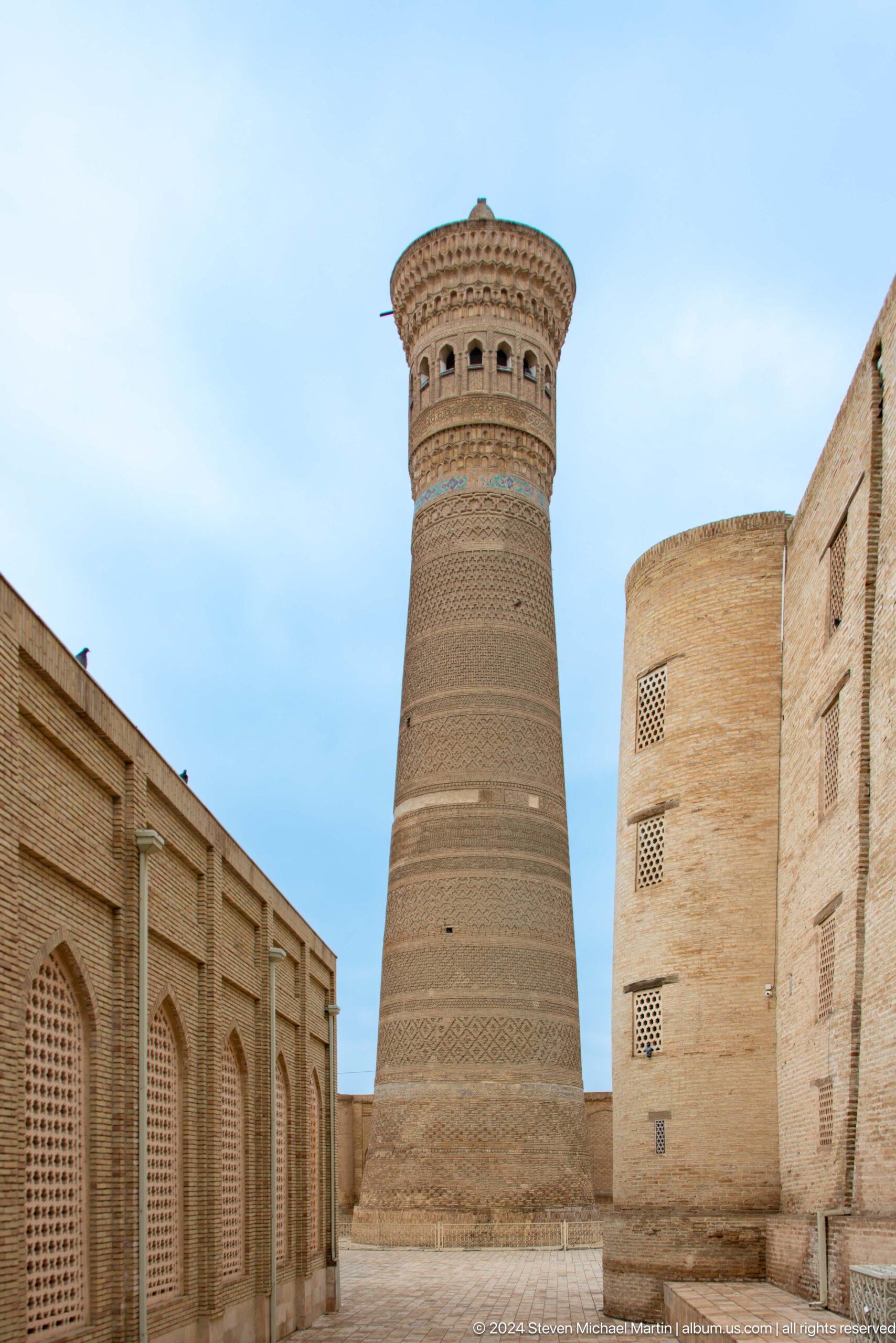
Kalyan Minaret in the historic center of Bukhara. The photograph records Kalyan Minaret rising between brick buildings, emphasizing the city's layered brick construction, ornamental traditions, and the close relationship between religious, commercial, and civic spaces that developed along Central Asian trade networks.
Caption
Kalyan Minaret in the historic center of Bukhara. The photograph records Kalyan Minaret rising between brick buildings, emphasizing the city's layered brick construction, ornamental traditions, and the close relationship between religious, commercial, and civic spaces that developed along Central Asian trade networks.

Kalyan Minaret in urban context in the historic center of Bukhara. The photograph records Kalyan Minaret framed by passage walls, emphasizing the city's layered brick construction, ornamental traditions, and the close relationship between religious, commercial, and civic spaces that developed along Central Asian trade networks.
Caption
Kalyan Minaret in urban context in the historic center of Bukhara. The photograph records Kalyan Minaret framed by passage walls, emphasizing the city's layered brick construction, ornamental traditions, and the close relationship between religious, commercial, and civic spaces that developed along Central Asian trade networks.
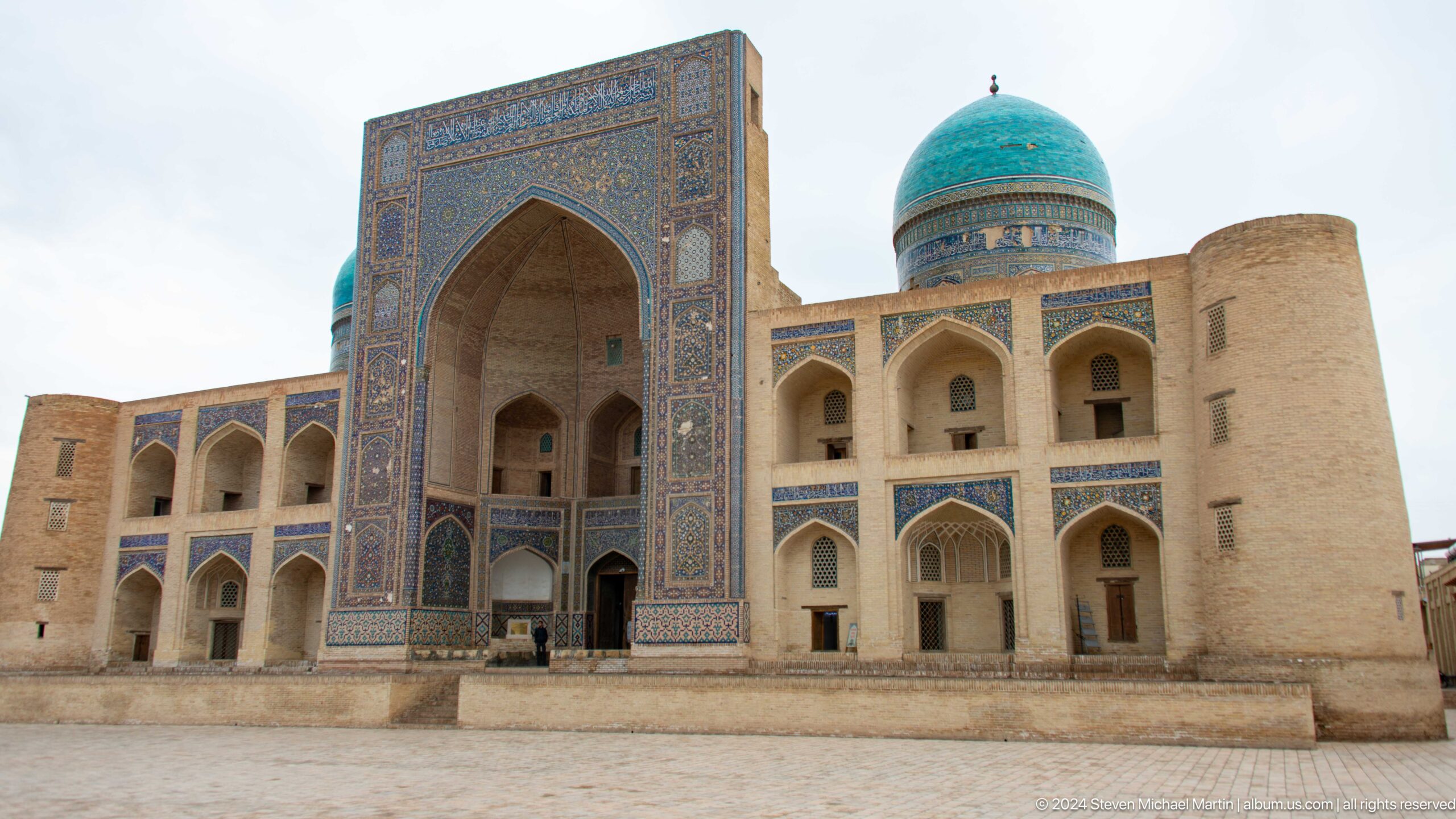
Mir-i-Arab Madrasa in the historic center of Bukhara. The photograph records Mir-i-Arab Madrasa facade with turquoise dome, emphasizing the city's layered brick construction, ornamental traditions, and the close relationship between religious, commercial, and civic spaces that developed along Central Asian trade networks.
Caption
Mir-i-Arab Madrasa in the historic center of Bukhara. The photograph records Mir-i-Arab Madrasa facade with turquoise dome, emphasizing the city's layered brick construction, ornamental traditions, and the close relationship between religious, commercial, and civic spaces that developed along Central Asian trade networks.
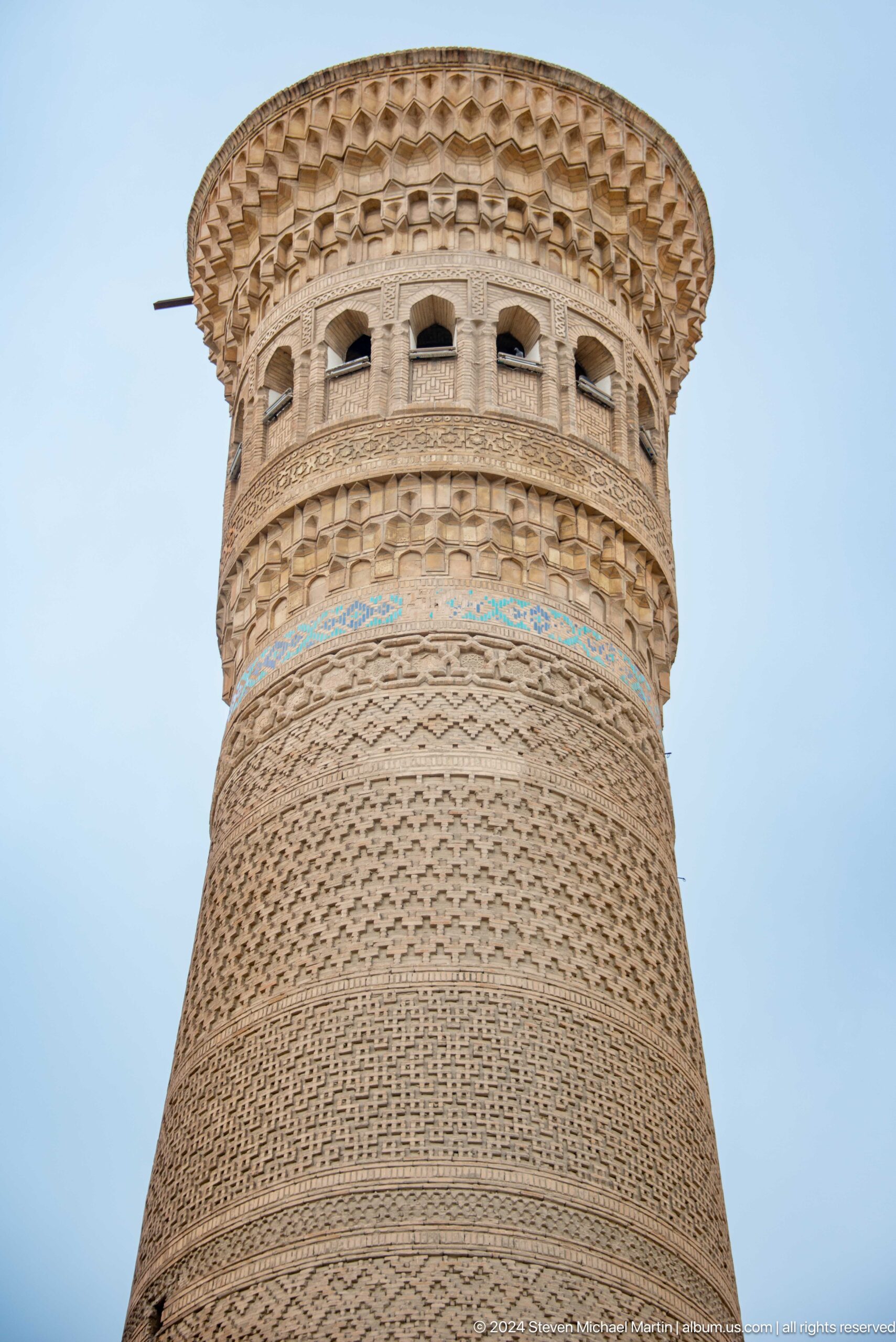
Kalyan Minaret brick ornament in the historic center of Bukhara. The photograph records close-up of carved brick bands on minaret, emphasizing the city's layered brick construction, ornamental traditions, and the close relationship between religious, commercial, and civic spaces that developed along Central Asian trade networks.
Caption
Kalyan Minaret brick ornament in the historic center of Bukhara. The photograph records close-up of carved brick bands on minaret, emphasizing the city's layered brick construction, ornamental traditions, and the close relationship between religious, commercial, and civic spaces that developed along Central Asian trade networks.
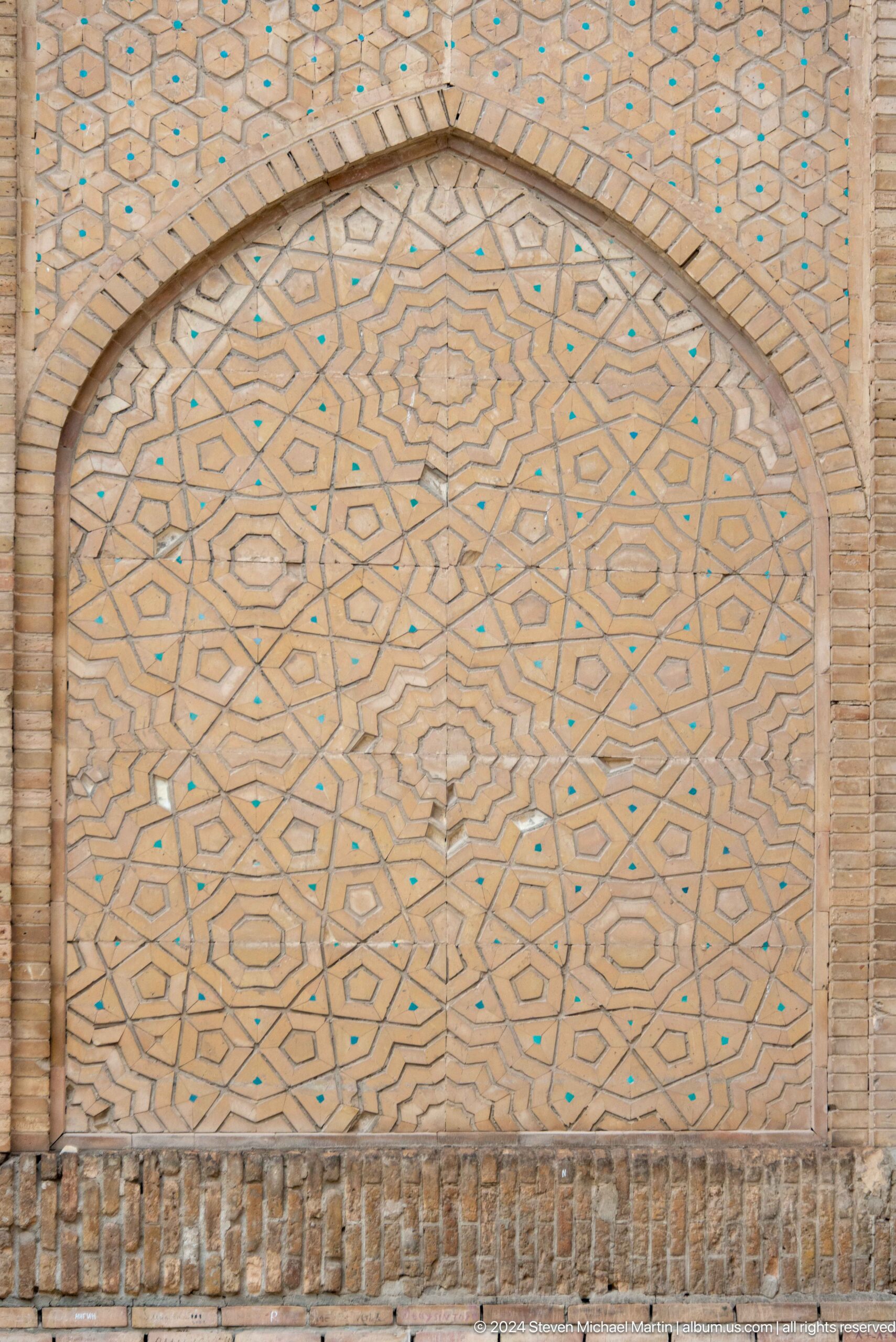
Geometric brickwork in the historic center of Bukhara. The photograph records close-up of geometric brick paving pattern, emphasizing the city's layered brick construction, ornamental traditions, and the close relationship between religious, commercial, and civic spaces that developed along Central Asian trade networks.
Caption
Geometric brickwork in the historic center of Bukhara. The photograph records close-up of geometric brick paving pattern, emphasizing the city's layered brick construction, ornamental traditions, and the close relationship between religious, commercial, and civic spaces that developed along Central Asian trade networks.
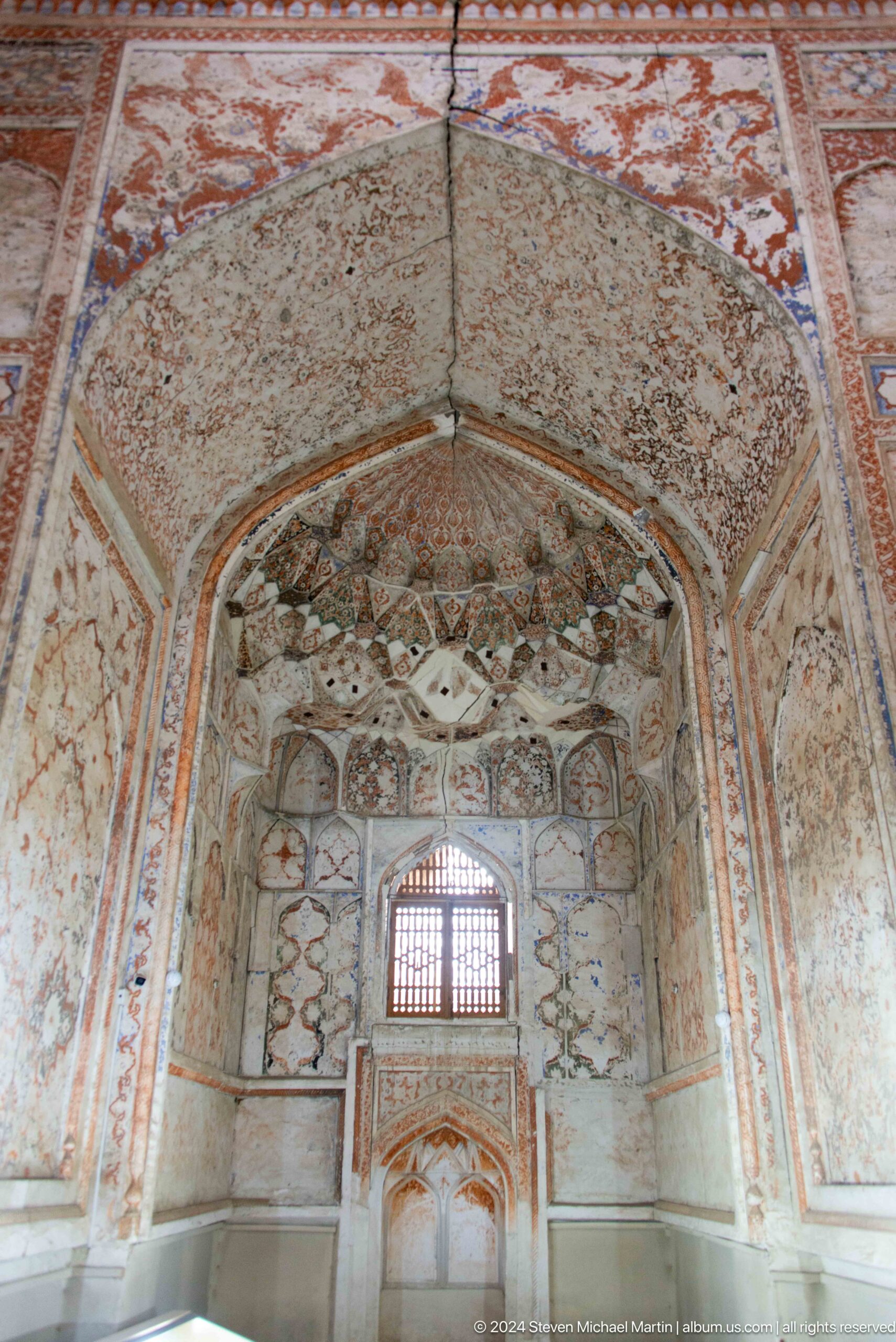
Historic painted vault in the historic center of Bukhara. The photograph records faded painted vault with geometric cells, emphasizing the city's layered brick construction, ornamental traditions, and the close relationship between religious, commercial, and civic spaces that developed along Central Asian trade networks.
Caption
Historic painted vault in the historic center of Bukhara. The photograph records faded painted vault with geometric cells, emphasizing the city's layered brick construction, ornamental traditions, and the close relationship between religious, commercial, and civic spaces that developed along Central Asian trade networks.
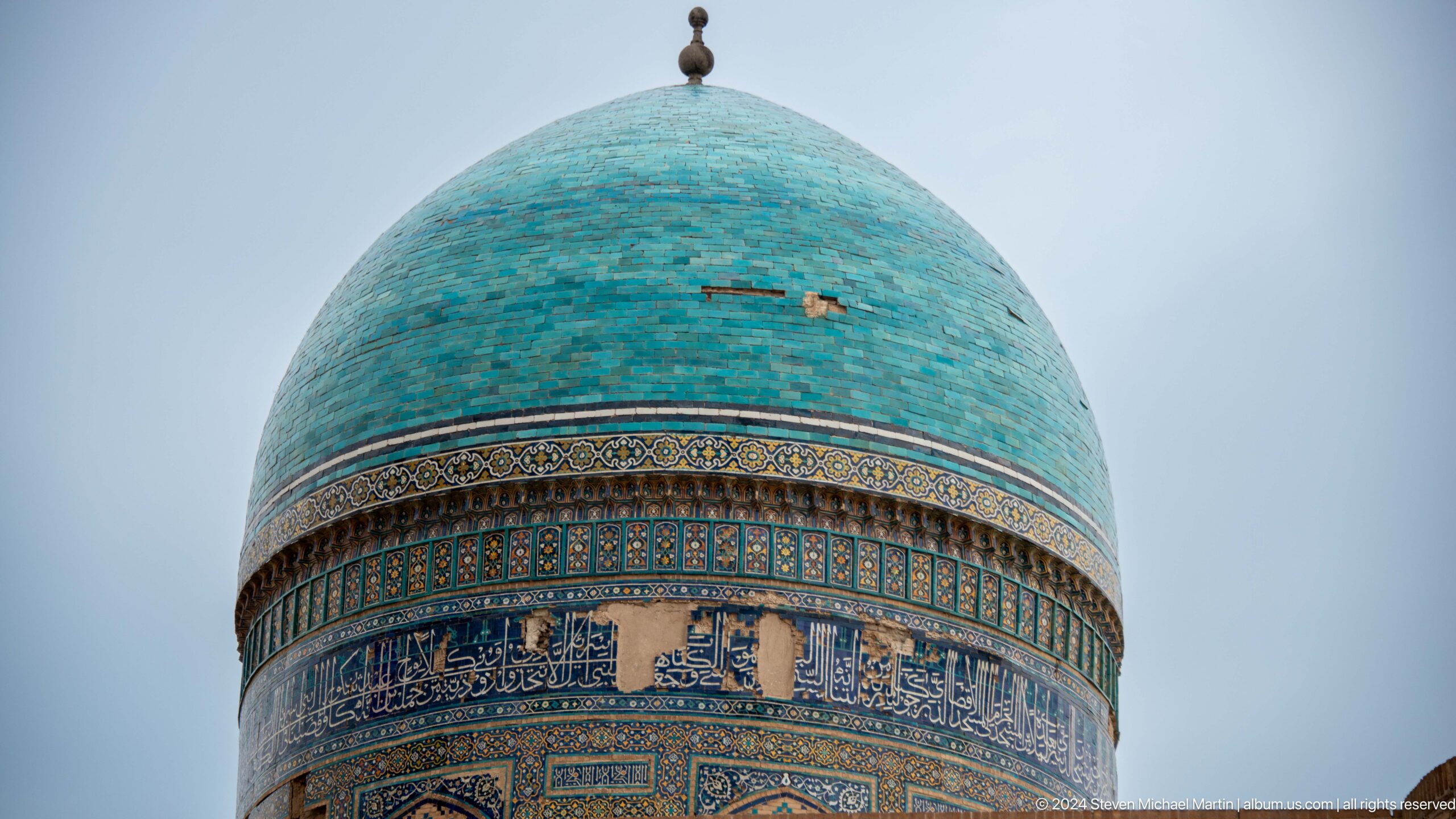
Mir-i-Arab Madrasa dome in the historic center of Bukhara. The photograph records turquoise dome with inscription band, emphasizing the city's layered brick construction, ornamental traditions, and the close relationship between religious, commercial, and civic spaces that developed along Central Asian trade networks.
Caption
Mir-i-Arab Madrasa dome in the historic center of Bukhara. The photograph records turquoise dome with inscription band, emphasizing the city's layered brick construction, ornamental traditions, and the close relationship between religious, commercial, and civic spaces that developed along Central Asian trade networks.

Mir-i-Arab Madrasa facade in the historic center of Bukhara. The photograph records frontal view of madrasa portal and two domes, emphasizing the city's layered brick construction, ornamental traditions, and the close relationship between religious, commercial, and civic spaces that developed along Central Asian trade networks.
Caption
Mir-i-Arab Madrasa facade in the historic center of Bukhara. The photograph records frontal view of madrasa portal and two domes, emphasizing the city's layered brick construction, ornamental traditions, and the close relationship between religious, commercial, and civic spaces that developed along Central Asian trade networks.
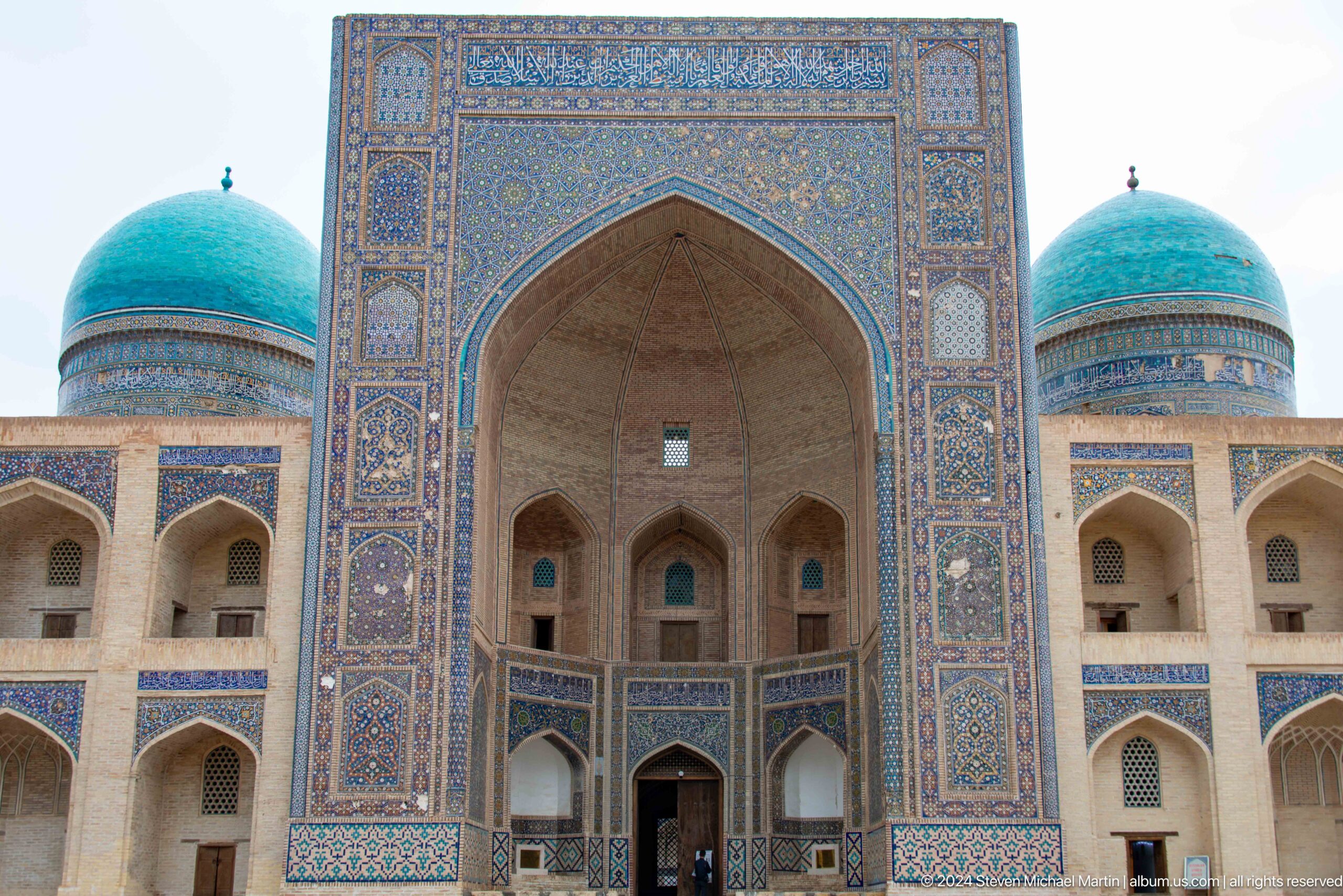
Mir-i-Arab Madrasa facade in the historic center of Bukhara. The photograph records central madrasa portal flanked by turquoise domes, emphasizing the city's layered brick construction, ornamental traditions, and the close relationship between religious, commercial, and civic spaces that developed along Central Asian trade networks.
Caption
Mir-i-Arab Madrasa facade in the historic center of Bukhara. The photograph records central madrasa portal flanked by turquoise domes, emphasizing the city's layered brick construction, ornamental traditions, and the close relationship between religious, commercial, and civic spaces that developed along Central Asian trade networks.

Historic madrasa entrance in the historic center of Bukhara. The photograph records small tiled portal set in long brick wall, emphasizing the city's layered brick construction, ornamental traditions, and the close relationship between religious, commercial, and civic spaces that developed along Central Asian trade networks.
Caption
Historic madrasa entrance in the historic center of Bukhara. The photograph records small tiled portal set in long brick wall, emphasizing the city's layered brick construction, ornamental traditions, and the close relationship between religious, commercial, and civic spaces that developed along Central Asian trade networks.

Tiled monumental portal in the historic center of Bukhara. The photograph records frontal view of tiled entrance portal, emphasizing the city's layered brick construction, ornamental traditions, and the close relationship between religious, commercial, and civic spaces that developed along Central Asian trade networks.
Caption
Tiled monumental portal in the historic center of Bukhara. The photograph records frontal view of tiled entrance portal, emphasizing the city's layered brick construction, ornamental traditions, and the close relationship between religious, commercial, and civic spaces that developed along Central Asian trade networks.
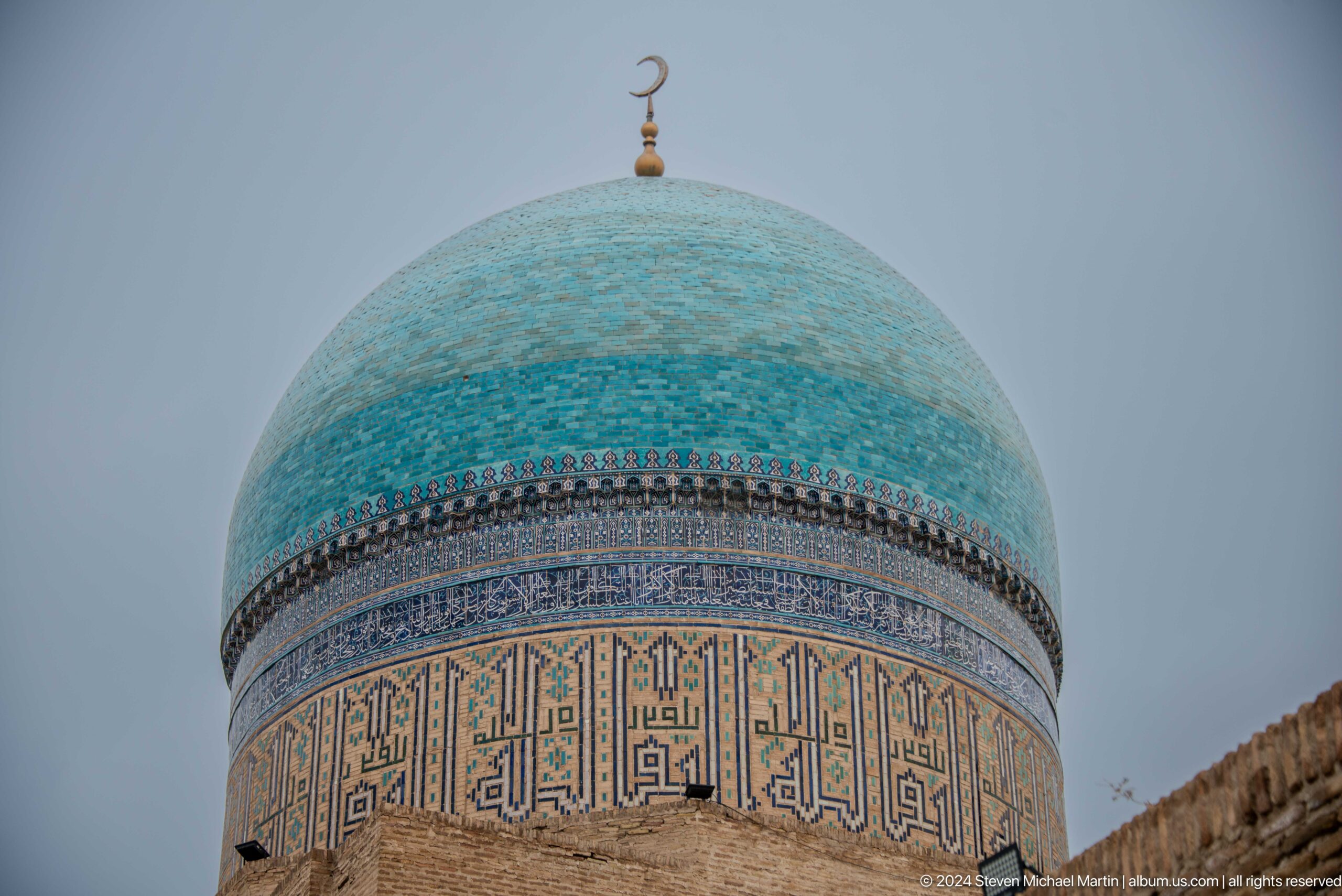
Islamic dome decoration in the historic center of Bukhara. The photograph records turquoise dome with calligraphic band, emphasizing the city's layered brick construction, ornamental traditions, and the close relationship between religious, commercial, and civic spaces that developed along Central Asian trade networks.
Caption
Islamic dome decoration in the historic center of Bukhara. The photograph records turquoise dome with calligraphic band, emphasizing the city's layered brick construction, ornamental traditions, and the close relationship between religious, commercial, and civic spaces that developed along Central Asian trade networks.

Dome finial in the historic center of Bukhara. The photograph records crescent finial atop turquoise dome, emphasizing the city's layered brick construction, ornamental traditions, and the close relationship between religious, commercial, and civic spaces that developed along Central Asian trade networks.
Caption
Dome finial in the historic center of Bukhara. The photograph records crescent finial atop turquoise dome, emphasizing the city's layered brick construction, ornamental traditions, and the close relationship between religious, commercial, and civic spaces that developed along Central Asian trade networks.

UNESCO World Heritage plaque in the historic center of Bukhara. The photograph records multilingual UNESCO heritage plaque, emphasizing the city's layered brick construction, ornamental traditions, and the close relationship between religious, commercial, and civic spaces that developed along Central Asian trade networks.
Caption
UNESCO World Heritage plaque in the historic center of Bukhara. The photograph records multilingual UNESCO heritage plaque, emphasizing the city's layered brick construction, ornamental traditions, and the close relationship between religious, commercial, and civic spaces that developed along Central Asian trade networks.

Archaeological research notice in the historic center of Bukhara. The photograph records archaeological research notice sign, emphasizing the city's layered brick construction, ornamental traditions, and the close relationship between religious, commercial, and civic spaces that developed along Central Asian trade networks.
Caption
Archaeological research notice in the historic center of Bukhara. The photograph records archaeological research notice sign, emphasizing the city's layered brick construction, ornamental traditions, and the close relationship between religious, commercial, and civic spaces that developed along Central Asian trade networks.

Archaeological excavation in the historic center of Bukhara. The photograph records excavated masonry and chambers, emphasizing the city's layered brick construction, ornamental traditions, and the close relationship between religious, commercial, and civic spaces that developed along Central Asian trade networks.
Caption
Archaeological excavation in the historic center of Bukhara. The photograph records excavated masonry and chambers, emphasizing the city's layered brick construction, ornamental traditions, and the close relationship between religious, commercial, and civic spaces that developed along Central Asian trade networks.
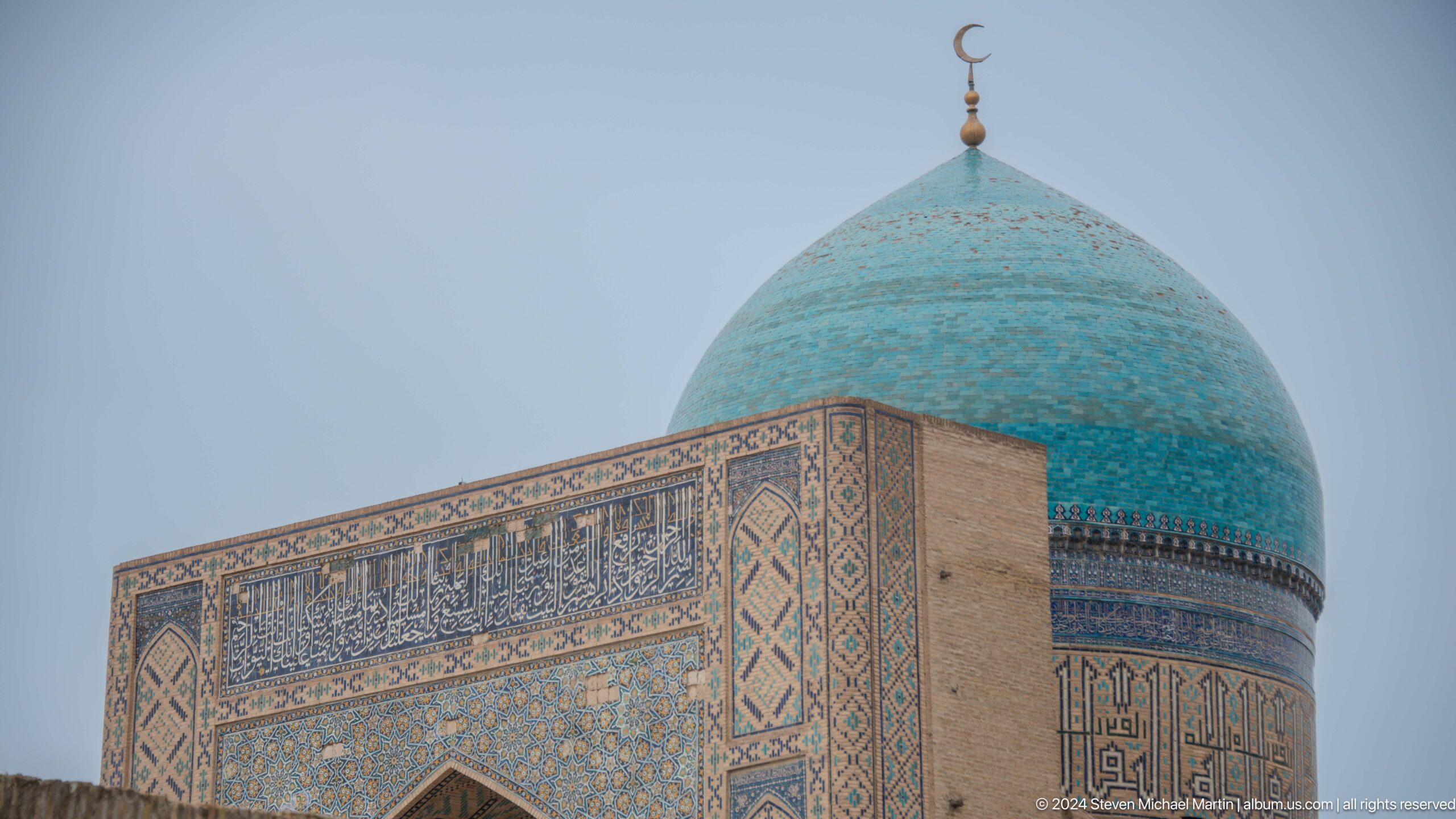
Madrasa dome and tiled facade in the historic center of Bukhara. The photograph records turquoise dome behind patterned parapet, emphasizing the city's layered brick construction, ornamental traditions, and the close relationship between religious, commercial, and civic spaces that developed along Central Asian trade networks.
Caption
Madrasa dome and tiled facade in the historic center of Bukhara. The photograph records turquoise dome behind patterned parapet, emphasizing the city's layered brick construction, ornamental traditions, and the close relationship between religious, commercial, and civic spaces that developed along Central Asian trade networks.

Poi Kalyan ensemble in the historic center of Bukhara. The photograph records visitors crossing Poi Kalyan square, emphasizing the city's layered brick construction, ornamental traditions, and the close relationship between religious, commercial, and civic spaces that developed along Central Asian trade networks.
Caption
Poi Kalyan ensemble in the historic center of Bukhara. The photograph records visitors crossing Poi Kalyan square, emphasizing the city's layered brick construction, ornamental traditions, and the close relationship between religious, commercial, and civic spaces that developed along Central Asian trade networks.
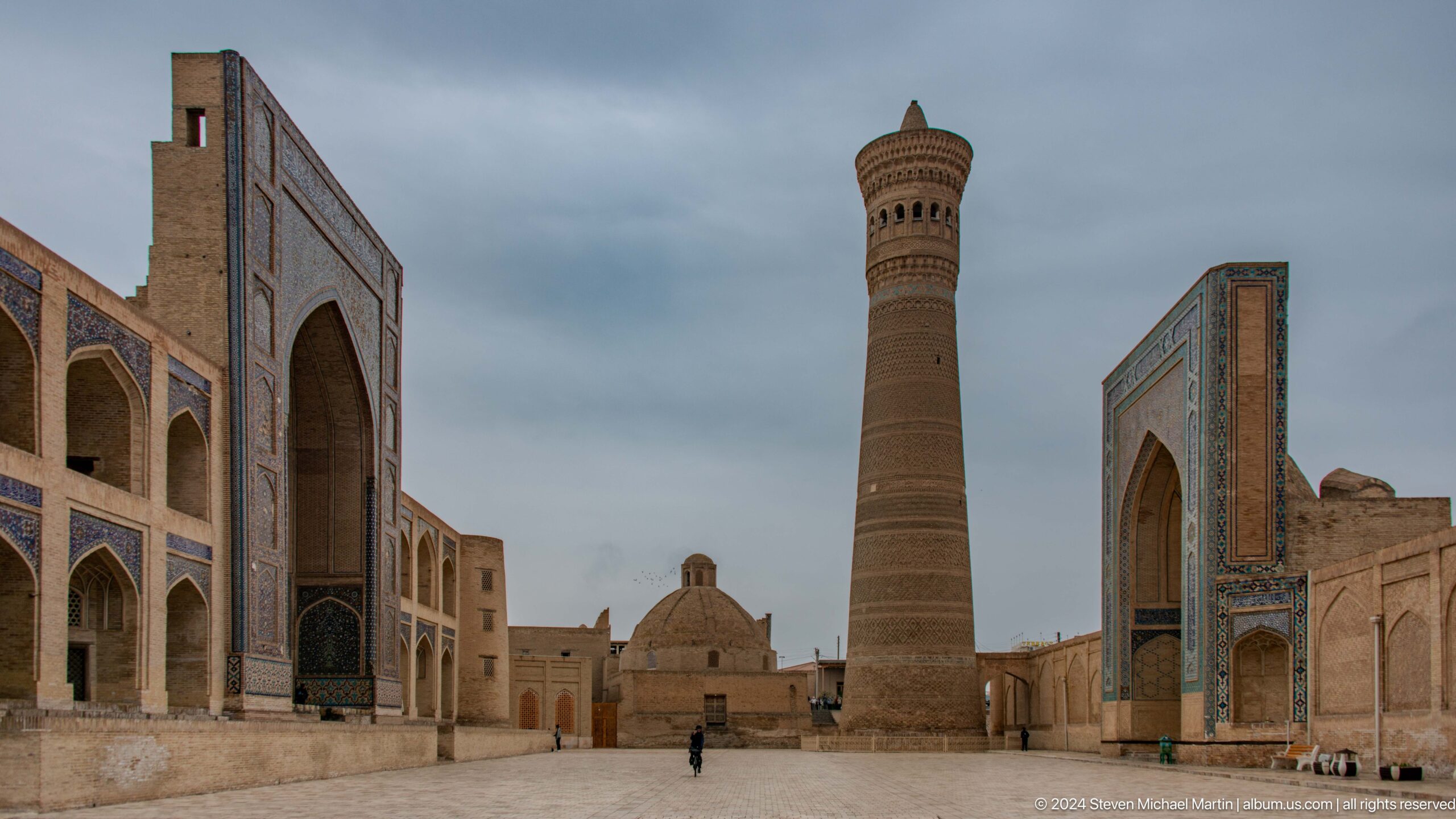
Poi Kalyan architectural ensemble in the historic center of Bukhara. The photograph records Kalyan Minaret and mosque portal across plaza, emphasizing the city's layered brick construction, ornamental traditions, and the close relationship between religious, commercial, and civic spaces that developed along Central Asian trade networks.
Caption
Poi Kalyan architectural ensemble in the historic center of Bukhara. The photograph records Kalyan Minaret and mosque portal across plaza, emphasizing the city's layered brick construction, ornamental traditions, and the close relationship between religious, commercial, and civic spaces that developed along Central Asian trade networks.

Textile market interior in the historic center of Bukhara. The photograph records indoor carpet and textile market with shoppers, emphasizing the city's layered brick construction, ornamental traditions, and the close relationship between religious, commercial, and civic spaces that developed along Central Asian trade networks.
Caption
Textile market interior in the historic center of Bukhara. The photograph records indoor carpet and textile market with shoppers, emphasizing the city's layered brick construction, ornamental traditions, and the close relationship between religious, commercial, and civic spaces that developed along Central Asian trade networks.

Carpet market pavilion in the historic center of Bukhara. The photograph records open pavilion displaying carpets, emphasizing the city's layered brick construction, ornamental traditions, and the close relationship between religious, commercial, and civic spaces that developed along Central Asian trade networks.
Caption
Carpet market pavilion in the historic center of Bukhara. The photograph records open pavilion displaying carpets, emphasizing the city's layered brick construction, ornamental traditions, and the close relationship between religious, commercial, and civic spaces that developed along Central Asian trade networks.
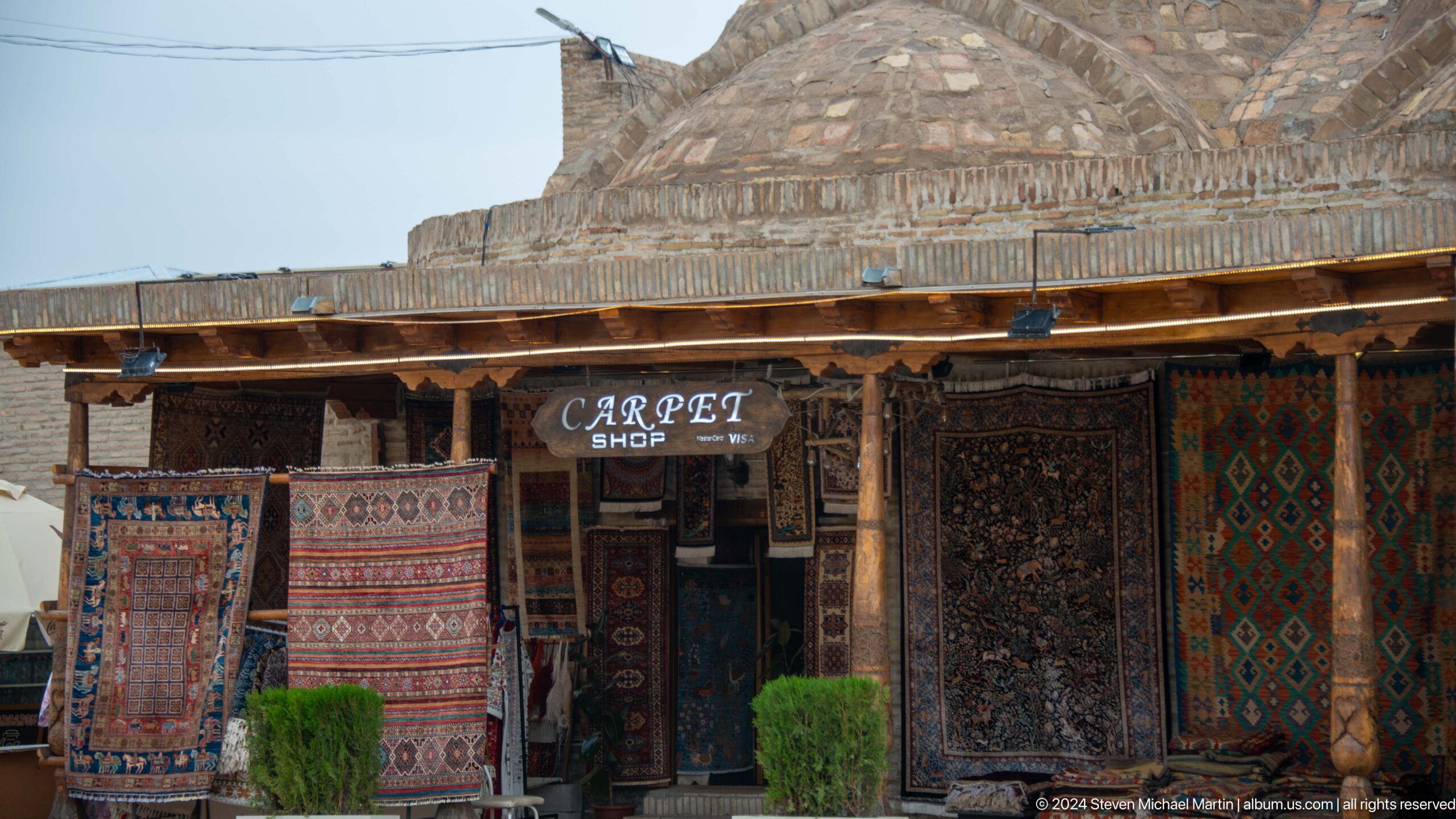
Traditional carpet shop in the historic center of Bukhara. The photograph records carpet shop beneath carved wooden canopy, emphasizing the city's layered brick construction, ornamental traditions, and the close relationship between religious, commercial, and civic spaces that developed along Central Asian trade networks.
Caption
Traditional carpet shop in the historic center of Bukhara. The photograph records carpet shop beneath carved wooden canopy, emphasizing the city's layered brick construction, ornamental traditions, and the close relationship between religious, commercial, and civic spaces that developed along Central Asian trade networks.

Historic trading dome in the historic center of Bukhara. The photograph records weathered brick dome with small openings, emphasizing the city's layered brick construction, ornamental traditions, and the close relationship between religious, commercial, and civic spaces that developed along Central Asian trade networks.
Caption
Historic trading dome in the historic center of Bukhara. The photograph records weathered brick dome with small openings, emphasizing the city's layered brick construction, ornamental traditions, and the close relationship between religious, commercial, and civic spaces that developed along Central Asian trade networks.

Historic madrasa courtyard in the historic center of Bukhara. The photograph records courtyard with trees before monumental portal, emphasizing the city's layered brick construction, ornamental traditions, and the close relationship between religious, commercial, and civic spaces that developed along Central Asian trade networks.
Caption
Historic madrasa courtyard in the historic center of Bukhara. The photograph records courtyard with trees before monumental portal, emphasizing the city's layered brick construction, ornamental traditions, and the close relationship between religious, commercial, and civic spaces that developed along Central Asian trade networks.
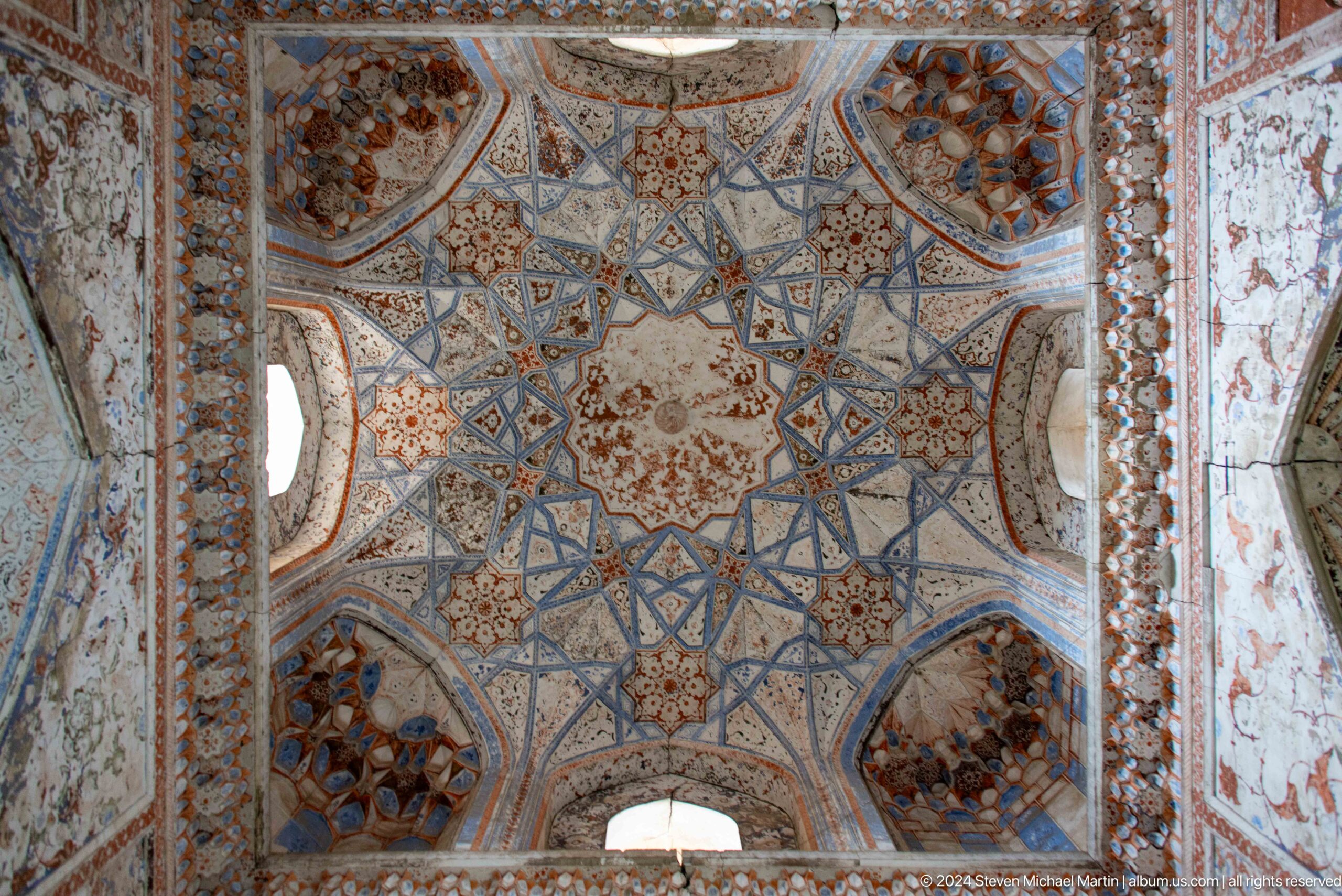
Decorated Islamic ceiling in the historic center of Bukhara. The photograph records painted star-pattern ceiling with arched openings, emphasizing the city's layered brick construction, ornamental traditions, and the close relationship between religious, commercial, and civic spaces that developed along Central Asian trade networks.
Caption
Decorated Islamic ceiling in the historic center of Bukhara. The photograph records painted star-pattern ceiling with arched openings, emphasizing the city's layered brick construction, ornamental traditions, and the close relationship between religious, commercial, and civic spaces that developed along Central Asian trade networks.
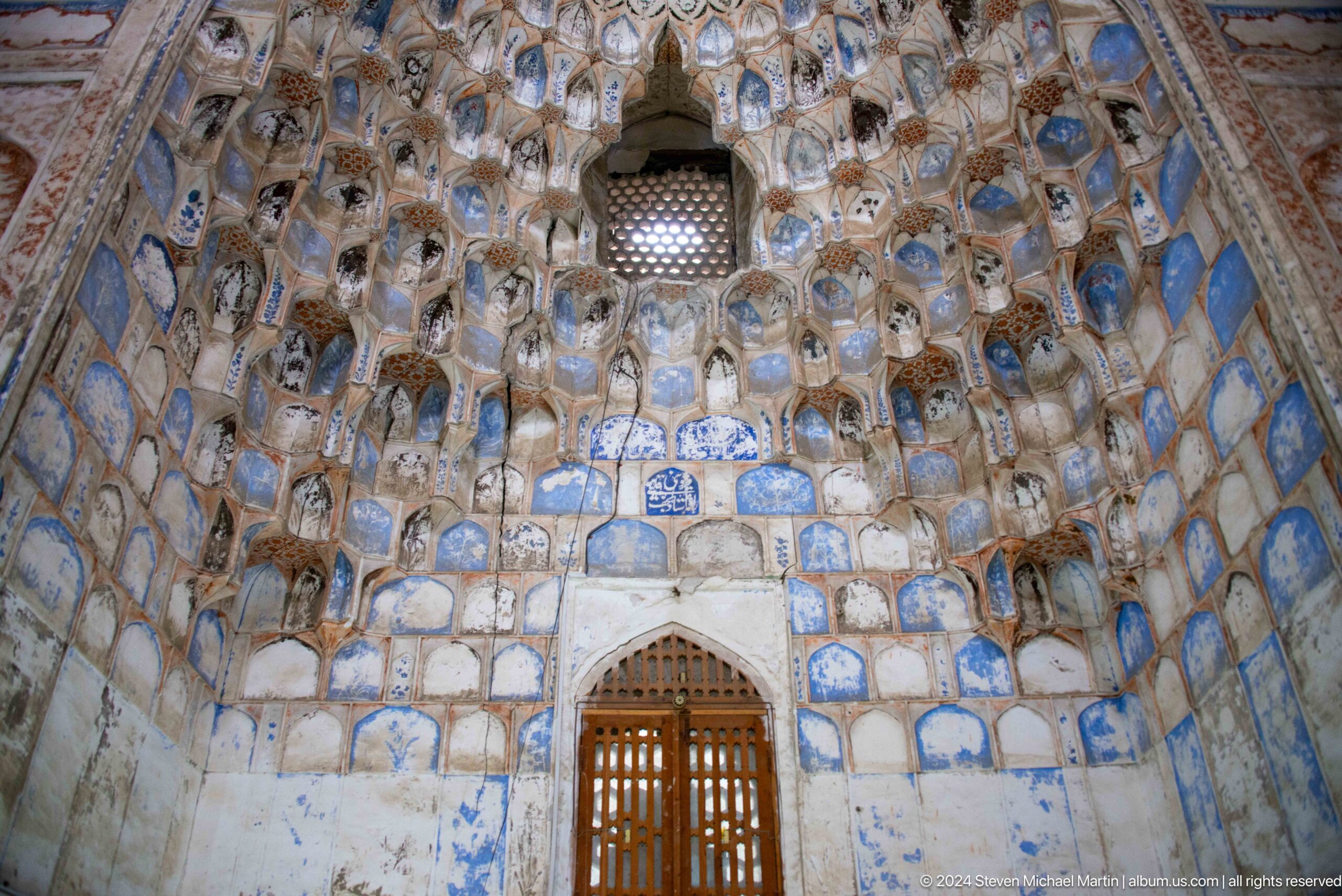
Muqarnas interior niche in the historic center of Bukhara. The photograph records muqarnas niche surrounding small window, emphasizing the city's layered brick construction, ornamental traditions, and the close relationship between religious, commercial, and civic spaces that developed along Central Asian trade networks.
Caption
Muqarnas interior niche in the historic center of Bukhara. The photograph records muqarnas niche surrounding small window, emphasizing the city's layered brick construction, ornamental traditions, and the close relationship between religious, commercial, and civic spaces that developed along Central Asian trade networks.
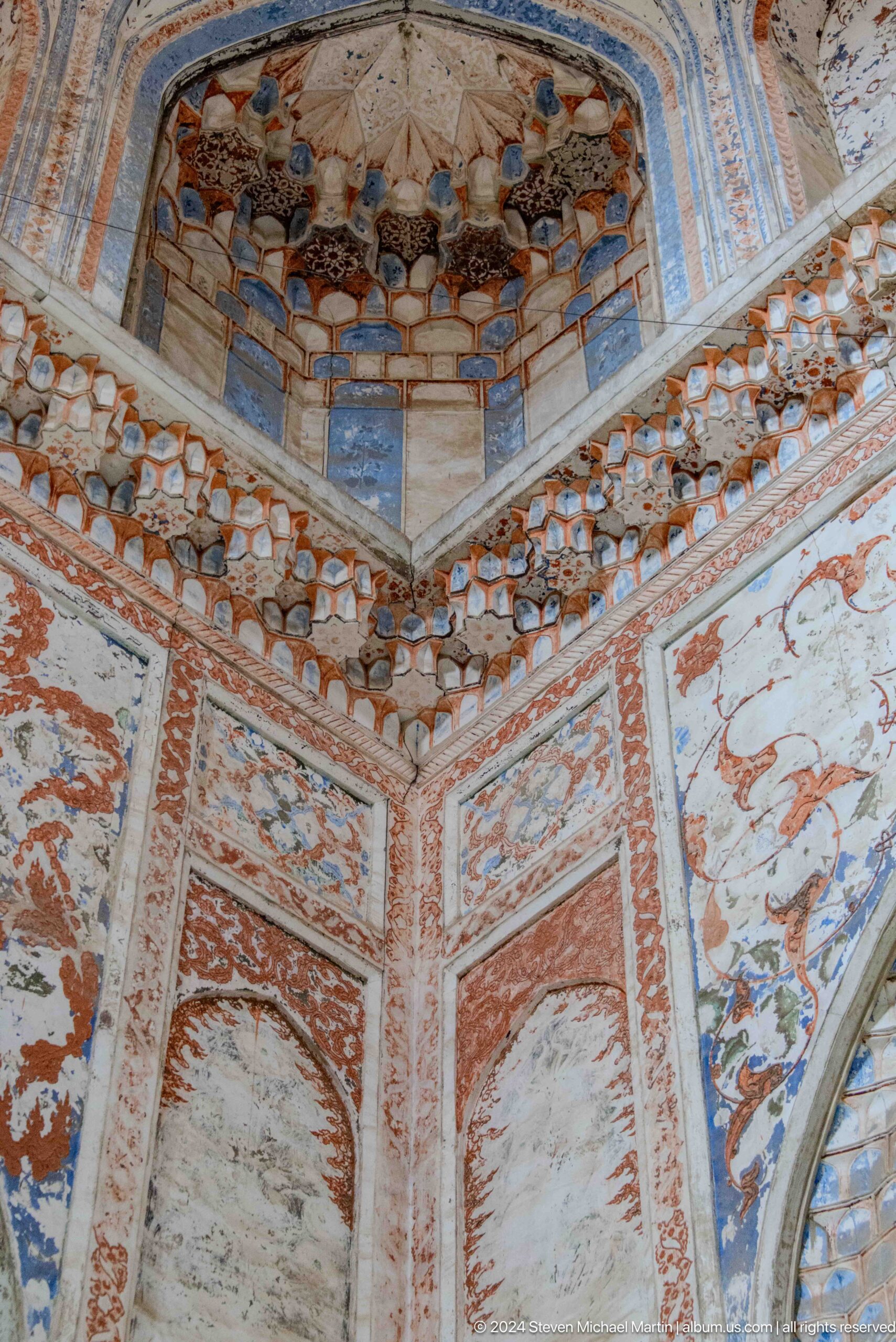
Decorative interior plasterwork in the historic center of Bukhara. The photograph records painted wall and ceiling corner with floral bands, emphasizing the city's layered brick construction, ornamental traditions, and the close relationship between religious, commercial, and civic spaces that developed along Central Asian trade networks.
Caption
Decorative interior plasterwork in the historic center of Bukhara. The photograph records painted wall and ceiling corner with floral bands, emphasizing the city's layered brick construction, ornamental traditions, and the close relationship between religious, commercial, and civic spaces that developed along Central Asian trade networks.

Historic plastered interior in the historic center of Bukhara. The photograph records faded plaster arches in shallow interior bay, emphasizing the city's layered brick construction, ornamental traditions, and the close relationship between religious, commercial, and civic spaces that developed along Central Asian trade networks.
Caption
Historic plastered interior in the historic center of Bukhara. The photograph records faded plaster arches in shallow interior bay, emphasizing the city's layered brick construction, ornamental traditions, and the close relationship between religious, commercial, and civic spaces that developed along Central Asian trade networks.

Chor Minor in the historic center of Bukhara. The photograph records Chor Minor towers partly hidden by trees, emphasizing the city's layered brick construction, ornamental traditions, and the close relationship between religious, commercial, and civic spaces that developed along Central Asian trade networks.
Caption
Chor Minor in the historic center of Bukhara. The photograph records Chor Minor towers partly hidden by trees, emphasizing the city's layered brick construction, ornamental traditions, and the close relationship between religious, commercial, and civic spaces that developed along Central Asian trade networks.

Painted muqarnas detail in the historic center of Bukhara. The photograph records close view of orange and blue muqarnas cells, emphasizing the city's layered brick construction, ornamental traditions, and the close relationship between religious, commercial, and civic spaces that developed along Central Asian trade networks.
Caption
Painted muqarnas detail in the historic center of Bukhara. The photograph records close view of orange and blue muqarnas cells, emphasizing the city's layered brick construction, ornamental traditions, and the close relationship between religious, commercial, and civic spaces that developed along Central Asian trade networks.

Historic ornamental vault in the historic center of Bukhara. The photograph records ornate vault with central rosette and faded murals, emphasizing the city's layered brick construction, ornamental traditions, and the close relationship between religious, commercial, and civic spaces that developed along Central Asian trade networks.
Caption
Historic ornamental vault in the historic center of Bukhara. The photograph records ornate vault with central rosette and faded murals, emphasizing the city's layered brick construction, ornamental traditions, and the close relationship between religious, commercial, and civic spaces that developed along Central Asian trade networks.
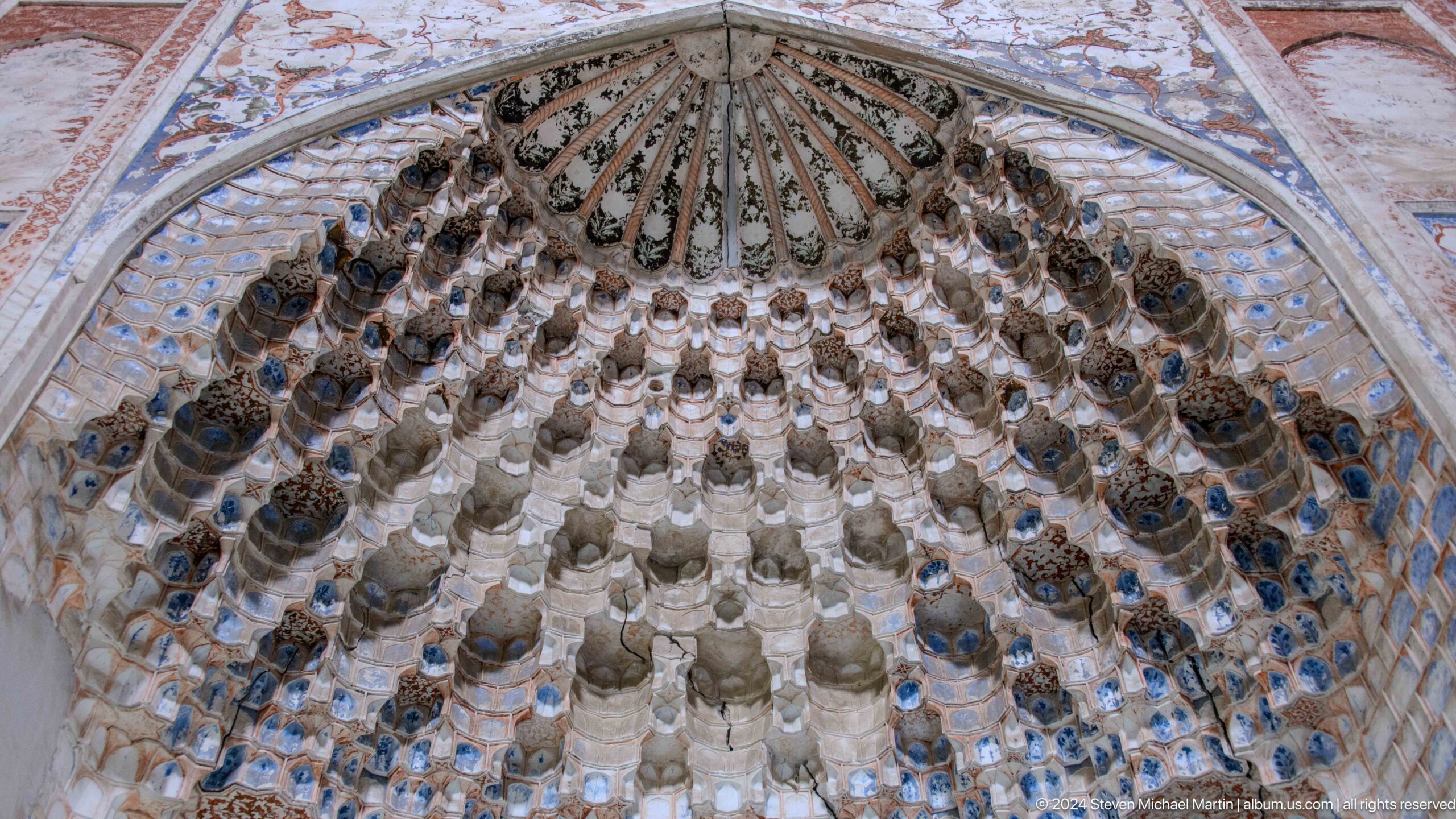
Muqarnas dome in the historic center of Bukhara. The photograph records dense gray muqarnas dome viewed upward, emphasizing the city's layered brick construction, ornamental traditions, and the close relationship between religious, commercial, and civic spaces that developed along Central Asian trade networks.
Caption
Muqarnas dome in the historic center of Bukhara. The photograph records dense gray muqarnas dome viewed upward, emphasizing the city's layered brick construction, ornamental traditions, and the close relationship between religious, commercial, and civic spaces that developed along Central Asian trade networks.
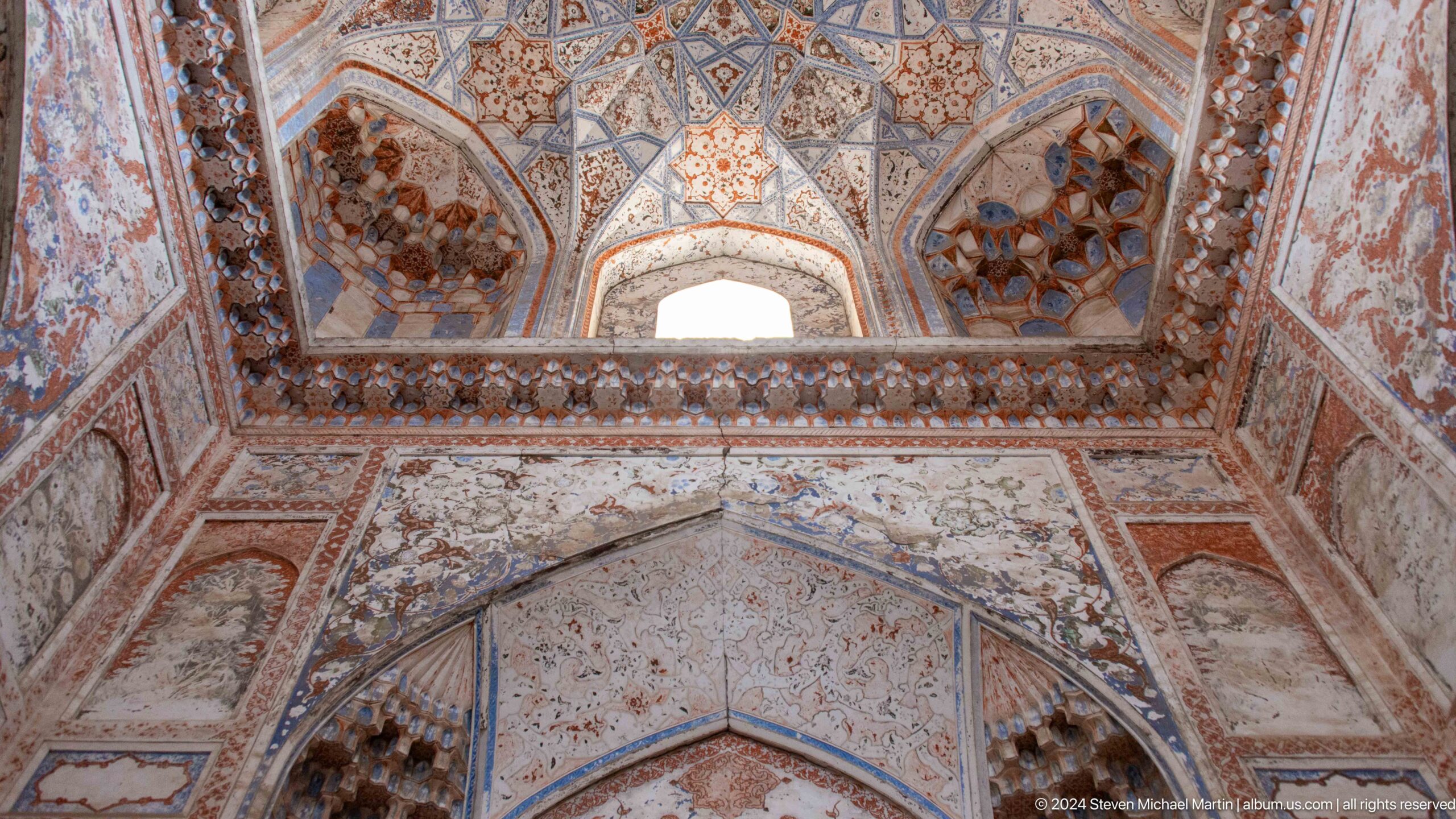
Decorated interior ceiling in the historic center of Bukhara. The photograph records ornamented ceiling with clerestory window, emphasizing the city's layered brick construction, ornamental traditions, and the close relationship between religious, commercial, and civic spaces that developed along Central Asian trade networks.
Caption
Decorated interior ceiling in the historic center of Bukhara. The photograph records ornamented ceiling with clerestory window, emphasizing the city's layered brick construction, ornamental traditions, and the close relationship between religious, commercial, and civic spaces that developed along Central Asian trade networks.

Islamic calligraphic embroidery in the historic center of Bukhara. The photograph records embroidered panel with Arabic word Allah, emphasizing the city's layered brick construction, ornamental traditions, and the close relationship between religious, commercial, and civic spaces that developed along Central Asian trade networks.
Caption
Islamic calligraphic embroidery in the historic center of Bukhara. The photograph records embroidered panel with Arabic word Allah, emphasizing the city's layered brick construction, ornamental traditions, and the close relationship between religious, commercial, and civic spaces that developed along Central Asian trade networks.
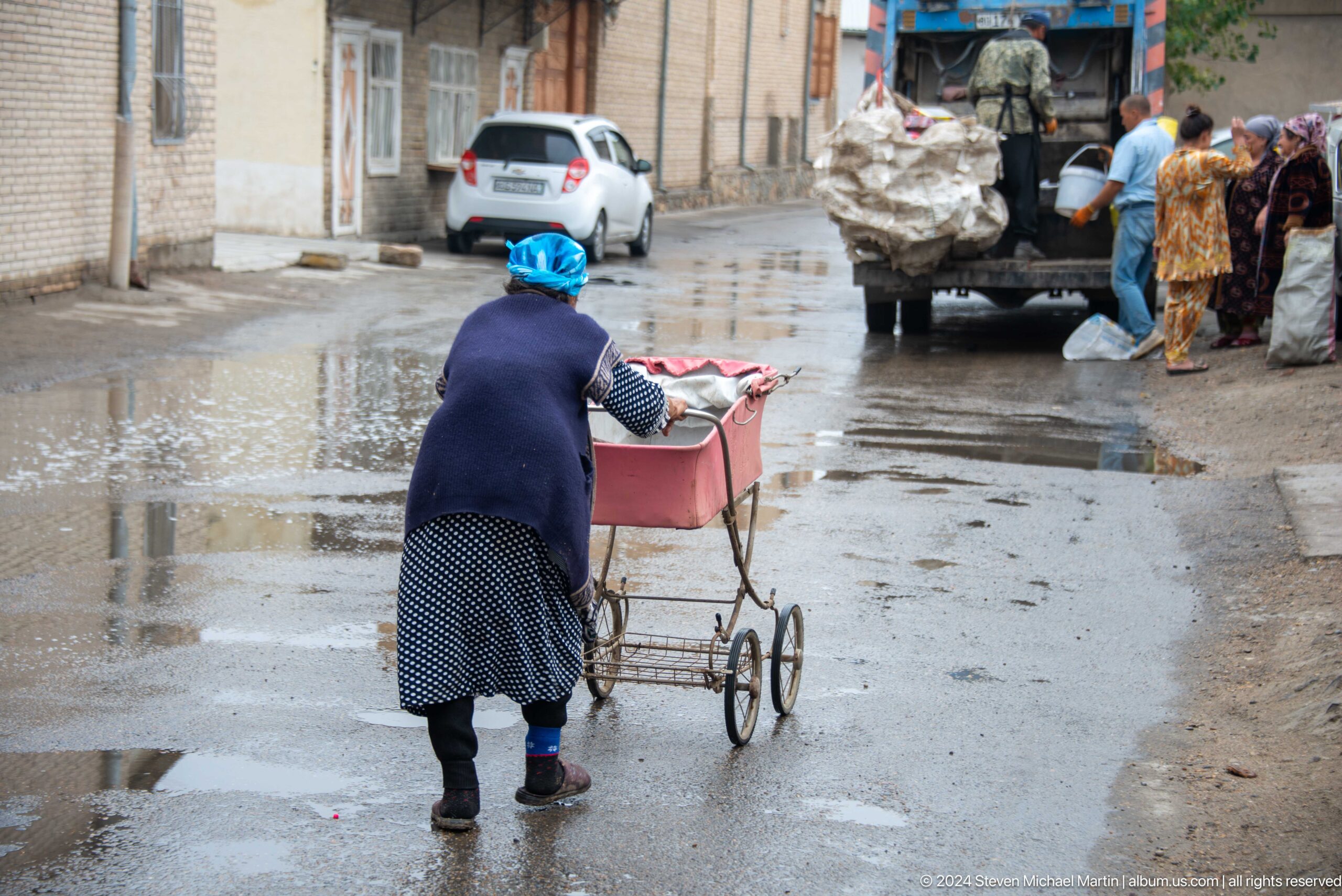
Street vendor in Bukhara in the historic center of Bukhara. The photograph records woman pushing cart on wet market street, emphasizing the city's layered brick construction, ornamental traditions, and the close relationship between religious, commercial, and civic spaces that developed along Central Asian trade networks.
Caption
Street vendor in Bukhara in the historic center of Bukhara. The photograph records woman pushing cart on wet market street, emphasizing the city's layered brick construction, ornamental traditions, and the close relationship between religious, commercial, and civic spaces that developed along Central Asian trade networks.

Chor Minor in the historic center of Bukhara. The photograph records four turquoise-capped towers of Chor Minor, emphasizing the city's layered brick construction, ornamental traditions, and the close relationship between religious, commercial, and civic spaces that developed along Central Asian trade networks.
Caption
Chor Minor in the historic center of Bukhara. The photograph records four turquoise-capped towers of Chor Minor, emphasizing the city's layered brick construction, ornamental traditions, and the close relationship between religious, commercial, and civic spaces that developed along Central Asian trade networks.
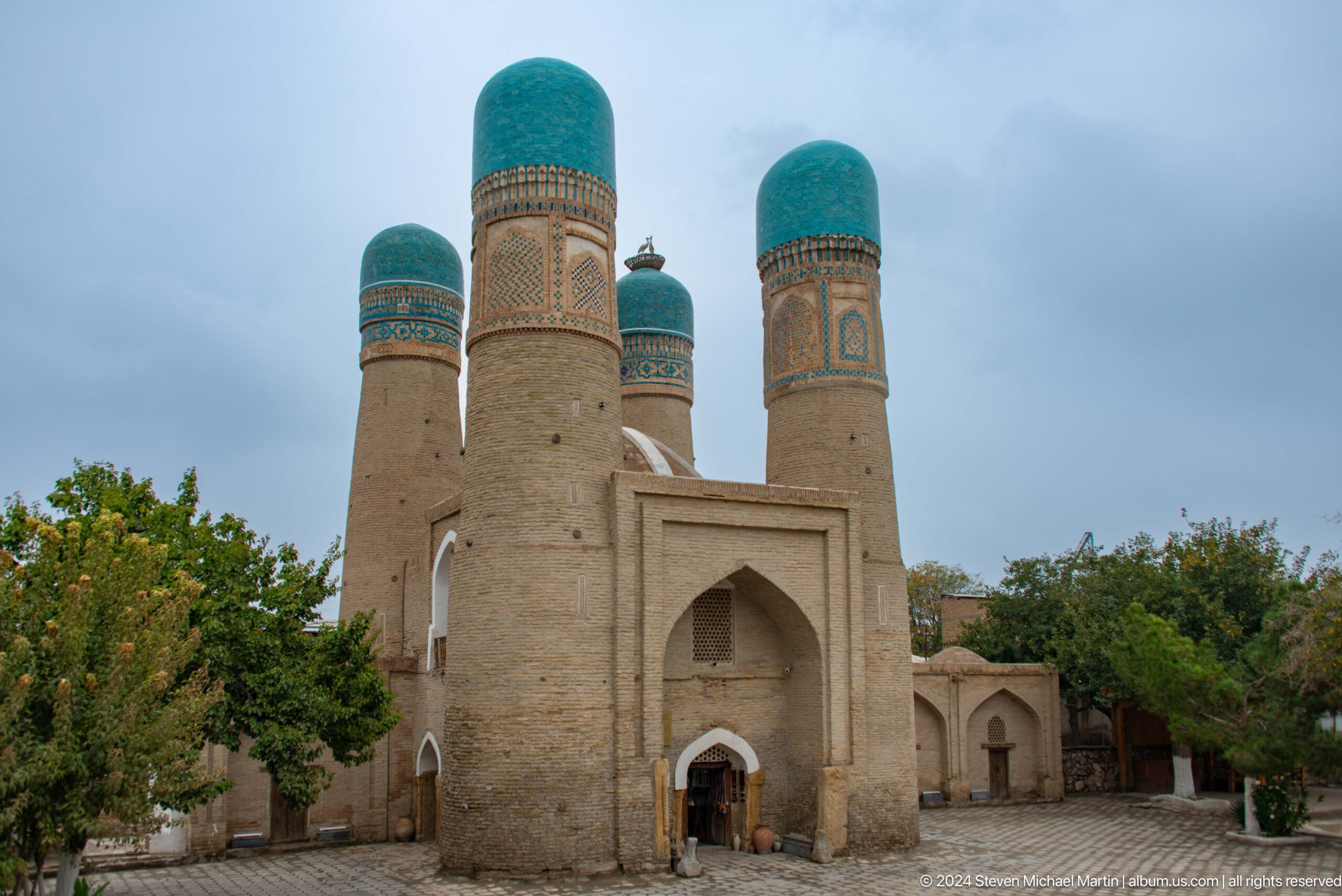
Chor Minor in the historic center of Bukhara. The photograph records frontal view of four-towered Chor Minor, emphasizing the city's layered brick construction, ornamental traditions, and the close relationship between religious, commercial, and civic spaces that developed along Central Asian trade networks.
Caption
Chor Minor in the historic center of Bukhara. The photograph records frontal view of four-towered Chor Minor, emphasizing the city's layered brick construction, ornamental traditions, and the close relationship between religious, commercial, and civic spaces that developed along Central Asian trade networks.

Chor Minor entrance in the historic center of Bukhara. The photograph records two Chor Minor towers and entrance arch, emphasizing the city's layered brick construction, ornamental traditions, and the close relationship between religious, commercial, and civic spaces that developed along Central Asian trade networks.
Caption
Chor Minor entrance in the historic center of Bukhara. The photograph records two Chor Minor towers and entrance arch, emphasizing the city's layered brick construction, ornamental traditions, and the close relationship between religious, commercial, and civic spaces that developed along Central Asian trade networks.
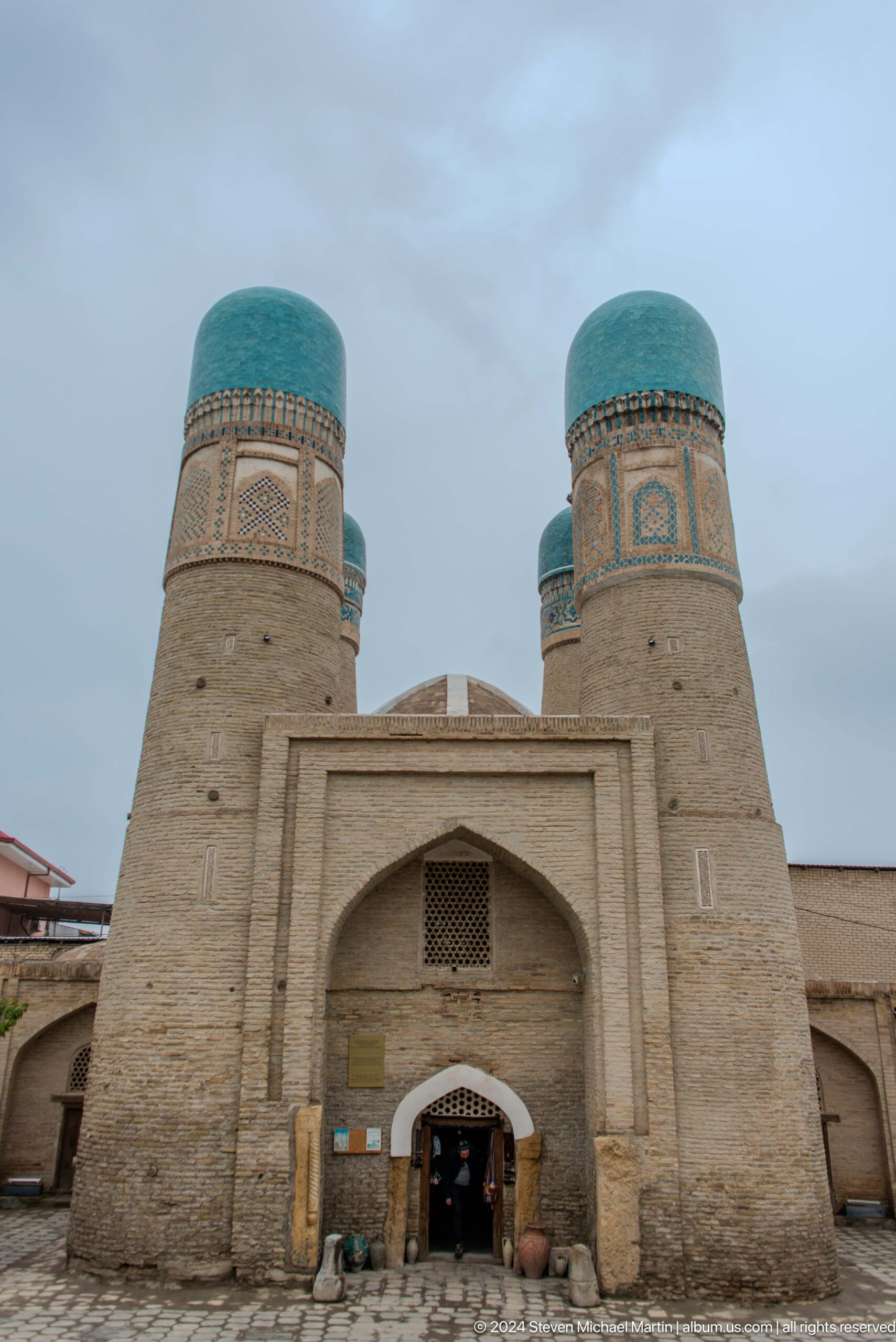
Chor Minor architectural detail in the historic center of Bukhara. The photograph records close view of Chor Minor gateway and towers, emphasizing the city's layered brick construction, ornamental traditions, and the close relationship between religious, commercial, and civic spaces that developed along Central Asian trade networks.
Caption
Chor Minor architectural detail in the historic center of Bukhara. The photograph records close view of Chor Minor gateway and towers, emphasizing the city's layered brick construction, ornamental traditions, and the close relationship between religious, commercial, and civic spaces that developed along Central Asian trade networks.

Historic fire engines in the historic center of Bukhara. The photograph records two red vintage fire engines, emphasizing the city's layered brick construction, ornamental traditions, and the close relationship between religious, commercial, and civic spaces that developed along Central Asian trade networks.
Caption
Historic fire engines in the historic center of Bukhara. The photograph records two red vintage fire engines, emphasizing the city's layered brick construction, ornamental traditions, and the close relationship between religious, commercial, and civic spaces that developed along Central Asian trade networks.

Historic madrasa exterior in the historic center of Bukhara. The photograph records large tiled madrasa facade seen from side, emphasizing the city's layered brick construction, ornamental traditions, and the close relationship between religious, commercial, and civic spaces that developed along Central Asian trade networks.
Caption
Historic madrasa exterior in the historic center of Bukhara. The photograph records large tiled madrasa facade seen from side, emphasizing the city's layered brick construction, ornamental traditions, and the close relationship between religious, commercial, and civic spaces that developed along Central Asian trade networks.
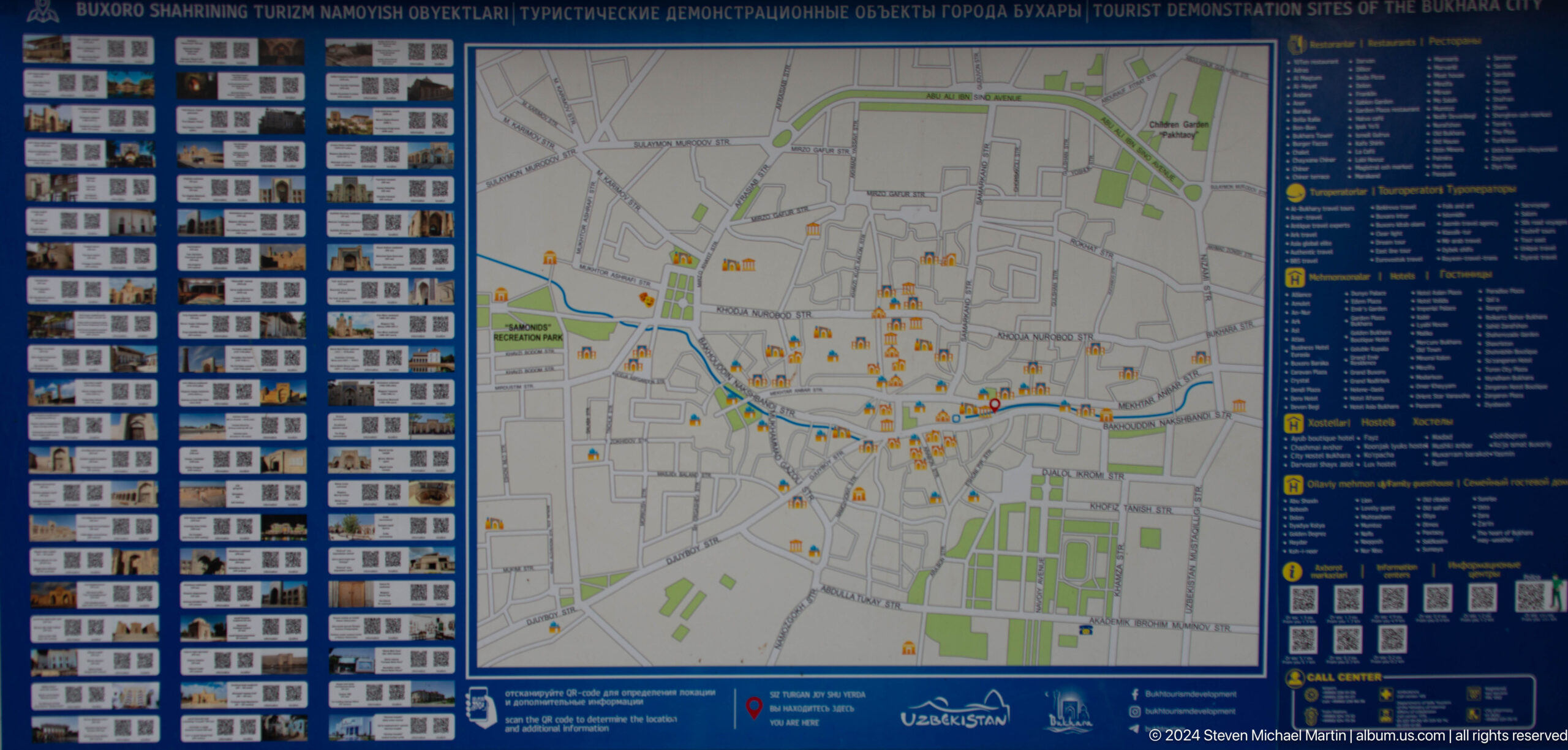
Bukhara visitor map in the historic center of Bukhara. The photograph records city map information board, emphasizing the city's layered brick construction, ornamental traditions, and the close relationship between religious, commercial, and civic spaces that developed along Central Asian trade networks.
Caption
Bukhara visitor map in the historic center of Bukhara. The photograph records city map information board, emphasizing the city's layered brick construction, ornamental traditions, and the close relationship between religious, commercial, and civic spaces that developed along Central Asian trade networks.

Decorated madrasa arcade in the historic center of Bukhara. The photograph records six tiled arched bays across madrasa facade, emphasizing the city's layered brick construction, ornamental traditions, and the close relationship between religious, commercial, and civic spaces that developed along Central Asian trade networks.
Caption
Decorated madrasa arcade in the historic center of Bukhara. The photograph records six tiled arched bays across madrasa facade, emphasizing the city's layered brick construction, ornamental traditions, and the close relationship between religious, commercial, and civic spaces that developed along Central Asian trade networks.

Khoja Nasreddin monument in the historic center of Bukhara. The photograph records bronze sculpture of folk character riding donkey, emphasizing the city's layered brick construction, ornamental traditions, and the close relationship between religious, commercial, and civic spaces that developed along Central Asian trade networks.
Caption
Khoja Nasreddin monument in the historic center of Bukhara. The photograph records bronze sculpture of folk character riding donkey, emphasizing the city's layered brick construction, ornamental traditions, and the close relationship between religious, commercial, and civic spaces that developed along Central Asian trade networks.
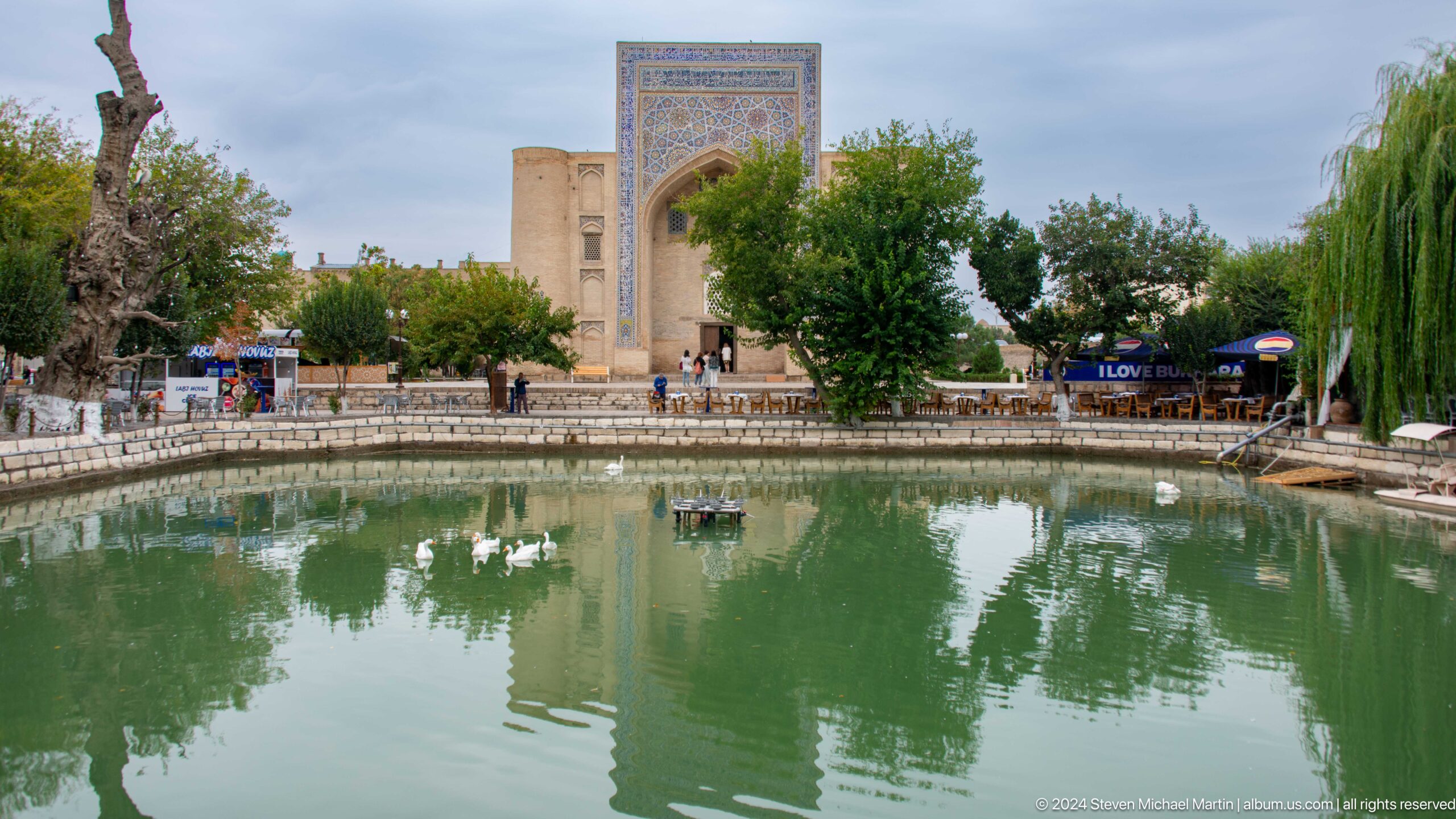
Lyabi-Hauz ensemble in the historic center of Bukhara. The photograph records Lyabi-Hauz pool reflecting trees and buildings, emphasizing the city's layered brick construction, ornamental traditions, and the close relationship between religious, commercial, and civic spaces that developed along Central Asian trade networks.
Caption
Lyabi-Hauz ensemble in the historic center of Bukhara. The photograph records Lyabi-Hauz pool reflecting trees and buildings, emphasizing the city's layered brick construction, ornamental traditions, and the close relationship between religious, commercial, and civic spaces that developed along Central Asian trade networks.
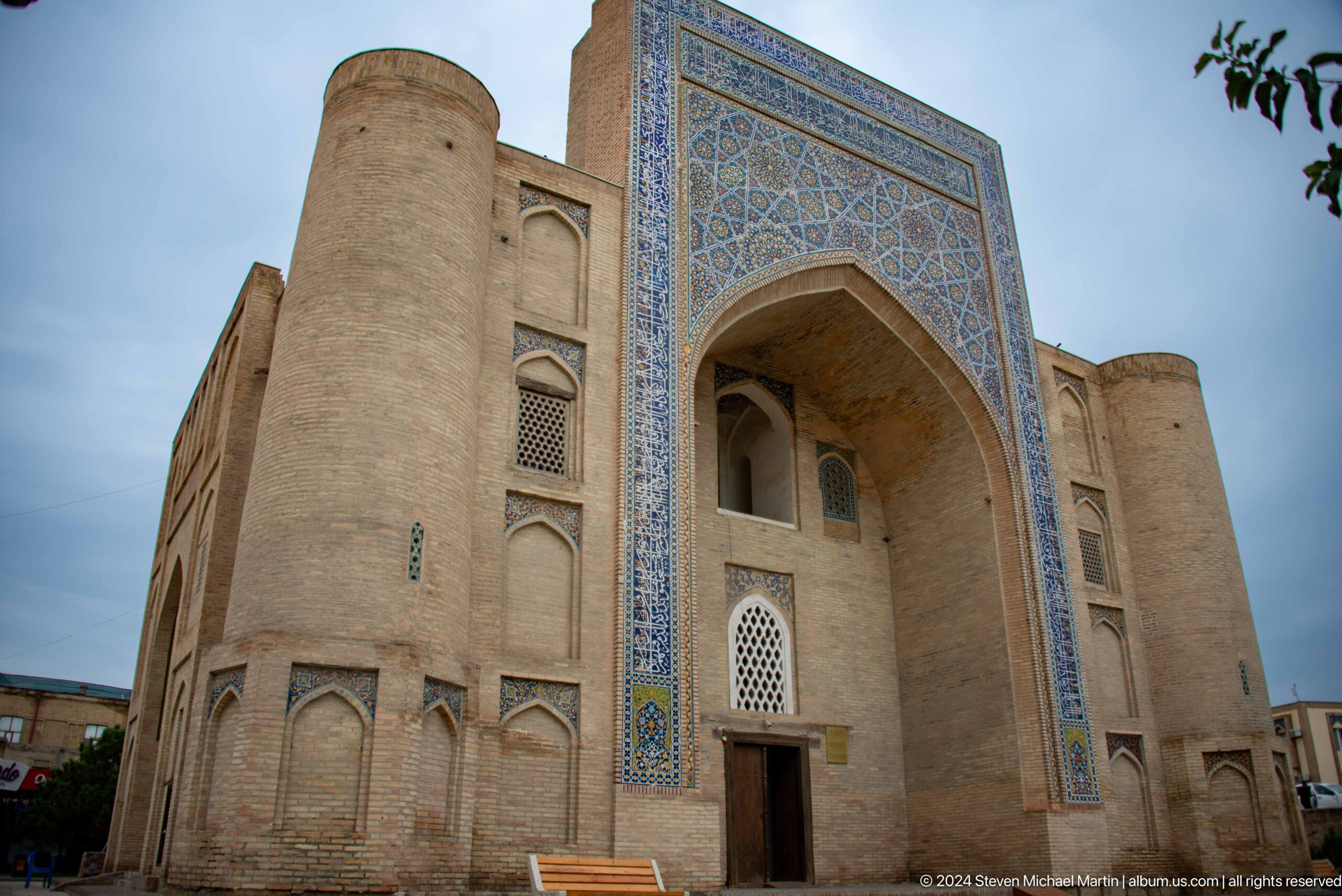
Historic monumental portal in the historic center of Bukhara. The photograph records massive brick portal viewed from below, emphasizing the city's layered brick construction, ornamental traditions, and the close relationship between religious, commercial, and civic spaces that developed along Central Asian trade networks.
Caption
Historic monumental portal in the historic center of Bukhara. The photograph records massive brick portal viewed from below, emphasizing the city's layered brick construction, ornamental traditions, and the close relationship between religious, commercial, and civic spaces that developed along Central Asian trade networks.

Figurative mosaic tile panel in the historic center of Bukhara. The photograph records mosaic panel depicting bird among flowers, emphasizing the city's layered brick construction, ornamental traditions, and the close relationship between religious, commercial, and civic spaces that developed along Central Asian trade networks.
Caption
Figurative mosaic tile panel in the historic center of Bukhara. The photograph records mosaic panel depicting bird among flowers, emphasizing the city's layered brick construction, ornamental traditions, and the close relationship between religious, commercial, and civic spaces that developed along Central Asian trade networks.
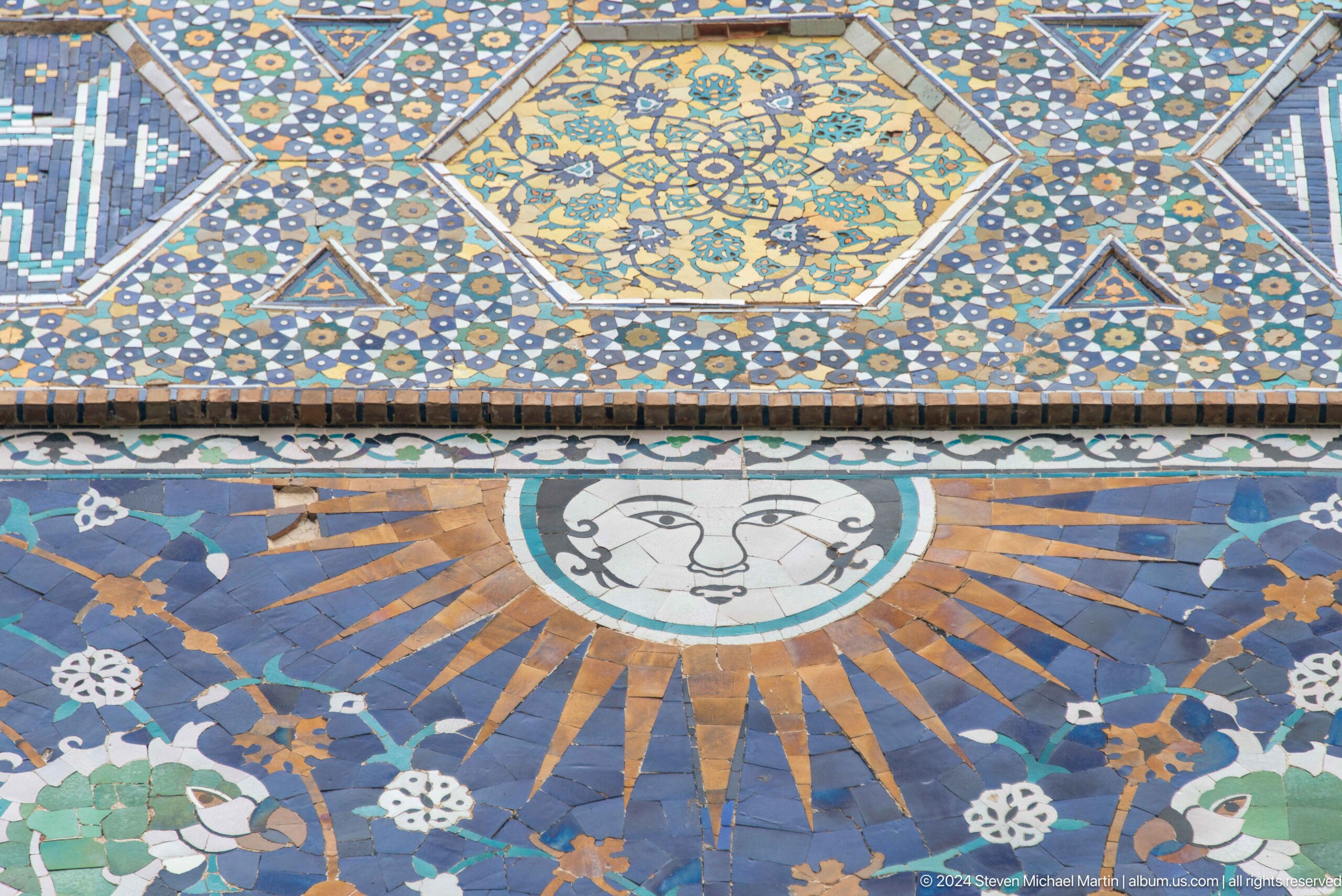
Decorative sun motif in the historic center of Bukhara. The photograph records sun-face medallion in geometric tilework, emphasizing the city's layered brick construction, ornamental traditions, and the close relationship between religious, commercial, and civic spaces that developed along Central Asian trade networks.
Caption
Decorative sun motif in the historic center of Bukhara. The photograph records sun-face medallion in geometric tilework, emphasizing the city's layered brick construction, ornamental traditions, and the close relationship between religious, commercial, and civic spaces that developed along Central Asian trade networks.

Historic religious courtyard in the historic center of Bukhara. The photograph records courtyard entrance framed by trees, emphasizing the city's layered brick construction, ornamental traditions, and the close relationship between religious, commercial, and civic spaces that developed along Central Asian trade networks.
Caption
Historic religious courtyard in the historic center of Bukhara. The photograph records courtyard entrance framed by trees, emphasizing the city's layered brick construction, ornamental traditions, and the close relationship between religious, commercial, and civic spaces that developed along Central Asian trade networks.
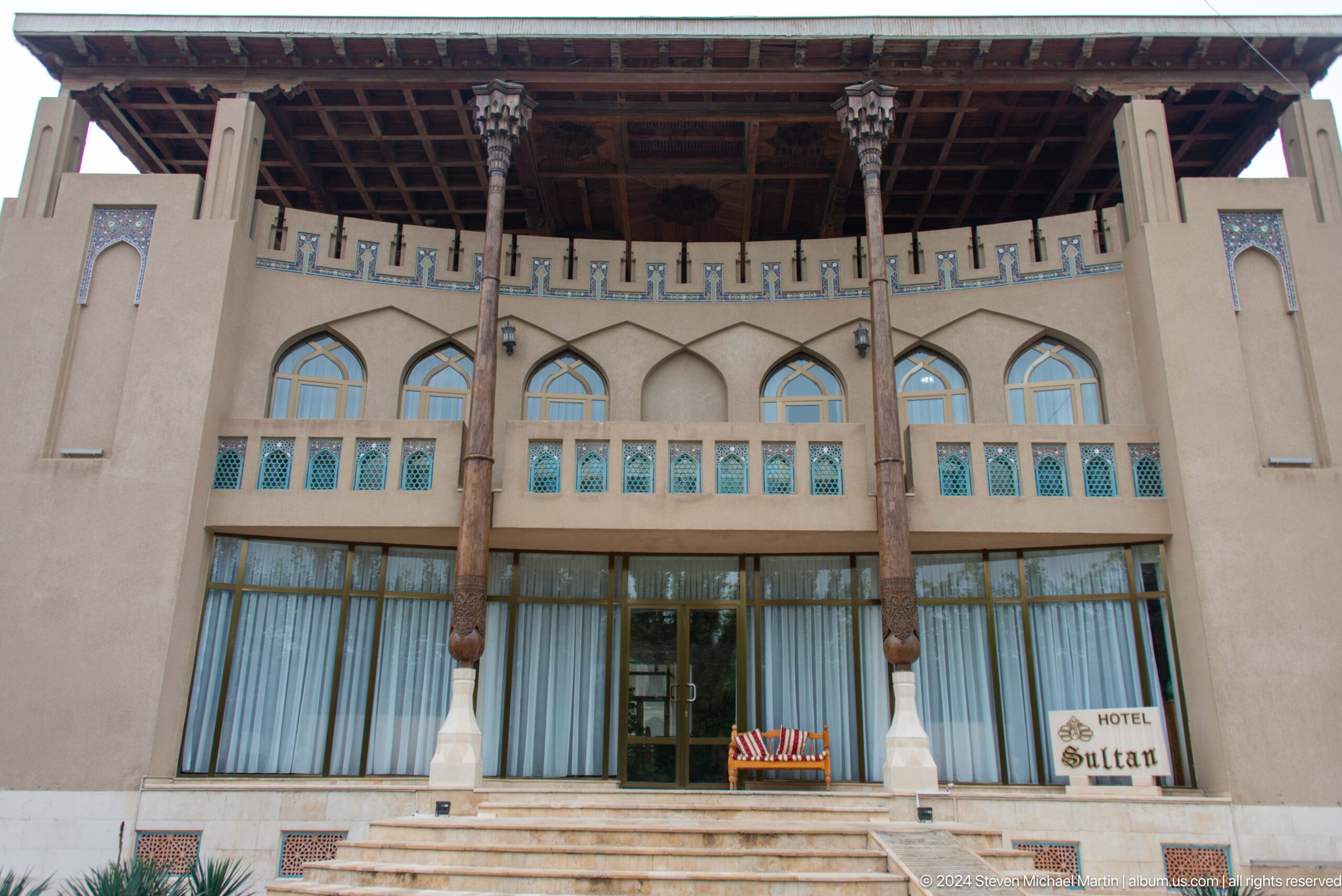
Traditional Bukhara house facade in the historic center of Bukhara. The photograph records timber-columned facade with blue shutters, emphasizing the city's layered brick construction, ornamental traditions, and the close relationship between religious, commercial, and civic spaces that developed along Central Asian trade networks.
Caption
Traditional Bukhara house facade in the historic center of Bukhara. The photograph records timber-columned facade with blue shutters, emphasizing the city's layered brick construction, ornamental traditions, and the close relationship between religious, commercial, and civic spaces that developed along Central Asian trade networks.

Ornamented portal interior in the historic center of Bukhara. The photograph records deep decorated entrance vault with visitors, emphasizing the city's layered brick construction, ornamental traditions, and the close relationship between religious, commercial, and civic spaces that developed along Central Asian trade networks.
Caption
Ornamented portal interior in the historic center of Bukhara. The photograph records deep decorated entrance vault with visitors, emphasizing the city's layered brick construction, ornamental traditions, and the close relationship between religious, commercial, and civic spaces that developed along Central Asian trade networks.
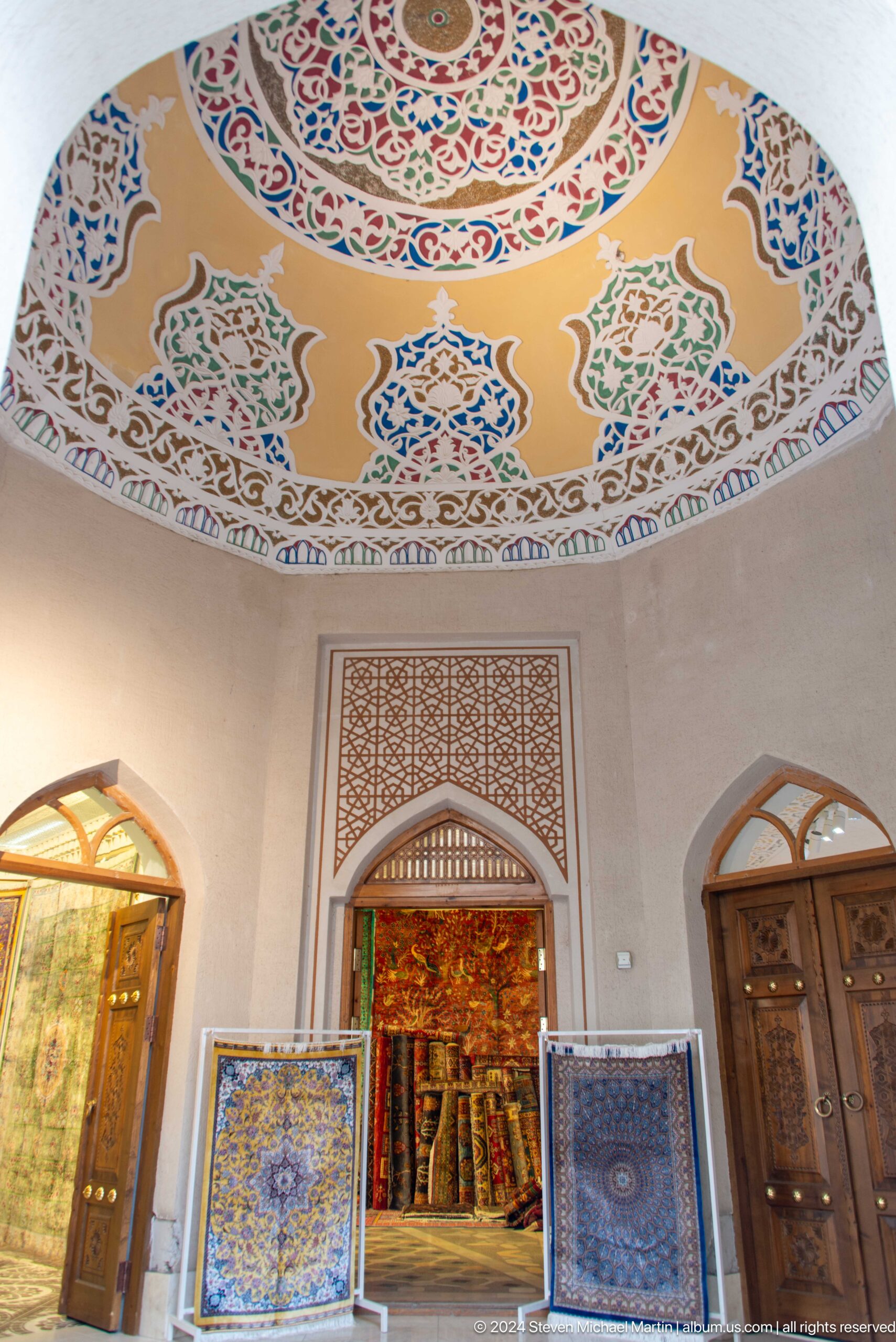
Decorated historic interior in the historic center of Bukhara. The photograph records white interior wall with carved niches and painted frieze, emphasizing the city's layered brick construction, ornamental traditions, and the close relationship between religious, commercial, and civic spaces that developed along Central Asian trade networks.
Caption
Decorated historic interior in the historic center of Bukhara. The photograph records white interior wall with carved niches and painted frieze, emphasizing the city's layered brick construction, ornamental traditions, and the close relationship between religious, commercial, and civic spaces that developed along Central Asian trade networks.

Samanid Mausoleum brickwork in the historic center of Bukhara. The photograph records close-up of patterned brick masonry, emphasizing the city's layered brick construction, ornamental traditions, and the close relationship between religious, commercial, and civic spaces that developed along Central Asian trade networks.
Caption
Samanid Mausoleum brickwork in the historic center of Bukhara. The photograph records close-up of patterned brick masonry, emphasizing the city's layered brick construction, ornamental traditions, and the close relationship between religious, commercial, and civic spaces that developed along Central Asian trade networks.

Uzbek textile display in the historic center of Bukhara. The photograph records rows of embroidered textiles at market, emphasizing the city's layered brick construction, ornamental traditions, and the close relationship between religious, commercial, and civic spaces that developed along Central Asian trade networks.
Caption
Uzbek textile display in the historic center of Bukhara. The photograph records rows of embroidered textiles at market, emphasizing the city's layered brick construction, ornamental traditions, and the close relationship between religious, commercial, and civic spaces that developed along Central Asian trade networks.
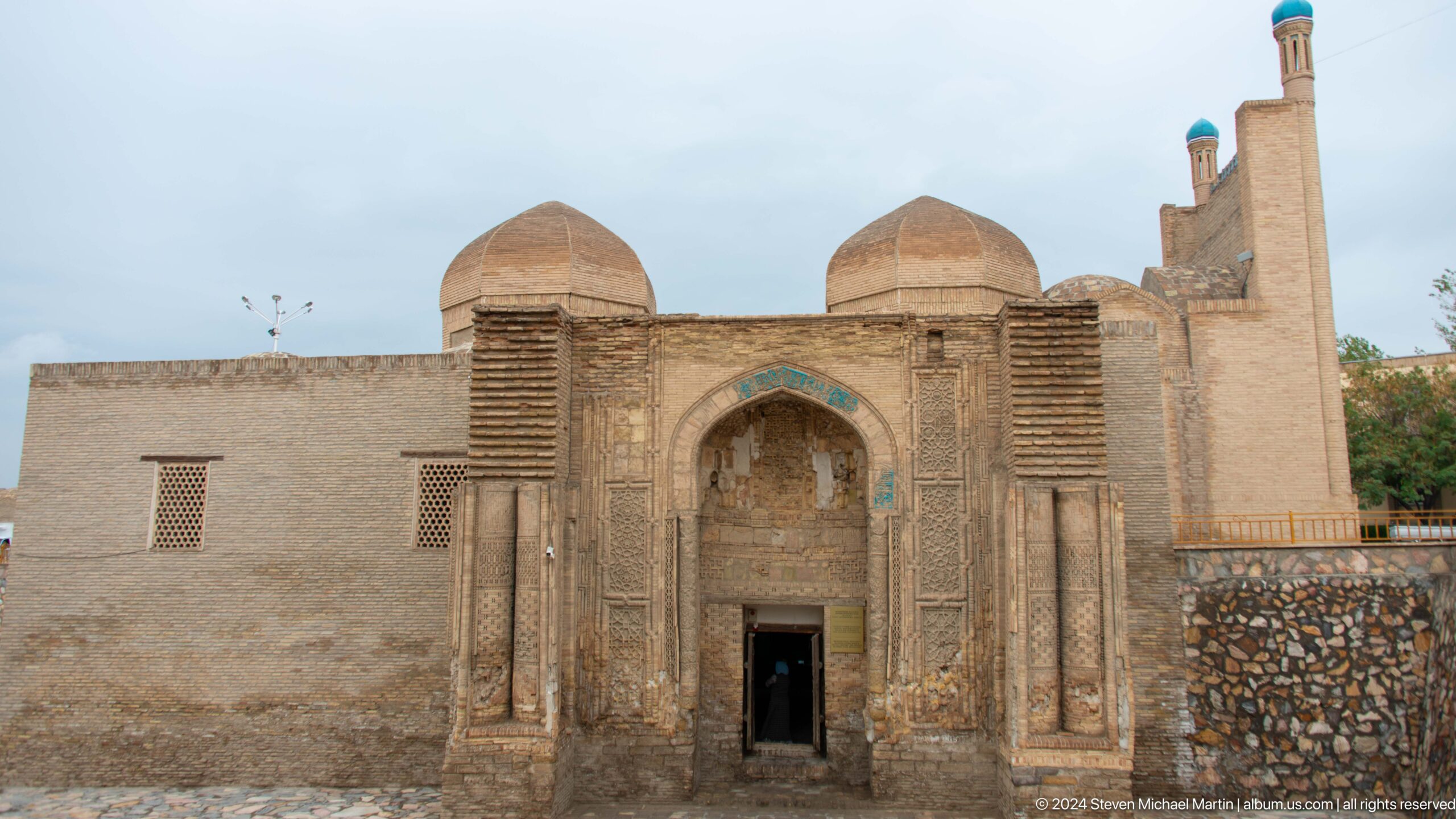
Samanid Mausoleum in the historic center of Bukhara. The photograph records brick mausoleum facade with arched doorway, emphasizing the city's layered brick construction, ornamental traditions, and the close relationship between religious, commercial, and civic spaces that developed along Central Asian trade networks.
Caption
Samanid Mausoleum in the historic center of Bukhara. The photograph records brick mausoleum facade with arched doorway, emphasizing the city's layered brick construction, ornamental traditions, and the close relationship between religious, commercial, and civic spaces that developed along Central Asian trade networks.
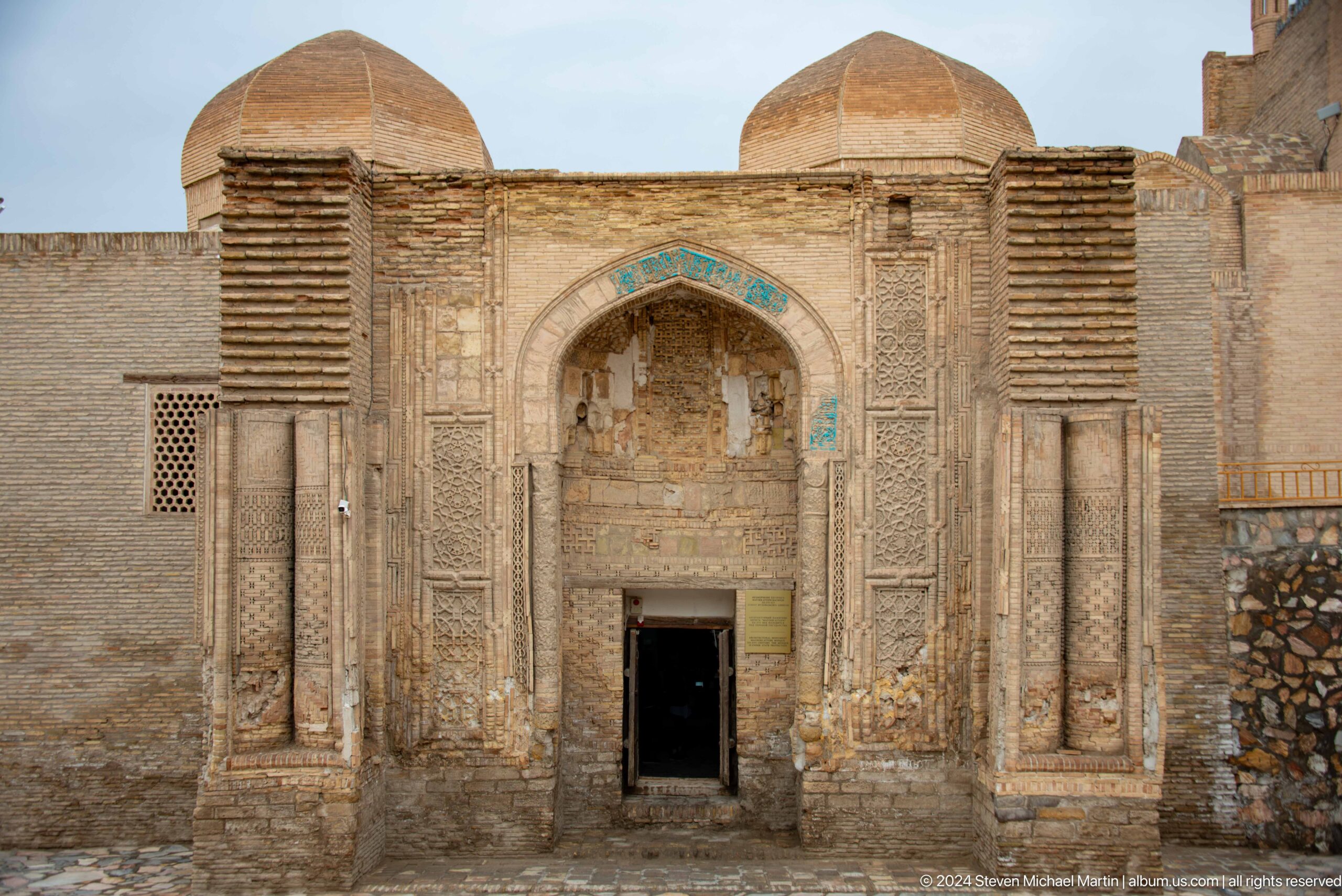
Samanid Mausoleum in the historic center of Bukhara. The photograph records frontal brick facade of Samanid Mausoleum, emphasizing the city's layered brick construction, ornamental traditions, and the close relationship between religious, commercial, and civic spaces that developed along Central Asian trade networks.
Caption
Samanid Mausoleum in the historic center of Bukhara. The photograph records frontal brick facade of Samanid Mausoleum, emphasizing the city's layered brick construction, ornamental traditions, and the close relationship between religious, commercial, and civic spaces that developed along Central Asian trade networks.
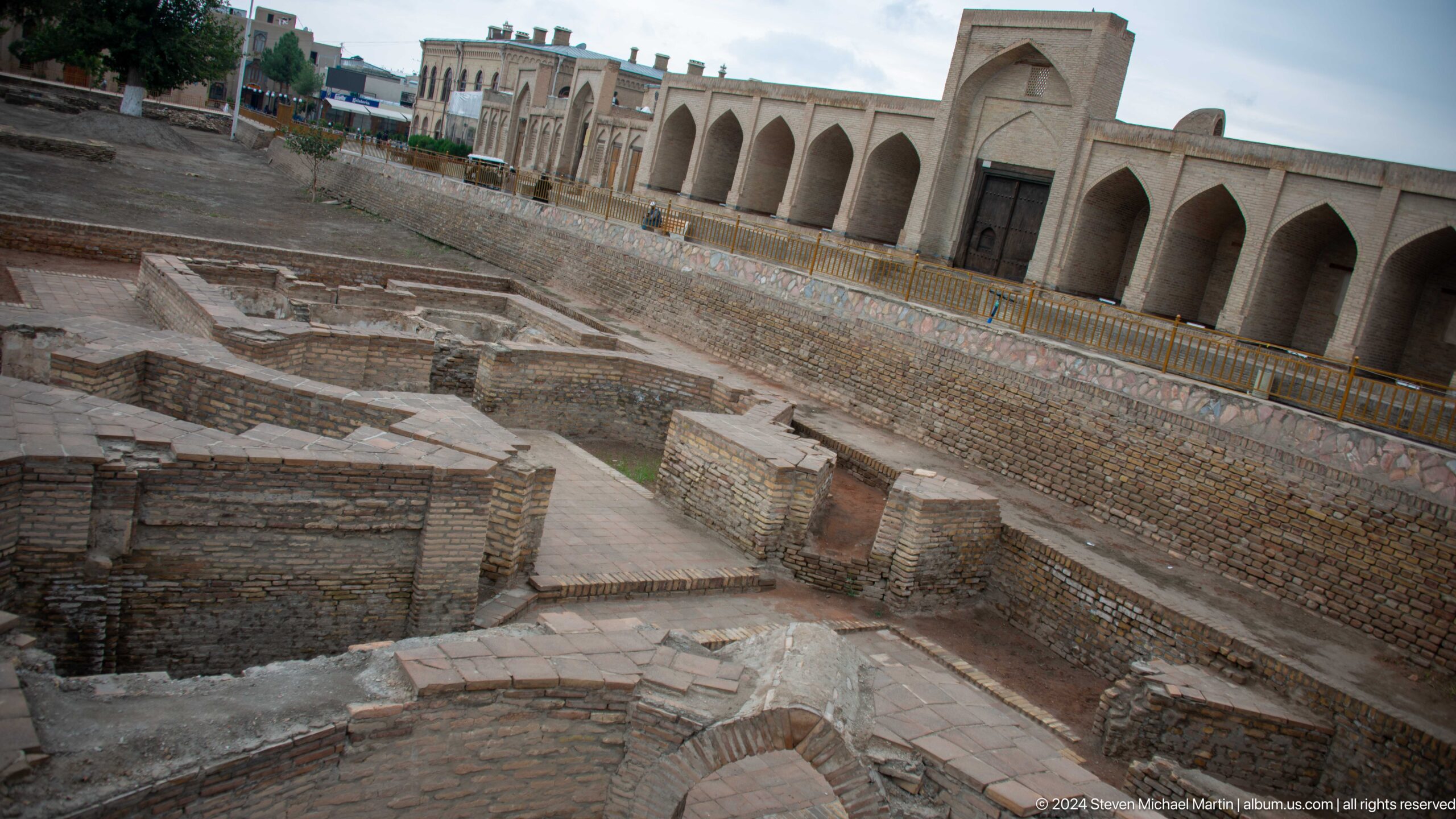
Archaeological remains in the historic center of Bukhara. The photograph records excavated foundations beside arcade, emphasizing the city's layered brick construction, ornamental traditions, and the close relationship between religious, commercial, and civic spaces that developed along Central Asian trade networks.
Caption
Archaeological remains in the historic center of Bukhara. The photograph records excavated foundations beside arcade, emphasizing the city's layered brick construction, ornamental traditions, and the close relationship between religious, commercial, and civic spaces that developed along Central Asian trade networks.
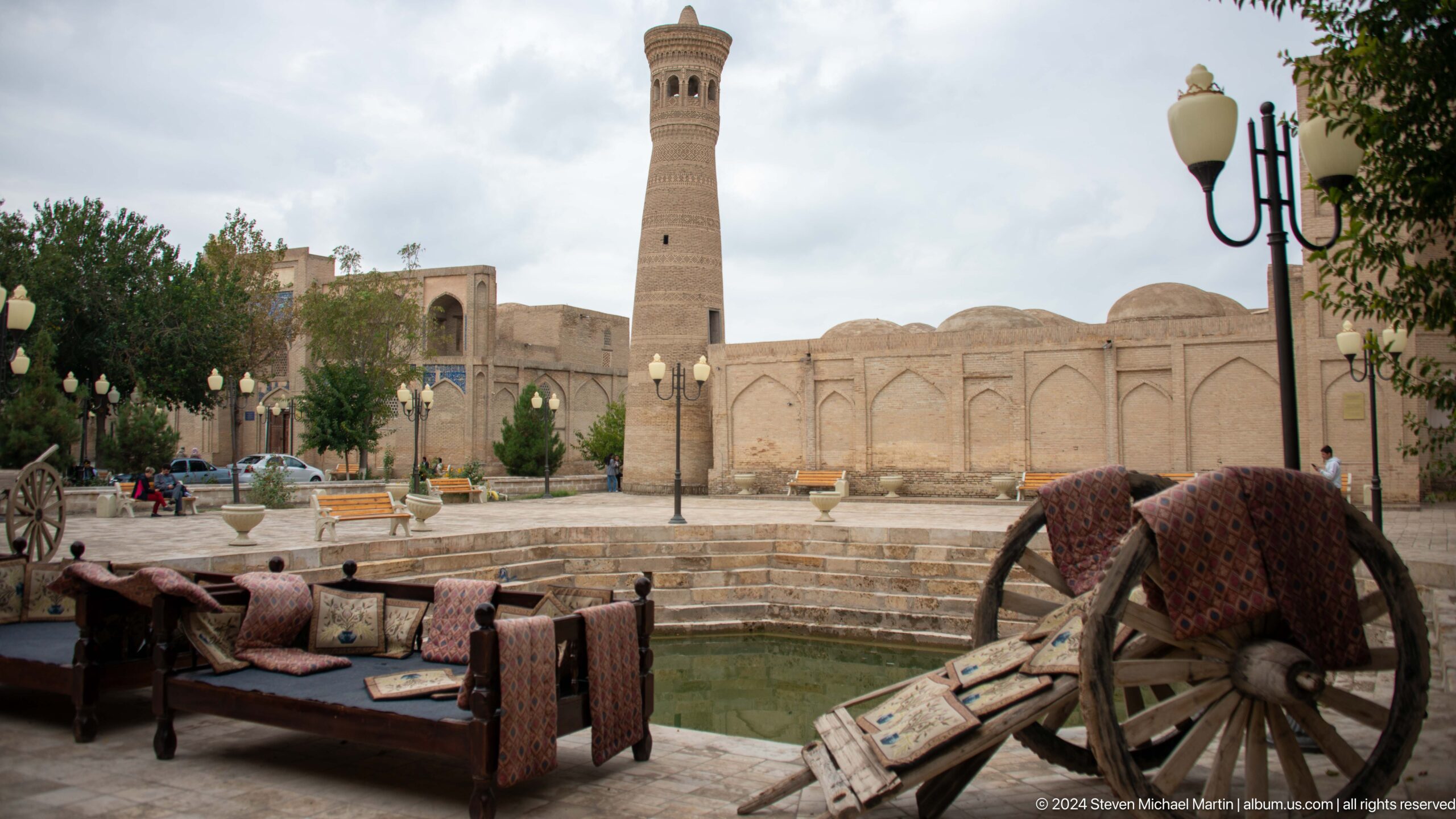
Poi Kalyan square in the historic center of Bukhara. The photograph records Kalyan Minaret beyond plaza furniture, emphasizing the city's layered brick construction, ornamental traditions, and the close relationship between religious, commercial, and civic spaces that developed along Central Asian trade networks.
Caption
Poi Kalyan square in the historic center of Bukhara. The photograph records Kalyan Minaret beyond plaza furniture, emphasizing the city's layered brick construction, ornamental traditions, and the close relationship between religious, commercial, and civic spaces that developed along Central Asian trade networks.
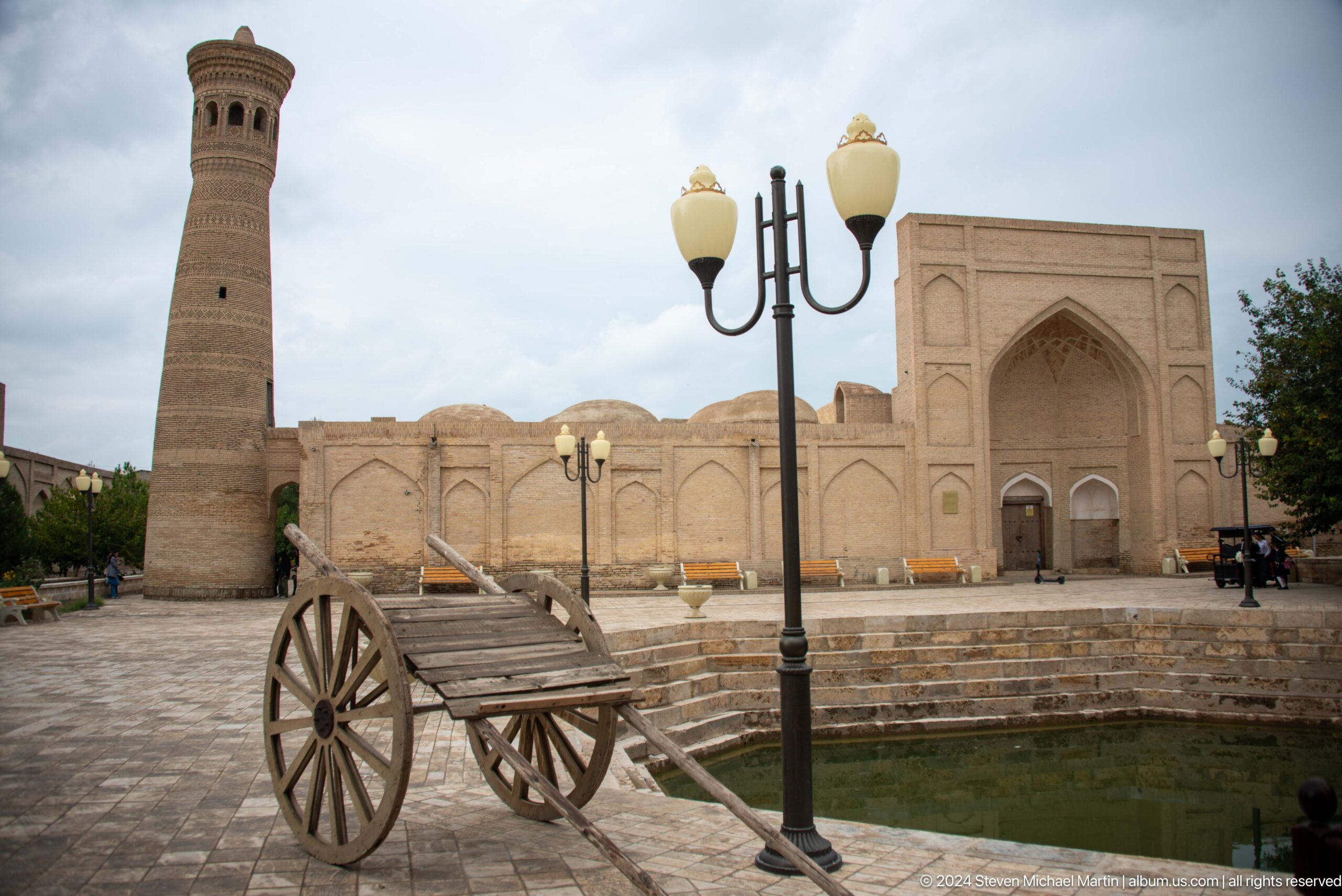
Historic square with Kalyan Minaret in the historic center of Bukhara. The photograph records wooden cart and lamp posts before minaret, emphasizing the city's layered brick construction, ornamental traditions, and the close relationship between religious, commercial, and civic spaces that developed along Central Asian trade networks.
Caption
Historic square with Kalyan Minaret in the historic center of Bukhara. The photograph records wooden cart and lamp posts before minaret, emphasizing the city's layered brick construction, ornamental traditions, and the close relationship between religious, commercial, and civic spaces that developed along Central Asian trade networks.
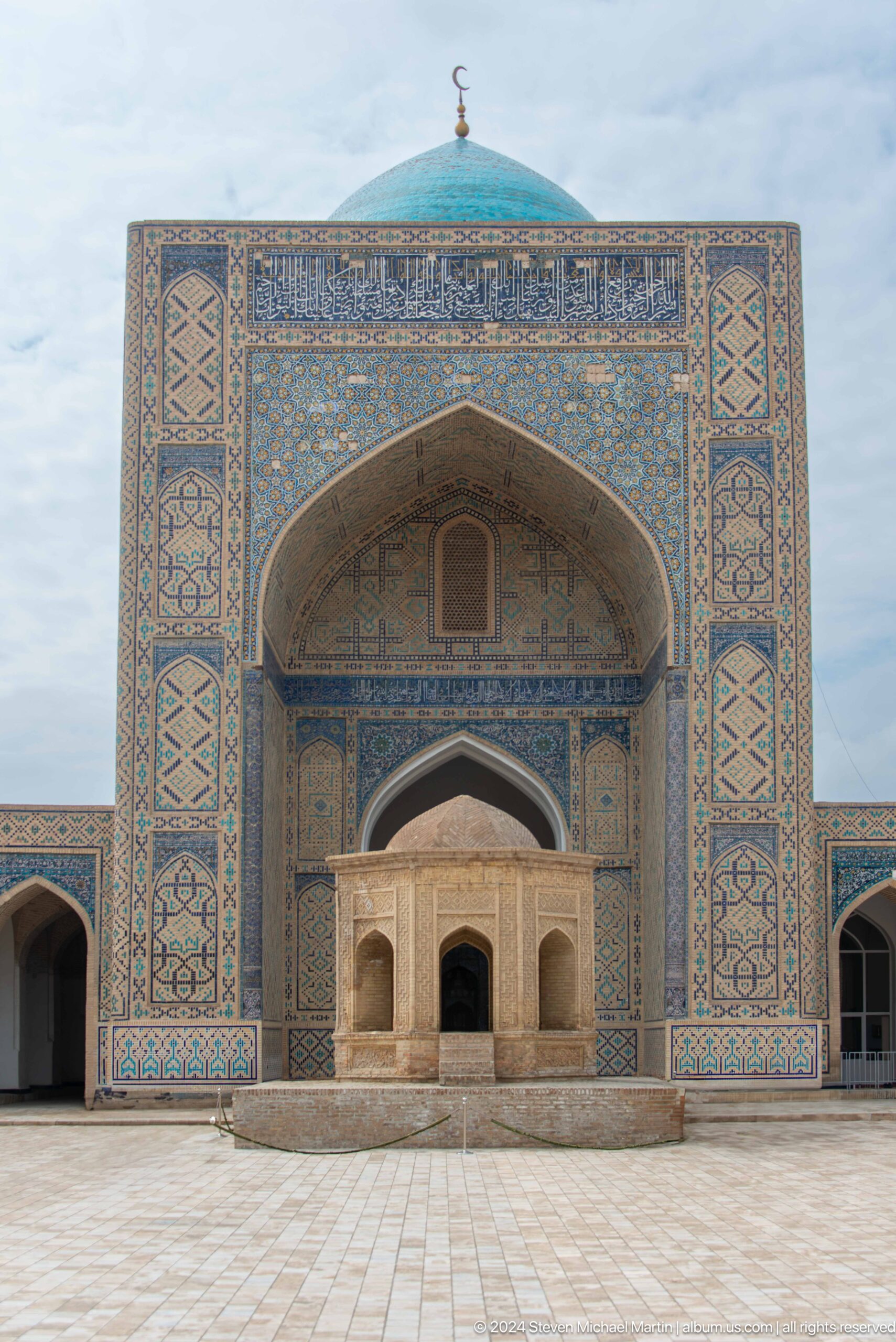
Historic madrasa portal in the historic center of Bukhara. The photograph records blue-tiled monumental portal facade, emphasizing the city's layered brick construction, ornamental traditions, and the close relationship between religious, commercial, and civic spaces that developed along Central Asian trade networks.
Caption
Historic madrasa portal in the historic center of Bukhara. The photograph records blue-tiled monumental portal facade, emphasizing the city's layered brick construction, ornamental traditions, and the close relationship between religious, commercial, and civic spaces that developed along Central Asian trade networks.

Decorated Islamic dome in the historic center of Bukhara. The photograph records turquoise dome covered in tile patterns, emphasizing the city's layered brick construction, ornamental traditions, and the close relationship between religious, commercial, and civic spaces that developed along Central Asian trade networks.
Caption
Decorated Islamic dome in the historic center of Bukhara. The photograph records turquoise dome covered in tile patterns, emphasizing the city's layered brick construction, ornamental traditions, and the close relationship between religious, commercial, and civic spaces that developed along Central Asian trade networks.
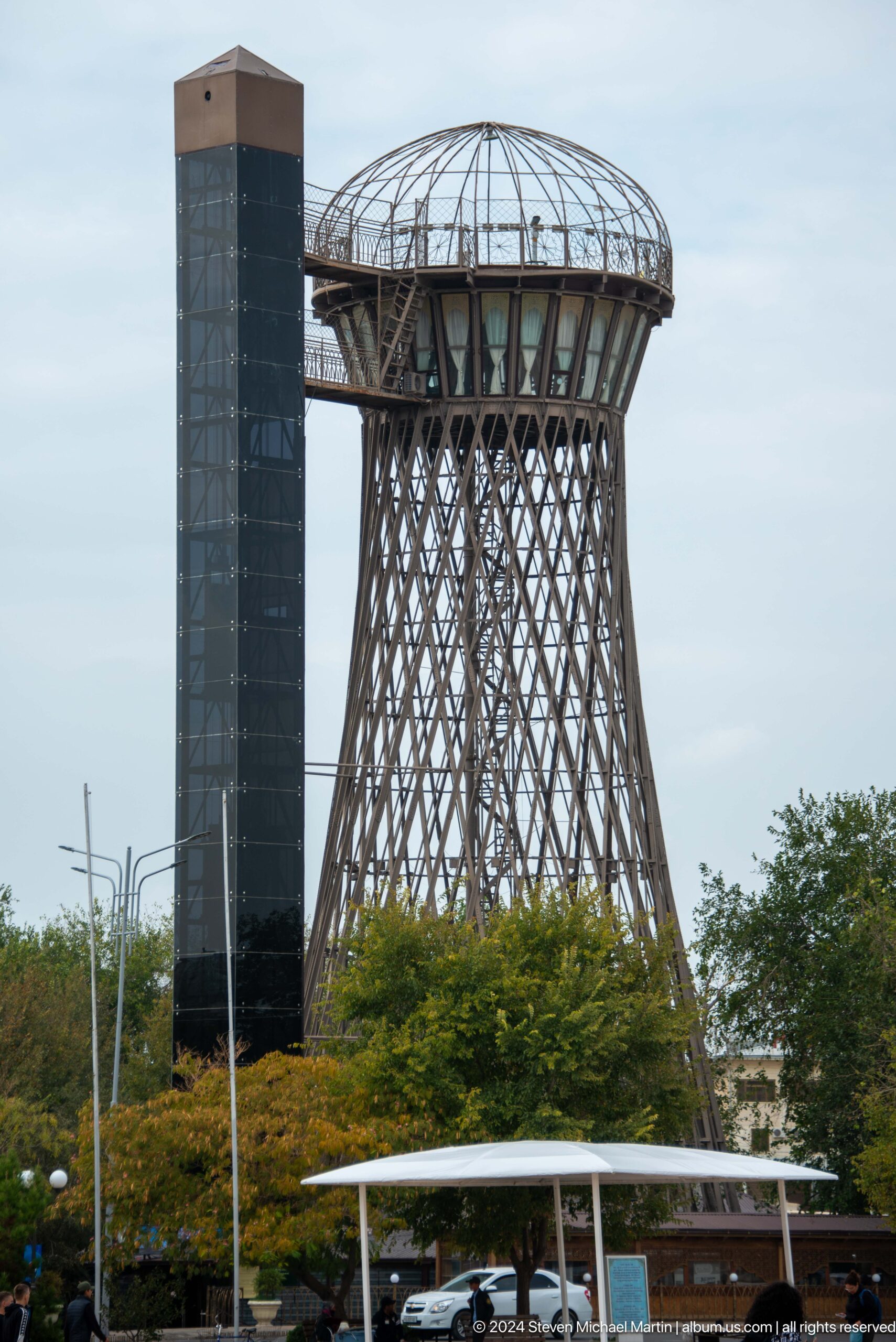
Modern observation tower in the historic center of Bukhara. The photograph records modern lattice observation tower, emphasizing the city's layered brick construction, ornamental traditions, and the close relationship between religious, commercial, and civic spaces that developed along Central Asian trade networks.
Caption
Modern observation tower in the historic center of Bukhara. The photograph records modern lattice observation tower, emphasizing the city's layered brick construction, ornamental traditions, and the close relationship between religious, commercial, and civic spaces that developed along Central Asian trade networks.

Courtyard pavilion in the historic center of Bukhara. The photograph records small ornate pavilion against tiled facade, emphasizing the city's layered brick construction, ornamental traditions, and the close relationship between religious, commercial, and civic spaces that developed along Central Asian trade networks.
Caption
Courtyard pavilion in the historic center of Bukhara. The photograph records small ornate pavilion against tiled facade, emphasizing the city's layered brick construction, ornamental traditions, and the close relationship between religious, commercial, and civic spaces that developed along Central Asian trade networks.

Courtyard pavilion and Kalyan Minaret in the historic center of Bukhara. The photograph records visitor standing beside pavilion in mosque courtyard, emphasizing the city's layered brick construction, ornamental traditions, and the close relationship between religious, commercial, and civic spaces that developed along Central Asian trade networks.
Caption
Courtyard pavilion and Kalyan Minaret in the historic center of Bukhara. The photograph records visitor standing beside pavilion in mosque courtyard, emphasizing the city's layered brick construction, ornamental traditions, and the close relationship between religious, commercial, and civic spaces that developed along Central Asian trade networks.

Courtyard pavilion in Poi Kalyan in the historic center of Bukhara. The photograph records octagonal pavilion with Kalyan Minaret behind, emphasizing the city's layered brick construction, ornamental traditions, and the close relationship between religious, commercial, and civic spaces that developed along Central Asian trade networks.
Caption
Courtyard pavilion in Poi Kalyan in the historic center of Bukhara. The photograph records octagonal pavilion with Kalyan Minaret behind, emphasizing the city's layered brick construction, ornamental traditions, and the close relationship between religious, commercial, and civic spaces that developed along Central Asian trade networks.

Framed courtyard view in the historic center of Bukhara. The photograph records view through carved doorway toward madrasa portal, emphasizing the city's layered brick construction, ornamental traditions, and the close relationship between religious, commercial, and civic spaces that developed along Central Asian trade networks.
Caption
Framed courtyard view in the historic center of Bukhara. The photograph records view through carved doorway toward madrasa portal, emphasizing the city's layered brick construction, ornamental traditions, and the close relationship between religious, commercial, and civic spaces that developed along Central Asian trade networks.

Ark of Bukhara rampart in the historic center of Bukhara. The photograph records massive sloping mud-brick wall of Ark fortress, emphasizing the city's layered brick construction, ornamental traditions, and the close relationship between religious, commercial, and civic spaces that developed along Central Asian trade networks.
Caption
Ark of Bukhara rampart in the historic center of Bukhara. The photograph records massive sloping mud-brick wall of Ark fortress, emphasizing the city's layered brick construction, ornamental traditions, and the close relationship between religious, commercial, and civic spaces that developed along Central Asian trade networks.
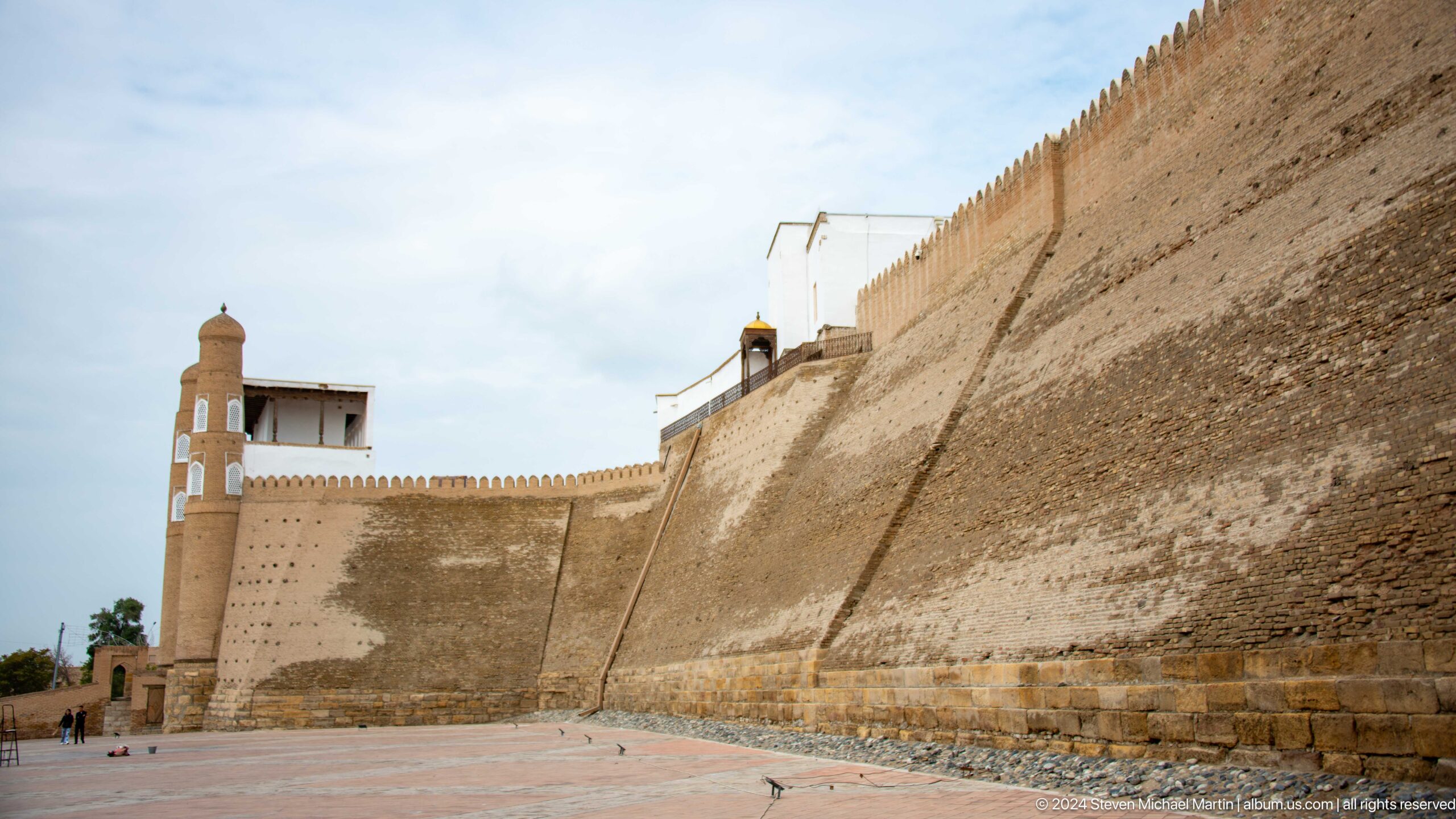
Ark of Bukhara fortification in the historic center of Bukhara. The photograph records steep reconstructed rampart of Ark fortress, emphasizing the city's layered brick construction, ornamental traditions, and the close relationship between religious, commercial, and civic spaces that developed along Central Asian trade networks.
Caption
Ark of Bukhara fortification in the historic center of Bukhara. The photograph records steep reconstructed rampart of Ark fortress, emphasizing the city's layered brick construction, ornamental traditions, and the close relationship between religious, commercial, and civic spaces that developed along Central Asian trade networks.

Ark of Bukhara exterior in the historic center of Bukhara. The photograph records camel before broad sloping Ark rampart, emphasizing the city's layered brick construction, ornamental traditions, and the close relationship between religious, commercial, and civic spaces that developed along Central Asian trade networks.
Caption
Ark of Bukhara exterior in the historic center of Bukhara. The photograph records camel before broad sloping Ark rampart, emphasizing the city's layered brick construction, ornamental traditions, and the close relationship between religious, commercial, and civic spaces that developed along Central Asian trade networks.
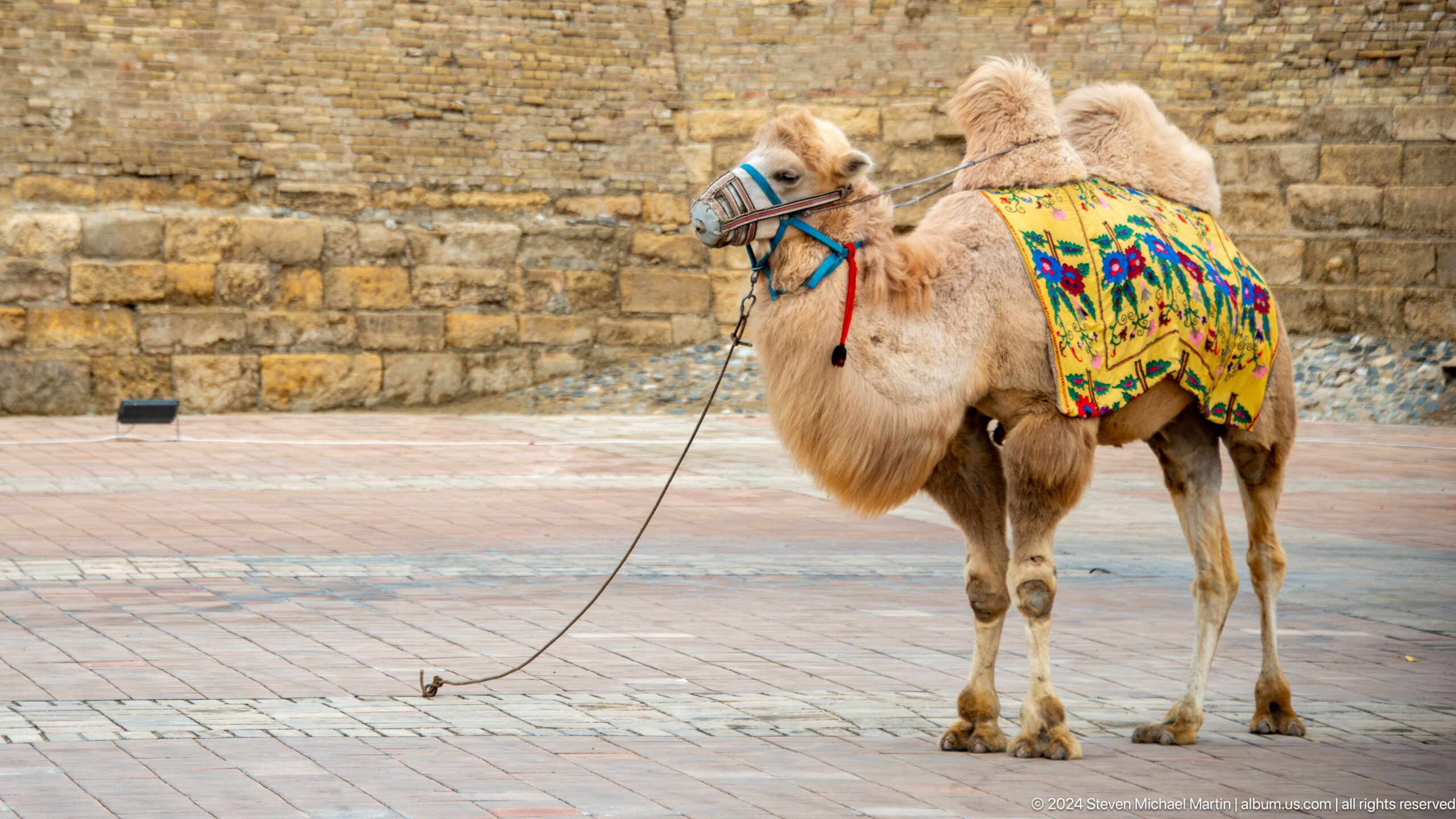
Tourist camel in the historic center of Bukhara. The photograph records decorated camel against brick wall, emphasizing the city's layered brick construction, ornamental traditions, and the close relationship between religious, commercial, and civic spaces that developed along Central Asian trade networks.
Caption
Tourist camel in the historic center of Bukhara. The photograph records decorated camel against brick wall, emphasizing the city's layered brick construction, ornamental traditions, and the close relationship between religious, commercial, and civic spaces that developed along Central Asian trade networks.
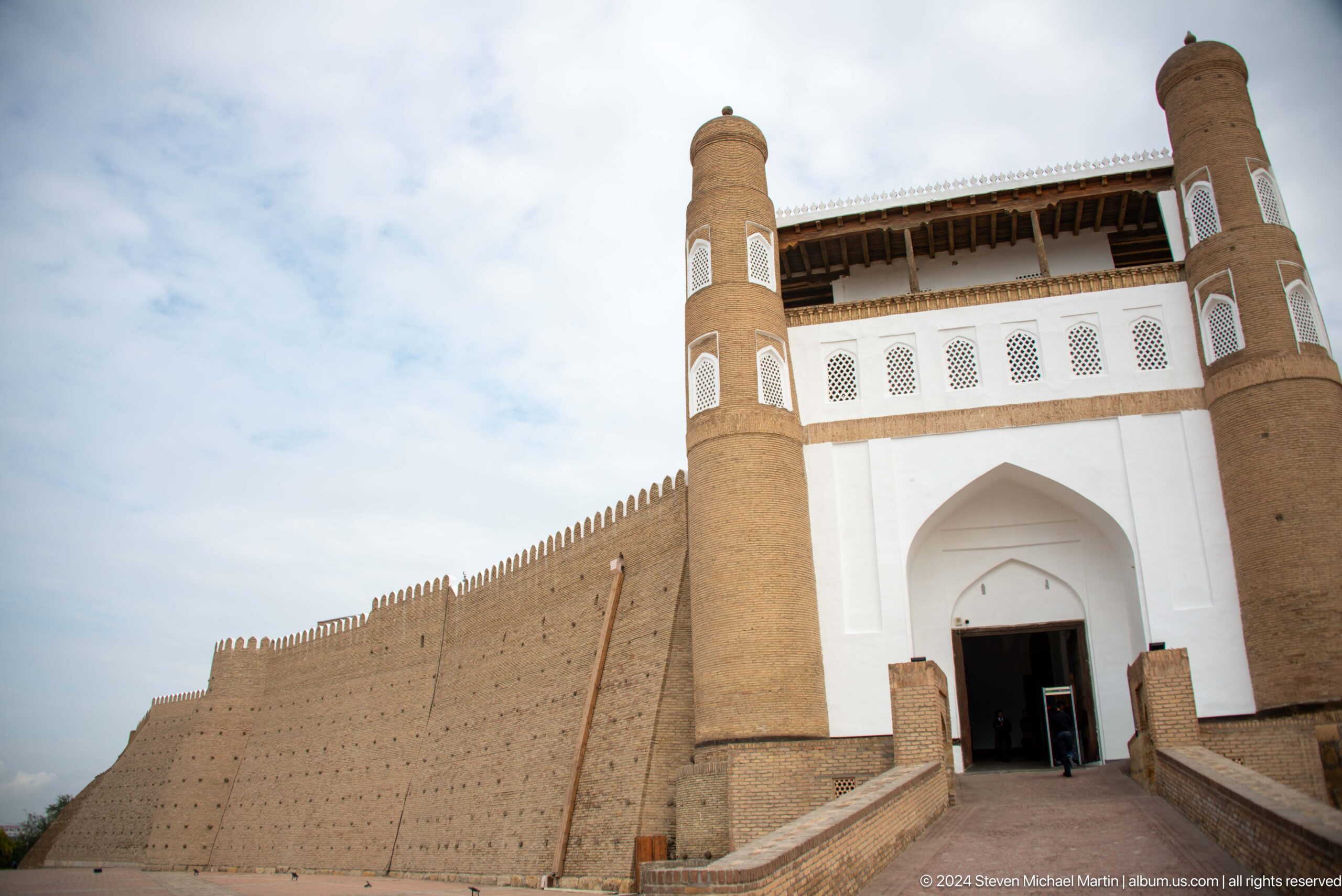
Ark of Bukhara entrance in the historic center of Bukhara. The photograph records low-angle view of Ark gate towers, emphasizing the city's layered brick construction, ornamental traditions, and the close relationship between religious, commercial, and civic spaces that developed along Central Asian trade networks.
Caption
Ark of Bukhara entrance in the historic center of Bukhara. The photograph records low-angle view of Ark gate towers, emphasizing the city's layered brick construction, ornamental traditions, and the close relationship between religious, commercial, and civic spaces that developed along Central Asian trade networks.
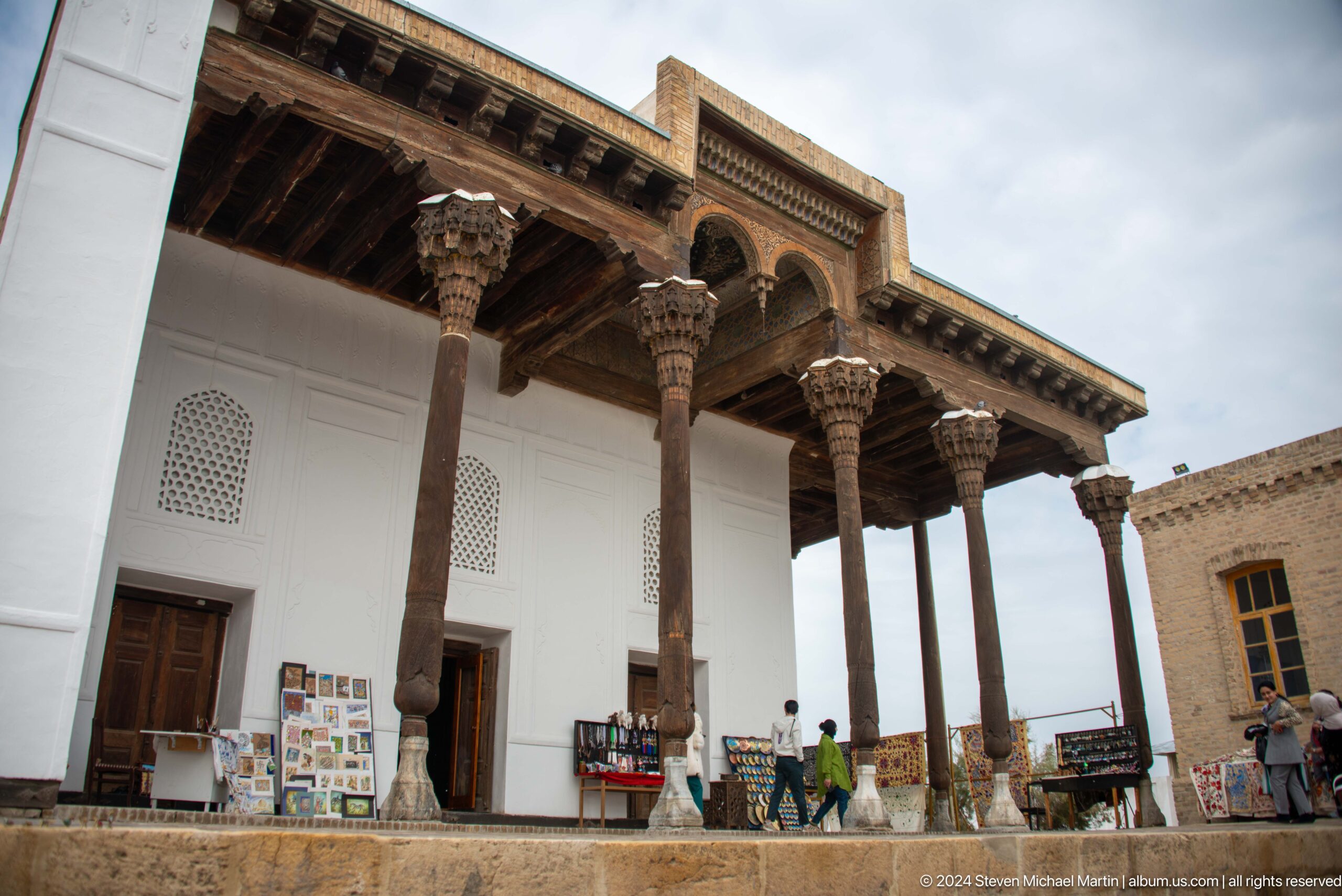
Ark palace courtyard veranda in the historic center of Bukhara. The photograph records timber-columned courtyard veranda, emphasizing the city's layered brick construction, ornamental traditions, and the close relationship between religious, commercial, and civic spaces that developed along Central Asian trade networks.
Caption
Ark palace courtyard veranda in the historic center of Bukhara. The photograph records timber-columned courtyard veranda, emphasizing the city's layered brick construction, ornamental traditions, and the close relationship between religious, commercial, and civic spaces that developed along Central Asian trade networks.
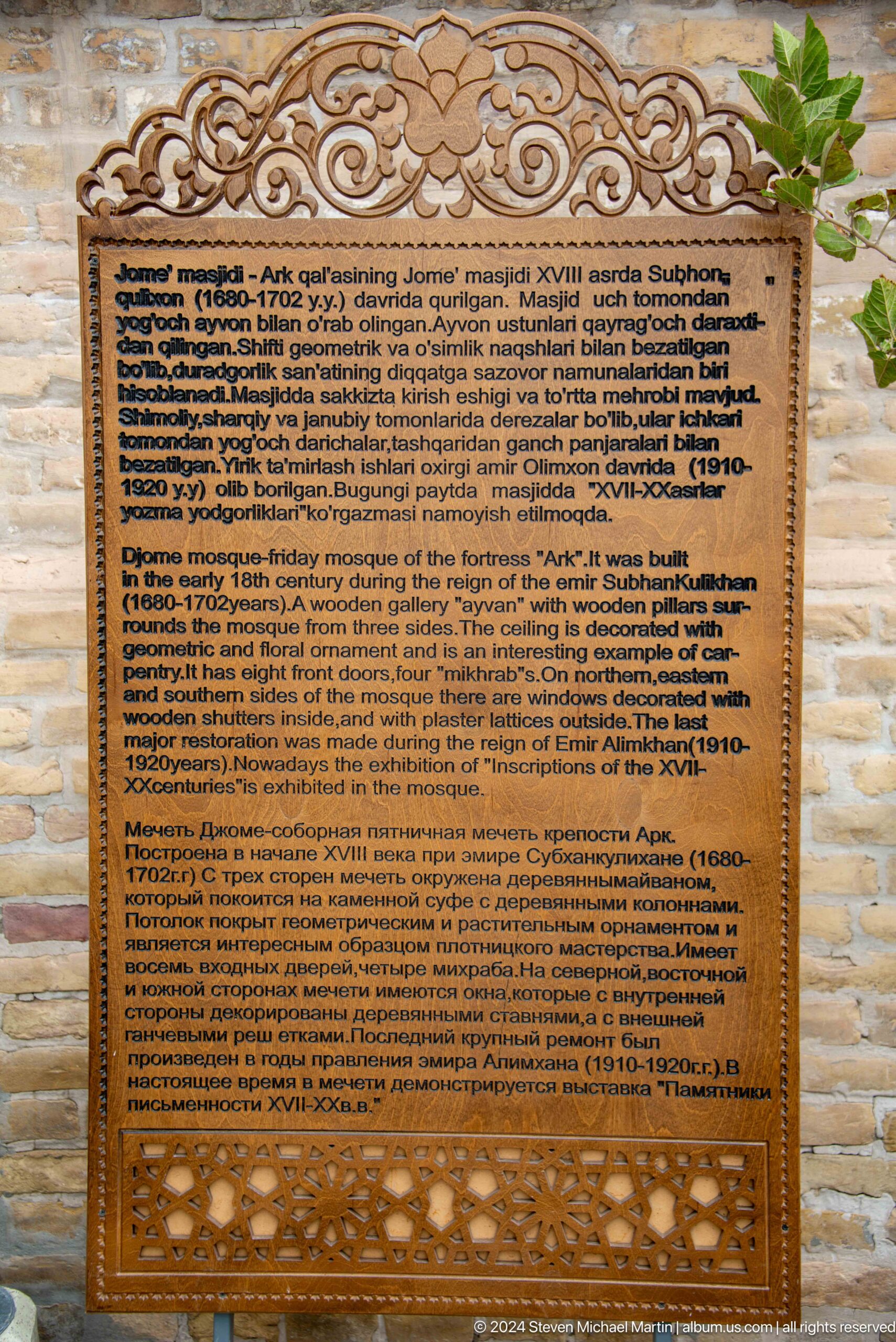
Ark of Bukhara interpretation panel in the historic center of Bukhara. The photograph records historical information panel about the Ark, emphasizing the city's layered brick construction, ornamental traditions, and the close relationship between religious, commercial, and civic spaces that developed along Central Asian trade networks.
Caption
Ark of Bukhara interpretation panel in the historic center of Bukhara. The photograph records historical information panel about the Ark, emphasizing the city's layered brick construction, ornamental traditions, and the close relationship between religious, commercial, and civic spaces that developed along Central Asian trade networks.
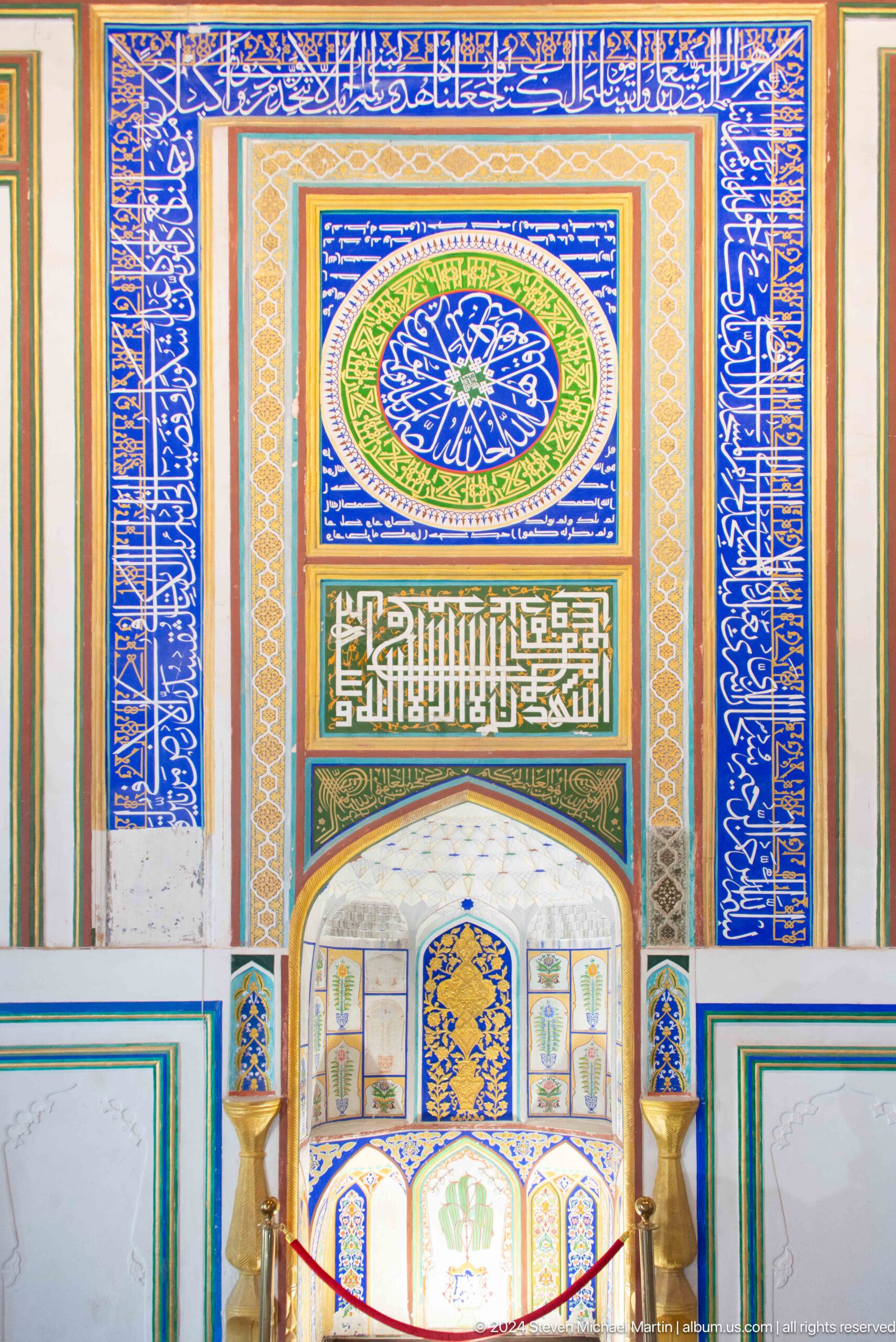
Islamic calligraphic tilework in the historic center of Bukhara. The photograph records blue tile panel with Arabic calligraphy, emphasizing the city's layered brick construction, ornamental traditions, and the close relationship between religious, commercial, and civic spaces that developed along Central Asian trade networks.
Caption
Islamic calligraphic tilework in the historic center of Bukhara. The photograph records blue tile panel with Arabic calligraphy, emphasizing the city's layered brick construction, ornamental traditions, and the close relationship between religious, commercial, and civic spaces that developed along Central Asian trade networks.
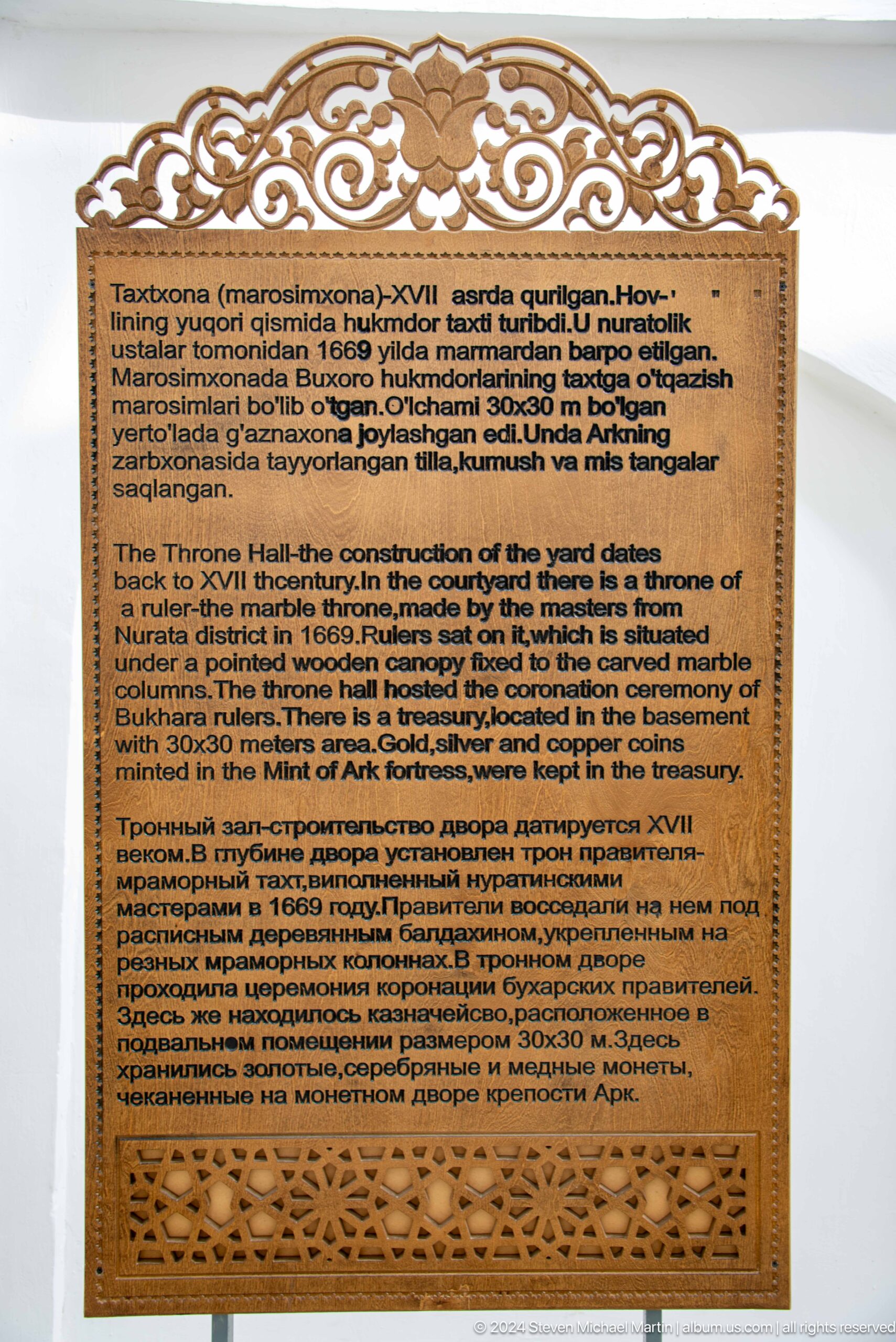
Historic interpretation panel in the historic center of Bukhara. The photograph records bilingual panel describing Timurid construction, emphasizing the city's layered brick construction, ornamental traditions, and the close relationship between religious, commercial, and civic spaces that developed along Central Asian trade networks.
Caption
Historic interpretation panel in the historic center of Bukhara. The photograph records bilingual panel describing Timurid construction, emphasizing the city's layered brick construction, ornamental traditions, and the close relationship between religious, commercial, and civic spaces that developed along Central Asian trade networks.

Decorated wooden palace interior in the historic center of Bukhara. The photograph records painted wooden ceiling and carved columns, emphasizing the city's layered brick construction, ornamental traditions, and the close relationship between religious, commercial, and civic spaces that developed along Central Asian trade networks.
Caption
Decorated wooden palace interior in the historic center of Bukhara. The photograph records painted wooden ceiling and carved columns, emphasizing the city's layered brick construction, ornamental traditions, and the close relationship between religious, commercial, and civic spaces that developed along Central Asian trade networks.

Polychrome wooden ceiling in the historic center of Bukhara. The photograph records coffered painted ceiling viewed upward, emphasizing the city's layered brick construction, ornamental traditions, and the close relationship between religious, commercial, and civic spaces that developed along Central Asian trade networks.
Caption
Polychrome wooden ceiling in the historic center of Bukhara. The photograph records coffered painted ceiling viewed upward, emphasizing the city's layered brick construction, ornamental traditions, and the close relationship between religious, commercial, and civic spaces that developed along Central Asian trade networks.
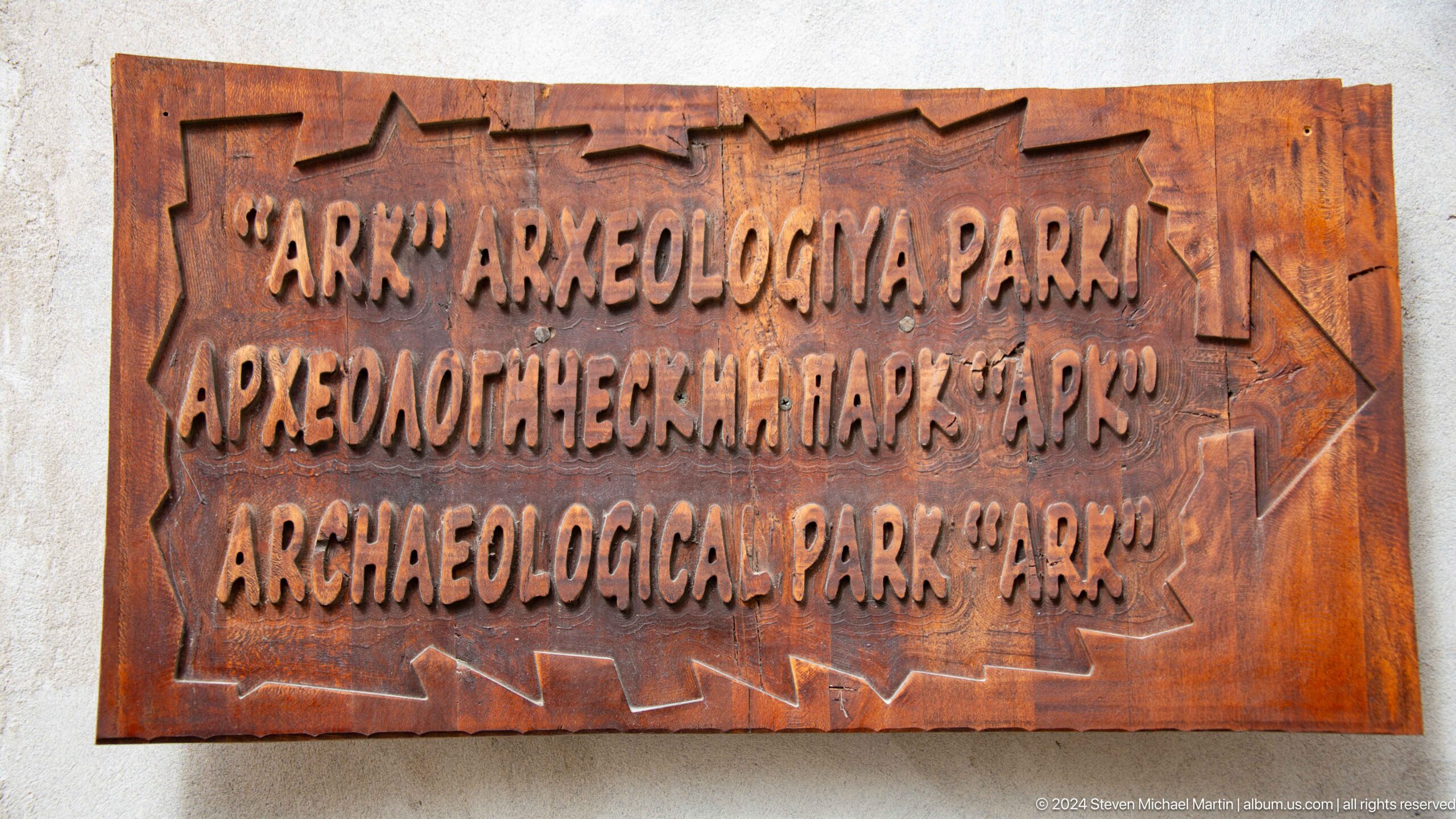
Ark Archaeological Park sign in the historic center of Bukhara. The photograph records wooden sign reading Ark Archaeological Park, emphasizing the city's layered brick construction, ornamental traditions, and the close relationship between religious, commercial, and civic spaces that developed along Central Asian trade networks.
Caption
Ark Archaeological Park sign in the historic center of Bukhara. The photograph records wooden sign reading Ark Archaeological Park, emphasizing the city's layered brick construction, ornamental traditions, and the close relationship between religious, commercial, and civic spaces that developed along Central Asian trade networks.

Poi Kalyan panorama in the historic center of Bukhara. The photograph records Poi Kalyan ensemble across city rooftops, emphasizing the city's layered brick construction, ornamental traditions, and the close relationship between religious, commercial, and civic spaces that developed along Central Asian trade networks.
Caption
Poi Kalyan panorama in the historic center of Bukhara. The photograph records Poi Kalyan ensemble across city rooftops, emphasizing the city's layered brick construction, ornamental traditions, and the close relationship between religious, commercial, and civic spaces that developed along Central Asian trade networks.

Bukhara historic skyline in the historic center of Bukhara. The photograph records turquoise dome above dense historic buildings, emphasizing the city's layered brick construction, ornamental traditions, and the close relationship between religious, commercial, and civic spaces that developed along Central Asian trade networks.
Caption
Bukhara historic skyline in the historic center of Bukhara. The photograph records turquoise dome above dense historic buildings, emphasizing the city's layered brick construction, ornamental traditions, and the close relationship between religious, commercial, and civic spaces that developed along Central Asian trade networks.

Ruined historic dome in the historic center of Bukhara. The photograph records ruined brick dome with open arch, emphasizing the city's layered brick construction, ornamental traditions, and the close relationship between religious, commercial, and civic spaces that developed along Central Asian trade networks.
Caption
Ruined historic dome in the historic center of Bukhara. The photograph records ruined brick dome with open arch, emphasizing the city's layered brick construction, ornamental traditions, and the close relationship between religious, commercial, and civic spaces that developed along Central Asian trade networks.

Courtyard market veranda in the historic center of Bukhara. The photograph records long wooden veranda with market displays, emphasizing the city's layered brick construction, ornamental traditions, and the close relationship between religious, commercial, and civic spaces that developed along Central Asian trade networks.
Caption
Courtyard market veranda in the historic center of Bukhara. The photograph records long wooden veranda with market displays, emphasizing the city's layered brick construction, ornamental traditions, and the close relationship between religious, commercial, and civic spaces that developed along Central Asian trade networks.

Ceremonial throne display in the historic center of Bukhara. The photograph records ornamental throne with red cushion, emphasizing the city's layered brick construction, ornamental traditions, and the close relationship between religious, commercial, and civic spaces that developed along Central Asian trade networks.
Caption
Ceremonial throne display in the historic center of Bukhara. The photograph records ornamental throne with red cushion, emphasizing the city's layered brick construction, ornamental traditions, and the close relationship between religious, commercial, and civic spaces that developed along Central Asian trade networks.

A multilingual interpretive panel summarizes the history of the Ark, Bukhara’s monumental citadel. The sign places the fortified complex within the city’s long political history and identifies it as both a defensive stronghold and a seat of government.
Caption
A multilingual interpretive panel summarizes the history of the Ark, Bukhara’s monumental citadel. The sign places the fortified complex within the city’s long political history and identifies it as both a defensive stronghold and a seat of government.

A turquoise geometric ceiling panel radiates from a dark central rosette through interlocking stars and polygonal compartments. Fine vegetal motifs fill the surrounding fields, demonstrating the layered geometry and painted craftsmanship characteristic of Bukhara’s decorated timber interiors.
Caption
A turquoise geometric ceiling panel radiates from a dark central rosette through interlocking stars and polygonal compartments. Fine vegetal motifs fill the surrounding fields, demonstrating the layered geometry and painted craftsmanship characteristic of Bukhara’s decorated timber interiors.

Deeply carved vegetal forms cover a wooden column at the Bolo Hauz Mosque. The shallow depth of field isolates the hand-worked surface, emphasizing the sculptural quality of the mosque’s timber supports and the continuity of ornamental carving across structural elements.
Caption
Deeply carved vegetal forms cover a wooden column at the Bolo Hauz Mosque. The shallow depth of field isolates the hand-worked surface, emphasizing the sculptural quality of the mosque’s timber supports and the continuity of ornamental carving across structural elements.
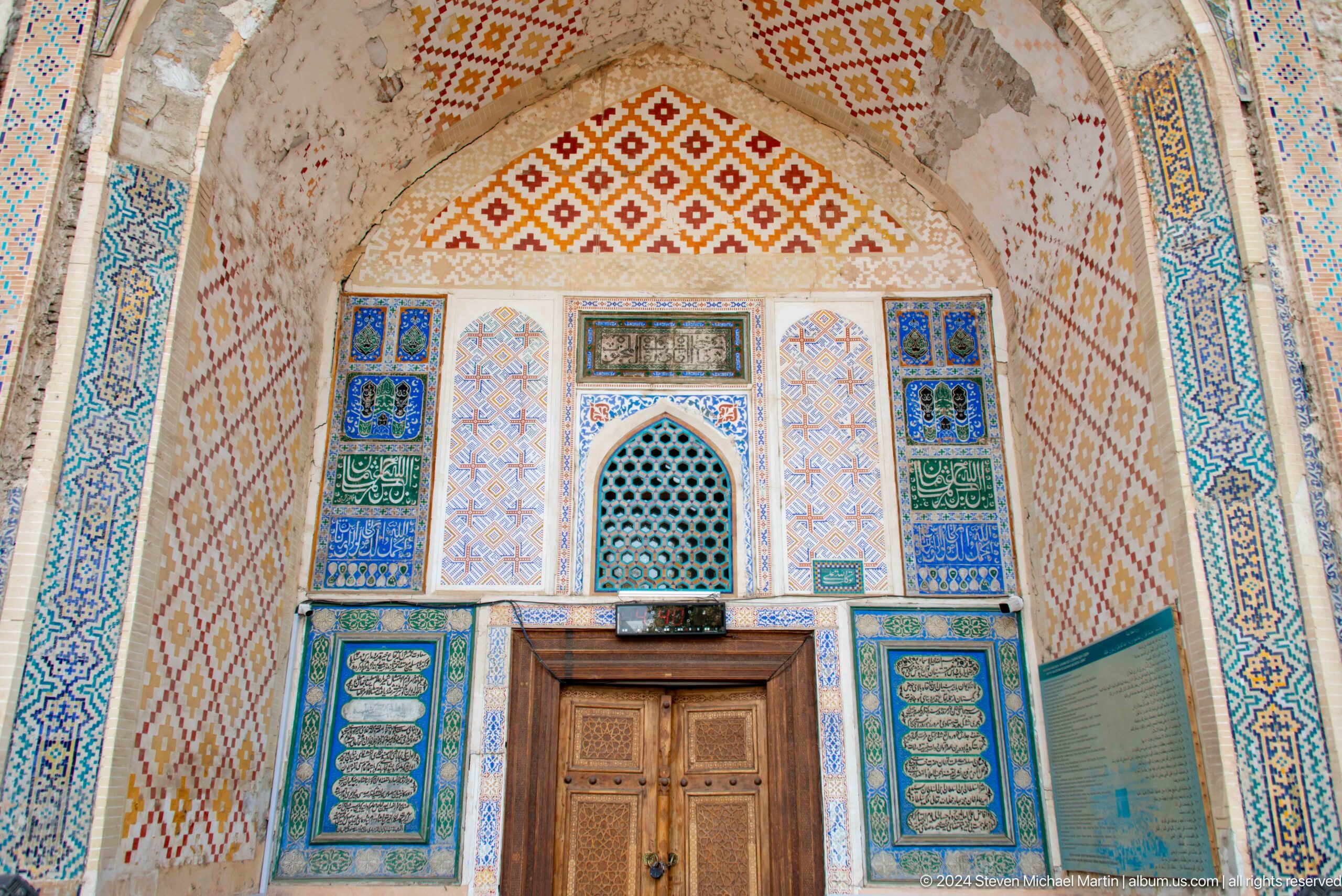
A richly decorated bay at the Bolo Hauz Mosque combines a pointed arch, carved wooden doors, painted panels, and blue-green tilework. The layered ornament demonstrates how glazed ceramics, woodwork, and geometric design were coordinated across the mosque’s façade and entrance spaces.
Caption
A richly decorated bay at the Bolo Hauz Mosque combines a pointed arch, carved wooden doors, painted panels, and blue-green tilework. The layered ornament demonstrates how glazed ceramics, woodwork, and geometric design were coordinated across the mosque’s façade and entrance spaces.
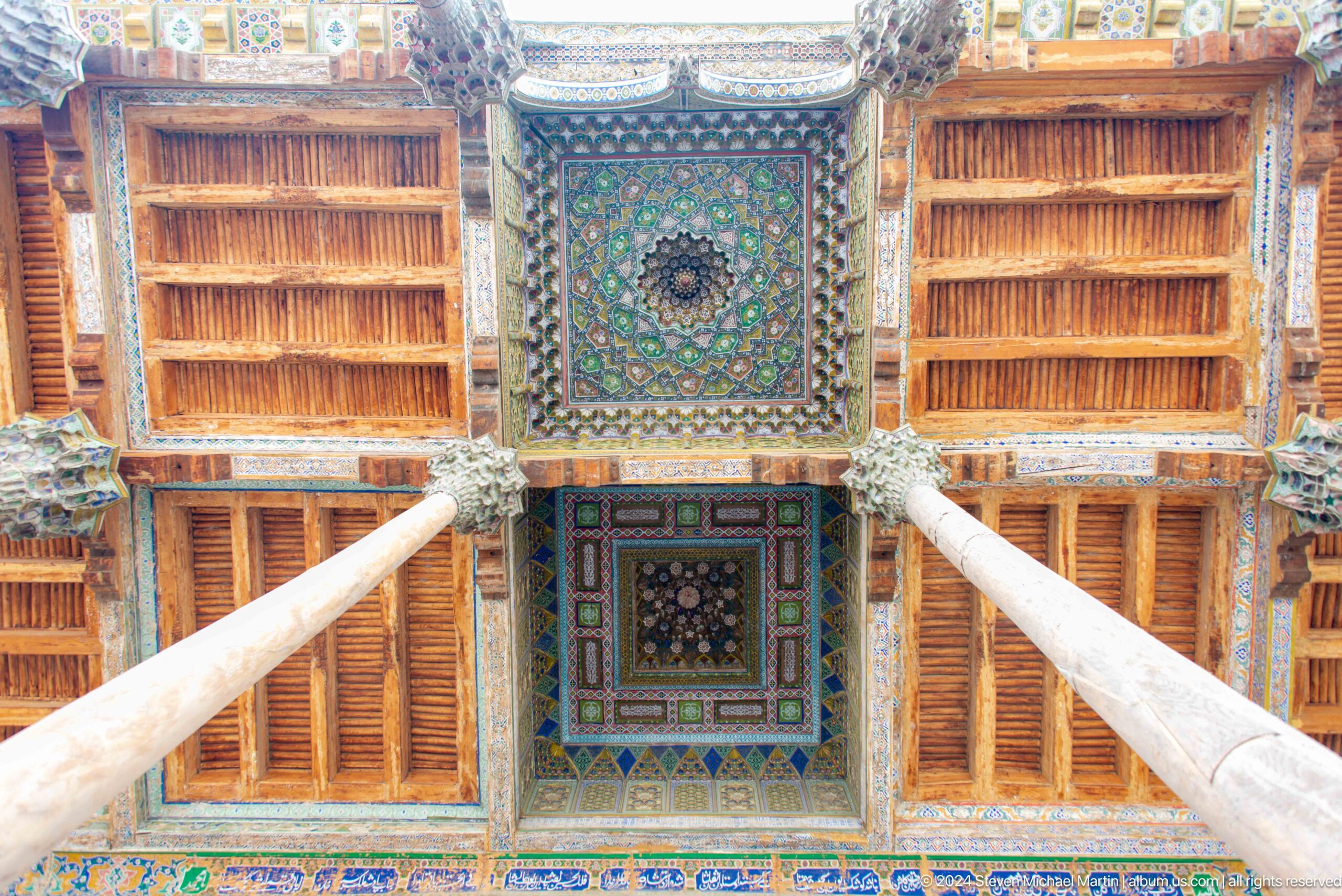
Looking upward through the timber columns of the Bolo Hauz Mosque, the photograph reveals a painted and coffered wooden ceiling organized around geometric panels. The low-angle composition emphasizes the craftsmanship of the mosque’s columned portico and its densely ornamented overhead surfaces.
Caption
Looking upward through the timber columns of the Bolo Hauz Mosque, the photograph reveals a painted and coffered wooden ceiling organized around geometric panels. The low-angle composition emphasizes the craftsmanship of the mosque’s columned portico and its densely ornamented overhead surfaces.
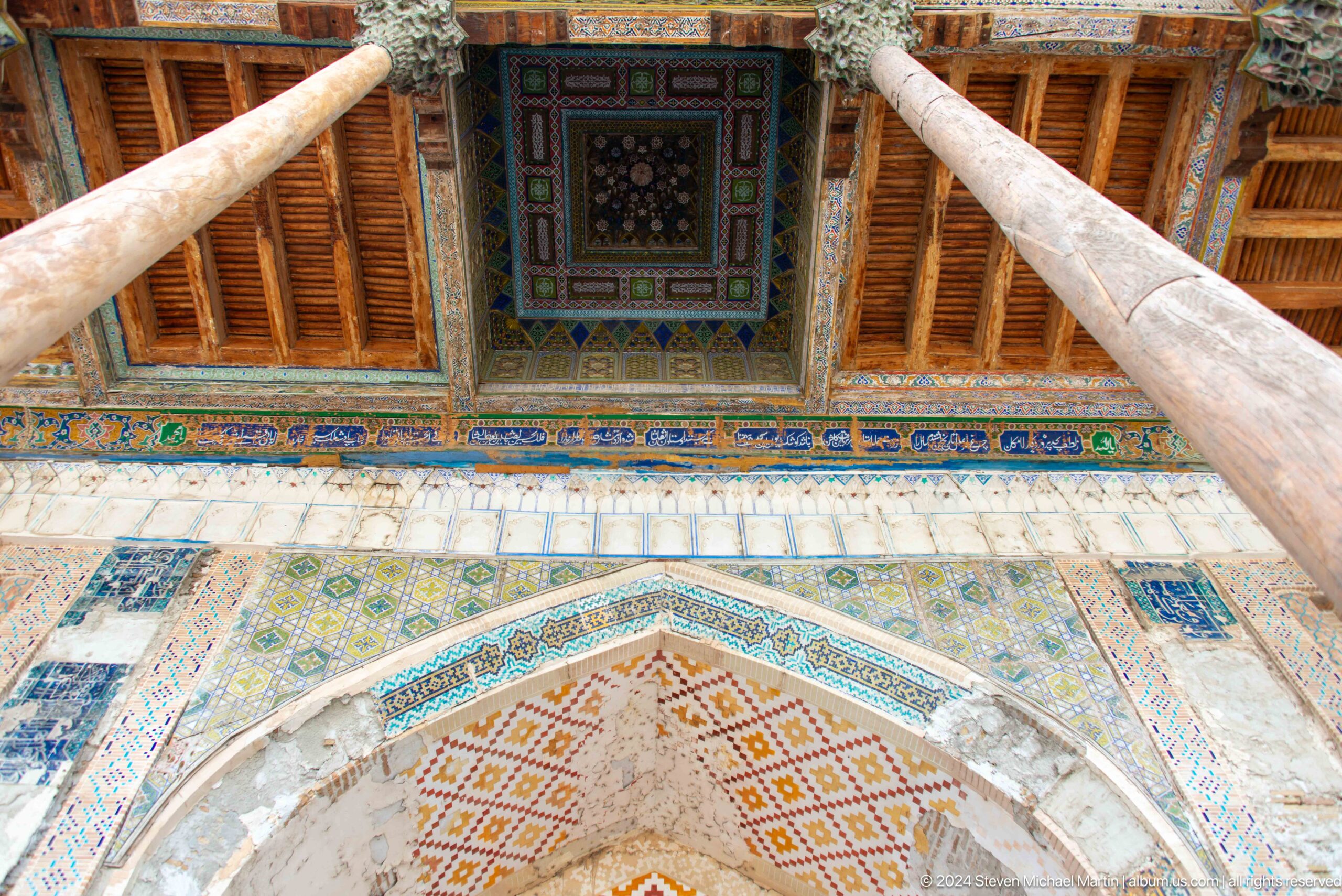
Two wooden columns frame the richly painted underside of the Bolo Hauz Mosque portico. The converging viewpoint draws attention to the relationship between the carved supports, bracketed roof structure, and colorful geometric ceiling panels.
Caption
Two wooden columns frame the richly painted underside of the Bolo Hauz Mosque portico. The converging viewpoint draws attention to the relationship between the carved supports, bracketed roof structure, and colorful geometric ceiling panels.
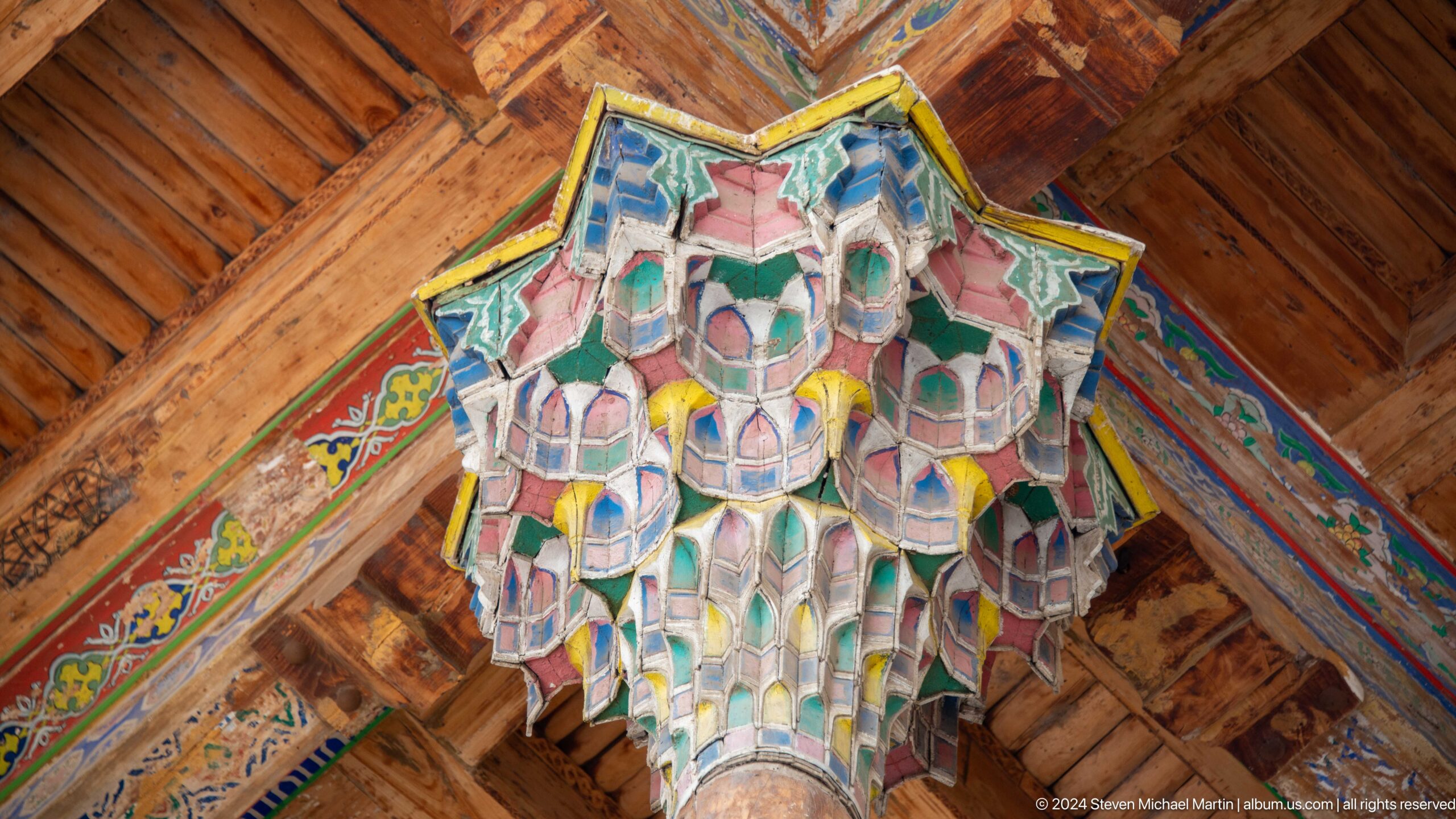
A close detail isolates one of the Bolo Hauz Mosque’s elaborate wooden capitals. Layered, faceted forms resembling muqarnas are painted in turquoise, red, yellow, and white, transforming the structural transition between column and roof into a vivid decorative centerpiece.
Caption
A close detail isolates one of the Bolo Hauz Mosque’s elaborate wooden capitals. Layered, faceted forms resembling muqarnas are painted in turquoise, red, yellow, and white, transforming the structural transition between column and roof into a vivid decorative centerpiece.
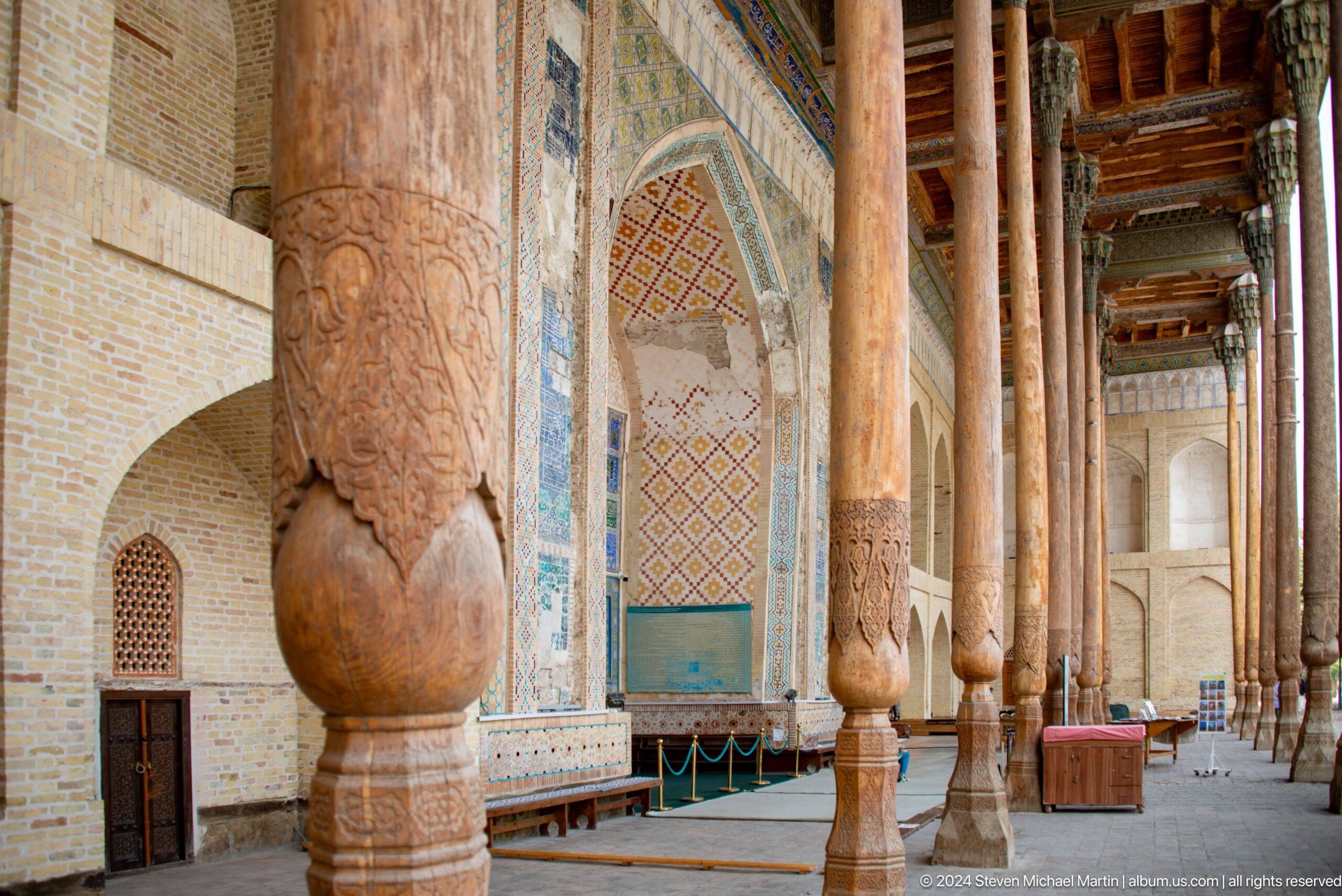
The columned portico of the Bolo Hauz Mosque extends in strong perspective beside a façade enriched with tilework and painted panels. The tall carved timber supports create a rhythmic screen between the open forecourt and the shaded prayer hall.
Caption
The columned portico of the Bolo Hauz Mosque extends in strong perspective beside a façade enriched with tilework and painted panels. The tall carved timber supports create a rhythmic screen between the open forecourt and the shaded prayer hall.

A band of repeating painted arches, rosettes, and geometric panels illustrates the dense polychrome decoration of the Bolo Hauz Mosque. The close framing turns the architectural surface into an almost textile-like composition of green, blue, gold, and red.
Caption
A band of repeating painted arches, rosettes, and geometric panels illustrates the dense polychrome decoration of the Bolo Hauz Mosque. The close framing turns the architectural surface into an almost textile-like composition of green, blue, gold, and red.
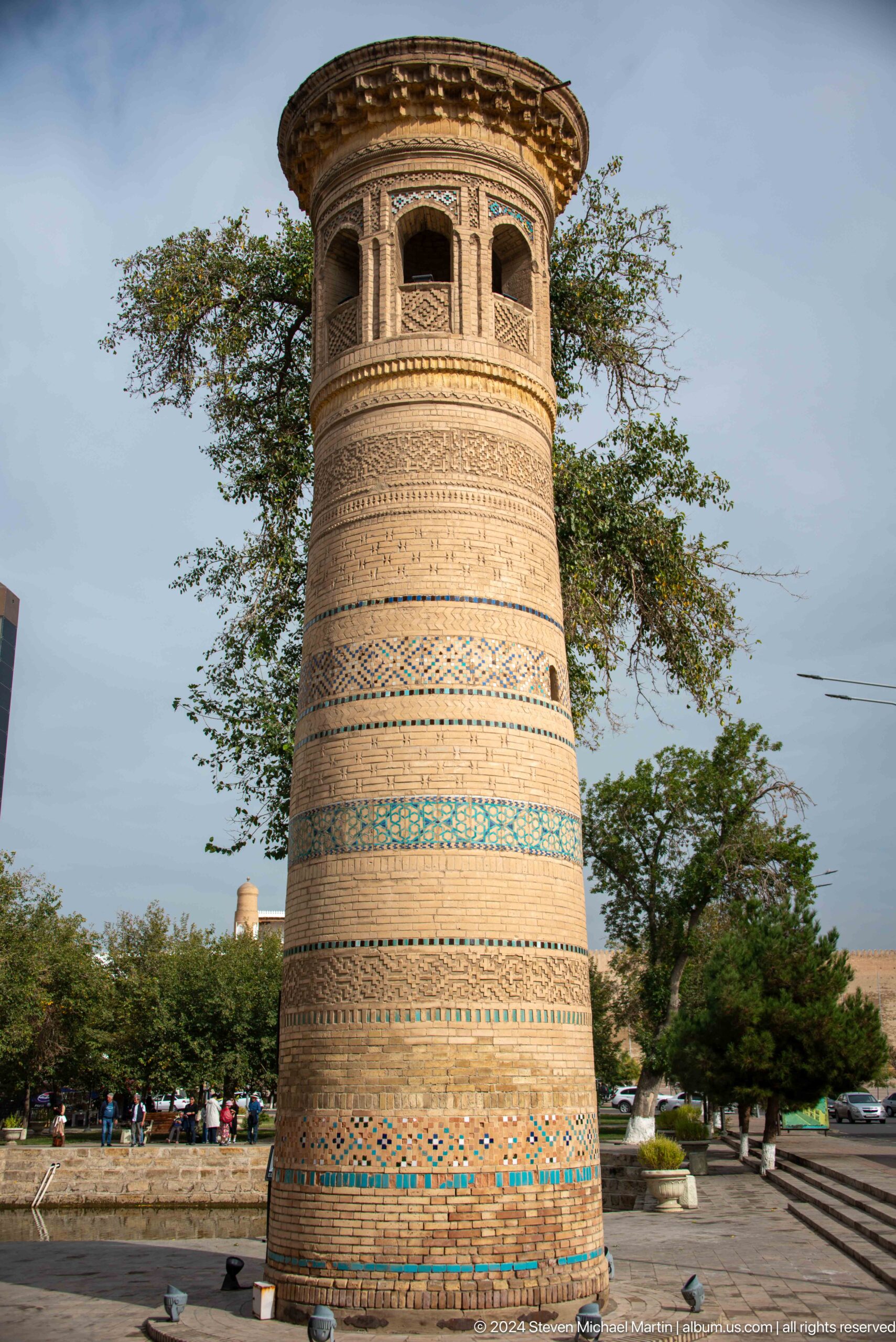
The slender minaret beside the Bolo Hauz Mosque is built in patterned brickwork punctuated by narrow bands of glazed turquoise tile. Alternating masonry textures wrap the cylindrical shaft, showing how structural brick was also used as a decorative medium in Bukhara.
Caption
The slender minaret beside the Bolo Hauz Mosque is built in patterned brickwork punctuated by narrow bands of glazed turquoise tile. Alternating masonry textures wrap the cylindrical shaft, showing how structural brick was also used as a decorative medium in Bukhara.
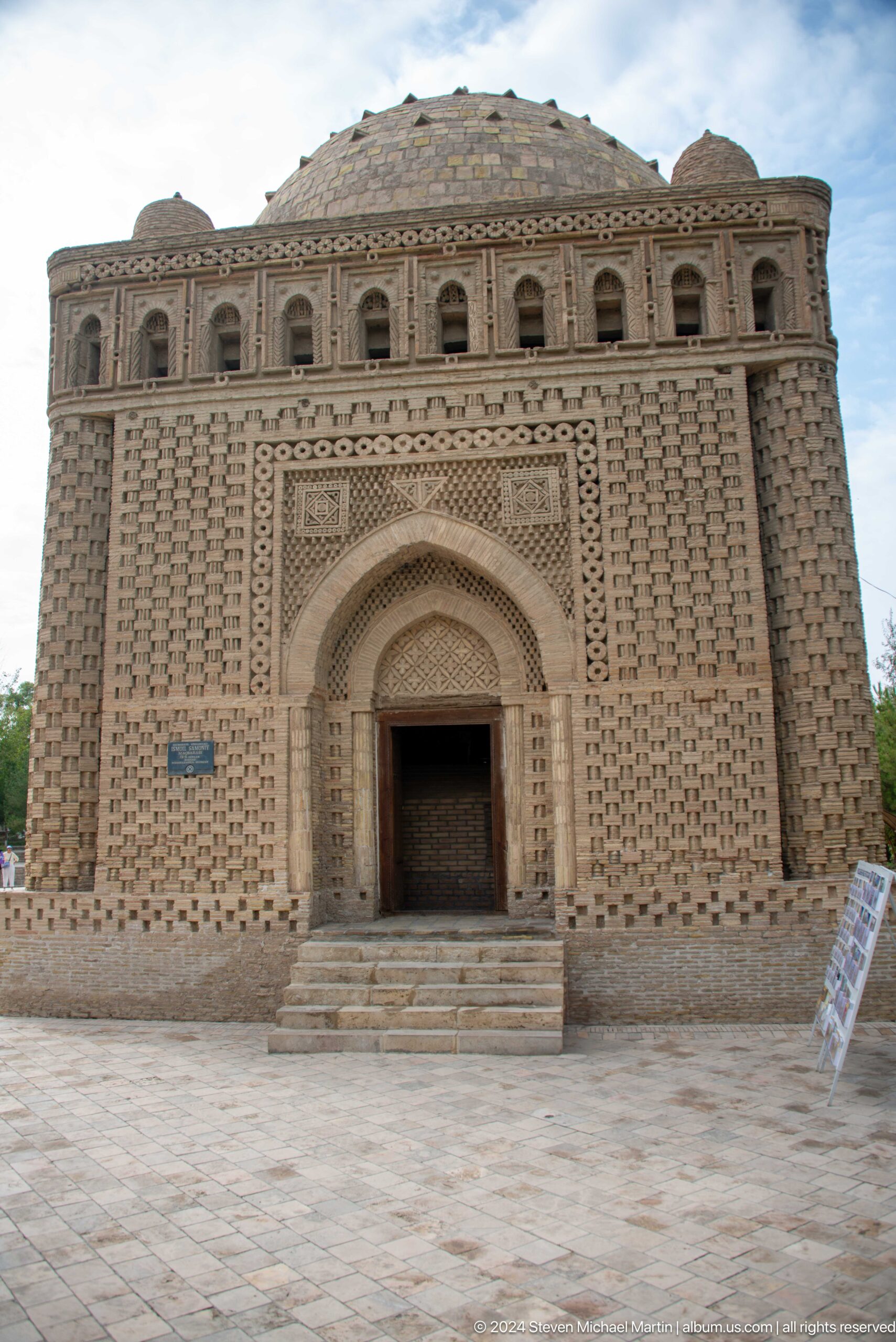
The entrance to the Samanid Mausoleum is framed by layered pointed arches and intricate patterned brickwork. Without relying on glazed decoration, the façade creates visual depth through the careful arrangement of baked bricks, carved terracotta, and recessed geometric panels.
Caption
The entrance to the Samanid Mausoleum is framed by layered pointed arches and intricate patterned brickwork. Without relying on glazed decoration, the façade creates visual depth through the careful arrangement of baked bricks, carved terracotta, and recessed geometric panels.
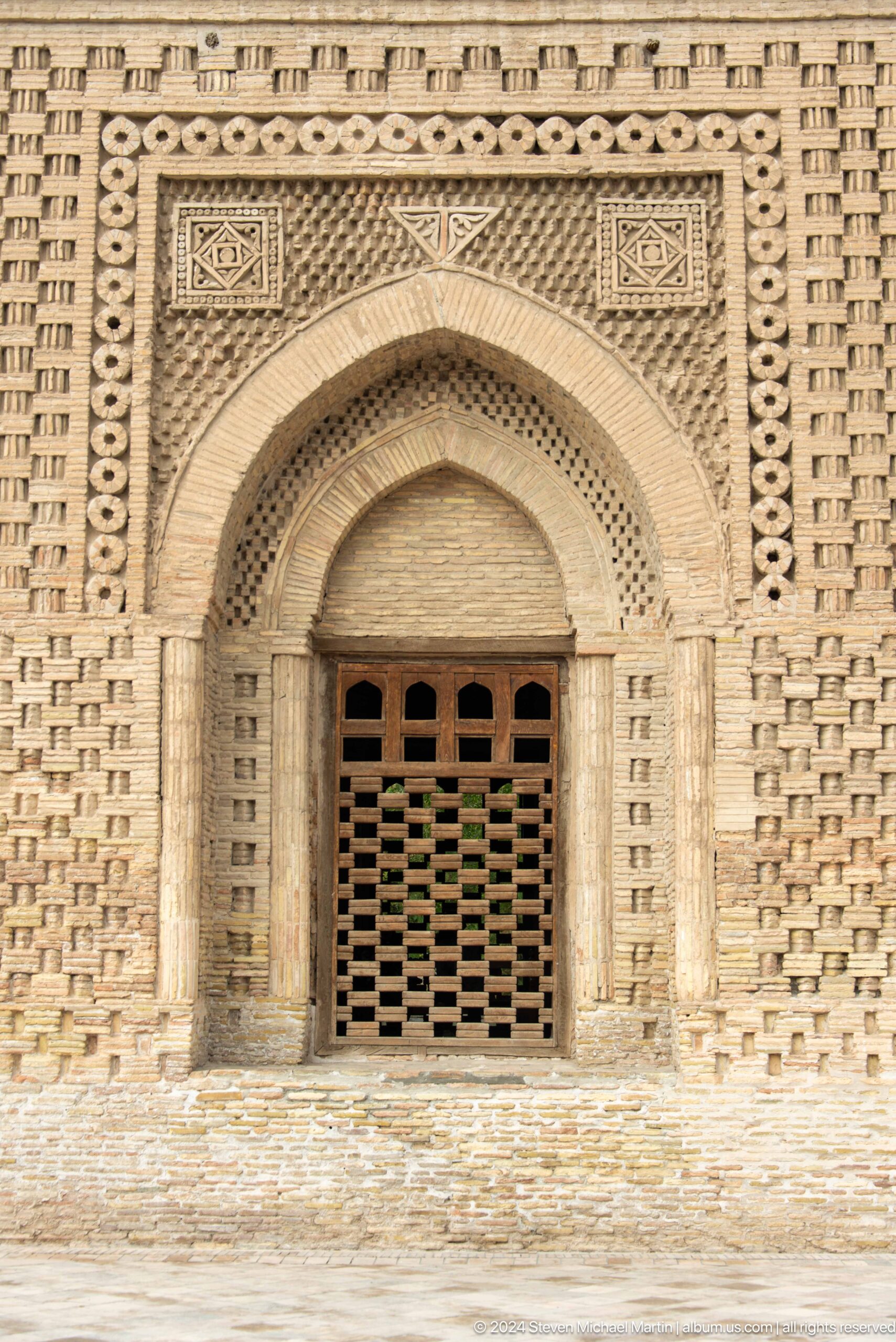
A close view of the Samanid Mausoleum entrance emphasizes the nested brick arch, patterned spandrels, and lattice door. The photograph reveals how varied brick orientations and carved details produce a complex decorative program from a restrained material palette.
Caption
A close view of the Samanid Mausoleum entrance emphasizes the nested brick arch, patterned spandrels, and lattice door. The photograph reveals how varied brick orientations and carved details produce a complex decorative program from a restrained material palette.
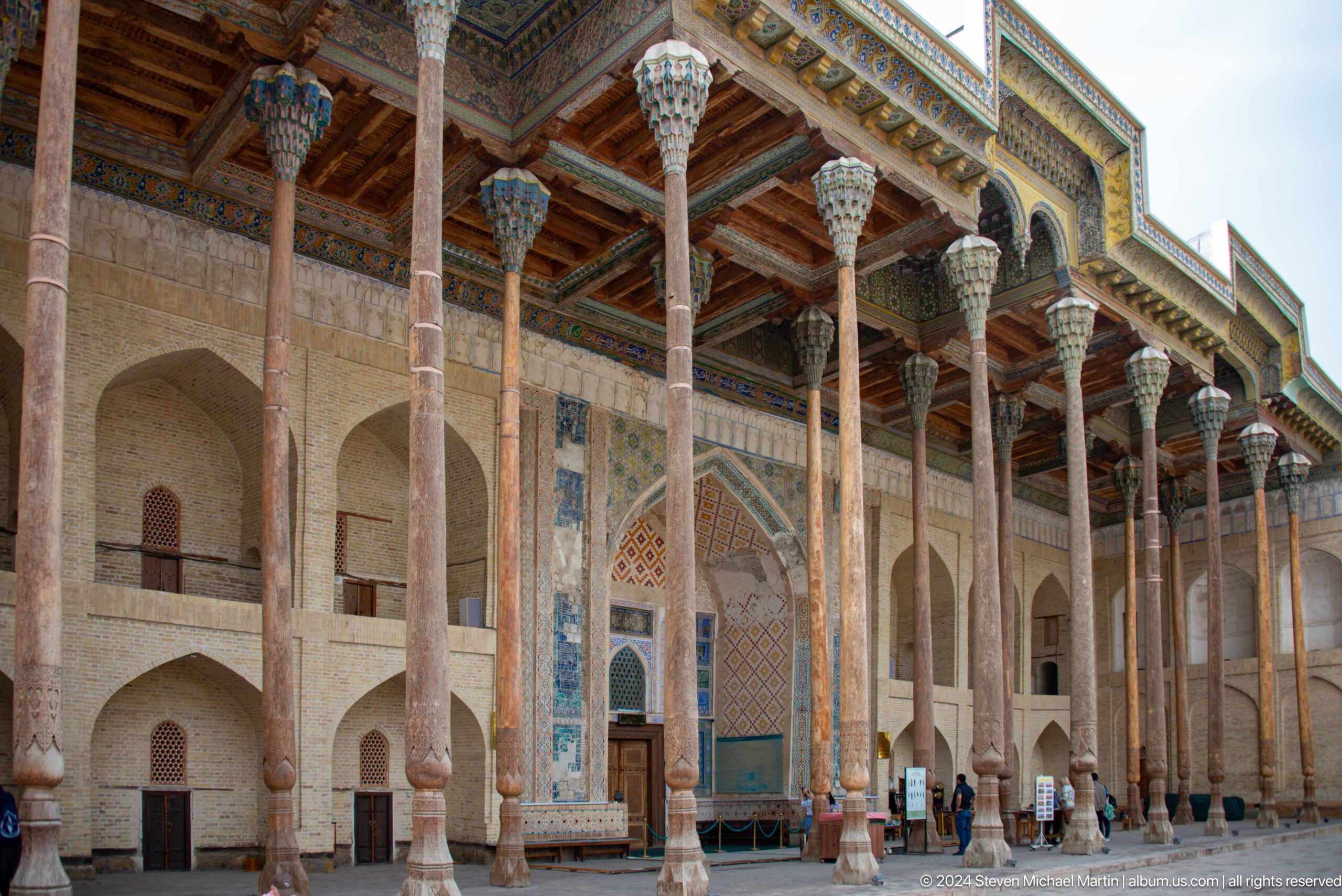
An oblique view of the Bolo Hauz Mosque highlights its long timber portico, elevated façade, and repeated carved columns. The diagonal composition conveys the scale of the shaded veranda and the strong rhythm created by its closely spaced supports.
Caption
An oblique view of the Bolo Hauz Mosque highlights its long timber portico, elevated façade, and repeated carved columns. The diagonal composition conveys the scale of the shaded veranda and the strong rhythm created by its closely spaced supports.
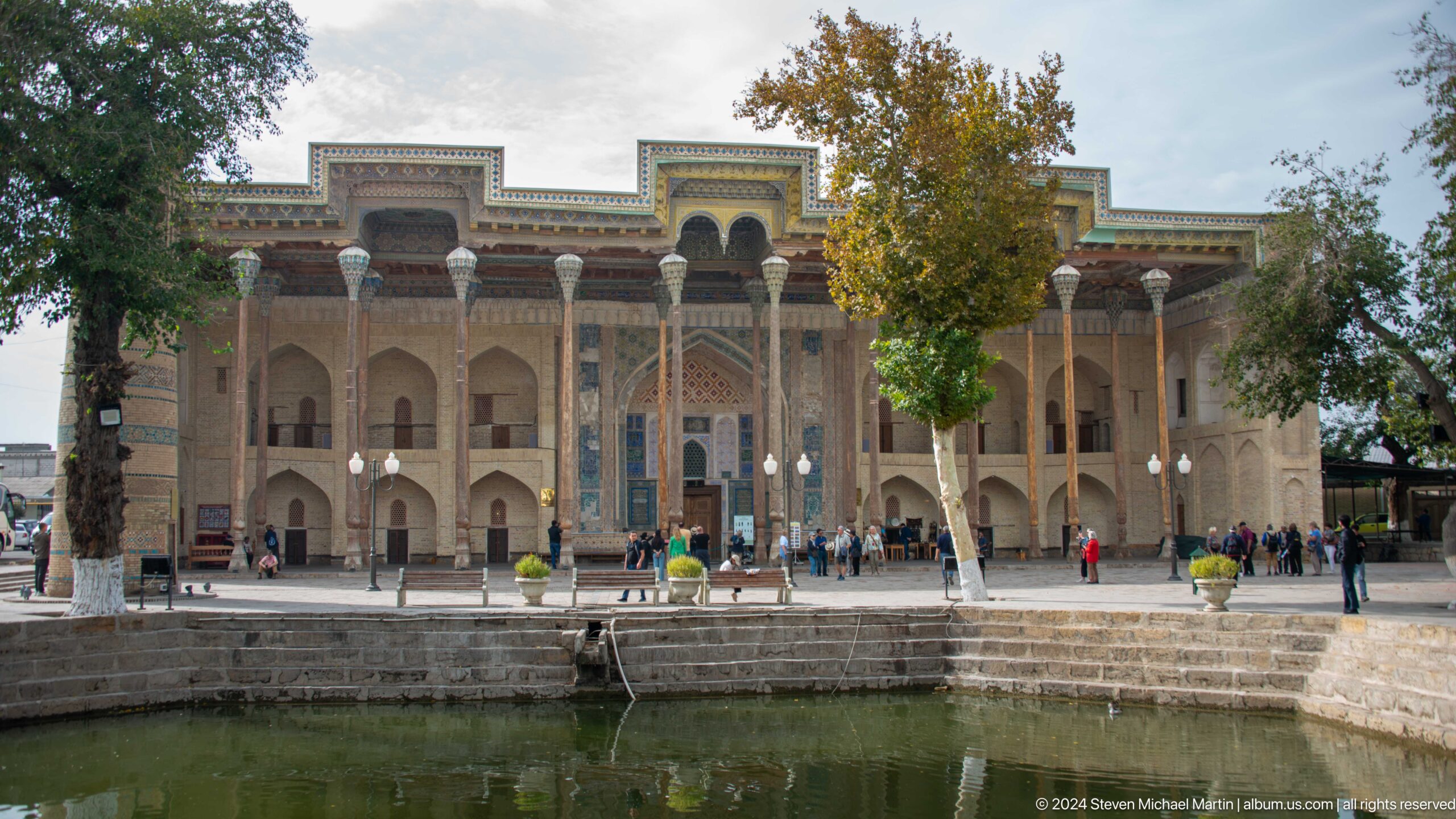
The Bolo Hauz Mosque faces its historic pool, or hauz, across a public forecourt. The wide view brings together the mosque’s monumental wooden portico, surrounding trees, stepped pool edge, and visitors, showing the building within the civic landscape from which it takes its name.
Caption
The Bolo Hauz Mosque faces its historic pool, or hauz, across a public forecourt. The wide view brings together the mosque’s monumental wooden portico, surrounding trees, stepped pool edge, and visitors, showing the building within the civic landscape from which it takes its name.

The Samanid Mausoleum rises as a compact, nearly cubic brick structure beneath a low dome. Blind arcades, basket-weave masonry, and ornamental brick bands animate the upper façade, making the monument one of Bukhara’s clearest demonstrations of early Islamic brick craftsmanship.
Caption
The Samanid Mausoleum rises as a compact, nearly cubic brick structure beneath a low dome. Blind arcades, basket-weave masonry, and ornamental brick bands animate the upper façade, making the monument one of Bukhara’s clearest demonstrations of early Islamic brick craftsmanship.
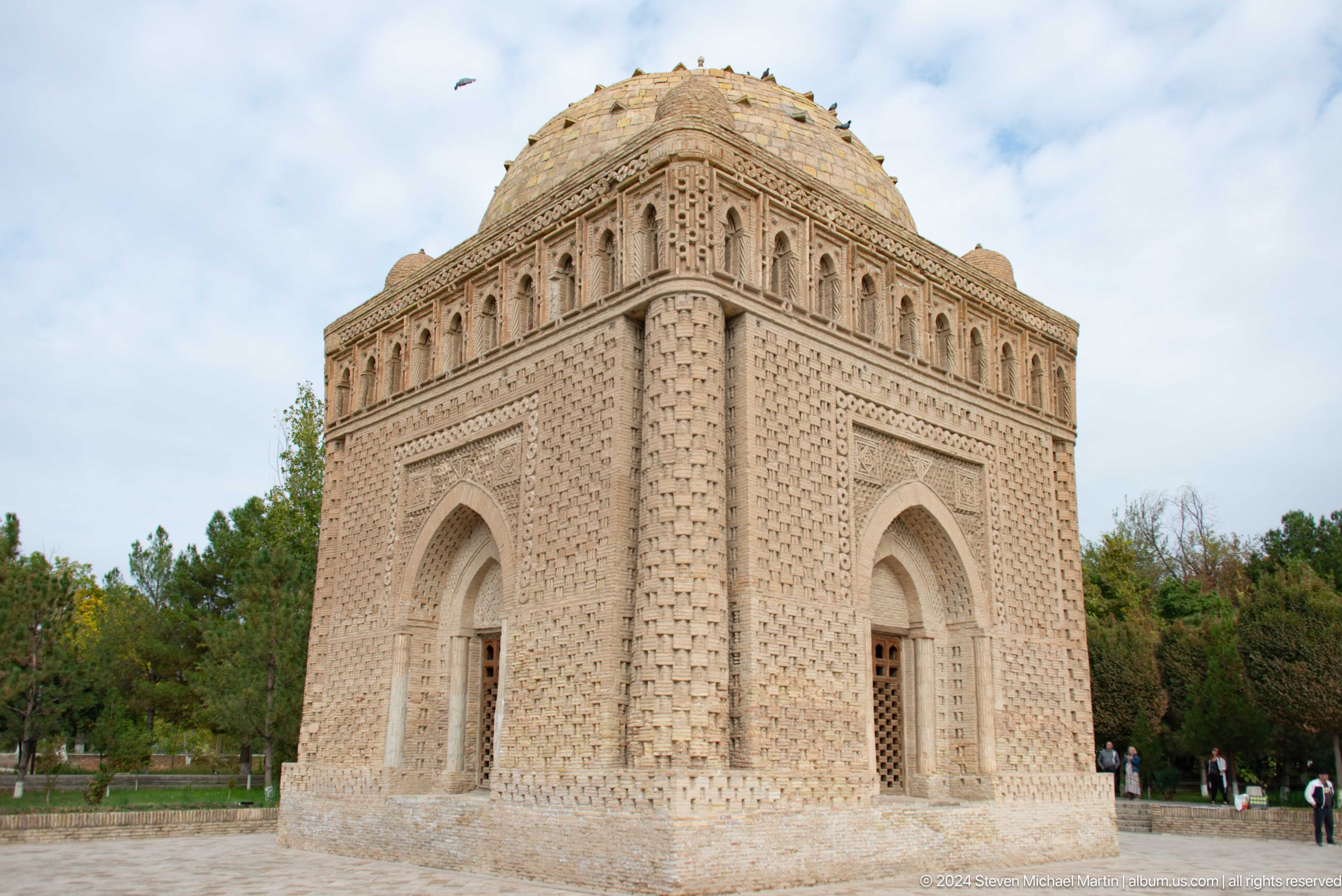
A three-quarter view shows the Samanid Mausoleum’s balanced square mass, corner treatment, arched openings, and shallow dome. Repeating brick patterns create a richly textured surface whose ornament is inseparable from the monument’s construction.
Caption
A three-quarter view shows the Samanid Mausoleum’s balanced square mass, corner treatment, arched openings, and shallow dome. Repeating brick patterns create a richly textured surface whose ornament is inseparable from the monument’s construction.

The Samanid Mausoleum stands at the end of a paved garden approach framed by clipped shrubs and mature trees. The centered composition presents the compact domed monument as an isolated architectural object while also recording its modern landscaped setting.
Caption
The Samanid Mausoleum stands at the end of a paved garden approach framed by clipped shrubs and mature trees. The centered composition presents the compact domed monument as an isolated architectural object while also recording its modern landscaped setting.
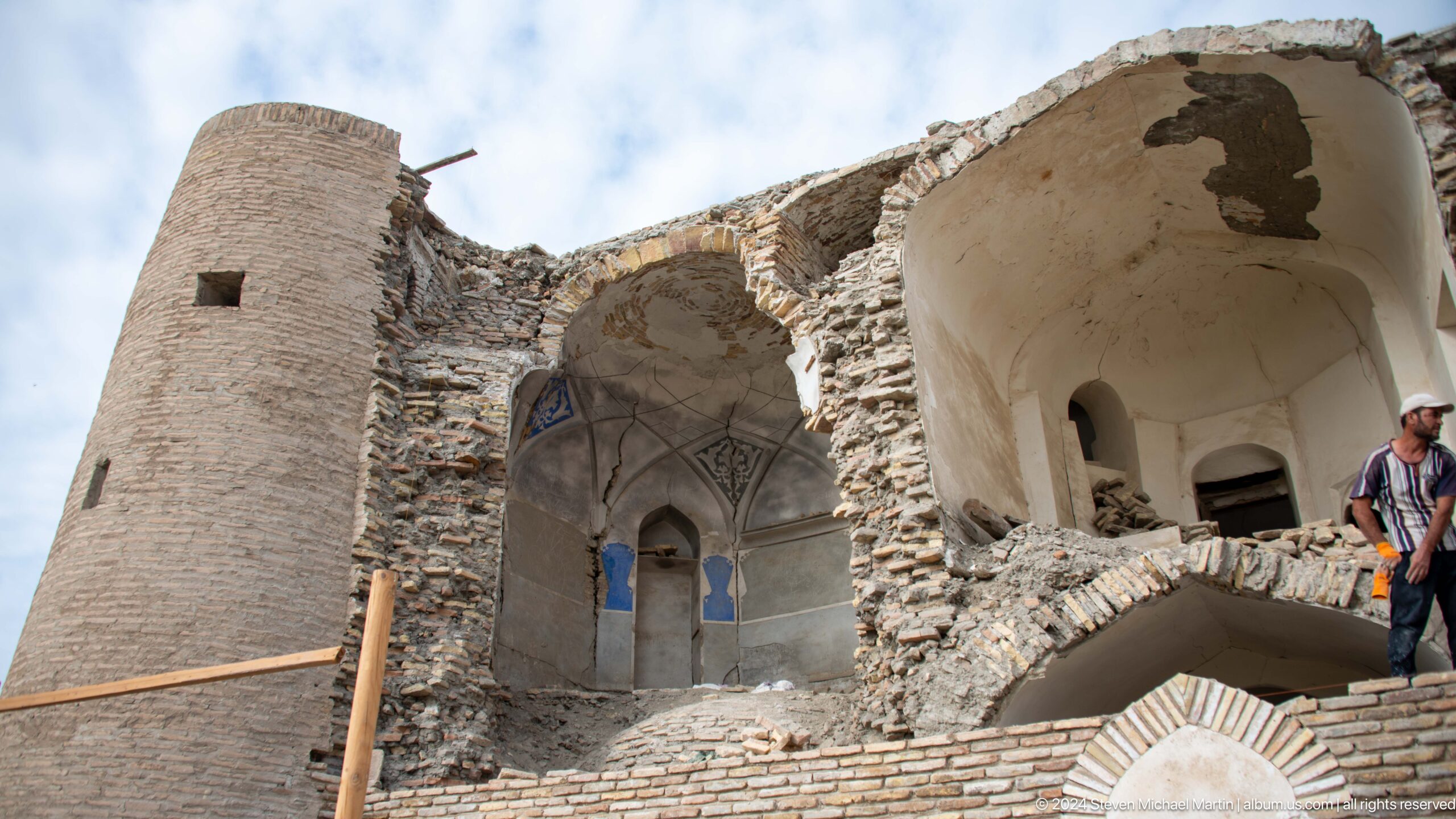
Exposed brick, fractured plaster, and partially preserved arched niches reveal the layered construction of a damaged historic structure in Bukhara. The image records both surviving decorative forms and extensive material loss, making it useful for documenting conservation condition rather than only architectural appearance.
Caption
Exposed brick, fractured plaster, and partially preserved arched niches reveal the layered construction of a damaged historic structure in Bukhara. The image records both surviving decorative forms and extensive material loss, making it useful for documenting conservation condition rather than only architectural appearance.
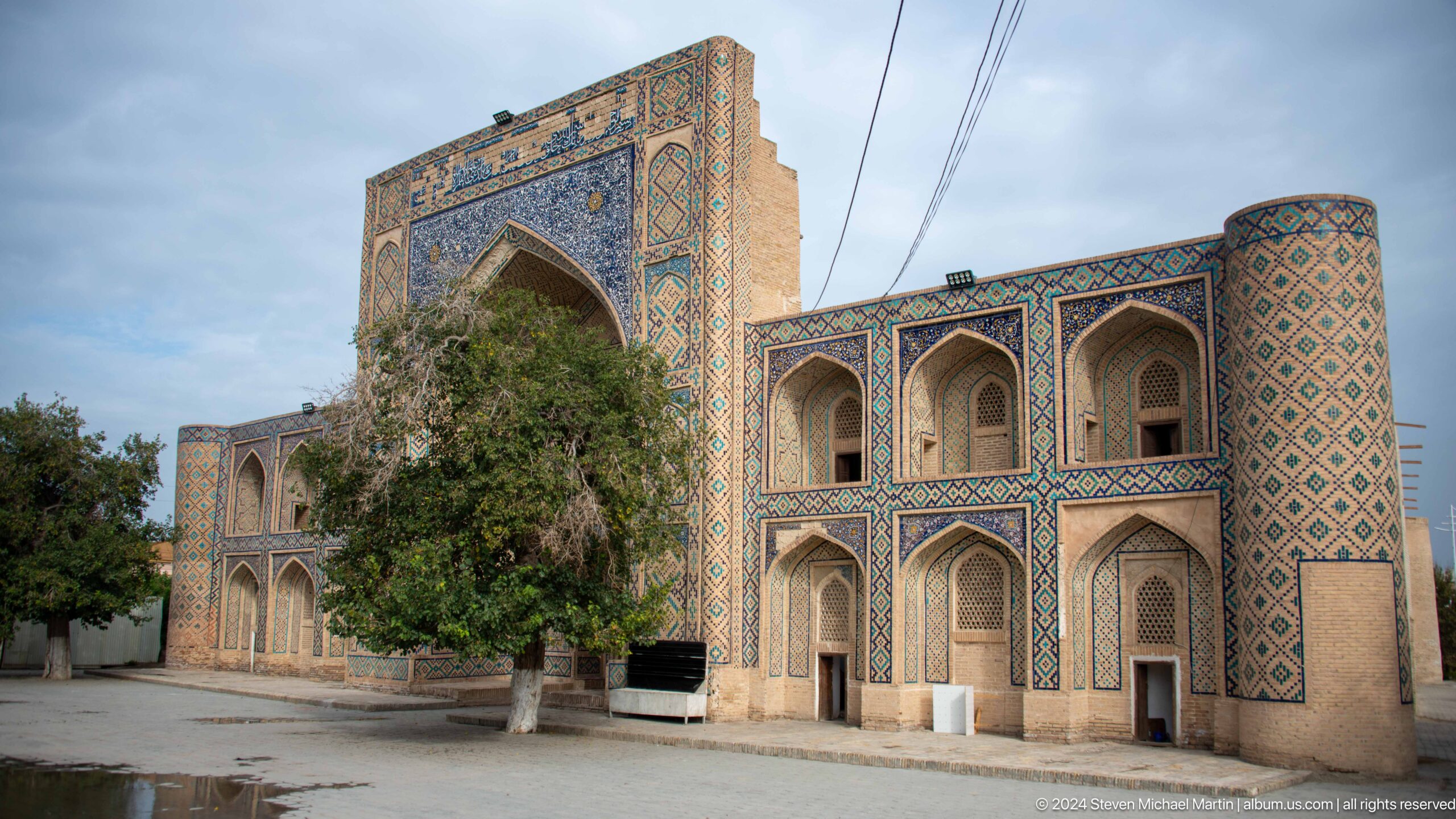
The Abdulaziz Khan Madrasa presents a richly tiled street façade organized around a tall entrance portal and two-story arched bays. A mature tree partially obscures the elevation, while the oblique viewpoint shows how the monument meets the surrounding historic street.
Caption
The Abdulaziz Khan Madrasa presents a richly tiled street façade organized around a tall entrance portal and two-story arched bays. A mature tree partially obscures the elevation, while the oblique viewpoint shows how the monument meets the surrounding historic street.
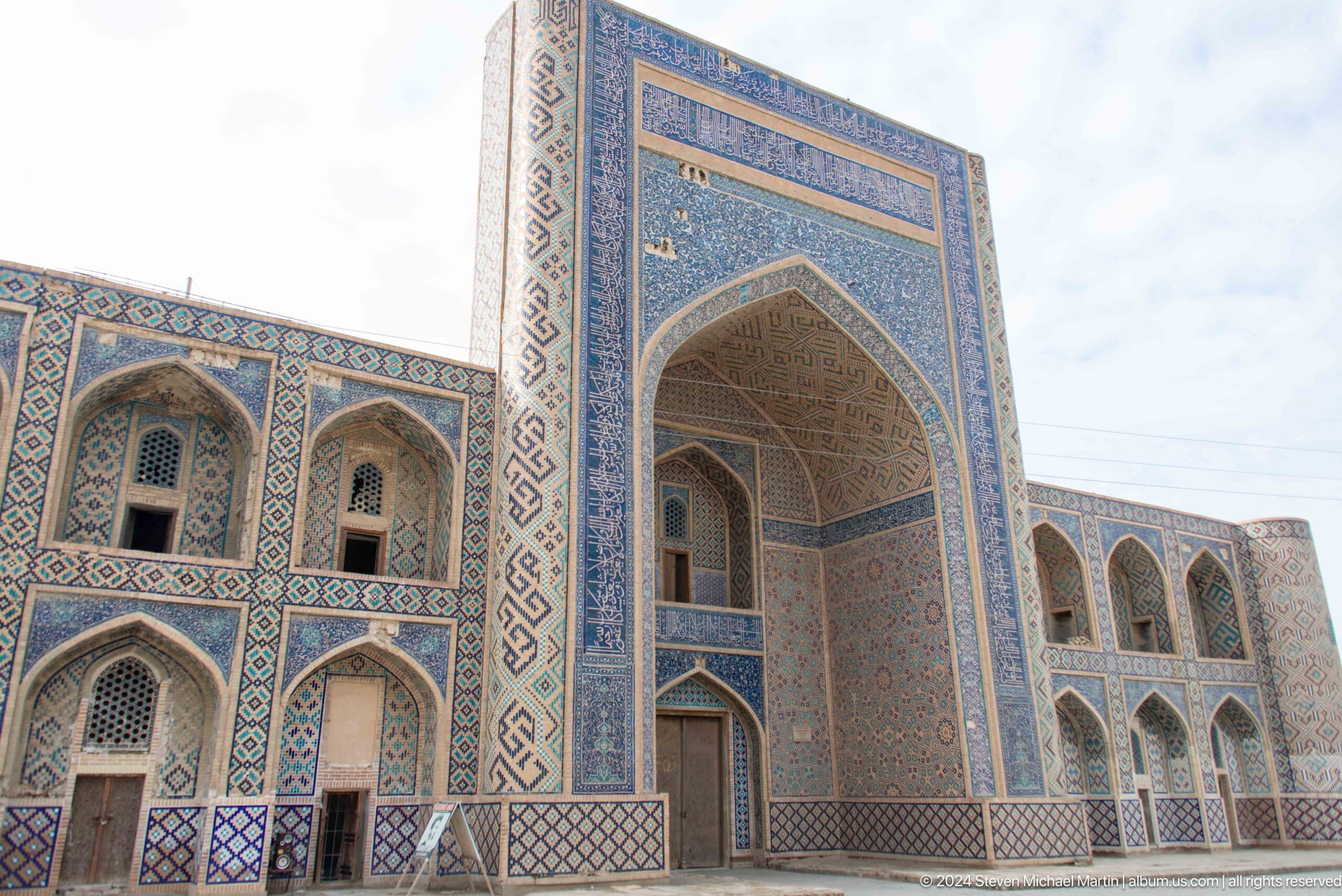
The monumental portal of the Abdulaziz Khan Madrasa is framed by dense blue-and-white tilework and flanked by stacked arched bays. The angled composition emphasizes the height of the pishtaq and the transition from the ceremonial entrance to the madrasa’s street façade.
Caption
The monumental portal of the Abdulaziz Khan Madrasa is framed by dense blue-and-white tilework and flanked by stacked arched bays. The angled composition emphasizes the height of the pishtaq and the transition from the ceremonial entrance to the madrasa’s street façade.
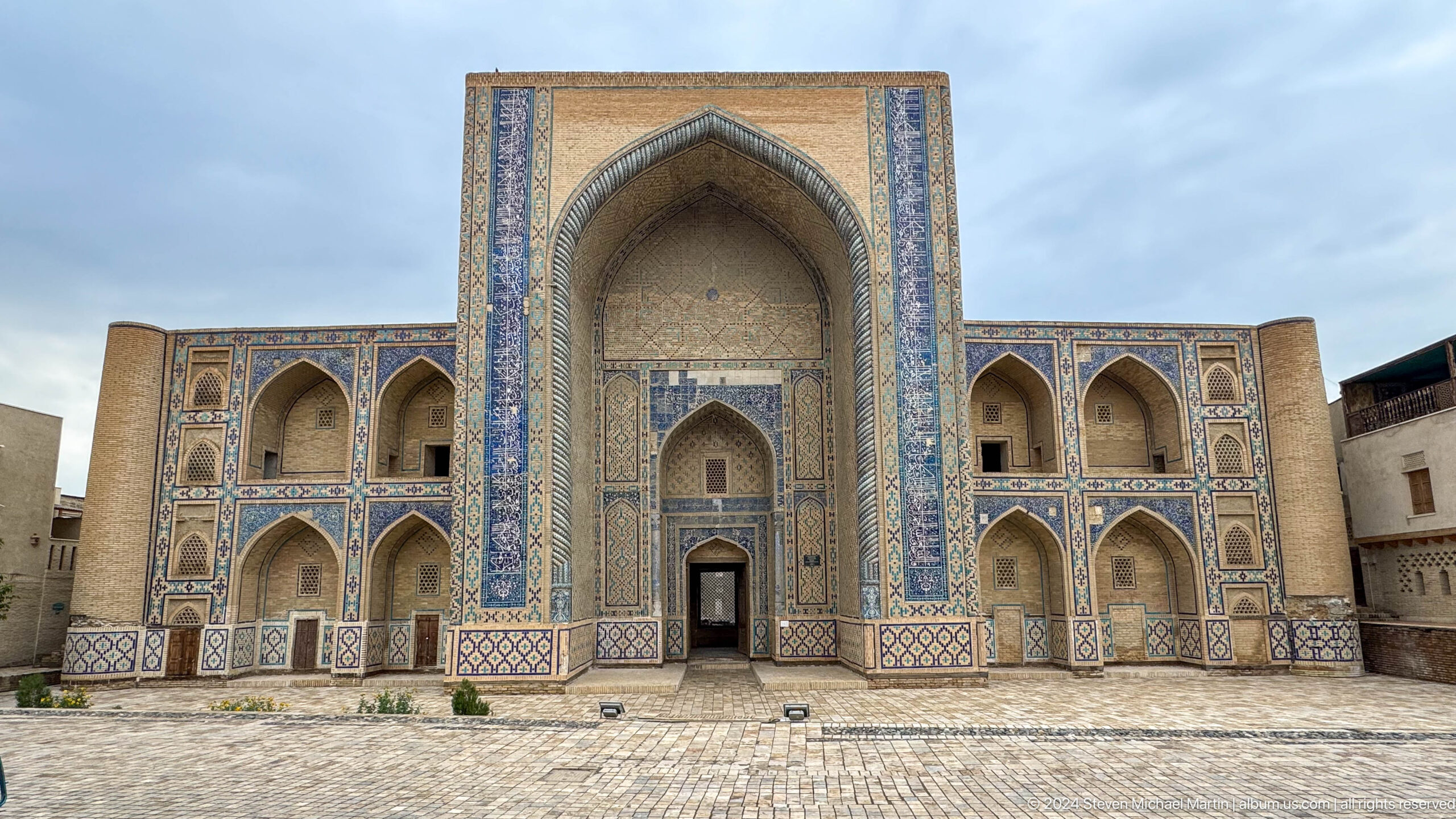
A frontal view centers the towering entrance iwan of the Abdulaziz Khan Madrasa between symmetrical two-story wings. Glazed ornament outlines the portal and smaller arches, while the open forecourt provides a clear reading of the façade’s scale and geometry.
Caption
A frontal view centers the towering entrance iwan of the Abdulaziz Khan Madrasa between symmetrical two-story wings. Glazed ornament outlines the portal and smaller arches, while the open forecourt provides a clear reading of the façade’s scale and geometry.

The entrance vault of the Abdulaziz Khan Madrasa is filled with dense tiers of muqarnas beneath a decorated half-dome. Seen from below, the honeycomb forms create a dramatic transition between the vertical portal and the recessed doorway.
Caption
The entrance vault of the Abdulaziz Khan Madrasa is filled with dense tiers of muqarnas beneath a decorated half-dome. Seen from below, the honeycomb forms create a dramatic transition between the vertical portal and the recessed doorway.

The courtyard façade of the Abdulaziz Khan Madrasa is dominated by an ornate central iwan filled with muqarnas and framed by glazed decoration. Two stories of student cells and arcades extend to either side, creating a formal educational courtyard around the monumental portal.
Caption
The courtyard façade of the Abdulaziz Khan Madrasa is dominated by an ornate central iwan filled with muqarnas and framed by glazed decoration. Two stories of student cells and arcades extend to either side, creating a formal educational courtyard around the monumental portal.

The Mir-i-Arab Madrasa faces the Po-i-Kalyan ensemble with a monumental tiled portal, two-story arcades, and a turquoise dome rising behind the façade. The restrained frontal view records the building’s balanced proportions and its prominent role in Bukhara’s religious center.
Caption
The Mir-i-Arab Madrasa faces the Po-i-Kalyan ensemble with a monumental tiled portal, two-story arcades, and a turquoise dome rising behind the façade. The restrained frontal view records the building’s balanced proportions and its prominent role in Bukhara’s religious center.
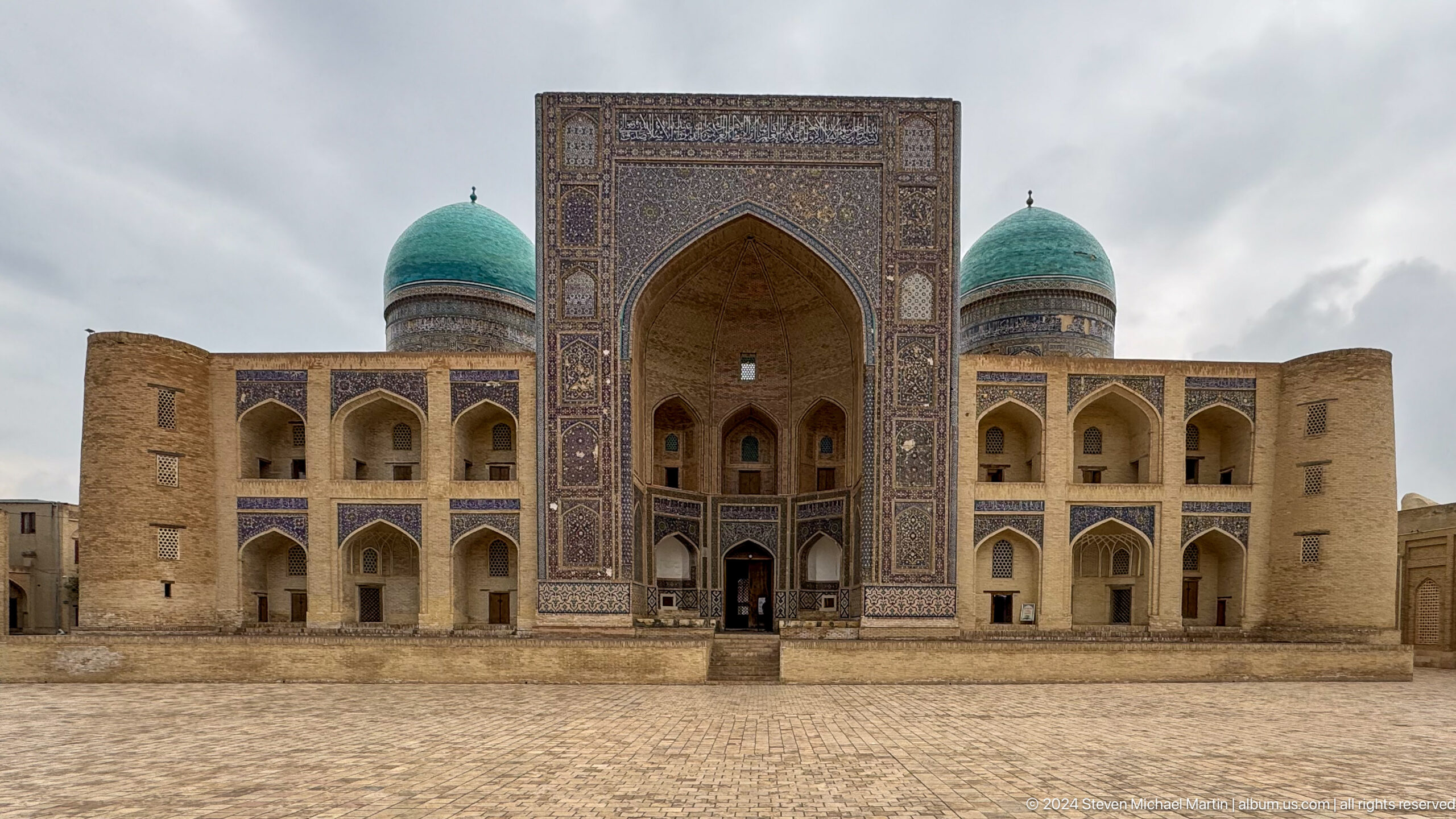
The Mir-i-Arab Madrasa is shown in a symmetrical frontal view, with its tall tiled portal framed by arcaded wings and paired turquoise domes. The broad paved foreground and overcast light allow the monument’s massing and decorative hierarchy to read clearly.
Caption
The Mir-i-Arab Madrasa is shown in a symmetrical frontal view, with its tall tiled portal framed by arcaded wings and paired turquoise domes. The broad paved foreground and overcast light allow the monument’s massing and decorative hierarchy to read clearly.

The Kalyan Minaret rises above the domed roofs of the Po-i-Kalyan complex at blue hour. Warm illumination reveals the tower’s patterned brick bands and lantern crown, while the deep cobalt sky separates its slender silhouette from the surrounding historic skyline.
Caption
The Kalyan Minaret rises above the domed roofs of the Po-i-Kalyan complex at blue hour. Warm illumination reveals the tower’s patterned brick bands and lantern crown, while the deep cobalt sky separates its slender silhouette from the surrounding historic skyline.
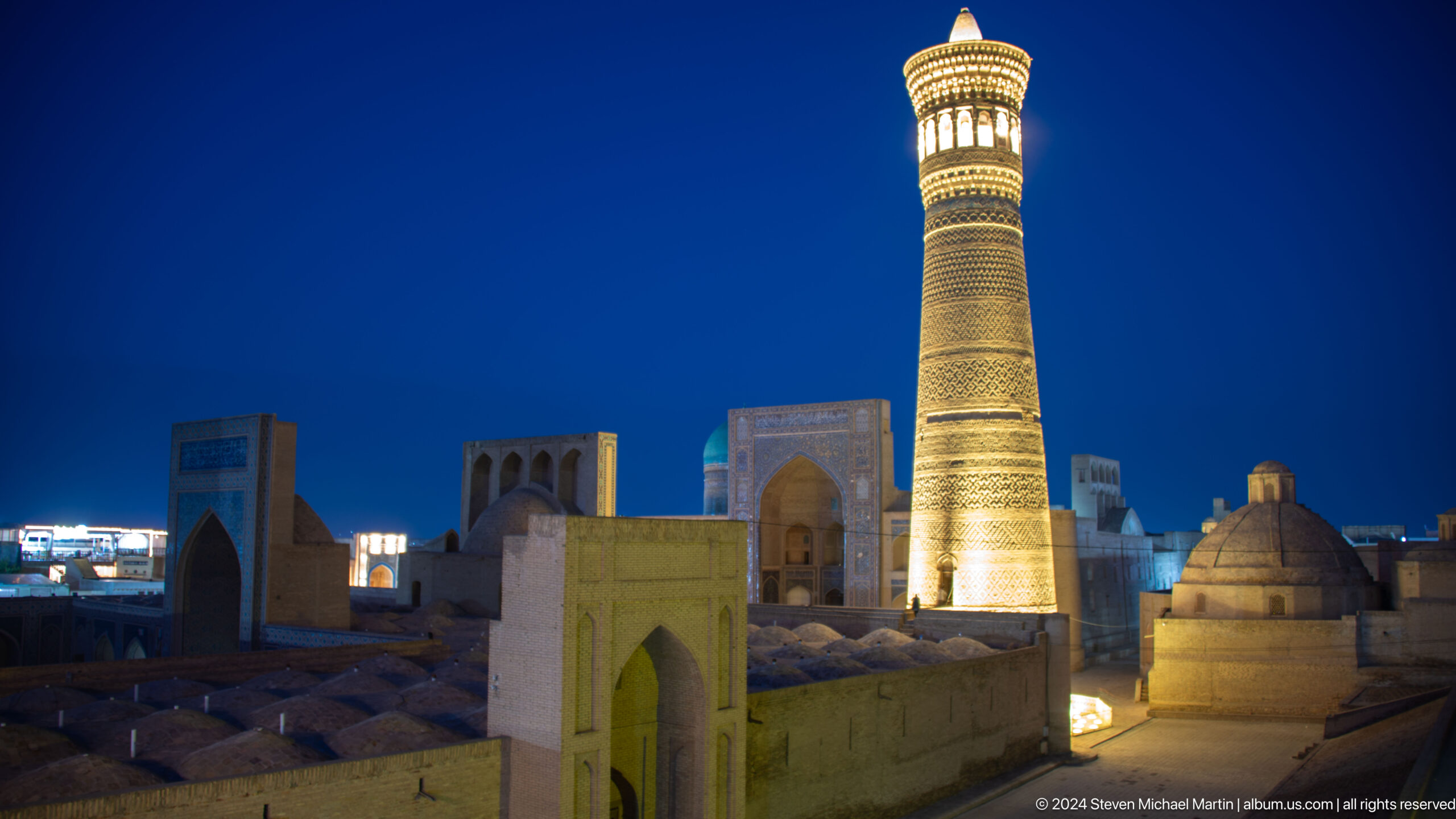
From an elevated viewpoint, the illuminated Kalyan Minaret anchors a layered night view of Bukhara’s domes, portals, and flat-roofed buildings. The broad composition records the vertical landmark within the dense urban fabric of the historic center.
Caption
From an elevated viewpoint, the illuminated Kalyan Minaret anchors a layered night view of Bukhara’s domes, portals, and flat-roofed buildings. The broad composition records the vertical landmark within the dense urban fabric of the historic center.
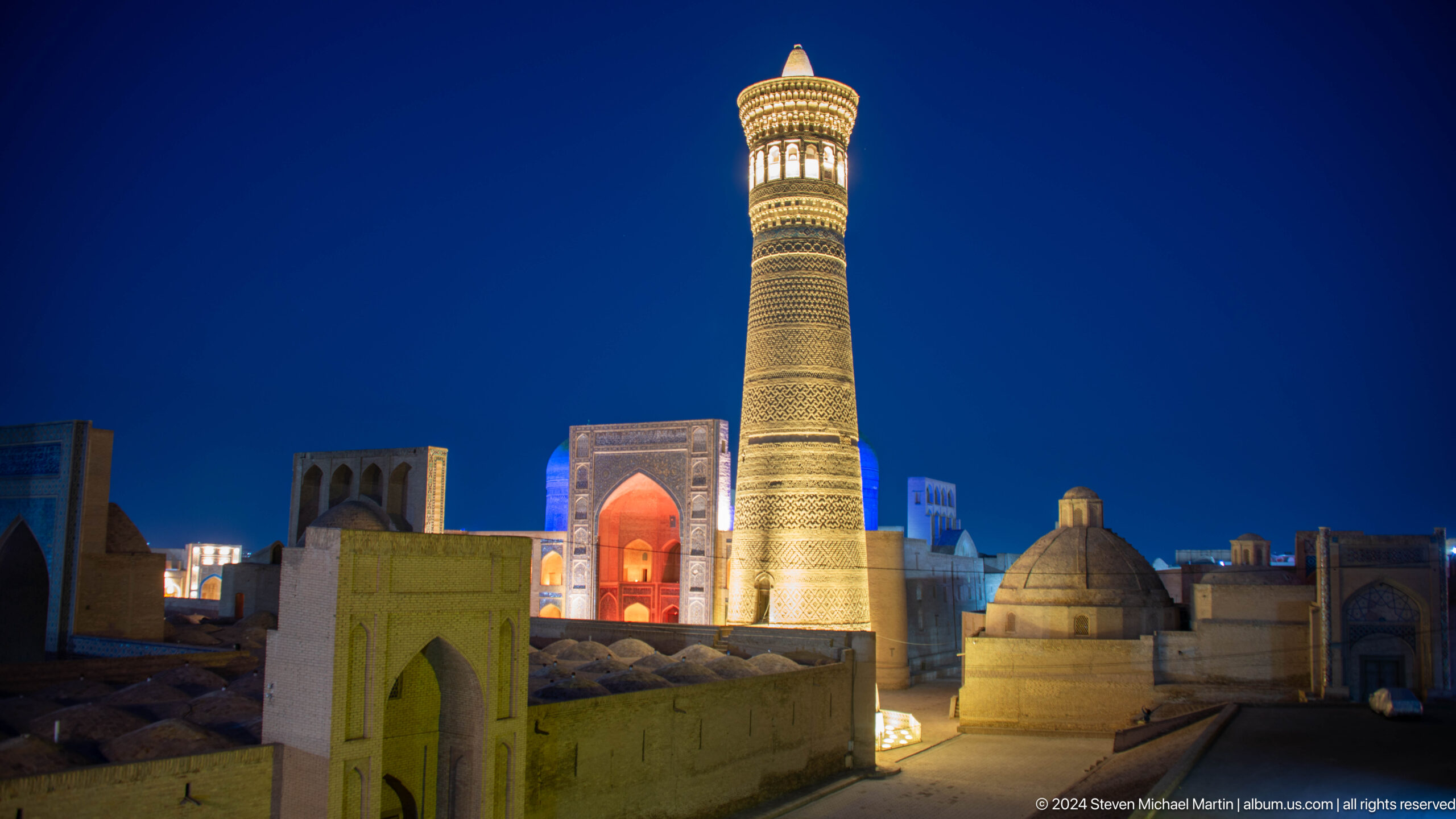
The Kalyan Minaret dominates a nighttime view of the Po-i-Kalyan ensemble, while a portal glows red among the surrounding domes and roofs. Contrasting warm illumination and the deep blue sky create a dramatic record of Bukhara’s monumental center after dark.
Caption
The Kalyan Minaret dominates a nighttime view of the Po-i-Kalyan ensemble, while a portal glows red among the surrounding domes and roofs. Contrasting warm illumination and the deep blue sky create a dramatic record of Bukhara’s monumental center after dark.

Rows of dark and light fur hats fill a market display in Bukhara, with a visitor standing at the edge of the frame. The tightly packed merchandise documents contemporary commercial life and the continued sale of regional clothing and craft products within the historic city.
Caption
Rows of dark and light fur hats fill a market display in Bukhara, with a visitor standing at the edge of the frame. The tightly packed merchandise documents contemporary commercial life and the continued sale of regional clothing and craft products within the historic city.
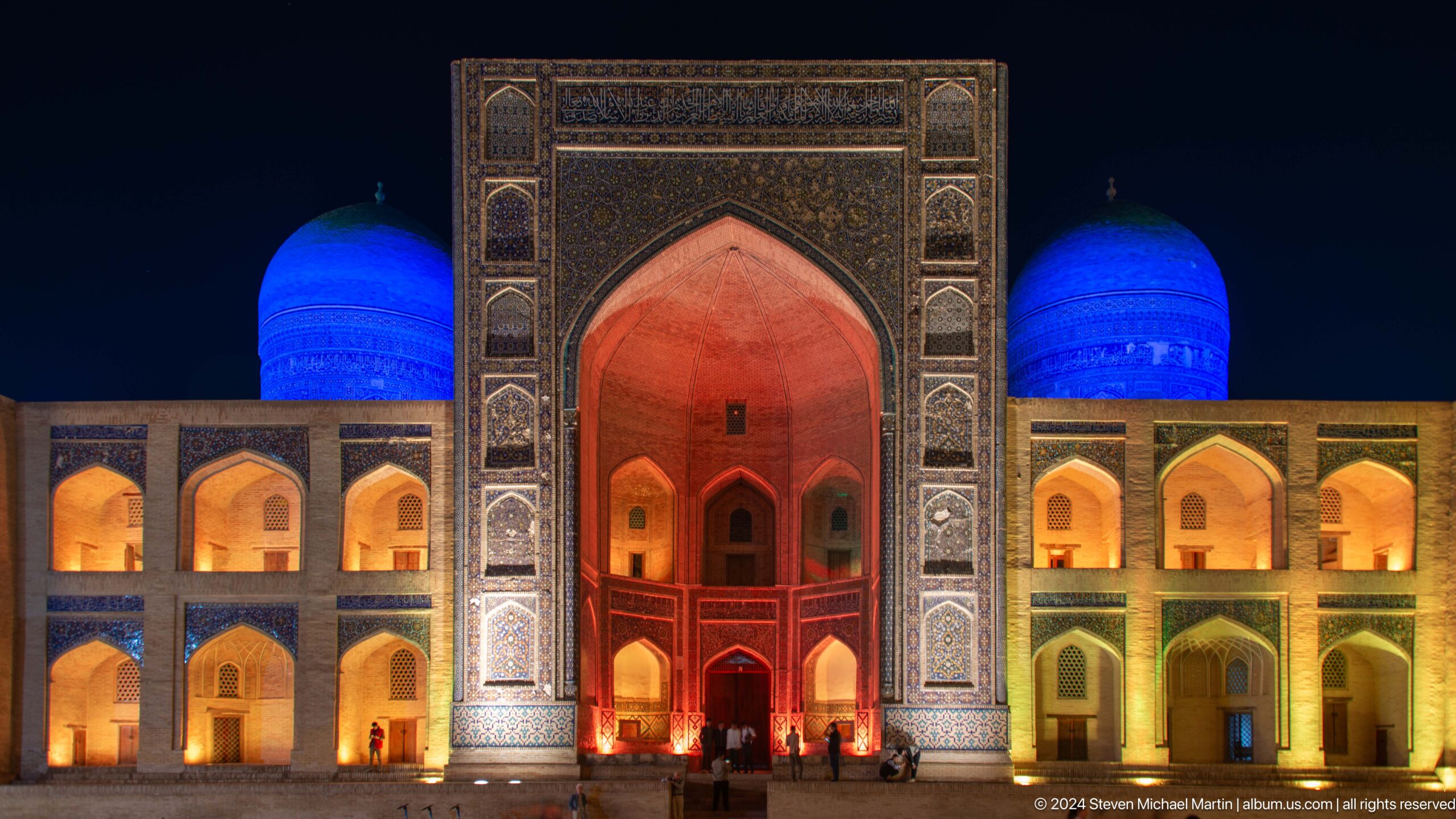
The Mir-i-Arab Madrasa is illuminated in vivid red, amber, and blue light after dark. Its central portal and paired turquoise domes form a strongly symmetrical composition, transforming the familiar daytime façade into a theatrical nighttime landmark.
Caption
The Mir-i-Arab Madrasa is illuminated in vivid red, amber, and blue light after dark. Its central portal and paired turquoise domes form a strongly symmetrical composition, transforming the familiar daytime façade into a theatrical nighttime landmark.

A monumental portal glows red and amber against the night sky, its light reflected across the paved forecourt. Small figures at the base establish scale and convey the active public life of Bukhara’s historic center after dark.
Caption
A monumental portal glows red and amber against the night sky, its light reflected across the paved forecourt. Small figures at the base establish scale and convey the active public life of Bukhara’s historic center after dark.

An upward view reveals an ornate vaulted interior organized around a central star pattern and surrounded by painted geometric fields, vegetal motifs, and muqarnas-like transitions. The close architectural study records the density and layered craftsmanship of Bukhara’s decorated interiors.
Caption
An upward view reveals an ornate vaulted interior organized around a central star pattern and surrounded by painted geometric fields, vegetal motifs, and muqarnas-like transitions. The close architectural study records the density and layered craftsmanship of Bukhara’s decorated interiors.

Three pointed arched bays glow in warm light beneath a blue-lit dome. Dark bands of tilework and inscriptions contrast with the brick wall, producing a tightly framed study of color, rhythm, and surface in Bukhara’s monumental religious precinct.
Caption
Three pointed arched bays glow in warm light beneath a blue-lit dome. Dark bands of tilework and inscriptions contrast with the brick wall, producing a tightly framed study of color, rhythm, and surface in Bukhara’s monumental religious precinct.

A smiling traveler is photographed at close range in an outdoor Bukhara market. Tables, awnings, and merchandise remain softly visible behind him, placing the informal portrait within the city’s active commercial environment.
Caption
A smiling traveler is photographed at close range in an outdoor Bukhara market. Tables, awnings, and merchandise remain softly visible behind him, placing the informal portrait within the city’s active commercial environment.

A gate tower of the Ark of Bukhara combines earthen brick walls with sharply contrasting white architectural panels and a tall pointed opening. The close view also records the crenellated parapet and numerous small holes punctuating the fortress surface.
Caption
A gate tower of the Ark of Bukhara combines earthen brick walls with sharply contrasting white architectural panels and a tall pointed opening. The close view also records the crenellated parapet and numerous small holes punctuating the fortress surface.

The massive outer wall of the Ark of Bukhara curves upward under dramatic nighttime illumination. Its battered profile, rough brick surface, and rows of small openings emphasize the citadel’s defensive scale and the sculptural form of its reconstructed ramparts.
Caption
The massive outer wall of the Ark of Bukhara curves upward under dramatic nighttime illumination. Its battered profile, rough brick surface, and rows of small openings emphasize the citadel’s defensive scale and the sculptural form of its reconstructed ramparts.

The entrance gate of the Ark of Bukhara rises above a ramp leading through the citadel walls. White architectural accents and flanking towers stand out against warm nighttime illumination, marking the controlled point of access into the historic fortress.
Caption
The entrance gate of the Ark of Bukhara rises above a ramp leading through the citadel walls. White architectural accents and flanking towers stand out against warm nighttime illumination, marking the controlled point of access into the historic fortress.

The entrance portal of the Ulugh Beg Madrasa is framed by blue calligraphic and geometric tilework. Seen from below, the pointed arch and nested doorway emphasize the vertical scale of one of Bukhara’s important Timurid educational monuments.
Caption
The entrance portal of the Ulugh Beg Madrasa is framed by blue calligraphic and geometric tilework. Seen from below, the pointed arch and nested doorway emphasize the vertical scale of one of Bukhara’s important Timurid educational monuments.

A woven ceiling radiates outward in an eight-pointed star formed by alternating dark and light bands. The straight-up viewpoint transforms the structural covering into a precise geometric composition and highlights the decorative possibilities of reed or wooden latticework.
Caption
A woven ceiling radiates outward in an eight-pointed star formed by alternating dark and light bands. The straight-up viewpoint transforms the structural covering into a precise geometric composition and highlights the decorative possibilities of reed or wooden latticework.

Concentric rings at the center of a woven ceiling are enclosed by sharply angled star bands. The close, symmetrical view emphasizes the precision of the interlaced pattern and the contrast between pale reeds and dark structural strips.
Caption
Concentric rings at the center of a woven ceiling are enclosed by sharply angled star bands. The close, symmetrical view emphasizes the precision of the interlaced pattern and the contrast between pale reeds and dark structural strips.

The vast courtyard of the Kalyan Mosque is enclosed by repeated pointed arches and monumental iwans. The wide-angle view emphasizes the open scale of the congregational complex and the rhythmic arcades that organize its perimeter.
Caption
The vast courtyard of the Kalyan Mosque is enclosed by repeated pointed arches and monumental iwans. The wide-angle view emphasizes the open scale of the congregational complex and the rhythmic arcades that organize its perimeter.
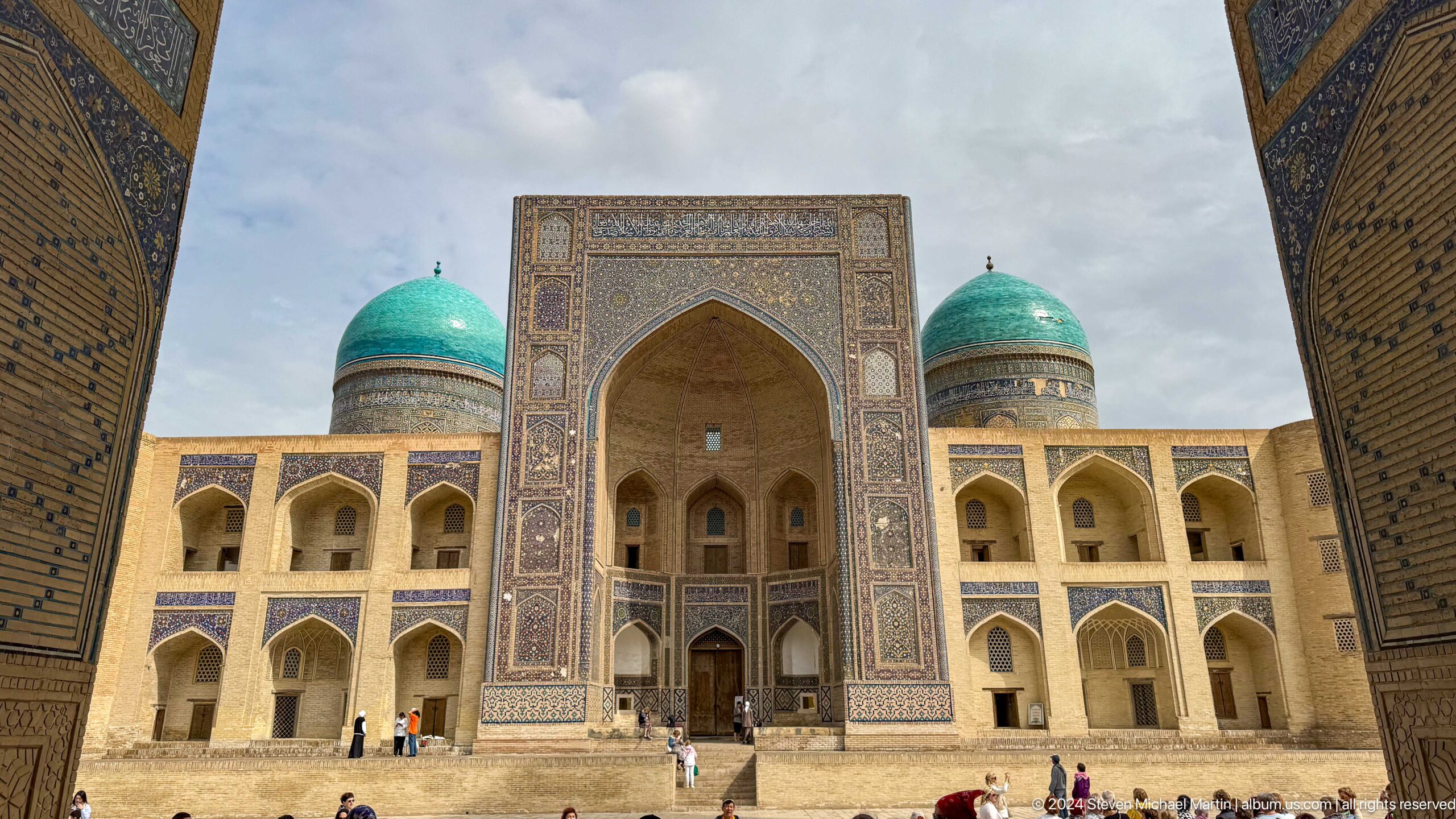
The Mir-i-Arab Madrasa fills the frame with its monumental central portal, flanking arcades, and paired turquoise domes. Framed by a dark arch in the foreground, the composition creates a layered view across the Po-i-Kalyan ensemble.
Caption
The Mir-i-Arab Madrasa fills the frame with its monumental central portal, flanking arcades, and paired turquoise domes. Framed by a dark arch in the foreground, the composition creates a layered view across the Po-i-Kalyan ensemble.

The outer wall of the Ark of Bukhara sweeps across the frame in a series of battered curves and projecting buttresses. Small openings and a crenellated parapet animate the otherwise massive earthen surface, while the low viewpoint underscores the citadel’s defensive scale.
Caption
The outer wall of the Ark of Bukhara sweeps across the frame in a series of battered curves and projecting buttresses. Small openings and a crenellated parapet animate the otherwise massive earthen surface, while the low viewpoint underscores the citadel’s defensive scale.
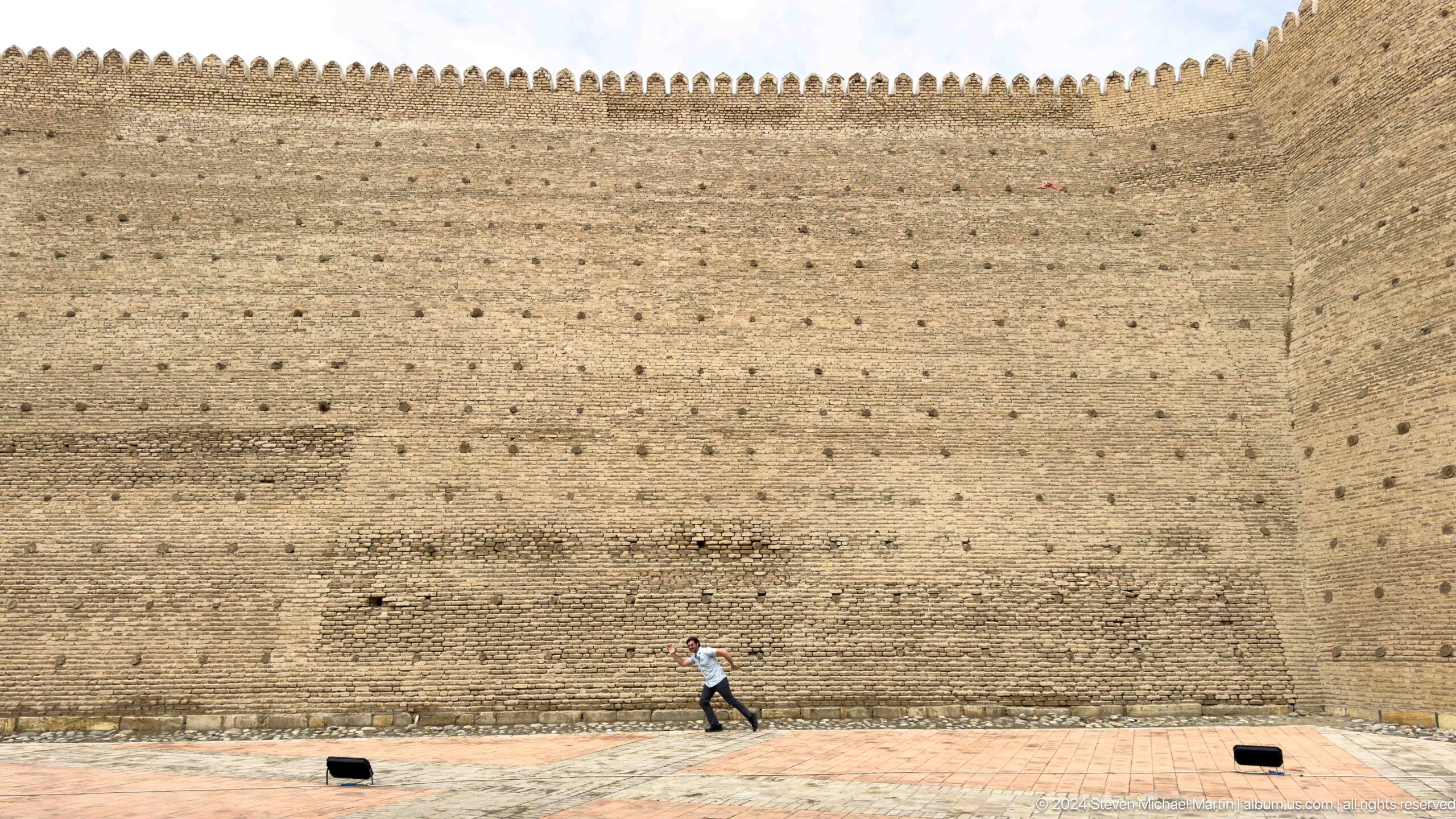
A long section of the Ark of Bukhara’s outer wall stretches across the frame beneath a crenellated parapet. A solitary pedestrian provides scale, emphasizing the height and breadth of the citadel’s reconstructed earthen defenses.
Caption
A long section of the Ark of Bukhara’s outer wall stretches across the frame beneath a crenellated parapet. A solitary pedestrian provides scale, emphasizing the height and breadth of the citadel’s reconstructed earthen defenses.
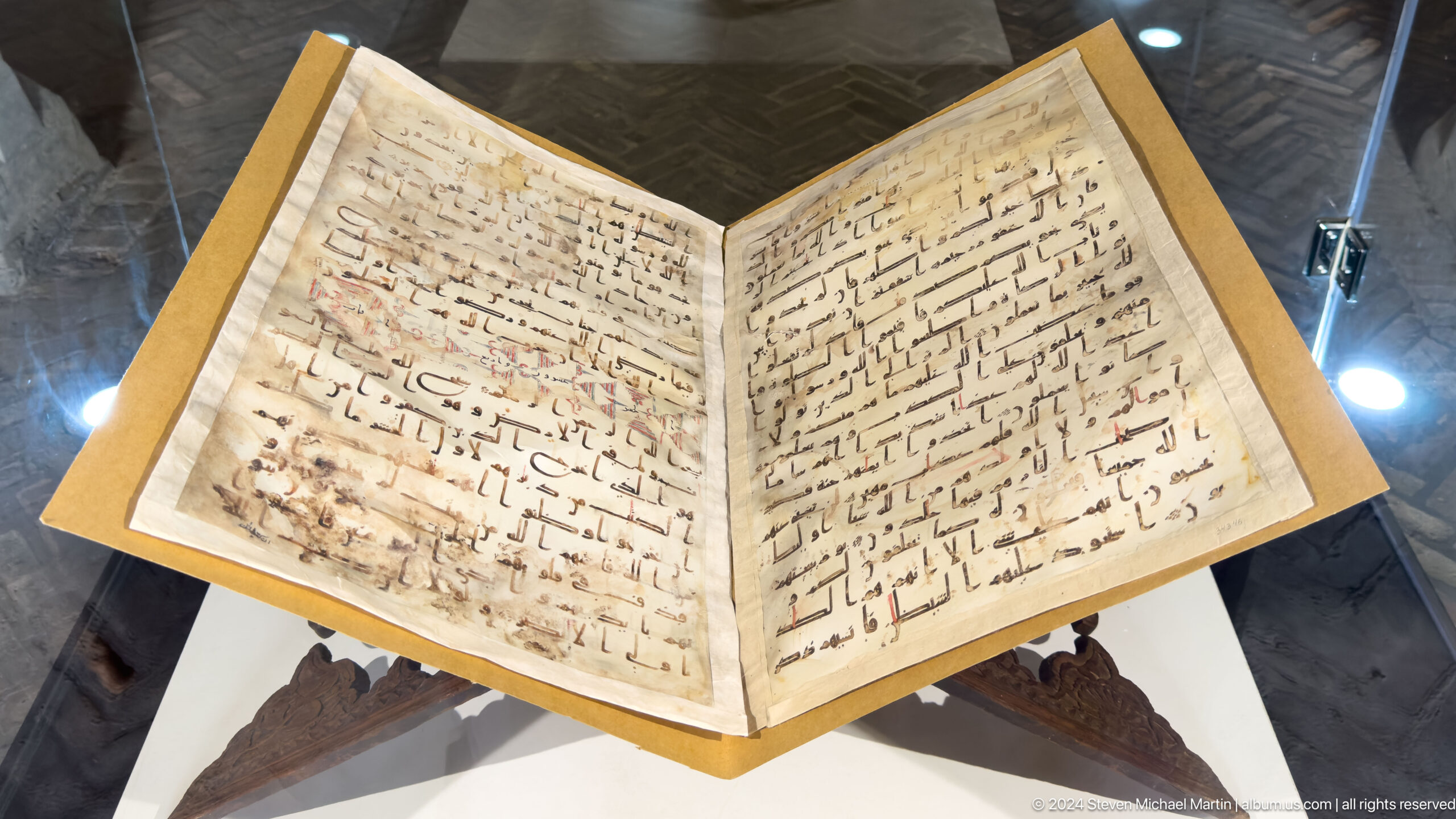
An open Arabic manuscript rests on a carved wooden book stand inside a museum case. The visible pages preserve dense lines of handwritten script, linking Bukhara’s material heritage with its long history as a center of Islamic scholarship and manuscript culture.
Caption
An open Arabic manuscript rests on a carved wooden book stand inside a museum case. The visible pages preserve dense lines of handwritten script, linking Bukhara’s material heritage with its long history as a center of Islamic scholarship and manuscript culture.
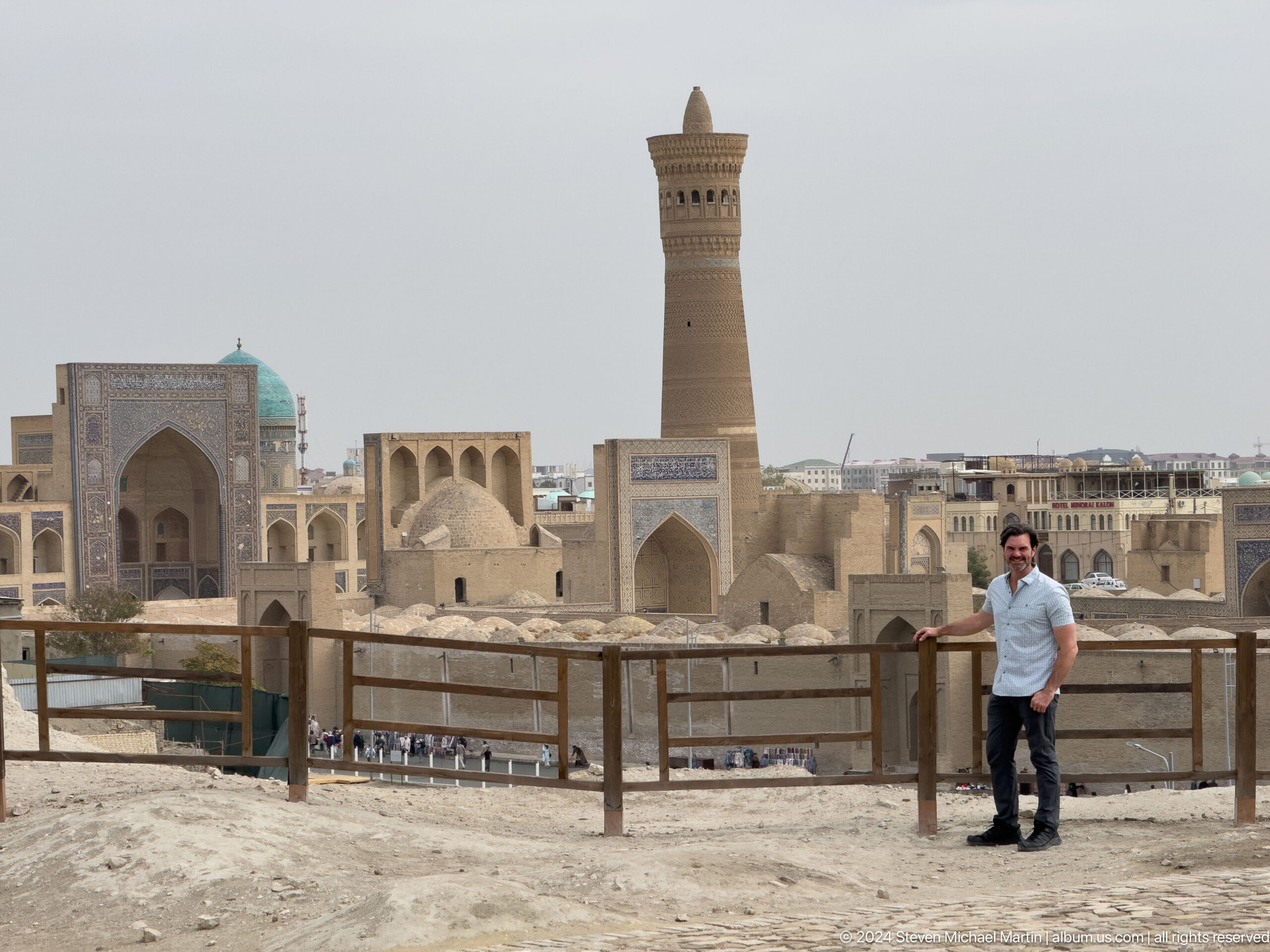
A traveler stands at an elevated railing with the Po-i-Kalyan complex spread across the background. The Kalyan Minaret, monumental portals, domes, and surrounding roofs create a broad visual summary of Bukhara’s historic center.
Caption
A traveler stands at an elevated railing with the Po-i-Kalyan complex spread across the background. The Kalyan Minaret, monumental portals, domes, and surrounding roofs create a broad visual summary of Bukhara’s historic center.

A traveler poses at a rooftop railing above the Po-i-Kalyan ensemble. The Kalyan Minaret rises prominently behind him among domes, portals, and low historic roofs, combining a personal travel portrait with an establishing view of central Bukhara.
Caption
A traveler poses at a rooftop railing above the Po-i-Kalyan ensemble. The Kalyan Minaret rises prominently behind him among domes, portals, and low historic roofs, combining a personal travel portrait with an establishing view of central Bukhara.

Two travelers pose together at an elevated viewpoint above the Po-i-Kalyan complex. The Kalyan Minaret, turquoise domes, tiled portals, and dense historic rooftops form a panoramic background that anchors the portrait unmistakably in Bukhara.
Caption
Two travelers pose together at an elevated viewpoint above the Po-i-Kalyan complex. The Kalyan Minaret, turquoise domes, tiled portals, and dense historic rooftops form a panoramic background that anchors the portrait unmistakably in Bukhara.
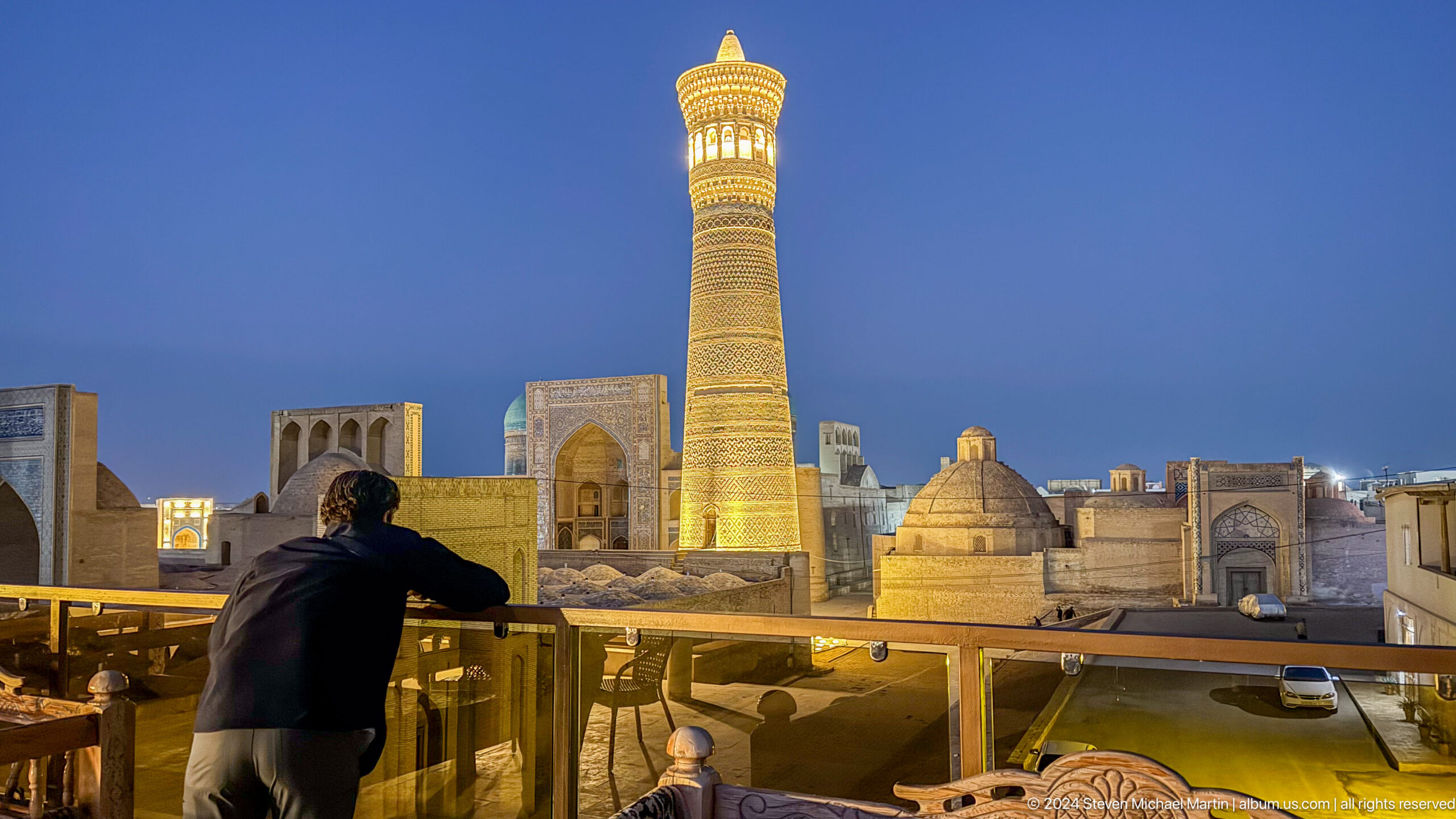
A visitor leans against a rooftop railing while looking toward the illuminated Kalyan Minaret. Domed market roofs and monumental portals occupy the middle distance, creating a layered night view of Bukhara’s historic center.
Caption
A visitor leans against a rooftop railing while looking toward the illuminated Kalyan Minaret. Domed market roofs and monumental portals occupy the middle distance, creating a layered night view of Bukhara’s historic center.

Two travelers pose before the dramatically illuminated Mir-i-Arab Madrasa. The red-lit central portal and blue domes create a vivid architectural backdrop, while figures crossing the square convey the lively nighttime atmosphere of the Po-i-Kalyan ensemble.
Caption
Two travelers pose before the dramatically illuminated Mir-i-Arab Madrasa. The red-lit central portal and blue domes create a vivid architectural backdrop, while figures crossing the square convey the lively nighttime atmosphere of the Po-i-Kalyan ensemble.
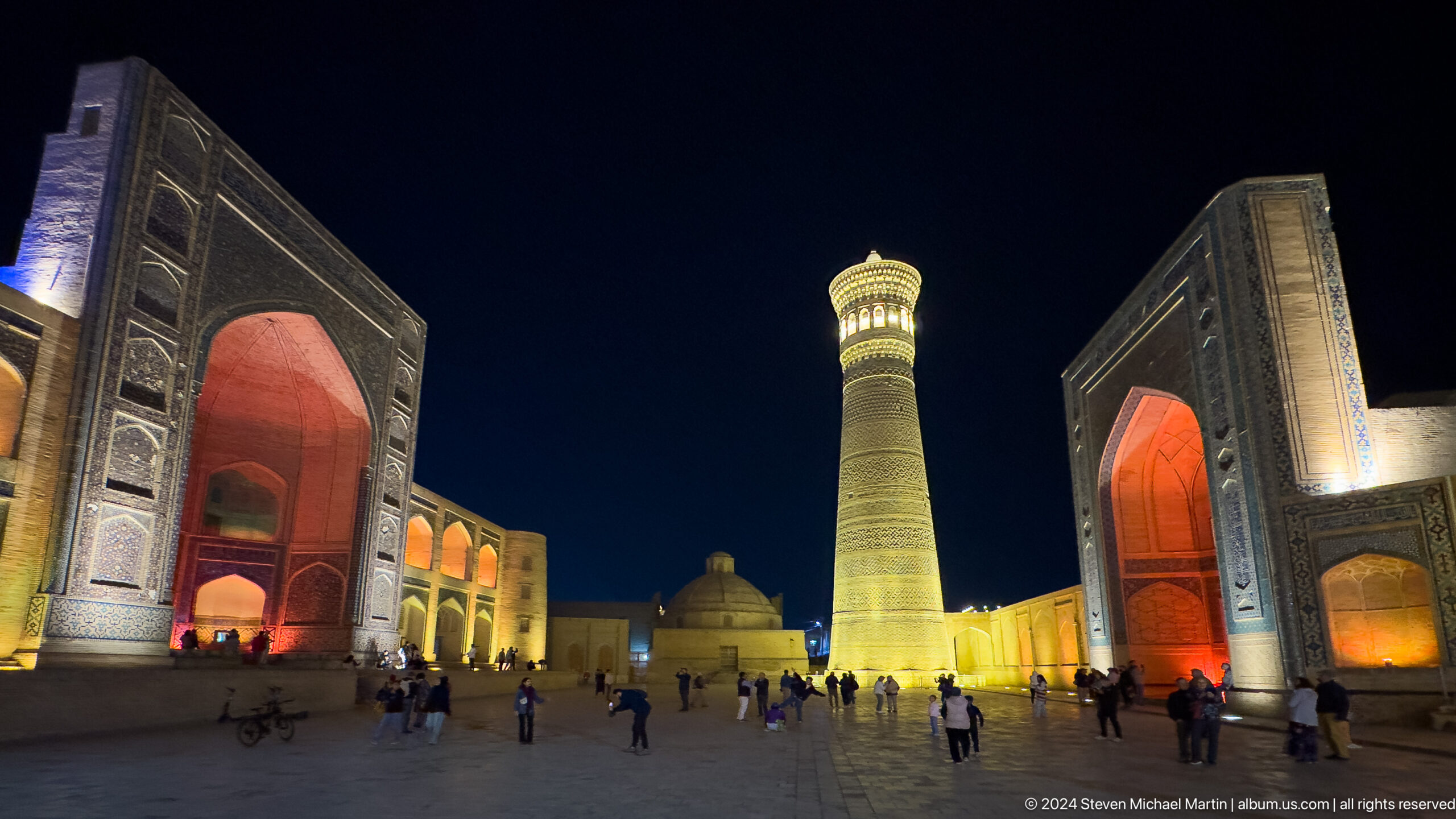
The illuminated Kalyan Minaret stands centered between two monumental, red-lit portals in the Po-i-Kalyan square. Visitors scattered across the open plaza provide scale, while the strong symmetry and contrasting colors create a dramatic final view of Bukhara after dark.
Caption
The illuminated Kalyan Minaret stands centered between two monumental, red-lit portals in the Po-i-Kalyan square. Visitors scattered across the open plaza provide scale, while the strong symmetry and contrasting colors create a dramatic final view of Bukhara after dark.
Field Guide
📍 Overview
Bukhara is one of the most historically significant cities along the Silk Road and served as a major center of trade, religion, and scholarship for more than a millennium. Located in an oasis environment in present-day Uzbekistan, the city flourished as caravans transported goods, ideas, and artistic traditions across Central Asia. Its historic core preserves an exceptional concentration of mosques, madrasas, minarets, and trading domes.
🏛 Historical Significance
Bukhara developed as a major intellectual center of the Islamic world between the 9th and 16th centuries. Scholars in theology, mathematics, medicine, and philosophy studied here, contributing to advances that spread throughout Eurasia. The city’s importance grew under Persian, Samanid, and later Timurid and Uzbek rule, reflecting the changing political landscape of Silk Road empires.
🧱 Architectural Features
Bukhara’s architectural landscape includes monumental religious structures, fortified citadels, and covered bazaars designed to support both spiritual and commercial life. Notable features include the Kalon Minaret, which served as both a religious and civic landmark, and the Ark Fortress, a long-standing seat of regional power. Domed market halls illustrate the organization of trade guilds specializing in textiles, metalwork, and ceramics.
Brick construction techniques and decorative tilework demonstrate adaptation to the desert climate while maintaining aesthetic sophistication. Architectural continuity across centuries illustrates the city’s long-term importance within Silk Road networks.
🌍 Cultural Importance
Bukhara became known as a center of Islamic learning and cultural exchange, attracting scholars and artisans from across Central Asia and Persia. Educational institutions trained generations of scholars whose work influenced intellectual traditions across the Islamic world. The city’s markets and religious institutions illustrate the integration of commerce and scholarship.
🧭 Why It Matters on the Silk Road
Bukhara illustrates how oasis cities supported long-distance trade across challenging desert environments. Caravan routes relied on such urban centers for water, security, and economic exchange. The preserved historic environment demonstrates how Silk Road commerce shaped both urban design and cultural development.
⭐ Highlights
- One of the best-preserved Silk Road cities in Central Asia
- Historic center combining religious, commercial, and civic architecture
- Important intellectual center of the Islamic Golden Age
- Distinctive brick architecture adapted to desert climate
- Representation of long-distance caravan trade networks
📷 Photography Notes
- Warm light enhances the color of traditional brick architecture
- Minarets provide strong vertical compositions
- Wide-angle perspectives capture historic urban streetscapes
- Detail images highlight brick patterns and decorative tile accents
- Early morning or evening light creates depth in architectural textures