Stanley’s Camp – Birthday Celebration – Okavango Delta, Botswana
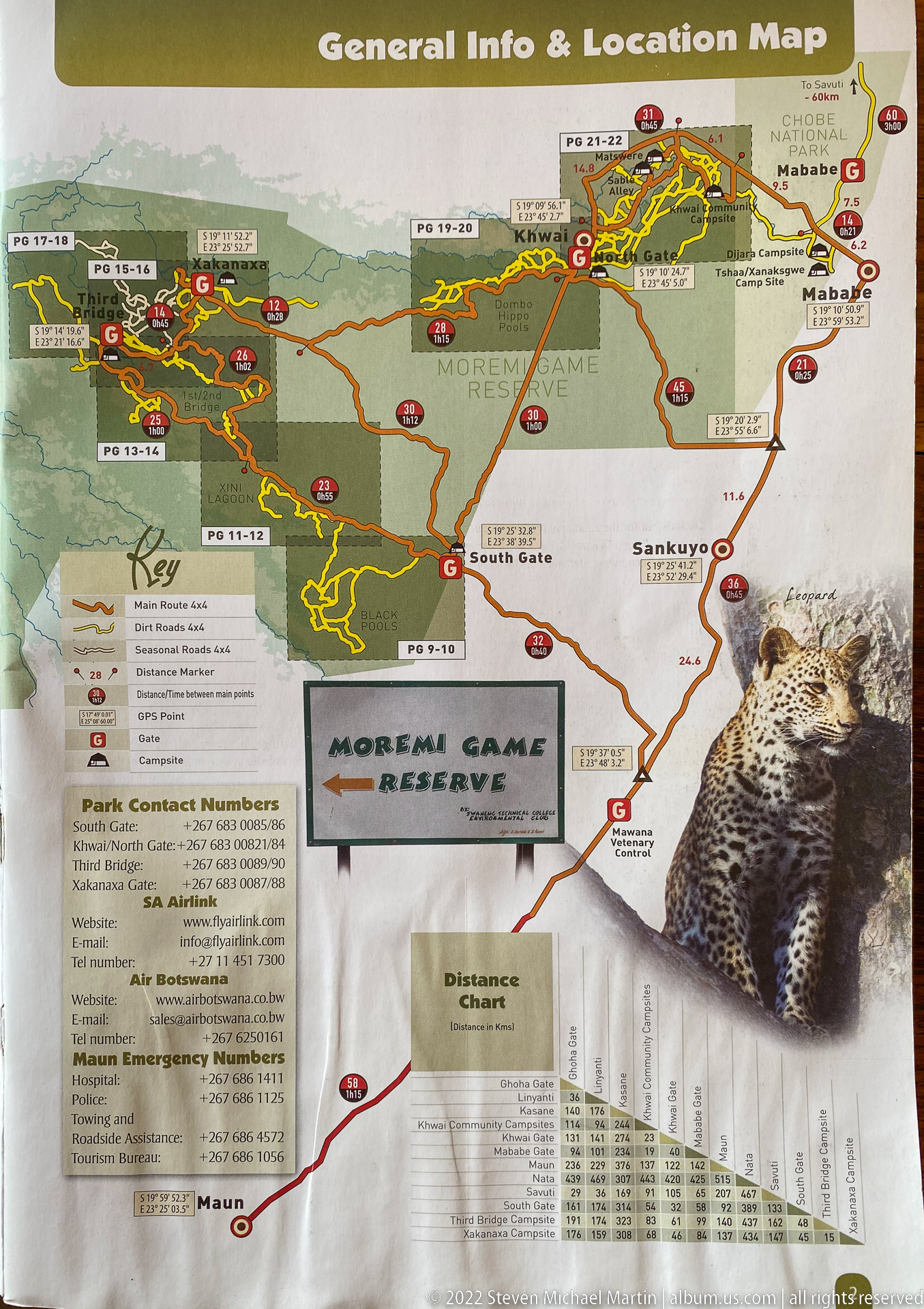
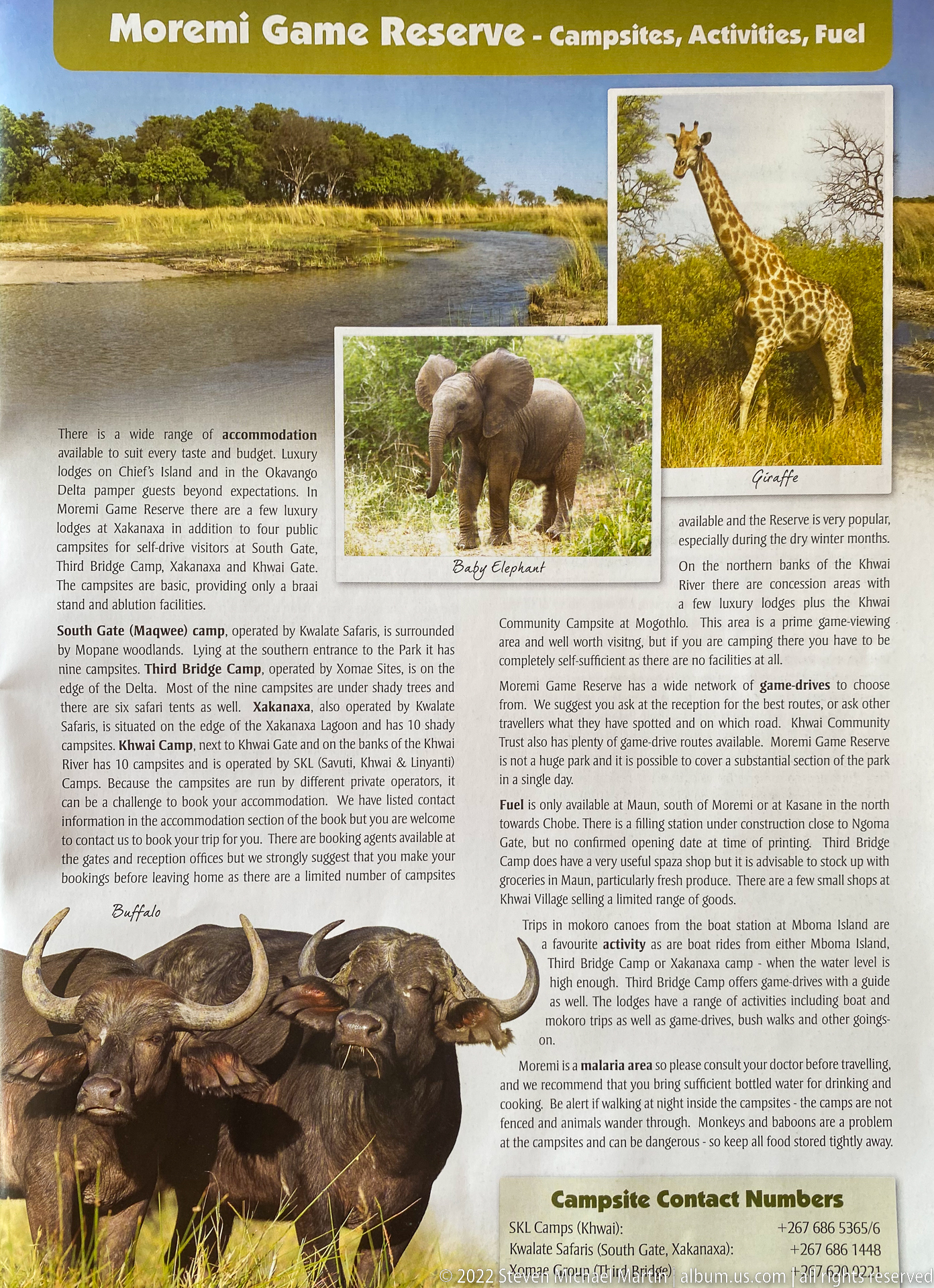
The remote safari lodge of Stanley’s Camp sits on the edge of the vast wetlands of the Okavango Delta. Surrounded by floodplains, lagoons, and acacia woodlands, the camp provides an intimate setting for exploring one of Africa’s most extraordinary wildlife ecosystems.
Guests traveling through this region experience close encounters with the wildlife that inhabits the delta, including elephants, giraffes, antelope, and the predators that move through the surrounding grasslands. Early morning and evening game drives reveal the rhythms of life across the delta’s waterways and open plains.
Celebrating a birthday at Stanley’s Camp adds a personal and memorable moment to a journey through one of Africa’s most remarkable natural landscapes.
Photos:

A wider dusk view shows several raised canvas buildings arranged around timber decks and an open grassy clearing at Stanley’s Camp. Warm interior lights mark the dining and lounge spaces while freestanding tables and chairs extend outdoors beneath mature woodland. The broader perspective clarifies the relationship between separate pavilions, connecting walkways, and the camp’s lightly developed natural setting.
Caption
A wider dusk view shows several raised canvas buildings arranged around timber decks and an open grassy clearing at Stanley’s Camp. Warm interior lights mark the dining and lounge spaces while freestanding tables and chairs extend outdoors beneath mature woodland. The broader perspective clarifies the relationship between separate pavilions, connecting walkways, and the camp’s lightly developed natural setting.

A line of broad-canopied riverine trees stands beyond calm floodplain water, their trunks and green crowns mirrored almost perfectly in the surface below. Reeds divide the reflected image from the real tree line, while warm late light touches the bank. The near-symmetry turns the wetland into a quiet landscape study of water, vegetation, and reflection.
Caption
A line of broad-canopied riverine trees stands beyond calm floodplain water, their trunks and green crowns mirrored almost perfectly in the surface below. Reeds divide the reflected image from the real tree line, while warm late light touches the bank. The near-symmetry turns the wetland into a quiet landscape study of water, vegetation, and reflection.

A smiling safari guest sits at a decorated birthday lunch table on an elevated wooden deck, with the green floodplain extending beyond the railing and a massive tree trunk framing the setting. Bottled water, glasses, birthday napkins, and tableware surround the place setting. The environmental portrait links the personal celebration directly to the open wetland landscape.
Caption
A smiling safari guest sits at a decorated birthday lunch table on an elevated wooden deck, with the green floodplain extending beyond the railing and a massive tree trunk framing the setting. Bottled water, glasses, birthday napkins, and tableware surround the place setting. The environmental portrait links the personal celebration directly to the open wetland landscape.

A candlelit birthday dinner table is prepared beneath warm evening light, with black plates, colorful “Happy Birthday” cards, multiple glasses, polished cutlery, flowers, and a printed menu aligned along the center. Three candles illuminate the white runner while decorative animal figures flank the centerpiece. The symmetrical arrangement transforms the dinner table into the evening counterpart to the daytime birthday lunch.
Caption
A candlelit birthday dinner table is prepared beneath warm evening light, with black plates, colorful “Happy Birthday” cards, multiple glasses, polished cutlery, flowers, and a printed menu aligned along the center. Three candles illuminate the white runner while decorative animal figures flank the centerpiece. The symmetrical arrangement transforms the dinner table into the evening counterpart to the daytime birthday lunch.

A safari guest sits smiling in the rear of an open game-drive vehicle, camera equipment in hand and dry woodland visible beyond the seats. Embroidered Sanctuary Retreats branding appears on the upholstery, linking the portrait directly to the camp’s safari setting. The frame shifts from wildlife observation to the human experience of the drive without requiring identification of the individual.
Caption
A safari guest sits smiling in the rear of an open game-drive vehicle, camera equipment in hand and dry woodland visible beyond the seats. Embroidered Sanctuary Retreats branding appears on the upholstery, linking the portrait directly to the camp’s safari setting. The frame shifts from wildlife observation to the human experience of the drive without requiring identification of the individual.

Two open safari vehicles pause on a grassy bank beyond a broad shallow pool, their forms reflected among reeds and patches of aquatic vegetation. Mature trees and a tall palm rise behind the vehicles, while still water dominates the foreground. The landscape view records how game-drive routes intersect seasonally flooded terrain around Stanley’s Camp.
Caption
Two open safari vehicles pause on a grassy bank beyond a broad shallow pool, their forms reflected among reeds and patches of aquatic vegetation. Mature trees and a tall palm rise behind the vehicles, while still water dominates the foreground. The landscape view records how game-drive routes intersect seasonally flooded terrain around Stanley’s Camp.

A close portrait centers a smiling safari guest seated at the birthday table, with the rough bark of a large shade tree and leafy branches filling the background. The patterned shirt and bright birthday napkin echo the celebratory colors below. The tighter crop removes most of the landscape and tableware, concentrating on expression and the personal character of the occasion.
Caption
A close portrait centers a smiling safari guest seated at the birthday table, with the rough bark of a large shade tree and leafy branches filling the background. The patterned shirt and bright birthday napkin echo the celebratory colors below. The tighter crop removes most of the landscape and tableware, concentrating on expression and the personal character of the occasion.

A smiling safari guest stands behind the floodplain drinks table as the sunset glows through haze at his shoulder. Bottles of spirits line the foreground beside an ice bucket holding chilled sparkling wine, visually framing the birthday celebration within the open landscape. The portrait shifts the sundowner sequence from the prepared table to the guest at the center of the occasion.
Caption
A smiling safari guest stands behind the floodplain drinks table as the sunset glows through haze at his shoulder. Bottles of spirits line the foreground beside an ice bucket holding chilled sparkling wine, visually framing the birthday celebration within the open landscape. The portrait shifts the sundowner sequence from the prepared table to the guest at the center of the occasion.

A handwritten birthday message on Sanctuary Retreats stationery reads “Steve The Big 50,” with the number 50 emphasized by radiating lines and a simple face sketched above. The close record provides explicit context for the portfolio’s birthday theme and links the celebration to the safari lodge. Creases and pen marks preserve the informal, personal character of the note.
Caption
A handwritten birthday message on Sanctuary Retreats stationery reads “Steve The Big 50,” with the number 50 emphasized by radiating lines and a simple face sketched above. The close record provides explicit context for the portfolio’s birthday theme and links the celebration to the safari lodge. Creases and pen marks preserve the informal, personal character of the note.

A great egret lifts and spreads its broad white wings while stepping through marsh vegetation, exposing the long black legs beneath the body. The bird’s neck remains extended and the yellow bill points forward, suggesting a transition between standing and short-distance movement. The rear-quarter angle makes the layered flight feathers and expansive wing surface the principal visual subject.
Caption
A great egret lifts and spreads its broad white wings while stepping through marsh vegetation, exposing the long black legs beneath the body. The bird’s neck remains extended and the yellow bill points forward, suggesting a transition between standing and short-distance movement. The rear-quarter angle makes the layered flight feathers and expansive wing surface the principal visual subject.

A rectangular layered dessert is topped with creamy passion-fruit sauce and black seeds, surrounded by orange and pale citrus segments, mint leaves, and looping streaks of fruit sauce. The carefully spaced garnish creates a bright ring around the central pastry. The close overhead presentation records the final course of the birthday lunch while avoiding an unsupported specific dessert name.
Caption
A rectangular layered dessert is topped with creamy passion-fruit sauce and black seeds, surrounded by orange and pale citrus segments, mint leaves, and looping streaks of fruit sauce. The carefully spaced garnish creates a bright ring around the central pastry. The close overhead presentation records the final course of the birthday lunch while avoiding an unsupported specific dessert name.

A hamerkop stands in shallow marsh vegetation, its uniform brown plumage and distinctive hammer-shaped head profile clearly visible in side view. Long dark legs lift the bird above the wet ground while its sturdy, slightly downcurved bill points across the water. Reeds, reflective pools, and saturated green grass place this characteristic African wader within its preferred wetland habitat.
Caption
A hamerkop stands in shallow marsh vegetation, its uniform brown plumage and distinctive hammer-shaped head profile clearly visible in side view. Long dark legs lift the bird above the wet ground while its sturdy, slightly downcurved bill points across the water. Reeds, reflective pools, and saturated green grass place this characteristic African wader within its preferred wetland habitat.

Overlapping animal tracks cross a patch of pale Kalahari sand at Stanley’s Camp, recording the dense traffic of wildlife that may pass through the landscape between sightings. Hoof- and paw-like impressions mingle with smaller marks and wind-softened edges, while tufts of dry grass frame the trackway. The close ground-level study emphasizes signs of animal presence rather than the animals themselves.
Caption
Overlapping animal tracks cross a patch of pale Kalahari sand at Stanley’s Camp, recording the dense traffic of wildlife that may pass through the landscape between sightings. Hoof- and paw-like impressions mingle with smaller marks and wind-softened edges, while tufts of dry grass frame the trackway. The close ground-level study emphasizes signs of animal presence rather than the animals themselves.

A spotted hyena walks across short grass in a clear side-front view, its sloping back, rounded ears, heavy forequarters, and irregular dark spotting readily visible. The animal’s measured stride and direct glance create a strong behavioral portrait while preserving enough habitat to place it in the open woodland-grassland mosaic around Stanley’s Camp.
Caption
A spotted hyena walks across short grass in a clear side-front view, its sloping back, rounded ears, heavy forequarters, and irregular dark spotting readily visible. The animal’s measured stride and direct glance create a strong behavioral portrait while preserving enough habitat to place it in the open woodland-grassland mosaic around Stanley’s Camp.

A spotted hyena strides left across green grass in a clean profile that reveals the species’ distinctive proportions: long forelegs, powerful shoulders, shorter hindquarters, rounded ears, and a mottled coat. Compared with the preceding view, this frame isolates the animal against softer vegetation and emphasizes locomotion, body form, and the coarse texture of its fur.
Caption
A spotted hyena strides left across green grass in a clean profile that reveals the species’ distinctive proportions: long forelegs, powerful shoulders, shorter hindquarters, rounded ears, and a mottled coat. Compared with the preceding view, this frame isolates the animal against softer vegetation and emphasizes locomotion, body form, and the coarse texture of its fur.

A giraffe stands beside a sandy track in open woodland, its long neck and patterned body rising above tawny grasses and scattered trees. The broad environmental view places the animal within a dry-season landscape of bare branches, scrub, and low vegetation, shifting emphasis from portraiture to the scale and structure of giraffe habitat around Stanley’s Camp.
Caption
A giraffe stands beside a sandy track in open woodland, its long neck and patterned body rising above tawny grasses and scattered trees. The broad environmental view places the animal within a dry-season landscape of bare branches, scrub, and low vegetation, shifting emphasis from portraiture to the scale and structure of giraffe habitat around Stanley’s Camp.

Two giraffes move through lightly wooded savanna, one taller animal standing behind a smaller companion as both pass beneath spreading branches. Their overlapping bodies and contrasting coat patterns create a layered study of scale and social proximity, while the surrounding trunks, grasses, and fallen limbs show the browsing habitat in which giraffes navigate at Stanley’s Camp.
Caption
Two giraffes move through lightly wooded savanna, one taller animal standing behind a smaller companion as both pass beneath spreading branches. Their overlapping bodies and contrasting coat patterns create a layered study of scale and social proximity, while the surrounding trunks, grasses, and fallen limbs show the browsing habitat in which giraffes navigate at Stanley’s Camp.

A giraffe lowers its long neck to browse from a thorny shrub, filling the frame with the warm geometric pattern of its coat. The tight crop concentrates attention on feeding anatomy—the elongated neck, mobile lips and muzzle, and access to woody browse—while a clear blue sky separates the animal from the sparse branches.
Caption
A giraffe lowers its long neck to browse from a thorny shrub, filling the frame with the warm geometric pattern of its coat. The tight crop concentrates attention on feeding anatomy—the elongated neck, mobile lips and muzzle, and access to woody browse—while a clear blue sky separates the animal from the sparse branches.

A common warthog grazes with its snout pressed into short vegetation, its coarse mane, elongated face, and upward-curving tusks visible from a front-quarter angle. The low feeding posture shows how warthogs crop and root close to the ground, while the lifted tail and compact body stand out against the mixed green and dry grasses.
Caption
A common warthog grazes with its snout pressed into short vegetation, its coarse mane, elongated face, and upward-curving tusks visible from a front-quarter angle. The low feeding posture shows how warthogs crop and root close to the ground, while the lifted tail and compact body stand out against the mixed green and dry grasses.

A tall termite mound rises against a cloudless blue sky, photographed from below so its buttressed, weathered towers dominate the composition. Rounded lobes and rough earthen surfaces record successive construction and erosion, transforming a familiar savanna structure into an architectural study of insect-built form and the durable microhabitats termites create across the Botswana landscape.
Caption
A tall termite mound rises against a cloudless blue sky, photographed from below so its buttressed, weathered towers dominate the composition. Rounded lobes and rough earthen surfaces record successive construction and erosion, transforming a familiar savanna structure into an architectural study of insect-built form and the durable microhabitats termites create across the Botswana landscape.

A male impala grazes atop a low grassy mound, its lyre-shaped horns and warm rufous coat picked out by late light. A second antelope is partly visible lower at right, while woodland and additional distant animals soften into the background. The elevated position gives the feeding ram a clear silhouette and places it within a broader grazing assemblage.
Caption
A male impala grazes atop a low grassy mound, its lyre-shaped horns and warm rufous coat picked out by late light. A second antelope is partly visible lower at right, while woodland and additional distant animals soften into the background. The elevated position gives the feeding ram a clear silhouette and places it within a broader grazing assemblage.

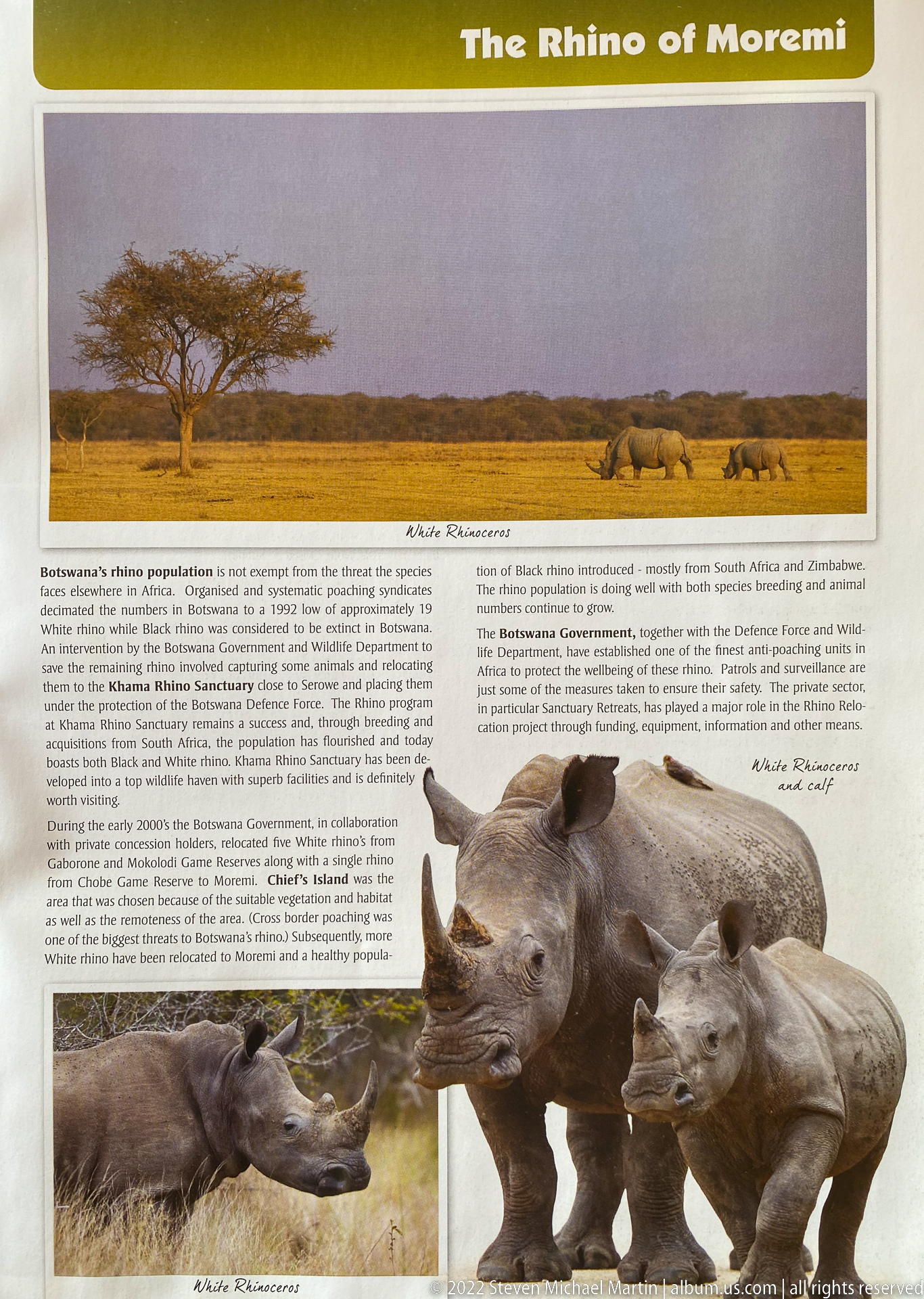
Two honey badgers move in single file through low grass, their broad pale-gray dorsal mantles sharply contrasting with black underparts. Seen at a distance, the pair keeps close to the ground with the elongated, powerful profile typical of this formidable mustelid. The wider framing preserves their shared movement across open habitat rather than isolating either animal as a portrait.
Caption
Two honey badgers move in single file through low grass, their broad pale-gray dorsal mantles sharply contrasting with black underparts. Seen at a distance, the pair keeps close to the ground with the elongated, powerful profile typical of this formidable mustelid. The wider framing preserves their shared movement across open habitat rather than isolating either animal as a portrait.

A monumental baobab fills the frame from trunk to bare crown, its swollen, pale-gray bole widening dramatically at the base. Photographed at the edge of open grassland, the tree’s sculptural trunk contrasts with the low horizon and distant green canopy. The view emphasizes the water-storing architecture and extraordinary girth that make mature baobabs landmarks of southern African landscapes.
Caption
A monumental baobab fills the frame from trunk to bare crown, its swollen, pale-gray bole widening dramatically at the base. Photographed at the edge of open grassland, the tree’s sculptural trunk contrasts with the low horizon and distant green canopy. The view emphasizes the water-storing architecture and extraordinary girth that make mature baobabs landmarks of southern African landscapes.

A young lion rests its chest and forepaws across a fork of weathered branches, shown in close profile against open sky. Fine whiskers, rounded ears, amber eye, and the soft texture of the immature coat are sharply visible. The intimate crop removes most habitat context and concentrates attention on the cat’s calm expression and physical ease in the tree.
Caption
A young lion rests its chest and forepaws across a fork of weathered branches, shown in close profile against open sky. Fine whiskers, rounded ears, amber eye, and the soft texture of the immature coat are sharply visible. The intimate crop removes most habitat context and concentrates attention on the cat’s calm expression and physical ease in the tree.

A mature African baobab stands alone on open grassland, its immense swollen trunk rising into a broad crown of mostly bare, twisting branches. Late light reveals scars, folds, and irregularities in the bark, emphasizing the tree’s age and sculptural mass. With little surrounding vegetation to compete for attention, the photograph functions as a formal portrait of one of southern Africa’s most distinctive trees.
Caption
A mature African baobab stands alone on open grassland, its immense swollen trunk rising into a broad crown of mostly bare, twisting branches. Late light reveals scars, folds, and irregularities in the bark, emphasizing the tree’s age and sculptural mass. With little surrounding vegetation to compete for attention, the photograph functions as a formal portrait of one of southern Africa’s most distinctive trees.

A closer view follows two honey badgers as they travel through short grass, their pale backs, dark flanks, low bodies, and powerful shoulders clearly separated from the surrounding vegetation. One animal leads while the second overlaps behind it, creating a compact behavioral frame that emphasizes coordinated movement and the species’ striking black-and-silver coloration.
Caption
A closer view follows two honey badgers as they travel through short grass, their pale backs, dark flanks, low bodies, and powerful shoulders clearly separated from the surrounding vegetation. One animal leads while the second overlaps behind it, creating a compact behavioral frame that emphasizes coordinated movement and the species’ striking black-and-silver coloration.

Two honey badgers continue across an open grassy flat, their dark bodies and pale dorsal mantles visible through the vegetation. The more distant framing makes their low profile and paired movement part of the larger landscape, offering a contextual counterpart to the closer studies on the preceding page and showing how easily these compact animals can disappear into ground cover.
Caption
Two honey badgers continue across an open grassy flat, their dark bodies and pale dorsal mantles visible through the vegetation. The more distant framing makes their low profile and paired movement part of the larger landscape, offering a contextual counterpart to the closer studies on the preceding page and showing how easily these compact animals can disappear into ground cover.

Two chacma baboons forage independently across open ground, both angled away from the camera as they inspect the short vegetation. Their long limbs, dog-like muzzles, and curved tails are visible despite the rear-quarter view. The spacing between the animals suggests troop activity extending beyond the frame and introduces the primates that dominate the following sequence.
Caption
Two chacma baboons forage independently across open ground, both angled away from the camera as they inspect the short vegetation. Their long limbs, dog-like muzzles, and curved tails are visible despite the rear-quarter view. The spacing between the animals suggests troop activity extending beyond the frame and introduces the primates that dominate the following sequence.

A spotted hyena pauses in the foreground while a male impala stands alert behind it, placing predator and potential prey within the same open plain. The hyena faces the camera with ears raised; the impala’s lyre-shaped horns and upright stance form a second focal point. Their spatial separation makes this a layered ecological portrait rather than evidence of an active hunt.
Caption
A spotted hyena pauses in the foreground while a male impala stands alert behind it, placing predator and potential prey within the same open plain. The hyena faces the camera with ears raised; the impala’s lyre-shaped horns and upright stance form a second focal point. Their spatial separation makes this a layered ecological portrait rather than evidence of an active hunt.

A spotted hyena approaches a chacma baboon on an open plain while an impala stands farther back and a wildebeest occupies the distant right edge. The unusually layered scene brings carnivore, primate, and grazing herbivores into one frame. Their dispersed positions and calm postures document shared use of the same open habitat without implying a specific predatory event.
Caption
A spotted hyena approaches a chacma baboon on an open plain while an impala stands farther back and a wildebeest occupies the distant right edge. The unusually layered scene brings carnivore, primate, and grazing herbivores into one frame. Their dispersed positions and calm postures document shared use of the same open habitat without implying a specific predatory event.

A spotted hyena walks directly toward the camera across sunlit grass, producing a frontal portrait dominated by its broad head, rounded ears, dark muzzle, and powerful forequarters. The shallow background and low perspective isolate the animal from the plain, while its steady gait and forward gaze give the frame a stronger sense of approach than the lateral views earlier in the sequence.
Caption
A spotted hyena walks directly toward the camera across sunlit grass, producing a frontal portrait dominated by its broad head, rounded ears, dark muzzle, and powerful forequarters. The shallow background and low perspective isolate the animal from the plain, while its steady gait and forward gaze give the frame a stronger sense of approach than the lateral views earlier in the sequence.

A spotted hyena crosses a pale sandy patch in profile, one forepaw lifted mid-stride and the coarse spotted coat sharply rendered against the light ground. The clean side view reveals the descending topline from shoulders to rump, long forelegs, rounded ears, and dark muzzle, while sparse grass tufts connect the portrait to the sandy terrain around Stanley’s Camp.
Caption
A spotted hyena crosses a pale sandy patch in profile, one forepaw lifted mid-stride and the coarse spotted coat sharply rendered against the light ground. The clean side view reveals the descending topline from shoulders to rump, long forelegs, rounded ears, and dark muzzle, while sparse grass tufts connect the portrait to the sandy terrain around Stanley’s Camp.

An adult chacma baboon walks through low grass with a small infant riding astride its back. The infant sits upright and grips the adult’s fur, while warm side light outlines both animals and the adult’s long tail. The intimate transport behavior is shown clearly without losing the adult’s forward movement through the open ground.
Caption
An adult chacma baboon walks through low grass with a small infant riding astride its back. The infant sits upright and grips the adult’s fur, while warm side light outlines both animals and the adult’s long tail. The intimate transport behavior is shown clearly without losing the adult’s forward movement through the open ground.

A chacma baboon pauses on all fours with an infant perched on its back, the adult lifting one hand toward its mouth while the youngster looks outward. The side-on composition separates the two faces and shows the infant’s secure grip across the adult’s shoulders. Soft golden light accentuates fur texture and the contrast between the youngster’s pink ears and darker face.
Caption
A chacma baboon pauses on all fours with an infant perched on its back, the adult lifting one hand toward its mouth while the youngster looks outward. The side-on composition separates the two faces and shows the infant’s secure grip across the adult’s shoulders. Soft golden light accentuates fur texture and the contrast between the youngster’s pink ears and darker face.

An adult chacma baboon carries an infant low across its back while another adult stands several meters behind, facing toward the pair. The wider composition places parental transport within troop context: the foreground adult advances across the grass, the infant clings close, and the background animal creates depth and a sense of the group spread across the feeding ground.
Caption
An adult chacma baboon carries an infant low across its back while another adult stands several meters behind, facing toward the pair. The wider composition places parental transport within troop context: the foreground adult advances across the grass, the infant clings close, and the background animal creates depth and a sense of the group spread across the feeding ground.

A young chacma baboon lies closely along an adult’s back, arms and legs wrapped into the fur as the adult walks in profile. The tighter framing emphasizes contact between the pair: the infant’s face turns toward the camera while the adult remains focused ahead. Fine backlighting along the fur gives this transport study a particularly tactile, intimate quality.
Caption
A young chacma baboon lies closely along an adult’s back, arms and legs wrapped into the fur as the adult walks in profile. The tighter framing emphasizes contact between the pair: the infant’s face turns toward the camera while the adult remains focused ahead. Fine backlighting along the fur gives this transport study a particularly tactile, intimate quality.

A broad herd of impala spreads across a green open plain, with dozens of animals grazing, standing alert, and moving between feeding patches. The panoramic habitat view shifts from individual behavior to population scale, showing how the antelope use open floodplain grassland bordered by woodland and scattered palms in the Stanley’s Camp landscape.
Caption
A broad herd of impala spreads across a green open plain, with dozens of animals grazing, standing alert, and moving between feeding patches. The panoramic habitat view shifts from individual behavior to population scale, showing how the antelope use open floodplain grassland bordered by woodland and scattered palms in the Stanley’s Camp landscape.

Deep burgundy flowers hang in clusters among green leaves and woody stems, their thick, folded petals forming bell-like blooms against the shaded canopy. The close botanical study interrupts the wildlife sequence with a record of seasonal plant life around Stanley’s Camp. Several buds and spent flowers are visible, allowing the flowering stage to be read across the same branch system.
Caption
Deep burgundy flowers hang in clusters among green leaves and woody stems, their thick, folded petals forming bell-like blooms against the shaded canopy. The close botanical study interrupts the wildlife sequence with a record of seasonal plant life around Stanley’s Camp. Several buds and spent flowers are visible, allowing the flowering stage to be read across the same branch system.

Several large sausage-shaped fruits hang vertically from long cord-like stalks beneath a leafy tree canopy. Their heavy cylindrical form is characteristic of the sausage tree, a conspicuous African savanna species whose fruits can persist prominently on the branches. The close view emphasizes the unusual scale and suspension of the fruit rather than the tree’s overall form.
Caption
Several large sausage-shaped fruits hang vertically from long cord-like stalks beneath a leafy tree canopy. Their heavy cylindrical form is characteristic of the sausage tree, a conspicuous African savanna species whose fruits can persist prominently on the branches. The close view emphasizes the unusual scale and suspension of the fruit rather than the tree’s overall form.

Two male impalas lock their long lyre-shaped horns while standing head-to-head in green grass. Their lowered necks and braced forelegs show the physical leverage of a sparring bout, with the intertwined horns forming the visual center of the frame. The second ram overlaps behind the nearer animal, emphasizing the close contact of this competitive behavior.
Caption
Two male impalas lock their long lyre-shaped horns while standing head-to-head in green grass. Their lowered necks and braced forelegs show the physical leverage of a sparring bout, with the intertwined horns forming the visual center of the frame. The second ram overlaps behind the nearer animal, emphasizing the close contact of this competitive behavior.

Two impala rams face one another across a small gap in the grass, heads lowered and horns engaged at their tips. The side-on view separates both bodies more clearly than the preceding frame, revealing matched postures, slender legs, and the sweeping curvature of each horn set. The moment records controlled male competition rather than a full-speed clash.
Caption
Two impala rams face one another across a small gap in the grass, heads lowered and horns engaged at their tips. The side-on view separates both bodies more clearly than the preceding frame, revealing matched postures, slender legs, and the sweeping curvature of each horn set. The moment records controlled male competition rather than a full-speed clash.

An impala bounds across a green wetland margin with all four legs extended in a long airborne stride. Small birds and dark earth mounds punctuate the foreground, while tall reeds form horizontal bands behind the antelope. The wide composition emphasizes speed and the elastic running gait that allows impala to cross exposed ground rapidly.
Caption
An impala bounds across a green wetland margin with all four legs extended in a long airborne stride. Small birds and dark earth mounds punctuate the foreground, while tall reeds form horizontal bands behind the antelope. The wide composition emphasizes speed and the elastic running gait that allows impala to cross exposed ground rapidly.

A male impala runs across open grass in a suspended stride, knees tucked and long black horns held above the head. The panning composition leaves the background softly streaked, reinforcing the animal’s speed while keeping its torso and face comparatively sharp. This closer action view complements the wider running frame by emphasizing the ram’s athletic form.
Caption
A male impala runs across open grass in a suspended stride, knees tucked and long black horns held above the head. The panning composition leaves the background softly streaked, reinforcing the animal’s speed while keeping its torso and face comparatively sharp. This closer action view complements the wider running frame by emphasizing the ram’s athletic form.

A chacma baboon sits upright on the crest of a termite mound, using the elevated earthen structure as a lookout across the surrounding grass and woodland. The small primate silhouette is framed by pale trunks and broken branches, while the mound rises from a greener foreground. The composition links animal behavior with one of the savanna’s most prominent insect-built landscape features.
Caption
A chacma baboon sits upright on the crest of a termite mound, using the elevated earthen structure as a lookout across the surrounding grass and woodland. The small primate silhouette is framed by pale trunks and broken branches, while the mound rises from a greener foreground. The composition links animal behavior with one of the savanna’s most prominent insect-built landscape features.

A chacma baboon sits upright on the crest of a weathered termite mound, using the elevated perch above the surrounding floodplain vegetation. Its long muzzle, heavy gray-brown coat, and relaxed seated posture are clearly visible against an uncluttered blue sky. The low viewpoint turns a routine lookout position into a strong profile of primate behavior within the Stanley’s Camp landscape.
Caption
A chacma baboon sits upright on the crest of a weathered termite mound, using the elevated perch above the surrounding floodplain vegetation. Its long muzzle, heavy gray-brown coat, and relaxed seated posture are clearly visible against an uncluttered blue sky. The low viewpoint turns a routine lookout position into a strong profile of primate behavior within the Stanley’s Camp landscape.

A male impala rests with its legs folded beneath its body in tall, sunlit grass. The ram faces the camera, displaying long lyre-shaped horns, large ears, and the warm tan-and-white coloration characteristic of the species. Rather than emphasizing herd movement, this quiet portrait records a resting animal partly enclosed by the vertical stems of its floodplain habitat.
Caption
A male impala rests with its legs folded beneath its body in tall, sunlit grass. The ram faces the camera, displaying long lyre-shaped horns, large ears, and the warm tan-and-white coloration characteristic of the species. Rather than emphasizing herd movement, this quiet portrait records a resting animal partly enclosed by the vertical stems of its floodplain habitat.

Several woodpeckers cling to the trunks and broken limbs of standing dead trees, spaced vertically across the bare wood. Their contrasting dark plumage and red head markings punctuate the pale trunks against a clear sky. The wider view records multiple birds exploiting the same snag complex, where exposed bark and cavities provide feeding and perching surfaces.
Caption
Several woodpeckers cling to the trunks and broken limbs of standing dead trees, spaced vertically across the bare wood. Their contrasting dark plumage and red head markings punctuate the pale trunks against a clear sky. The wider view records multiple birds exploiting the same snag complex, where exposed bark and cavities provide feeding and perching surfaces.

An adult lioness balances along a broad tree limb while a younger lion rests lower among intersecting branches. The elevated setting reveals the cats’ agility away from the ground, with the adult standing alert beneath leafy canopy and the smaller animal partly screened by wood. The contextual view establishes the unusual arboreal resting site before the sequence moves closer to individual animals.
Caption
An adult lioness balances along a broad tree limb while a younger lion rests lower among intersecting branches. The elevated setting reveals the cats’ agility away from the ground, with the adult standing alert beneath leafy canopy and the smaller animal partly screened by wood. The contextual view establishes the unusual arboreal resting site before the sequence moves closer to individual animals.

A lioness stands squarely on a massive horizontal branch while a young lion peers from the lower left beneath crossing twigs. Her long tail hangs below the limb and her attentive face turns toward the camera. The tighter composition emphasizes the adult’s secure footing and the vertical relationship between the two cats within the tree.
Caption
A lioness stands squarely on a massive horizontal branch while a young lion peers from the lower left beneath crossing twigs. Her long tail hangs below the limb and her attentive face turns toward the camera. The tighter composition emphasizes the adult’s secure footing and the vertical relationship between the two cats within the tree.

A tree-climbing lioness pauses on a broad limb beneath green foliage, lifting her gaze above the camera while a young lion remains tucked below the branch network. Dappled light falls across the adult’s tawny coat and chest, separating her from the darker trunk. The upward glance distinguishes this frame from the neighboring frontal view and gives the scene a watchful quality.
Caption
A tree-climbing lioness pauses on a broad limb beneath green foliage, lifting her gaze above the camera while a young lion remains tucked below the branch network. Dappled light falls across the adult’s tawny coat and chest, separating her from the darker trunk. The upward glance distinguishes this frame from the neighboring frontal view and gives the scene a watchful quality.

A young African lion reclines along a broad tree limb, its forelegs draped around crossing branches and its face turned alertly to the side. The compact body and youthful facial proportions contrast with the adult lioness visible only as legs at the upper right. The frame isolates the younger cat’s secure resting position within the same arboreal refuge.
Caption
A young African lion reclines along a broad tree limb, its forelegs draped around crossing branches and its face turned alertly to the side. The compact body and youthful facial proportions contrast with the adult lioness visible only as legs at the upper right. The frame isolates the younger cat’s secure resting position within the same arboreal refuge.

A young African lion looks directly toward the camera from behind a tangle of branches, one forepaw resting over a horizontal limb. Its rounded ears, broad paws, pale muzzle, and developing facial structure are clearly defined, while the legs of an adult lion remain visible above. The frontal gaze gives this frame a more direct connection than the adjacent profile portrait.
Caption
A young African lion looks directly toward the camera from behind a tangle of branches, one forepaw resting over a horizontal limb. Its rounded ears, broad paws, pale muzzle, and developing facial structure are clearly defined, while the legs of an adult lion remain visible above. The frontal gaze gives this frame a more direct connection than the adjacent profile portrait.

Two lion cubs peer through tall dry grass, their rounded ears and youthful faces appearing at different depths within the vegetation. The nearer cub is partly screened by stems while the second watches from behind, making camouflage and concealment central to the composition. Warm tawny coats blend closely with the surrounding seed heads and sunlit grass.
Caption
Two lion cubs peer through tall dry grass, their rounded ears and youthful faces appearing at different depths within the vegetation. The nearer cub is partly screened by stems while the second watches from behind, making camouflage and concealment central to the composition. Warm tawny coats blend closely with the surrounding seed heads and sunlit grass.

A lion cub sits low in dry grass, almost disappearing among stems that cross its face and body. Only the rounded ears, dark-edged eyes, muzzle, and upper torso remain clearly visible. The close ground-level view emphasizes the effectiveness of the cub’s tawny coloration as camouflage and distinguishes this solitary portrait from the paired cubs in the preceding frame.
Caption
A lion cub sits low in dry grass, almost disappearing among stems that cross its face and body. Only the rounded ears, dark-edged eyes, muzzle, and upper torso remain clearly visible. The close ground-level view emphasizes the effectiveness of the cub’s tawny coloration as camouflage and distinguishes this solitary portrait from the paired cubs in the preceding frame.

An adult lioness stands beneath a large tree in dappled shade, facing slightly left of the camera. Her muscular shoulders and tawny coat fill the frame, while a dark linear mark is visible on the lower chest. The shaded woodland setting and steady upright posture create a formal portrait distinct from the tree-climbing sequence and the concealed cubs nearby.
Caption
An adult lioness stands beneath a large tree in dappled shade, facing slightly left of the camera. Her muscular shoulders and tawny coat fill the frame, while a dark linear mark is visible on the lower chest. The shaded woodland setting and steady upright posture create a formal portrait distinct from the tree-climbing sequence and the concealed cubs nearby.

An adult lioness fills the frame in a close facial portrait, her amber eyes, black-edged nose, pale muzzle, and rounded ears rendered in fine detail. Soft patches of shade cross the tawny coat while the background falls out of focus. The tight composition removes nearly all habitat context, concentrating on facial structure, expression, and the small scars and marks accumulated in the wild.
Caption
An adult lioness fills the frame in a close facial portrait, her amber eyes, black-edged nose, pale muzzle, and rounded ears rendered in fine detail. Soft patches of shade cross the tawny coat while the background falls out of focus. The tight composition removes nearly all habitat context, concentrating on facial structure, expression, and the small scars and marks accumulated in the wild.

A young lion reclines lengthwise across a broad tree branch, forepaws folded over a smaller crossing limb as it looks outward from the canopy. The wider view reveals the scale of the supporting trunk and the cat’s full resting posture. Its relaxed position continues the arboreal sequence while emphasizing how the branching structure forms a natural platform.
Caption
A young lion reclines lengthwise across a broad tree branch, forepaws folded over a smaller crossing limb as it looks outward from the canopy. The wider view reveals the scale of the supporting trunk and the cat’s full resting posture. Its relaxed position continues the arboreal sequence while emphasizing how the branching structure forms a natural platform.

A lioness negotiates the fork of a massive tree trunk, her body partly hidden behind deeply textured bark while her head emerges through an opening. Her tail extends to the left and her hindquarters remain visible on the opposite side, making the composition a study of movement and balance rather than repose. The tree itself nearly divides the animal into separate visual fragments.
Caption
A lioness negotiates the fork of a massive tree trunk, her body partly hidden behind deeply textured bark while her head emerges through an opening. Her tail extends to the left and her hindquarters remain visible on the opposite side, making the composition a study of movement and balance rather than repose. The tree itself nearly divides the animal into separate visual fragments.

A lion cub sits upright amid tall straw-colored grass, shown in left-facing profile with its head raised above the stems. Soft juvenile features, rounded ears, and a lightly mottled young coat remain visible despite partial screening by vegetation. The profile view offers a clearer sense of body size and posture than the more concealed cub portraits on the preceding page.
Caption
A lion cub sits upright amid tall straw-colored grass, shown in left-facing profile with its head raised above the stems. Soft juvenile features, rounded ears, and a lightly mottled young coat remain visible despite partial screening by vegetation. The profile view offers a clearer sense of body size and posture than the more concealed cub portraits on the preceding page.

A lion cub steps through dry grass with one foreleg extended and its head turned slightly to the right. Faint juvenile spotting remains visible on the legs and lower body, while the warm coat closely matches the surrounding vegetation. The low perspective and forward stride distinguish this active frame from the seated cub portraits immediately before it.
Caption
A lion cub steps through dry grass with one foreleg extended and its head turned slightly to the right. Faint juvenile spotting remains visible on the legs and lower body, while the warm coat closely matches the surrounding vegetation. The low perspective and forward stride distinguish this active frame from the seated cub portraits immediately before it.

A close side view follows a lion cub moving through sunlit grass, its face and shoulder filling most of the frame. Rounded ears, short whiskers, pale muzzle, and the slightly woolly texture of the juvenile coat are sharply rendered. The compressed composition focuses on the cub’s alert expression and developing facial proportions rather than the surrounding habitat.
Caption
A close side view follows a lion cub moving through sunlit grass, its face and shoulder filling most of the frame. Rounded ears, short whiskers, pale muzzle, and the slightly woolly texture of the juvenile coat are sharply rendered. The compressed composition focuses on the cub’s alert expression and developing facial proportions rather than the surrounding habitat.

An African buffalo stands in dry woodland beside a tall eroded termite mound, its dark body and heavy curved horns contrasting with pale grass and tree trunks. The environmental framing gives equal weight to animal and habitat, showing the buffalo moving through a mosaic of woodland, grass, and insect-built structures rather than isolated as a portrait.
Caption
An African buffalo stands in dry woodland beside a tall eroded termite mound, its dark body and heavy curved horns contrasting with pale grass and tree trunks. The environmental framing gives equal weight to animal and habitat, showing the buffalo moving through a mosaic of woodland, grass, and insect-built structures rather than isolated as a portrait.

Several African buffalo stand close together in tall golden grass, with the nearest animal facing the camera and displaying a broad horn boss and sweeping horns. Overlapping dark bodies create a dense herd portrait, while thin branches and dry stems partly screen the group. The frontal animal’s weathered face and heavy horn structure dominate the composition.
Caption
Several African buffalo stand close together in tall golden grass, with the nearest animal facing the camera and displaying a broad horn boss and sweeping horns. Overlapping dark bodies create a dense herd portrait, while thin branches and dry stems partly screen the group. The frontal animal’s weathered face and heavy horn structure dominate the composition.

A large herd of impala spreads across a broad green floodplain, dozens of animals grazing or standing alert beneath a hazy woodland horizon. A tall palm and scattered trees punctuate the background, reinforcing the openness of the wet-season habitat. The distant panoramic view emphasizes herd scale and landscape use rather than individual antelope behavior.
Caption
A large herd of impala spreads across a broad green floodplain, dozens of animals grazing or standing alert beneath a hazy woodland horizon. A tall palm and scattered trees punctuate the background, reinforcing the openness of the wet-season habitat. The distant panoramic view emphasizes herd scale and landscape use rather than individual antelope behavior.

Spur-winged geese stand among shallow water and wet grass, their glossy dark bodies broken by bold white wing panels and reddish facial skin. One bird stands apart at right while two overlap at left, creating a small social grouping within the marsh. The open wetland setting and strong plumage pattern make these large African waterfowl readily distinguishable.
Caption
Spur-winged geese stand among shallow water and wet grass, their glossy dark bodies broken by bold white wing panels and reddish facial skin. One bird stands apart at right while two overlap at left, creating a small social grouping within the marsh. The open wetland setting and strong plumage pattern make these large African waterfowl readily distinguishable.

A large white egret stands motionless on exposed mud beside shallow water, its long black legs and extended pale bill forming a clean silhouette against dark green reeds. The bird’s upright posture suggests patient foraging at the water’s edge. Reflections and emergent stems frame the solitary bird without obscuring its slender wading-bird proportions.
Caption
A large white egret stands motionless on exposed mud beside shallow water, its long black legs and extended pale bill forming a clean silhouette against dark green reeds. The bird’s upright posture suggests patient foraging at the water’s edge. Reflections and emergent stems frame the solitary bird without obscuring its slender wading-bird proportions.

A hamerkop stands on muddy ground beside a shallow pool, its reflection darkening the water below. The bird’s compact brown body, long legs, heavy bill, and swept-back crest create the characteristic hammer-shaped profile. Surrounded by trampled wet grass and small patches of open water, the scene records the species at close range in a productive marsh edge.
Caption
A hamerkop stands on muddy ground beside a shallow pool, its reflection darkening the water below. The bird’s compact brown body, long legs, heavy bill, and swept-back crest create the characteristic hammer-shaped profile. Surrounded by trampled wet grass and small patches of open water, the scene records the species at close range in a productive marsh edge.

A hamerkop stands upright on saturated ground among bright green grasses, offering a clear full-body view of its unusual proportions. The long black legs, broad brown wings, sturdy pointed bill, and backward crest are unobstructed, making this one of the sequence’s strongest identification portraits. Mud and short emergent vegetation establish the shallow wetland setting without distracting from the bird.
Caption
A hamerkop stands upright on saturated ground among bright green grasses, offering a clear full-body view of its unusual proportions. The long black legs, broad brown wings, sturdy pointed bill, and backward crest are unobstructed, making this one of the sequence’s strongest identification portraits. Mud and short emergent vegetation establish the shallow wetland setting without distracting from the bird.

A hamerkop wades through shallow open water dotted with floating leaves, one foot creating concentric ripples beneath its body. Seen in profile, the bird’s warm brown plumage, heavy bill, and angular crest are mirrored in the dark surface. The frame shifts the sequence from standing portraits to active movement through aquatic feeding habitat.
Caption
A hamerkop wades through shallow open water dotted with floating leaves, one foot creating concentric ripples beneath its body. Seen in profile, the bird’s warm brown plumage, heavy bill, and angular crest are mirrored in the dark surface. The frame shifts the sequence from standing portraits to active movement through aquatic feeding habitat.

A hamerkop pauses in shallow water with one leg visible beneath the surface, surrounded by floating aquatic leaves. Sunlight reveals layered brown wing feathers and the bird’s distinctive crested head, while blue water and reflected clouds brighten the background. The closer composition highlights plumage texture and the stout bill more strongly than the preceding wading view.
Caption
A hamerkop pauses in shallow water with one leg visible beneath the surface, surrounded by floating aquatic leaves. Sunlight reveals layered brown wing feathers and the bird’s distinctive crested head, while blue water and reflected clouds brighten the background. The closer composition highlights plumage texture and the stout bill more strongly than the preceding wading view.

An African savanna elephant stands frontally in shallow floodplain water, its tusks flanking the lowered trunk as it feeds among emergent vegetation. Wet grasses reach around the legs and scattered aquatic flowers dot the surface. The near-symmetrical view emphasizes the animal’s broad ears, heavy head, and direct presence while retaining the lush seasonal wetland setting.
Caption
An African savanna elephant stands frontally in shallow floodplain water, its tusks flanking the lowered trunk as it feeds among emergent vegetation. Wet grasses reach around the legs and scattered aquatic flowers dot the surface. The near-symmetrical view emphasizes the animal’s broad ears, heavy head, and direct presence while retaining the lush seasonal wetland setting.

An African savanna elephant moves through flooded grassland in side-front view, extending its trunk into dense green vegetation while water reaches around its feet. One tusk is prominent beneath the trunk and the broad ear hangs open against the shoulder. The lateral feeding posture shows how the elephant harvests wetland plants across the seasonally inundated plain.
Caption
An African savanna elephant moves through flooded grassland in side-front view, extending its trunk into dense green vegetation while water reaches around its feet. One tusk is prominent beneath the trunk and the broad ear hangs open against the shoulder. The lateral feeding posture shows how the elephant harvests wetland plants across the seasonally inundated plain.

An African savanna elephant moves through lush floodplain grass with its trunk curled toward vegetation, one tusk clearly visible beneath the cheek. Shallow water and emergent plants surround the animal’s legs, while the broad ear and wrinkled hide are shown in clean side view. The composition continues the wetland-feeding sequence while giving greater emphasis to body form and the saturated Okavango habitat.
Caption
An African savanna elephant moves through lush floodplain grass with its trunk curled toward vegetation, one tusk clearly visible beneath the cheek. Shallow water and emergent plants surround the animal’s legs, while the broad ear and wrinkled hide are shown in clean side view. The composition continues the wetland-feeding sequence while giving greater emphasis to body form and the saturated Okavango habitat.

A great egret stands upright among dense green reeds and shallow marsh vegetation, its long S-curved neck held alert and yellow bill pointed across the frame. Black legs disappear into the wet ground below. The uncluttered side view emphasizes the elegant proportions and all-white plumage that distinguish this large wading bird in the seasonal wetlands around Stanley’s Camp.
Caption
A great egret stands upright among dense green reeds and shallow marsh vegetation, its long S-curved neck held alert and yellow bill pointed across the frame. Black legs disappear into the wet ground below. The uncluttered side view emphasizes the elegant proportions and all-white plumage that distinguish this large wading bird in the seasonal wetlands around Stanley’s Camp.

A great egret holds both wings nearly fully extended above the marsh, forming a broad white arc of primary and secondary feathers. Seen from behind, the long neck rises through the center of the wing span while dark legs reach toward the wet ground. The symmetrical posture turns a brief movement into a study of feather structure, balance, and the bird’s considerable wingspan.
Caption
A great egret holds both wings nearly fully extended above the marsh, forming a broad white arc of primary and secondary feathers. Seen from behind, the long neck rises through the center of the wing span while dark legs reach toward the wet ground. The symmetrical posture turns a brief movement into a study of feather structure, balance, and the bird’s considerable wingspan.

A brightly colored turaco flies past a flowering branch, its deep wings spread across the frame and blue-green body catching the light beneath the darker flight feathers. The bird is partly obscured by leaves and blossoms, but the long tail and saturated tropical coloration remain visible. The action frame emphasizes speed and color rather than providing a fully diagnostic perched view.
Caption
A brightly colored turaco flies past a flowering branch, its deep wings spread across the frame and blue-green body catching the light beneath the darker flight feathers. The bird is partly obscured by leaves and blossoms, but the long tail and saturated tropical coloration remain visible. The action frame emphasizes speed and color rather than providing a fully diagnostic perched view.

A safari guide bends toward tracks and droppings on a pale sandy vehicle trail, extending one hand to indicate signs on the ground. The surrounding grass and paired tire ruts place the lesson directly within the bush rather than at camp. The scene documents field-guide practice: reading spoor, scat, and disturbance in the substrate to reconstruct recent animal movement.
Caption
A safari guide bends toward tracks and droppings on a pale sandy vehicle trail, extending one hand to indicate signs on the ground. The surrounding grass and paired tire ruts place the lesson directly within the bush rather than at camp. The scene documents field-guide practice: reading spoor, scat, and disturbance in the substrate to reconstruct recent animal movement.

A smartphone lock screen displays Thursday, October 6 above a satellite-style map centered on southern Africa, with the time shown prominently across the top. The tilted close-up records a personal travel marker within the birthday portfolio, visually connecting the date with the continent where the safari was underway. Interface icons and a location-services notice remain visible around the map.
Caption
A smartphone lock screen displays Thursday, October 6 above a satellite-style map centered on southern Africa, with the time shown prominently across the top. The tilted close-up records a personal travel marker within the birthday portfolio, visually connecting the date with the continent where the safari was underway. Interface icons and a location-services notice remain visible around the map.

A lilac-breasted roller perches low on a termite mound with its bill open, apparently calling. The close side view reveals the pale green crown, black eye stripe, lilac throat and breast, and saturated turquoise underparts. Fine feather detail and the open bill distinguish this behavioral portrait from the more formal perched view on the preceding page.
Caption
A lilac-breasted roller perches low on a termite mound with its bill open, apparently calling. The close side view reveals the pale green crown, black eye stripe, lilac throat and breast, and saturated turquoise underparts. Fine feather detail and the open bill distinguish this behavioral portrait from the more formal perched view on the preceding page.

A water lily is seen from water level, its pale petals opening above a thick green stalk while rounded lily pads spread across the surface behind. The bloom and stem are reflected below, and a thin upright reed echoes the flower’s vertical axis to the right. This low side perspective emphasizes the flower’s elevation above the water rather than its radial petal pattern.
Caption
A water lily is seen from water level, its pale petals opening above a thick green stalk while rounded lily pads spread across the surface behind. The bloom and stem are reflected below, and a thin upright reed echoes the flower’s vertical axis to the right. This low side perspective emphasizes the flower’s elevation above the water rather than its radial petal pattern.

A lioness carefully descends through the fork of a large tree, forelegs reaching down the trunk while a younger lion remains perched behind her among the branches. The adult’s body is stretched vertically, revealing the muscular control required to negotiate the bark and limbs. Warm light catches both cats, making this one of the clearest behavioral frames of the tree-climbing sequence.
Caption
A lioness carefully descends through the fork of a large tree, forelegs reaching down the trunk while a younger lion remains perched behind her among the branches. The adult’s body is stretched vertically, revealing the muscular control required to negotiate the bark and limbs. Warm light catches both cats, making this one of the clearest behavioral frames of the tree-climbing sequence.

An open safari vehicle stands in tall golden grass as the guide in the driver’s seat looks across the landscape. The elevated passenger viewpoint includes the dashboard, windscreen frame, and snorkel in the foreground, turning the photograph into a first-person record of scanning the floodplain during a game drive. Sparse trees and low brush extend across the warm dry-season scene ahead.
Caption
An open safari vehicle stands in tall golden grass as the guide in the driver’s seat looks across the landscape. The elevated passenger viewpoint includes the dashboard, windscreen frame, and snorkel in the foreground, turning the photograph into a first-person record of scanning the floodplain during a game drive. Sparse trees and low brush extend across the warm dry-season scene ahead.

A lilac-breasted roller perches on the summit of a weathered termite mound, its lilac breast, turquoise underparts, greenish crown, and blue wings standing out against a softly blurred landscape. The mound creates a high, exposed hunting perch typical of open savanna. The clean isolation of bird and earthen pedestal makes this a particularly strong species portrait.
Caption
A lilac-breasted roller perches on the summit of a weathered termite mound, its lilac breast, turquoise underparts, greenish crown, and blue wings standing out against a softly blurred landscape. The mound creates a high, exposed hunting perch typical of open savanna. The clean isolation of bird and earthen pedestal makes this a particularly strong species portrait.

A lilac-breasted roller sweeps past a termite mound in full flight, exposing brilliant cobalt and turquoise wing panels that are largely hidden when the bird is perched. The body remains compact while the wings flare broadly and the tail trails behind. The photograph turns a familiar savanna species into a study of flight color and rapid movement against a soft green background.
Caption
A lilac-breasted roller sweeps past a termite mound in full flight, exposing brilliant cobalt and turquoise wing panels that are largely hidden when the bird is perched. The body remains compact while the wings flare broadly and the tail trails behind. The photograph turns a familiar savanna species into a study of flight color and rapid movement against a soft green background.

A safari guest sits in profile beneath the canopy of an open game-drive vehicle, looking outward toward the floodplain rather than at the camera. The close composition includes only a narrow band of green habitat beyond the seat frame, making attention and observation the central subject. Warm light on the face contrasts with the shaded interior of the vehicle.
Caption
A safari guest sits in profile beneath the canopy of an open game-drive vehicle, looking outward toward the floodplain rather than at the camera. The close composition includes only a narrow band of green habitat beyond the seat frame, making attention and observation the central subject. Warm light on the face contrasts with the shaded interior of the vehicle.

Viewed from the rear seats of an open game-drive vehicle, a guide and passenger face a broad green floodplain while cameras rest within easy reach. The vehicle canopy frames the landscape like a viewing window, emphasizing the shared act of searching for wildlife. This environmental interior provides context for the close portraits and animal sightings that surround it in the sequence.
Caption
Viewed from the rear seats of an open game-drive vehicle, a guide and passenger face a broad green floodplain while cameras rest within easy reach. The vehicle canopy frames the landscape like a viewing window, emphasizing the shared act of searching for wildlife. This environmental interior provides context for the close portraits and animal sightings that surround it in the sequence.

A safari guide stands beside an open Land Rover-style game-drive vehicle and gestures toward the surrounding bush while a guest listens near the front fender. The stopped vehicle, equipment box, and dry woodland create the setting of an on-foot field explanation during the drive. The guide’s extended arm directs attention beyond the frame, reinforcing the instructional character of the encounter.
Caption
A safari guide stands beside an open Land Rover-style game-drive vehicle and gestures toward the surrounding bush while a guest listens near the front fender. The stopped vehicle, equipment box, and dry woodland create the setting of an on-foot field explanation during the drive. The guide’s extended arm directs attention beyond the frame, reinforcing the instructional character of the encounter.

A lilac-breasted roller drops toward the crest of a termite mound with wings raised in a steep braking posture. Intense turquoise and cobalt flight feathers form a vivid V above the body while the feet extend toward the landing surface. The suspended moment records the mechanics of landing and provides a dynamic counterpart to the roller’s perched and horizontal-flight portraits.
Caption
A lilac-breasted roller drops toward the crest of a termite mound with wings raised in a steep braking posture. Intense turquoise and cobalt flight feathers form a vivid V above the body while the feet extend toward the landing surface. The suspended moment records the mechanics of landing and provides a dynamic counterpart to the roller’s perched and horizontal-flight portraits.

A small skink basks on sun-warmed wooden planks, its elongated blue-gray body stretched behind a compact head marked with orange around the throat and face. Fine scales, short limbs, and a very long tapering tail are visible in the shallow-focus portrait. The bright throat coloration is striking, but the view does not provide enough diagnostic detail for a secure species-level identification.
Caption
A small skink basks on sun-warmed wooden planks, its elongated blue-gray body stretched behind a compact head marked with orange around the throat and face. Fine scales, short limbs, and a very long tapering tail are visible in the shallow-focus portrait. The bright throat coloration is striking, but the view does not provide enough diagnostic detail for a secure species-level identification.

A southern ground hornbill strides through short green grass, its enormous black bill, glossy black plumage, and vivid red bare facial and throat skin clearly visible in profile. The heavy-bodied terrestrial bird holds its wings folded and tail extended behind. The low viewpoint emphasizes the species’ unusual combination of hornbill features and ground-foraging proportions.
Caption
A southern ground hornbill strides through short green grass, its enormous black bill, glossy black plumage, and vivid red bare facial and throat skin clearly visible in profile. The heavy-bodied terrestrial bird holds its wings folded and tail extended behind. The low viewpoint emphasizes the species’ unusual combination of hornbill features and ground-foraging proportions.

A southern ground hornbill lowers its massive bill toward the grass while moving through the floodplain, the red throat pouch and facial skin glowing against black feathers. The closer side view highlights the bird’s heavy bill, long eyelashes, and layered wing coverts. Its downward posture shifts attention from identification to terrestrial foraging behavior.
Caption
A southern ground hornbill lowers its massive bill toward the grass while moving through the floodplain, the red throat pouch and facial skin glowing against black feathers. The closer side view highlights the bird’s heavy bill, long eyelashes, and layered wing coverts. Its downward posture shifts attention from identification to terrestrial foraging behavior.

A southern ground hornbill fills the frame in a close three-quarter portrait, exposing the corrugated surface of its enormous dark bill, red facial skin, fleshy throat pouch, and layered black wing feathers. The bird’s eye and long lashes are especially clear. By removing most of the surrounding habitat, the photograph concentrates on the anatomical features that make this species immediately recognizable.
Caption
A southern ground hornbill fills the frame in a close three-quarter portrait, exposing the corrugated surface of its enormous dark bill, red facial skin, fleshy throat pouch, and layered black wing feathers. The bird’s eye and long lashes are especially clear. By removing most of the surrounding habitat, the photograph concentrates on the anatomical features that make this species immediately recognizable.

A group of southern ground hornbills moves in a loose line through tall floodplain grass, their black bodies and red facial patches intermittently visible above the vegetation. The broad environmental view contrasts with the preceding close portraits by showing several birds sharing the same feeding ground. Scattered trees and a hazy woodland edge place the group within an expansive savanna-wetland mosaic.
Caption
A group of southern ground hornbills moves in a loose line through tall floodplain grass, their black bodies and red facial patches intermittently visible above the vegetation. The broad environmental view contrasts with the preceding close portraits by showing several birds sharing the same feeding ground. Scattered trees and a hazy woodland edge place the group within an expansive savanna-wetland mosaic.

A saddle-billed stork crosses a clear blue sky with broad black-and-white wings fully extended and long legs trailing behind. Its long red-and-black bill and contrasting dark flight feathers are visible in side view, while the white body remains brightly lit from below. The airborne portrait shows the species’ impressive wingspan and elongated proportions more clearly than a standing wetland view would.
Caption
A saddle-billed stork crosses a clear blue sky with broad black-and-white wings fully extended and long legs trailing behind. Its long red-and-black bill and contrasting dark flight feathers are visible in side view, while the white body remains brightly lit from below. The airborne portrait shows the species’ impressive wingspan and elongated proportions more clearly than a standing wetland view would.

The crowns and trunks of riverine trees appear upside down in the still surface of a floodplain pool, with only floating stems and small patches of real vegetation interrupting the reflection. By excluding the actual tree line, the composition becomes deliberately abstract: sky, foliage, and water merge into an inverted landscape whose orientation is revealed only by the ripples and emergent plants.
Caption
The crowns and trunks of riverine trees appear upside down in the still surface of a floodplain pool, with only floating stems and small patches of real vegetation interrupting the reflection. By excluding the actual tree line, the composition becomes deliberately abstract: sky, foliage, and water merge into an inverted landscape whose orientation is revealed only by the ripples and emergent plants.

A pale African water lily rises above still dark water on a slender stem, its pointed petals opening around a yellow center while reeds and aquatic leaves surround the bloom. The flower’s reflection extends below it, doubling the vertical form. The close botanical view isolates one of the seasonal wetland’s most delicate flowering plants against a quiet field of water and green stems.
Caption
A pale African water lily rises above still dark water on a slender stem, its pointed petals opening around a yellow center while reeds and aquatic leaves surround the bloom. The flower’s reflection extends below it, doubling the vertical form. The close botanical view isolates one of the seasonal wetland’s most delicate flowering plants against a quiet field of water and green stems.

A safari guest walks through shallow wetland water and grass in warm evening light, head lowered as he watches his footing. The close portrait retains enough background to show the flooded setting while concentrating on the human scale of moving through the floodplain. Soft reflections and green vegetation connect the birthday travel narrative directly to the watery environment around Stanley’s Camp.
Caption
A safari guest walks through shallow wetland water and grass in warm evening light, head lowered as he watches his footing. The close portrait retains enough background to show the flooded setting while concentrating on the human scale of moving through the floodplain. Soft reflections and green vegetation connect the birthday travel narrative directly to the watery environment around Stanley’s Camp.

A narrow mokoro rests half in the water at the edge of a reed-lined channel, fitted with two padded seats and accompanied by a long setting pole laid across the bow. The low craft sits almost level with the surrounding marsh, illustrating the shallow-draft form used to travel through the Okavango Delta’s narrow waterways and flooded grasslands.
Caption
A narrow mokoro rests half in the water at the edge of a reed-lined channel, fitted with two padded seats and accompanied by a long setting pole laid across the bow. The low craft sits almost level with the surrounding marsh, illustrating the shallow-draft form used to travel through the Okavango Delta’s narrow waterways and flooded grasslands.

An adult hippopotamus rises high in calm water with its jaws opened to an extraordinary width, exposing the massive canines and lower incisors that make a hippo gape such a dramatic display. Warm backlight glints across the wet skin and rippled surface. The side-front angle reveals the breadth of the muzzle and the muscular architecture of the mouth.
Caption
An adult hippopotamus rises high in calm water with its jaws opened to an extraordinary width, exposing the massive canines and lower incisors that make a hippo gape such a dramatic display. Warm backlight glints across the wet skin and rippled surface. The side-front angle reveals the breadth of the muzzle and the muscular architecture of the mouth.

An adult hippopotamus faces the camera with its mouth fully open while a much smaller calf surfaces immediately behind its right side. The frontal view makes the adult’s broad palate, tusk-like canines, and deep pink mouth especially prominent, while the calf’s head adds a clear scale comparison. Both animals are surrounded by softly lit water at close range.
Caption
An adult hippopotamus faces the camera with its mouth fully open while a much smaller calf surfaces immediately behind its right side. The frontal view makes the adult’s broad palate, tusk-like canines, and deep pink mouth especially prominent, while the calf’s head adds a clear scale comparison. Both animals are surrounded by softly lit water at close range.

A long, dark line of African buffalo stretches across the distant edge of a green floodplain beneath a band of riverine woodland. The animals are too far away for individual portraits, but their collective mass forms a conspicuous horizontal procession across the landscape. The broad establishing view emphasizes herd scale and the open grazing habitat surrounding Stanley’s Camp.
Caption
A long, dark line of African buffalo stretches across the distant edge of a green floodplain beneath a band of riverine woodland. The animals are too far away for individual portraits, but their collective mass forms a conspicuous horizontal procession across the landscape. The broad establishing view emphasizes herd scale and the open grazing habitat surrounding Stanley’s Camp.

A birthday table is arranged with rainbow-striped napkins, handwritten “Happy Birthday” cards, woven placemats, glassware, and a central plate holding two small chocolate cakes topped with candles. The overhead composition turns the meal setting into a graphic celebration of color and symmetry, documenting the personalized birthday details prepared at Stanley’s Camp.
Caption
A birthday table is arranged with rainbow-striped napkins, handwritten “Happy Birthday” cards, woven placemats, glassware, and a central plate holding two small chocolate cakes topped with candles. The overhead composition turns the meal setting into a graphic celebration of color and symmetry, documenting the personalized birthday details prepared at Stanley’s Camp.

A safari guest smiles across a birthday place setting beneath the shade of a large tree. Woven placemats, colorful napkins, glassware, condiments, and a black water bottle fill the foreground, while wooden rails and green vegetation establish the open-air dining terrace. The closer framing shifts attention from landscape context to the relaxed intimacy of the birthday meal.
Caption
A safari guest smiles across a birthday place setting beneath the shade of a large tree. Woven placemats, colorful napkins, glassware, condiments, and a black water bottle fill the foreground, while wooden rails and green vegetation establish the open-air dining terrace. The closer framing shifts attention from landscape context to the relaxed intimacy of the birthday meal.

A wider view places the birthday guest at the end of a long dining table beneath a spreading tree, with bottles and glassware in the foreground and open floodplain stretching to the left. The elevated deck, timber railing, service area, and surrounding canopy reveal more of the lodge’s outdoor dining environment than the preceding portraits.
Caption
A wider view places the birthday guest at the end of a long dining table beneath a spreading tree, with bottles and glassware in the foreground and open floodplain stretching to the left. The elevated deck, timber railing, service area, and surrounding canopy reveal more of the lodge’s outdoor dining environment than the preceding portraits.

A plated lunch entrée pairs a golden-browned fish fillet with bright green purée, lemon wedges, leafy garnish, and a small cup of sauce. A second plate of mixed salad and vegetables sits above it, placing the dish within the birthday meal. The overhead angle emphasizes careful plating, contrasting textures, and fresh color rather than identifying an unsupported recipe.
Caption
A plated lunch entrée pairs a golden-browned fish fillet with bright green purée, lemon wedges, leafy garnish, and a small cup of sauce. A second plate of mixed salad and vegetables sits above it, placing the dish within the birthday meal. The overhead angle emphasizes careful plating, contrasting textures, and fresh color rather than identifying an unsupported recipe.

A safari guest in a blue shirt eats at the open-air dining table, with a black water bottle and drinking glass beside the plate. Beyond the wooden railing, a broad green floodplain extends into the distance and a small antelope is visible far behind. The casual meal portrait preserves both the human moment and wildlife-rich setting without identifying the individual.
Caption
A safari guest in a blue shirt eats at the open-air dining table, with a black water bottle and drinking glass beside the plate. Beyond the wooden railing, a broad green floodplain extends into the distance and a small antelope is visible far behind. The casual meal portrait preserves both the human moment and wildlife-rich setting without identifying the individual.

A hazy orange sun hangs above a dark line of floodplain woodland, where palms and leafless trees form an irregular silhouette against a smoke- or dust-softened sky. The muted disk and subdued contrast create a restrained evening landscape rather than a vivid sunset. A tall palm at right provides the strongest vertical counterpoint to the low horizon.
Caption
A hazy orange sun hangs above a dark line of floodplain woodland, where palms and leafless trees form an irregular silhouette against a smoke- or dust-softened sky. The muted disk and subdued contrast create a restrained evening landscape rather than a vivid sunset. A tall palm at right provides the strongest vertical counterpoint to the low horizon.

A safari guest turns from the dining table to watch a large dark ground bird crossing the green floodplain below the deck. Suspended woven lamps and the wooden railing frame the elevated viewpoint, while the open plain extends far beyond the animal. The spontaneous composition links lodge dining with wildlife observation occurring immediately outside the terrace.
Caption
A safari guest turns from the dining table to watch a large dark ground bird crossing the green floodplain below the deck. Suspended woven lamps and the wooden railing frame the elevated viewpoint, while the open plain extends far beyond the animal. The spontaneous composition links lodge dining with wildlife observation occurring immediately outside the terrace.

The setting sun glows through warm haze above a shallow flooded plain, its orange reflection dropping through the water between reeds and emergent grasses. Dark tree silhouettes mark the distant horizon while patches of open water mirror the luminous sky. The low, expansive view combines wetland structure and evening light in a classic Okavango floodplain scene.
Caption
The setting sun glows through warm haze above a shallow flooded plain, its orange reflection dropping through the water between reeds and emergent grasses. Dark tree silhouettes mark the distant horizon while patches of open water mirror the luminous sky. The low, expansive view combines wetland structure and evening light in a classic Okavango floodplain scene.

Two safari guests ride low through shallow wetland water in a mokoro while a standing poler guides the canoe from behind with a long pole. The close, tilted self-portrait places one guest prominently in the foreground and another seated farther back, with reeds and open water surrounding the narrow craft. The frame records the human scale and intimacy of mokoro travel.
Caption
Two safari guests ride low through shallow wetland water in a mokoro while a standing poler guides the canoe from behind with a long pole. The close, tilted self-portrait places one guest prominently in the foreground and another seated farther back, with reeds and open water surrounding the narrow craft. The frame records the human scale and intimacy of mokoro travel.

A smiling safari guest fills the foreground during a mokoro excursion, with a second guest seated behind and the poler standing at the stern. Water lilies, reeds, and shallow channels surround the canoe, making the wetland setting more legible than in the preceding frame. The photograph combines an informal travel portrait with a clear record of traditional pole-propelled movement through the floodplain.
Caption
A smiling safari guest fills the foreground during a mokoro excursion, with a second guest seated behind and the poler standing at the stern. Water lilies, reeds, and shallow channels surround the canoe, making the wetland setting more legible than in the preceding frame. The photograph combines an informal travel portrait with a clear record of traditional pole-propelled movement through the floodplain.

A white-clothed table is arranged on the open floodplain with spirits, mixers, sparkling wine on ice, glassware, snacks, and colorful birthday napkins beneath a low orange sun. The improvised bar turns the game-drive stop into a celebratory sundowner, with nothing between the table and the broad grassland horizon. The composition gives equal weight to place, ritual, and birthday detail.
Caption
A white-clothed table is arranged on the open floodplain with spirits, mixers, sparkling wine on ice, glassware, snacks, and colorful birthday napkins beneath a low orange sun. The improvised bar turns the game-drive stop into a celebratory sundowner, with nothing between the table and the broad grassland horizon. The composition gives equal weight to place, ritual, and birthday detail.

A safari guest holds a chilled bottle of sparkling wine toward the camera against the green floodplain, fingers positioned at the foil and cork as the birthday toast is prepared. The wide-brim hat and open landscape keep the scene grounded in the safari setting, while the bottle becomes the focal object in anticipation of opening.
Caption
A safari guest holds a chilled bottle of sparkling wine toward the camera against the green floodplain, fingers positioned at the foil and cork as the birthday toast is prepared. The wide-brim hat and open landscape keep the scene grounded in the safari setting, while the bottle becomes the focal object in anticipation of opening.

A safari guest works the cork from a bottle of sparkling wine at the floodplain sundowner, concentrating on the neck as the bottle is held away from the body. The nearby drinks table remains partly visible with colorful birthday napkins and additional bottles. The moment records the practical action immediately before the celebratory toast rather than the posed presentation of the preceding frame.
Caption
A safari guest works the cork from a bottle of sparkling wine at the floodplain sundowner, concentrating on the neck as the bottle is held away from the body. The nearby drinks table remains partly visible with colorful birthday napkins and additional bottles. The moment records the practical action immediately before the celebratory toast rather than the posed presentation of the preceding frame.

With the bottle opened, a smiling safari guest extends the sparkling wine outward in a celebratory gesture beside the drinks table. The relaxed stance and broad floodplain backdrop turn the completed opening into a simple birthday-toast portrait. Bottles and colorful napkins remain visible at the table edge, maintaining continuity with the sunset sundowner sequence.
Caption
With the bottle opened, a smiling safari guest extends the sparkling wine outward in a celebratory gesture beside the drinks table. The relaxed stance and broad floodplain backdrop turn the completed opening into a simple birthday-toast portrait. Bottles and colorful napkins remain visible at the table edge, maintaining continuity with the sunset sundowner sequence.

Two narrow mokoro canoes rest at the muddy edge of shallow floodplain water, their pointed bows projecting toward a mosaic of reeds, open pools, and reflected trees. The empty craft and quiet water provide a pause after the human celebration, returning attention to the practical vessels used to cross the wetland. A low tree line stretches across the distant horizon.
Caption
Two narrow mokoro canoes rest at the muddy edge of shallow floodplain water, their pointed bows projecting toward a mosaic of reeds, open pools, and reflected trees. The empty craft and quiet water provide a pause after the human celebration, returning attention to the practical vessels used to cross the wetland. A low tree line stretches across the distant horizon.

A composed dinner plate combines glazed baby carrots, asparagus spears, dark leafy vegetables, and a pale crisp or tuile over a glossy dark sauce. The vertical arrangement and contrasting orange, green, cream, and burgundy tones create a sculptural presentation. The photograph records the visual design of the course while leaving its exact menu title unstated.
Caption
A composed dinner plate combines glazed baby carrots, asparagus spears, dark leafy vegetables, and a pale crisp or tuile over a glossy dark sauce. The vertical arrangement and contrasting orange, green, cream, and burgundy tones create a sculptural presentation. The photograph records the visual design of the course while leaving its exact menu title unstated.

A close view isolates a bottle labeled “The Sentinel,” whose illustrated front label states that it was distilled and bottled in the Okavango Delta, Botswana. A stylized cobra and botanical motifs dominate the design, turning the locally produced spirit into a graphic souvenir of place. Glassware and the birthday table remain softly visible behind the bottle.
Caption
A close view isolates a bottle labeled “The Sentinel,” whose illustrated front label states that it was distilled and bottled in the Okavango Delta, Botswana. A stylized cobra and botanical motifs dominate the design, turning the locally produced spirit into a graphic souvenir of place. Glassware and the birthday table remain softly visible behind the bottle.

A grilled meat entrée is presented over shredded vegetables and topped with red pepper strips and fresh herbs. Charred edges and a dark seared surface contrast with the bright garnish, while the shallow-focus close-up concentrates attention on texture and height. The exact cut and preparation are not visually certain, so the caption preserves a precise description without naming an unsupported dish.
Caption
A grilled meat entrée is presented over shredded vegetables and topped with red pepper strips and fresh herbs. Charred edges and a dark seared surface contrast with the bright garnish, while the shallow-focus close-up concentrates attention on texture and height. The exact cut and preparation are not visually certain, so the caption preserves a precise description without naming an unsupported dish.

Raised canvas structures at Stanley’s Camp are linked by timber decks beneath mature woodland, with broad peaked roofs, open dining areas, woven pendant lamps, lounge seating, and steps leading from the grass. Evening interior lights begin to glow beneath the canvas. The closer architectural view emphasizes the camp’s light-footprint, elevated construction within the surrounding trees.
Caption
Raised canvas structures at Stanley’s Camp are linked by timber decks beneath mature woodland, with broad peaked roofs, open dining areas, woven pendant lamps, lounge seating, and steps leading from the grass. Evening interior lights begin to glow beneath the canvas. The closer architectural view emphasizes the camp’s light-footprint, elevated construction within the surrounding trees.
Stanley’s Camp provided a natural place to pause and celebrate. Set within the shifting landscapes of the Okavango Delta, the experience blended memorable wildlife encounters with quieter personal moments that made the stay feel both immersive and meaningful.
The rhythm of each day moved easily between exploration and reflection — mokoro channels in the morning, wildlife encounters across open floodplains, and evenings marked by warm light, thoughtful meals, and a birthday celebration set against the expansive Delta landscape.
Highlights
- Mokoro excursion through calm reed-lined channels
- Rare sighting of lions resting and moving through tree branches
- Close encounters with elephants, buffalo, and diverse birdlife
- Classic tented safari atmosphere overlooking the floodplain
- Memorable birthday celebration in a uniquely remote setting
Field Guide
📍 Location
Stanley’s Camp is located on a private concession bordering the Moremi Game Reserve within Botswana’s Okavango Delta. The area combines seasonal floodplains, grassland, and riverine woodland that support a wide range of wildlife and create constantly changing visual conditions throughout the day.
🌍 Landscape
The landscape transitions between open savannah, shallow water channels, and scattered woodland. Early morning light softens the grasses, while evening brings warm tones that emphasize the scale and stillness of the Delta environment.
🦁 Wildlife
Wildlife sightings ranged from quiet grazing scenes to remarkable predator encounters. Lions resting in trees created an especially memorable moment, while elephants, buffalo, and antelope added a steady sense of movement across the plains.
🦅 Birdlife
Birdlife provided color and rhythm throughout the experience. Egrets, rollers, hornbills, and wetland species appeared frequently, adding variety between larger wildlife sightings.
🏕️ Camp Experience
The traditional canvas camp blends classic safari design with modern comfort. Elevated decks, open dining spaces, and views across the floodplain create a strong sense of connection to the surrounding landscape.
Story & Experience
Quiet Channels
Exploration began along calm Delta waterways, where mokoro canoes moved slowly through narrow channels. The still water reflected sky and vegetation, creating a peaceful introduction to the surrounding environment.
Movement Across the Plains
Game drives revealed wildlife moving steadily through open grassland. Elephants fed in seasonal wetlands, buffalo crossed dry woodland, and antelope grazed quietly at a distance. Each sighting contributed to a gradual sense of immersion in the ecosystem.
Lions in the Trees
One of the most memorable moments came when lions were observed resting in the branches of a tree. Cubs balanced carefully while lionesses moved confidently along the limbs, demonstrating behavior rarely witnessed in many safari settings.
Color Between Sightings
Birdlife provided moments of contrast between larger encounters. The bright colors of rollers and the deliberate movement of hornbills and egrets added variety to the visual rhythm of the day.
A Birthday in the Delta
The birthday celebration itself unfolded naturally within the setting. A simple table overlooking the floodplain, a quiet toast at sunset, and dinner under soft lantern light created an atmosphere that felt both personal and connected to place.
Evening Reflection
As light faded across the wetlands, the pace slowed. Reflections on still water and the sounds of the Delta provided a calm conclusion to a day shaped as much by atmosphere as by wildlife.
Photography Notes
- Soft Delta light works especially well for environmental wildlife portraits
- Elevated predator sightings provide unusual compositional opportunities
- Wetland reflections help create visual variety within the gallery
- Birdlife adds color contrast between larger wildlife encounters
- Camp and dining images help tell the full story of the experience
Quick Facts
- Country: Botswana
- Region: Okavango Delta
- Setting: Private concession bordering Moremi Game Reserve
- Key Wildlife: Lions, elephants, buffalo, antelope, birdlife
- Experience Style: Classic tented safari with personal celebration
Other Safari Photos:

Serengeti
The Serengeti ecosystem supports one of the largest wildlife migrations on Earth, as wildebeest, zebra, and gazelle move across vast plains in search of fresh grazing. Predators closely follow these seasonal movements, creating opportunities to observe complex interactions between species. The open landscape allows for expansive photographic compositions that emphasize scale, movement, and natural behavior.

Ngorongoro Crater
Ngorongoro Crater forms a natural enclosure that supports an unusually dense concentration of wildlife within a relatively compact area. Grasslands, wetlands, and forest edges provide habitat for elephants, lions, buffalo, and diverse bird species. The crater’s dramatic geological setting creates unique opportunities to observe animals within a clearly defined ecosystem.
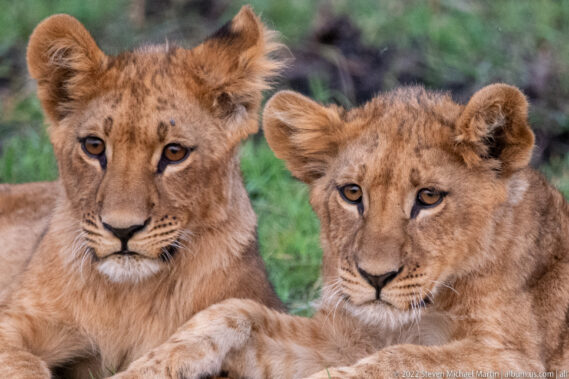
Chief's Island
Chief’s Island lies within the Okavango Delta, where seasonal floodwaters create a mosaic of channels, lagoons, and grasslands that attract exceptional wildlife diversity. Elephants, antelope, and predators move through this water-shaped landscape, often traveling between islands formed by shifting water levels. The contrast between dry land and reflective wetlands provides distinctive photographic perspectives.
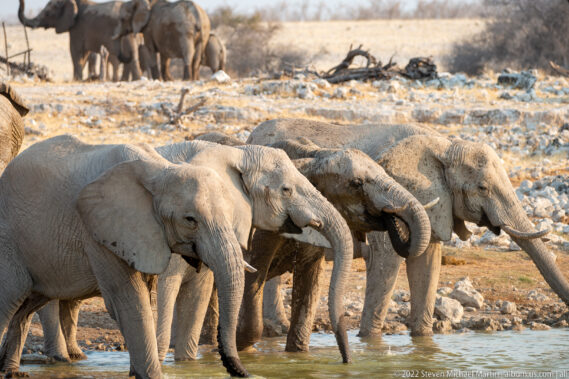
Etosha Watering Hole
Etosha National Park is known for its waterholes, where wildlife gathers in otherwise dry surroundings. Elephants, giraffes, antelope, and other species visit these limited water sources, creating predictable viewing opportunities throughout the day. The stark, open terrain emphasizes animal movement across a minimalist landscape.
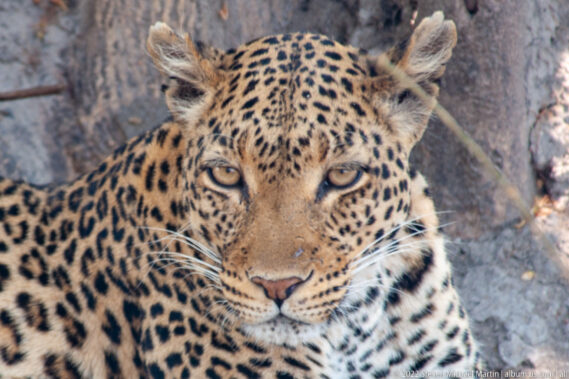
Chobe National Park
The Chobe River supports one of Africa’s largest elephant populations, with herds frequently seen moving along the riverbanks. The permanent water source attracts a wide range of wildlife, including hippos, crocodiles, and abundant birdlife. River-based viewing offers a unique vantage point for observing animal behavior along the shoreline.
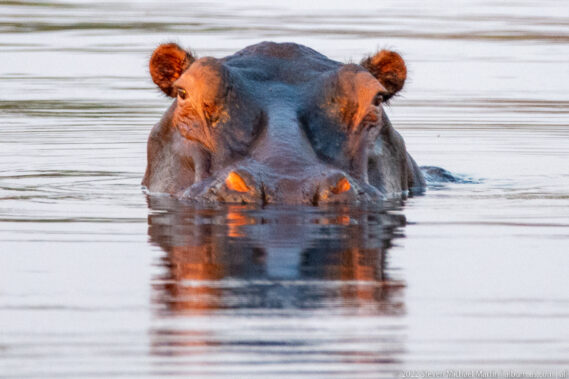
Other Safaris
Additional safari experiences across eastern and southern Africa highlight the diversity of environments supporting wildlife, from forest habitats and wetlands to open savanna and desert terrain. Each ecosystem shapes animal movement, behavior, and photographic opportunities in distinct ways. Together, these journeys illustrate the remarkable adaptability of species across varied landscapes.