Jade Emperor Pagoda
The Jade Emperor Pagoda in Ho Chi Minh City reflects religious traditions influenced by Chinese spiritual practices introduced through migration and trade networks. Constructed in the early twentieth century, the temple illustrates the continuation of Taoist and Buddhist devotional architecture in Southeast Asia. Decorative carvings and symbolic imagery reflect religious beliefs associated with cosmology and moral order.
Interior spaces contain statues representing deities, guardians, and mythological figures drawn from Chinese religious tradition. The use of incense, altars, and ceremonial imagery demonstrates the role of temples in supporting community religious life. Architectural details illustrate artistic techniques associated with Chinese craftsmanship.
The Jade Emperor Pagoda reflects the cultural influence of overseas Chinese communities throughout Southeast Asia. Its preserved design illustrates how migration contributed to the transmission of religious traditions across maritime trade routes.
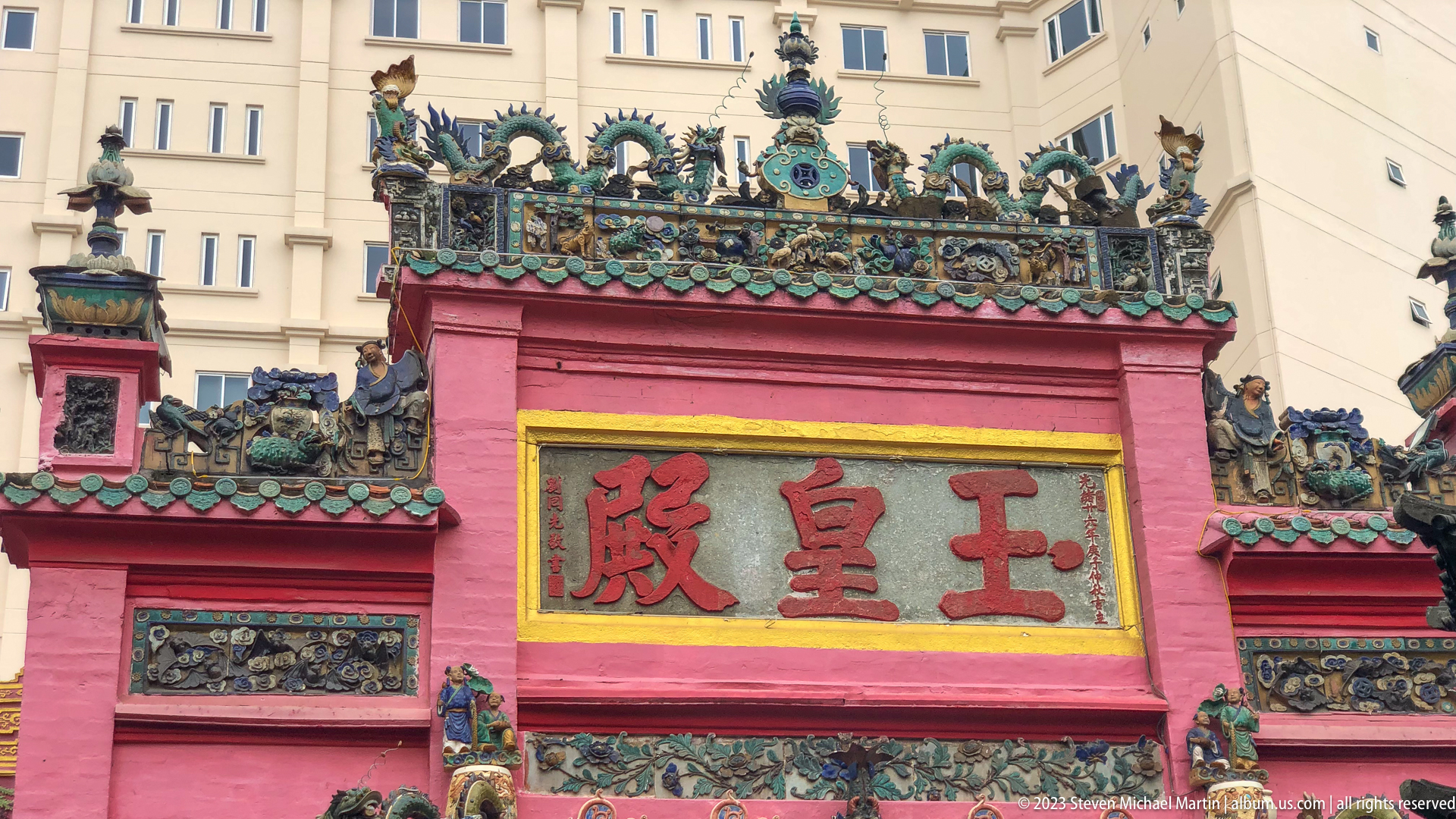
The upper entrance façade is painted vivid pink and crowned by elaborate ceramic cresting populated with dragons, figures, and ornamental finials. A large central inscription panel anchors the composition, while the pale modern building behind underscores the temple’s survival within the dense contemporary cityscape of Ho Chi Minh City.
Caption
The upper entrance façade is painted vivid pink and crowned by elaborate ceramic cresting populated with dragons, figures, and ornamental finials. A large central inscription panel anchors the composition, while the pale modern building behind underscores the temple’s survival within the dense contemporary cityscape of Ho Chi Minh City.

A broad view of the covered courtyard shows the central red shrine aligned along the garden path, with visitors moving through dense planting and low pink walls. The metal canopy reveals a practical adaptation to heat and rain, while the axial composition clarifies how the compact urban sanctuary organizes movement around devotional focal points.
Caption
A broad view of the covered courtyard shows the central red shrine aligned along the garden path, with visitors moving through dense planting and low pink walls. The metal canopy reveals a practical adaptation to heat and rain, while the axial composition clarifies how the compact urban sanctuary organizes movement around devotional focal points.

A covered courtyard frames a compact red shrine structure set among clipped trees, flowering plants, and pink perimeter walls. The central golden figure and surrounding garden create a transitional devotional space between the entrance and the principal halls, while the modern canopy shelters worshippers and visitors from the tropical climate.
Caption
A covered courtyard frames a compact red shrine structure set among clipped trees, flowering plants, and pink perimeter walls. The central golden figure and surrounding garden create a transitional devotional space between the entrance and the principal halls, while the modern canopy shelters worshippers and visitors from the tropical climate.

Small lanterns and red textile ornaments hang from the branches of an old tree in the temple garden. Their jewel-like colors, tassels, and suspended arrangement animate the shaded courtyard, blending festive decoration with the intimate scale of personal wishes and devotional offerings.
Caption
Small lanterns and red textile ornaments hang from the branches of an old tree in the temple garden. Their jewel-like colors, tassels, and suspended arrangement animate the shaded courtyard, blending festive decoration with the intimate scale of personal wishes and devotional offerings.

An adult visitor stands beside the massive trunk and aerial roots of a mature courtyard tree decorated with red and blue hanging ornaments. The human figure provides scale for the tree’s broad base, while the suspended tags and tassels indicate its integration into the devotional life of the temple garden.
Caption
An adult visitor stands beside the massive trunk and aerial roots of a mature courtyard tree decorated with red and blue hanging ornaments. The human figure provides scale for the tree’s broad base, while the suspended tags and tassels indicate its integration into the devotional life of the temple garden.

A golden figure of Budai, popularly known as the Laughing Buddha, sits within a compact red pavilion accented with gold inscriptions and roof ornaments. His exposed belly, broad smile, and relaxed seated pose distinguish this auspicious figure, commonly associated in East Asian popular religion with contentment, abundance, and generosity.
Caption
A golden figure of Budai, popularly known as the Laughing Buddha, sits within a compact red pavilion accented with gold inscriptions and roof ornaments. His exposed belly, broad smile, and relaxed seated pose distinguish this auspicious figure, commonly associated in East Asian popular religion with contentment, abundance, and generosity.
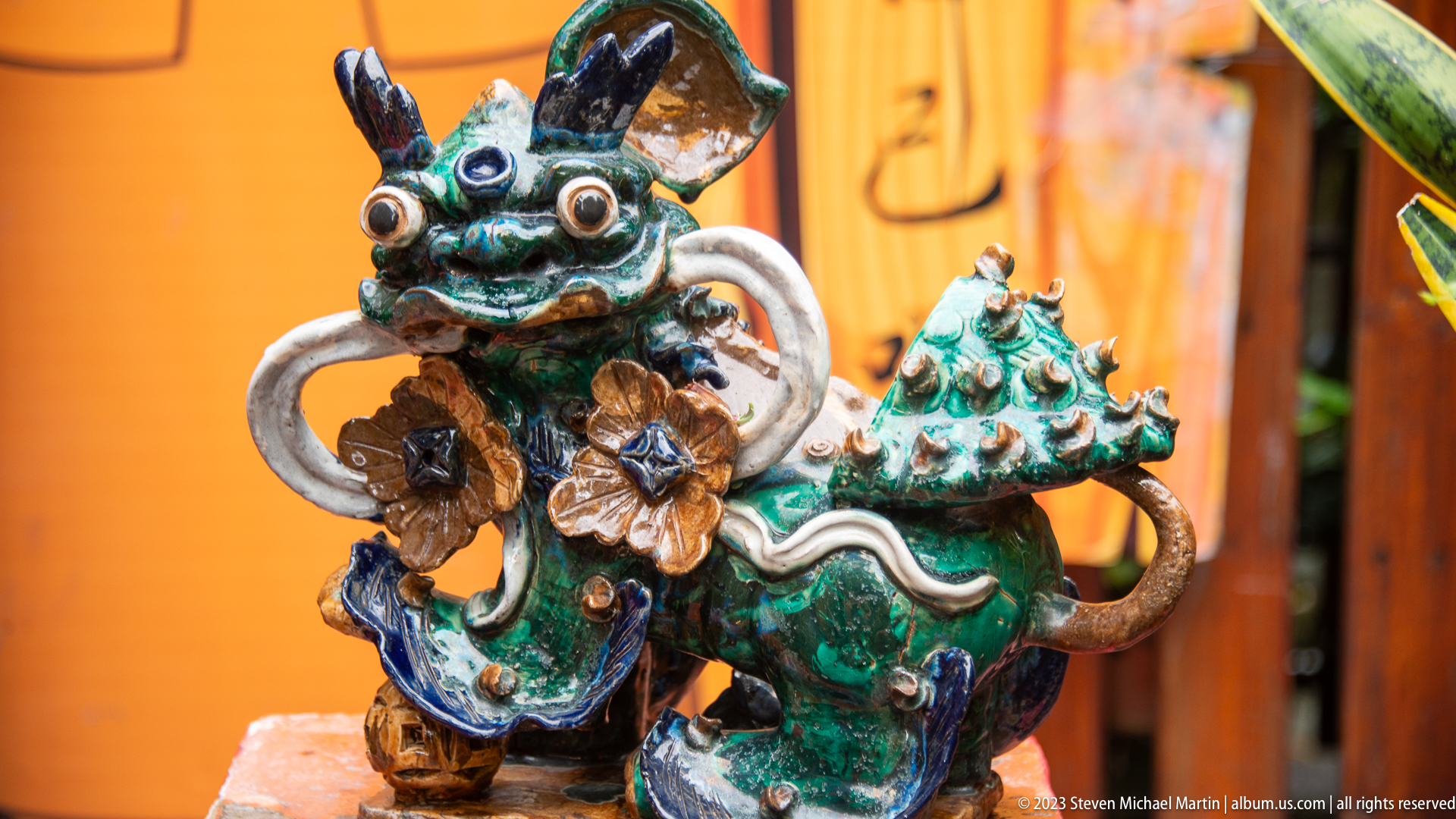
Two glazed guardian creatures are displayed together, allowing differences in scale, modeling, and ornament to be compared. Both combine exaggerated eyes, curling white appendages, floral appliqués, and jewel-like turquoise and amber glazes, transforming protective symbolism into exuberant decorative sculpture suited to a Chinese-Vietnamese temple environment.
Caption
Two glazed guardian creatures are displayed together, allowing differences in scale, modeling, and ornament to be compared. Both combine exaggerated eyes, curling white appendages, floral appliqués, and jewel-like turquoise and amber glazes, transforming protective symbolism into exuberant decorative sculpture suited to a Chinese-Vietnamese temple environment.

A monumental stone incense burner takes the form of a multi-tiered pagoda with openwork sides and a broad roof. Positioned in the courtyard, it combines ritual function with architectural symbolism, giving smoke and offerings a highly visible place within the circulation of worshippers and visitors.
Caption
A monumental stone incense burner takes the form of a multi-tiered pagoda with openwork sides and a broad roof. Positioned in the courtyard, it combines ritual function with architectural symbolism, giving smoke and offerings a highly visible place within the circulation of worshippers and visitors.
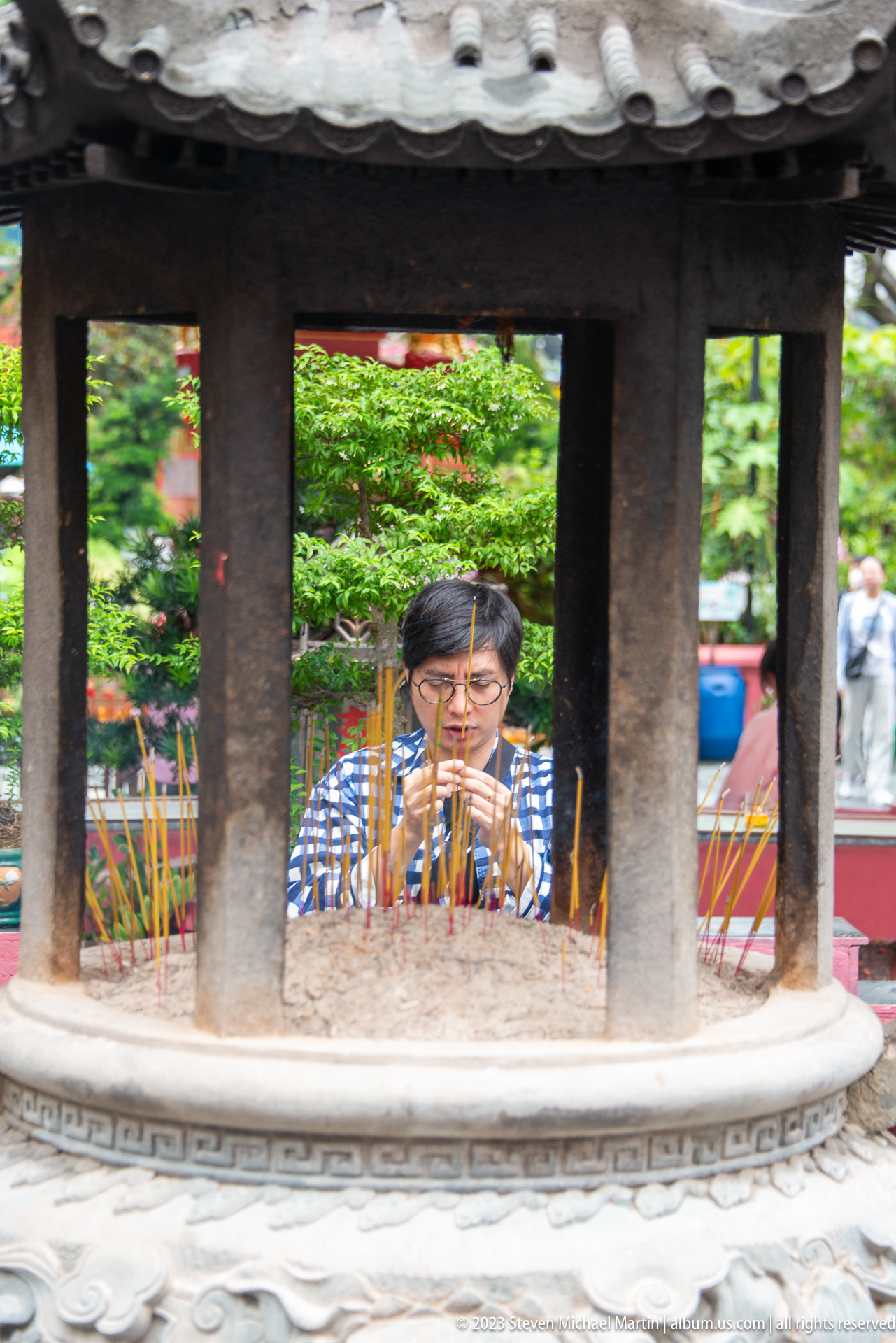
Seen through the open columns of the monumental stone censer, a worshipper tends upright incense sticks in the ash-filled basin. The framing emphasizes ritual action over monumentality, showing how the courtyard burner functions as an active devotional station rather than merely an architectural ornament.
Caption
Seen through the open columns of the monumental stone censer, a worshipper tends upright incense sticks in the ash-filled basin. The framing emphasizes ritual action over monumentality, showing how the courtyard burner functions as an active devotional station rather than merely an architectural ornament.

The entrance gateway to Chùa Phước Hải is framed by red timber beams, gray stone piers, and a tiled roofline enriched with ceramic ornament. A large bilingual sign identifies the temple in Vietnamese and Chinese, establishing the Chinese-Vietnamese character of the sanctuary before visitors enter the garden court beyond.
Caption
The entrance gateway to Chùa Phước Hải is framed by red timber beams, gray stone piers, and a tiled roofline enriched with ceramic ornament. A large bilingual sign identifies the temple in Vietnamese and Chinese, establishing the Chinese-Vietnamese character of the sanctuary before visitors enter the garden court beyond.

Looking beneath the Chùa Phước Hải entrance sign, the view opens onto a shaded garden approach with devotional figures, directional signs, trees, and small structures. The layered entry sequence moves visitors from the city street into a more enclosed religious precinct, where ornament, vegetation, and visitor circulation are closely interwoven.
Caption
Looking beneath the Chùa Phước Hải entrance sign, the view opens onto a shaded garden approach with devotional figures, directional signs, trees, and small structures. The layered entry sequence moves visitors from the city street into a more enclosed religious precinct, where ornament, vegetation, and visitor circulation are closely interwoven.

A vividly glazed guardian creature combines bulging eyes, upright ears, curling tusk-like forms, and applied floral decoration. Its turquoise, blue, amber, and white glazes create a highly animated surface typical of southern Chinese ceramic ornament, where protective imagery is rendered with theatrical expression and dense color.
Caption
A vividly glazed guardian creature combines bulging eyes, upright ears, curling tusk-like forms, and applied floral decoration. Its turquoise, blue, amber, and white glazes create a highly animated surface typical of southern Chinese ceramic ornament, where protective imagery is rendered with theatrical expression and dense color.

A large pale fish glides just beneath the surface of a shallow, stone-lined pond. Its elongated body, flattened head, and visible barbels suggest a catfish type, while the unusual pink-white coloration makes it especially conspicuous within the temple’s ornamental aquatic setting.
Caption
A large pale fish glides just beneath the surface of a shallow, stone-lined pond. Its elongated body, flattened head, and visible barbels suggest a catfish type, while the unusual pink-white coloration makes it especially conspicuous within the temple’s ornamental aquatic setting.
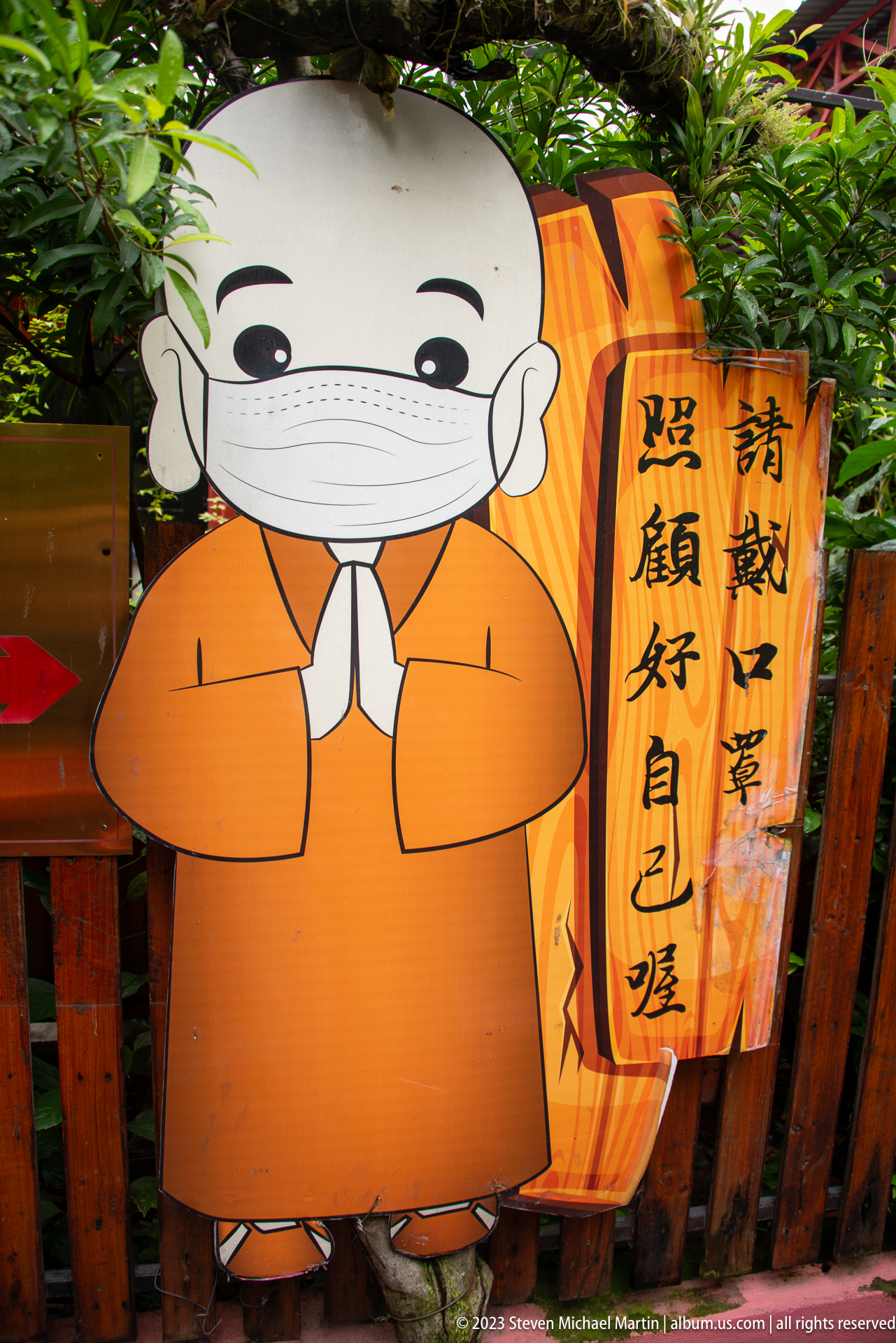
A cheerful cartoon novice monk in orange robes stands beside a vertical panel of Chinese calligraphy near the temple entrance. The contemporary graphic uses clasped hands, a face mask, and childlike styling to communicate welcome, courtesy, and visitor guidance in an accessible visual language distinct from the temple’s historic devotional art.
Caption
A cheerful cartoon novice monk in orange robes stands beside a vertical panel of Chinese calligraphy near the temple entrance. The contemporary graphic uses clasped hands, a face mask, and childlike styling to communicate welcome, courtesy, and visitor guidance in an accessible visual language distinct from the temple’s historic devotional art.

Clusters of purple and white orchids rise against a softly blurred garden background. Their carefully cultivated display adds color and delicacy to the temple grounds, where ornamental planting helps shape the sensory transition from the surrounding city to the sanctuary’s more intimate courtyards and devotional spaces.
Caption
Clusters of purple and white orchids rise against a softly blurred garden background. Their carefully cultivated display adds color and delicacy to the temple grounds, where ornamental planting helps shape the sensory transition from the surrounding city to the sanctuary’s more intimate courtyards and devotional spaces.

A seated, bearded figure occupies a richly carved dark-wood shrine labeled “Thổ Địa,” identifying the Earth God. Warm light isolates the deity against the deep blue-black carving, while gilded inscriptions and an offering ledge reinforce the shrine’s devotional focus within the temple interior.
Caption
A seated, bearded figure occupies a richly carved dark-wood shrine labeled “Thổ Địa,” identifying the Earth God. Warm light isolates the deity against the deep blue-black carving, while gilded inscriptions and an offering ledge reinforce the shrine’s devotional focus within the temple interior.

A blue-and-white plaque identifies the sanctuary as Chùa Phước Hải in Vietnamese and Chinese. Set beneath a densely carved and darkened timber frieze, the sign contrasts modern legibility with the layered material history of the entrance, where painted lettering, carved ornament, and weathered wood meet.
Caption
A blue-and-white plaque identifies the sanctuary as Chùa Phước Hải in Vietnamese and Chinese. Set beneath a densely carved and darkened timber frieze, the sign contrasts modern legibility with the layered material history of the entrance, where painted lettering, carved ornament, and weathered wood meet.
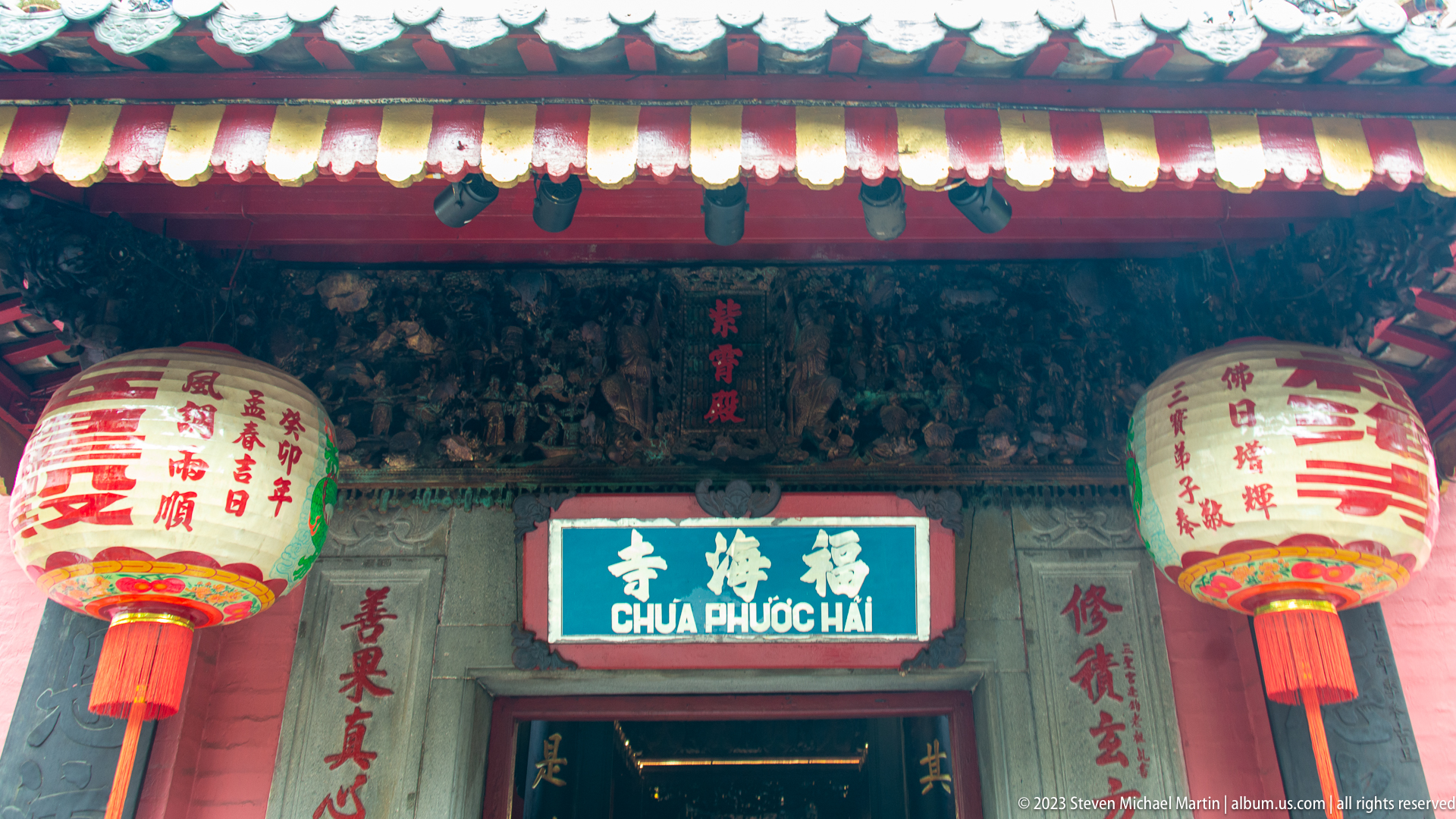
Two large red-and-cream lanterns flank the doorway beneath the Chùa Phước Hải plaque. Vertical inscriptions, painted columns, carved timber, and roof ornament crowd the façade with layered text and color, creating a ceremonial threshold that visually announces the temple’s Chinese-Vietnamese religious heritage.
Caption
Two large red-and-cream lanterns flank the doorway beneath the Chùa Phước Hải plaque. Vertical inscriptions, painted columns, carved timber, and roof ornament crowd the façade with layered text and color, creating a ceremonial threshold that visually announces the temple’s Chinese-Vietnamese religious heritage.
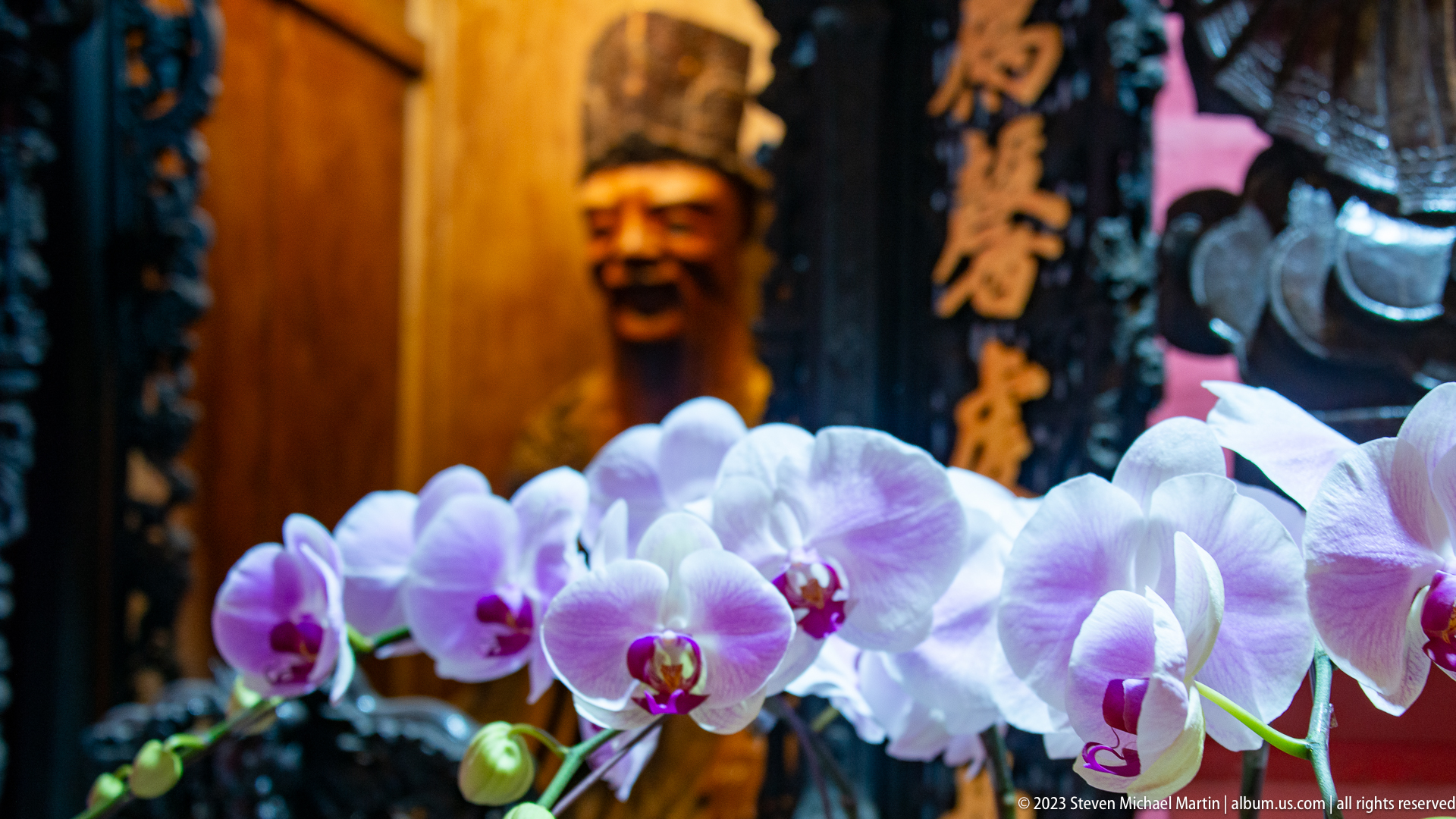
White and lavender orchids dominate the foreground while a bearded temple figure recedes into soft focus behind them. The selective depth of field links cultivated beauty with devotional imagery without fully identifying the sculpture, turning the flowers into both a garden subject and a visual veil before the sacred interior.
Caption
White and lavender orchids dominate the foreground while a bearded temple figure recedes into soft focus behind them. The selective depth of field links cultivated beauty with devotional imagery without fully identifying the sculpture, turning the flowers into both a garden subject and a visual veil before the sacred interior.

A shop or offering display gathers brightly colored resin figurines, including guardian animals, wealth symbols, and small vessels filled with gold-colored pieces. The mass-produced objects echo motifs found elsewhere in the temple while presenting them in portable, commercial form for visitors and devotees.
Caption
A shop or offering display gathers brightly colored resin figurines, including guardian animals, wealth symbols, and small vessels filled with gold-colored pieces. The mass-produced objects echo motifs found elsewhere in the temple while presenting them in portable, commercial form for visitors and devotees.

An embossed metal panel depicts a bearded, robed figure riding above stylized waves or clouds on a fantastic animal. Attendants and vertical Chinese characters complete the composition. The relief’s dense linework, raised contours, and reflective surface translate traditional narrative imagery into a durable decorative panel.
Caption
An embossed metal panel depicts a bearded, robed figure riding above stylized waves or clouds on a fantastic animal. Attendants and vertical Chinese characters complete the composition. The relief’s dense linework, raised contours, and reflective surface translate traditional narrative imagery into a durable decorative panel.

A stern bearded figure sits frontally in patterned robes and a square ceremonial headdress. Long horizontal projections extend from the headgear, while the rigid pose and formal costume suggest a high-ranking celestial official or judge within the temple’s Taoist pantheon. Warm directional light heightens the sculpture’s imposing presence.
Caption
A stern bearded figure sits frontally in patterned robes and a square ceremonial headdress. Long horizontal projections extend from the headgear, while the rigid pose and formal costume suggest a high-ranking celestial official or judge within the temple’s Taoist pantheon. Warm directional light heightens the sculpture’s imposing presence.

A pink ceremonial gateway rises behind a seated dark Buddha figure and carefully maintained courtyard planting. The large Chinese inscription, layered ceramic roof ornament, and bright painted walls contrast with the restrained pose of the foreground sculpture, bringing architecture, garden design, and devotional imagery into a single axial view.
Caption
A pink ceremonial gateway rises behind a seated dark Buddha figure and carefully maintained courtyard planting. The large Chinese inscription, layered ceramic roof ornament, and bright painted walls contrast with the restrained pose of the foreground sculpture, bringing architecture, garden design, and devotional imagery into a single axial view.

A richly furnished altar centers on a golden seated deity backed by a circular halo and framed by dark carved wood. Flanking figures, orchids, fruit, incense, candles, and ritual vessels create a dense field of offerings, emphasizing the living devotional use of the shrine rather than presenting the sculpture as an isolated artwork.
Caption
A richly furnished altar centers on a golden seated deity backed by a circular halo and framed by dark carved wood. Flanking figures, orchids, fruit, incense, candles, and ritual vessels create a dense field of offerings, emphasizing the living devotional use of the shrine rather than presenting the sculpture as an isolated artwork.

A roof edge supports a lively grouping of glazed ceramic creatures, including paired bird-like figures and coiling forms with layered scales and scrollwork. Their projecting silhouettes, multicolored glaze, and close integration with the tiles demonstrate how the temple’s roofline serves as a major field for symbolic and decorative display.
Caption
A roof edge supports a lively grouping of glazed ceramic creatures, including paired bird-like figures and coiling forms with layered scales and scrollwork. Their projecting silhouettes, multicolored glaze, and close integration with the tiles demonstrate how the temple’s roofline serves as a major field for symbolic and decorative display.

A close view reveals the exuberant modeling of a glazed guardian creature: arched ears, bulging eyes, curling white tusks, layered scales, and applied flowers. Thick pools of turquoise, cobalt, amber, and white glaze catch the light, emphasizing the handmade texture and theatrical character of the temple’s ceramic decoration.
Caption
A close view reveals the exuberant modeling of a glazed guardian creature: arched ears, bulging eyes, curling white tusks, layered scales, and applied flowers. Thick pools of turquoise, cobalt, amber, and white glaze catch the light, emphasizing the handmade texture and theatrical character of the temple’s ceramic decoration.

An English-language guidebook page describes the Jade Emperor Pagoda’s principal altar, sculptural program, associated deities, and religious significance. The photographed text serves as documentary context for the portfolio, preserving interpretive information that can help verify identities elsewhere while remaining separate from direct visual evidence.
Caption
An English-language guidebook page describes the Jade Emperor Pagoda’s principal altar, sculptural program, associated deities, and religious significance. The photographed text serves as documentary context for the portfolio, preserving interpretive information that can help verify identities elsewhere while remaining separate from direct visual evidence.

A silver-toned embossed panel centers on a commanding bearded figure in armor, surrounded by attendants, cloud scrolls, and animal or celestial emblems. The frontal stance, raised weapon, and crowded narrative field convey authority and martial protection, though the figure’s specific identity is not established by the visible inscription alone.
Caption
A silver-toned embossed panel centers on a commanding bearded figure in armor, surrounded by attendants, cloud scrolls, and animal or celestial emblems. The frontal stance, raised weapon, and crowded narrative field convey authority and martial protection, though the figure’s specific identity is not established by the visible inscription alone.
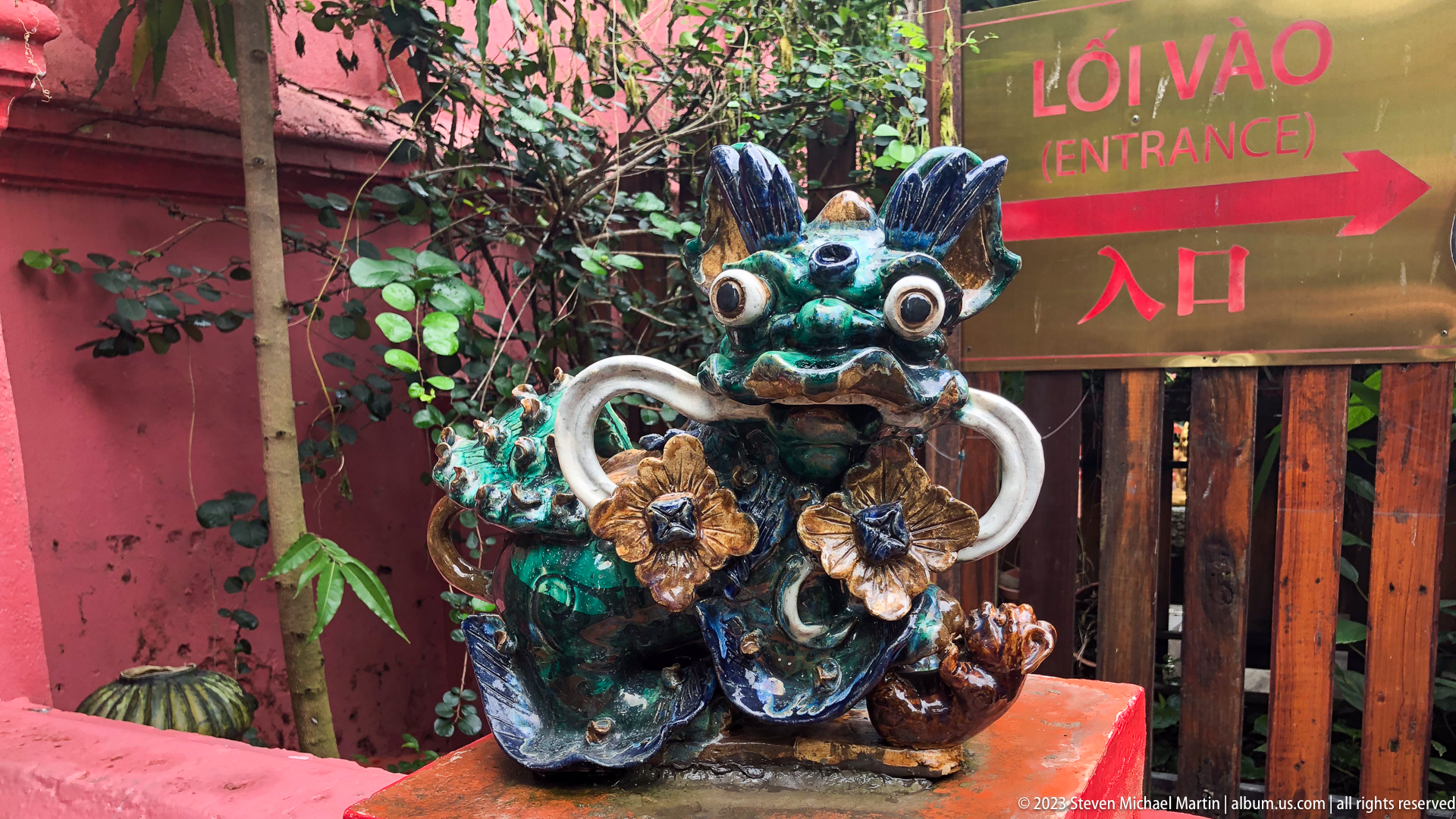
A glazed guardian creature stands on a red ledge beside a gold entrance sign marked in Vietnamese, English, and Chinese. The placement creates an informal welcome point where symbolic temple ornament and practical visitor guidance meet, linking the sanctuary’s historic visual language with contemporary circulation needs.
Caption
A glazed guardian creature stands on a red ledge beside a gold entrance sign marked in Vietnamese, English, and Chinese. The placement creates an informal welcome point where symbolic temple ornament and practical visitor guidance meet, linking the sanctuary’s historic visual language with contemporary circulation needs.

Pale pink and dark fish cross above the mosaic-patterned floor of the temple pond. Their contrasting coloration makes their movement easy to follow through the shallow water, while the visible paving turns the aquatic enclosure into a patterned garden feature rather than a naturalistic pond.
Caption
Pale pink and dark fish cross above the mosaic-patterned floor of the temple pond. Their contrasting coloration makes their movement easy to follow through the shallow water, while the visible paving turns the aquatic enclosure into a patterned garden feature rather than a naturalistic pond.

A full-length view presents a stern bearded figure seated inside a wooden niche, wearing patterned robes and an elaborate ceremonial headdress with long horizontal projections. The frontal pose, formal dress, and restrained gesture suggest a celestial official or judge, one of the authoritative figures that structure the temple’s Taoist sacred hierarchy.
Caption
A full-length view presents a stern bearded figure seated inside a wooden niche, wearing patterned robes and an elaborate ceremonial headdress with long horizontal projections. The frontal pose, formal dress, and restrained gesture suggest a celestial official or judge, one of the authoritative figures that structure the temple’s Taoist sacred hierarchy.

Warm light isolates a seated, bearded deity within an intricately carved dark-wood shrine. The figure wears a tall ceremonial headdress and patterned robes, with one hand held across the chest and the other resting on the knee. The formal pose and official costume indicate an authoritative figure within the temple’s Chinese-Vietnamese religious pantheon.
Caption
Warm light isolates a seated, bearded deity within an intricately carved dark-wood shrine. The figure wears a tall ceremonial headdress and patterned robes, with one hand held across the chest and the other resting on the knee. The formal pose and official costume indicate an authoritative figure within the temple’s Chinese-Vietnamese religious pantheon.

Tall cylindrical incense containers form a colorful foreground before a compact red shrine in the temple garden. Their layered red, gold, amber, and black surfaces bear decorative writing and motifs associated with offerings. The arrangement shows how personal devotional objects accumulate around smaller courtyard shrines beyond the principal interior altars.
Caption
Tall cylindrical incense containers form a colorful foreground before a compact red shrine in the temple garden. Their layered red, gold, amber, and black surfaces bear decorative writing and motifs associated with offerings. The arrangement shows how personal devotional objects accumulate around smaller courtyard shrines beyond the principal interior altars.
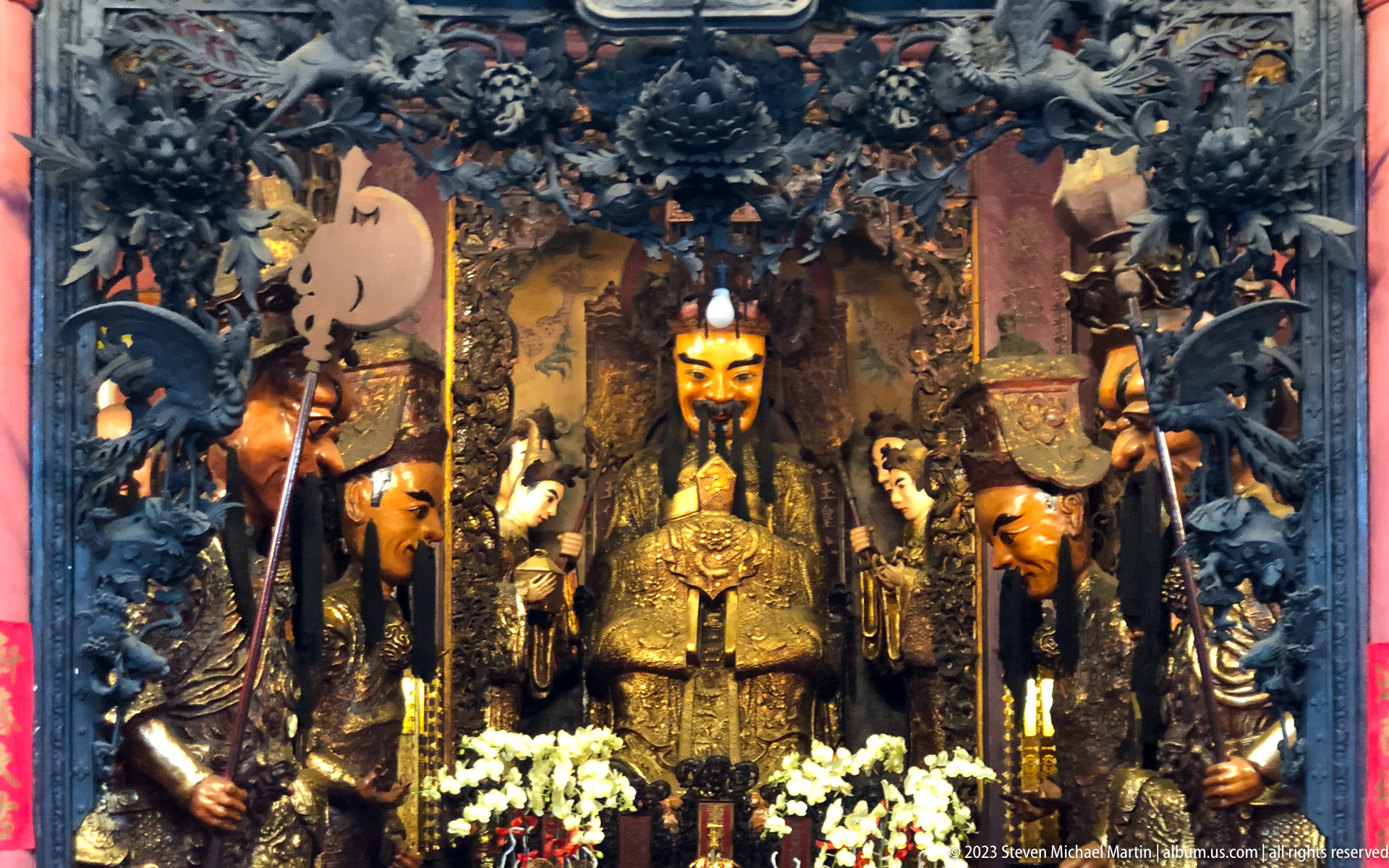
A central enthroned deity presides over a densely carved altar, flanked by imposing armed guardians and framed by dark dragon ornament. White floral offerings soften the otherwise martial arrangement, while gilded surfaces and focused lighting draw attention to the central figure. The crowded composition expresses hierarchy, protection, and ceremonial authority within the temple interior.
Caption
A central enthroned deity presides over a densely carved altar, flanked by imposing armed guardians and framed by dark dragon ornament. White floral offerings soften the otherwise martial arrangement, while gilded surfaces and focused lighting draw attention to the central figure. The crowded composition expresses hierarchy, protection, and ceremonial authority within the temple interior.

Red and blue devotional ornaments hang among the foliage and descending roots of a mature courtyard tree. Their bright colors and tassels punctuate the dark bark and dense greenery, suggesting a place where visitors attach wishes, blessings, or commemorative tokens within the living landscape of the temple grounds.
Caption
Red and blue devotional ornaments hang among the foliage and descending roots of a mature courtyard tree. Their bright colors and tassels punctuate the dark bark and dense greenery, suggesting a place where visitors attach wishes, blessings, or commemorative tokens within the living landscape of the temple grounds.