A hiker and two beagles pose at the edge of a Wilcox Pass viewpoint while Athabasca Glacier fills the background. The glacier’s crevassed surface and sweeping lower tongue dominate the upper frame, with dark conifer forest between the overlook and the ice creating a strong sense of depth and elevation.
Caption
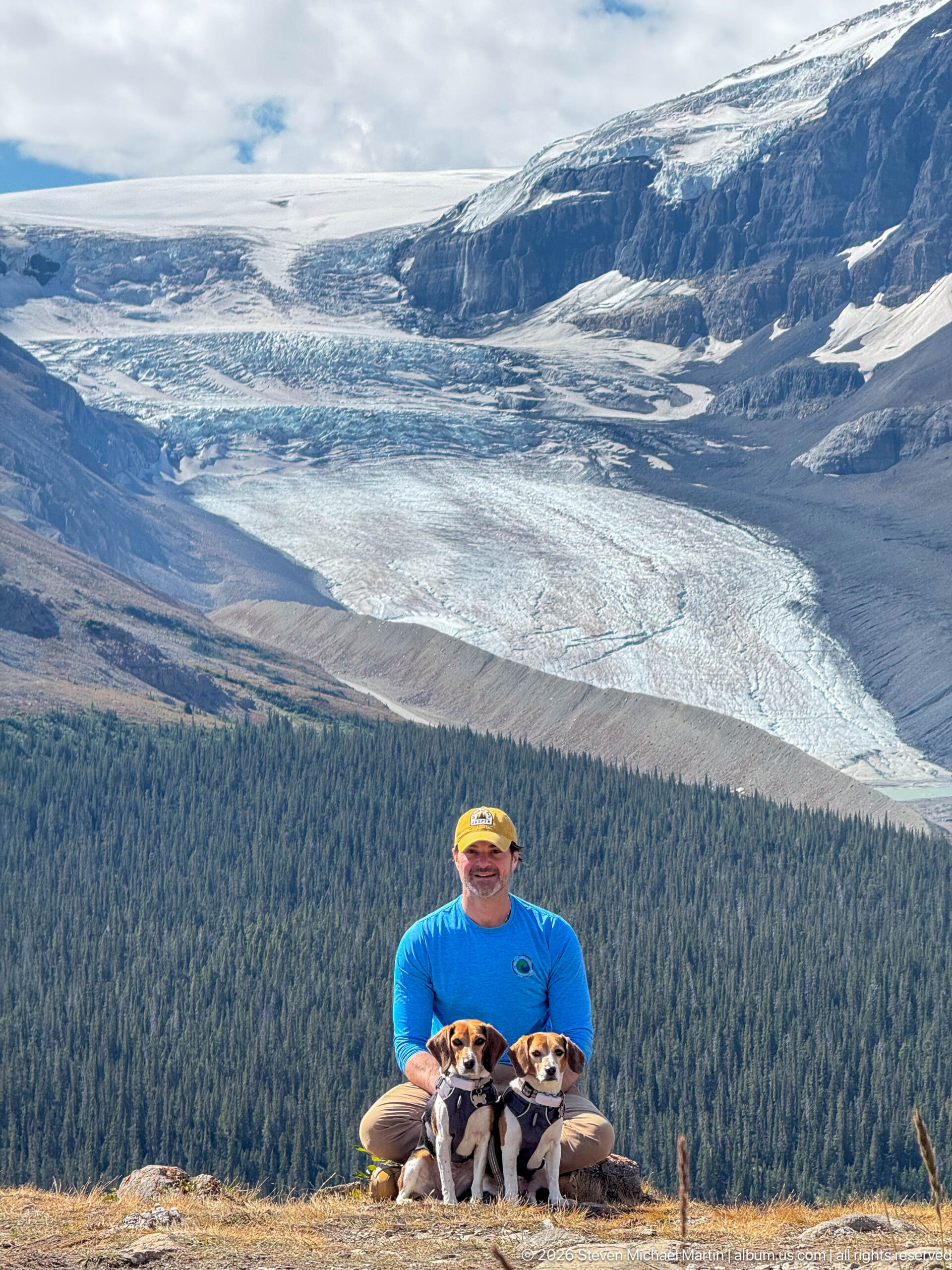
A hiker and two beagles pose at the edge of a Wilcox Pass viewpoint while Athabasca Glacier fills the background. The glacier’s crevassed surface and sweeping lower tongue dominate the upper frame, with dark conifer forest between the overlook and the ice creating a strong sense of depth and elevation.
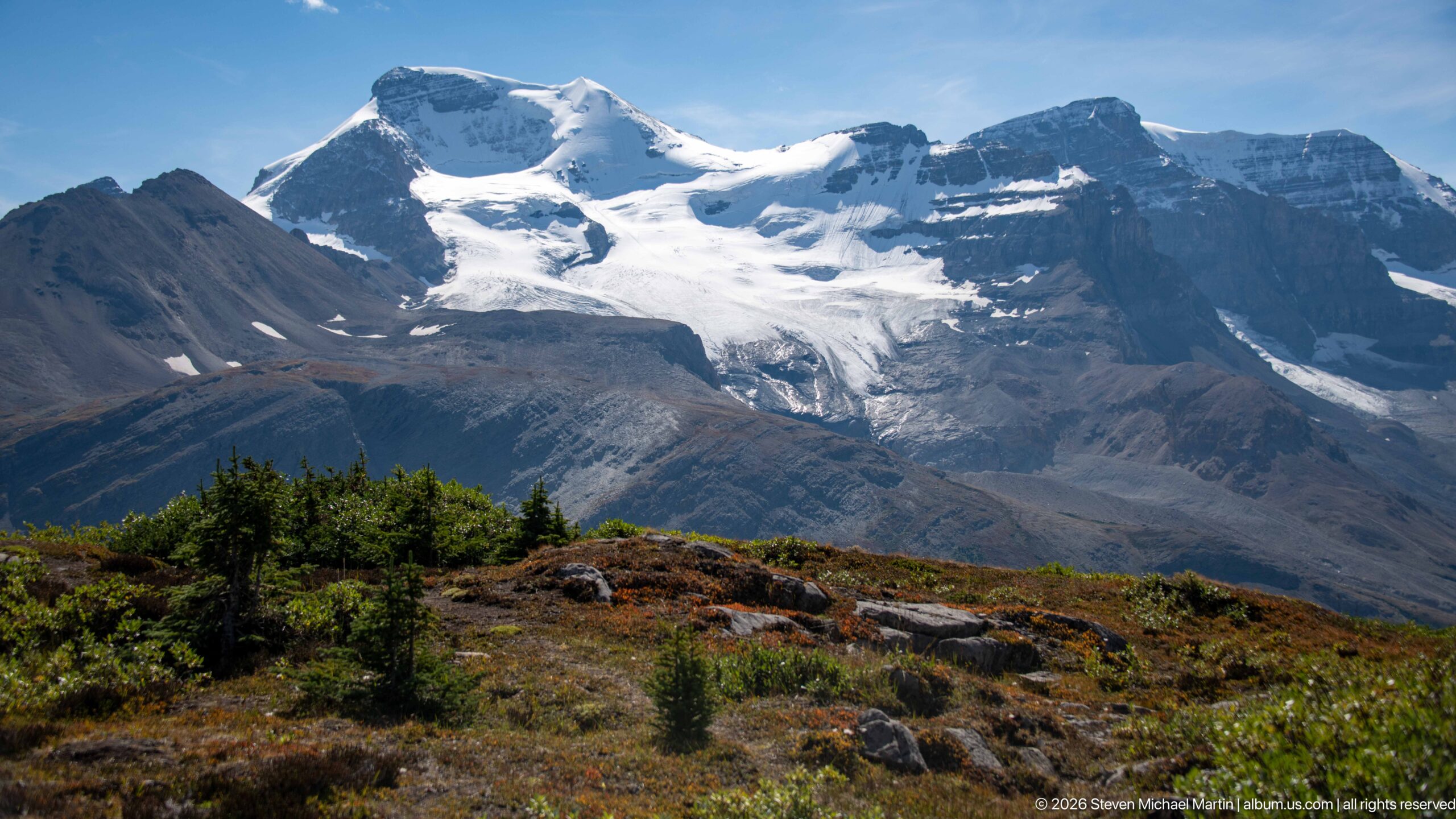
A heavily glaciated massif rises across the valley from Wilcox Pass, its broad snowfields feeding ice that descends between dark rock walls. Sparse alpine vegetation and small conifers in the foreground emphasize the scale and elevation difference between the pass and the ice-covered peaks beyond.
Caption
A heavily glaciated massif rises across the valley from Wilcox Pass, its broad snowfields feeding ice that descends between dark rock walls. Sparse alpine vegetation and small conifers in the foreground emphasize the scale and elevation difference between the pass and the ice-covered peaks beyond.
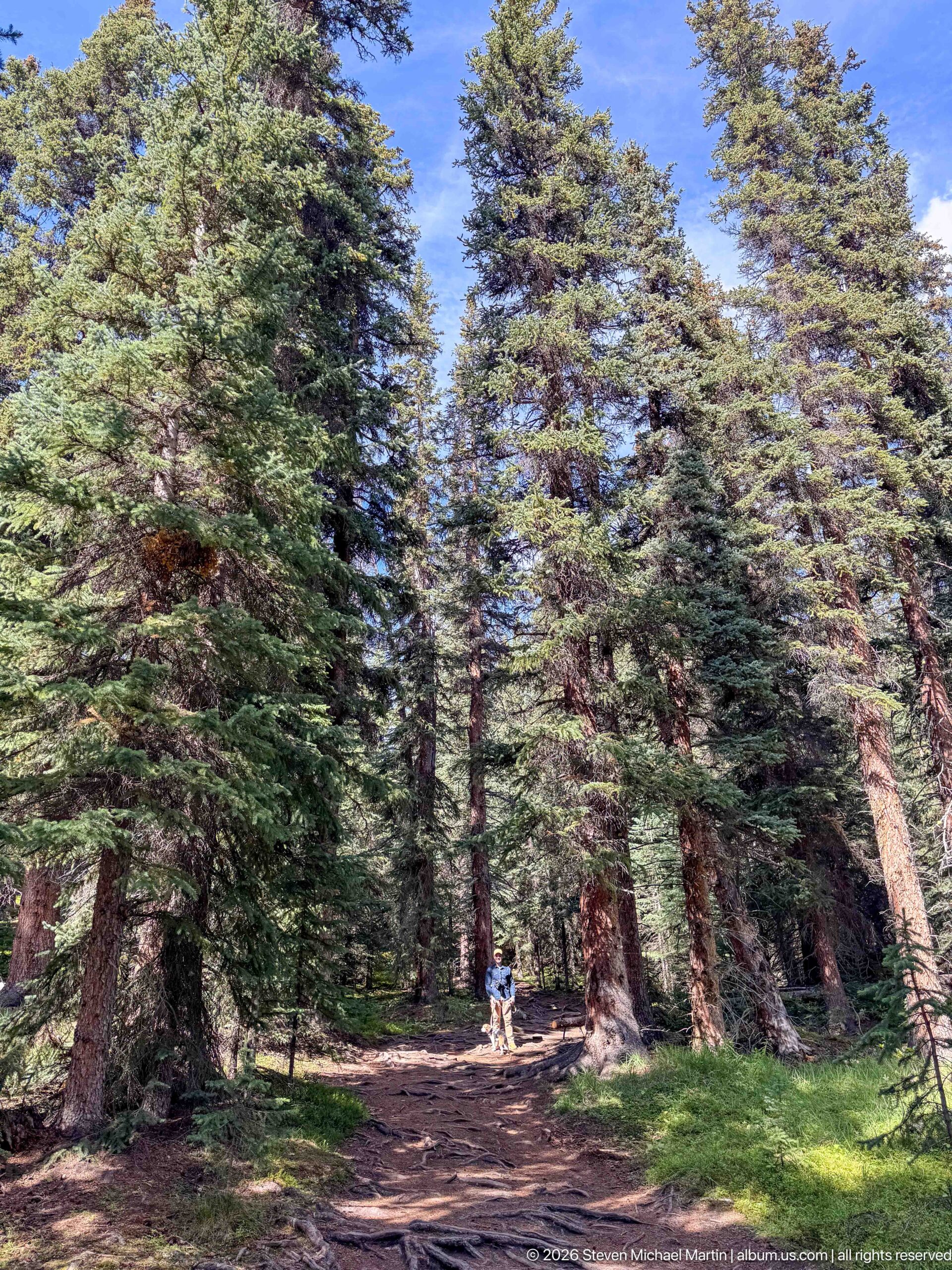
Towering conifers line the Wilcox Pass Trail, their straight trunks and layered crowns drawing the eye upward while a small hiker and dog provide scale near the center of the path. The vertical forest composition emphasizes the sheltered lower-elevation approach before the trail emerges into open alpine terrain.
Caption
Towering conifers line the Wilcox Pass Trail, their straight trunks and layered crowns drawing the eye upward while a small hiker and dog provide scale near the center of the path. The vertical forest composition emphasizes the sheltered lower-elevation approach before the trail emerges into open alpine terrain.
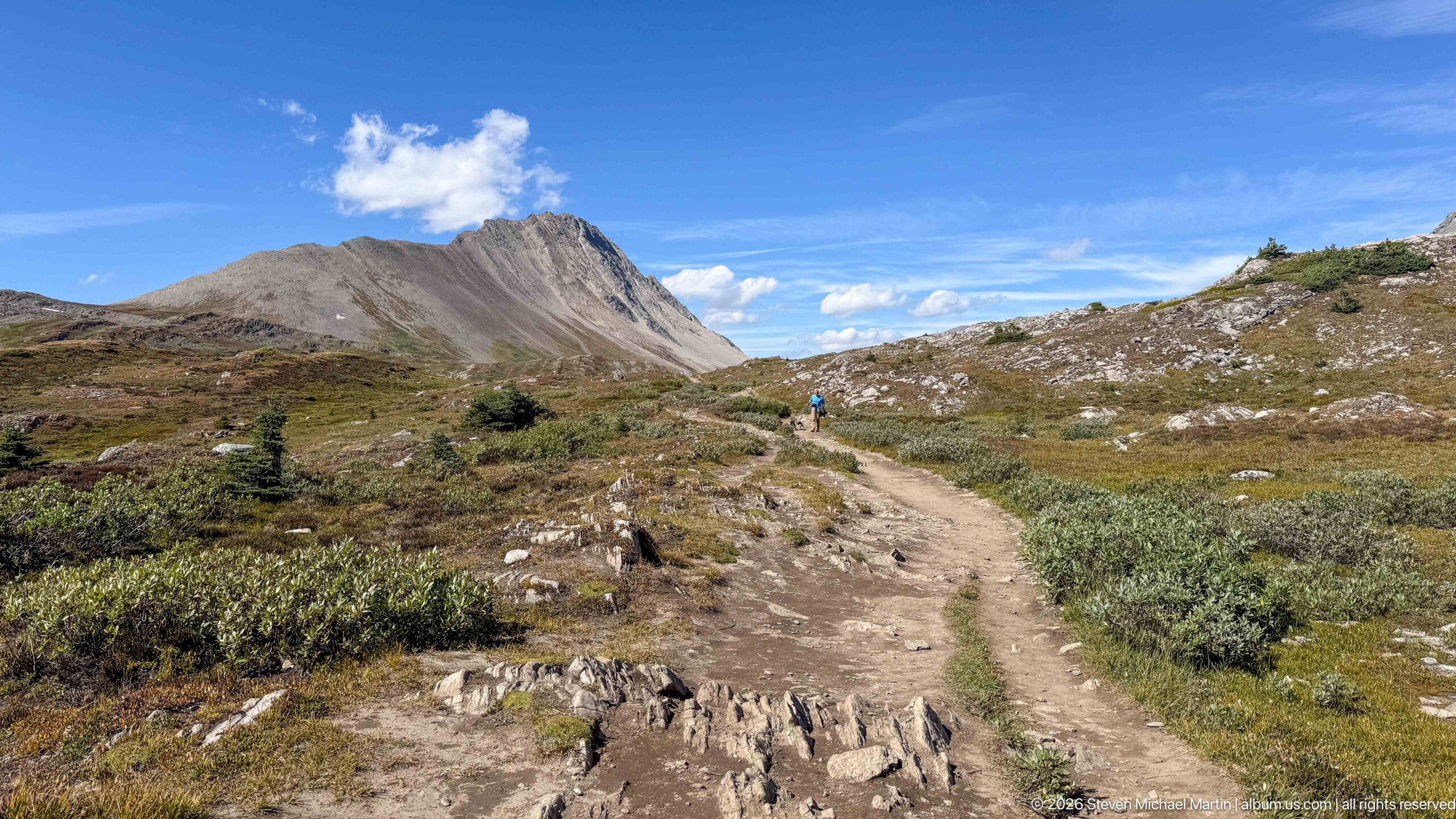
The Wilcox Pass Trail curves through low alpine shrubs toward a sharply eroded mountain ridge under a clear blue sky. Exposed soil and embedded stones define the route in the foreground, while sparse conifers and tundra vegetation emphasize the elevation and openness of this section of the pass.
Caption
The Wilcox Pass Trail curves through low alpine shrubs toward a sharply eroded mountain ridge under a clear blue sky. Exposed soil and embedded stones define the route in the foreground, while sparse conifers and tundra vegetation emphasize the elevation and openness of this section of the pass.
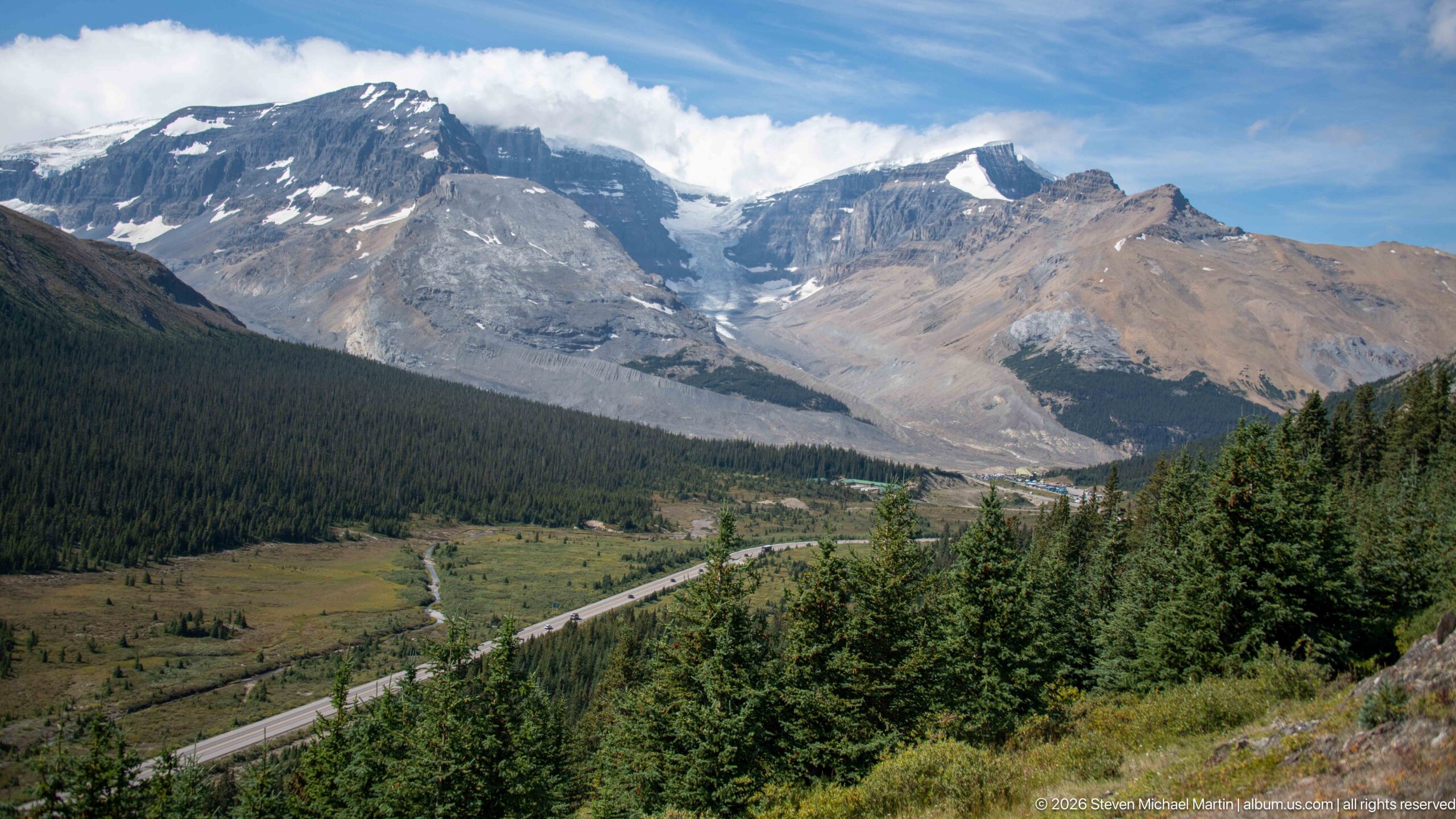
The Icefields Parkway curves through the broad valley below Wilcox Pass, bordered by conifer forest and open meadow beneath massive gray peaks. High snow and ice remain tucked into the mountain basin, while the elevated viewpoint reveals the relationship between the highway corridor and surrounding alpine terrain.
Caption
The Icefields Parkway curves through the broad valley below Wilcox Pass, bordered by conifer forest and open meadow beneath massive gray peaks. High snow and ice remain tucked into the mountain basin, while the elevated viewpoint reveals the relationship between the highway corridor and surrounding alpine terrain.
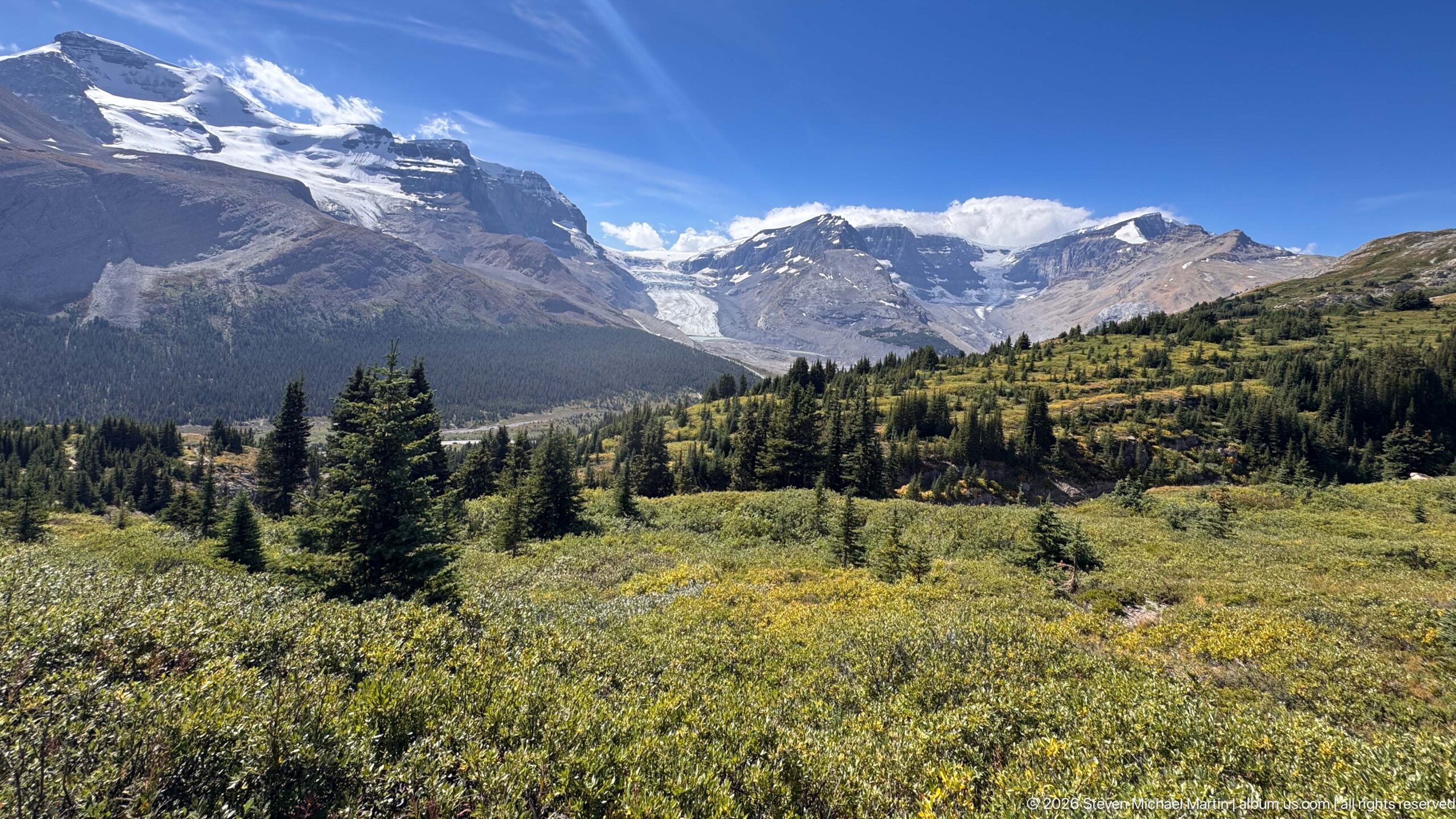
A broad mountain basin opens beyond dense low shrubs and scattered conifers along the Wilcox Pass Trail. Snow and glacier ice remain on the high ridges in the distance, while the foreground vegetation forms a textured transition from subalpine forest toward the exposed alpine country above.
Caption
A broad mountain basin opens beyond dense low shrubs and scattered conifers along the Wilcox Pass Trail. Snow and glacier ice remain on the high ridges in the distance, while the foreground vegetation forms a textured transition from subalpine forest toward the exposed alpine country above.
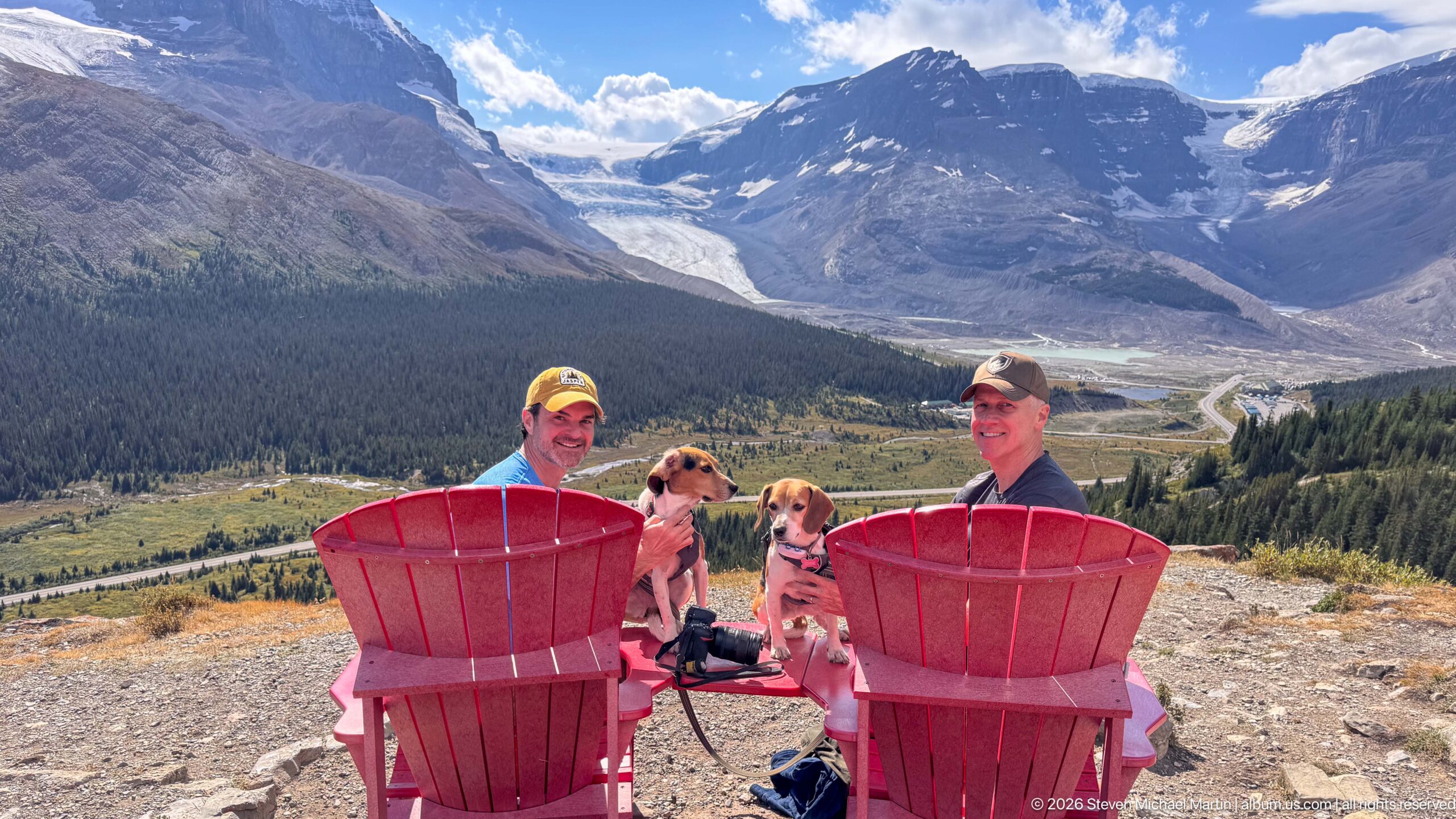
Two hikers sit at the red-chair overlook with two beagles between them, backed by a sweeping view of glacier ice, steep mountains, forest, and the valley roadway below. The portrait combines the recreational viewpoint with the scale of the glaciated landscape visible from Wilcox Pass.
Caption
Two hikers sit at the red-chair overlook with two beagles between them, backed by a sweeping view of glacier ice, steep mountains, forest, and the valley roadway below. The portrait combines the recreational viewpoint with the scale of the glaciated landscape visible from Wilcox Pass.
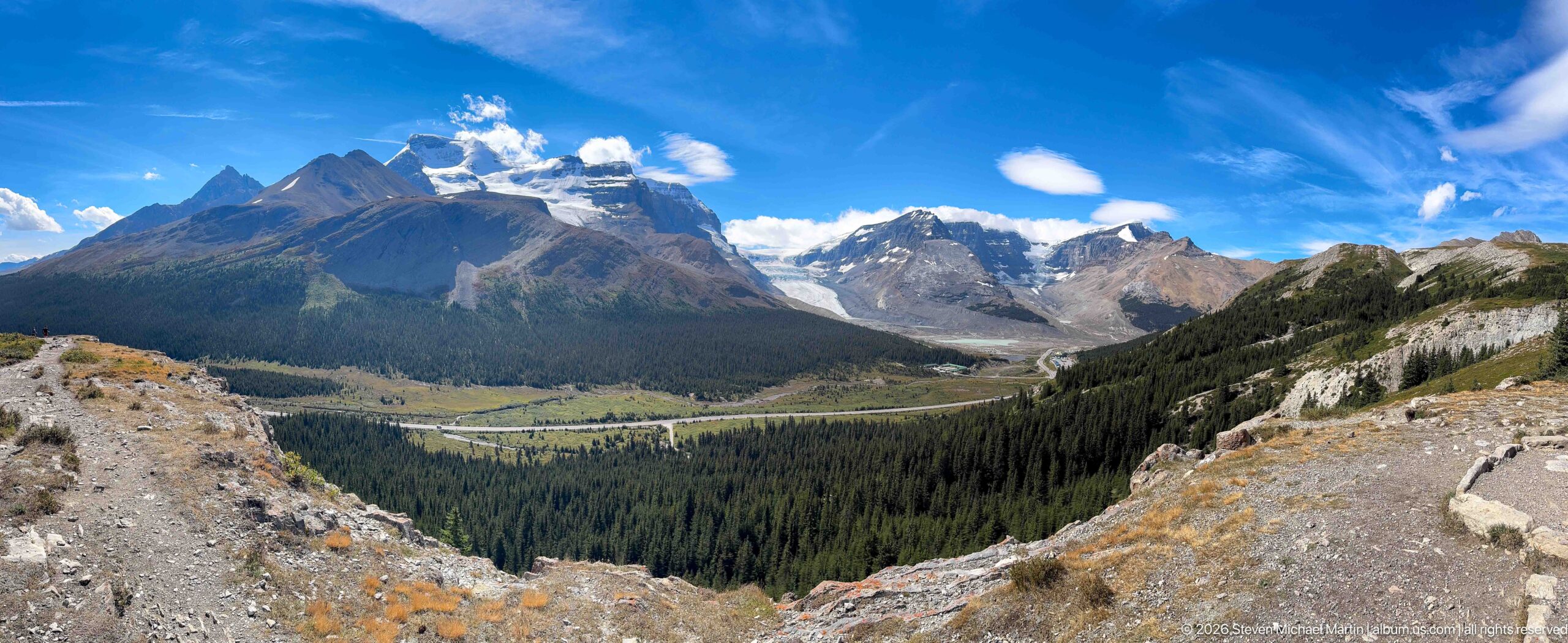
An elevated viewpoint from Wilcox Pass looks across a deep forested valley toward jagged peaks, hanging ice, and glacier-covered high country. The rocky foreground drops sharply into dense conifer forest, while the layered ridges and bright ice create one of the portfolio’s broadest views of the surrounding Canadian Rockies.
Caption
An elevated viewpoint from Wilcox Pass looks across a deep forested valley toward jagged peaks, hanging ice, and glacier-covered high country. The rocky foreground drops sharply into dense conifer forest, while the layered ridges and bright ice create one of the portfolio’s broadest views of the surrounding Canadian Rockies.
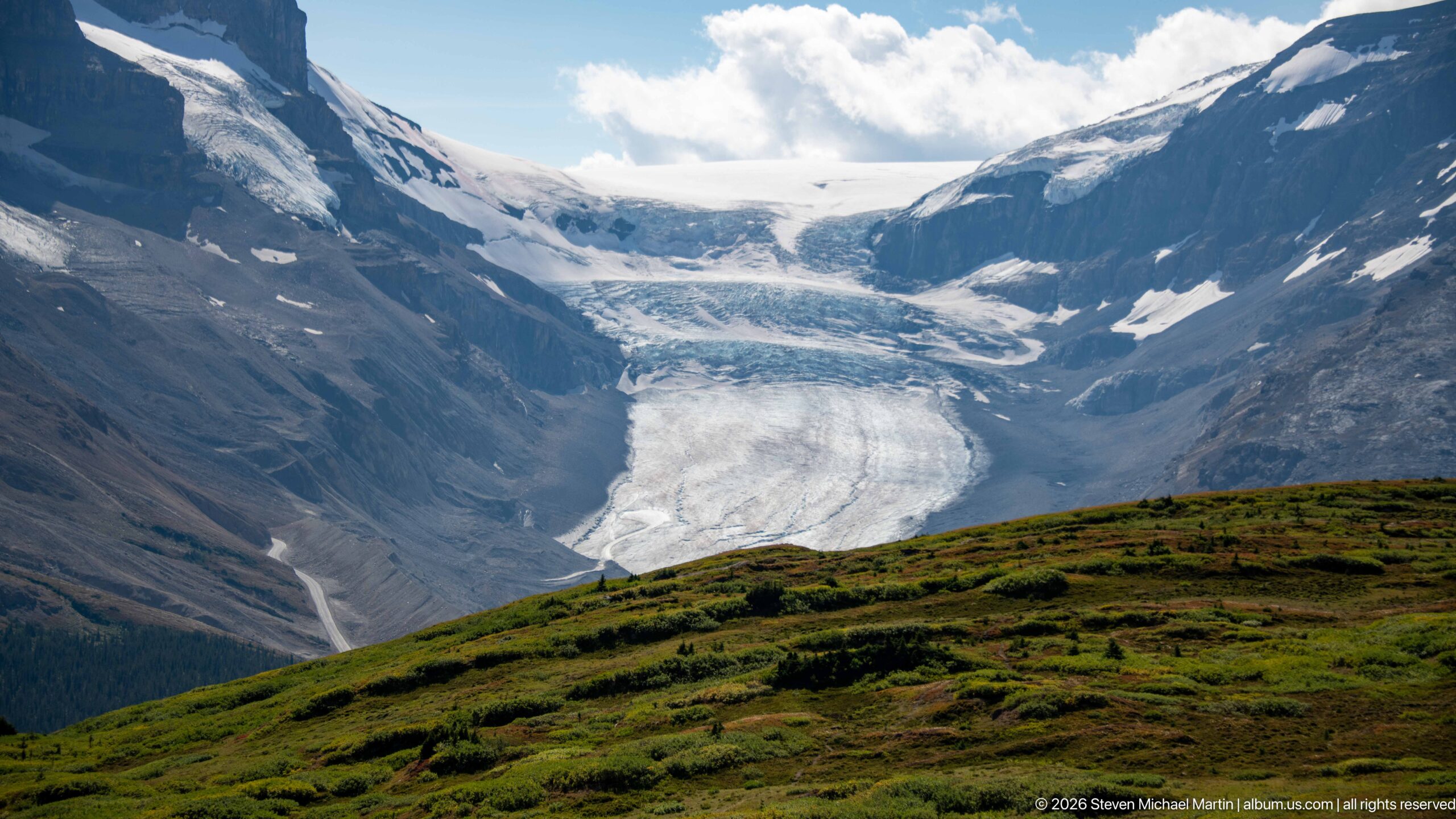
A broad glacier descends from a high ice basin between steep mountain walls, framed below by the rounded green tundra of Wilcox Pass. Crevassed ice and exposed dark rock define the glacier’s flow path, while the foreground ridge gives the distant ice a clear sense of scale.
Caption
A broad glacier descends from a high ice basin between steep mountain walls, framed below by the rounded green tundra of Wilcox Pass. Crevassed ice and exposed dark rock define the glacier’s flow path, while the foreground ridge gives the distant ice a clear sense of scale.
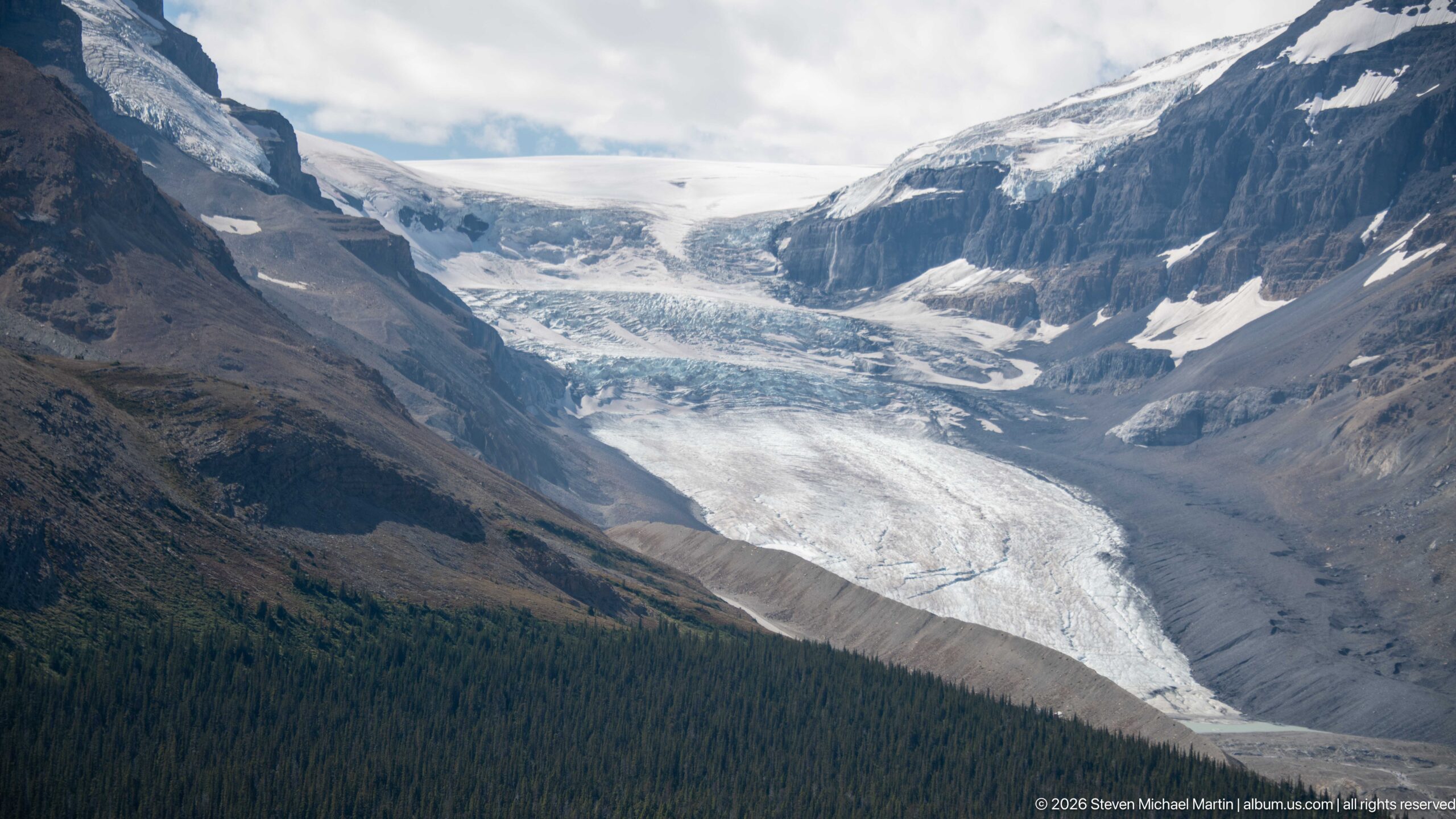
A broad valley glacier flows down from a high snow-and-ice basin between steep dark mountain walls. Crevassed blue-white ice narrows into a long tongue above dense conifer forest, presenting one of the clearest glacial views from the Wilcox Pass side of the Icefields Parkway corridor.
Caption
A broad valley glacier flows down from a high snow-and-ice basin between steep dark mountain walls. Crevassed blue-white ice narrows into a long tongue above dense conifer forest, presenting one of the clearest glacial views from the Wilcox Pass side of the Icefields Parkway corridor.
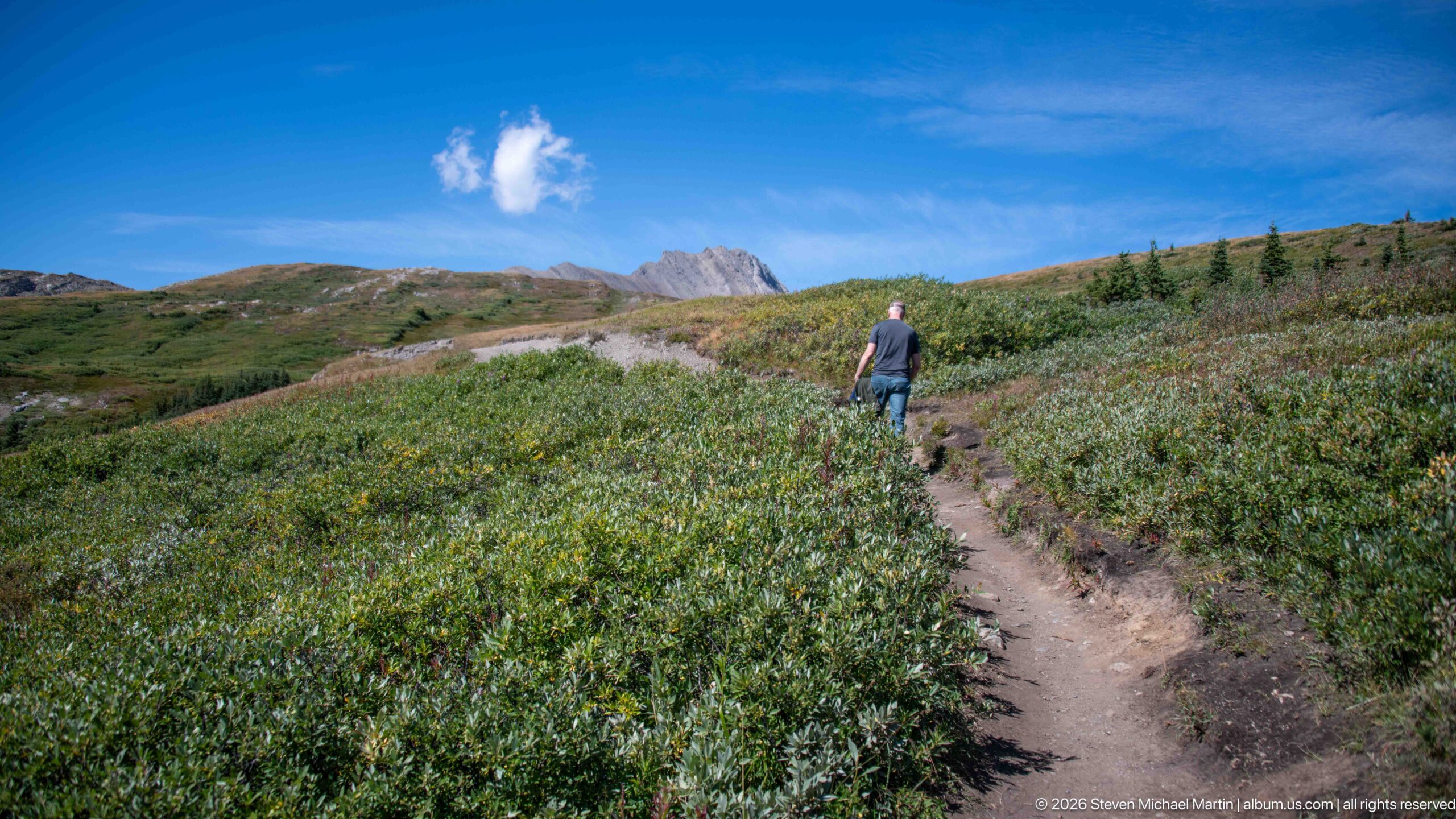
A hiker follows the narrow Wilcox Pass trail through dense low alpine shrubs, with open tundra rising toward a pale, jagged ridge. The compact dirt path and treeless vegetation mark the transition into the exposed high-country landscape that characterizes the Wilcox Pass route.
Caption
A hiker follows the narrow Wilcox Pass trail through dense low alpine shrubs, with open tundra rising toward a pale, jagged ridge. The compact dirt path and treeless vegetation mark the transition into the exposed high-country landscape that characterizes the Wilcox Pass route.
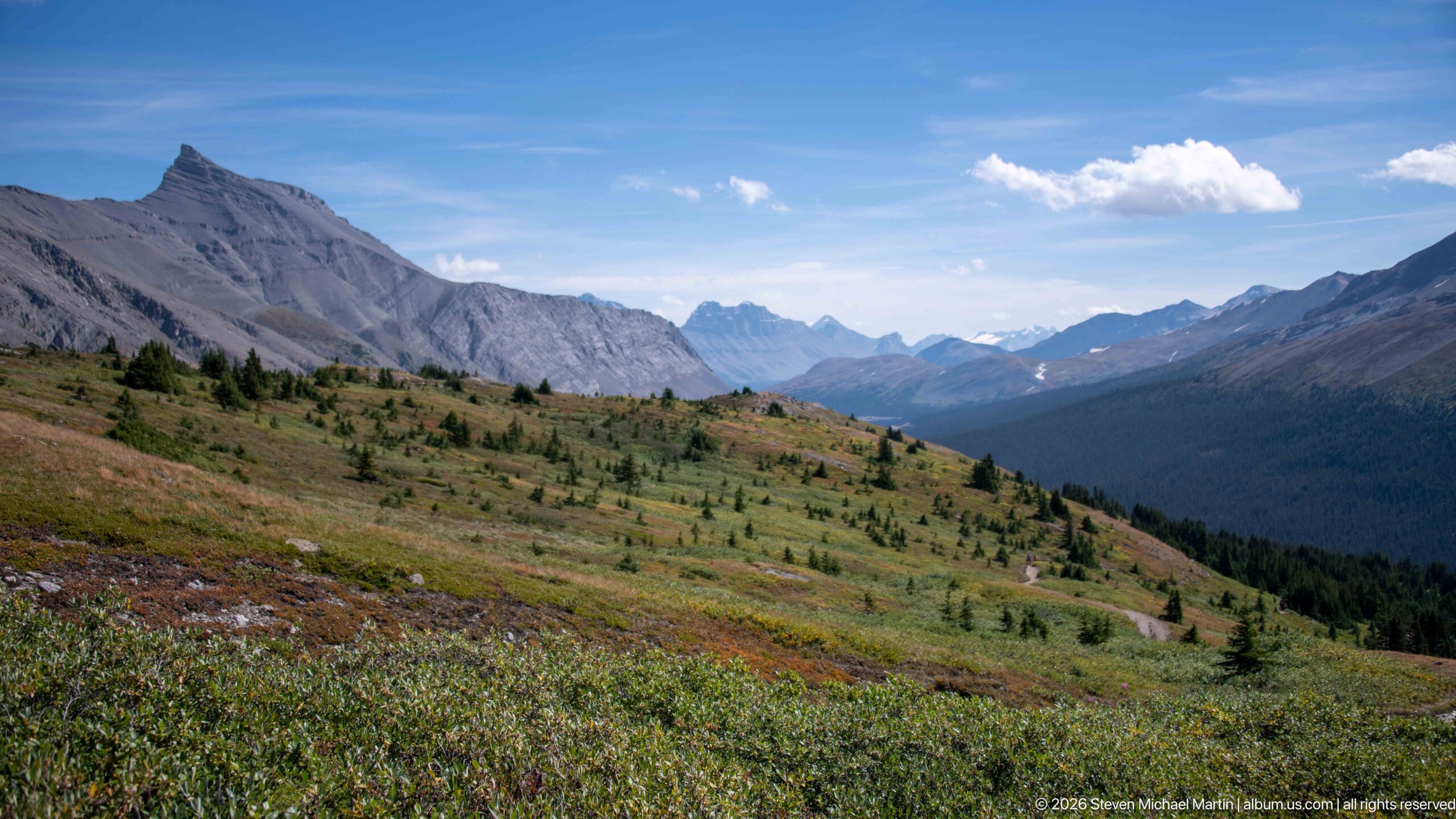
An open alpine slope spreads across Wilcox Pass, dotted with small conifers and low tundra vegetation. Layered gray ridges frame a deep valley to the right, while distant peaks recede beneath a bright summer sky, giving this view unusual depth across the Canadian Rockies.
Caption
An open alpine slope spreads across Wilcox Pass, dotted with small conifers and low tundra vegetation. Layered gray ridges frame a deep valley to the right, while distant peaks recede beneath a bright summer sky, giving this view unusual depth across the Canadian Rockies.
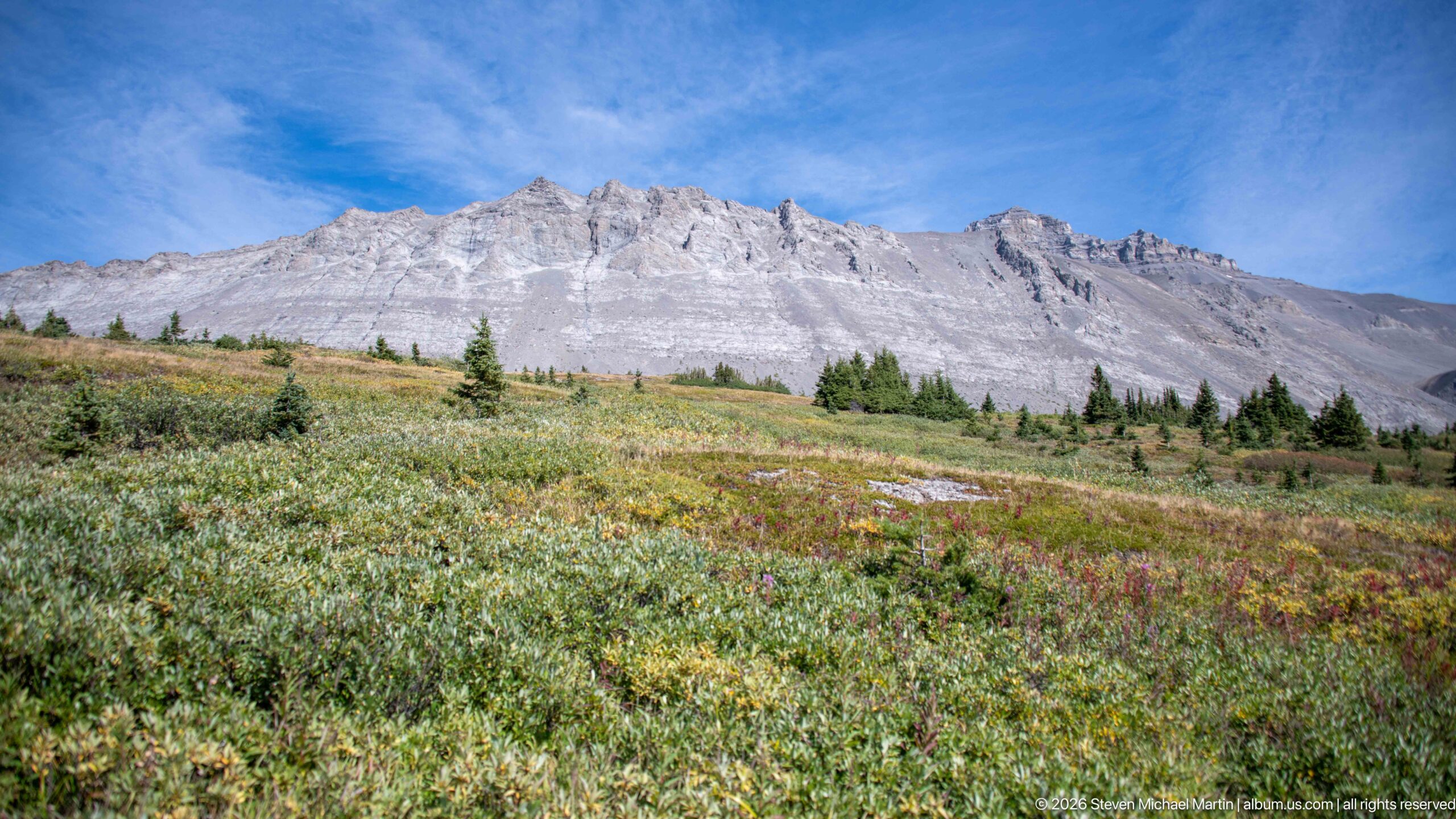
A pale, sharply eroded mountain ridge dominates the horizon above Wilcox Pass, its layered rock and serrated crest contrasting with the soft greens and autumnal tones of the tundra below. Scattered conifers mark the upper edge of the subalpine zone across the open slope.
Caption
A pale, sharply eroded mountain ridge dominates the horizon above Wilcox Pass, its layered rock and serrated crest contrasting with the soft greens and autumnal tones of the tundra below. Scattered conifers mark the upper edge of the subalpine zone across the open slope.
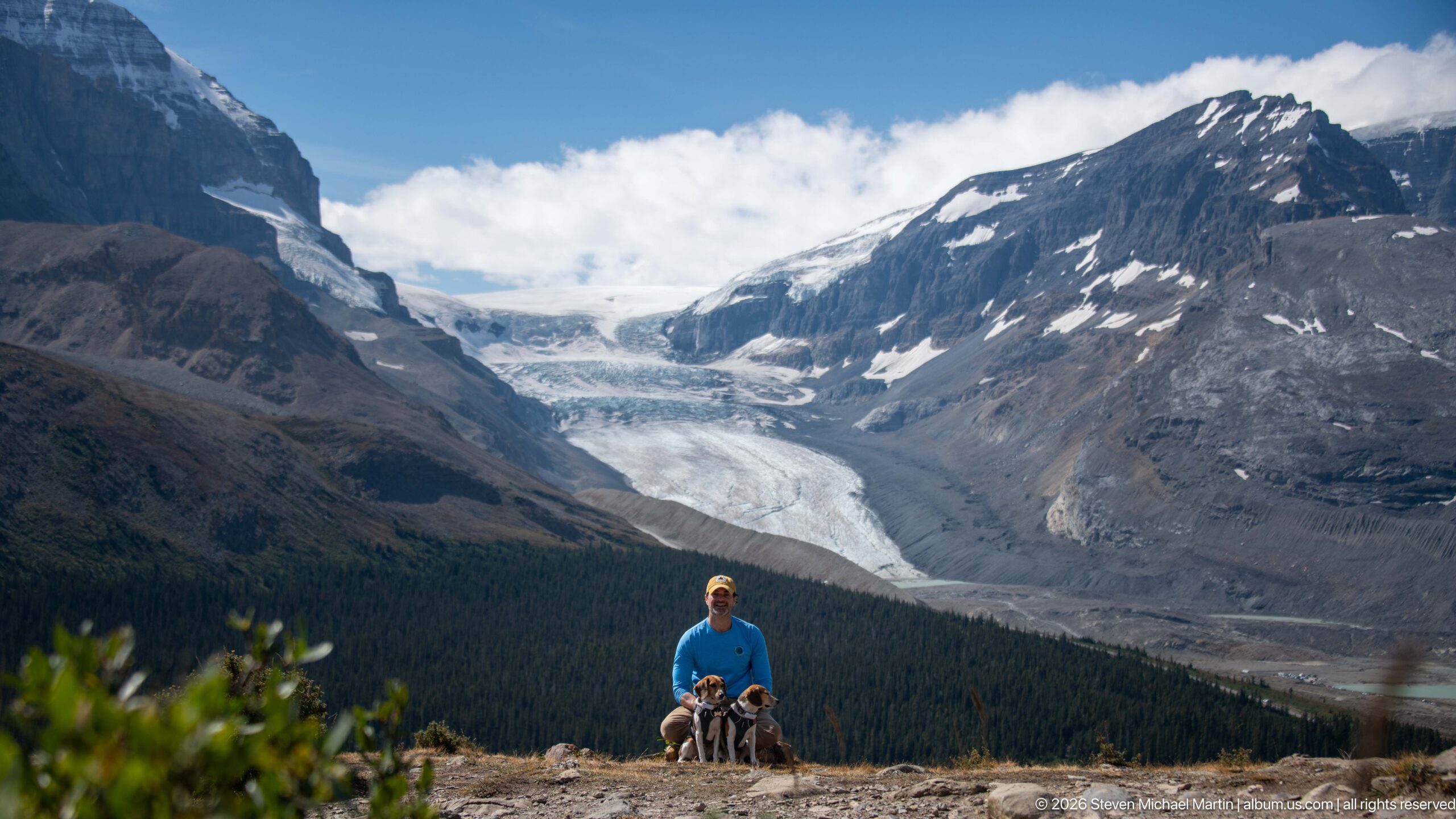
A hiker pauses with two leashed beagles on an exposed overlook above the valley, with a broad glacier descending between steep mountain walls behind them. The small figures provide a strong sense of scale for the ice and surrounding Canadian Rockies terrain visible from the Wilcox Pass route.
Caption
A hiker pauses with two leashed beagles on an exposed overlook above the valley, with a broad glacier descending between steep mountain walls behind them. The small figures provide a strong sense of scale for the ice and surrounding Canadian Rockies terrain visible from the Wilcox Pass route.
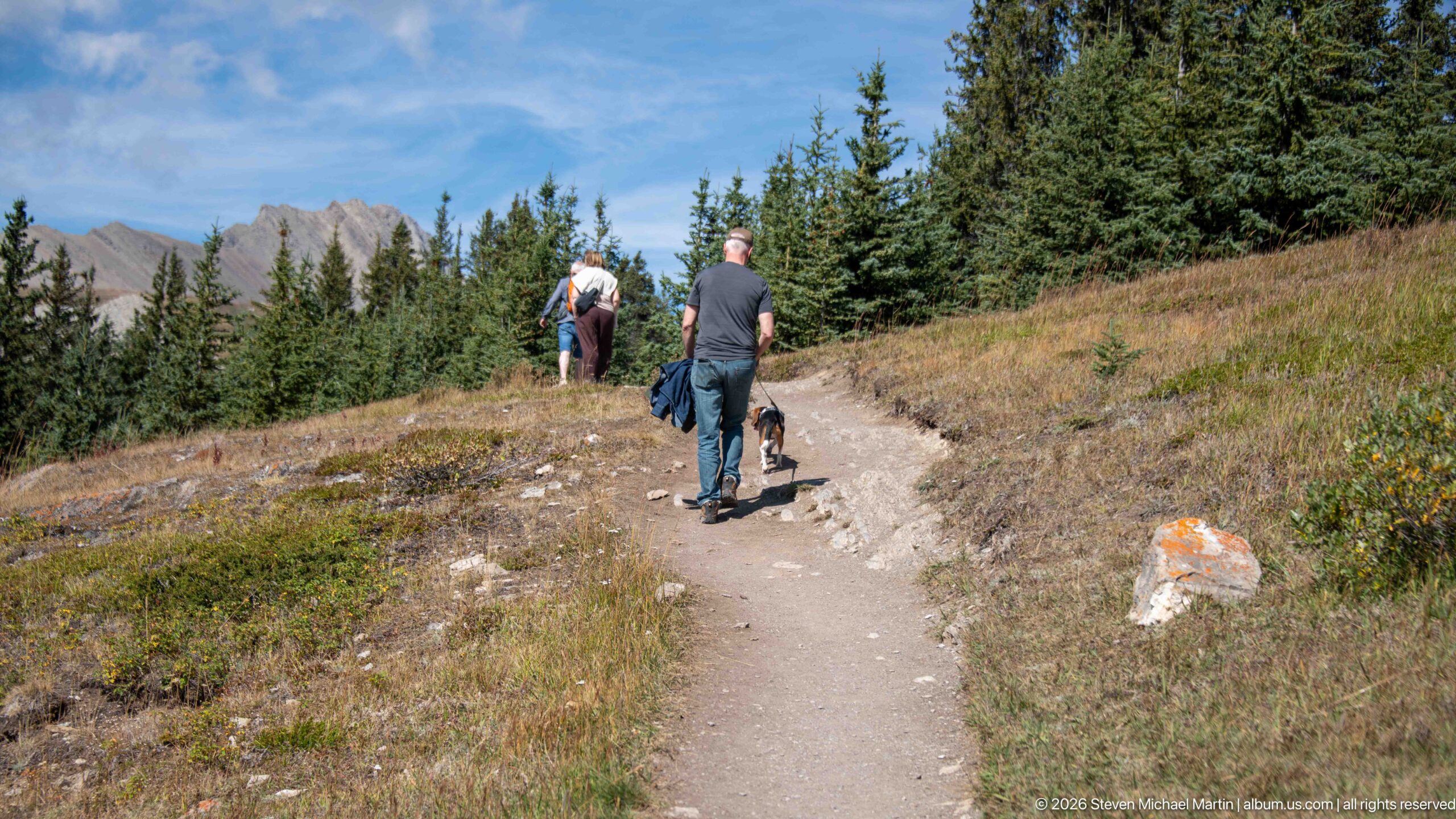
Several hikers climb a gently rising section of the Wilcox Pass trail where open subalpine ground meets dense spruce forest. A pale rock marked with orange paint stands beside the path, while a serrated ridge appears through the trees, placing the route at the transition from forest to alpine terrain.
Caption
Several hikers climb a gently rising section of the Wilcox Pass trail where open subalpine ground meets dense spruce forest. A pale rock marked with orange paint stands beside the path, while a serrated ridge appears through the trees, placing the route at the transition from forest to alpine terrain.
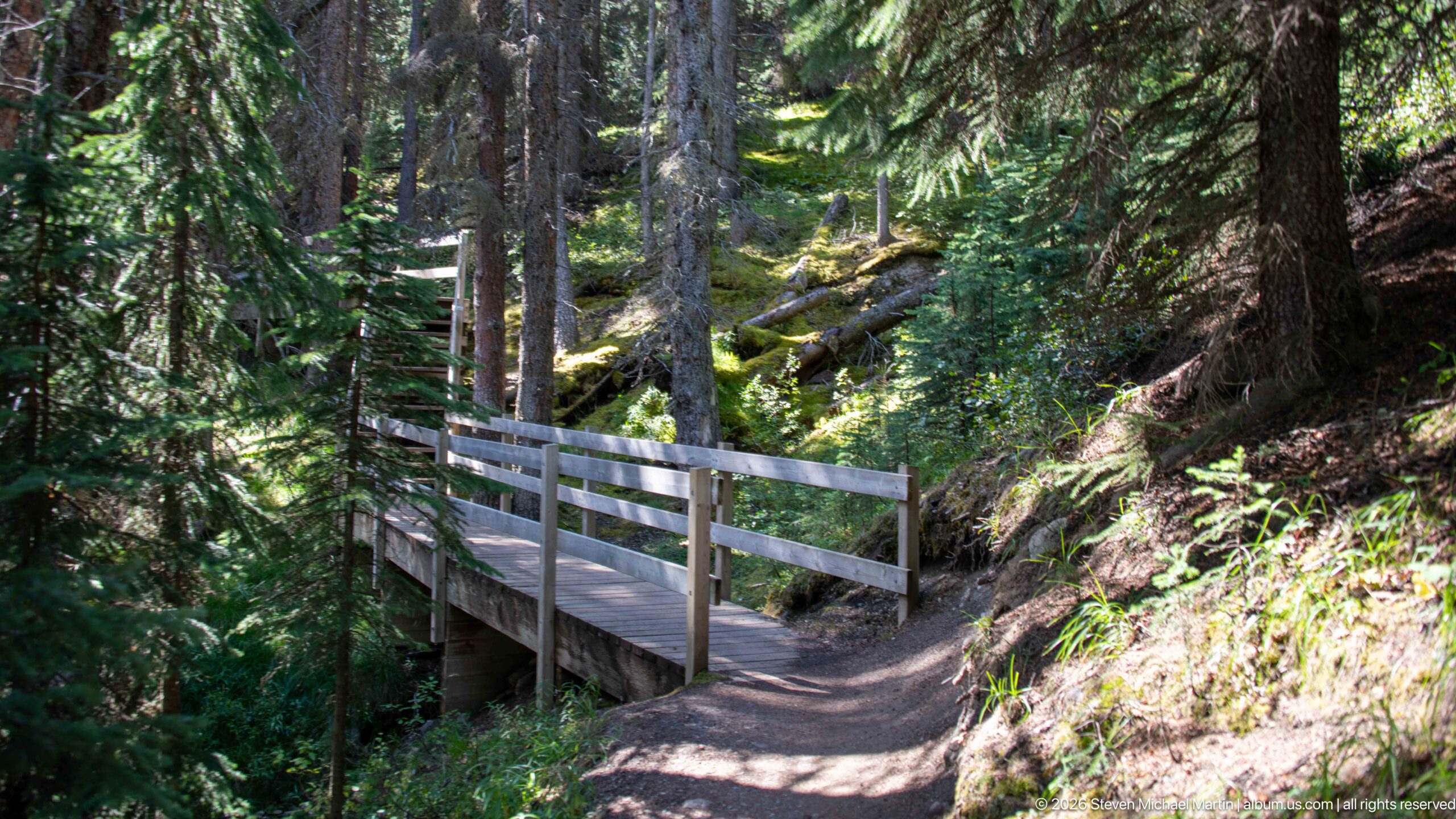
A simple wooden footbridge carries the Wilcox Pass trail across a small shaded drainage in dense conifer forest. Railings line both sides of the narrow span, while moss-covered logs, roots, and filtered sunlight create the enclosed forest character of the lower trail.
Caption
A simple wooden footbridge carries the Wilcox Pass trail across a small shaded drainage in dense conifer forest. Railings line both sides of the narrow span, while moss-covered logs, roots, and filtered sunlight create the enclosed forest character of the lower trail.
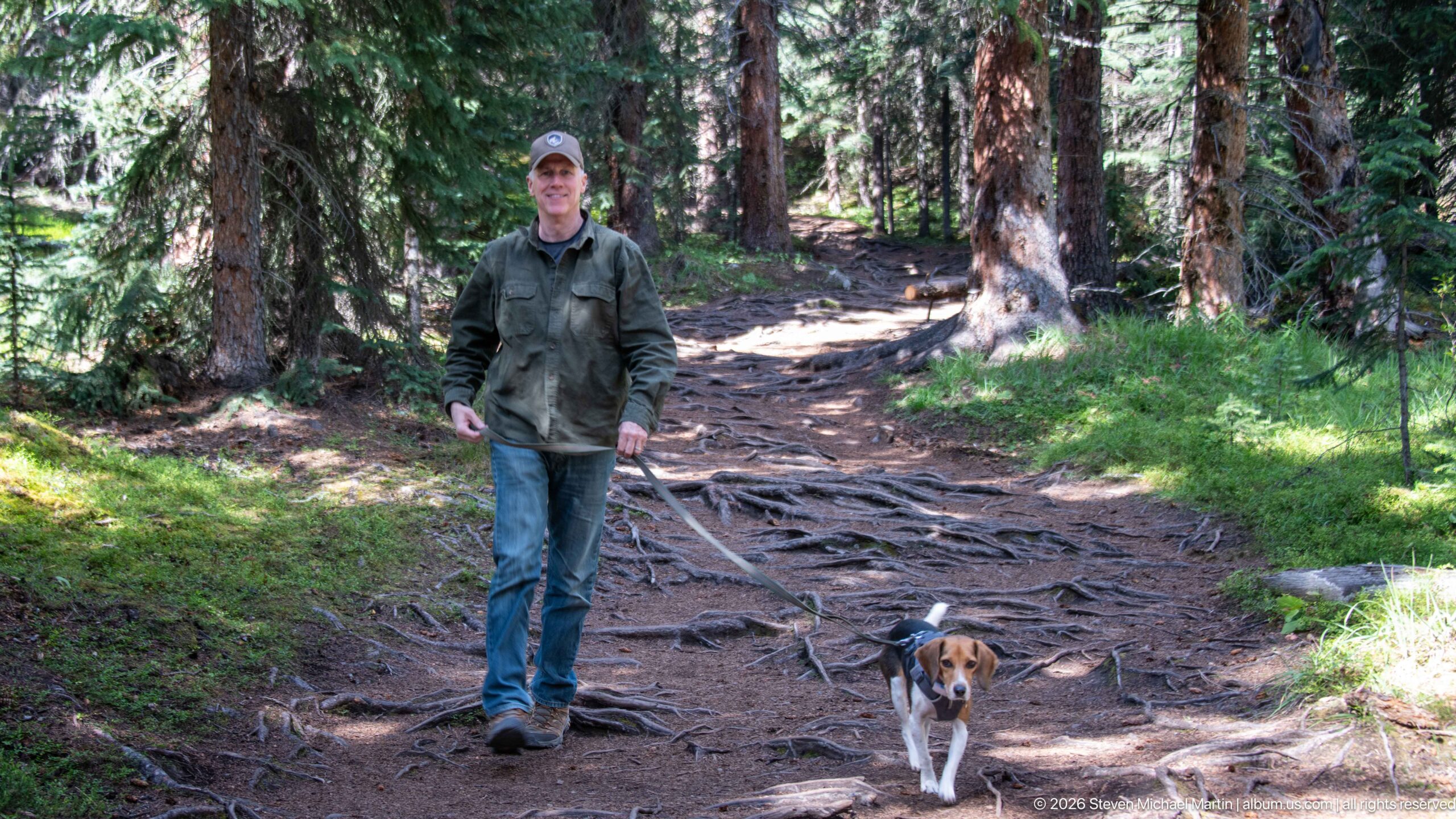
A man walks a leashed beagle along the shaded lower Wilcox Pass trail, where exposed roots cross the compacted earth beneath mature conifers. Sunlight filters through the canopy onto the path, recording the wooded character of the route before it emerges into open alpine terrain.
Caption
A man walks a leashed beagle along the shaded lower Wilcox Pass trail, where exposed roots cross the compacted earth beneath mature conifers. Sunlight filters through the canopy onto the path, recording the wooded character of the route before it emerges into open alpine terrain.
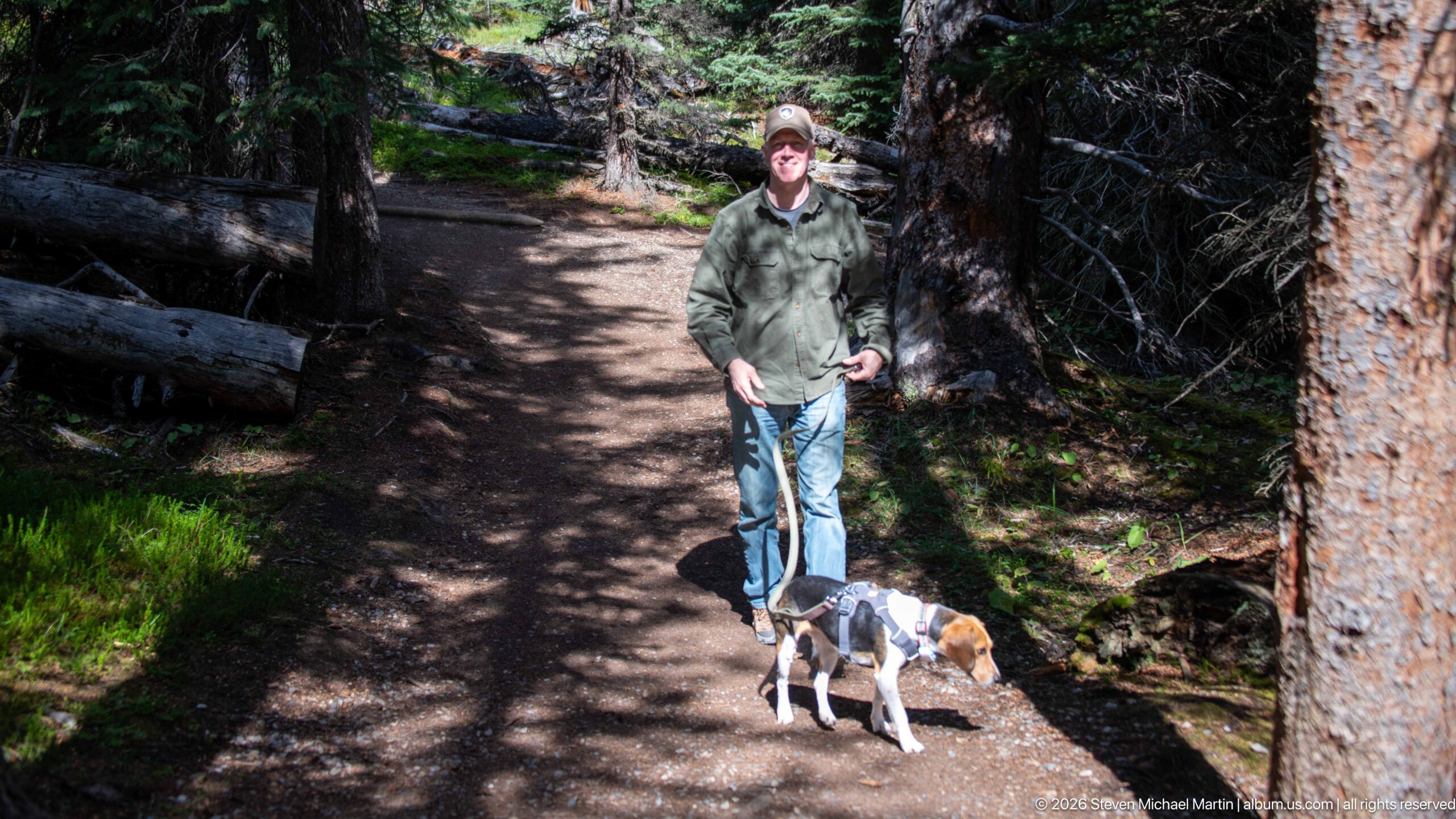
A hiker leads two leashed beagles along a sunlit bend in the lower Wilcox Pass trail. Fallen trunks and mature conifers frame the compact dirt path, while patches of bright green groundcover contrast with the shaded forest floor.
Caption
A hiker leads two leashed beagles along a sunlit bend in the lower Wilcox Pass trail. Fallen trunks and mature conifers frame the compact dirt path, while patches of bright green groundcover contrast with the shaded forest floor.
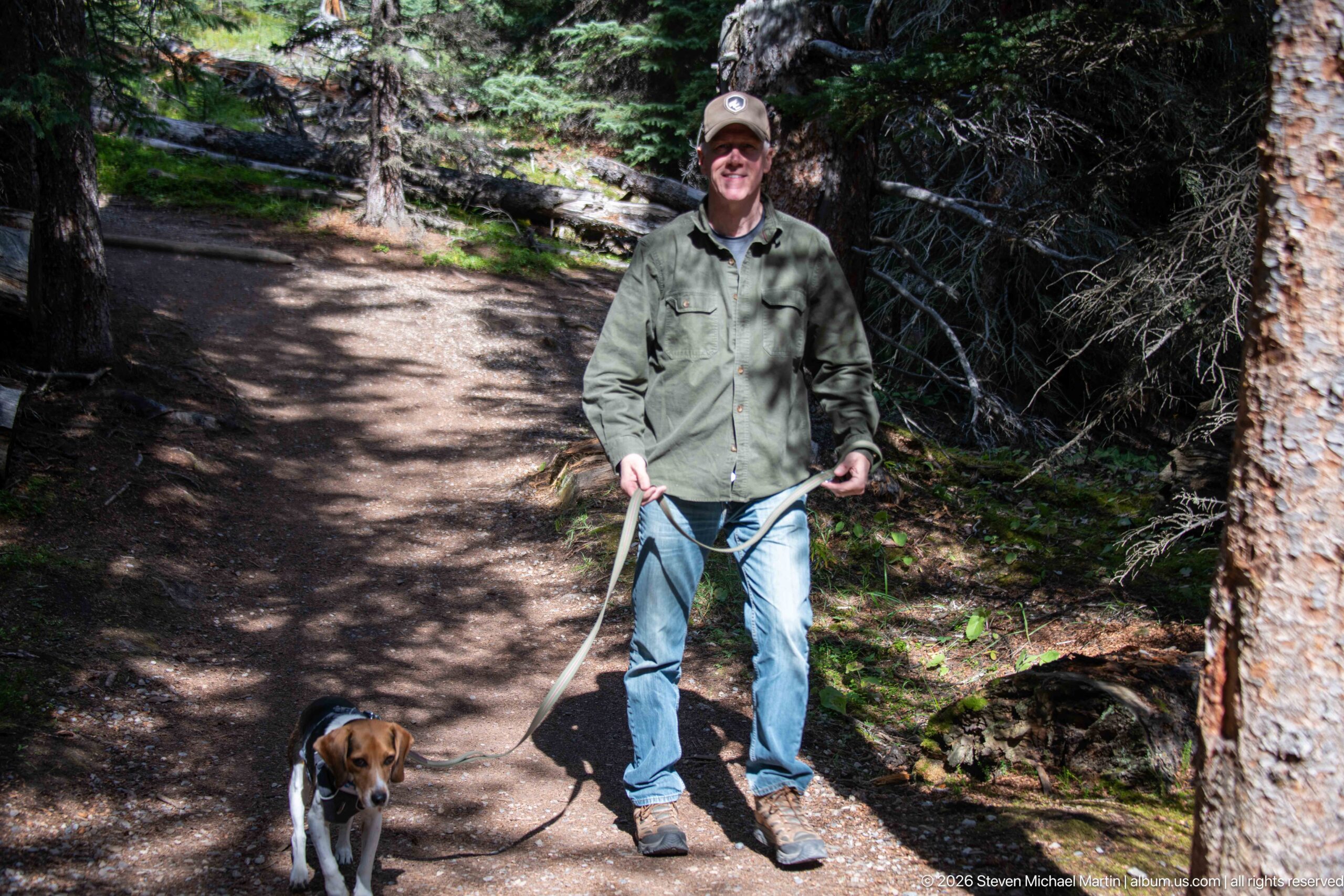
A man pauses with a leashed beagle on the Wilcox Pass trail beneath tall conifers. Strong patches of sunlight and shadow cross the dirt path, while fallen timber and forest understory frame this quieter, enclosed section of the hike.
Caption
A man pauses with a leashed beagle on the Wilcox Pass trail beneath tall conifers. Strong patches of sunlight and shadow cross the dirt path, while fallen timber and forest understory frame this quieter, enclosed section of the hike.
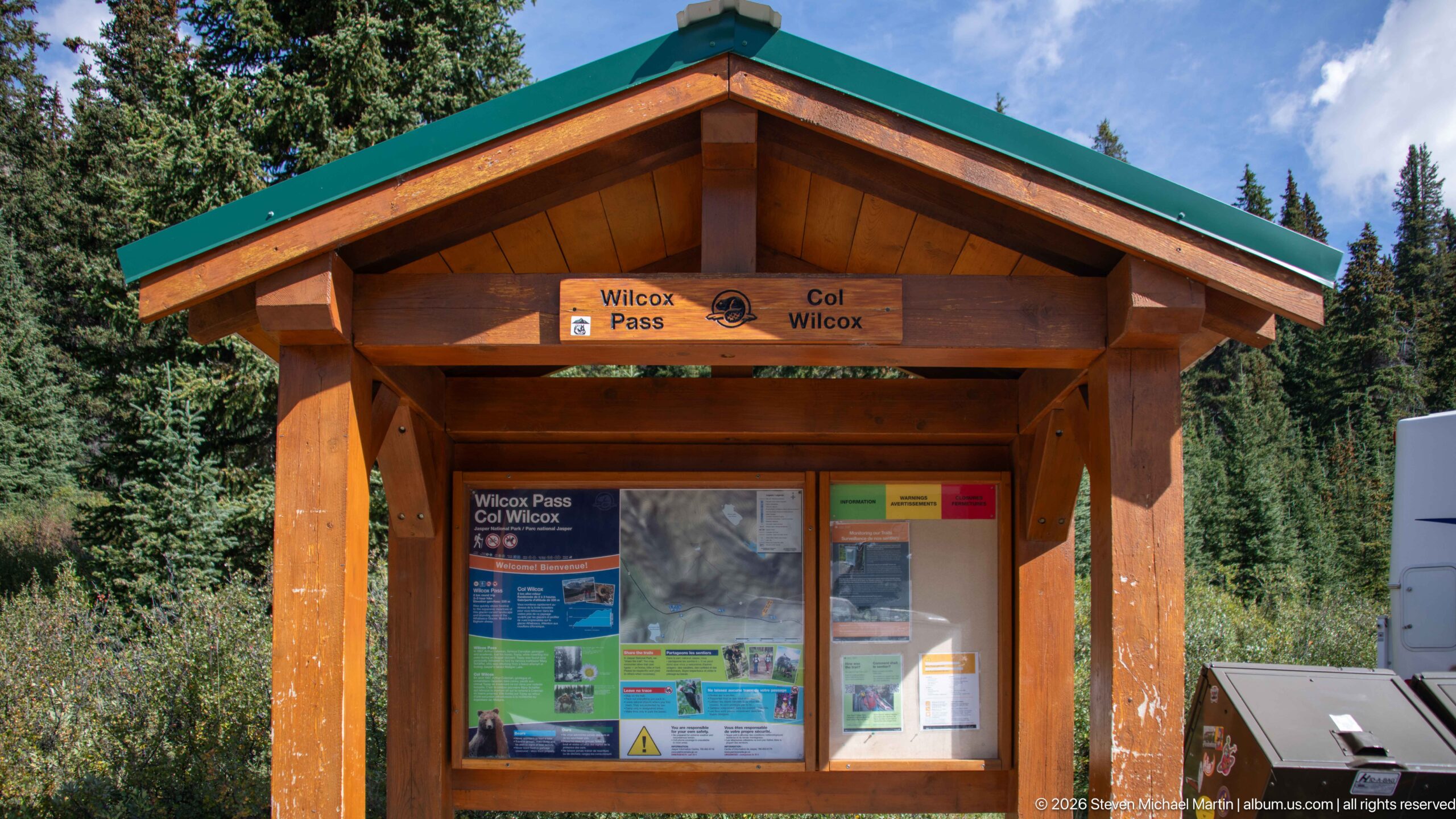
A timber-roofed trailhead kiosk marks Wilcox Pass, with a bilingual “Wilcox Pass / Col Wilcox” sign mounted beneath the gable. Maps, route information, and visitor notices fill the display board, establishing the formal starting point for the high-country hike in Jasper National Park.
Caption
A timber-roofed trailhead kiosk marks Wilcox Pass, with a bilingual “Wilcox Pass / Col Wilcox” sign mounted beneath the gable. Maps, route information, and visitor notices fill the display board, establishing the formal starting point for the high-country hike in Jasper National Park.
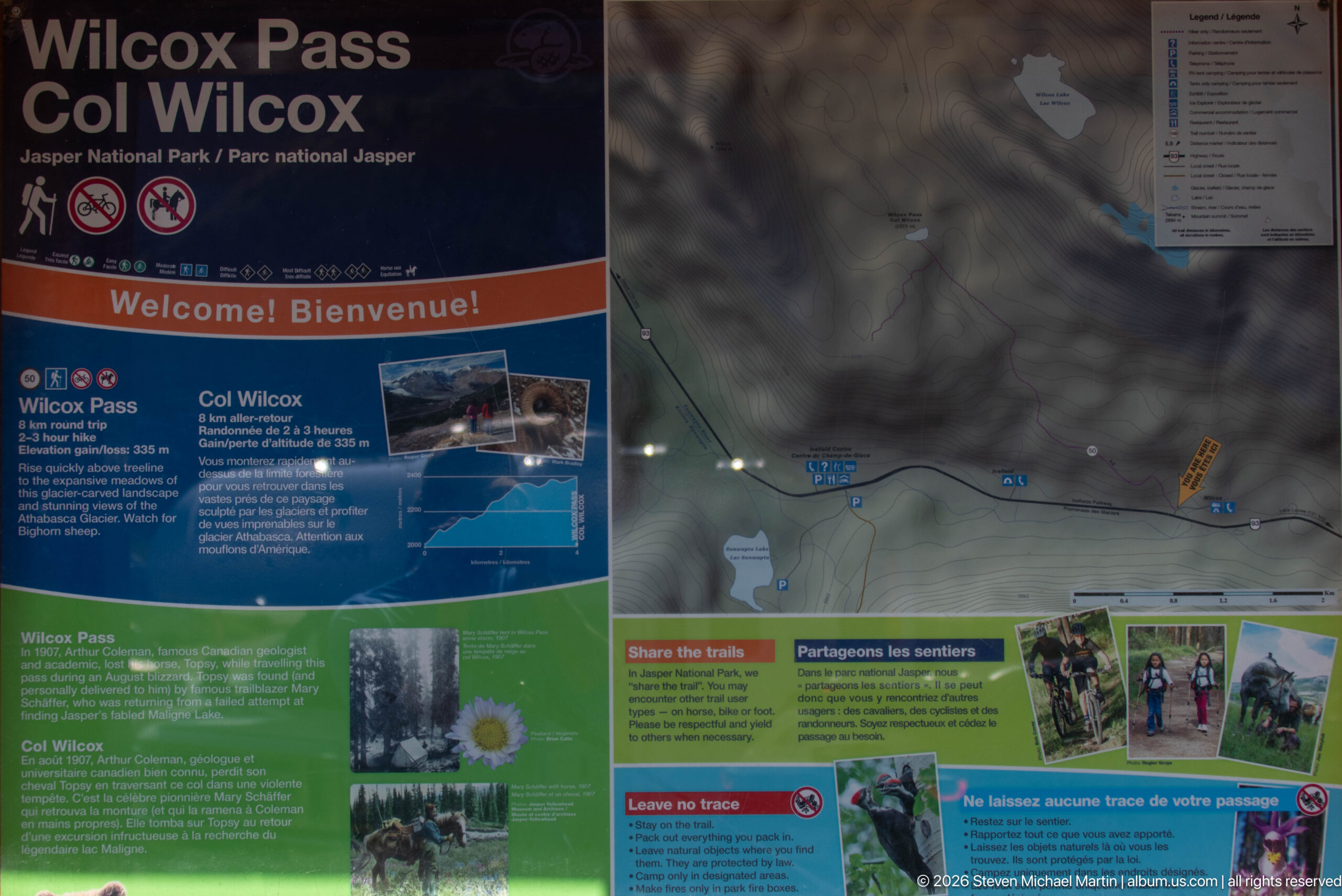
The Wilcox Pass trailhead panel combines a topographic route map with bilingual visitor guidance, trail-sharing information, and leave-no-trace reminders. The display identifies “Wilcox Pass / Col Wilcox” directly and provides practical orientation for hikers entering the alpine route.
Caption
The Wilcox Pass trailhead panel combines a topographic route map with bilingual visitor guidance, trail-sharing information, and leave-no-trace reminders. The display identifies “Wilcox Pass / Col Wilcox” directly and provides practical orientation for hikers entering the alpine route.
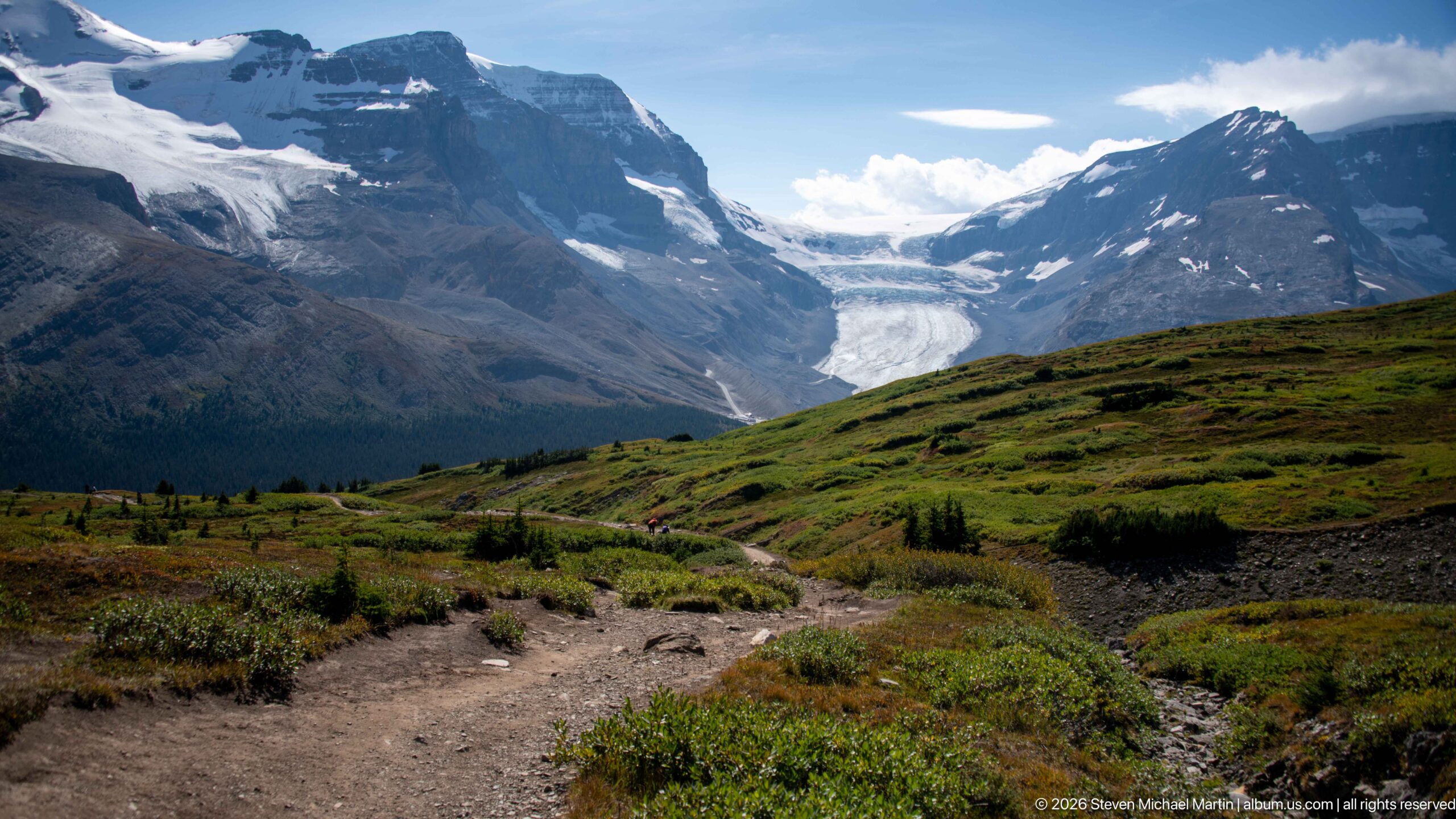
The Wilcox Pass trail curves through low alpine vegetation toward a dramatic glacier framed by dark mountain walls. The descending path and rolling green slope create a strong foreground lead into the distant ice, showing how the hiking route repeatedly opens onto expansive glacial views.
Caption
The Wilcox Pass trail curves through low alpine vegetation toward a dramatic glacier framed by dark mountain walls. The descending path and rolling green slope create a strong foreground lead into the distant ice, showing how the hiking route repeatedly opens onto expansive glacial views.
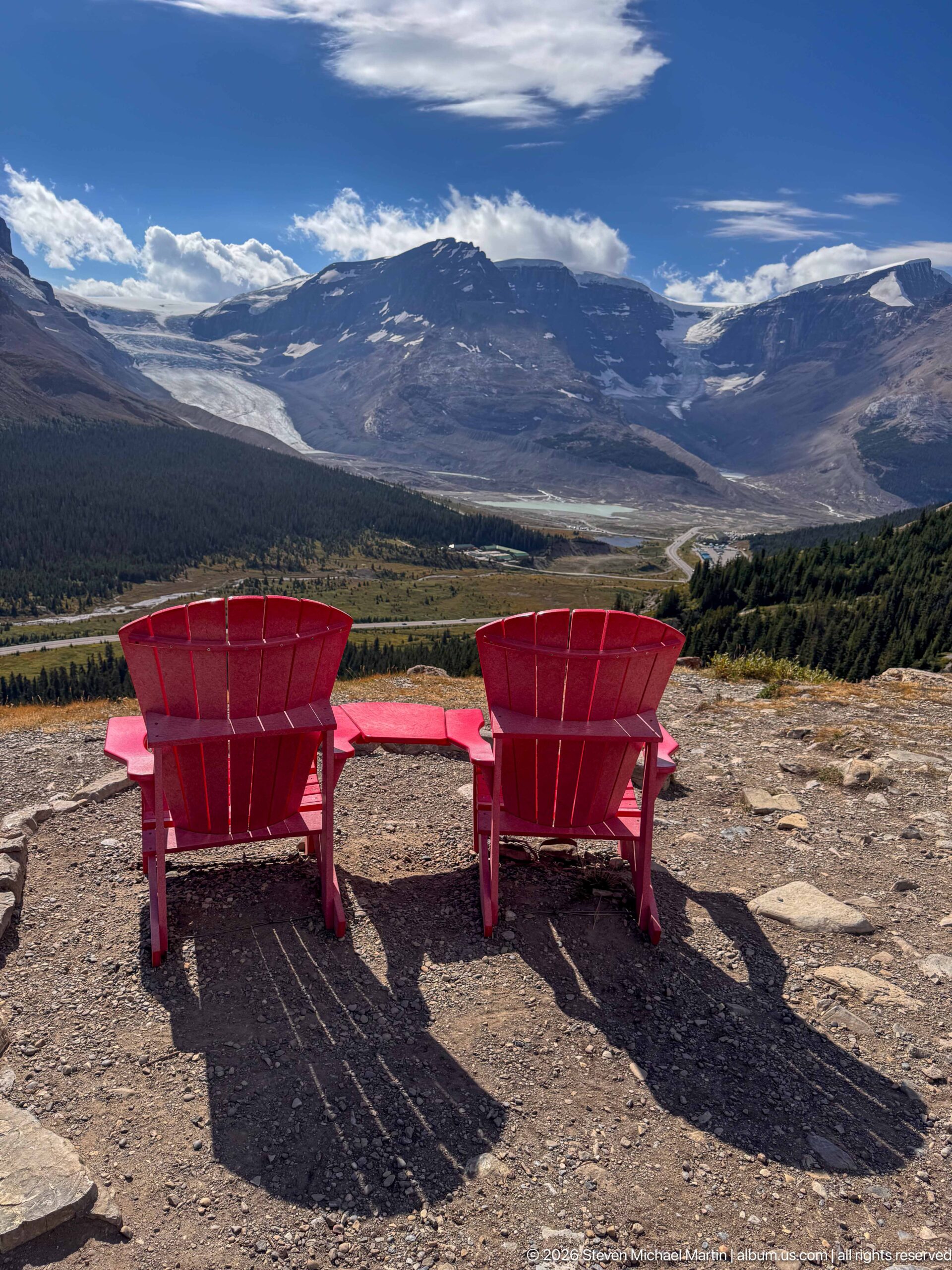
Two red Adirondack-style chairs face outward from a rocky Wilcox Pass viewpoint toward a broad glaciated mountain valley. Their backs fill the foreground while distant ice, forest, and ridgelines create a layered panorama, turning the seating area into a deliberate place for viewing the high-country landscape.
Caption
Two red Adirondack-style chairs face outward from a rocky Wilcox Pass viewpoint toward a broad glaciated mountain valley. Their backs fill the foreground while distant ice, forest, and ridgelines create a layered panorama, turning the seating area into a deliberate place for viewing the high-country landscape.
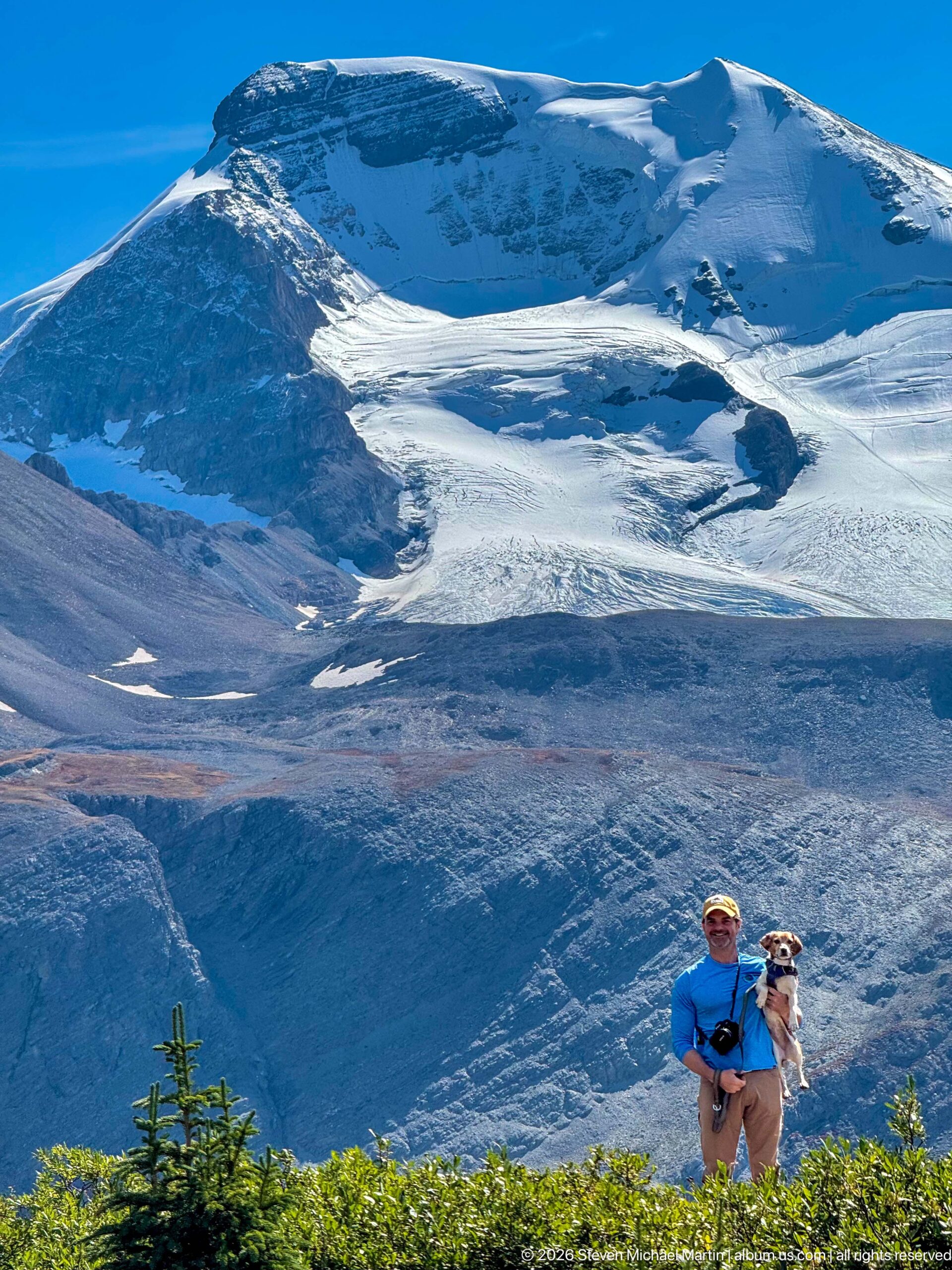
A hiker holding a beagle appears at the lower edge of an expansive view of glacier ice spread across a high mountain basin. Layered bands of snow, blue-white ice, and dark exposed rock dominate the frame, dwarfing the human figure and emphasizing the scale of the glaciated terrain.
Caption
A hiker holding a beagle appears at the lower edge of an expansive view of glacier ice spread across a high mountain basin. Layered bands of snow, blue-white ice, and dark exposed rock dominate the frame, dwarfing the human figure and emphasizing the scale of the glaciated terrain.
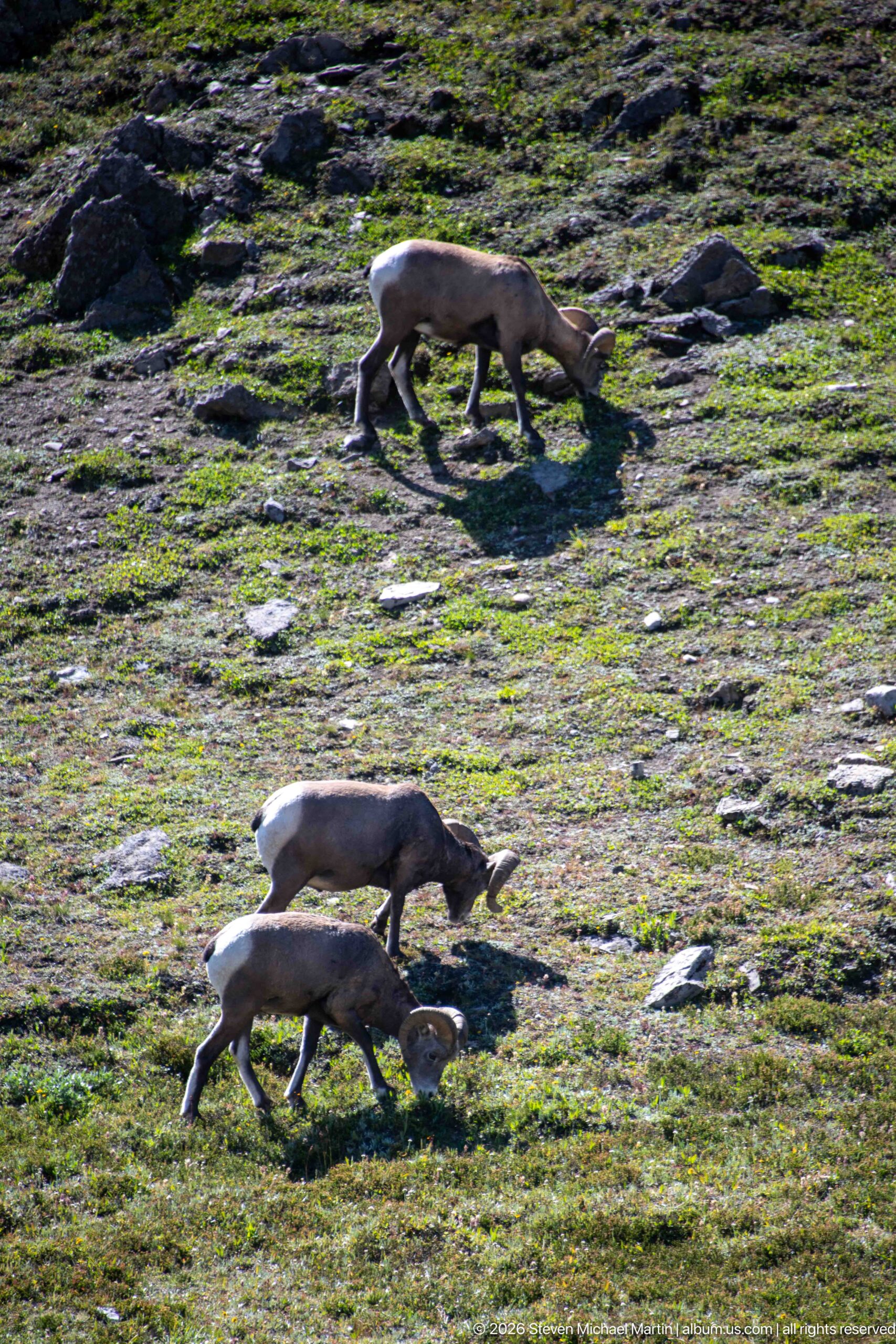
Three bighorn sheep move across a rocky alpine slope at Wilcox Pass, spaced in a loose line over short tundra vegetation. Their tan coats blend with the muted ground, while the open high-elevation setting provides an unobstructed view of the animals in their mountain habitat.
Caption
Three bighorn sheep move across a rocky alpine slope at Wilcox Pass, spaced in a loose line over short tundra vegetation. Their tan coats blend with the muted ground, while the open high-elevation setting provides an unobstructed view of the animals in their mountain habitat.
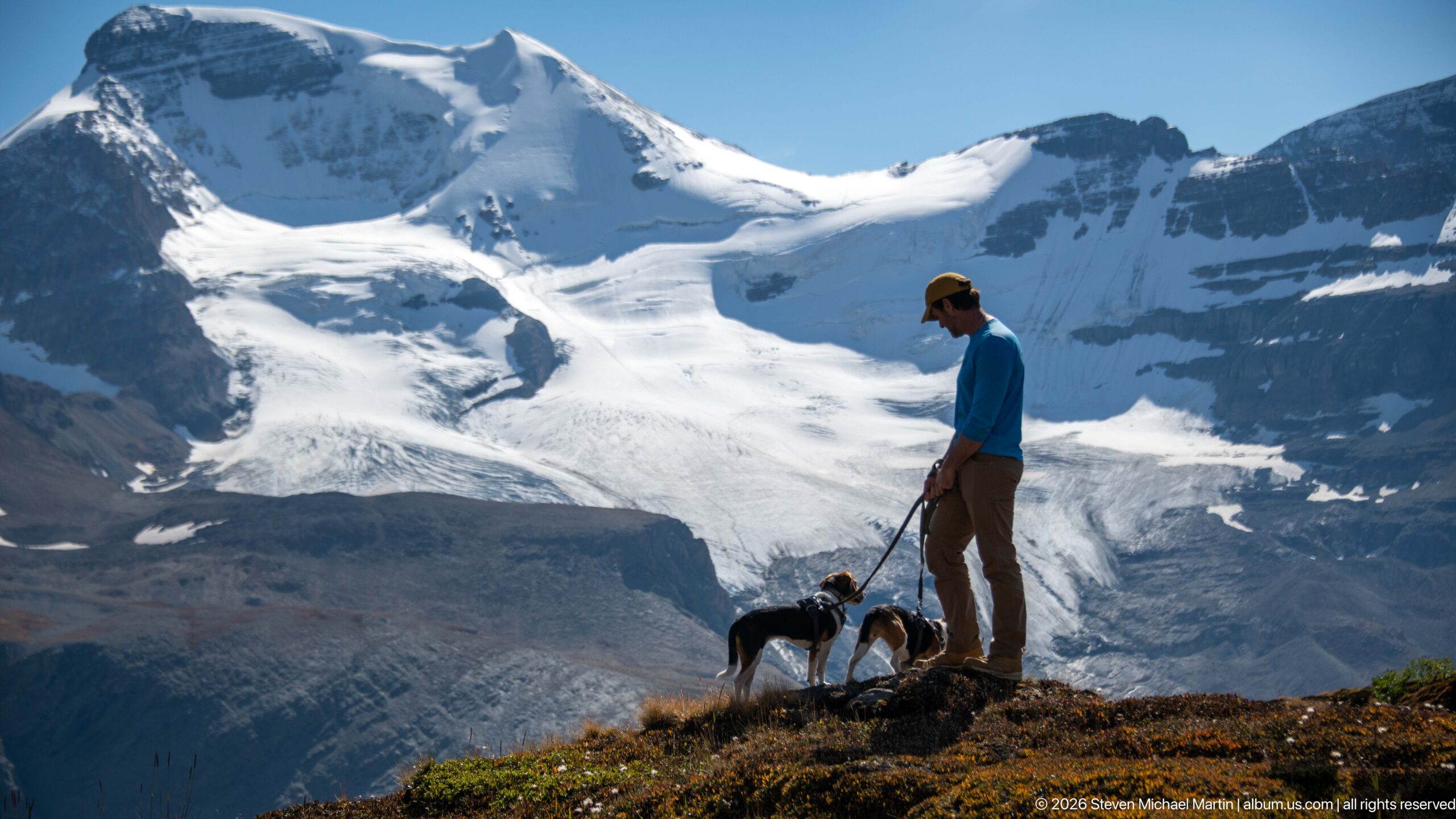
A hiker stands with two leashed beagles on a low alpine rise, silhouetted against a brilliant snow-and-ice-covered mountain basin. The side-on pose separates the figures from the glacier behind, while the exposed tundra foreground places them firmly in the open high country of Wilcox Pass.
Caption
A hiker stands with two leashed beagles on a low alpine rise, silhouetted against a brilliant snow-and-ice-covered mountain basin. The side-on pose separates the figures from the glacier behind, while the exposed tundra foreground places them firmly in the open high country of Wilcox Pass.
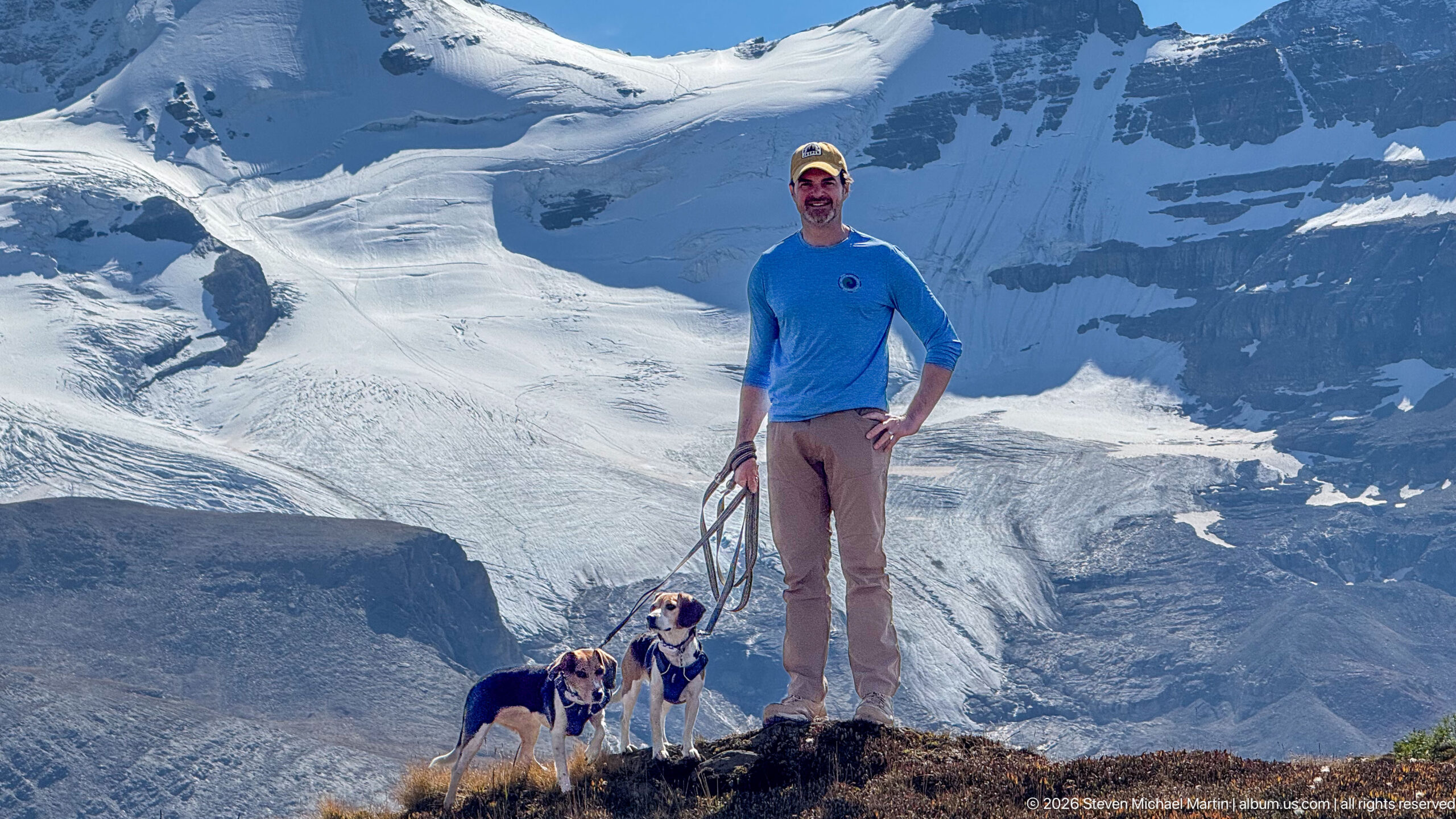
A hiker poses with two leashed beagles on an alpine rise, directly backed by a broad glacier and snow-covered mountain wall. The frontal portrait brings the recreational scale of the Wilcox Pass hike into sharp contrast with the immense ice formations occupying most of the background.
Caption
A hiker poses with two leashed beagles on an alpine rise, directly backed by a broad glacier and snow-covered mountain wall. The frontal portrait brings the recreational scale of the Wilcox Pass hike into sharp contrast with the immense ice formations occupying most of the background.
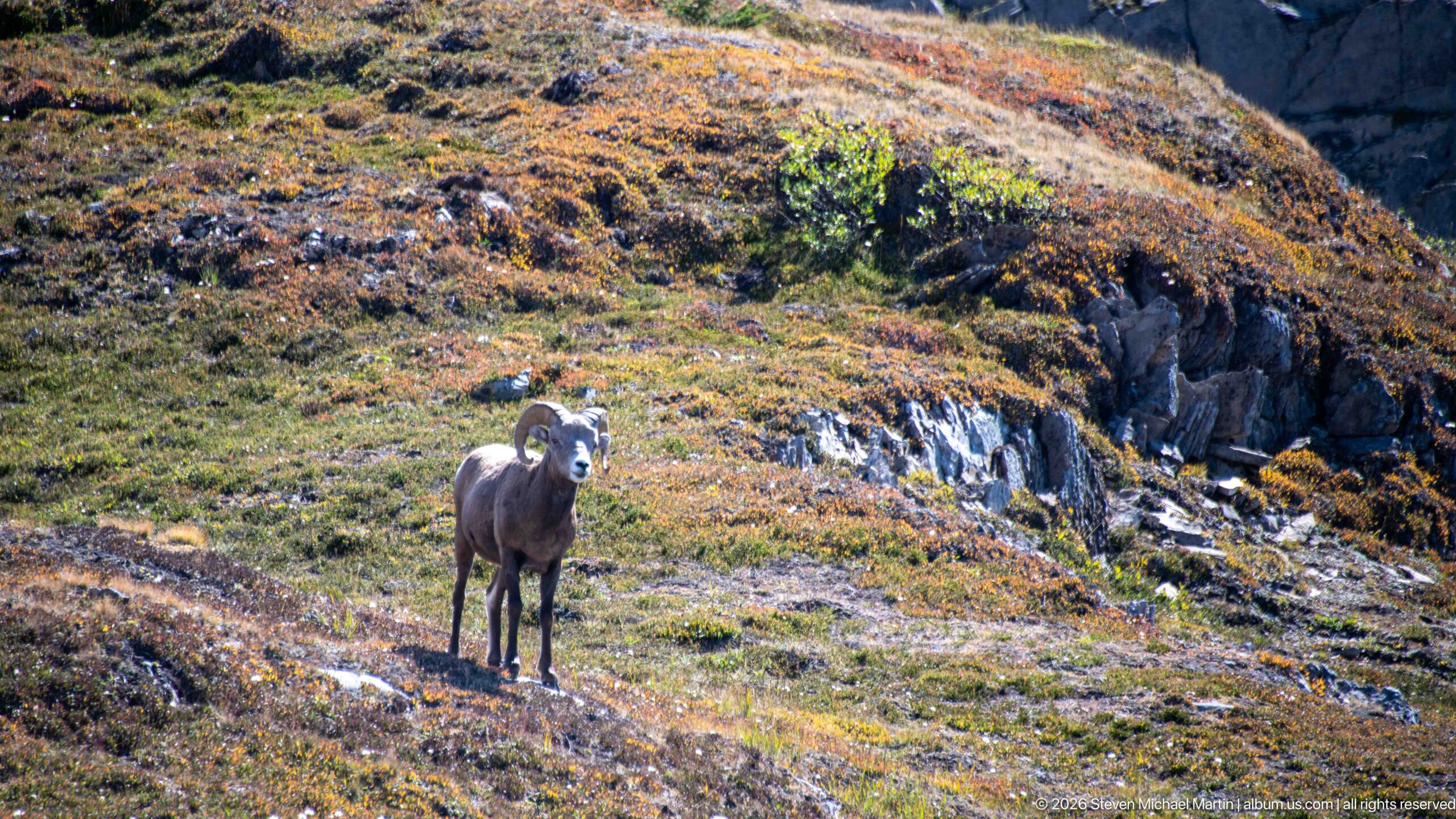
A bighorn sheep stands alert on an open Wilcox Pass slope, facing the camera amid low tundra vegetation and pale rock outcrops. The isolated animal and uncluttered background provide a clear wildlife portrait within the rugged high-elevation terrain of Jasper National Park.
Caption
A bighorn sheep stands alert on an open Wilcox Pass slope, facing the camera amid low tundra vegetation and pale rock outcrops. The isolated animal and uncluttered background provide a clear wildlife portrait within the rugged high-elevation terrain of Jasper National Park.
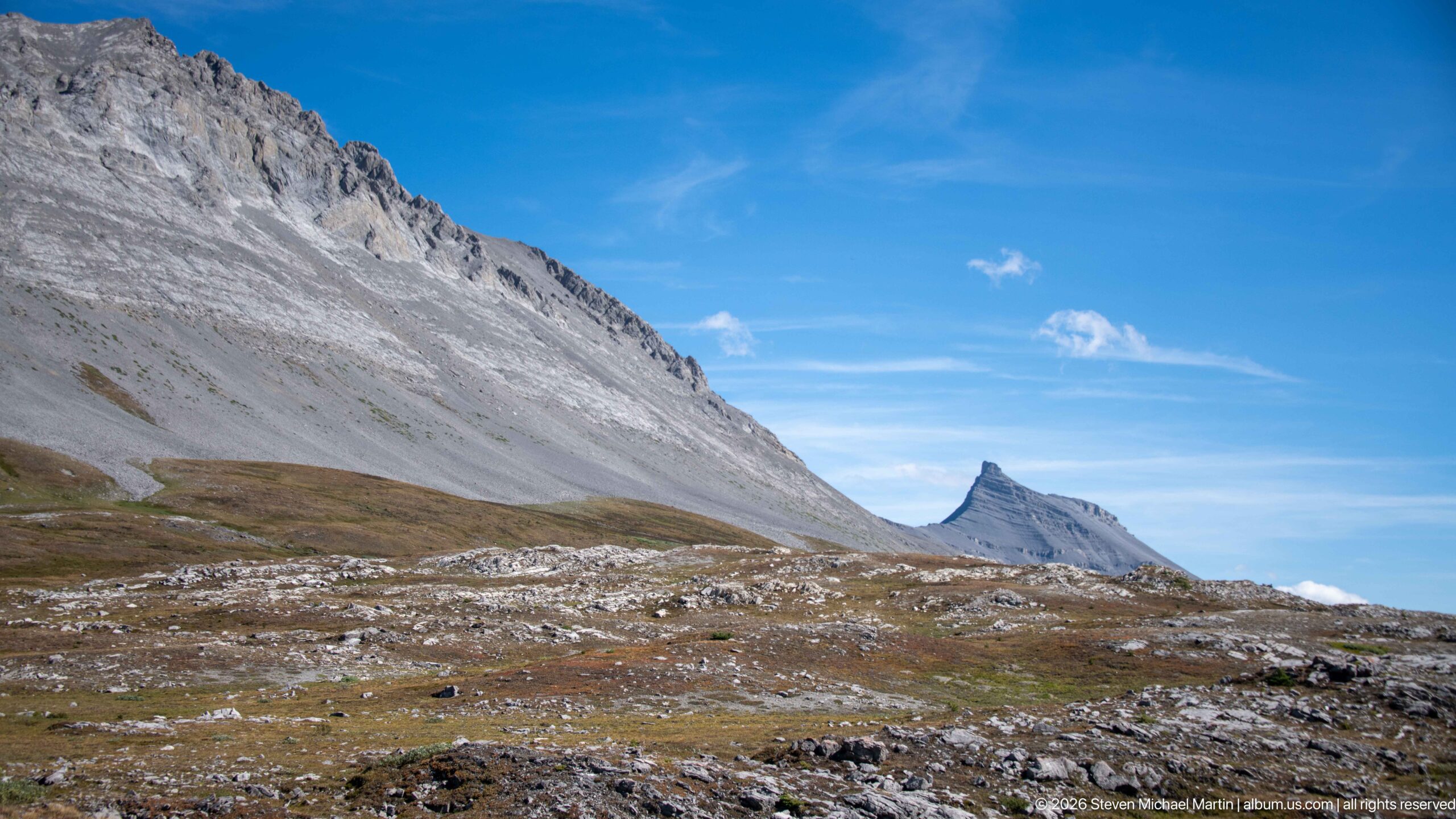
A broad, stony expanse of Wilcox Pass runs beneath a steep pale-gray mountain escarpment, with a pointed distant peak rising near the center of the horizon. Sparse tundra vegetation and exposed rock convey the windswept, high-elevation character of this open section of the route.
Caption
A broad, stony expanse of Wilcox Pass runs beneath a steep pale-gray mountain escarpment, with a pointed distant peak rising near the center of the horizon. Sparse tundra vegetation and exposed rock convey the windswept, high-elevation character of this open section of the route.
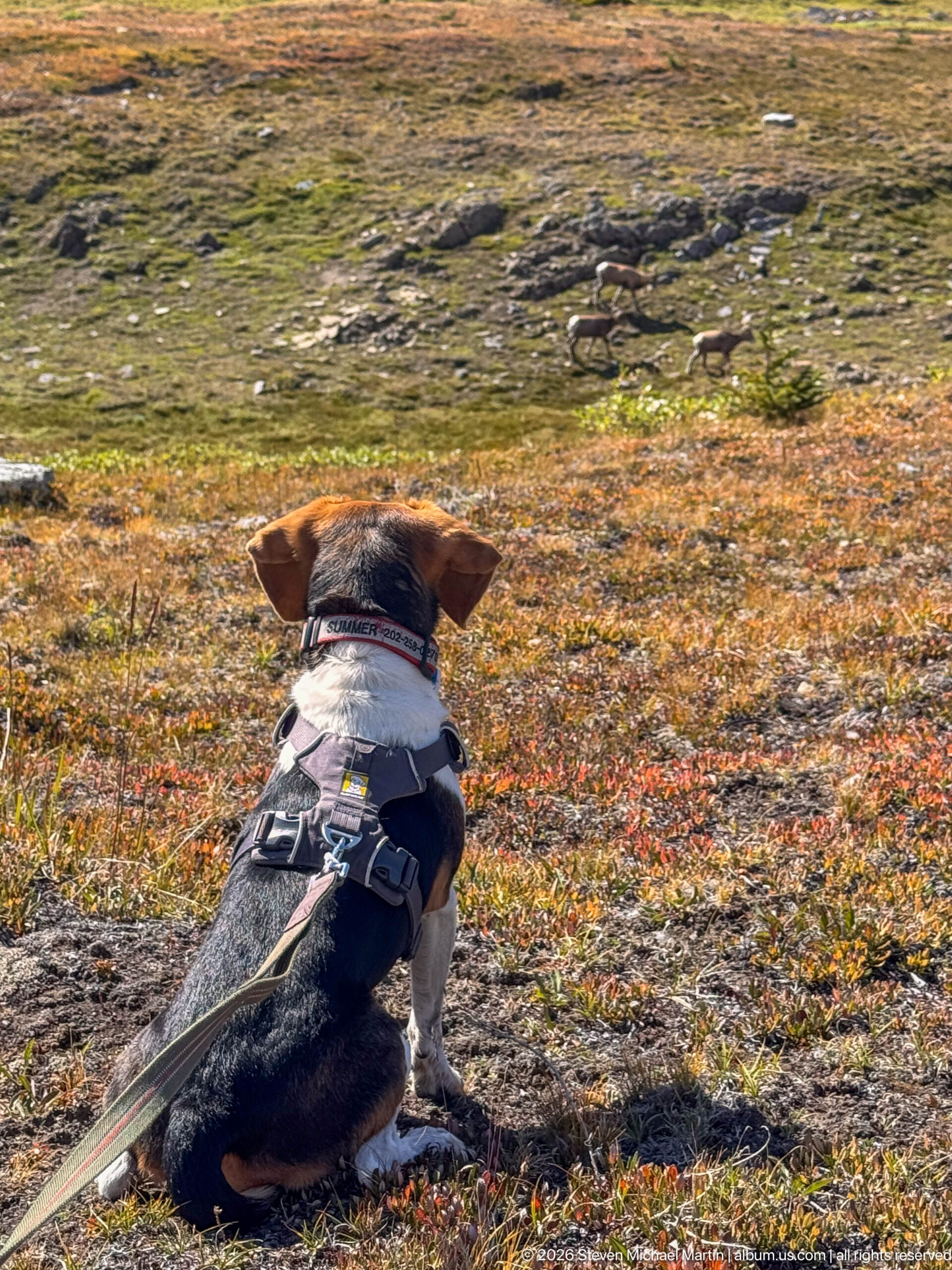
A leashed beagle sits in the foreground watching several bighorn sheep spread across the open tundra ahead. The dog’s harness and taut leash underscore controlled wildlife viewing, while the sheep remain at a distance on the broad autumn-colored slope of Wilcox Pass.
Caption
A leashed beagle sits in the foreground watching several bighorn sheep spread across the open tundra ahead. The dog’s harness and taut leash underscore controlled wildlife viewing, while the sheep remain at a distance on the broad autumn-colored slope of Wilcox Pass.
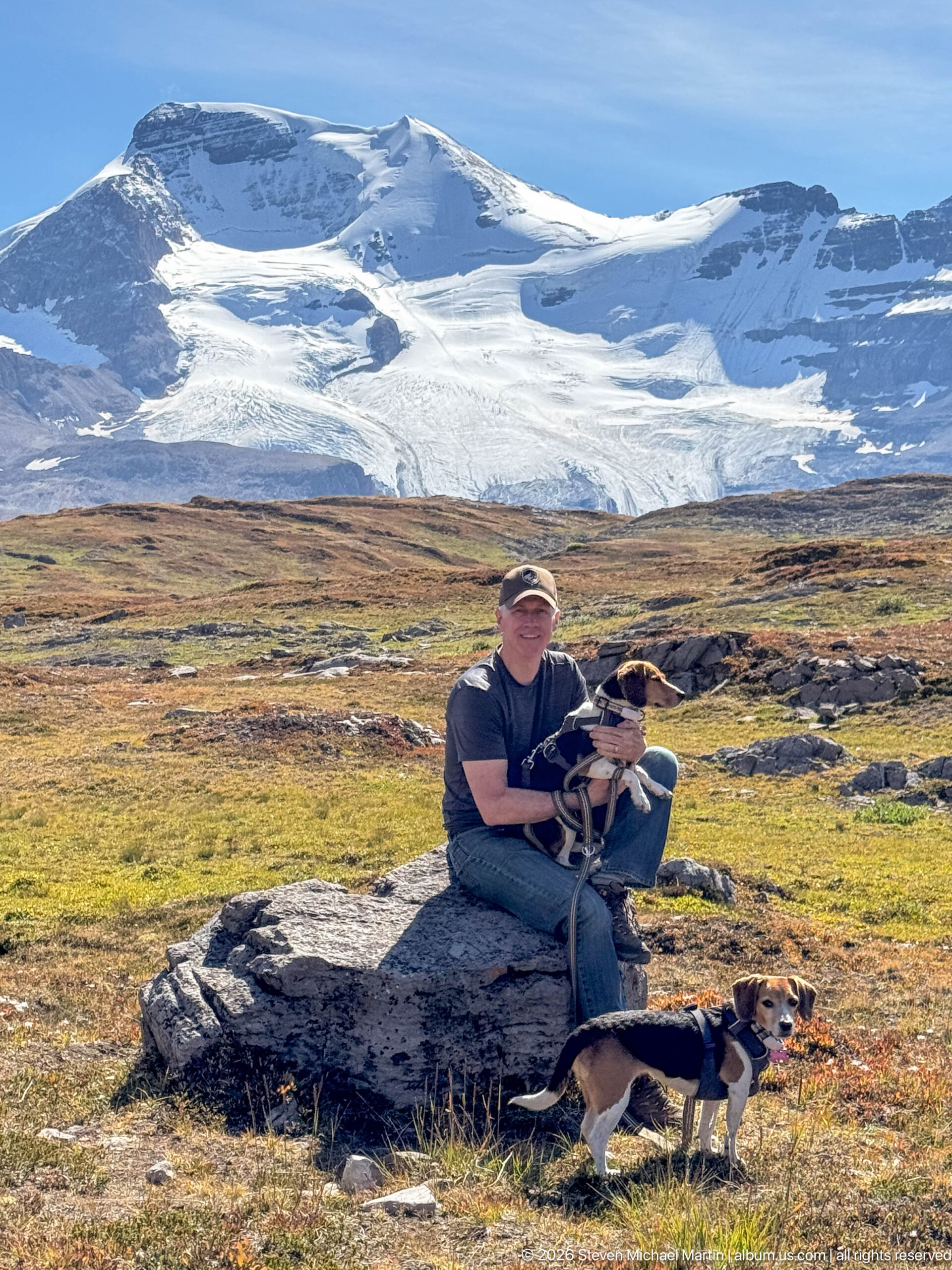
A hiker rests on a low rock with two beagles on the open tundra of Wilcox Pass, while a broad glacier and snowfield span the mountain basin behind. Warm autumn colors across the ground contrast with the blue-white ice, giving the resting scene a strong sense of season and elevation.
Caption
A hiker rests on a low rock with two beagles on the open tundra of Wilcox Pass, while a broad glacier and snowfield span the mountain basin behind. Warm autumn colors across the ground contrast with the blue-white ice, giving the resting scene a strong sense of season and elevation.
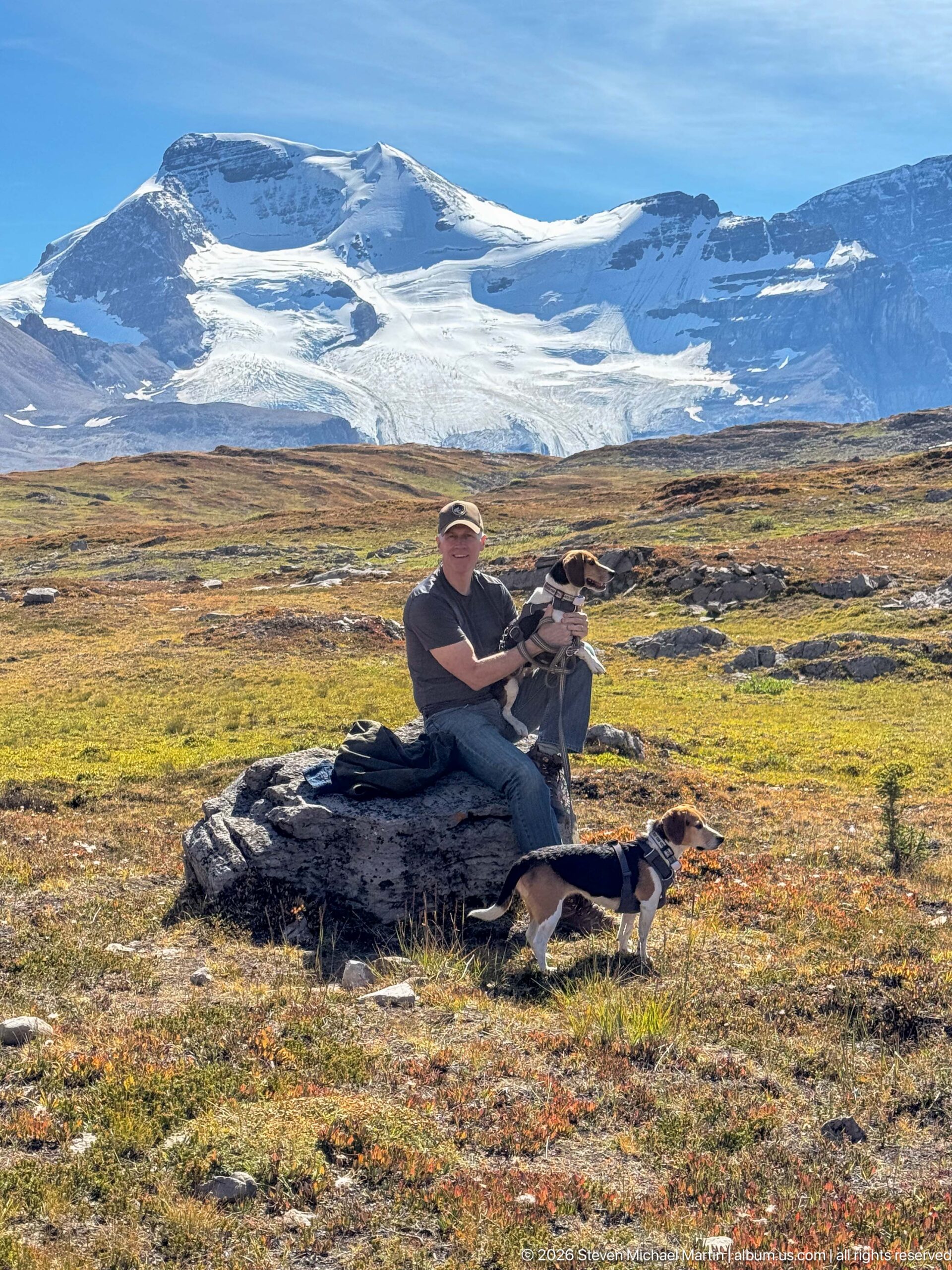
A hiker sits on a dark rock holding one beagle while a second dog stands nearby, surrounded by broad gold-and-russet tundra. Glacier ice spreads across the mountain basin behind them, but the wider composition gives greater emphasis to the open plateau and the small scale of the resting group within it.
Caption
A hiker sits on a dark rock holding one beagle while a second dog stands nearby, surrounded by broad gold-and-russet tundra. Glacier ice spreads across the mountain basin behind them, but the wider composition gives greater emphasis to the open plateau and the small scale of the resting group within it.
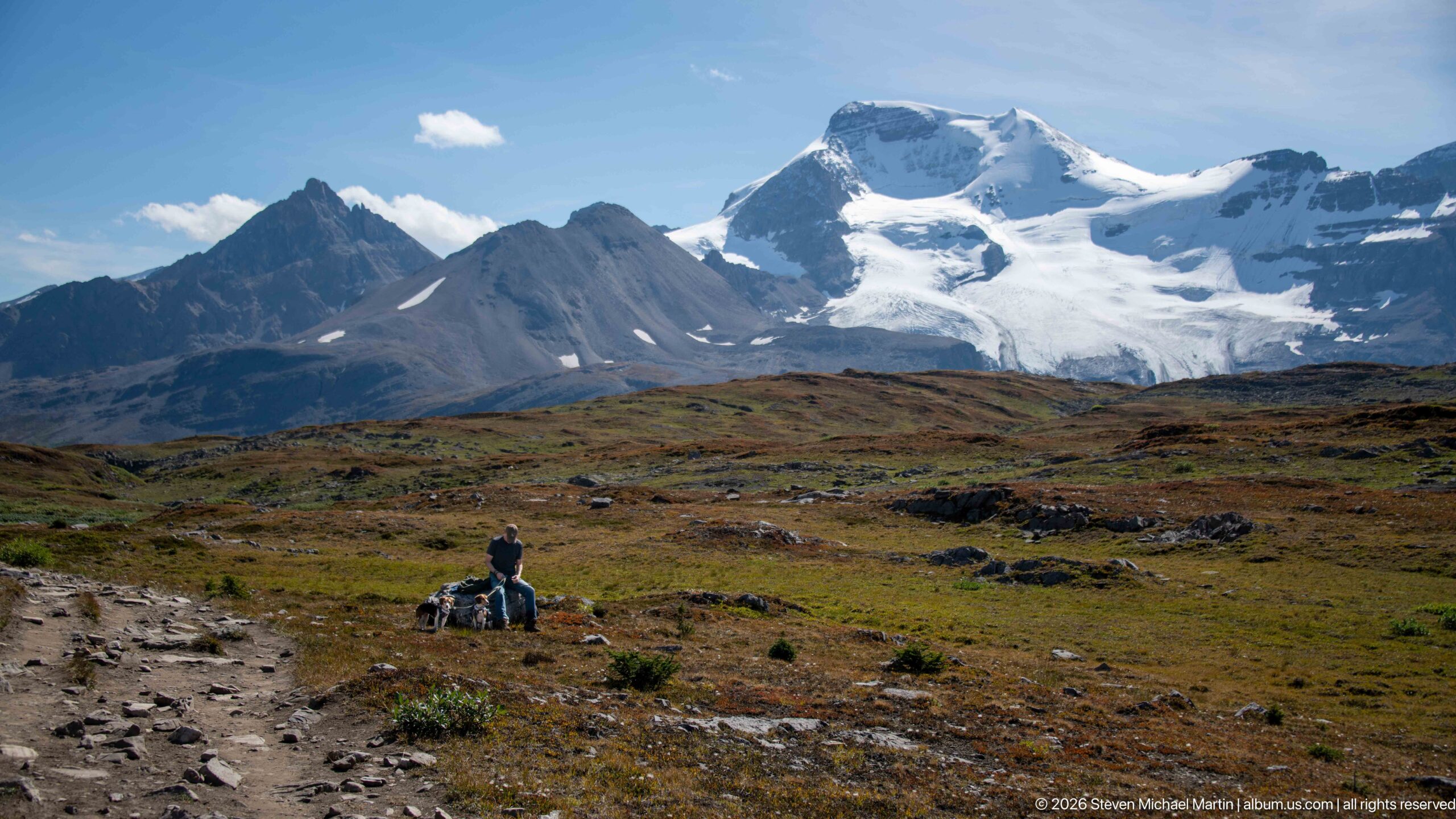
A lone hiker with dogs pauses beside the Wilcox Pass trail in a vast alpine basin framed by dark, angular peaks and a snow-covered massif. The figures are deliberately small in the composition, emphasizing the scale of the open tundra and glaciated Canadian Rockies skyline.
Caption
A lone hiker with dogs pauses beside the Wilcox Pass trail in a vast alpine basin framed by dark, angular peaks and a snow-covered massif. The figures are deliberately small in the composition, emphasizing the scale of the open tundra and glaciated Canadian Rockies skyline.
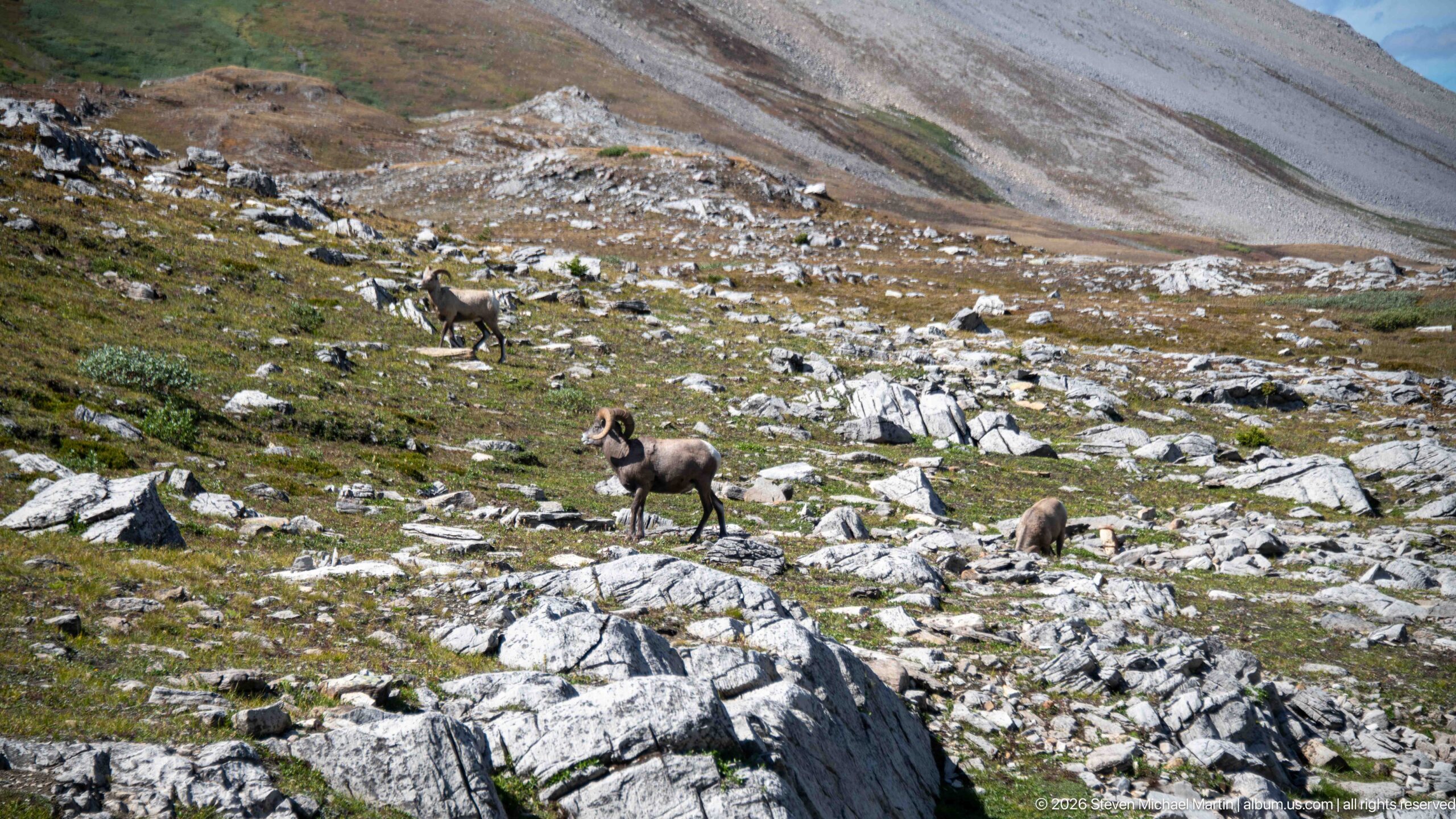
Several bighorn sheep are dispersed across a pale, rock-strewn alpine basin at Wilcox Pass, including a prominent horned adult near the center. Their spacing across the slope reveals the scale of the rugged habitat, where sparse vegetation grows between slabs and loose stone below a barren scree wall.
Caption
Several bighorn sheep are dispersed across a pale, rock-strewn alpine basin at Wilcox Pass, including a prominent horned adult near the center. Their spacing across the slope reveals the scale of the rugged habitat, where sparse vegetation grows between slabs and loose stone below a barren scree wall.
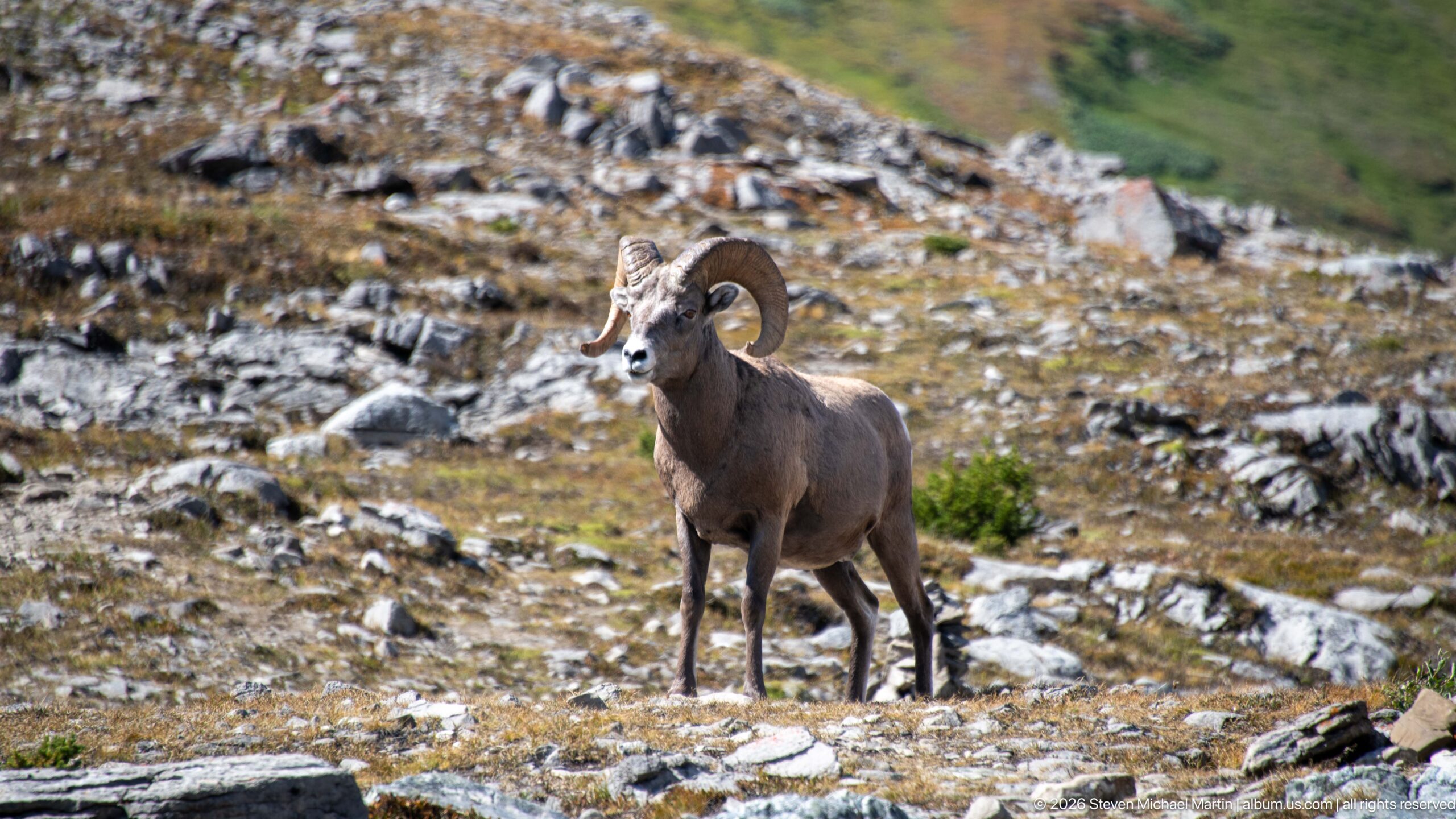
An adult bighorn ram stands in profile on rocky alpine ground at Wilcox Pass, its heavy, tightly curved horns forming the dominant feature of the portrait. Sparse tundra plants and broken pale stone surround the animal, placing it clearly within the exposed high-elevation habitat of Jasper National Park.
Caption
An adult bighorn ram stands in profile on rocky alpine ground at Wilcox Pass, its heavy, tightly curved horns forming the dominant feature of the portrait. Sparse tundra plants and broken pale stone surround the animal, placing it clearly within the exposed high-elevation habitat of Jasper National Park.
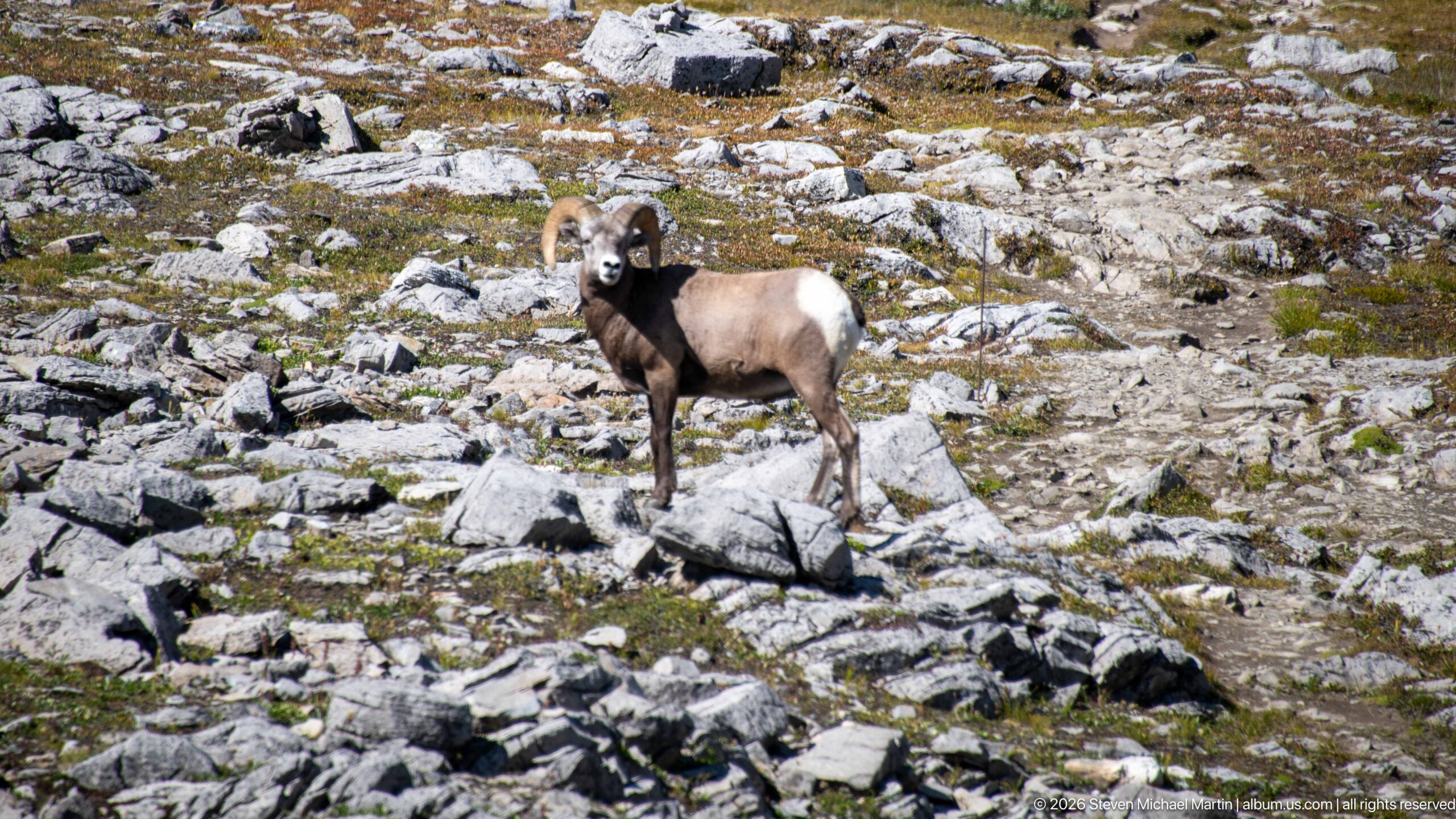
An adult bighorn sheep ram stands among pale limestone rocks and sparse alpine vegetation at Wilcox Pass. Its heavy, tightly curled horns and muscular build are prominent in the side-front view, while the broken rock and low groundcover place the animal in the exposed high-country habitat characteristic of this section of the Canadian Rockies.
Caption
An adult bighorn sheep ram stands among pale limestone rocks and sparse alpine vegetation at Wilcox Pass. Its heavy, tightly curled horns and muscular build are prominent in the side-front view, while the broken rock and low groundcover place the animal in the exposed high-country habitat characteristic of this section of the Canadian Rockies.
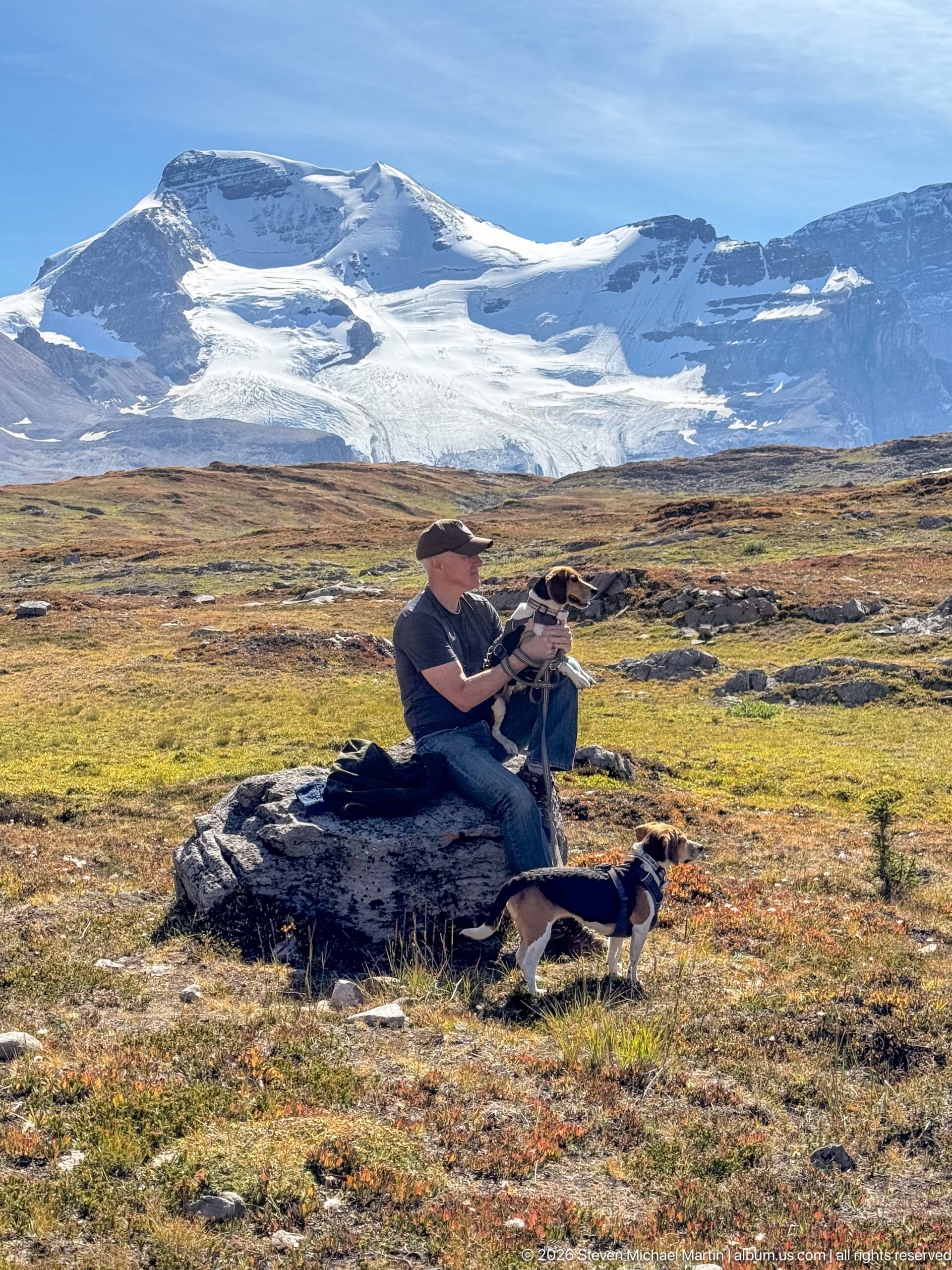
A hiker pauses with two beagles on open alpine tundra at Wilcox Pass, with broad glacier-covered slopes filling the horizon. The low vegetation, exposed rock, and expansive treeless foreground convey the high-elevation setting, while the seated figure and dogs provide scale against the distant ice and mountains.
Caption
A hiker pauses with two beagles on open alpine tundra at Wilcox Pass, with broad glacier-covered slopes filling the horizon. The low vegetation, exposed rock, and expansive treeless foreground convey the high-elevation setting, while the seated figure and dogs provide scale against the distant ice and mountains.
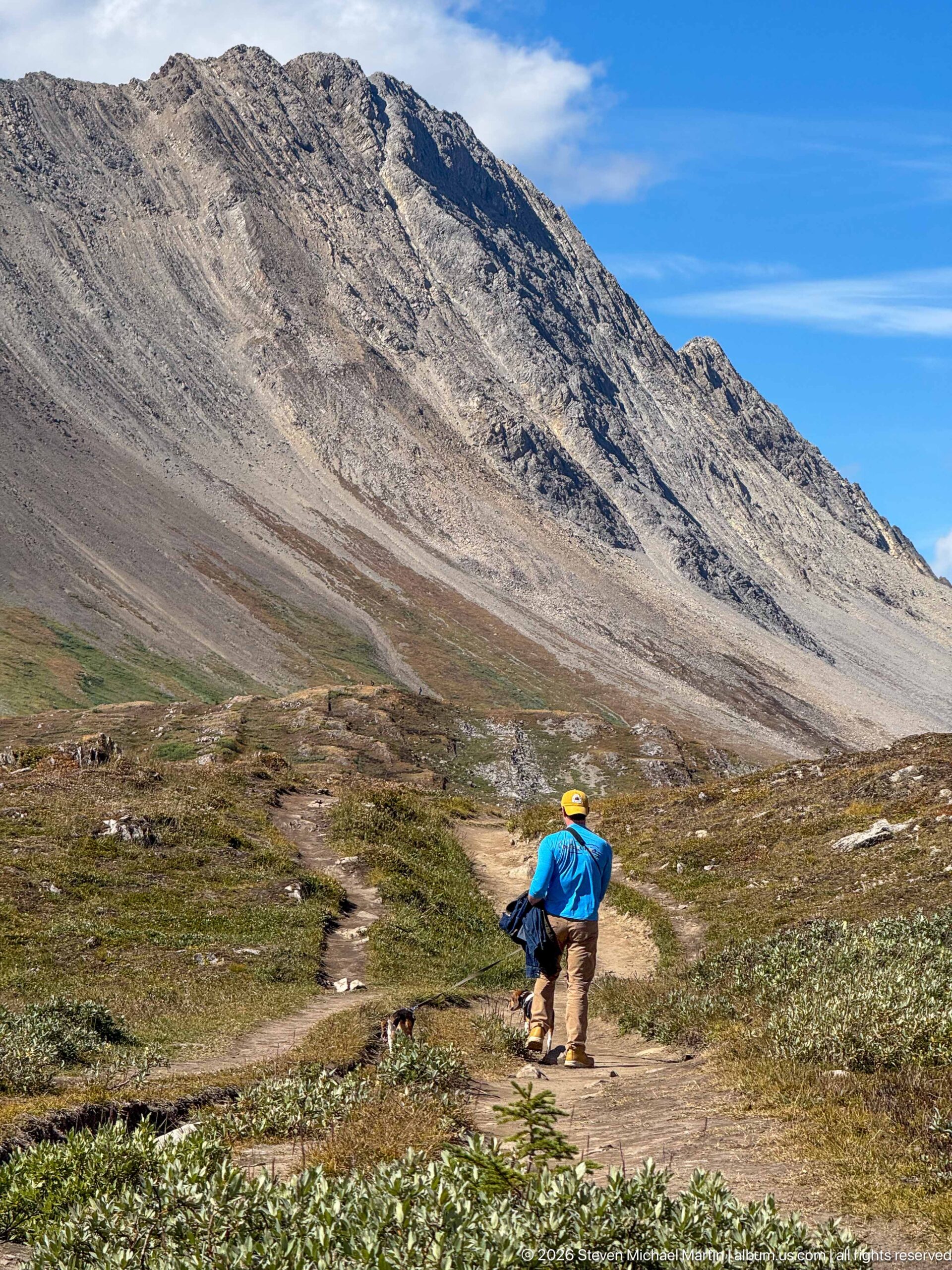
A hiker descends the Wilcox Pass Trail through open tundra beneath a broad gray scree slope. The figure provides scale for the mountain flank, while the winding dirt path, low shrubs, and sparse conifers trace the transition between exposed alpine terrain and the more vegetated trail corridor.
Caption
A hiker descends the Wilcox Pass Trail through open tundra beneath a broad gray scree slope. The figure provides scale for the mountain flank, while the winding dirt path, low shrubs, and sparse conifers trace the transition between exposed alpine terrain and the more vegetated trail corridor.
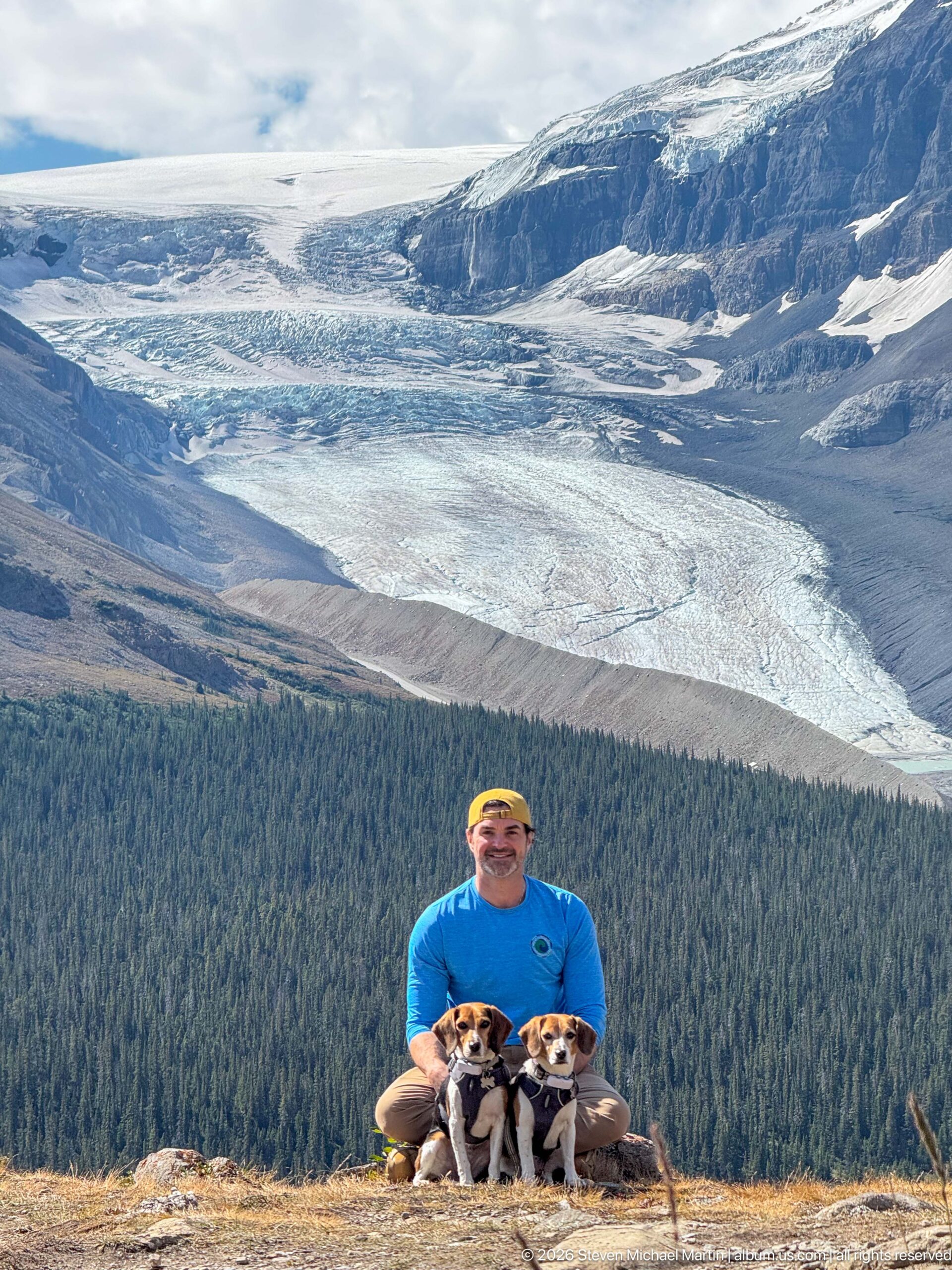
A hiker sits with two beagles at a Wilcox Pass overlook, with the broad tongue of Athabasca Glacier descending across the valley behind them. The close group portrait is set against layered forest, moraine, and ice, combining a personal trail moment with one of the route’s defining glacial views.
Caption
A hiker sits with two beagles at a Wilcox Pass overlook, with the broad tongue of Athabasca Glacier descending across the valley behind them. The close group portrait is set against layered forest, moraine, and ice, combining a personal trail moment with one of the route’s defining glacial views.
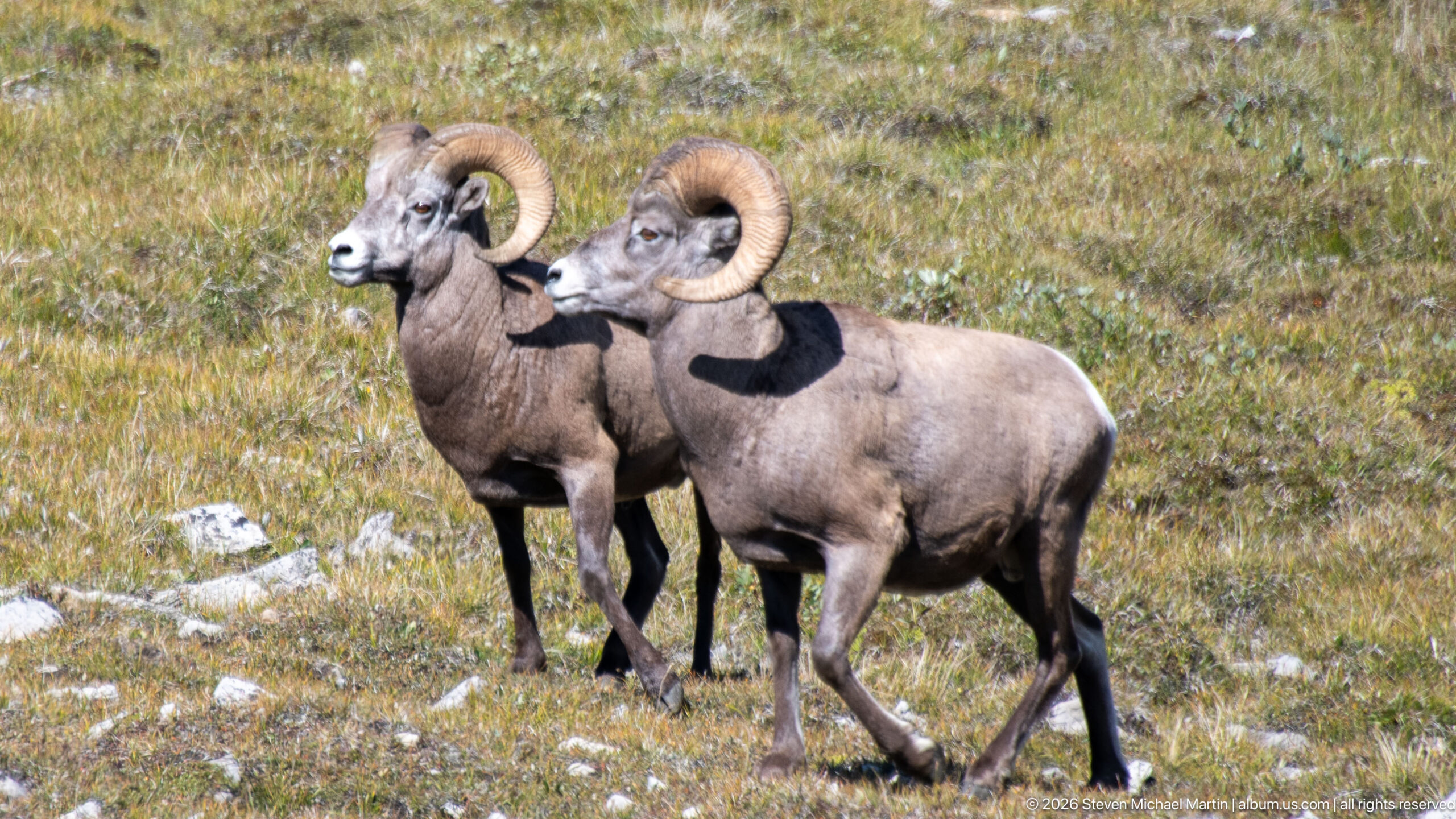
Two adult bighorn sheep rams stand close together on a grassy alpine slope, their massive curled horns forming the dominant shapes in the composition. The paired profile and three-quarter views reveal differences in posture and horn curvature, while scattered stones and short vegetation situate the animals in the open high-elevation terrain of Wilcox Pass.
Caption
Two adult bighorn sheep rams stand close together on a grassy alpine slope, their massive curled horns forming the dominant shapes in the composition. The paired profile and three-quarter views reveal differences in posture and horn curvature, while scattered stones and short vegetation situate the animals in the open high-elevation terrain of Wilcox Pass.
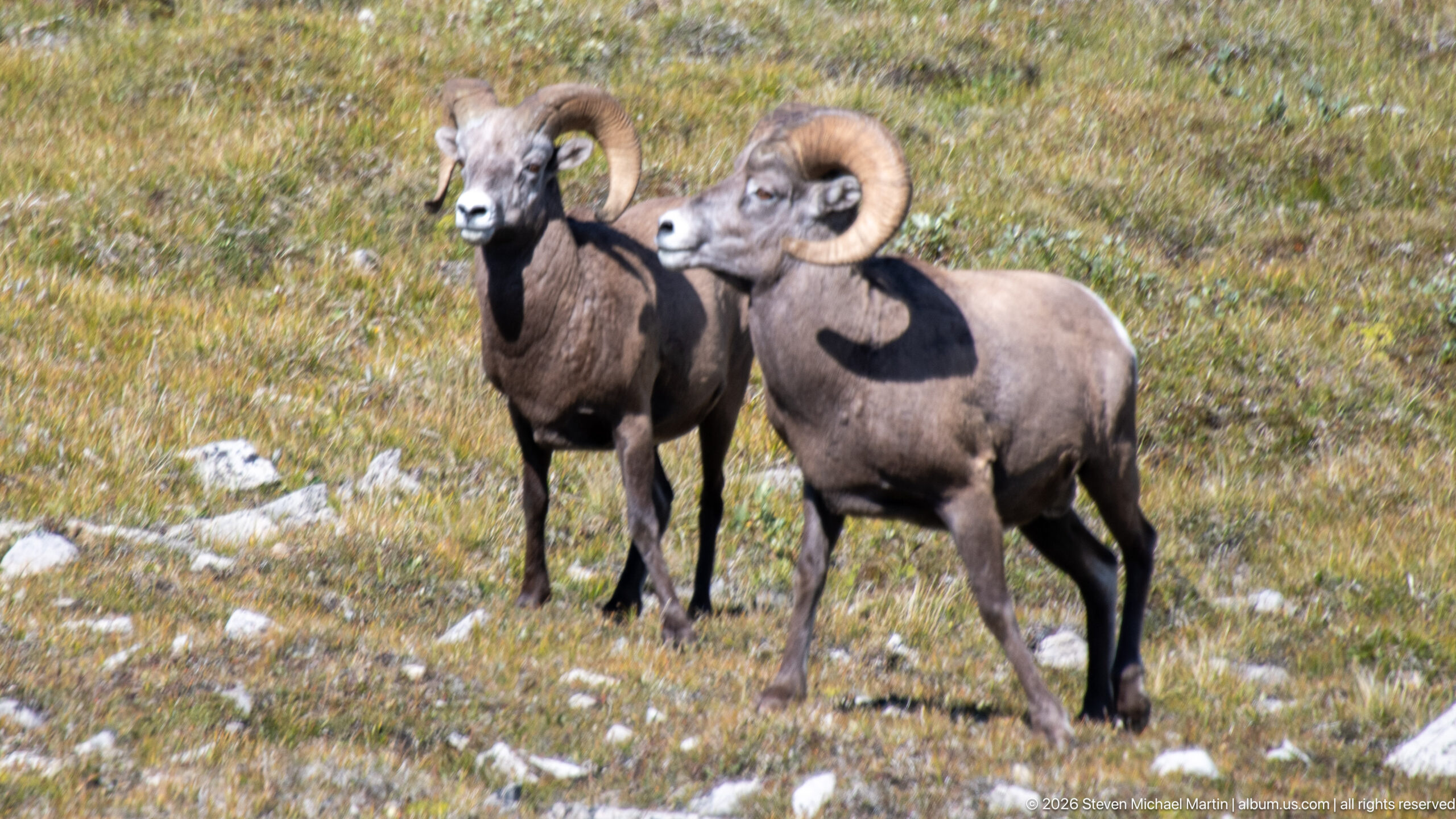
A pair of adult bighorn sheep rams stands alert in open alpine meadow, one facing forward and the other turned in profile. Their dark chests, pale rumps, and substantial curled horns stand out against the muted grasses and scattered stones, producing a close wildlife study of the sheep encountered along Wilcox Pass.
Caption
A pair of adult bighorn sheep rams stands alert in open alpine meadow, one facing forward and the other turned in profile. Their dark chests, pale rumps, and substantial curled horns stand out against the muted grasses and scattered stones, producing a close wildlife study of the sheep encountered along Wilcox Pass.
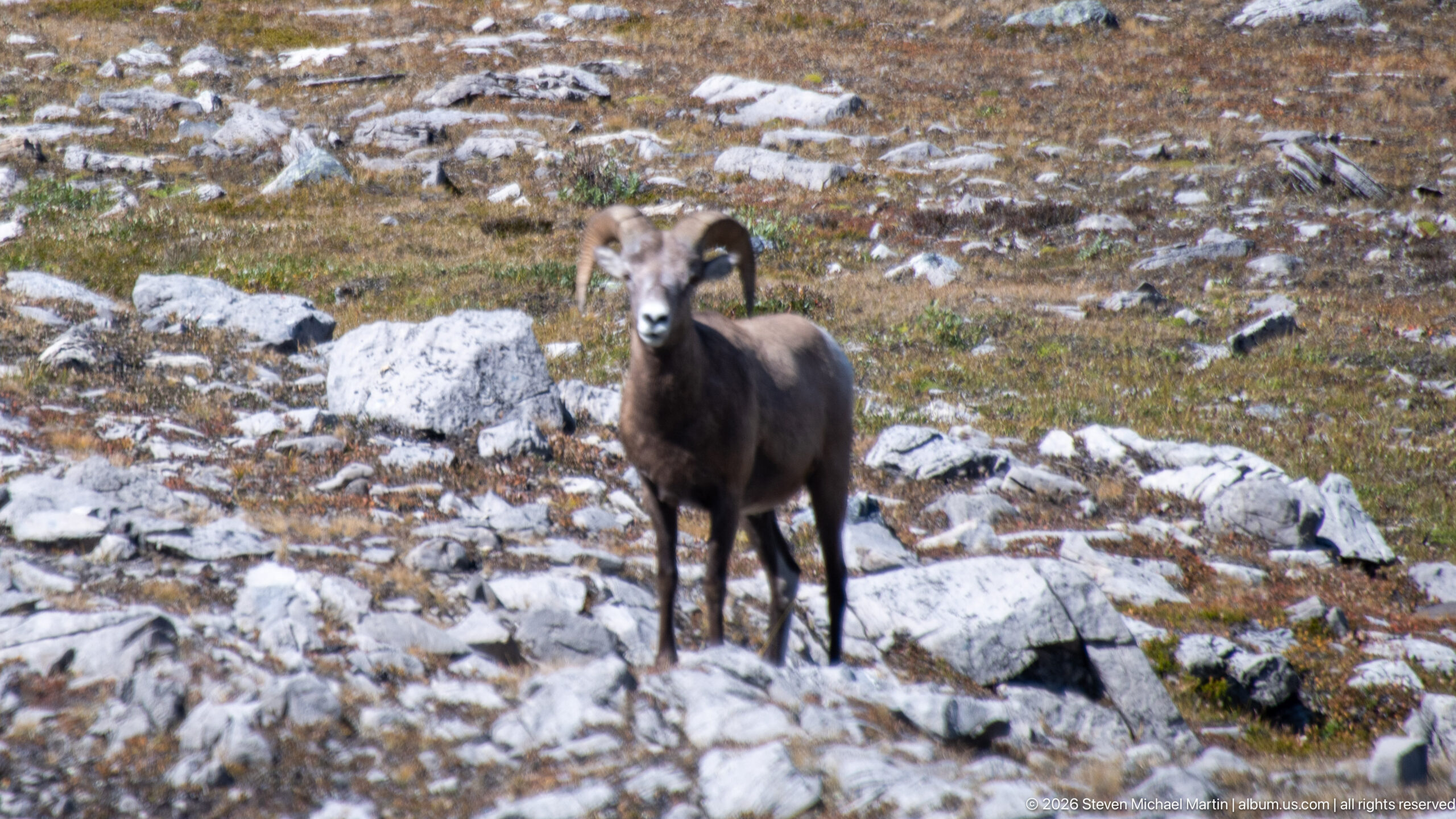
A bighorn sheep ram faces the camera from a patch of broken limestone and low alpine vegetation. The frontal stance compresses the animal’s curled horns into a symmetrical silhouette around its head, contrasting with the angular pale rocks scattered across the slope and creating a direct portrait within the Wilcox Pass landscape.
Caption
A bighorn sheep ram faces the camera from a patch of broken limestone and low alpine vegetation. The frontal stance compresses the animal’s curled horns into a symmetrical silhouette around its head, contrasting with the angular pale rocks scattered across the slope and creating a direct portrait within the Wilcox Pass landscape.
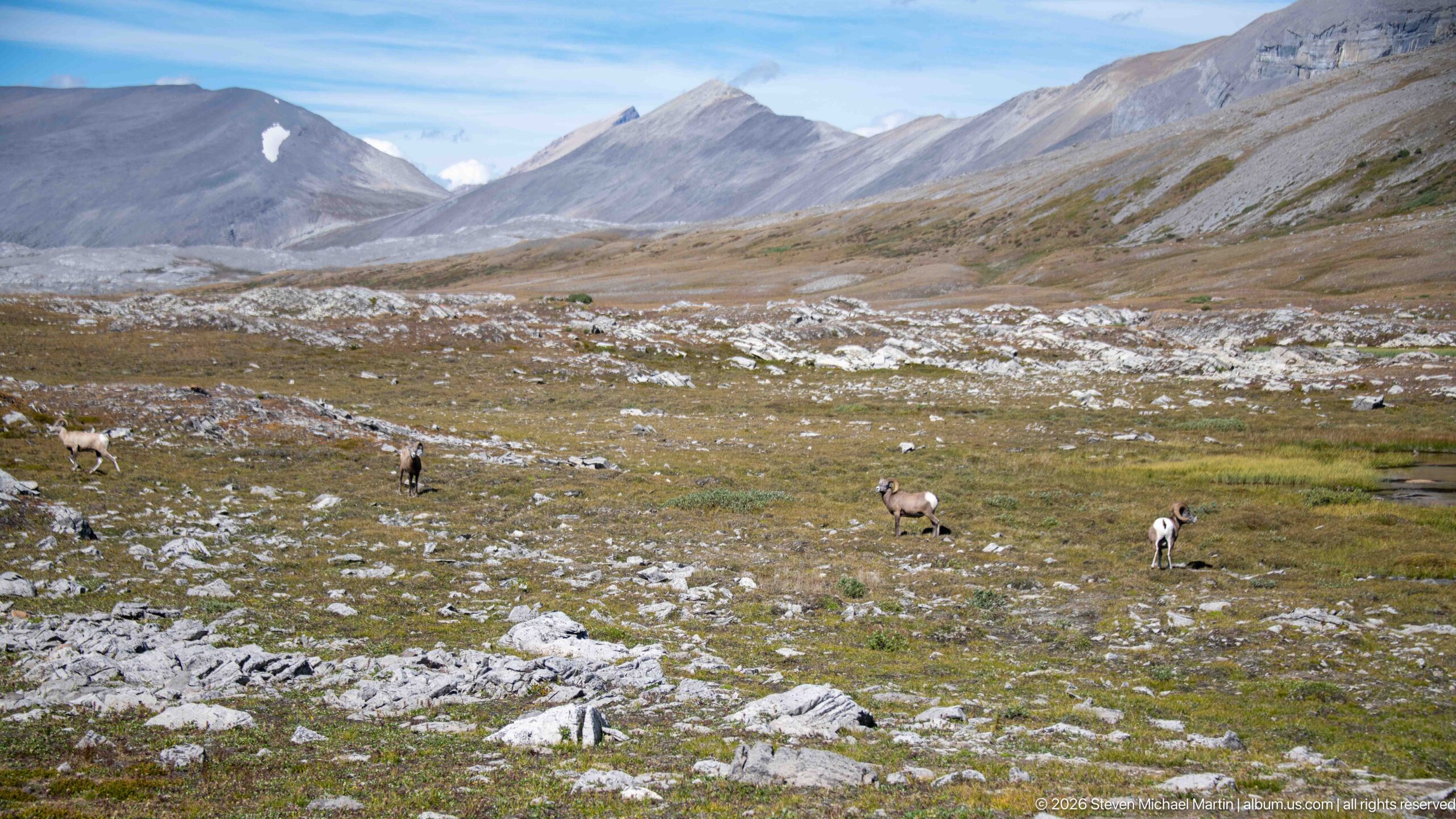
Several bighorn sheep are dispersed across the broad floor of Wilcox Pass, appearing small against an expansive alpine valley of grasses, rock fields, and steep barren slopes. The wide view shifts emphasis from individual animals to habitat, showing how the sheep occupy open high-country terrain beneath the surrounding Canadian Rockies.
Caption
Several bighorn sheep are dispersed across the broad floor of Wilcox Pass, appearing small against an expansive alpine valley of grasses, rock fields, and steep barren slopes. The wide view shifts emphasis from individual animals to habitat, showing how the sheep occupy open high-country terrain beneath the surrounding Canadian Rockies.
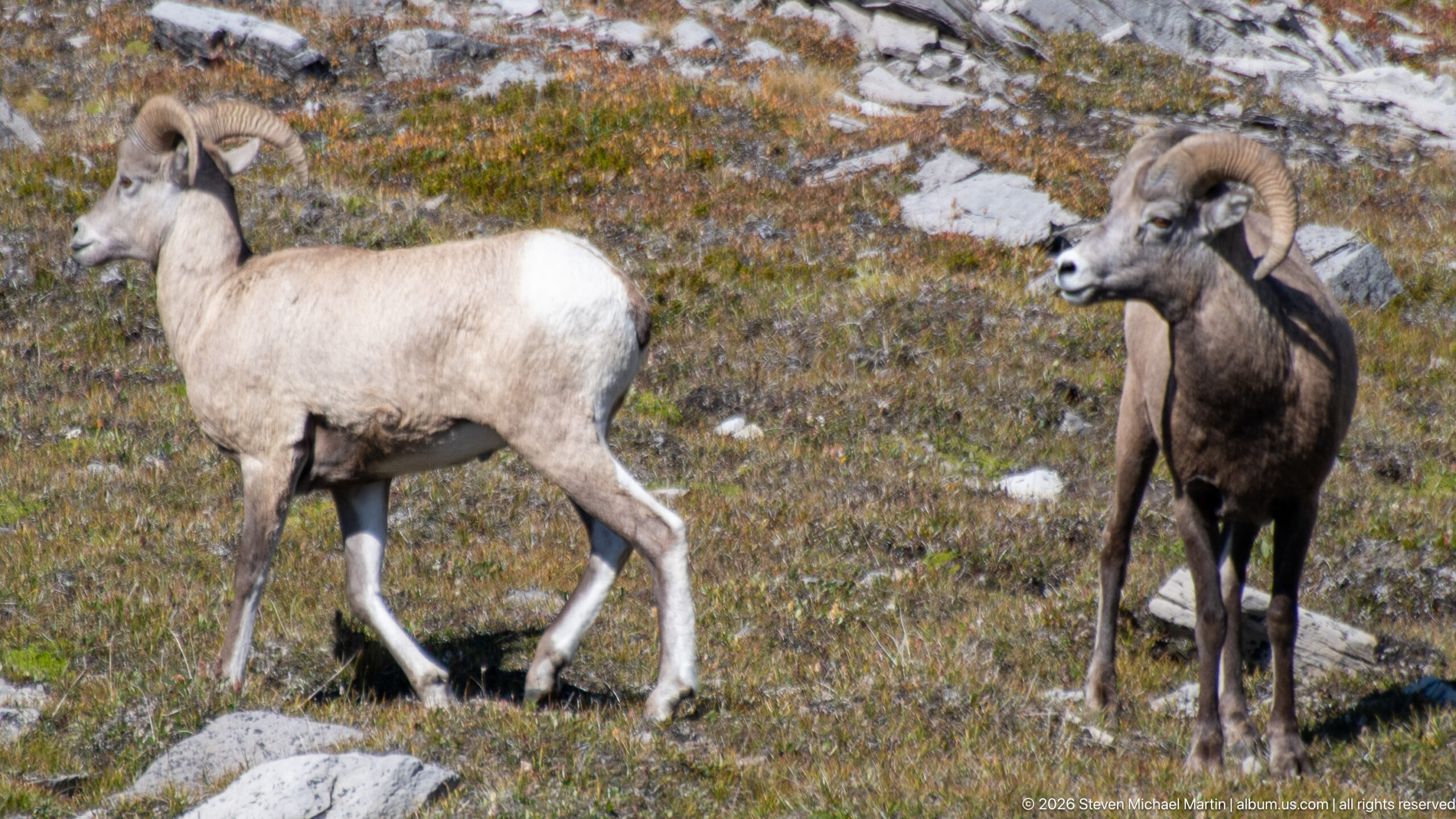
A pale-coated bighorn sheep passes beside an adult ram on open alpine ground at Wilcox Pass. The ram’s heavy curled horns contrast with the companion animal’s slimmer head profile, while short vegetation and scattered stones keep the scene firmly rooted in the exposed high-country habitat.
Caption
A pale-coated bighorn sheep passes beside an adult ram on open alpine ground at Wilcox Pass. The ram’s heavy curled horns contrast with the companion animal’s slimmer head profile, while short vegetation and scattered stones keep the scene firmly rooted in the exposed high-country habitat.
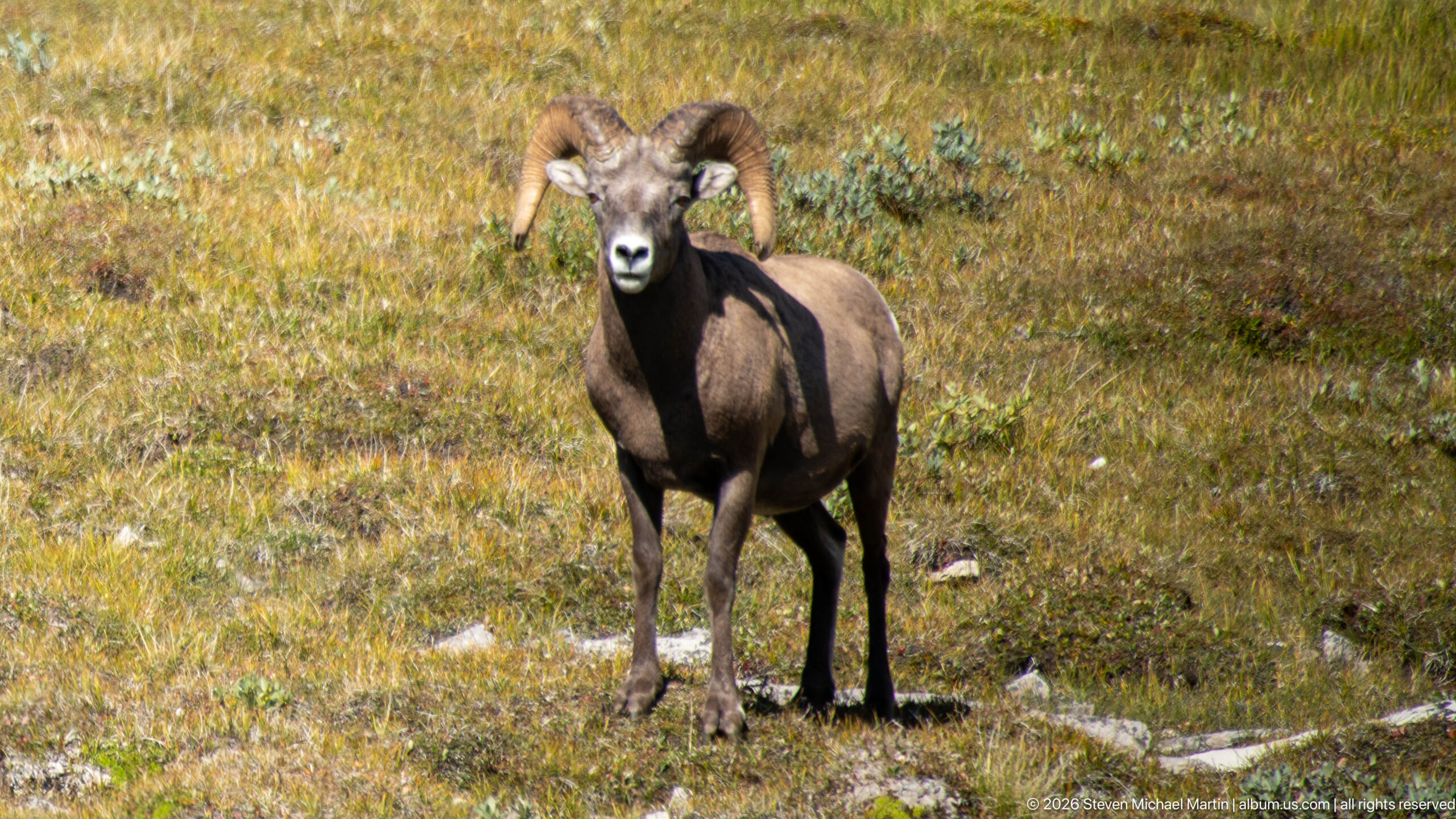
An adult bighorn sheep ram stands nearly square to the camera in sunlit alpine vegetation. Its broad chest and deeply curled horns create a compact frontal portrait, with the gold-green groundcover of Wilcox Pass providing a simple backdrop that isolates the animal’s form and alert gaze.
Caption
An adult bighorn sheep ram stands nearly square to the camera in sunlit alpine vegetation. Its broad chest and deeply curled horns create a compact frontal portrait, with the gold-green groundcover of Wilcox Pass providing a simple backdrop that isolates the animal’s form and alert gaze.
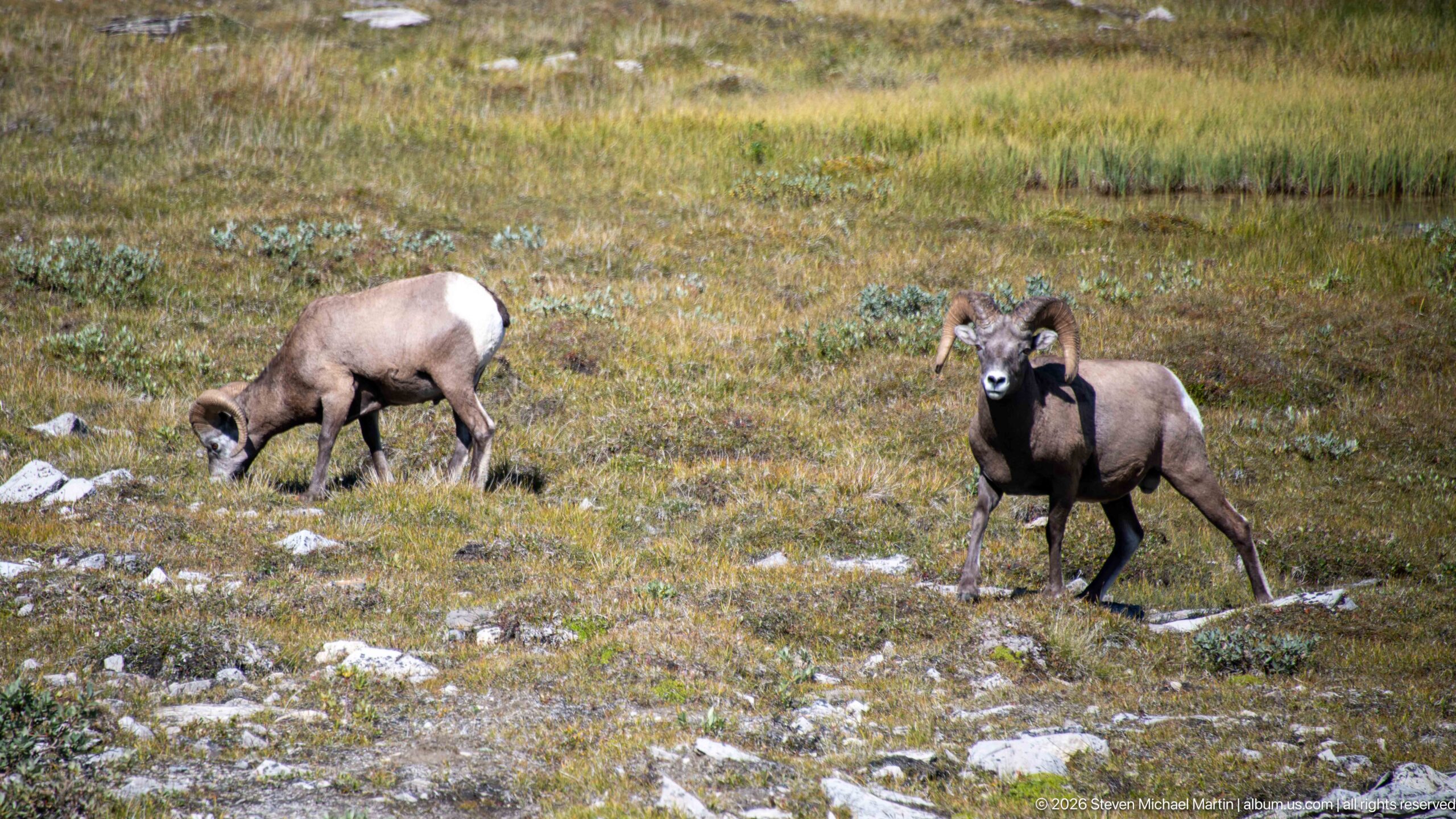
Two bighorn sheep rams occupy a patchwork of grasses and low shrubs, one feeding with its head down while the other stands alert toward the camera. Their contrasting behavior gives the frame a naturalistic quality, documenting both foraging and vigilance in the open alpine habitat of Wilcox Pass.
Caption
Two bighorn sheep rams occupy a patchwork of grasses and low shrubs, one feeding with its head down while the other stands alert toward the camera. Their contrasting behavior gives the frame a naturalistic quality, documenting both foraging and vigilance in the open alpine habitat of Wilcox Pass.
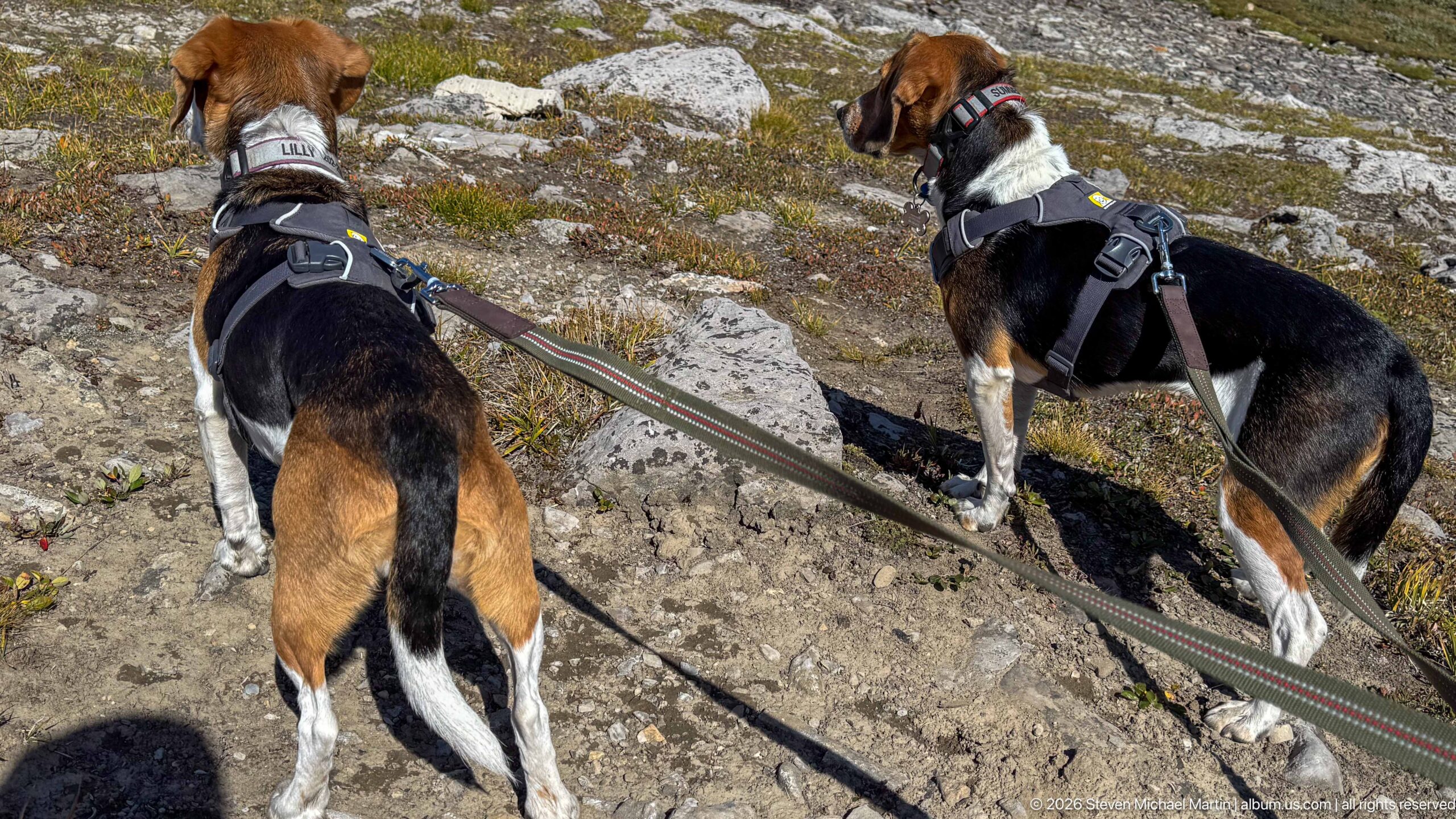
Two leashed beagles stand alert on the rocky Wilcox Pass trail, both oriented toward something beyond the frame. Their harnesses and taut leads emphasize controlled hiking in wildlife country, while the bare soil, stones, and low alpine vegetation show the exposed trail environment where hikers and animals share the landscape.
Caption
Two leashed beagles stand alert on the rocky Wilcox Pass trail, both oriented toward something beyond the frame. Their harnesses and taut leads emphasize controlled hiking in wildlife country, while the bare soil, stones, and low alpine vegetation show the exposed trail environment where hikers and animals share the landscape.
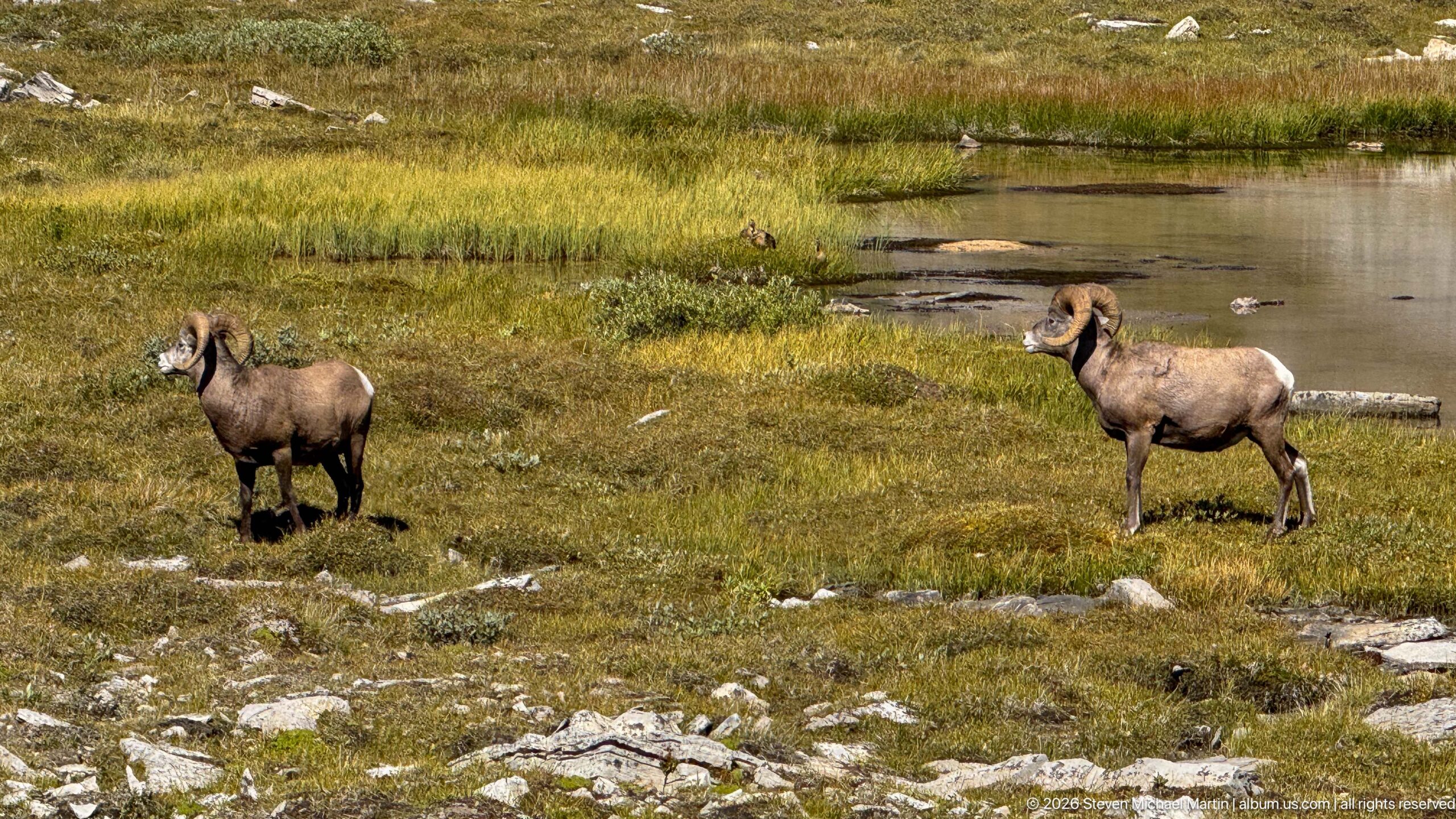
Two bighorn sheep rams stand apart beside a shallow alpine pond edged with sedges and grasses. Their curled horns and sturdy profiles remain distinct even in the wider composition, while the water and wet meadow introduce a softer habitat element within the otherwise rocky high-country landscape of Wilcox Pass.
Caption
Two bighorn sheep rams stand apart beside a shallow alpine pond edged with sedges and grasses. Their curled horns and sturdy profiles remain distinct even in the wider composition, while the water and wet meadow introduce a softer habitat element within the otherwise rocky high-country landscape of Wilcox Pass.
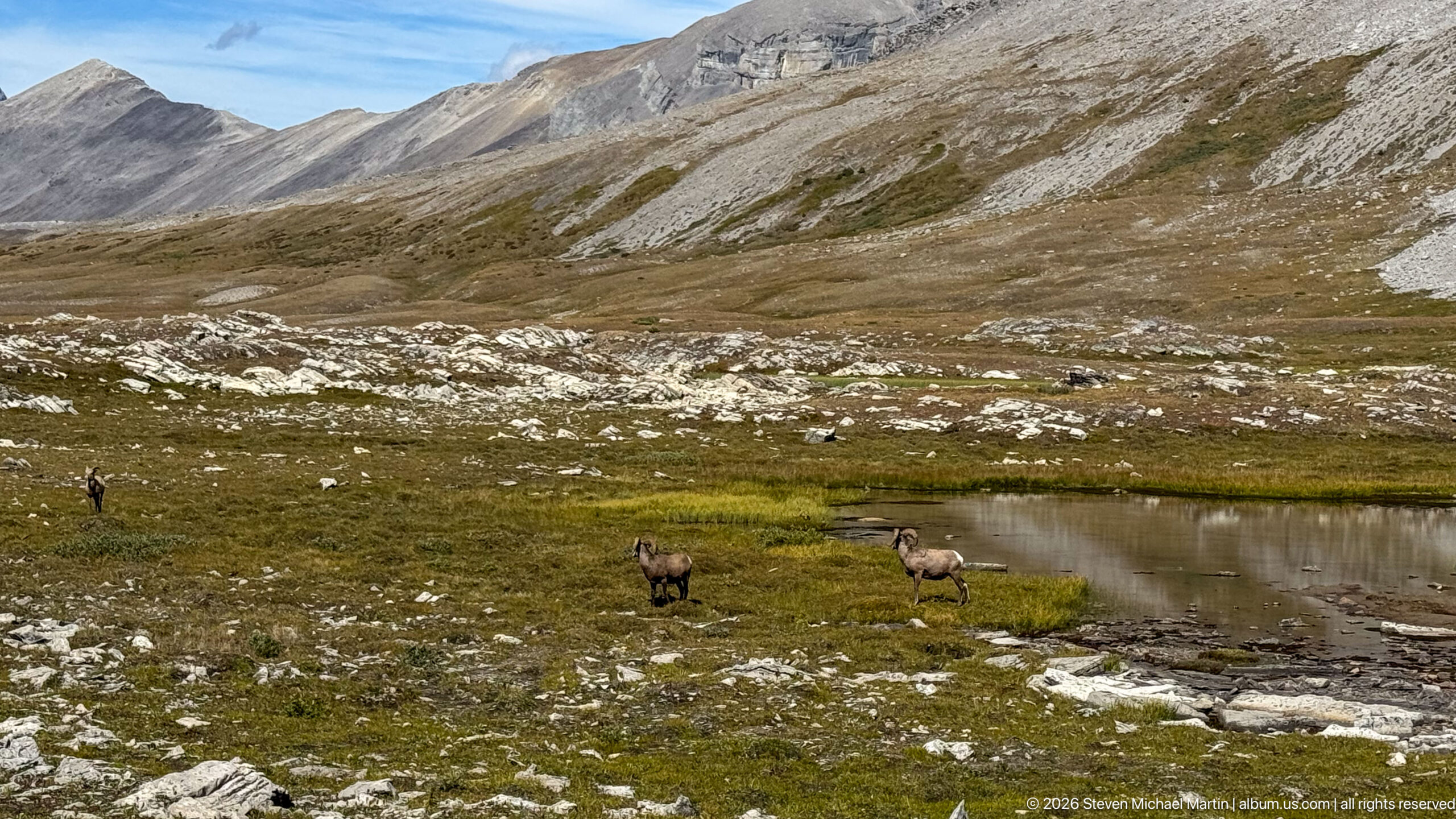
Bighorn sheep rams graze and stand beside a small pond on the broad floor of Wilcox Pass. The animals occupy only a small part of the wide frame, allowing the wet meadow, pale rock bands, and steep mountain slope to dominate and presenting the sheep as part of a larger alpine ecosystem rather than isolated portraits.
Caption
Bighorn sheep rams graze and stand beside a small pond on the broad floor of Wilcox Pass. The animals occupy only a small part of the wide frame, allowing the wet meadow, pale rock bands, and steep mountain slope to dominate and presenting the sheep as part of a larger alpine ecosystem rather than isolated portraits.
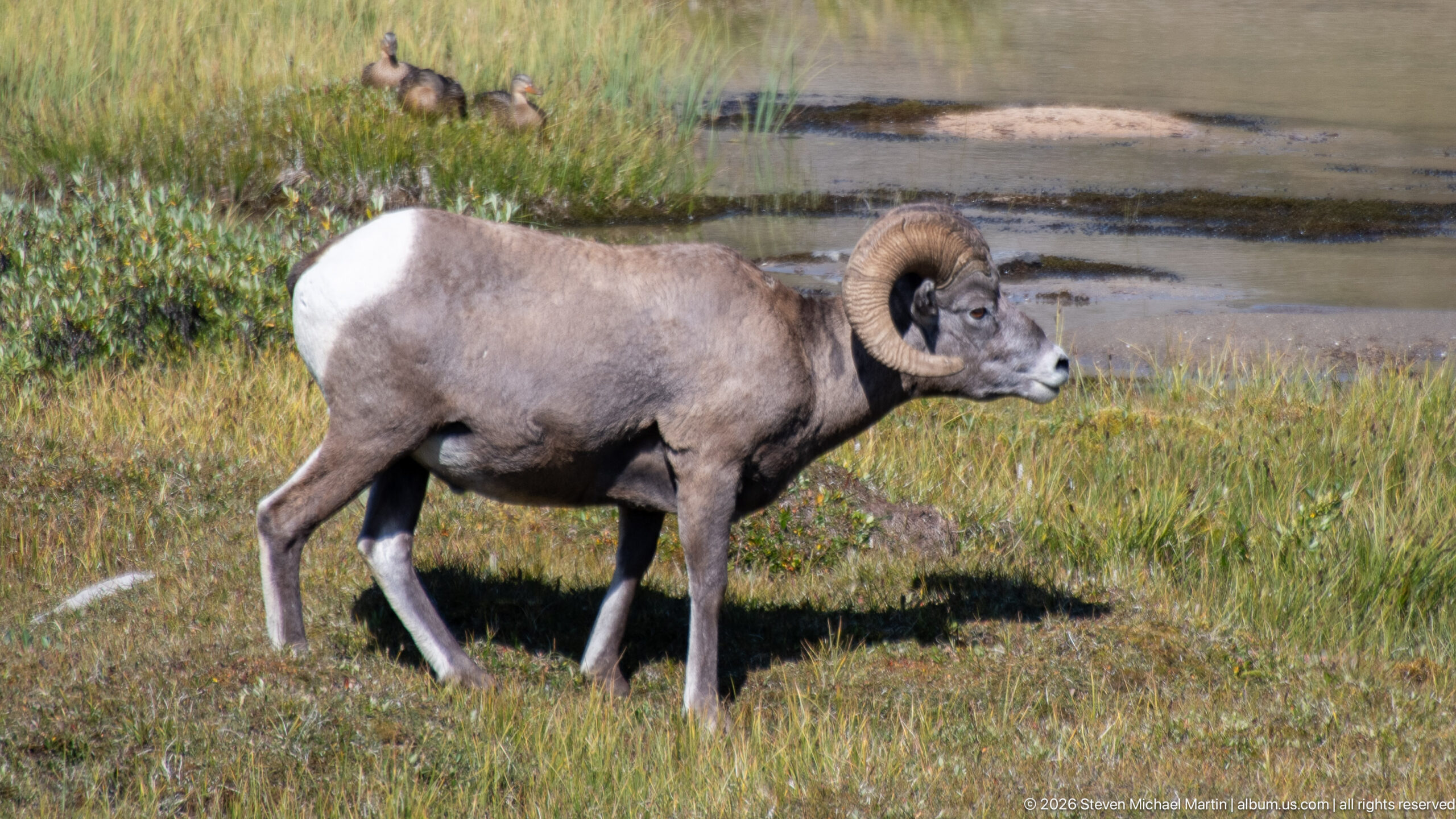
An adult bighorn sheep ram walks across short vegetation beside a shallow alpine wetland. Seen in strong profile, the animal’s muscular body, pale rump patch, and full horn curl are sharply defined, while water and sedges behind it add habitat context to this close wildlife view from Wilcox Pass.
Caption
An adult bighorn sheep ram walks across short vegetation beside a shallow alpine wetland. Seen in strong profile, the animal’s muscular body, pale rump patch, and full horn curl are sharply defined, while water and sedges behind it add habitat context to this close wildlife view from Wilcox Pass.
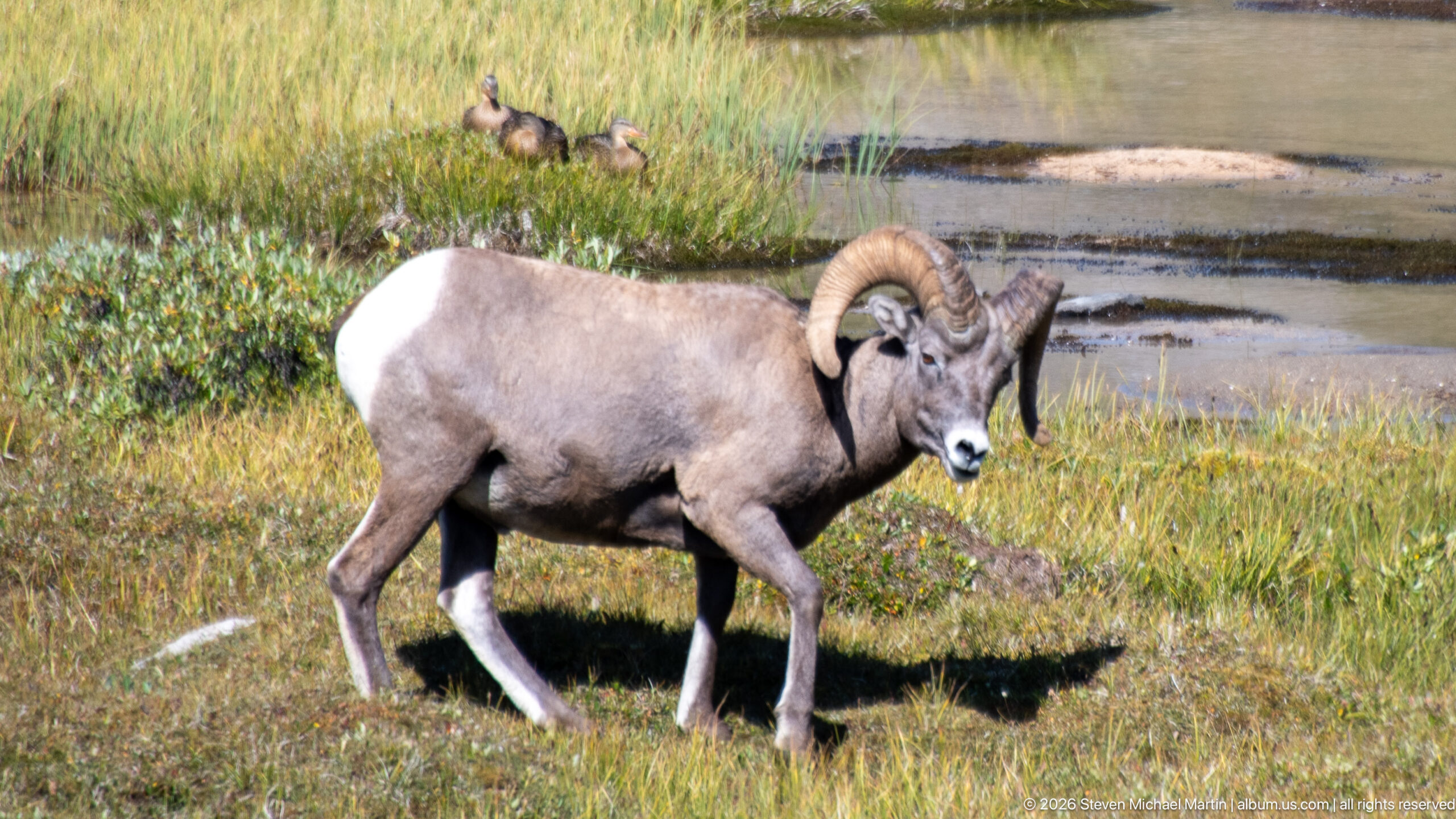
A bighorn sheep ram moves through sunlit grasses near a small alpine pond, turning its head slightly toward the camera as it walks. The full curl of the horns, pale rump, and strong shoulder line are prominent, with marshy vegetation and water forming a layered background characteristic of the Wilcox Pass plateau.
Caption
A bighorn sheep ram moves through sunlit grasses near a small alpine pond, turning its head slightly toward the camera as it walks. The full curl of the horns, pale rump, and strong shoulder line are prominent, with marshy vegetation and water forming a layered background characteristic of the Wilcox Pass plateau.
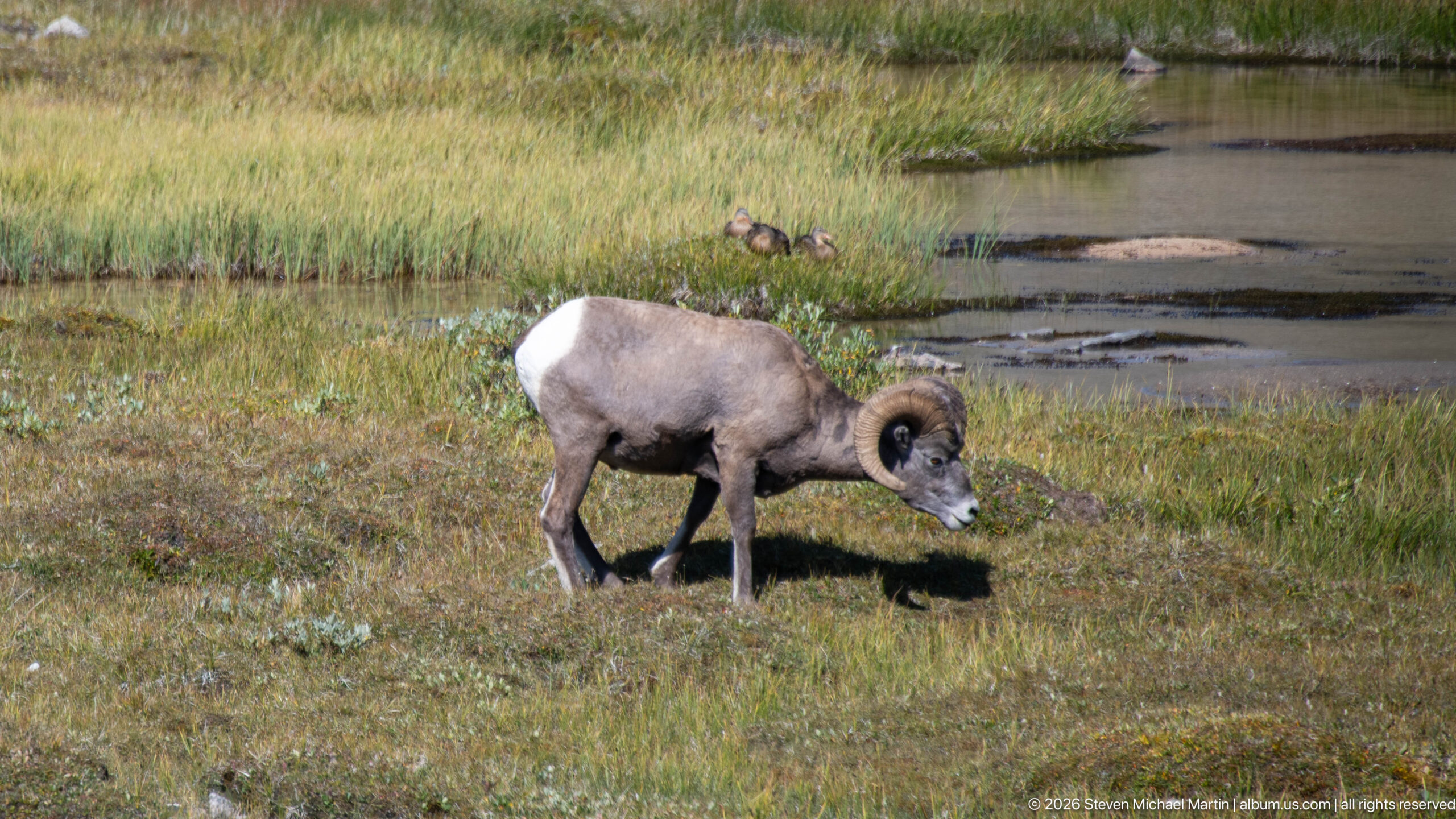
A bighorn sheep ram lowers its head to feed at the edge of an alpine wetland, its curled horns framing the downward posture. The surrounding sedges, low shrubs, and shallow water broaden the record beyond portraiture, showing the animal actively foraging in the high-elevation environment of Wilcox Pass.
Caption
A bighorn sheep ram lowers its head to feed at the edge of an alpine wetland, its curled horns framing the downward posture. The surrounding sedges, low shrubs, and shallow water broaden the record beyond portraiture, showing the animal actively foraging in the high-elevation environment of Wilcox Pass.
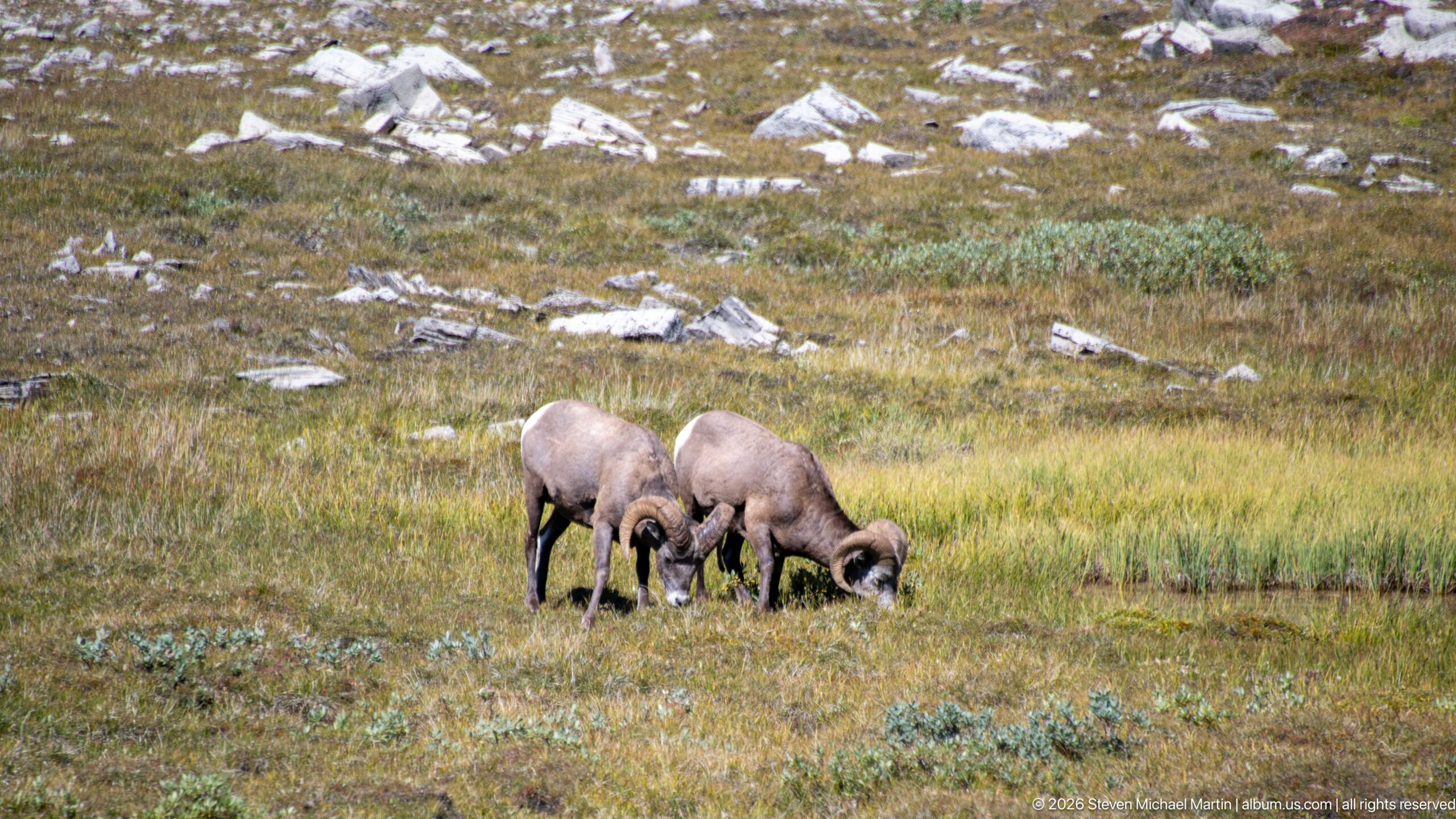
Two bighorn sheep rams graze side by side in low alpine vegetation, their heads lowered and horns nearly aligned as they feed. The elevated viewpoint reveals the textured meadow around them—grasses, shrubs, and scattered pale stones—creating a behavioral study of paired foraging on Wilcox Pass.
Caption
Two bighorn sheep rams graze side by side in low alpine vegetation, their heads lowered and horns nearly aligned as they feed. The elevated viewpoint reveals the textured meadow around them—grasses, shrubs, and scattered pale stones—creating a behavioral study of paired foraging on Wilcox Pass.
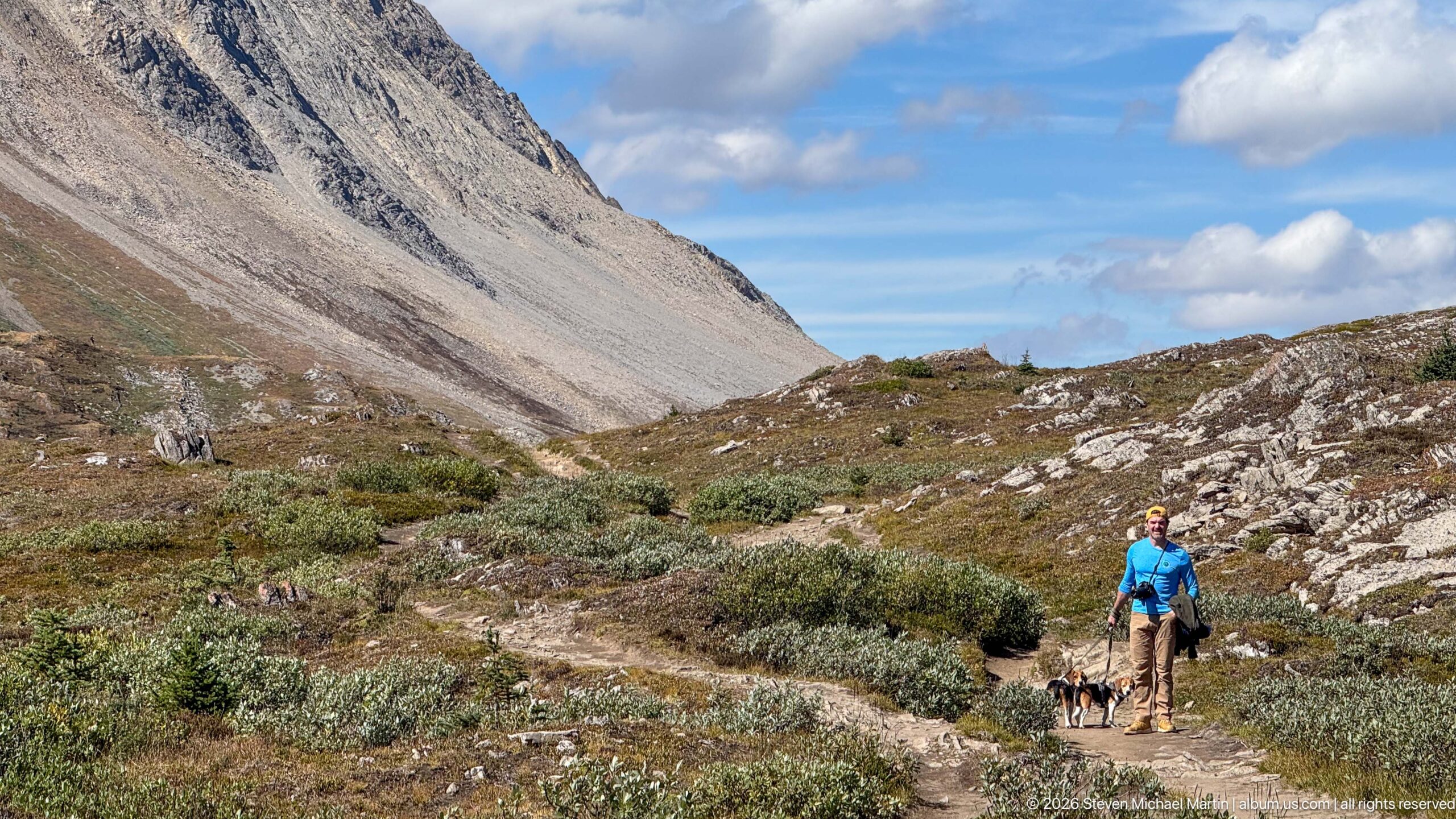
A hiker walks with two beagles along the Wilcox Pass Trail as it threads between low alpine shrubs and a steep scree-covered slope. The human-and-dog group is small within the frame, emphasizing the scale of the open mountain terrain and the winding path through the pass.
Caption
A hiker walks with two beagles along the Wilcox Pass Trail as it threads between low alpine shrubs and a steep scree-covered slope. The human-and-dog group is small within the frame, emphasizing the scale of the open mountain terrain and the winding path through the pass.
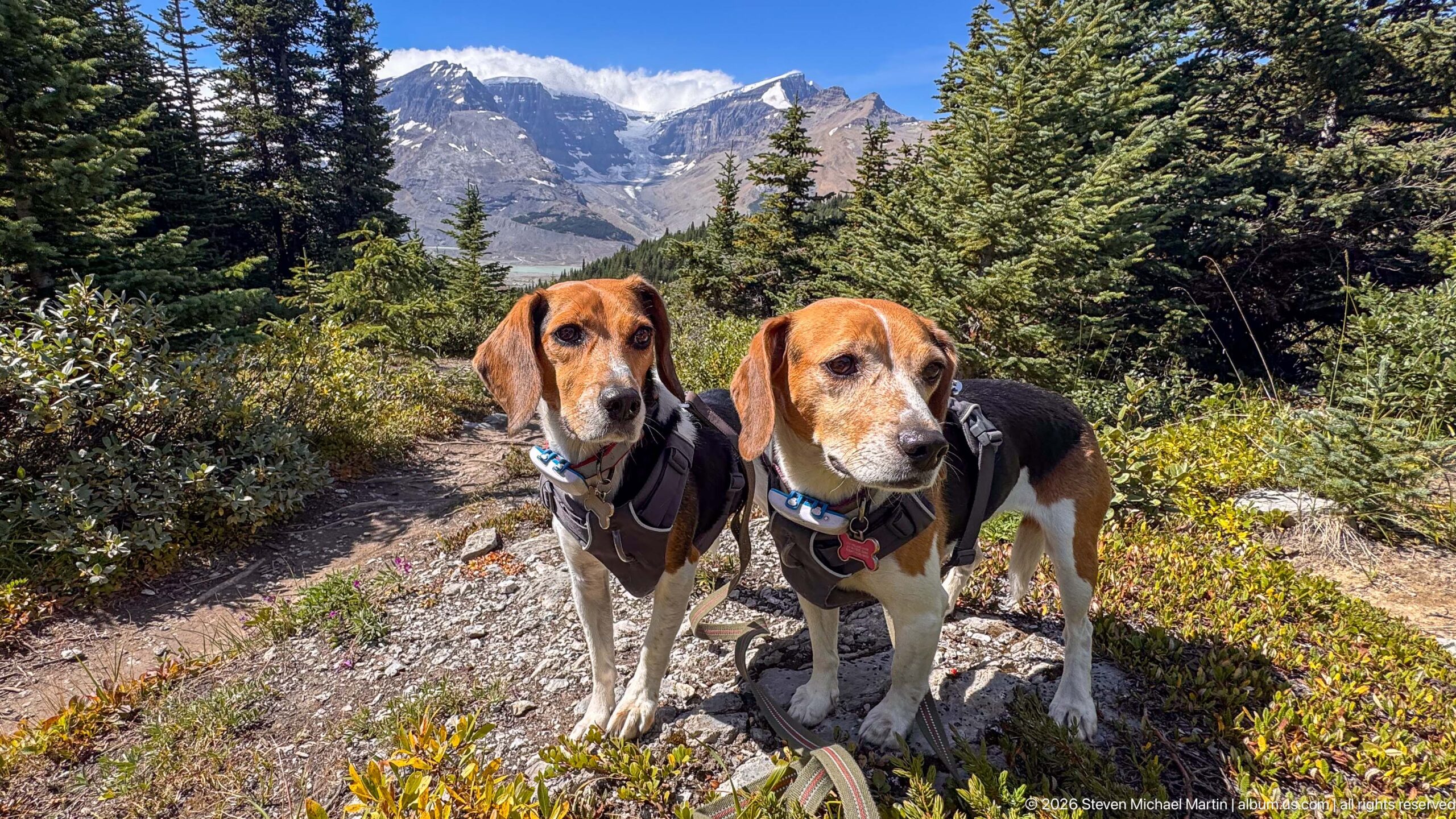
Two harnessed beagles pause together on the Wilcox Pass Trail, filling the foreground while conifers and rugged mountain slopes rise behind them. The close viewpoint turns the hiking companions into the primary subject, with the distant high-country scenery providing clear geographic and recreational context.
Caption
Two harnessed beagles pause together on the Wilcox Pass Trail, filling the foreground while conifers and rugged mountain slopes rise behind them. The close viewpoint turns the hiking companions into the primary subject, with the distant high-country scenery providing clear geographic and recreational context.
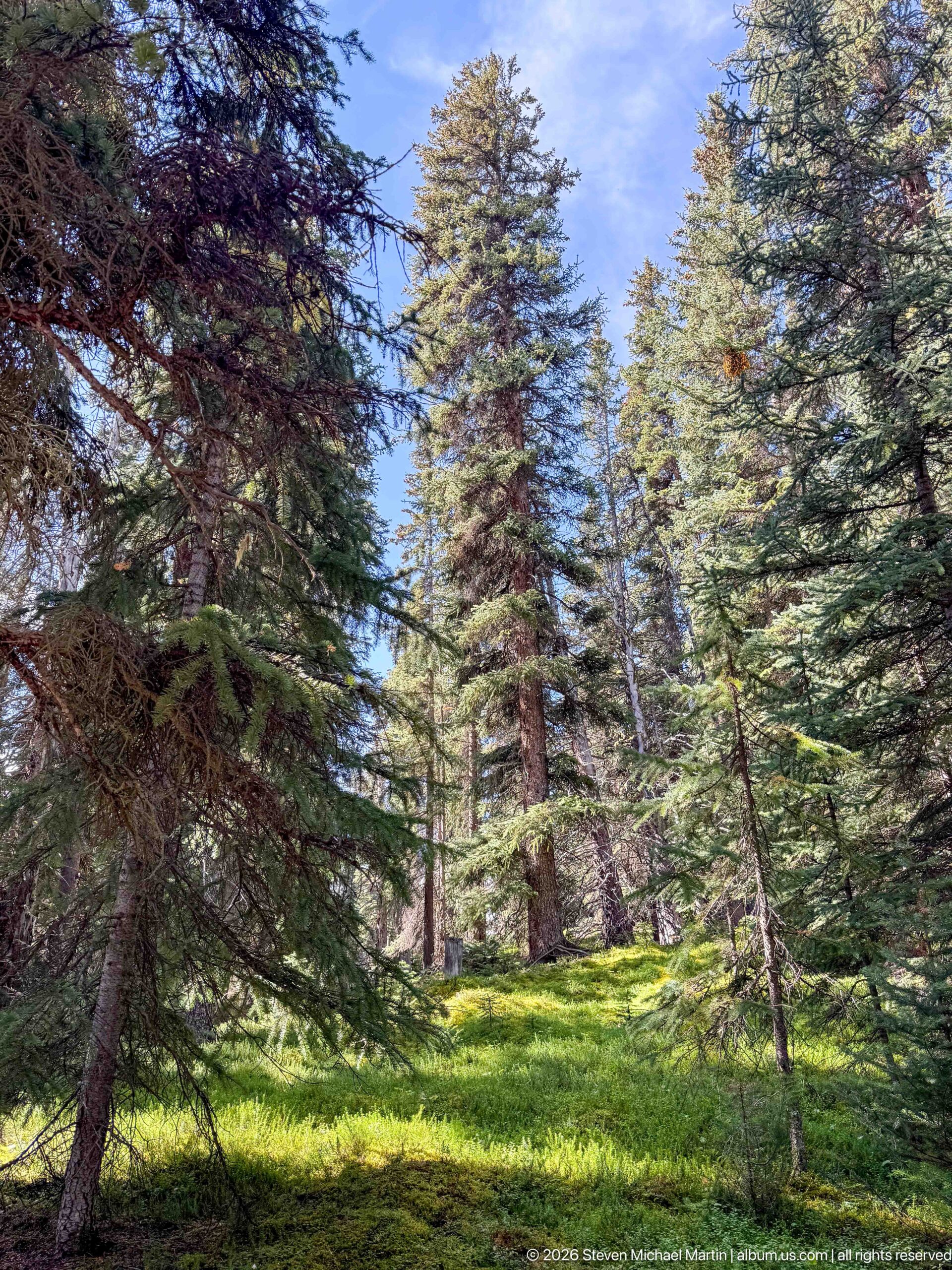
Tall conifers rise from a sunlit carpet of green groundcover along the lower Wilcox Pass Trail. The enclosed woodland contrasts with the exposed tundra higher on the route, showing the trail’s transition through subalpine forest before it reaches open slopes and broad mountain views.
Caption
Tall conifers rise from a sunlit carpet of green groundcover along the lower Wilcox Pass Trail. The enclosed woodland contrasts with the exposed tundra higher on the route, showing the trail’s transition through subalpine forest before it reaches open slopes and broad mountain views.
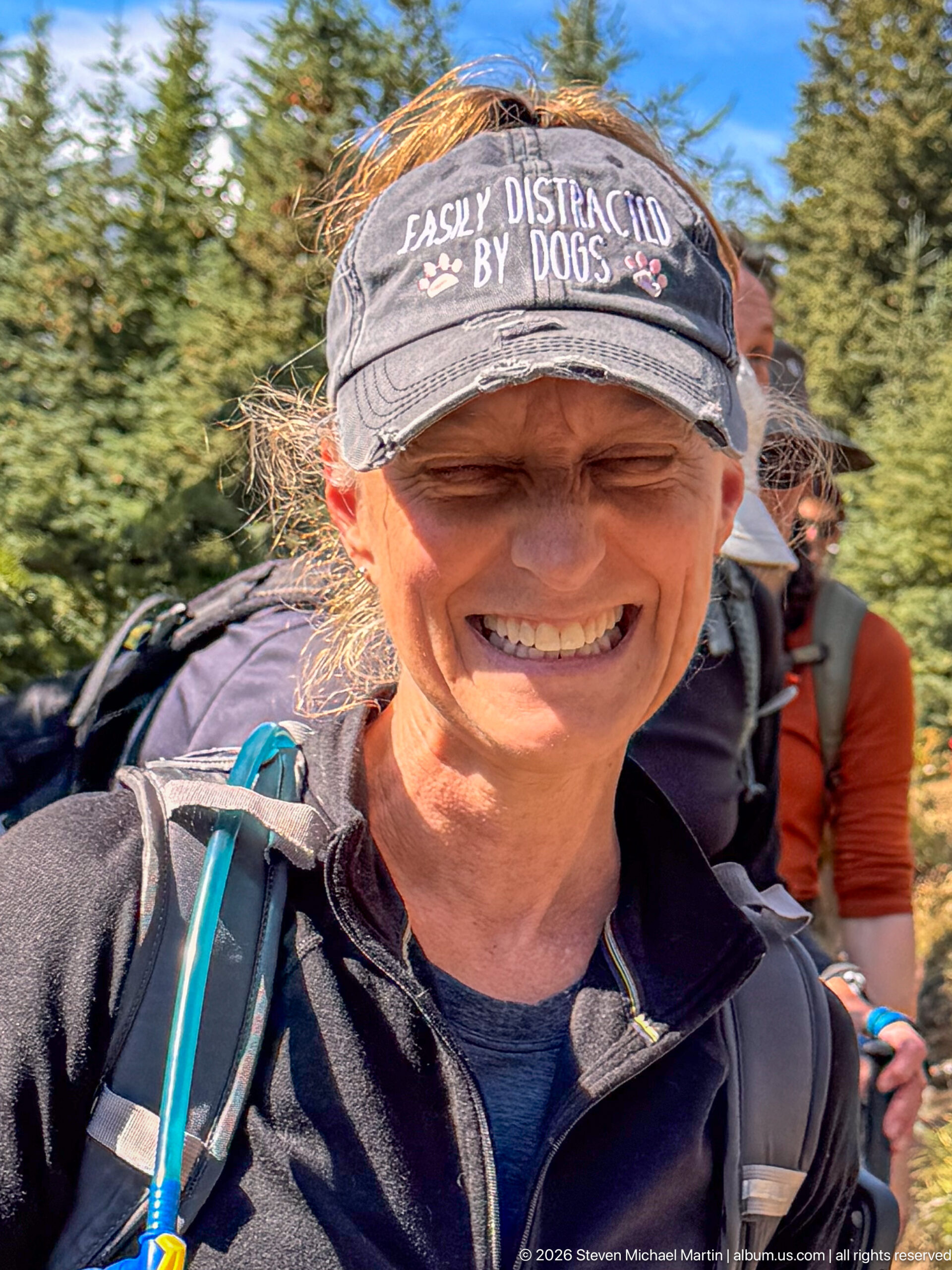
A smiling hiker fills the frame during a pause on the Wilcox Pass Trail, wearing a backpack and sun visor with trekking gear visible at the shoulder. Another hiker and conifer forest appear behind, placing the close portrait within the active trail setting rather than as a formal landscape view.
Caption
A smiling hiker fills the frame during a pause on the Wilcox Pass Trail, wearing a backpack and sun visor with trekking gear visible at the shoulder. Another hiker and conifer forest appear behind, placing the close portrait within the active trail setting rather than as a formal landscape view.
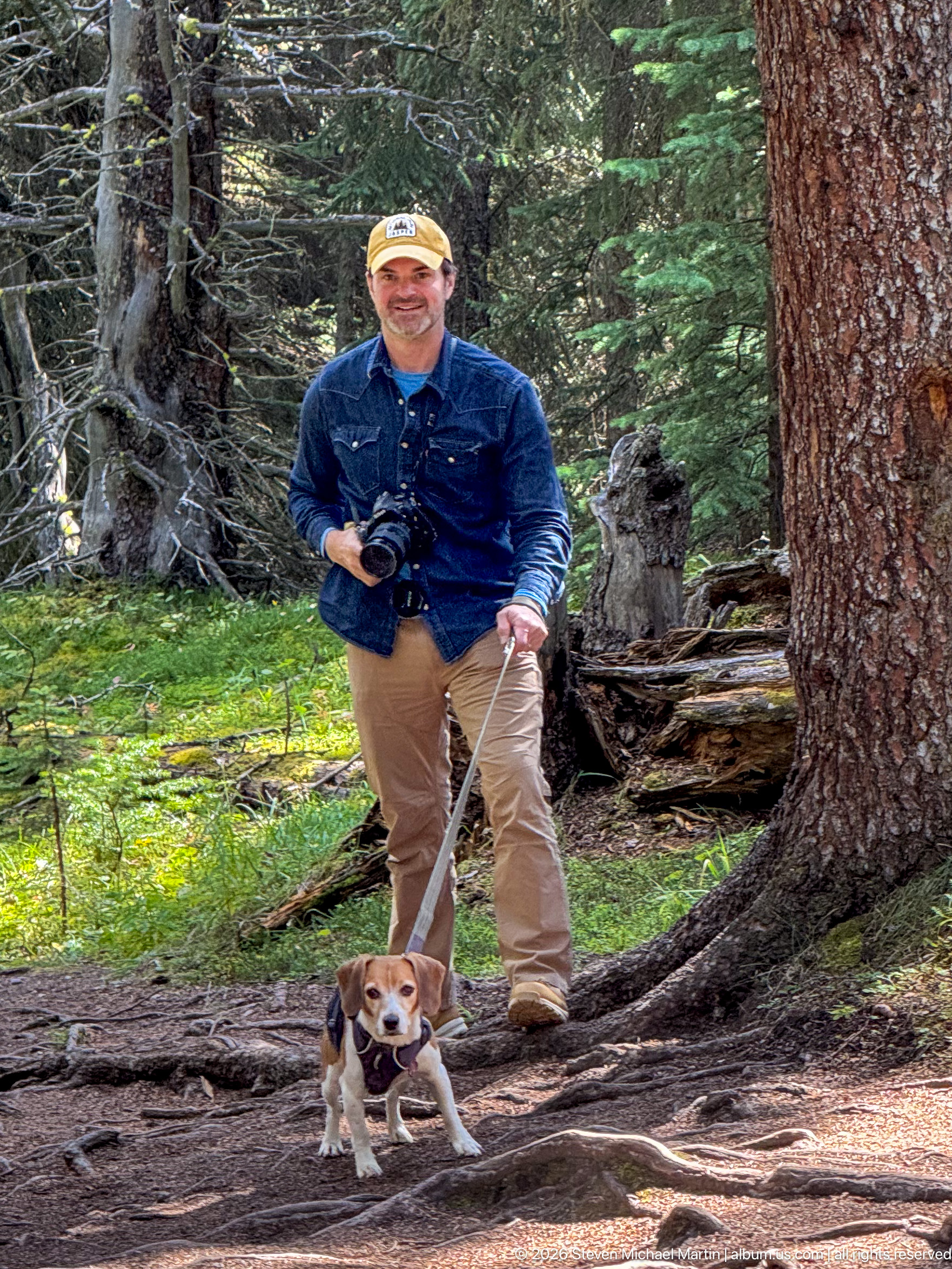
A hiker pauses with a beagle beside the massive trunk and exposed roots of a mature conifer along the Wilcox Pass Trail. Camera gear hangs at the hiker’s chest, while fallen wood, mossy ground, and dense evergreens surround the pair, marking the wooded beginning or end of the high-country excursion.
Caption
A hiker pauses with a beagle beside the massive trunk and exposed roots of a mature conifer along the Wilcox Pass Trail. Camera gear hangs at the hiker’s chest, while fallen wood, mossy ground, and dense evergreens surround the pair, marking the wooded beginning or end of the high-country excursion.
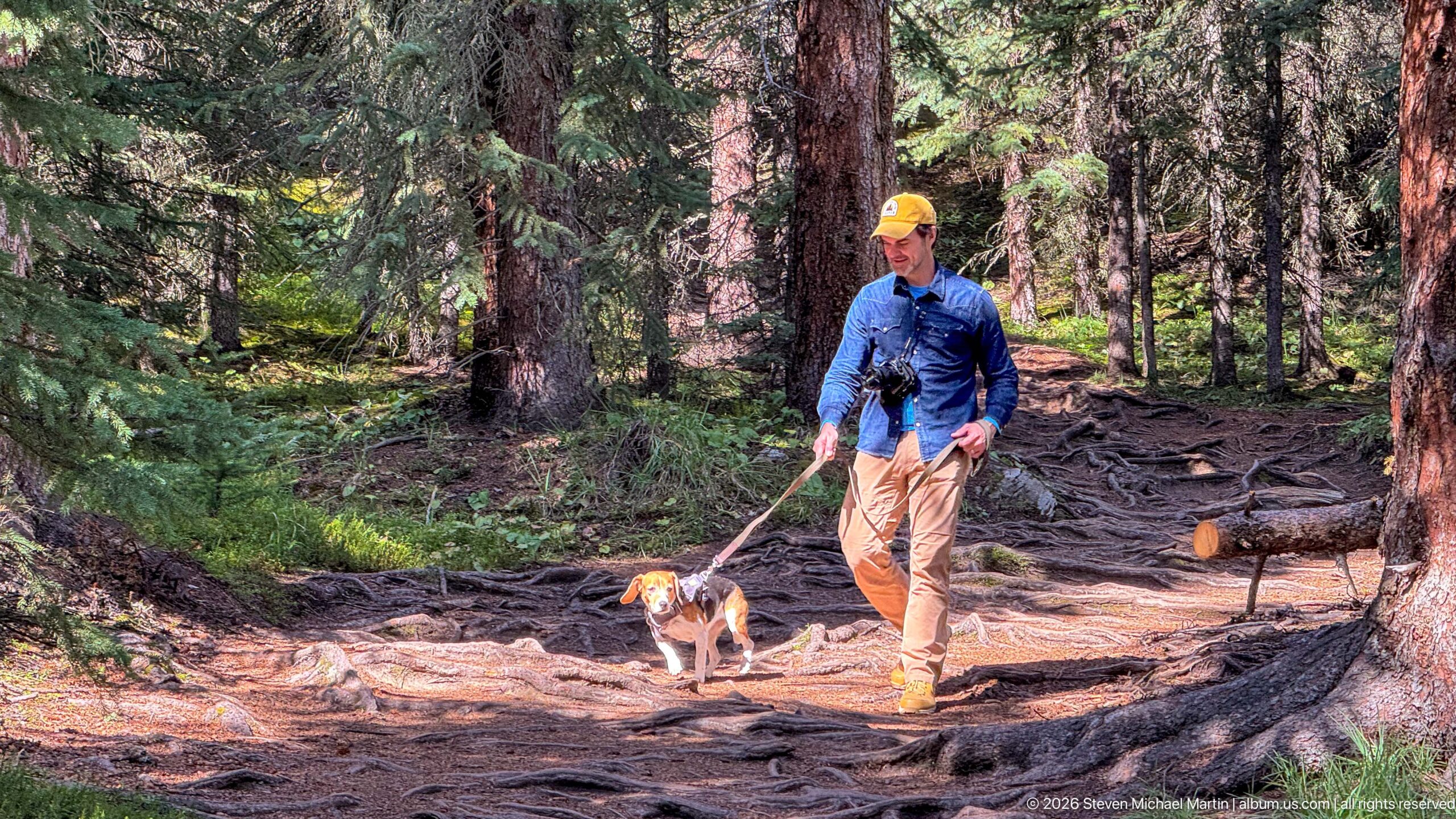
A hiker leads a beagle along the root-laced forest section of the Wilcox Pass Trail. Large conifer trunks, exposed roots, and dappled light frame the pair, documenting the lower, wooded character of the route and the practical reality of hiking the trail with a leashed dog.
Caption
A hiker leads a beagle along the root-laced forest section of the Wilcox Pass Trail. Large conifer trunks, exposed roots, and dappled light frame the pair, documenting the lower, wooded character of the route and the practical reality of hiking the trail with a leashed dog.
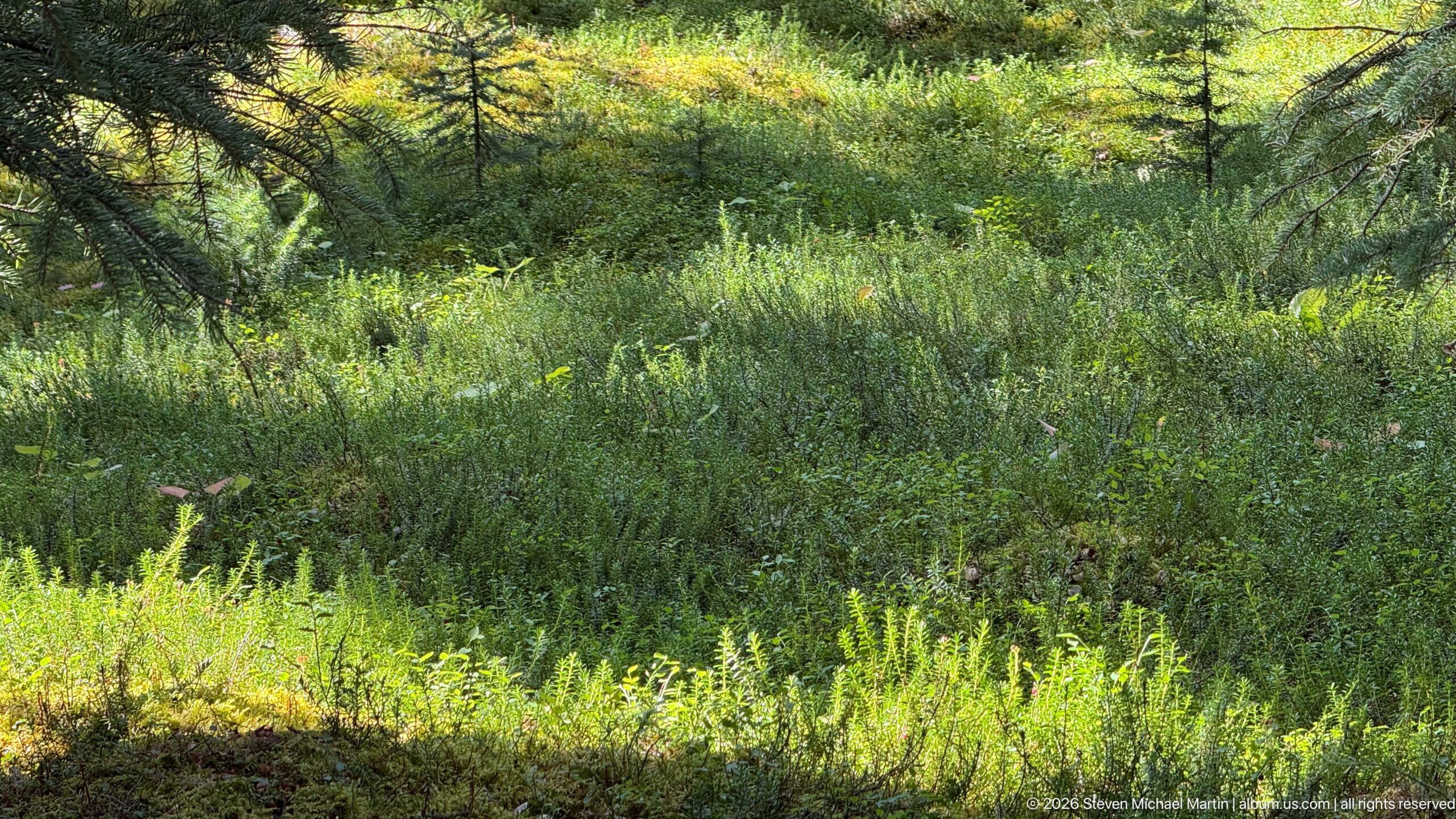
Dense green shrubs and groundcover glow in broken sunlight beneath the conifer canopy along the lower Wilcox Pass route. With no people or distant mountains in view, the composition concentrates on the lush understory and shifting light, recording a quieter ecological detail of the trail’s subalpine forest zone.
Caption
Dense green shrubs and groundcover glow in broken sunlight beneath the conifer canopy along the lower Wilcox Pass route. With no people or distant mountains in view, the composition concentrates on the lush understory and shifting light, recording a quieter ecological detail of the trail’s subalpine forest zone.
🏞️ National Park Field Guide
📍 Overview
Wilcox Pass presents Jasper National Park at the transition from sheltered conifer forest to exposed alpine country. The trail rises through mature evergreens and low subalpine vegetation before opening onto tundra, rocky slopes, broad mountain basins, and sweeping views across the Icefields Parkway corridor. Glaciers and snowfields dominate many of the distant mountain walls, while hikers and wildlife provide a human and ecological scale for this expansive Canadian Rockies landscape.
🏔️ Landscape
The character of Wilcox Pass changes markedly along the trail. Lower sections pass through dense conifer forest, shaded drainages, exposed roots, fallen timber, and a small wooden footbridge. Higher on the route, trees become scattered and then largely disappear as the trail enters open tundra and rocky alpine terrain. From these elevated slopes, the landscape expands into deep forested valleys, layered ridges, pale escarpments, glaciated mountain basins, and long views toward the ice-covered high country. The Icefields Parkway, visible far below from some viewpoints, reinforces the scale of the surrounding mountains.
🪨 Geology
Rock and ice are the dominant physical elements of the Wilcox Pass landscape. Pale stratified ridges, jagged crests, steep mountain walls, scree slopes, broken limestone, and broad fields of exposed stone frame the alpine route. Across the valley, glaciers descend from high snow-and-ice basins between darker rock walls, with crevassed ice and glacier tongues clearly visible from the pass. The contrast between rounded tundra surfaces, angular ridges, deep valleys, and extensive glacier ice makes the physical structure of this part of the Canadian Rockies unusually easy to read from the trail.
🌿 Ecology
The route crosses a pronounced ecological transition from dense conifer forest to subalpine vegetation and finally to open alpine tundra. Mature evergreens, mossy ground, fallen wood, and shaded forest give way to scattered conifers, low shrubs, grasses, sedges, and sparse plants growing among exposed rock. Small ponds and wet meadow areas add another habitat within the otherwise dry, rocky high country. Bighorn sheep were photographed in this alpine environment, including adult rams standing and moving through short vegetation and rocky terrain. Their presence places the wildlife directly within the open tundra, meadow, and stone-covered habitats documented throughout the portfolio.
🦌 Wildlife Encounters
Photographs in this portfolio document wildlife encounters with bighorn sheep, Bighorn sheep rams, and Bighorn sheep ram in the Jasper landscape. The photographs place these animals in settings that include Single bighorn sheep standing on an alpine slope, Two adult bighorn sheep rams standing together, Pair of adult bighorn sheep rams in alpine meadow, and Front-facing bighorn sheep ram among limestone rocks. These encounters provide direct, visit-specific evidence of how wildlife uses the habitats interpreted in this field guide.
🦌 Wildlife
Bighorn sheep are the principal wild animals documented at Wilcox Pass in this portfolio. Several photographs record adult rams at close range, recognizable by their massive curled horns, as well as pairs of rams standing together in alpine meadow. Other views show sheep moving through rocky ground and vegetation or occupying the broader pass landscape. The strongest encounter photographs place the animals within the same open alpine terrain experienced by hikers, connecting the wildlife portraits to the surrounding tundra, rock fields, and high-elevation setting rather than presenting the animals apart from their habitat.
🧭 Human History
The human presence documented at Wilcox Pass is centered on the modern protected-landscape experience. A timber-roofed trailhead kiosk identifies Wilcox Pass / Col Wilcox and provides a topographic route map, bilingual visitor information, trail guidance, and leave-no-trace reminders. The maintained trail, wooden footbridge, trail markers, and designated red-chair viewpoint show how visitor access has been organized within the national park landscape. From higher elevations, the Icefields Parkway is visible winding through the valley below, creating a striking visual connection between the alpine walking route and the transportation corridor through the surrounding mountains.
🥾 Visitor Experience
Wilcox Pass is experienced as a progressive opening of the landscape. The lower trail is enclosed by tall conifers and filtered light, but climbing toward the pass brings increasingly broad views of ridges, glaciers, tundra, and the valley below. Curving sections of trail repeatedly reveal new glacier vistas, while open overlooks provide places to pause and absorb the scale of the terrain. A pair of red Adirondack-style chairs marks one such viewpoint above the glaciated valley. Hikers sharing the route with leashed dogs and encountering bighorn sheep add another dimension to the experience, emphasizing that this is both a recreational trail and active alpine habitat.
📷 Photography Notes
Wilcox Pass rewards photography at several different scales. Forest compositions use tall conifer trunks, footbridges, hikers, and dogs to convey the enclosed character of the lower trail, while higher viewpoints favor wide compositions that place small human figures against glaciers, tundra, and mountain walls. Curving trails provide strong foreground lines into distant ice, and rocky overlooks create natural frames for the glaciated valley. Bighorn sheep offer opportunities for both close portraits and wider environmental photographs in which meadow, ponds, tundra, and broken rock remain part of the story. The strongest portfolio sequences alternate these intimate subjects with expansive views to communicate the scale and ecological variety of Wilcox Pass.