Pangolin – Uganda
The pangolin is one of the most unusual mammals found in Africa. Covered in protective keratin scales, the animal curls into a tight ball when threatened, using its armor as defense against predators.
Pangolins are nocturnal and highly elusive, feeding primarily on ants and termites which they capture with their long sticky tongues. Because they are rarely seen in the wild, encounters with pangolins are considered especially remarkable.
In recent years conservation organizations across Africa have increased efforts to protect these animals due to the severe threats posed by illegal wildlife trafficking.
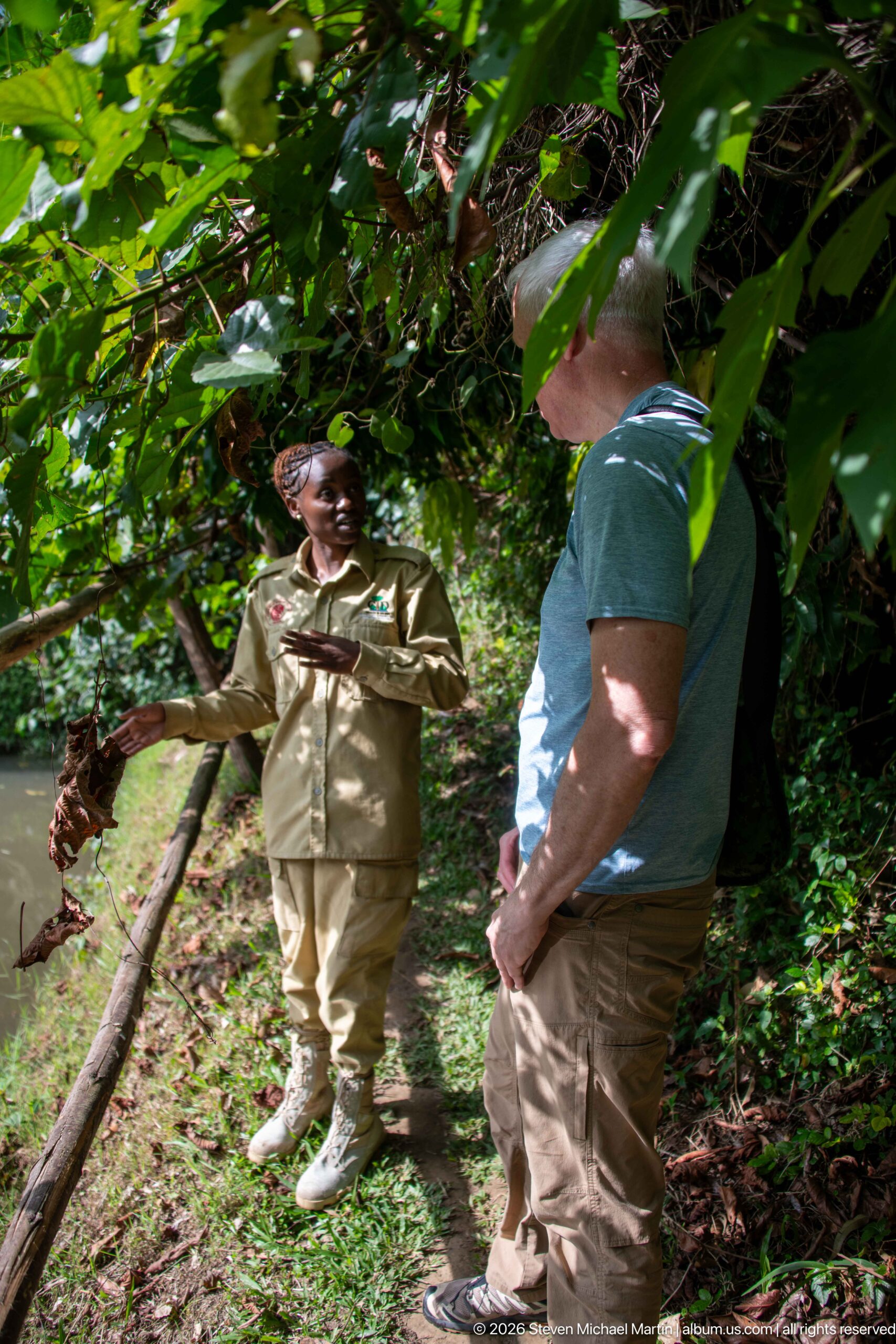
A uniformed rescue-center staff member speaks with visitors beside a rustic handrail under dense foliage. The small-group exchange documents the educational side of the visit, with the guide gesturing while the visitors listen along a shaded path within the Pangolin Rescue grounds.
Caption
A uniformed rescue-center staff member speaks with visitors beside a rustic handrail under dense foliage. The small-group exchange documents the educational side of the visit, with the guide gesturing while the visitors listen along a shaded path within the Pangolin Rescue grounds.
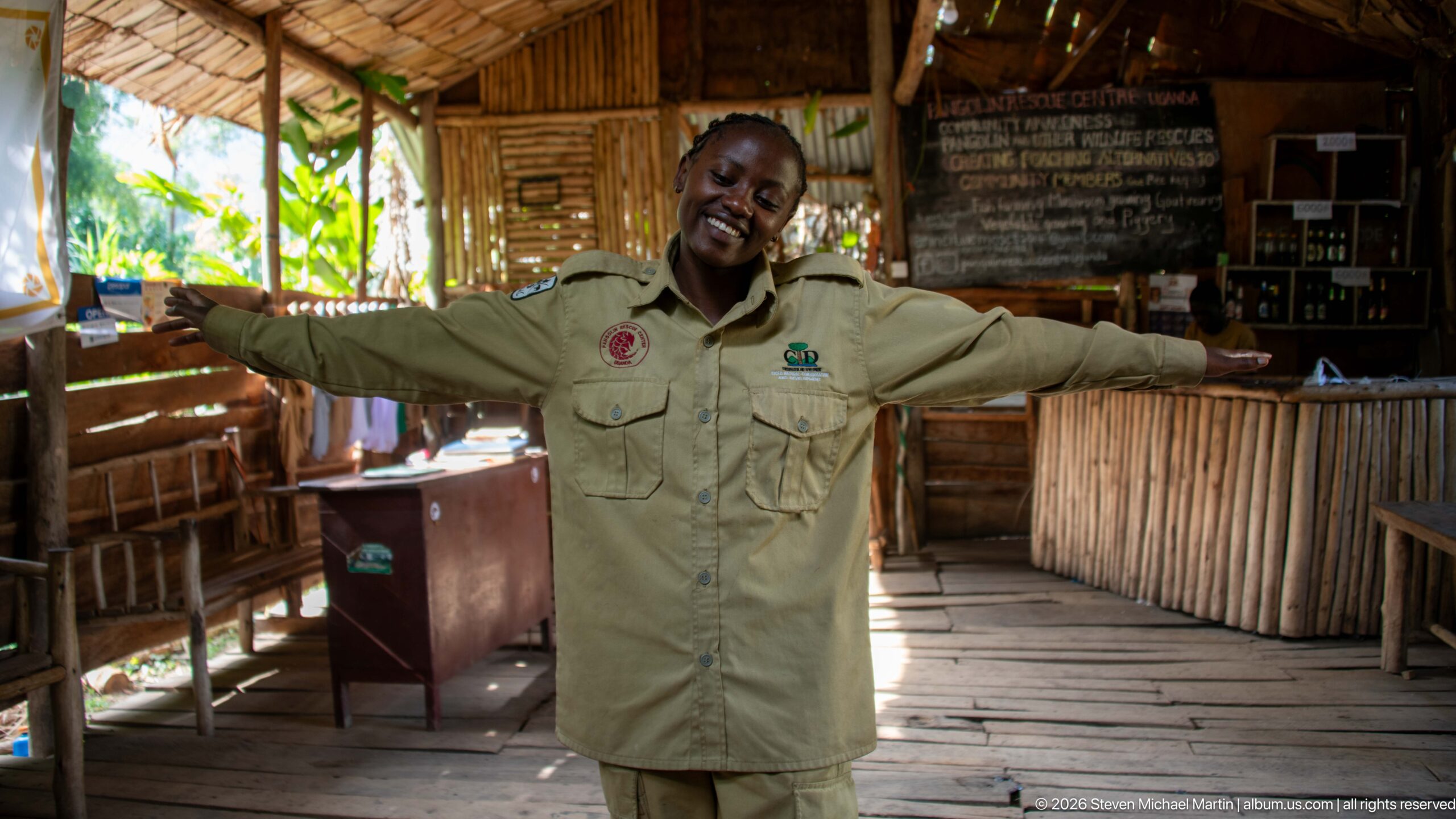
A Pangolin Rescue Centre staff member stands smiling with arms outstretched inside the rustic visitor area, wearing a khaki conservation uniform with organizational patches. The bamboo interior, reception counter, and educational chalkboard remain visible behind him, placing the portrait within the center’s working environment without relying on an unsupported personal identification.
Caption
A Pangolin Rescue Centre staff member stands smiling with arms outstretched inside the rustic visitor area, wearing a khaki conservation uniform with organizational patches. The bamboo interior, reception counter, and educational chalkboard remain visible behind him, placing the portrait within the center’s working environment without relying on an unsupported personal identification.
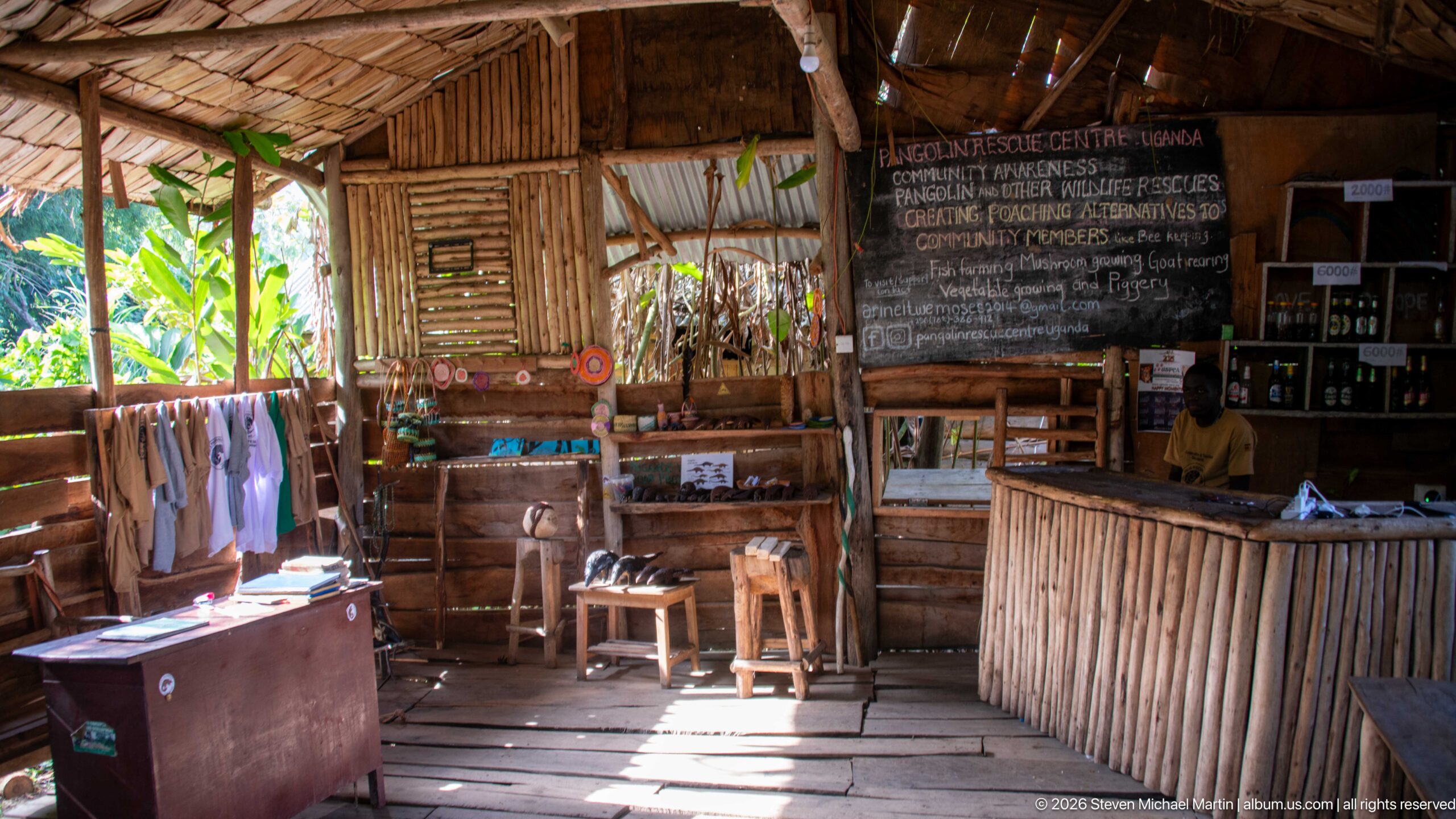
Inside the Pangolin Rescue Centre, bamboo and timber construction frame a modest reception and interpretation space furnished with wooden stools, a counter, and educational displays. A large chalkboard at the rear presents conservation information, while daylight filtering through the open-sided structure reveals the practical, community-scale character of the facility.
Caption
Inside the Pangolin Rescue Centre, bamboo and timber construction frame a modest reception and interpretation space furnished with wooden stools, a counter, and educational displays. A large chalkboard at the rear presents conservation information, while daylight filtering through the open-sided structure reveals the practical, community-scale character of the facility.
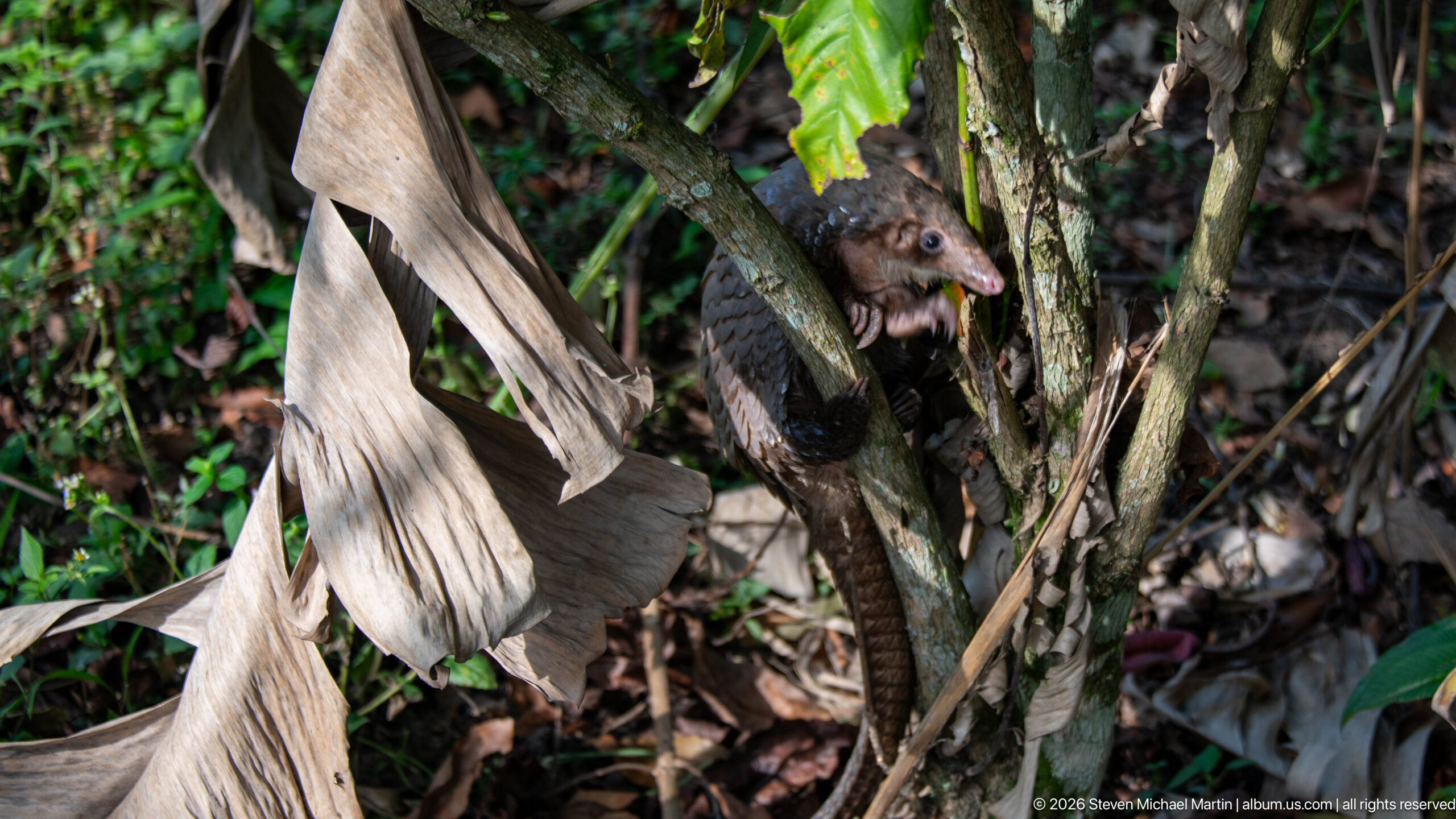
A white-bellied tree pangolin peers from a fork of slender trunks, its head and forebody exposed while the long tail curls behind the stems. Dry hanging leaves frame the opening and make the animal appear momentarily concealed within the vegetation. The wider composition shows the pangolin using a complex cluster of supports rather than a single trunk as it navigates the understory.
Caption
A white-bellied tree pangolin peers from a fork of slender trunks, its head and forebody exposed while the long tail curls behind the stems. Dry hanging leaves frame the opening and make the animal appear momentarily concealed within the vegetation. The wider composition shows the pangolin using a complex cluster of supports rather than a single trunk as it navigates the understory.
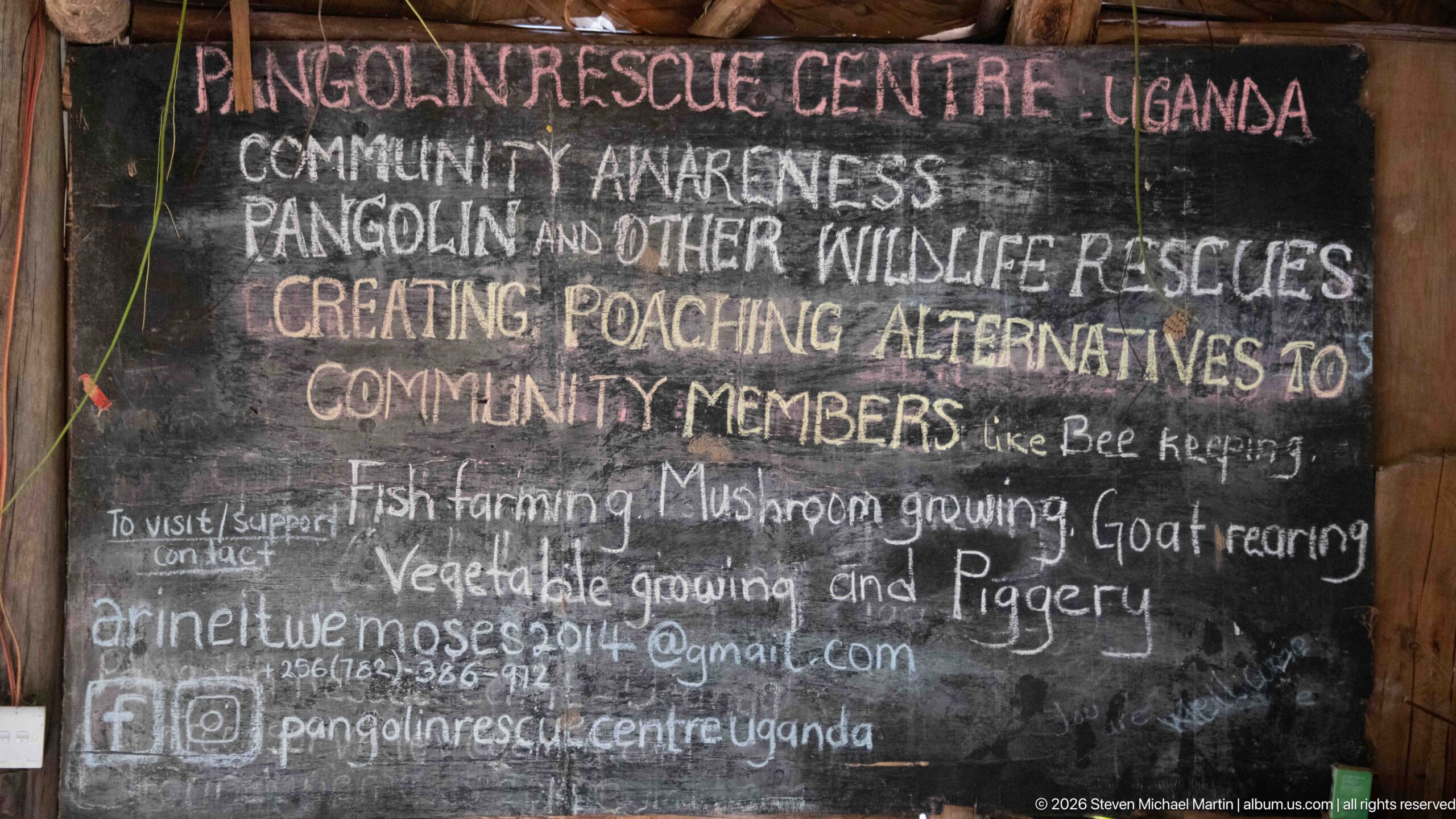
A hand-lettered chalkboard at the Pangolin Rescue Centre outlines community-awareness goals, wildlife rescue, and alternatives to poaching. The board names livelihood options including beekeeping, fish farming, mushroom growing, goat rearing, vegetable growing, and piggery, showing how the center presents conservation alongside practical community-based strategies.
Caption
A hand-lettered chalkboard at the Pangolin Rescue Centre outlines community-awareness goals, wildlife rescue, and alternatives to poaching. The board names livelihood options including beekeeping, fish farming, mushroom growing, goat rearing, vegetable growing, and piggery, showing how the center presents conservation alongside practical community-based strategies.
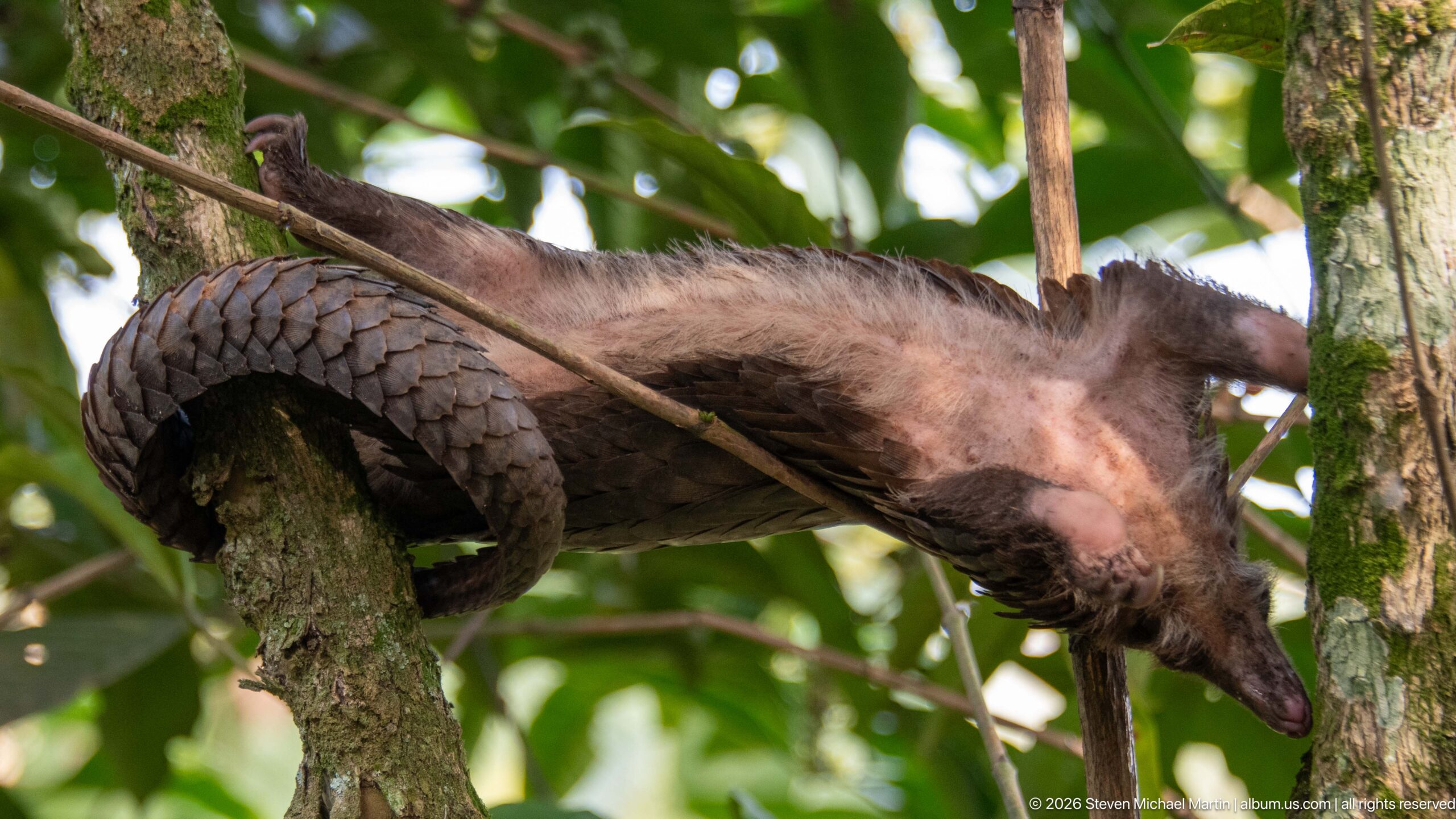
Suspended between tree trunks, a white-bellied tree pangolin extends its body forward while its prehensile tail remains firmly coiled around a supporting trunk. The exposed underside shows sparse hair and unarmored skin, contrasting sharply with the heavy scales along the back and tail. This lateral view makes the animal’s combination of gripping claws, flexible body, and tail support especially clear.
Caption
Suspended between tree trunks, a white-bellied tree pangolin extends its body forward while its prehensile tail remains firmly coiled around a supporting trunk. The exposed underside shows sparse hair and unarmored skin, contrasting sharply with the heavy scales along the back and tail. This lateral view makes the animal’s combination of gripping claws, flexible body, and tail support especially clear.
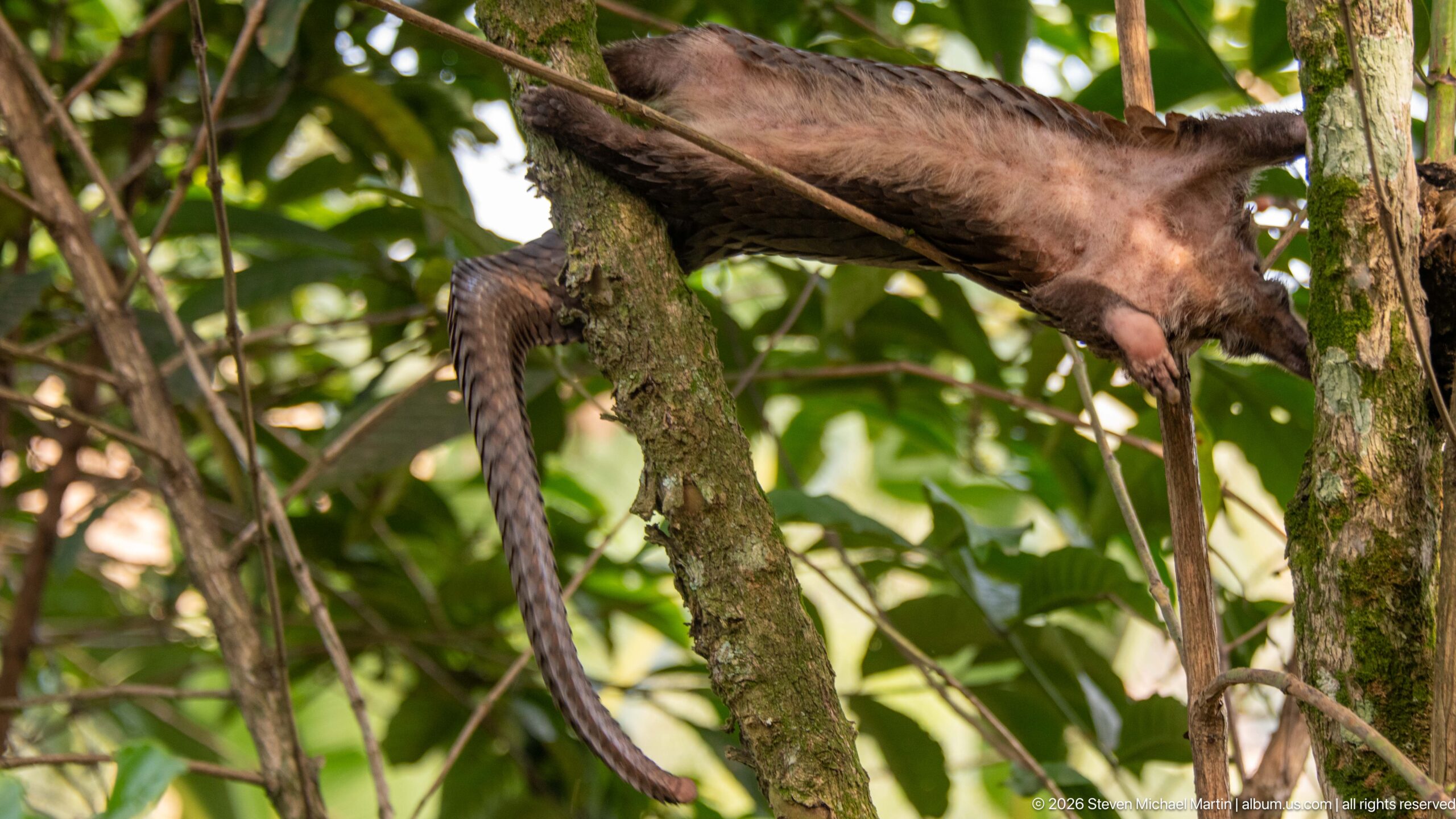
A white-bellied tree pangolin stretches headfirst along a vertical trunk while its exceptionally long scaled tail drops below the body. The animal’s forelimbs grip the bark and the pale, hairy underside remains exposed, revealing the contrast between flexible ventral skin and protective dorsal scales. The composition isolates the elongated tail, a key climbing structure used for balance and secure purchase in vegetation.
Caption
A white-bellied tree pangolin stretches headfirst along a vertical trunk while its exceptionally long scaled tail drops below the body. The animal’s forelimbs grip the bark and the pale, hairy underside remains exposed, revealing the contrast between flexible ventral skin and protective dorsal scales. The composition isolates the elongated tail, a key climbing structure used for balance and secure purchase in vegetation.
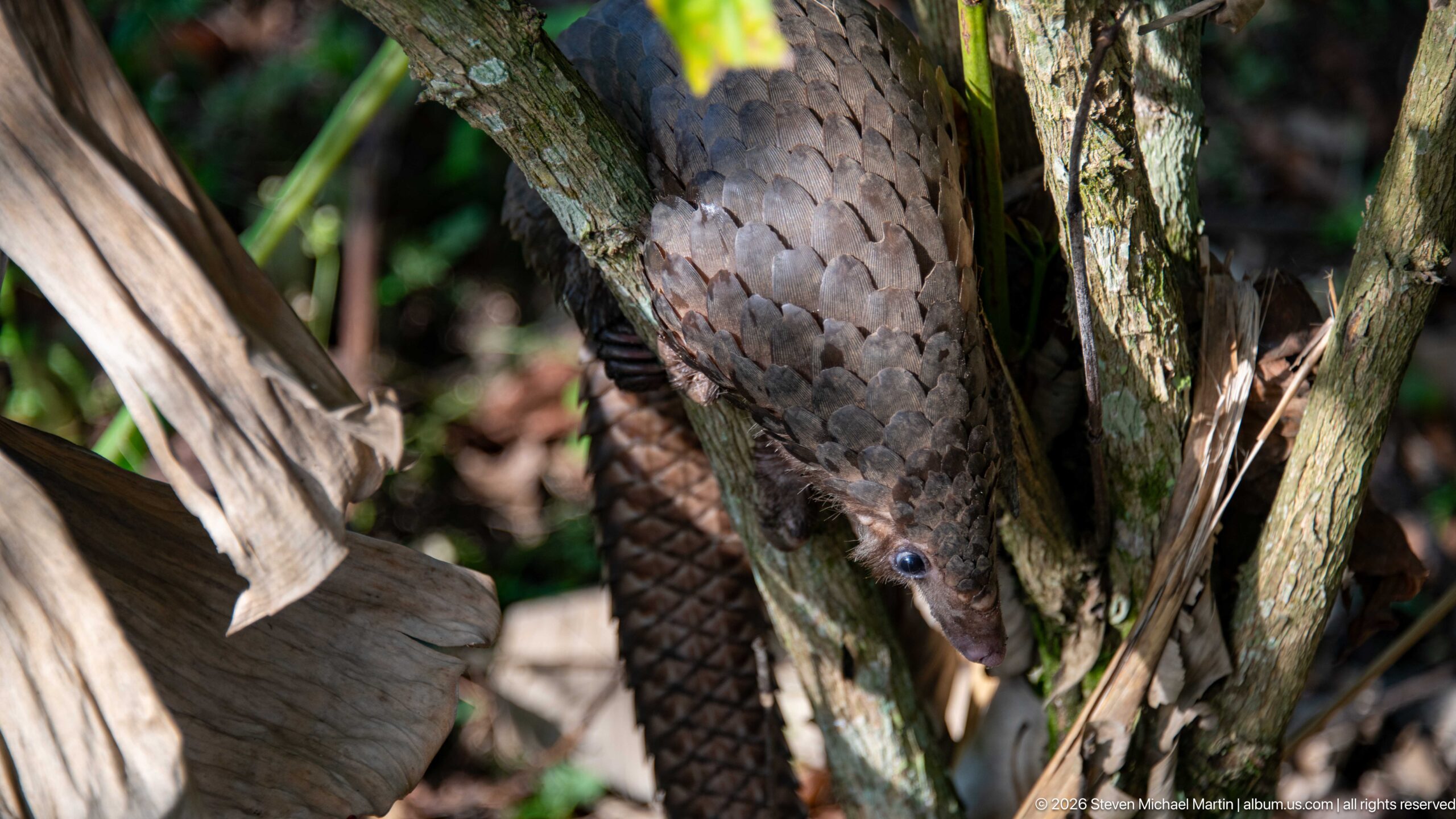
A white-bellied tree pangolin descends headfirst through a narrow cluster of woody stems. Its pointed face emerges low in the fork while the scaled body remains wedged above, and the long tail continues upward behind the trunks. Strong patches of sunlight and shadow accentuate the armor and show the animal using multiple stems for support during a controlled descent.
Caption
A white-bellied tree pangolin descends headfirst through a narrow cluster of woody stems. Its pointed face emerges low in the fork while the scaled body remains wedged above, and the long tail continues upward behind the trunks. Strong patches of sunlight and shadow accentuate the armor and show the animal using multiple stems for support during a controlled descent.
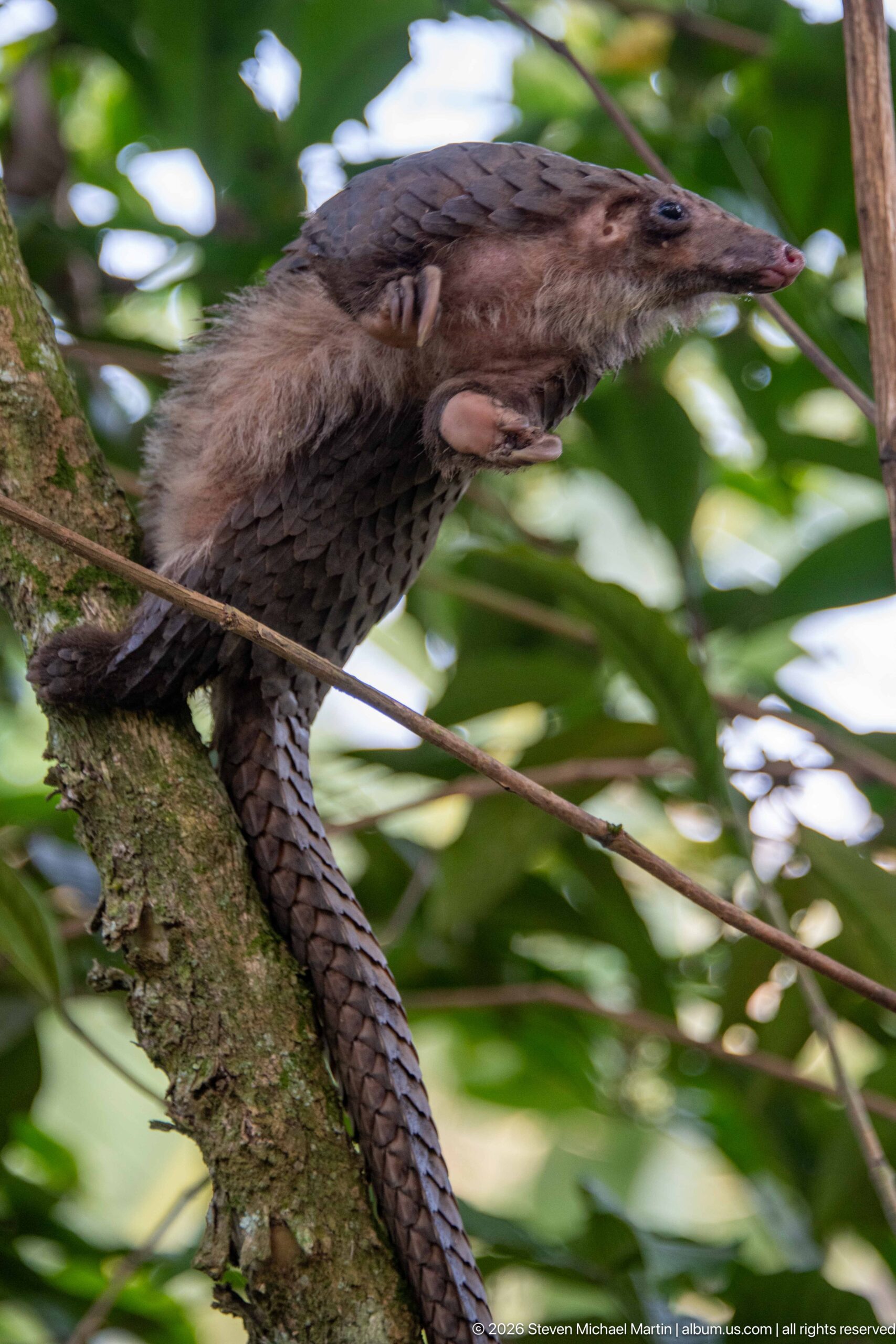
A white-bellied tree pangolin moves along a sloping branch with its head and forebody extended forward. The long tail falls behind the branch in a gentle curve, acting as a counterbalance as the animal advances through dense foliage. Motion softens the background while the armored back remains readable, giving the frame a strong sense of purposeful movement through the canopy.
Caption
A white-bellied tree pangolin moves along a sloping branch with its head and forebody extended forward. The long tail falls behind the branch in a gentle curve, acting as a counterbalance as the animal advances through dense foliage. Motion softens the background while the armored back remains readable, giving the frame a strong sense of purposeful movement through the canopy.
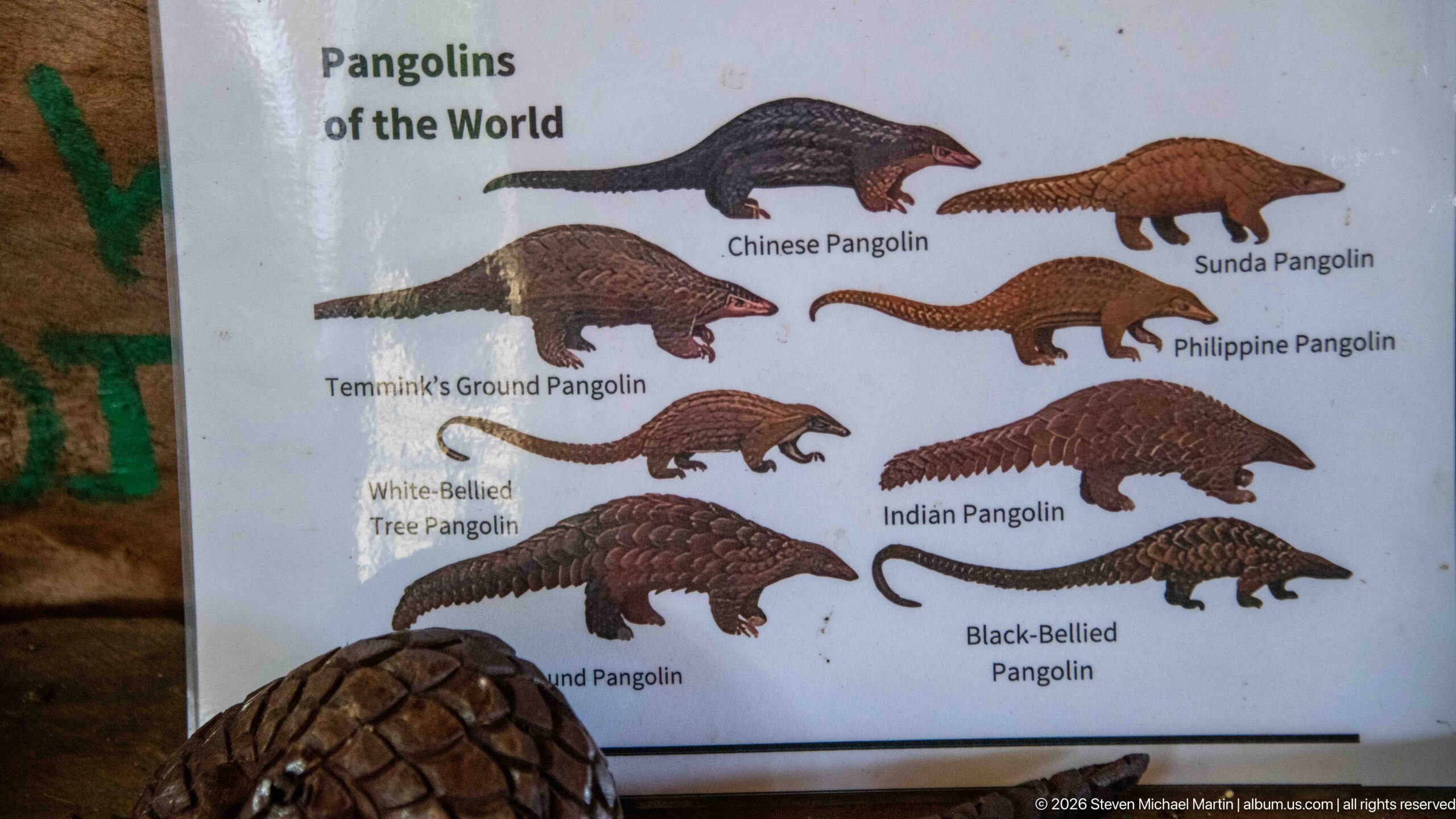
An educational poster titled “Pangolins of World” compares illustrated pangolin species, including Chinese, Sunda, Philippine, Indian, black-bellied and other labeled forms. A three-dimensional scaled object intrudes at the lower edge, linking the printed species overview to the center's hands-on interpretive displays.
Caption
An educational poster titled “Pangolins of World” compares illustrated pangolin species, including Chinese, Sunda, Philippine, Indian, black-bellied and other labeled forms. A three-dimensional scaled object intrudes at the lower edge, linking the printed species overview to the center's hands-on interpretive displays.
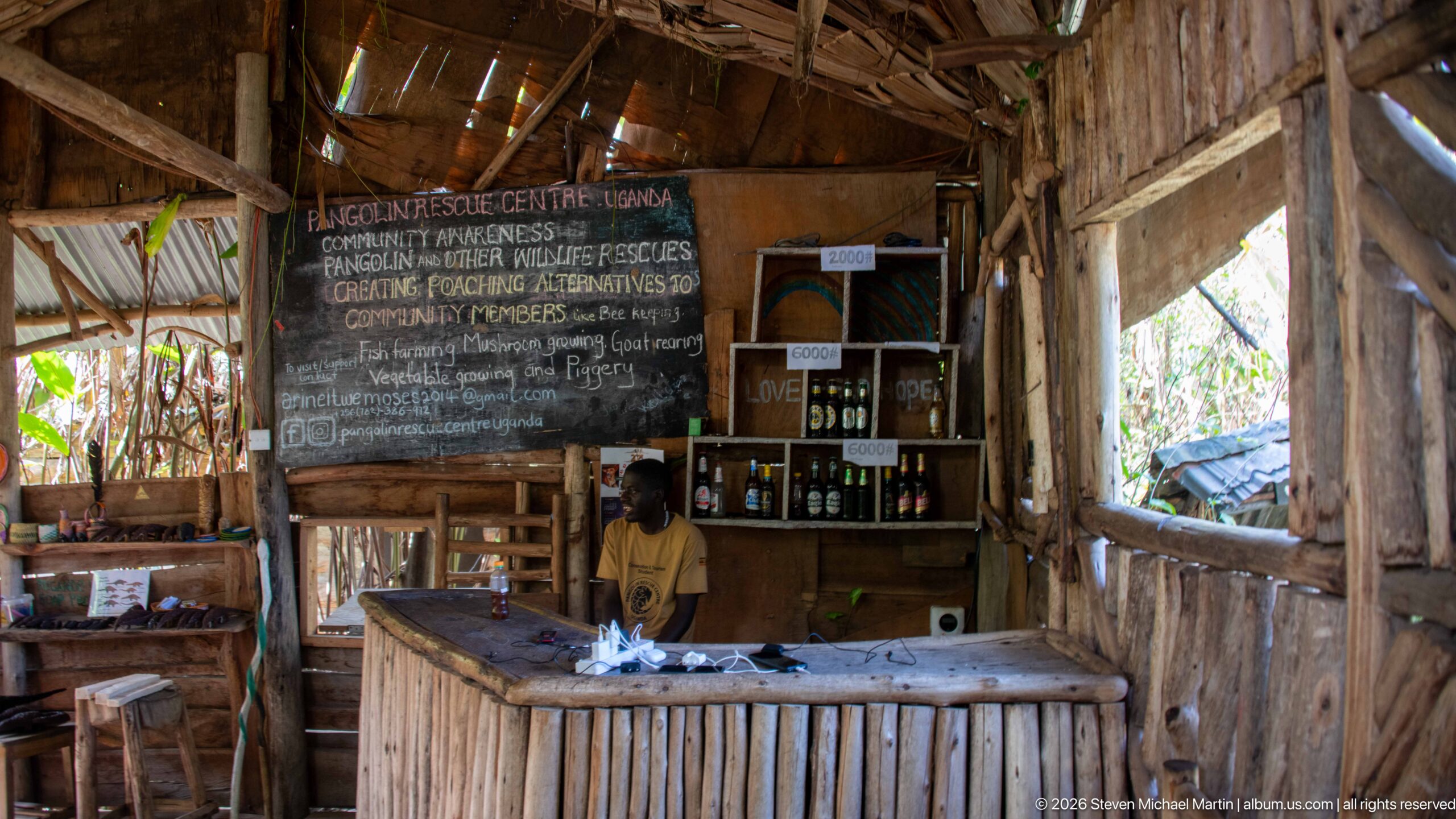
Inside a timber-built Pangolin Rescue Centre facility, a staff member stands behind a simple wooden counter beneath a chalkboard covered with conservation messages. Bottles and small display items line the shelves, while the open-sided structure and handmade furnishings give the scene the character of a working community wildlife center rather than a formal visitor exhibit.
Caption
Inside a timber-built Pangolin Rescue Centre facility, a staff member stands behind a simple wooden counter beneath a chalkboard covered with conservation messages. Bottles and small display items line the shelves, while the open-sided structure and handmade furnishings give the scene the character of a working community wildlife center rather than a formal visitor exhibit.
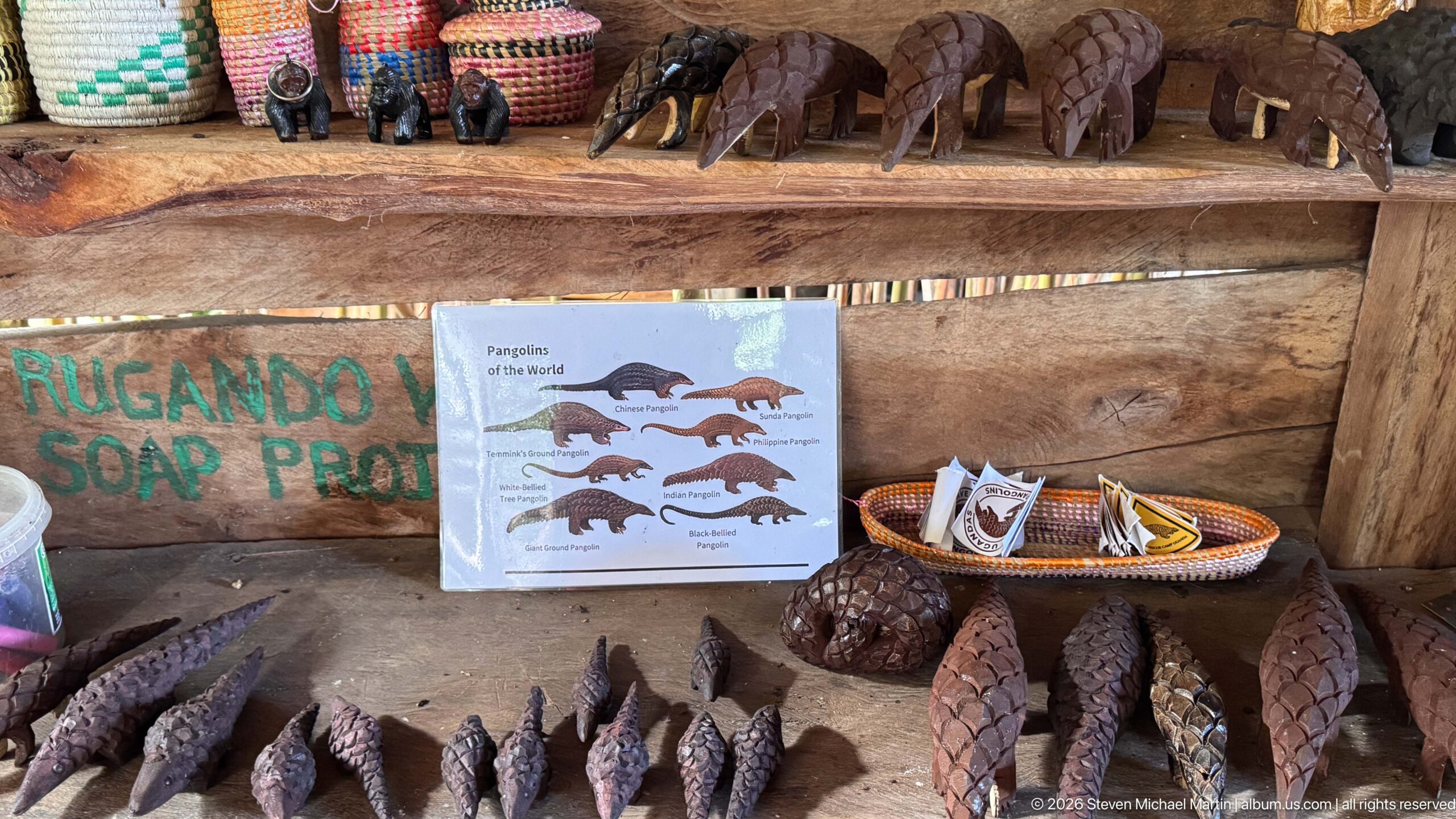
A conservation display brings pangolin biology into a tactile, locally made setting: carved pangolin figures and scale-like forms are arranged on rough wooden shelves beside woven baskets and an illustrated “Pangolins of the World” chart. The combination of educational graphics and handicrafts presents the animal’s distinctive armor and body shape while situating awareness work within the rescue center’s community setting.
Caption
A conservation display brings pangolin biology into a tactile, locally made setting: carved pangolin figures and scale-like forms are arranged on rough wooden shelves beside woven baskets and an illustrated “Pangolins of the World” chart. The combination of educational graphics and handicrafts presents the animal’s distinctive armor and body shape while situating awareness work within the rescue center’s community setting.
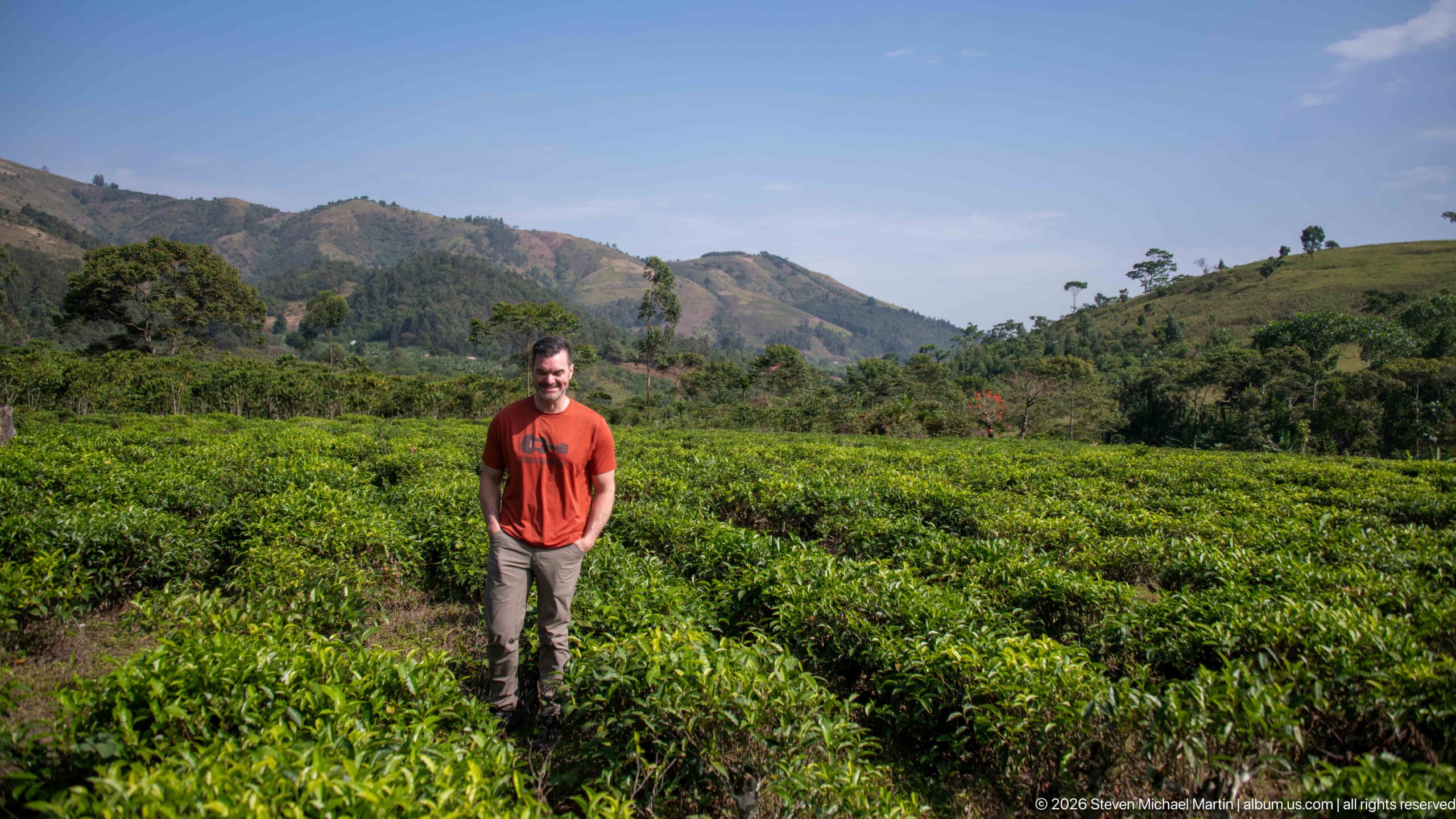
A visitor stands between dense rows of low green crops on a cultivated hillside, with a rugged, partly cleared mountain slope rising across the valley. The broad view places the Pangolin Rescue visit within a productive rural landscape, showing the close spatial relationship between farms, patches of trees, and steep highland terrain in this part of Uganda.
Caption
A visitor stands between dense rows of low green crops on a cultivated hillside, with a rugged, partly cleared mountain slope rising across the valley. The broad view places the Pangolin Rescue visit within a productive rural landscape, showing the close spatial relationship between farms, patches of trees, and steep highland terrain in this part of Uganda.
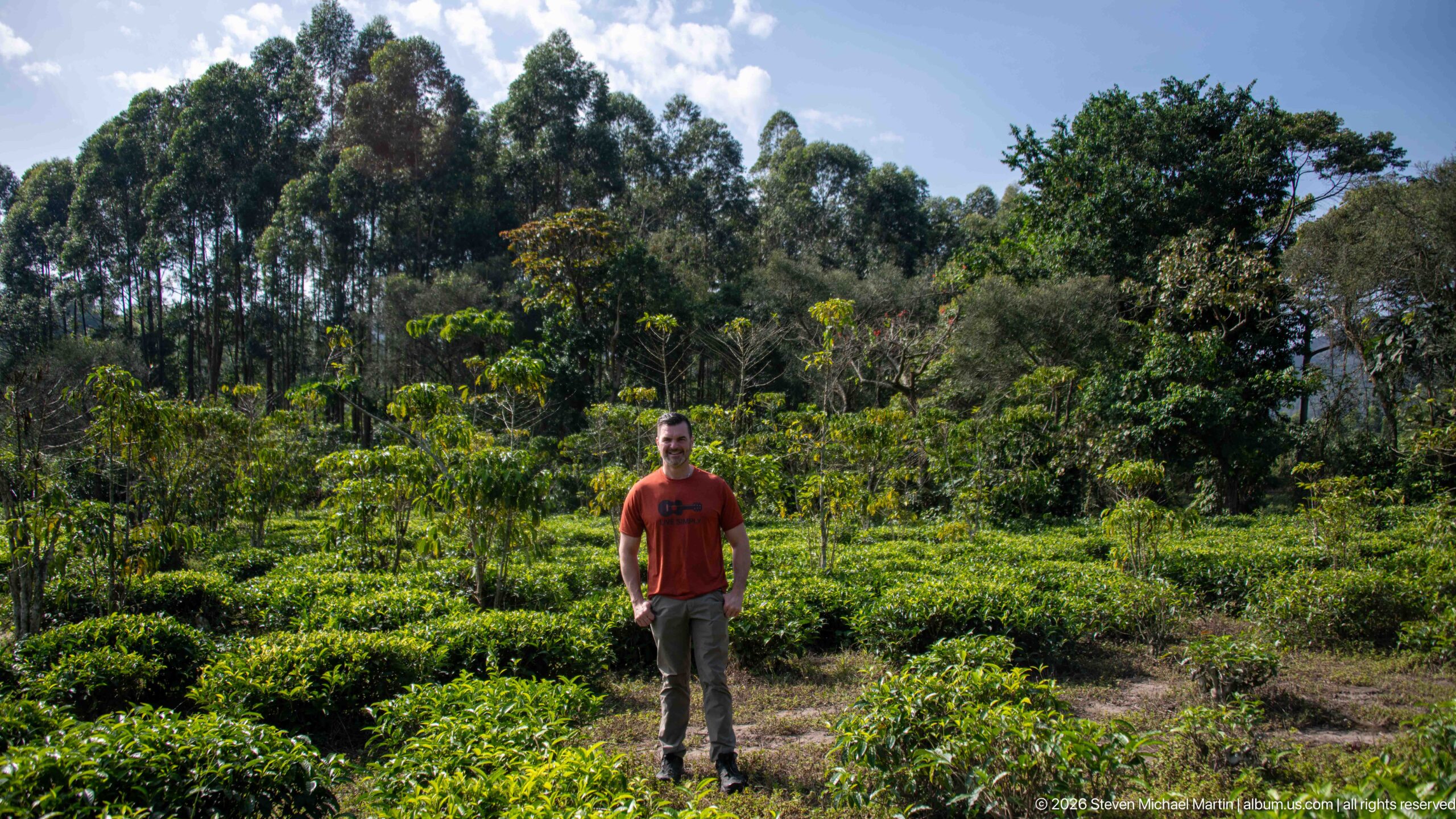
A visitor stands in a small cultivated plot surrounded by dense, layered vegetation. Low crops fill the foreground while taller trees form a shaded green backdrop, creating a more enclosed view than the neighboring hillside panorama. The scene documents the mixed farm-and-woodland environment associated with the Pangolin Rescue visit without assigning a crop or habitat type that cannot be established from the photograph alone.
Caption
A visitor stands in a small cultivated plot surrounded by dense, layered vegetation. Low crops fill the foreground while taller trees form a shaded green backdrop, creating a more enclosed view than the neighboring hillside panorama. The scene documents the mixed farm-and-woodland environment associated with the Pangolin Rescue visit without assigning a crop or habitat type that cannot be established from the photograph alone.
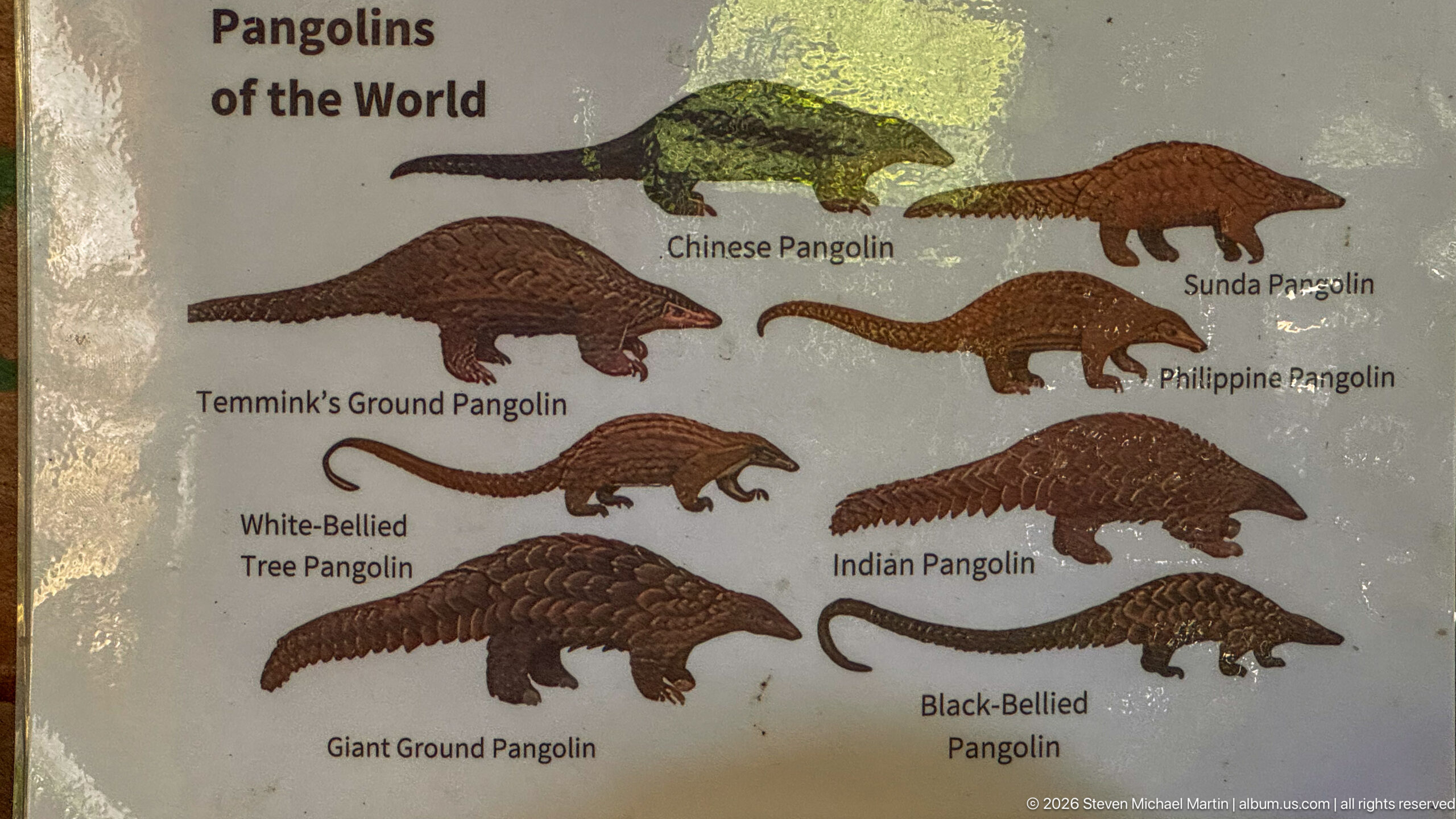
An illustrated identification chart compares the world’s eight living pangolin species, pairing silhouettes with common names that include Chinese, Sunda, Philippine, Indian, white-bellied tree, black-bellied, giant ground, and Temminck’s ground pangolins. The display provides a useful taxonomic frame for the rescue visit, emphasizing the diversity of body proportions, tail lengths, and scale patterns within the pangolin family.
Caption
An illustrated identification chart compares the world’s eight living pangolin species, pairing silhouettes with common names that include Chinese, Sunda, Philippine, Indian, white-bellied tree, black-bellied, giant ground, and Temminck’s ground pangolins. The display provides a useful taxonomic frame for the rescue visit, emphasizing the diversity of body proportions, tail lengths, and scale patterns within the pangolin family.

A white-bellied tree pangolin rests across a fork in a leafy tree, anchoring itself with a long prehensile tail wrapped tightly around the trunk. Overlapping brown scales armor the back and tail while the face and underside show coarse hair and softer skin. The close view clearly demonstrates the climbing adaptations that distinguish this small African arboreal pangolin.
Caption
A white-bellied tree pangolin rests across a fork in a leafy tree, anchoring itself with a long prehensile tail wrapped tightly around the trunk. Overlapping brown scales armor the back and tail while the face and underside show coarse hair and softer skin. The close view clearly demonstrates the climbing adaptations that distinguish this small African arboreal pangolin.
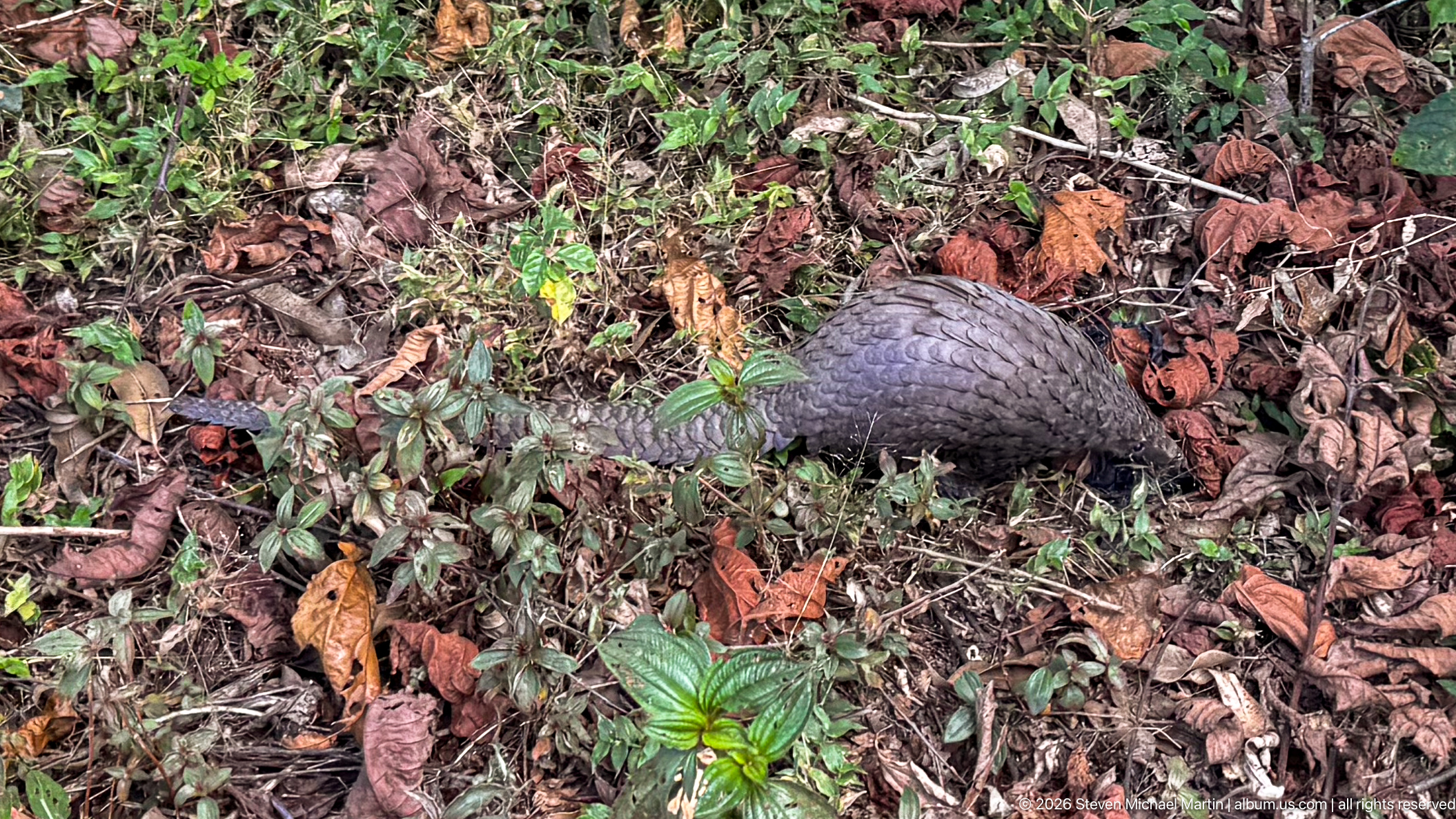
A white-bellied tree pangolin moves through damp leaf litter and low vegetation, its rounded armor of overlapping scales standing out against the mottled forest floor. Seen from above, the head is partly concealed while the tapering tail trails behind. The ground-level view records the animal away from a tree and emphasizes how effectively its brown-gray scales blend with fallen leaves and soil.
Caption
A white-bellied tree pangolin moves through damp leaf litter and low vegetation, its rounded armor of overlapping scales standing out against the mottled forest floor. Seen from above, the head is partly concealed while the tapering tail trails behind. The ground-level view records the animal away from a tree and emphasizes how effectively its brown-gray scales blend with fallen leaves and soil.
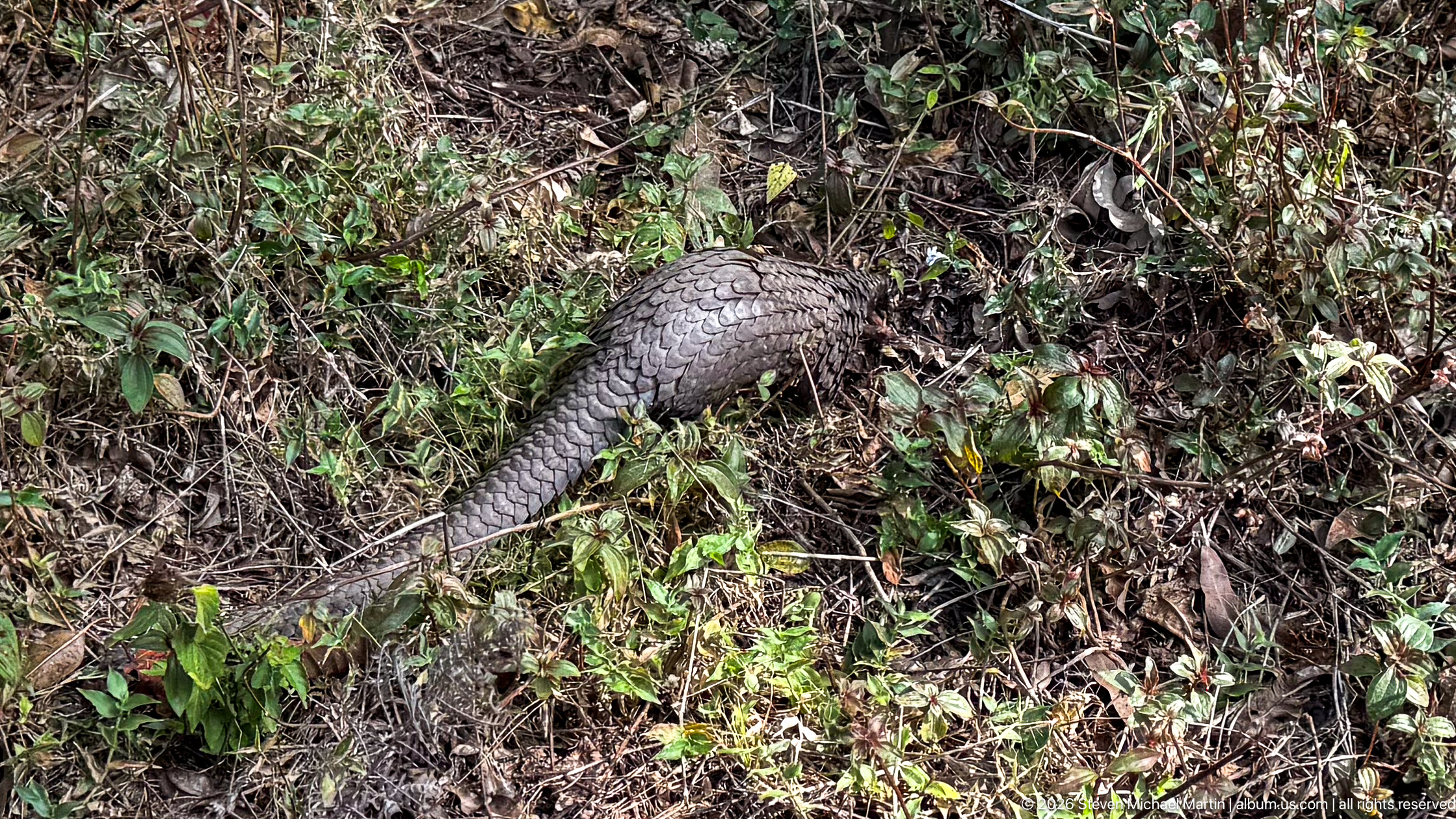
Viewed from above, a white-bellied tree pangolin crosses a patch of leaf litter and sparse ground plants. The scale rows form a strong geometric pattern over the rounded back before narrowing along the long tail, while the small head points into denser vegetation. This higher viewpoint emphasizes the continuous armor covering the animal’s dorsal surface and the tail’s length relative to its body.
Caption
Viewed from above, a white-bellied tree pangolin crosses a patch of leaf litter and sparse ground plants. The scale rows form a strong geometric pattern over the rounded back before narrowing along the long tail, while the small head points into denser vegetation. This higher viewpoint emphasizes the continuous armor covering the animal’s dorsal surface and the tail’s length relative to its body.
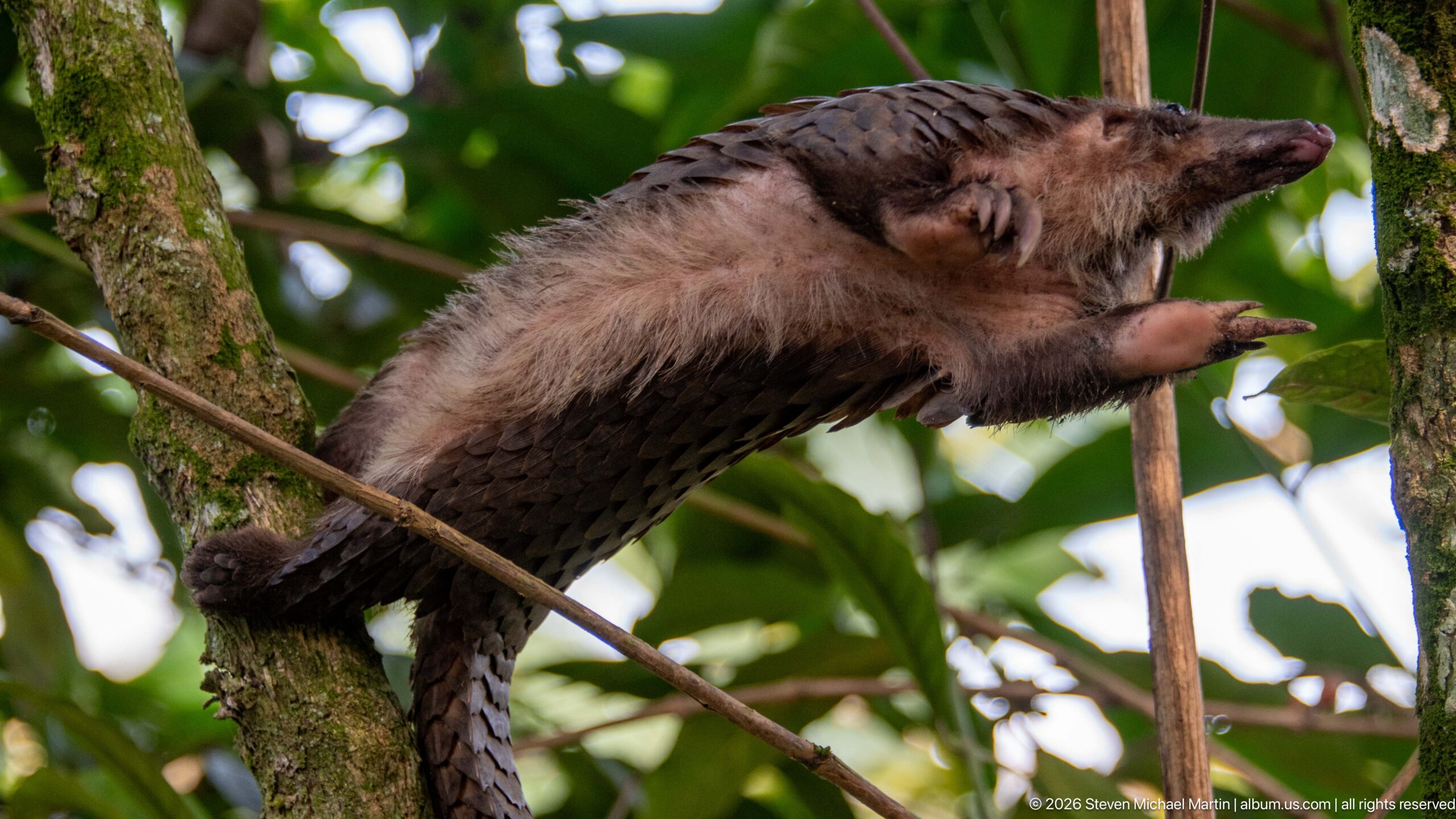
A white-bellied tree pangolin climbs upward through a lattice of branches, reaching with curved foreclaws while the long tail braces the body from below. Its head is raised toward the next hold and the layered scales along the shoulders and flanks flare slightly with the bend of the torso. The active pose shows how claws and tail work together during arboreal movement.
Caption
A white-bellied tree pangolin climbs upward through a lattice of branches, reaching with curved foreclaws while the long tail braces the body from below. Its head is raised toward the next hold and the layered scales along the shoulders and flanks flare slightly with the bend of the torso. The active pose shows how claws and tail work together during arboreal movement.
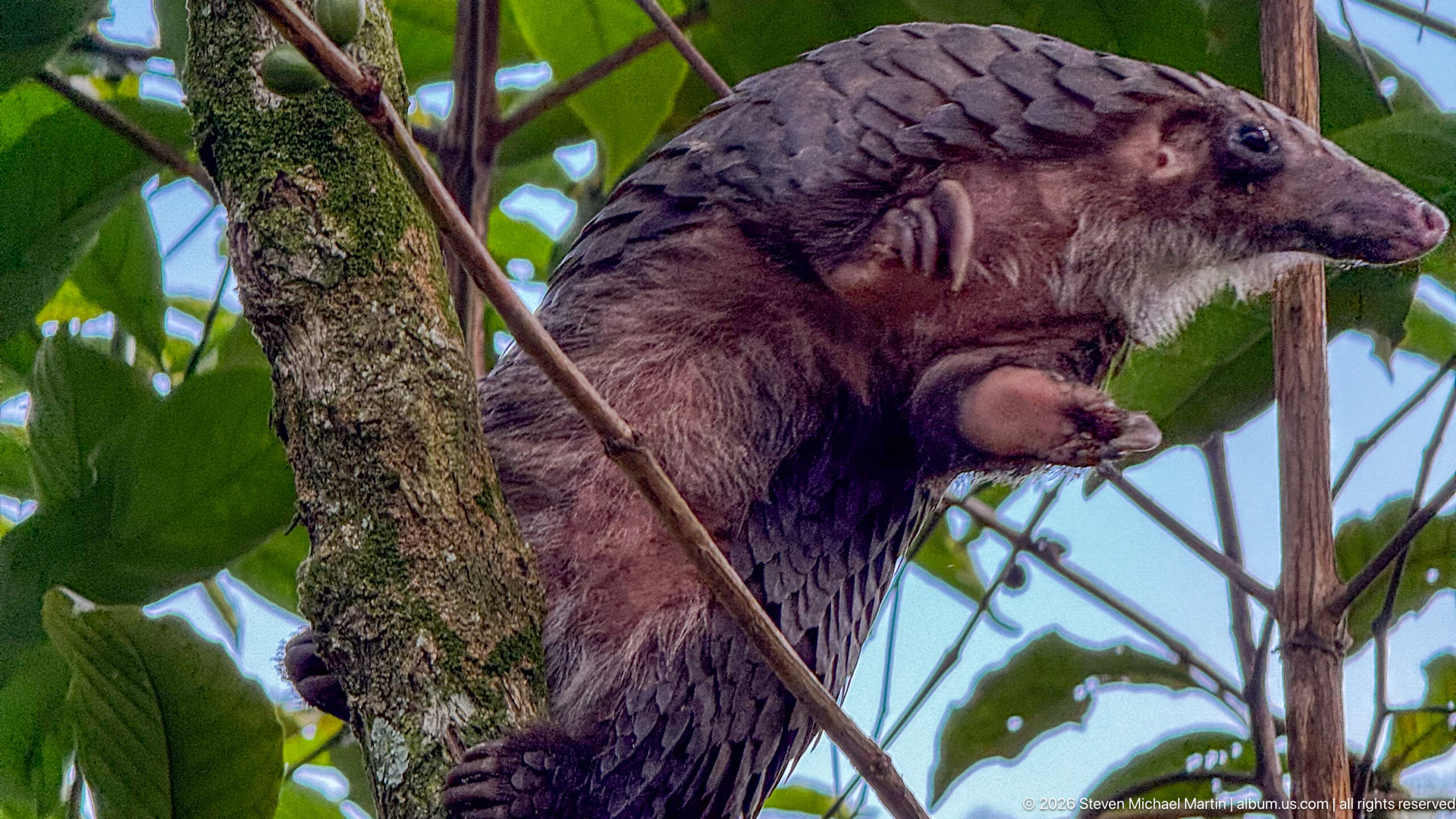
Perched beside a tree trunk, a white-bellied tree pangolin raises its head in a close three-quarter portrait. The view reveals a small dark eye, elongated tapered snout, powerful curved foreclaws, and overlapping scales that descend from the crown across the shoulders. Sparse facial and belly hair softens the otherwise armored profile, offering a detailed look at the species’ contrasting textures.
Caption
Perched beside a tree trunk, a white-bellied tree pangolin raises its head in a close three-quarter portrait. The view reveals a small dark eye, elongated tapered snout, powerful curved foreclaws, and overlapping scales that descend from the crown across the shoulders. Sparse facial and belly hair softens the otherwise armored profile, offering a detailed look at the species’ contrasting textures.
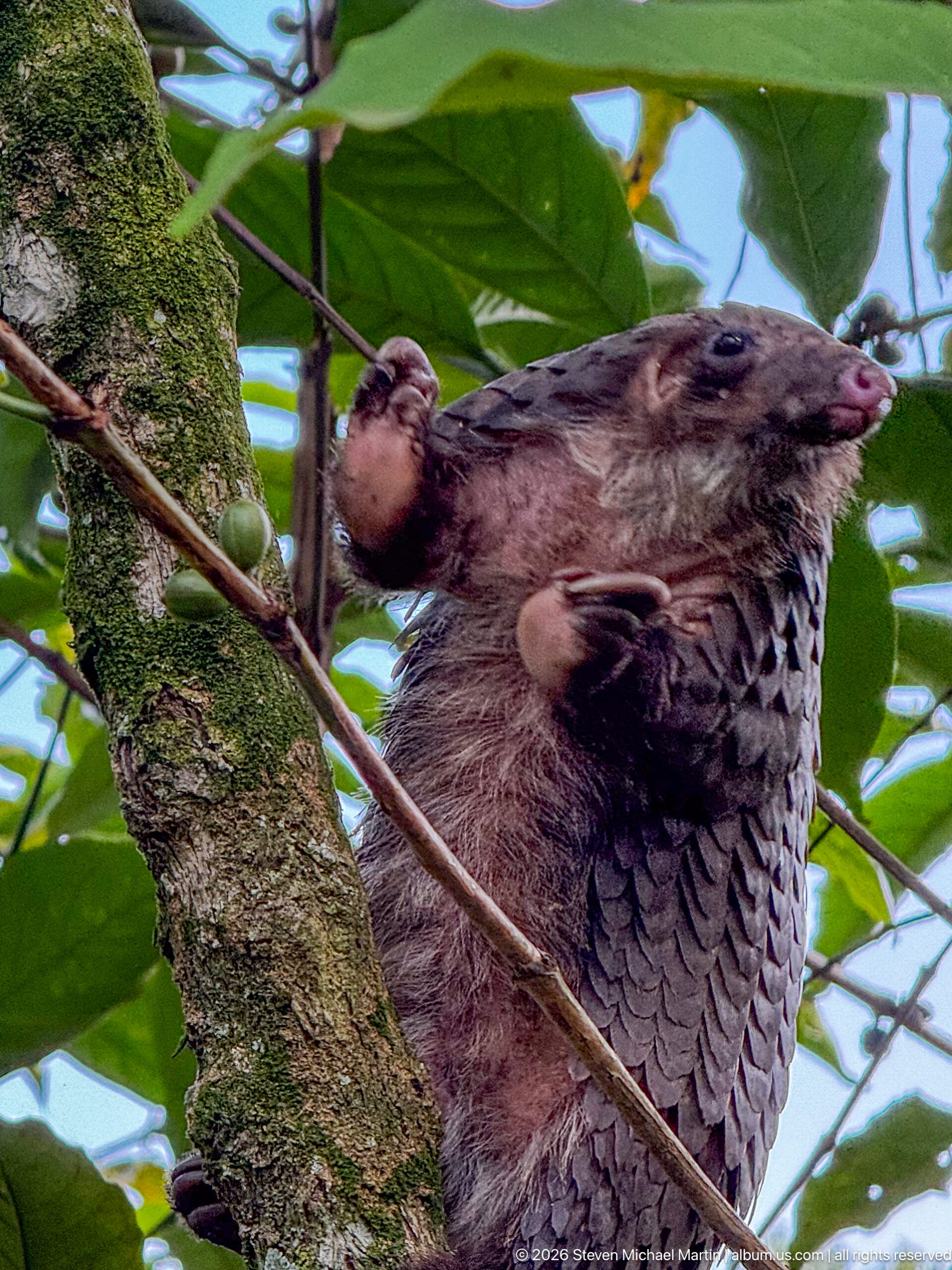
A white-bellied tree pangolin holds an upright position against a mossy trunk, forefeet lifted as it looks into the canopy. Its long snout, rounded ears, coarse facial hair, and layered shoulder scales are unusually clear, while the body remains supported against the bark. The near-frontal angle provides one of the sequence’s strongest views of the animal’s face and grasping forelimbs.
Caption
A white-bellied tree pangolin holds an upright position against a mossy trunk, forefeet lifted as it looks into the canopy. Its long snout, rounded ears, coarse facial hair, and layered shoulder scales are unusually clear, while the body remains supported against the bark. The near-frontal angle provides one of the sequence’s strongest views of the animal’s face and grasping forelimbs.
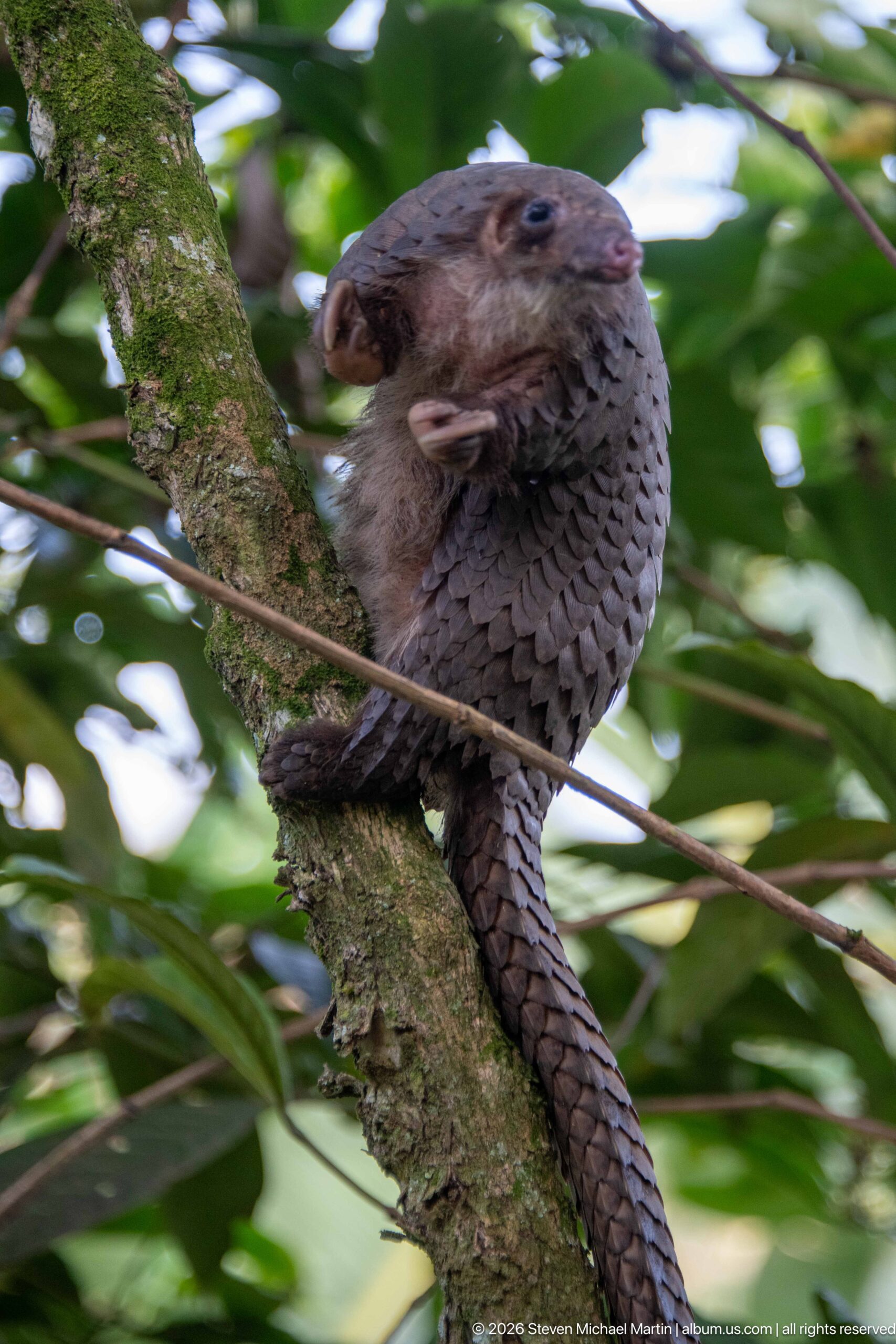
A white-bellied tree pangolin pauses against a trunk, its body curved around the bark and its head turned outward toward the camera. One forefoot grips near the chest while the long tail descends below the perch. The compact pose brings the animal’s armor into a rounded shield-like profile and contrasts the broad overlapping scales with the softer hair of the face and underside.
Caption
A white-bellied tree pangolin pauses against a trunk, its body curved around the bark and its head turned outward toward the camera. One forefoot grips near the chest while the long tail descends below the perch. The compact pose brings the animal’s armor into a rounded shield-like profile and contrasts the broad overlapping scales with the softer hair of the face and underside.
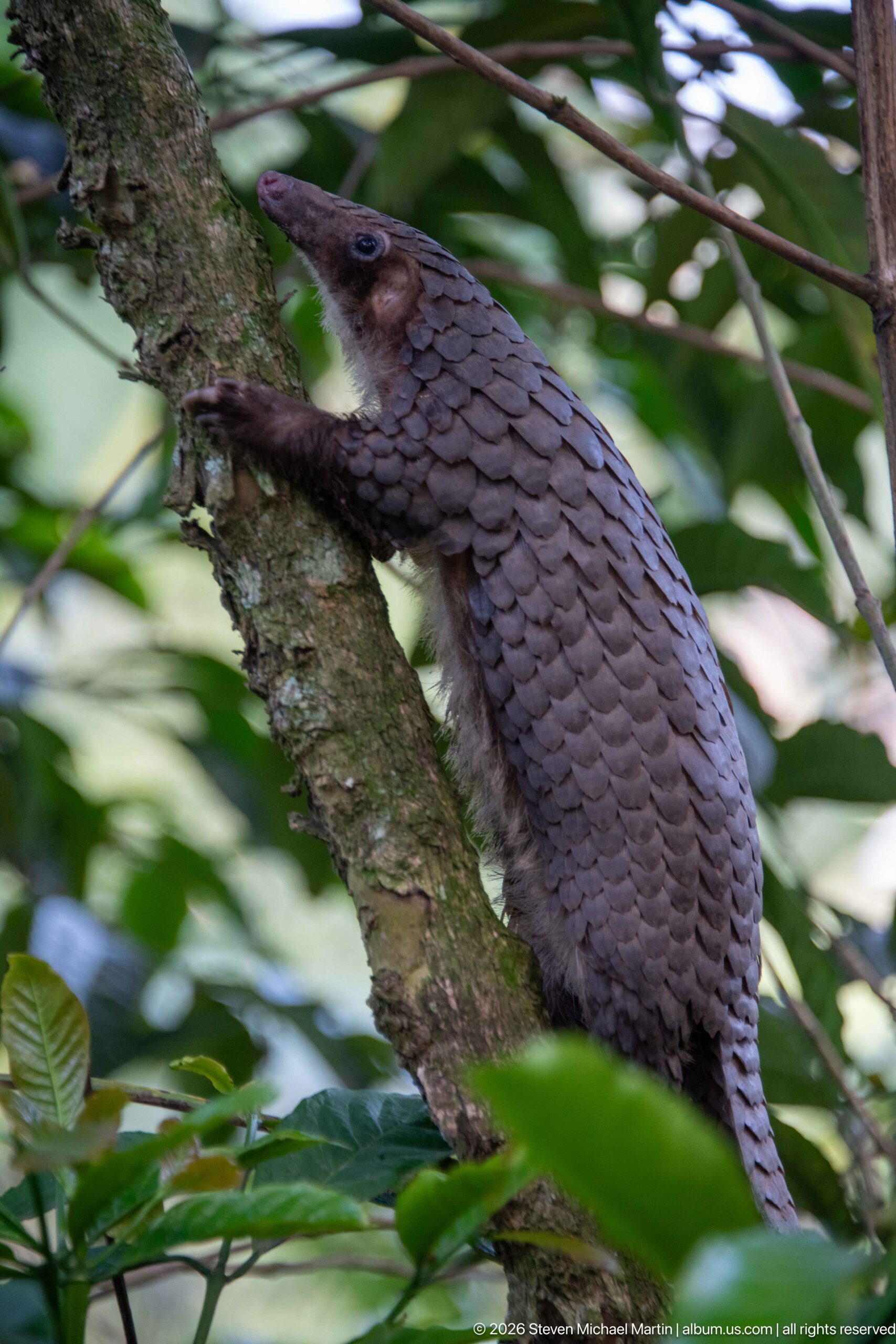
A white-bellied tree pangolin climbs a diagonal trunk with its body held low against the bark. Broad, overlapping scales form neat rows from shoulders to tail, while the small head reaches around the upper side of the trunk. The side-on composition emphasizes how closely the animal can conform to a branch or trunk, keeping its center of gravity near the climbing surface.
Caption
A white-bellied tree pangolin climbs a diagonal trunk with its body held low against the bark. Broad, overlapping scales form neat rows from shoulders to tail, while the small head reaches around the upper side of the trunk. The side-on composition emphasizes how closely the animal can conform to a branch or trunk, keeping its center of gravity near the climbing surface.
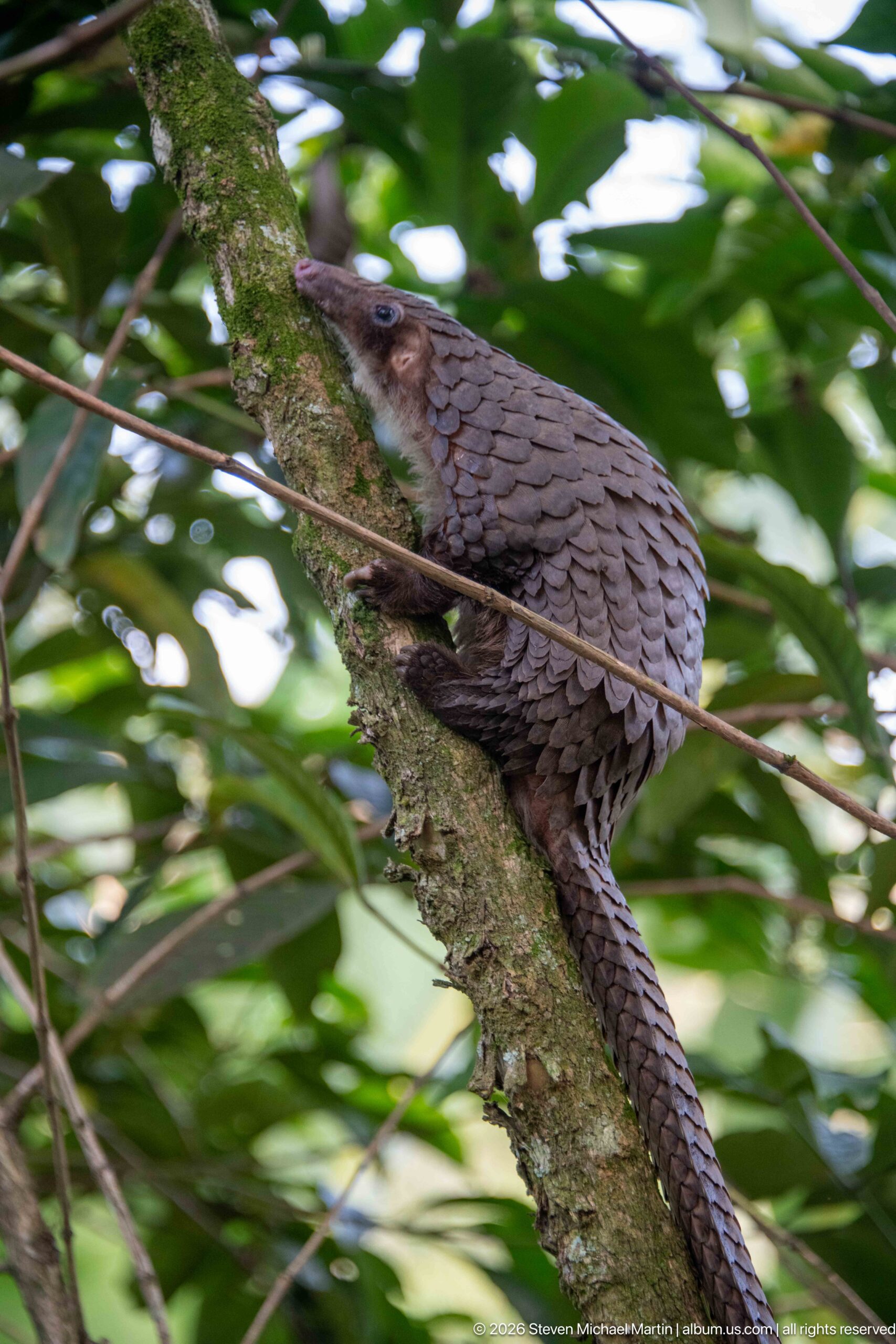
Partly hidden by the trunk and surrounding leaves, a white-bellied tree pangolin hugs a diagonal tree with its head largely obscured. The photograph concentrates on the layered armor across the back and the long tail extending down the bark. This less frontal view is useful for showing how the scale rows overlap like shingles and follow the contours of the animal’s flexible body.
Caption
Partly hidden by the trunk and surrounding leaves, a white-bellied tree pangolin hugs a diagonal tree with its head largely obscured. The photograph concentrates on the layered armor across the back and the long tail extending down the bark. This less frontal view is useful for showing how the scale rows overlap like shingles and follow the contours of the animal’s flexible body.
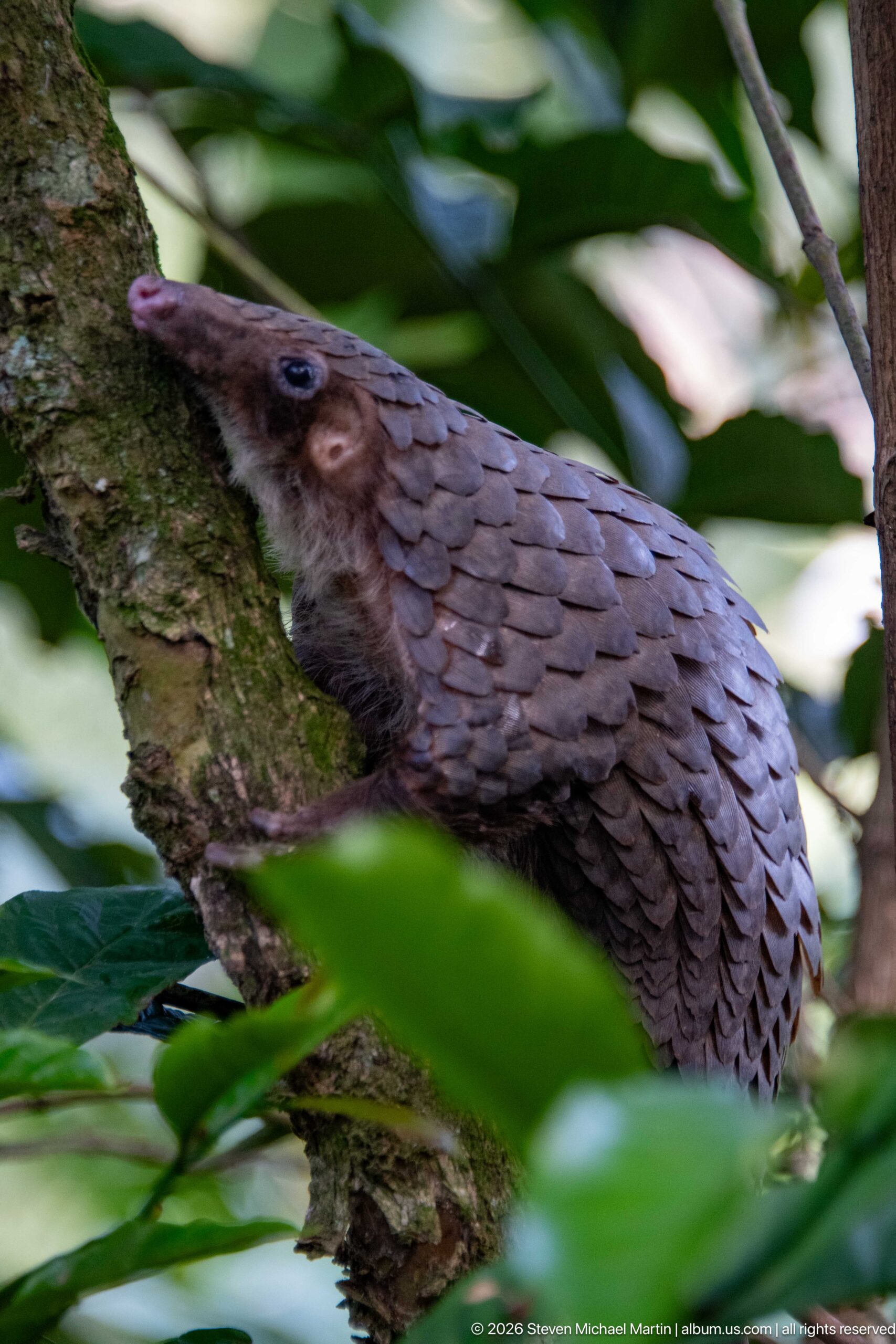
A white-bellied tree pangolin rounds a mossy trunk in a close side view, its pointed snout lifted as the forelimbs grip the bark. Layered scales cover the shoulder and flank, catching soft light beneath the canopy, while blurred leaves frame the animal at close range. The composition focuses attention on the transition from the hairy face and throat to the protective armor of the body.
Caption
A white-bellied tree pangolin rounds a mossy trunk in a close side view, its pointed snout lifted as the forelimbs grip the bark. Layered scales cover the shoulder and flank, catching soft light beneath the canopy, while blurred leaves frame the animal at close range. The composition focuses attention on the transition from the hairy face and throat to the protective armor of the body.
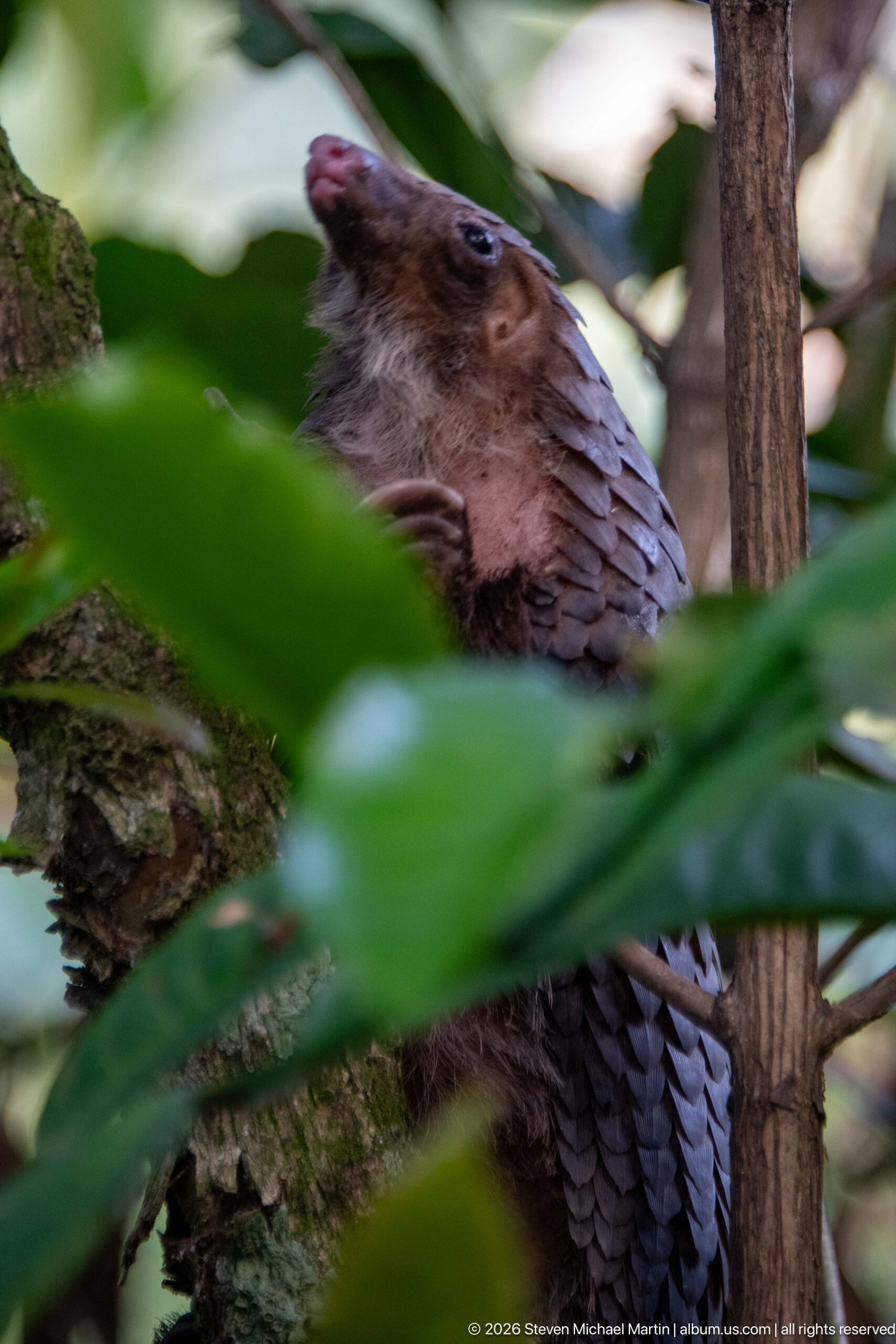
A white-bellied tree pangolin threads through dense vegetation, its head and armored flank appearing between broad foreground leaves. The foliage partially screens the body, reproducing the fragmented views typical of watching a small arboreal mammal in thick cover. Even through the obstruction, the pointed snout and overlapping scales remain visible as the animal moves along the tree.
Caption
A white-bellied tree pangolin threads through dense vegetation, its head and armored flank appearing between broad foreground leaves. The foliage partially screens the body, reproducing the fragmented views typical of watching a small arboreal mammal in thick cover. Even through the obstruction, the pointed snout and overlapping scales remain visible as the animal moves along the tree.
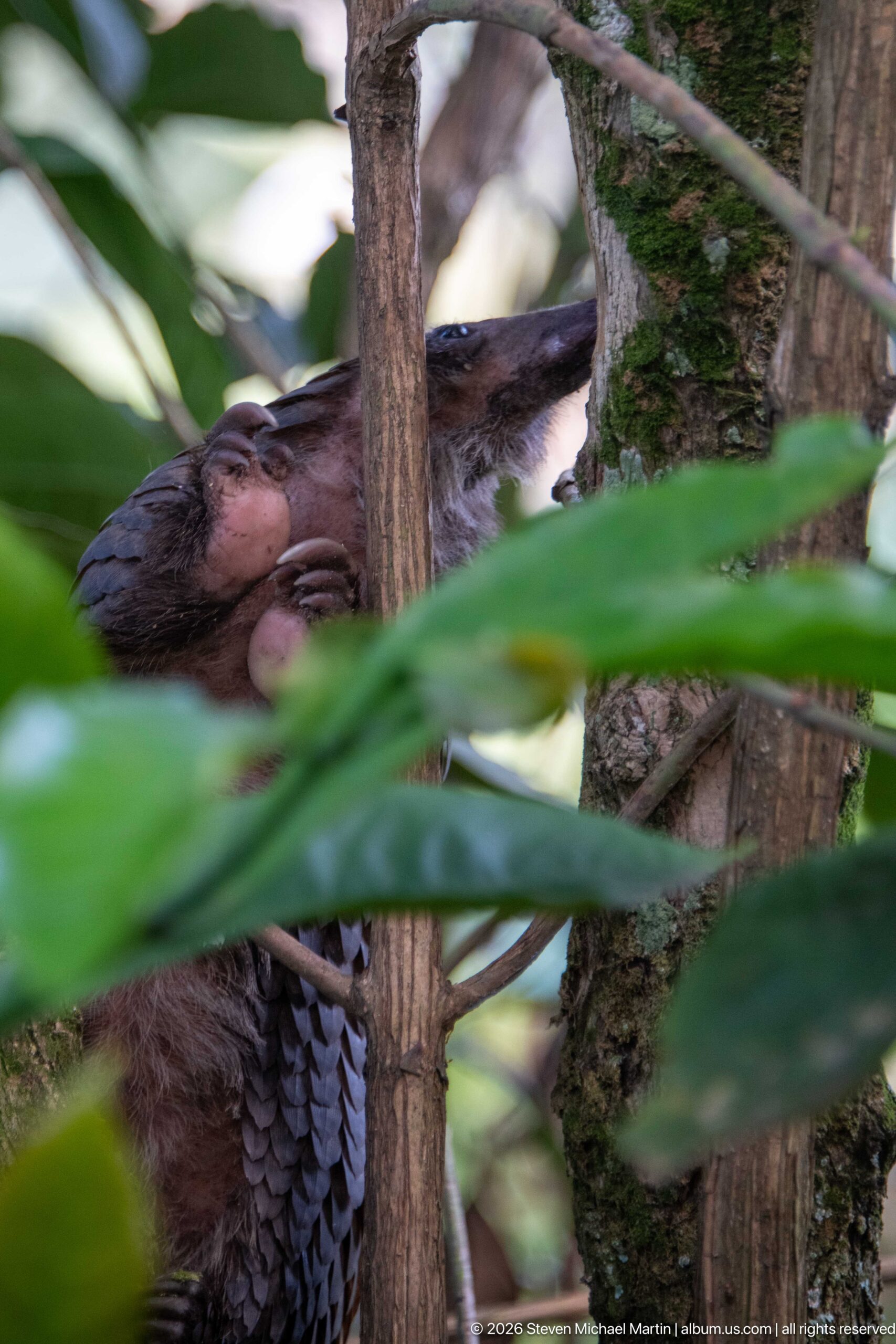
A white-bellied tree pangolin works through a tight cluster of trunks and stems, with much of its body screened by foreground leaves. Its head reaches around a vertical stem while the forelimbs clasp the wood and overlapping scales remain visible along the flank. The compressed space illustrates the animal’s ability to maneuver among closely spaced supports rather than along a single open branch.
Caption
A white-bellied tree pangolin works through a tight cluster of trunks and stems, with much of its body screened by foreground leaves. Its head reaches around a vertical stem while the forelimbs clasp the wood and overlapping scales remain visible along the flank. The compressed space illustrates the animal’s ability to maneuver among closely spaced supports rather than along a single open branch.
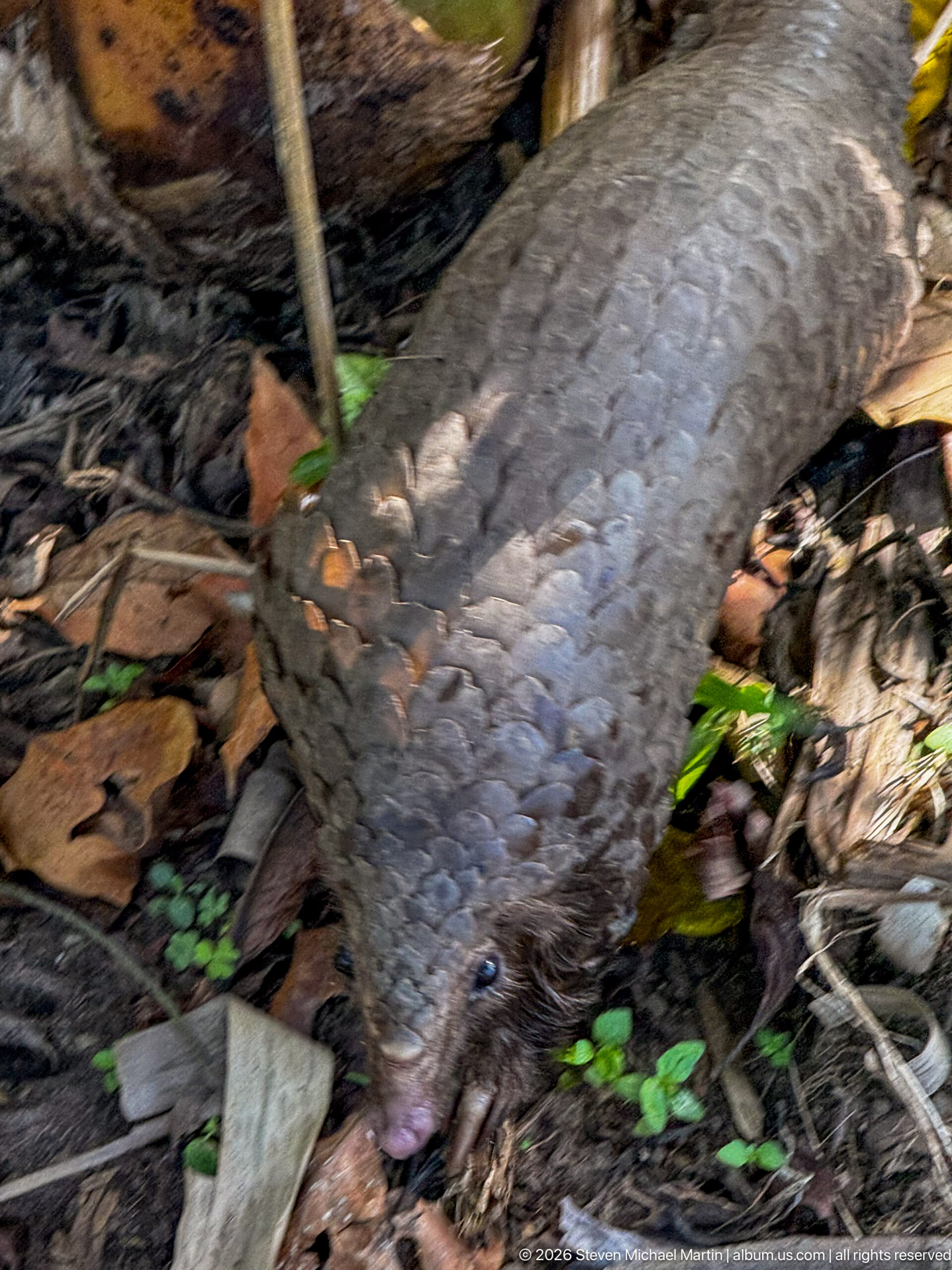
A white-bellied tree pangolin walks across leaf litter with its head held low, the broad armored back dominating the close frame. Sunlight catches individual scale edges, revealing their overlapping arrangement from shoulders toward the tail. The animal’s narrow face and dark eye remain visible at the front, giving this ground-level portrait a clear sense of forward movement and close inspection of the substrate.
Caption
A white-bellied tree pangolin walks across leaf litter with its head held low, the broad armored back dominating the close frame. Sunlight catches individual scale edges, revealing their overlapping arrangement from shoulders toward the tail. The animal’s narrow face and dark eye remain visible at the front, giving this ground-level portrait a clear sense of forward movement and close inspection of the substrate.
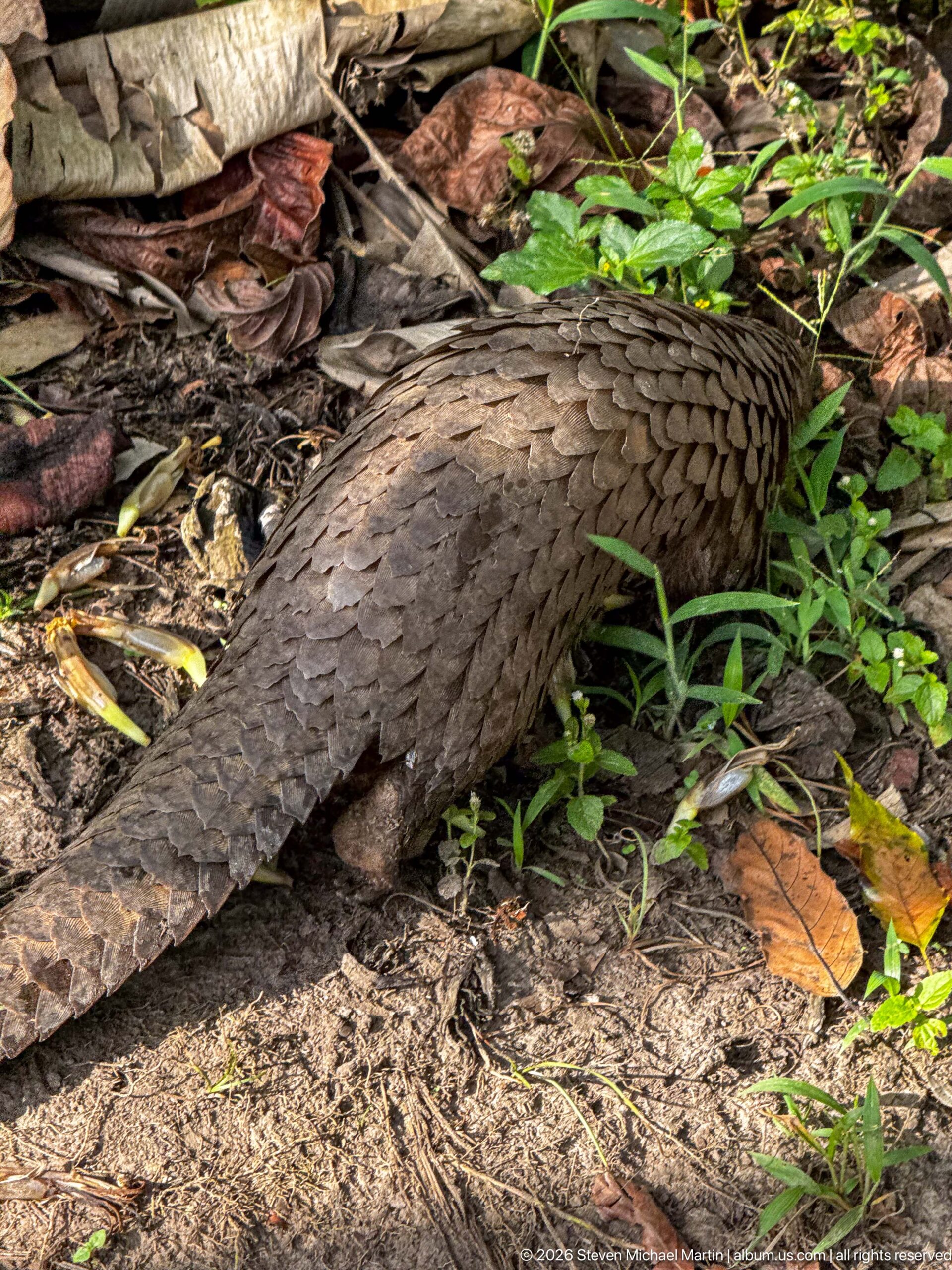
A white-bellied tree pangolin moves through low green vegetation and fallen leaves, seen from behind at close range. Broad overlapping scales cover the back like layered plates and continue onto the tail, while the head is hidden beyond the right edge of the body. Sunlight across the armor brings out subtle brown tones and the raised edges of individual scales.
Caption
A white-bellied tree pangolin moves through low green vegetation and fallen leaves, seen from behind at close range. Broad overlapping scales cover the back like layered plates and continue onto the tail, while the head is hidden beyond the right edge of the body. Sunlight across the armor brings out subtle brown tones and the raised edges of individual scales.
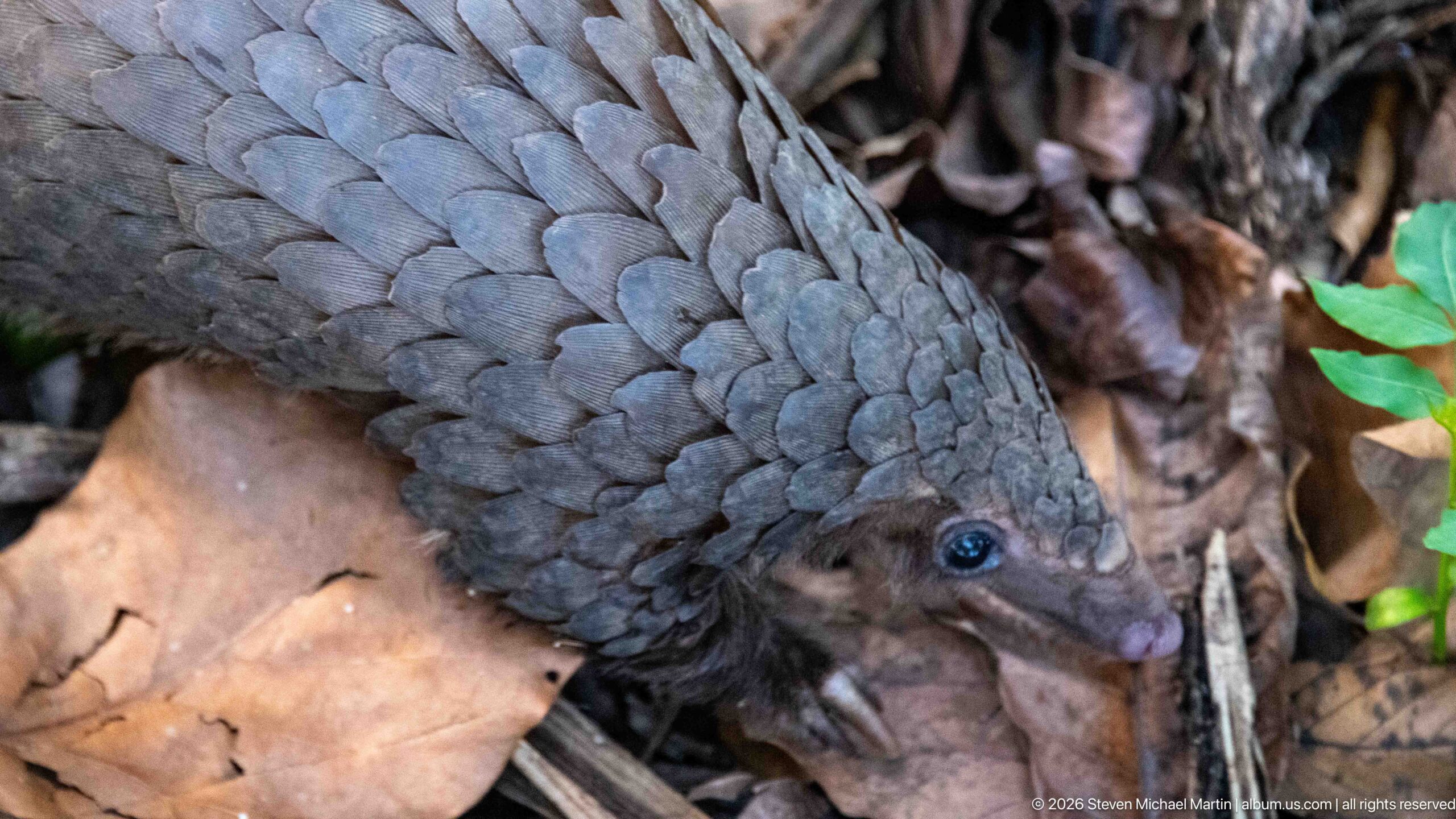
On the forest floor, a white-bellied tree pangolin lowers its pointed snout toward dry leaves and woody debris. The overhead angle brings the small head, dark eye, and tightly overlapping shoulder scales into unusually sharp relief. With the body angled diagonally through the frame, the photograph shifts attention from climbing behavior to ground-level investigation and the protective armor covering the neck and back.
Caption
On the forest floor, a white-bellied tree pangolin lowers its pointed snout toward dry leaves and woody debris. The overhead angle brings the small head, dark eye, and tightly overlapping shoulder scales into unusually sharp relief. With the body angled diagonally through the frame, the photograph shifts attention from climbing behavior to ground-level investigation and the protective armor covering the neck and back.
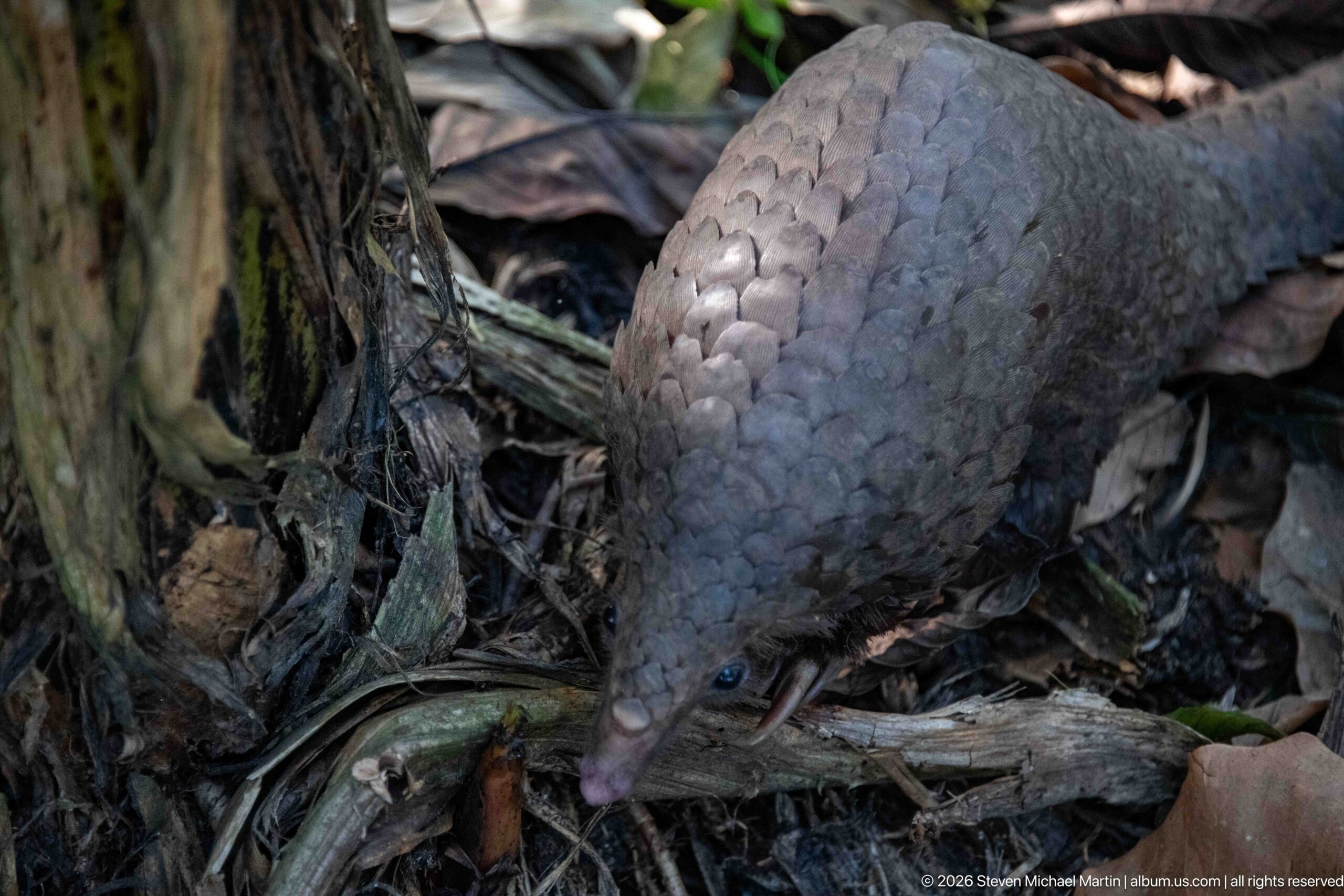
A white-bellied tree pangolin noses into decomposing plant material at ground level, its head tucked beside fibrous wood while the broad scaled back fills much of the frame. The low, close viewpoint emphasizes the contrast between the animal’s smooth-edged overlapping armor and the rough textures of leaf litter, bark, and decaying stems surrounding it.
Caption
A white-bellied tree pangolin noses into decomposing plant material at ground level, its head tucked beside fibrous wood while the broad scaled back fills much of the frame. The low, close viewpoint emphasizes the contrast between the animal’s smooth-edged overlapping armor and the rough textures of leaf litter, bark, and decaying stems surrounding it.
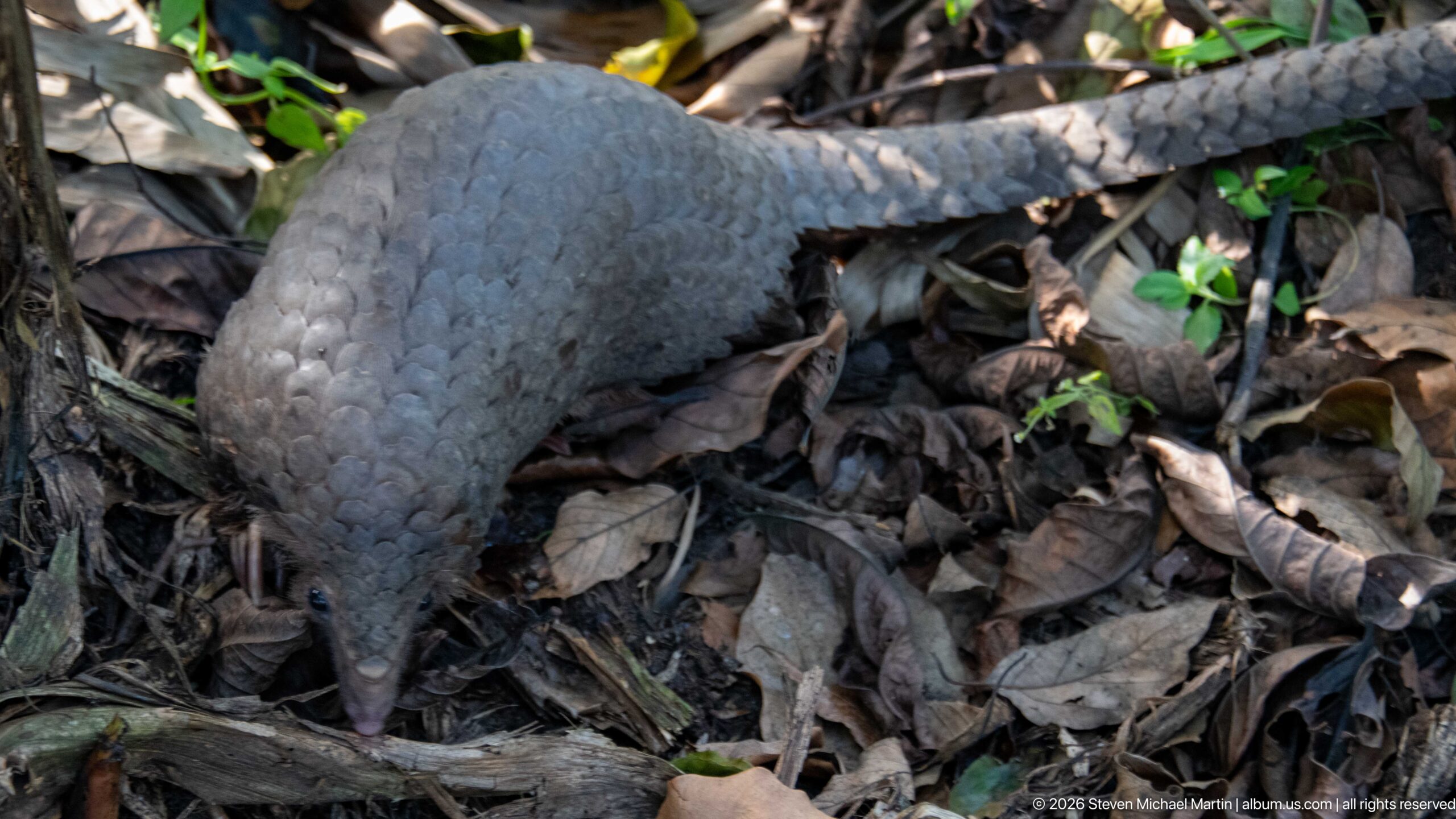
A white-bellied tree pangolin advances through dry leaf litter with its snout close to the ground and its long tail extending behind. Seen almost directly from above, the body forms a tapered armored shape whose scale rows narrow toward the tail. Small green plants punctuate the brown forest floor, helping define the animal’s size and its muted camouflage in ground vegetation.
Caption
A white-bellied tree pangolin advances through dry leaf litter with its snout close to the ground and its long tail extending behind. Seen almost directly from above, the body forms a tapered armored shape whose scale rows narrow toward the tail. Small green plants punctuate the brown forest floor, helping define the animal’s size and its muted camouflage in ground vegetation.
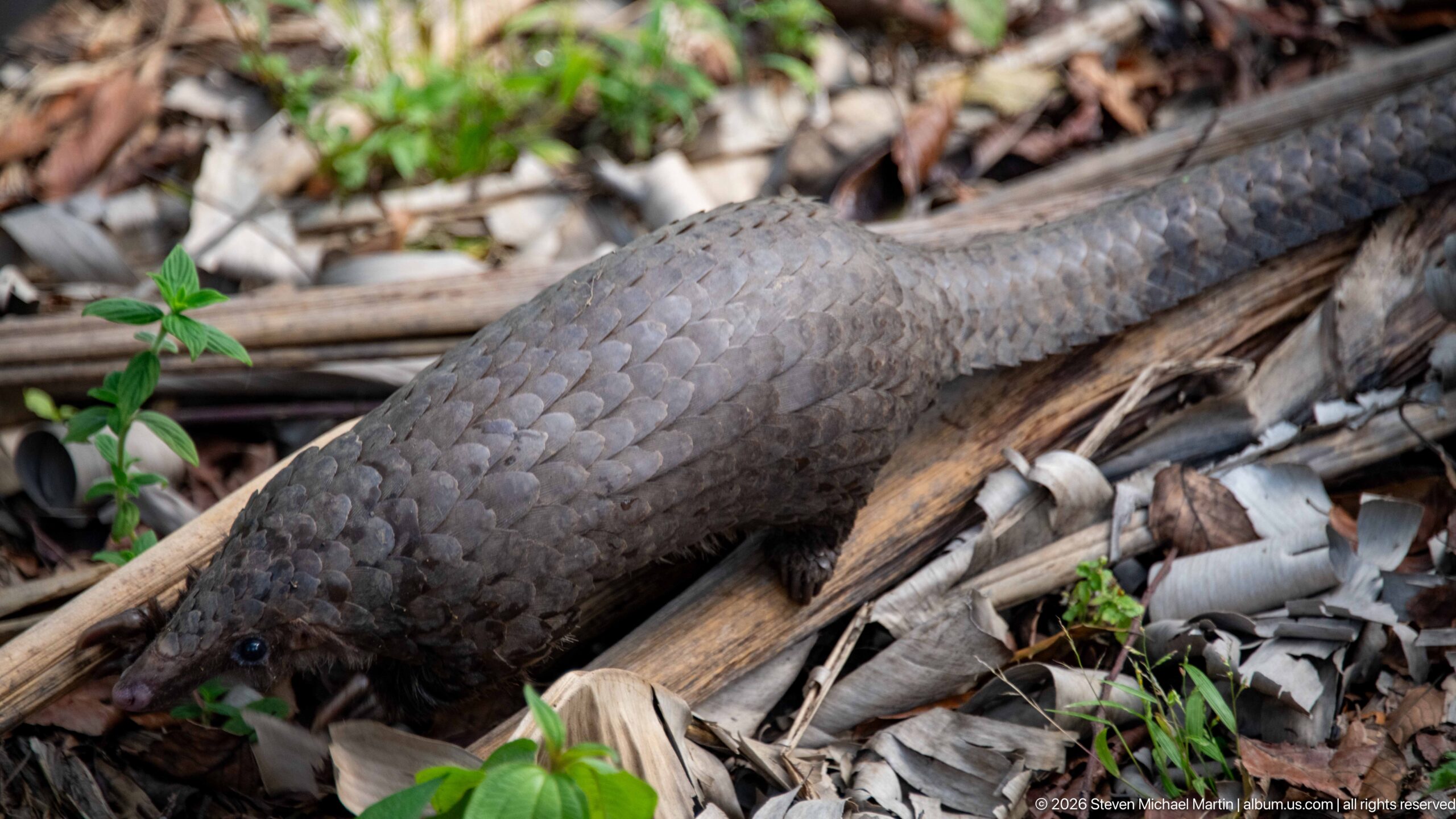
A white-bellied tree pangolin crosses a bed of dried stalks, leaves, and low plants, offering a nearly full view from head to tail. The elongated body tapers into a long armored tail, while the small pointed head stays close to the ground. Compared with tighter portraits, this frame clearly shows the animal’s overall proportions and low-slung gait during terrestrial movement.
Caption
A white-bellied tree pangolin crosses a bed of dried stalks, leaves, and low plants, offering a nearly full view from head to tail. The elongated body tapers into a long armored tail, while the small pointed head stays close to the ground. Compared with tighter portraits, this frame clearly shows the animal’s overall proportions and low-slung gait during terrestrial movement.
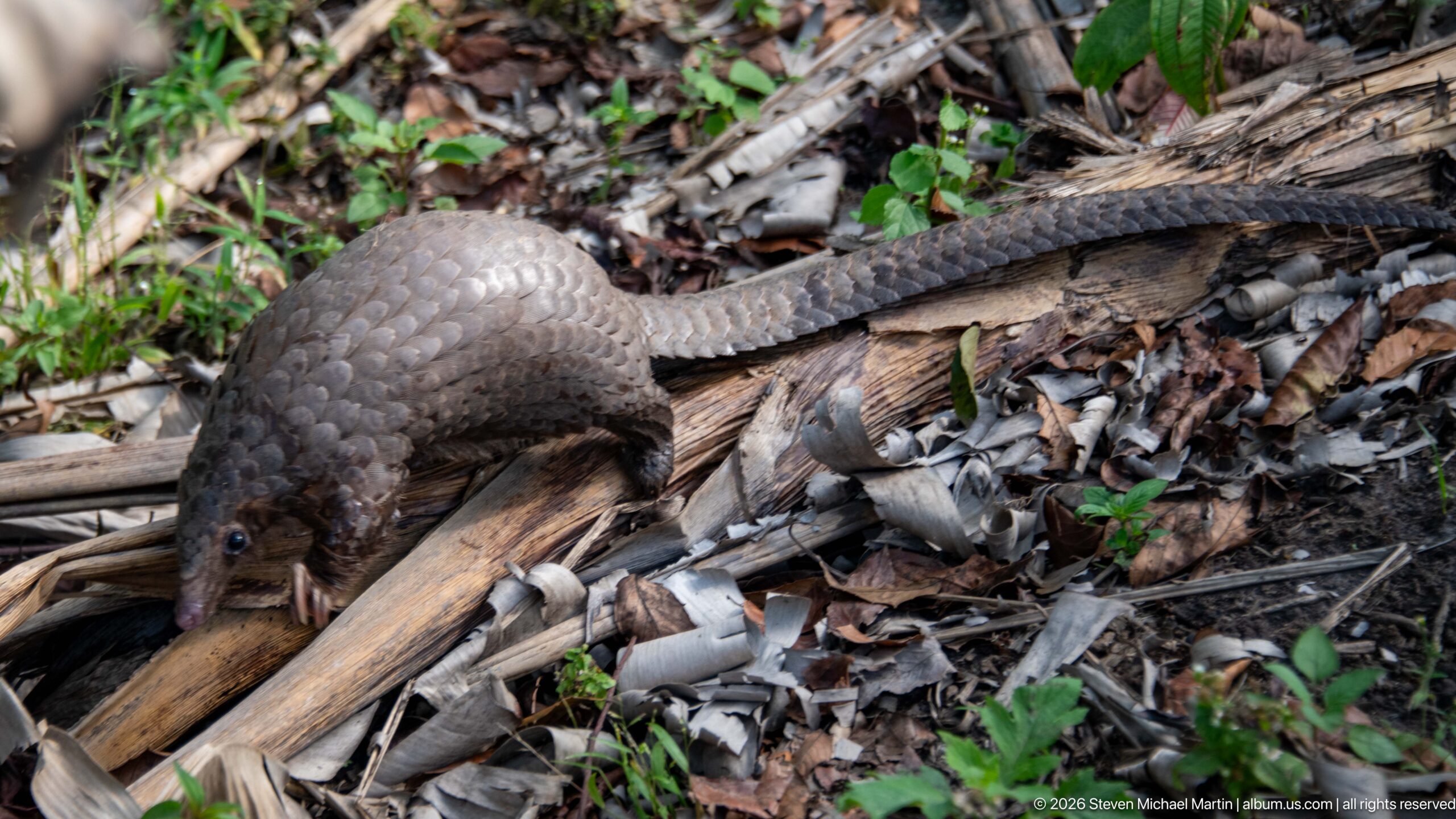
A white-bellied tree pangolin steps diagonally across fallen plant stalks and leaf litter, its head angled toward the lower edge of the frame. The long tail extends behind in a straight line while rows of scales broaden across the rounded torso. The elevated viewpoint separates the animal’s outline from the debris and shows how the tail continues the taper of the armored body.
Caption
A white-bellied tree pangolin steps diagonally across fallen plant stalks and leaf litter, its head angled toward the lower edge of the frame. The long tail extends behind in a straight line while rows of scales broaden across the rounded torso. The elevated viewpoint separates the animal’s outline from the debris and shows how the tail continues the taper of the armored body.
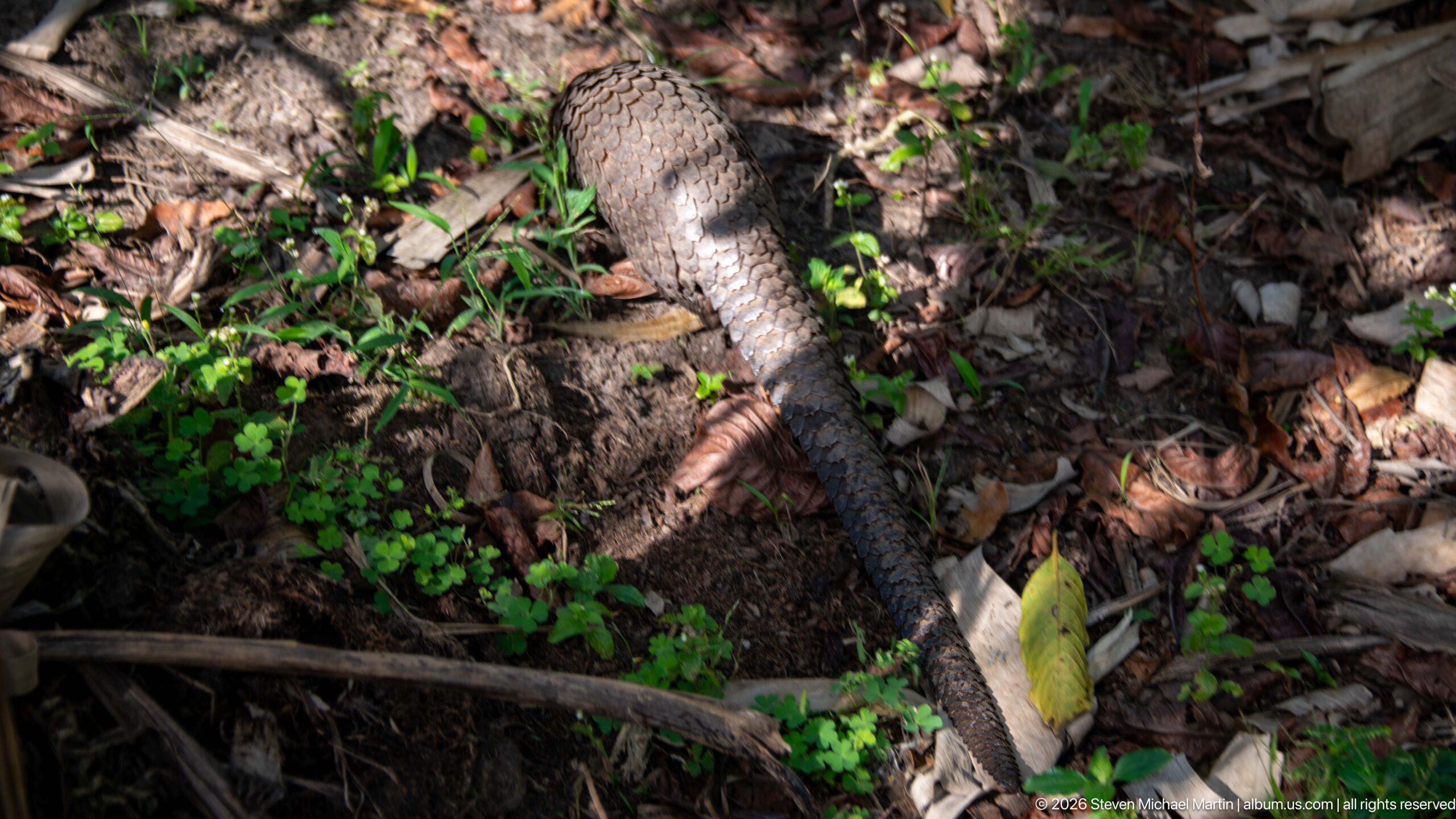
A rear overhead view follows a white-bellied tree pangolin as it moves into patchy ground cover. The head is mostly out of sight, leaving the tapering hindquarters and long armored tail as the dominant forms against dark soil, dry leaves, and small green plants. This angle is especially useful for showing the tail’s dense scale covering and gradual narrowing toward its tip.
Caption
A rear overhead view follows a white-bellied tree pangolin as it moves into patchy ground cover. The head is mostly out of sight, leaving the tapering hindquarters and long armored tail as the dominant forms against dark soil, dry leaves, and small green plants. This angle is especially useful for showing the tail’s dense scale covering and gradual narrowing toward its tip.
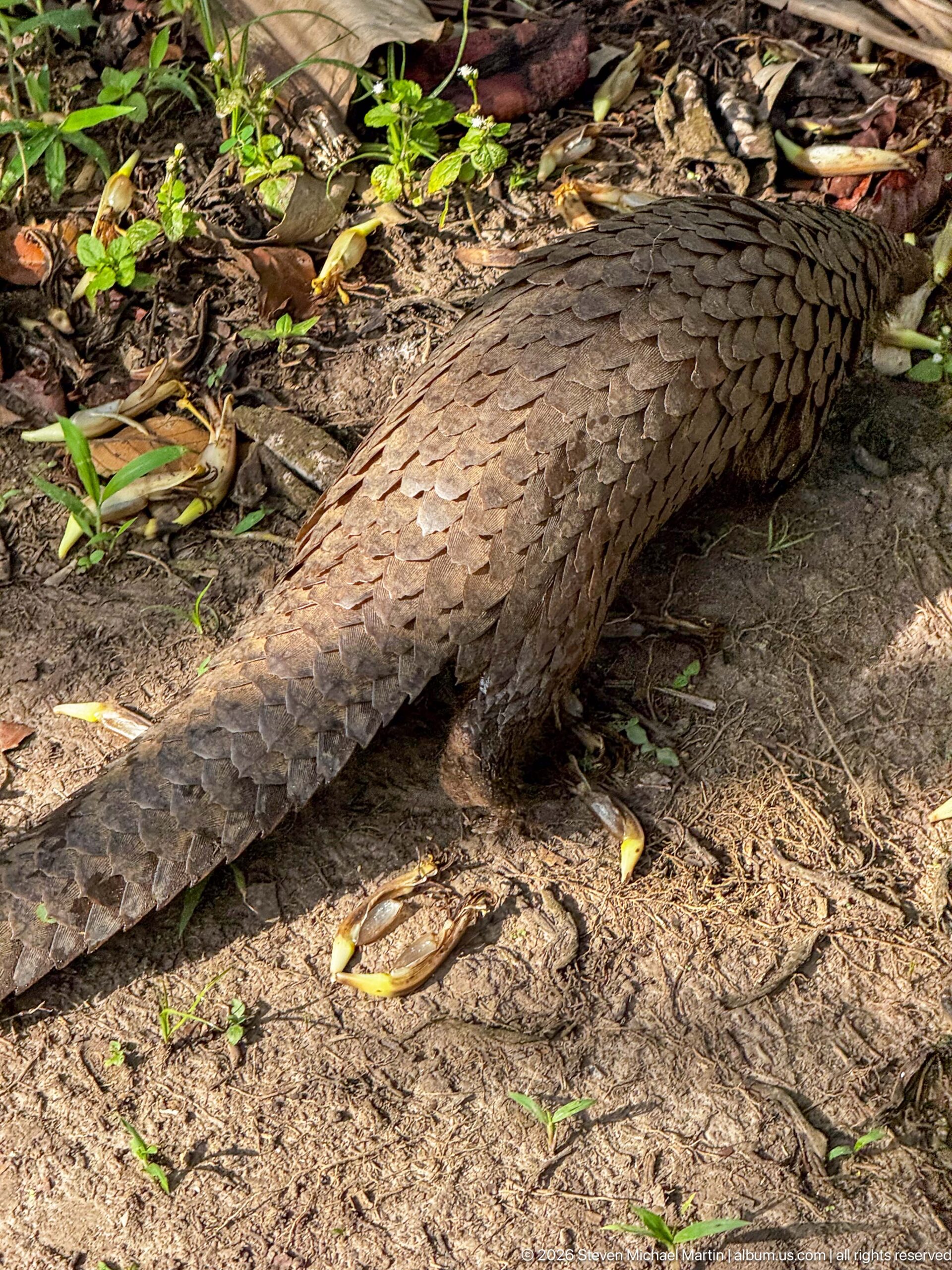
A pangolin crosses bare soil and leaf litter at the rescue center, its long tapering tail and overlapping keratin scales dominating the low rear-quarter view. The animal's sturdy limbs are partly visible beneath the armored body, while scattered leaves and shaded vegetation place the encounter on the forest floor.
Caption
A pangolin crosses bare soil and leaf litter at the rescue center, its long tapering tail and overlapping keratin scales dominating the low rear-quarter view. The animal's sturdy limbs are partly visible beneath the armored body, while scattered leaves and shaded vegetation place the encounter on the forest floor.
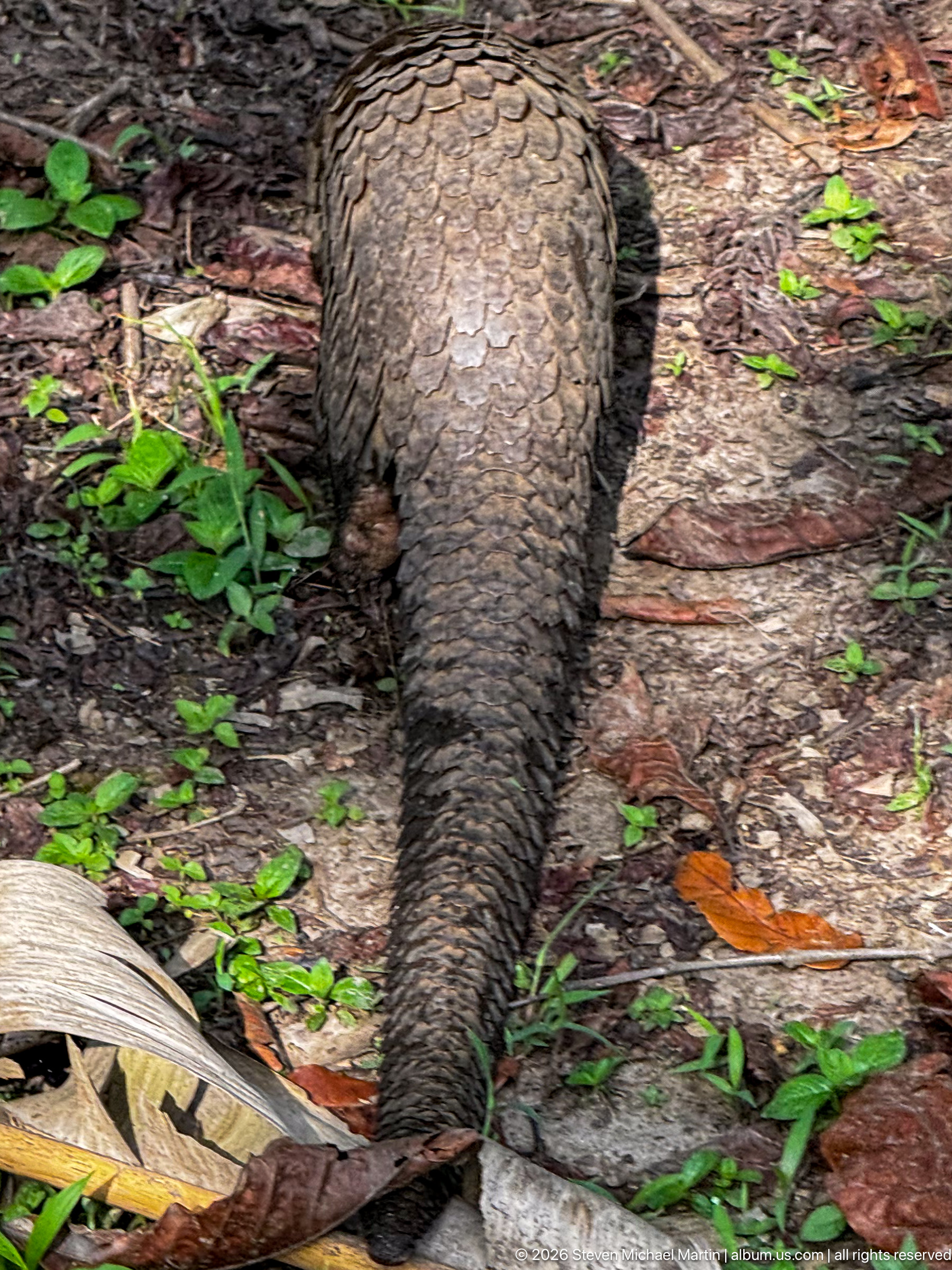
Seen almost directly from above and behind, a pangolin advances along a narrow patch of earth bordered by low vegetation and fallen plant material. The symmetrical armor of broad overlapping scales runs from the rounded back into the elongated tail, providing a particularly clear study of the animal's protective covering.
Caption
Seen almost directly from above and behind, a pangolin advances along a narrow patch of earth bordered by low vegetation and fallen plant material. The symmetrical armor of broad overlapping scales runs from the rounded back into the elongated tail, providing a particularly clear study of the animal's protective covering.
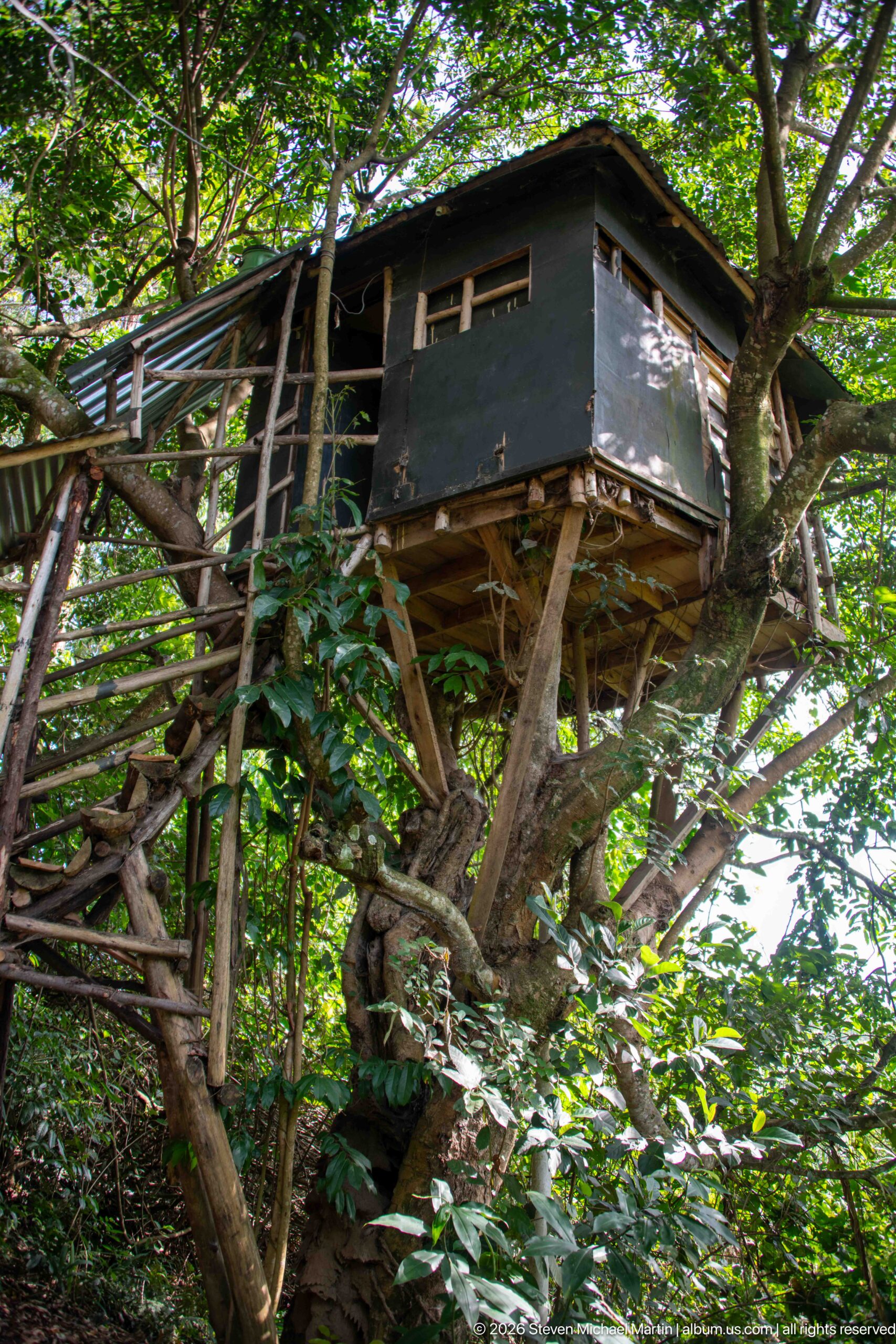
From a lower side angle, an elevated dark-walled building rests on branching timber supports beneath a corrugated roof. Open stair rails and surrounding trunks create a lattice around the structure, emphasizing how the small facility has been fitted into dense woodland rather than a cleared compound.
Caption
From a lower side angle, an elevated dark-walled building rests on branching timber supports beneath a corrugated roof. Open stair rails and surrounding trunks create a lattice around the structure, emphasizing how the small facility has been fitted into dense woodland rather than a cleared compound.
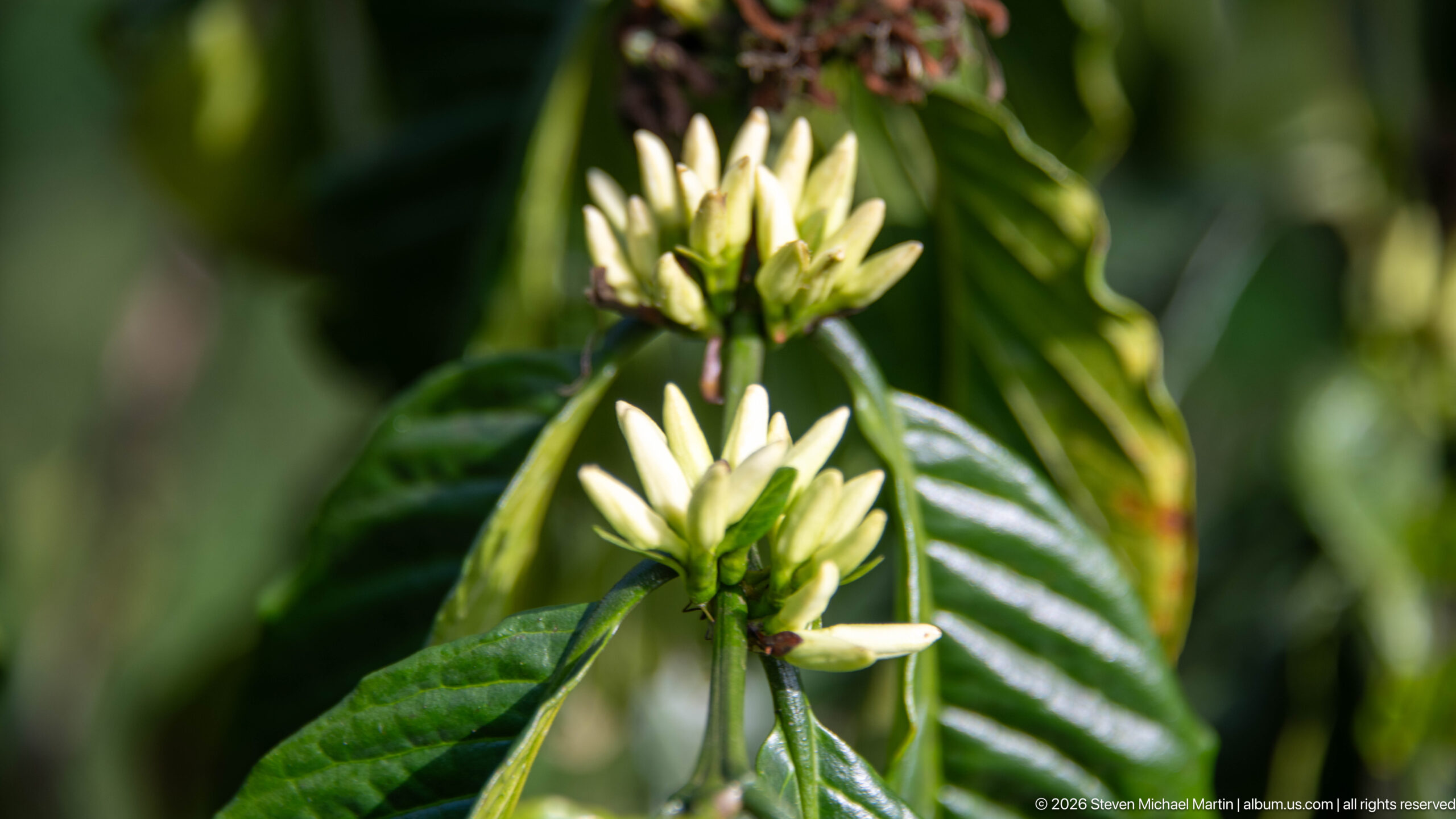
Fresh white blossoms open in compact clusters along a coffee branch, set against glossy, deeply veined green leaves. The narrow tubular flowers and star-like petals are shown at close range, documenting flowering vegetation around the Pangolin Rescue setting rather than the wildlife itself.
Caption
Fresh white blossoms open in compact clusters along a coffee branch, set against glossy, deeply veined green leaves. The narrow tubular flowers and star-like petals are shown at close range, documenting flowering vegetation around the Pangolin Rescue setting rather than the wildlife itself.
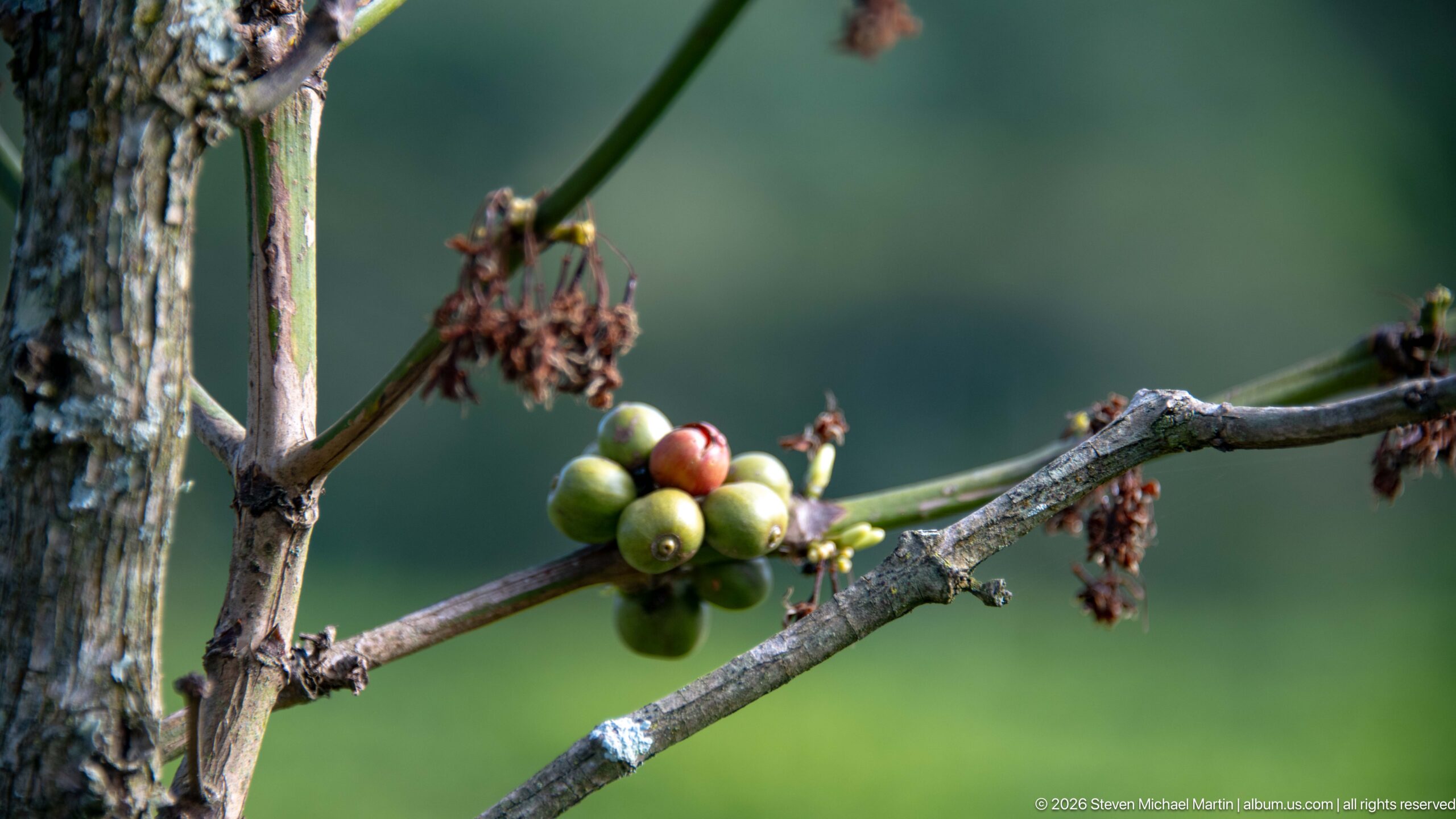
A small cluster of coffee cherries ripens directly from a woody branch, with green fruit transitioning to reddish tones. Dried flower remnants remain at nearby nodes, making this close detail a useful record of the fruiting stage of cultivated coffee vegetation in the surrounding landscape.
Caption
A small cluster of coffee cherries ripens directly from a woody branch, with green fruit transitioning to reddish tones. Dried flower remnants remain at nearby nodes, making this close detail a useful record of the fruiting stage of cultivated coffee vegetation in the surrounding landscape.
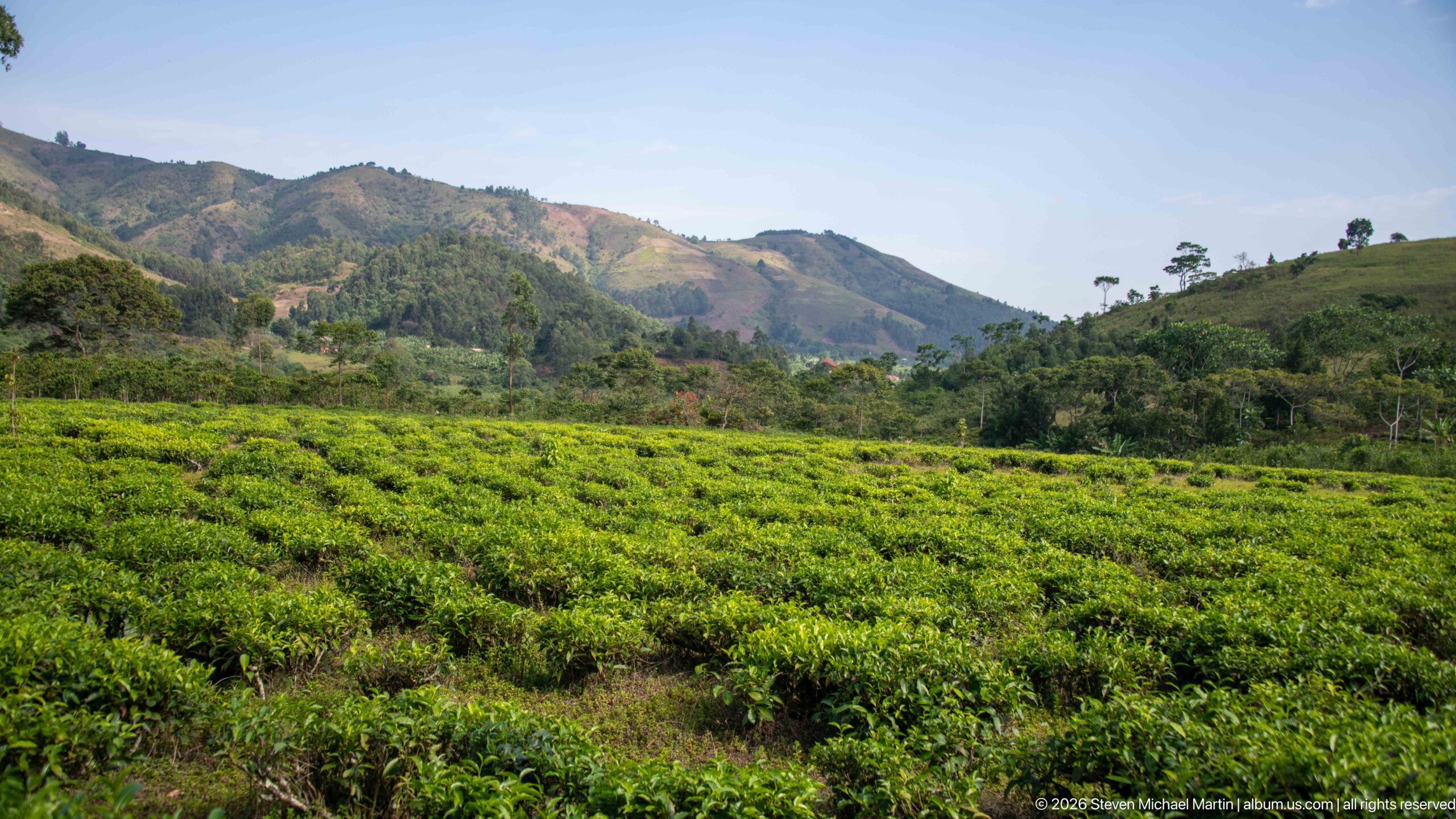
Rows of low, densely planted shrubs spread across a green hillside below a mosaic of taller trees and cleared slopes. The broad view places the rescue-center visit within a cultivated highland landscape, contrasting managed vegetation in the foreground with more varied tree cover and ridges beyond.
Caption
Rows of low, densely planted shrubs spread across a green hillside below a mosaic of taller trees and cleared slopes. The broad view places the rescue-center visit within a cultivated highland landscape, contrasting managed vegetation in the foreground with more varied tree cover and ridges beyond.
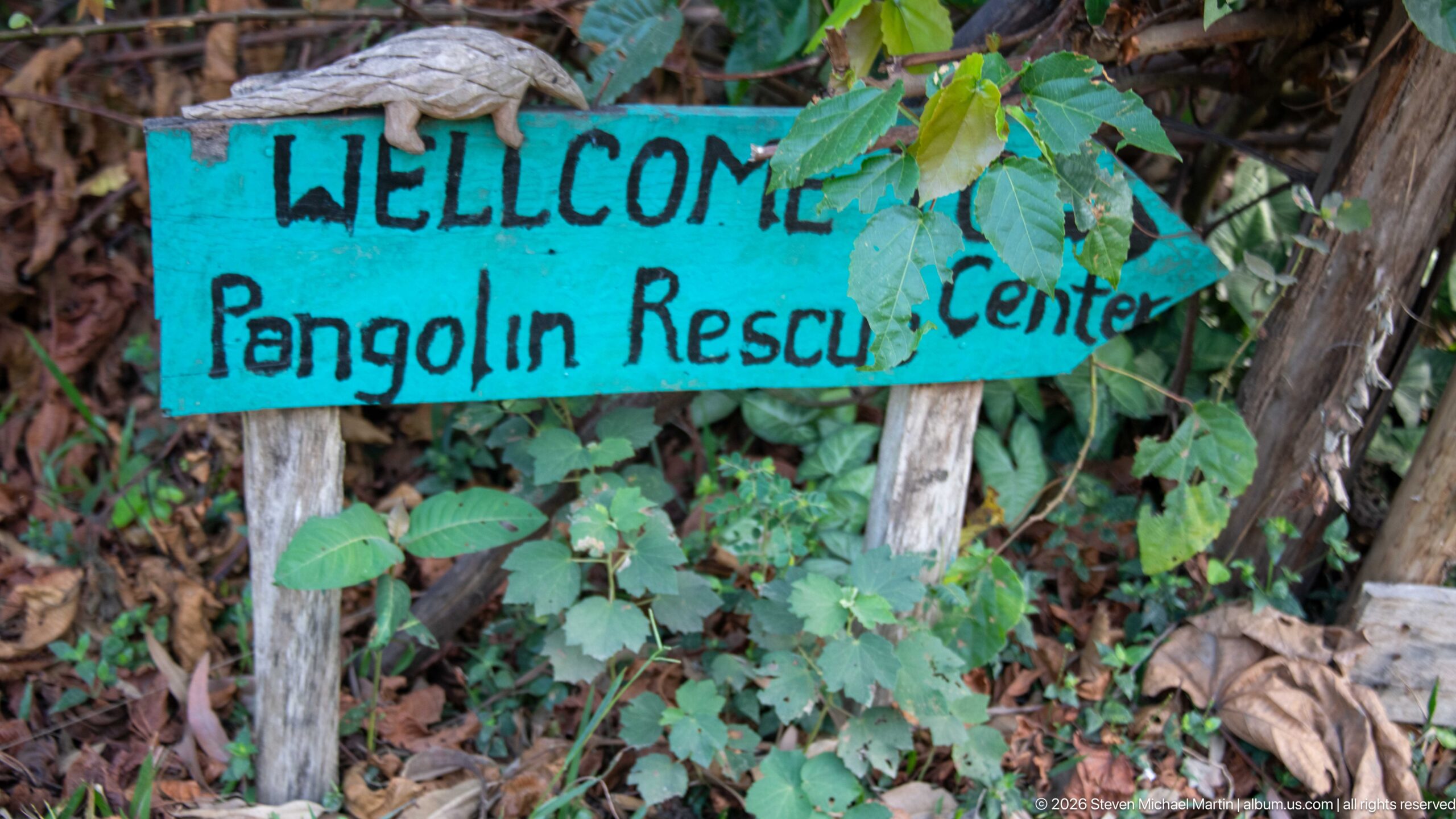
A hand-painted turquoise wooden sign reading “WELCOME Pangolin Rescue Center” is fixed among trunks and leafy undergrowth. Its informal lettering provides direct visual identification of the site and marks the transition from the surrounding vegetation into the rescue-center grounds.
Caption
A hand-painted turquoise wooden sign reading “WELCOME Pangolin Rescue Center” is fixed among trunks and leafy undergrowth. Its informal lettering provides direct visual identification of the site and marks the transition from the surrounding vegetation into the rescue-center grounds.
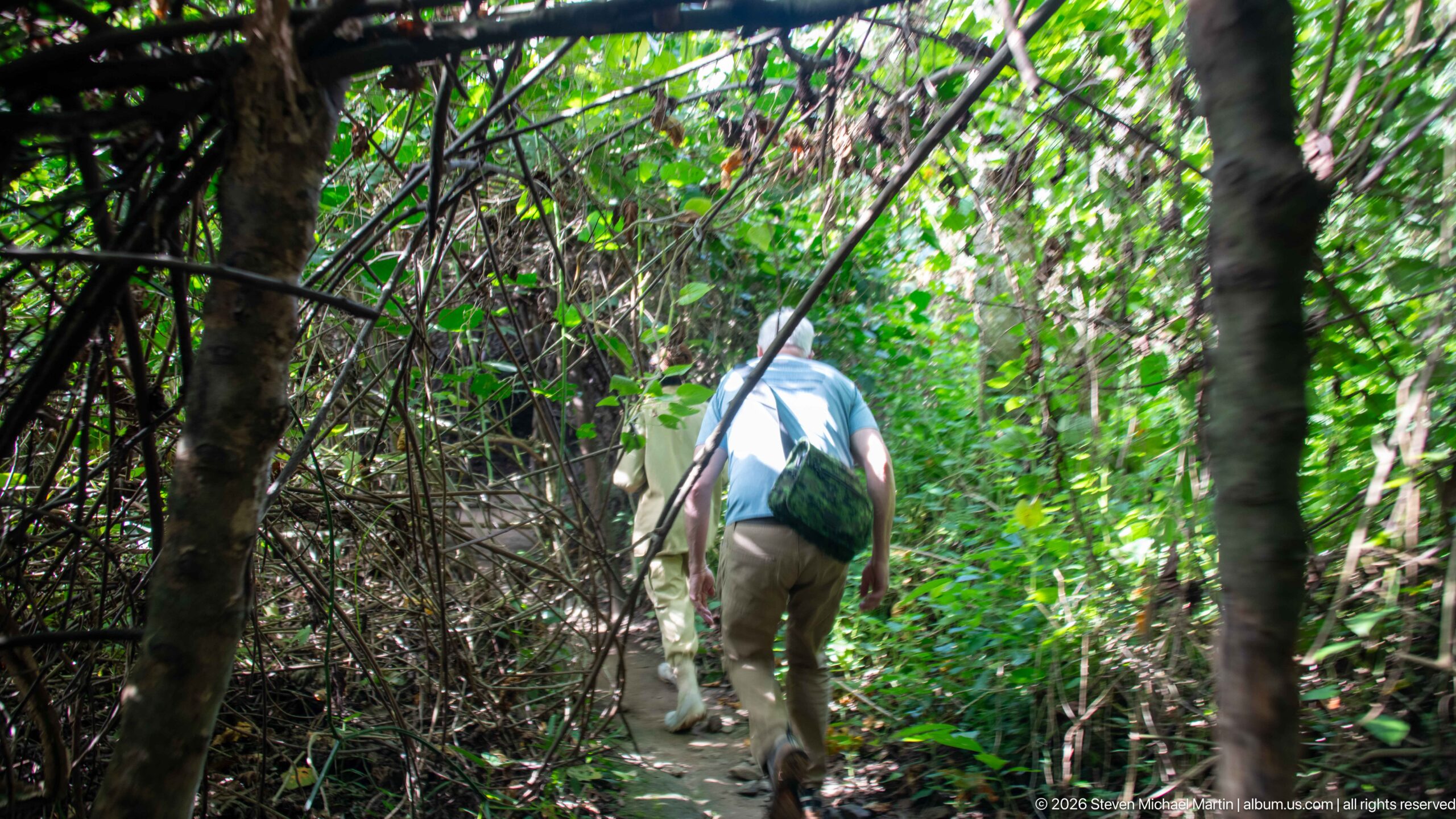
A visitor follows a narrow, enclosed trail through dense tropical vegetation, bending slightly beneath tangled vines and low branches. The confined path and heavy understory convey the wooded setting of the Pangolin Rescue grounds and the on-foot approach through the habitat.
Caption
A visitor follows a narrow, enclosed trail through dense tropical vegetation, bending slightly beneath tangled vines and low branches. The confined path and heavy understory convey the wooded setting of the Pangolin Rescue grounds and the on-foot approach through the habitat.
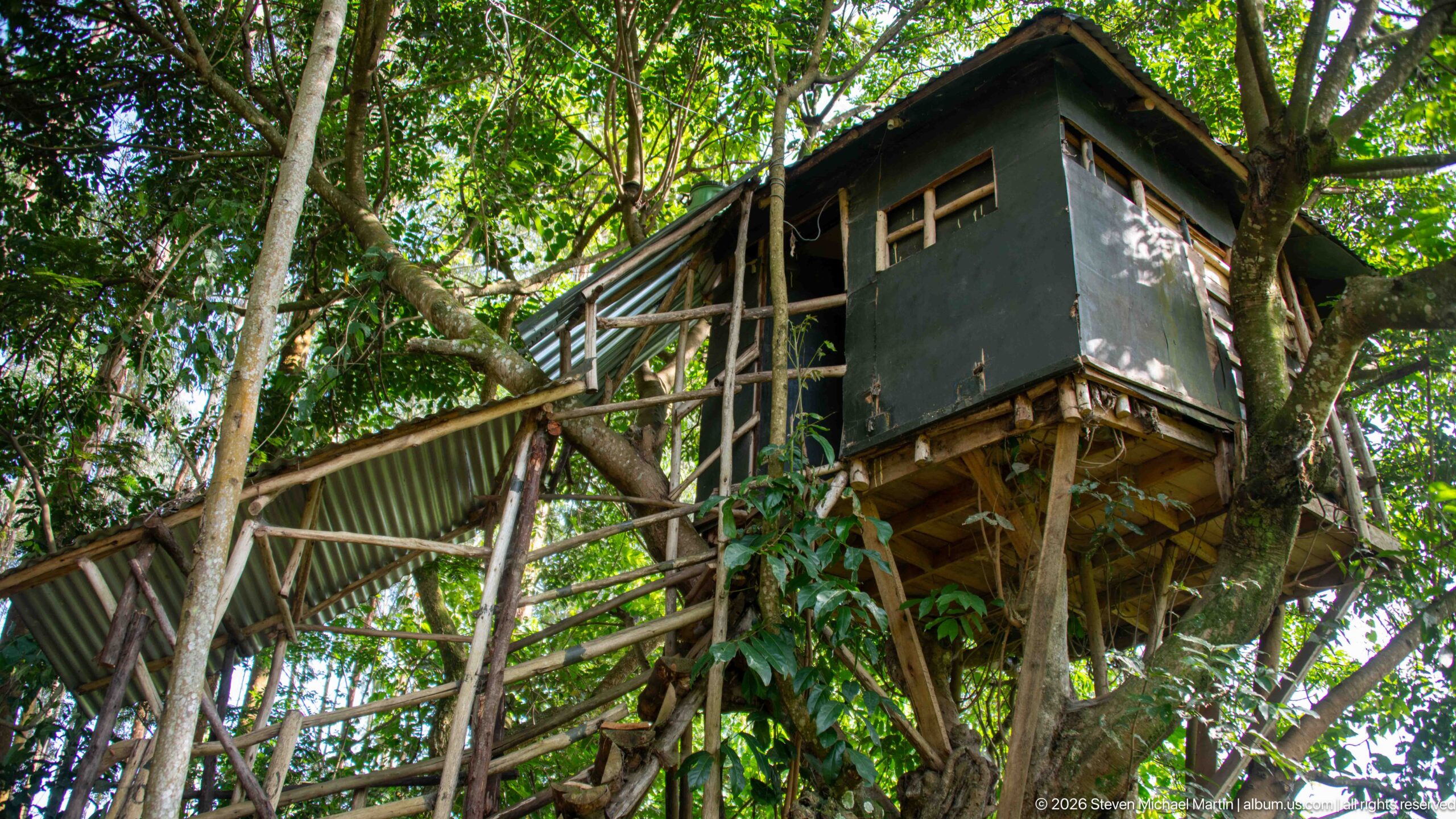
A dark timber-clad room stands elevated among mature trees, reached by a steep rustic staircase and supported by an irregular framework of wooden posts and branches. Seen from below, the structure appears integrated into the forest canopy and forms part of the rescue-center's built environment.
Caption
A dark timber-clad room stands elevated among mature trees, reached by a steep rustic staircase and supported by an irregular framework of wooden posts and branches. Seen from below, the structure appears integrated into the forest canopy and forms part of the rescue-center's built environment.
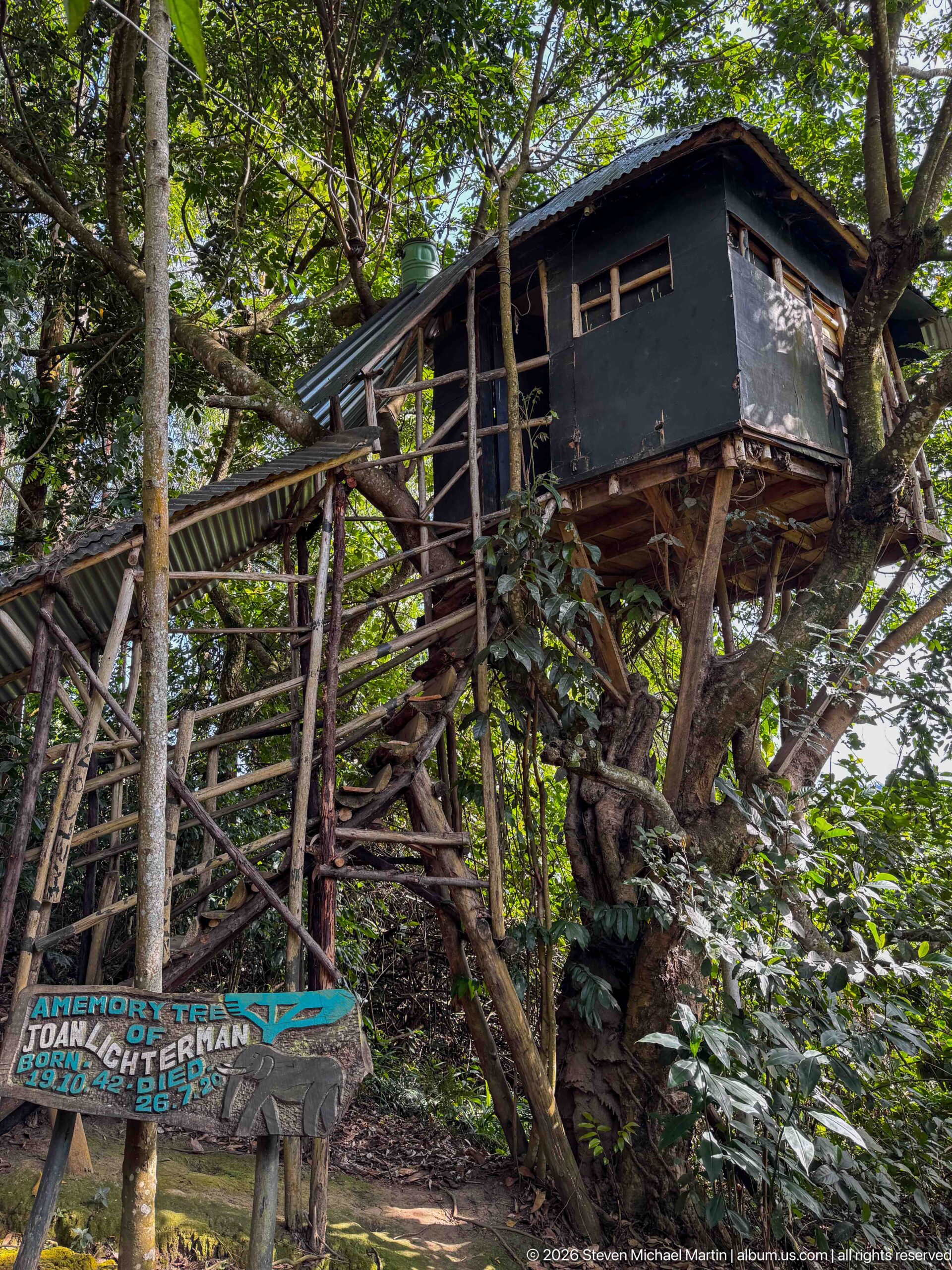
The elevated rescue-center structure rises above a rustic staircase while a painted memorial sign occupies the lower foreground. This wider view connects the site's built environment with a commemorative feature at ground level, all enclosed by mature trees and dense vegetation.
Caption
The elevated rescue-center structure rises above a rustic staircase while a painted memorial sign occupies the lower foreground. This wider view connects the site's built environment with a commemorative feature at ground level, all enclosed by mature trees and dense vegetation.
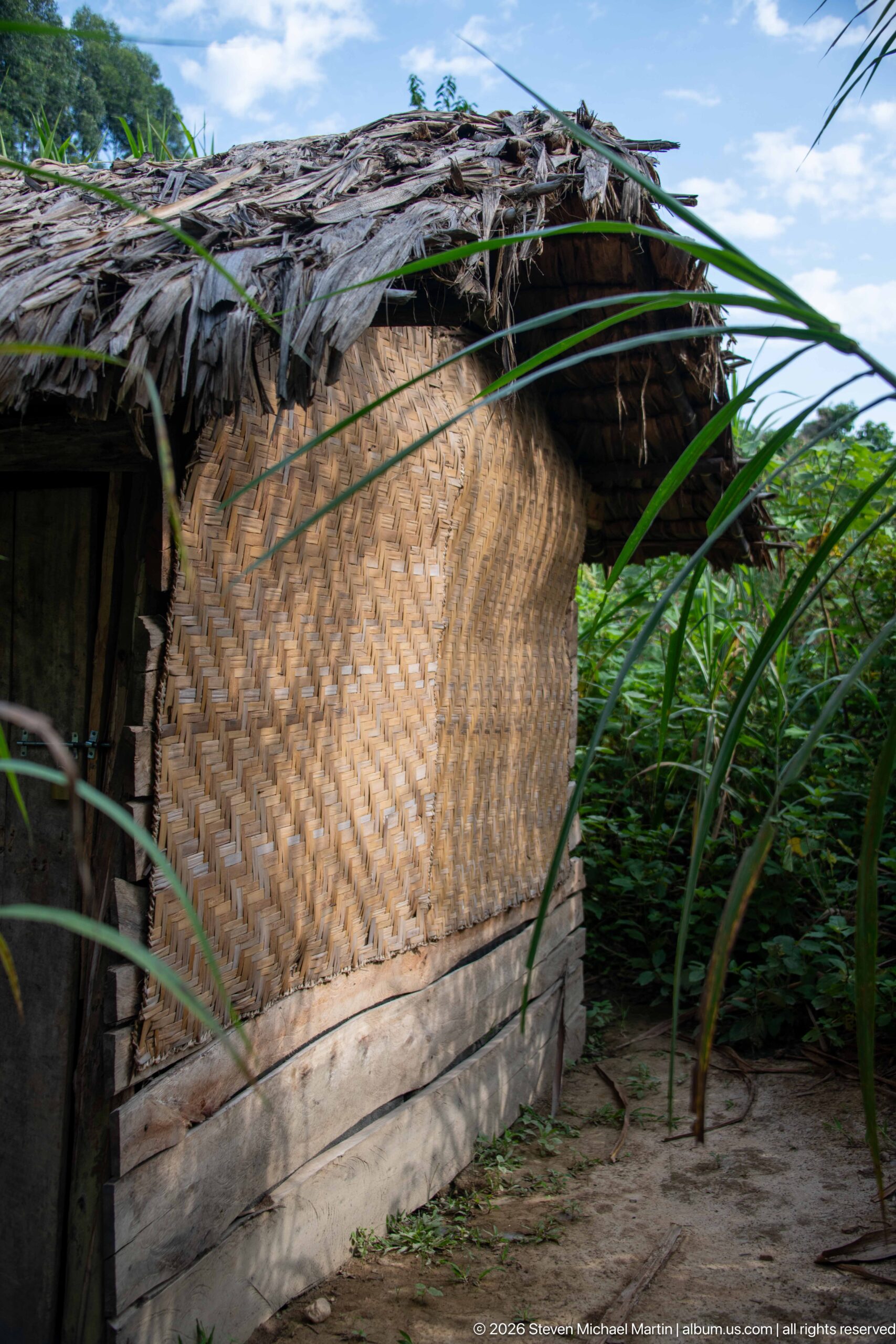
A compact building combines woven plant-fiber wall panels with rough horizontal timber at the base and a thick, weathered thatch roof. Framed by tall grasses and tropical vegetation, the close exterior view records local, low-tech construction within the rescue-center compound.
Caption
A compact building combines woven plant-fiber wall panels with rough horizontal timber at the base and a thick, weathered thatch roof. Framed by tall grasses and tropical vegetation, the close exterior view records local, low-tech construction within the rescue-center compound.
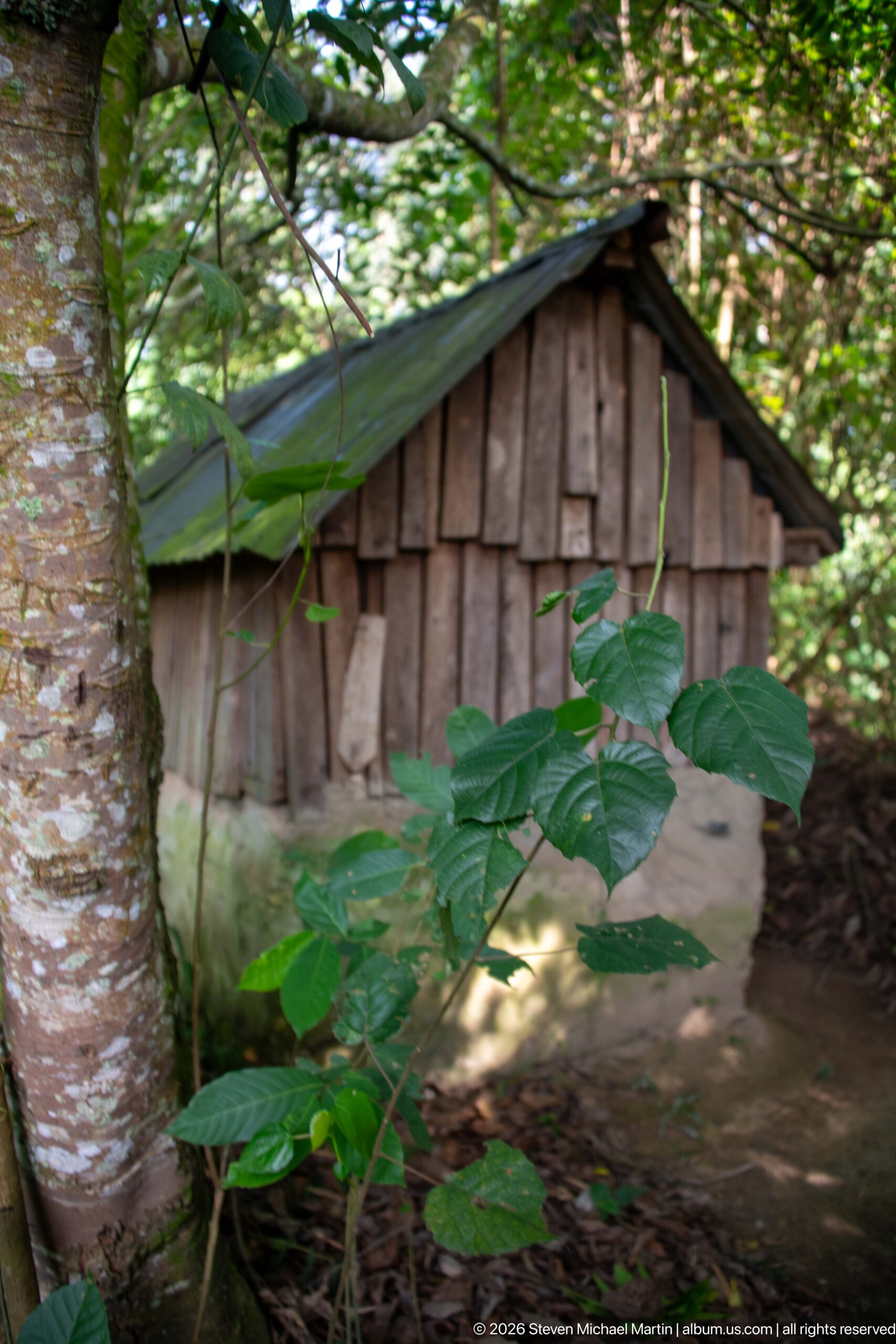
A simple wood-plank hut stands beneath forest shade, with a shallow corrugated metal roof and a pale masonry or rendered base. A large tree trunk and foreground leaves partially screen the façade, giving the view the character of a working structure tucked into the wooded compound.
Caption
A simple wood-plank hut stands beneath forest shade, with a shallow corrugated metal roof and a pale masonry or rendered base. A large tree trunk and foreground leaves partially screen the façade, giving the view the character of a working structure tucked into the wooded compound.
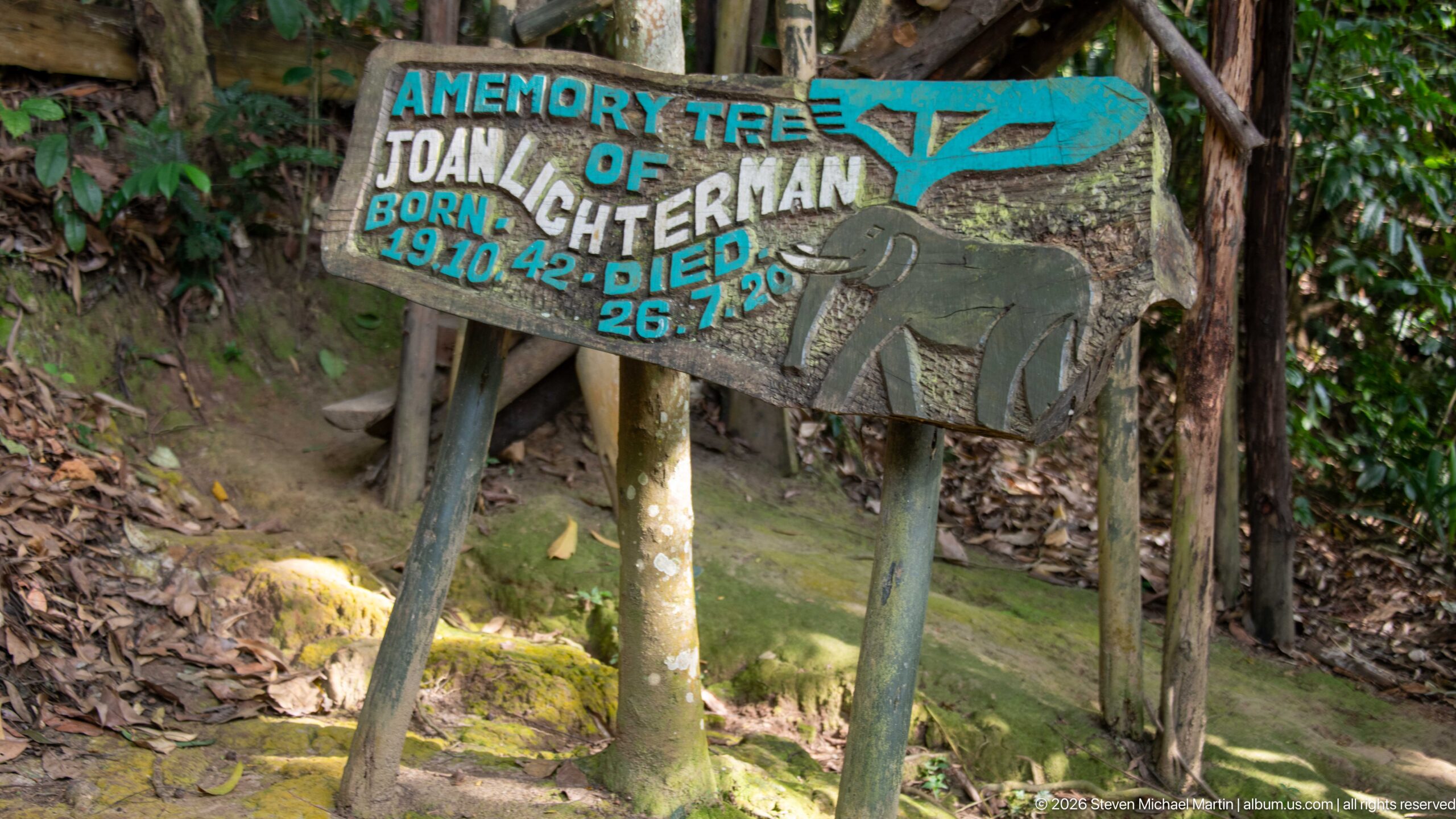
A hand-painted wooden memorial identifies a “MEMORY TREE” for Joan L. Geterman, with birth and death dates painted beside a carved pangolin figure. Set beneath trees on the rescue-center grounds, the sign records a personal commemoration incorporated into the site's conservation landscape.
Caption
A hand-painted wooden memorial identifies a “MEMORY TREE” for Joan L. Geterman, with birth and death dates painted beside a carved pangolin figure. Set beneath trees on the rescue-center grounds, the sign records a personal commemoration incorporated into the site's conservation landscape.
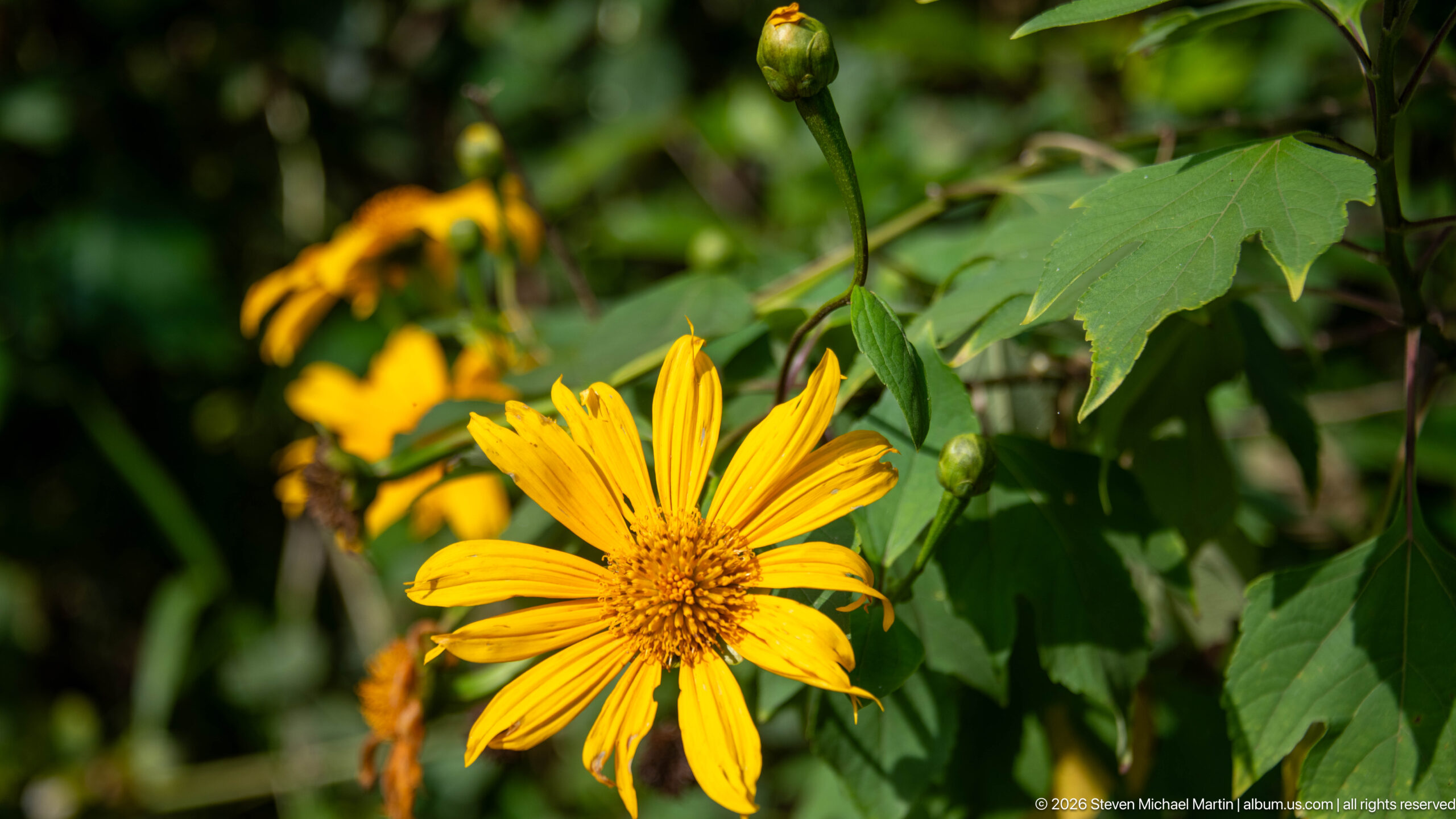
A vivid yellow daisy-like flower opens against green lobed foliage, with additional blooms and buds receding into soft focus. The close botanical view records flowering vegetation on the rescue-center grounds while avoiding a species-level identification not securely established by the proof sheet.
Caption
A vivid yellow daisy-like flower opens against green lobed foliage, with additional blooms and buds receding into soft focus. The close botanical view records flowering vegetation on the rescue-center grounds while avoiding a species-level identification not securely established by the proof sheet.
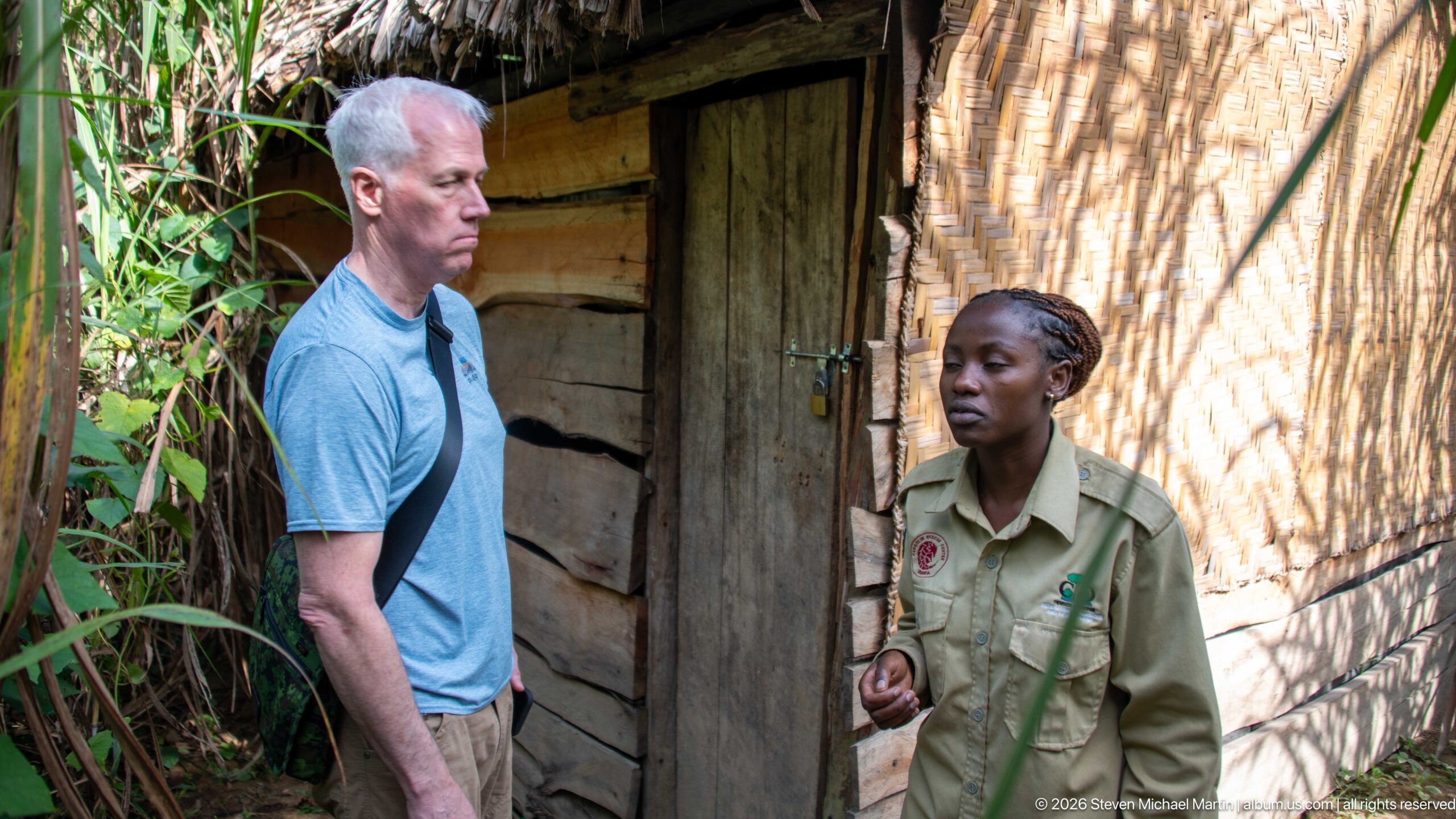
A uniformed staff member speaks with a visitor beside a simple timber-and-woven-wall building. The setting brings the educational encounter into close relationship with the center's modest facilities, showing conservation interpretation taking place directly within the working compound.
Caption
A uniformed staff member speaks with a visitor beside a simple timber-and-woven-wall building. The setting brings the educational encounter into close relationship with the center's modest facilities, showing conservation interpretation taking place directly within the working compound.
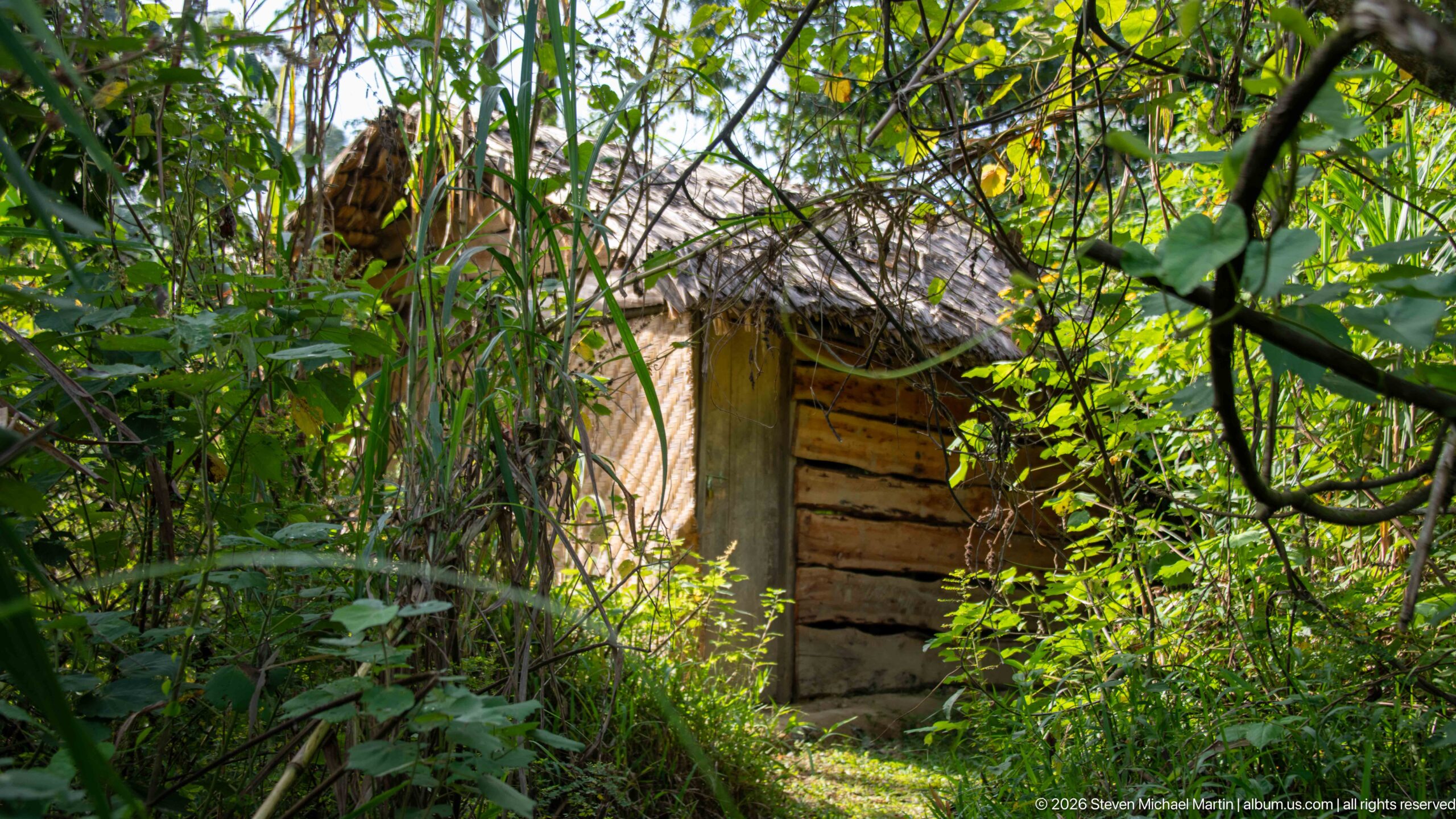
A small rustic structure is partly concealed by dense vegetation, its vertical plank doorway and low roof emerging from vines and leafy understory. The contextual view emphasizes the lightly built, forest-embedded character of facilities at the Pangolin Rescue site.
Caption
A small rustic structure is partly concealed by dense vegetation, its vertical plank doorway and low roof emerging from vines and leafy understory. The contextual view emphasizes the lightly built, forest-embedded character of facilities at the Pangolin Rescue site.
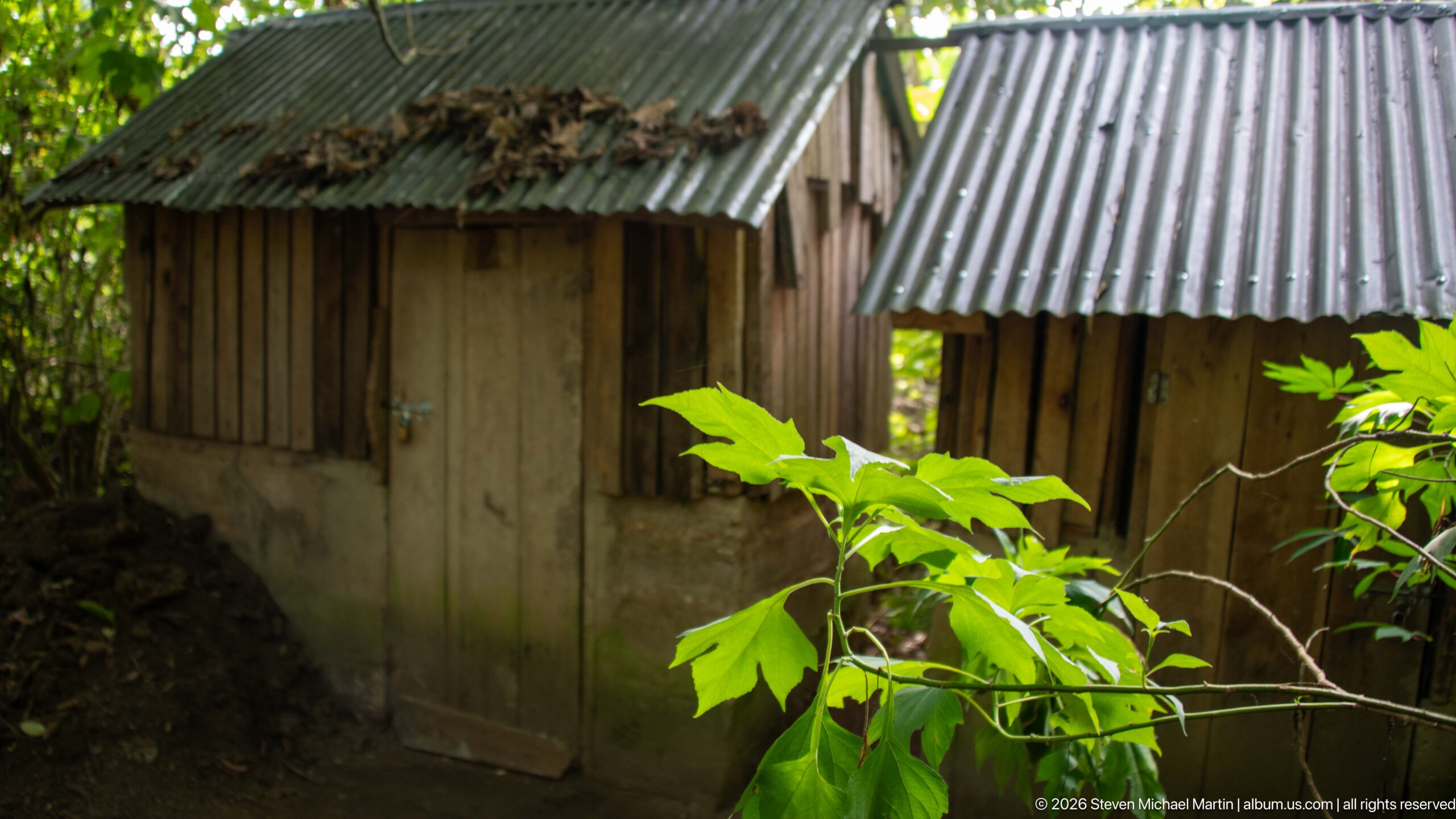
Two small timber outbuildings stand close together under corrugated metal roofs, their doors and plank walls shaded by the surrounding forest. Bright green leaves in the foreground contrast with the dark, utilitarian structures and help situate them within the densely vegetated rescue-center compound.
Caption
Two small timber outbuildings stand close together under corrugated metal roofs, their doors and plank walls shaded by the surrounding forest. Bright green leaves in the foreground contrast with the dark, utilitarian structures and help situate them within the densely vegetated rescue-center compound.
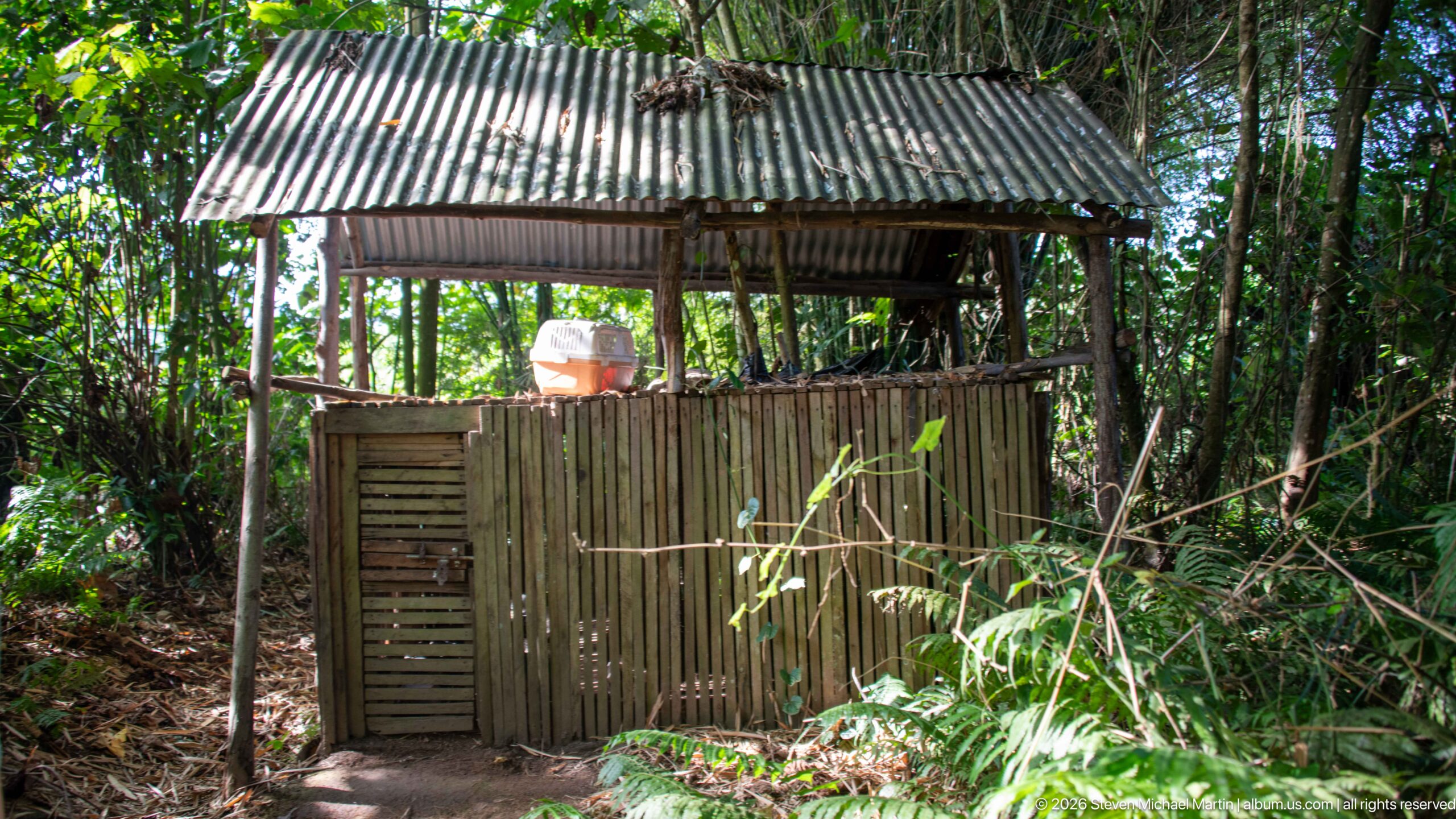
An open-sided shelter made largely from vertical bamboo poles stands beneath a corrugated roof in dense woodland. A narrow slatted door closes the lower enclosure while the upper portion remains open, showing a practical, ventilated structure built from readily available plant material.
Caption
An open-sided shelter made largely from vertical bamboo poles stands beneath a corrugated roof in dense woodland. A narrow slatted door closes the lower enclosure while the upper portion remains open, showing a practical, ventilated structure built from readily available plant material.
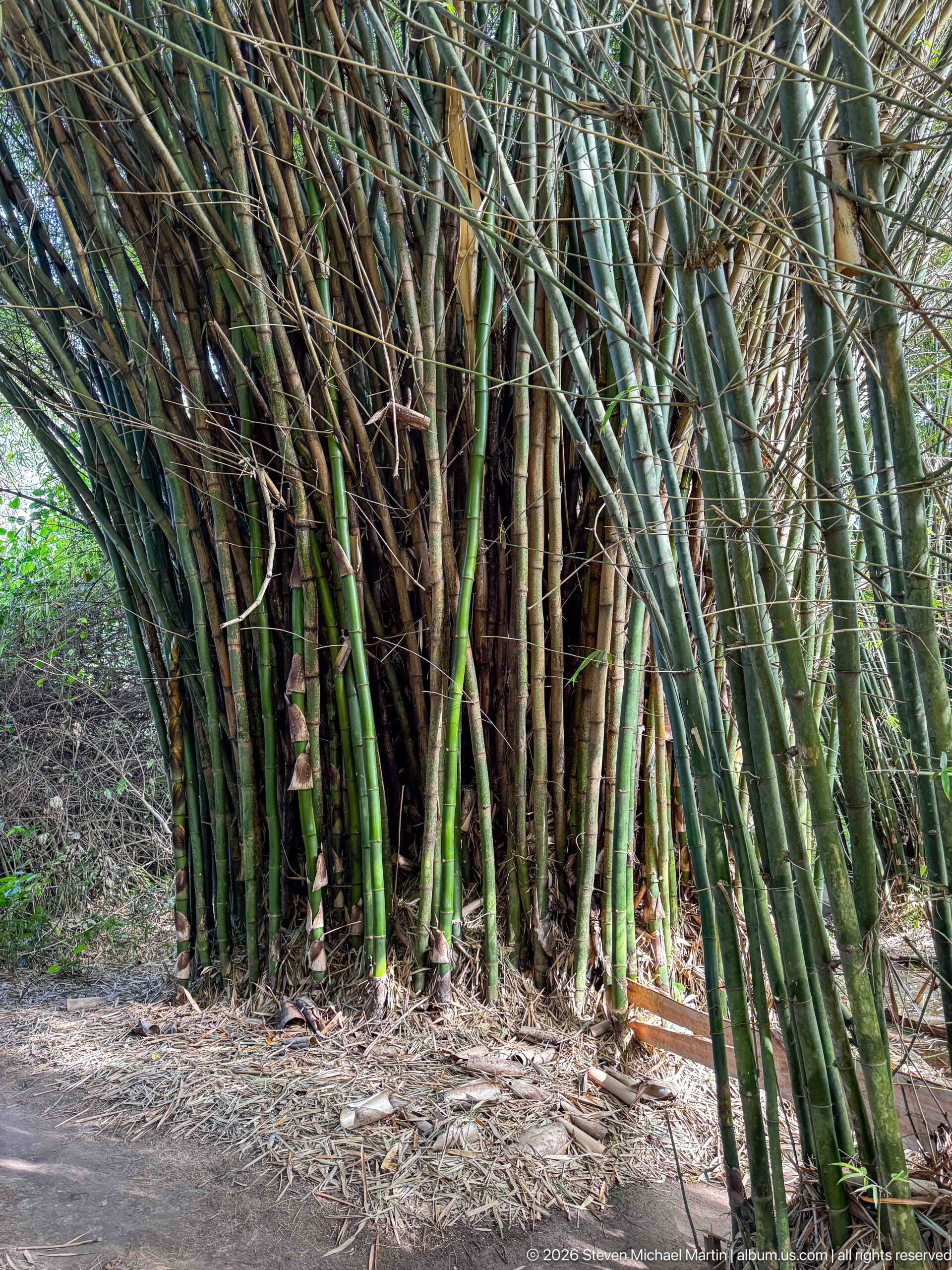
A dense bamboo clump rises from the forest floor, its many green and brown culms leaning outward from a tightly packed base. The view emphasizes the vertical rhythm and enclosed shade created by mature bamboo vegetation along the rescue-center grounds.
Caption
A dense bamboo clump rises from the forest floor, its many green and brown culms leaning outward from a tightly packed base. The view emphasizes the vertical rhythm and enclosed shade created by mature bamboo vegetation along the rescue-center grounds.
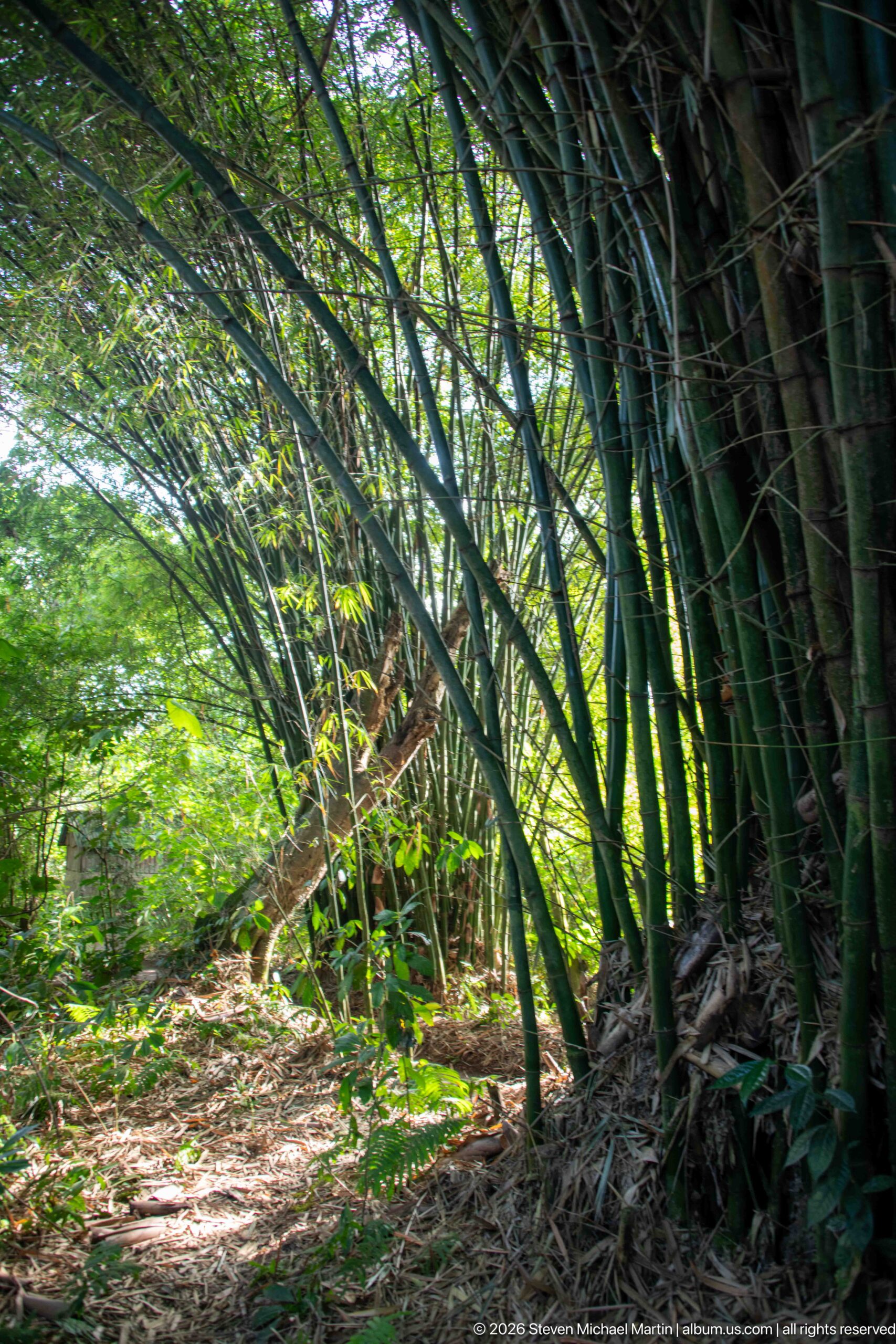
A narrow dirt path curves through a grove where tall bamboo culms arch overhead and lean toward the opening. Filtered sunlight brightens vegetation beyond the shaded foreground, creating a clear sense of movement through the densely planted rescue-center landscape.
Caption
A narrow dirt path curves through a grove where tall bamboo culms arch overhead and lean toward the opening. Filtered sunlight brightens vegetation beyond the shaded foreground, creating a clear sense of movement through the densely planted rescue-center landscape.
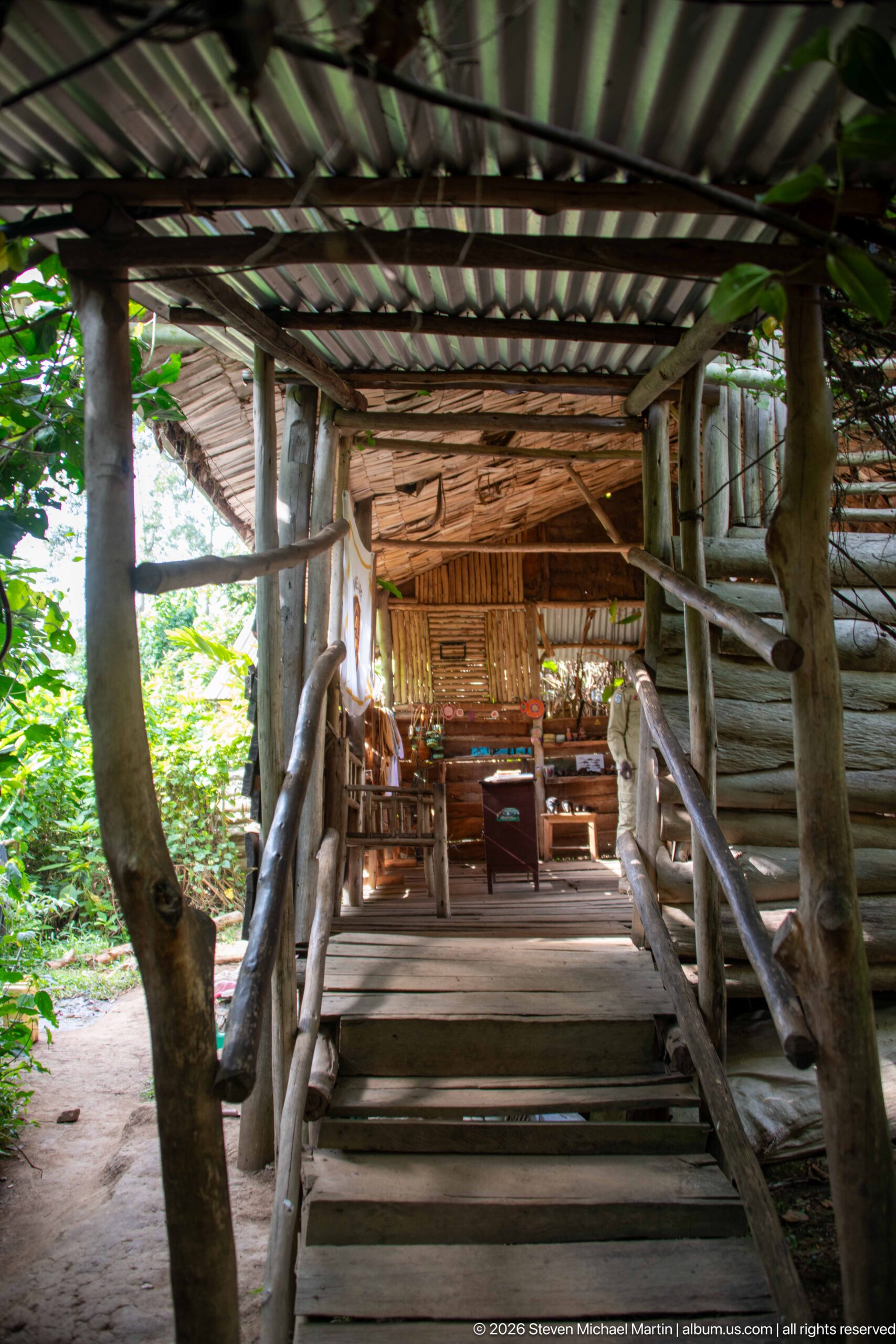
Steps lead into an open-sided pavilion furnished with simple wooden chairs and tables beneath a corrugated roof. Rough branch-like posts and rails frame the entrance, while timber and woven materials continue through the interior, suggesting a gathering or interpretation space within the center.
Caption
Steps lead into an open-sided pavilion furnished with simple wooden chairs and tables beneath a corrugated roof. Rough branch-like posts and rails frame the entrance, while timber and woven materials continue through the interior, suggesting a gathering or interpretation space within the center.
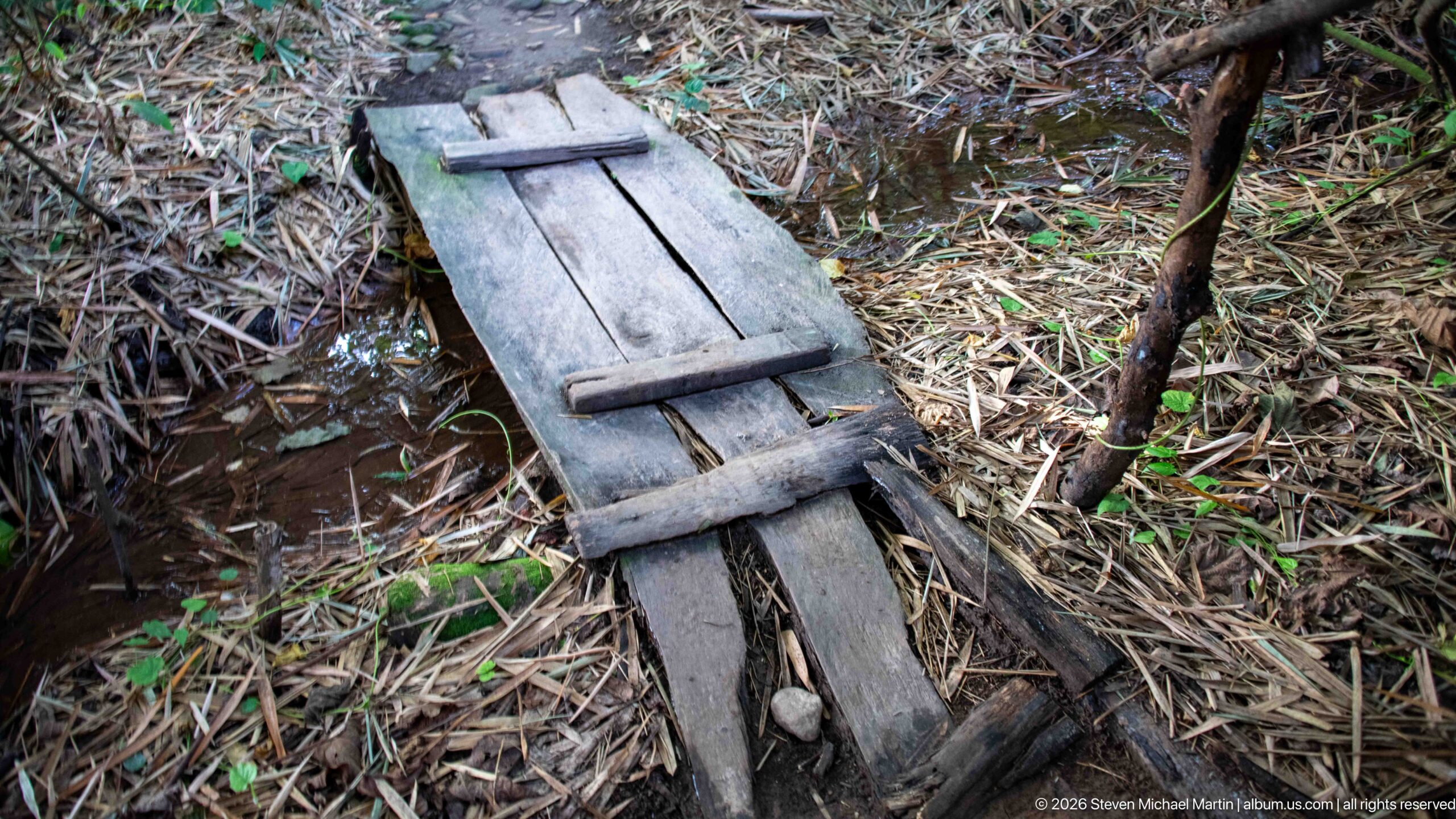
A makeshift wooden footbridge spans a narrow depression or drainage channel, using weathered planks reinforced by short crosspieces. Fallen bamboo leaves and forest debris surround the crossing, emphasizing the simple infrastructure of the site's footpaths.
Caption
A makeshift wooden footbridge spans a narrow depression or drainage channel, using weathered planks reinforced by short crosspieces. Fallen bamboo leaves and forest debris surround the crossing, emphasizing the simple infrastructure of the site's footpaths.
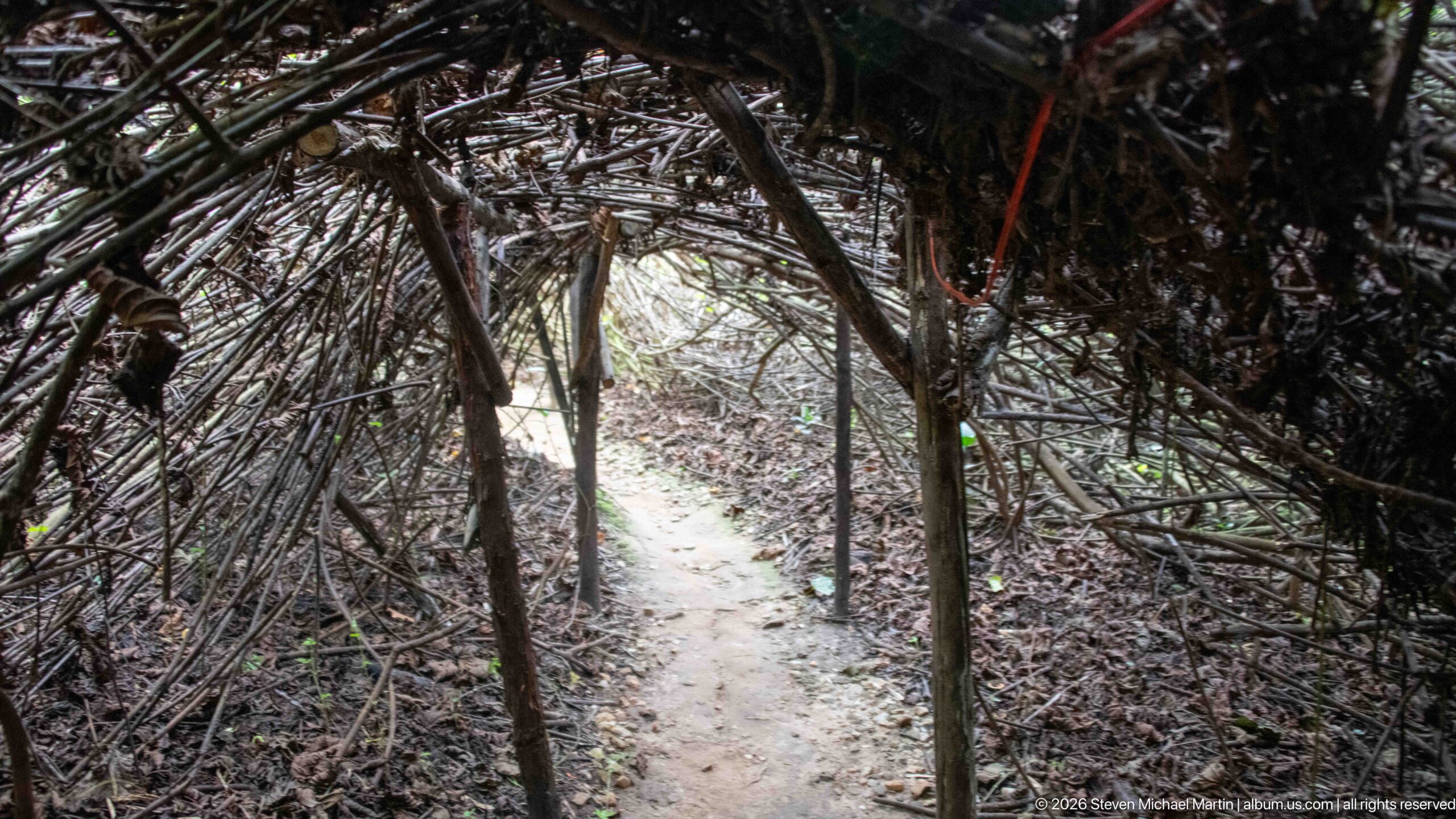
A narrow earthen trail passes beneath a low canopy formed by interlaced dry stems and foliage. The tunnel-like passage frames a brighter opening ahead, creating an intimate view of a sheltered walking route through the rescue-center grounds.
Caption
A narrow earthen trail passes beneath a low canopy formed by interlaced dry stems and foliage. The tunnel-like passage frames a brighter opening ahead, creating an intimate view of a sheltered walking route through the rescue-center grounds.
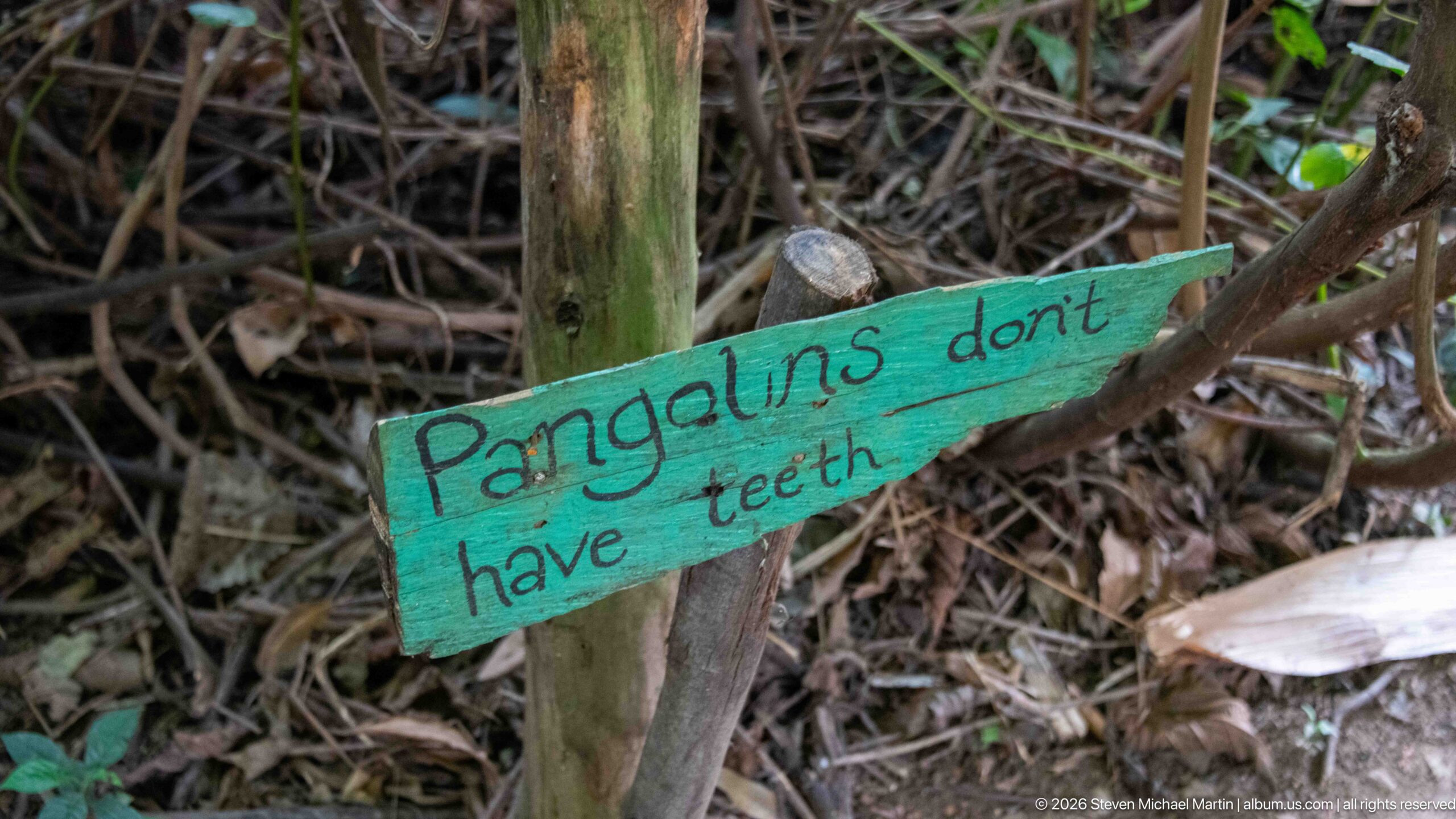
A small turquoise board fixed to a wooden stake reads “Pangolins don't have teeth,” presenting a concise biological fact along a forest path. The handmade interpretive sign illustrates the rescue center's informal approach to visitor education about pangolin anatomy.
Caption
A small turquoise board fixed to a wooden stake reads “Pangolins don't have teeth,” presenting a concise biological fact along a forest path. The handmade interpretive sign illustrates the rescue center's informal approach to visitor education about pangolin anatomy.
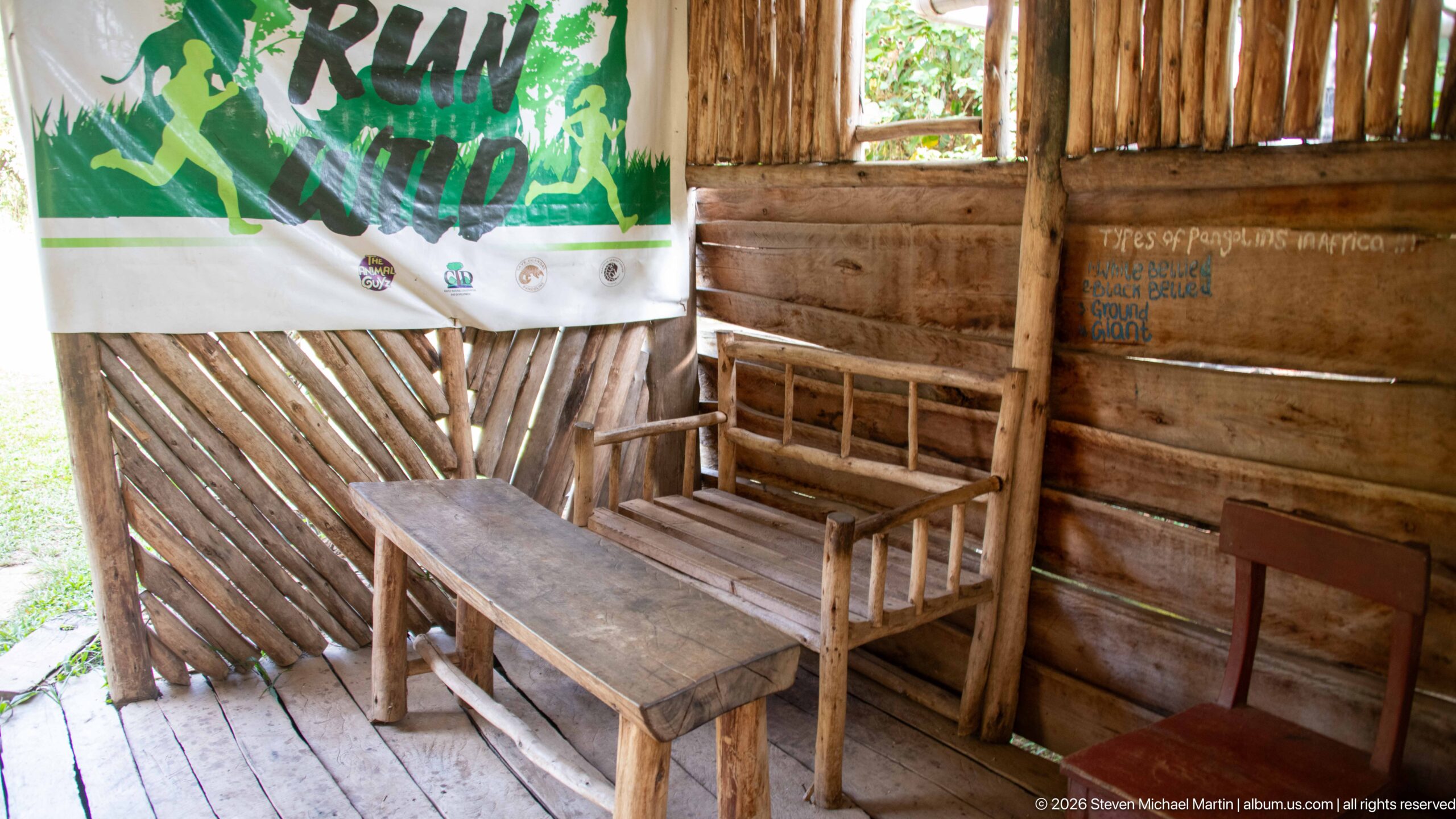
A simple room built from rough timber and slatted walls contains a low table, wooden bench, and chairs. Daylight enters through an open window and gaps in the wall construction, while a hanging banner and handwritten notes suggest the space is used for visitor orientation or education.
Caption
A simple room built from rough timber and slatted walls contains a low table, wooden bench, and chairs. Daylight enters through an open window and gaps in the wall construction, while a hanging banner and handwritten notes suggest the space is used for visitor orientation or education.
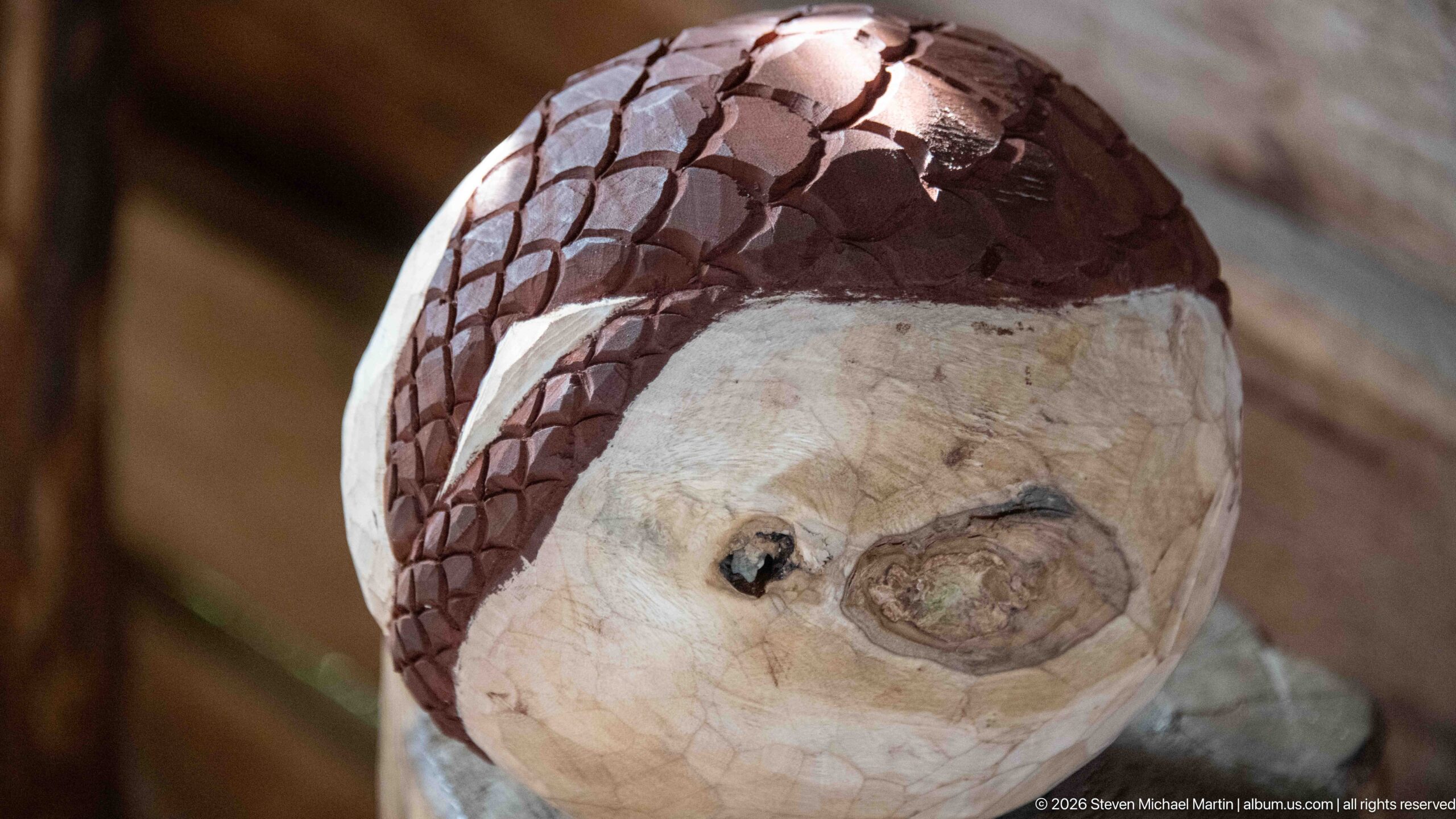
A close view of a pangolin-shaped display object concentrates on the rounded head and armor-like covering. Individual brown overlapping scale forms wrap over the crown and upper surface, while the pale carved or modeled face includes recessed eye and muzzle details, turning pangolin anatomy into a tactile interpretive object.
Caption
A close view of a pangolin-shaped display object concentrates on the rounded head and armor-like covering. Individual brown overlapping scale forms wrap over the crown and upper surface, while the pale carved or modeled face includes recessed eye and muzzle details, turning pangolin anatomy into a tactile interpretive object.
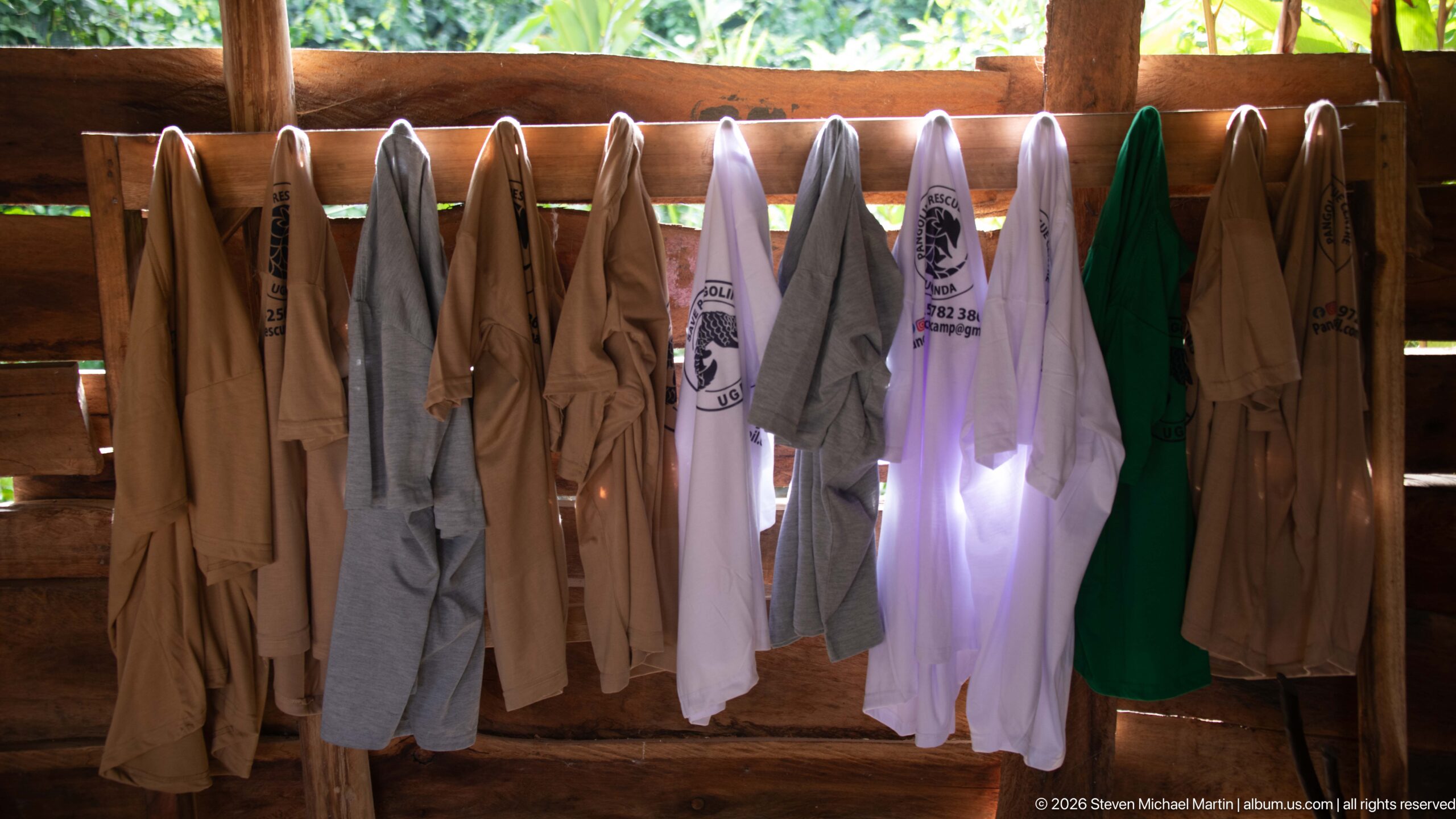
A row of T-shirts and other garments hangs from wooden pegs against a plank wall, including white, gray, tan, and green pieces with printed graphics on several fronts. The display suggests conservation-themed apparel offered or stored within the Pangolin Rescue visitor space.
Caption
A row of T-shirts and other garments hangs from wooden pegs against a plank wall, including white, gray, tan, and green pieces with printed graphics on several fronts. The display suggests conservation-themed apparel offered or stored within the Pangolin Rescue visitor space.
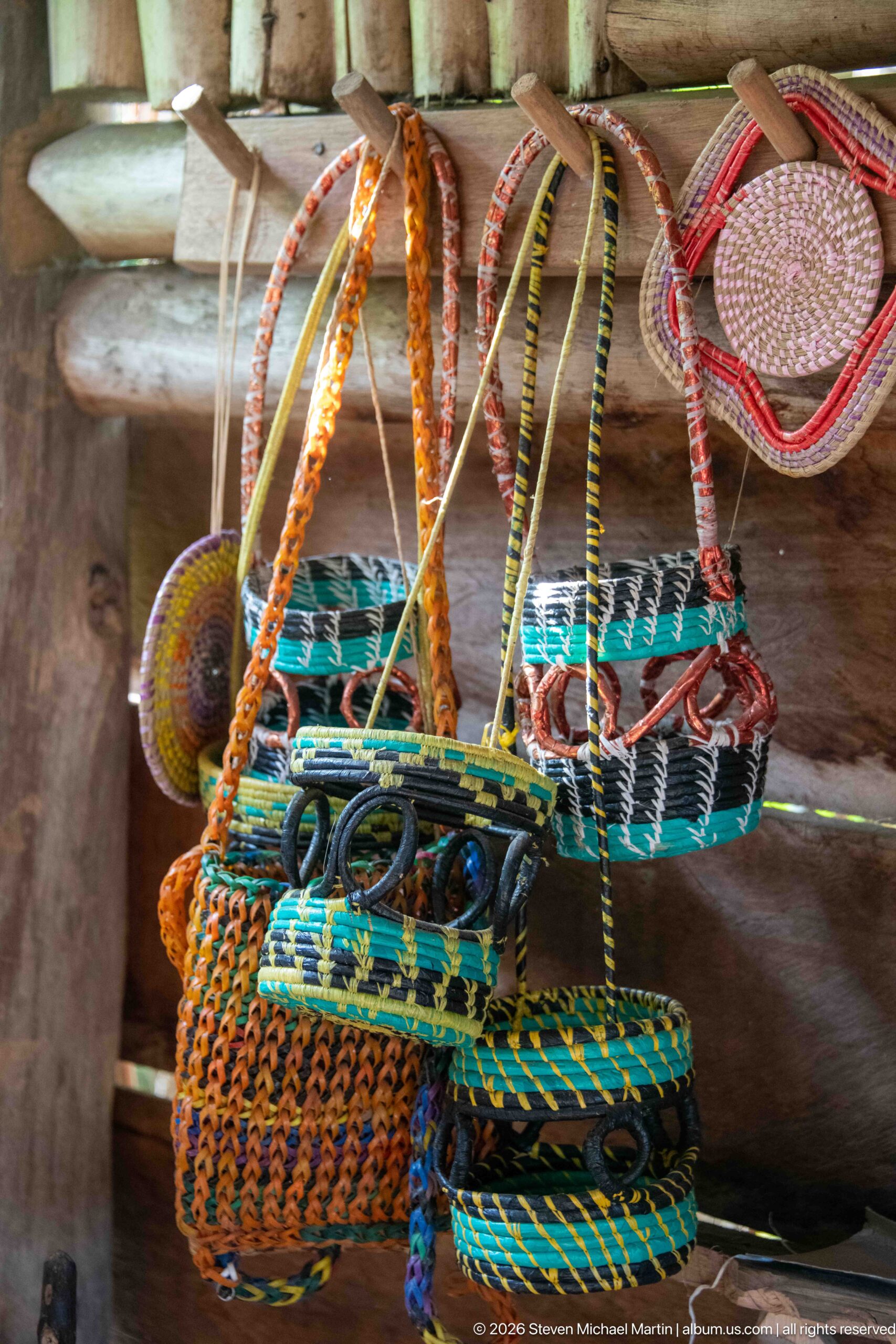
Brightly patterned woven baskets, trays, and handled containers are stacked and hung against a timber wall. Spiraling bands of orange, yellow, green, blue, red, and natural fiber create strong geometric patterns, presenting a craft display within the rescue-center visitor area.
Caption
Brightly patterned woven baskets, trays, and handled containers are stacked and hung against a timber wall. Spiraling bands of orange, yellow, green, blue, red, and natural fiber create strong geometric patterns, presenting a craft display within the rescue-center visitor area.
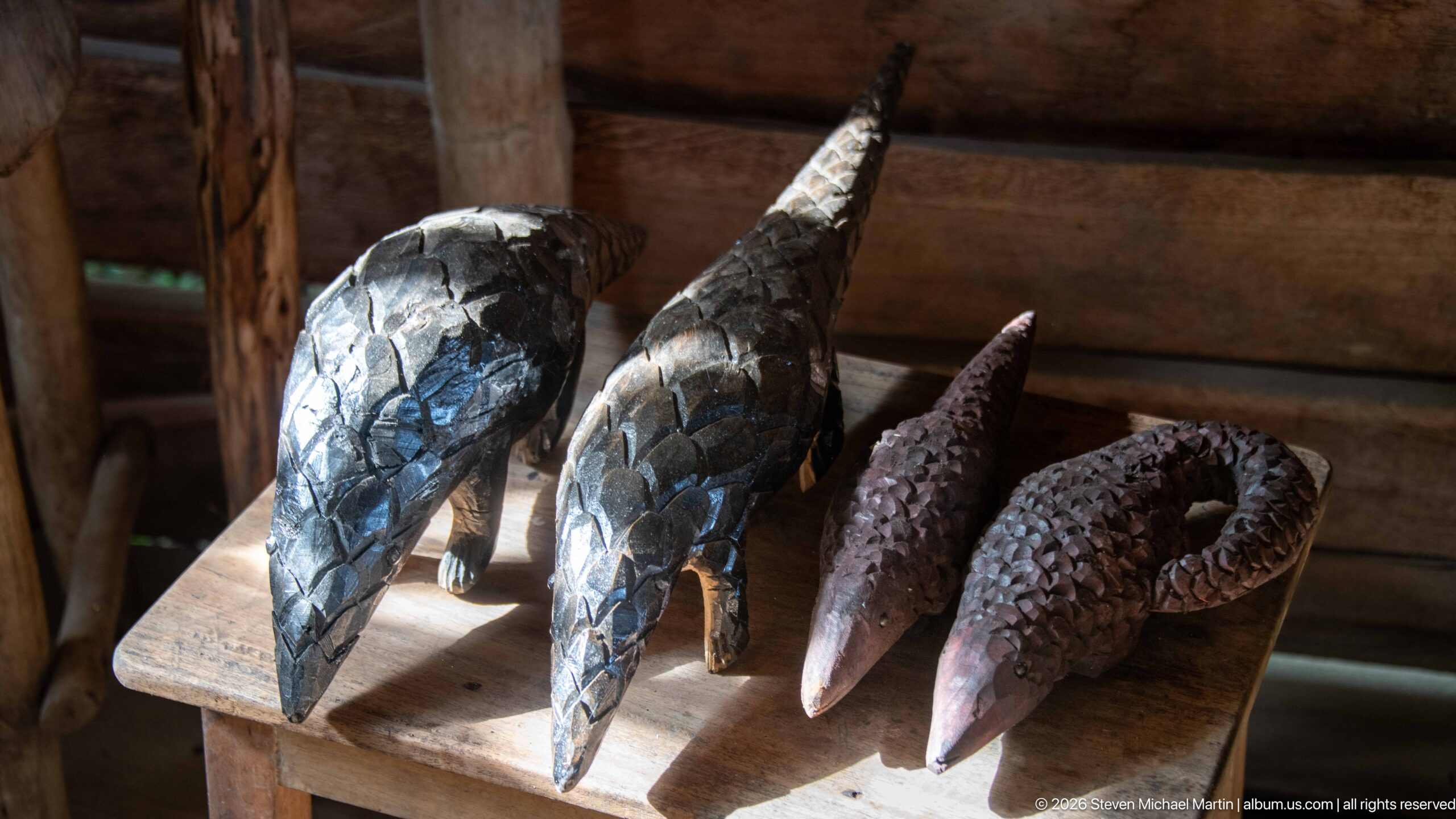
Four preserved pangolin specimens are arranged upright on a wooden table, allowing close comparison of their overlapping keratin scales, tapered bodies, and long tails. The display emphasizes the animals’ distinctive armor-like covering and varied body proportions while placing the specimens in a simple interpretive setting associated with pangolin conservation and rescue work in Uganda.
Caption
Four preserved pangolin specimens are arranged upright on a wooden table, allowing close comparison of their overlapping keratin scales, tapered bodies, and long tails. The display emphasizes the animals’ distinctive armor-like covering and varied body proportions while placing the specimens in a simple interpretive setting associated with pangolin conservation and rescue work in Uganda.
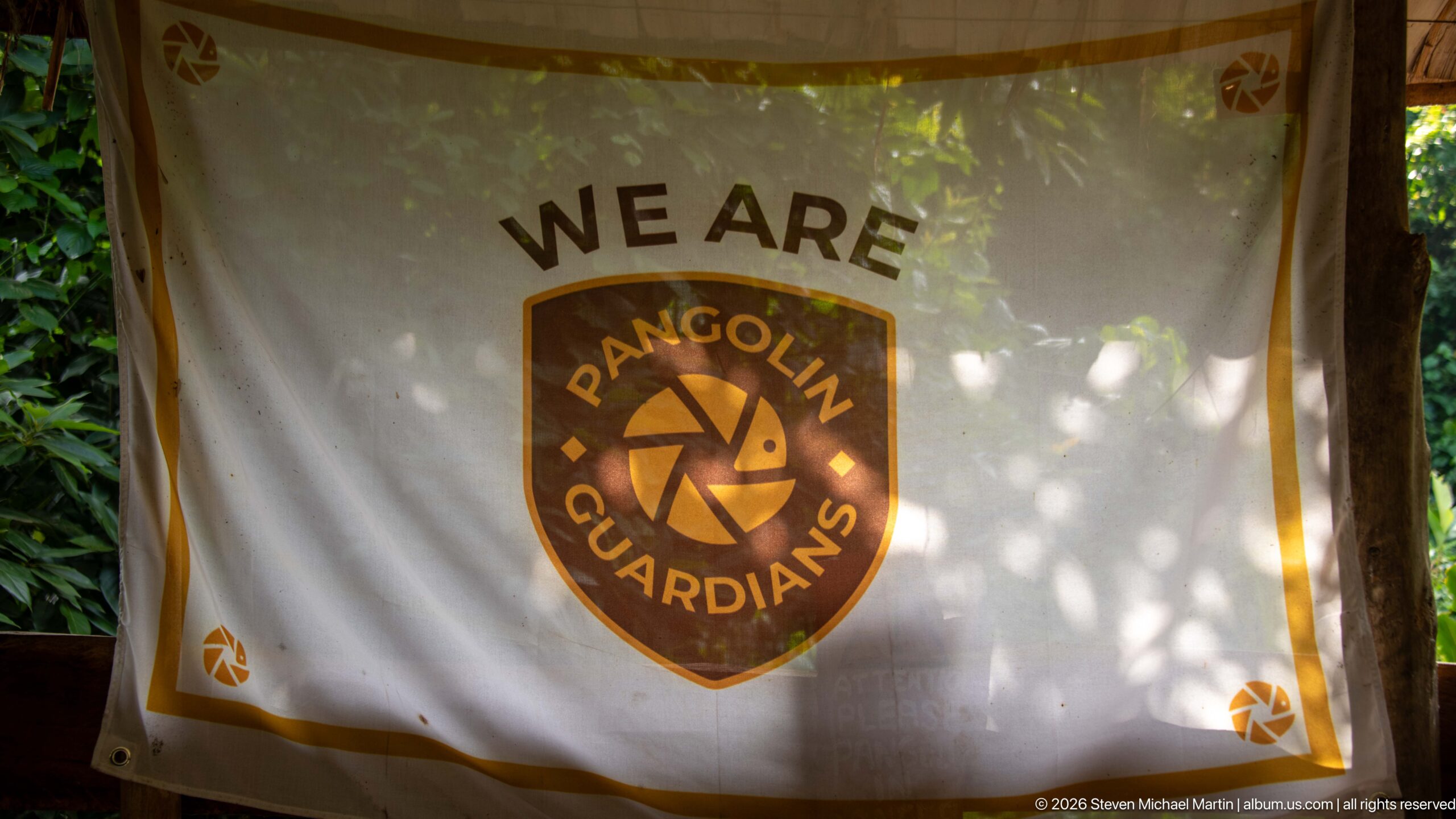
A fabric banner reading “WE ARE PANGOLIN GUARDIANS” hangs beneath a rustic shelter, centered on a shield-like emblem containing a stylized pangolin. The sign presents the conservation identity of the rescue center through bold lettering and a recognizable pangolin motif, linking visitor interpretation with the site’s wildlife-protection mission.
Caption
A fabric banner reading “WE ARE PANGOLIN GUARDIANS” hangs beneath a rustic shelter, centered on a shield-like emblem containing a stylized pangolin. The sign presents the conservation identity of the rescue center through bold lettering and a recognizable pangolin motif, linking visitor interpretation with the site’s wildlife-protection mission.
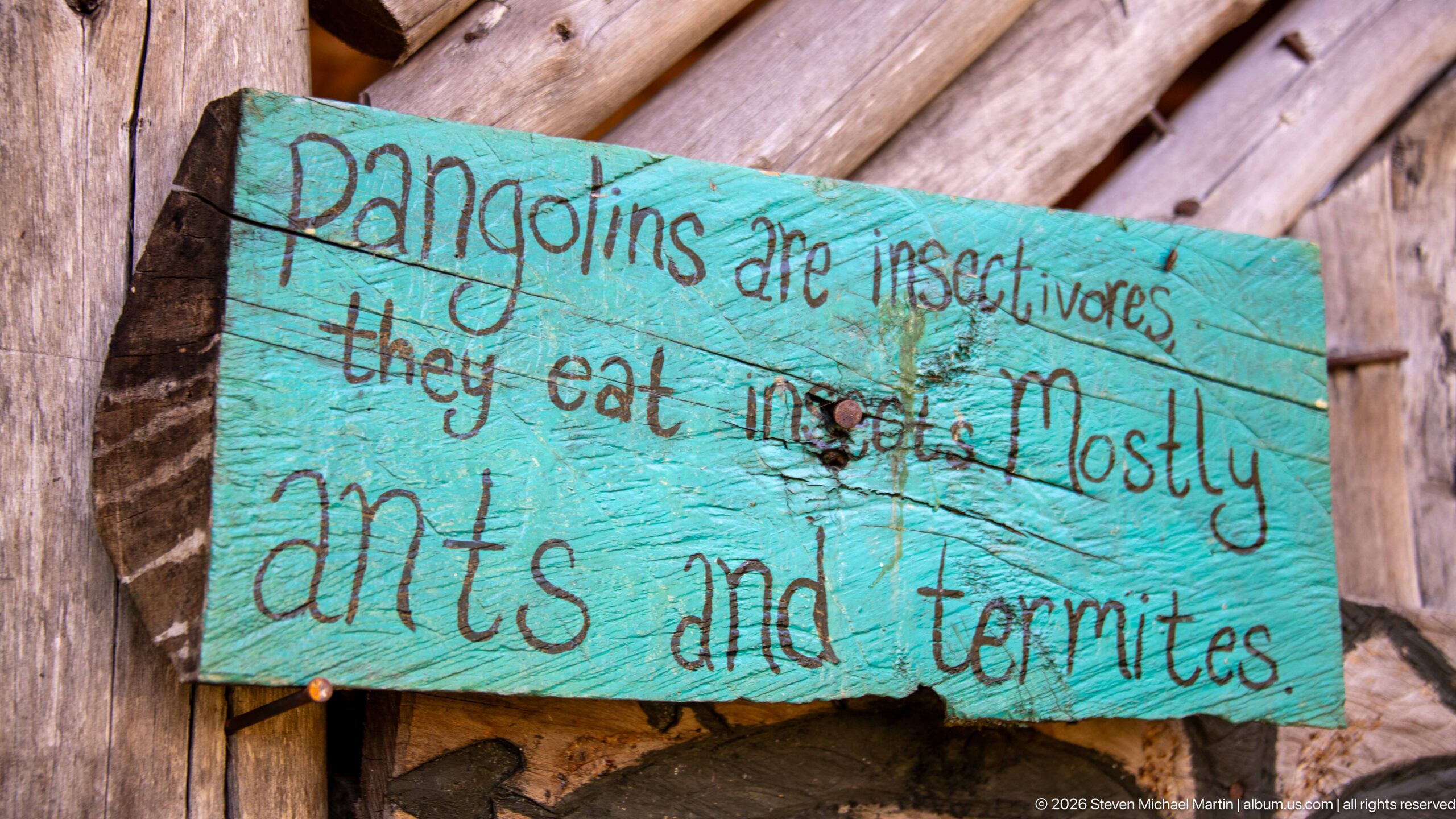
A turquoise-painted wooden sign states that pangolins are insectivores and eat mostly ants and termites. Mounted against the center’s rustic wooden structure, the simple hand-lettered panel communicates a basic feeding adaptation in an informal, accessible style suited to visitor education.
Caption
A turquoise-painted wooden sign states that pangolins are insectivores and eat mostly ants and termites. Mounted against the center’s rustic wooden structure, the simple hand-lettered panel communicates a basic feeding adaptation in an informal, accessible style suited to visitor education.
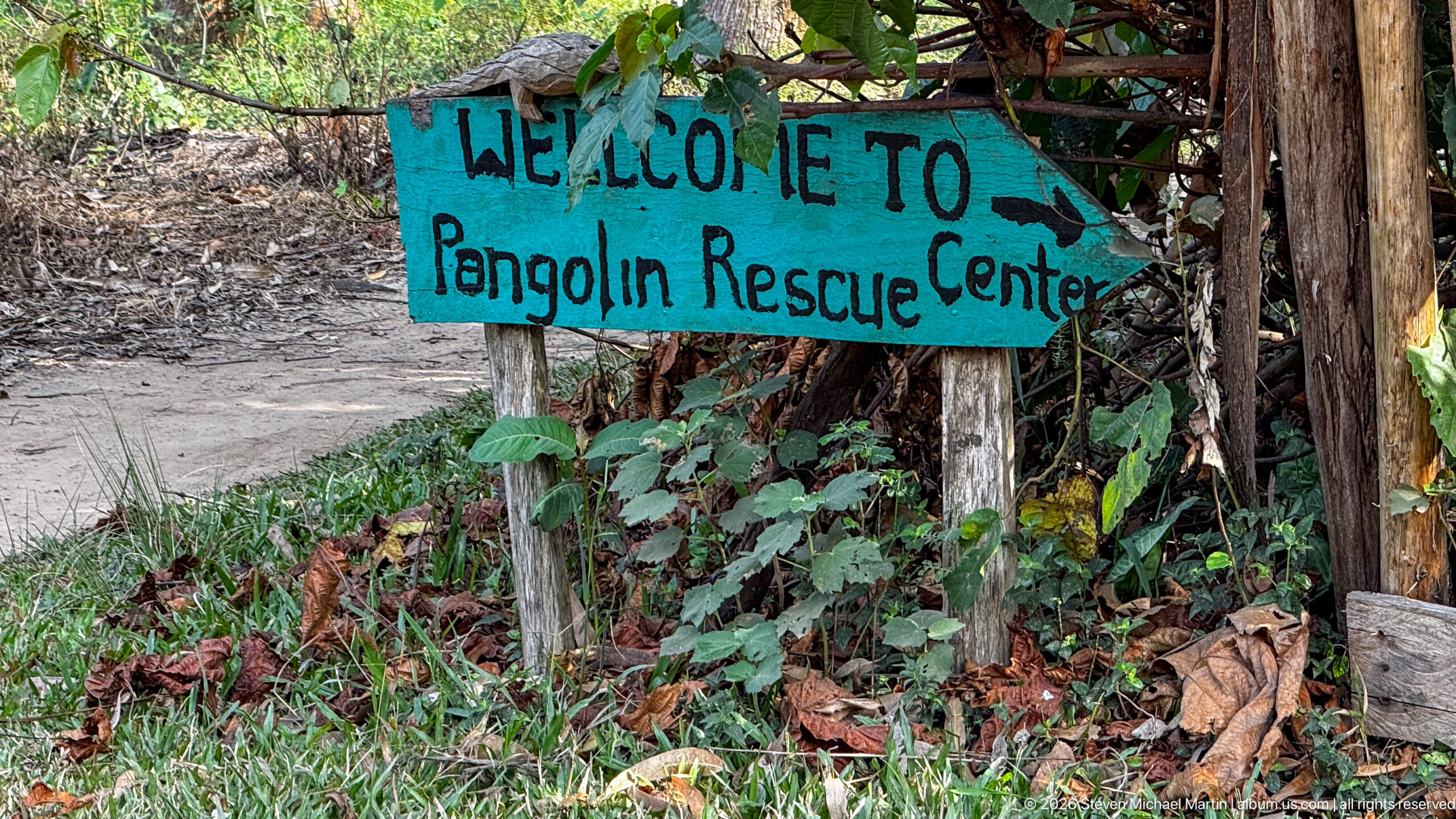
A hand-painted turquoise sign reading “WELCOME TO Pangolin Rescue Center” points visitors along a path through leafy vegetation. Fixed to rough wooden posts, the modest directional marker establishes the approach to the conservation site and reflects the center’s handmade, community-based visitor infrastructure.
Caption
A hand-painted turquoise sign reading “WELCOME TO Pangolin Rescue Center” points visitors along a path through leafy vegetation. Fixed to rough wooden posts, the modest directional marker establishes the approach to the conservation site and reflects the center’s handmade, community-based visitor infrastructure.
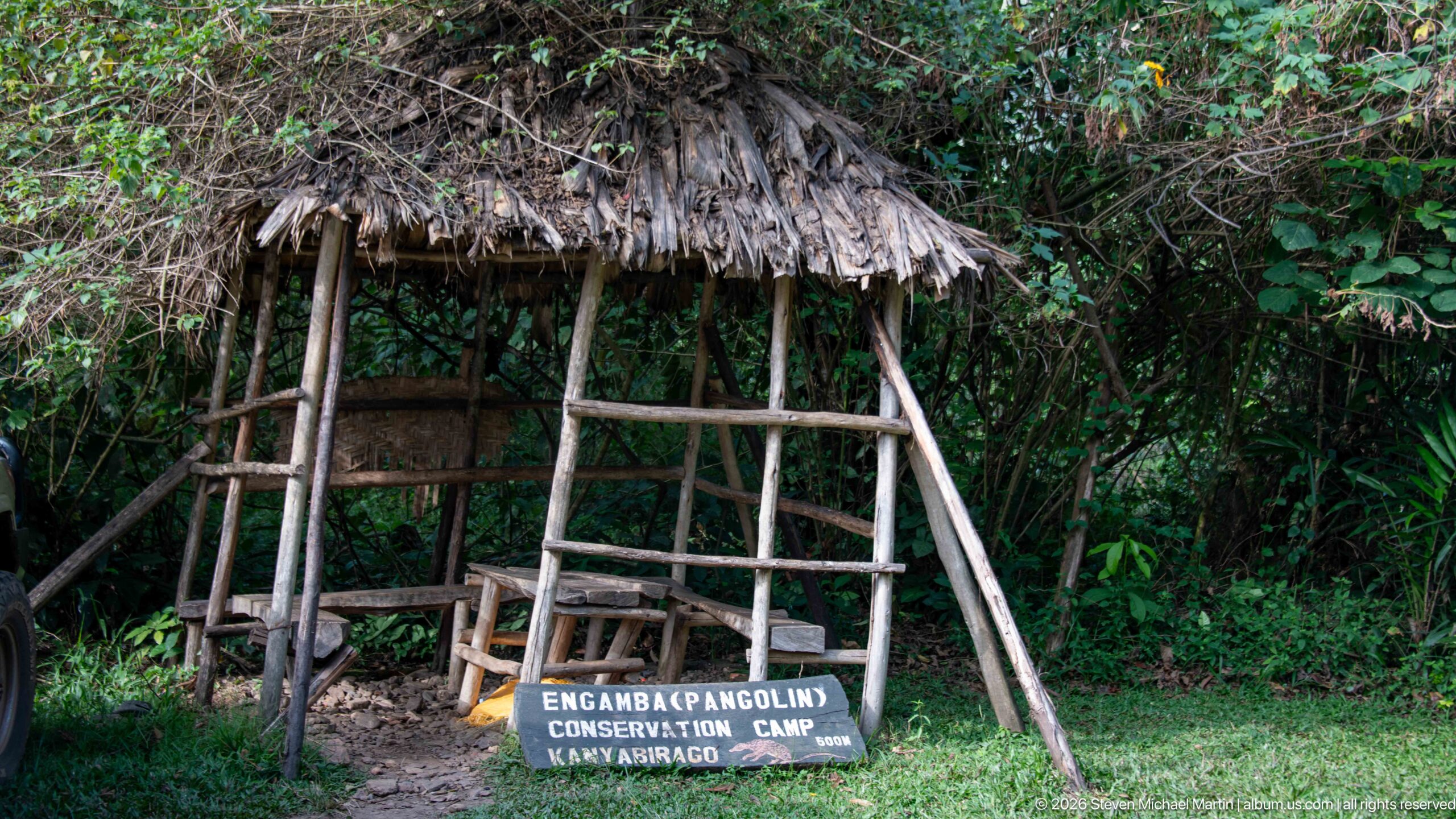
A small open shelter built from poles and a thatched roof stands at the edge of dense vegetation. A sign at its base references pangolin conservation, linking the simple structure to visitor interpretation or field activities associated with the rescue center. The photograph emphasizes the center’s low-impact, locally constructed infrastructure within a green setting.
Caption
A small open shelter built from poles and a thatched roof stands at the edge of dense vegetation. A sign at its base references pangolin conservation, linking the simple structure to visitor interpretation or field activities associated with the rescue center. The photograph emphasizes the center’s low-impact, locally constructed infrastructure within a green setting.
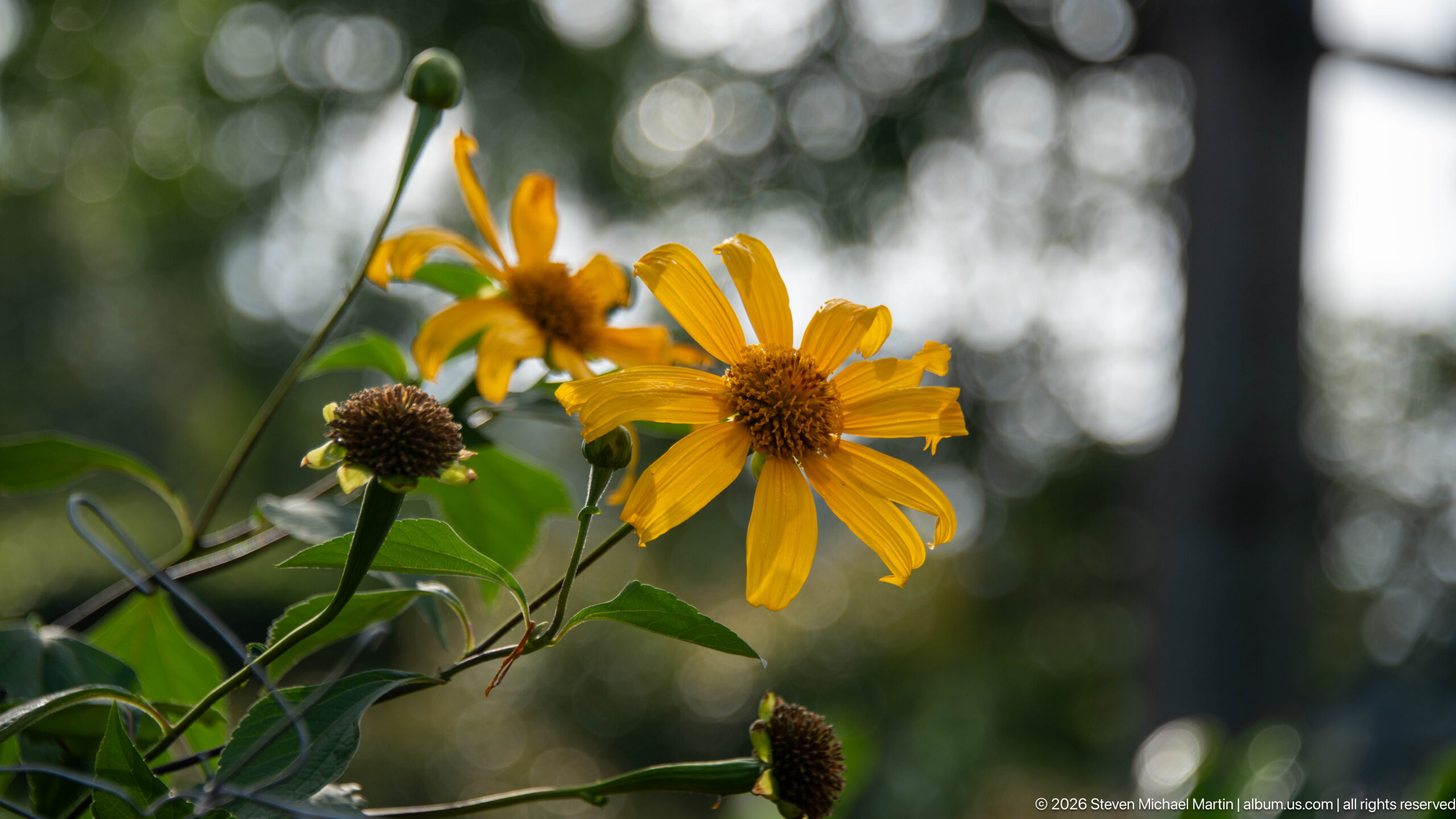
Yellow daisy-like composite flowers bloom against a softly blurred woodland background near the Pangolin Rescue Center. The close view isolates several flower heads at different stages—from fresh petals to spent seed heads—providing a quiet botanical detail within the broader conservation landscape rather than a wildlife-rescue subject.
Caption
Yellow daisy-like composite flowers bloom against a softly blurred woodland background near the Pangolin Rescue Center. The close view isolates several flower heads at different stages—from fresh petals to spent seed heads—providing a quiet botanical detail within the broader conservation landscape rather than a wildlife-rescue subject.
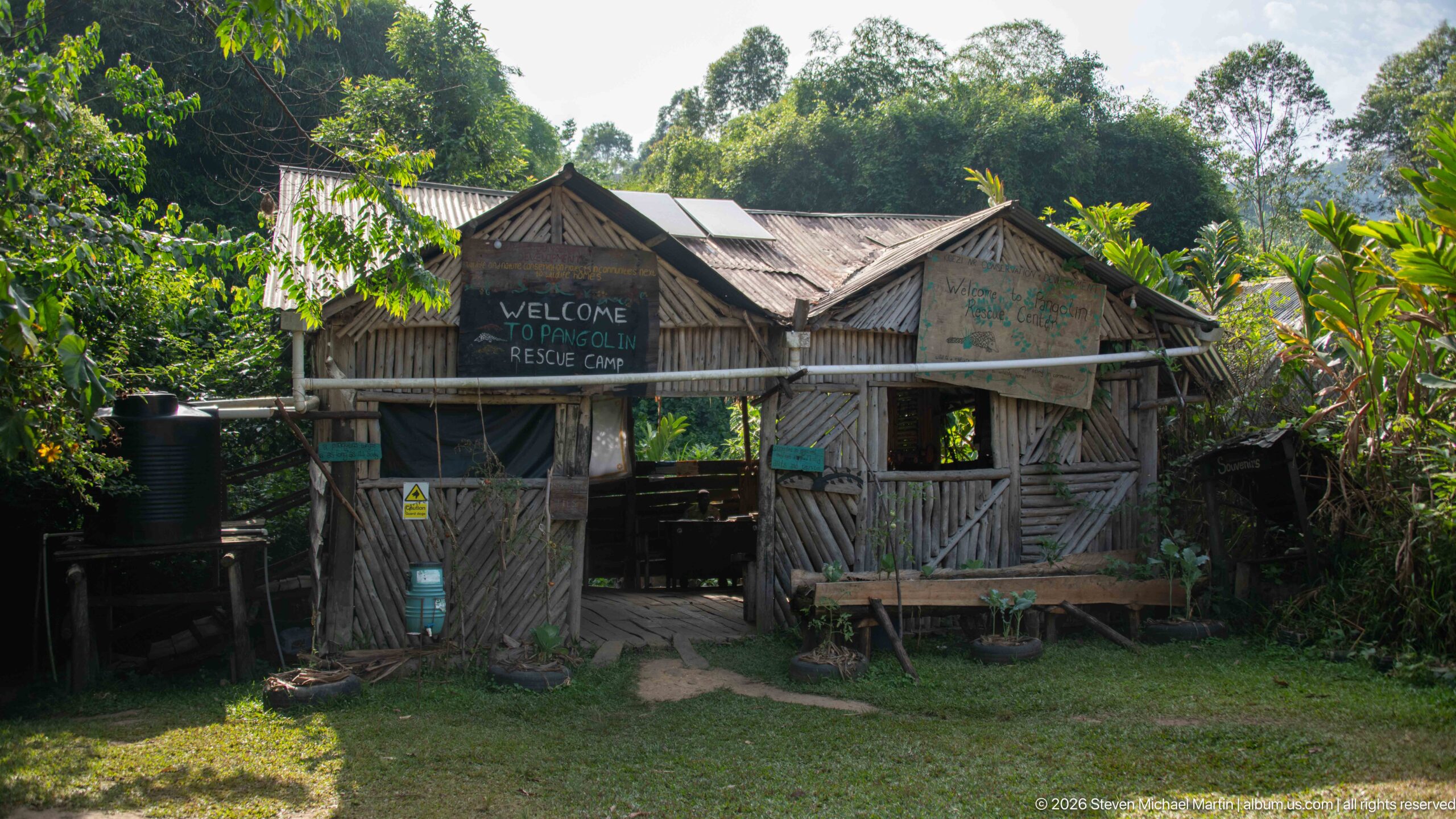
The Pangolin Rescue Center’s main structure appears as a rustic, open-fronted building constructed from woven bamboo, timber, and corrugated roofing. A hand-painted welcome sign spans the entrance, while vegetation surrounds the compact facility. This establishing view shows the center as a modest community-scale conservation site integrated into its rural landscape.
Caption
The Pangolin Rescue Center’s main structure appears as a rustic, open-fronted building constructed from woven bamboo, timber, and corrugated roofing. A hand-painted welcome sign spans the entrance, while vegetation surrounds the compact facility. This establishing view shows the center as a modest community-scale conservation site integrated into its rural landscape.

A roadside board reading “WELCOME TO PANGOLIN RESCUE CENTER UGANDA” marks the route to the facility, accompanied by a pangolin illustration, a distance arrow, and visitor information. Set against a mountain-fringed rural landscape, the sign functions as a wayfinding landmark for travelers approaching the center.
Caption
A roadside board reading “WELCOME TO PANGOLIN RESCUE CENTER UGANDA” marks the route to the facility, accompanied by a pangolin illustration, a distance arrow, and visitor information. Set against a mountain-fringed rural landscape, the sign functions as a wayfinding landmark for travelers approaching the center.
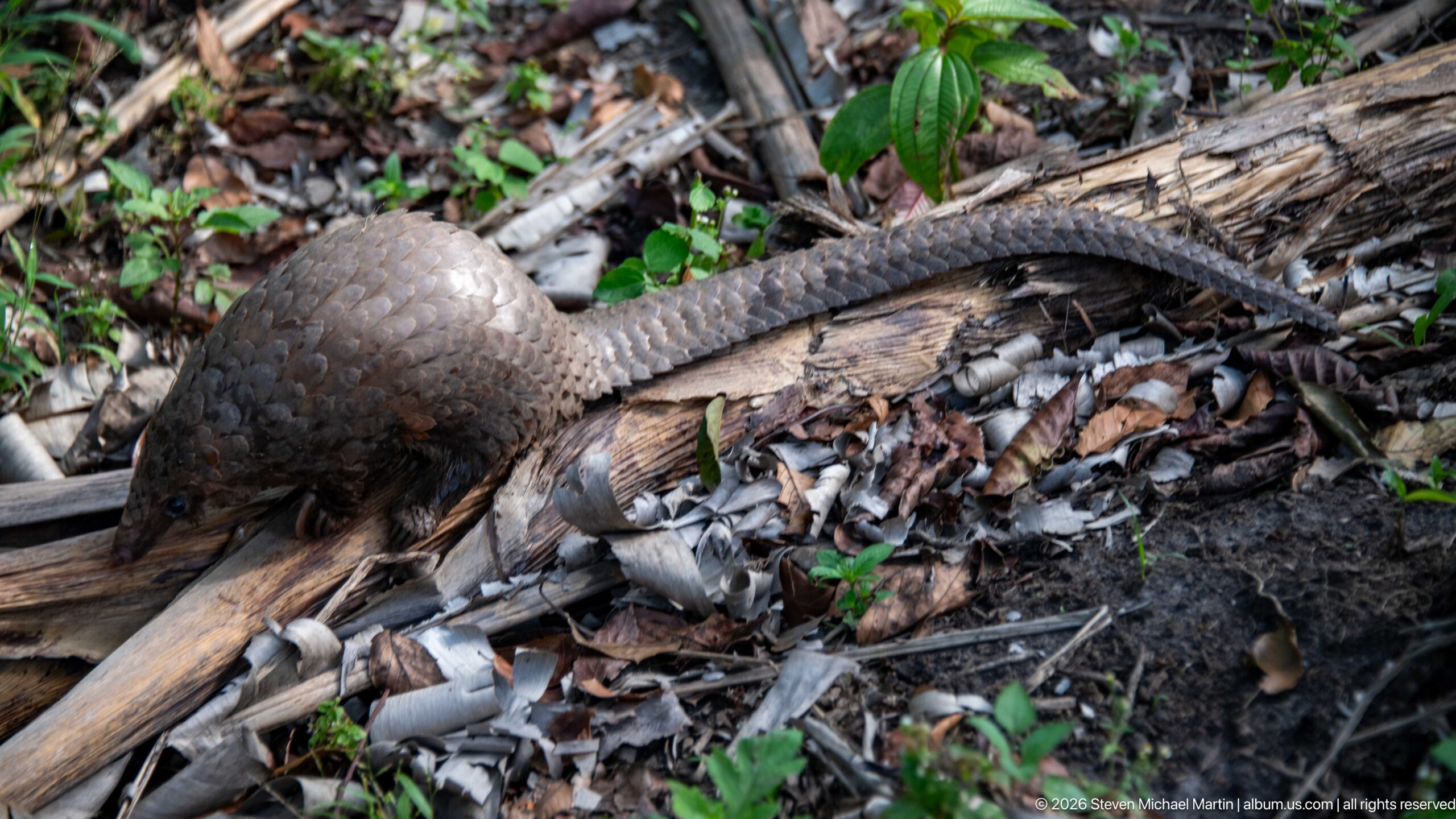
A pangolin moves across leaf litter and fallen wood, its rounded back covered in overlapping scales and its long, tapering tail extending behind. Seen from above in a naturalistic ground setting, the animal’s armored body form and low posture are especially clear, providing a direct wildlife view within the rescue portfolio without assigning a species that cannot be confirmed from this image alone.
Caption
A pangolin moves across leaf litter and fallen wood, its rounded back covered in overlapping scales and its long, tapering tail extending behind. Seen from above in a naturalistic ground setting, the animal’s armored body form and low posture are especially clear, providing a direct wildlife view within the rescue portfolio without assigning a species that cannot be confirmed from this image alone.
A rare look at pangolin rescue and rehabilitation, focused on one of the world’s most threatened mammals and the people working to protect it.
Highlights
- Close encounter with a rescued pangolin
- Insight into wildlife rescue and rehabilitation efforts
- A rare opportunity to observe pangolin behavior up close
- Powerful conservation story centered on protection and survival
- One of the most unusual and memorable wildlife experiences in Africa
Field Guide
📍 Location
This experience focuses on pangolin rescue and care within a conservation setting, offering a rare opportunity to learn about one of the most elusive animals in Africa.
🦔 Wildlife
Pangolins are shy, nocturnal mammals covered in protective scales and known for feeding primarily on ants and termites. They are rarely seen in the wild, which makes rescue and rehabilitation encounters especially significant.
🌿 Habitat
Depending on the rescue location, pangolins may be associated with woodland, savannah, or forest-edge environments where termites and ants are abundant. Their secretive behavior makes them difficult to observe naturally.
🛟 Conservation Context
Pangolins are among the most heavily trafficked mammals in the world, making rescue, protection, and rehabilitation efforts especially important. Encounters like this help connect visitors directly to the realities of wildlife conservation.
📸 Photography Notes
- Look for detail in the scales, claws, and facial features
- Use soft light where possible to bring out texture
- Focus on behavior and handling with care and respect
- Keep compositions simple to emphasize the rarity of the subject
Story & Experience
This was not a typical wildlife sighting, but a conservation encounter centered on rescue and recovery. Seeing a pangolin up close revealed details that are almost impossible to appreciate in the wild — the overlapping scales, curved posture, strong claws, and cautious movements that make the animal feel both ancient and fragile.
The experience also highlighted the human side of conservation. Rescue work depends on patience, expertise, and an ongoing commitment to animals that are rarely seen yet urgently in need of protection.
More than a photo opportunity, the encounter became a reminder that some of the most important wildlife stories are not about spectacle, but about survival.
Photography Notes
- Prioritize respectful distance and calm observation
- Use close framing to emphasize texture and form
- Document hands, tools, or surroundings only when they add context
- Avoid overly dramatic captions — let the rarity of the animal speak for itself
- Look for storytelling moments that connect rescue with conservation
Quick Facts
- Primary Subject: Pangolin rescue and rehabilitation
- Experience Type: Conservation-focused wildlife encounter
- Main Themes: Rescue, protection, rarity, and survival
- Photography Style: Detail, texture, and close observation
- Best Approach: Quiet, respectful, and documentary in tone