Ngorongoro Crater – Lodoare Gate – Tanzania
Lodoare Gate is one of the primary entrances to the Ngorongoro Conservation Area in northern Tanzania. Located along the road between the city of Arusha and the highlands of Ngorongoro, the gate marks the transition from the cultivated landscapes of northern Tanzania into the protected wilderness of the conservation area.
As travelers pass through Lodoare Gate, the environment quickly changes from open farmland to dense montane forest that climbs the outer slopes of the Ngorongoro highlands. The road winds upward through lush vegetation and misty hills before reaching the rim of the famous Ngorongoro Crater.
The gate also serves as an administrative and visitor checkpoint where permits are issued and information about the conservation area is provided. For many visitors beginning their safari, Lodoare Gate represents the first true entrance into the extraordinary wildlife landscapes of the Serengeti ecosystem.
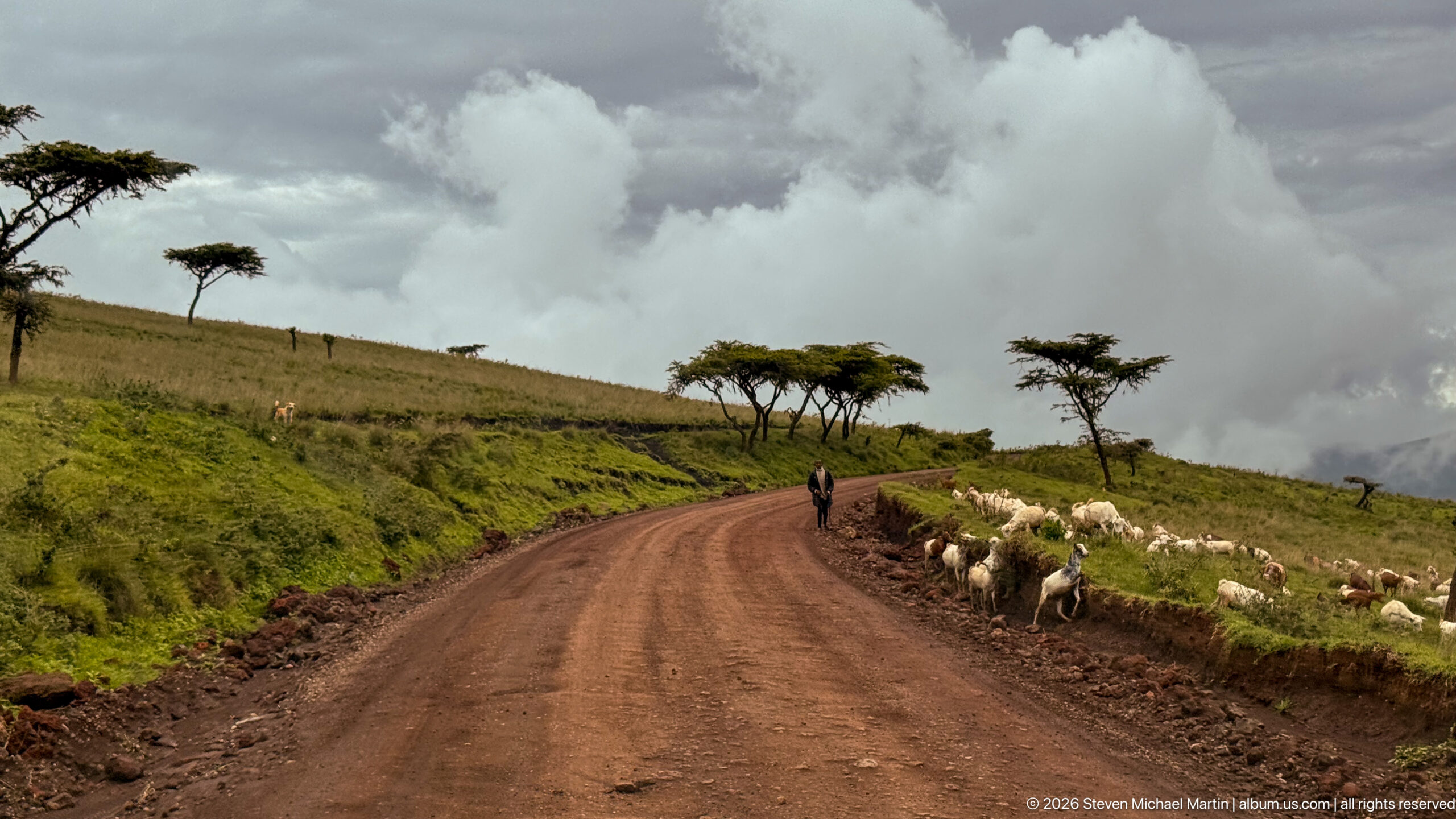
A herd of small livestock moves along the edge of a red-earth road across the Ngorongoro highlands as a herder approaches in the distance. Scattered flat-topped trees punctuate the grassy slopes beneath towering storm clouds, joining pastoral activity with the dramatic upland landscape.
Caption
A herd of small livestock moves along the edge of a red-earth road across the Ngorongoro highlands as a herder approaches in the distance. Scattered flat-topped trees punctuate the grassy slopes beneath towering storm clouds, joining pastoral activity with the dramatic upland landscape.
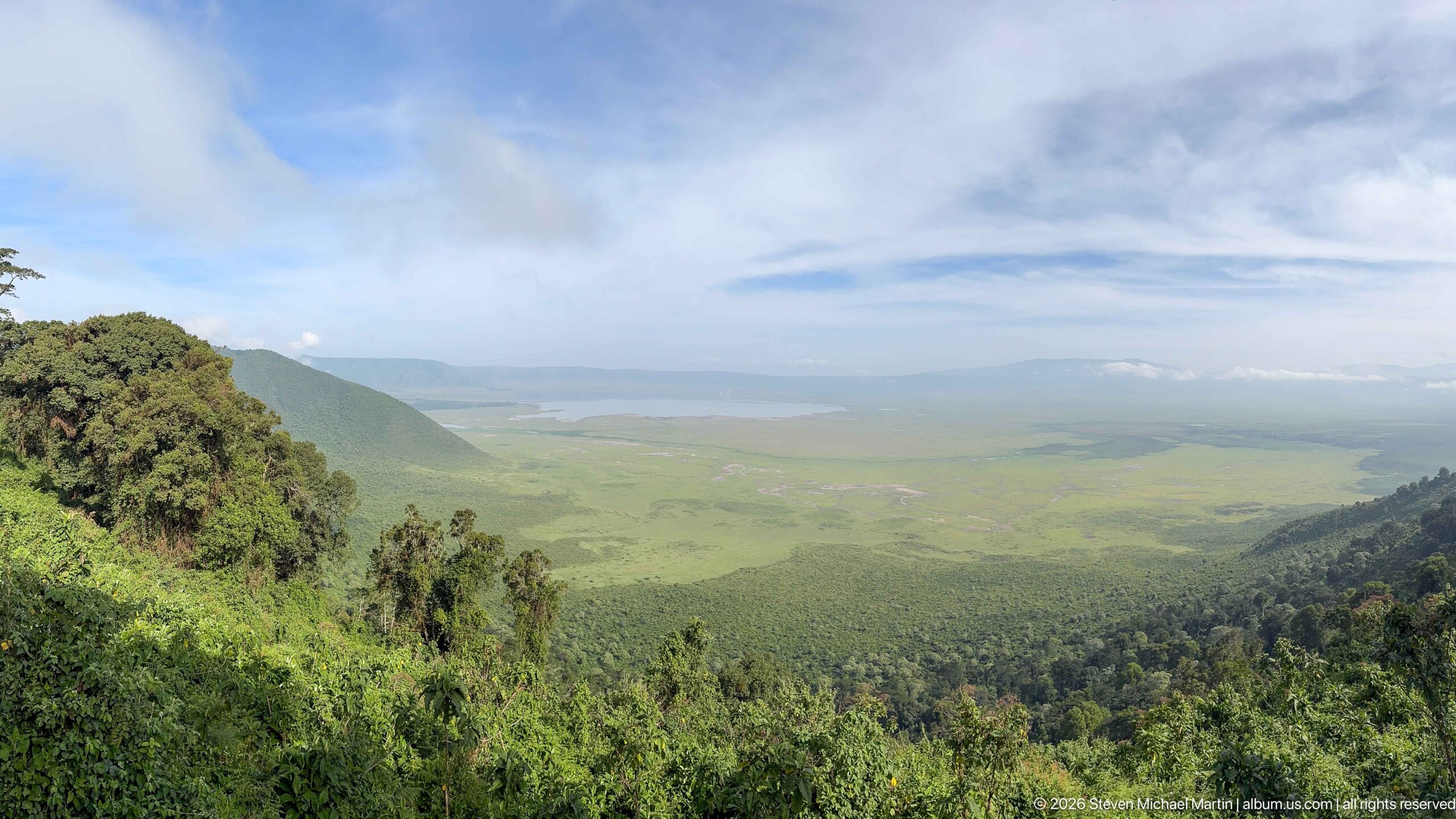
Lush montane vegetation fills the foreground of this high panoramic overlook across the Ngorongoro basin. Beyond the forested slopes, an immense green floor reaches toward a distant lake and hazy opposite rim, while sweeping cloud bands open across the blue sky above.
Caption
Lush montane vegetation fills the foreground of this high panoramic overlook across the Ngorongoro basin. Beyond the forested slopes, an immense green floor reaches toward a distant lake and hazy opposite rim, while sweeping cloud bands open across the blue sky above.
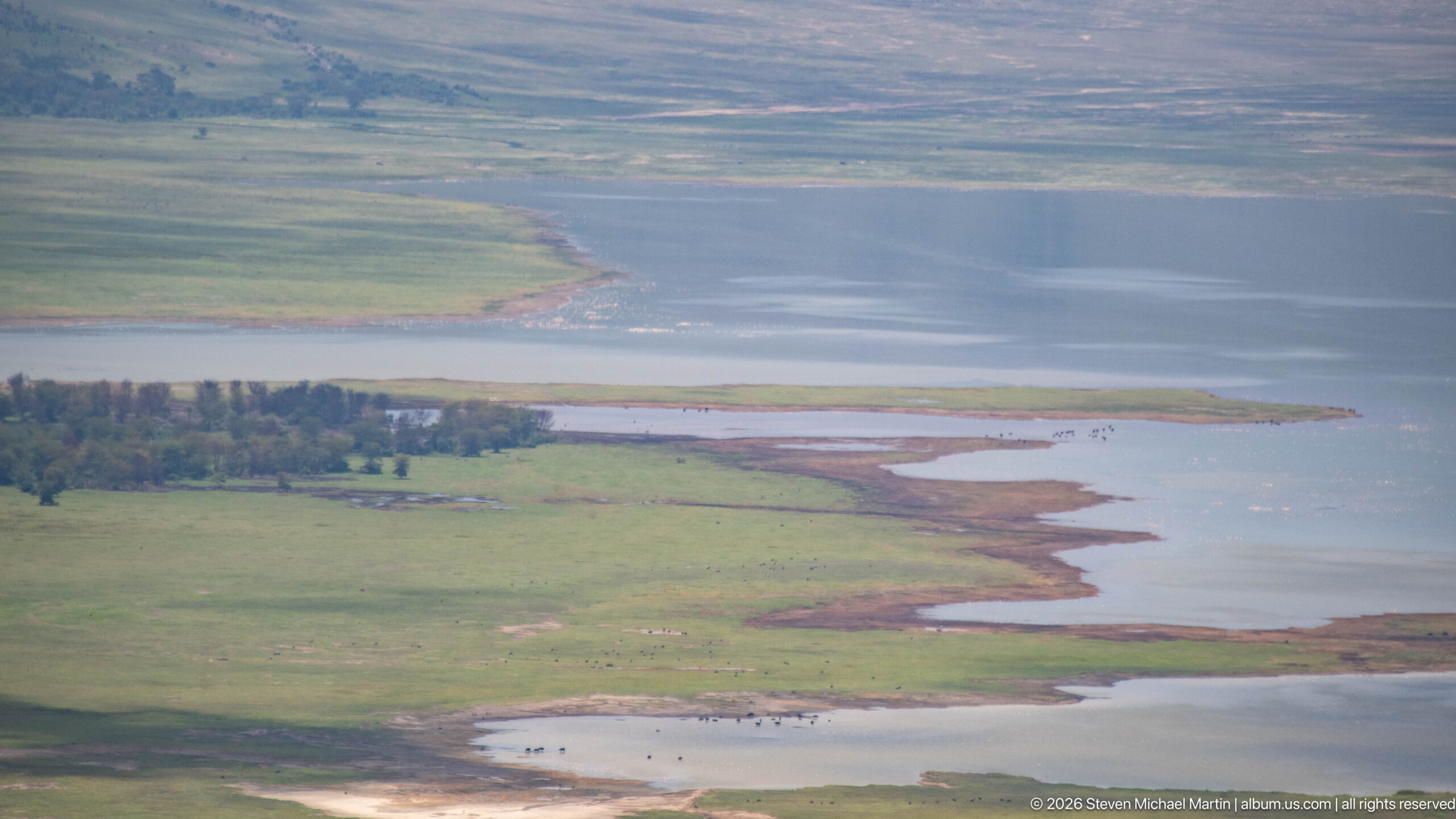
Shallow water and irregular marshy shorelines break across the Ngorongoro Crater floor, with green grazing land extending between the pools. Small dark animal groups gather near the water’s edge, showing how the crater’s wetlands punctuate the surrounding grassland habitat.
Caption
Shallow water and irregular marshy shorelines break across the Ngorongoro Crater floor, with green grazing land extending between the pools. Small dark animal groups gather near the water’s edge, showing how the crater’s wetlands punctuate the surrounding grassland habitat.
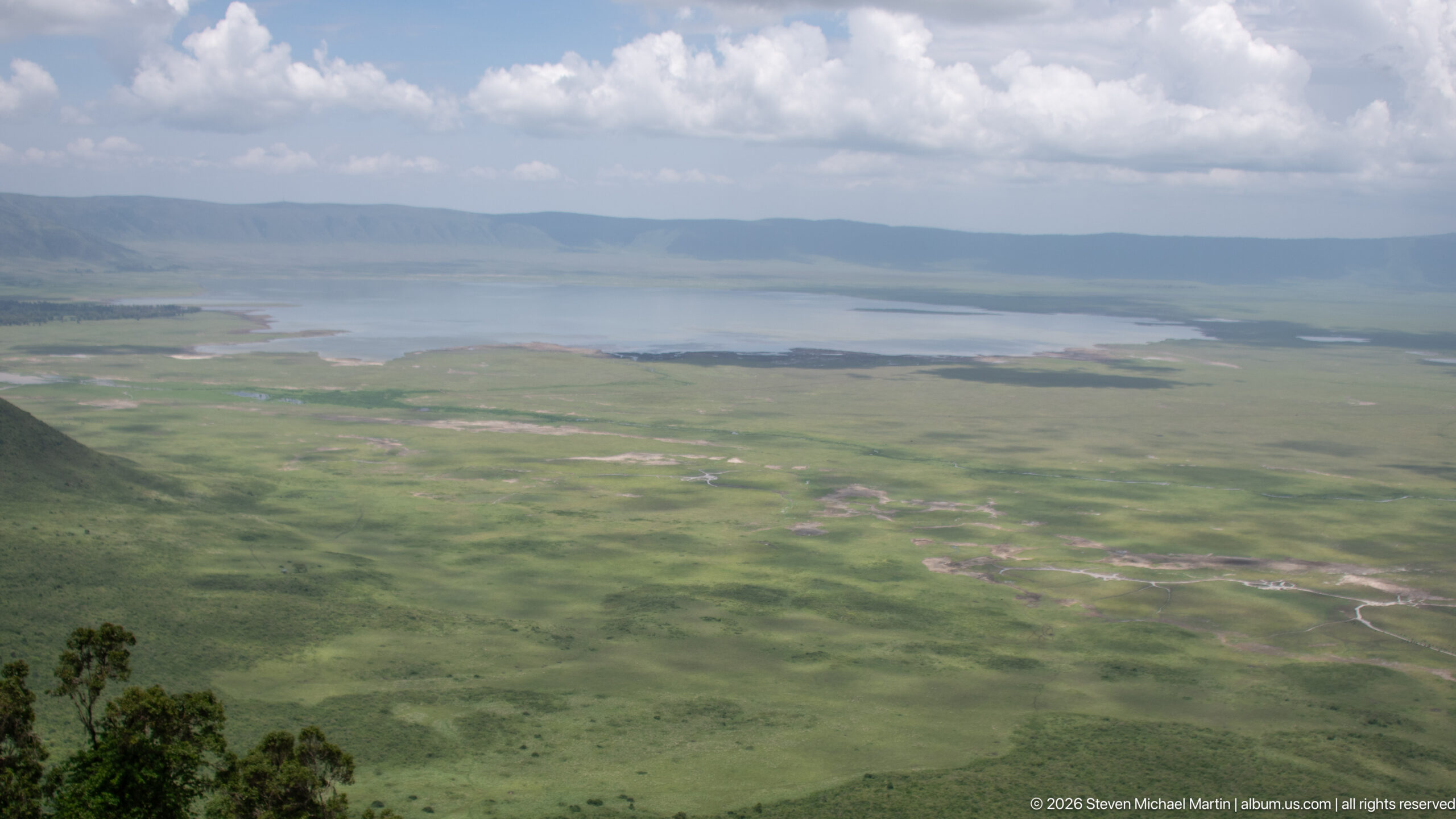
A wide overlook opens across the Ngorongoro Crater floor, where green plains lead to a broad lake beneath the distant caldera wall. Broken sunlight and cloud shadow move across the basin, revealing the scale and varied surface of the crater landscape from the high rim.
Caption
A wide overlook opens across the Ngorongoro Crater floor, where green plains lead to a broad lake beneath the distant caldera wall. Broken sunlight and cloud shadow move across the basin, revealing the scale and varied surface of the crater landscape from the high rim.
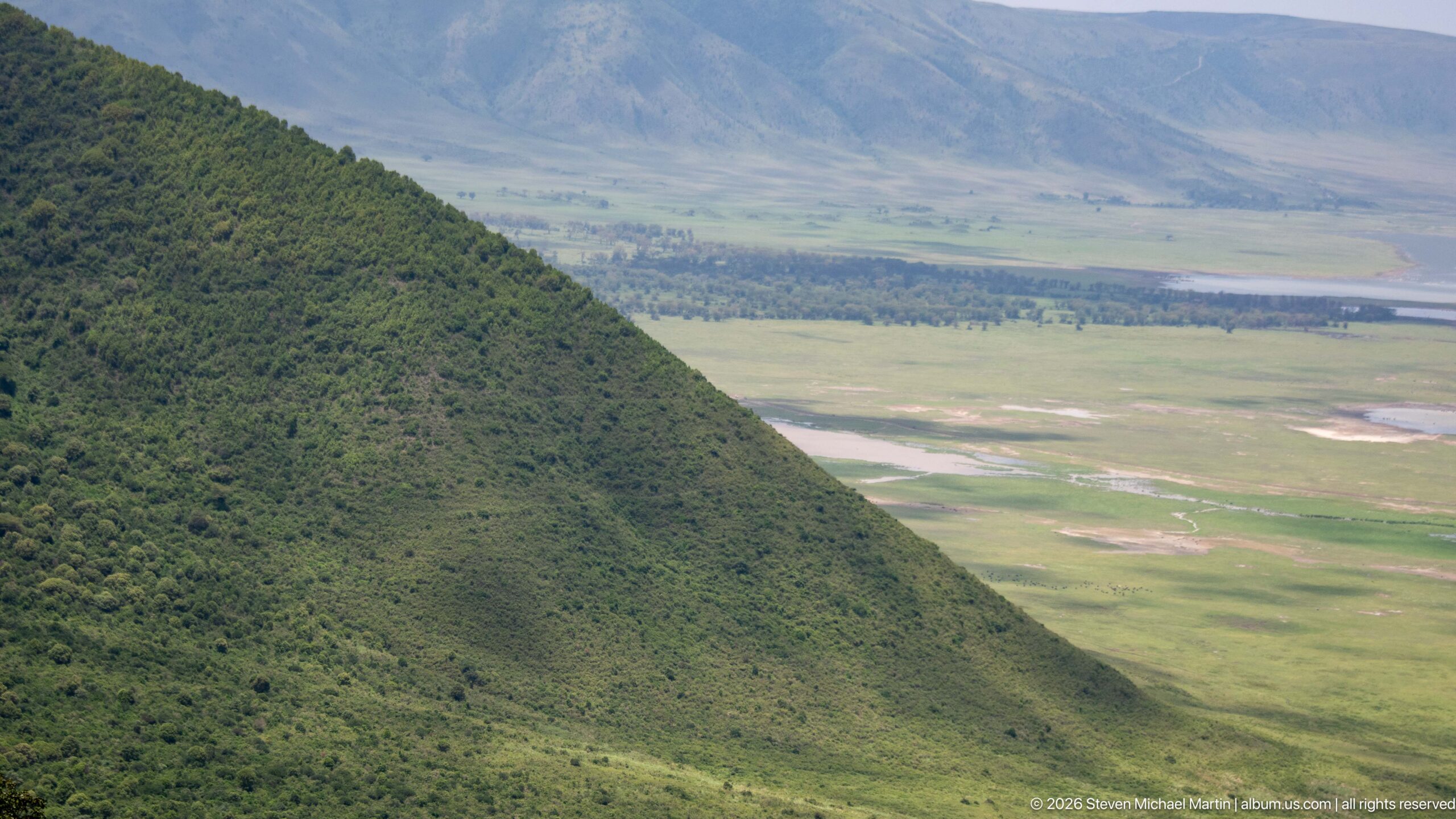
From the forested rim, a steep green slope drops toward the broad Ngorongoro Crater floor. Pale grasslands, wetlands, and a distant lake spread beneath the opposite wall, giving an elevated sense of the caldera’s immense enclosed basin and the sharp ecological transition from wooded rim to open plains.
Caption
From the forested rim, a steep green slope drops toward the broad Ngorongoro Crater floor. Pale grasslands, wetlands, and a distant lake spread beneath the opposite wall, giving an elevated sense of the caldera’s immense enclosed basin and the sharp ecological transition from wooded rim to open plains.
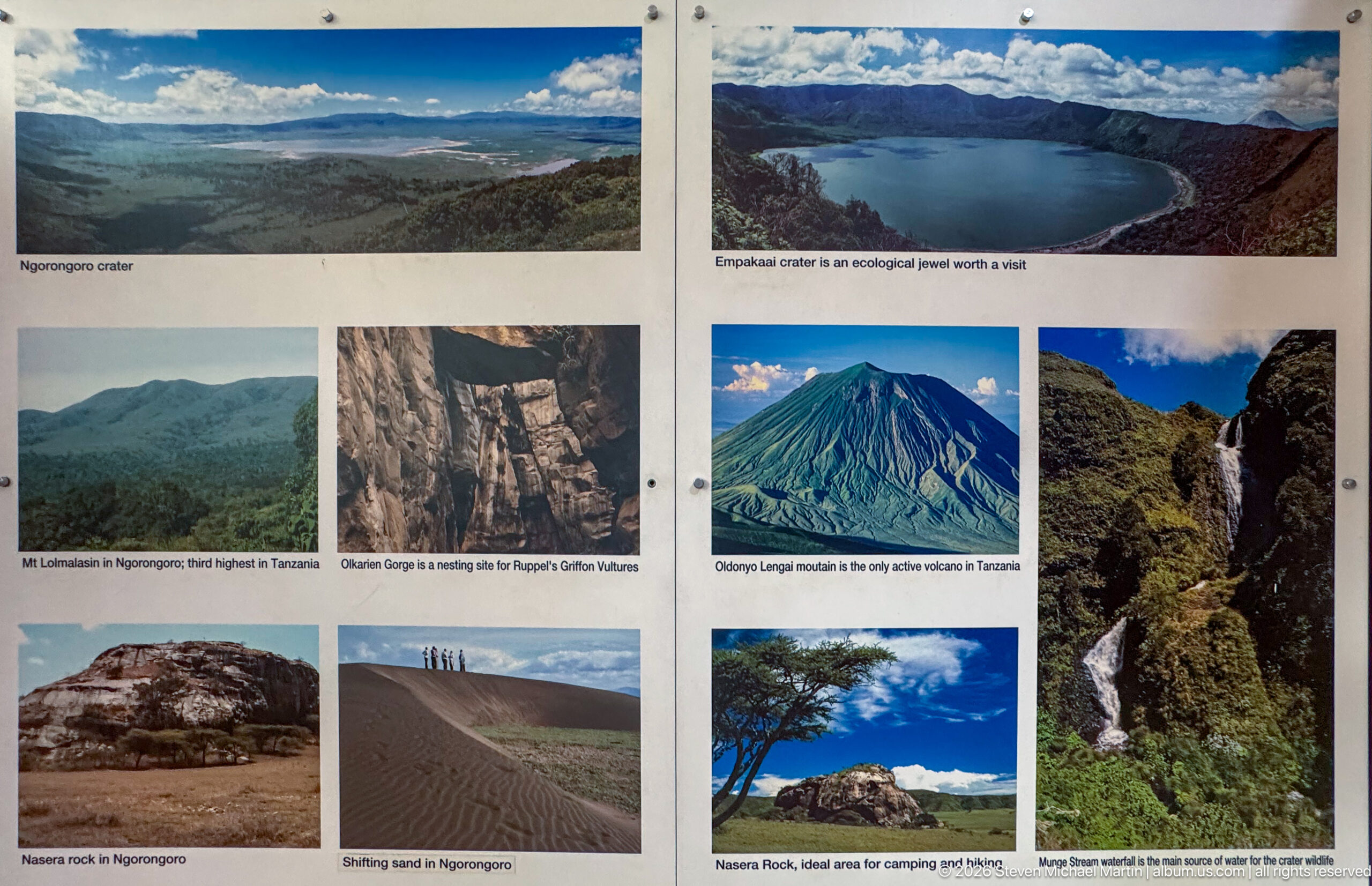
A photographic interpretation panel surveys notable landscapes of the Ngorongoro region, including the crater, Empakaai Crater, forested highlands, volcanic peaks, waterfalls, shifting sand, and distinctive rock formations. The grid format presents the conservation area as a geologically varied landscape shaped by volcanism, erosion, vegetation, and climate.
Caption
A photographic interpretation panel surveys notable landscapes of the Ngorongoro region, including the crater, Empakaai Crater, forested highlands, volcanic peaks, waterfalls, shifting sand, and distinctive rock formations. The grid format presents the conservation area as a geologically varied landscape shaped by volcanism, erosion, vegetation, and climate.
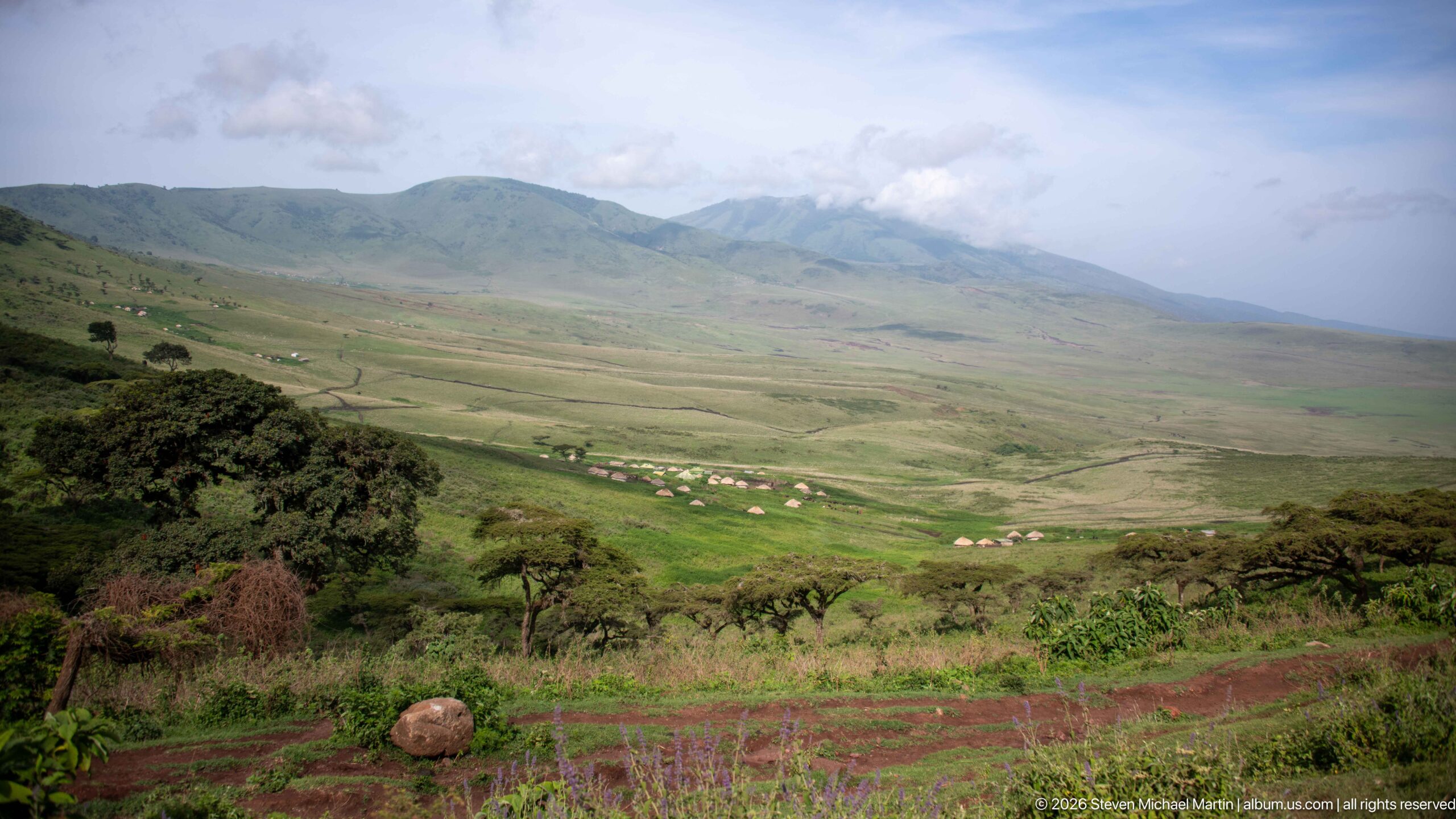
A sweeping highland panorama opens from a wooded foreground across the Ngorongoro grasslands to layered mountain slopes under broken cloud. A small cluster of thatched huts lies far below, giving scale to the vast open valley and its patchwork of tracks and grazing ground.
Caption
A sweeping highland panorama opens from a wooded foreground across the Ngorongoro grasslands to layered mountain slopes under broken cloud. A small cluster of thatched huts lies far below, giving scale to the vast open valley and its patchwork of tracks and grazing ground.
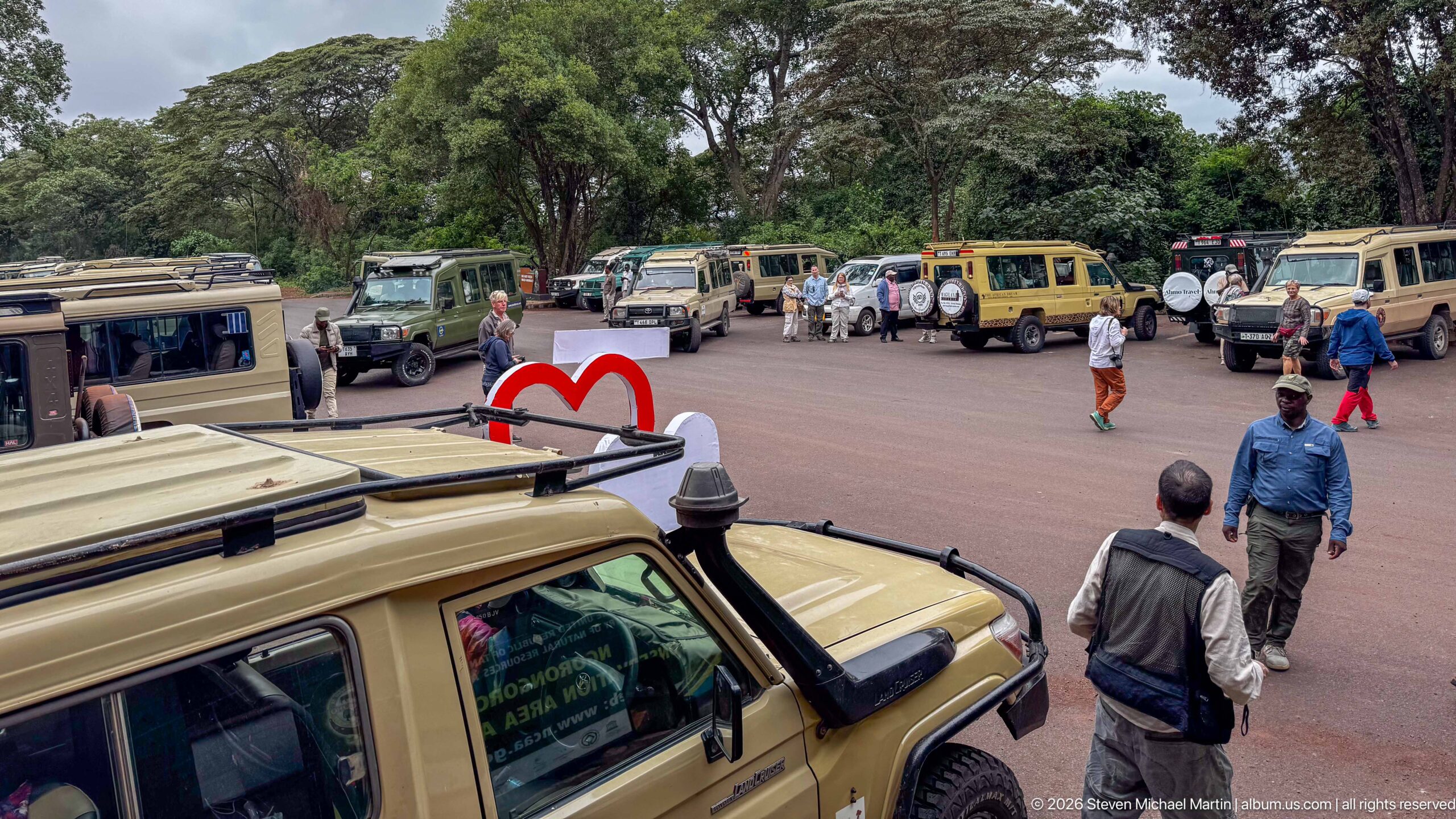
Safari Land Cruisers fill a broad paved staging area near Lodoare Gate as visitors and guides walk between vehicles. Raised roofs, spare tires, and tour-company markings distinguish the fleet, while the surrounding forest reinforces the highland setting of this busy transfer point before onward travel into the Ngorongoro Conservation Area.
Caption
Safari Land Cruisers fill a broad paved staging area near Lodoare Gate as visitors and guides walk between vehicles. Raised roofs, spare tires, and tour-company markings distinguish the fleet, while the surrounding forest reinforces the highland setting of this busy transfer point before onward travel into the Ngorongoro Conservation Area.
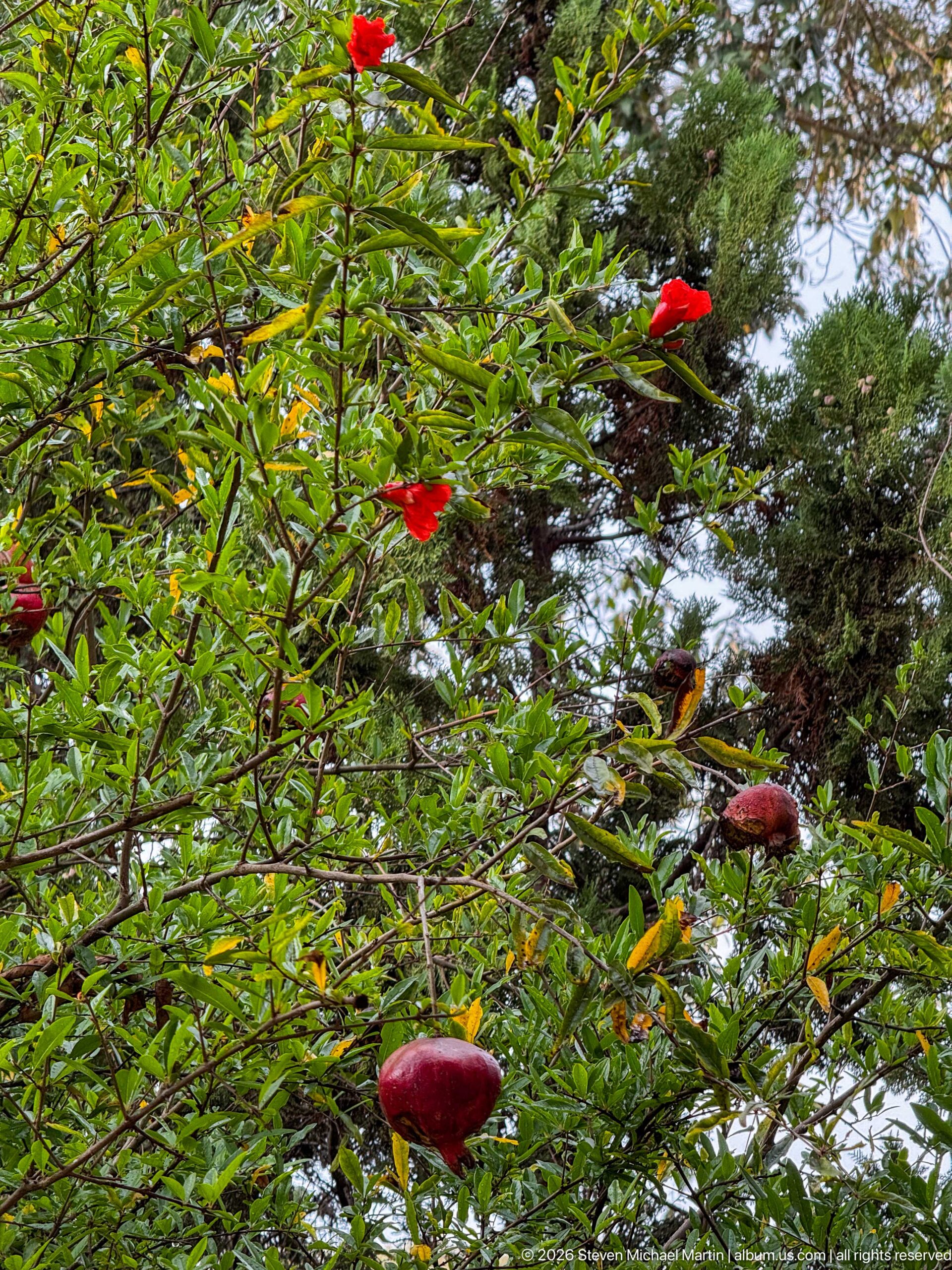
Large deep-red blossoms hang among glossy green leaves and branches near the Ngorongoro rim. The close botanical view shifts attention from the crater panorama to the lush highland vegetation encountered around the entrance and overlook zone.
Caption
Large deep-red blossoms hang among glossy green leaves and branches near the Ngorongoro rim. The close botanical view shifts attention from the crater panorama to the lush highland vegetation encountered around the entrance and overlook zone.
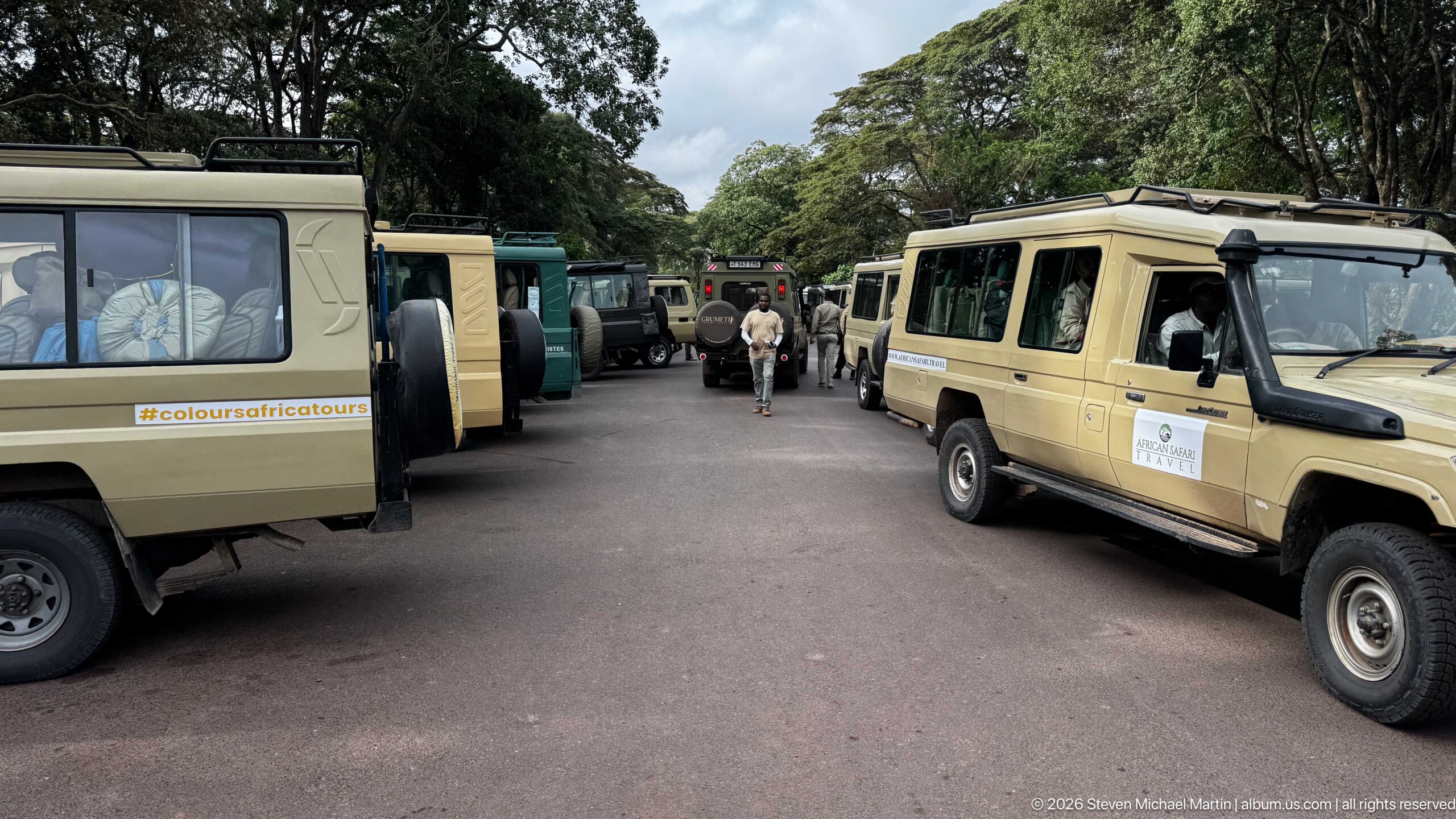
A line of safari Land Cruisers occupies the paved access road at Lodoare Gate, their raised roofs, spare tires, and tour markings identifying vehicles adapted for wildlife viewing. Dense highland trees enclose the road, while people walking between the vehicles show the active staging area just inside the conservation-area entrance.
Caption
A line of safari Land Cruisers occupies the paved access road at Lodoare Gate, their raised roofs, spare tires, and tour markings identifying vehicles adapted for wildlife viewing. Dense highland trees enclose the road, while people walking between the vehicles show the active staging area just inside the conservation-area entrance.
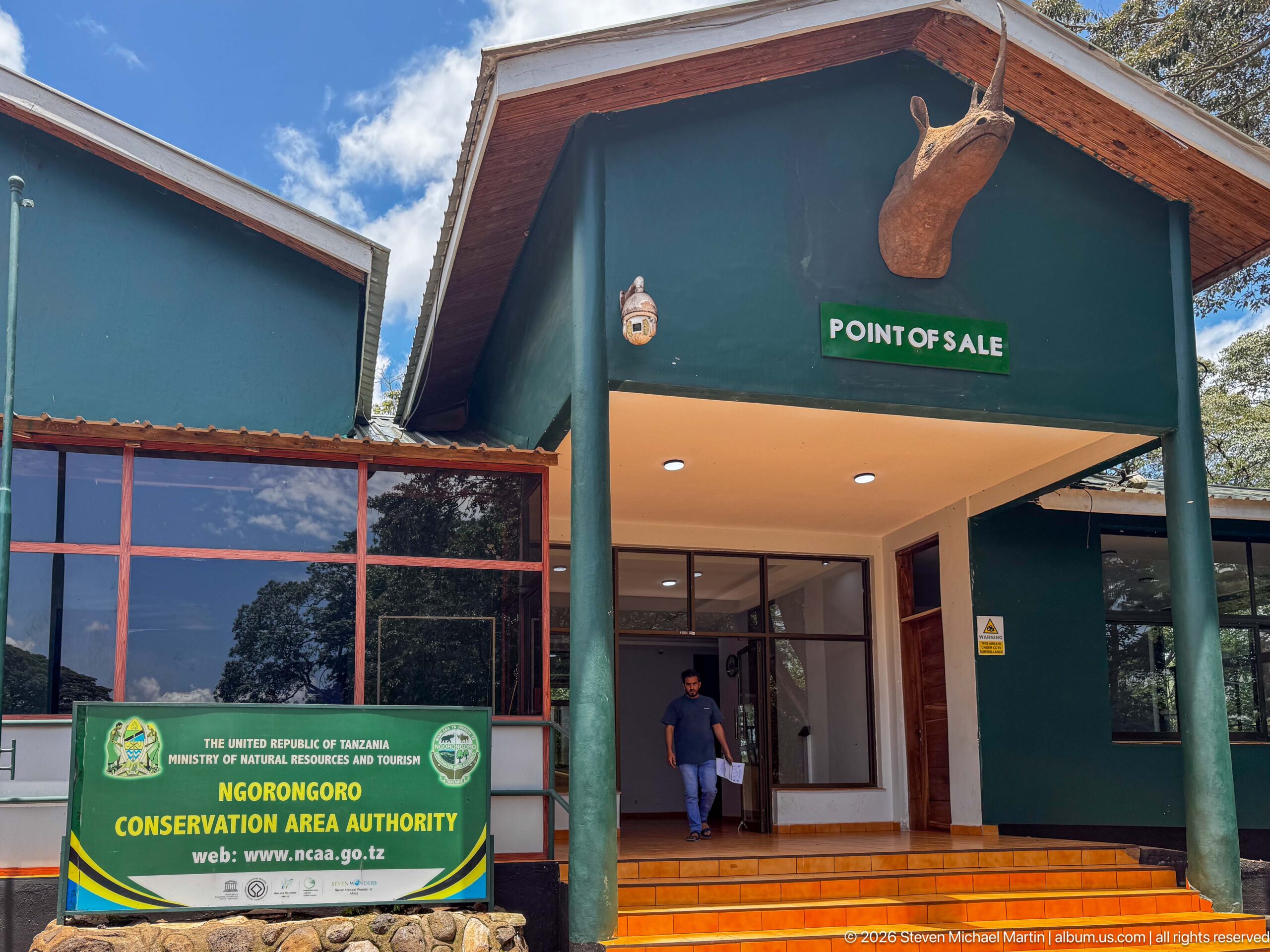
The point-of-sale entrance at the Ngorongoro Conservation Area pairs a dark-green visitor building with official conservation signage and wildlife emblems. A mounted antelope head above the doorway and the clearly marked ticketing entrance establish this as an arrival and administrative stop before travelers continue into the protected landscape.
Caption
The point-of-sale entrance at the Ngorongoro Conservation Area pairs a dark-green visitor building with official conservation signage and wildlife emblems. A mounted antelope head above the doorway and the clearly marked ticketing entrance establish this as an arrival and administrative stop before travelers continue into the protected landscape.
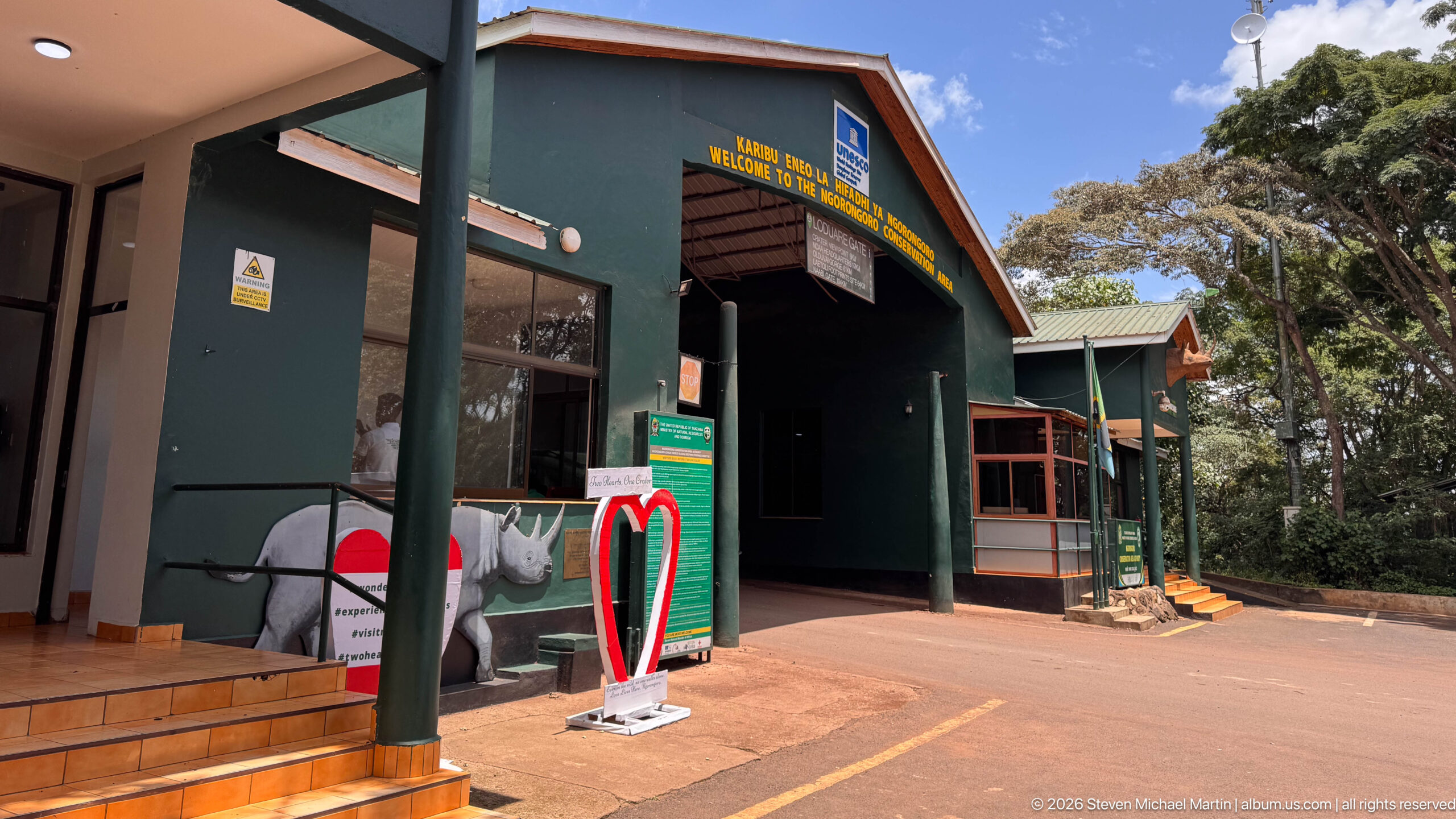
The covered entrance structure welcomes visitors to the Ngorongoro Conservation Area, with bilingual Swahili and English lettering across the gable and conservation branding beside the drive-through passage. The gate architecture, information panels, and roadway frame the transition from the visitor facilities into the protected area.
Caption
The covered entrance structure welcomes visitors to the Ngorongoro Conservation Area, with bilingual Swahili and English lettering across the gable and conservation branding beside the drive-through passage. The gate architecture, information panels, and roadway frame the transition from the visitor facilities into the protected area.
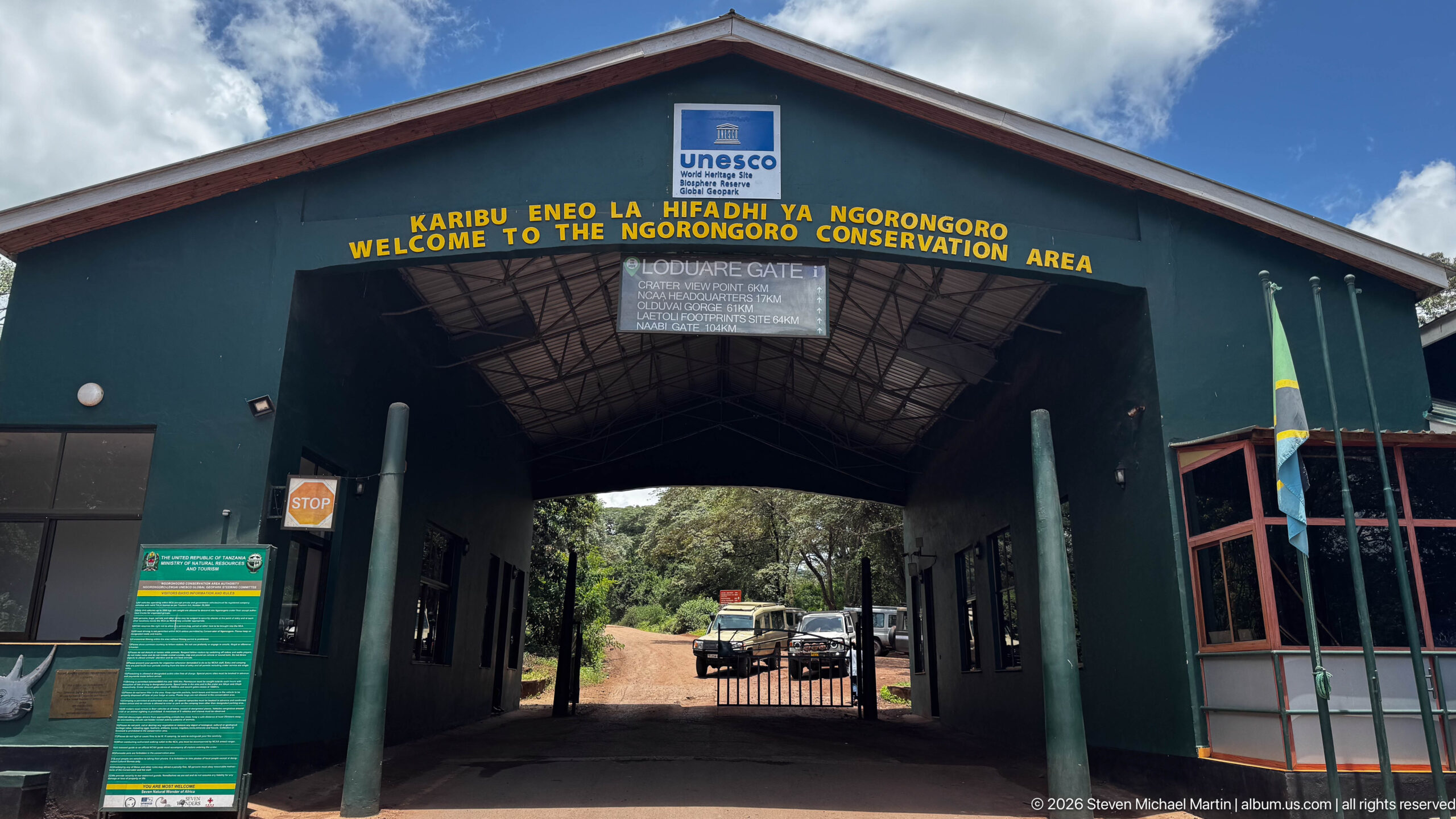
A frontal view of the Ngorongoro Conservation Area gateway centers the bilingual welcome inscription beneath a UNESCO emblem. The broad roof spans the vehicle lane, while information boards, a stop sign, Tanzanian flags, and waiting safari vehicles emphasize the controlled entry point into the conservation area.
Caption
A frontal view of the Ngorongoro Conservation Area gateway centers the bilingual welcome inscription beneath a UNESCO emblem. The broad roof spans the vehicle lane, while information boards, a stop sign, Tanzanian flags, and waiting safari vehicles emphasize the controlled entry point into the conservation area.
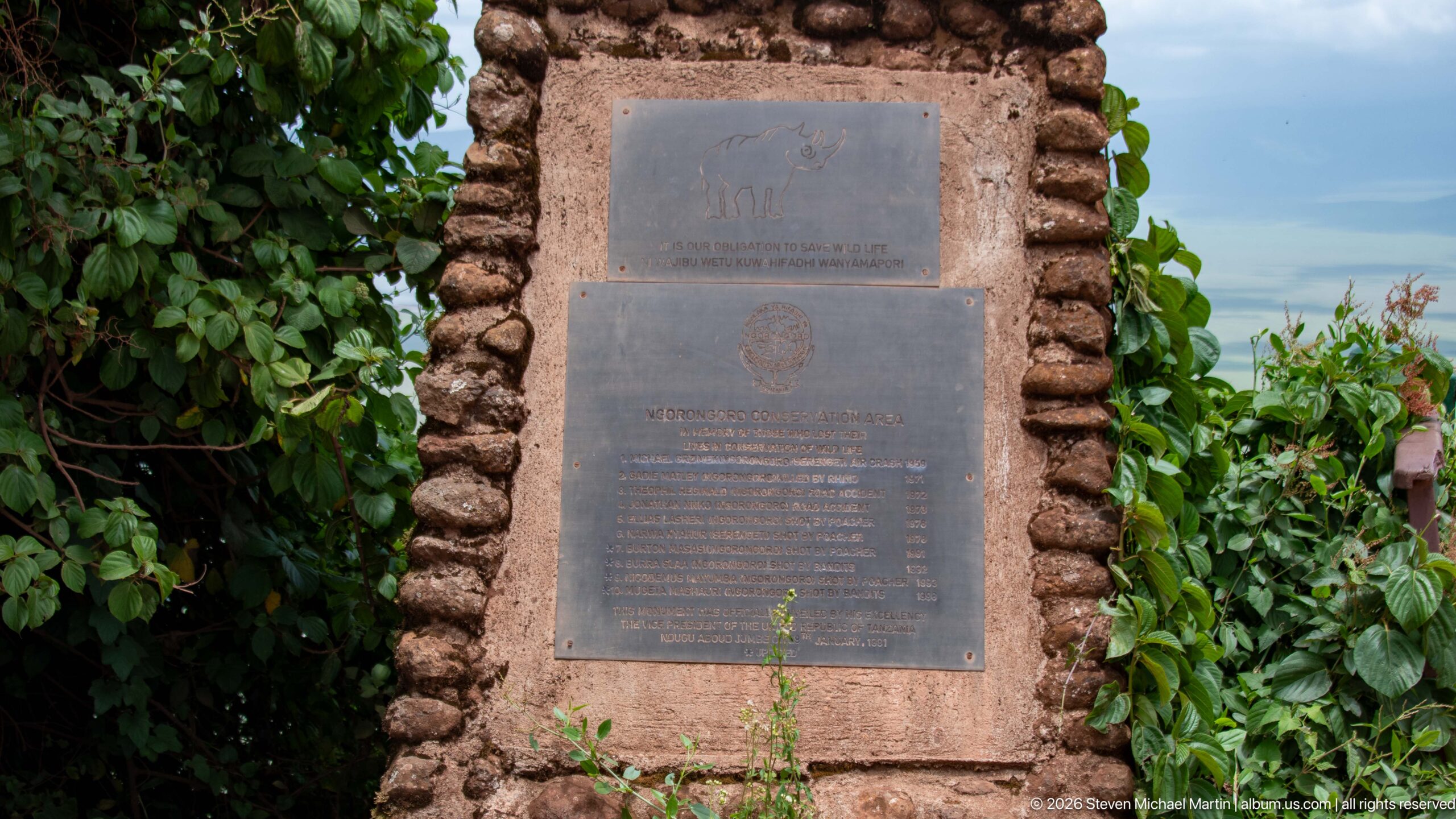
Two bronze-toned plaques are set into a rough stone monument amid dense vegetation near the Ngorongoro rim. The upper panel carries an animal motif and the lower a longer commemorative inscription, marking a formal memorial or dedication within the conservation-area visitor landscape.
Caption
Two bronze-toned plaques are set into a rough stone monument amid dense vegetation near the Ngorongoro rim. The upper panel carries an animal motif and the lower a longer commemorative inscription, marking a formal memorial or dedication within the conservation-area visitor landscape.
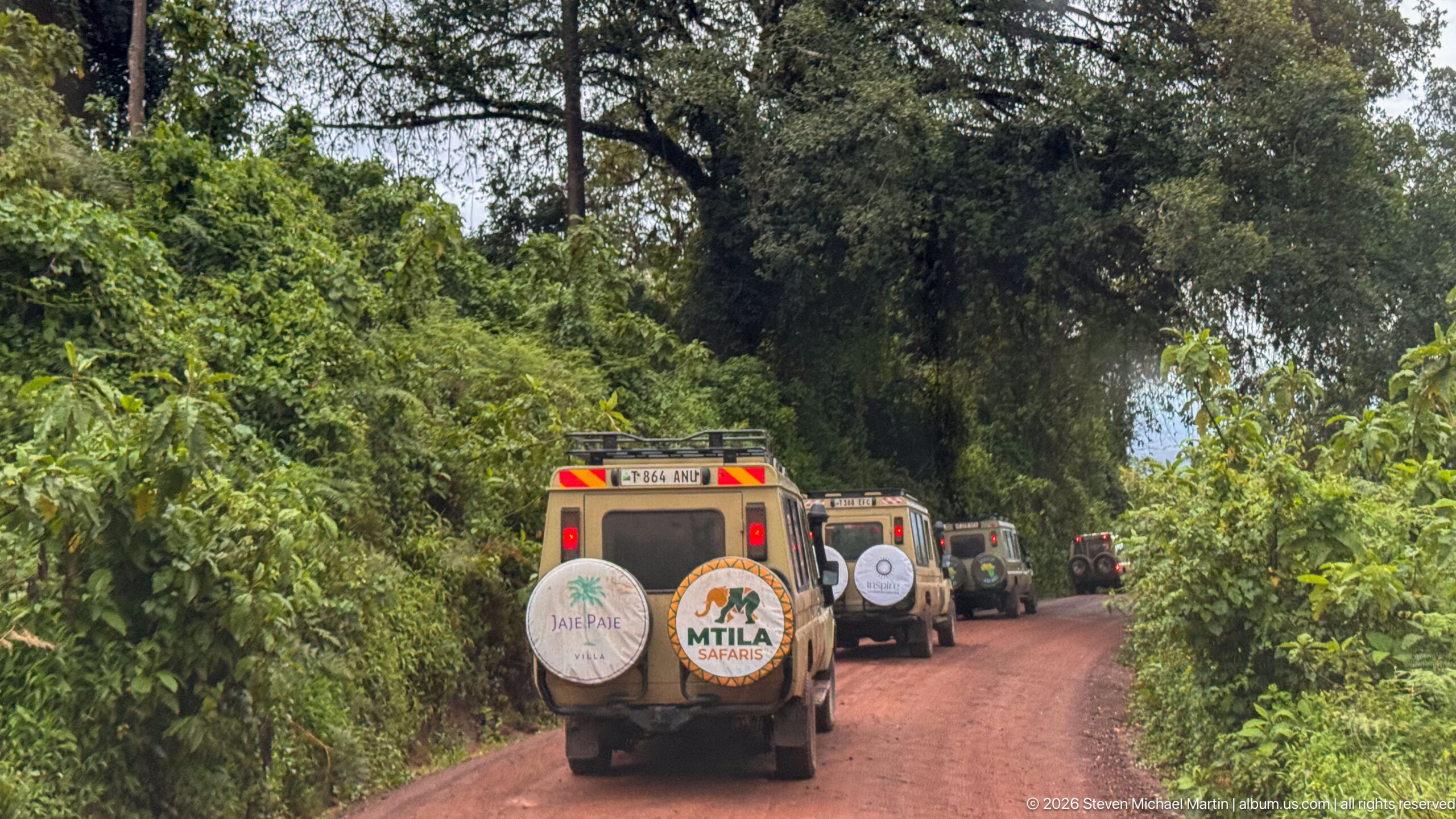
A line of safari vehicles follows a narrow red-earth road through dense highland forest near the Ngorongoro rim. Spare tires and tour-company markings fill the rear of the nearest vehicle as the convoy descends through thick roadside vegetation toward the open conservation landscape.
Caption
A line of safari vehicles follows a narrow red-earth road through dense highland forest near the Ngorongoro rim. Spare tires and tour-company markings fill the rear of the nearest vehicle as the convoy descends through thick roadside vegetation toward the open conservation landscape.
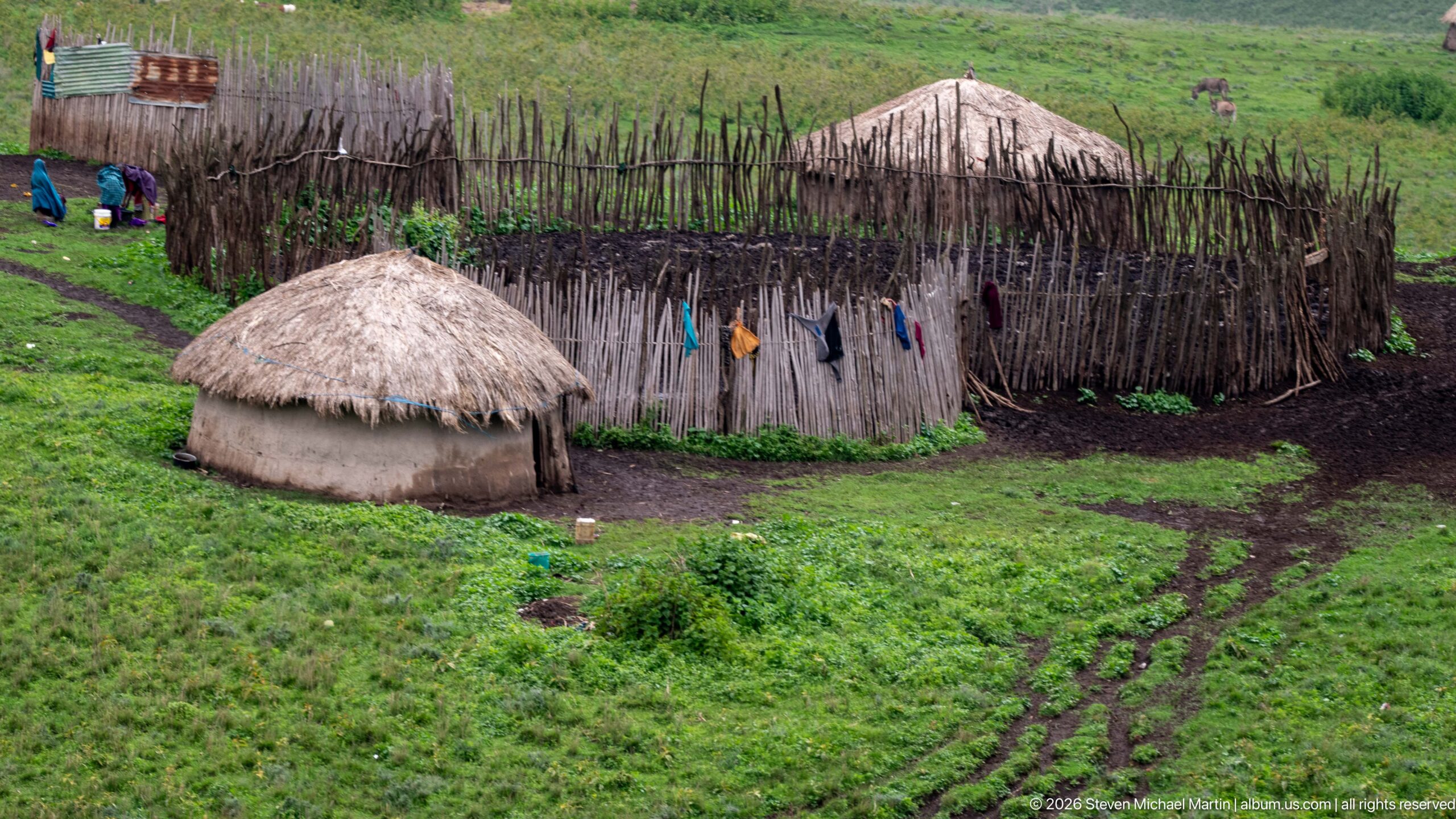
Two round, low-walled thatched huts stand beside a tall stick enclosure on the green Ngorongoro highlands. Footpaths and dark, trampled ground around the compound reveal the working character of the homestead, with fencing arranged to protect domestic space and livestock.
Caption
Two round, low-walled thatched huts stand beside a tall stick enclosure on the green Ngorongoro highlands. Footpaths and dark, trampled ground around the compound reveal the working character of the homestead, with fencing arranged to protect domestic space and livestock.
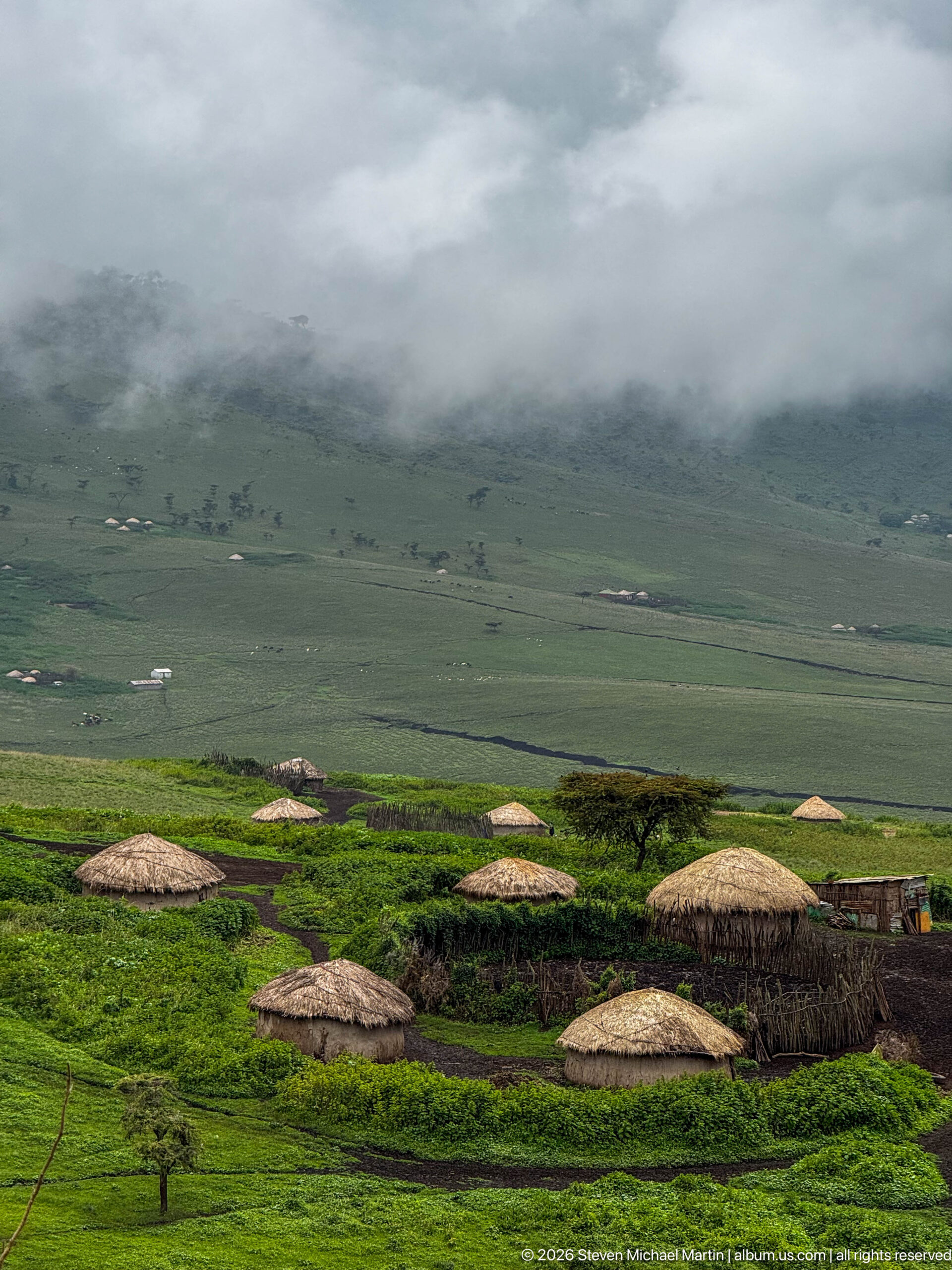
Round thatched dwellings and fenced compounds sit on intensely green highland pasture beneath low cloud on the Ngorongoro slopes. The clustered homesteads form a pastoral settlement within the conservation landscape, where resident communities and livestock husbandry coexist with protected wildlife habitat.
Caption
Round thatched dwellings and fenced compounds sit on intensely green highland pasture beneath low cloud on the Ngorongoro slopes. The clustered homesteads form a pastoral settlement within the conservation landscape, where resident communities and livestock husbandry coexist with protected wildlife habitat.
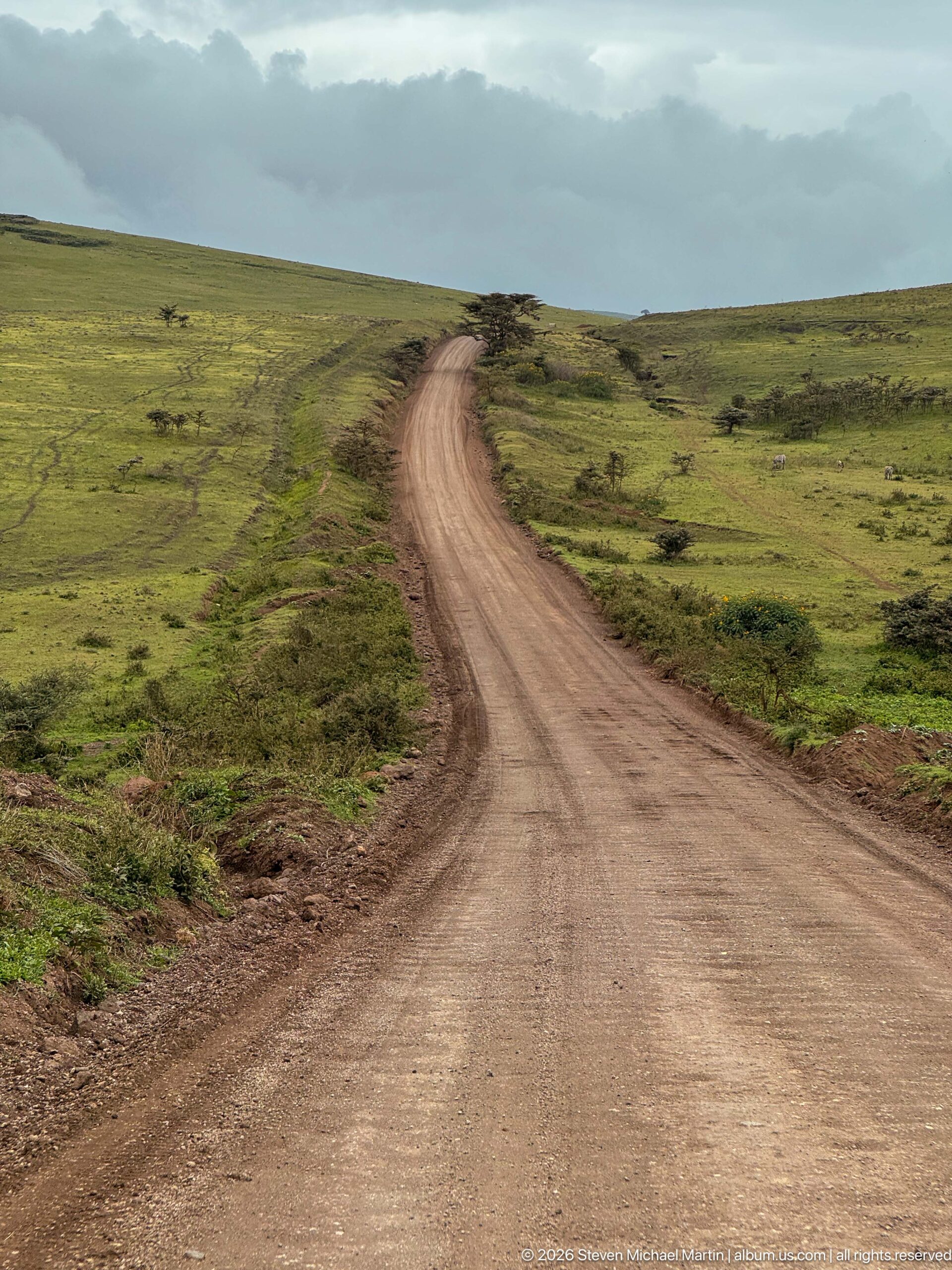
The unpaved safari road sweeps in a broad curve through treeless green uplands, disappearing toward a low ridge beneath a dark cloud bank. Its wide, graded surface and sparse roadside vegetation emphasize the openness of the Ngorongoro highland route.
Caption
The unpaved safari road sweeps in a broad curve through treeless green uplands, disappearing toward a low ridge beneath a dark cloud bank. Its wide, graded surface and sparse roadside vegetation emphasize the openness of the Ngorongoro highland route.
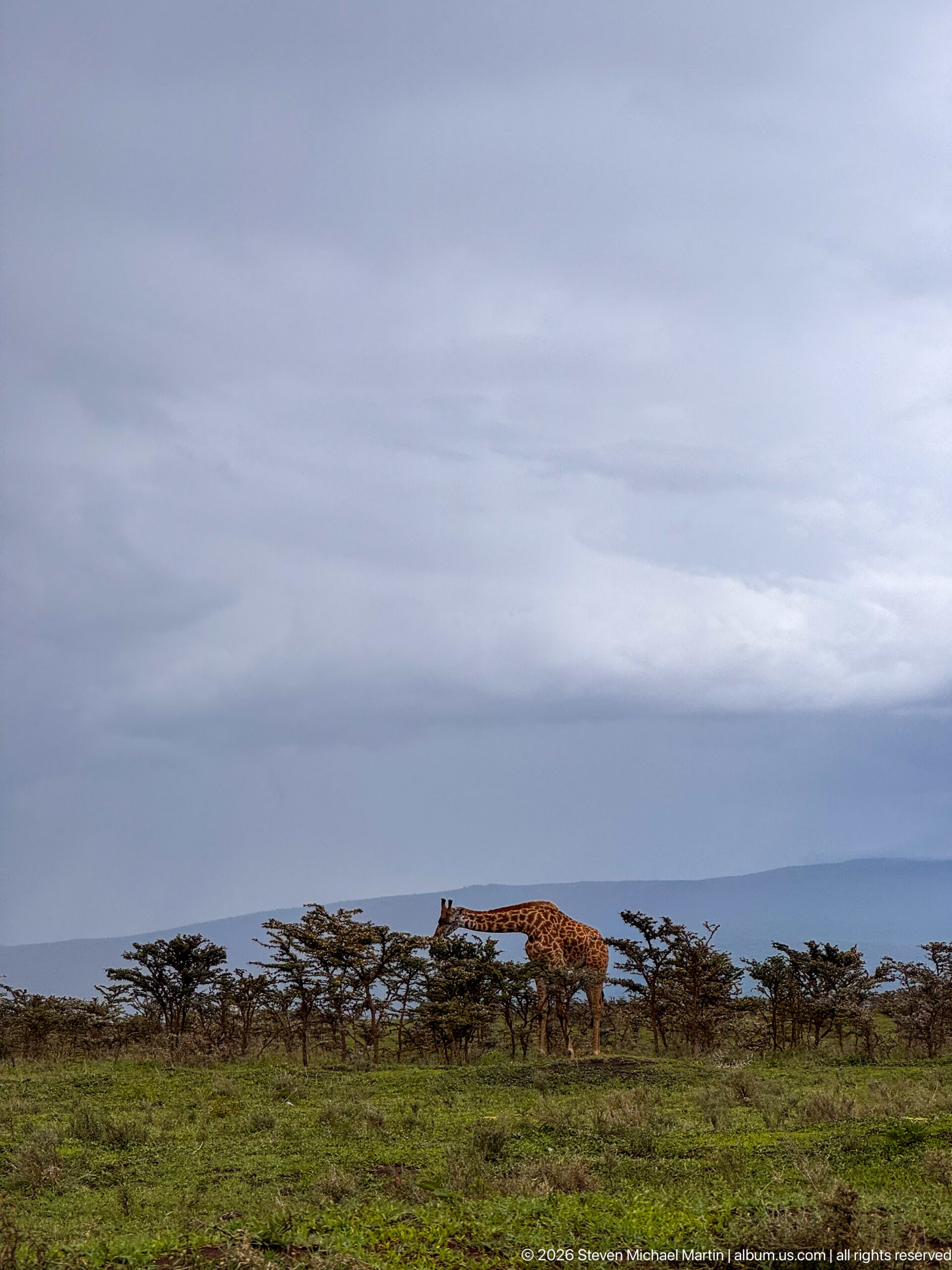
A giraffe moves laterally behind a line of low, flat-topped trees beneath an expansive gray-blue sky. Seen at distance, the animal’s patterned coat and long neck remain distinct, while the horizontal woodland edge gives the frame a layered sense of the open Ngorongoro habitat.
Caption
A giraffe moves laterally behind a line of low, flat-topped trees beneath an expansive gray-blue sky. Seen at distance, the animal’s patterned coat and long neck remain distinct, while the horizontal woodland edge gives the frame a layered sense of the open Ngorongoro habitat.

A stick-fenced settlement spreads across the Ngorongoro highland grassland, combining round thatched huts with small utilitarian structures. Bright garments and cloths hang along the enclosure, adding signs of daily domestic life to the ordered rings of fencing and dwellings.
Caption
A stick-fenced settlement spreads across the Ngorongoro highland grassland, combining round thatched huts with small utilitarian structures. Bright garments and cloths hang along the enclosure, adding signs of daily domestic life to the ordered rings of fencing and dwellings.
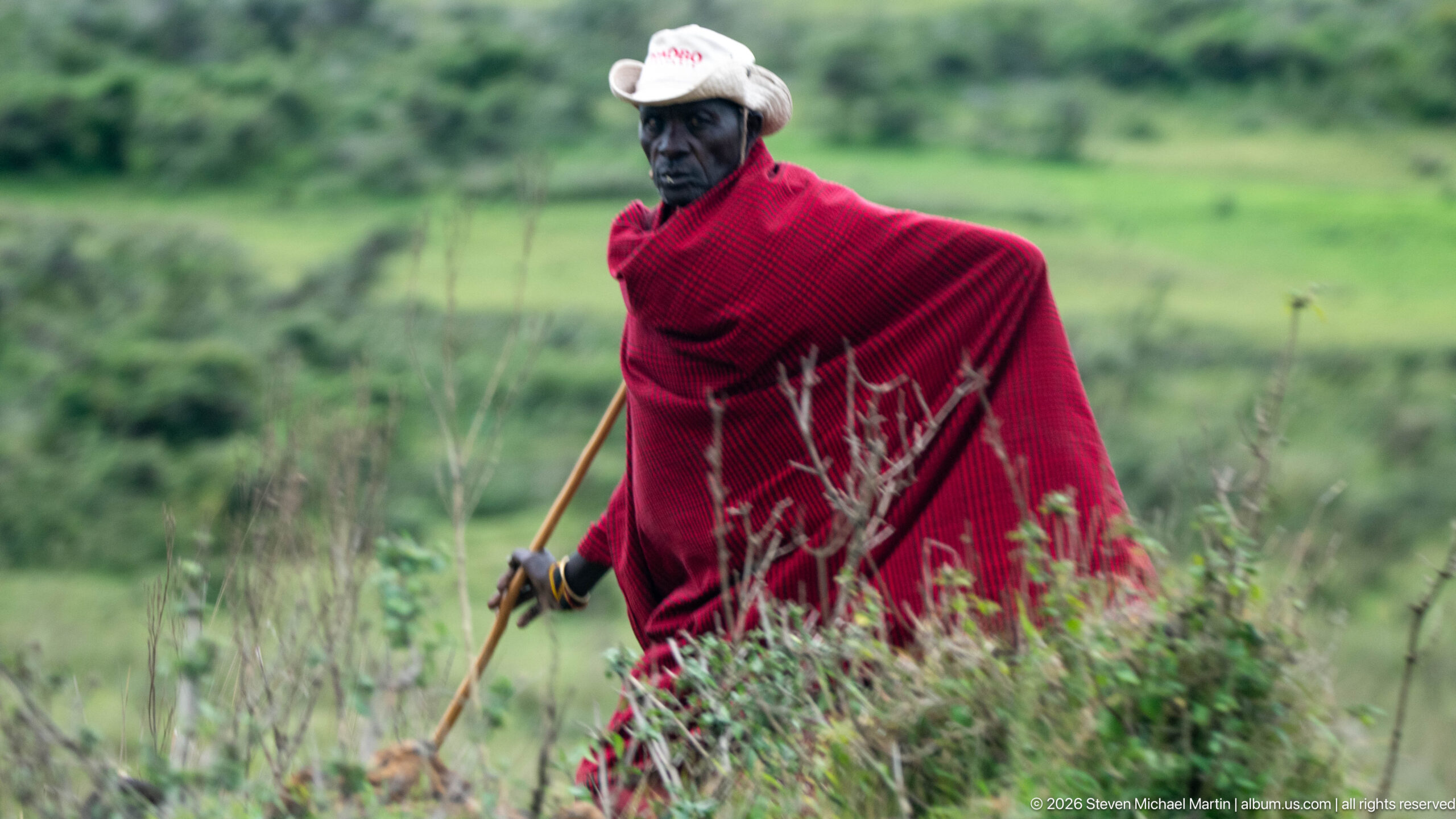
A man wearing a vivid red wrap and light-colored brimmed hat walks through tall grass on the Ngorongoro highlands, carrying a long wooden staff. His clothing and herding staff place the portrait within the pastoral cultural landscape encountered along the route through the conservation area.
Caption
A man wearing a vivid red wrap and light-colored brimmed hat walks through tall grass on the Ngorongoro highlands, carrying a long wooden staff. His clothing and herding staff place the portrait within the pastoral cultural landscape encountered along the route through the conservation area.
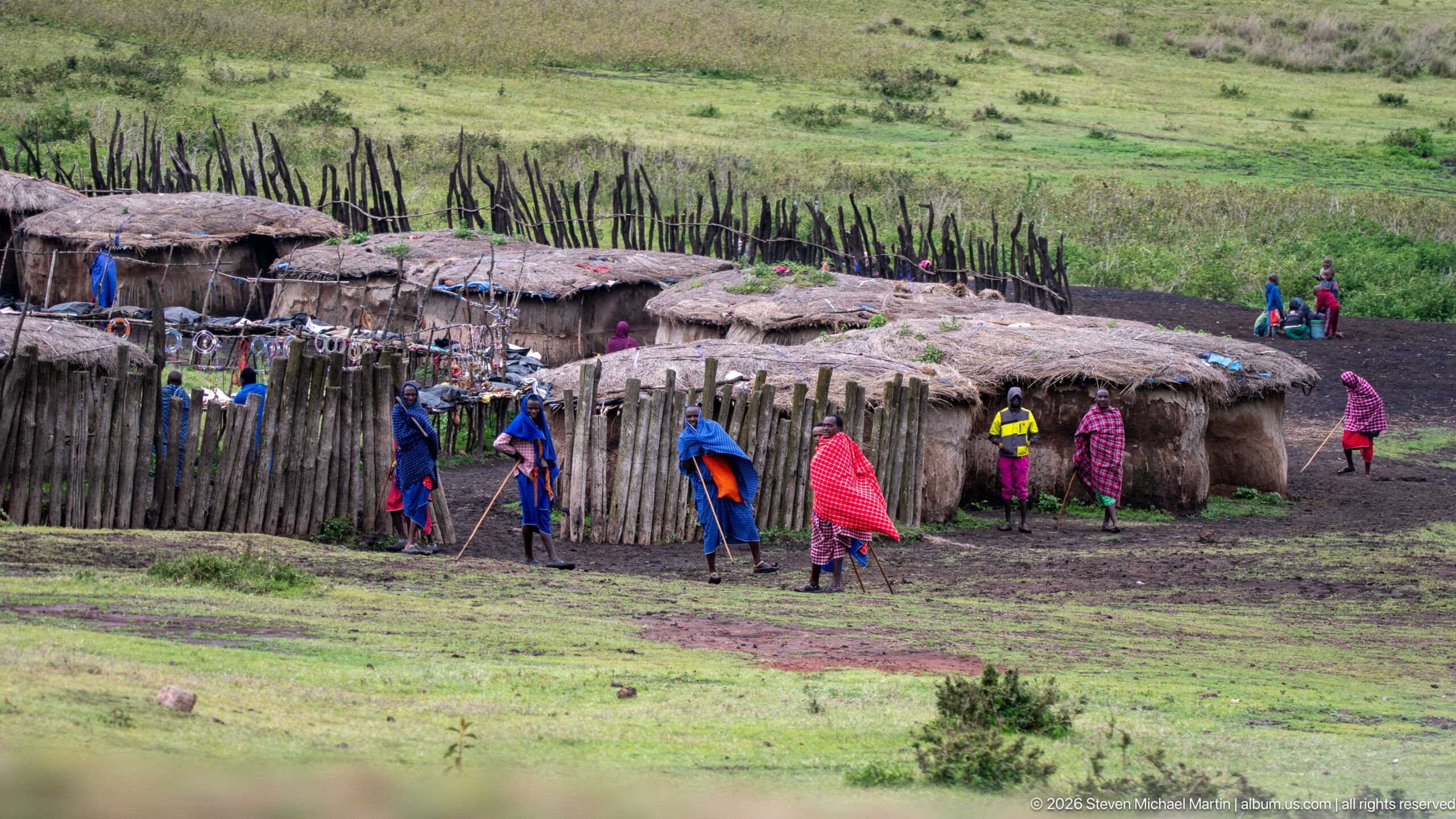
Residents in brightly colored wraps stand and walk beside a large stick-fenced boma on the Ngorongoro highlands. Low thatched structures and livestock enclosures fill the compound, while the surrounding pasture shows the settlement’s close relationship to grazing land.
Caption
Residents in brightly colored wraps stand and walk beside a large stick-fenced boma on the Ngorongoro highlands. Low thatched structures and livestock enclosures fill the compound, while the surrounding pasture shows the settlement’s close relationship to grazing land.
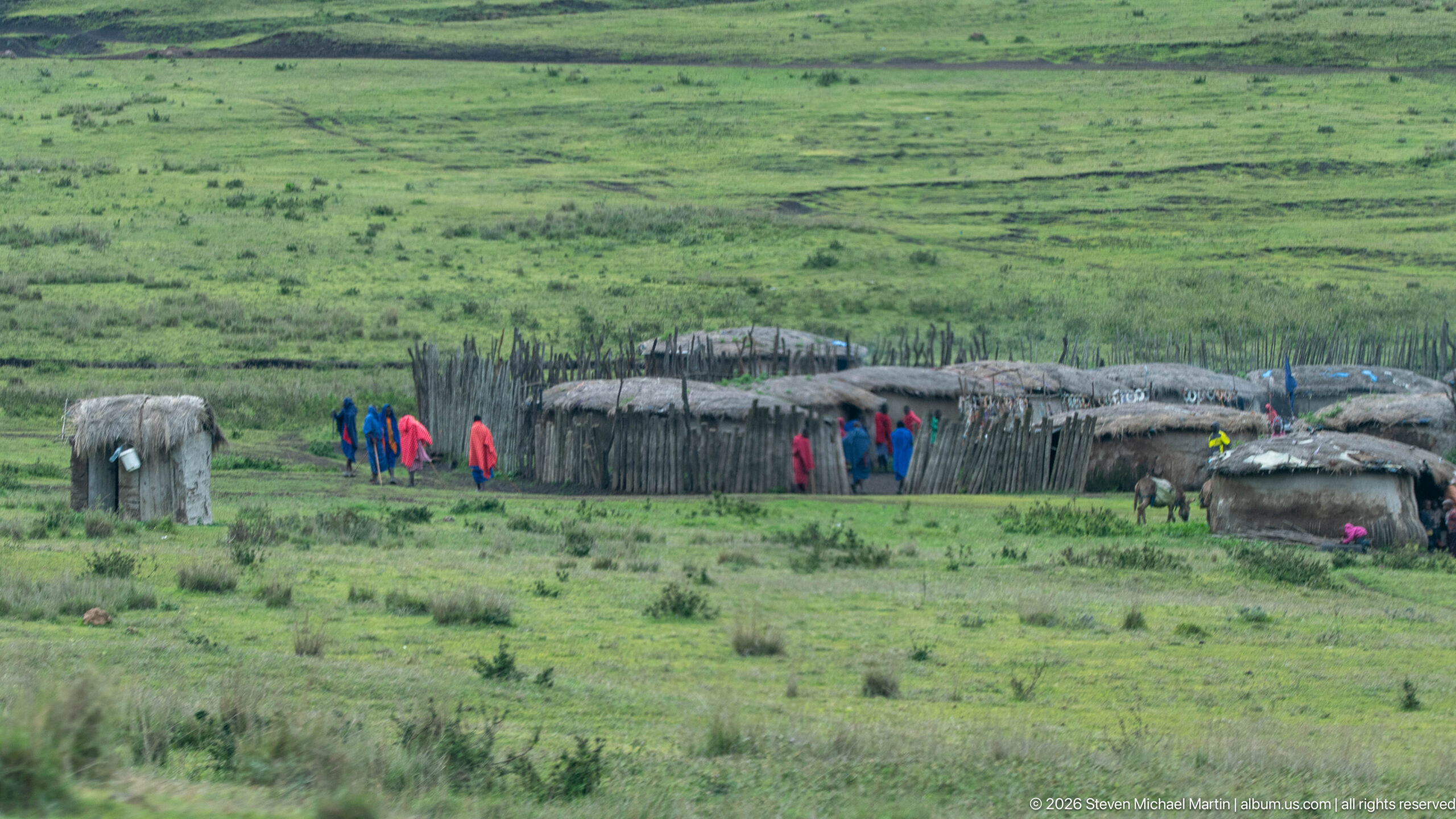
A compact boma lies amid open green pasture on the Ngorongoro highlands, its tall stick enclosures forming protective rings around low dwellings. Residents in bright clothing move between the compounds while livestock graze nearby, giving a broad contextual view of settlement and pasture.
Caption
A compact boma lies amid open green pasture on the Ngorongoro highlands, its tall stick enclosures forming protective rings around low dwellings. Residents in bright clothing move between the compounds while livestock graze nearby, giving a broad contextual view of settlement and pasture.
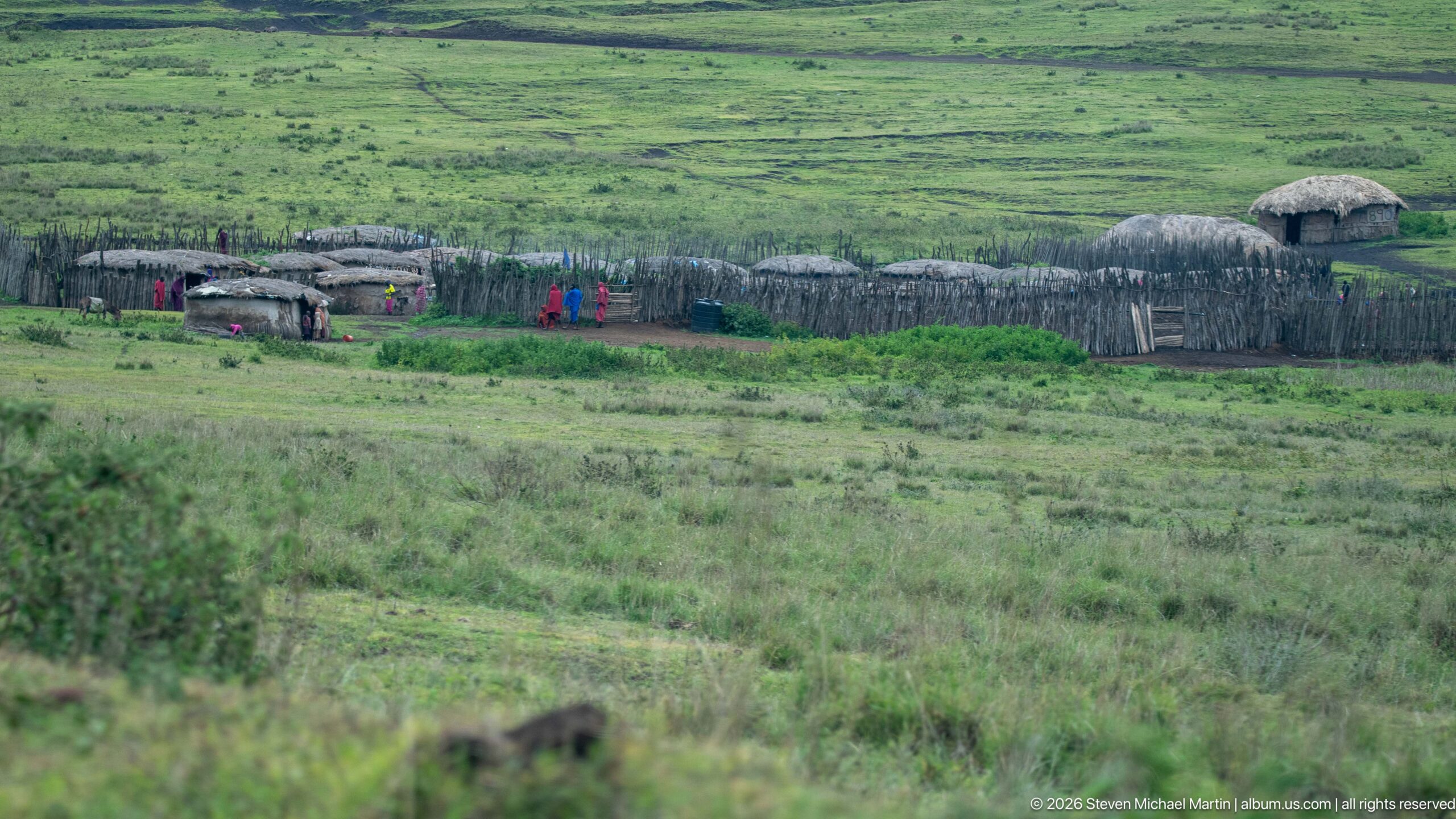
An elongated network of stick fencing encloses low thatched dwellings across the Ngorongoro highland grassland. Small figures and livestock animate the compound, while the wider framing emphasizes how the settlement occupies a modest footprint within expansive grazing country.
Caption
An elongated network of stick fencing encloses low thatched dwellings across the Ngorongoro highland grassland. Small figures and livestock animate the compound, while the wider framing emphasizes how the settlement occupies a modest footprint within expansive grazing country.
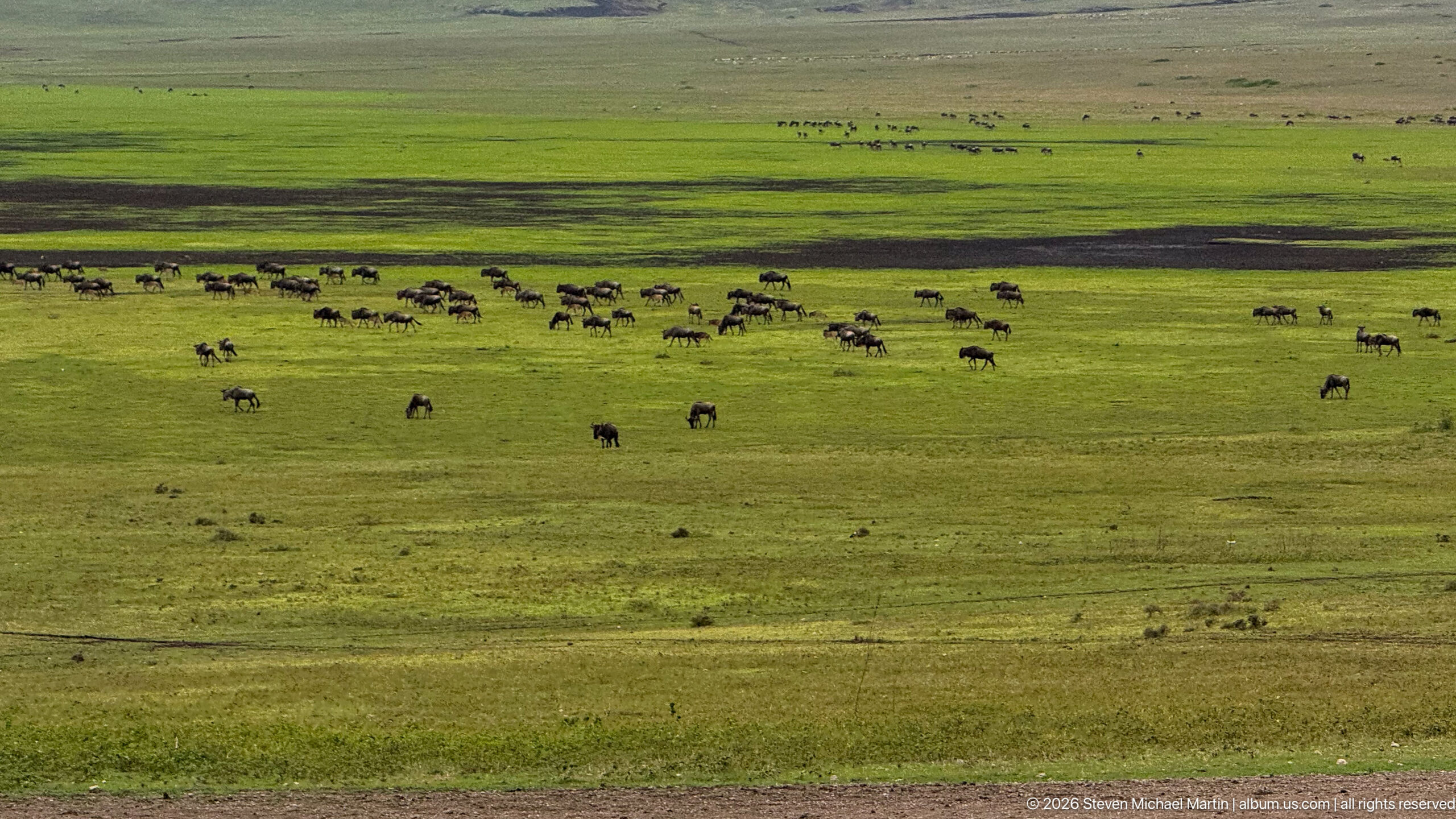
Scattered herds of wildebeest graze across bright green open grassland in the Ngorongoro Conservation Area. Dark bands of damp or heavily grazed ground divide the plain, while the animals spread in loose groups across the broad pastoral-wildlife landscape.
Caption
Scattered herds of wildebeest graze across bright green open grassland in the Ngorongoro Conservation Area. Dark bands of damp or heavily grazed ground divide the plain, while the animals spread in loose groups across the broad pastoral-wildlife landscape.
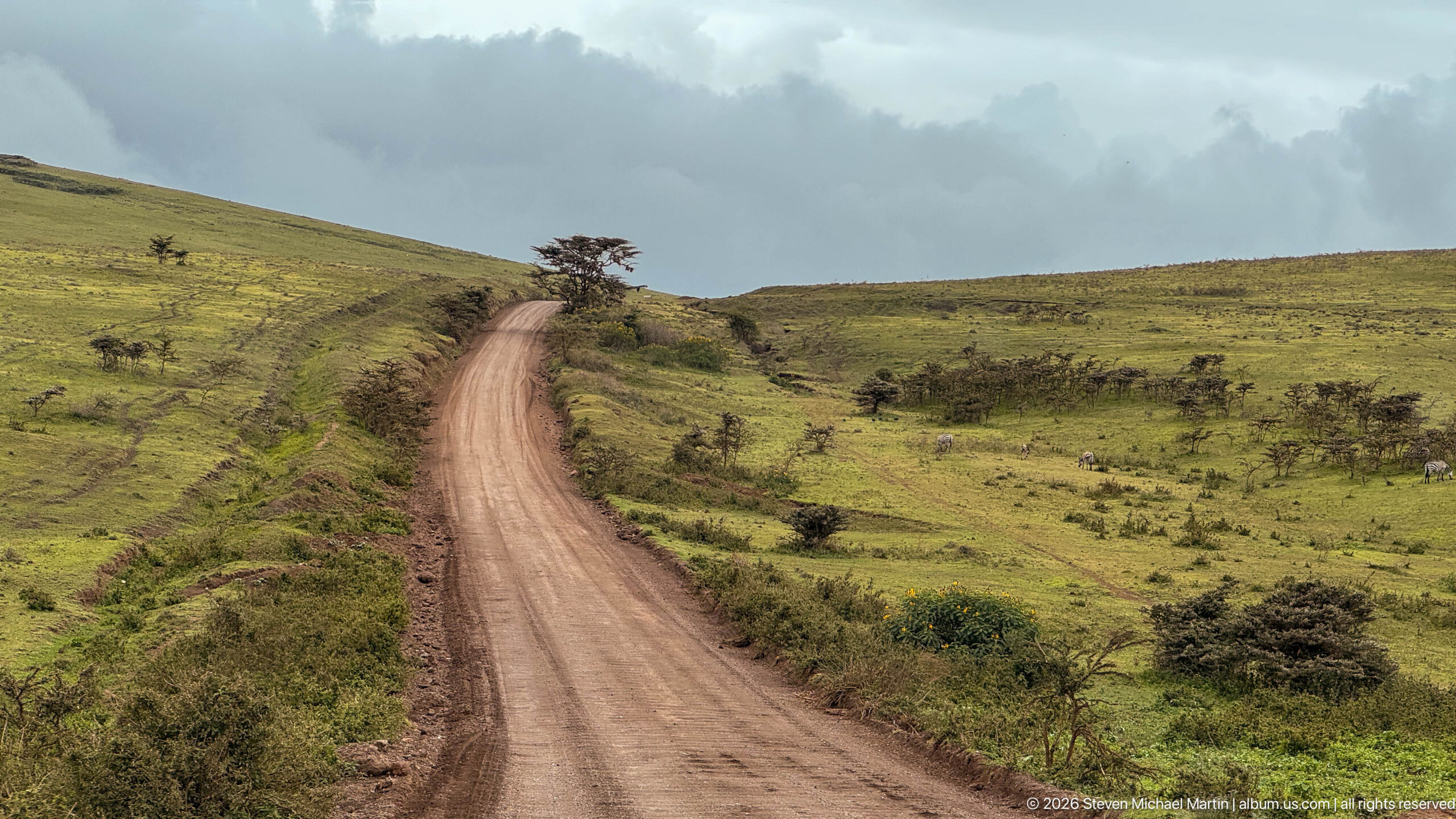
A narrow red-earth road climbs and bends across open Ngorongoro uplands, bordered by low shrubs and scattered small trees. Heavy cloud banks gather beyond the ridge, while the empty roadway draws the eye through a transitional landscape between the forested rim and more open plains.
Caption
A narrow red-earth road climbs and bends across open Ngorongoro uplands, bordered by low shrubs and scattered small trees. Heavy cloud banks gather beyond the ridge, while the empty roadway draws the eye through a transitional landscape between the forested rim and more open plains.
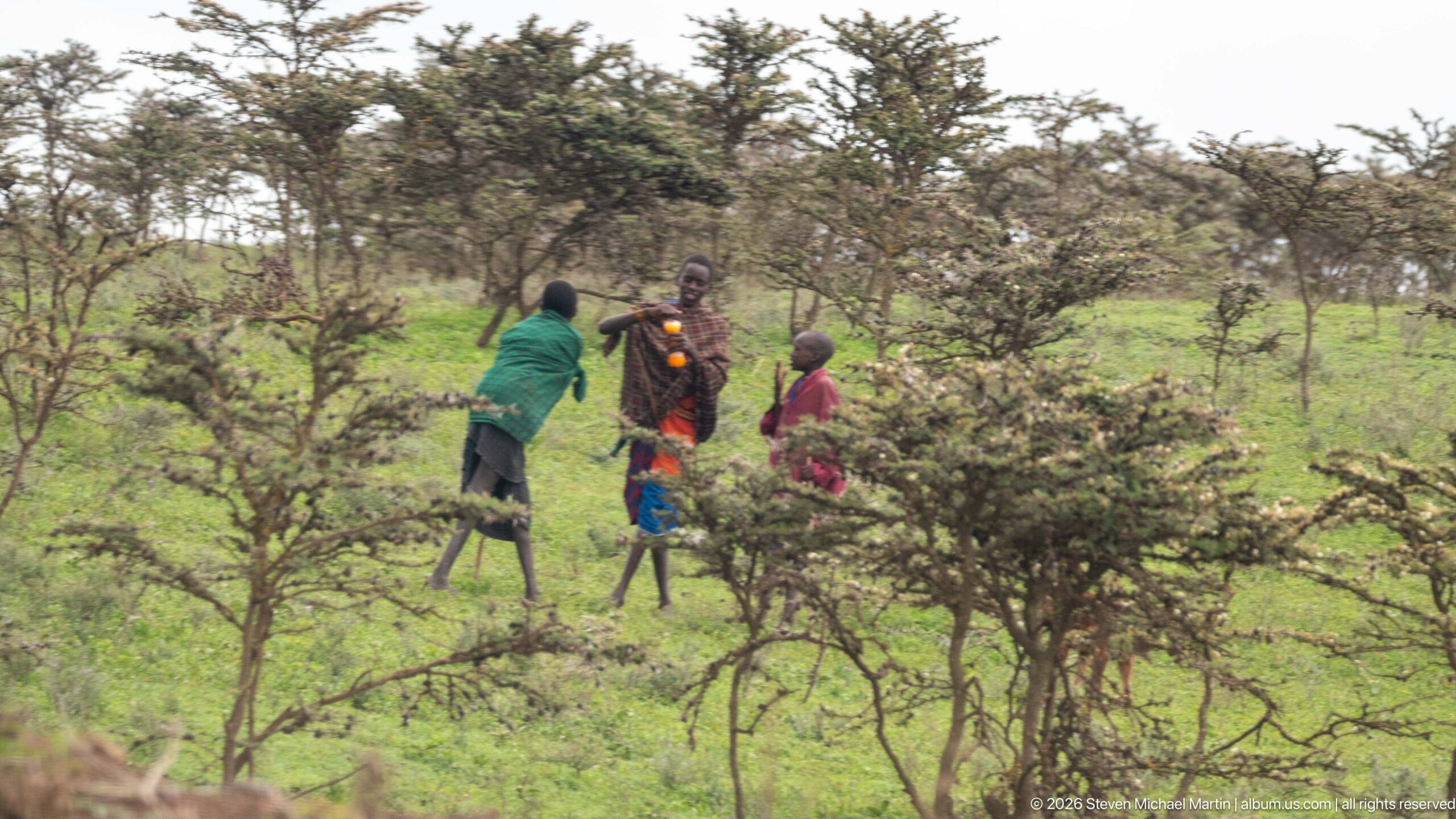
A small group gathers among thorny trees and shrubs on the Ngorongoro highlands, their bright clothing visible through the branches. The partially screened view places human activity within the wooded edge of the wider pastoral landscape rather than presenting a formal portrait.
Caption
A small group gathers among thorny trees and shrubs on the Ngorongoro highlands, their bright clothing visible through the branches. The partially screened view places human activity within the wooded edge of the wider pastoral landscape rather than presenting a formal portrait.
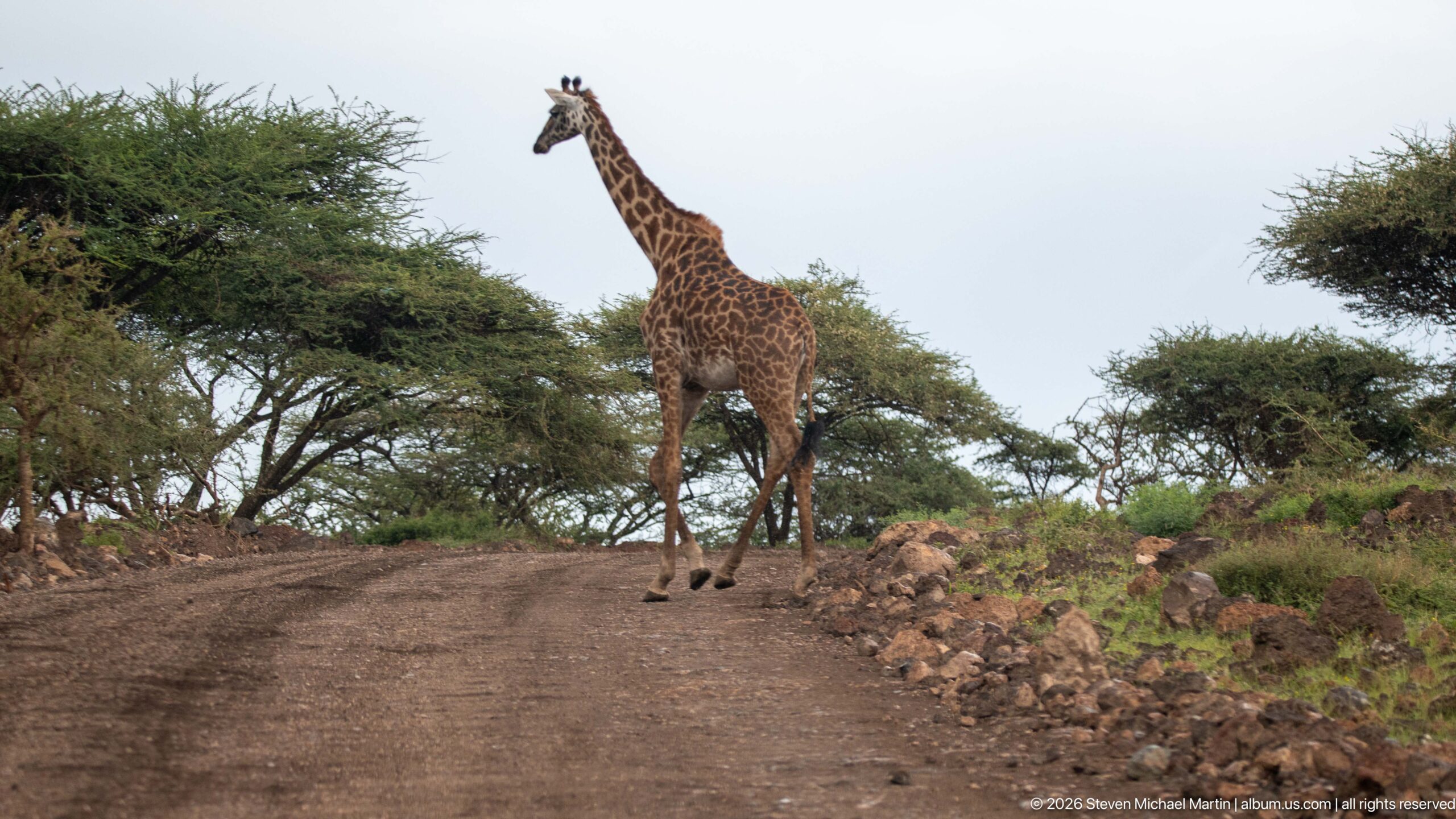
A giraffe stands squarely on the unpaved road, rising above the surrounding acacia-like trees and scrub. The low viewpoint makes the animal dominate the track, turning an ordinary safari route into a direct wildlife encounter within the Ngorongoro Conservation Area.
Caption
A giraffe stands squarely on the unpaved road, rising above the surrounding acacia-like trees and scrub. The low viewpoint makes the animal dominate the track, turning an ordinary safari route into a direct wildlife encounter within the Ngorongoro Conservation Area.
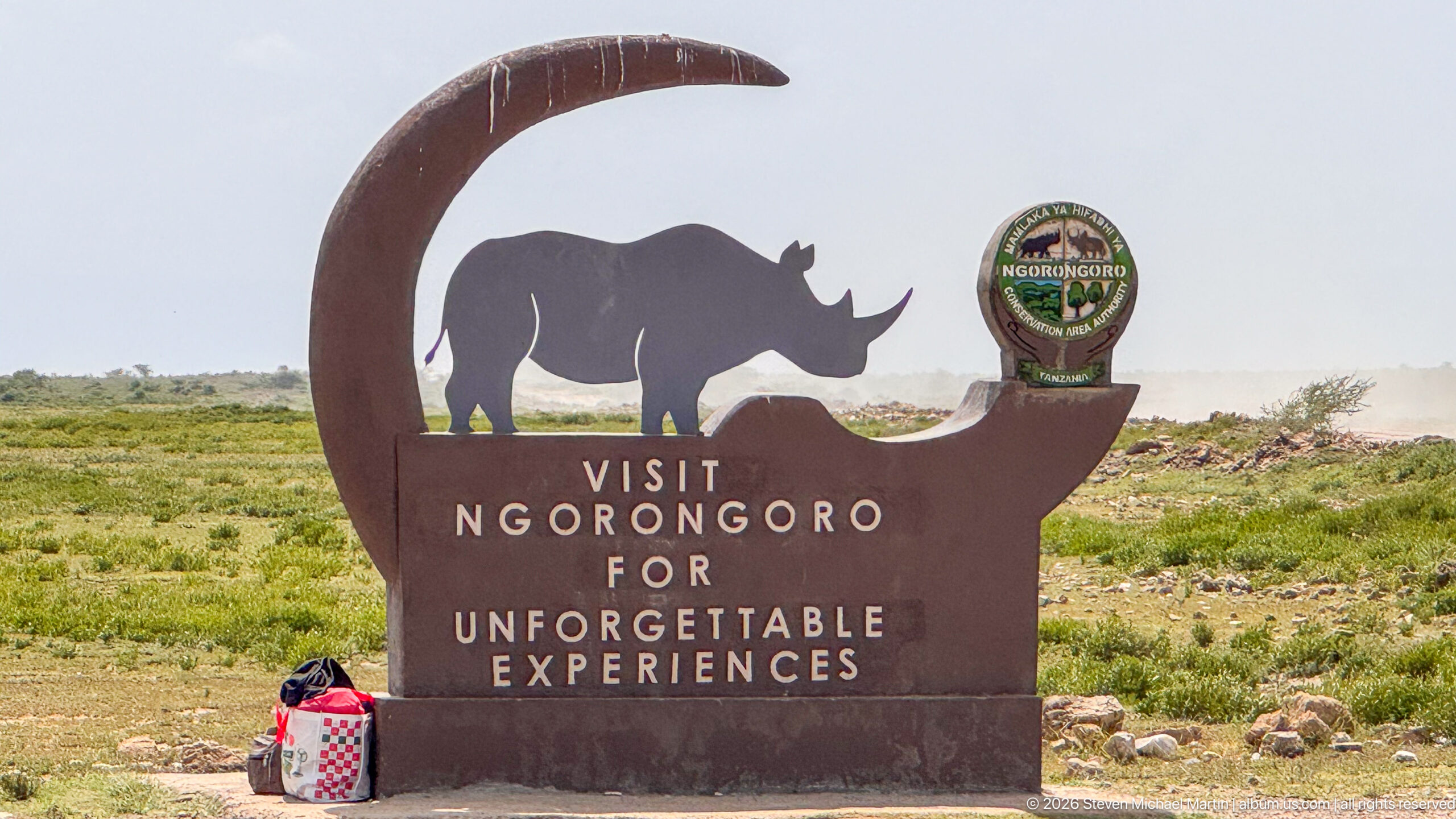
A stylized rhinoceros silhouette fills the Ngorongoro visitor sign, framed by a sweeping crescent form and the message “Visit Ngorongoro for unforgettable experiences.” The conservation-area emblem above the base makes the roadside installation both a welcome marker and a wildlife-themed identity sign.
Caption
A stylized rhinoceros silhouette fills the Ngorongoro visitor sign, framed by a sweeping crescent form and the message “Visit Ngorongoro for unforgettable experiences.” The conservation-area emblem above the base makes the roadside installation both a welcome marker and a wildlife-themed identity sign.
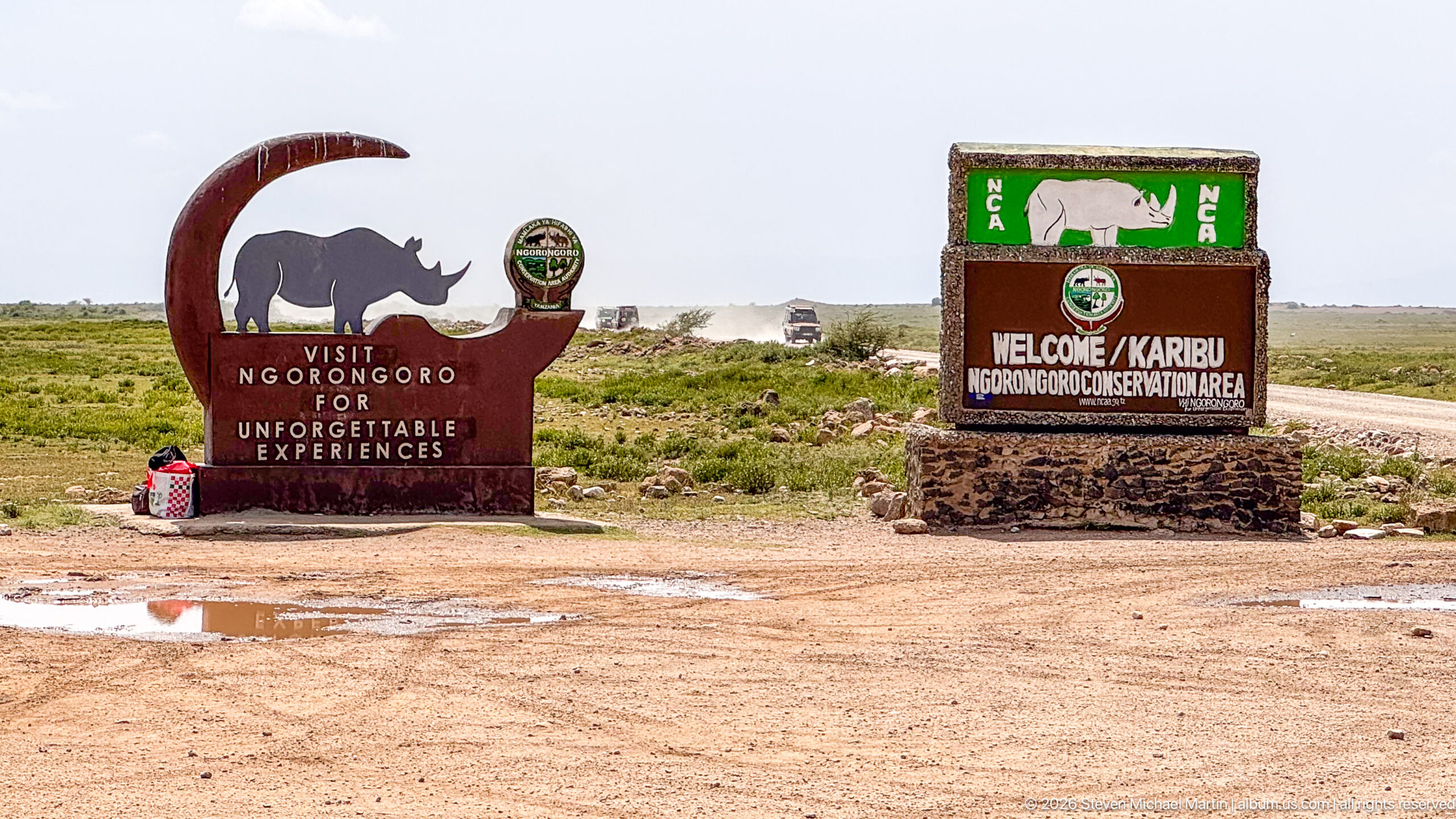
Two roadside monuments mark arrival at the Ngorongoro Conservation Area: a rhinoceros-themed visitor sign and a stone-based “Welcome/Karibu” marker carrying the conservation emblem. Safari traffic on the road beyond situates the signs at a formal access point in the open plains.
Caption
Two roadside monuments mark arrival at the Ngorongoro Conservation Area: a rhinoceros-themed visitor sign and a stone-based “Welcome/Karibu” marker carrying the conservation emblem. Safari traffic on the road beyond situates the signs at a formal access point in the open plains.
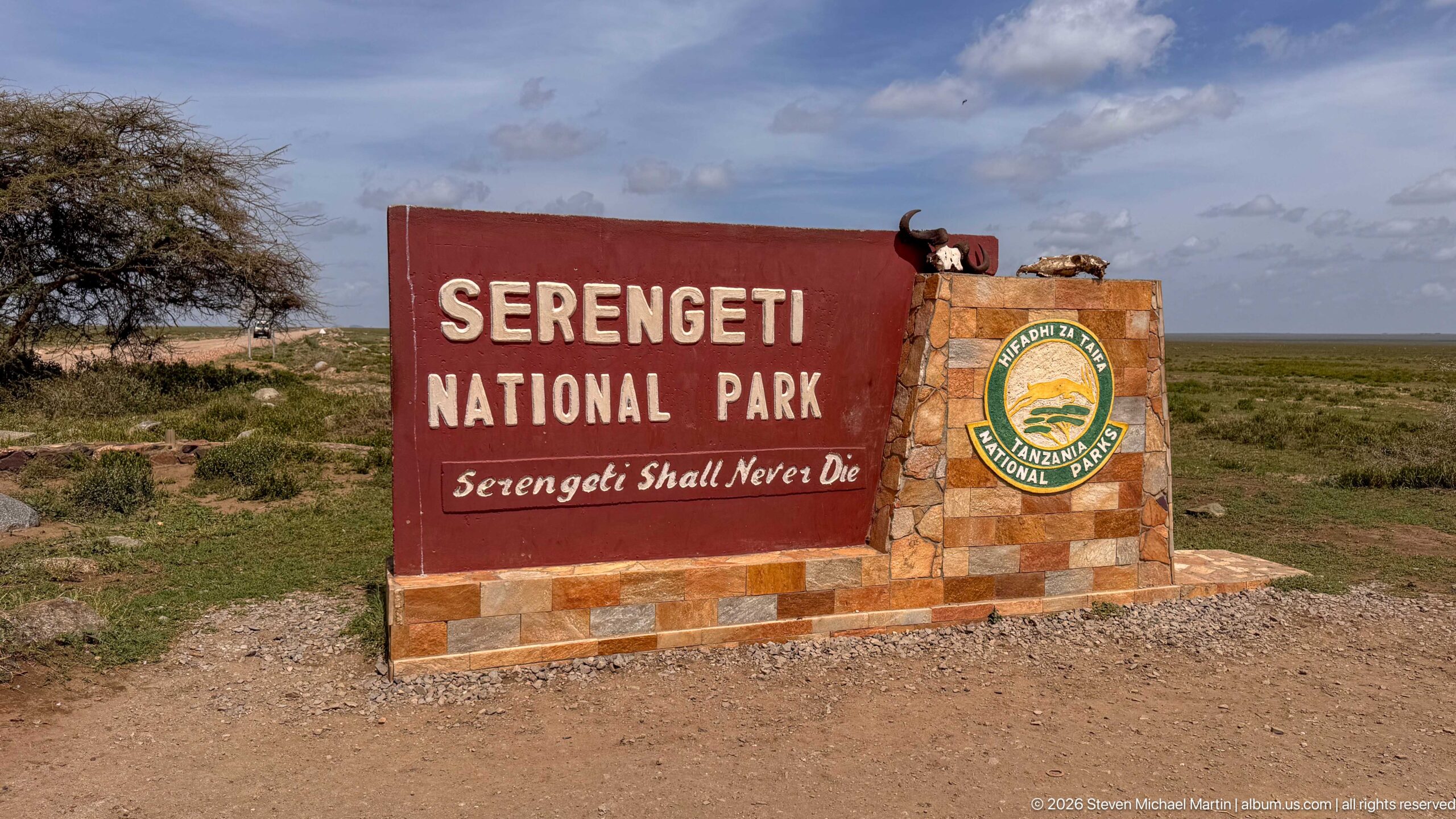
A large red-and-stone roadside monument announces Serengeti National Park, pairing the park name with the Tanzania National Parks emblem and the motto “Serengeti Shall Never Die.” Set against open plains, the sign marks the transition from the Ngorongoro route into the neighboring national park landscape.
Caption
A large red-and-stone roadside monument announces Serengeti National Park, pairing the park name with the Tanzania National Parks emblem and the motto “Serengeti Shall Never Die.” Set against open plains, the sign marks the transition from the Ngorongoro route into the neighboring national park landscape.
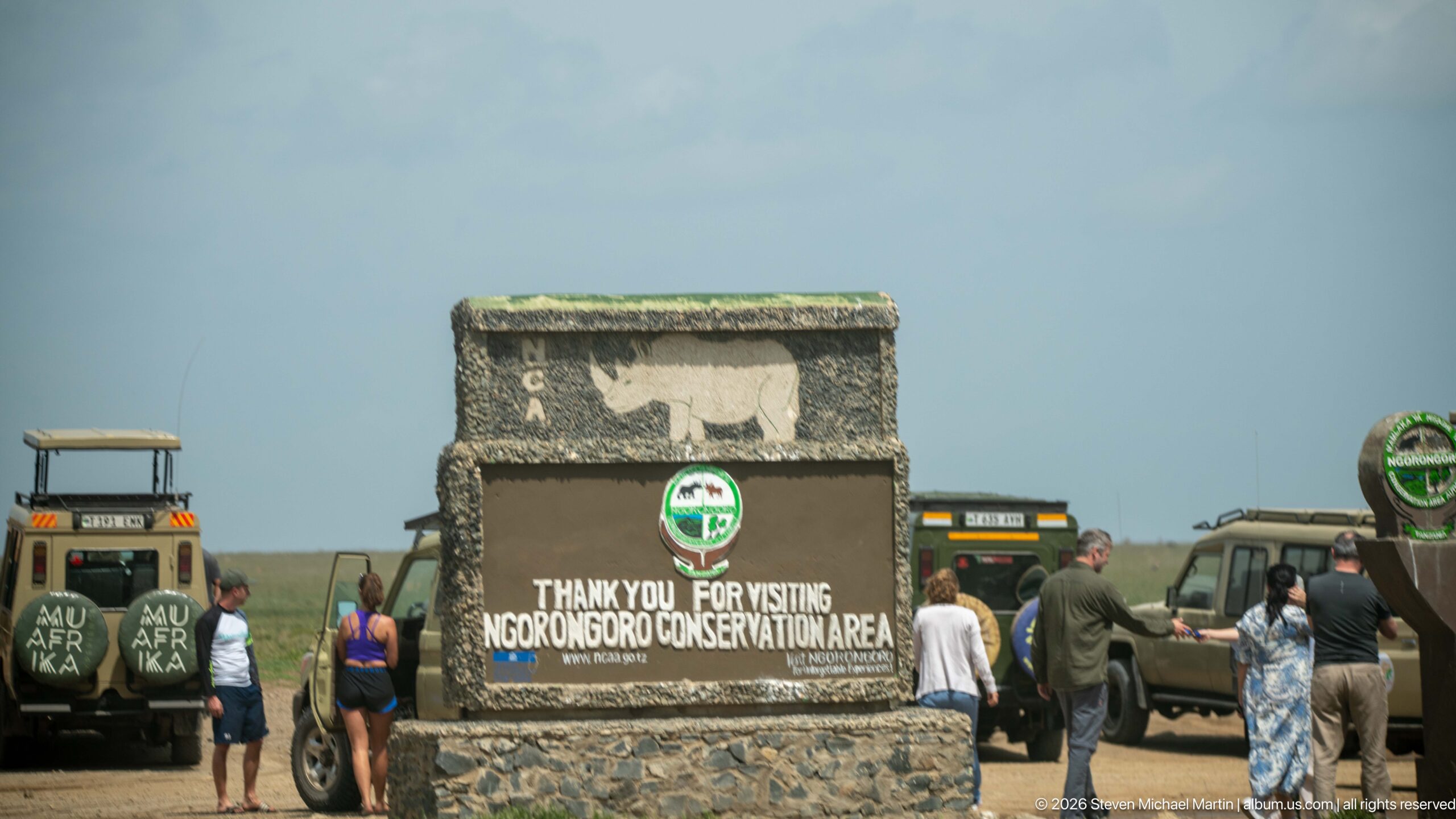
Visitors and safari vehicles gather around a stone exit monument reading “Thank you for visiting Ngorongoro Conservation Area.” A white rhinoceros silhouette crowns the marker, while the busy roadside scene records the departure point at the edge of the protected landscape.
Caption
Visitors and safari vehicles gather around a stone exit monument reading “Thank you for visiting Ngorongoro Conservation Area.” A white rhinoceros silhouette crowns the marker, while the busy roadside scene records the departure point at the edge of the protected landscape.
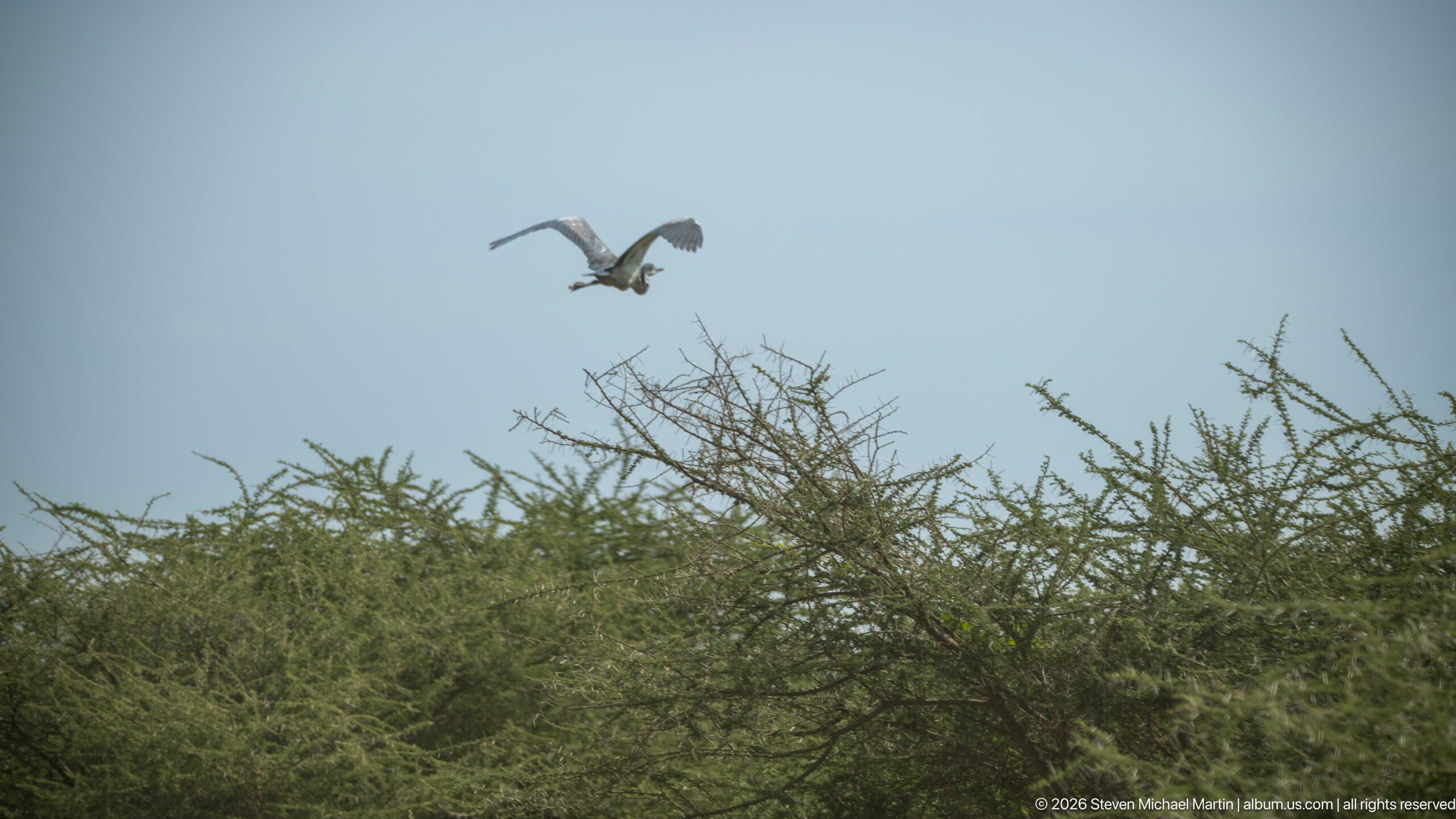
A large long-winged bird flies above dense thorn scrub, its legs trailing behind and broad wings held in a shallow downstroke. The distant profile suggests a stork or similarly large wading bird, but the proof-sheet view does not show enough plumage detail for a secure species identification.
Caption
A large long-winged bird flies above dense thorn scrub, its legs trailing behind and broad wings held in a shallow downstroke. The distant profile suggests a stork or similarly large wading bird, but the proof-sheet view does not show enough plumage detail for a secure species identification.
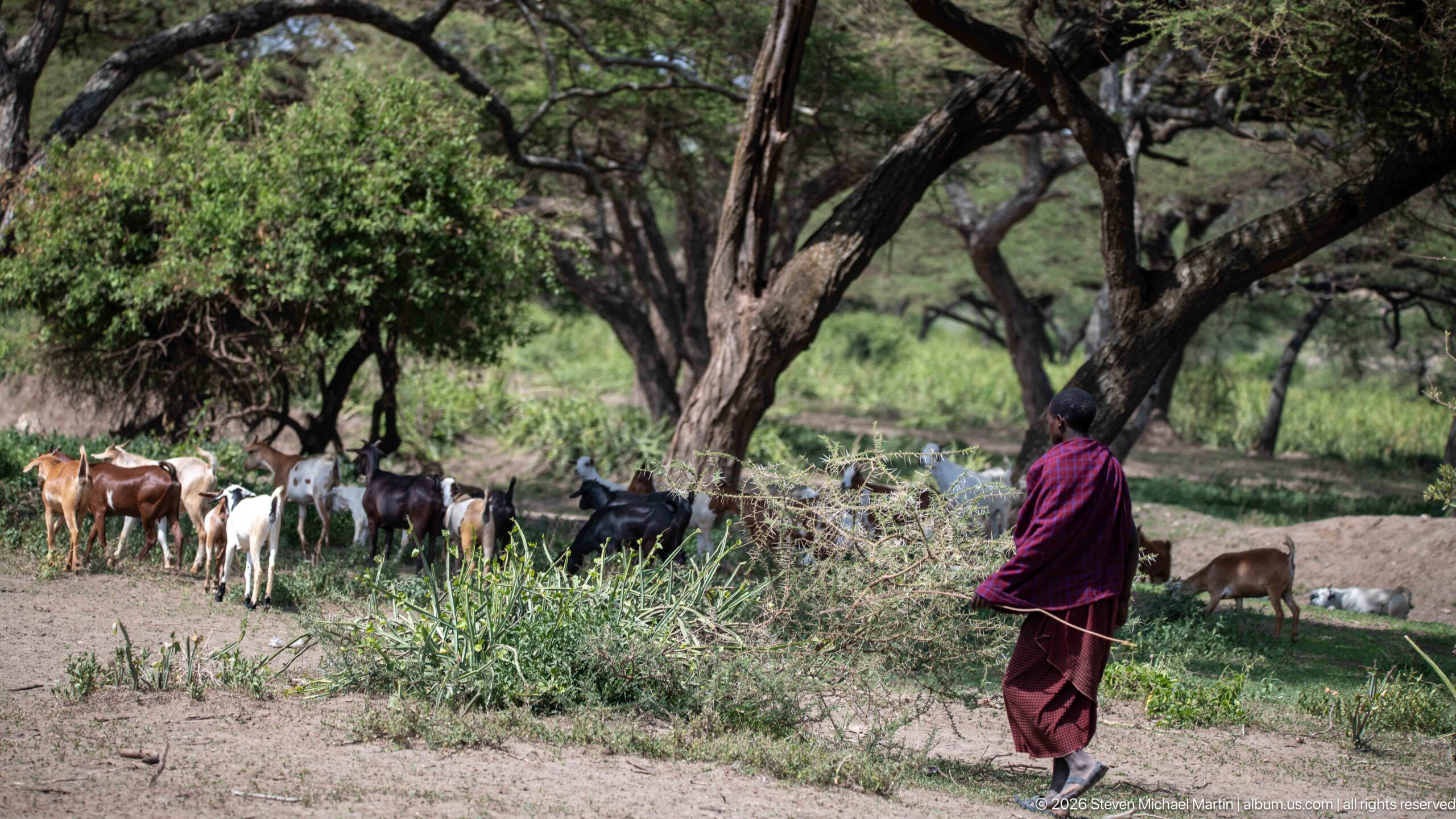
A herder in a deep red wrap walks beside a mixed livestock herd gathered in the shade of large trees. Goats and cattle cluster around the woodland edge, presenting a close view of pastoral land use within the broader Ngorongoro cultural landscape.
Caption
A herder in a deep red wrap walks beside a mixed livestock herd gathered in the shade of large trees. Goats and cattle cluster around the woodland edge, presenting a close view of pastoral land use within the broader Ngorongoro cultural landscape.
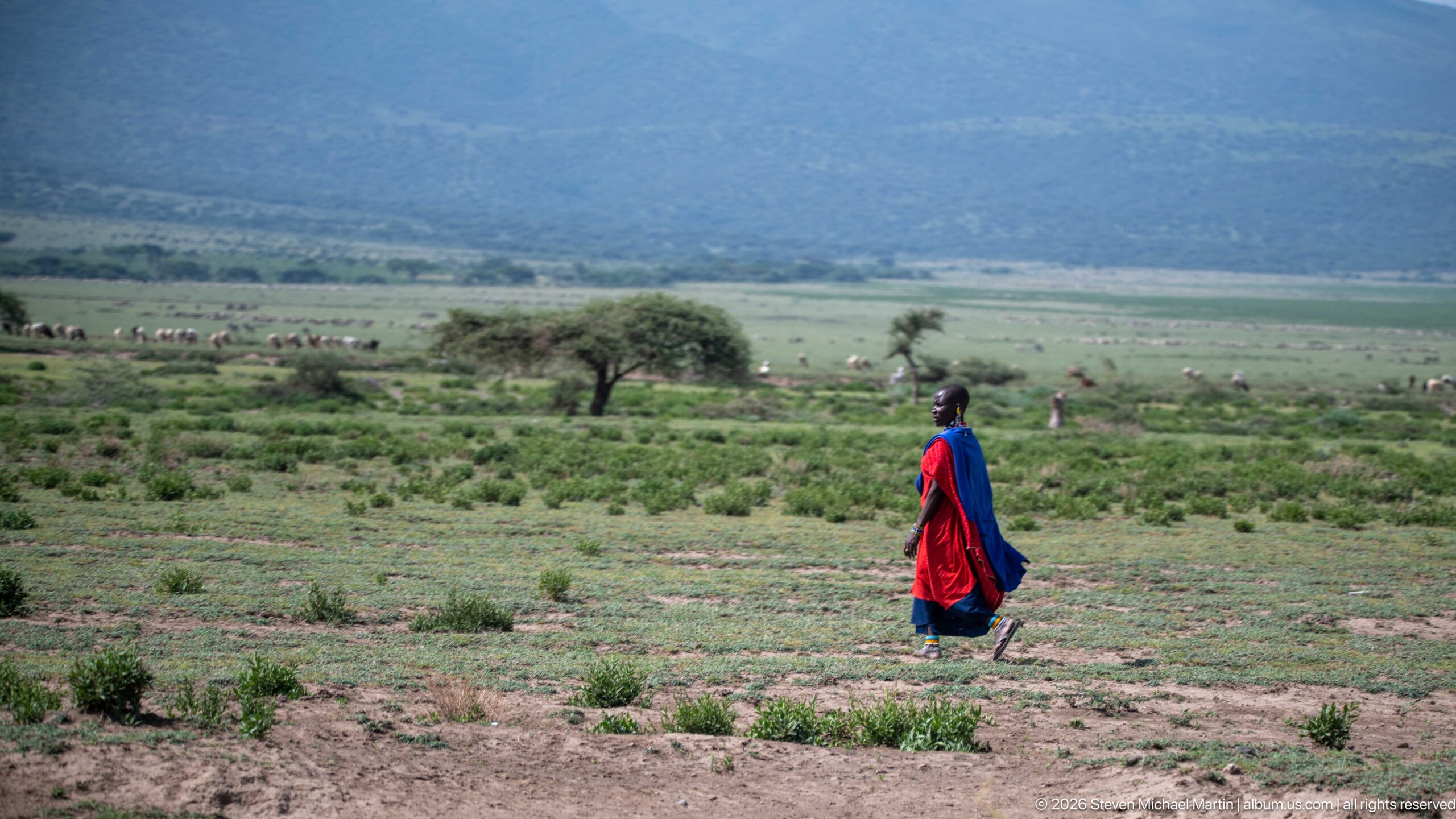
A lone pastoralist in vivid red and blue clothing crosses a broad, lightly vegetated plain below the Ngorongoro highlands. Scattered people and livestock appear farther across the grassland, while an umbrella-shaped acacia and the dark crater-wall slopes establish the scale of the pastoral landscape.
Caption
A lone pastoralist in vivid red and blue clothing crosses a broad, lightly vegetated plain below the Ngorongoro highlands. Scattered people and livestock appear farther across the grassland, while an umbrella-shaped acacia and the dark crater-wall slopes establish the scale of the pastoral landscape.
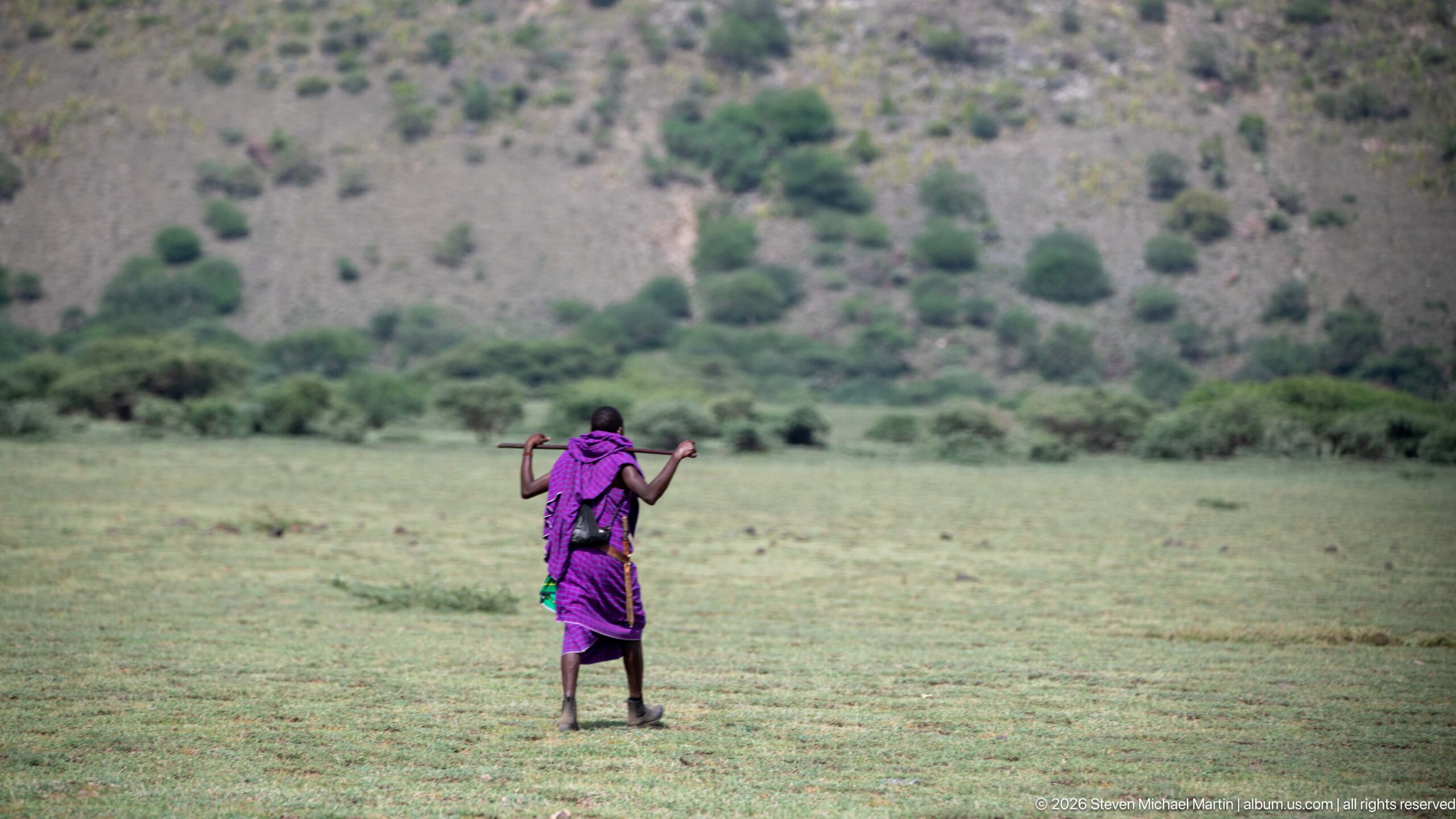
A person wrapped in purple clothing walks alone across short Ngorongoro pasture, holding a long stick as low shrubs and the steep, mottled highland slope rise behind. The compressed telephoto view isolates the figure against the open grazing ground and surrounding vegetation.
Caption
A person wrapped in purple clothing walks alone across short Ngorongoro pasture, holding a long stick as low shrubs and the steep, mottled highland slope rise behind. The compressed telephoto view isolates the figure against the open grazing ground and surrounding vegetation.
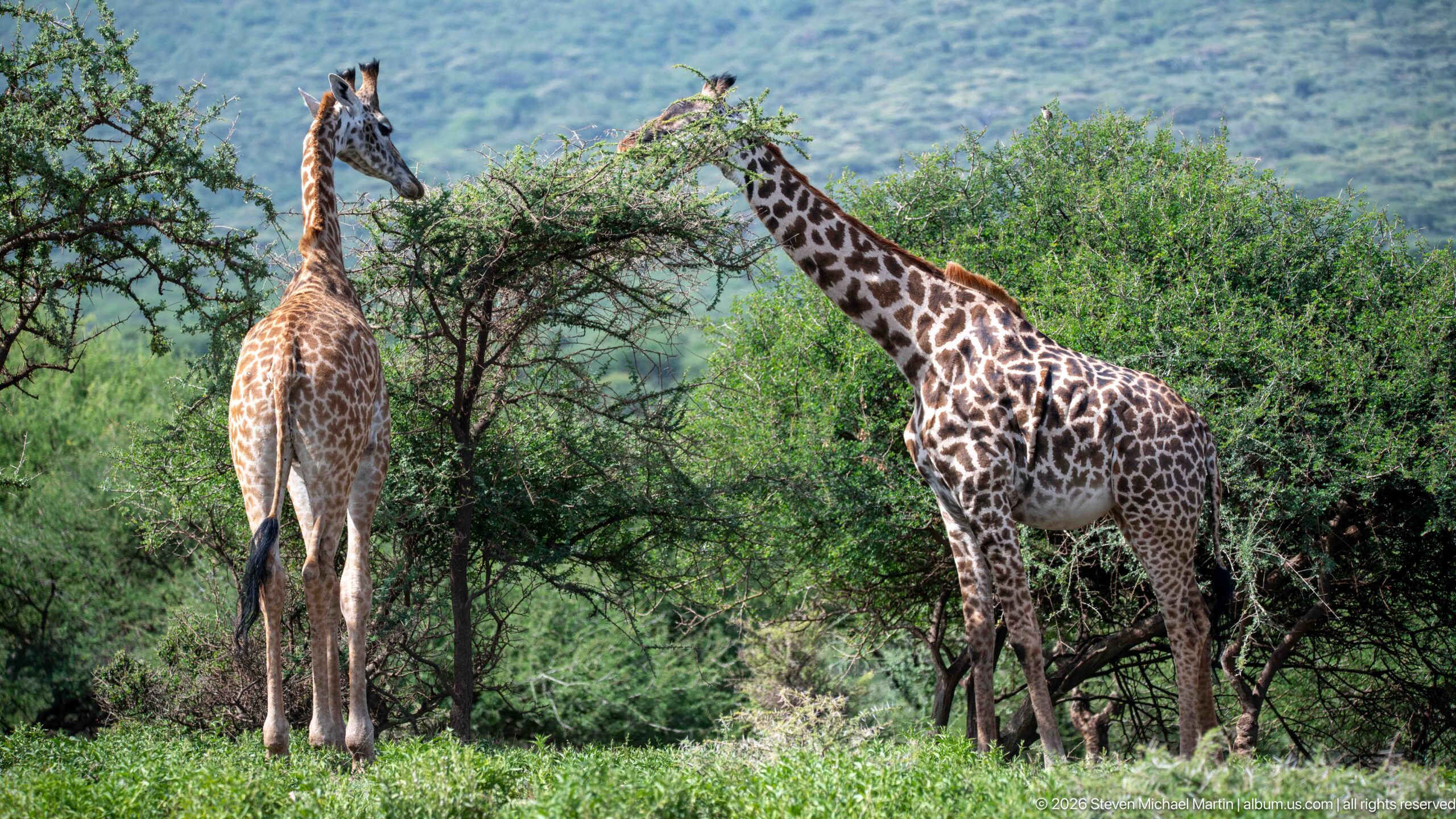
Two Masai giraffes browse at the edge of dense acacia vegetation, one facing into the foliage while the other stands with its hindquarters toward the camera. Their irregular, vine-leaf coat pattern is characteristic of the East African form found in northern Tanzania.
Caption
Two Masai giraffes browse at the edge of dense acacia vegetation, one facing into the foliage while the other stands with its hindquarters toward the camera. Their irregular, vine-leaf coat pattern is characteristic of the East African form found in northern Tanzania.
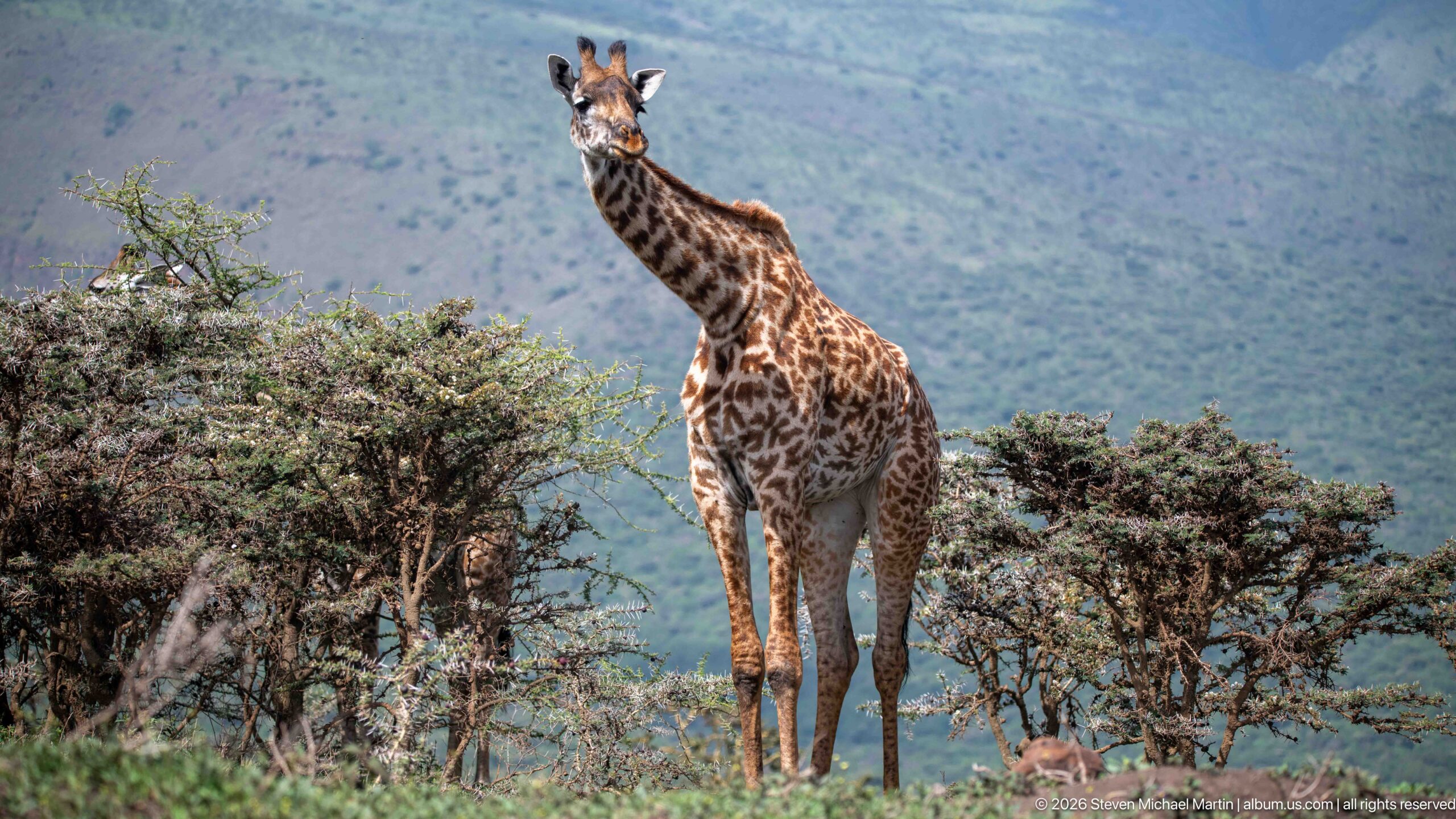
A Masai giraffe stands nearly full-length above low acacia shrubs, facing the camera with ears raised and neck upright. The sharply defined, irregular brown patches contrast with the pale coat, while the softly rendered highland background separates the animal from the surrounding scrub.
Caption
A Masai giraffe stands nearly full-length above low acacia shrubs, facing the camera with ears raised and neck upright. The sharply defined, irregular brown patches contrast with the pale coat, while the softly rendered highland background separates the animal from the surrounding scrub.
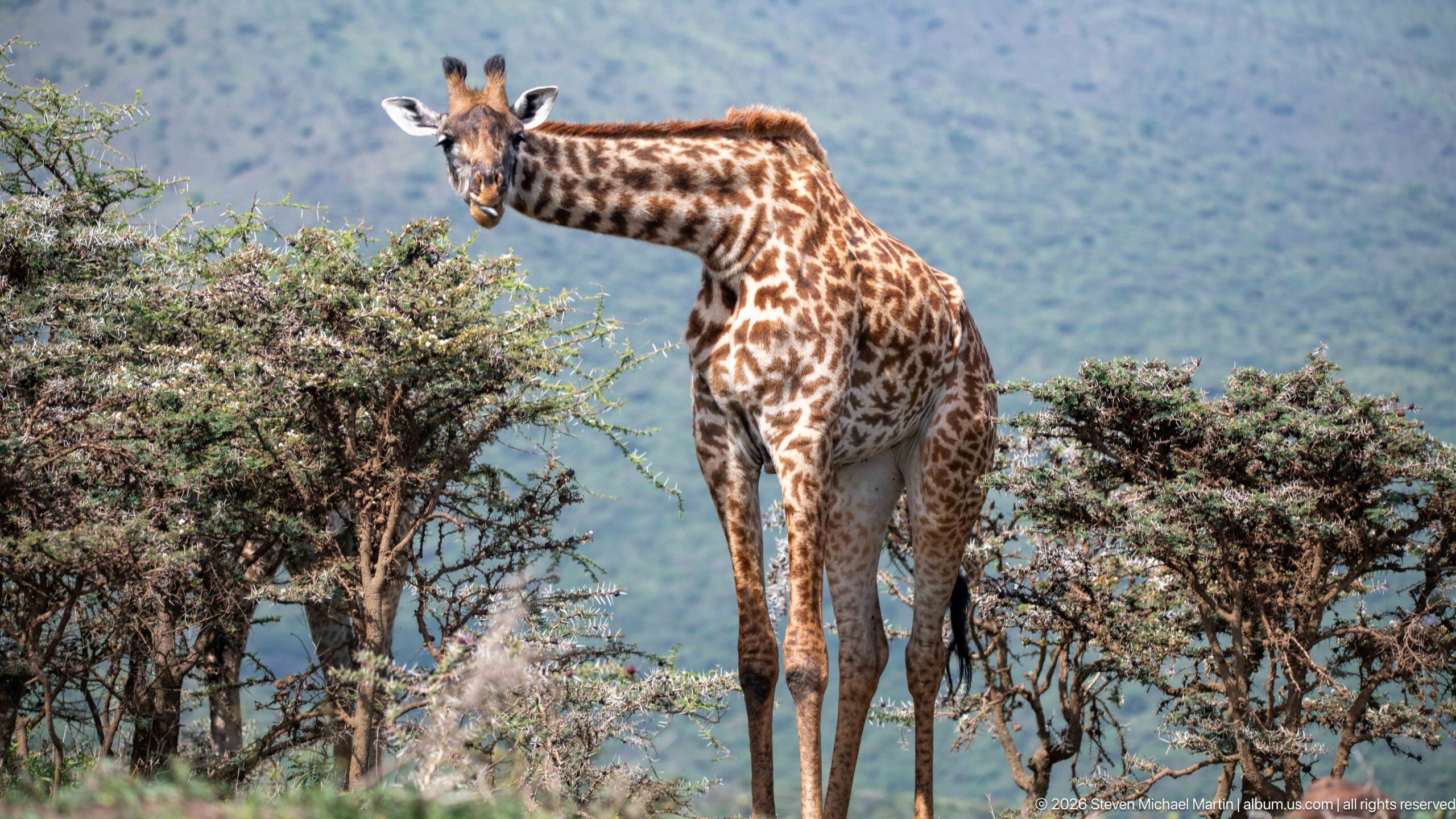
A Masai giraffe pauses beside a thorny shrub, its long forelegs and patterned torso fully visible while the head turns toward the camera. Nearby woody vegetation partly overlaps the body, giving this view a stronger sense of the animal's browsing habitat than the adjacent open portraits.
Caption
A Masai giraffe pauses beside a thorny shrub, its long forelegs and patterned torso fully visible while the head turns toward the camera. Nearby woody vegetation partly overlaps the body, giving this view a stronger sense of the animal's browsing habitat than the adjacent open portraits.
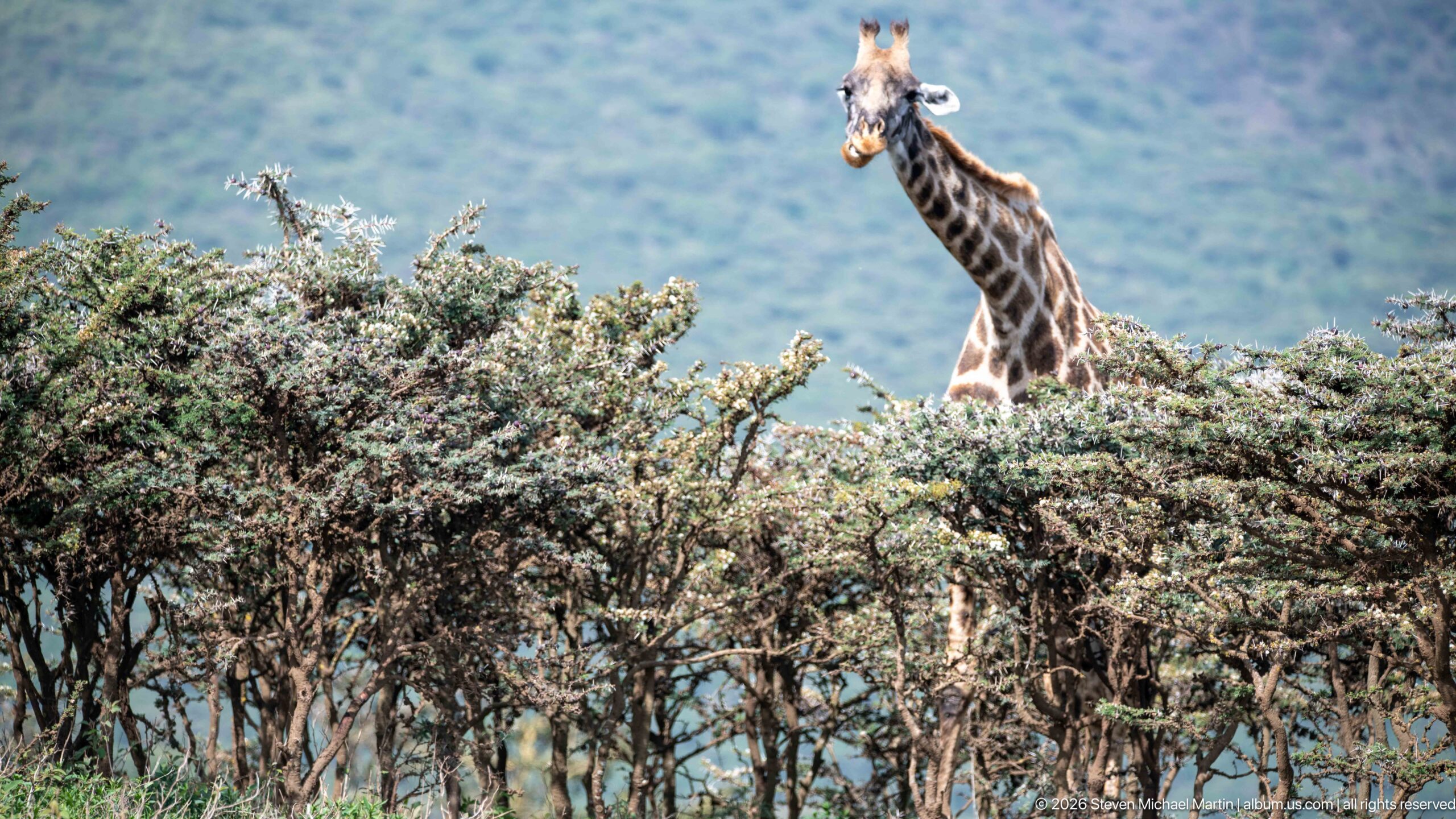
Only the upper neck and head of a Masai giraffe rise above a dense acacia canopy, turning a familiar full-body wildlife subject into a layered habitat study. The animal's patterned neck is partly concealed by thorny foliage, with the blue-green highlands softly receding beyond.
Caption
Only the upper neck and head of a Masai giraffe rise above a dense acacia canopy, turning a familiar full-body wildlife subject into a layered habitat study. The animal's patterned neck is partly concealed by thorny foliage, with the blue-green highlands softly receding beyond.
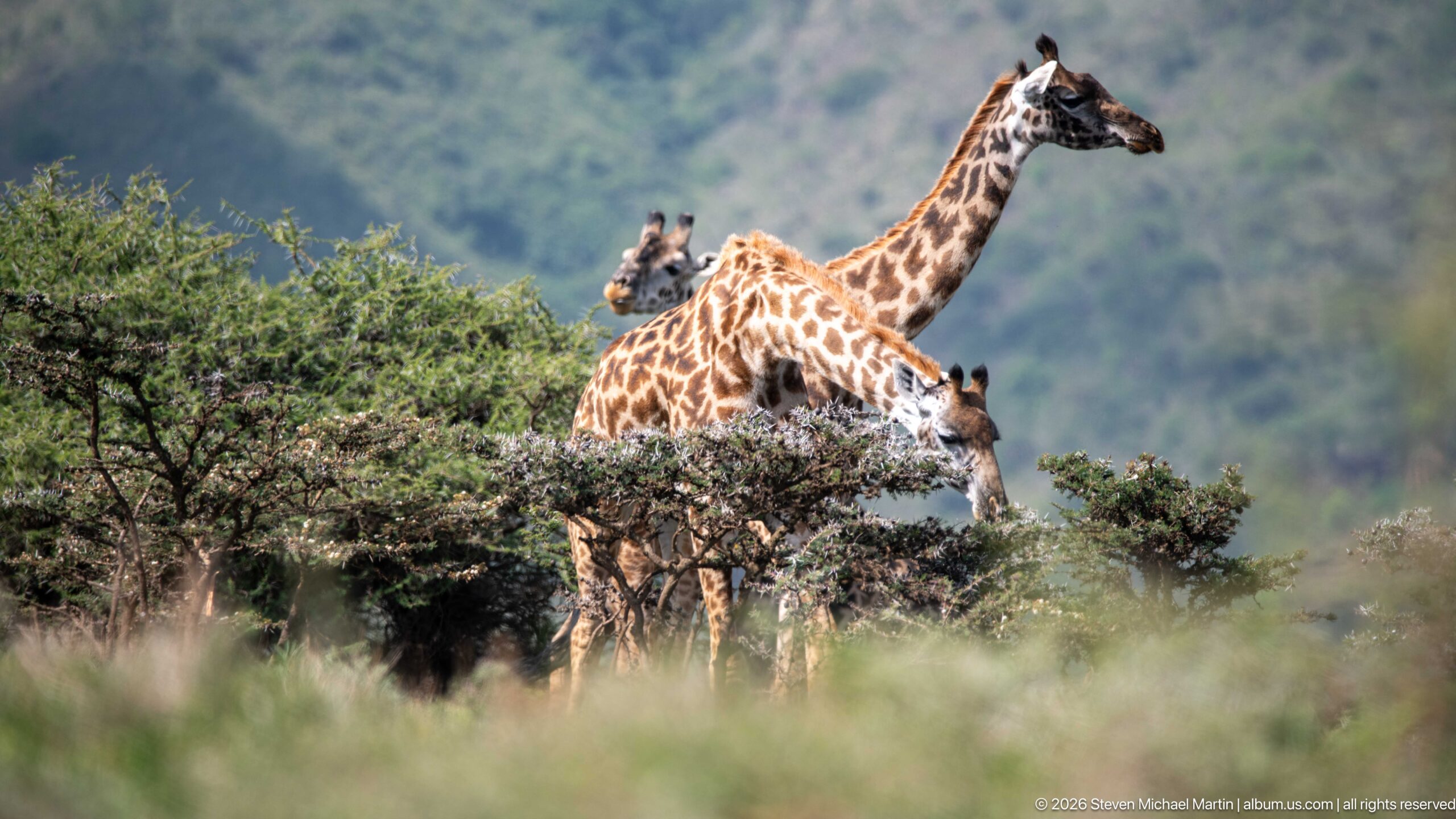
Three Masai giraffes gather behind low acacia shrubs, their heads and patterned bodies appearing at different heights across the frame. The layered composition reveals a small social grouping rather than a single portrait, with grasses and woody browse filling the foreground.
Caption
Three Masai giraffes gather behind low acacia shrubs, their heads and patterned bodies appearing at different heights across the frame. The layered composition reveals a small social grouping rather than a single portrait, with grasses and woody browse filling the foreground.
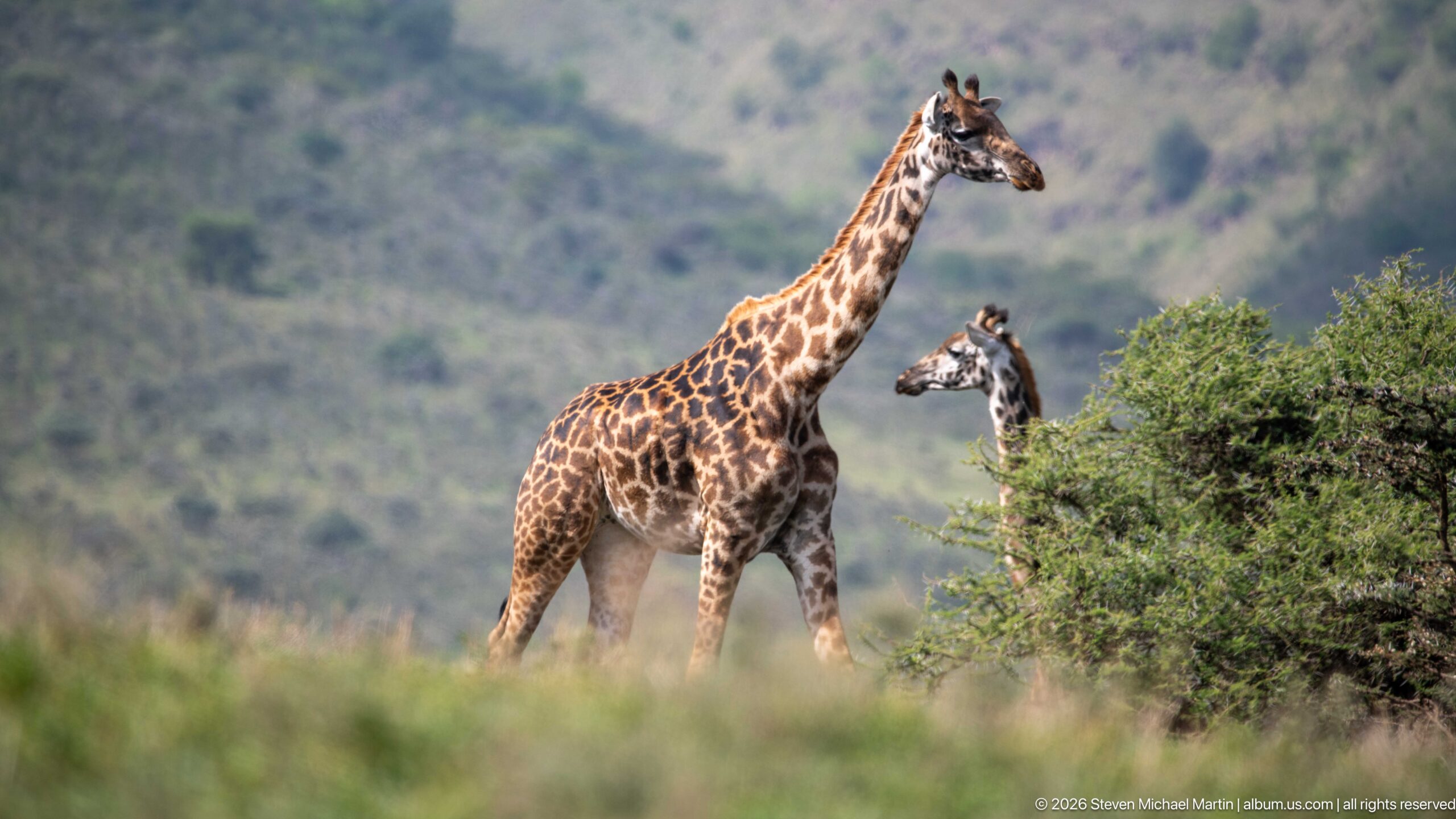
A tall Masai giraffe strides through open grass beside an acacia shrub while a second giraffe's head and neck appear beyond the vegetation. The low camera angle and blurred foreground grasses emphasize the lead animal's height and long, measured gait.
Caption
A tall Masai giraffe strides through open grass beside an acacia shrub while a second giraffe's head and neck appear beyond the vegetation. The low camera angle and blurred foreground grasses emphasize the lead animal's height and long, measured gait.
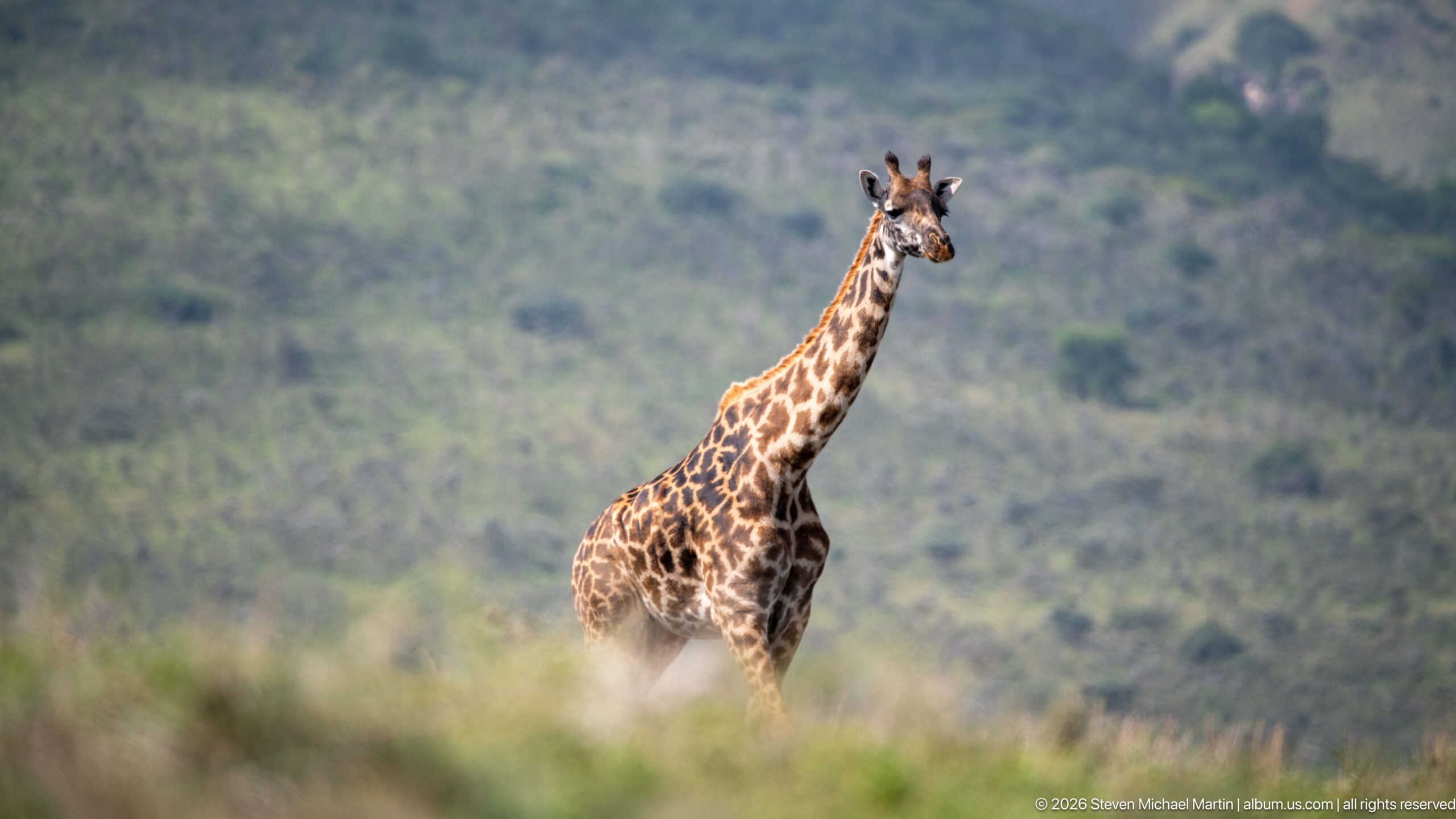
A solitary Masai giraffe stands upright in the open, its body emerging above a softly blurred band of foreground grass. With little vegetation obscuring the animal, the view emphasizes the long neck, sloping back, and irregular chestnut coat pattern against the muted highland background.
Caption
A solitary Masai giraffe stands upright in the open, its body emerging above a softly blurred band of foreground grass. With little vegetation obscuring the animal, the view emphasizes the long neck, sloping back, and irregular chestnut coat pattern against the muted highland background.
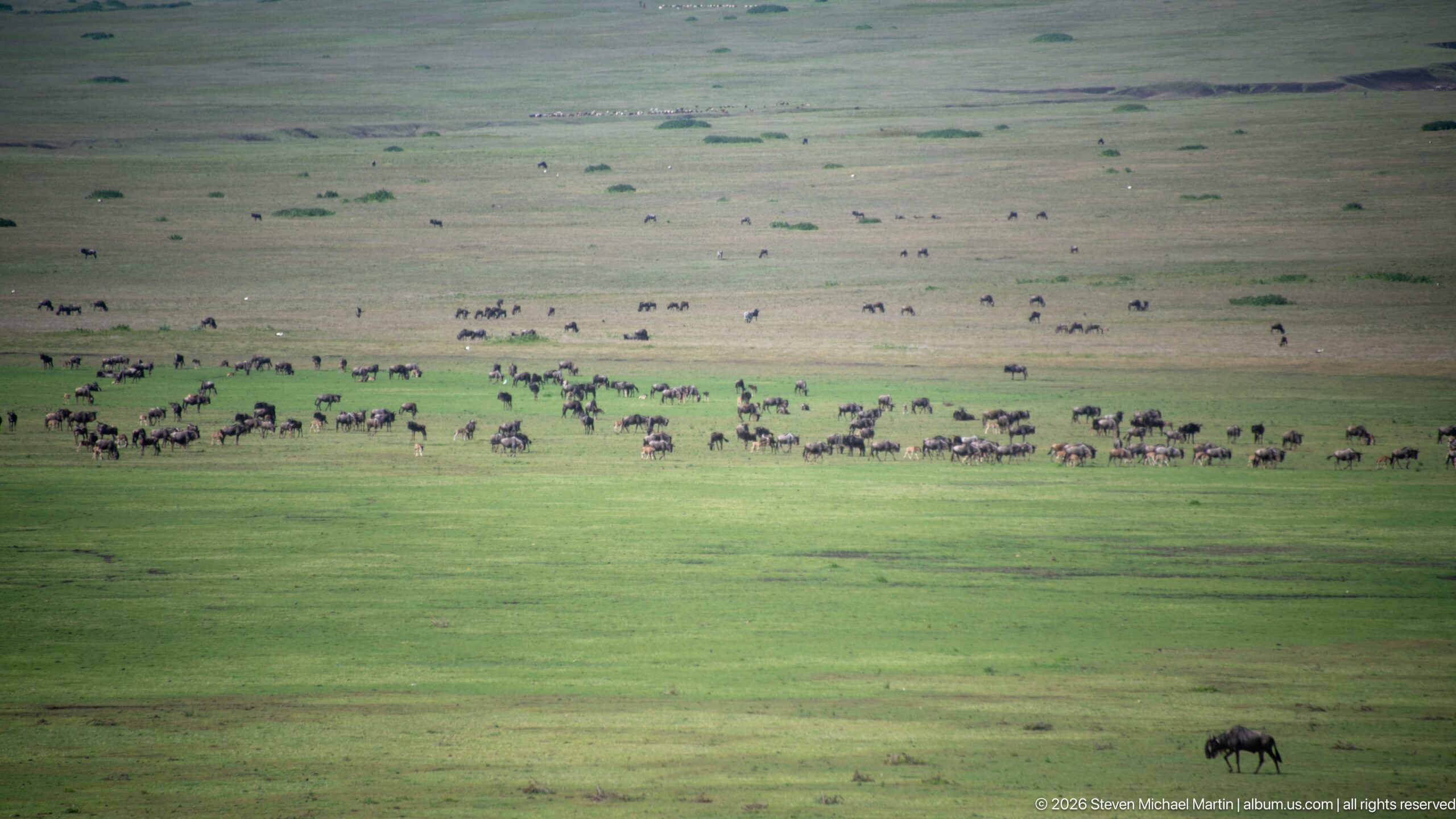
A broad herd of grazing ungulates spreads across the green Ngorongoro plain in loose bands, with the densest concentration crossing the middle of the frame. At this distance the animals read as a mass movement across the grassland, conveying the scale of seasonal grazing activity rather than individual wildlife portraits.
Caption
A broad herd of grazing ungulates spreads across the green Ngorongoro plain in loose bands, with the densest concentration crossing the middle of the frame. At this distance the animals read as a mass movement across the grassland, conveying the scale of seasonal grazing activity rather than individual wildlife portraits.
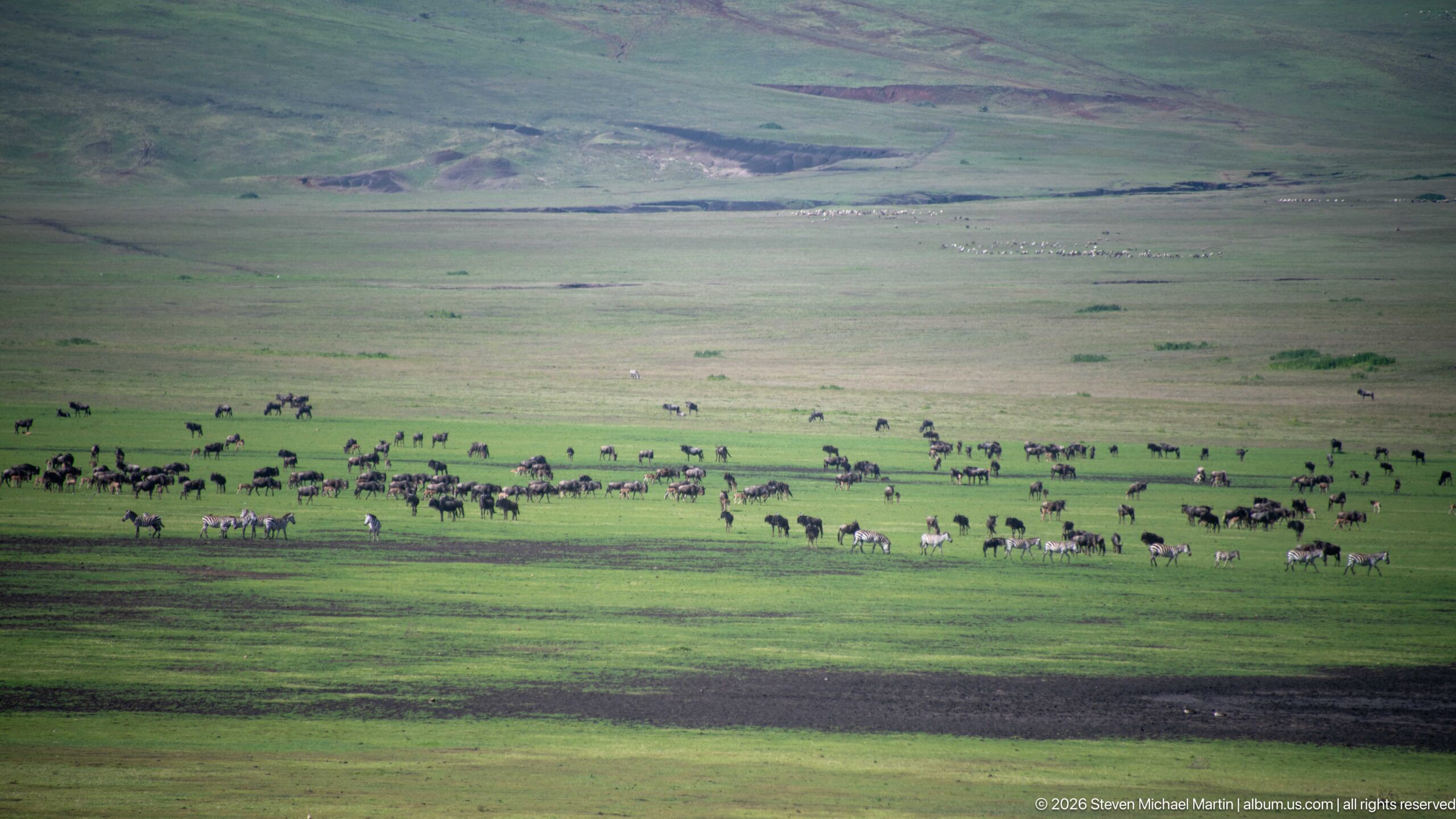
A concentrated band of dark grazing ungulates cuts horizontally across a vivid green section of the Ngorongoro plain. More animals trail across the pale grass beyond, creating a layered pattern of movement and feeding over the open crater-floor landscape.
Caption
A concentrated band of dark grazing ungulates cuts horizontally across a vivid green section of the Ngorongoro plain. More animals trail across the pale grass beyond, creating a layered pattern of movement and feeding over the open crater-floor landscape.
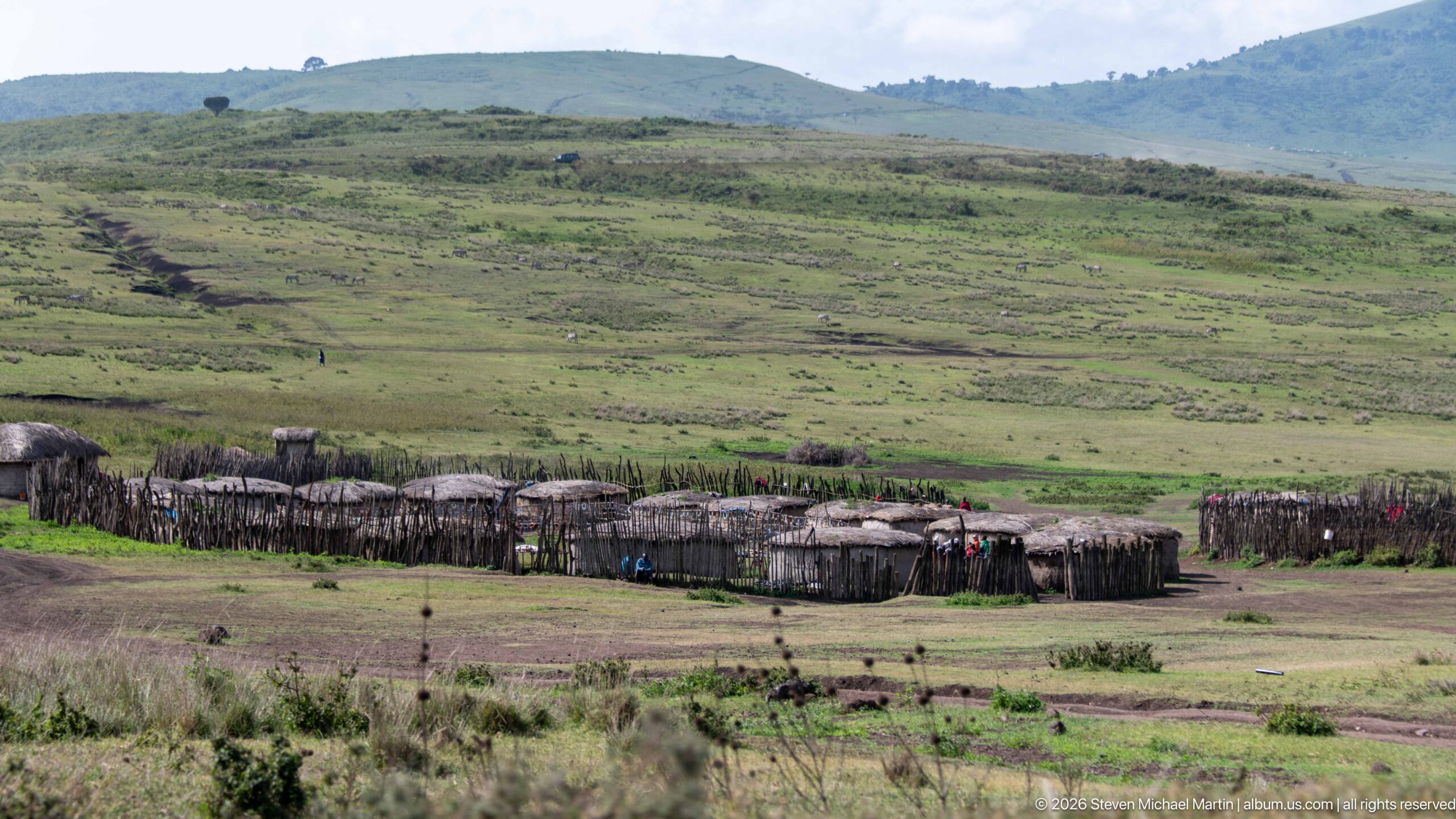
A compact pastoral homestead occupies the open Ngorongoro grassland, its low round huts enclosed within a dense vertical-stick fence. The settlement sits against an expansive green slope with tracks, scattered livestock, and sparse shrubs, placing the built enclosure within the larger working pastoral landscape.
Caption
A compact pastoral homestead occupies the open Ngorongoro grassland, its low round huts enclosed within a dense vertical-stick fence. The settlement sits against an expansive green slope with tracks, scattered livestock, and sparse shrubs, placing the built enclosure within the larger working pastoral landscape.
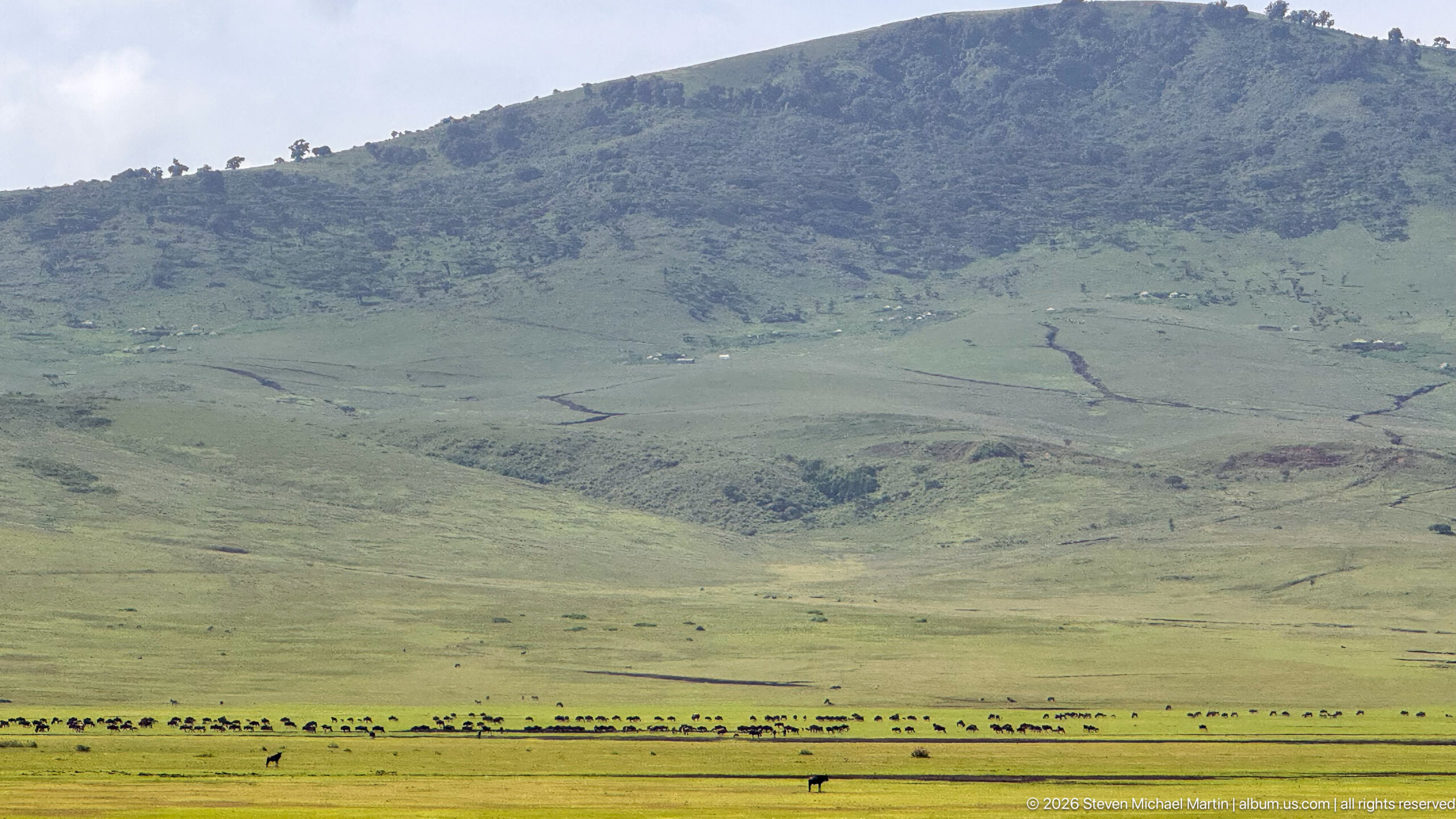
A long, dark line of grazing animals stretches across a bright strip of grass at the foot of a steep Ngorongoro highland slope. Above them, broad green ridges are cut by erosion channels and faint tracks, emphasizing the dramatic vertical transition from open grazing plain to crater-wall terrain.
Caption
A long, dark line of grazing animals stretches across a bright strip of grass at the foot of a steep Ngorongoro highland slope. Above them, broad green ridges are cut by erosion channels and faint tracks, emphasizing the dramatic vertical transition from open grazing plain to crater-wall terrain.
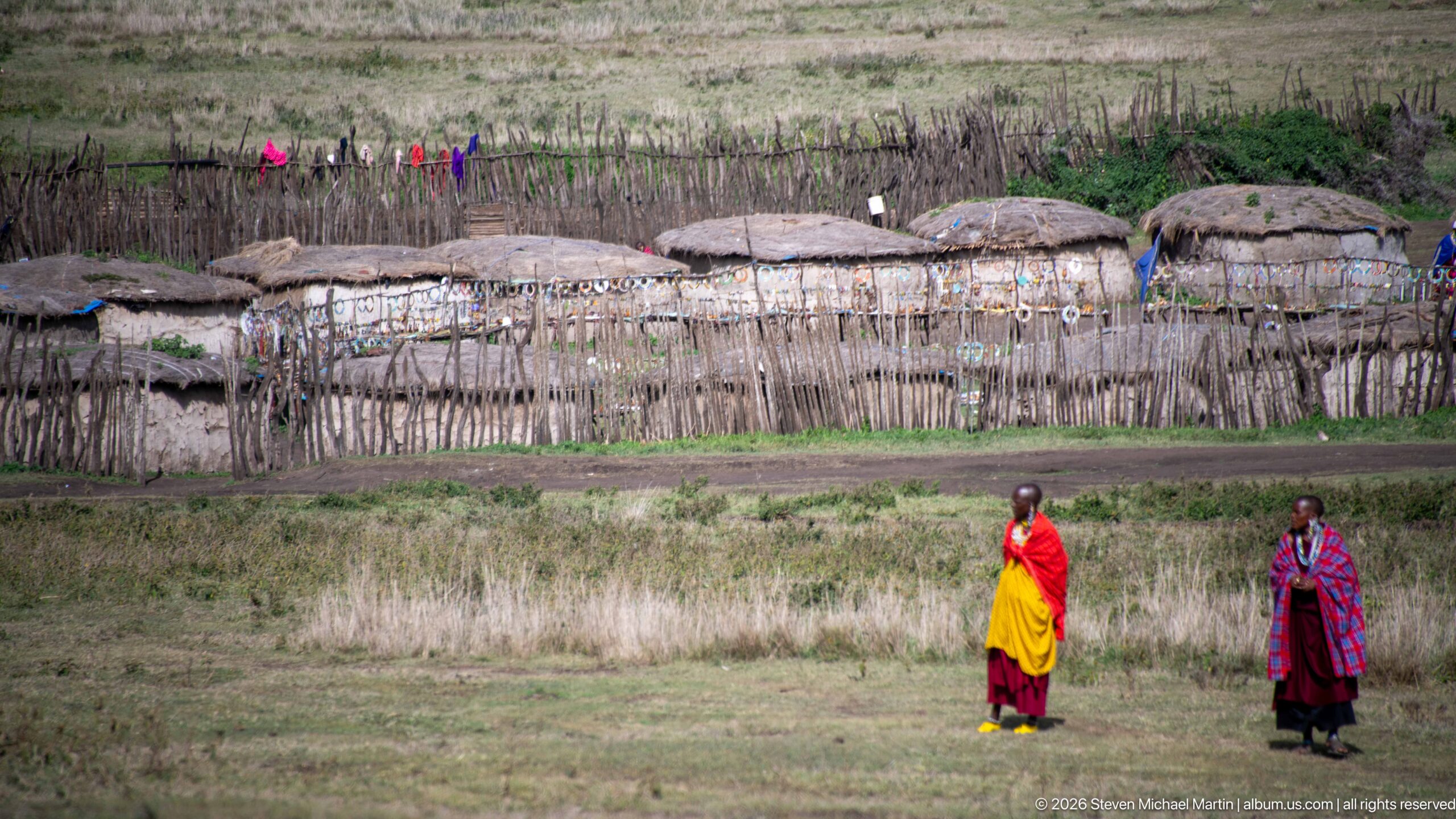
Two people in brightly colored wrapped garments stand in open grass before a fenced pastoral homestead. Behind them, low thatched huts and dense upright poles form a textured enclosure, contrasting the vivid red, yellow, and patterned clothing with muted earth tones and pasture.
Caption
Two people in brightly colored wrapped garments stand in open grass before a fenced pastoral homestead. Behind them, low thatched huts and dense upright poles form a textured enclosure, contrasting the vivid red, yellow, and patterned clothing with muted earth tones and pasture.
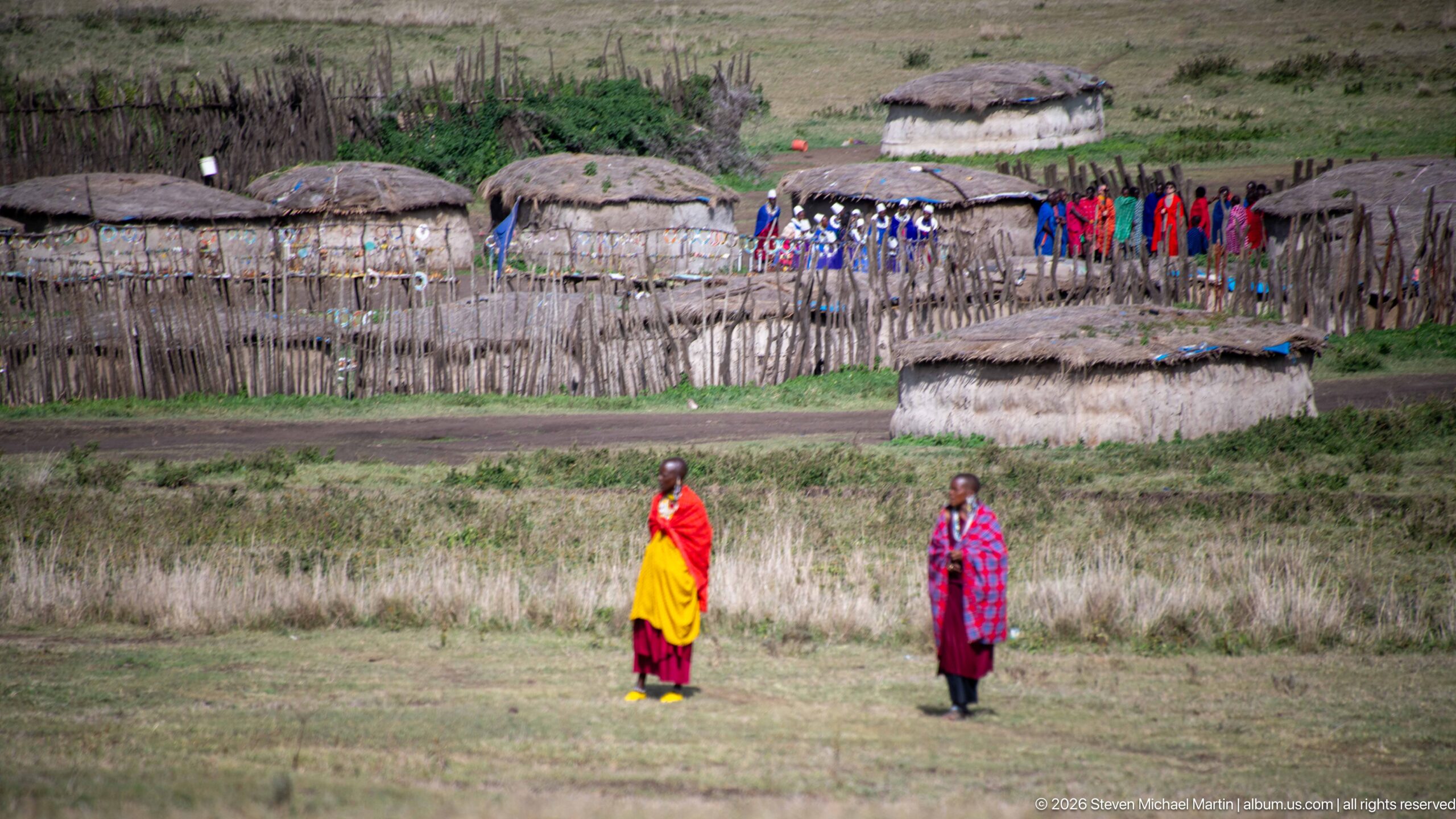
Two people in bright wrapped garments stand apart in the foreground while a larger pastoral settlement fills the slope behind them. Round thatched huts, tall stick fencing, and a cluster of people in vivid clothing create a deeper contextual view of community activity within the Ngorongoro highlands.
Caption
Two people in bright wrapped garments stand apart in the foreground while a larger pastoral settlement fills the slope behind them. Round thatched huts, tall stick fencing, and a cluster of people in vivid clothing create a deeper contextual view of community activity within the Ngorongoro highlands.
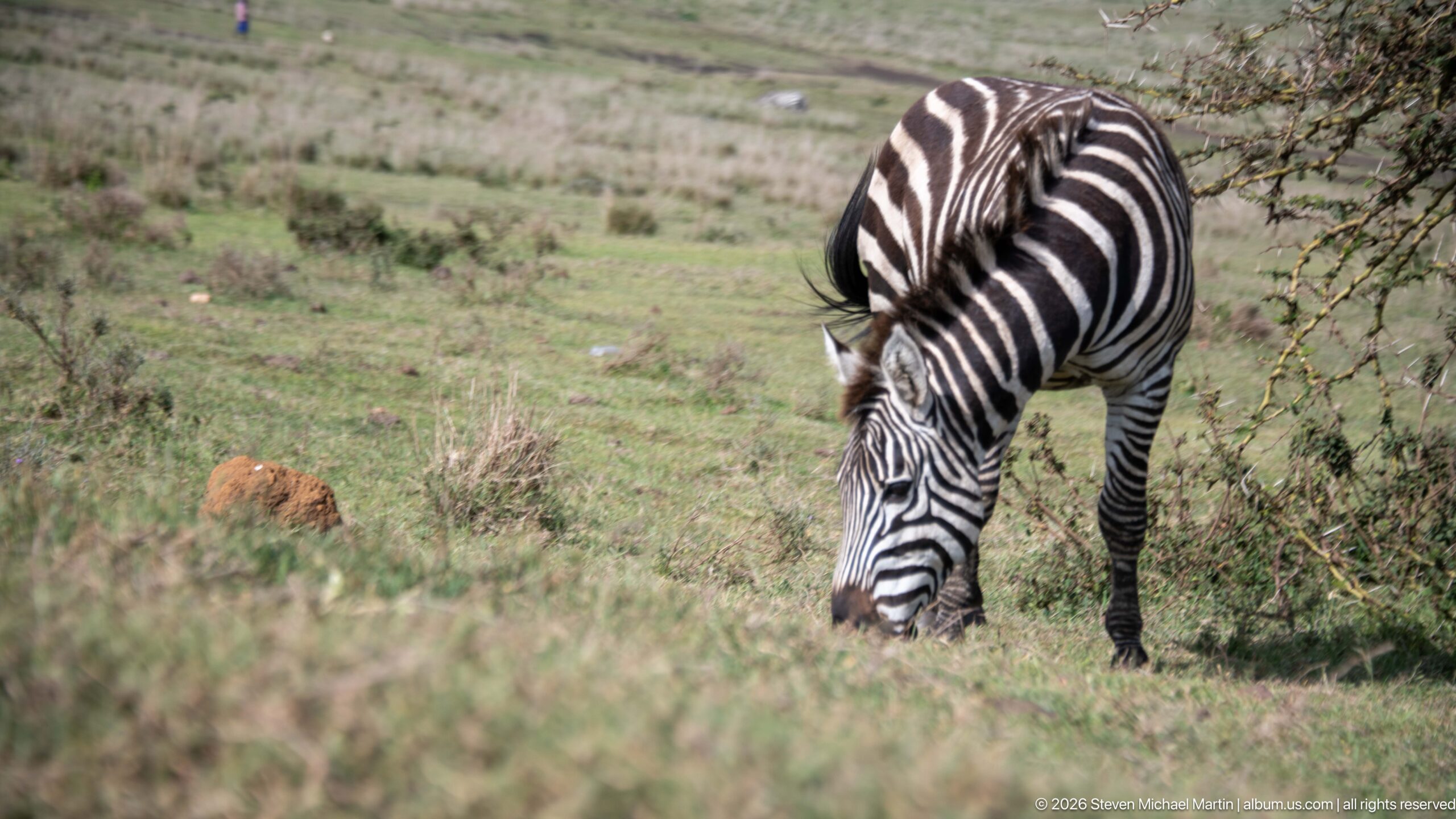
A plains zebra grazes with its head low in short Ngorongoro grass, its black-and-white striping sharply set against muted pasture and thorny scrub. The forward-facing angle compresses the body while revealing the striped face, mane, shoulders, and forelegs in strong detail.
Caption
A plains zebra grazes with its head low in short Ngorongoro grass, its black-and-white striping sharply set against muted pasture and thorny scrub. The forward-facing angle compresses the body while revealing the striped face, mane, shoulders, and forelegs in strong detail.
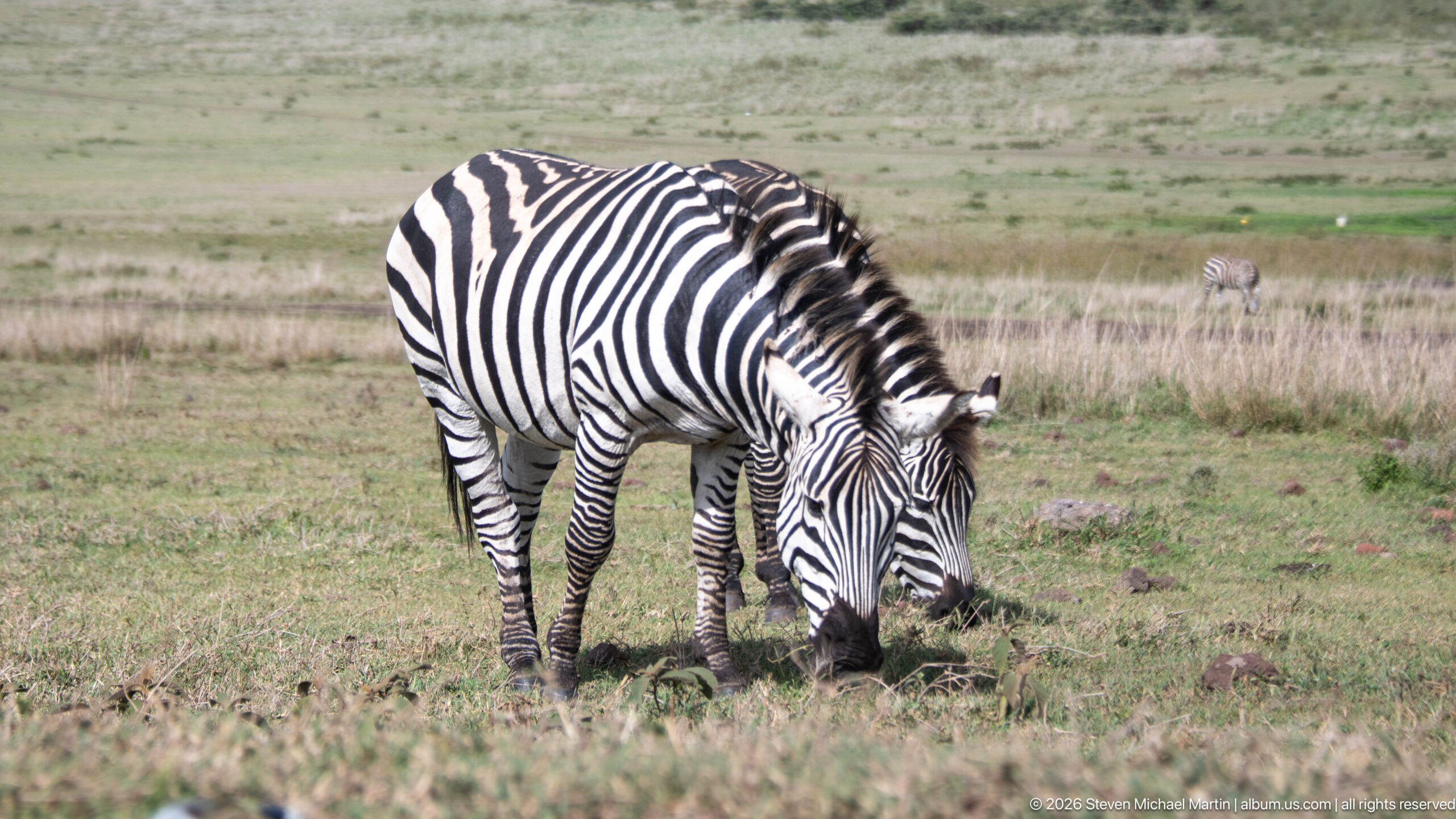
A plains zebra grazes broadside in an open field, its rounded torso and crisp vertical striping fully visible from mane to legs. The uncluttered pasture gives a clear field-guide view of the animal, while a small distant ungulate punctuates the background.
Caption
A plains zebra grazes broadside in an open field, its rounded torso and crisp vertical striping fully visible from mane to legs. The uncluttered pasture gives a clear field-guide view of the animal, while a small distant ungulate punctuates the background.
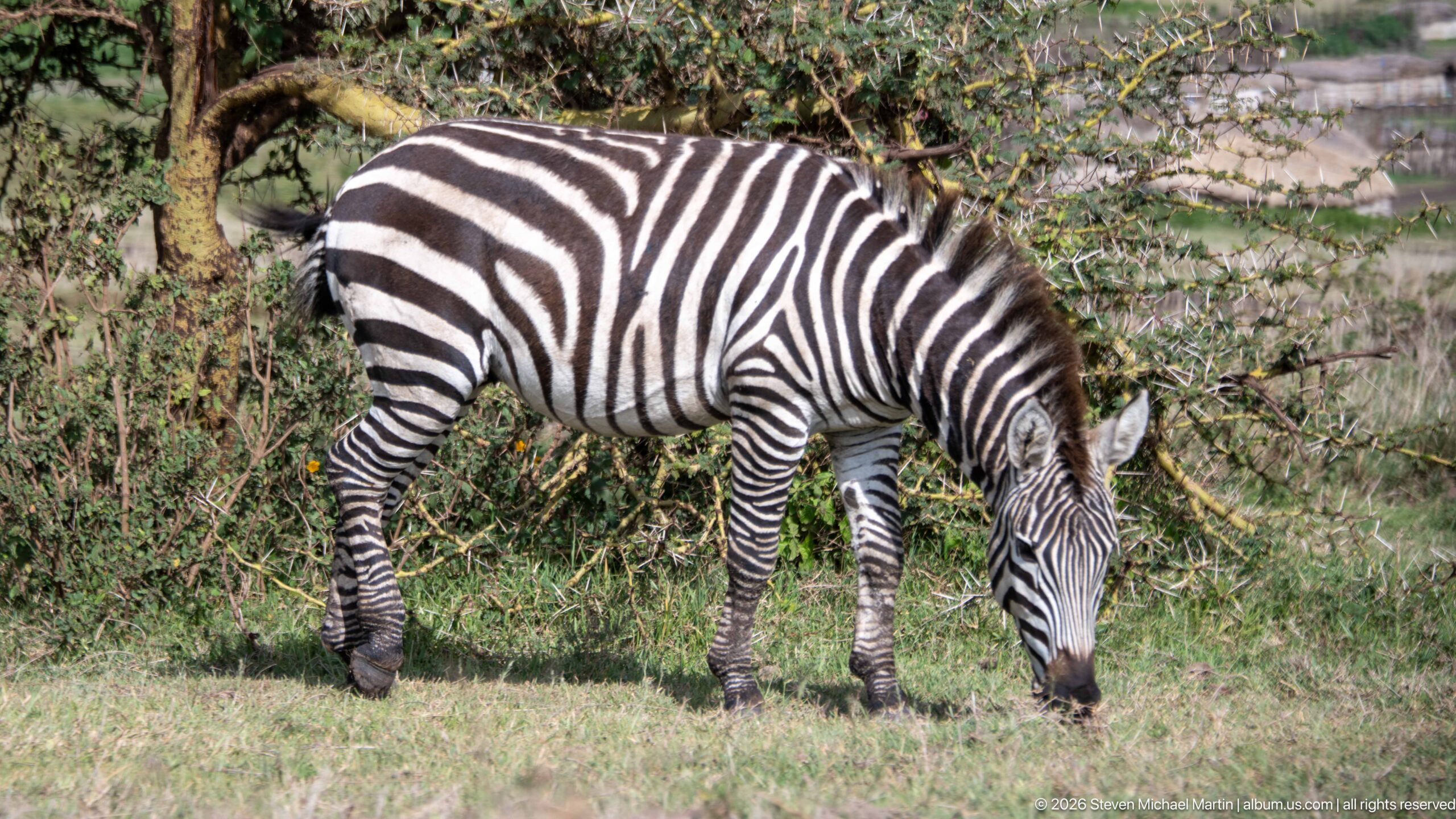
A plains zebra feeds in profile along the edge of dense thorn vegetation, where leafy branches frame the striped body. Compared with the more open neighboring views, this photograph places the zebra directly against browse and scrub, emphasizing the transition between grass and woody cover.
Caption
A plains zebra feeds in profile along the edge of dense thorn vegetation, where leafy branches frame the striped body. Compared with the more open neighboring views, this photograph places the zebra directly against browse and scrub, emphasizing the transition between grass and woody cover.
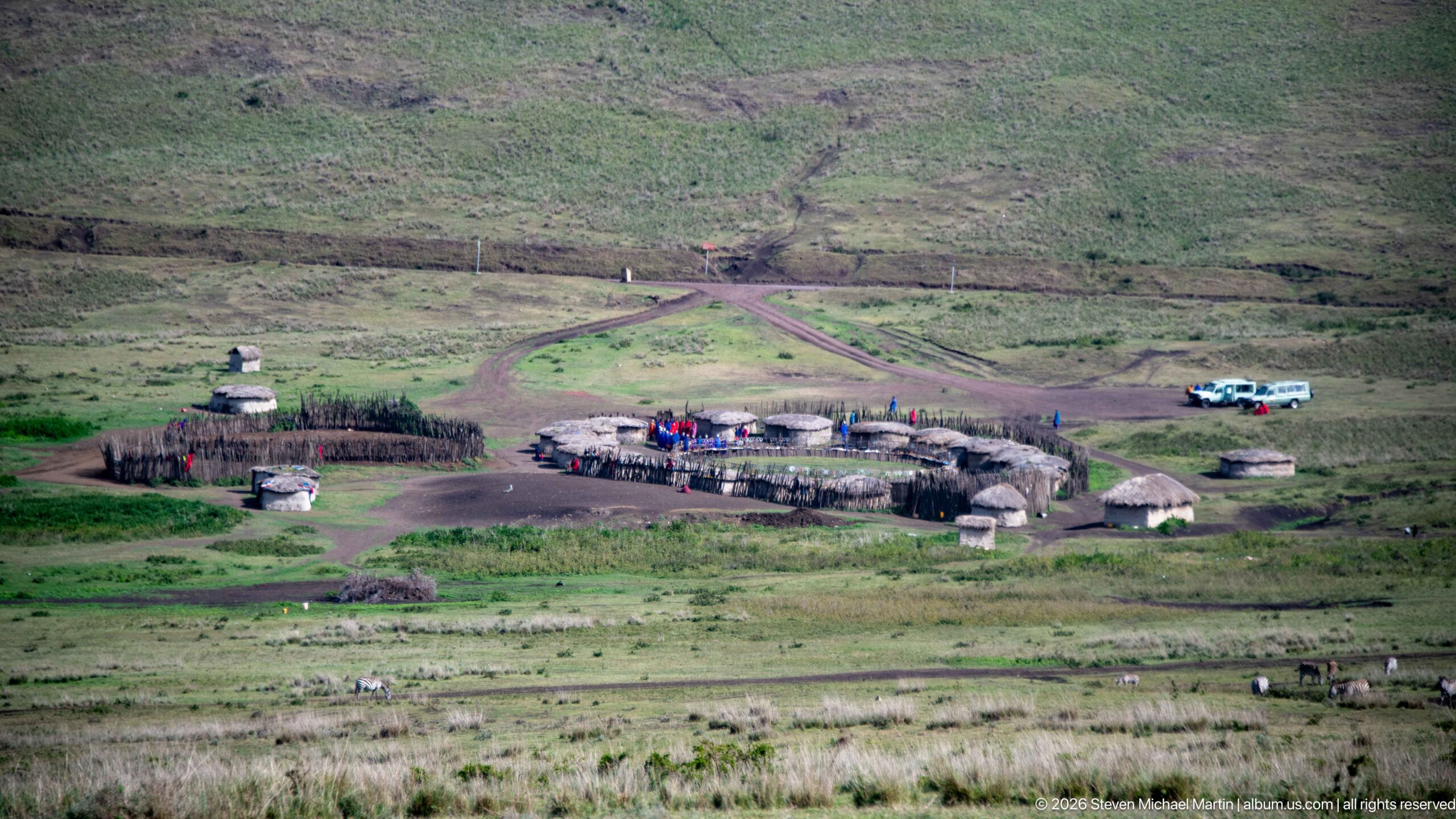
A pastoral settlement lies on the open Ngorongoro slope where several dirt tracks converge around a dense fenced enclosure. Round thatched huts occupy the compound and its margins, while tiny people, livestock, and a pair of vehicles reveal the settlement's active scale within the surrounding grassland.
Caption
A pastoral settlement lies on the open Ngorongoro slope where several dirt tracks converge around a dense fenced enclosure. Round thatched huts occupy the compound and its margins, while tiny people, livestock, and a pair of vehicles reveal the settlement's active scale within the surrounding grassland.
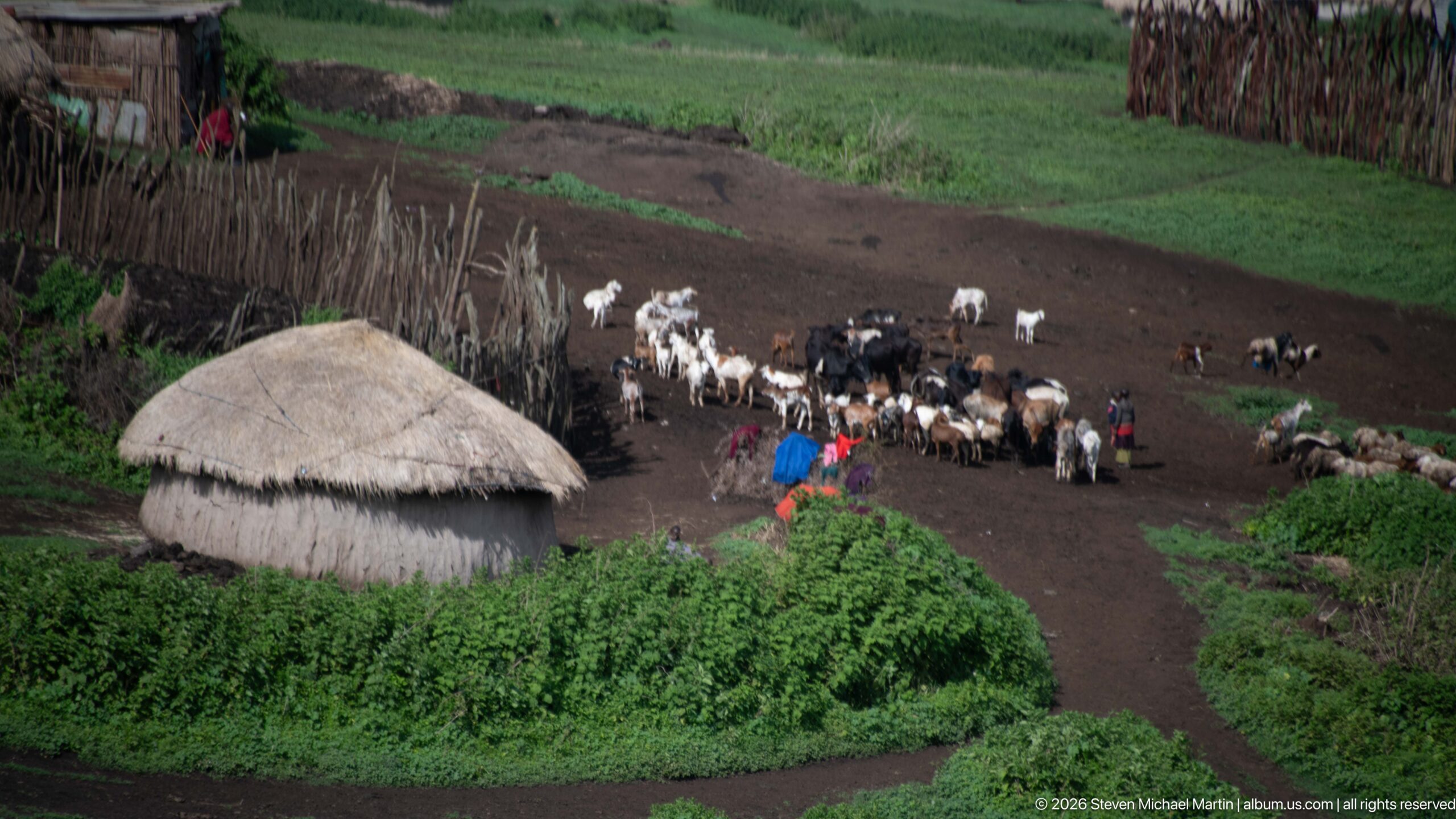
A mixed herd of domestic livestock crowds a dark earthen yard beside a round thatched hut and tall stick enclosure. Several people in bright clothing move around the animals, creating an intimate view of daily herding activity within the pastoral settlement.
Caption
A mixed herd of domestic livestock crowds a dark earthen yard beside a round thatched hut and tall stick enclosure. Several people in bright clothing move around the animals, creating an intimate view of daily herding activity within the pastoral settlement.
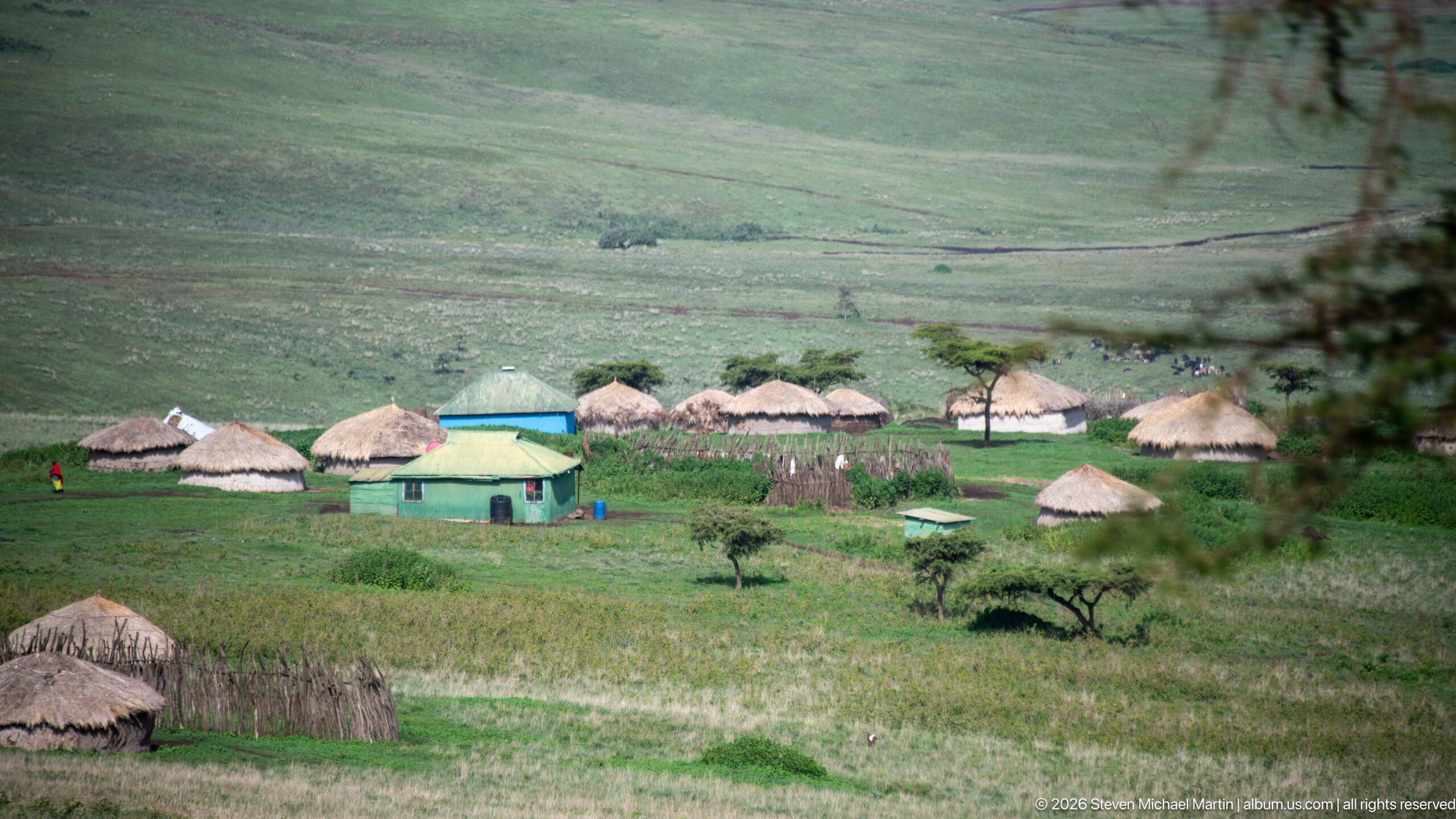
Round thatched huts spread across a green Ngorongoro slope around a conspicuous rectangular building with a pale green metal roof. Stick fences, cultivated-looking patches, and scattered trees divide the settlement, producing a broader view of traditional and modern building forms sharing the pastoral landscape.
Caption
Round thatched huts spread across a green Ngorongoro slope around a conspicuous rectangular building with a pale green metal roof. Stick fences, cultivated-looking patches, and scattered trees divide the settlement, producing a broader view of traditional and modern building forms sharing the pastoral landscape.
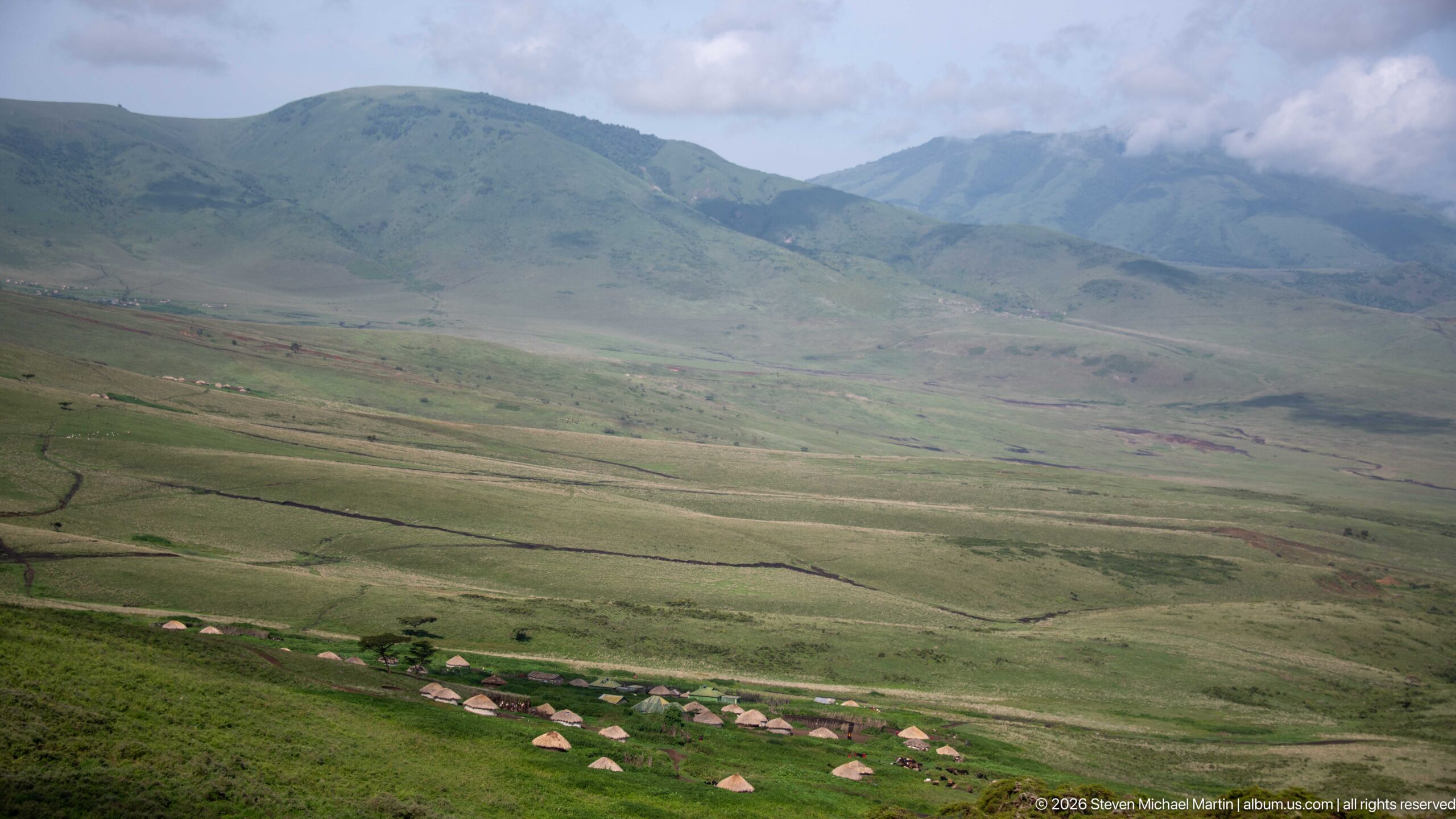
A small line of pale thatched huts sits low in an immense sweep of Ngorongoro grassland, dwarfed by rising mountain ridges partly veiled in cloud. Faint tracks and pasture lines traverse the slope, making the settlement a minor but vivid human element in the volcanic highland landscape.
Caption
A small line of pale thatched huts sits low in an immense sweep of Ngorongoro grassland, dwarfed by rising mountain ridges partly veiled in cloud. Faint tracks and pasture lines traverse the slope, making the settlement a minor but vivid human element in the volcanic highland landscape.
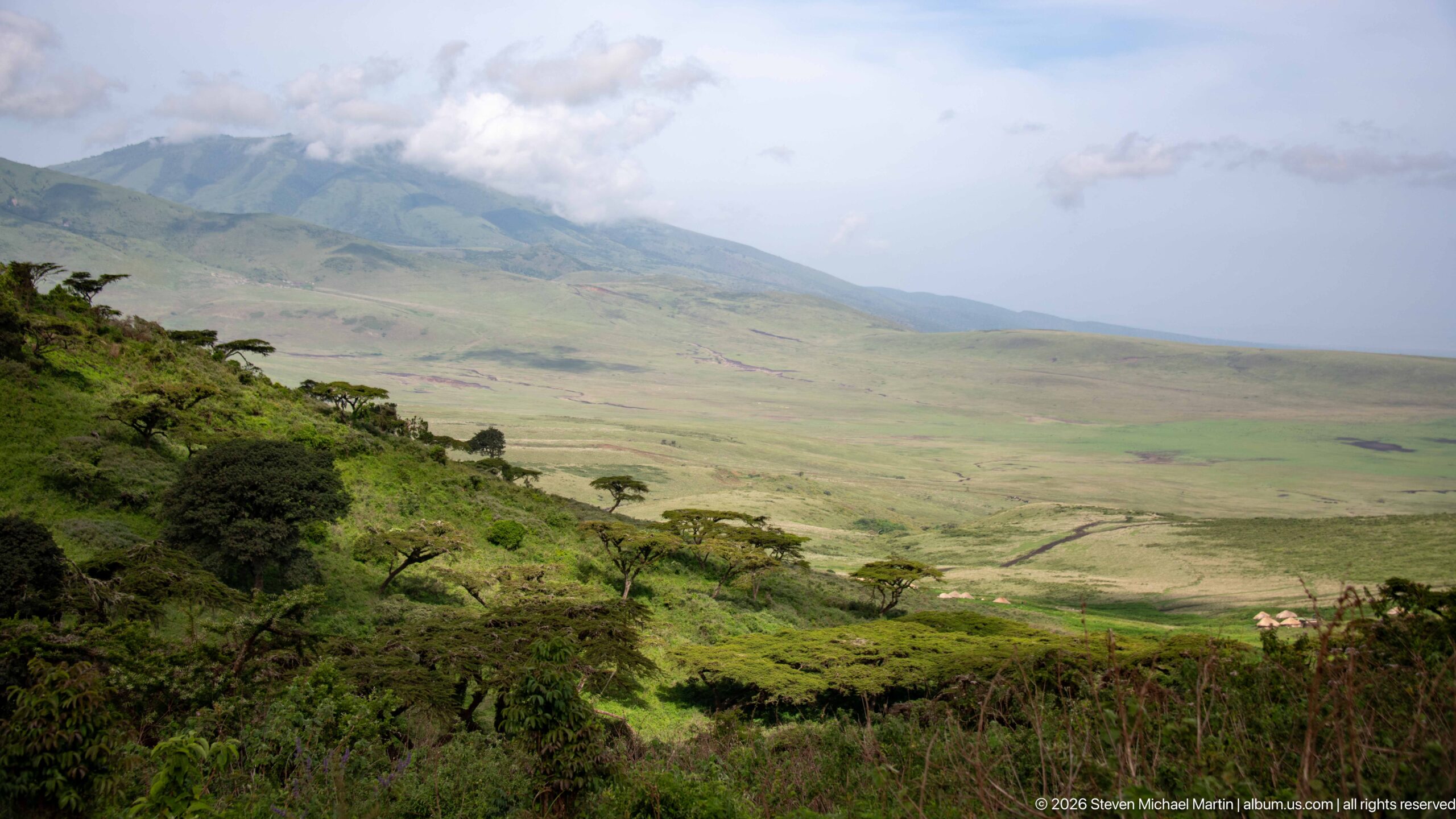
Dense green shrubs and flat-topped trees frame a broad view across the Ngorongoro highlands, where pale grasslands rise toward long mountain ridges beneath drifting cloud. The elevated viewpoint emphasizes the ecological transition from wooded slope in the foreground to open grazing country beyond.
Caption
Dense green shrubs and flat-topped trees frame a broad view across the Ngorongoro highlands, where pale grasslands rise toward long mountain ridges beneath drifting cloud. The elevated viewpoint emphasizes the ecological transition from wooded slope in the foreground to open grazing country beyond.
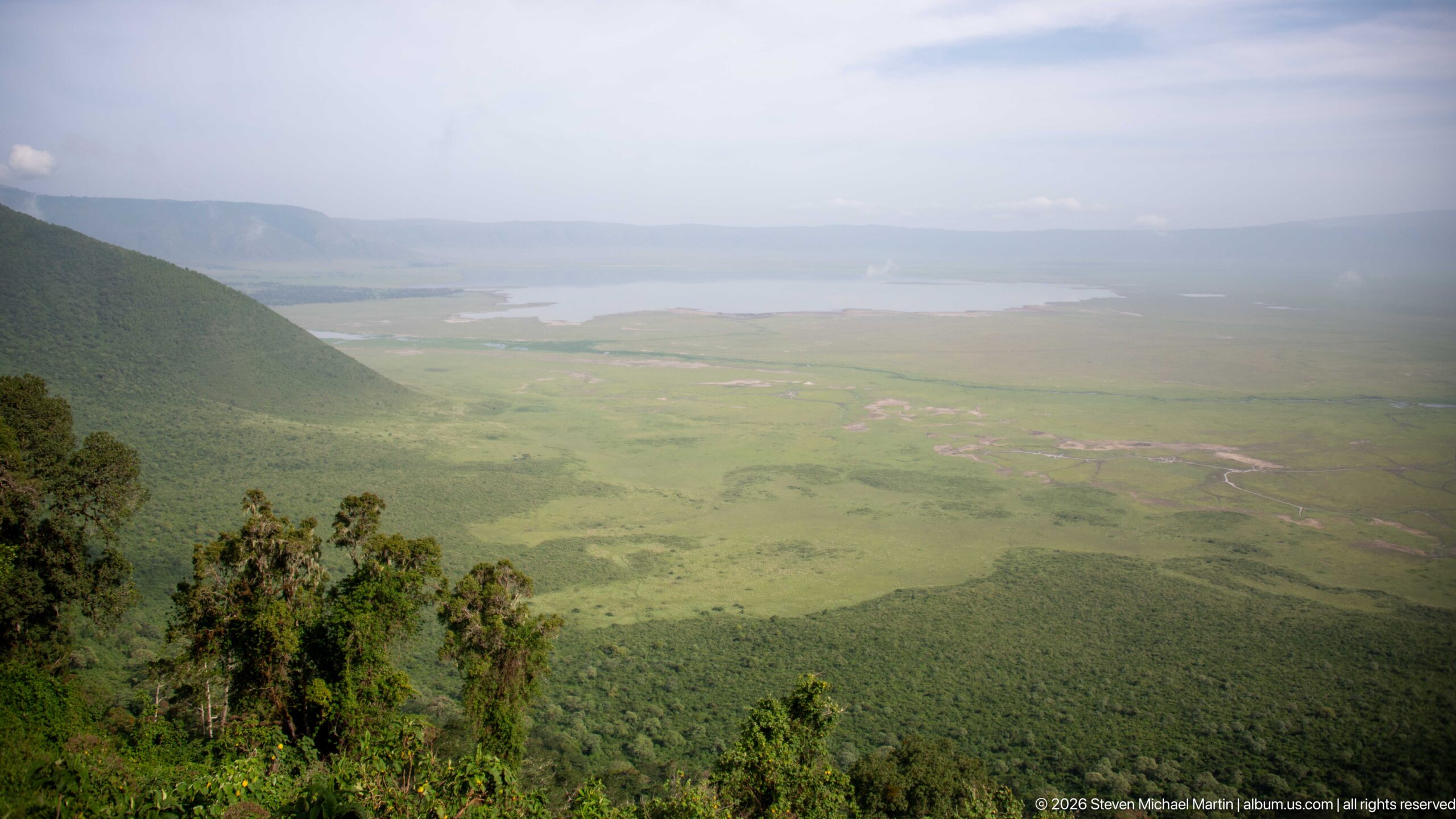
From a forested high rim, the land drops steeply into the broad Ngorongoro basin, where open green flats extend toward a pale lake in the distance. Atmospheric haze softens the opposite rim, while dense vegetation in the foreground marks the dramatic ecological and topographic change from highland forest to crater floor.
Caption
From a forested high rim, the land drops steeply into the broad Ngorongoro basin, where open green flats extend toward a pale lake in the distance. Atmospheric haze softens the opposite rim, while dense vegetation in the foreground marks the dramatic ecological and topographic change from highland forest to crater floor.
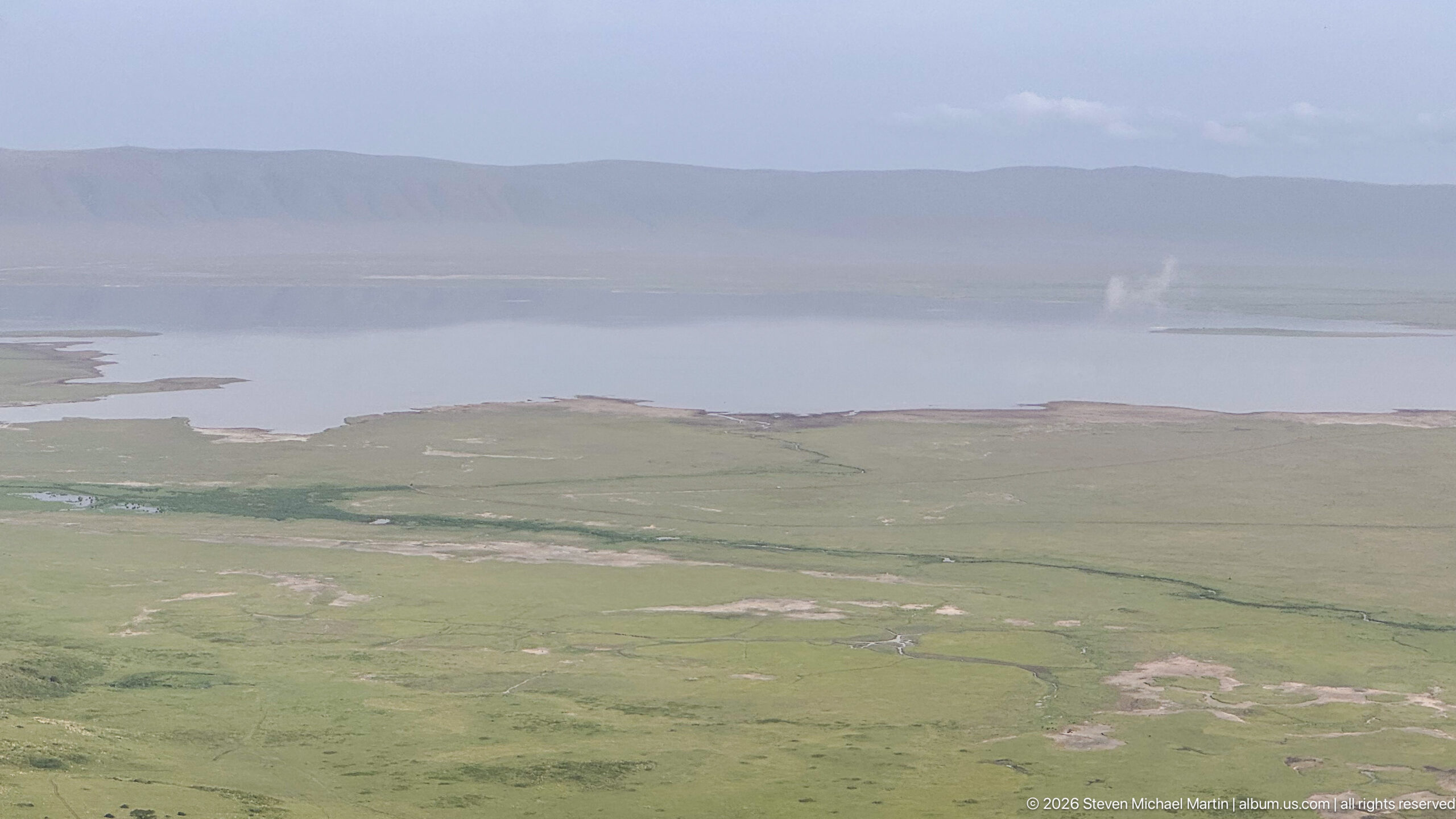
A pale lake occupies the upper half of this telephoto view across the Ngorongoro floor, bordered by broad open grassland and light-toned shoreline patches. Haze flattens the distant crater wall, while a small vertical plume near the far shore introduces a subtle sign of activity in the otherwise expansive basin.
Caption
A pale lake occupies the upper half of this telephoto view across the Ngorongoro floor, bordered by broad open grassland and light-toned shoreline patches. Haze flattens the distant crater wall, while a small vertical plume near the far shore introduces a subtle sign of activity in the otherwise expansive basin.
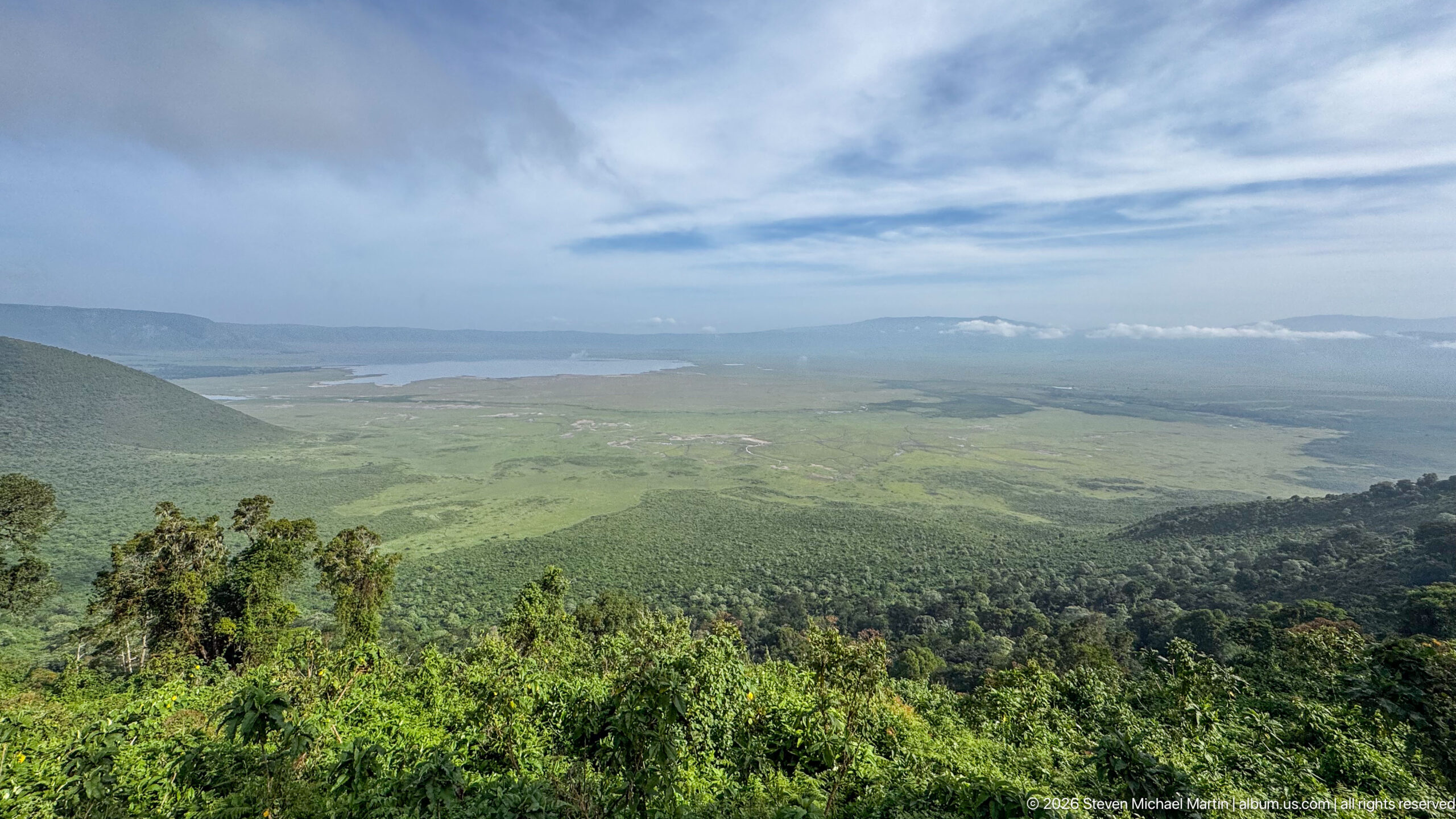
Sweeping white cloud bands arc above the Ngorongoro basin as a forested rim descends into bright green plains and a distant lake. The elevated composition balances expansive sky with the basin's layered slopes, emphasizing the scale of the volcanic landscape from wooded highland edge to open floor.
Caption
Sweeping white cloud bands arc above the Ngorongoro basin as a forested rim descends into bright green plains and a distant lake. The elevated composition balances expansive sky with the basin's layered slopes, emphasizing the scale of the volcanic landscape from wooded highland edge to open floor.

An official printed form headed by the United Republic of Tanzania and the Ngorongoro Conservation Area Authority is held open inside a vehicle. The page is organized into boxed administrative fields and tabular entries, documenting the paperwork associated with entry or visitor administration at the conservation area.
Caption
An official printed form headed by the United Republic of Tanzania and the Ngorongoro Conservation Area Authority is held open inside a vehicle. The page is organized into boxed administrative fields and tabular entries, documenting the paperwork associated with entry or visitor administration at the conservation area.

An official Ngorongoro Conservation Area Authority entry permit is held inside a vehicle, with the United Republic of Tanzania heading, visitor and vehicle fields, QR code, and a blue entry stamp dated 13 February 2026 clearly visible. The document records the administrative side of entering the conservation area through its controlled access system.
Caption
An official Ngorongoro Conservation Area Authority entry permit is held inside a vehicle, with the United Republic of Tanzania heading, visitor and vehicle fields, QR code, and a blue entry stamp dated 13 February 2026 clearly visible. The document records the administrative side of entering the conservation area through its controlled access system.
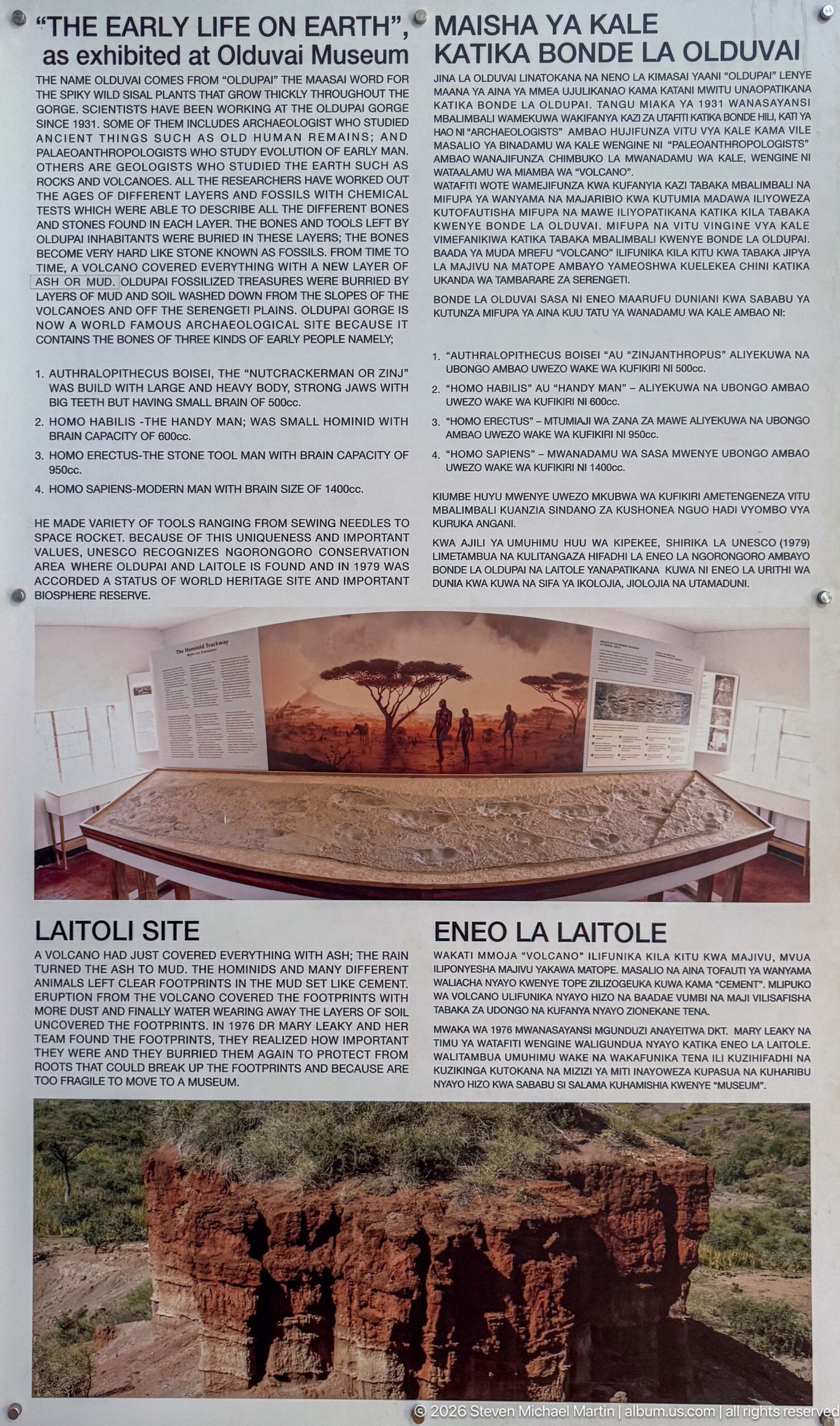
An interpretation panel connects the Ngorongoro region with major paleoanthropological sites, including Olduvai Gorge and Laetoli. Dense explanatory text is paired with landscape photographs and a reconstruction scene, presenting the conservation area not only as a natural landscape but also as a setting for evidence central to the study of early human evolution.
Caption
An interpretation panel connects the Ngorongoro region with major paleoanthropological sites, including Olduvai Gorge and Laetoli. Dense explanatory text is paired with landscape photographs and a reconstruction scene, presenting the conservation area not only as a natural landscape but also as a setting for evidence central to the study of early human evolution.
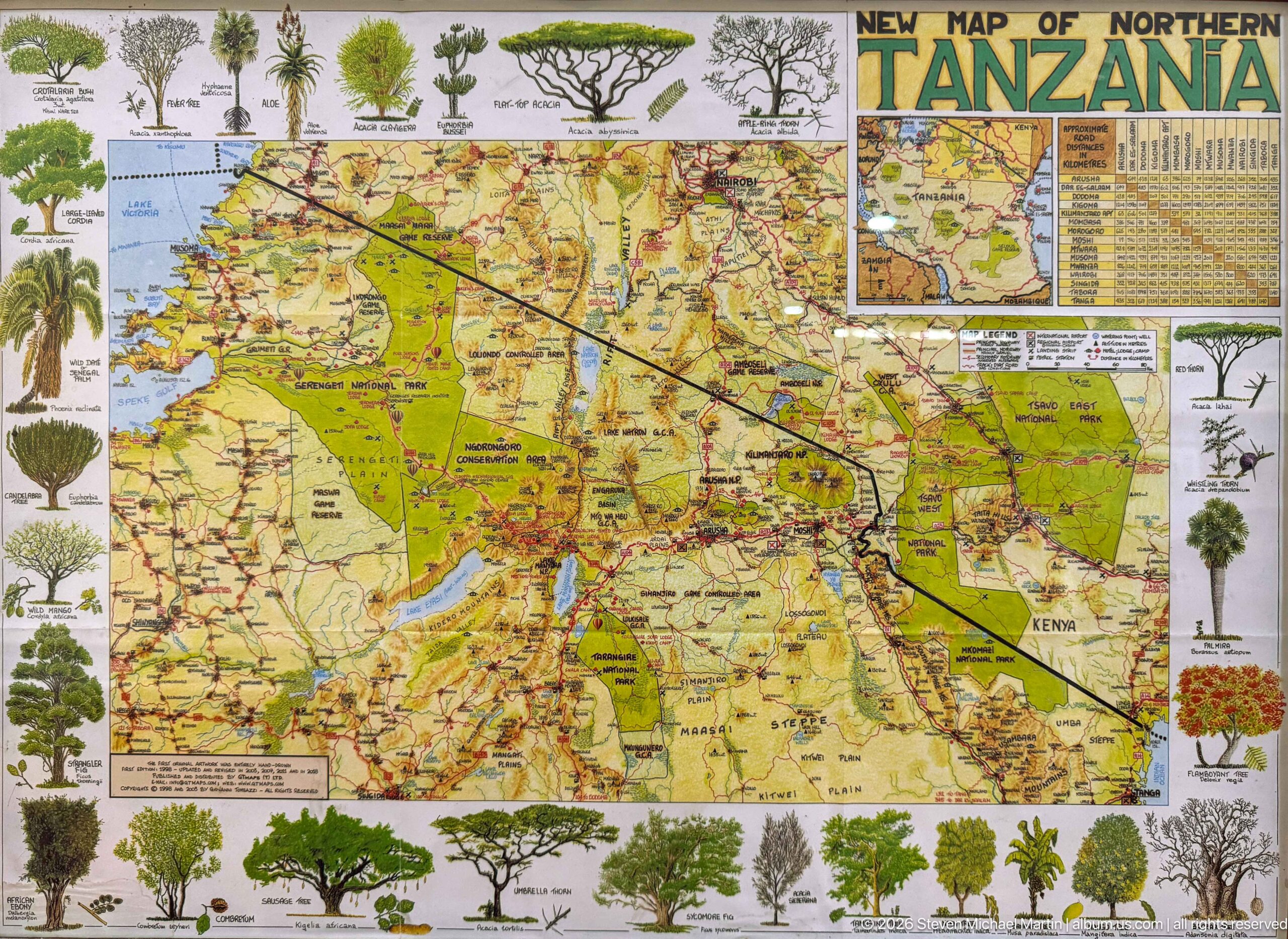
A colorful printed 'New Map of Northern Tanzania' fills the frame, combining road and place-name cartography with a smaller regional inset. Illustrated trees and other vegetation form a decorative field-guide border, linking geographic orientation with recognizable East African plant forms.
Caption
A colorful printed 'New Map of Northern Tanzania' fills the frame, combining road and place-name cartography with a smaller regional inset. Illustrated trees and other vegetation form a decorative field-guide border, linking geographic orientation with recognizable East African plant forms.
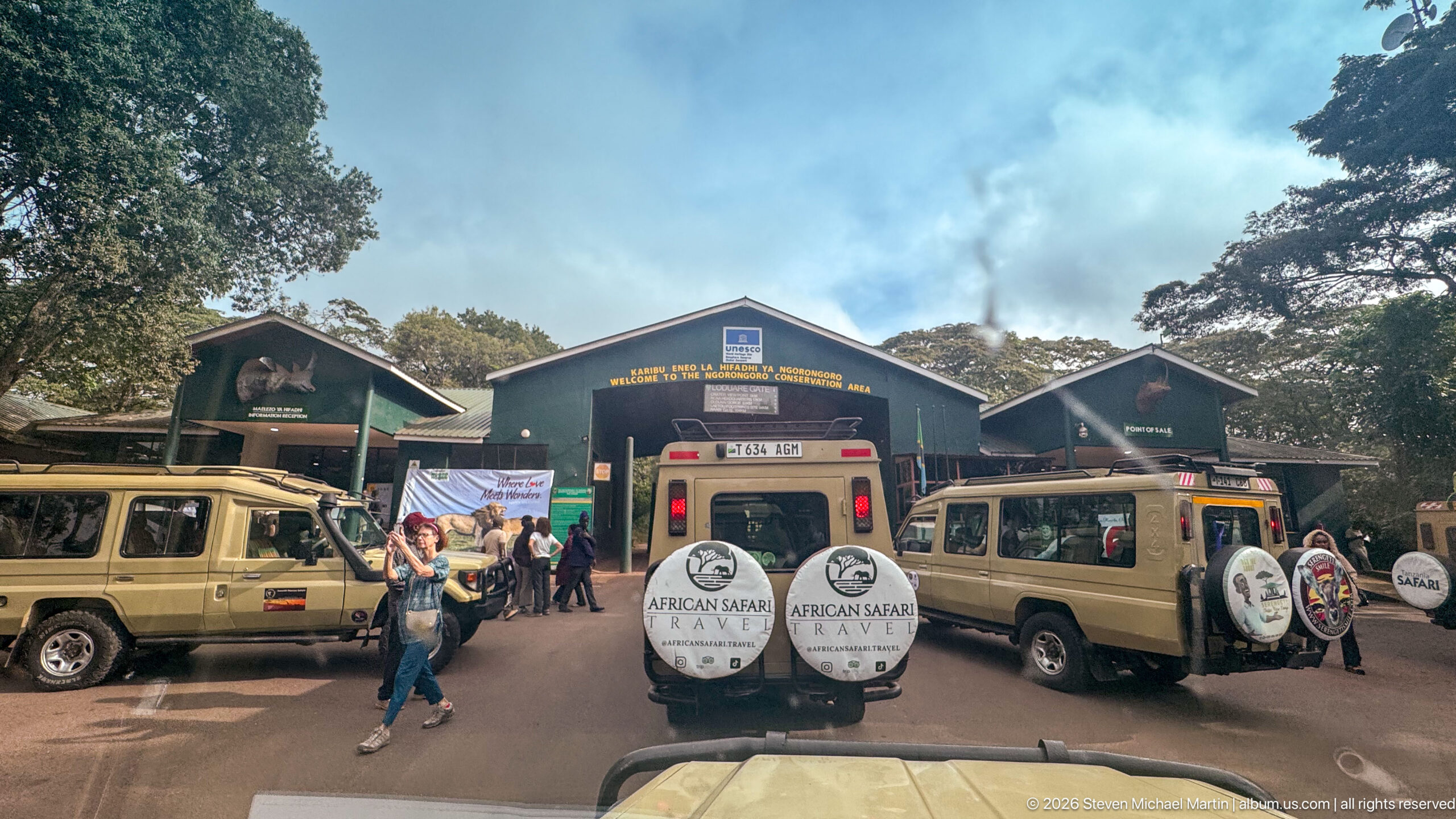
Safari vehicles and visitors gather in front of the Lodoare Gate entrance complex to the Ngorongoro Conservation Area. Green-roofed buildings, wildlife emblems, signage, and a central access lane frame the busy arrival point, while the concentration of four-wheel-drive vehicles reflects the gate’s role as a principal road entry to the highlands and crater area.
Caption
Safari vehicles and visitors gather in front of the Lodoare Gate entrance complex to the Ngorongoro Conservation Area. Green-roofed buildings, wildlife emblems, signage, and a central access lane frame the busy arrival point, while the concentration of four-wheel-drive vehicles reflects the gate’s role as a principal road entry to the highlands and crater area.

Two men pose indoors while holding up Ngorongoro Conservation Area Authority paperwork, one giving a thumbs-up and the other carrying a camera. The casual portrait turns the entry documents into part of the travel narrative, linking the administrative process at Lodoare with the beginning of a photographic safari in the conservation area.
Caption
Two men pose indoors while holding up Ngorongoro Conservation Area Authority paperwork, one giving a thumbs-up and the other carrying a camera. The casual portrait turns the entry documents into part of the travel narrative, linking the administrative process at Lodoare with the beginning of a photographic safari in the conservation area.
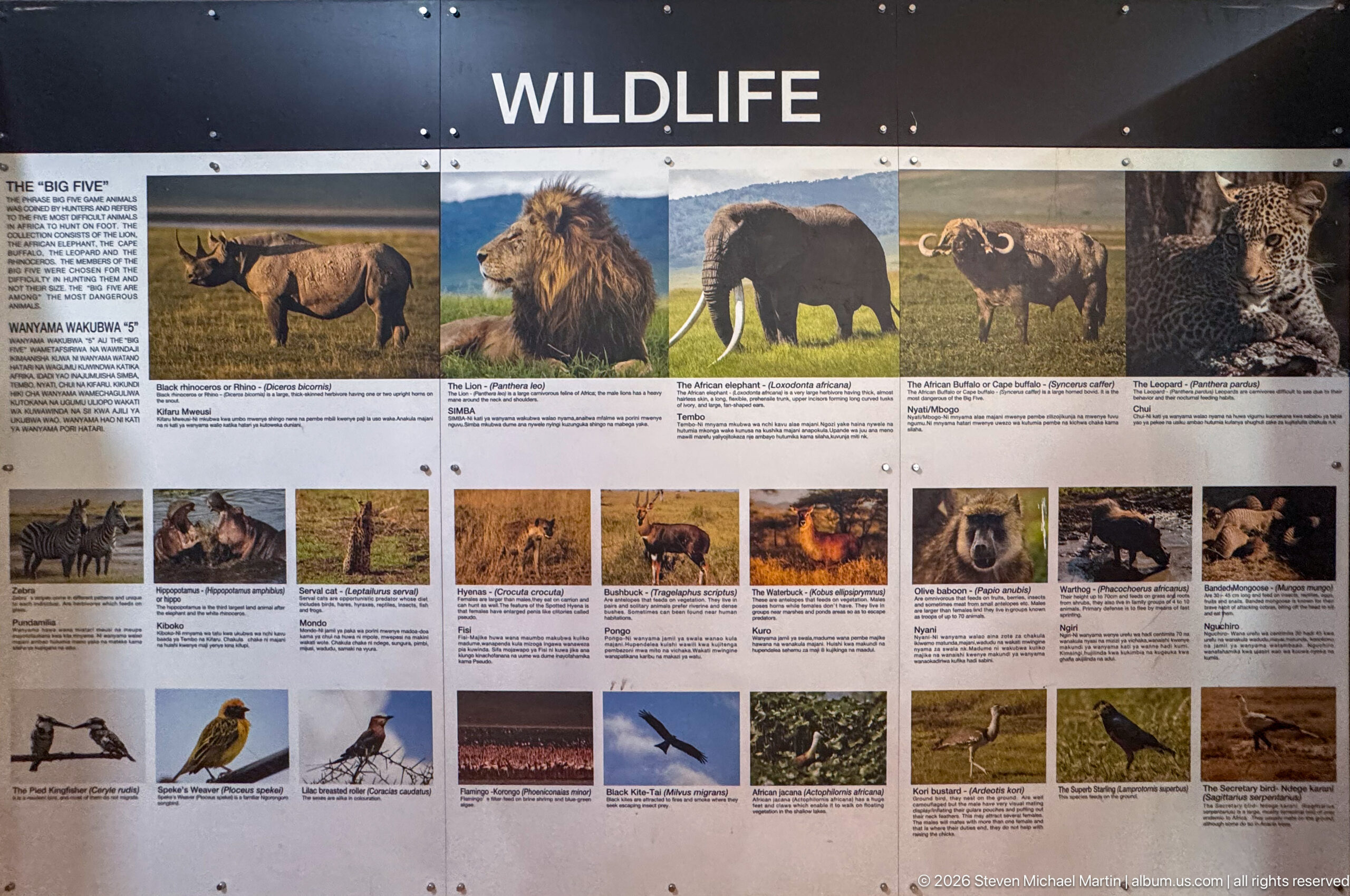
A large interpretive panel titled “WILDLIFE” presents the fauna of the Ngorongoro Conservation Area through photographs and short species accounts. Prominent images of rhinoceros, lion, elephant, buffalo, and leopard anchor the upper row, while smaller panels below broaden the survey to additional mammals and birds found across the area’s varied habitats.
Caption
A large interpretive panel titled “WILDLIFE” presents the fauna of the Ngorongoro Conservation Area through photographs and short species accounts. Prominent images of rhinoceros, lion, elephant, buffalo, and leopard anchor the upper row, while smaller panels below broaden the survey to additional mammals and birds found across the area’s varied habitats.
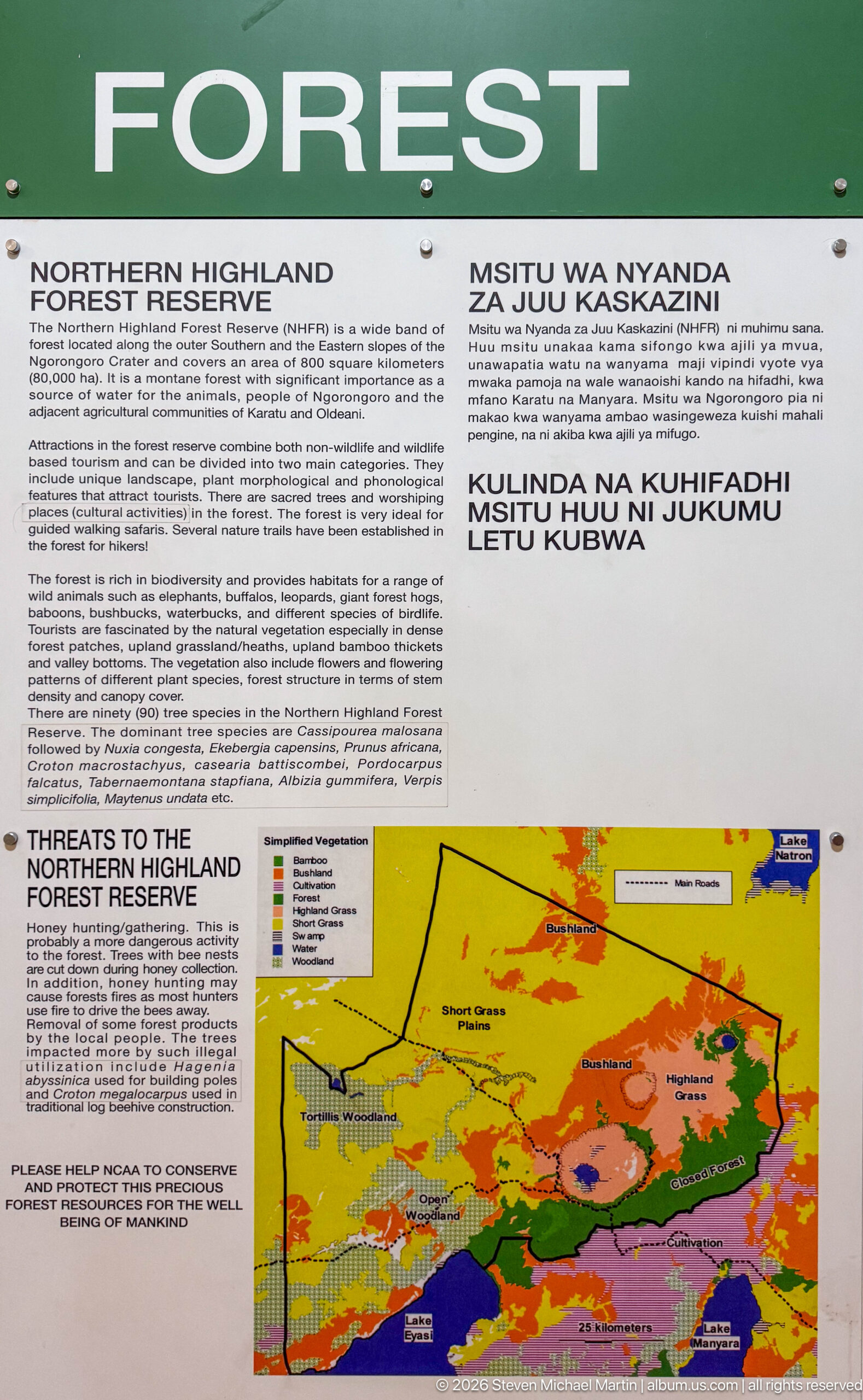
An interpretive panel introduces the Northern Highland Forest Reserve, combining explanatory text with a color geological map of the Ngorongoro highlands. The display describes the reserve as a distinct conservation landscape and uses the map to place forest, volcanic terrain, and surrounding protected areas within a broader regional context.
Caption
An interpretive panel introduces the Northern Highland Forest Reserve, combining explanatory text with a color geological map of the Ngorongoro highlands. The display describes the reserve as a distinct conservation landscape and uses the map to place forest, volcanic terrain, and surrounding protected areas within a broader regional context.
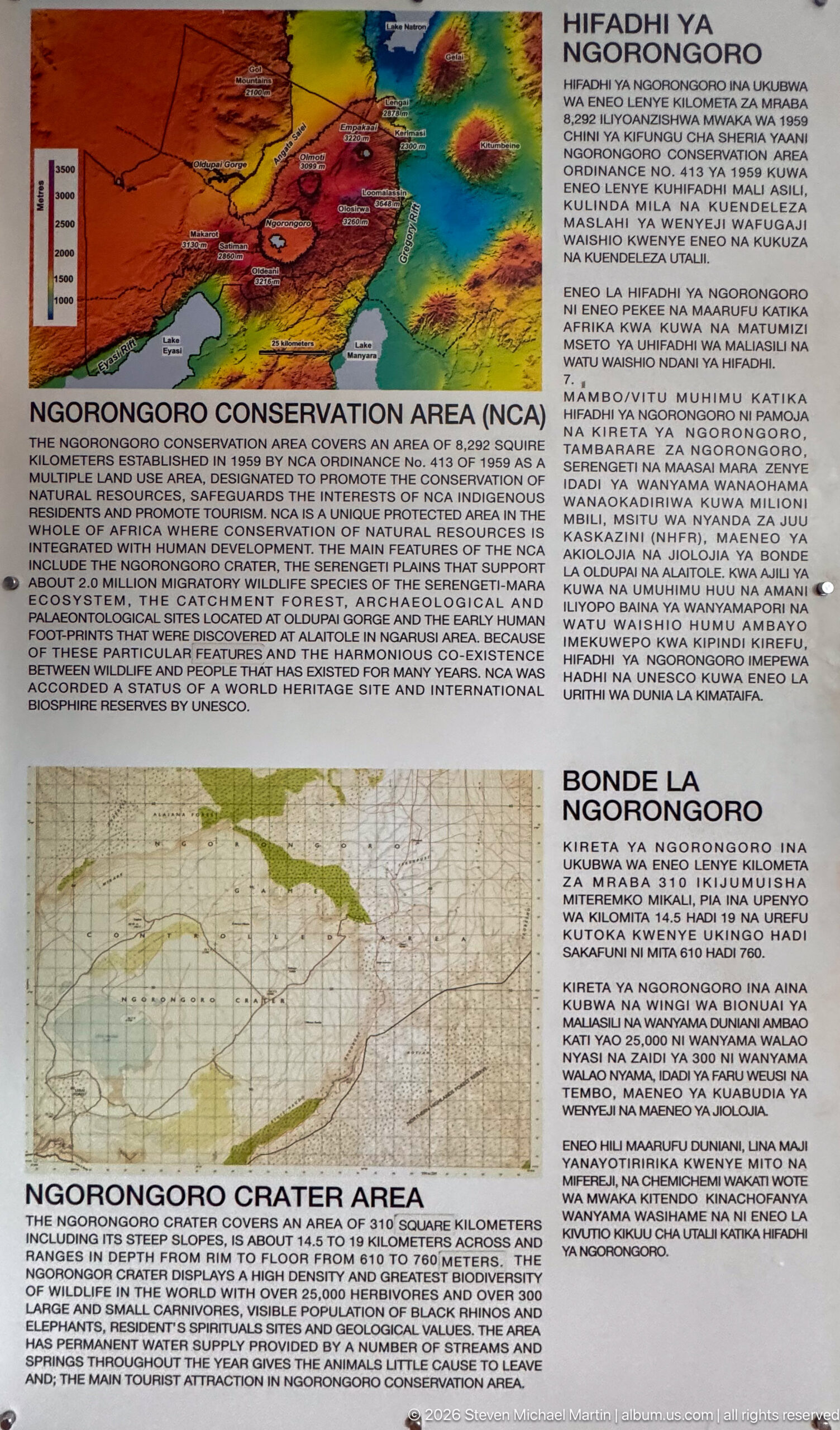
A bilingual interpretation panel summarizes the Ngorongoro Conservation Area and the crater region in English and Swahili. A shaded-relief map and a plan of the crater area accompany dense explanatory text, presenting the protected landscape through its geography, conservation significance, and major natural features.
Caption
A bilingual interpretation panel summarizes the Ngorongoro Conservation Area and the crater region in English and Swahili. A shaded-relief map and a plan of the crater area accompany dense explanatory text, presenting the protected landscape through its geography, conservation significance, and major natural features.
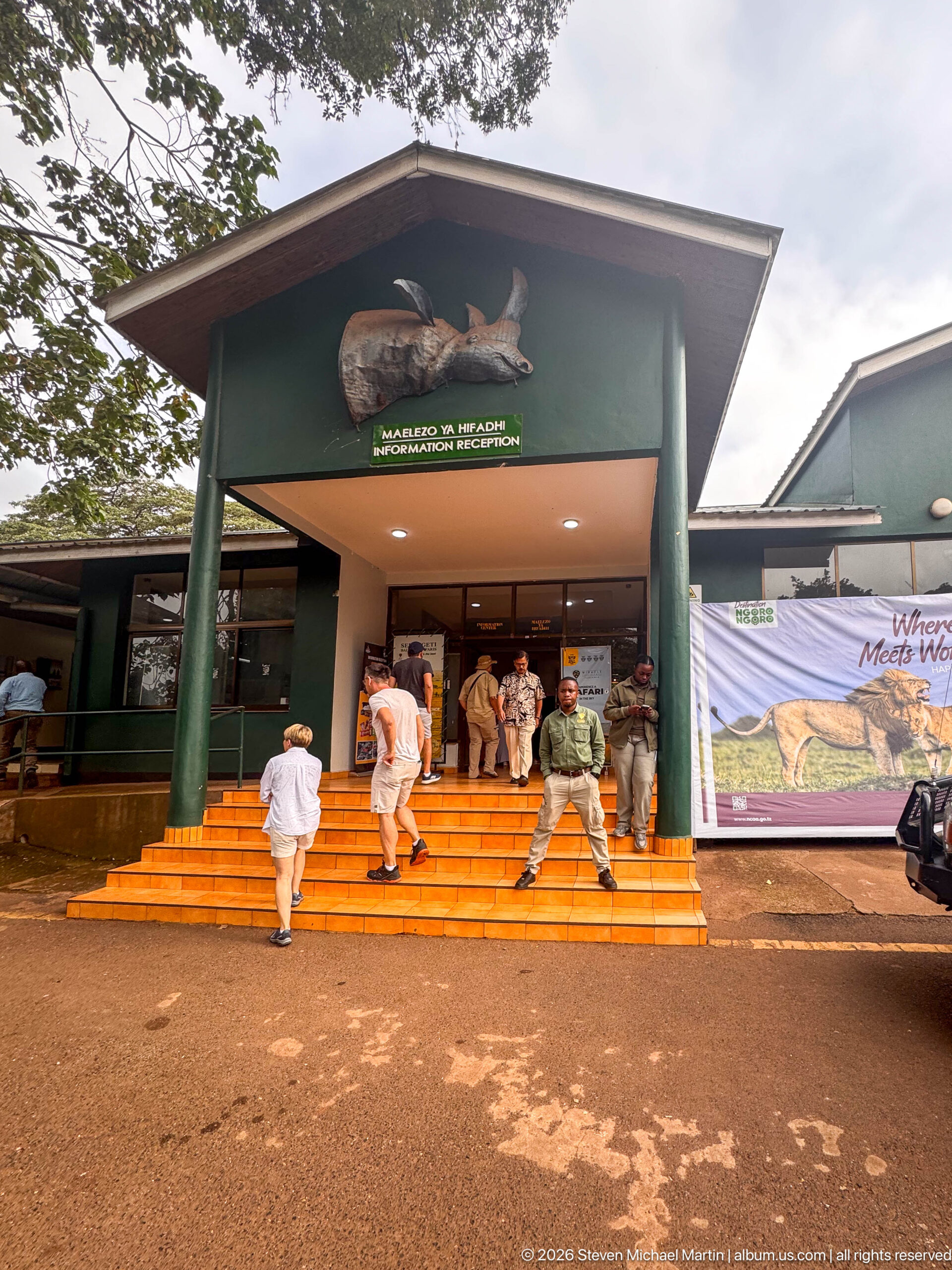
Visitors climb the orange steps of a green reception building at Lodoare Gate beneath a large wildlife emblem mounted on the façade. Open bays and adjacent information banners create the feel of an arrival and processing area, while the architecture matches the broader gate complex serving entry to the Ngorongoro Conservation Area.
Caption
Visitors climb the orange steps of a green reception building at Lodoare Gate beneath a large wildlife emblem mounted on the façade. Open bays and adjacent information banners create the feel of an arrival and processing area, while the architecture matches the broader gate complex serving entry to the Ngorongoro Conservation Area.
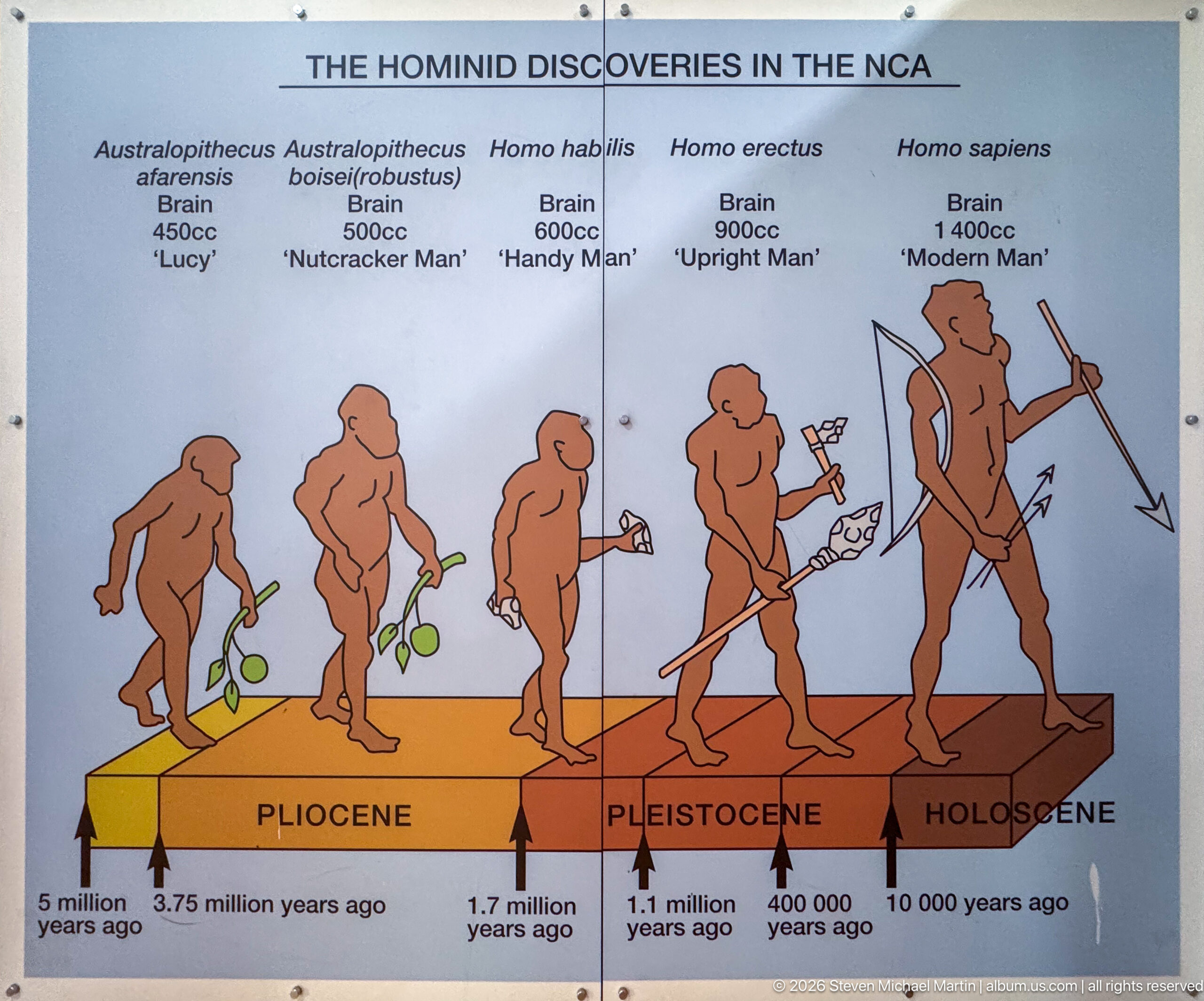
A diagram titled “The Hominid Discoveries in the NCA” arranges successive hominin forms along a timeline from the Pliocene through the Holocene. Stylized figures, brain-size labels, and named taxa create a simplified educational sequence intended to explain discoveries associated with the Ngorongoro Conservation Area and its wider paleoanthropological landscape.
Caption
A diagram titled “The Hominid Discoveries in the NCA” arranges successive hominin forms along a timeline from the Pliocene through the Holocene. Stylized figures, brain-size labels, and named taxa create a simplified educational sequence intended to explain discoveries associated with the Ngorongoro Conservation Area and its wider paleoanthropological landscape.
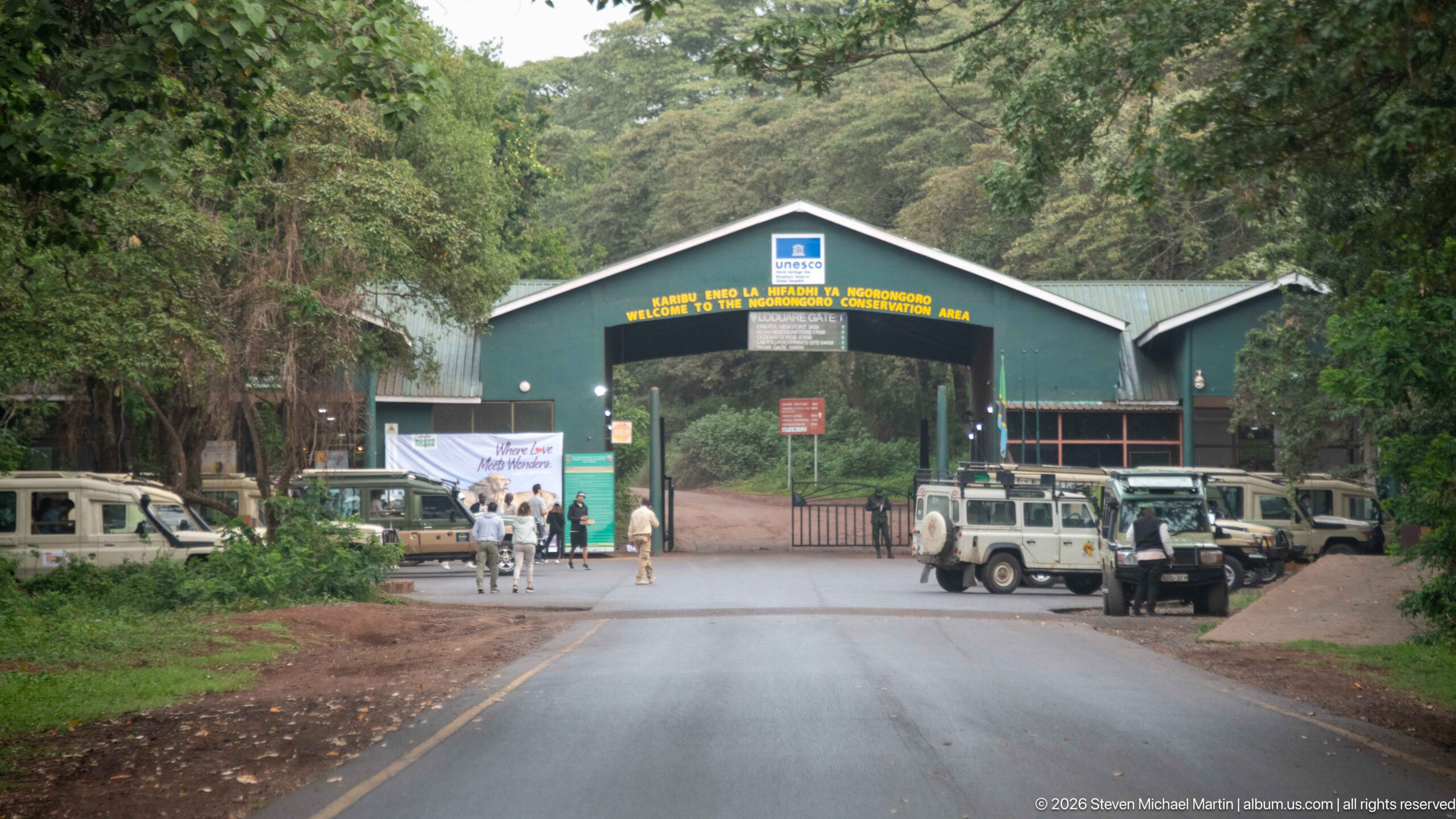
The paved approach road leads directly toward the green-roofed Lodoare Gate structure, where safari vehicles and visitors cluster around the entrance. Dense forest encloses the road on both sides, making the gate appear as a formal threshold between the surrounding highlands and the controlled interior of the Ngorongoro Conservation Area.
Caption
The paved approach road leads directly toward the green-roofed Lodoare Gate structure, where safari vehicles and visitors cluster around the entrance. Dense forest encloses the road on both sides, making the gate appear as a formal threshold between the surrounding highlands and the controlled interior of the Ngorongoro Conservation Area.
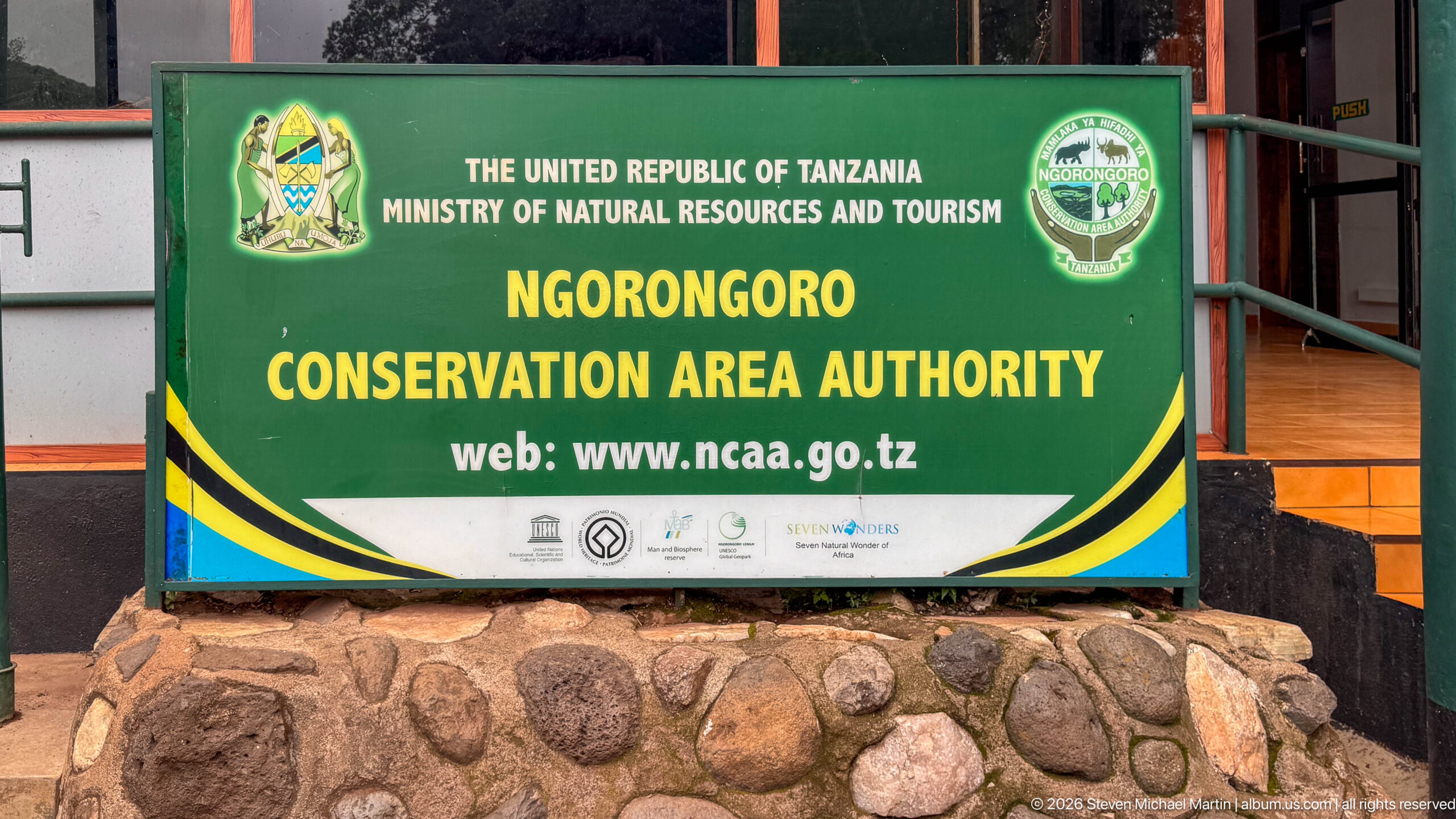
A green official sign identifies the Ngorongoro Conservation Area Authority under Tanzania’s Ministry of Natural Resources and Tourism. The national crest, NCAA emblem, web address, and agency name are arranged above a stone base, marking the administrative identity of the protected area at the Lodoare entrance complex.
Caption
A green official sign identifies the Ngorongoro Conservation Area Authority under Tanzania’s Ministry of Natural Resources and Tourism. The national crest, NCAA emblem, web address, and agency name are arranged above a stone base, marking the administrative identity of the protected area at the Lodoare entrance complex.
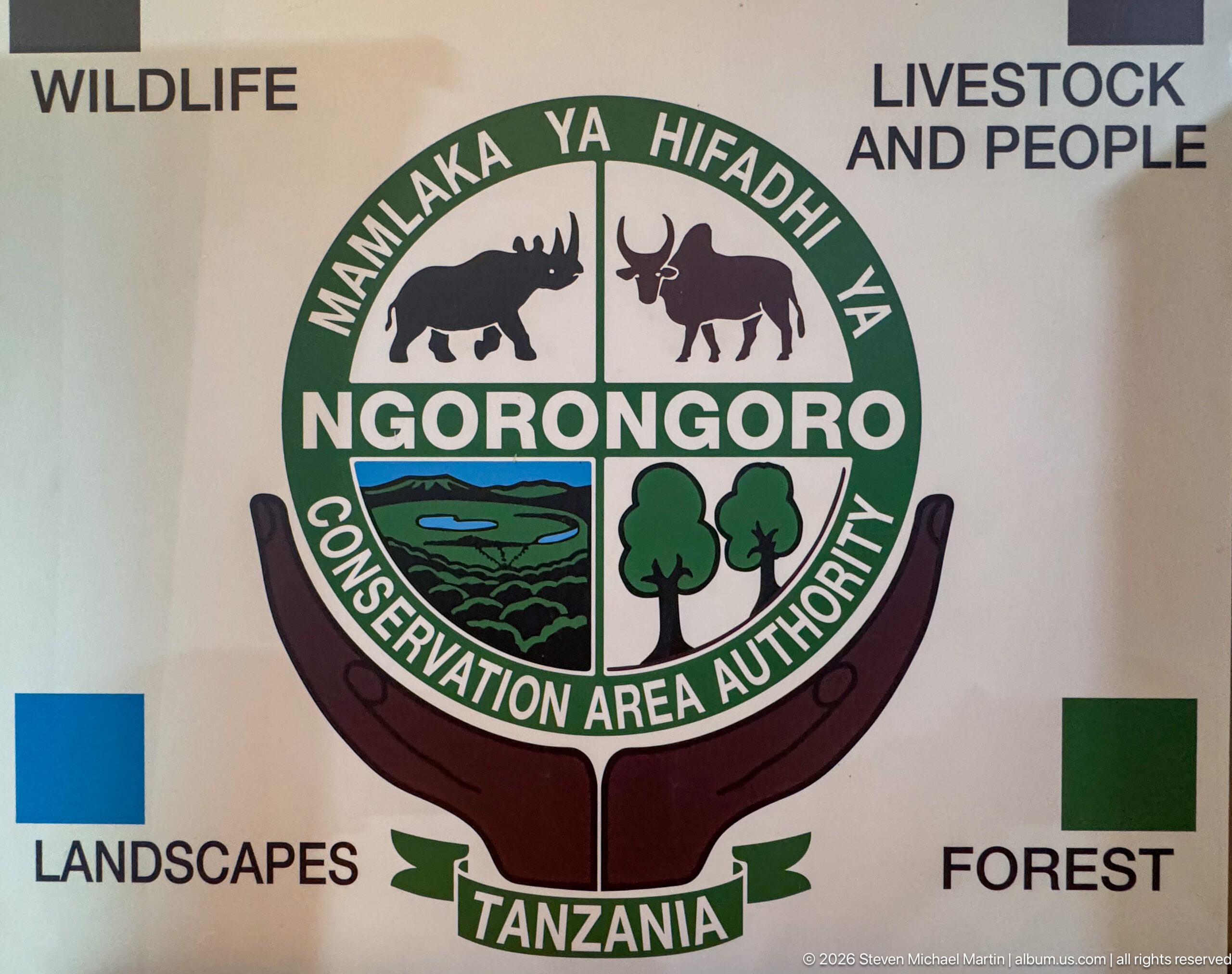
The Ngorongoro Conservation Area Authority emblem is presented as the center of a thematic display linking “Livestock and People,” “Landscapes,” and “Forest.” Animal silhouettes, a crater landscape, and trees are enclosed within the circular badge, visually summarizing the conservation area’s combined natural and pastoral character.
Caption
The Ngorongoro Conservation Area Authority emblem is presented as the center of a thematic display linking “Livestock and People,” “Landscapes,” and “Forest.” Animal silhouettes, a crater landscape, and trees are enclosed within the circular badge, visually summarizing the conservation area’s combined natural and pastoral character.
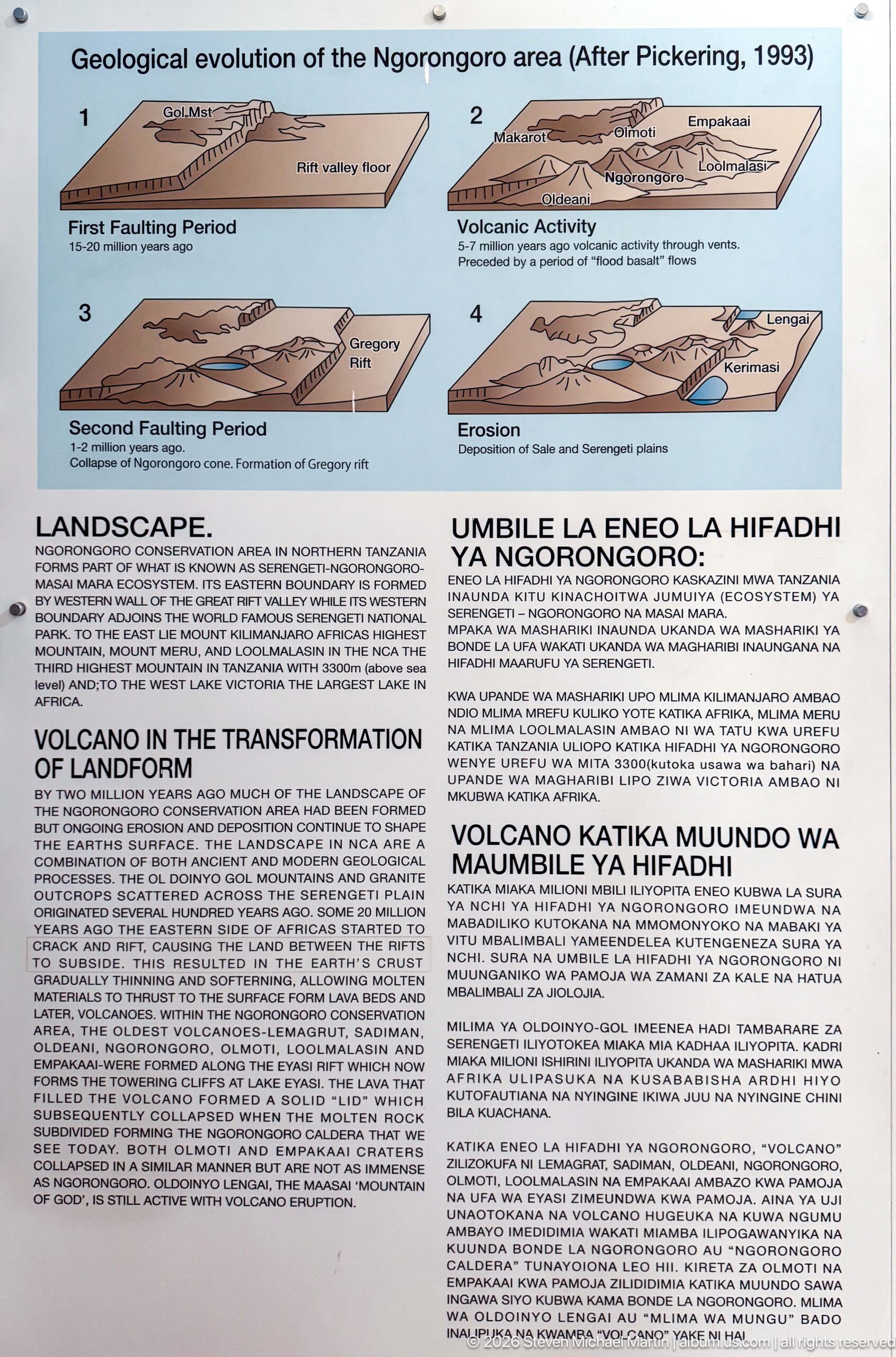
An interpretive panel diagrams the geological evolution of the Ngorongoro area in a sequence of four schematic stages, showing volcanic construction, collapse, and later landscape development. English and Swahili text below explains how volcanism transformed the region’s landforms, giving visitors a simplified visual account of the processes that produced the present highland and crater landscape.
Caption
An interpretive panel diagrams the geological evolution of the Ngorongoro area in a sequence of four schematic stages, showing volcanic construction, collapse, and later landscape development. English and Swahili text below explains how volcanism transformed the region’s landforms, giving visitors a simplified visual account of the processes that produced the present highland and crater landscape.
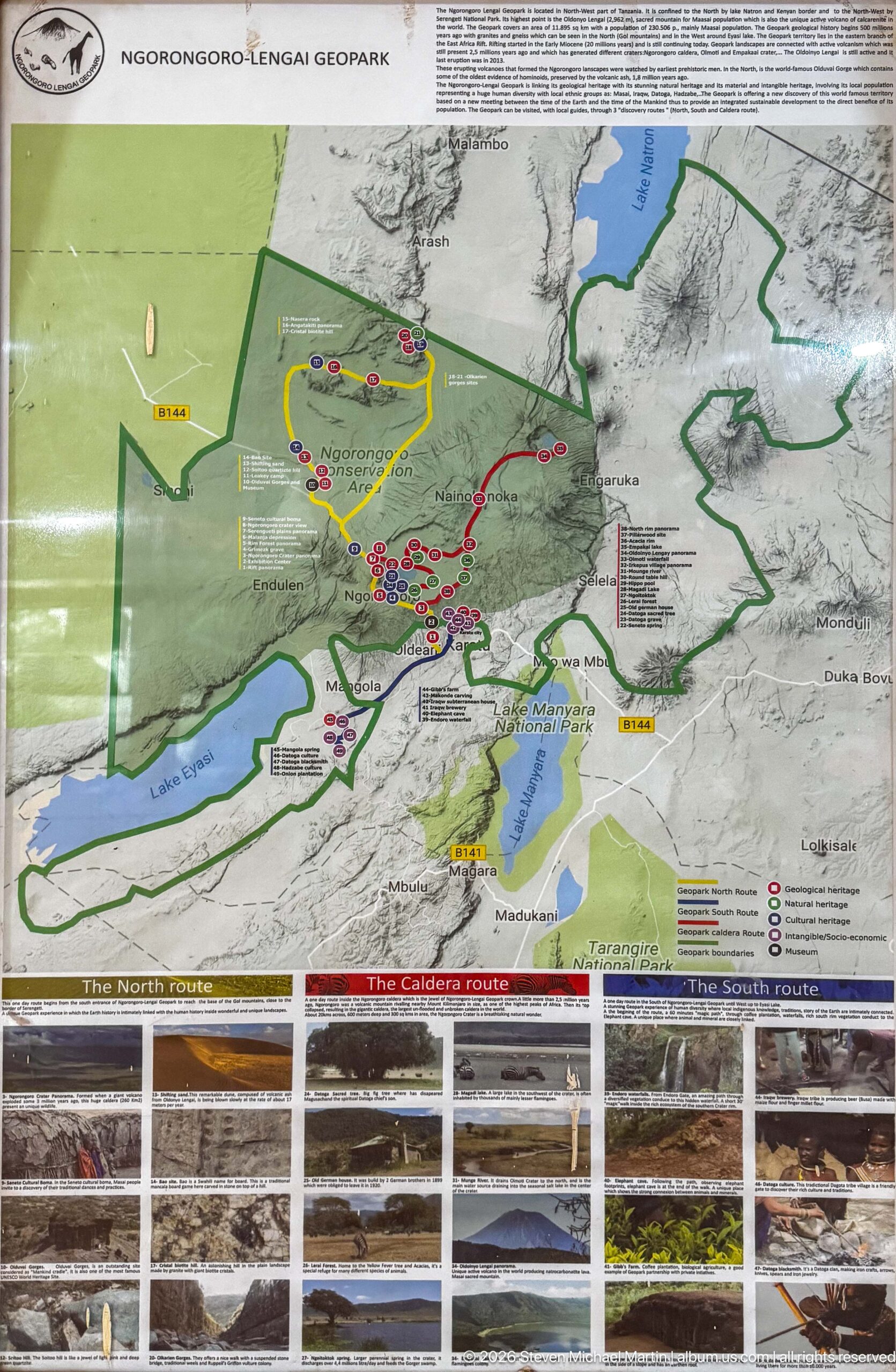
A large interpretive map places Ngorongoro within its wider regional geography, using colored route lines, protected-area boundaries, lakes, crater features, and relief shading to organize the landscape. Rows of small captioned photographs along the bottom connect mapped locations with representative scenery, turning the display into both a navigation aid and a visual introduction to the conservation area.
Caption
A large interpretive map places Ngorongoro within its wider regional geography, using colored route lines, protected-area boundaries, lakes, crater features, and relief shading to organize the landscape. Rows of small captioned photographs along the bottom connect mapped locations with representative scenery, turning the display into both a navigation aid and a visual introduction to the conservation area.