Bishkek State History Museum
The Bishkek State History Museum presents historical material illustrating the cultural development of Kyrgyzstan and the broader Central Asian region. Exhibits reflect the traditions of nomadic societies whose mobility contributed to exchange along Silk Road routes. Artifacts provide insight into the social and economic structures that shaped life across the Eurasian steppe.
Collections include archaeological objects, textiles, and historical materials documenting interactions between nomadic cultures and settled urban centers. These exchanges facilitated the movement of goods, technologies, and religious ideas across Central Asia. The museum highlights the region’s role as a crossroads linking eastern and western civilizations.
The Bishkek State History Museum illustrates the historical continuity of cultural interaction across Central Asia. Its collections provide context for understanding the influence of Silk Road exchange on regional identity.
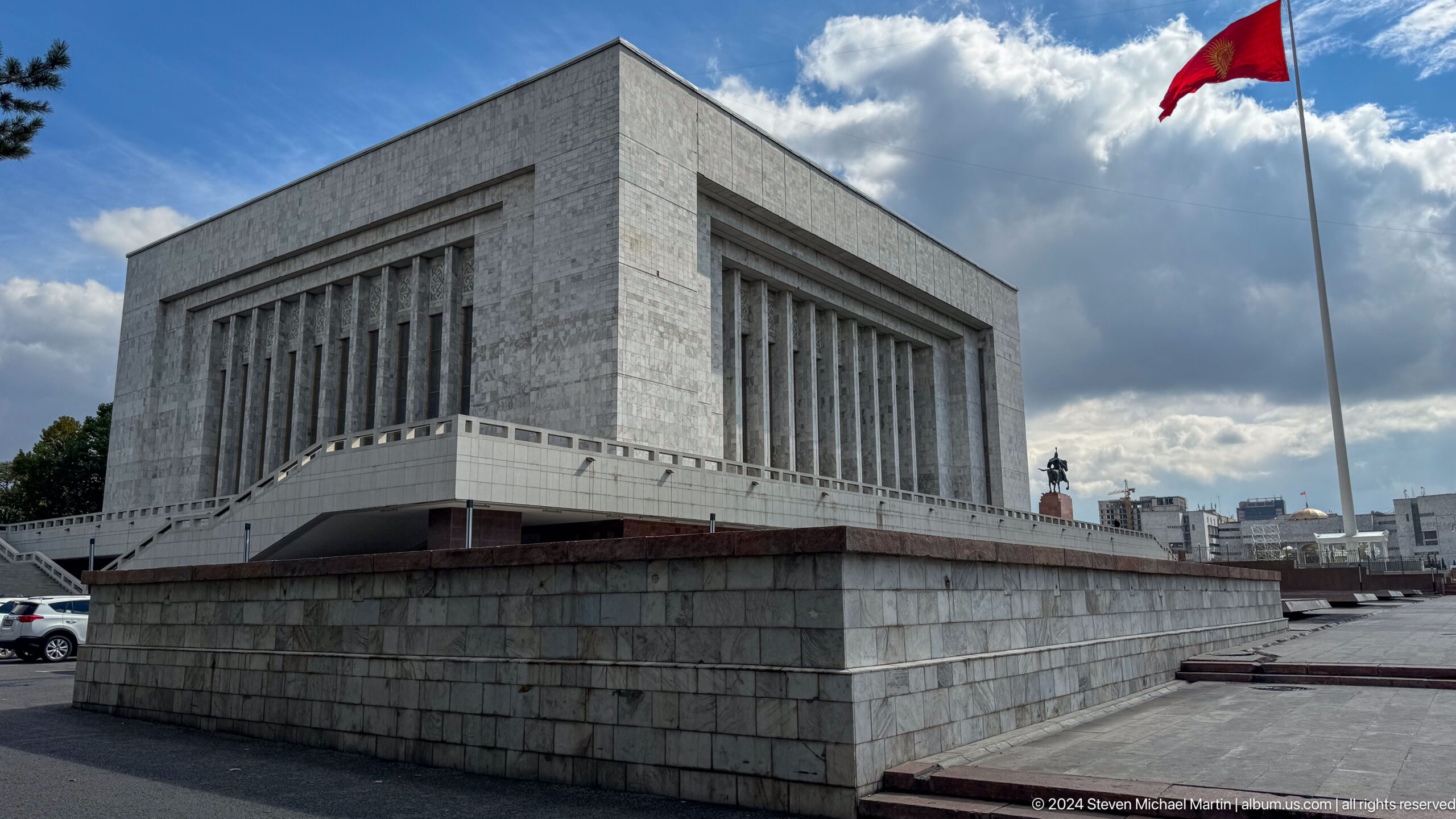
Bishkek State History Museum viewed from Ala-Too Square, displayed in the Bishkek State History Museum. The final exterior view situates the museum as a monumental civic landmark on Ala-Too Square. Its severe rectangular mass and repetitive bays reflect late-Soviet public architecture.
Caption
Bishkek State History Museum viewed from Ala-Too Square, displayed in the Bishkek State History Museum. The final exterior view situates the museum as a monumental civic landmark on Ala-Too Square. Its severe rectangular mass and repetitive bays reflect late-Soviet public architecture.
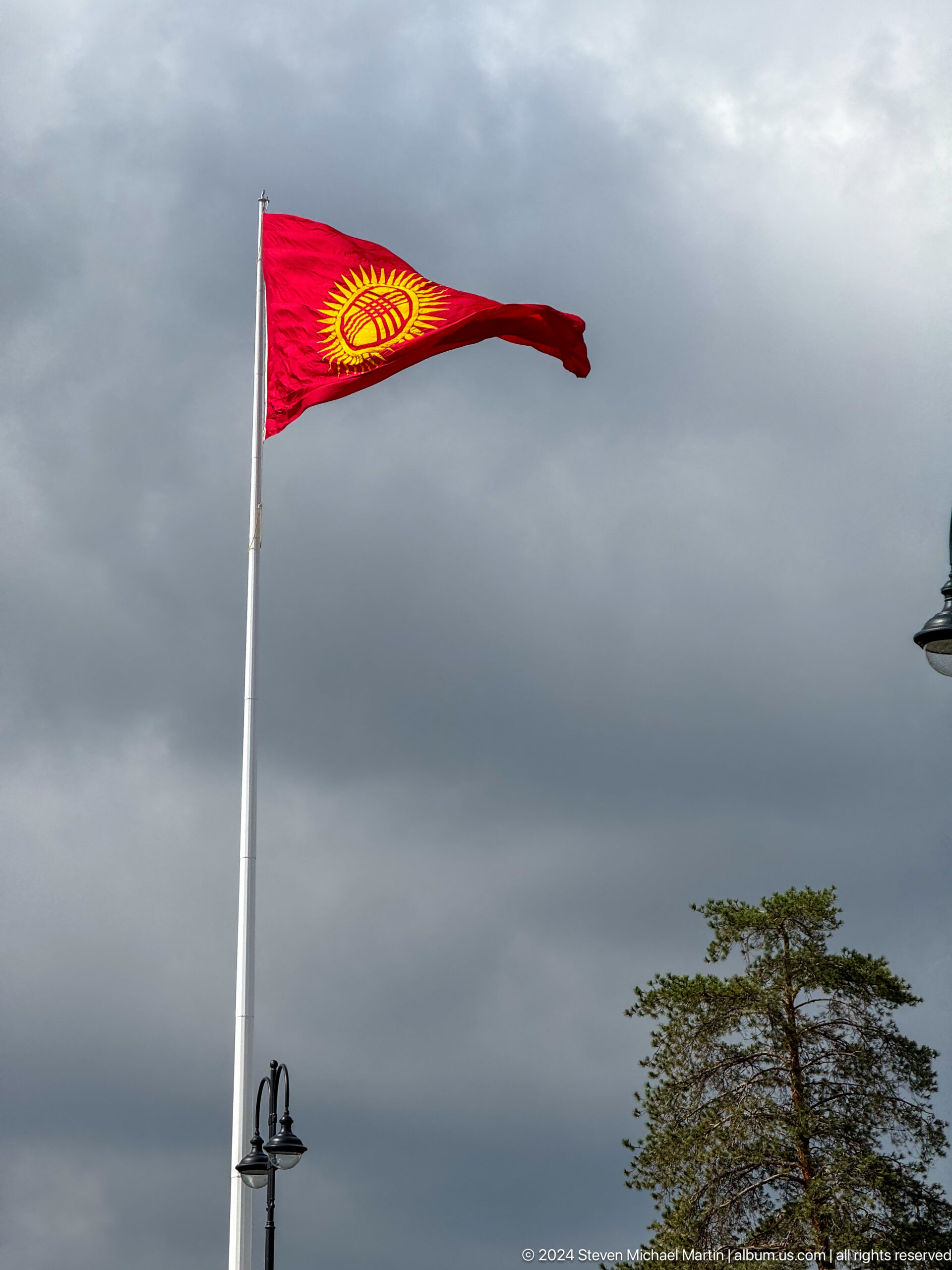
Kyrgyzstan national flag outside the Bishkek State History Museum, displayed in the Bishkek State History Museum. The flag is the national flag of Kyrgyzstan. The photograph establishes the museum’s civic setting in central Bishkek.
Caption
Kyrgyzstan national flag outside the Bishkek State History Museum, displayed in the Bishkek State History Museum. The flag is the national flag of Kyrgyzstan. The photograph establishes the museum’s civic setting in central Bishkek.

Ala-Too Square viewed from the museum, displayed in the Bishkek State History Museum. The museum overlooks Ala-Too Square, Bishkek’s principal civic space. The view connects the national history collection with the city’s ceremonial center.
Caption
Ala-Too Square viewed from the museum, displayed in the Bishkek State History Museum. The museum overlooks Ala-Too Square, Bishkek’s principal civic space. The view connects the national history collection with the city’s ceremonial center.
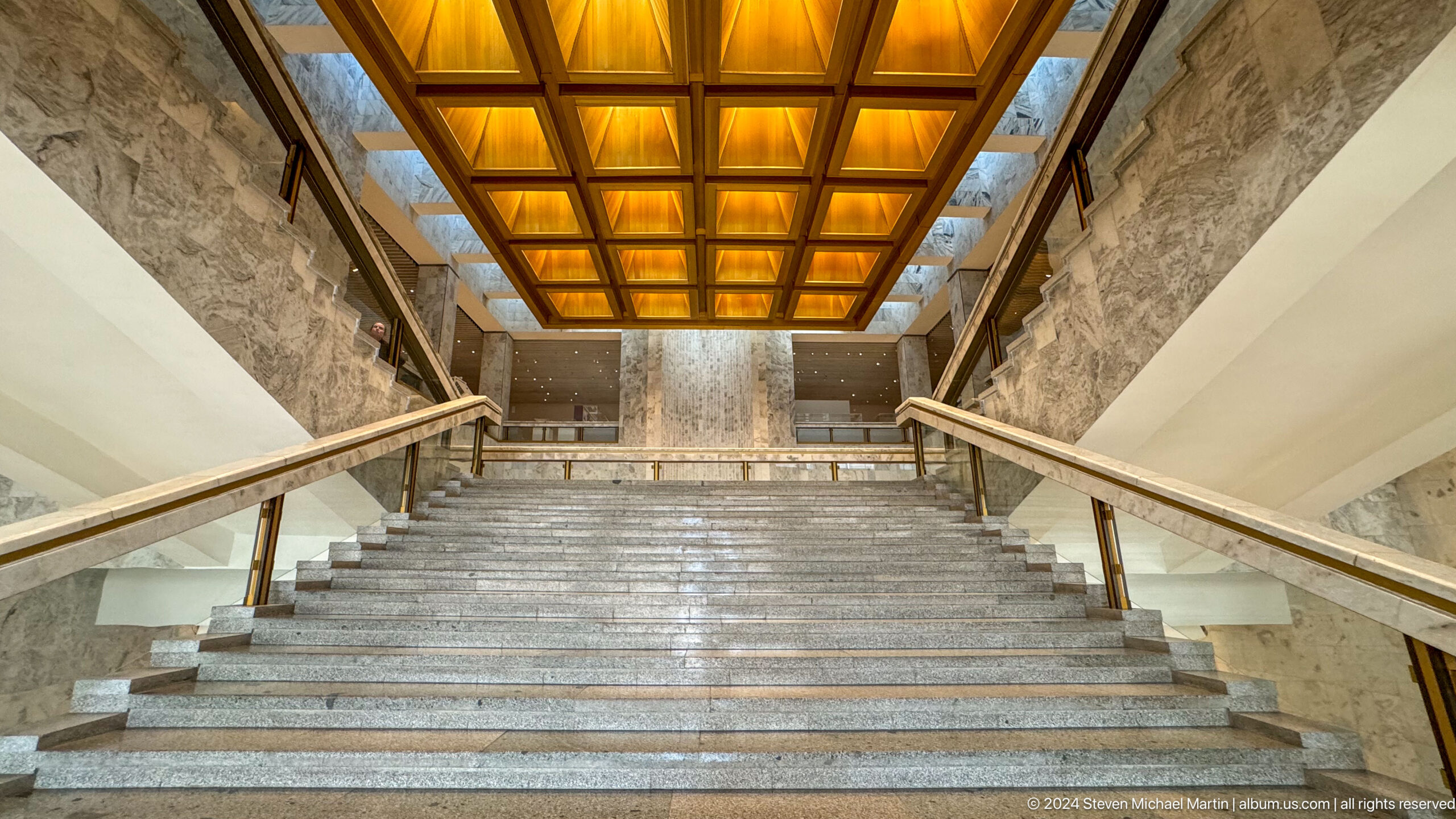
Monumental staircase hall of the Bishkek State History Museum, displayed in the Bishkek State History Museum. The staircase preserves the monumental ceremonial character of the museum’s late-Soviet architecture. Lighted coffers and pale stone surfaces create a formal civic interior.
Caption
Monumental staircase hall of the Bishkek State History Museum, displayed in the Bishkek State History Museum. The staircase preserves the monumental ceremonial character of the museum’s late-Soviet architecture. Lighted coffers and pale stone surfaces create a formal civic interior.
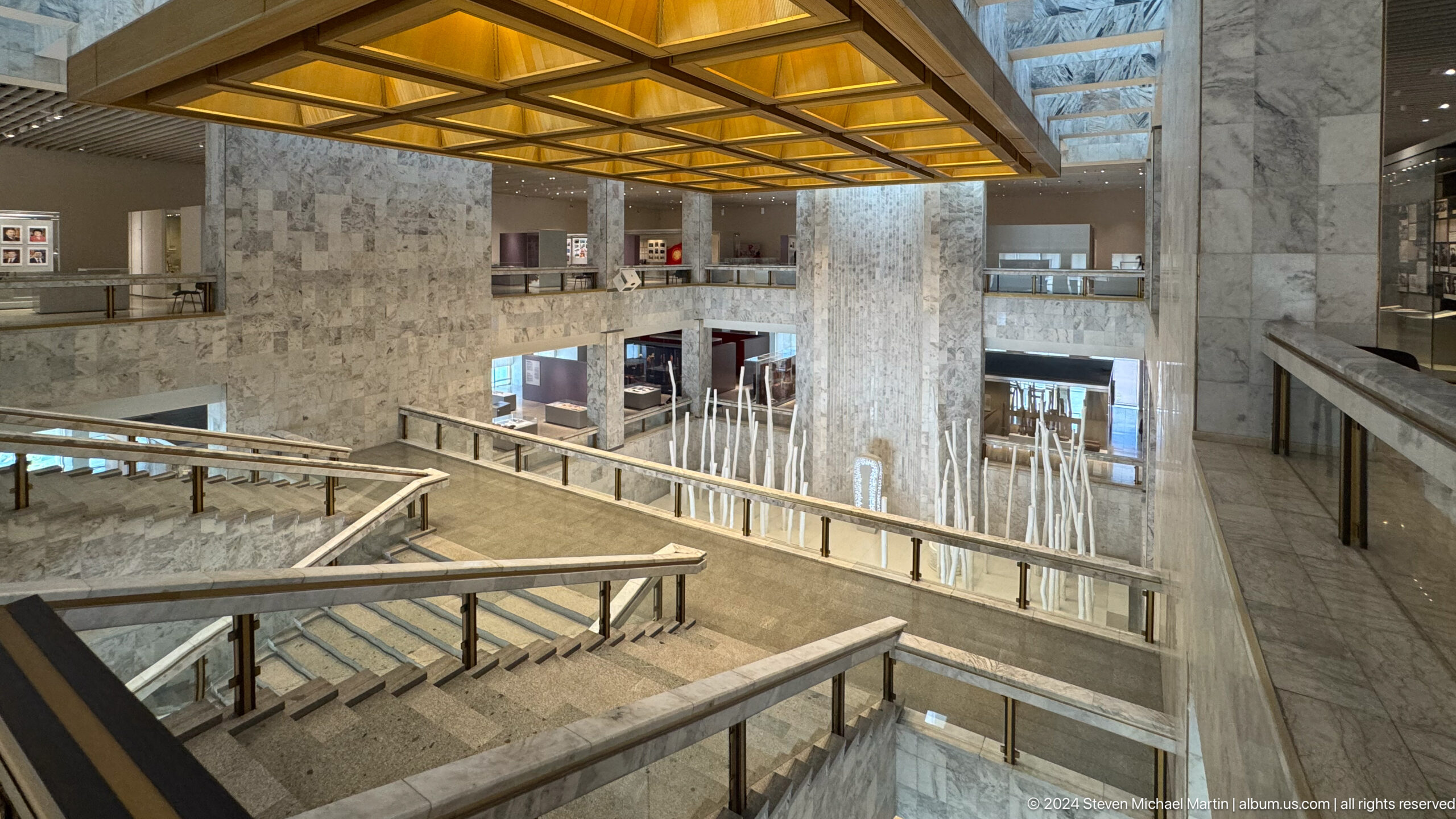
Upper-level view of the museum’s central hall, displayed in the Bishkek State History Museum. The elevated viewpoint reveals the layered circulation of the museum interior. Monumental scale is balanced by contemporary exhibition elements.
Caption
Upper-level view of the museum’s central hall, displayed in the Bishkek State History Museum. The elevated viewpoint reveals the layered circulation of the museum interior. Monumental scale is balanced by contemporary exhibition elements.

Entrance lobby and reception area of the Bishkek State History Museum, displayed in the Bishkek State History Museum. The photograph documents the museum’s renovated visitor reception area. A regular ceiling grid and pale stone surfaces create a modern institutional interior.
Caption
Entrance lobby and reception area of the Bishkek State History Museum, displayed in the Bishkek State History Museum. The photograph documents the museum’s renovated visitor reception area. A regular ceiling grid and pale stone surfaces create a modern institutional interior.
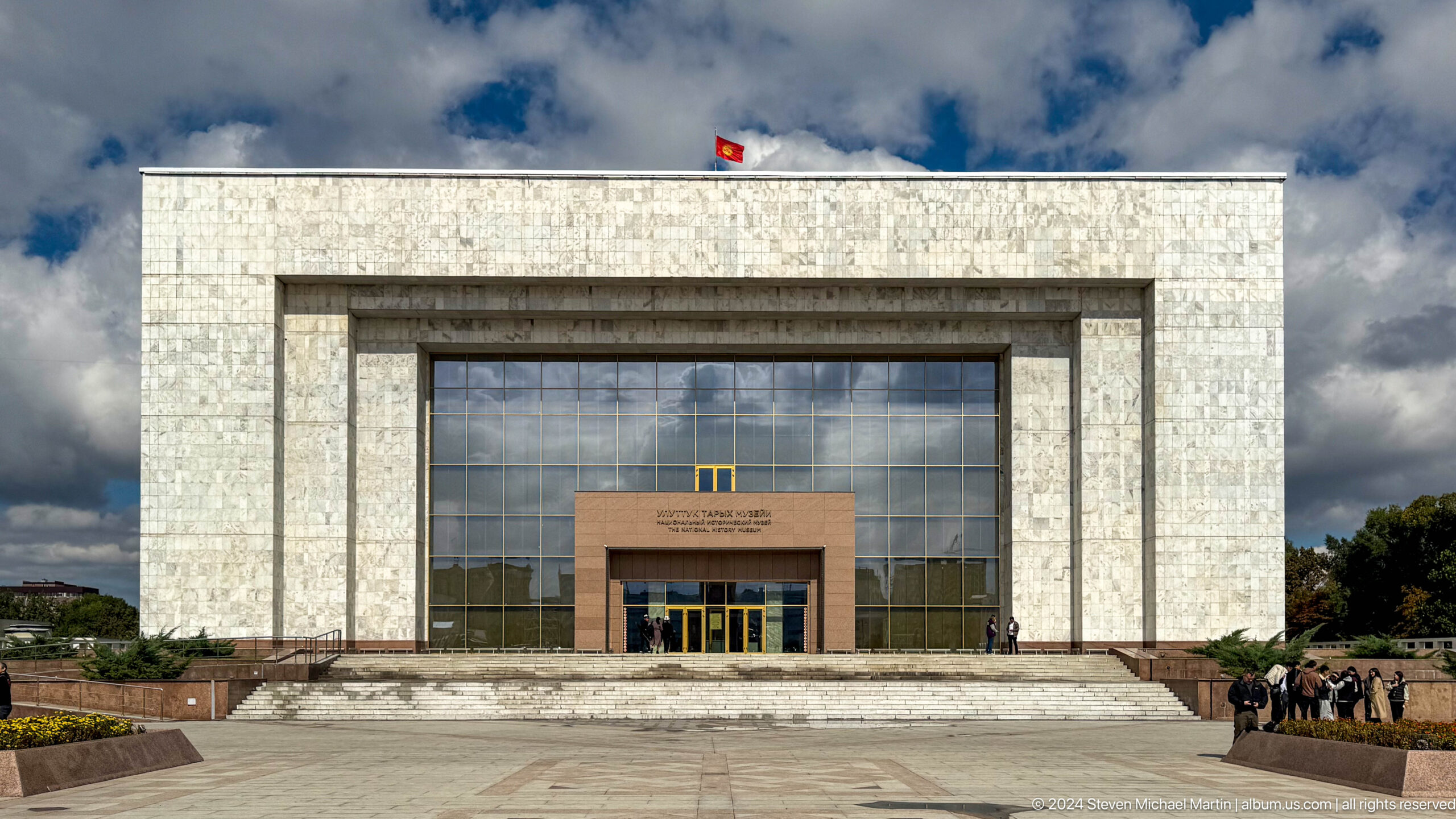
Main entrance of the Bishkek State History Museum, displayed in the Bishkek State History Museum. The frontal view emphasizes the building’s axial entrance. The museum name is mounted above the glass doors.
Caption
Main entrance of the Bishkek State History Museum, displayed in the Bishkek State History Museum. The frontal view emphasizes the building’s axial entrance. The museum name is mounted above the glass doors.
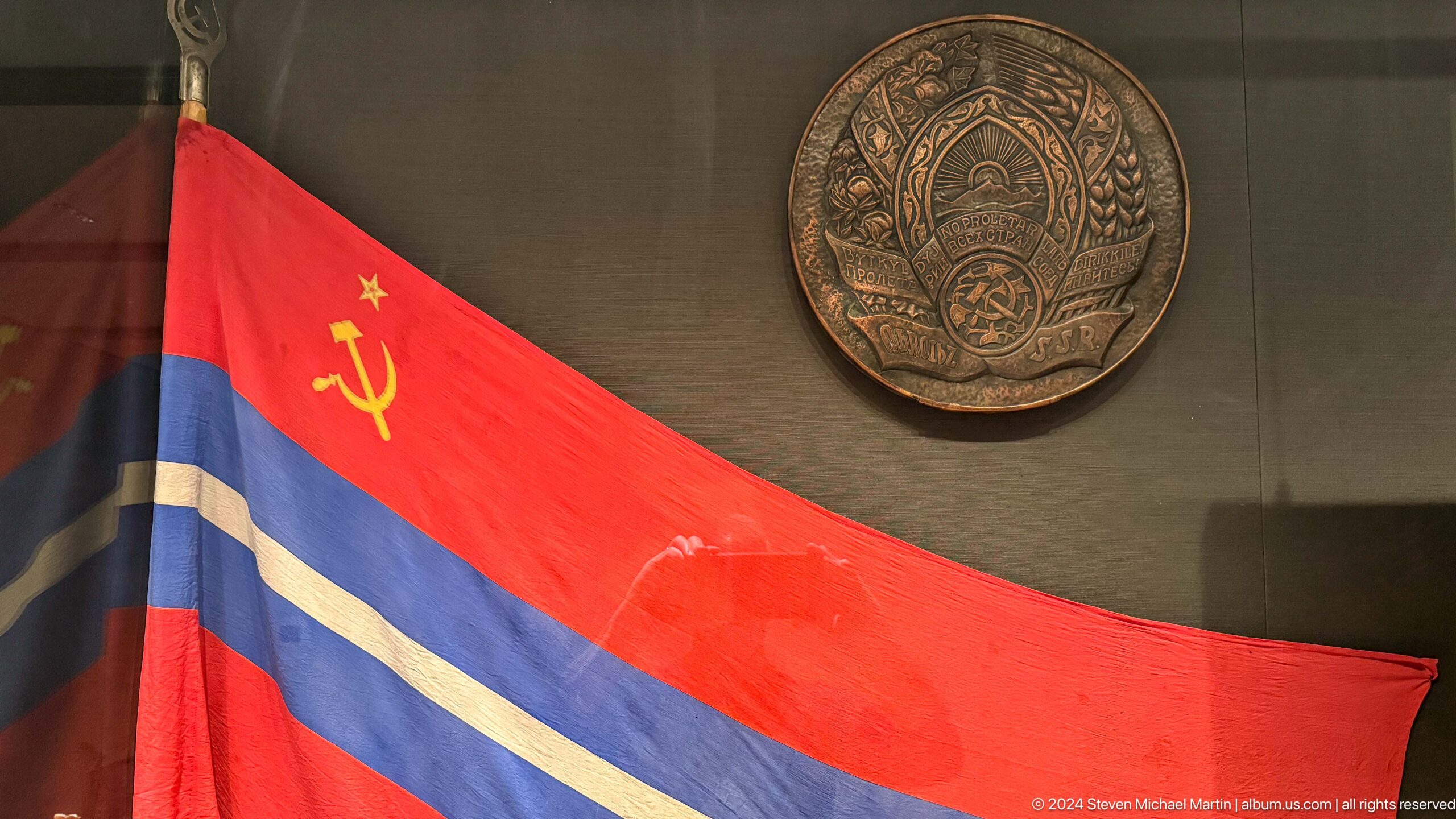
Flag of the Kyrgyz Soviet Socialist Republic with state emblem, displayed in the Bishkek State History Museum. The flag represents the Kyrgyz Soviet Socialist Republic within the USSR. The surrounding display introduces Soviet state symbolism and political history.
Caption
Flag of the Kyrgyz Soviet Socialist Republic with state emblem, displayed in the Bishkek State History Museum. The flag represents the Kyrgyz Soviet Socialist Republic within the USSR. The surrounding display introduces Soviet state symbolism and political history.
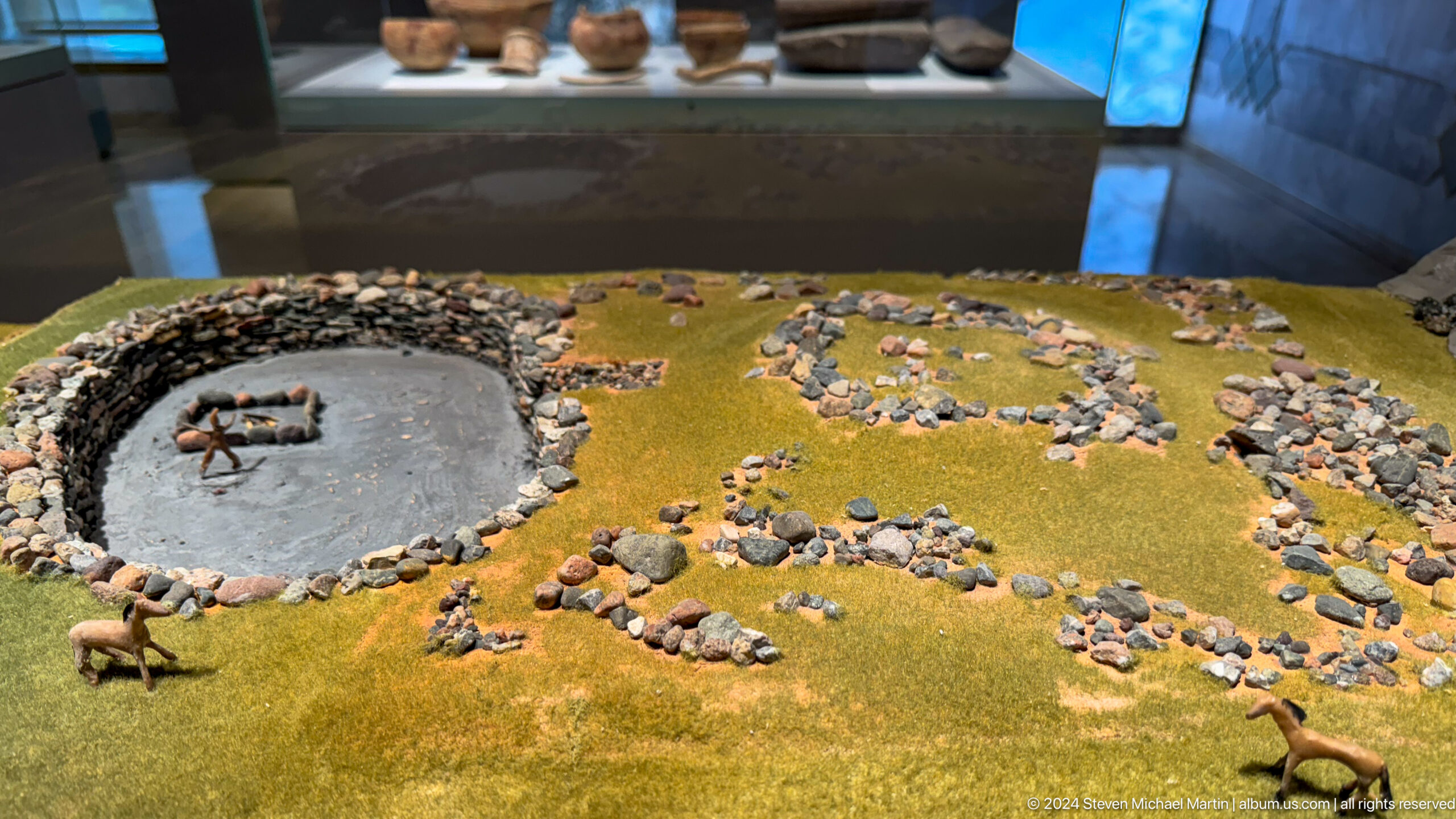
Museum model of an archaeological settlement, displayed in the Bishkek State History Museum. The model reconstructs the spatial organization of an archaeological site. It helps visitors understand settlement layout beyond individual artifacts.
Caption
Museum model of an archaeological settlement, displayed in the Bishkek State History Museum. The model reconstructs the spatial organization of an archaeological site. It helps visitors understand settlement layout beyond individual artifacts.
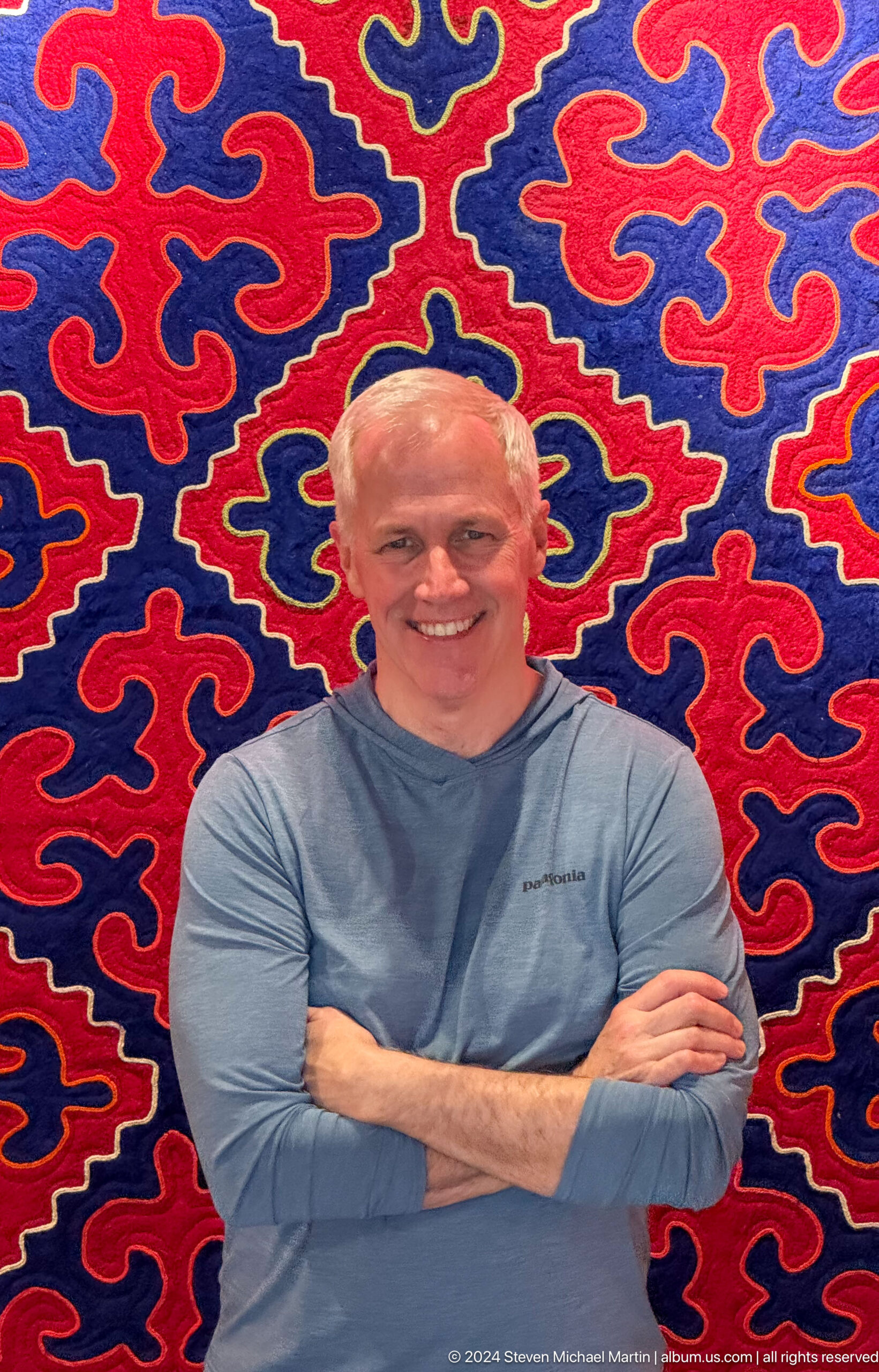
Randy with a Kyrgyz shyrdak, displayed in the Bishkek State History Museum. The portrait uses the large felt carpet as a cultural backdrop. The visitor provides scale for the textile’s monumental pattern.
Caption
Randy with a Kyrgyz shyrdak, displayed in the Bishkek State History Museum. The portrait uses the large felt carpet as a cultural backdrop. The visitor provides scale for the textile’s monumental pattern.
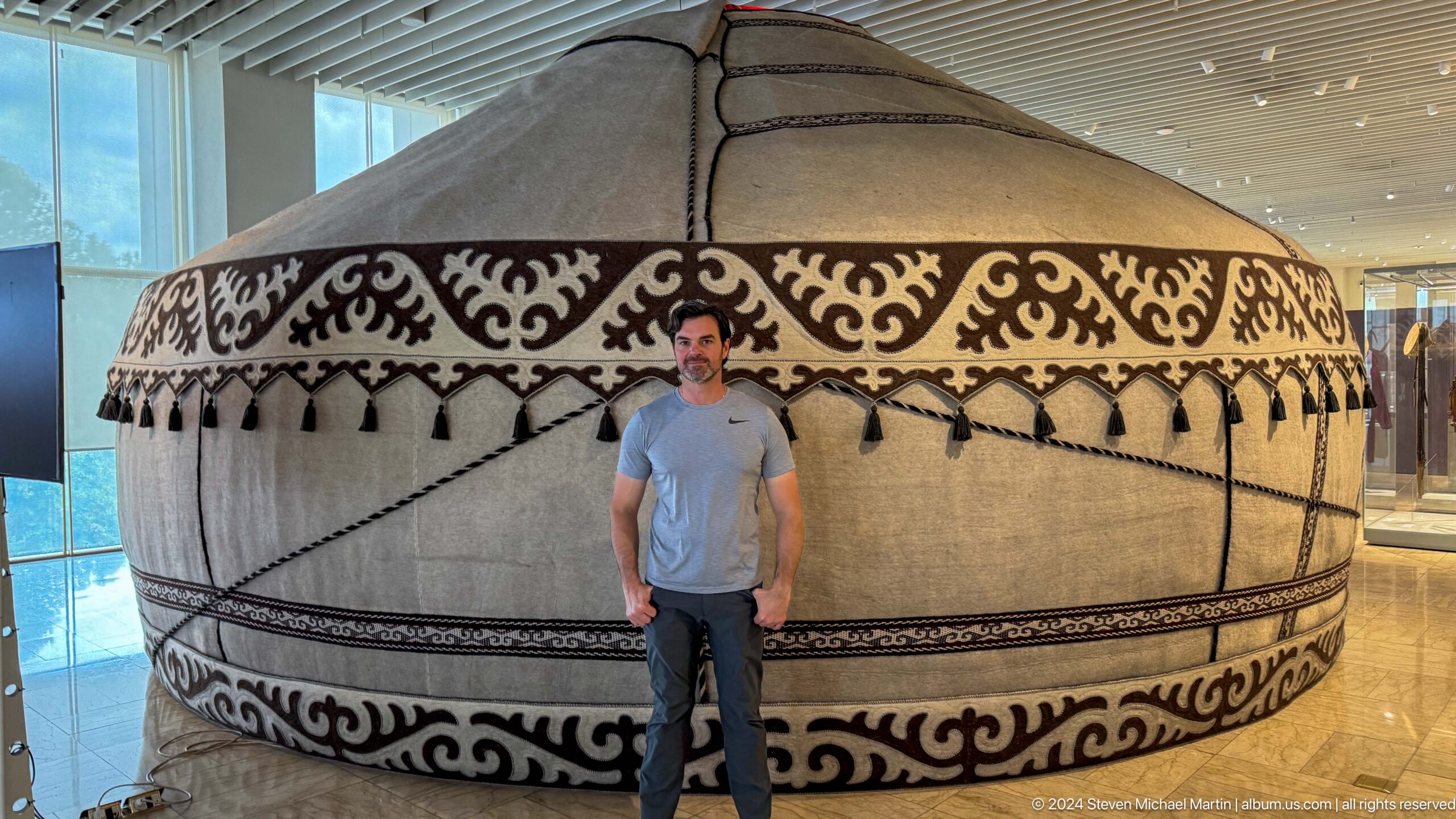
Steve with reconstructed Kyrgyz yurt, displayed in the Bishkek State History Museum. The reconstructed yurt demonstrates portable architecture adapted to nomadic life. The visitor provides scale for the dwelling’s broad circular enclosure.
Caption
Steve with reconstructed Kyrgyz yurt, displayed in the Bishkek State History Museum. The reconstructed yurt demonstrates portable architecture adapted to nomadic life. The visitor provides scale for the dwelling’s broad circular enclosure.

Bishkek State History Museum exterior, displayed in the Bishkek State History Museum. The museum is housed in a monumental late-Soviet civic building. White stone cladding and deeply recessed vertical bays define the exterior.
Caption
Bishkek State History Museum exterior, displayed in the Bishkek State History Museum. The museum is housed in a monumental late-Soviet civic building. White stone cladding and deeply recessed vertical bays define the exterior.
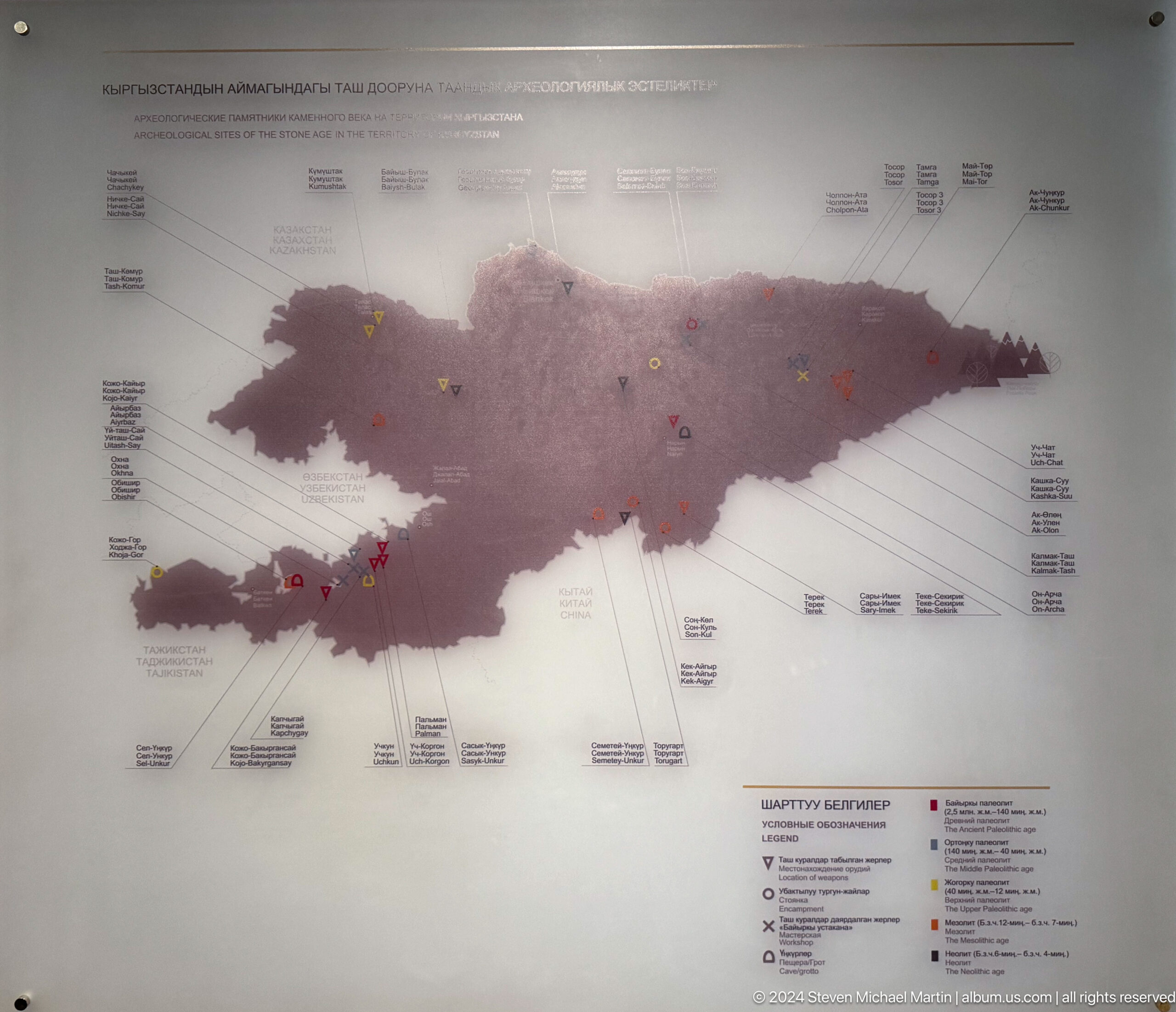
Introductory map of Kyrgyzstan, displayed in the Bishkek State History Museum. The wall map introduces Kyrgyzstan’s geography and administrative divisions. It serves as orientation for the historical galleries.
Caption
Introductory map of Kyrgyzstan, displayed in the Bishkek State History Museum. The wall map introduces Kyrgyzstan’s geography and administrative divisions. It serves as orientation for the historical galleries.
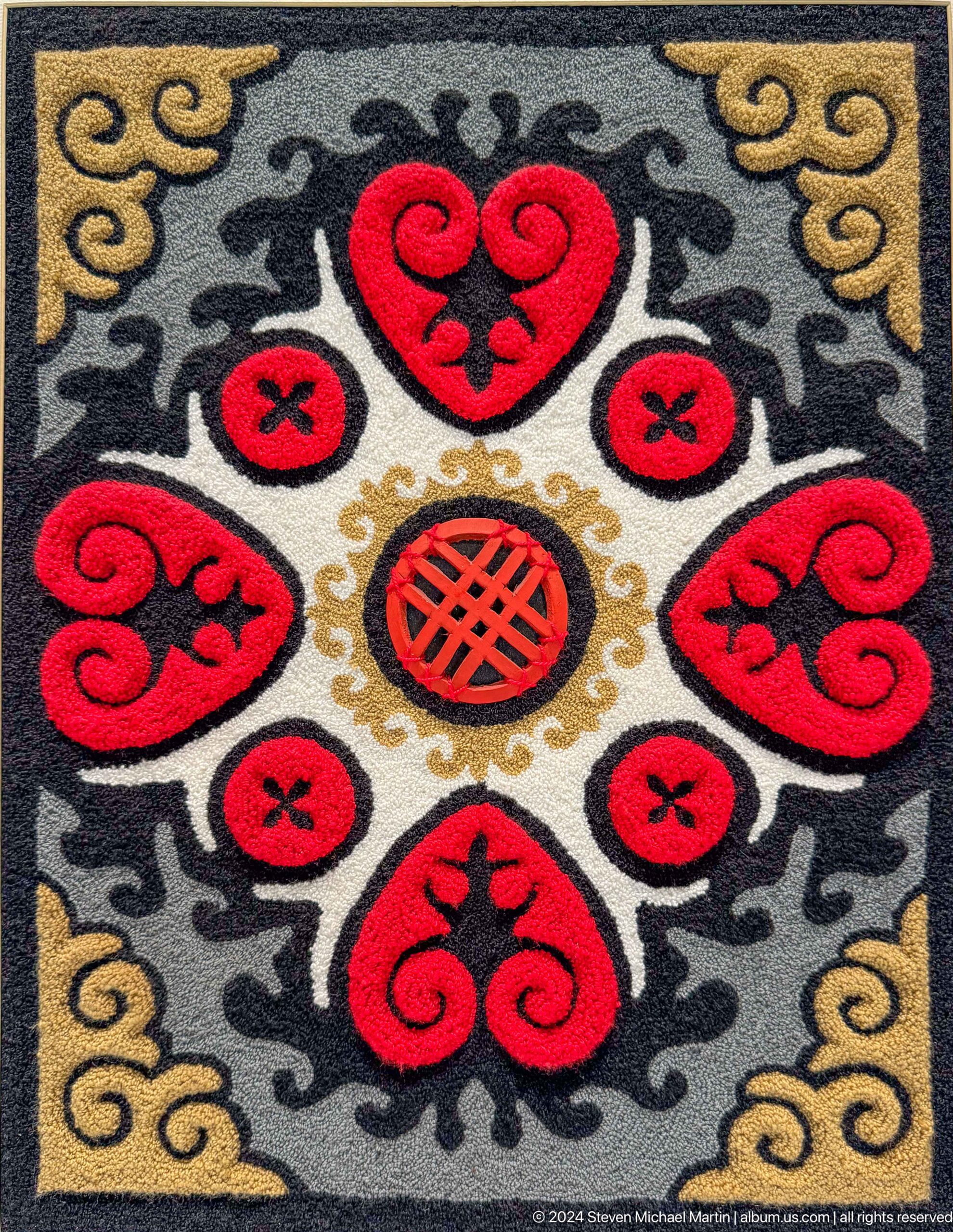
Kyrgyz felt appliqué ornament, displayed in the Bishkek State History Museum. The design uses the high-contrast curvilinear vocabulary associated with Kyrgyz felt appliqué. Repeated ram-horn-like motifs organize the pattern.
Caption
Kyrgyz felt appliqué ornament, displayed in the Bishkek State History Museum. The design uses the high-contrast curvilinear vocabulary associated with Kyrgyz felt appliqué. Repeated ram-horn-like motifs organize the pattern.
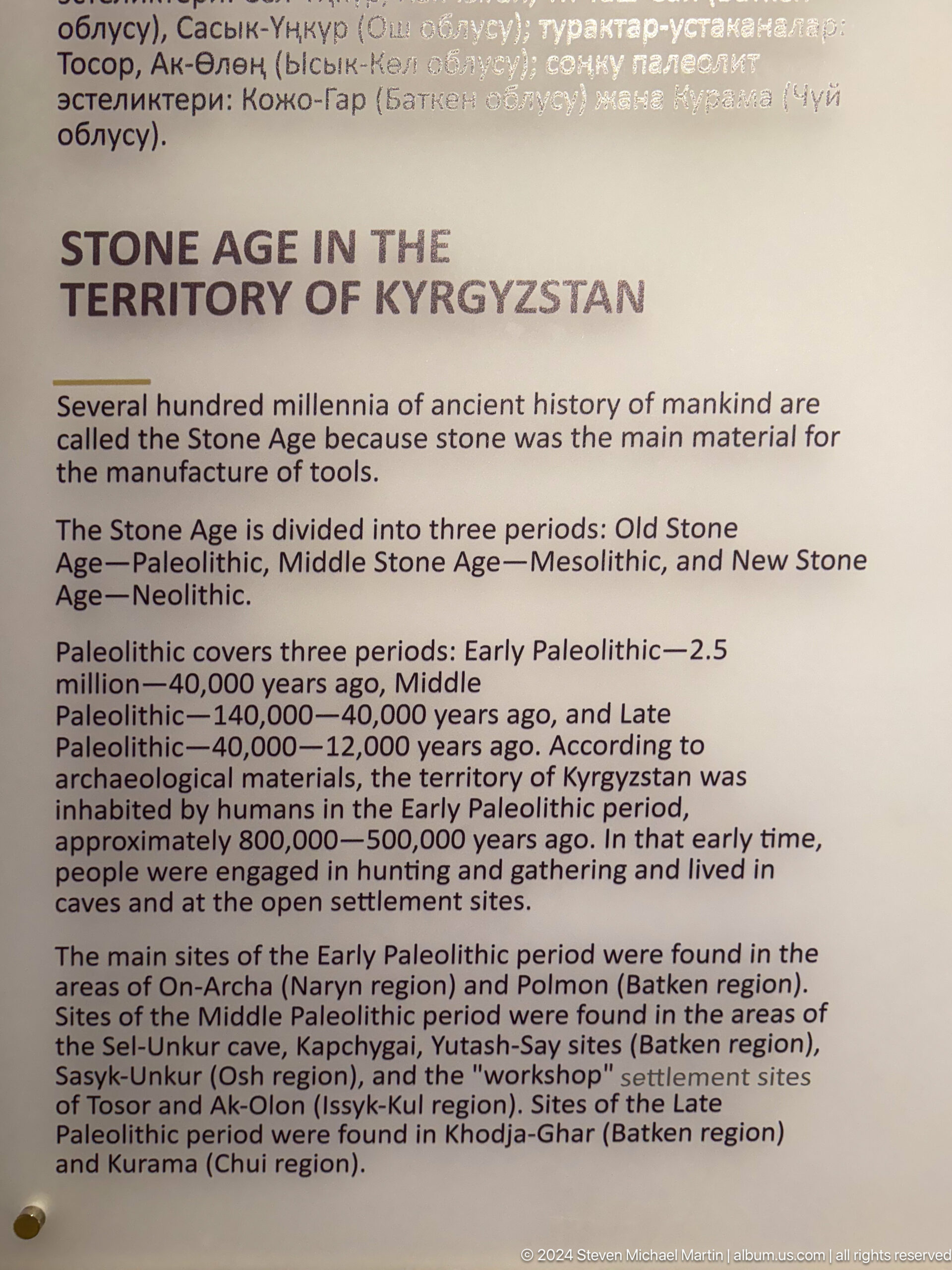
Stone Age introductory panel, displayed in the Bishkek State History Museum. The panel outlines Paleolithic, Mesolithic, and Neolithic phases represented in Kyrgyzstan. It frames the archaeological objects in the following display.
Caption
Stone Age introductory panel, displayed in the Bishkek State History Museum. The panel outlines Paleolithic, Mesolithic, and Neolithic phases represented in Kyrgyzstan. It frames the archaeological objects in the following display.
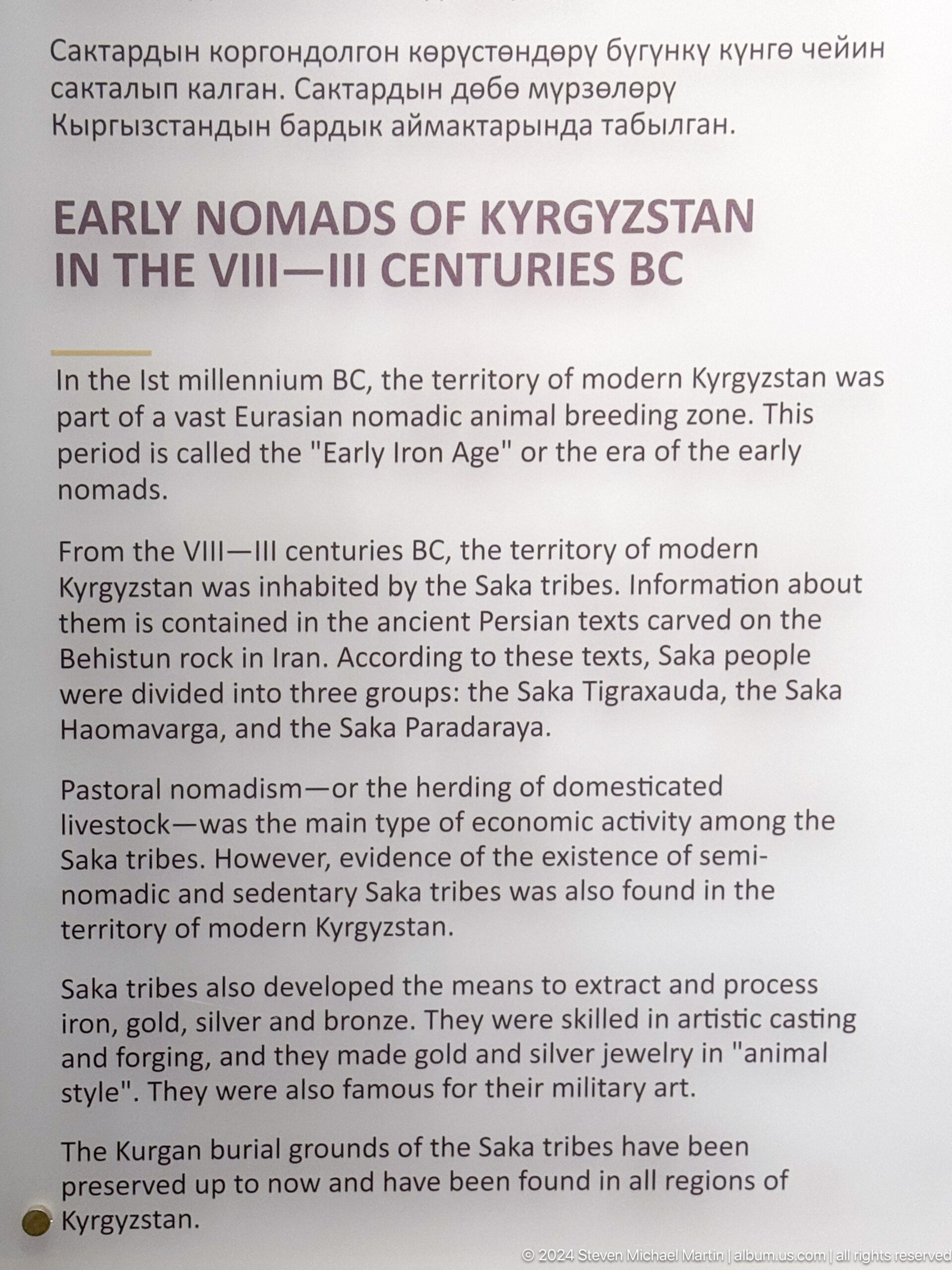
Iron Age and early nomadic history panel, displayed in the Bishkek State History Museum. The panel introduces the Iron Age cultures and nomadic societies of the region. It situates Kyrgyzstan within wider steppe networks.
Caption
Iron Age and early nomadic history panel, displayed in the Bishkek State History Museum. The panel introduces the Iron Age cultures and nomadic societies of the region. It situates Kyrgyzstan within wider steppe networks.

Prehistoric pottery vessels from Kyrgyzstan, displayed in the Bishkek State History Museum. The vessels illustrate early ceramic production in prehistoric Kyrgyzstan. Differences in form and surface treatment suggest varied domestic uses.
Caption
Prehistoric pottery vessels from Kyrgyzstan, displayed in the Bishkek State History Museum. The vessels illustrate early ceramic production in prehistoric Kyrgyzstan. Differences in form and surface treatment suggest varied domestic uses.

Large prehistoric or early historic storage jar, displayed in the Bishkek State History Museum. The large vessel was likely used for storage or food preparation. Its reconstructed body preserves evidence of ancient ceramic technology.
Caption
Large prehistoric or early historic storage jar, displayed in the Bishkek State History Museum. The large vessel was likely used for storage or food preparation. Its reconstructed body preserves evidence of ancient ceramic technology.
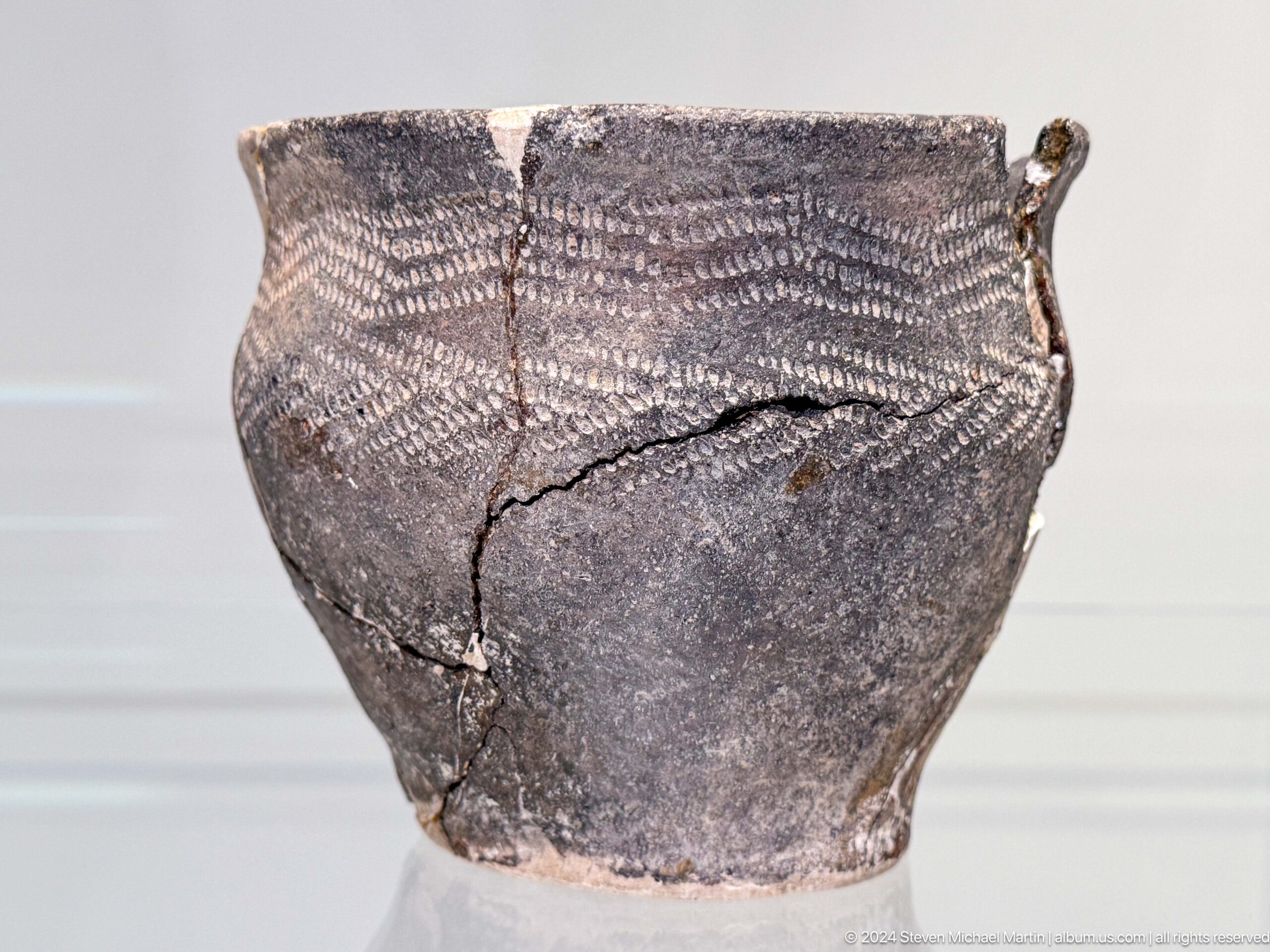
Textile-impressed prehistoric pottery vessel, displayed in the Bishkek State History Museum. The surface preserves repeated impressions that may derive from cord, basketry, or textile contact. Such textures provide evidence of both pottery making and fiber technologies.
Caption
Textile-impressed prehistoric pottery vessel, displayed in the Bishkek State History Museum. The surface preserves repeated impressions that may derive from cord, basketry, or textile contact. Such textures provide evidence of both pottery making and fiber technologies.
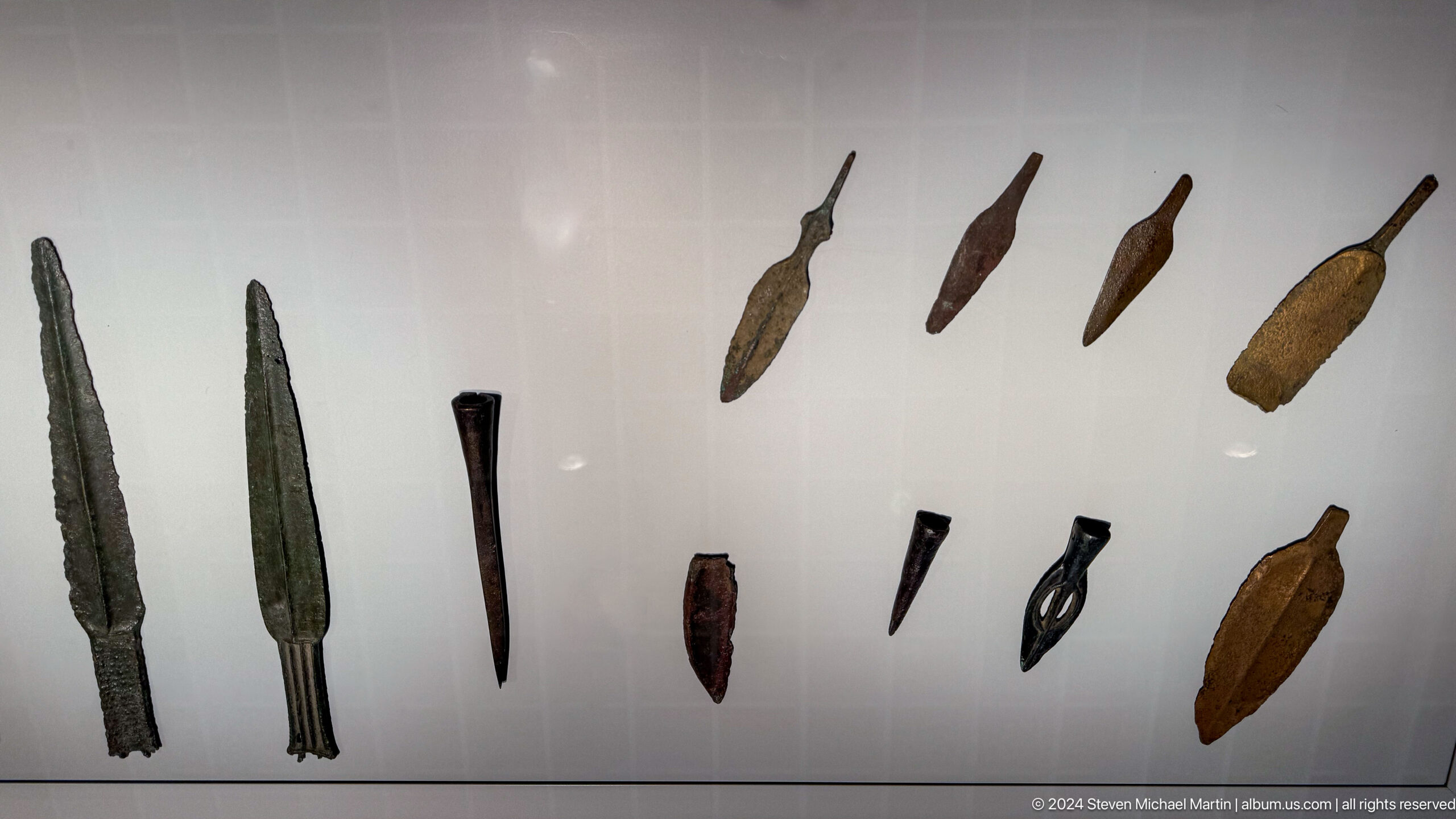
Bronze and iron projectile points and blades, displayed in the Bishkek State History Museum. The display compares projectile points and small cutting tools from early archaeological periods. Variation in shape reflects different manufacturing traditions and functions.
Caption
Bronze and iron projectile points and blades, displayed in the Bishkek State History Museum. The display compares projectile points and small cutting tools from early archaeological periods. Variation in shape reflects different manufacturing traditions and functions.
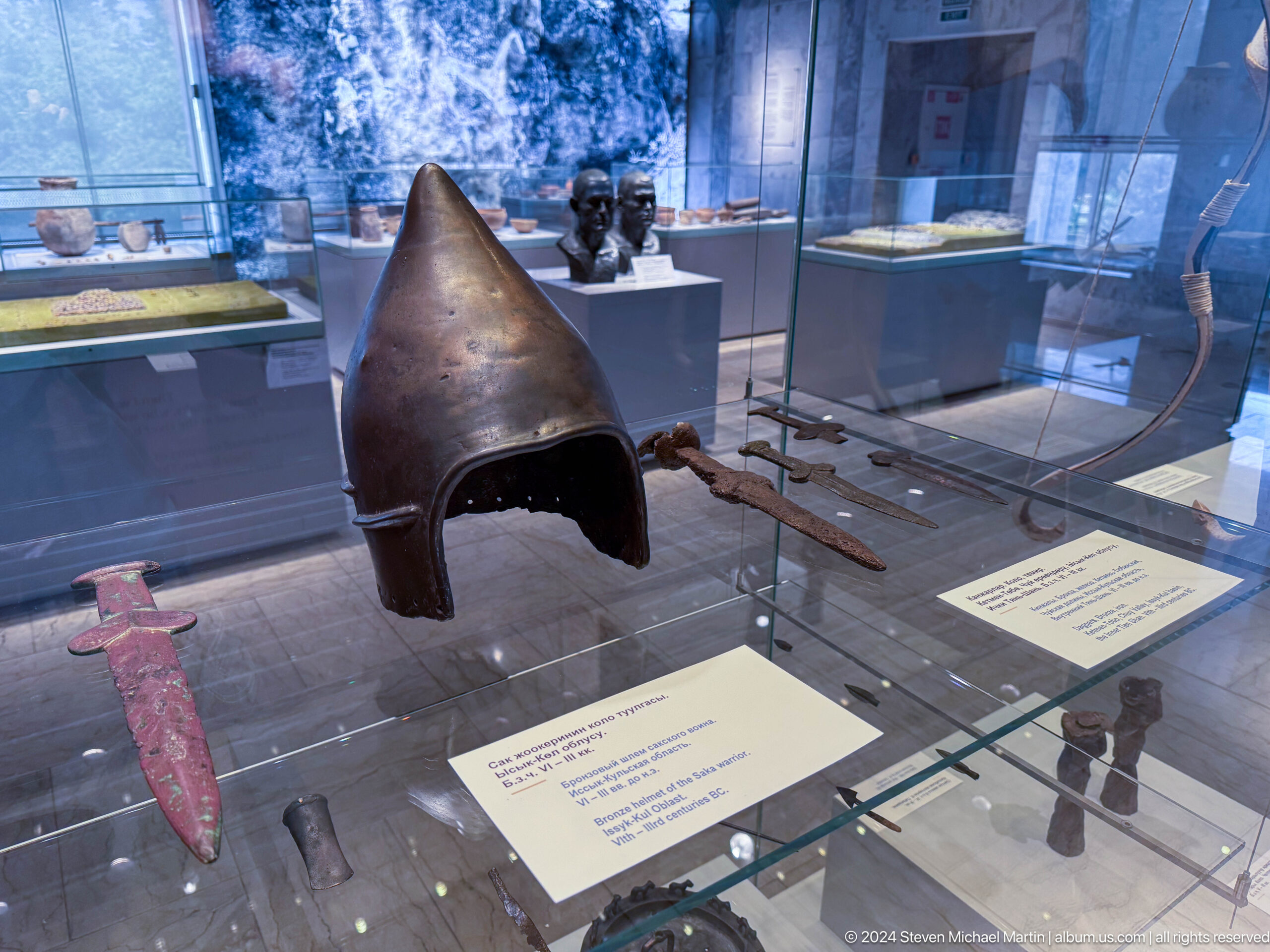
Early nomadic helmet and weapons display, displayed in the Bishkek State History Museum. The grouping presents defensive headgear with offensive weapons associated with mounted steppe warfare. Corrosion and form indicate archaeological metalwork.
Caption
Early nomadic helmet and weapons display, displayed in the Bishkek State History Museum. The grouping presents defensive headgear with offensive weapons associated with mounted steppe warfare. Corrosion and form indicate archaeological metalwork.

Stone carving with paired wheel or solar symbols, displayed in the Bishkek State History Museum. The carved circles resemble wheel or solar motifs found in Central Asian rock art. Exact date and context require the museum label.
Caption
Stone carving with paired wheel or solar symbols, displayed in the Bishkek State History Museum. The carved circles resemble wheel or solar motifs found in Central Asian rock art. Exact date and context require the museum label.
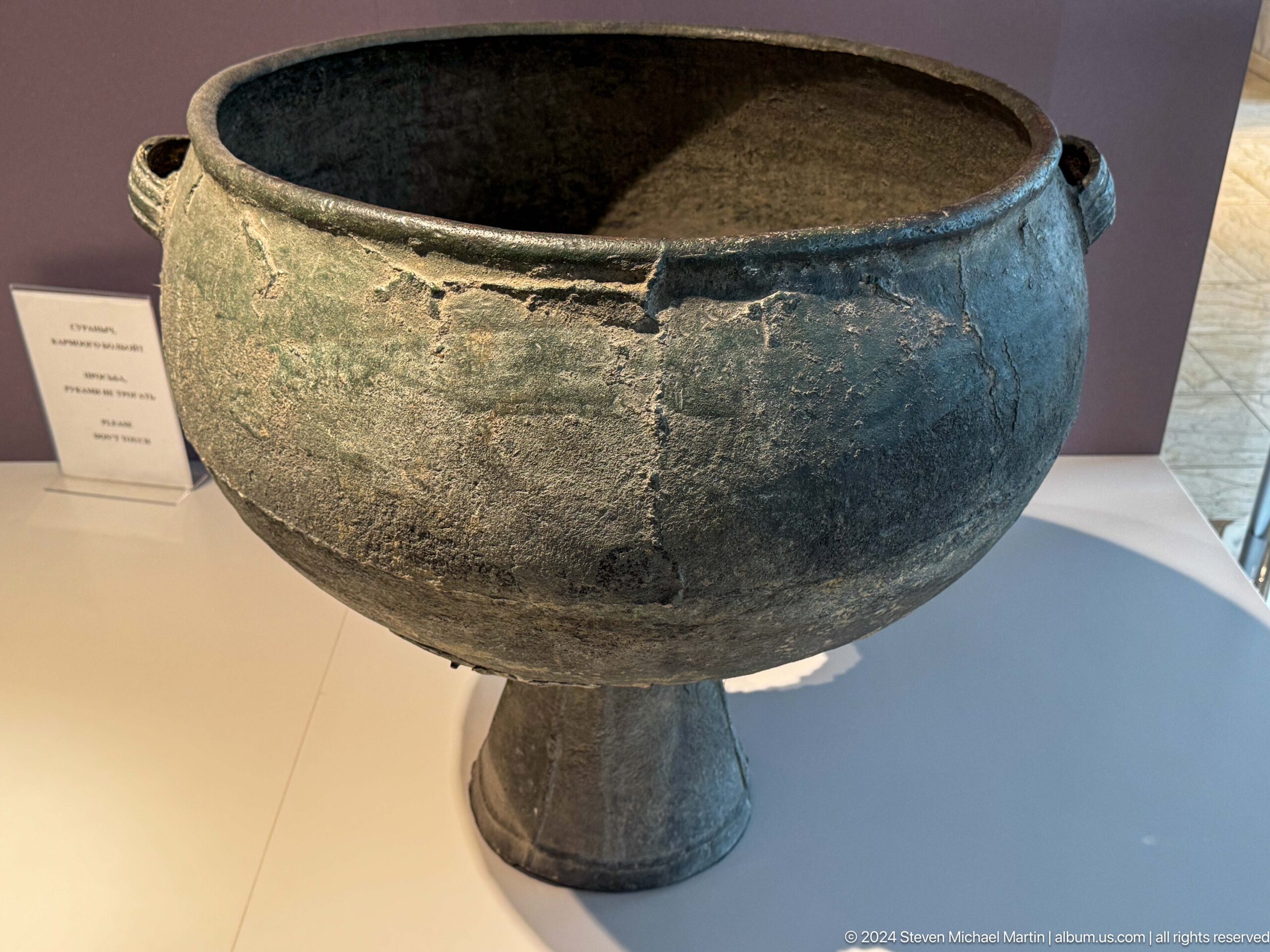
Bronze cauldron or ritual vessel, displayed in the Bishkek State History Museum. The vessel’s robust casting and pedestal form suggest communal, ceremonial, or elite use. Its patina reflects age and burial or long-term oxidation.
Caption
Bronze cauldron or ritual vessel, displayed in the Bishkek State History Museum. The vessel’s robust casting and pedestal form suggest communal, ceremonial, or elite use. Its patina reflects age and burial or long-term oxidation.
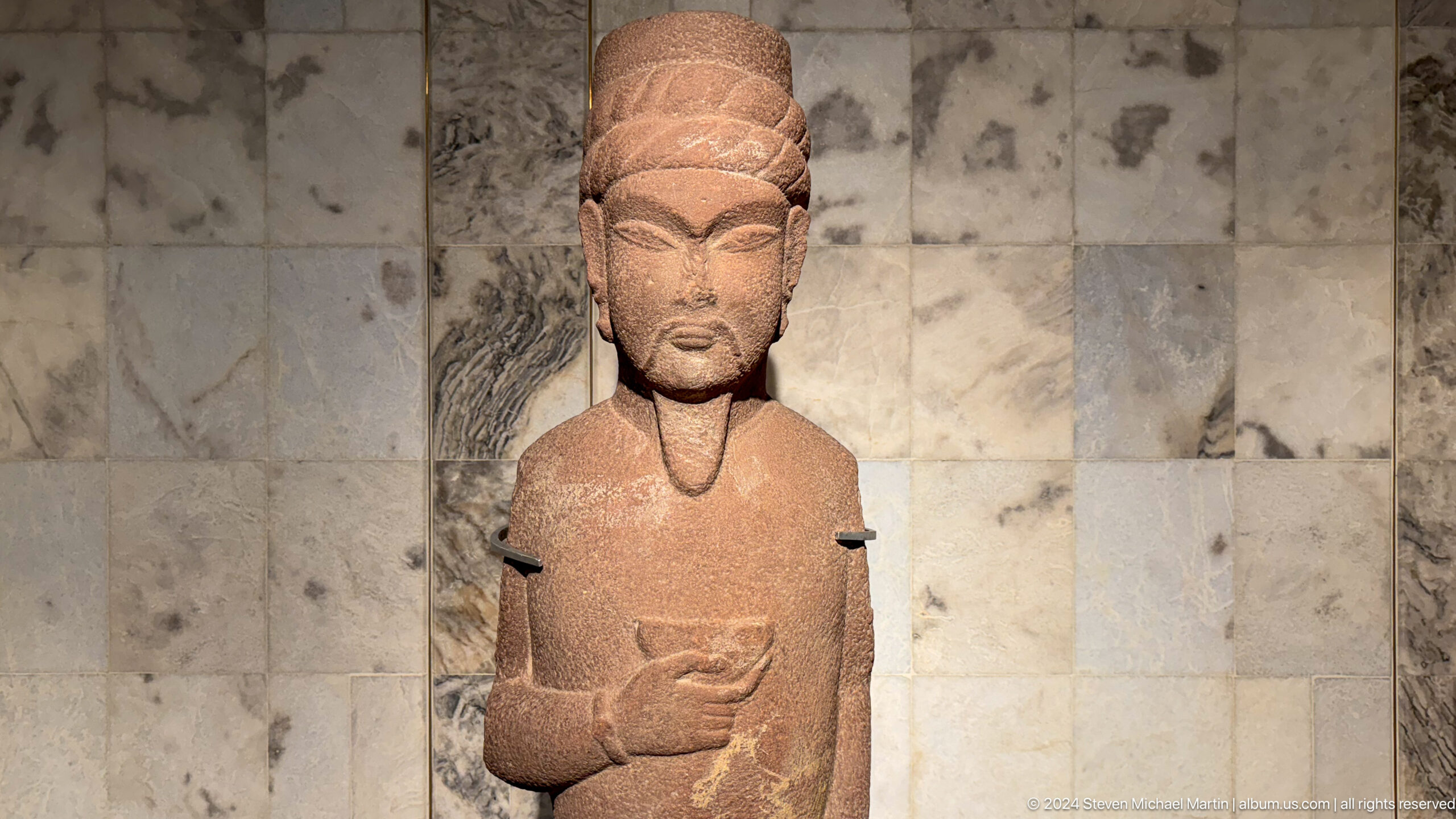
Terracotta female figure, displayed in the Bishkek State History Museum. The figurine presents a stylized female body with carefully modeled head and arms. Its cultural attribution and date require label confirmation.
Caption
Terracotta female figure, displayed in the Bishkek State History Museum. The figurine presents a stylized female body with carefully modeled head and arms. Its cultural attribution and date require label confirmation.
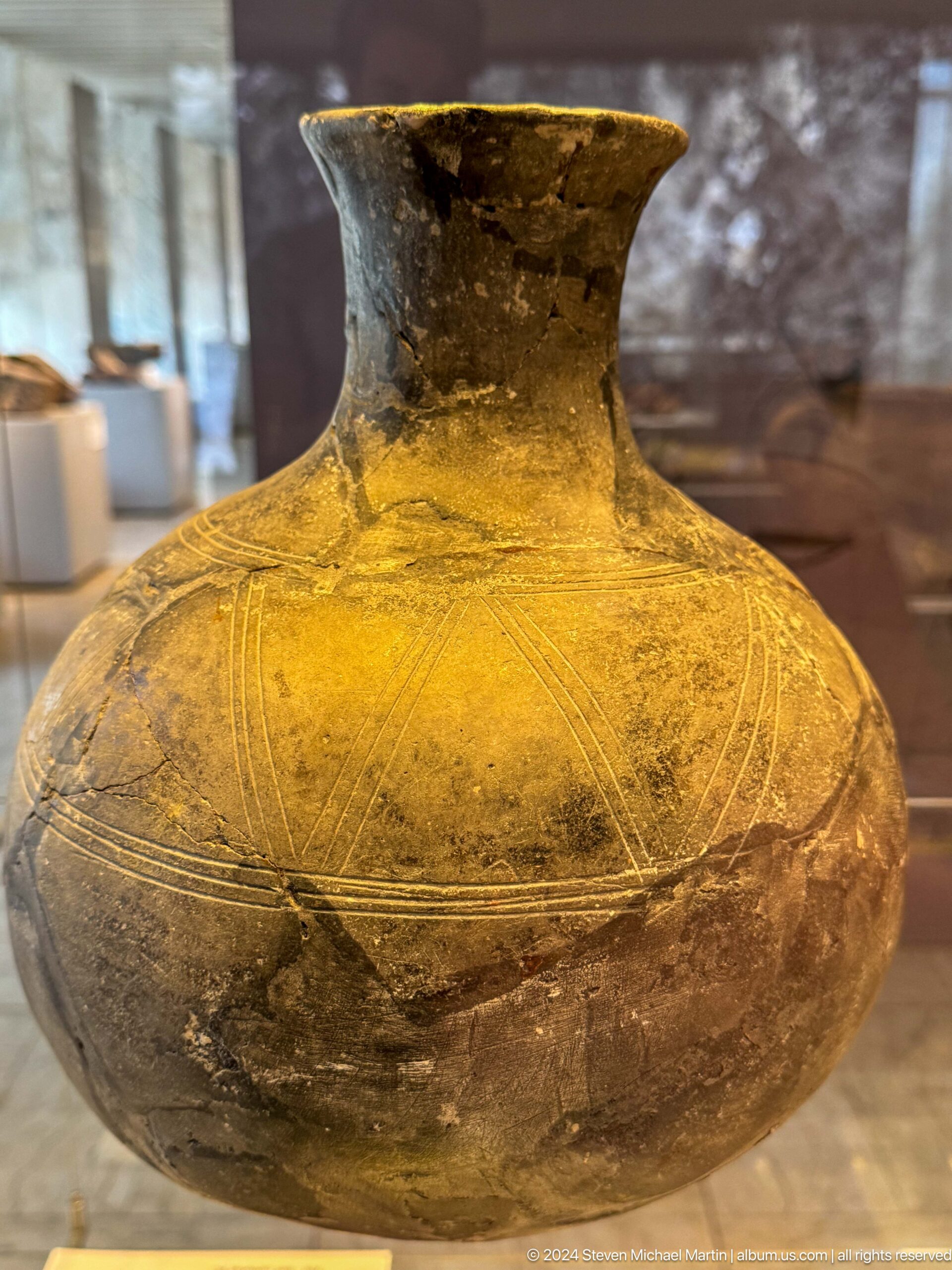
Engraved metal ewer or storage vessel, displayed in the Bishkek State History Museum. Fine engraved bands cover the vessel’s body. The object demonstrates advanced decorative metalworking in the museum collection.
Caption
Engraved metal ewer or storage vessel, displayed in the Bishkek State History Museum. Fine engraved bands cover the vessel’s body. The object demonstrates advanced decorative metalworking in the museum collection.

Reconstructed handled pottery jug, displayed in the Bishkek State History Museum. The jug has been reassembled from multiple fragments. Its narrow neck and handle indicate use for pouring or storing liquids.
Caption
Reconstructed handled pottery jug, displayed in the Bishkek State History Museum. The jug has been reassembled from multiple fragments. Its narrow neck and handle indicate use for pouring or storing liquids.

Small hand-built pottery vessel, displayed in the Bishkek State History Museum. The vessel’s irregular profile and coarse fabric indicate hand production. Its exact function is uncertain without the object label.
Caption
Small hand-built pottery vessel, displayed in the Bishkek State History Museum. The vessel’s irregular profile and coarse fabric indicate hand production. Its exact function is uncertain without the object label.

Fragmentary terracotta figurine, displayed in the Bishkek State History Museum. The surviving fragment appears to belong to a modeled human or animal figure. Breakage obscures the original pose and identity.
Caption
Fragmentary terracotta figurine, displayed in the Bishkek State History Museum. The surviving fragment appears to belong to a modeled human or animal figure. Breakage obscures the original pose and identity.

Anthropomorphic ceramic vessel, displayed in the Bishkek State History Museum. The pot integrates a modeled human head into a functional vessel form. Anthropomorphic ceramics can convey ritual, commemorative, or symbolic meanings.
Caption
Anthropomorphic ceramic vessel, displayed in the Bishkek State History Museum. The pot integrates a modeled human head into a functional vessel form. Anthropomorphic ceramics can convey ritual, commemorative, or symbolic meanings.

Balbal-style anthropomorphic stone figure, displayed in the Bishkek State History Museum. The figure belongs to the Central Asian tradition of anthropomorphic stone monuments often called balbals. Hands and costume details are rendered in shallow relief.
Caption
Balbal-style anthropomorphic stone figure, displayed in the Bishkek State History Museum. The figure belongs to the Central Asian tradition of anthropomorphic stone monuments often called balbals. Hands and costume details are rendered in shallow relief.
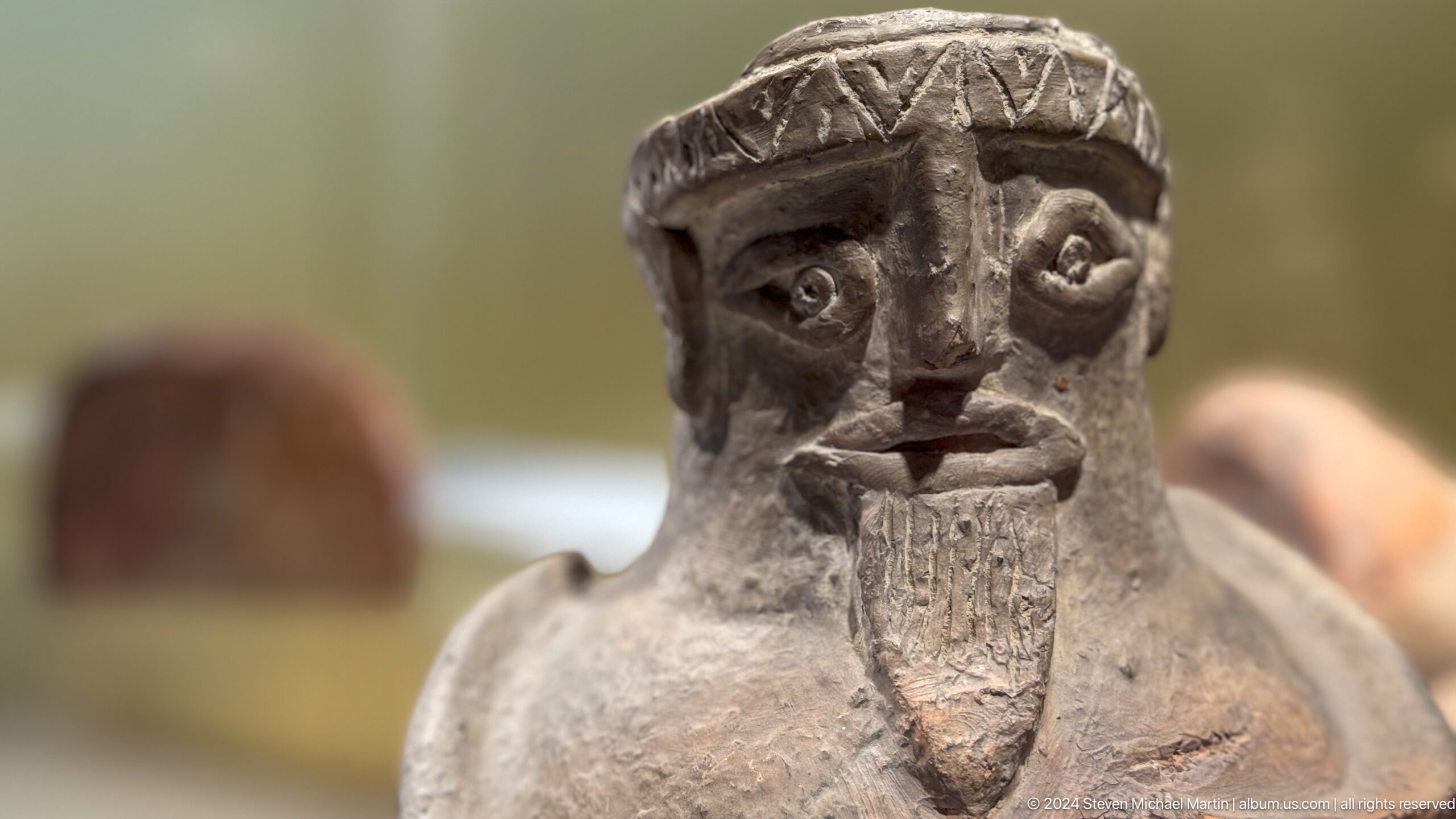
Carved anthropomorphic stone head, displayed in the Bishkek State History Museum. The stylized face and beard are carved in bold low relief. The head likely belongs to the wider corpus of Central Asian anthropomorphic stone sculpture.
Caption
Carved anthropomorphic stone head, displayed in the Bishkek State History Museum. The stylized face and beard are carved in bold low relief. The head likely belongs to the wider corpus of Central Asian anthropomorphic stone sculpture.
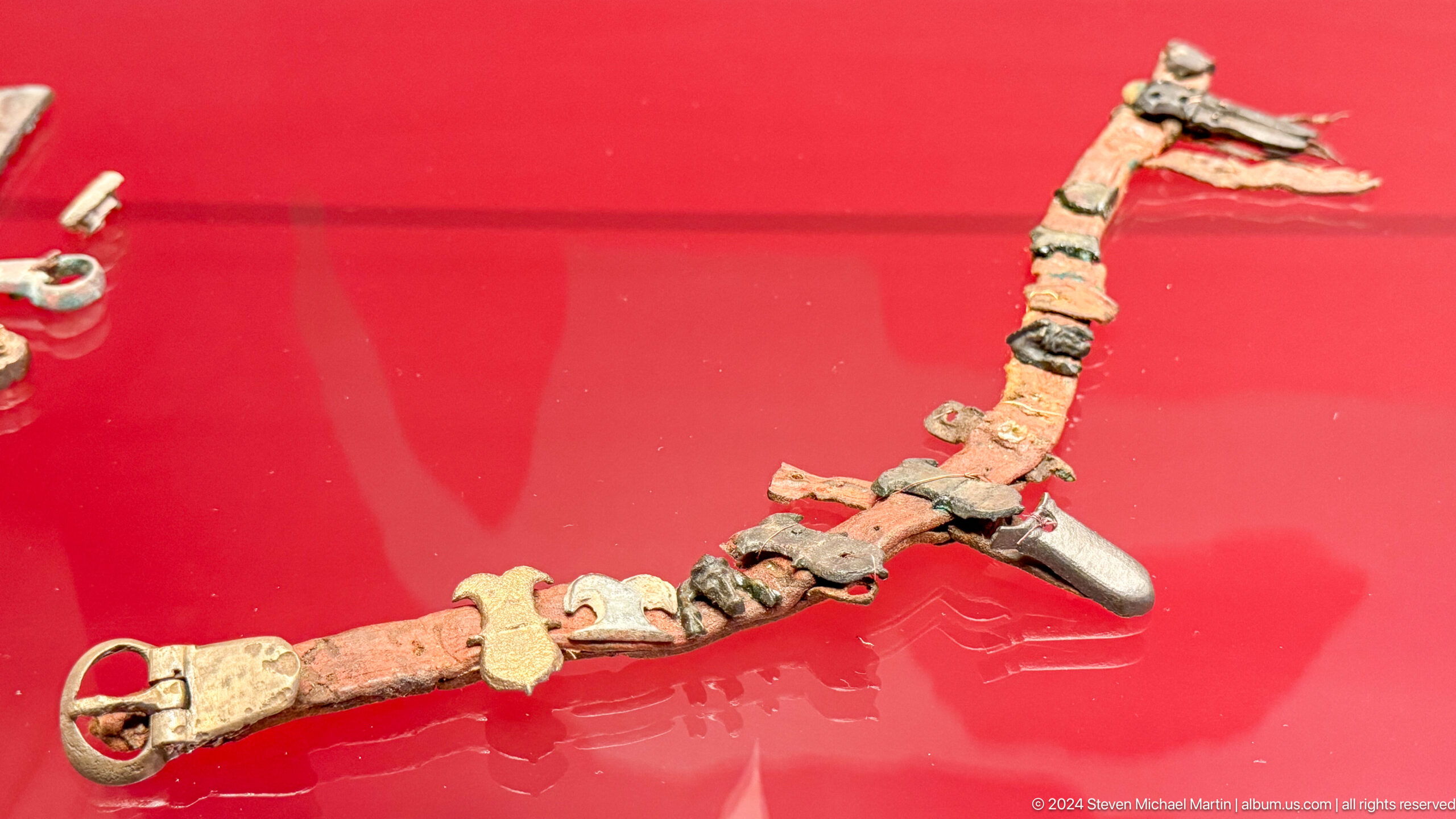
Set of articulated decorative fittings, displayed in the Bishkek State History Museum. The linked elements may have formed part of a belt, harness, or personal ornament. Exact function and material require label verification.
Caption
Set of articulated decorative fittings, displayed in the Bishkek State History Museum. The linked elements may have formed part of a belt, harness, or personal ornament. Exact function and material require label verification.
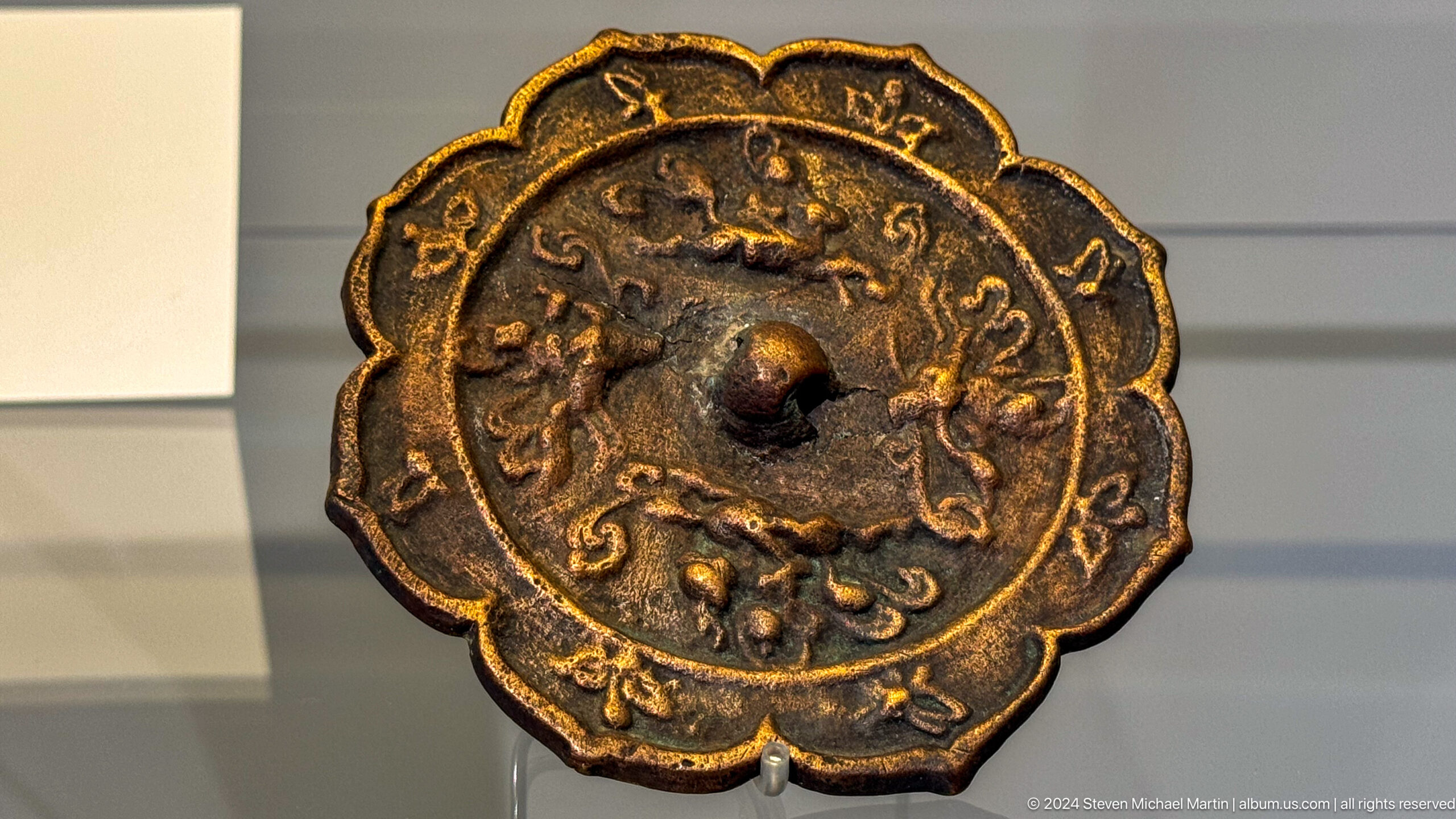
Decorated bronze mirror, displayed in the Bishkek State History Museum. The mirror’s back is ornamented in relief around a central suspension boss. Such mirrors circulated widely through Silk Road exchange networks.
Caption
Decorated bronze mirror, displayed in the Bishkek State History Museum. The mirror’s back is ornamented in relief around a central suspension boss. Such mirrors circulated widely through Silk Road exchange networks.
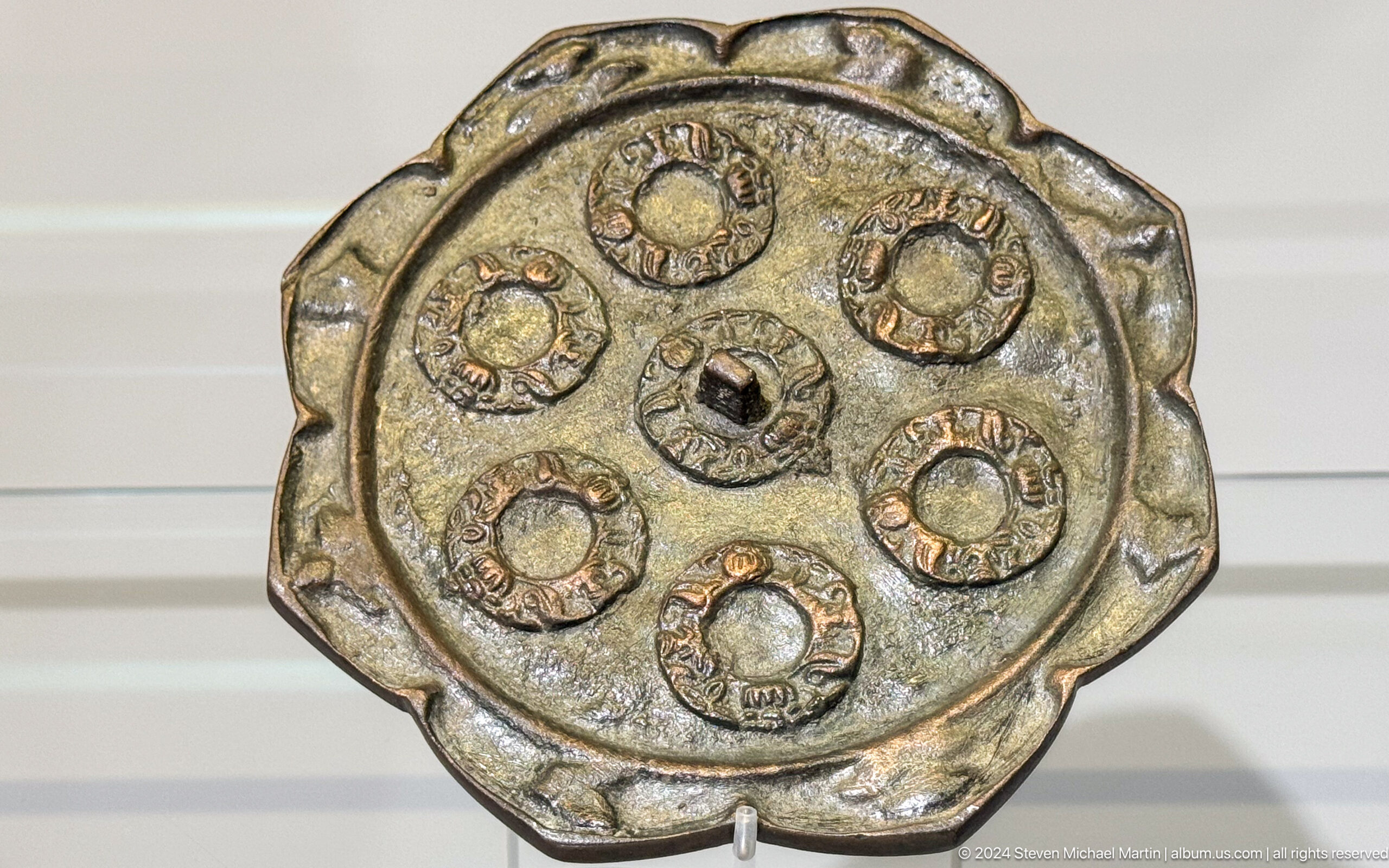
Ornamental metal plaque or mirror back, displayed in the Bishkek State History Museum. The radial design organizes repeated medallions around a central field. The object may be a mirror back, plaque, or ritual fitting.
Caption
Ornamental metal plaque or mirror back, displayed in the Bishkek State History Museum. The radial design organizes repeated medallions around a central field. The object may be a mirror back, plaque, or ritual fitting.
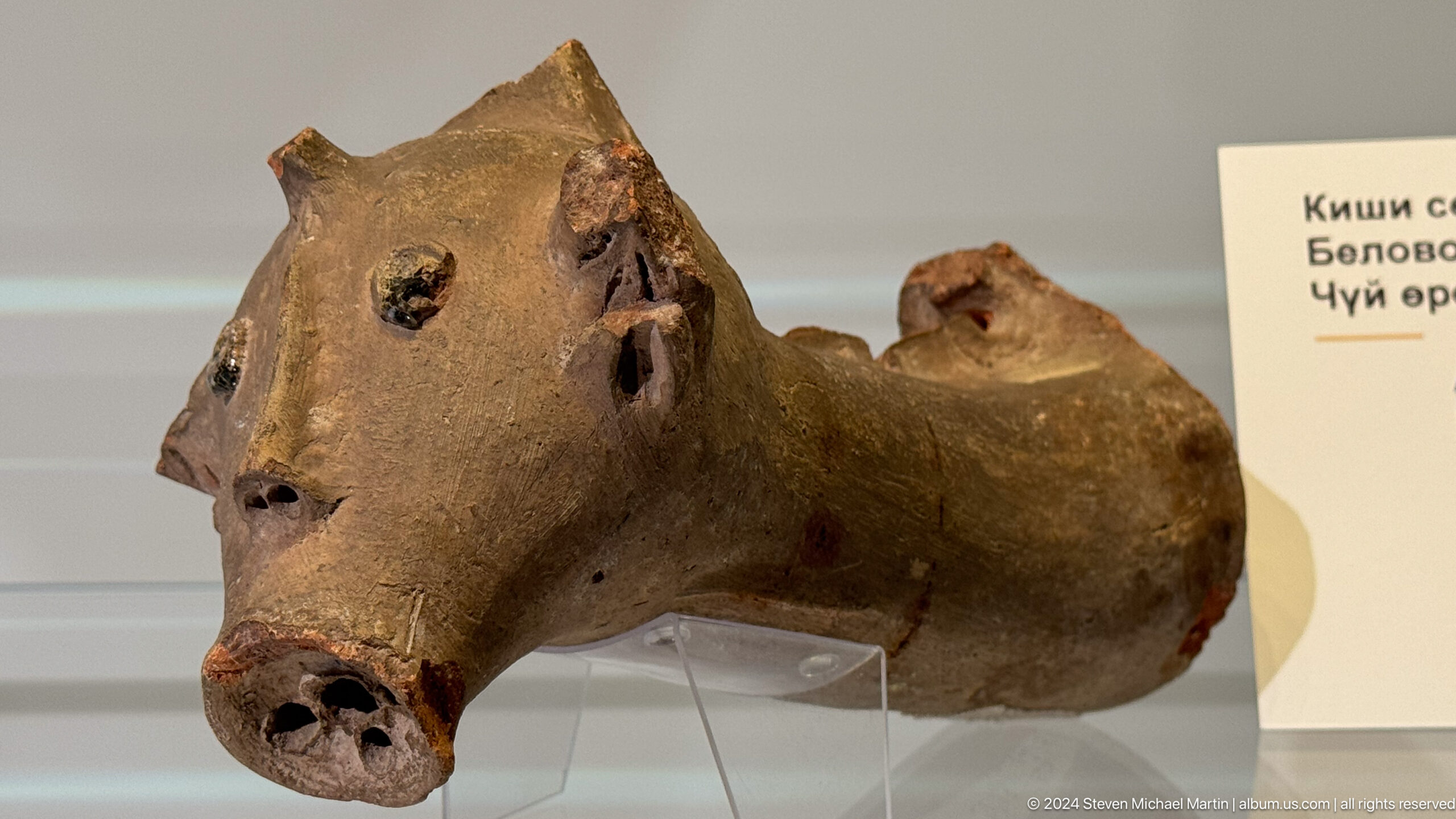
Zoomorphic ceramic vessel or lamp, displayed in the Bishkek State History Museum. The object is shaped as a four-legged animal, possibly functioning as a vessel, lamp, or ritual object. Its playful modeling contrasts with its archaeological surface.
Caption
Zoomorphic ceramic vessel or lamp, displayed in the Bishkek State History Museum. The object is shaped as a four-legged animal, possibly functioning as a vessel, lamp, or ritual object. Its playful modeling contrasts with its archaeological surface.
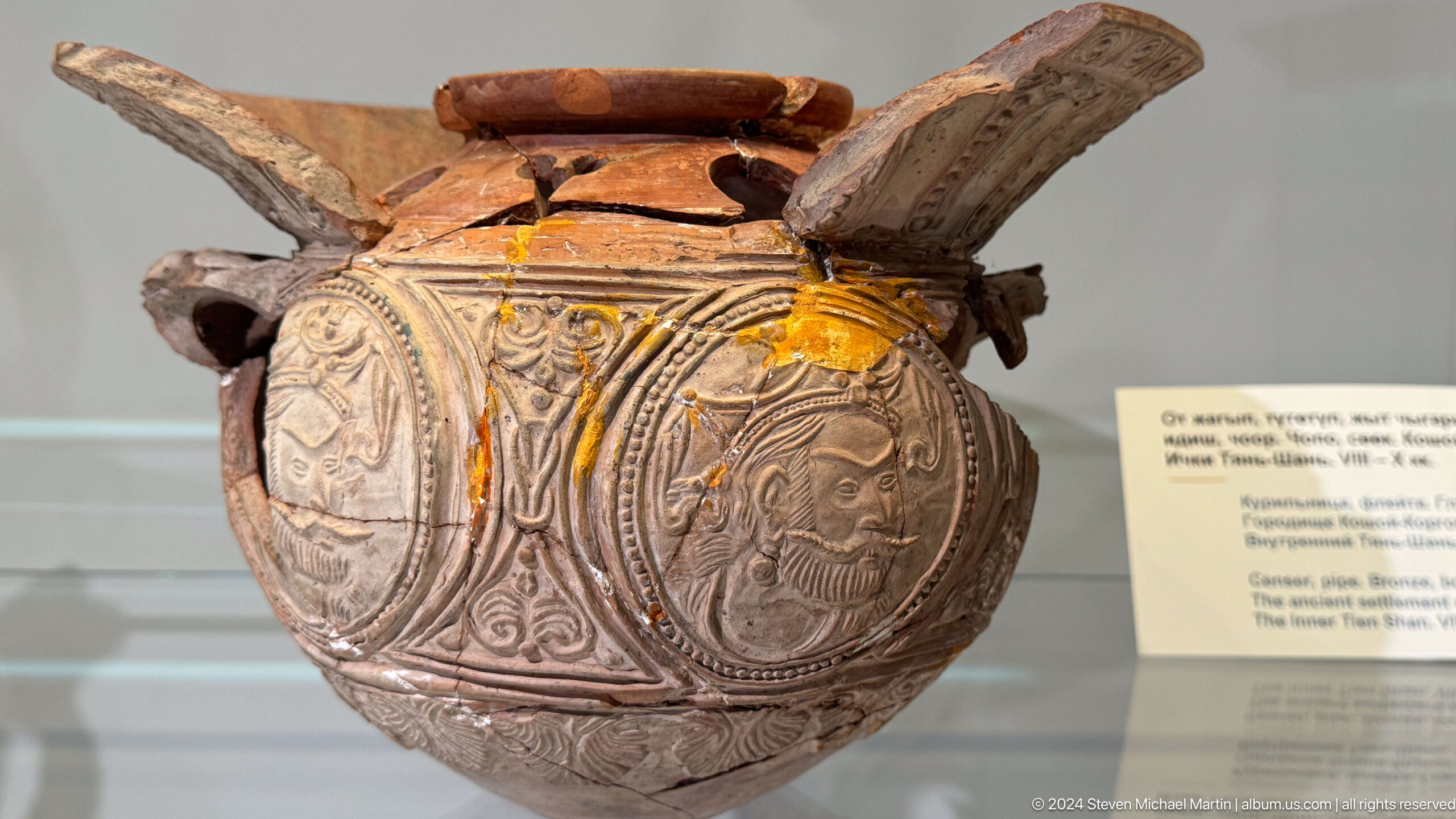
Painted and incised pottery bowl, displayed in the Bishkek State History Museum. Geometric bands decorate the vessel’s exterior. The combination of form and ornament reflects historic ceramic traditions of Central Asia.
Caption
Painted and incised pottery bowl, displayed in the Bishkek State History Museum. Geometric bands decorate the vessel’s exterior. The combination of form and ornament reflects historic ceramic traditions of Central Asia.
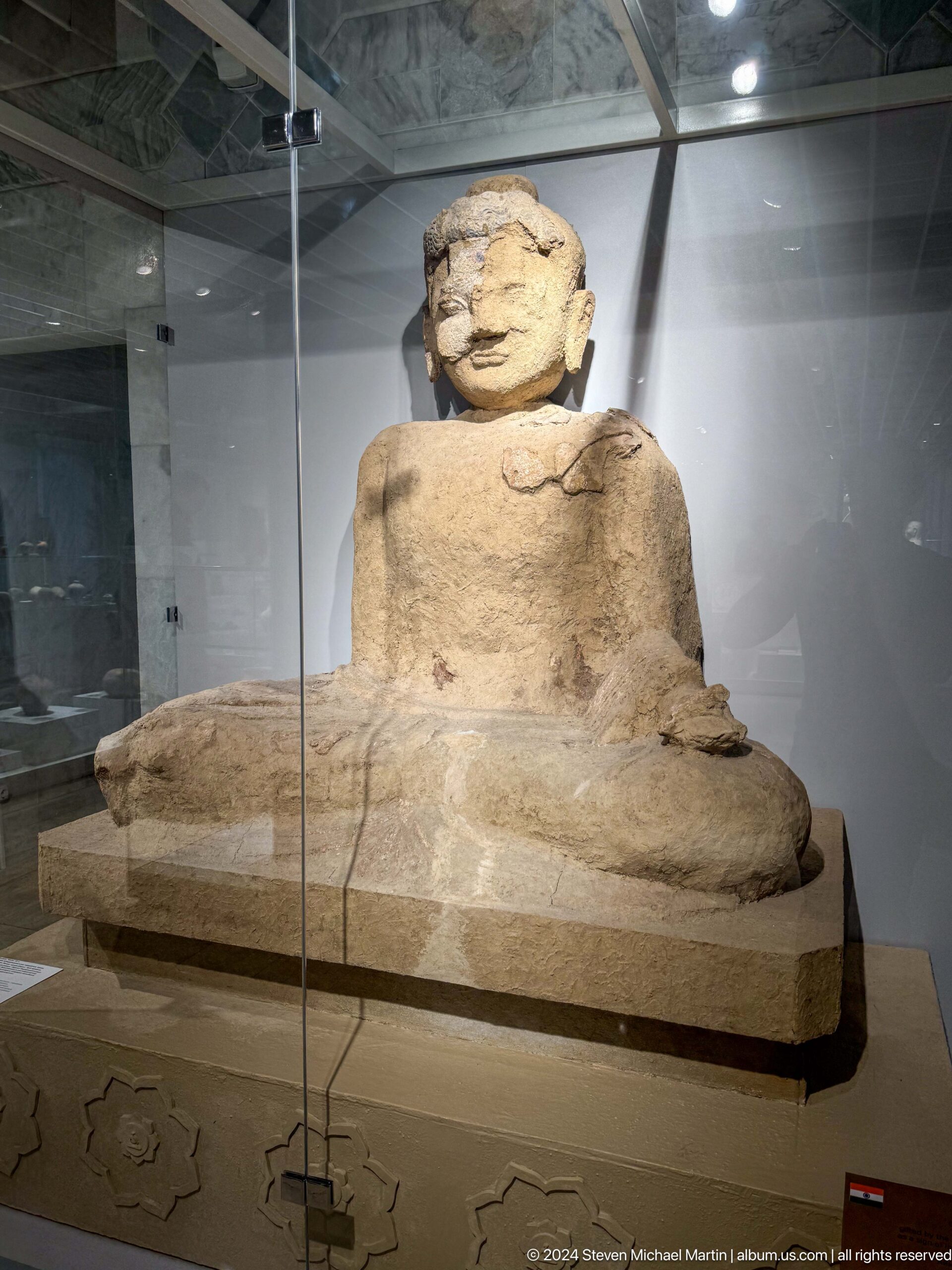
Seated anthropomorphic stone figure, displayed in the Bishkek State History Museum. The compact seated figure is carved with simplified anatomy and frontal symmetry. Its date and cultural identity require the museum label.
Caption
Seated anthropomorphic stone figure, displayed in the Bishkek State History Museum. The compact seated figure is carved with simplified anatomy and frontal symmetry. Its date and cultural identity require the museum label.
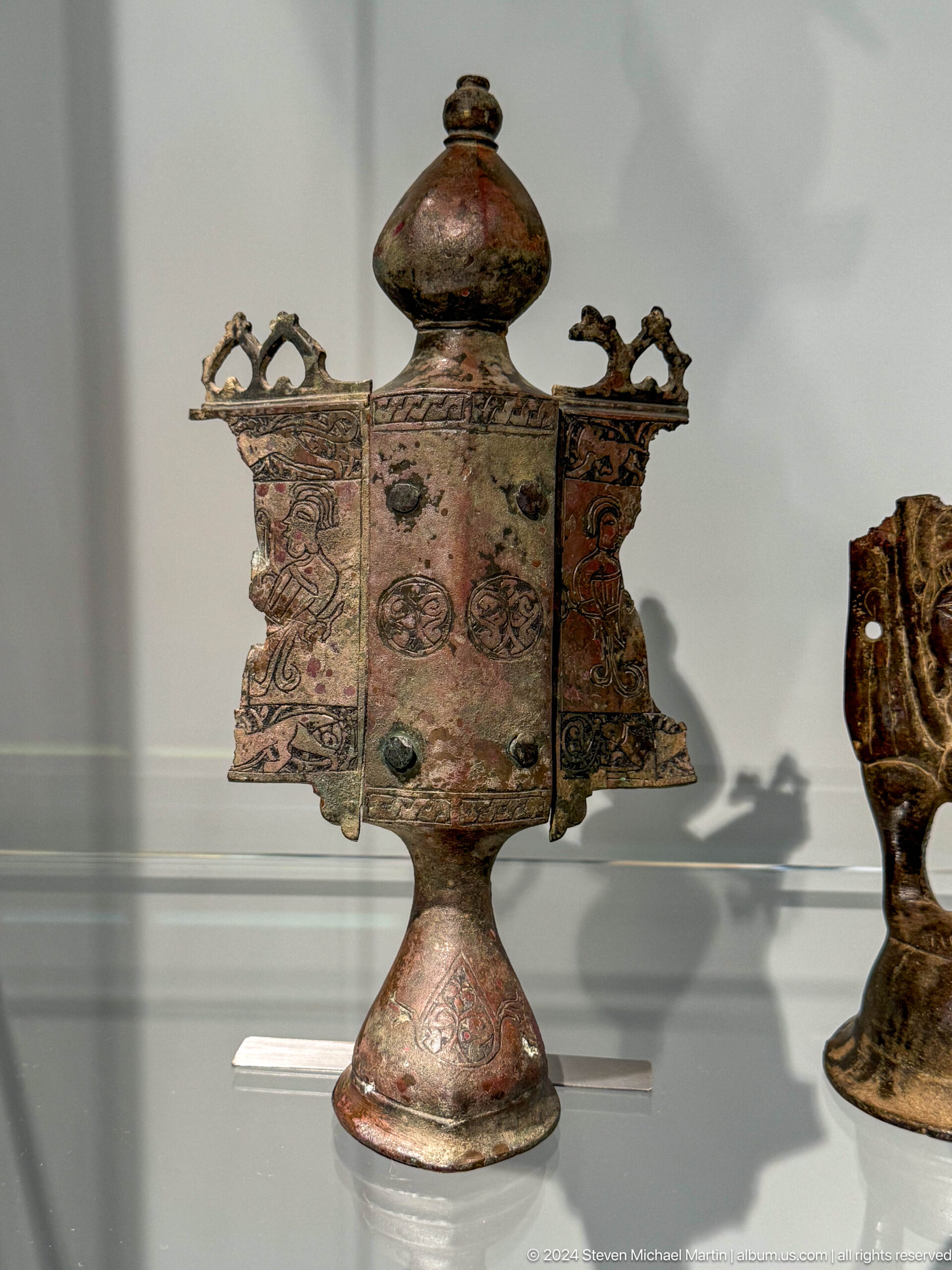
Ornamental metal reliquary, container, or harness fitting, displayed in the Bishkek State History Museum. The object combines a box-like core with elaborately shaped attachments. Its precise function requires examination of the label.
Caption
Ornamental metal reliquary, container, or harness fitting, displayed in the Bishkek State History Museum. The object combines a box-like core with elaborately shaped attachments. Its precise function requires examination of the label.
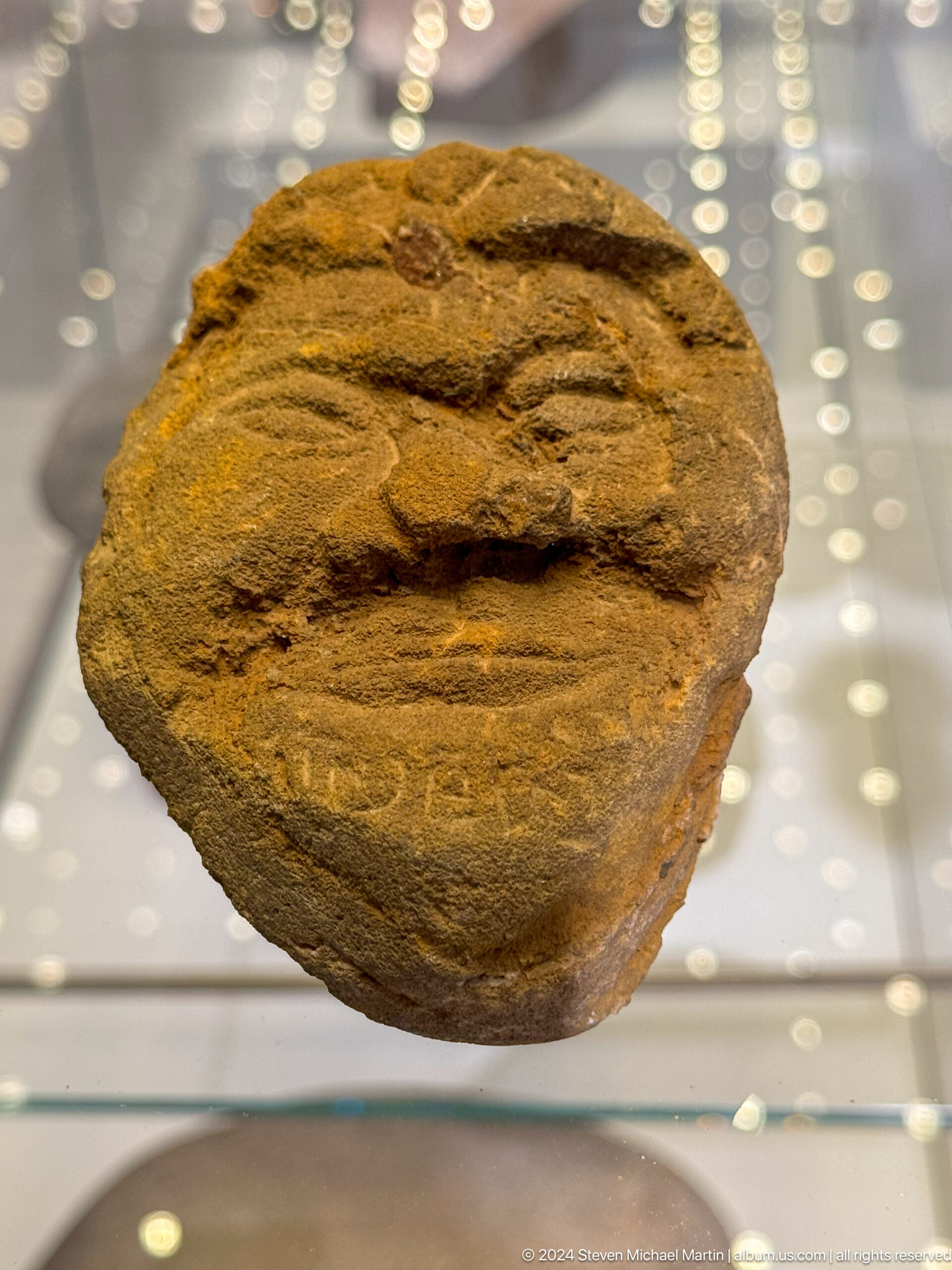
Carved anthropomorphic stone face, displayed in the Bishkek State History Museum. The fragment preserves a stylized human face in low relief. Its compact scale suggests it may have belonged to a larger sculptural or architectural object.
Caption
Carved anthropomorphic stone face, displayed in the Bishkek State History Museum. The fragment preserves a stylized human face in low relief. Its compact scale suggests it may have belonged to a larger sculptural or architectural object.
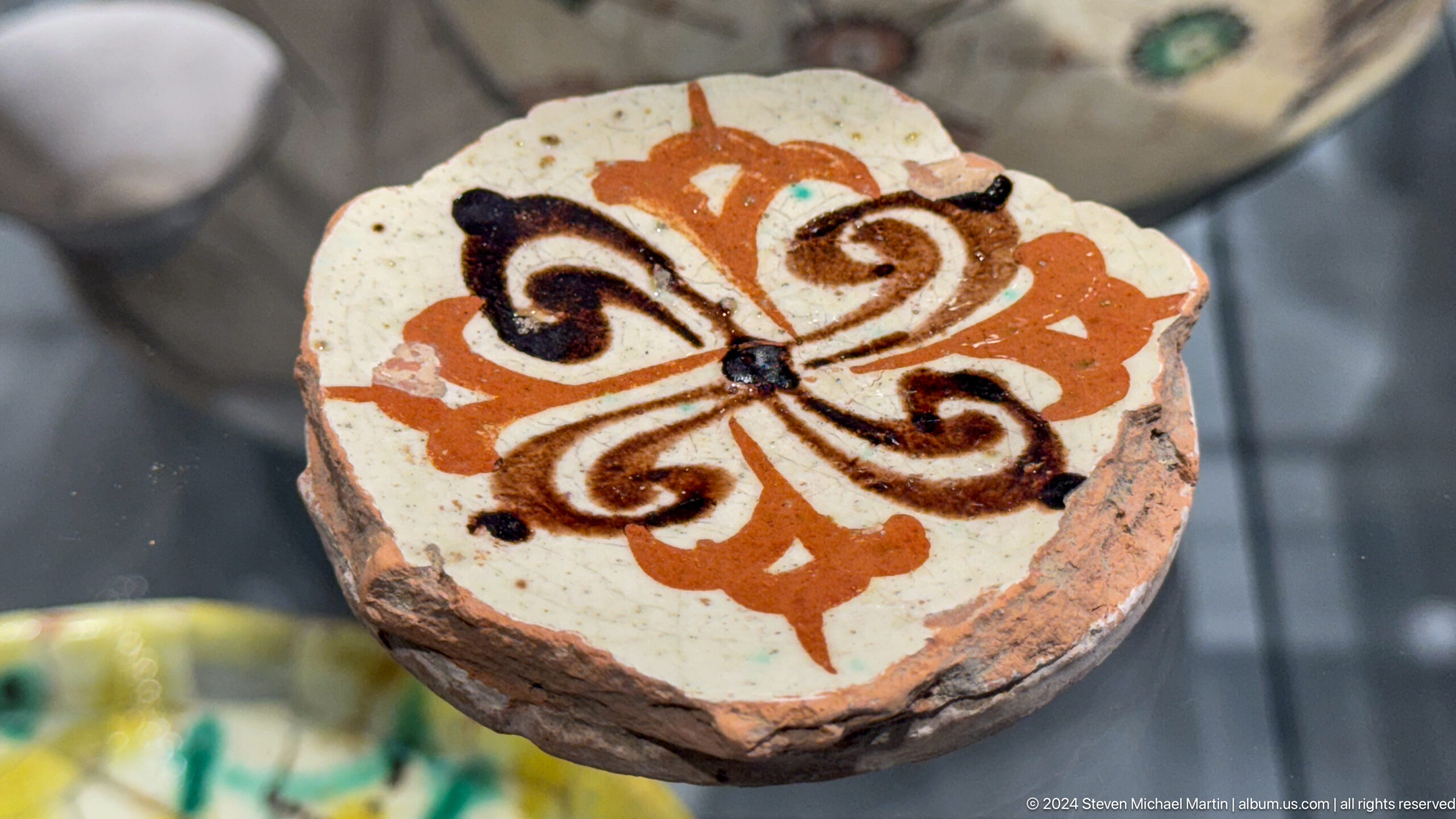
Painted wooden or ceramic disk with floral ornament, displayed in the Bishkek State History Museum. The object carries a bold symmetrical floral motif. Its material and function are not fully clear from the proof sheet.
Caption
Painted wooden or ceramic disk with floral ornament, displayed in the Bishkek State History Museum. The object carries a bold symmetrical floral motif. Its material and function are not fully clear from the proof sheet.

Gold ornaments and personal adornments, displayed in the Bishkek State History Museum. The case presents elite ornaments made in precious metal. The variety of forms reflects personal display, status, and skilled metalworking.
Caption
Gold ornaments and personal adornments, displayed in the Bishkek State History Museum. The case presents elite ornaments made in precious metal. The variety of forms reflects personal display, status, and skilled metalworking.
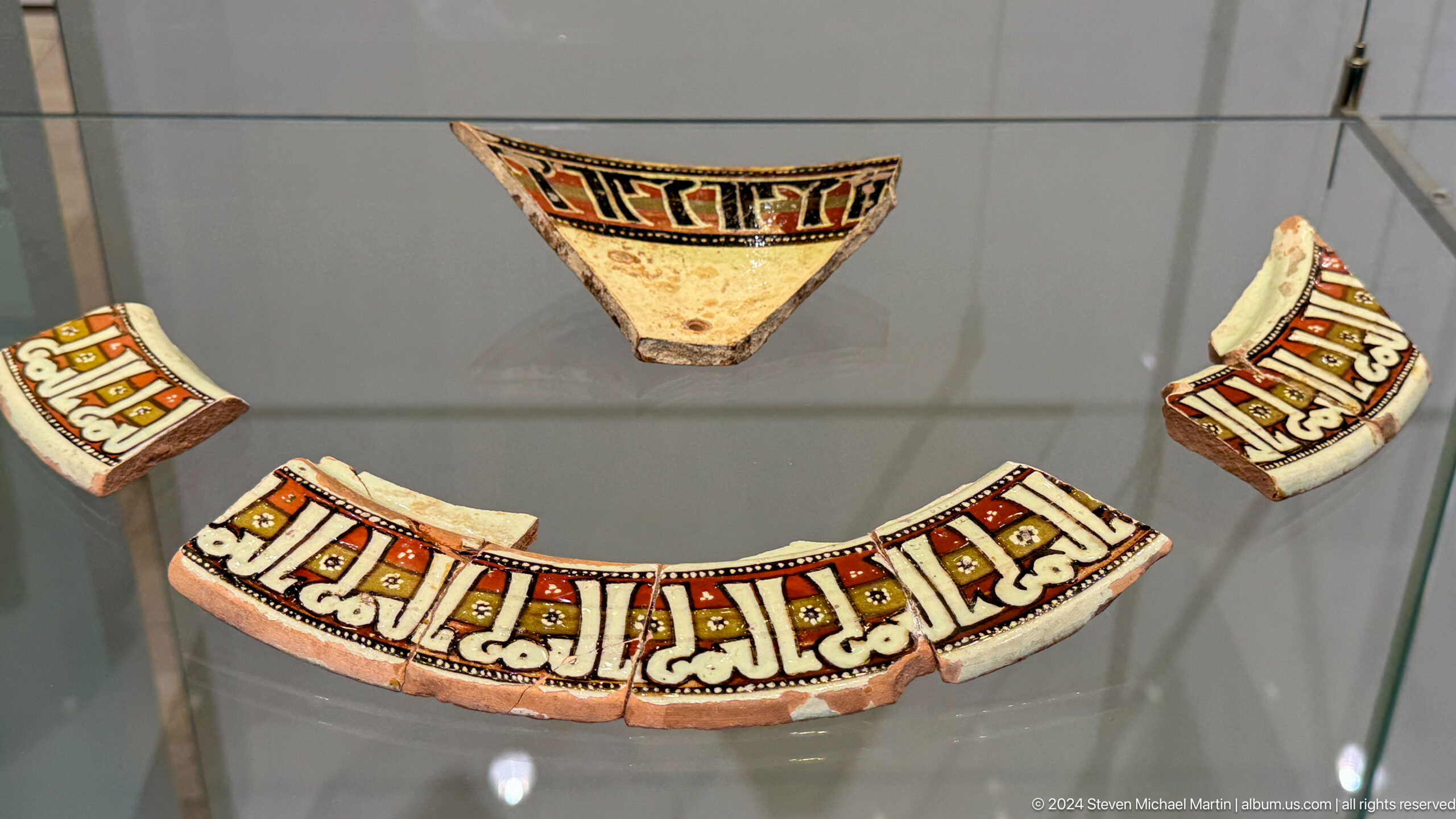
Ornamental bands with Arabic-script decoration, displayed in the Bishkek State History Museum. The bands combine calligraphic ornament with geometric borders. They illustrate the role of inscription in Central Asian decorative arts.
Caption
Ornamental bands with Arabic-script decoration, displayed in the Bishkek State History Museum. The bands combine calligraphic ornament with geometric borders. They illustrate the role of inscription in Central Asian decorative arts.
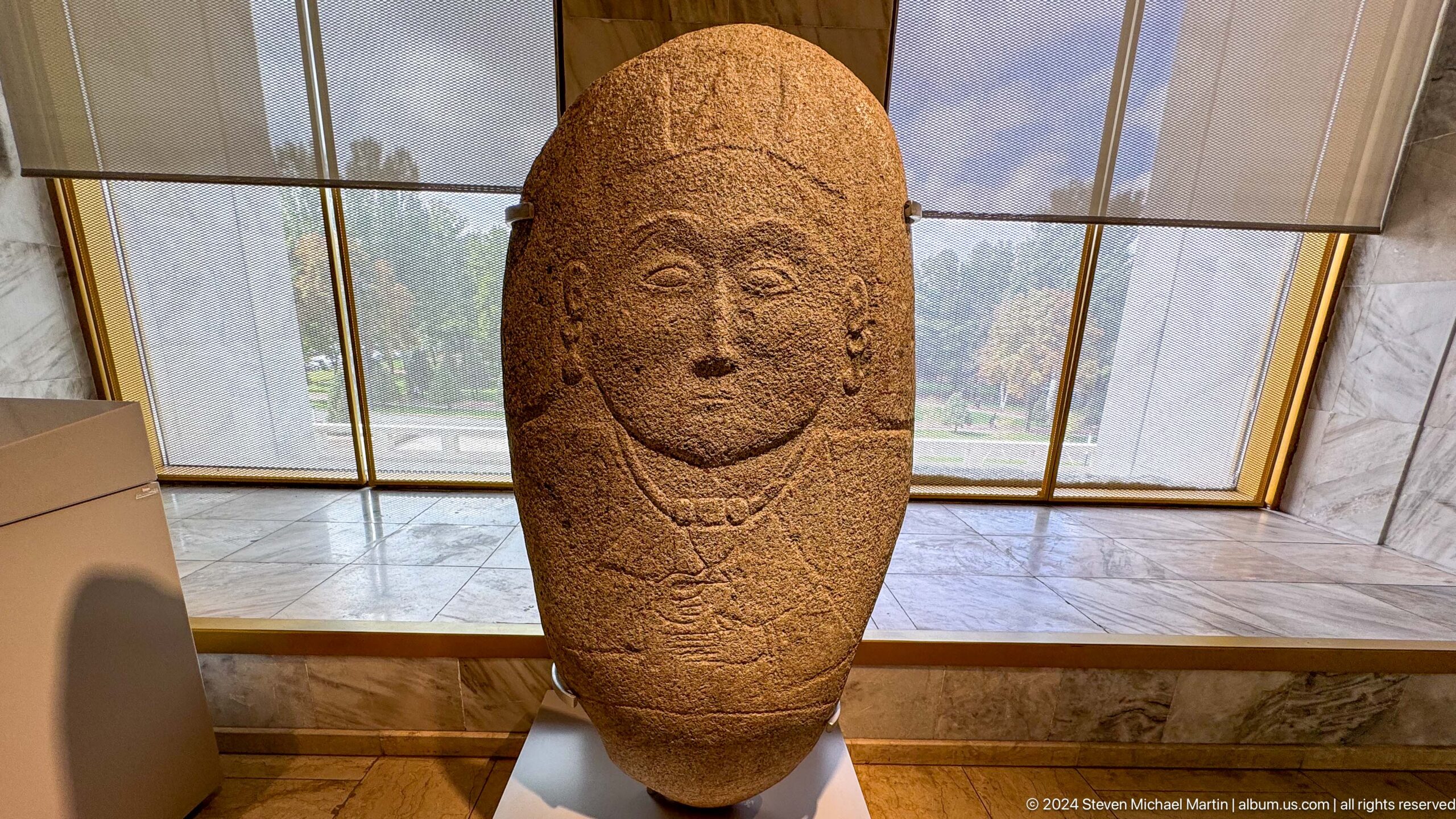
Anthropomorphic balbal stone figure, displayed in the Bishkek State History Museum. The monument belongs to the tradition of Turkic anthropomorphic stone figures found across Central Asia. Its expressive face is unusually prominent.
Caption
Anthropomorphic balbal stone figure, displayed in the Bishkek State History Museum. The monument belongs to the tradition of Turkic anthropomorphic stone figures found across Central Asia. Its expressive face is unusually prominent.
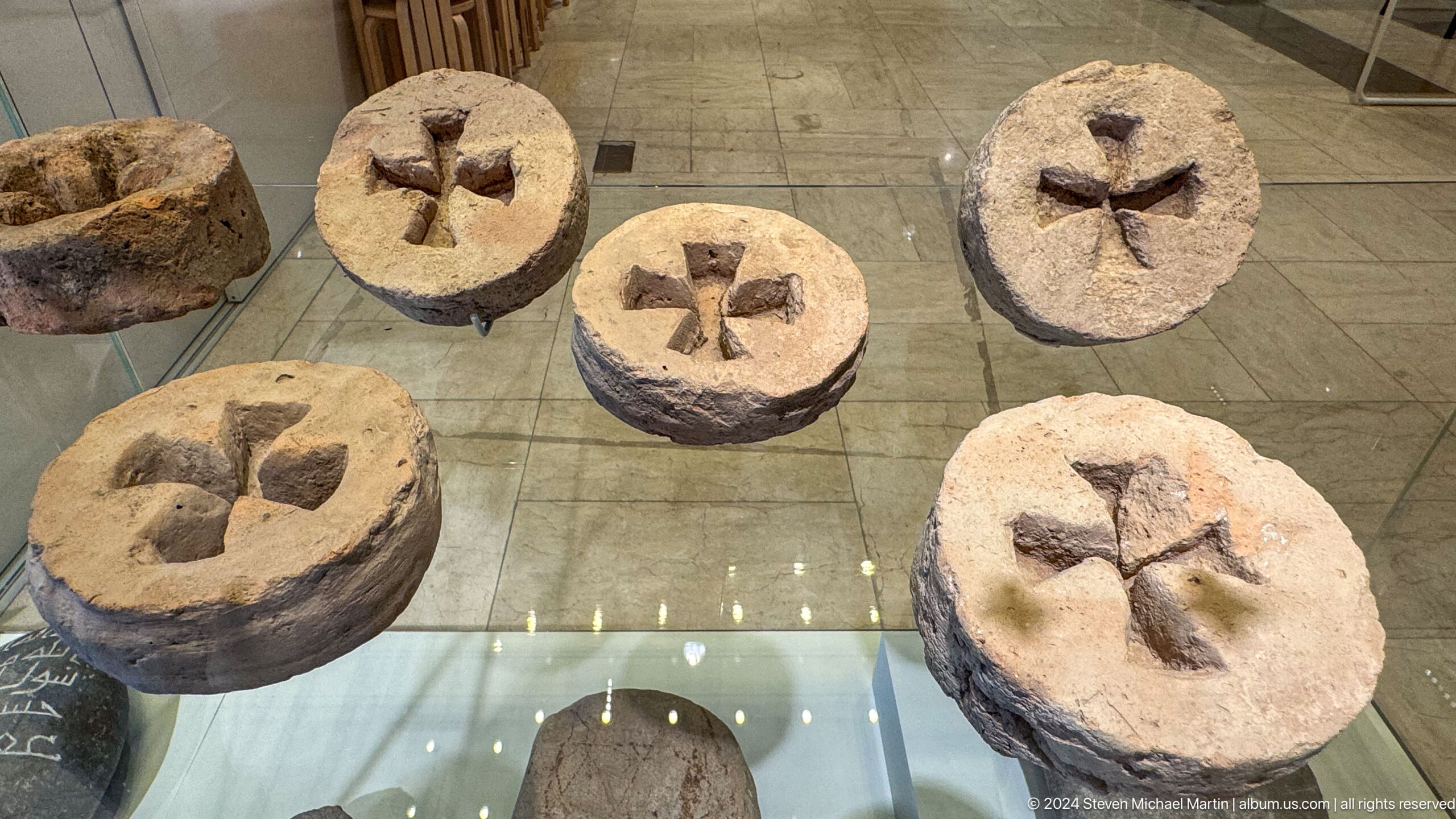
Rotary querns or millstones, displayed in the Bishkek State History Museum. The perforated stones likely served as rotary grinding equipment. Grooved surfaces helped process grain or other materials.
Caption
Rotary querns or millstones, displayed in the Bishkek State History Museum. The perforated stones likely served as rotary grinding equipment. Grooved surfaces helped process grain or other materials.
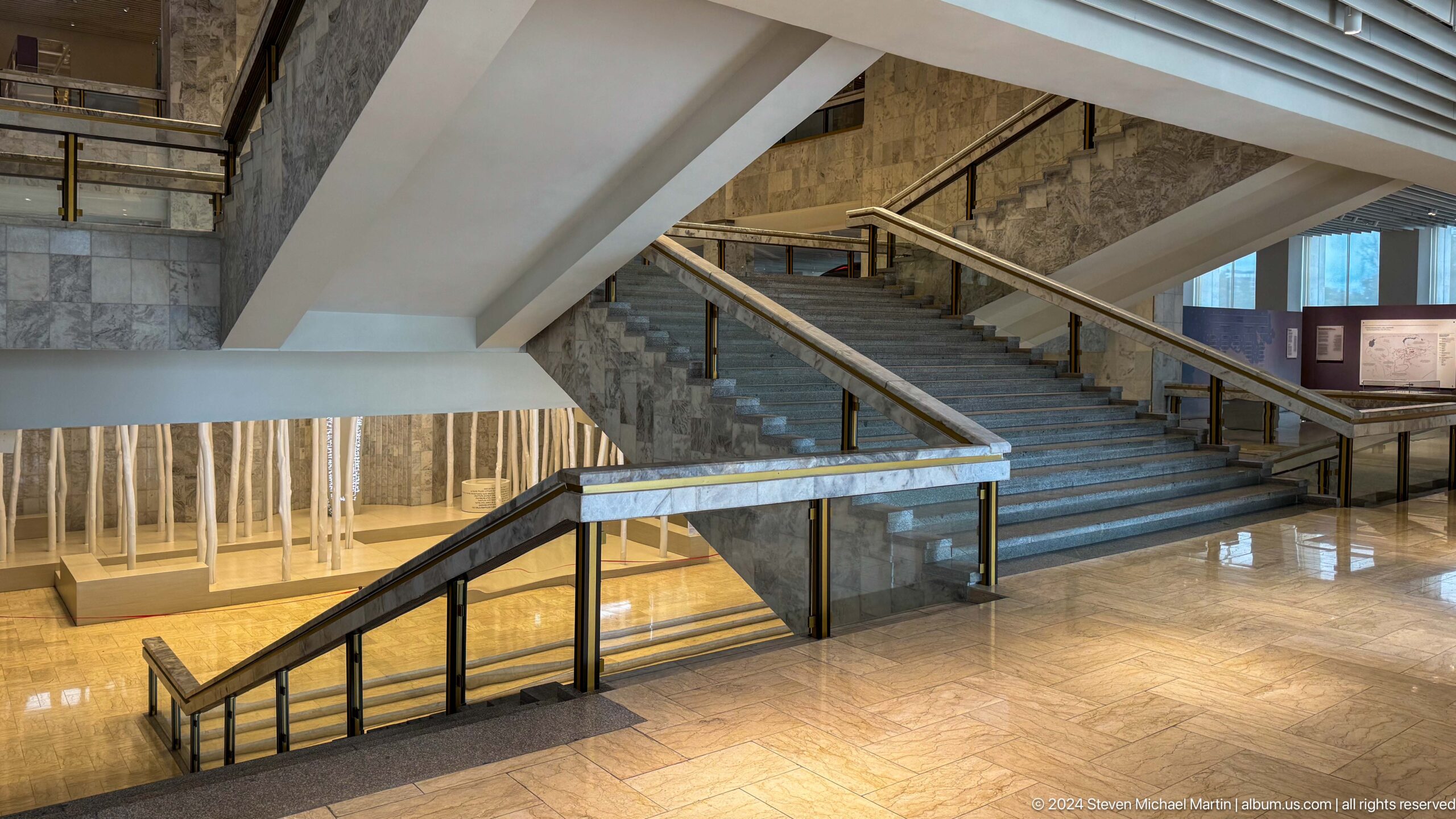
Interior circulation hall of the Bishkek State History Museum, displayed in the Bishkek State History Museum. The renovated interior uses broad ramps and stairs to organize movement through the galleries. Concrete, metal, and warm lighting create a monumental circulation space.
Caption
Interior circulation hall of the Bishkek State History Museum, displayed in the Bishkek State History Museum. The renovated interior uses broad ramps and stairs to organize movement through the galleries. Concrete, metal, and warm lighting create a monumental circulation space.
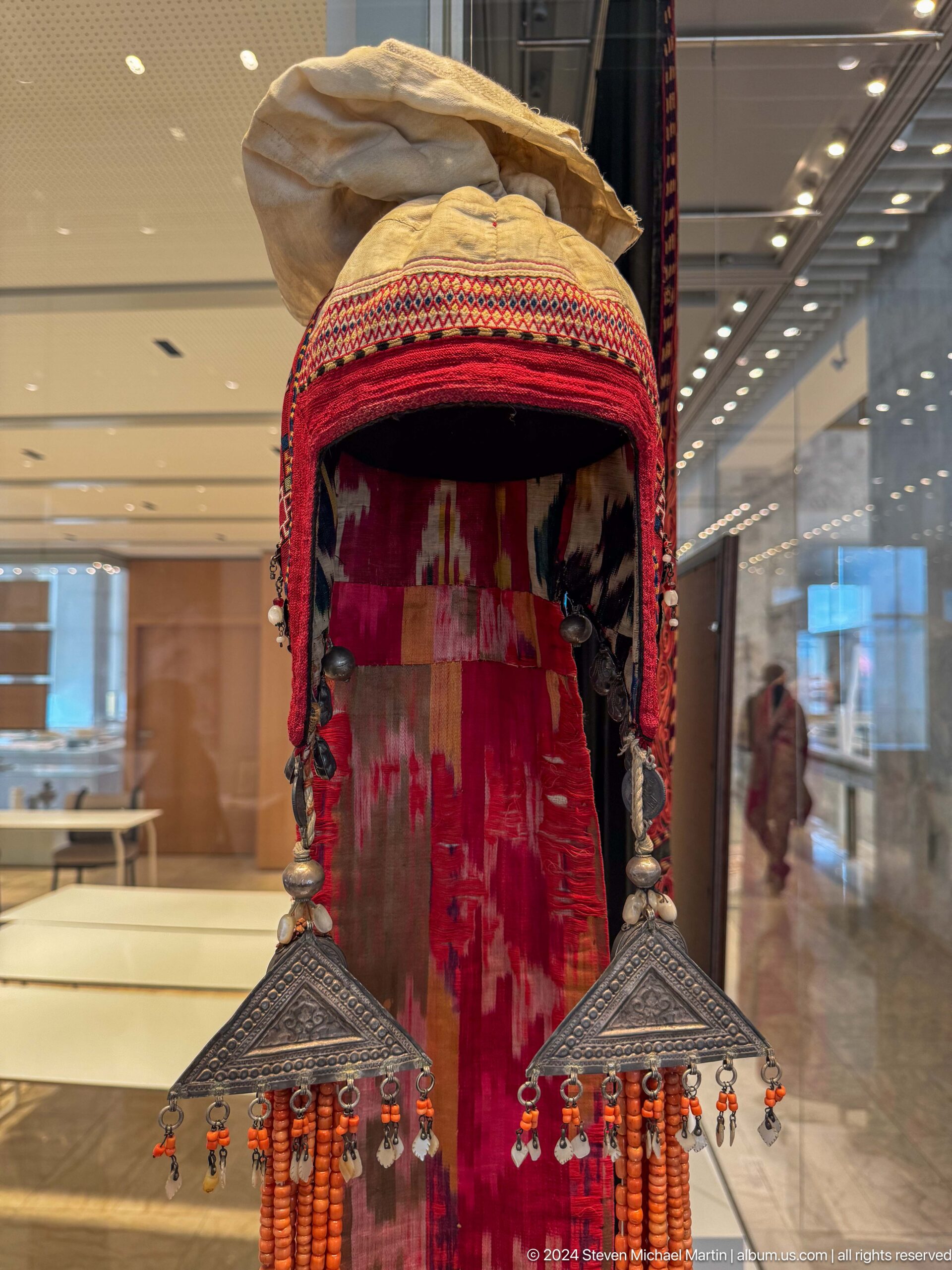
Kyrgyz embroidered ceremonial garment, displayed in the Bishkek State History Museum. The garment uses vivid embroidery to emphasize edges, sleeves, and chest panels. It represents traditional Kyrgyz dress and textile craftsmanship.
Caption
Kyrgyz embroidered ceremonial garment, displayed in the Bishkek State History Museum. The garment uses vivid embroidery to emphasize edges, sleeves, and chest panels. It represents traditional Kyrgyz dress and textile craftsmanship.
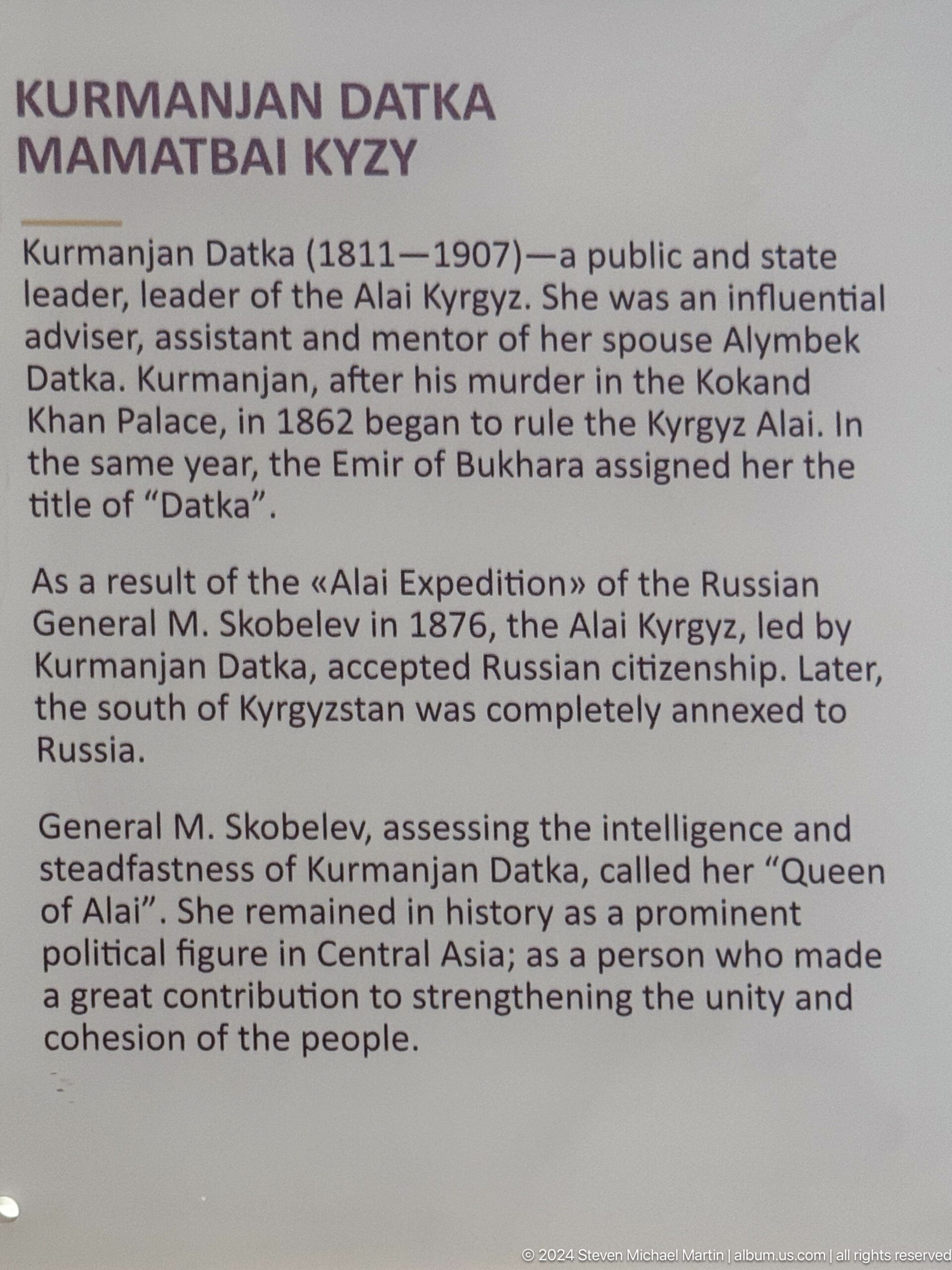
Interpretive panel on the Alai Expedition and Kurmanjan Datka, displayed in the Bishkek State History Museum. The panel describes Russian imperial expansion into the Alai Valley. It highlights the role of Kurmanjan Datka in negotiations with imperial authorities.
Caption
Interpretive panel on the Alai Expedition and Kurmanjan Datka, displayed in the Bishkek State History Museum. The panel describes Russian imperial expansion into the Alai Valley. It highlights the role of Kurmanjan Datka in negotiations with imperial authorities.
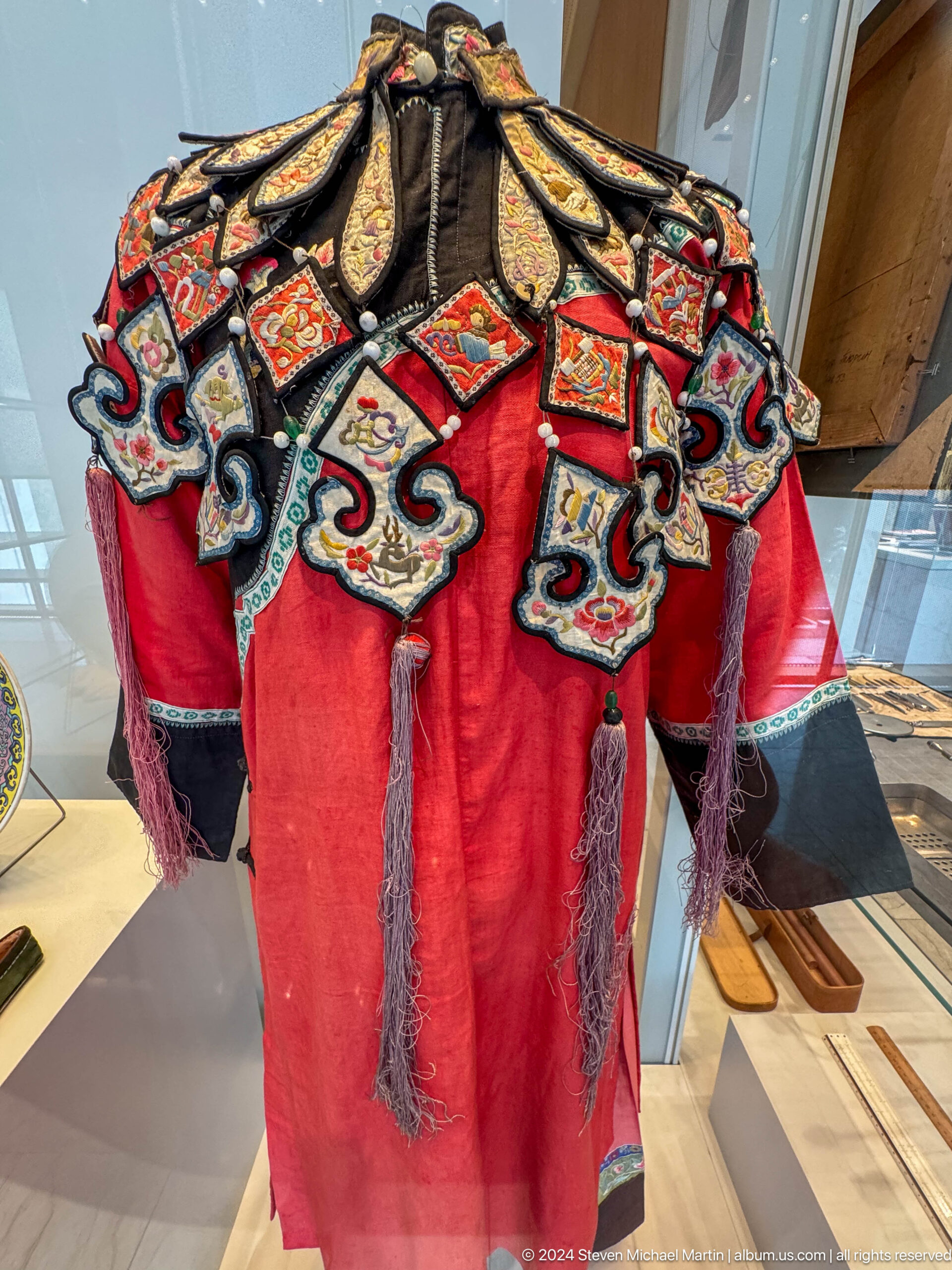
Kyrgyz ceremonial coat with embroidered appliqué, displayed in the Bishkek State History Museum. The coat combines heavy fabric with dense appliqué and embroidery. Its ornament communicates regional identity and ceremonial status.
Caption
Kyrgyz ceremonial coat with embroidered appliqué, displayed in the Bishkek State History Museum. The coat combines heavy fabric with dense appliqué and embroidery. Its ornament communicates regional identity and ceremonial status.
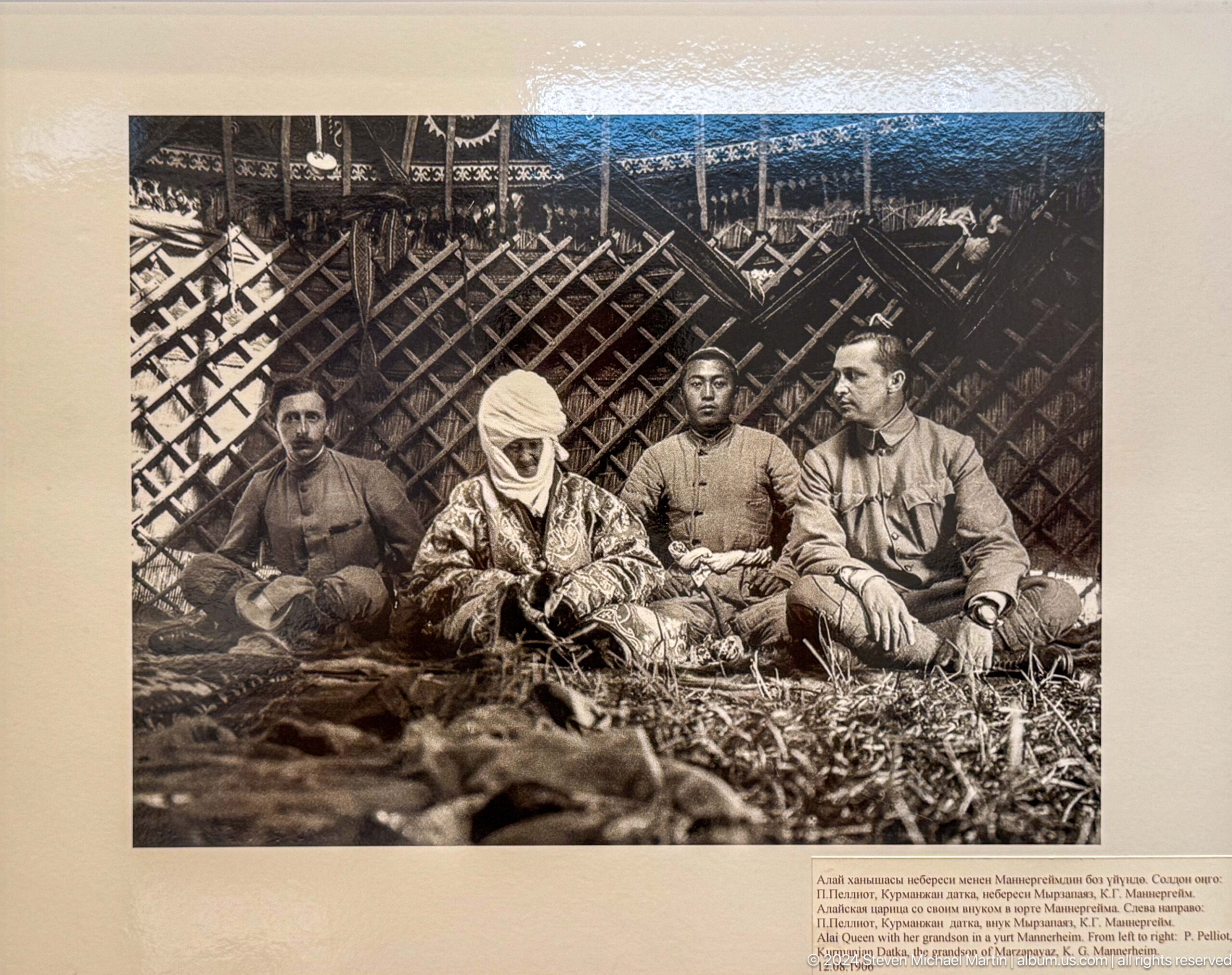
Historic group photograph from the Russian imperial period, displayed in the Bishkek State History Museum. The photograph documents a hunting or military expedition in Central Asia. Its precise participants and date require the adjacent label.
Caption
Historic group photograph from the Russian imperial period, displayed in the Bishkek State History Museum. The photograph documents a hunting or military expedition in Central Asia. Its precise participants and date require the adjacent label.
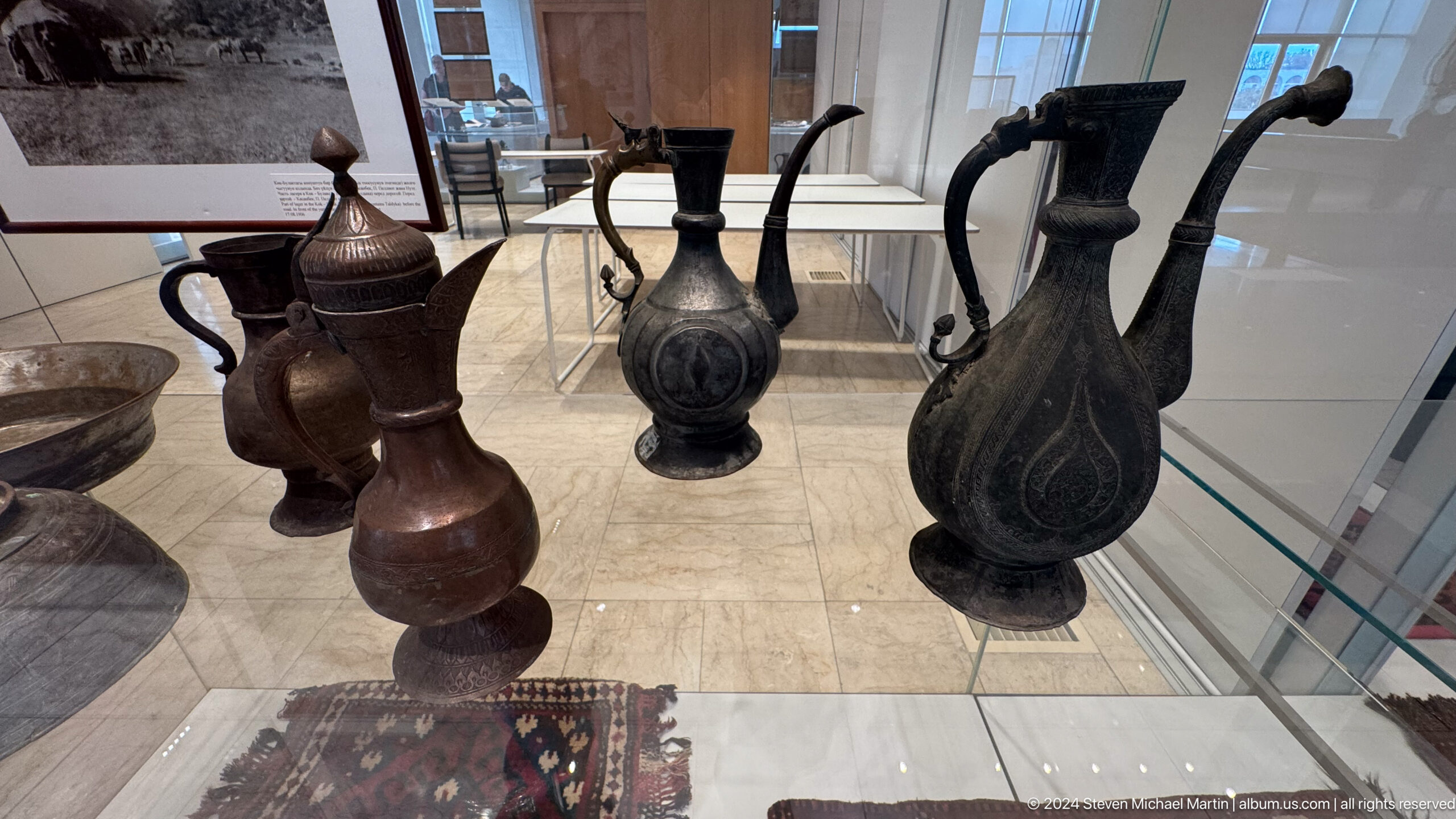
Traditional Central Asian ewers and pitchers, displayed in the Bishkek State History Museum. The vessels were designed for pouring water or other liquids. Their silhouettes show regional variation in utilitarian metalwork.
Caption
Traditional Central Asian ewers and pitchers, displayed in the Bishkek State History Museum. The vessels were designed for pouring water or other liquids. Their silhouettes show regional variation in utilitarian metalwork.

Miniature figures representing Kyrgyz and Central Asian dress, displayed in the Bishkek State History Museum. The dolls provide a comparative display of clothing traditions. Differences in headwear, color, and silhouette communicate regional and social identity.
Caption
Miniature figures representing Kyrgyz and Central Asian dress, displayed in the Bishkek State History Museum. The dolls provide a comparative display of clothing traditions. Differences in headwear, color, and silhouette communicate regional and social identity.
Wooden implements from nomadic life, displayed in the Bishkek State History Museum. The objects appear to be long wooden tools or components used in transport, craft, or domestic life. Their exact identification requires the museum label.
Caption
Wooden implements from nomadic life, displayed in the Bishkek State History Museum. The objects appear to be long wooden tools or components used in transport, craft, or domestic life. Their exact identification requires the museum label.
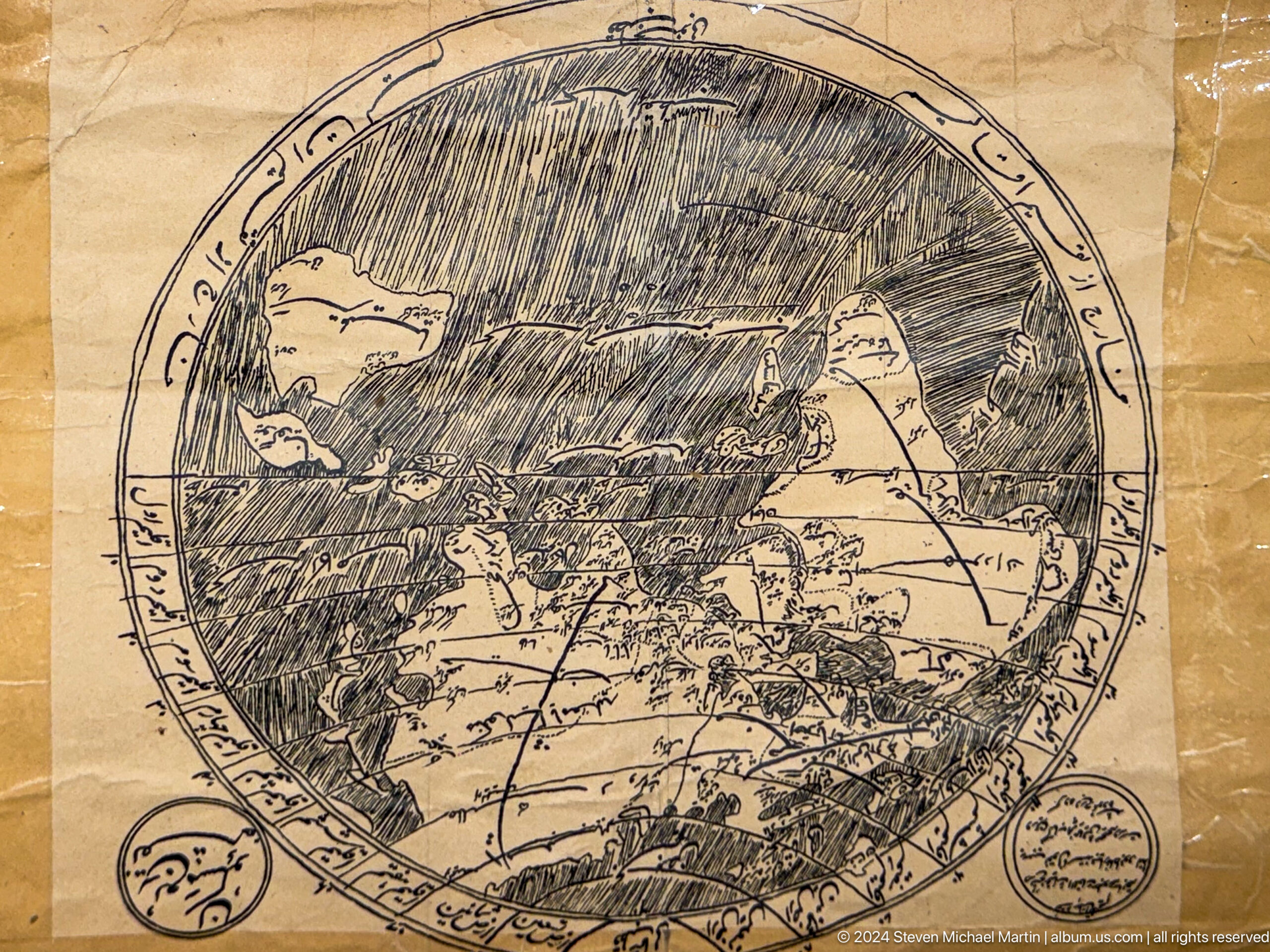
Historical map of Central Asia or Kyrgyz territories, displayed in the Bishkek State History Museum. The map records historical geography and routes across Central Asia. Its dense annotation reflects imperial or scholarly mapping practices.
Caption
Historical map of Central Asia or Kyrgyz territories, displayed in the Bishkek State History Museum. The map records historical geography and routes across Central Asia. Its dense annotation reflects imperial or scholarly mapping practices.
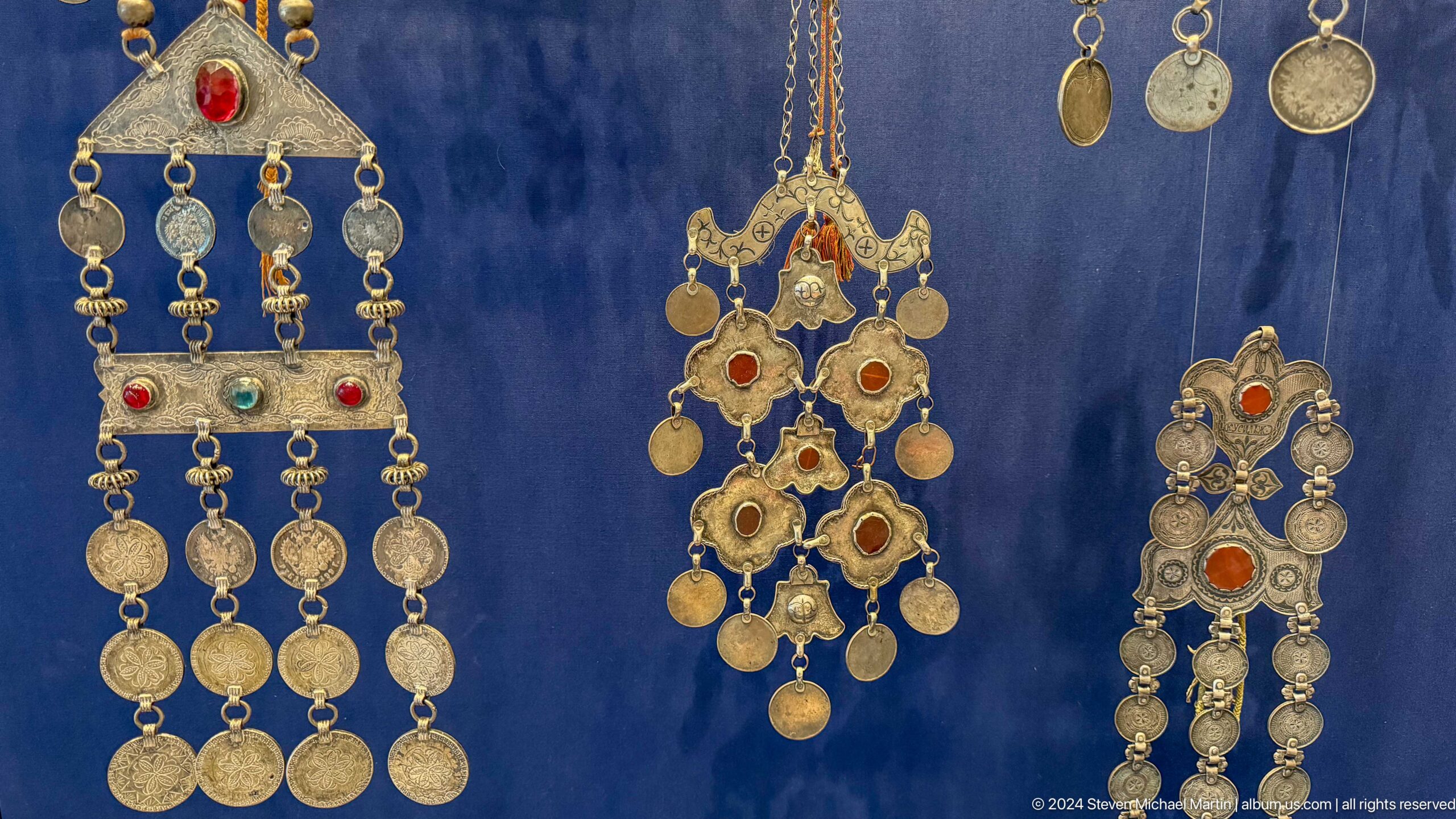
Kyrgyz silver pectoral jewelry, displayed in the Bishkek State History Museum. The pectorals demonstrate sophisticated silverworking and modular assembly. Their scale suggests ceremonial or high-status use.
Caption
Kyrgyz silver pectoral jewelry, displayed in the Bishkek State History Museum. The pectorals demonstrate sophisticated silverworking and modular assembly. Their scale suggests ceremonial or high-status use.
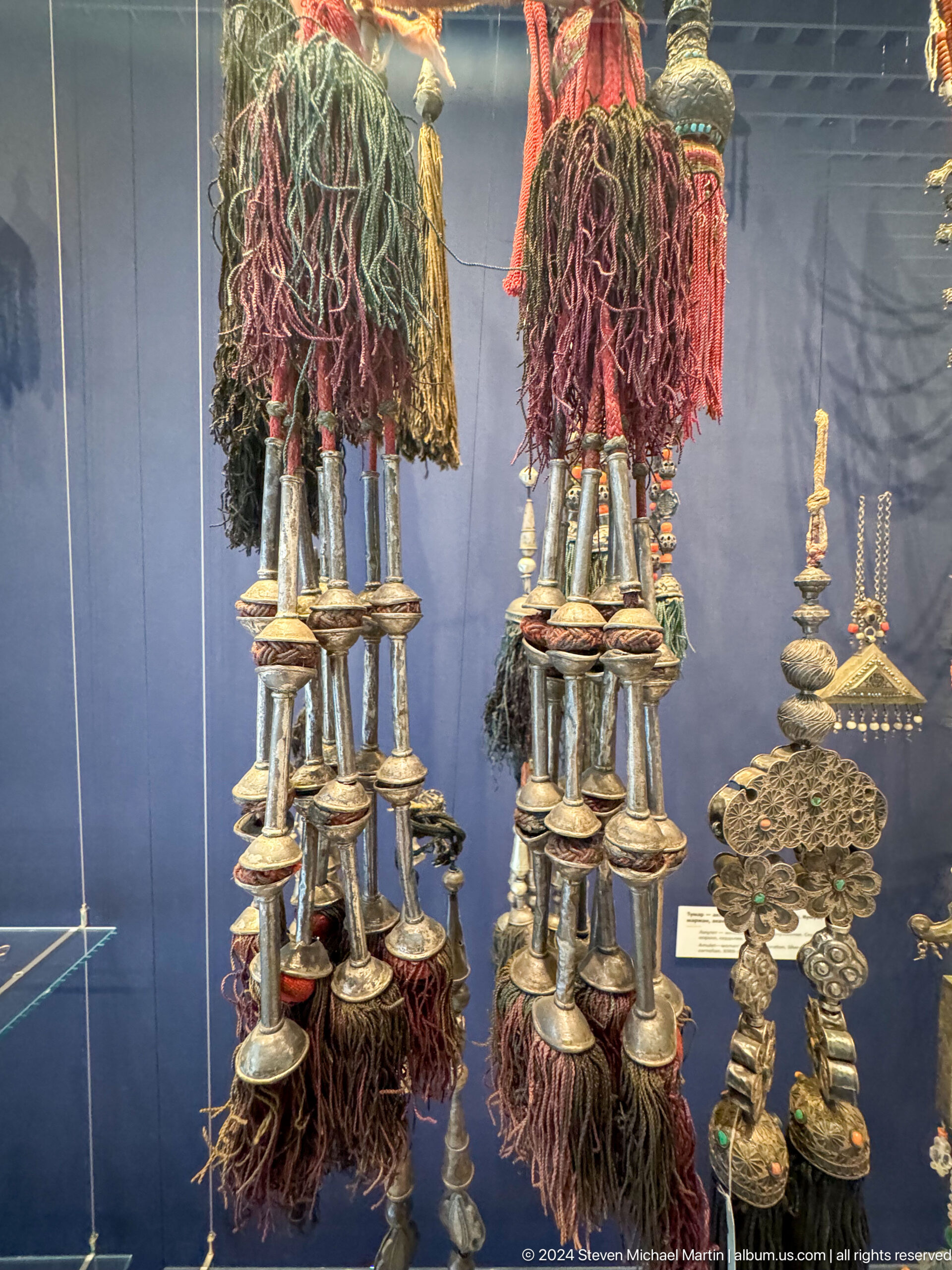
Kyrgyz silver pendants and tasselled ornaments, displayed in the Bishkek State History Museum. The ornaments combine silverwork with colored textile tassels. They likely formed part of women’s dress, hair decoration, or household display.
Caption
Kyrgyz silver pendants and tasselled ornaments, displayed in the Bishkek State History Museum. The ornaments combine silverwork with colored textile tassels. They likely formed part of women’s dress, hair decoration, or household display.
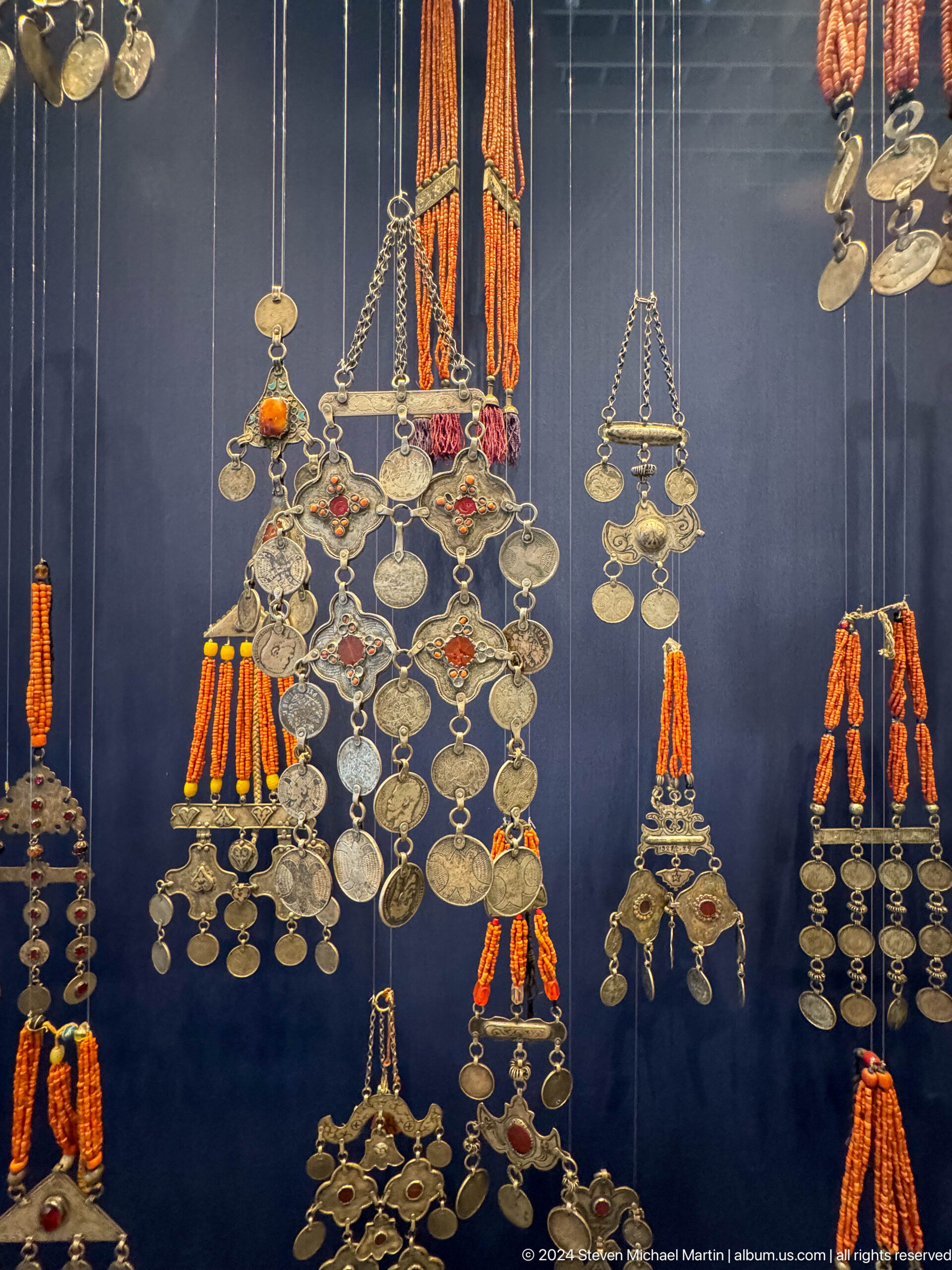
Kyrgyz coin-set pectoral ornaments, displayed in the Bishkek State History Museum. The pectoral ornaments use coins, plaques, and textile elements to create conspicuous personal adornment. Such pieces conveyed status, wealth, and identity.
Caption
Kyrgyz coin-set pectoral ornaments, displayed in the Bishkek State History Museum. The pectoral ornaments use coins, plaques, and textile elements to create conspicuous personal adornment. Such pieces conveyed status, wealth, and identity.

Kyrgyz silver jewelry ensemble, displayed in the Bishkek State History Museum. The ensemble illustrates the diversity of Kyrgyz personal ornaments. Metal, bead, and textile elements were combined for movement and visual impact.
Caption
Kyrgyz silver jewelry ensemble, displayed in the Bishkek State History Museum. The ensemble illustrates the diversity of Kyrgyz personal ornaments. Metal, bead, and textile elements were combined for movement and visual impact.
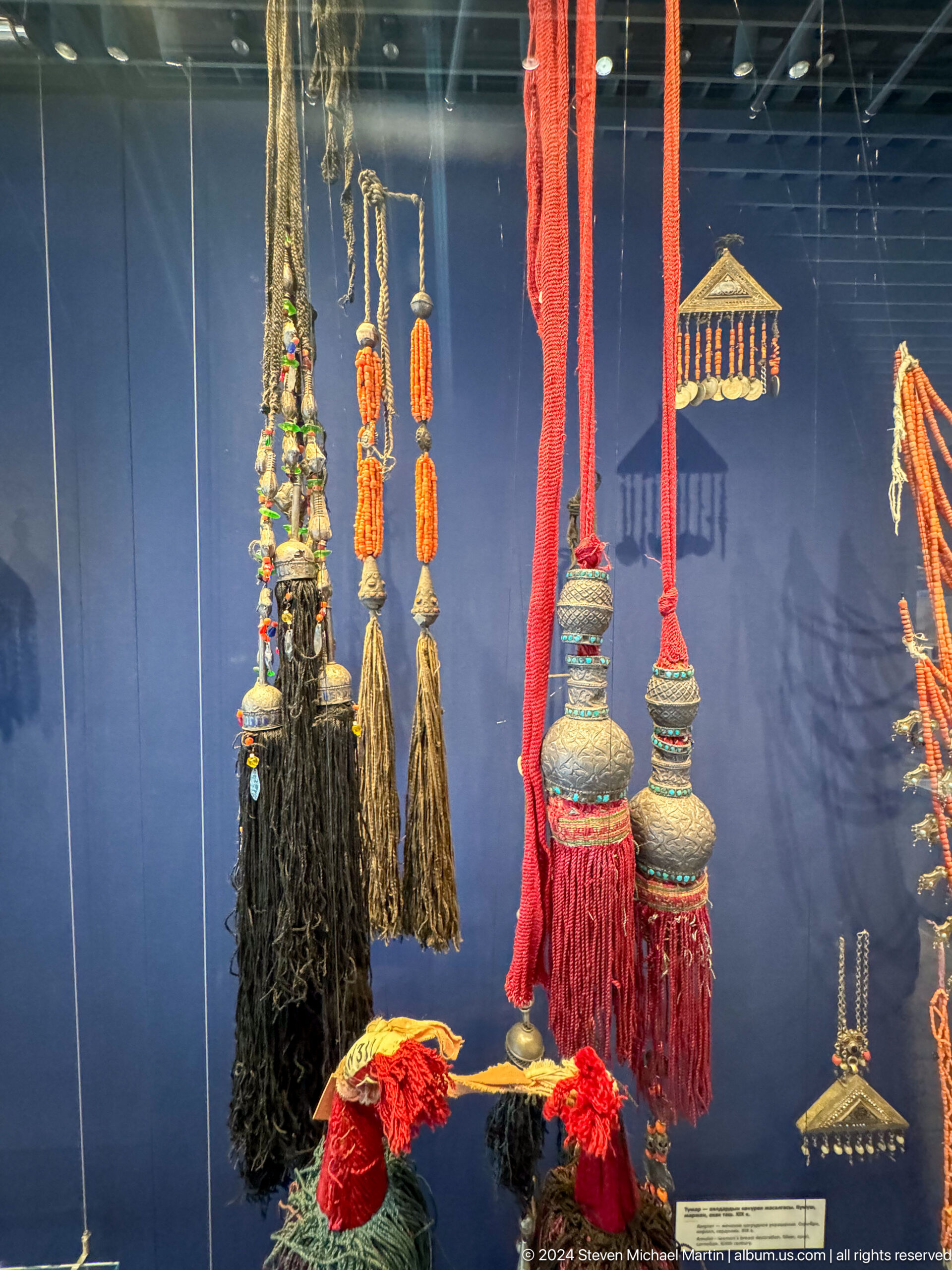
Beaded and tasselled Kyrgyz ornaments, displayed in the Bishkek State History Museum. The long ornaments were designed to hang from clothing, hair, or headdress. Their length and movement would have animated ceremonial dress.
Caption
Beaded and tasselled Kyrgyz ornaments, displayed in the Bishkek State History Museum. The long ornaments were designed to hang from clothing, hair, or headdress. Their length and movement would have animated ceremonial dress.
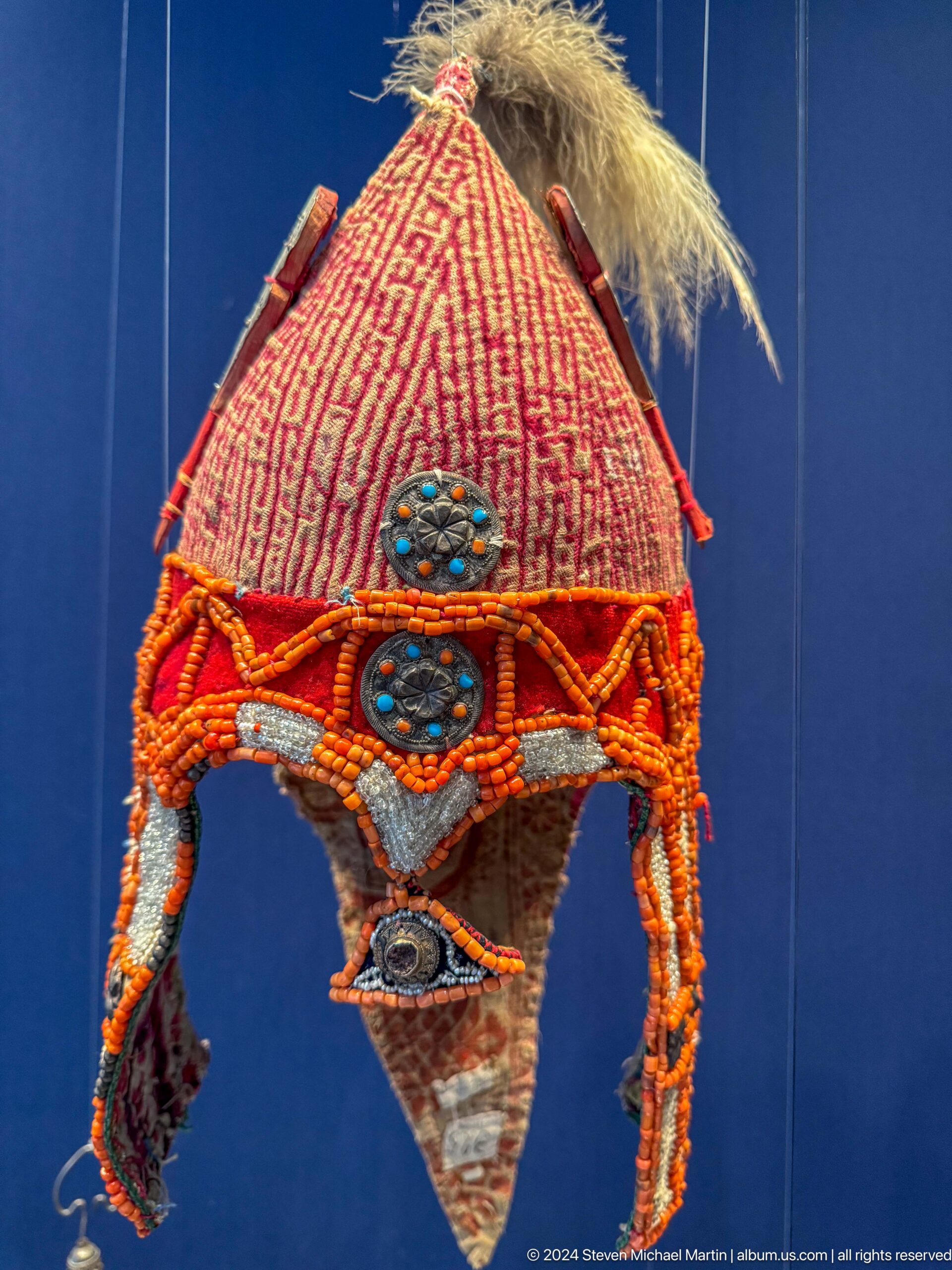
Kyrgyz women’s beaded headdress or head ornament, displayed in the Bishkek State History Museum. The head ornament combines bright cloth, beads, and metal fittings. Its dense surface decoration would have signaled ceremonial dress and social identity.
Caption
Kyrgyz women’s beaded headdress or head ornament, displayed in the Bishkek State History Museum. The head ornament combines bright cloth, beads, and metal fittings. Its dense surface decoration would have signaled ceremonial dress and social identity.
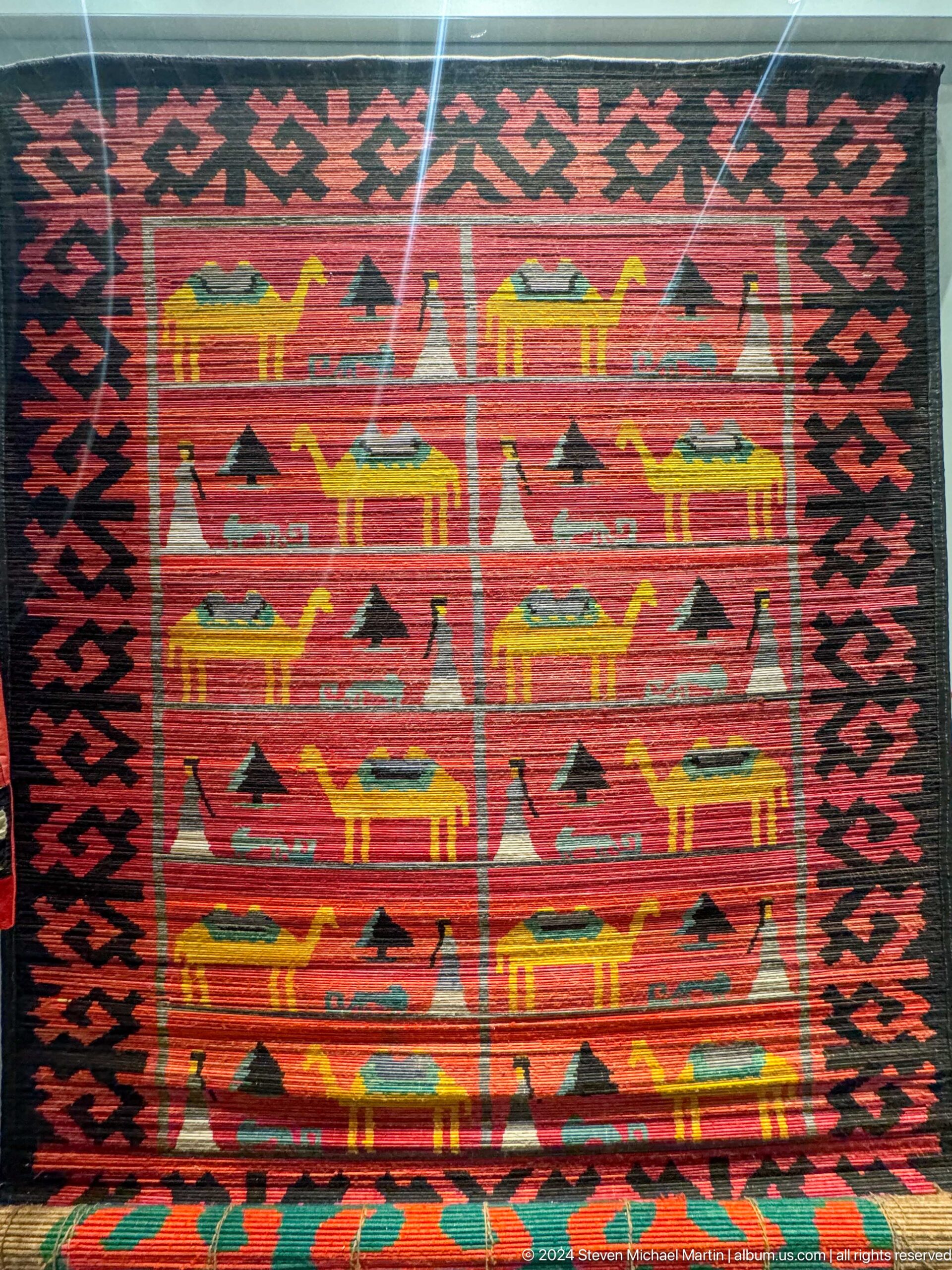
Kyrgyz kilim or flatweave with animal motifs, displayed in the Bishkek State History Museum. The textile repeats stylized animals in horizontal registers. The imagery links weaving with pastoral life and herd-based identity.
Caption
Kyrgyz kilim or flatweave with animal motifs, displayed in the Bishkek State History Museum. The textile repeats stylized animals in horizontal registers. The imagery links weaving with pastoral life and herd-based identity.
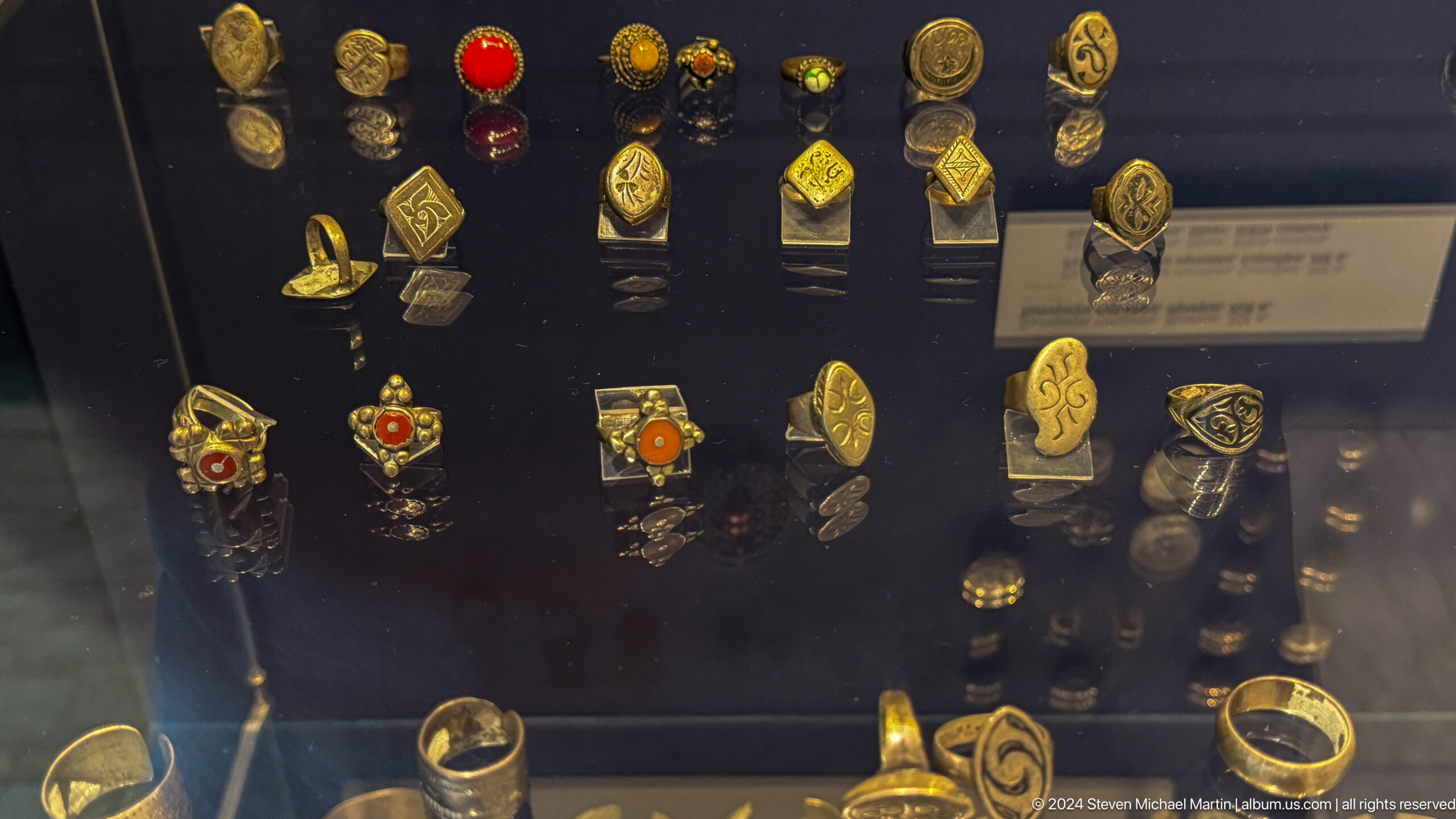
Soviet-era civic and military badges, displayed in the Bishkek State History Museum. The collection documents Soviet systems of recognition, membership, and commemoration. Enamel pins made political symbols part of everyday dress.
Caption
Soviet-era civic and military badges, displayed in the Bishkek State History Museum. The collection documents Soviet systems of recognition, membership, and commemoration. Enamel pins made political symbols part of everyday dress.
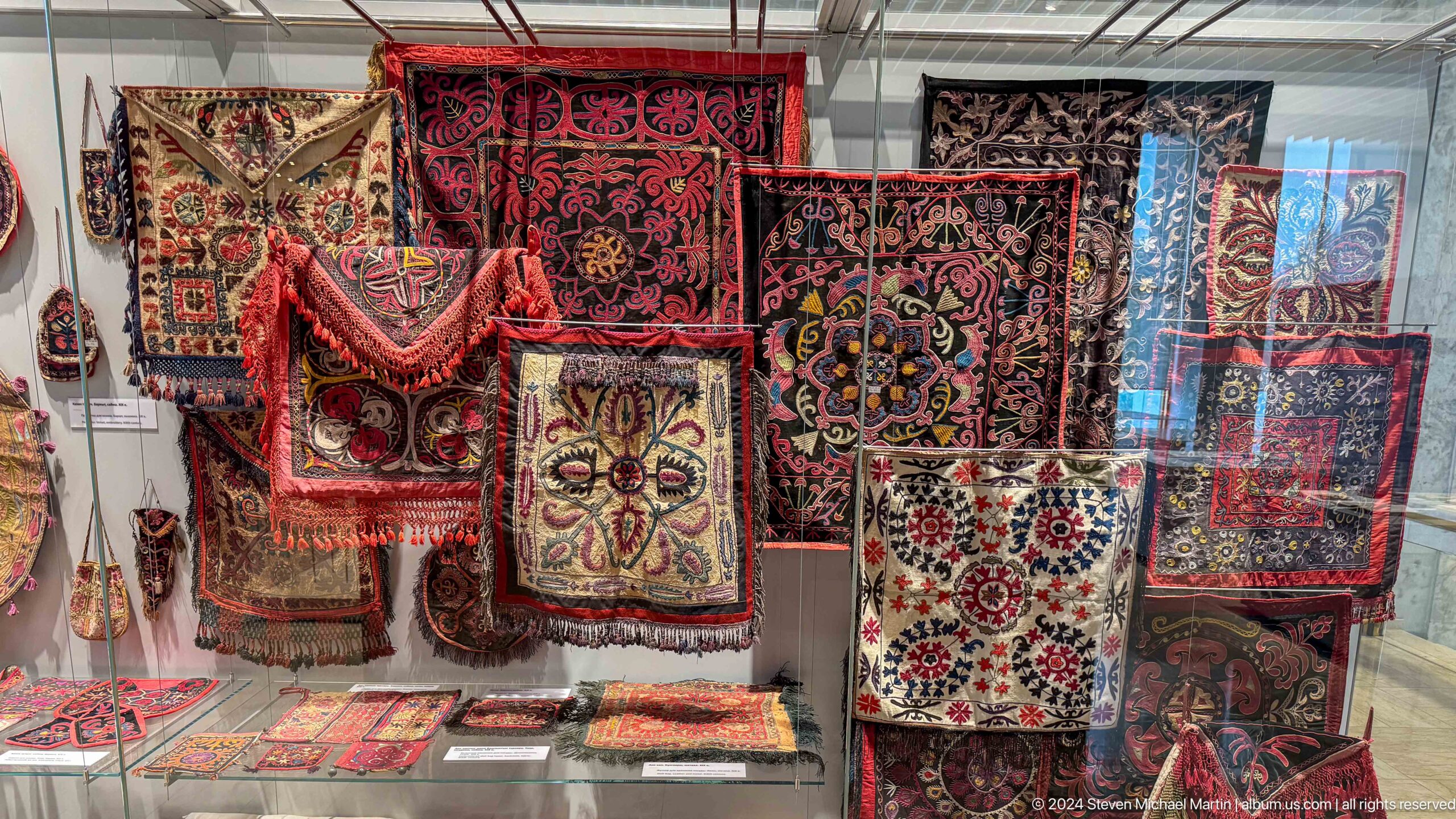
Kyrgyz embroidered household textiles, displayed in the Bishkek State History Museum. The installation shows textiles used to decorate and organize the interior of a nomadic or domestic space. Embroidery transforms practical objects into markers of identity and skill.
Caption
Kyrgyz embroidered household textiles, displayed in the Bishkek State History Museum. The installation shows textiles used to decorate and organize the interior of a nomadic or domestic space. Embroidery transforms practical objects into markers of identity and skill.

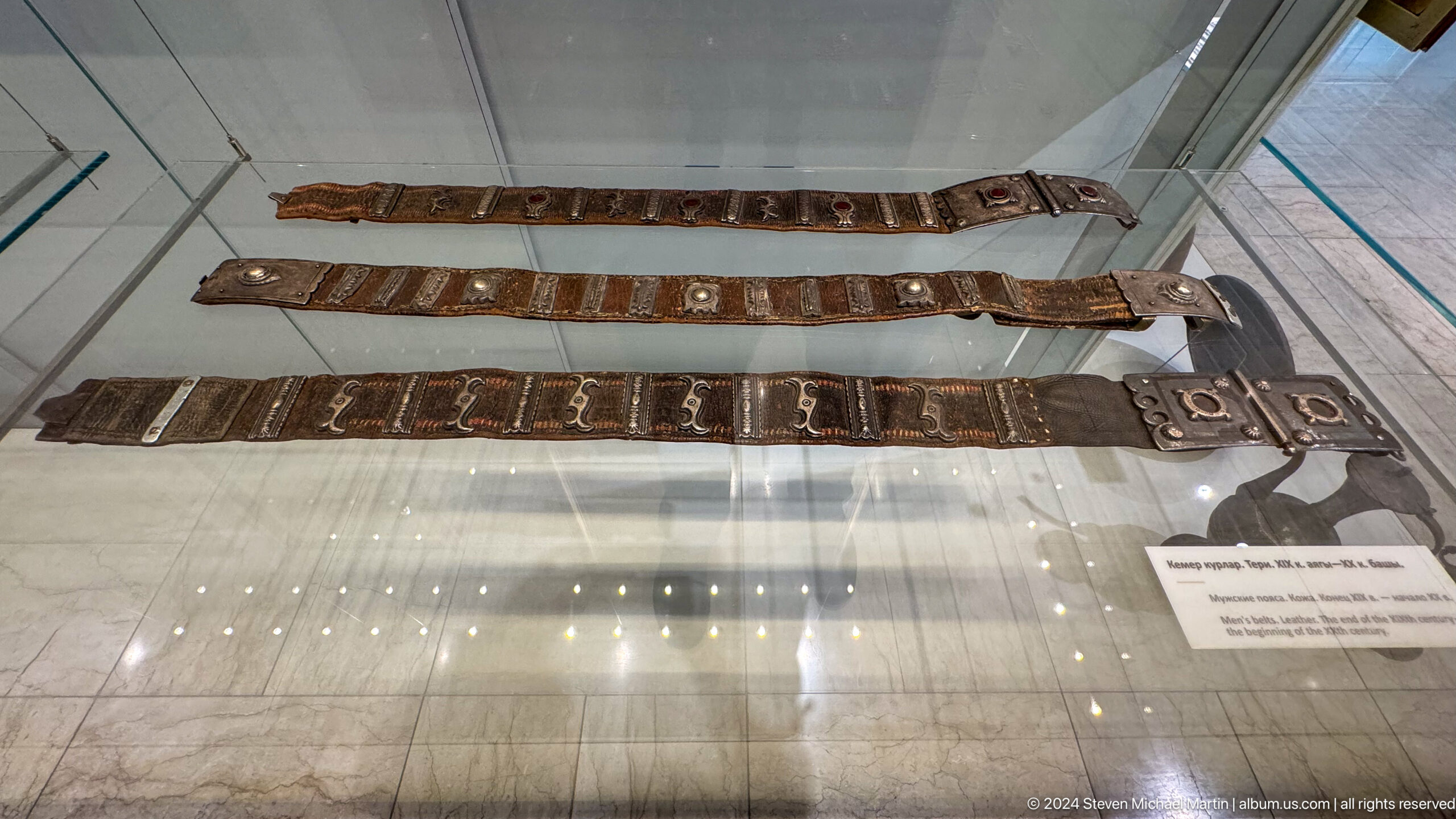
Kyrgyz embroidered belts or decorative bands, displayed in the Bishkek State History Museum. The long bands use repeated motifs in a narrow format suited to belts, straps, or architectural textile trim. Their dense stitching reflects skilled domestic production.
Caption
Kyrgyz embroidered belts or decorative bands, displayed in the Bishkek State History Museum. The long bands use repeated motifs in a narrow format suited to belts, straps, or architectural textile trim. Their dense stitching reflects skilled domestic production.
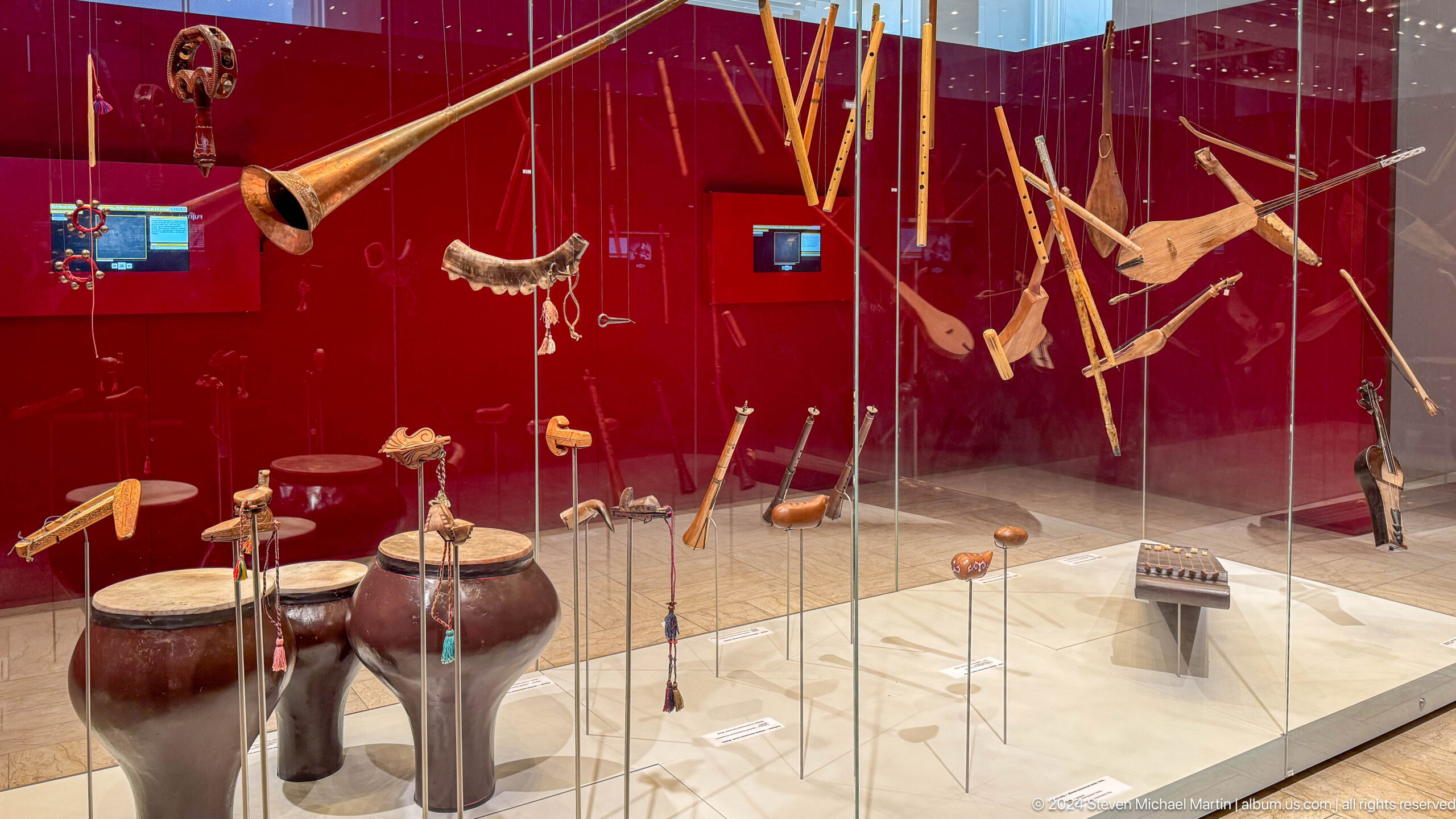
Kyrgyz archery and hunting equipment, displayed in the Bishkek State History Museum. The display presents equipment associated with mounted archery, hunting, and warfare. Portable weapons were central to life on the Eurasian steppe.
Caption
Kyrgyz archery and hunting equipment, displayed in the Bishkek State History Museum. The display presents equipment associated with mounted archery, hunting, and warfare. Portable weapons were central to life on the Eurasian steppe.
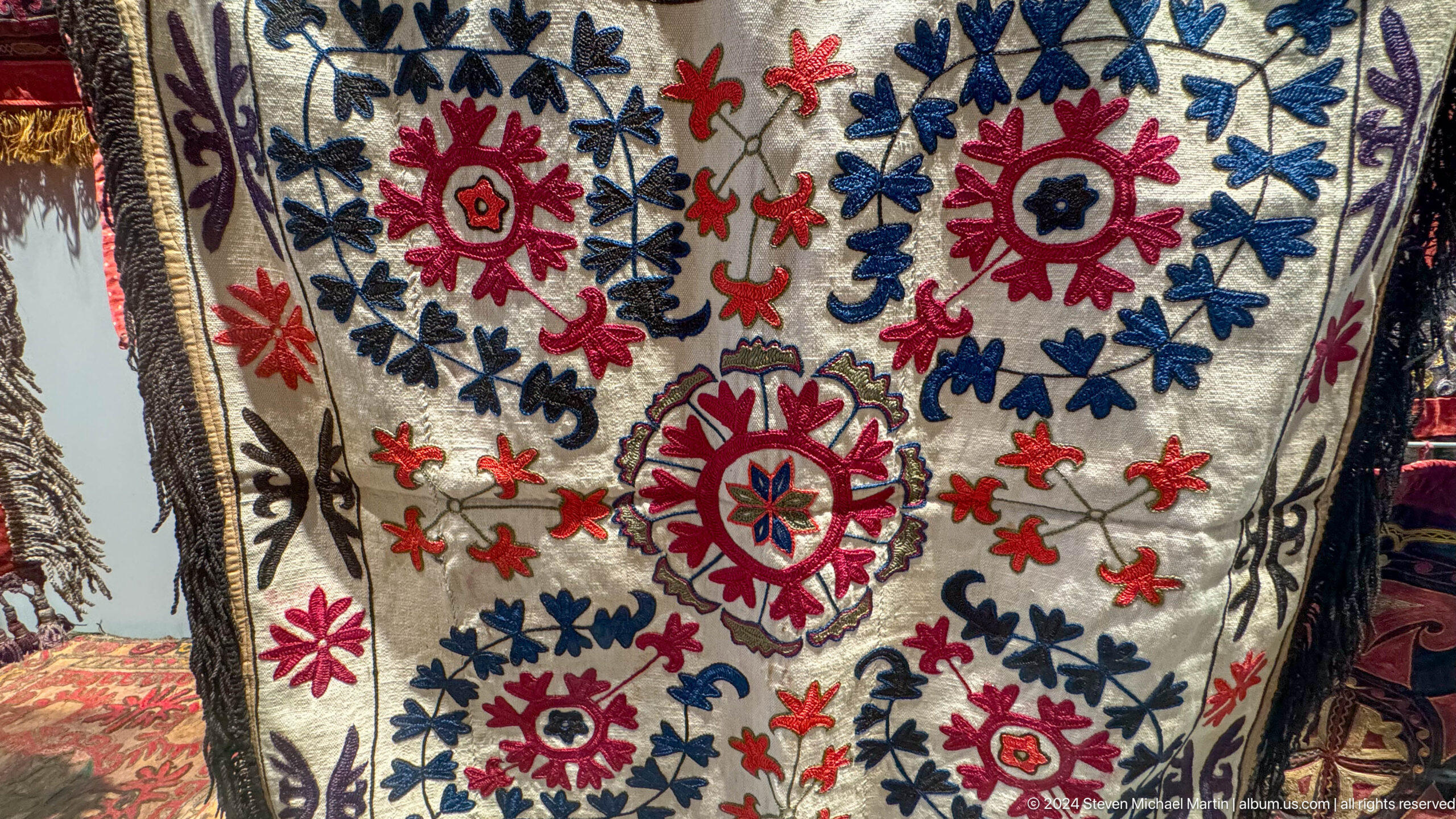
Central Asian suzani-style embroidered hanging, displayed in the Bishkek State History Museum. The textile is covered with bold floral embroidery arranged across a pale ground. Such hangings served decorative and ceremonial roles in Central Asian households.
Caption
Central Asian suzani-style embroidered hanging, displayed in the Bishkek State History Museum. The textile is covered with bold floral embroidery arranged across a pale ground. Such hangings served decorative and ceremonial roles in Central Asian households.
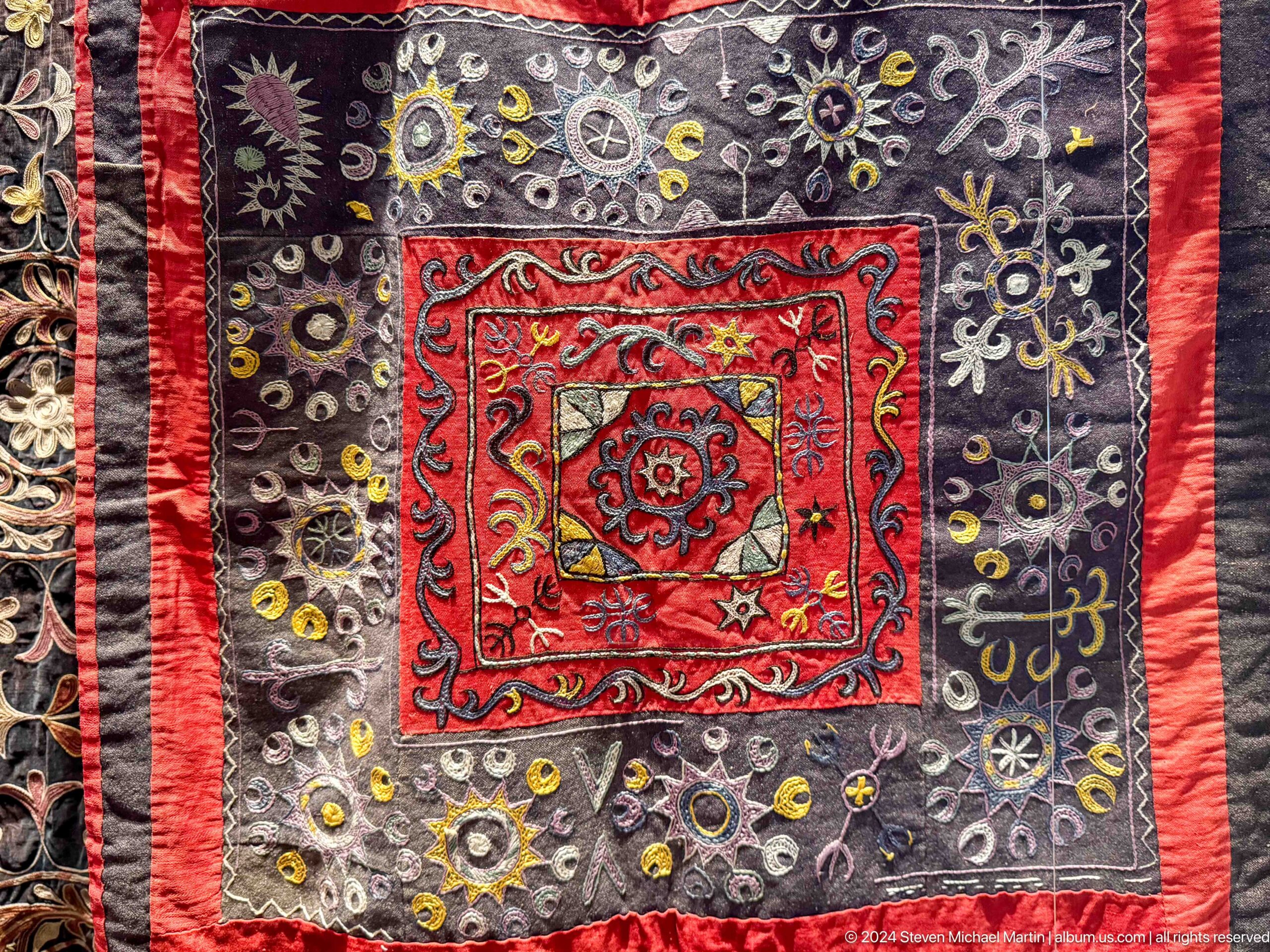
Decorative textile with central medallion, displayed in the Bishkek State History Museum. The composition centers a vivid medallion within multiple borders. Color contrast and dense stitching give the textile a strong architectural structure.
Caption
Decorative textile with central medallion, displayed in the Bishkek State History Museum. The composition centers a vivid medallion within multiple borders. Color contrast and dense stitching give the textile a strong architectural structure.

Decorated saddle cloth or horse trapping, displayed in the Bishkek State History Museum. The richly decorated textile formed part of ceremonial horse equipment. Its scale and ornament reflect the social importance of horses in Kyrgyz nomadic culture.
Caption
Decorated saddle cloth or horse trapping, displayed in the Bishkek State History Museum. The richly decorated textile formed part of ceremonial horse equipment. Its scale and ornament reflect the social importance of horses in Kyrgyz nomadic culture.
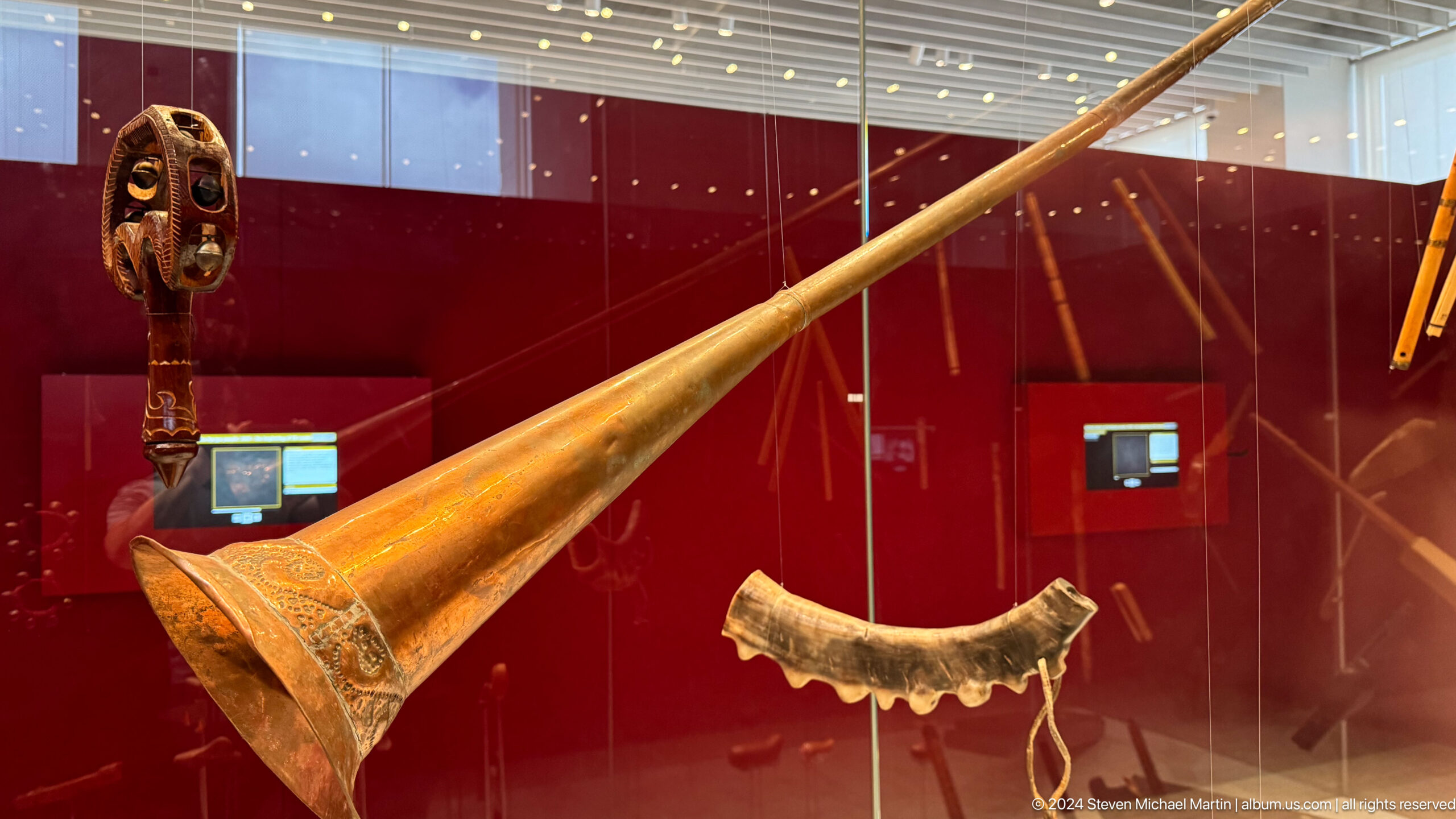
Kyrgyz komuz, displayed in the Bishkek State History Museum. The komuz is a central instrument of Kyrgyz musical culture. Its carved wooden body and long neck support a distinctive plucked repertory.
Caption
Kyrgyz komuz, displayed in the Bishkek State History Museum. The komuz is a central instrument of Kyrgyz musical culture. Its carved wooden body and long neck support a distinctive plucked repertory.

Leather liquid containers from nomadic life, displayed in the Bishkek State History Museum. The containers were made for carrying or serving liquids in a mobile pastoral setting. Leather offered durability and portability.
Caption
Leather liquid containers from nomadic life, displayed in the Bishkek State History Museum. The containers were made for carrying or serving liquids in a mobile pastoral setting. Leather offered durability and portability.
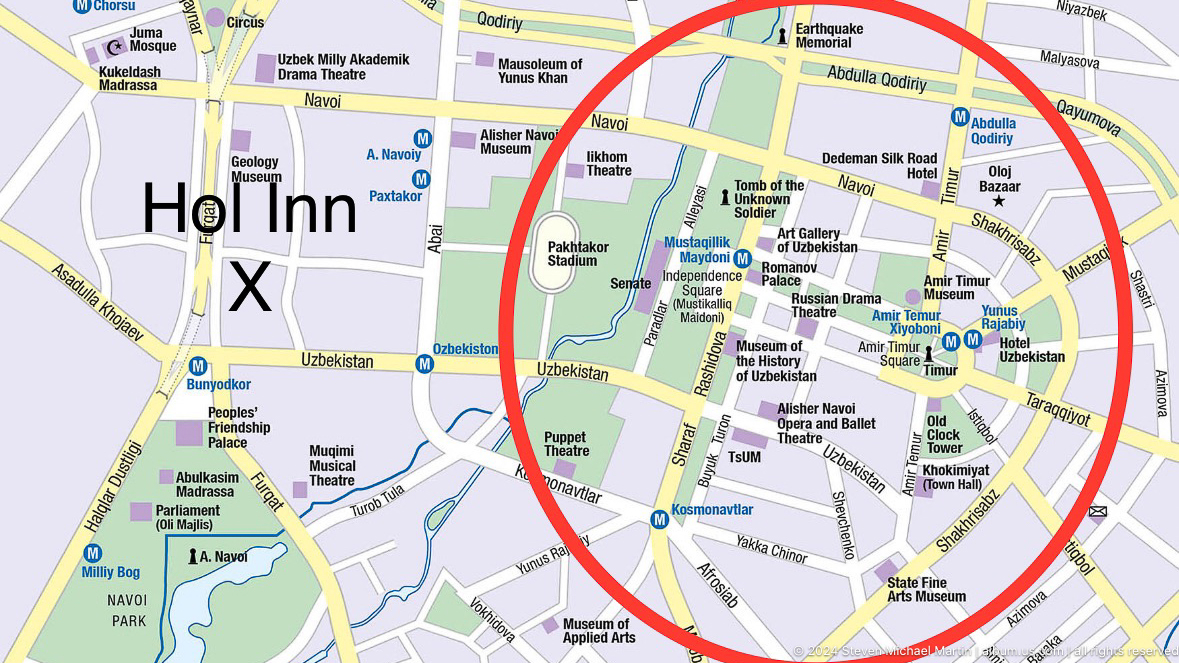
Tourist or orientation map of central Bishkek, displayed in the Bishkek State History Museum. The map highlights the museum’s central urban context in Bishkek. It may document visitor navigation rather than a historical artifact.
Caption
Tourist or orientation map of central Bishkek, displayed in the Bishkek State History Museum. The map highlights the museum’s central urban context in Bishkek. It may document visitor navigation rather than a historical artifact.
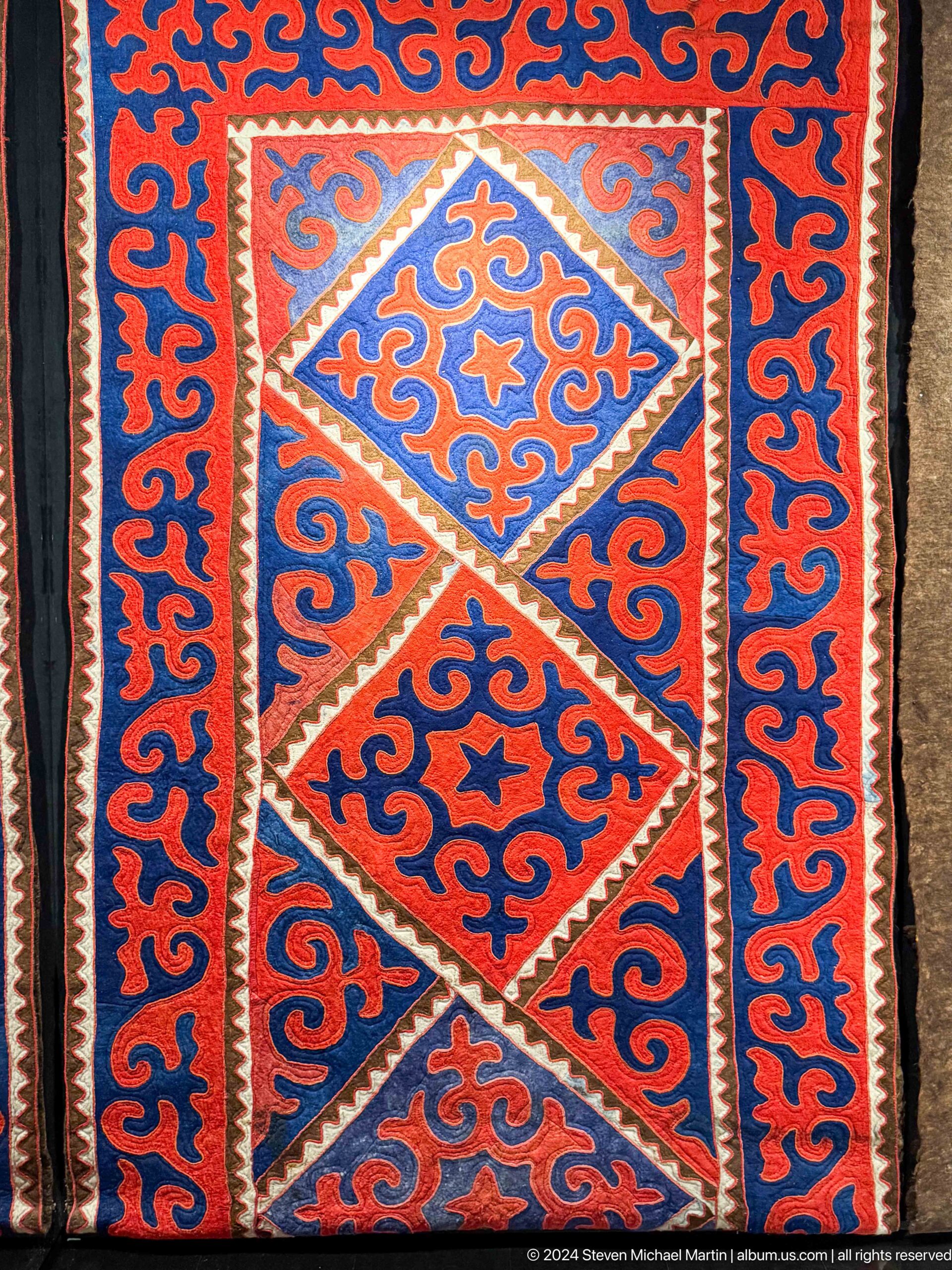
Kyrgyz shyrdak felt carpet, displayed in the Bishkek State History Museum. The shyrdak is assembled from contrasting cut-felt pieces joined into mirrored patterns. Its central medallion and border structure organize the bold color scheme.
Caption
Kyrgyz shyrdak felt carpet, displayed in the Bishkek State History Museum. The shyrdak is assembled from contrasting cut-felt pieces joined into mirrored patterns. Its central medallion and border structure organize the bold color scheme.

Kyrgyz shyrdak with scrolling ornament, displayed in the Bishkek State History Museum. The textile uses mirrored curving forms characteristic of Kyrgyz felt design. High color contrast makes the pattern legible across a large surface.
Caption
Kyrgyz shyrdak with scrolling ornament, displayed in the Bishkek State History Museum. The textile uses mirrored curving forms characteristic of Kyrgyz felt design. High color contrast makes the pattern legible across a large surface.

Kyrgyz shyrdak felt panel, displayed in the Bishkek State History Museum. The carpet demonstrates the cut-and-reassemble technique used to create paired positive and negative motifs. Its palette differs from the adjacent red-dominant examples.
Caption
Kyrgyz shyrdak felt panel, displayed in the Bishkek State History Museum. The carpet demonstrates the cut-and-reassemble technique used to create paired positive and negative motifs. Its palette differs from the adjacent red-dominant examples.
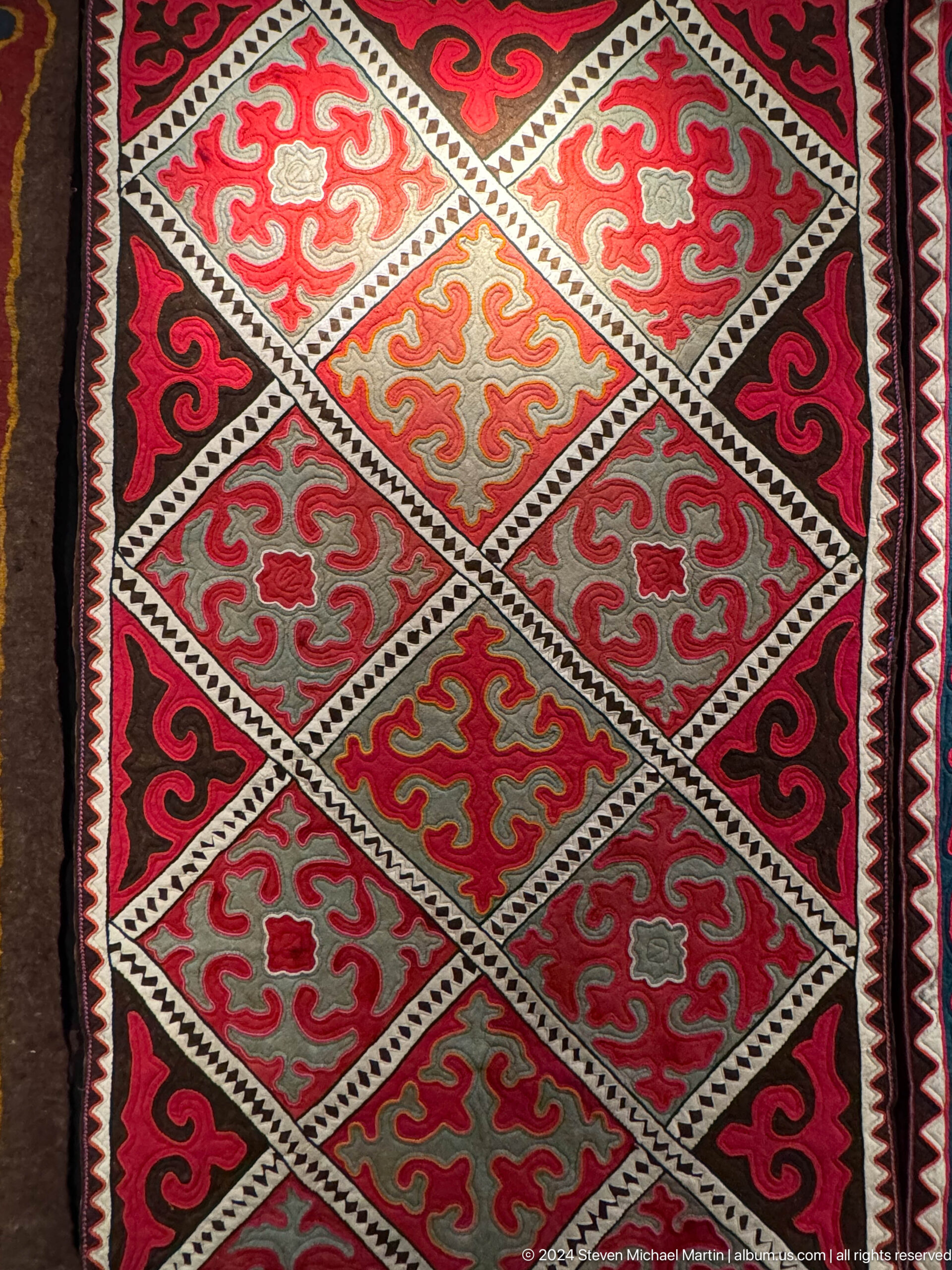
Kyrgyz shyrdak with diamond-grid composition, displayed in the Bishkek State History Museum. The textile organizes its appliqué into a geometric lattice. Mirrored cut-felt motifs fill each diamond and the surrounding borders.
Caption
Kyrgyz shyrdak with diamond-grid composition, displayed in the Bishkek State History Museum. The textile organizes its appliqué into a geometric lattice. Mirrored cut-felt motifs fill each diamond and the surrounding borders.
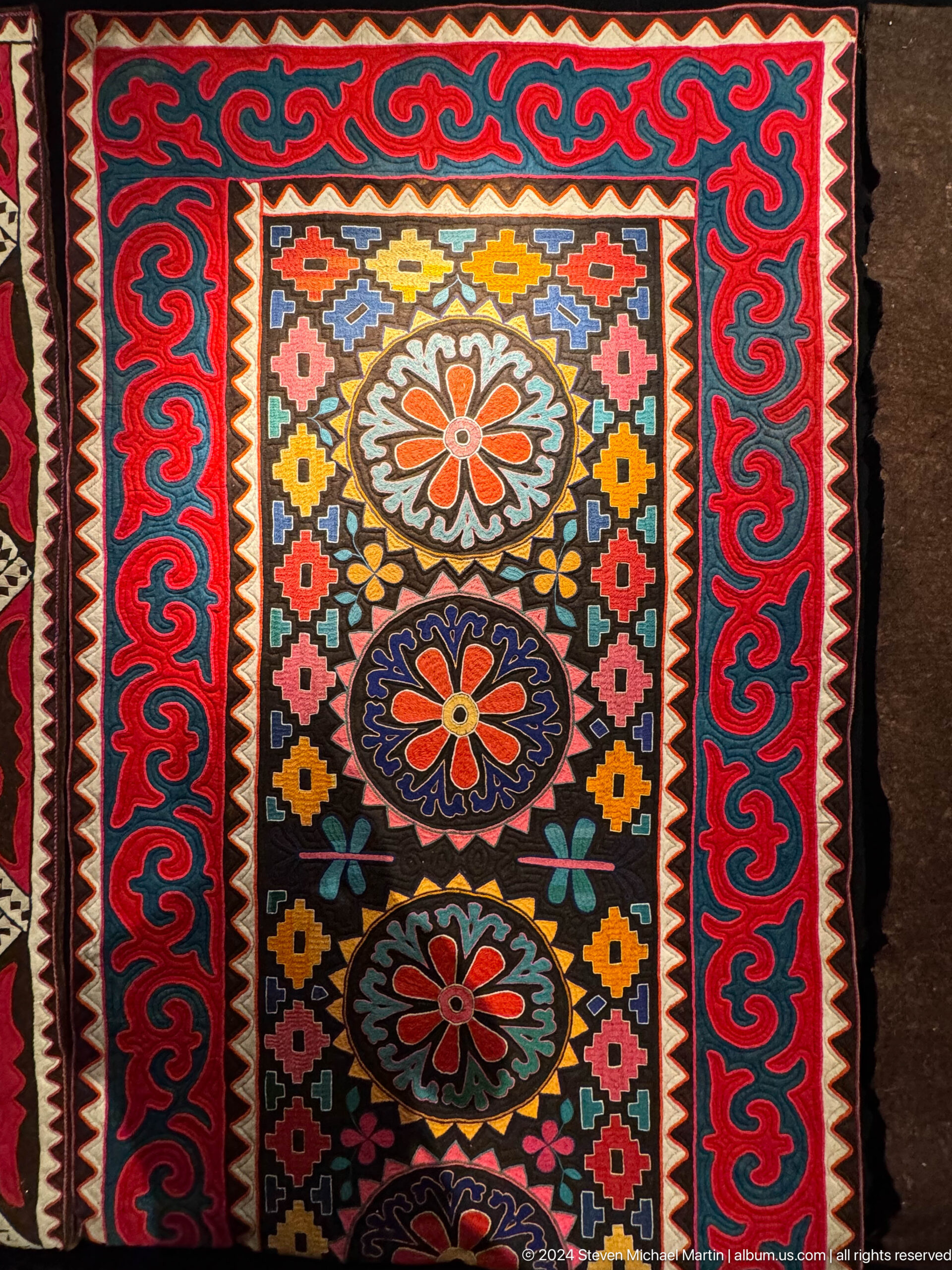
Kyrgyz felt textile with floral rosettes, displayed in the Bishkek State History Museum. The design combines floral medallions with curvilinear felt borders. The black ground heightens the saturated colors.
Caption
Kyrgyz felt textile with floral rosettes, displayed in the Bishkek State History Museum. The design combines floral medallions with curvilinear felt borders. The black ground heightens the saturated colors.
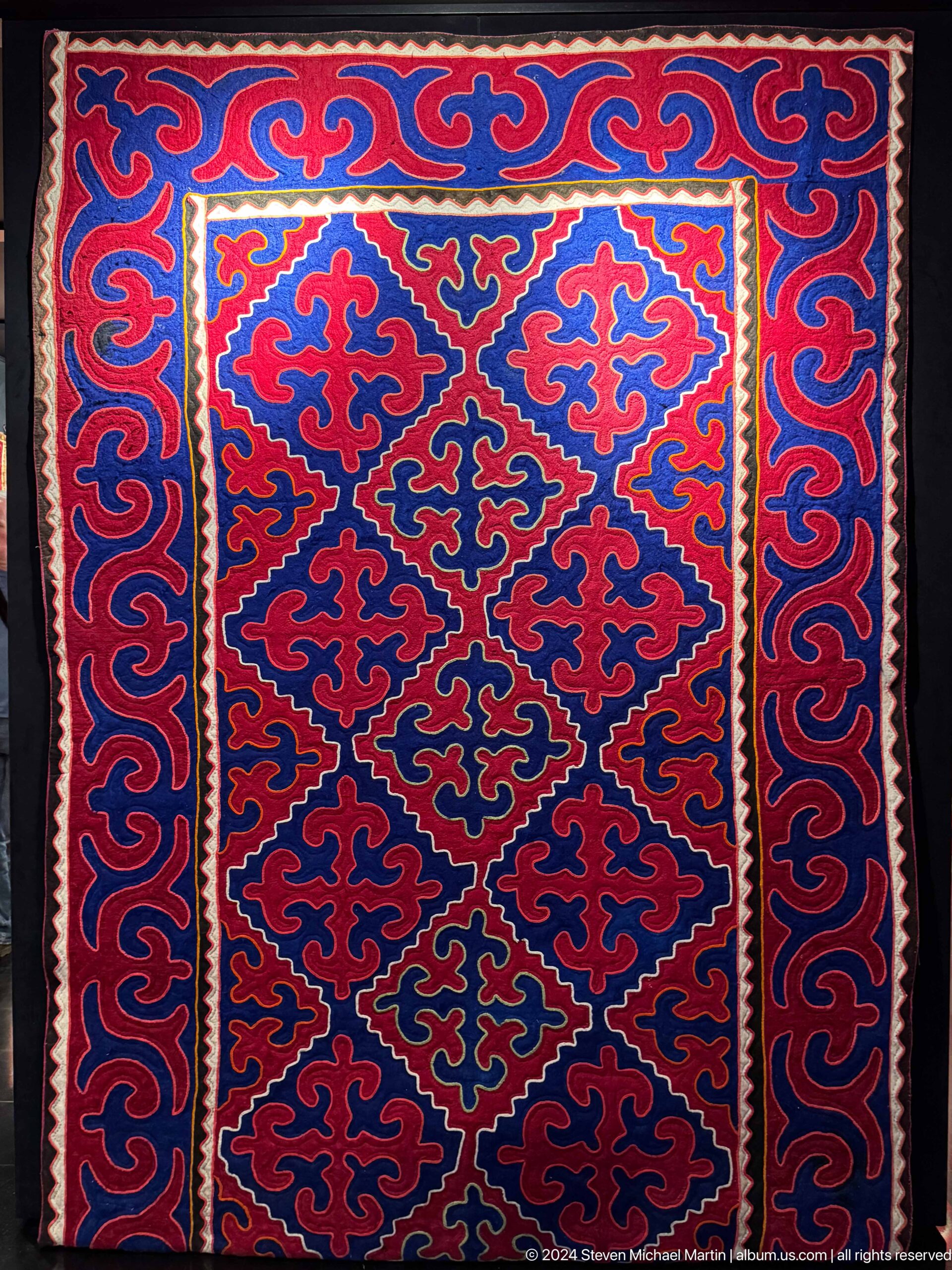
Kyrgyz shyrdak in blue and red, displayed in the Bishkek State History Museum. The carpet relies on a limited high-contrast palette and repeated horn-like forms. Its dense design exemplifies Kyrgyz felt ornament.
Caption
Kyrgyz shyrdak in blue and red, displayed in the Bishkek State History Museum. The carpet relies on a limited high-contrast palette and repeated horn-like forms. Its dense design exemplifies Kyrgyz felt ornament.
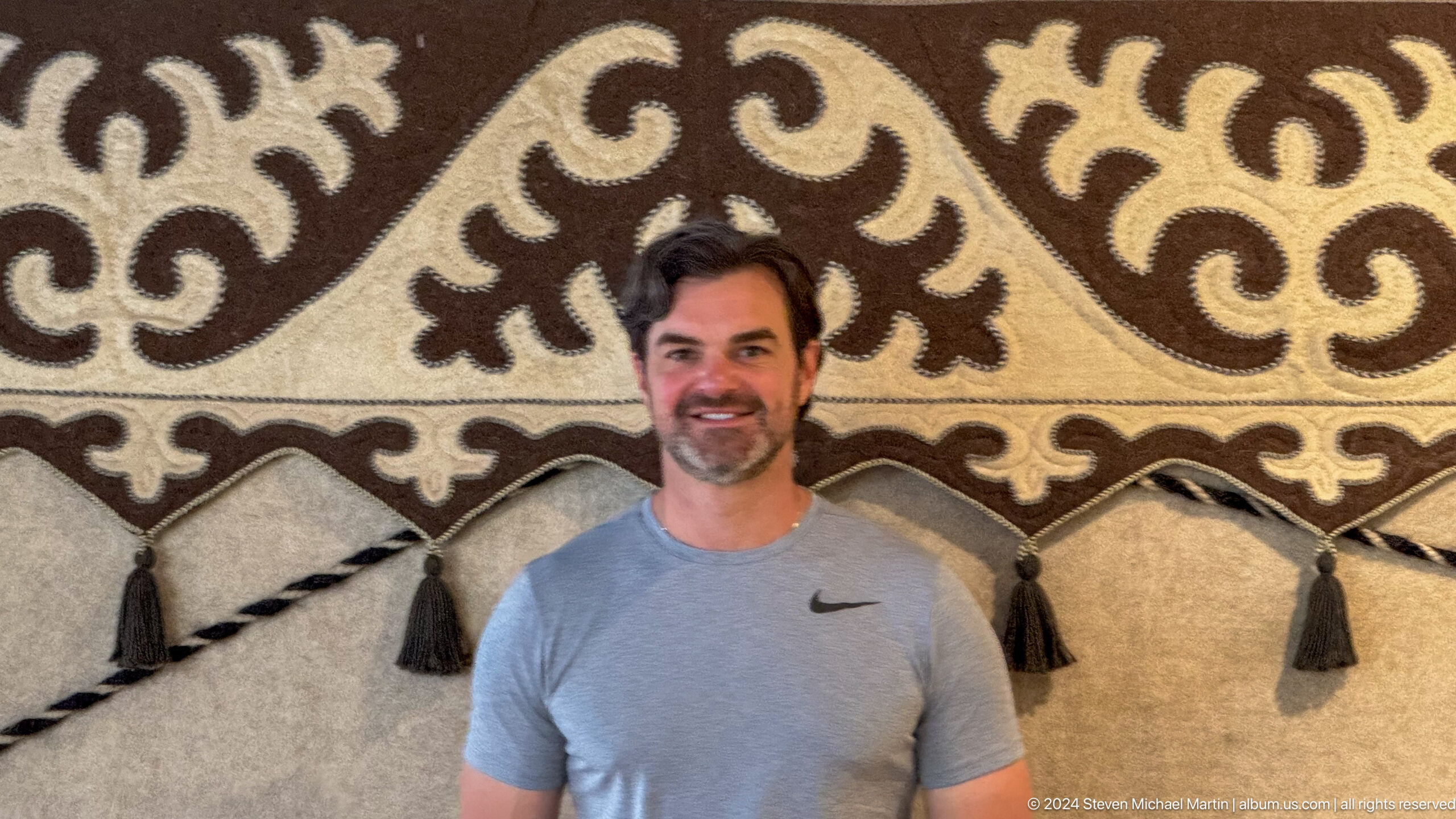
Steve inside a yurt display, displayed in the Bishkek State History Museum. The portrait places the visitor within a reconstructed nomadic interior. The bold felt ornament emphasizes the visual language of Kyrgyz domestic decoration.
Caption
Steve inside a yurt display, displayed in the Bishkek State History Museum. The portrait places the visitor within a reconstructed nomadic interior. The bold felt ornament emphasizes the visual language of Kyrgyz domestic decoration.

Saddled horse display representing Kyrgyz nomadic culture, displayed in the Bishkek State History Museum. The display emphasizes the horse’s central role in transport, warfare, herding, and identity. The saddle and tack illustrate skilled leather and textile work.
Caption
Saddled horse display representing Kyrgyz nomadic culture, displayed in the Bishkek State History Museum. The display emphasizes the horse’s central role in transport, warfare, herding, and identity. The saddle and tack illustrate skilled leather and textile work.
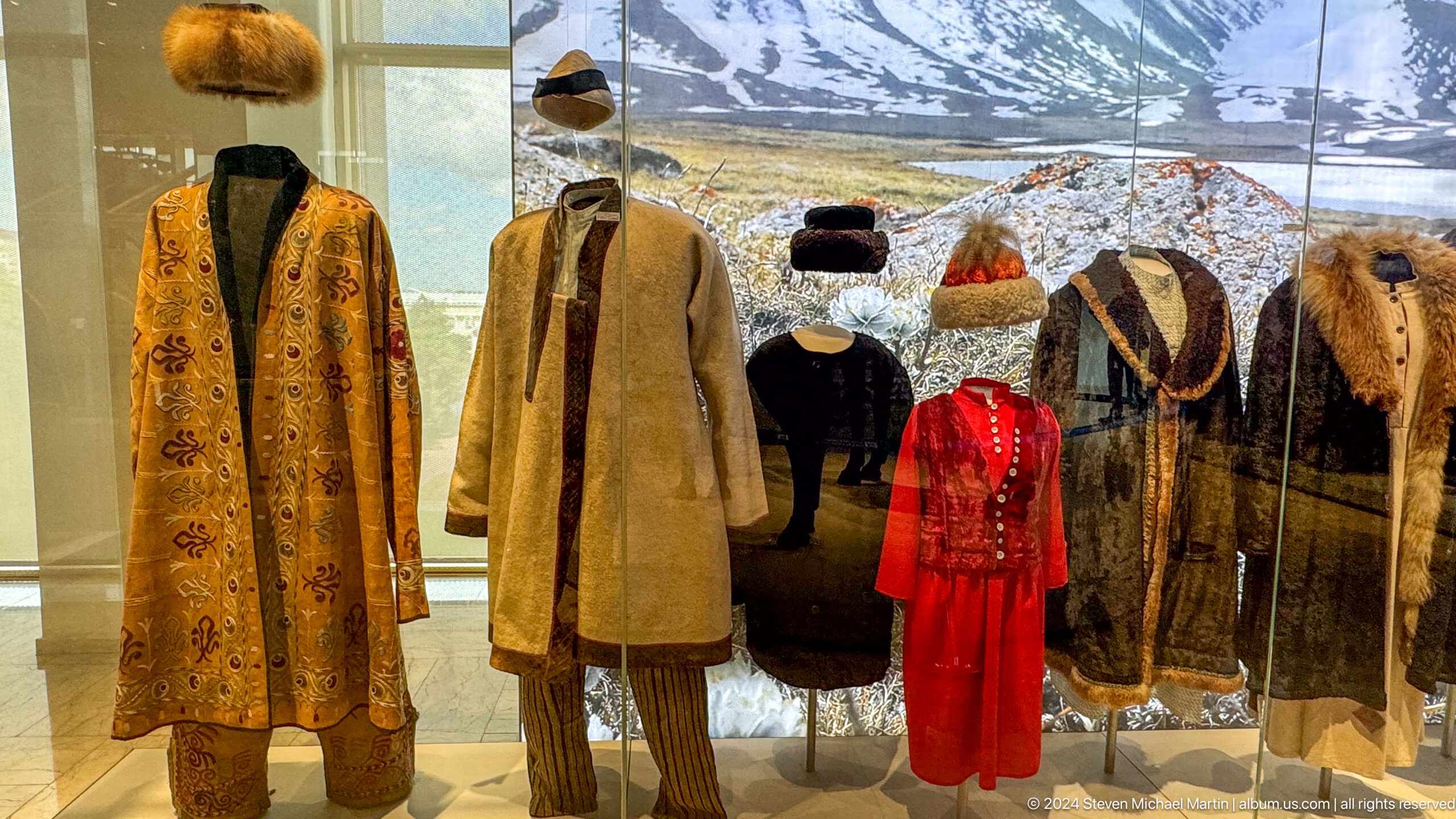
Kyrgyz outer garments and headwear, displayed in the Bishkek State History Museum. The case compares outer garments adapted to Central Asia’s climate and mobile pastoral life. Differences in fabric, cut, and headwear indicate varied social and regional traditions.
Caption
Kyrgyz outer garments and headwear, displayed in the Bishkek State History Museum. The case compares outer garments adapted to Central Asia’s climate and mobile pastoral life. Differences in fabric, cut, and headwear indicate varied social and regional traditions.

Kyrgyz ceremonial and everyday dress display, displayed in the Bishkek State History Museum. The installation presents a range of traditional dress within a reconstructed cultural setting. Layered garments combine practical protection with decorative identity.
Caption
Kyrgyz ceremonial and everyday dress display, displayed in the Bishkek State History Museum. The installation presents a range of traditional dress within a reconstructed cultural setting. Layered garments combine practical protection with decorative identity.

Kyrgyz yurt interior display, displayed in the Bishkek State History Museum. The display reconstructs the richly textile-lined interior of a Kyrgyz yurt. Felt carpets, woven bands, and bedding organize and insulate the portable dwelling.
Caption
Kyrgyz yurt interior display, displayed in the Bishkek State History Museum. The display reconstructs the richly textile-lined interior of a Kyrgyz yurt. Felt carpets, woven bands, and bedding organize and insulate the portable dwelling.

Interior view of a Kyrgyz yurt roof and tunduk, displayed in the Bishkek State History Museum. The tunduk is the circular crown that locks the yurt’s roof structure together. Radial poles create both structural efficiency and a powerful national symbol.
Caption
Interior view of a Kyrgyz yurt roof and tunduk, displayed in the Bishkek State History Museum. The tunduk is the circular crown that locks the yurt’s roof structure together. Radial poles create both structural efficiency and a powerful national symbol.
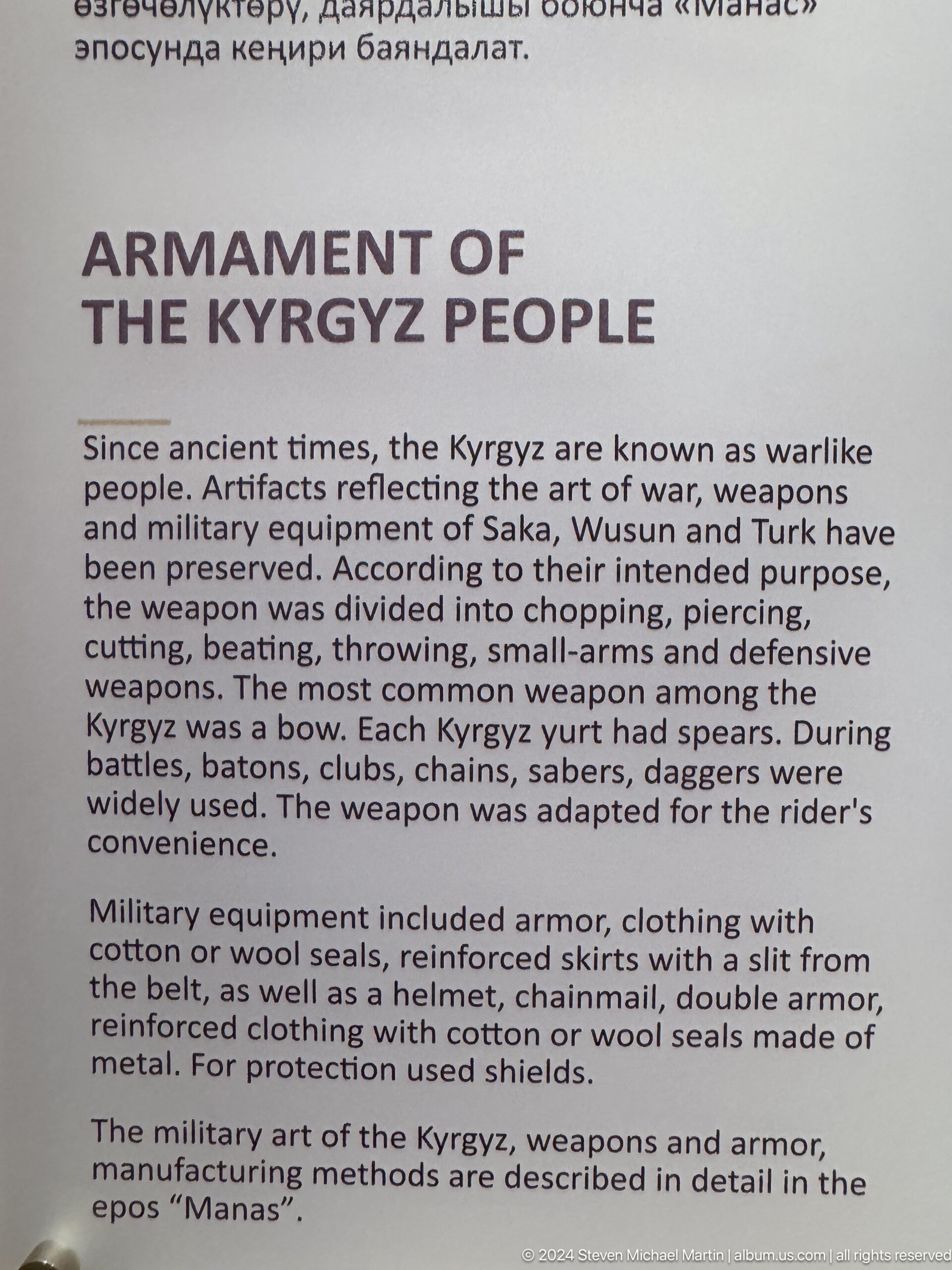
Interpretive panel on Kyrgyz weaponry and military equipment, displayed in the Bishkek State History Museum. The panel explains the range of offensive and defensive equipment used by Kyrgyz warriors. It connects mounted mobility with warfare and hunting.
Caption
Interpretive panel on Kyrgyz weaponry and military equipment, displayed in the Bishkek State History Museum. The panel explains the range of offensive and defensive equipment used by Kyrgyz warriors. It connects mounted mobility with warfare and hunting.
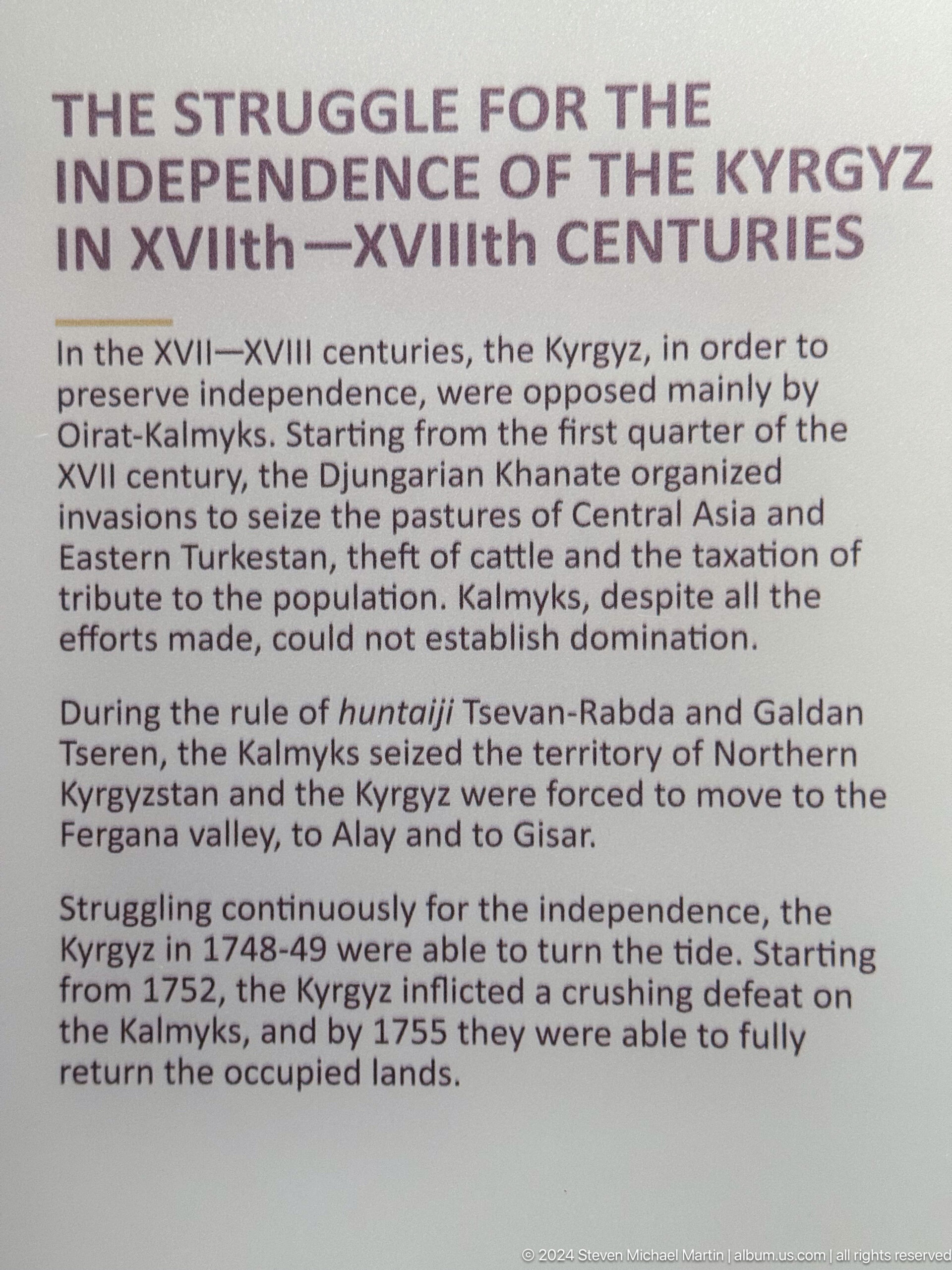
Panel on seventeenth- and eighteenth-century Kyrgyz history, displayed in the Bishkek State History Museum. The panel discusses invasion, displacement, resistance, and migration during the Dzungar period. It places Kyrgyz communities within wider Central Asian political conflict.
Caption
Panel on seventeenth- and eighteenth-century Kyrgyz history, displayed in the Bishkek State History Museum. The panel discusses invasion, displacement, resistance, and migration during the Dzungar period. It places Kyrgyz communities within wider Central Asian political conflict.

Kyrgyz yurt reconstruction, displayed in the Bishkek State History Museum. The yurt demonstrates a portable dwelling built from a collapsible wooden frame and insulating felt. Decorative textiles mark the entrance and domestic identity.
Caption
Kyrgyz yurt reconstruction, displayed in the Bishkek State History Museum. The yurt demonstrates a portable dwelling built from a collapsible wooden frame and insulating felt. Decorative textiles mark the entrance and domestic identity.
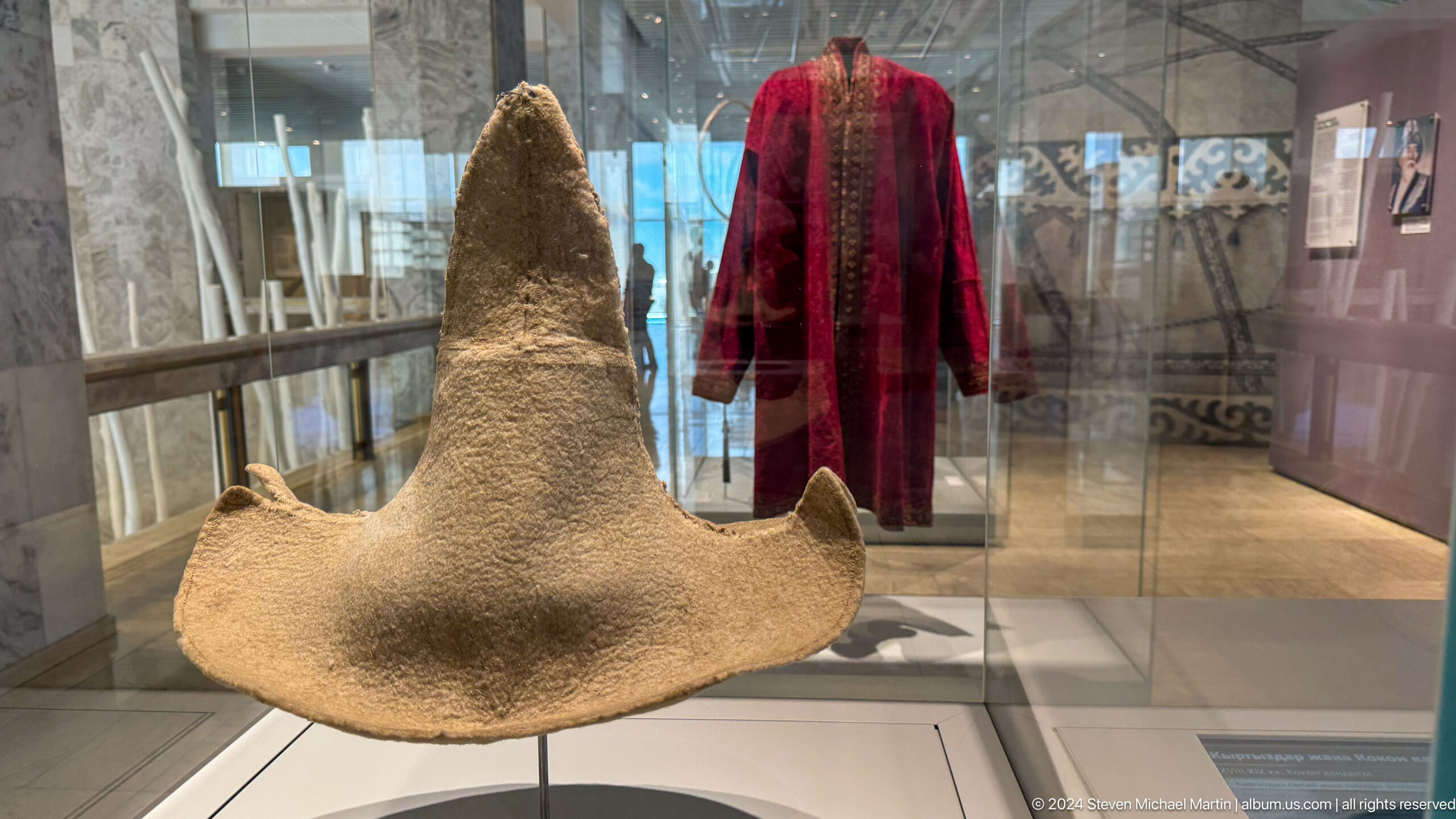
Kyrgyz felt hat or ceremonial head covering, displayed in the Bishkek State History Museum. The oversized felt headwear reflects the importance of wool in Kyrgyz dress. Its exact type and ceremonial role require the object label.
Caption
Kyrgyz felt hat or ceremonial head covering, displayed in the Bishkek State History Museum. The oversized felt headwear reflects the importance of wool in Kyrgyz dress. Its exact type and ceremonial role require the object label.
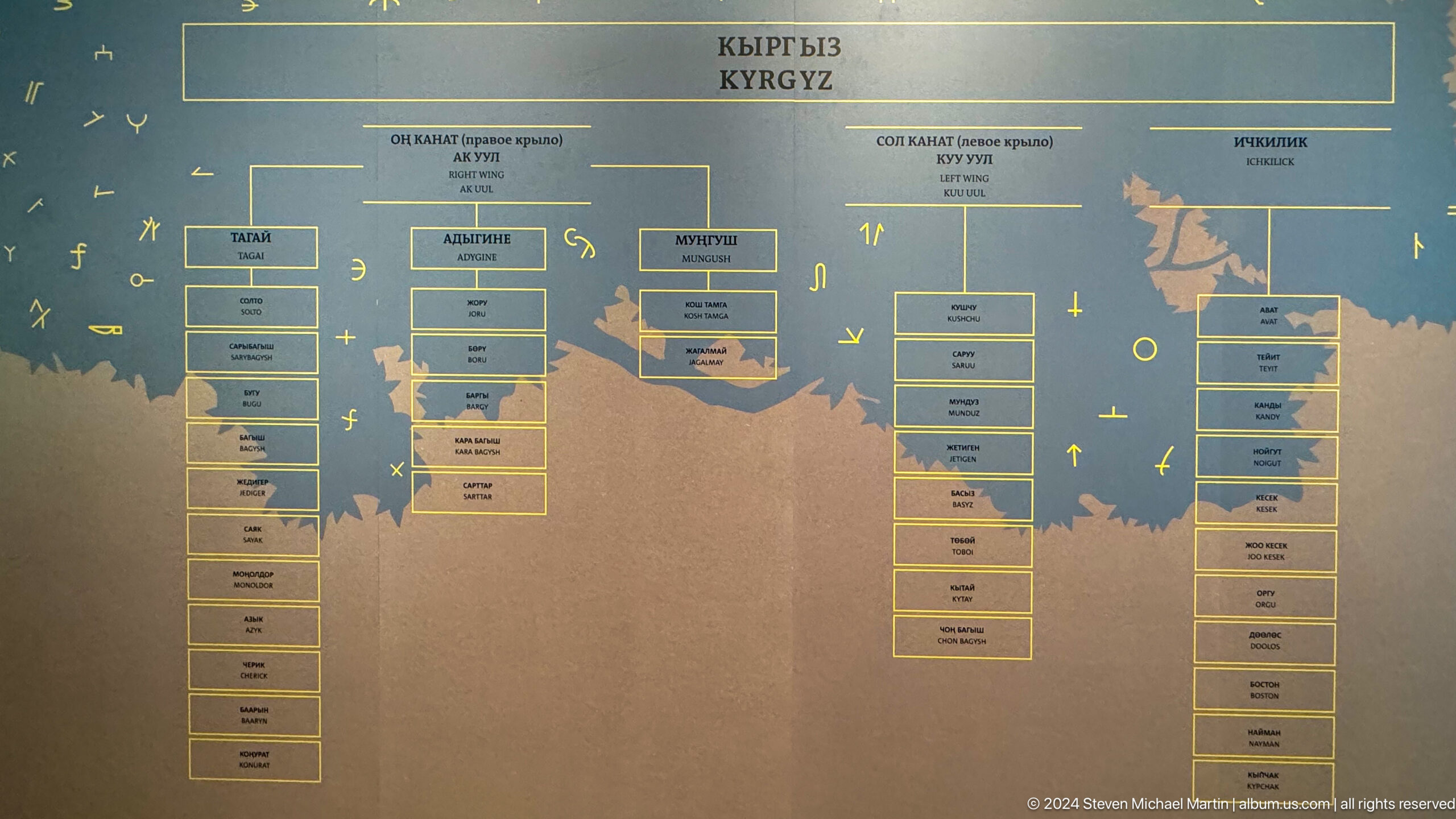
Kyrgyz genealogy or tribal-structure chart, displayed in the Bishkek State History Museum. The chart presents historical relationships among Kyrgyz tribal or genealogical groups. It visualizes complex social organization across time and region.
Caption
Kyrgyz genealogy or tribal-structure chart, displayed in the Bishkek State History Museum. The chart presents historical relationships among Kyrgyz tribal or genealogical groups. It visualizes complex social organization across time and region.
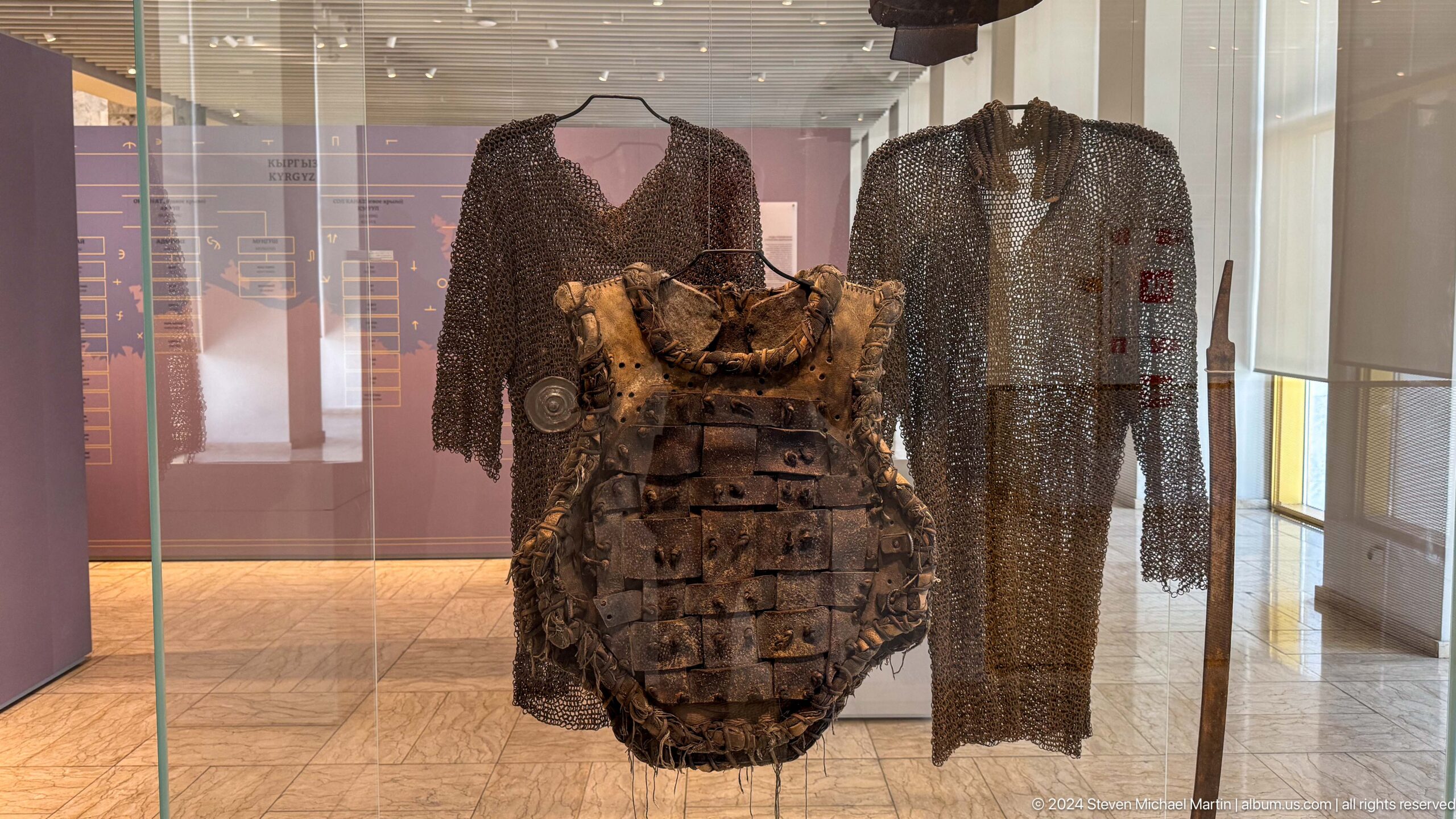
Kyrgyz or Central Asian armor and military clothing, displayed in the Bishkek State History Museum. The display brings together protective armor and garments associated with warfare. Organic and metal materials reflect the practical demands of mounted combat.
Caption
Kyrgyz or Central Asian armor and military clothing, displayed in the Bishkek State History Museum. The display brings together protective armor and garments associated with warfare. Organic and metal materials reflect the practical demands of mounted combat.

Sie, Steve and Pam inside the Bishkek State History Museum, displayed in the Bishkek State History Museum. The group portrait records the museum visit within its monumental interior. The relief wall and broad stair hall provide architectural context.
Caption
Sie, Steve and Pam inside the Bishkek State History Museum, displayed in the Bishkek State History Museum. The group portrait records the museum visit within its monumental interior. The relief wall and broad stair hall provide architectural context.

Contemporary interpretive installation in the museum atrium, displayed in the Bishkek State History Museum. The installation uses repeated vertical elements to create an abstract landscape or data field. Its exact subject requires the gallery interpretation.
Caption
Contemporary interpretive installation in the museum atrium, displayed in the Bishkek State History Museum. The installation uses repeated vertical elements to create an abstract landscape or data field. Its exact subject requires the gallery interpretation.
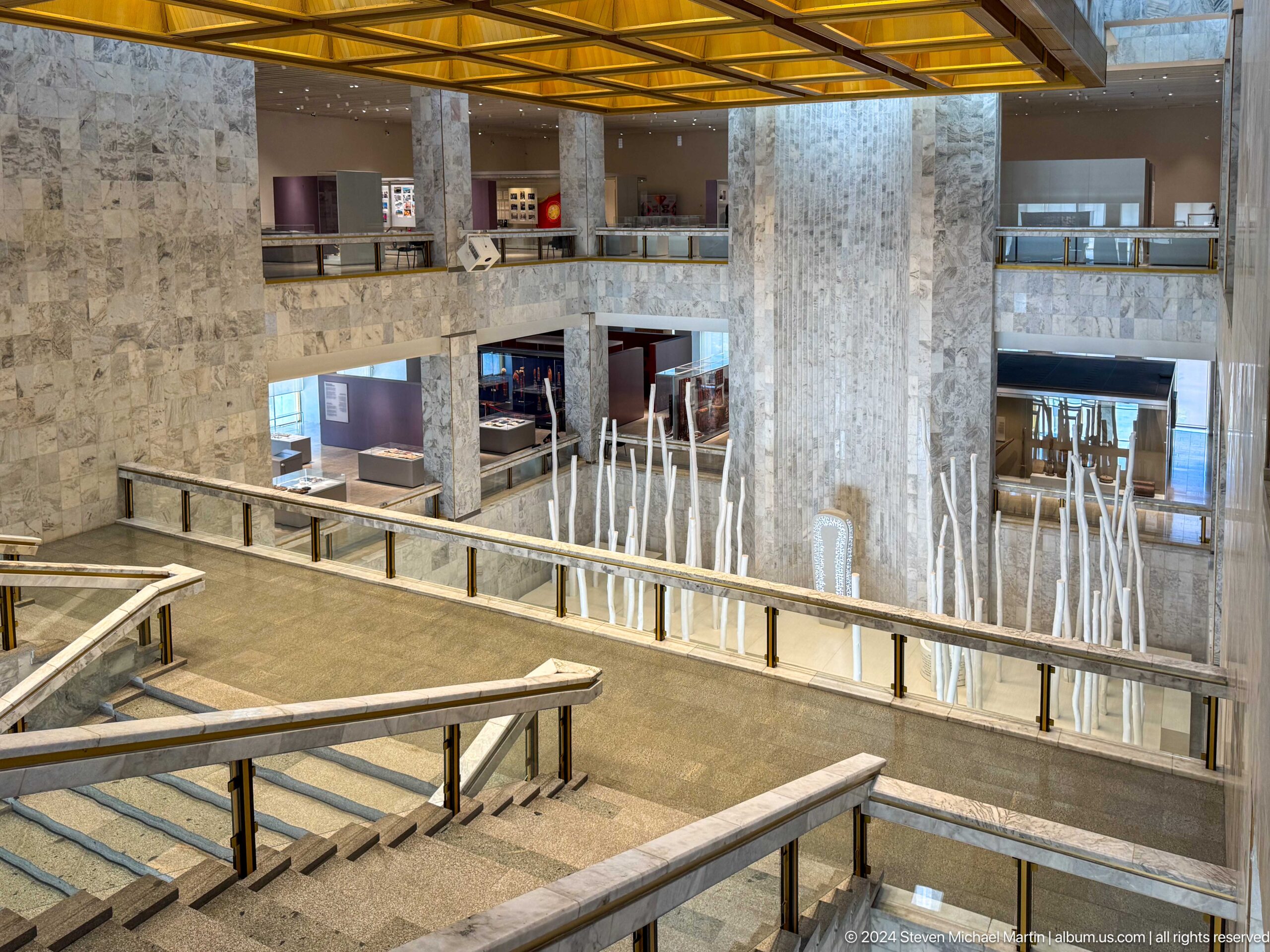
Central atrium of the Bishkek State History Museum, displayed in the Bishkek State History Museum. The broad atrium organizes circulation between galleries and monumental public spaces. The view shows the scale of the building’s renovated interior.
Caption
Central atrium of the Bishkek State History Museum, displayed in the Bishkek State History Museum. The broad atrium organizes circulation between galleries and monumental public spaces. The view shows the scale of the building’s renovated interior.
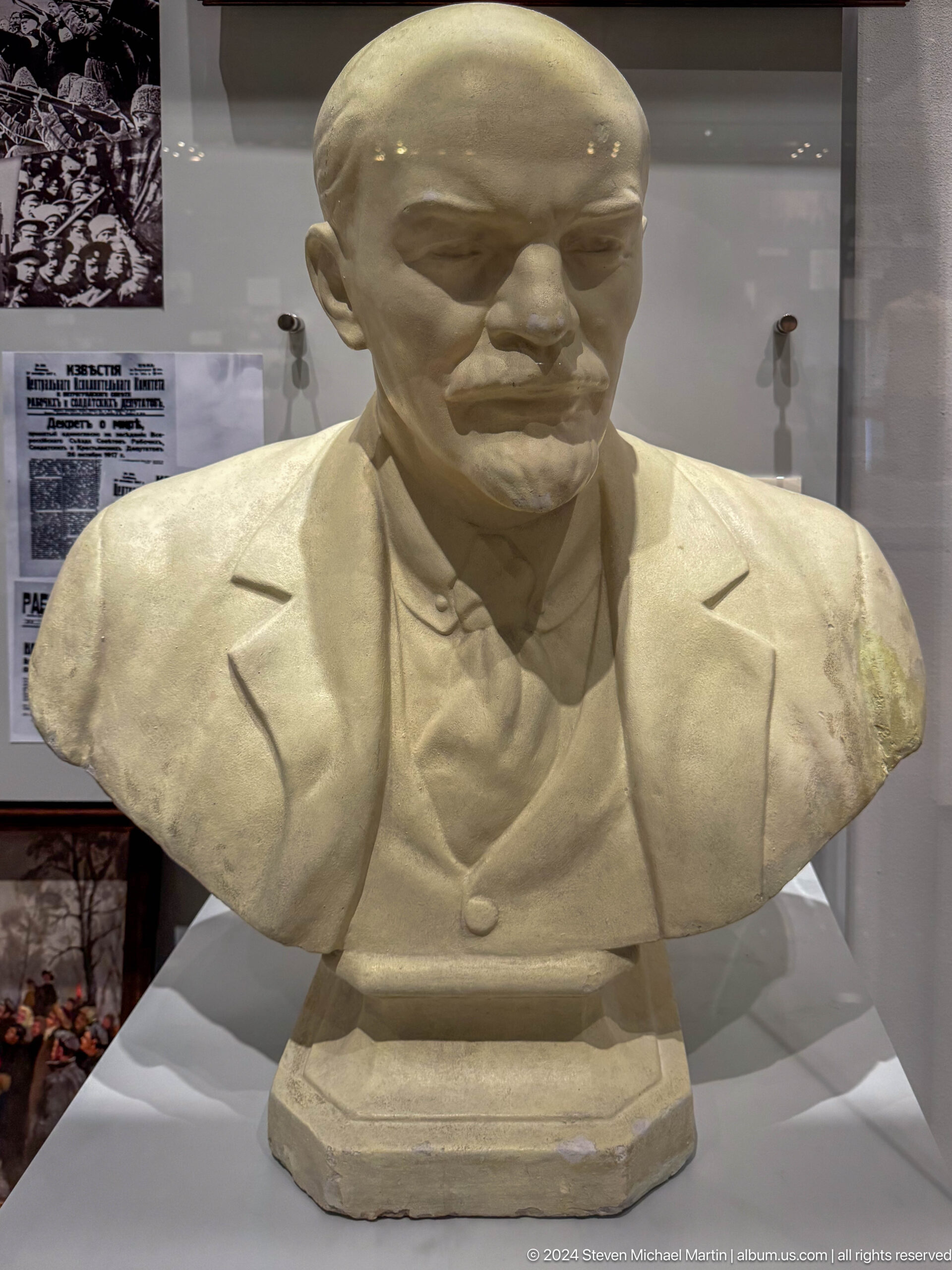
Bust of a Kyrgyz or Soviet-era political figure, displayed in the Bishkek State History Museum. The formal bust follows the commemorative portrait tradition of the Soviet period. The sitter’s identity requires the accompanying museum label.
Caption
Bust of a Kyrgyz or Soviet-era political figure, displayed in the Bishkek State History Museum. The formal bust follows the commemorative portrait tradition of the Soviet period. The sitter’s identity requires the accompanying museum label.
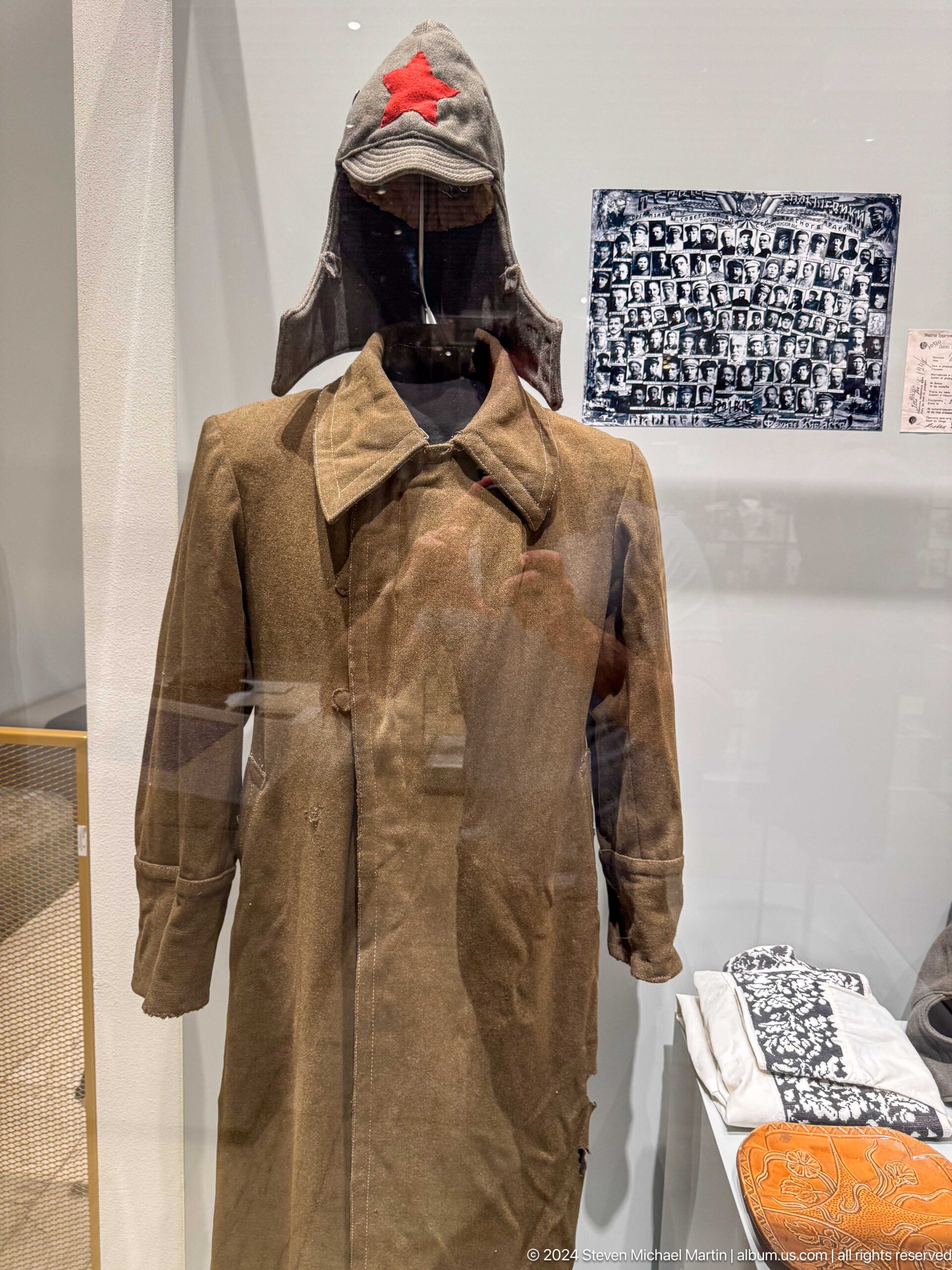
Soviet-era military or service tunic, displayed in the Bishkek State History Museum. The preserved tunic represents Soviet-era military or state service dress. Its worn material gives the display a personal historical dimension.
Caption
Soviet-era military or service tunic, displayed in the Bishkek State History Museum. The preserved tunic represents Soviet-era military or state service dress. Its worn material gives the display a personal historical dimension.
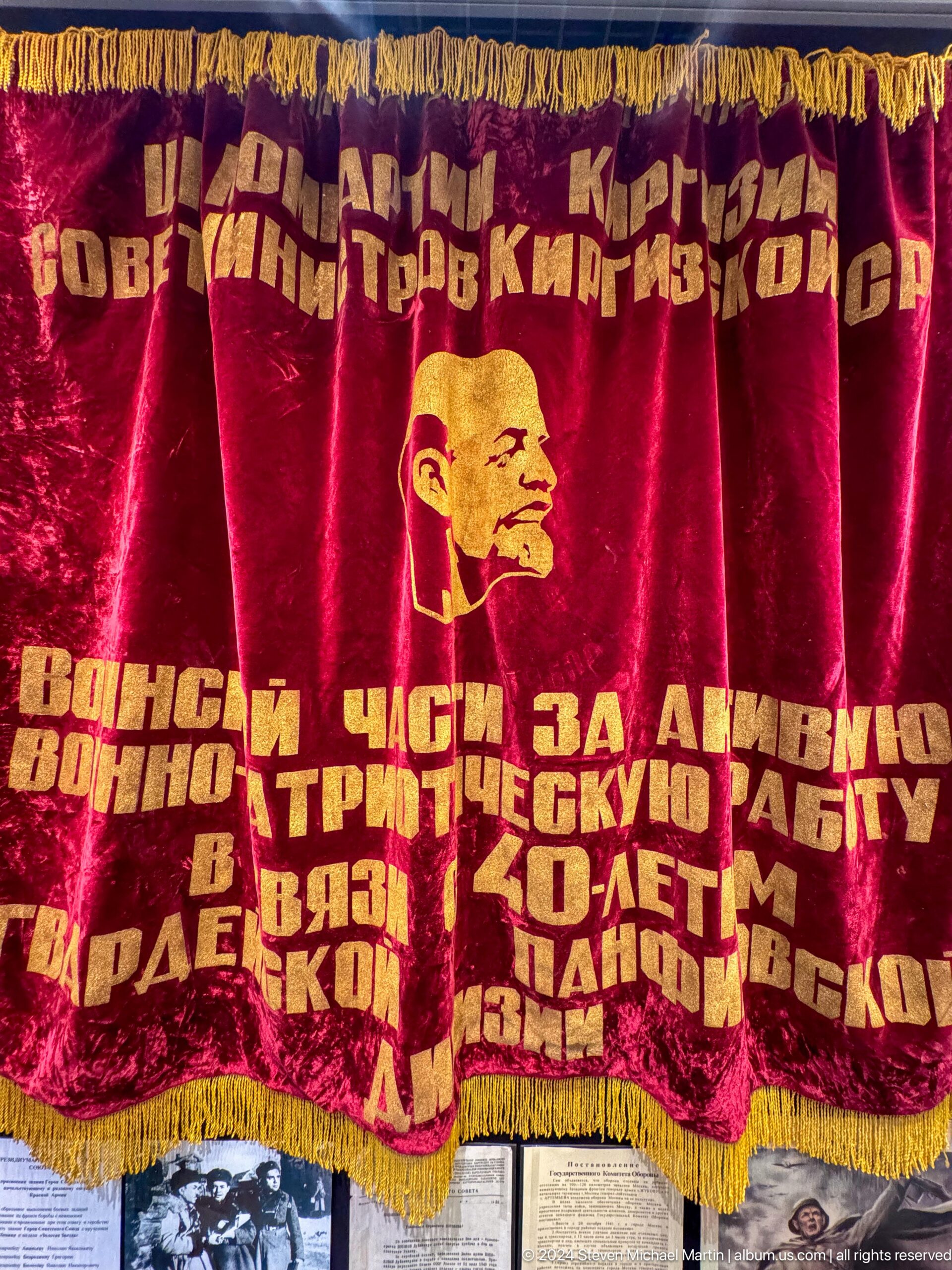
Soviet commemorative banner with Vladimir Lenin, displayed in the Bishkek State History Museum. The banner uses Lenin’s image and ceremonial textile techniques to express political loyalty. Such banners were displayed by workplaces, schools, and public organizations.
Caption
Soviet commemorative banner with Vladimir Lenin, displayed in the Bishkek State History Museum. The banner uses Lenin’s image and ceremonial textile techniques to express political loyalty. Such banners were displayed by workplaces, schools, and public organizations.
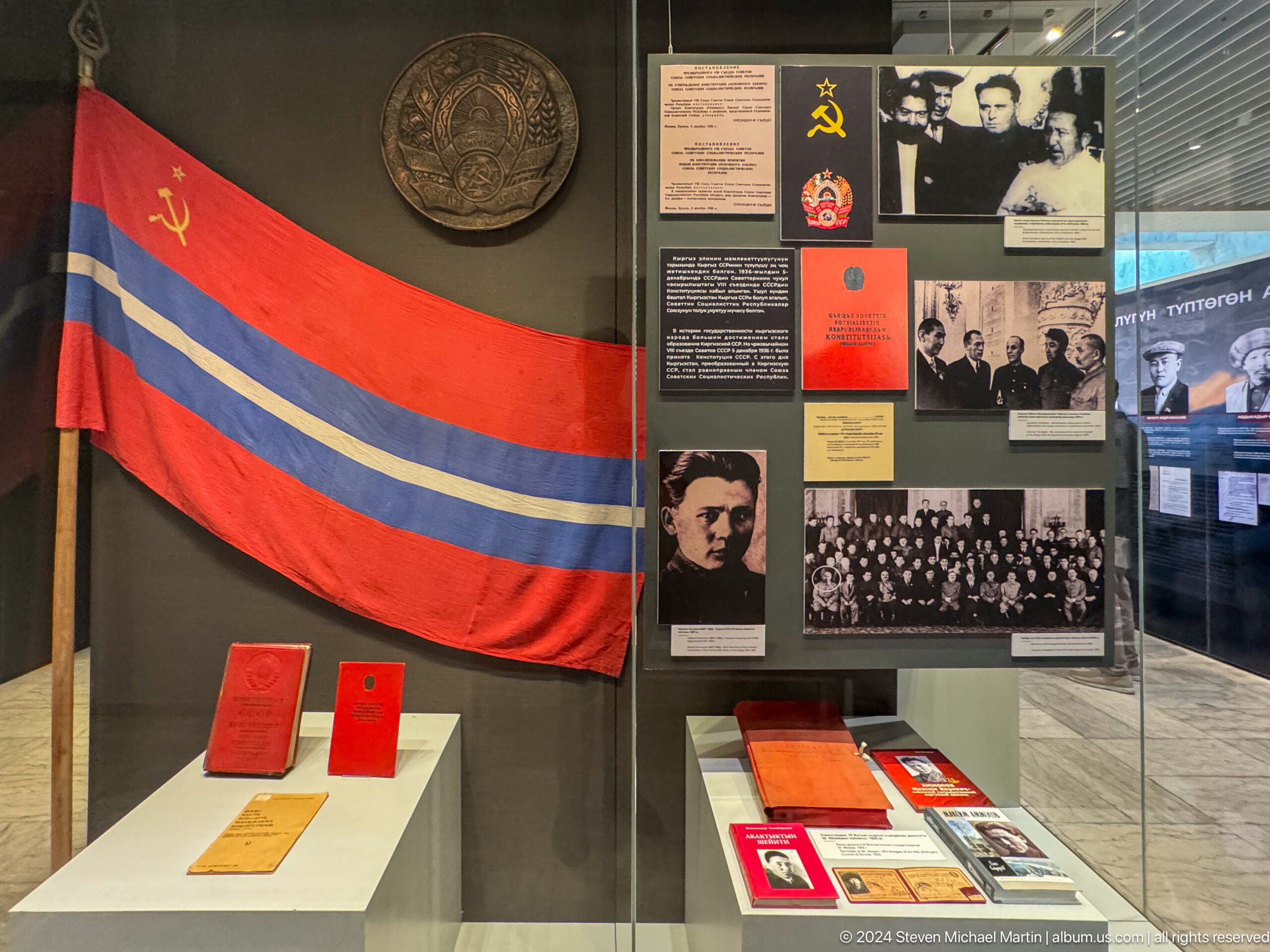
Kyrgyz SSR political-history display, displayed in the Bishkek State History Museum. The installation combines official symbols, archival photographs, and political documents. Together they trace public life in Soviet Kyrgyzstan.
Caption
Kyrgyz SSR political-history display, displayed in the Bishkek State History Museum. The installation combines official symbols, archival photographs, and political documents. Together they trace public life in Soviet Kyrgyzstan.

Soviet propaganda poster featuring a female worker or activist, displayed in the Bishkek State History Museum. The poster uses heroic gesture and red color to mobilize public participation. Women were frequently depicted as workers, citizens, and agents of socialist modernization.
Caption
Soviet propaganda poster featuring a female worker or activist, displayed in the Bishkek State History Museum. The poster uses heroic gesture and red color to mobilize public participation. Women were frequently depicted as workers, citizens, and agents of socialist modernization.

Soviet-era uniforms and institutional history exhibit, displayed in the Bishkek State History Museum. The exhibit brings together uniforms, photographs, and records to document Soviet institutions in Kyrgyzstan. Material objects personalize broader political history.
Caption
Soviet-era uniforms and institutional history exhibit, displayed in the Bishkek State History Museum. The exhibit brings together uniforms, photographs, and records to document Soviet institutions in Kyrgyzstan. Material objects personalize broader political history.
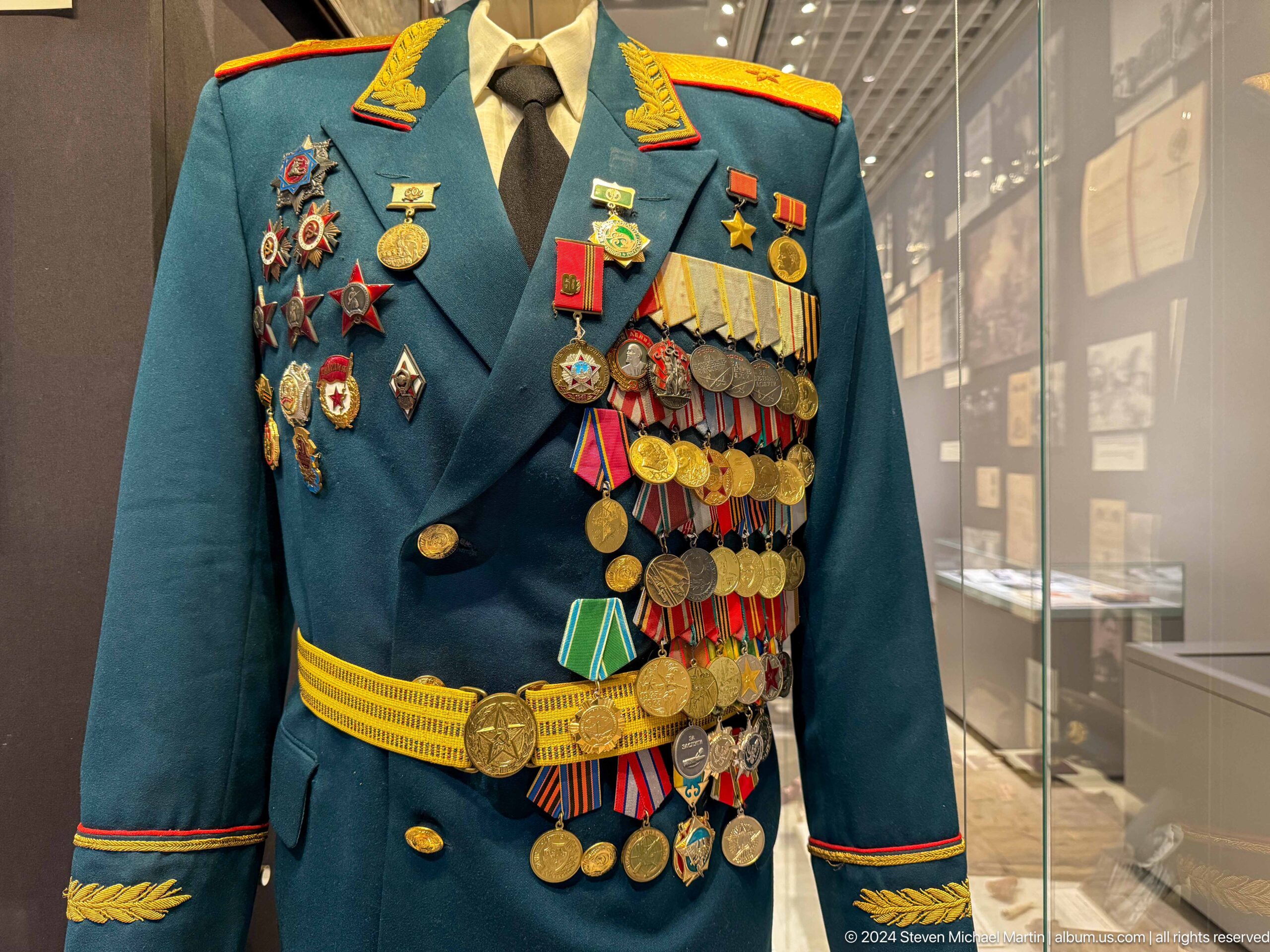
Decorated Soviet military officer’s uniform, displayed in the Bishkek State History Museum. The heavily decorated uniform records military service and state recognition. Its medals and insignia would permit more precise identification with label access.
Caption
Decorated Soviet military officer’s uniform, displayed in the Bishkek State History Museum. The heavily decorated uniform records military service and state recognition. Its medals and insignia would permit more precise identification with label access.
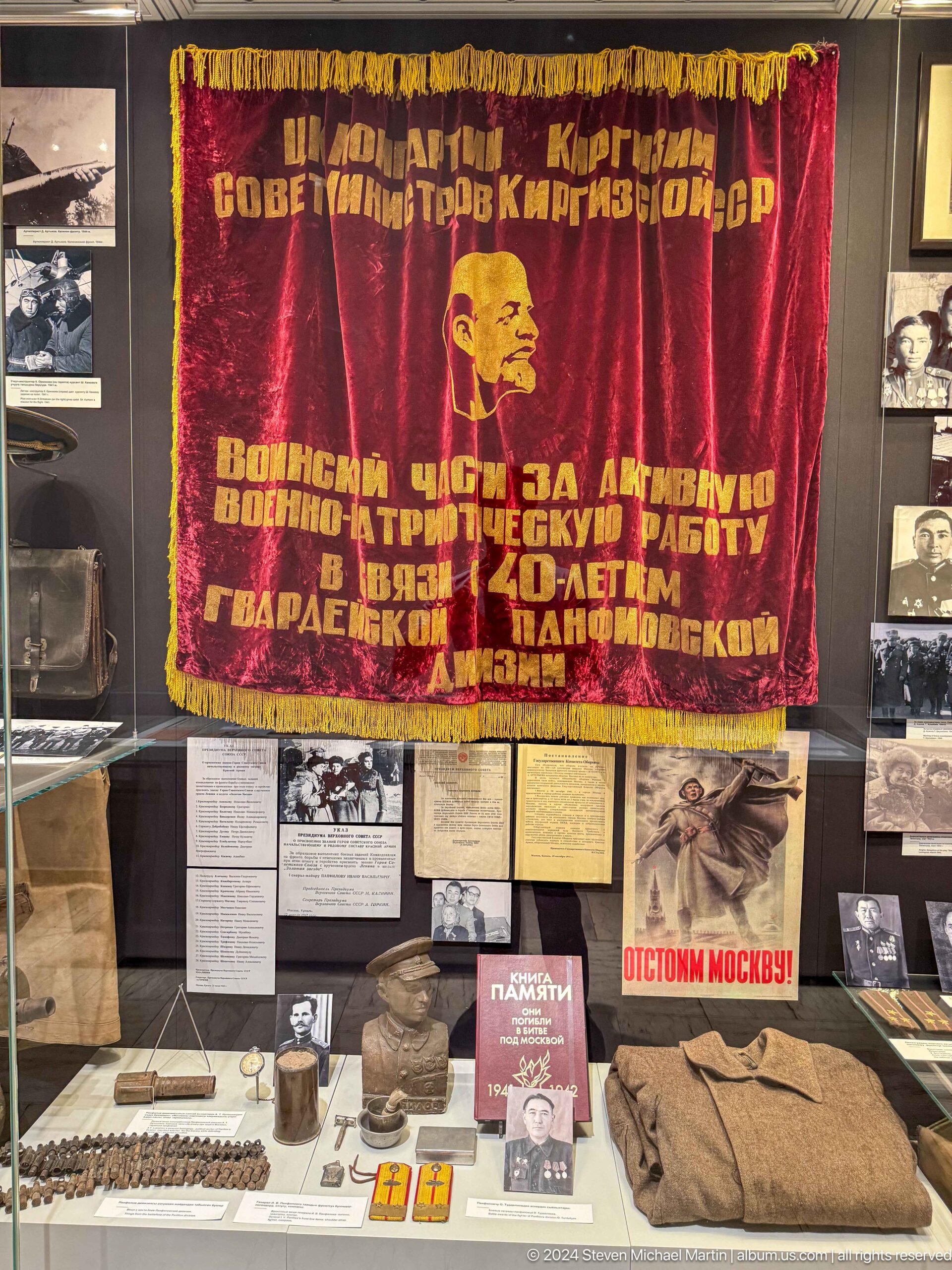
Political award or commemorative banner from Soviet Kyrgyzstan, displayed in the Bishkek State History Museum. The banner commemorates collective achievement through official Soviet language and imagery. Its ceremonial materials transformed political text into a public honor.
Caption
Political award or commemorative banner from Soviet Kyrgyzstan, displayed in the Bishkek State History Museum. The banner commemorates collective achievement through official Soviet language and imagery. Its ceremonial materials transformed political text into a public honor.
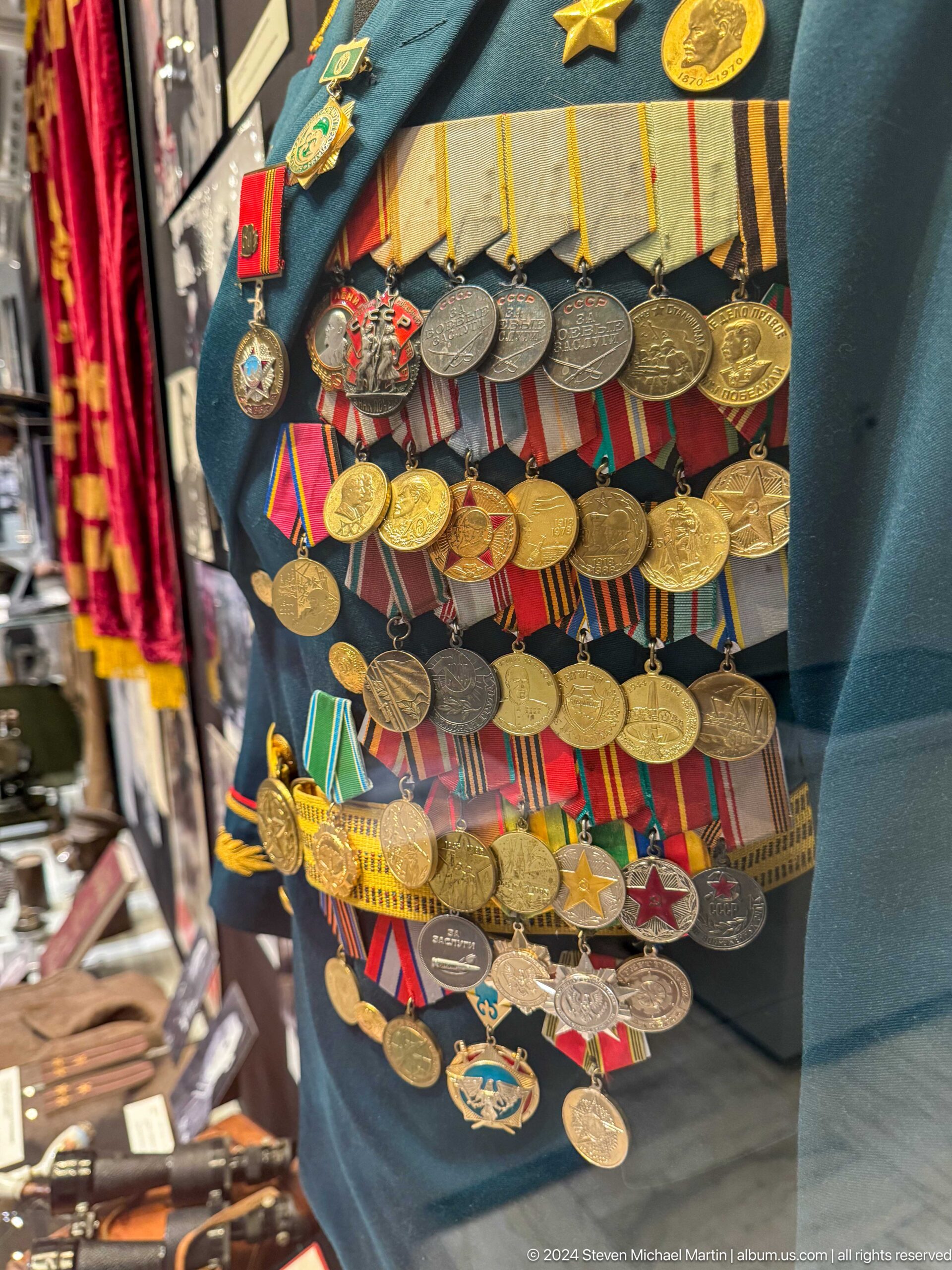
Soviet military medals and service ribbons, displayed in the Bishkek State History Museum. The decorations represent campaigns, service, and commemorative honors. Their density indicates a long or highly recognized career.
Caption
Soviet military medals and service ribbons, displayed in the Bishkek State History Museum. The decorations represent campaigns, service, and commemorative honors. Their density indicates a long or highly recognized career.

Kyrgyz ceremonial garments, displayed in the Bishkek State History Museum. The garments demonstrate contrasting ceremonial styles, materials, and silhouettes. Embroidery and tailored structure express social distinction.
Caption
Kyrgyz ceremonial garments, displayed in the Bishkek State History Museum. The garments demonstrate contrasting ceremonial styles, materials, and silhouettes. Embroidery and tailored structure express social distinction.

Modern banknotes of independent Kyrgyzstan, displayed in the Bishkek State History Museum. The display presents the national currency introduced after independence. Portraits and cultural imagery communicate Kyrgyz historical identity through everyday money.
Caption
Modern banknotes of independent Kyrgyzstan, displayed in the Bishkek State History Museum. The display presents the national currency introduced after independence. Portraits and cultural imagery communicate Kyrgyz historical identity through everyday money.

Interior staircase and accessibility ramp, displayed in the Bishkek State History Museum. The circulation system integrates a monumental stair with an accessible ramp. The pale stone interior continues the formal architectural language of the museum.
Caption
Interior staircase and accessibility ramp, displayed in the Bishkek State History Museum. The circulation system integrates a monumental stair with an accessible ramp. The pale stone interior continues the formal architectural language of the museum.
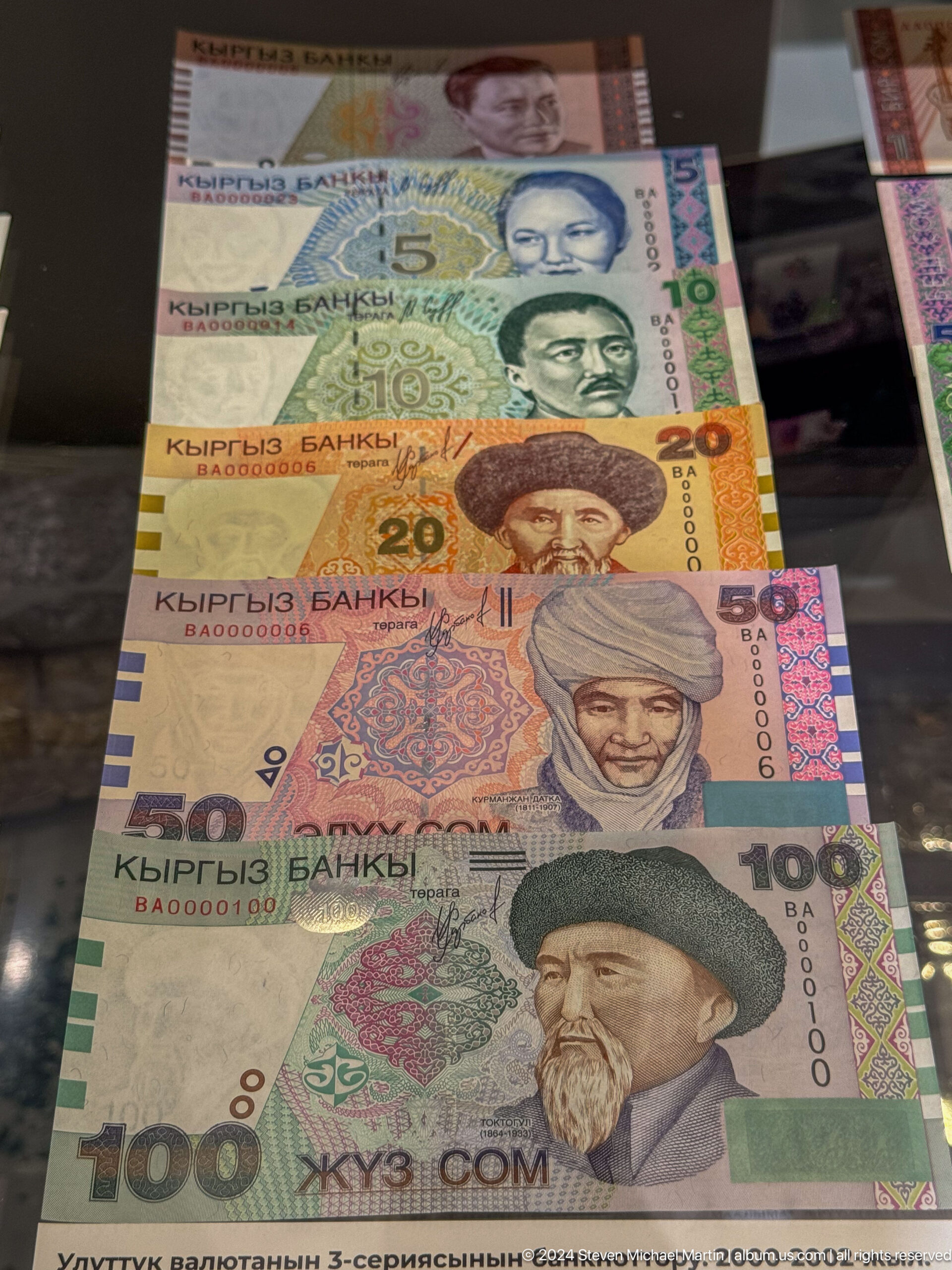
Kyrgyz som banknotes featuring historical figures, displayed in the Bishkek State History Museum. The notes honor prominent figures in Kyrgyz cultural and political history. Their design combines portraiture, national ornament, and anti-counterfeiting features.
Caption
Kyrgyz som banknotes featuring historical figures, displayed in the Bishkek State History Museum. The notes honor prominent figures in Kyrgyz cultural and political history. Their design combines portraiture, national ornament, and anti-counterfeiting features.
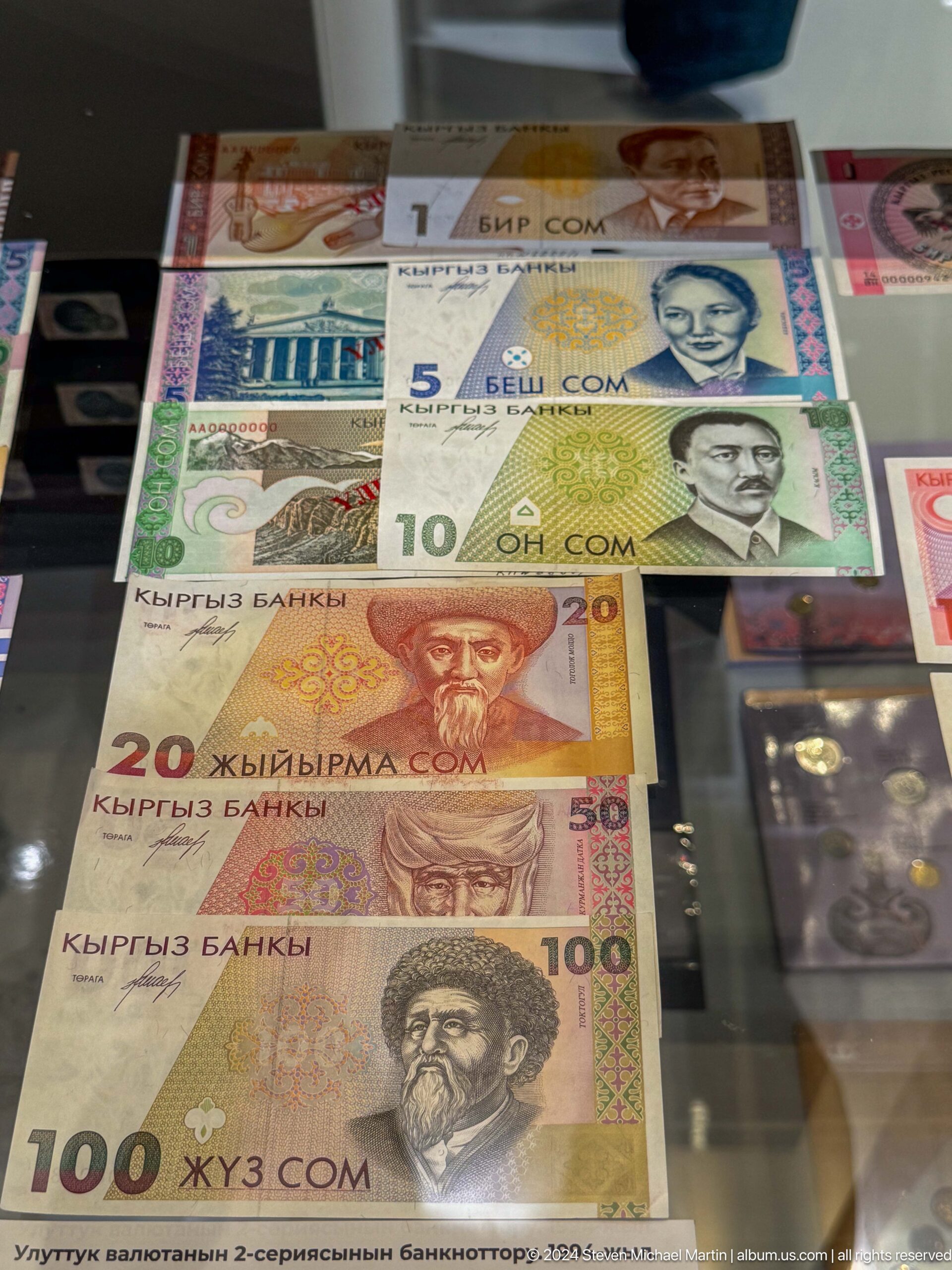
Selection of Kyrgyz som denominations, displayed in the Bishkek State History Museum. The grouped denominations show the evolving visual language of Kyrgyz currency. Each note pairs a historical portrait with national motifs.
Caption
Selection of Kyrgyz som denominations, displayed in the Bishkek State History Museum. The grouped denominations show the evolving visual language of Kyrgyz currency. Each note pairs a historical portrait with national motifs.

Early Kyrgyz som banknotes and monetary object, displayed in the Bishkek State History Museum. The display traces the early paper currency of independent Kyrgyzstan. Small denominations combine national figures with decorative motifs.
Caption
Early Kyrgyz som banknotes and monetary object, displayed in the Bishkek State History Museum. The display traces the early paper currency of independent Kyrgyzstan. Small denominations combine national figures with decorative motifs.

Fifty-som banknote of Kyrgyzstan, displayed in the Bishkek State History Museum. The banknote uses layered patterns, portraiture, and fine printing to deter counterfeiting. Its design celebrates a figure from Kyrgyz history or culture.
Caption
Fifty-som banknote of Kyrgyzstan, displayed in the Bishkek State History Museum. The banknote uses layered patterns, portraiture, and fine printing to deter counterfeiting. Its design celebrates a figure from Kyrgyz history or culture.
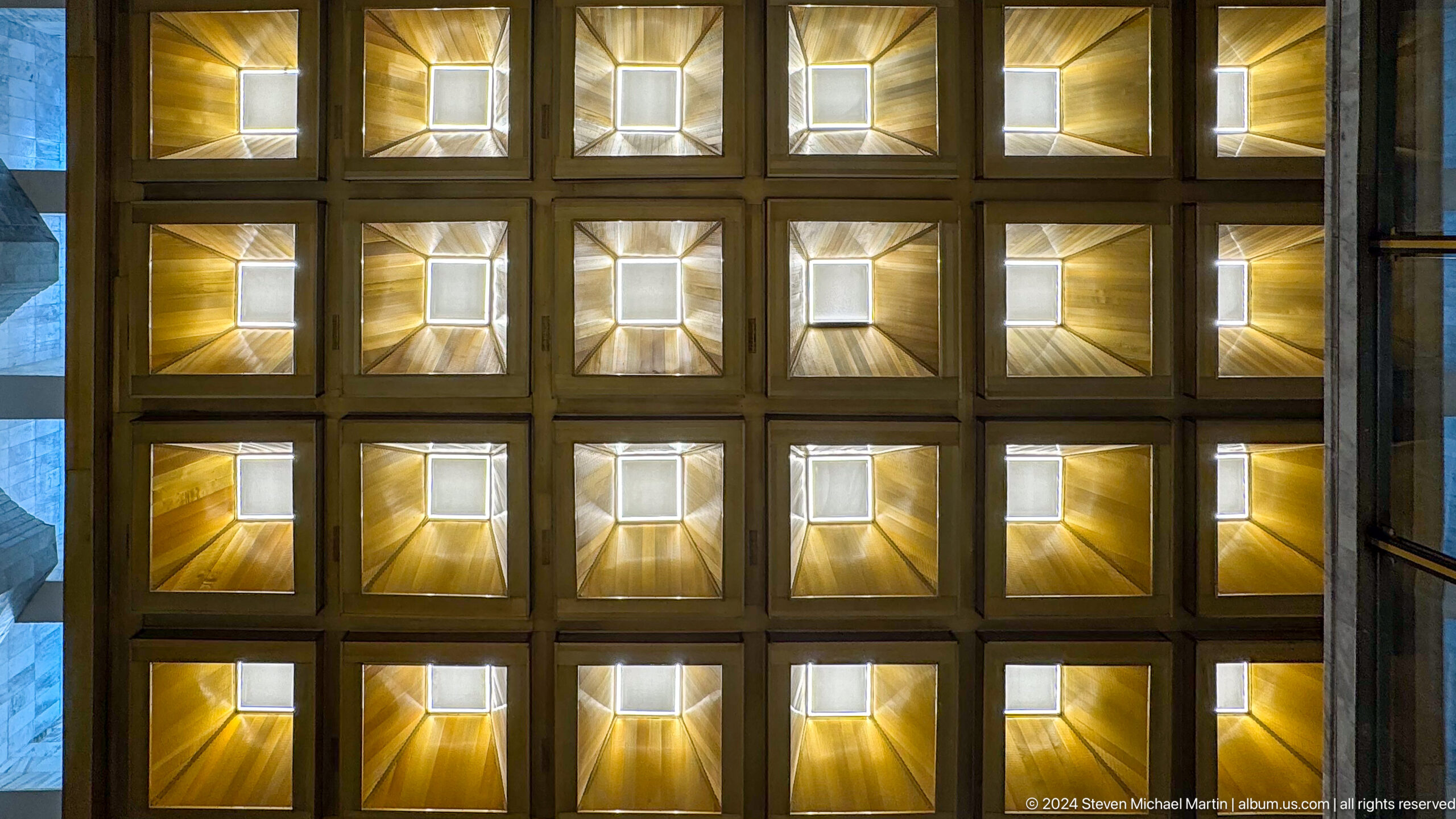
Illuminated coffered ceiling in the museum, displayed in the Bishkek State History Museum. The ceiling’s illuminated coffers create a rhythmic field above the monumental hall. The detail is characteristic of the building’s formal late-Soviet interior design.
Caption
Illuminated coffered ceiling in the museum, displayed in the Bishkek State History Museum. The ceiling’s illuminated coffers create a rhythmic field above the monumental hall. The detail is characteristic of the building’s formal late-Soviet interior design.