Verona Cathedral (Duomo di Verona) – Verona, Italy
The Verona Cathedral, officially the Cathedral of Santa Maria Matricolare, stands near the banks of the Adige River in the historic center of Verona. The cathedral forms part of a complex of religious buildings that have developed on the site since early Christian times.
The present structure combines elements of Romanesque and Gothic architecture, reflecting the many periods of reconstruction the cathedral has undergone. Its interior contains notable works of art, including paintings by Titian and richly decorated chapels that reflect Verona’s importance as a cultural center during the Renaissance.
Located within the historic district of Verona, the cathedral stands among narrow streets, medieval houses, and Roman monuments that give the city its distinctive historic character.

The pale stone west front of Verona Cathedral rises against a deep blue evening sky, with its gabled profile, arcaded ornament, tall side windows, and deeply recessed entrance clearly articulated by artificial light. The frontal viewpoint records the layered Romanesque portal and upper façade as an architectural ensemble while small figures at the doorway establish the scale of the church.
Caption
The pale stone west front of Verona Cathedral rises against a deep blue evening sky, with its gabled profile, arcaded ornament, tall side windows, and deeply recessed entrance clearly articulated by artificial light. The frontal viewpoint records the layered Romanesque portal and upper façade as an architectural ensemble while small figures at the doorway establish the scale of the church.

The cathedral’s pale polygonal apse fills the lower right of this dusk view, its tall narrow wall divisions and windows rising beneath a simple gabled roofline. Behind it, the square bell tower ascends in distinct stages with arched openings near the top. Warm artificial light on the masonry contrasts with the blue sky, clearly separating the sanctuary’s exterior mass from the tower behind.
Caption
The cathedral’s pale polygonal apse fills the lower right of this dusk view, its tall narrow wall divisions and windows rising beneath a simple gabled roofline. Behind it, the square bell tower ascends in distinct stages with arched openings near the top. Warm artificial light on the masonry contrasts with the blue sky, clearly separating the sanctuary’s exterior mass from the tower behind.

An oblique exterior view sets a projecting Romanesque architectural element against the cathedral’s tall bell tower. Alternating bands of pale and reddish masonry, carved supports, arches, and the tower’s large arched opening stand out against the saturated blue sky. The low viewpoint emphasizes the vertical relationship between decorative lower fabric and the later-looking tower mass above.
Caption
An oblique exterior view sets a projecting Romanesque architectural element against the cathedral’s tall bell tower. Alternating bands of pale and reddish masonry, carved supports, arches, and the tower’s large arched opening stand out against the saturated blue sky. The low viewpoint emphasizes the vertical relationship between decorative lower fabric and the later-looking tower mass above.

Tall red-brick piers rise into pointed ribbed vaults in this longitudinal interior view, creating a strong sequence toward the clock and doorway at the far end. Pale wall surfaces, side chapels, and a small rose window offset the warm brick structure. The centered perspective emphasizes the cathedral’s verticality and repeating bay system rather than any single devotional object.
Caption
Tall red-brick piers rise into pointed ribbed vaults in this longitudinal interior view, creating a strong sequence toward the clock and doorway at the far end. Pale wall surfaces, side chapels, and a small rose window offset the warm brick structure. The centered perspective emphasizes the cathedral’s verticality and repeating bay system rather than any single devotional object.

A large carved wooden pulpit projects into the nave beside tall red-brick piers and pointed ribbed vaults. Beyond it, white and painted chapel fronts line the opposite aisle, while the altar area and scattered visitors establish the cathedral’s active interior scale. The oblique viewpoint is especially effective at showing the contrast between warm structural brick, pale wall surfaces, and dark wood furnishings.
Caption
A large carved wooden pulpit projects into the nave beside tall red-brick piers and pointed ribbed vaults. Beyond it, white and painted chapel fronts line the opposite aisle, while the altar area and scattered visitors establish the cathedral’s active interior scale. The oblique viewpoint is especially effective at showing the contrast between warm structural brick, pale wall surfaces, and dark wood furnishings.

The cathedral’s tall red-brick piers and pointed ribbed vaults frame a long axial view toward the illuminated sanctuary and frescoed apse. Side chapels open between the structural bays, while worshippers and visitors occupy the lower nave around the altar. The symmetrical composition records the interior’s strong vertical proportions and the visual progression from the congregation space to the richly decorated east end.
Caption
The cathedral’s tall red-brick piers and pointed ribbed vaults frame a long axial view toward the illuminated sanctuary and frescoed apse. Side chapels open between the structural bays, while worshippers and visitors occupy the lower nave around the altar. The symmetrical composition records the interior’s strong vertical proportions and the visual progression from the congregation space to the richly decorated east end.

A closer view concentrates on the frescoed semi-dome above the choir, where a central heavenly scene is surrounded by standing and seated sacred figures. Painted architectural coffering and grisaille-like ornament organize the curved surface, while the lower windows and altarpiece provide spatial reference. The image is especially useful for studying the apse decoration as a coherent pictorial program.
Caption
A closer view concentrates on the frescoed semi-dome above the choir, where a central heavenly scene is surrounded by standing and seated sacred figures. Painted architectural coffering and grisaille-like ornament organize the curved surface, while the lower windows and altarpiece provide spatial reference. The image is especially useful for studying the apse decoration as a coherent pictorial program.

A monumental side-chapel altarpiece presents a dramatic sacred figure rising or appearing above figures below, enclosed by paired columns and a broken architectural surround of pale and golden marble. Smaller paintings flank the central work, extending the decorative program across the chapel wall. The frontal composition emphasizes the formal symmetry and scale of the altar ensemble.
Caption
A monumental side-chapel altarpiece presents a dramatic sacred figure rising or appearing above figures below, enclosed by paired columns and a broken architectural surround of pale and golden marble. Smaller paintings flank the central work, extending the decorative program across the chapel wall. The frontal composition emphasizes the formal symmetry and scale of the altar ensemble.

Tall veined marble columns and a heavy entablature frame a luminous sculptural panel at the center of this side altar. White sculptural figures stand beside the panel, while gilded ornament and a radiant emblem above add vertical emphasis. The tighter frontal composition records the altar’s layered materials—colored stone, sculpture, gilding, and light—as a unified devotional ensemble.
Caption
Tall veined marble columns and a heavy entablature frame a luminous sculptural panel at the center of this side altar. White sculptural figures stand beside the panel, while gilded ornament and a radiant emblem above add vertical emphasis. The tighter frontal composition records the altar’s layered materials—colored stone, sculpture, gilding, and light—as a unified devotional ensemble.

The cathedral’s choir and apse fill the upward-looking composition, their pale architectural framework divided into painted panels and a richly figured semi-dome. Frescoed biblical figures and scenes occupy the curved surfaces above tall windows, emphasizing how painting and architecture are integrated around the sanctuary. The steep viewpoint makes the decorated vaulting, rather than furnishings below, the principal subject.
Caption
The cathedral’s choir and apse fill the upward-looking composition, their pale architectural framework divided into painted panels and a richly figured semi-dome. Frescoed biblical figures and scenes occupy the curved surfaces above tall windows, emphasizing how painting and architecture are integrated around the sanctuary. The steep viewpoint makes the decorated vaulting, rather than furnishings below, the principal subject.

This steep low-angle view isolates the upper tiers of Verona Cathedral’s west front above the entrance porch. A sequence of shallow arcades, narrow openings, decorative masonry bands, and the triangular gable creates a layered façade composition, while the porch roof and arch anchor the lower edge. The photograph emphasizes vertical progression and surface ornament rather than the complete building.
Caption
This steep low-angle view isolates the upper tiers of Verona Cathedral’s west front above the entrance porch. A sequence of shallow arcades, narrow openings, decorative masonry bands, and the triangular gable creates a layered façade composition, while the porch roof and arch anchor the lower edge. The photograph emphasizes vertical progression and surface ornament rather than the complete building.

A richly framed side altar combines veined marble columns, a dark entablature, sculptural figures, and a brightly illuminated relief or devotional image at its center. The upward view also includes the small domed canopy above the chapel, showing how the altar is embedded within a more elaborate architectural setting. Flowers at the altar rail mark the space as an active devotional focus.
Caption
A richly framed side altar combines veined marble columns, a dark entablature, sculptural figures, and a brightly illuminated relief or devotional image at its center. The upward view also includes the small domed canopy above the chapel, showing how the altar is embedded within a more elaborate architectural setting. Flowers at the altar rail mark the space as an active devotional focus.

Veined red and dark marble columns frame a luminous sculptural relief above the altar table, with kneeling or attendant figures positioned to either side. The tighter composition suppresses most of the surrounding chapel and draws attention to the contrast between polished stone, white sculpture, and the glowing central panel. Floral offerings reinforce the altar’s devotional use.
Caption
Veined red and dark marble columns frame a luminous sculptural relief above the altar table, with kneeling or attendant figures positioned to either side. The tighter composition suppresses most of the surrounding chapel and draws attention to the contrast between polished stone, white sculpture, and the glowing central panel. Floral offerings reinforce the altar’s devotional use.

Seen from close range and below, the cathedral’s west façade is dominated by its deeply recessed arched entrance and the broad projecting porch above it. Alternating masonry bands and small arcaded openings animate the pale wall surface, while the compressed perspective makes the portal’s depth and structural layering especially legible. The evening sky provides a sharp backdrop to the illuminated stonework.
Caption
Seen from close range and below, the cathedral’s west façade is dominated by its deeply recessed arched entrance and the broad projecting porch above it. Alternating masonry bands and small arcaded openings animate the pale wall surface, while the compressed perspective makes the portal’s depth and structural layering especially legible. The evening sky provides a sharp backdrop to the illuminated stonework.

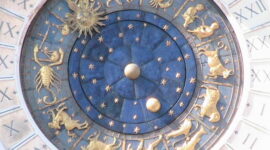
A large circular clock face is set into an ornate painted and marbled wall surround inside the cathedral. Roman numerals mark the hours, while a blue central field carries the hands and a small figurative motif. Scroll-like painted ornament and the top of an architectural pediment below show that the clock forms part of a larger decorative wall composition.
Caption
A large circular clock face is set into an ornate painted and marbled wall surround inside the cathedral. Roman numerals mark the hours, while a blue central field carries the hands and a small figurative motif. Scroll-like painted ornament and the top of an architectural pediment below show that the clock forms part of a larger decorative wall composition.

The cathedral clock appears here in architectural context above a monumental doorway framed by pink-toned pilasters, a triangular pediment, and sculpted ornament. Brick piers and ribbed vaults rise on either side, while a small rose window sits high above the clock. The composition records how the timepiece is incorporated into the vertical rhythm of the nave or aisle wall.
Caption
The cathedral clock appears here in architectural context above a monumental doorway framed by pink-toned pilasters, a triangular pediment, and sculpted ornament. Brick piers and ribbed vaults rise on either side, while a small rose window sits high above the clock. The composition records how the timepiece is incorporated into the vertical rhythm of the nave or aisle wall.

A large framed altarpiece is divided into two narrative zones within an elaborate marble and stucco surround. The upper scene gathers figures around a reclining or recumbent central body, while the lower painting places several standing figures in a landscape with distant architecture. Cherubic sculpture and curved polychrome ornament enrich the frame, making the ensemble as important visually as the paintings themselves.
Caption
A large framed altarpiece is divided into two narrative zones within an elaborate marble and stucco surround. The upper scene gathers figures around a reclining or recumbent central body, while the lower painting places several standing figures in a landscape with distant architecture. Cherubic sculpture and curved polychrome ornament enrich the frame, making the ensemble as important visually as the paintings themselves.

Massive reddish marble columns and a sculptural architectural frame surround this altar, whose central painting is set beneath a curved decorated ceiling. Candles, flowers, and a white altar cloth create a liturgical foreground, while seated visitors or worshippers appear at the lower right. The frontal viewpoint emphasizes the altar’s theatrical Baroque-like framing and the depth of its chapel setting.
Caption
Massive reddish marble columns and a sculptural architectural frame surround this altar, whose central painting is set beneath a curved decorated ceiling. Candles, flowers, and a white altar cloth create a liturgical foreground, while seated visitors or worshippers appear at the lower right. The frontal viewpoint emphasizes the altar’s theatrical Baroque-like framing and the depth of its chapel setting.

The camera looks almost straight upward into the painted apse, where a central figure appears amid clouds above a ring of monumental sacred figures. Rectangular narrative panels and elaborate pale coffering extend across the adjoining curved ceiling. This near-vertical viewpoint reveals the density of the painted program and its careful adaptation to the architecture’s segmented surfaces.
Caption
The camera looks almost straight upward into the painted apse, where a central figure appears amid clouds above a ring of monumental sacred figures. Rectangular narrative panels and elaborate pale coffering extend across the adjoining curved ceiling. This near-vertical viewpoint reveals the density of the painted program and its careful adaptation to the architecture’s segmented surfaces.

A richly gilded pipe-organ case rises against the cathedral wall, its vertical metal pipes enclosed by carved architectural panels, scrollwork, and projecting sculptural heads. Large paintings flank the instrument, visually integrating music, painting, and ornament within the interior. The upward perspective stresses the organ’s height and the dense craftsmanship of its historic-looking case.
Caption
A richly gilded pipe-organ case rises against the cathedral wall, its vertical metal pipes enclosed by carved architectural panels, scrollwork, and projecting sculptural heads. Large paintings flank the instrument, visually integrating music, painting, and ornament within the interior. The upward perspective stresses the organ’s height and the dense craftsmanship of its historic-looking case.

A worn polychrome floor inlay centers on a heraldic shield beneath an ecclesiastical hat-like motif, surrounded by curling cords, tassels, and ornamental forms. Yellow, black, blue-gray, cream, and reddish stone create the design, while abrasion and losses reveal the age and heavy use of the pavement. The close viewpoint records the inlay as an object in its own right.
Caption
A worn polychrome floor inlay centers on a heraldic shield beneath an ecclesiastical hat-like motif, surrounded by curling cords, tassels, and ornamental forms. Yellow, black, blue-gray, cream, and reddish stone create the design, while abrasion and losses reveal the age and heavy use of the pavement. The close viewpoint records the inlay as an object in its own right.

A tall crucifix rises above a circular or polygonal sanctuary rail lined with slender candlesticks, while the cathedral’s brick piers and ribbed vaults recede behind it. The centered cross becomes a strong vertical counterpoint to the repeating nave architecture. By including the surrounding rail and candles, the image records the crucifix as part of the liturgical organization of the sanctuary.
Caption
A tall crucifix rises above a circular or polygonal sanctuary rail lined with slender candlesticks, while the cathedral’s brick piers and ribbed vaults recede behind it. The centered cross becomes a strong vertical counterpoint to the repeating nave architecture. By including the surrounding rail and candles, the image records the crucifix as part of the liturgical organization of the sanctuary.

Three large painted narrative scenes occupy rectangular compartments in the upper curved apse, separated by pale architectural ornament and circular medallions. Figures move through cloud-filled sacred episodes, while the surrounding grisaille-like decoration creates a disciplined geometric framework. This detail view isolates the narrative panels from the broader apse program and makes their placement within the vault easier to read.
Caption
Three large painted narrative scenes occupy rectangular compartments in the upper curved apse, separated by pale architectural ornament and circular medallions. Figures move through cloud-filled sacred episodes, while the surrounding grisaille-like decoration creates a disciplined geometric framework. This detail view isolates the narrative panels from the broader apse program and makes their placement within the vault easier to read.

A central sacred figure appears suspended in luminous clouds at the crown of the apse, encircled below by monumental painted figures standing between architectural divisions. The broad view includes the decorated coffering around the scene, clarifying how the imagery wraps across the semi-dome. The composition is wider than the adjacent close detail and emphasizes the relationship between central vision and surrounding figures.
Caption
A central sacred figure appears suspended in luminous clouds at the crown of the apse, encircled below by monumental painted figures standing between architectural divisions. The broad view includes the decorated coffering around the scene, clarifying how the imagery wraps across the semi-dome. The composition is wider than the adjacent close detail and emphasizes the relationship between central vision and surrounding figures.

This close view isolates the principal painted figure at the center of the apse, shown standing or rising amid a luminous field of clouds and attendant figures. The surrounding painted architecture and coffering remain visible at the edges, but the devotional image dominates the composition. The tighter framing provides a clearer record of the central scene than the wider views of the complete semi-dome.
Caption
This close view isolates the principal painted figure at the center of the apse, shown standing or rising amid a luminous field of clouds and attendant figures. The surrounding painted architecture and coffering remain visible at the edges, but the devotional image dominates the composition. The tighter framing provides a clearer record of the central scene than the wider views of the complete semi-dome.

The complete semi-dome is presented as a unified painted ensemble: a central heavenly vision occupies the crown, while a broad register of monumental figures encircles the lower curve. Geometric coffering and ornamental panels frame the imagery, giving the curved surface a strongly ordered structure. The symmetrical viewpoint is particularly useful for understanding the overall design and scale of the apse decoration.
Caption
The complete semi-dome is presented as a unified painted ensemble: a central heavenly vision occupies the crown, while a broad register of monumental figures encircles the lower curve. Geometric coffering and ornamental panels frame the imagery, giving the curved surface a strongly ordered structure. The symmetrical viewpoint is particularly useful for understanding the overall design and scale of the apse decoration.

A wide upward view joins the apse’s central fresco program to the narrative panels on the adjoining vault, revealing the decorative scheme across multiple curved surfaces. Monumental figures line the semi-dome beneath the central cloud scene, while rectangular episodes continue overhead. The broader framing makes this photograph valuable for showing the spatial continuity of the cathedral’s painted sanctuary.
Caption
A wide upward view joins the apse’s central fresco program to the narrative panels on the adjoining vault, revealing the decorative scheme across multiple curved surfaces. Monumental figures line the semi-dome beneath the central cloud scene, while rectangular episodes continue overhead. The broader framing makes this photograph valuable for showing the spatial continuity of the cathedral’s painted sanctuary.

The cathedral sanctuary is seen frontally with a simple altar table in the foreground, a dark circular rail or screen behind it, and a tall crucifix aligned with the frescoed apse. White flowers and candlesticks introduce a ceremonial rhythm across the lower frame. The view brings together liturgical furnishings and painted architecture, showing how the sanctuary is organized along the cathedral’s central axis.
Caption
The cathedral sanctuary is seen frontally with a simple altar table in the foreground, a dark circular rail or screen behind it, and a tall crucifix aligned with the frescoed apse. White flowers and candlesticks introduce a ceremonial rhythm across the lower frame. The view brings together liturgical furnishings and painted architecture, showing how the sanctuary is organized along the cathedral’s central axis.

A wider evening view places Verona Cathedral’s bell tower and apse within the surrounding urban fabric. The tall square tower rises at left above the pale sanctuary exterior, while an adjoining building façade forms a strong diagonal along the right edge and a dark tree and wall frame the opposite side. The composition records the cathedral not as an isolated monument but as architecture embedded within Verona’s close-grained streetscape.
Caption
A wider evening view places Verona Cathedral’s bell tower and apse within the surrounding urban fabric. The tall square tower rises at left above the pale sanctuary exterior, while an adjoining building façade forms a strong diagonal along the right edge and a dark tree and wall frame the opposite side. The composition records the cathedral not as an isolated monument but as architecture embedded within Verona’s close-grained streetscape.

A pale carved stone relief forms the front of the altar, showing several draped figures arranged in a shallow narrative scene. The weathered or intentionally rough surface contrasts with the polished sanctuary floor and the fresh white flowers placed symmetrically at either side. The close framing shifts attention from the larger sanctuary to the sculptural treatment of the altar itself.
Caption
A pale carved stone relief forms the front of the altar, showing several draped figures arranged in a shallow narrative scene. The weathered or intentionally rough surface contrasts with the polished sanctuary floor and the fresh white flowers placed symmetrically at either side. The close framing shifts attention from the larger sanctuary to the sculptural treatment of the altar itself.

A large religious painting is set within an ornate architectural frame of paired columns, curved moldings, and sculpted white ornament. Above it, the chapel’s semi-dome is divided into radiating painted segments that create a shell-like canopy. The upward composition emphasizes the vertical relationship between altarpiece and vault, rather than isolating the painting as a flat artwork.
Caption
A large religious painting is set within an ornate architectural frame of paired columns, curved moldings, and sculpted white ornament. Above it, the chapel’s semi-dome is divided into radiating painted segments that create a shell-like canopy. The upward composition emphasizes the vertical relationship between altarpiece and vault, rather than isolating the painting as a flat artwork.

A long axial view down the nave leads across a bold geometric stone pavement toward the altar, crucifix, and brightly painted apse. Wooden pews line both sides beneath tall brick piers, with visitors seated among them. A large inscribed floor slab anchors the foreground, giving the photograph unusual depth and linking the cathedral’s pavement, congregation space, and sanctuary.
Caption
A long axial view down the nave leads across a bold geometric stone pavement toward the altar, crucifix, and brightly painted apse. Wooden pews line both sides beneath tall brick piers, with visitors seated among them. A large inscribed floor slab anchors the foreground, giving the photograph unusual depth and linking the cathedral’s pavement, congregation space, and sanctuary.

A large religious painting occupies the center of a restrained architectural altar frame with paired pilasters or columns, a triangular pediment, and pale stone moldings. The painted scene gathers several figures around a dominant figure above or against a luminous sky. Compared with more elaborate neighboring chapels, this setting is comparatively austere, allowing the painting to command the composition.
Caption
A large religious painting occupies the center of a restrained architectural altar frame with paired pilasters or columns, a triangular pediment, and pale stone moldings. The painted scene gathers several figures around a dominant figure above or against a luminous sky. Compared with more elaborate neighboring chapels, this setting is comparatively austere, allowing the painting to command the composition.

A dramatic winged bronze figure projects horizontally beneath a deeply molded stone arch, its outstretched arms and layered feathers silhouetted against the warm architectural surface. The low, close viewpoint concentrates on the sculpture’s dynamic pose, metallic patina, and relationship to the entrance architecture. A wooden door and small heraldic plaque behind the figure provide scale and establish its placement at the cathedral complex.
Caption
A dramatic winged bronze figure projects horizontally beneath a deeply molded stone arch, its outstretched arms and layered feathers silhouetted against the warm architectural surface. The low, close viewpoint concentrates on the sculpture’s dynamic pose, metallic patina, and relationship to the entrance architecture. A wooden door and small heraldic plaque behind the figure provide scale and establish its placement at the cathedral complex.

Alternating bands of brick and pale stone wrap the curved lower structure at left and continue around the cathedral exterior, while a tall pale tower rises behind the roofline. A broad arched window spans the central wall beneath the tower. The steep upward viewpoint emphasizes the junction of contrasting masonry, rounded architectural forms, and the vertical mass of the illuminated tower against the blue evening sky.
Caption
Alternating bands of brick and pale stone wrap the curved lower structure at left and continue around the cathedral exterior, while a tall pale tower rises behind the roofline. A broad arched window spans the central wall beneath the tower. The steep upward viewpoint emphasizes the junction of contrasting masonry, rounded architectural forms, and the vertical mass of the illuminated tower against the blue evening sky.