Kyoto Station
Kyoto Station represents a modern architectural interpretation of transportation infrastructure within one of Japan’s most historic cities. The station serves as a major hub connecting regional and national rail networks, including high-speed Shinkansen lines. Its design reflects contemporary engineering approaches to large-scale public space.
The structure incorporates extensive use of glass and steel, contrasting with the traditional architectural character of surrounding historic districts. Interior spaces are organized to accommodate high volumes of travelers while maintaining efficient circulation patterns. The station demonstrates the integration of modern infrastructure within a historically significant urban environment.
Kyoto Station illustrates the balance between preservation of historic identity and adaptation to contemporary transportation needs. Its presence reflects the ongoing evolution of urban development in Japan.

Tō-ji's five-story pagoda rises above low urban buildings in a distant view from Kyoto Station. Its dark, tiered roofline remains distinct against the hazy city and mountain backdrop, linking the station's contemporary observation point with one of Kyoto's most recognizable historic landmarks.
Caption
Tō-ji's five-story pagoda rises above low urban buildings in a distant view from Kyoto Station. Its dark, tiered roofline remains distinct against the hazy city and mountain backdrop, linking the station's contemporary observation point with one of Kyoto's most recognizable historic landmarks.
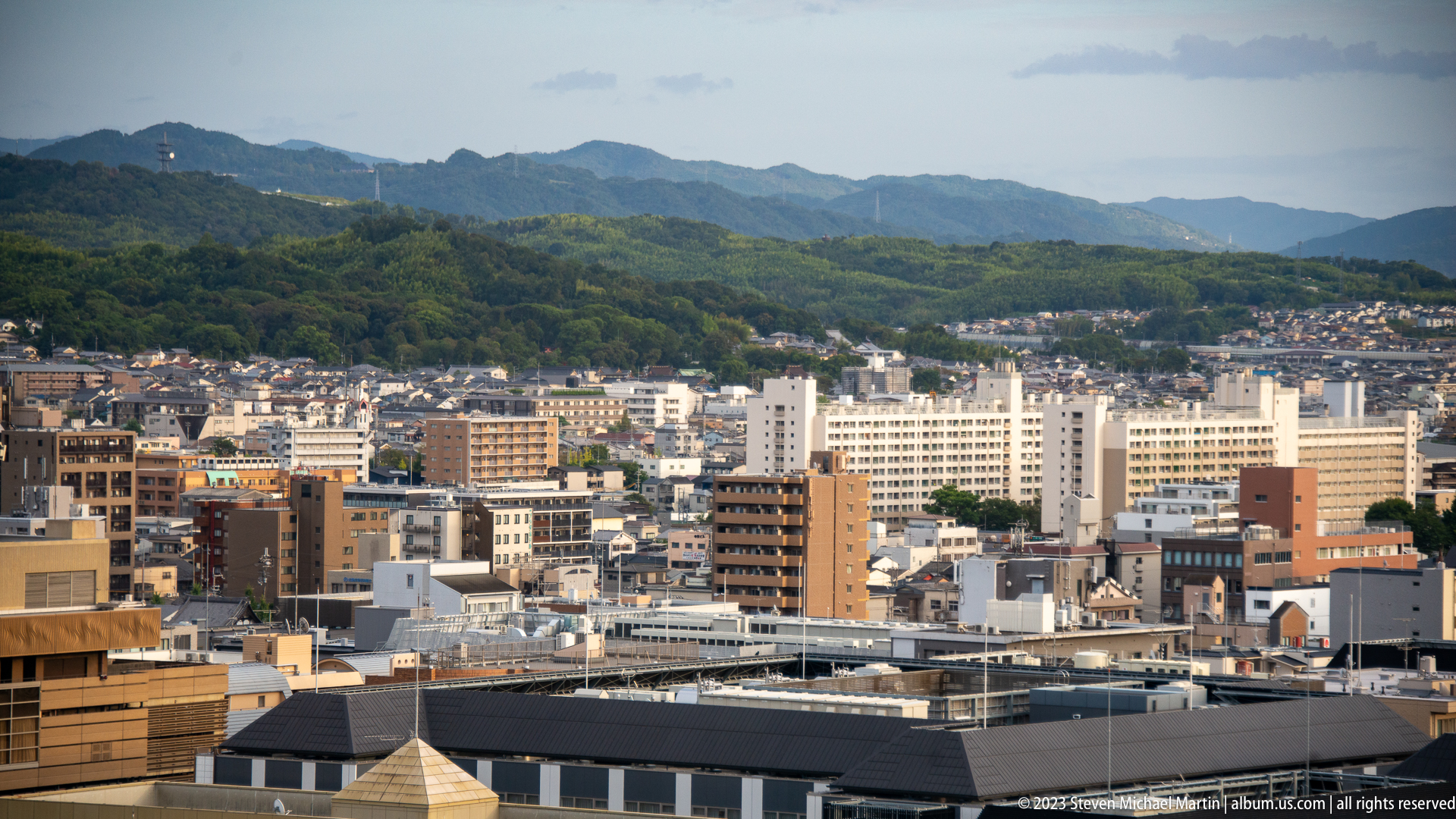
An elevated panorama looks across central Kyoto toward the forested hills surrounding the basin. Mid-rise commercial and residential buildings dominate the foreground, while the distant mountain ridges provide the geographic setting that has shaped Kyoto's urban development for centuries.
Caption
An elevated panorama looks across central Kyoto toward the forested hills surrounding the basin. Mid-rise commercial and residential buildings dominate the foreground, while the distant mountain ridges provide the geographic setting that has shaped Kyoto's urban development for centuries.
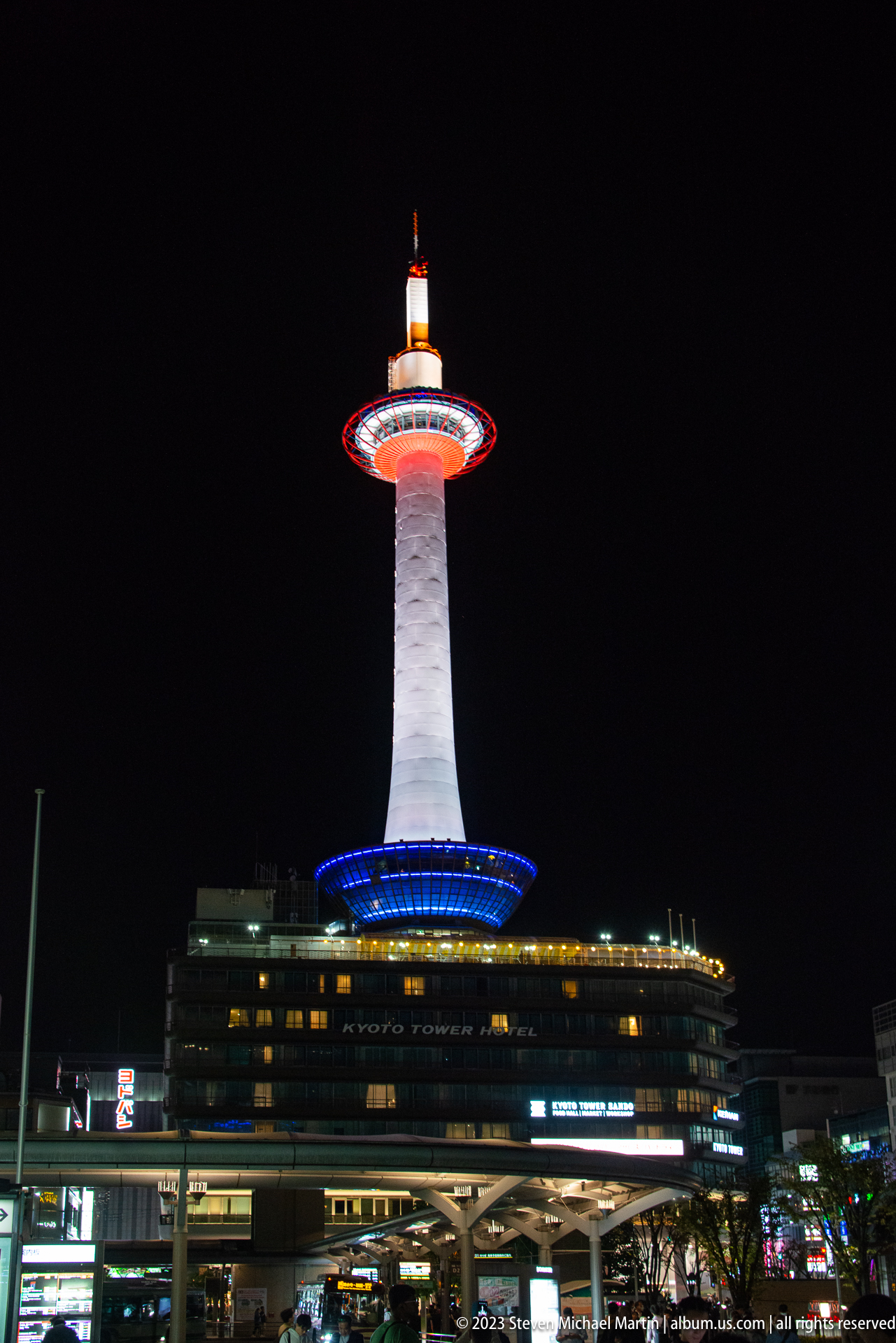
Kyoto Tower glows white, blue, and red against the night sky above the low horizontal mass of the station-side buildings. The observation tower's slender shaft and circular decks form a vivid vertical landmark, while traffic and storefront lighting at street level anchor the scene in the active urban setting surrounding Kyoto Station.
Caption
Kyoto Tower glows white, blue, and red against the night sky above the low horizontal mass of the station-side buildings. The observation tower's slender shaft and circular decks form a vivid vertical landmark, while traffic and storefront lighting at street level anchor the scene in the active urban setting surrounding Kyoto Station.

Viewed from an upper terrace, Kyoto Station's open-air event plaza is framed by sweeping steel-and-glass roof structures, enclosed pedestrian bridges, and multi-level circulation routes. A temporary performance stage occupies the center of the plaza while visitors gather along terraces and walkways, illustrating how the station integrates civic gathering spaces into one of Japan's largest contemporary transportation complexes.
Caption
Viewed from an upper terrace, Kyoto Station's open-air event plaza is framed by sweeping steel-and-glass roof structures, enclosed pedestrian bridges, and multi-level circulation routes. A temporary performance stage occupies the center of the plaza while visitors gather along terraces and walkways, illustrating how the station integrates civic gathering spaces into one of Japan's largest contemporary transportation complexes.
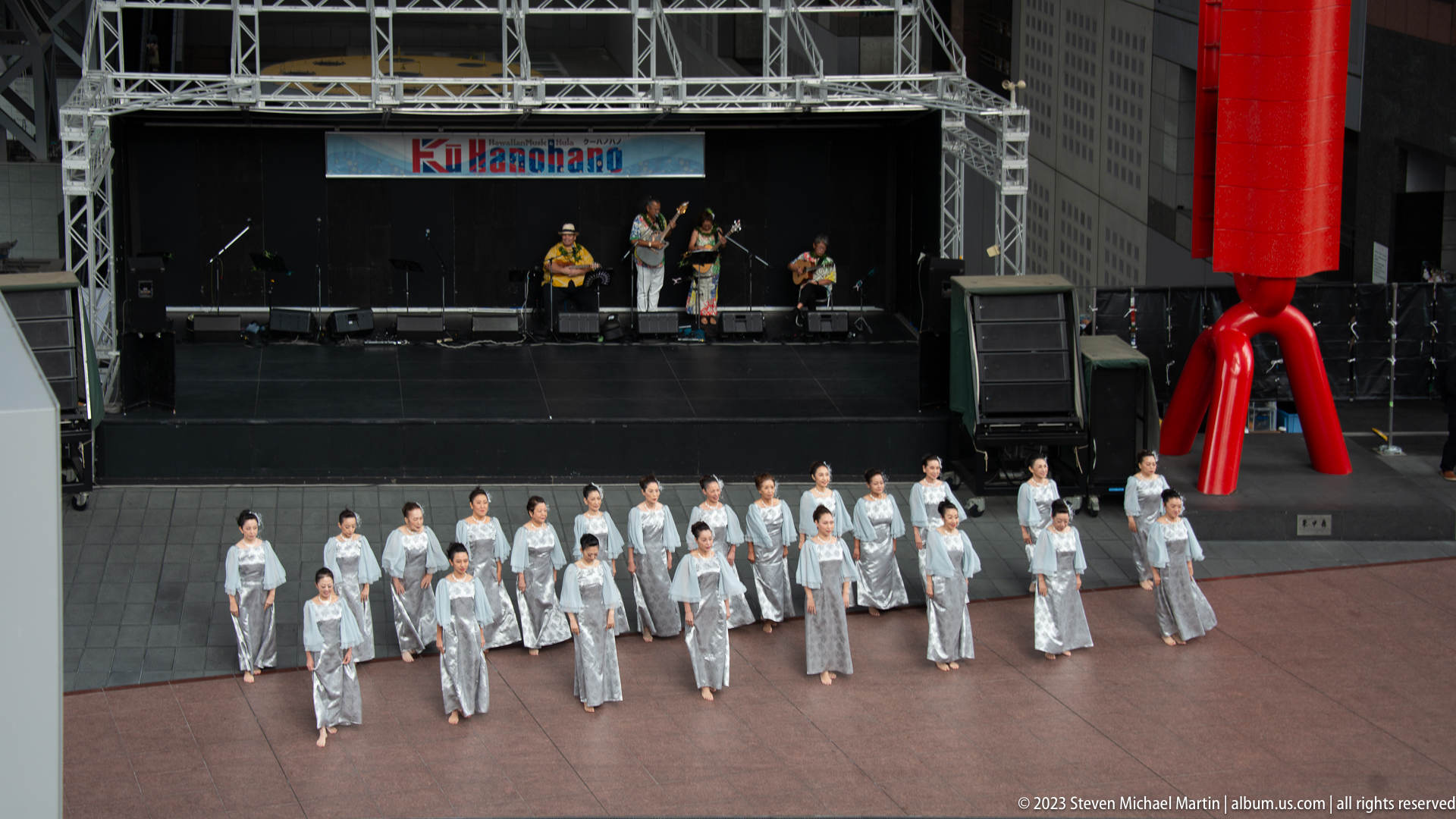
A coordinated group of performers in pale costumes moves across an outdoor stage plaza at Kyoto Station. Musicians or presenters appear on the raised platform behind them, while a large red sculptural element and station architecture frame the event as a public cultural performance within the busy urban complex.
Caption
A coordinated group of performers in pale costumes moves across an outdoor stage plaza at Kyoto Station. Musicians or presenters appear on the raised platform behind them, while a large red sculptural element and station architecture frame the event as a public cultural performance within the busy urban complex.
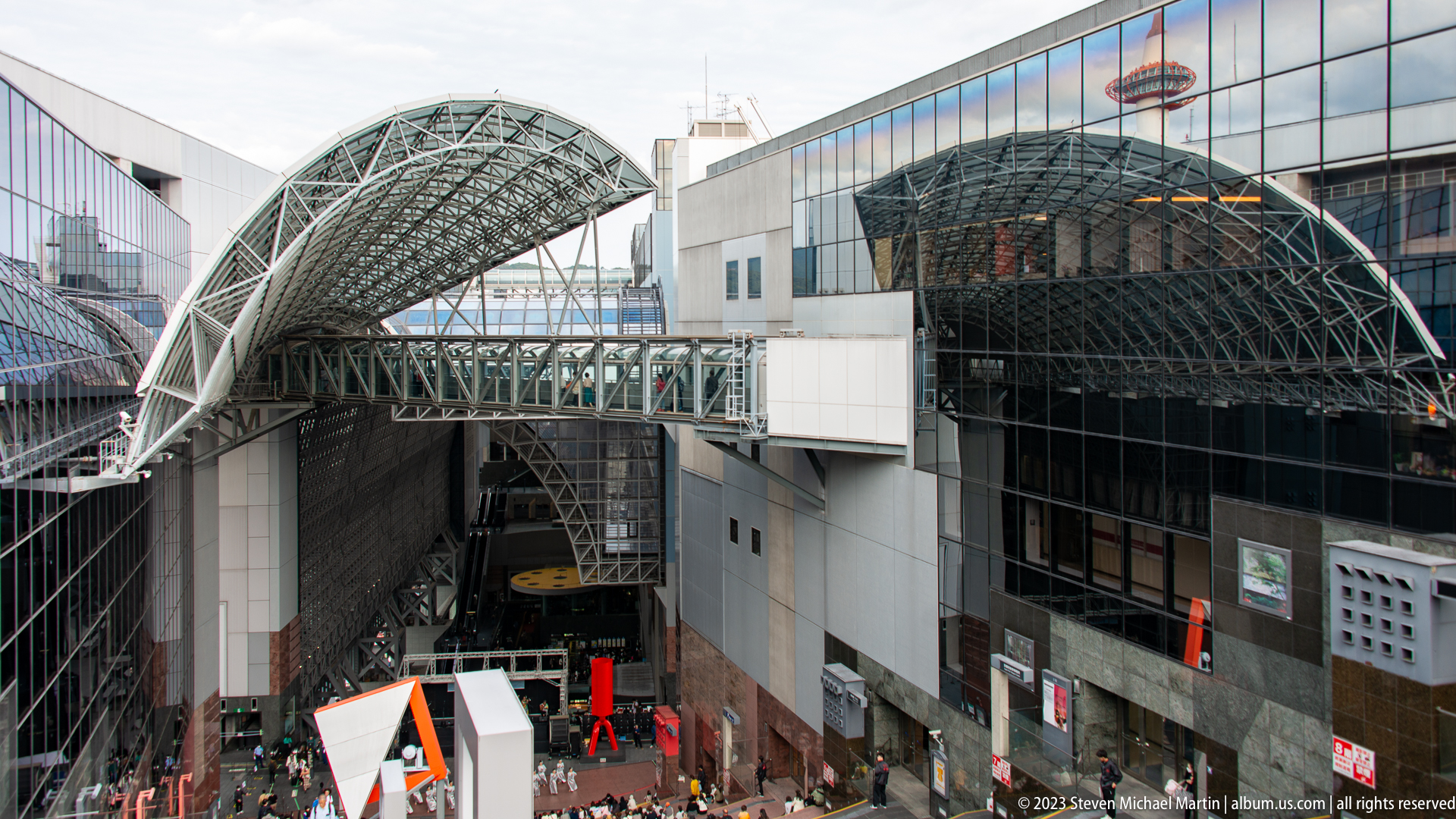
An elevated view looks down into Kyoto Station's open plaza, where a stage, pedestrians, and a large red sculpture occupy the floor between major building wings. Curving roof canopies and enclosed bridges frame the space, revealing how the station's architecture creates a sheltered urban forum within the larger complex.
Caption
An elevated view looks down into Kyoto Station's open plaza, where a stage, pedestrians, and a large red sculpture occupy the floor between major building wings. Curving roof canopies and enclosed bridges frame the space, revealing how the station's architecture creates a sheltered urban forum within the larger complex.

A high-angle view shows dancers performing before a stage in Kyoto Station's open-air plaza. Spectators line the surrounding terraces, while bridges, curved roof structures, and the station's glass-and-steel architecture define the event space and demonstrate how the complex accommodates public gatherings alongside transportation functions.
Caption
A high-angle view shows dancers performing before a stage in Kyoto Station's open-air plaza. Spectators line the surrounding terraces, while bridges, curved roof structures, and the station's glass-and-steel architecture define the event space and demonstrate how the complex accommodates public gatherings alongside transportation functions.
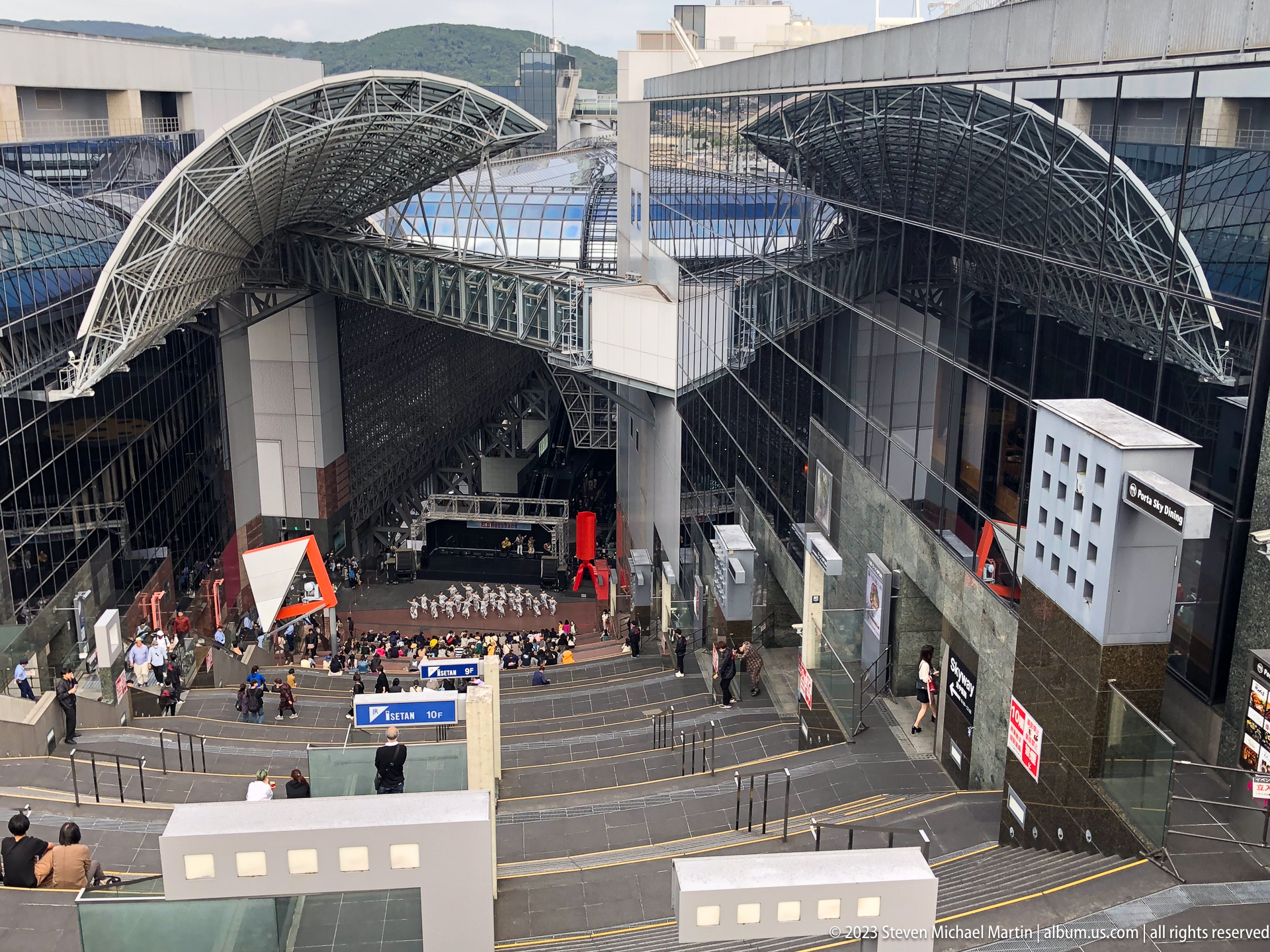
High viewpoint overlooking the station's event plaza with temporary stage, bridges and sweeping roof structures that integrate civic space with transportation.
Caption
High viewpoint overlooking the station's event plaza with temporary stage, bridges and sweeping roof structures that integrate civic space with transportation.
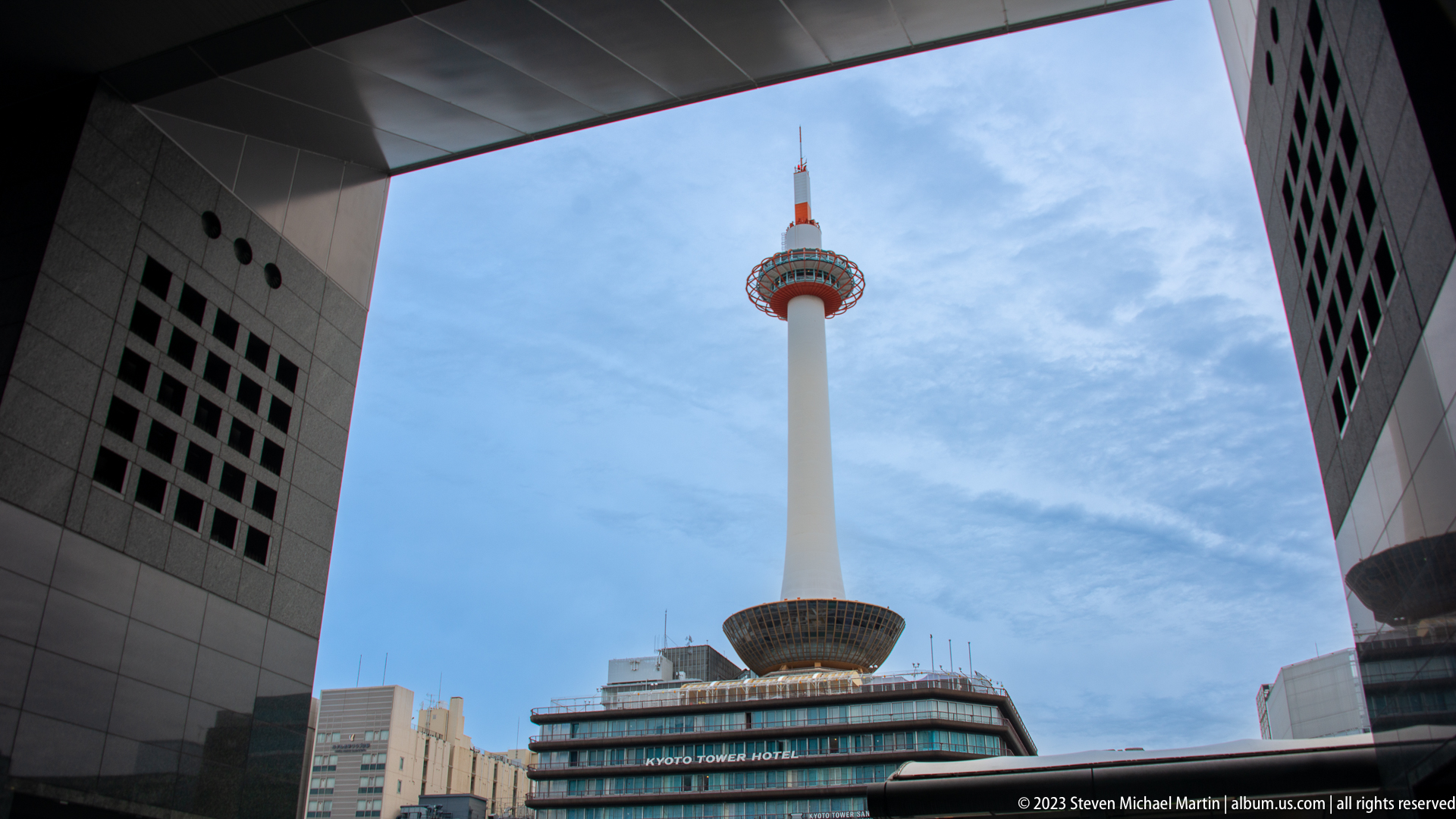
Kyoto Tower rises beyond the station, framed by modern structural openings that contrast historic skyline iconography with contemporary architecture.
Caption
Kyoto Tower rises beyond the station, framed by modern structural openings that contrast historic skyline iconography with contemporary architecture.
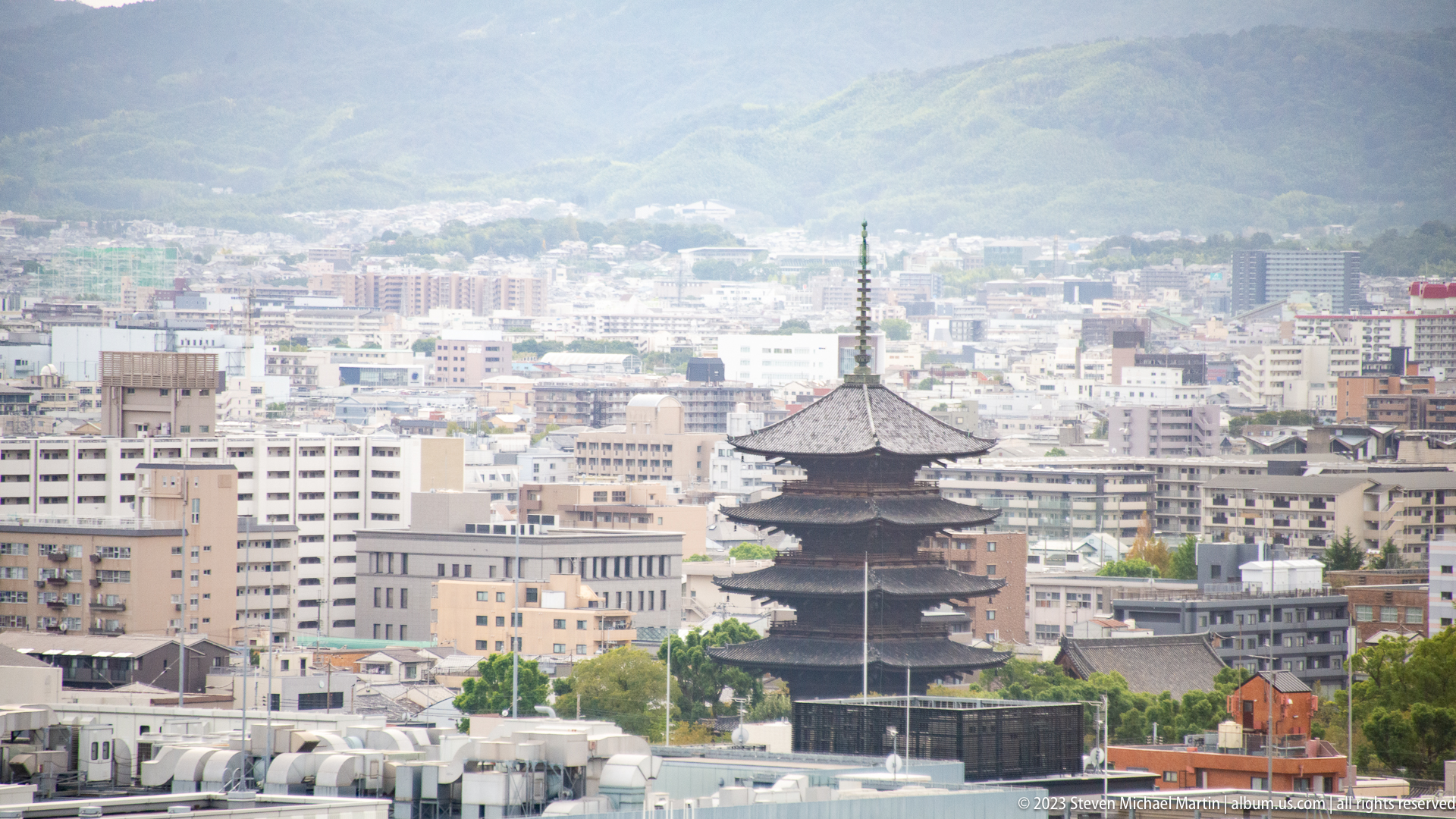
The five-story pagoda of Tō-ji rises above surrounding neighborhoods in a telephoto view across Kyoto. The dark timber silhouette and distinctive finial remain prominent against the city's dense urban fabric, illustrating the visual continuity between one of Kyoto's most important historic Buddhist landmarks and the modern skyline surrounding it.
Caption
The five-story pagoda of Tō-ji rises above surrounding neighborhoods in a telephoto view across Kyoto. The dark timber silhouette and distinctive finial remain prominent against the city's dense urban fabric, illustrating the visual continuity between one of Kyoto's most important historic Buddhist landmarks and the modern skyline surrounding it.
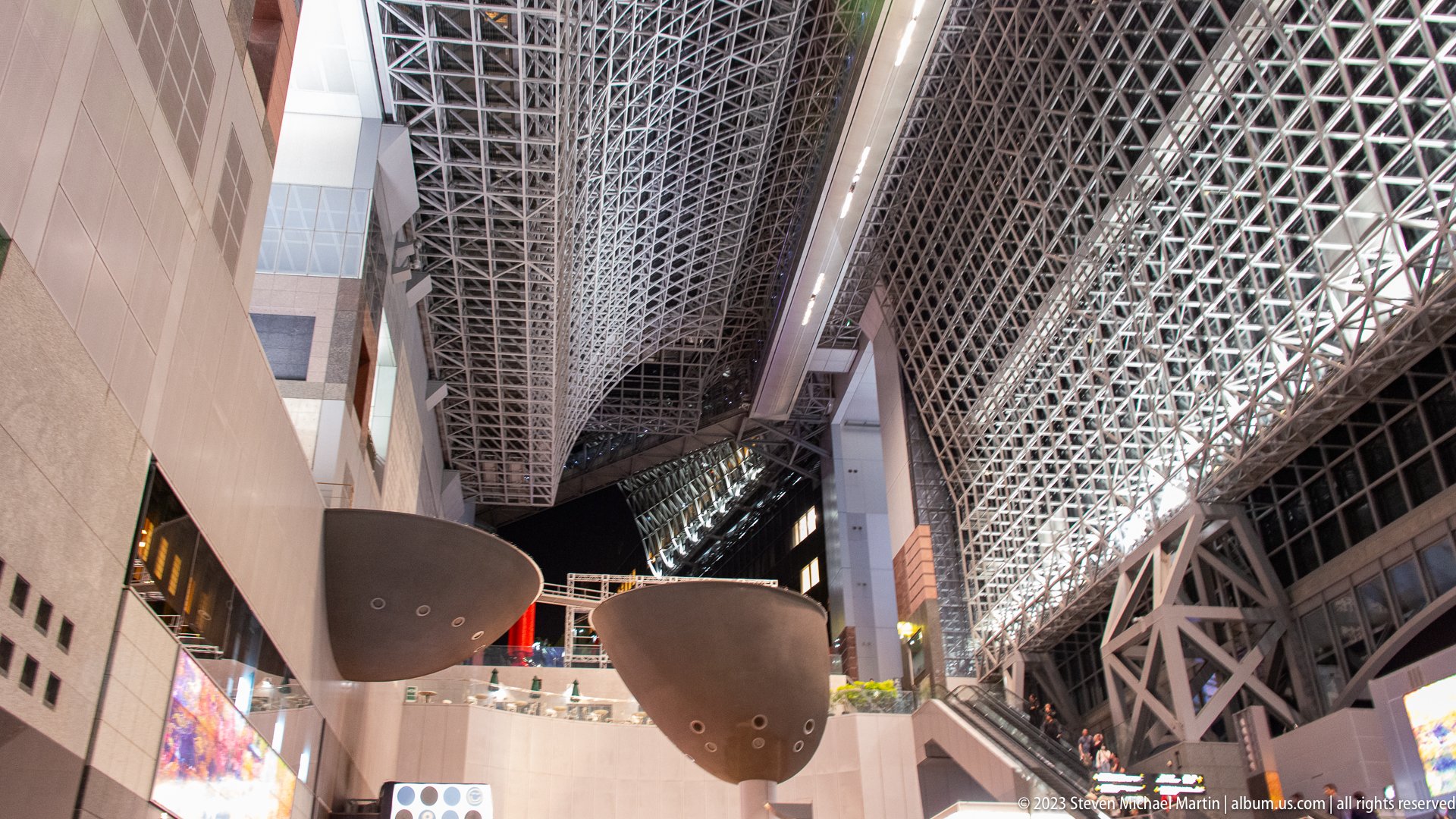
Three large, dark pod-like forms hang above an interior terrace beneath Kyoto Station's intricate roof lattice. Their smooth, rounded surfaces contrast with the angular steel framework overhead, producing a deliberate tension between sculptural mass and exposed engineering within the station's monumental public interior.
Caption
Three large, dark pod-like forms hang above an interior terrace beneath Kyoto Station's intricate roof lattice. Their smooth, rounded surfaces contrast with the angular steel framework overhead, producing a deliberate tension between sculptural mass and exposed engineering within the station's monumental public interior.
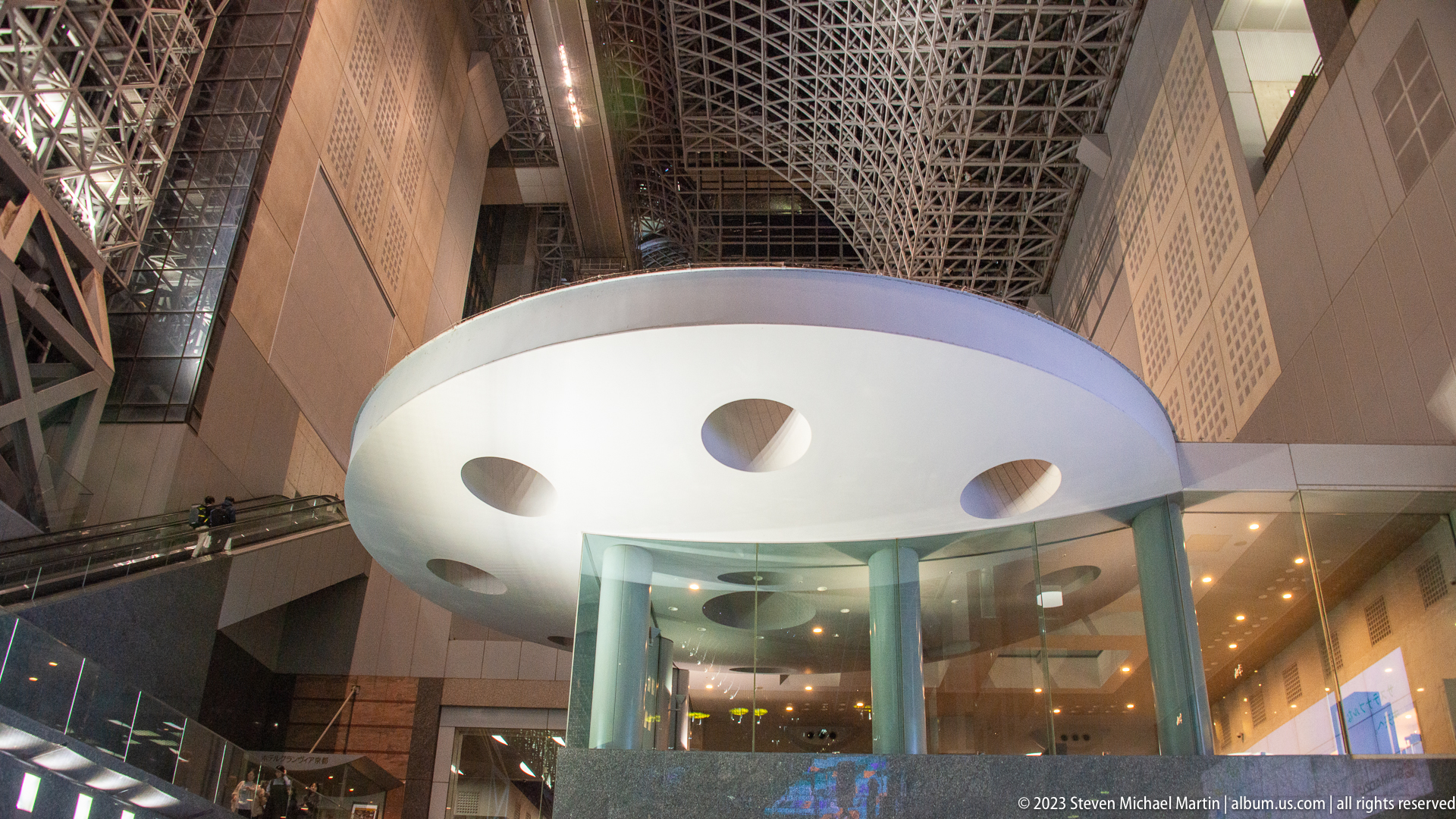
A smooth white circular canopy projects into Kyoto Station's atrium, supported by cylindrical glass elements and pierced by several oval openings. Seen against the station's dense roof grid and tall walls, the pavilion introduces a softer geometric counterpoint to the surrounding steel structure and rectilinear interior surfaces.
Caption
A smooth white circular canopy projects into Kyoto Station's atrium, supported by cylindrical glass elements and pierced by several oval openings. Seen against the station's dense roof grid and tall walls, the pavilion introduces a softer geometric counterpoint to the surrounding steel structure and rectilinear interior surfaces.
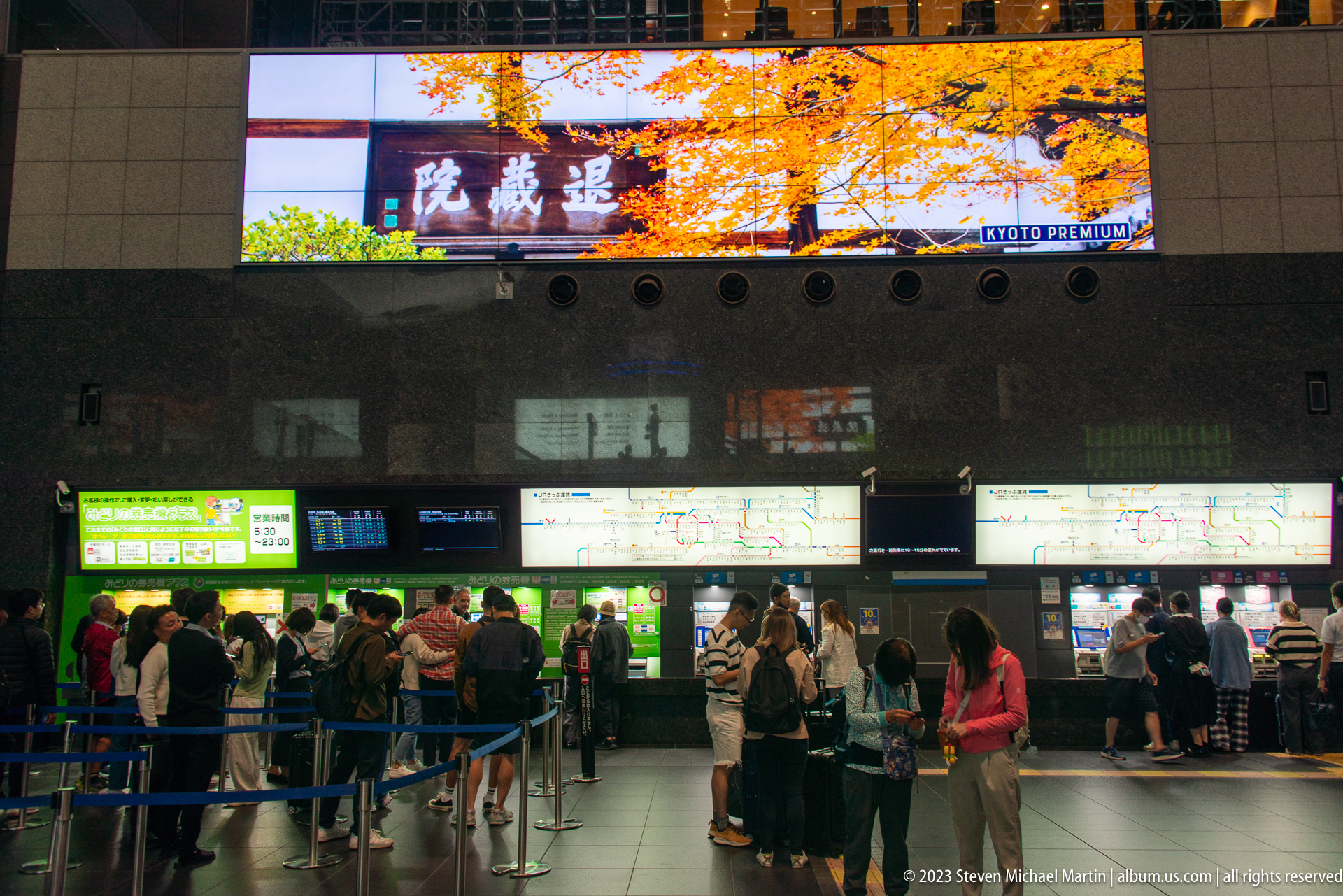
Travelers queue at Kyoto Station's ticketing area beneath a row of illuminated route and service displays. The scene documents the station's everyday operational role, with counters, electronic information panels, barriers, and waiting passengers arranged below a large advertising screen that brightens the otherwise dark interior.
Caption
Travelers queue at Kyoto Station's ticketing area beneath a row of illuminated route and service displays. The scene documents the station's everyday operational role, with counters, electronic information panels, barriers, and waiting passengers arranged below a large advertising screen that brightens the otherwise dark interior.
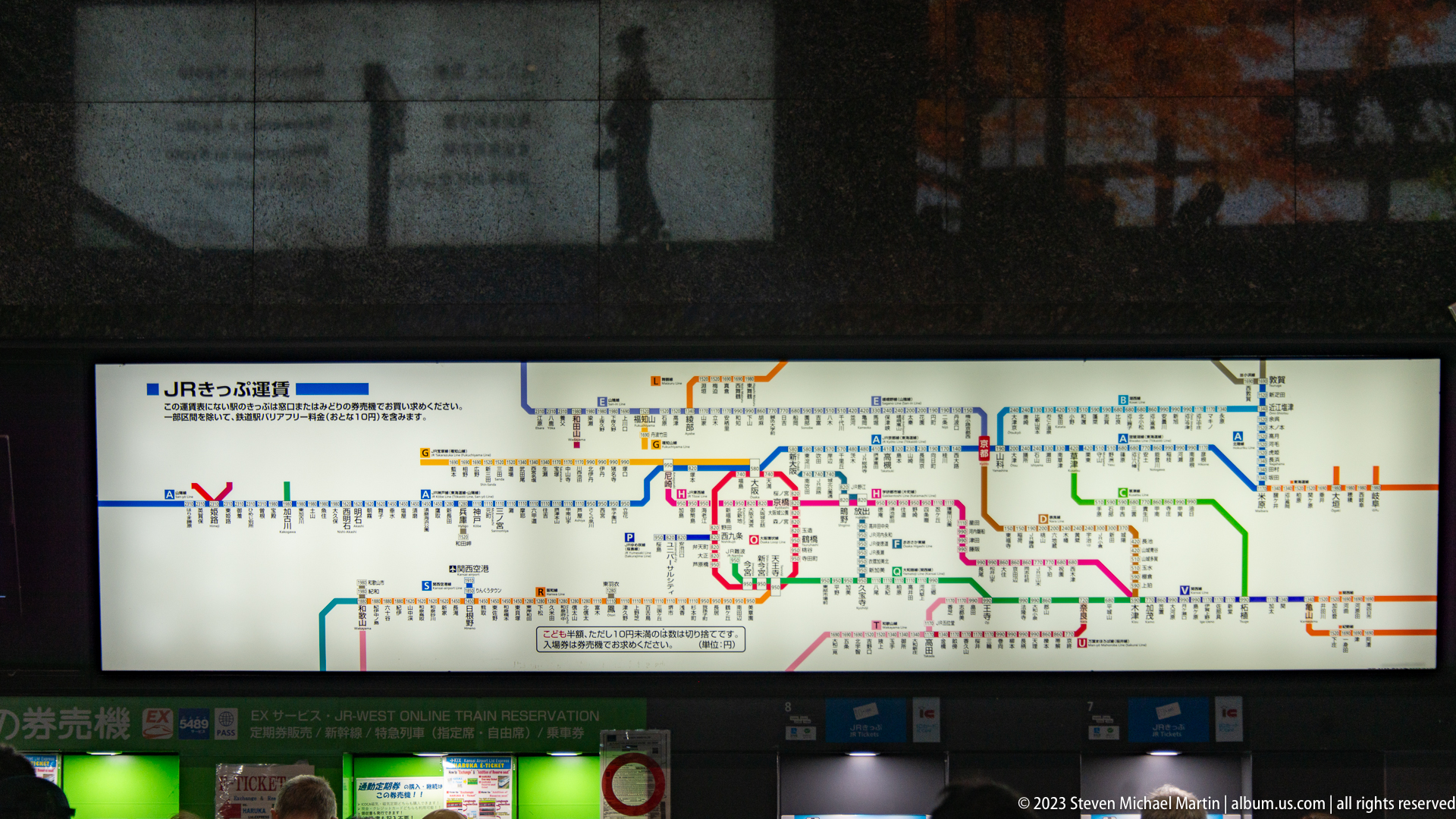
An illuminated JR West network map fills the frame above ticketing equipment inside Kyoto Station. Colored lines and dense station names present the complexity of regional rail connections, while the surrounding darkness isolates the diagram as a practical navigational tool for passengers planning journeys across the Kansai region and beyond.
Caption
An illuminated JR West network map fills the frame above ticketing equipment inside Kyoto Station. Colored lines and dense station names present the complexity of regional rail connections, while the surrounding darkness isolates the diagram as a practical navigational tool for passengers planning journeys across the Kansai region and beyond.
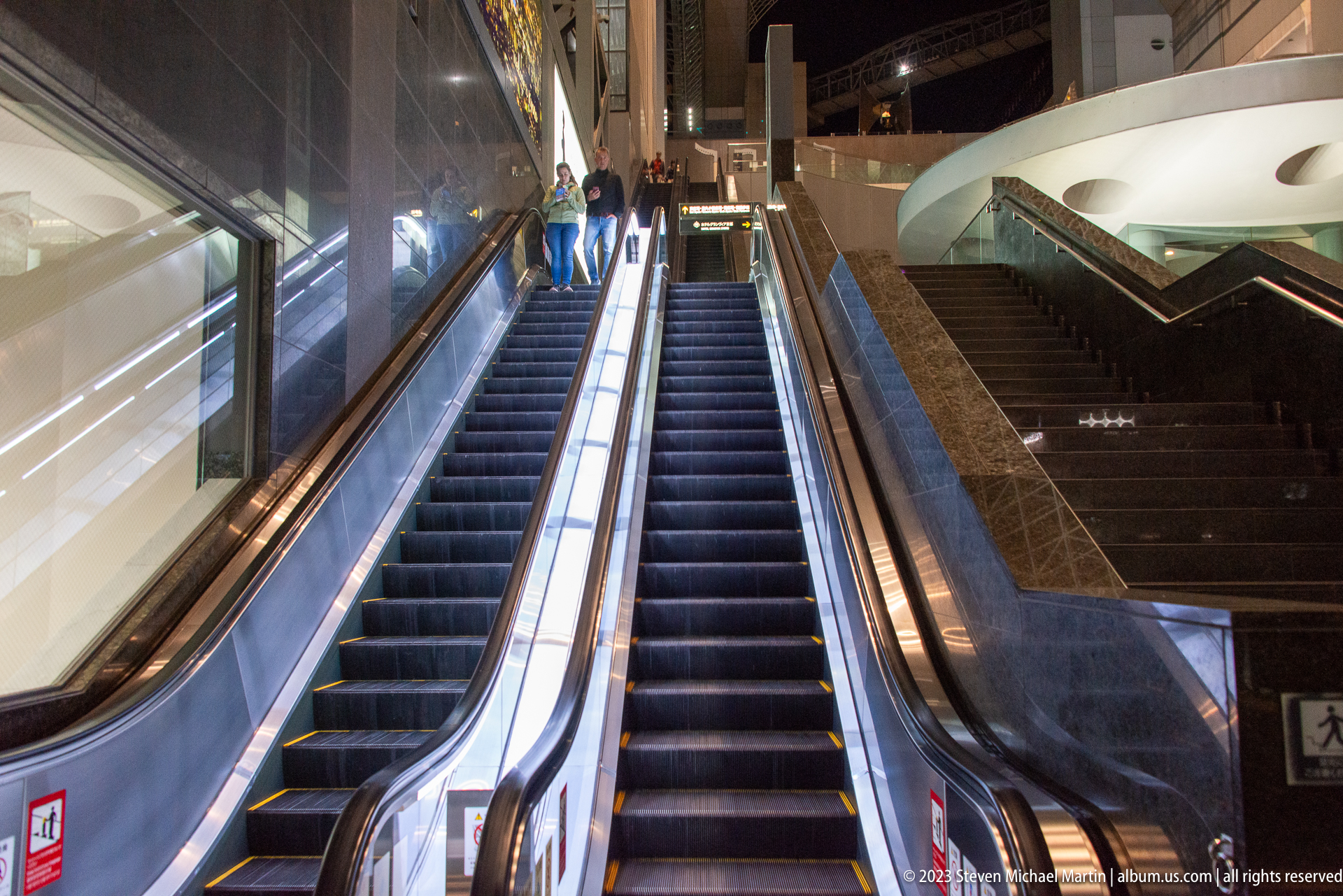
Two escalators rise beside a broad dark-stone staircase in one of Kyoto Station's interior circulation zones. The steep upward perspective, reflective handrails, and sparse human presence emphasize the building's monumental scale and the highly engineered routes that move passengers between its many levels.
Caption
Two escalators rise beside a broad dark-stone staircase in one of Kyoto Station's interior circulation zones. The steep upward perspective, reflective handrails, and sparse human presence emphasize the building's monumental scale and the highly engineered routes that move passengers between its many levels.
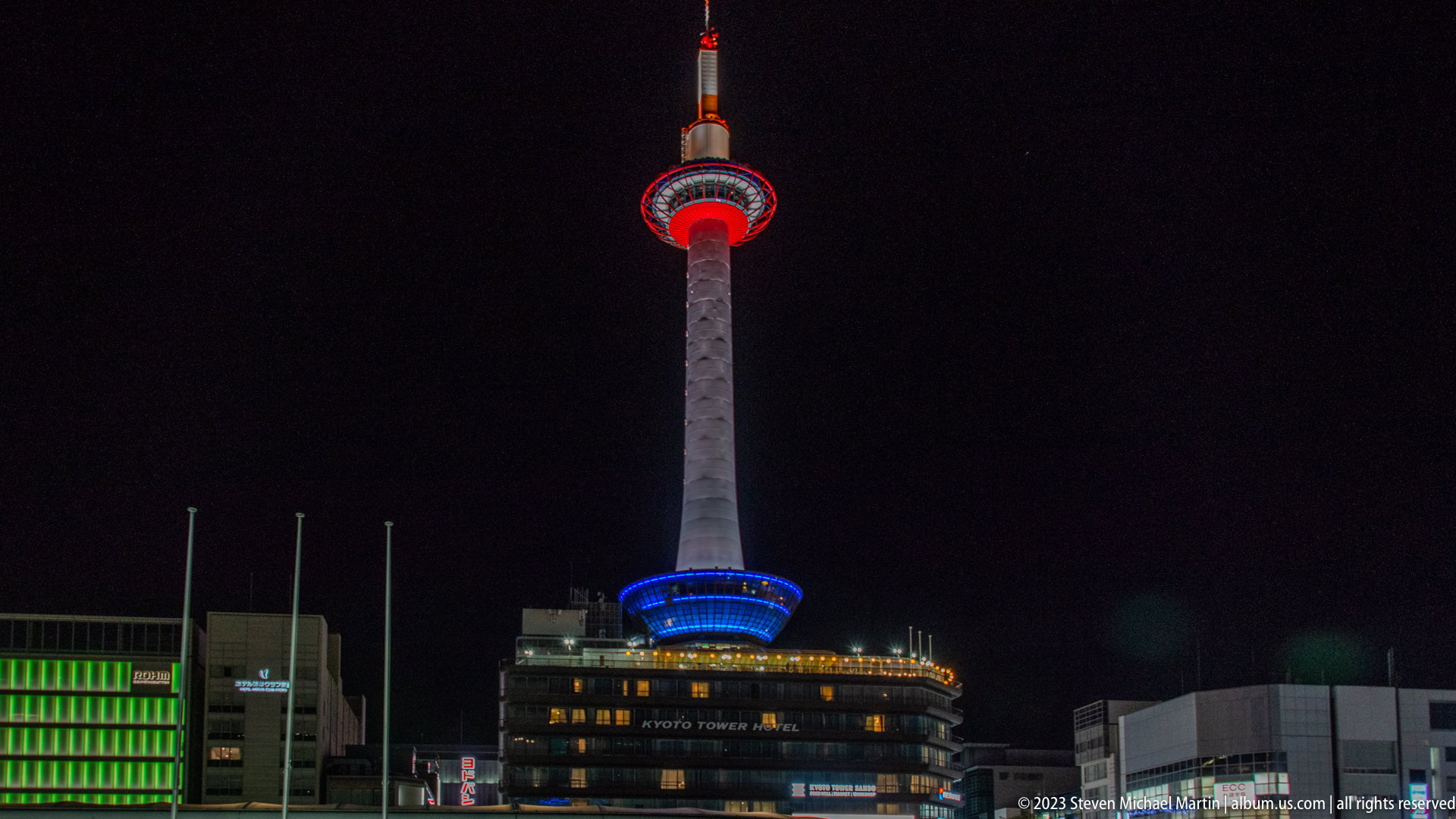
Kyoto Tower stands centered above the illuminated Kyoto Tower Building, its white shaft and red-and-blue observation decks sharply outlined against a black sky. The frontal composition emphasizes the tower's stacked circular geometry and its visual role as a vertical counterpoint to the broad commercial structure below.
Caption
Kyoto Tower stands centered above the illuminated Kyoto Tower Building, its white shaft and red-and-blue observation decks sharply outlined against a black sky. The frontal composition emphasizes the tower's stacked circular geometry and its visual role as a vertical counterpoint to the broad commercial structure below.
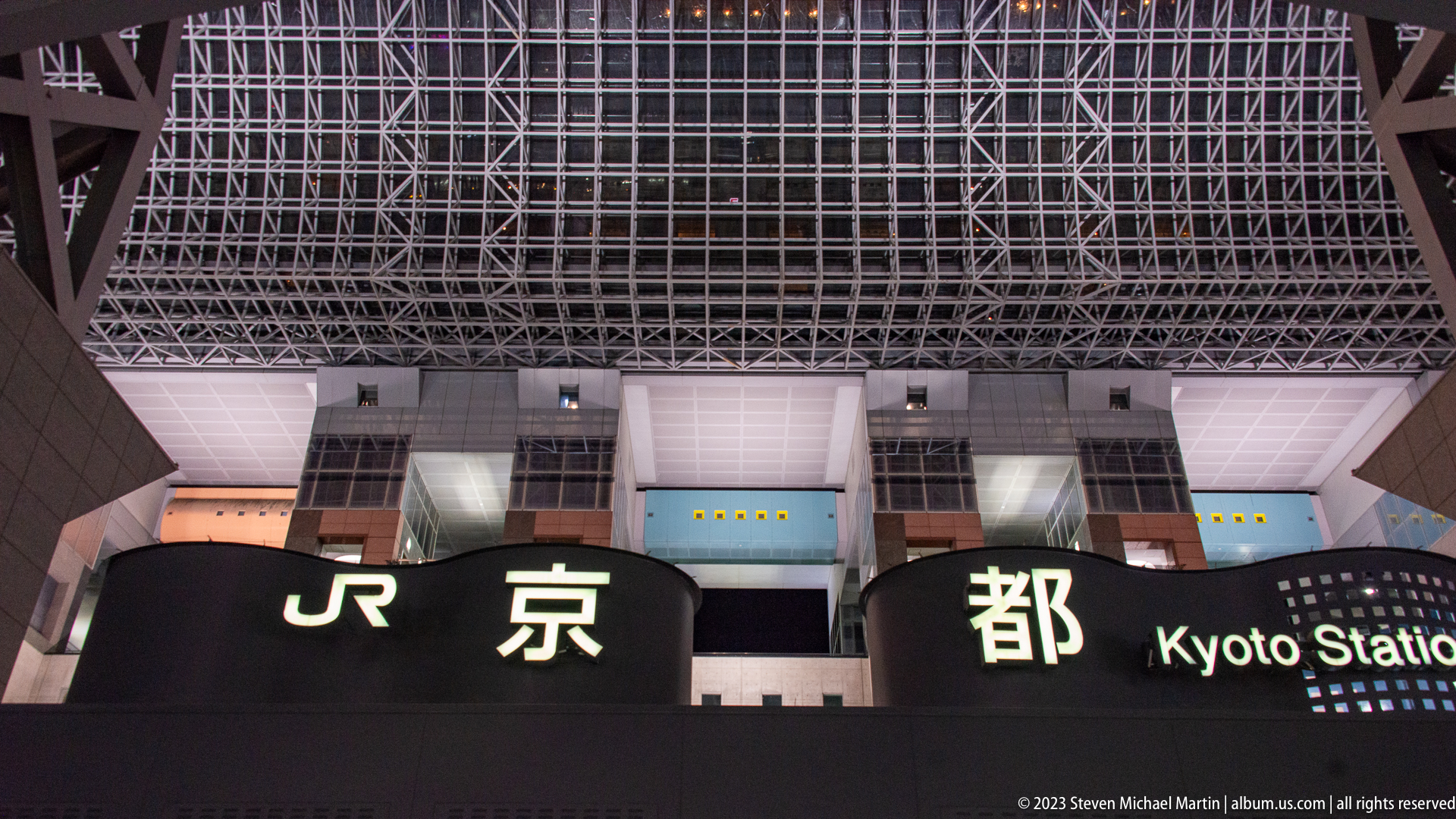
Large illuminated characters spelling Kyoto Station stretch across the lower facade beneath the building's immense steel-and-glass roof. The close view compresses signage, brick-colored walls, glazed openings, and exposed structural framing into a dense architectural composition that announces the station's identity at urban scale.
Caption
Large illuminated characters spelling Kyoto Station stretch across the lower facade beneath the building's immense steel-and-glass roof. The close view compresses signage, brick-colored walls, glazed openings, and exposed structural framing into a dense architectural composition that announces the station's identity at urban scale.
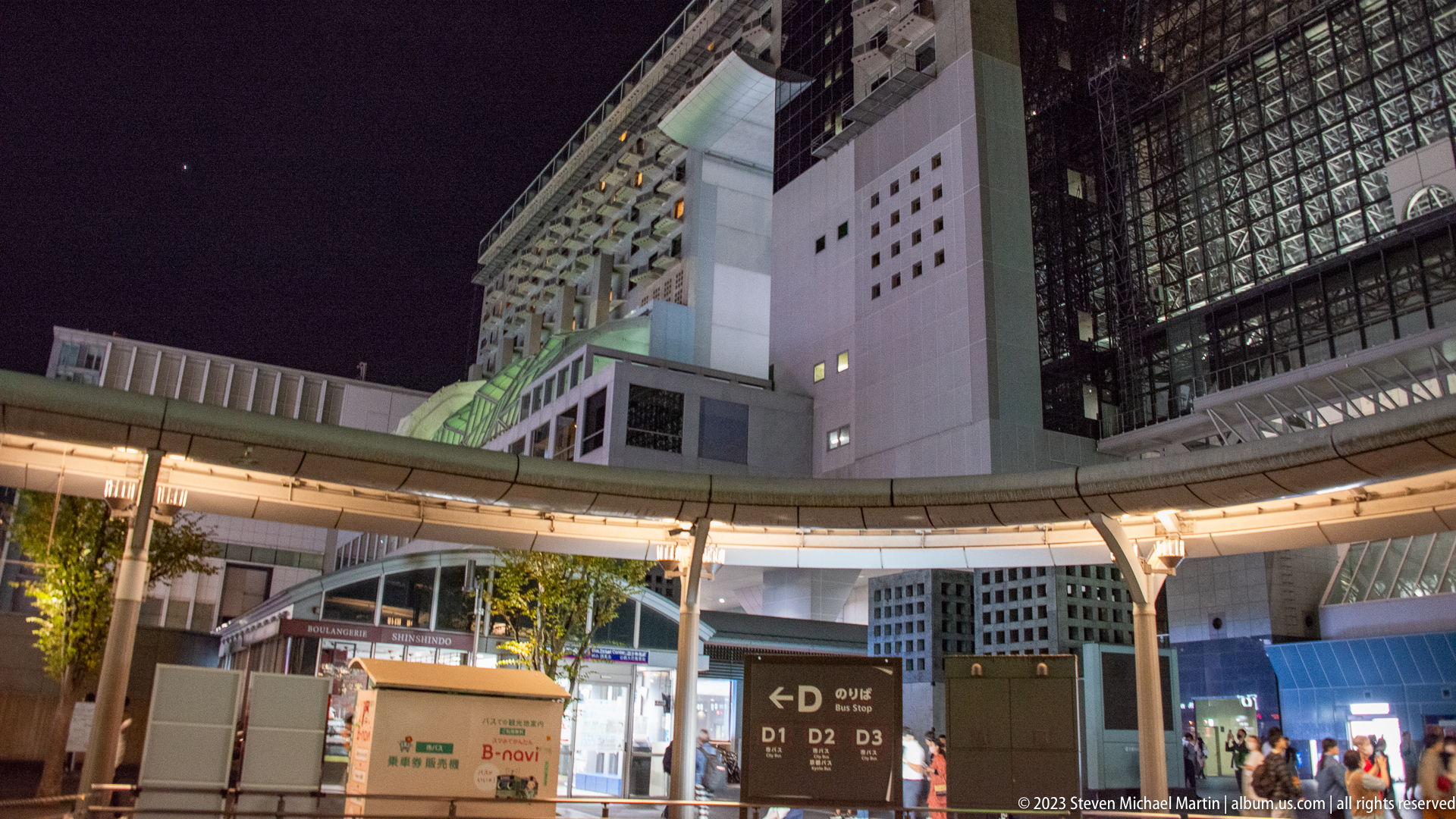
An elevated pedestrian canopy curves across the foreground of Kyoto Station's tall exterior walls. The night view reveals a layered composition of white cladding, dark glazing, structural framing, and illuminated circulation routes, demonstrating how bridges and covered walkways connect the station's immense vertical complex.
Caption
An elevated pedestrian canopy curves across the foreground of Kyoto Station's tall exterior walls. The night view reveals a layered composition of white cladding, dark glazing, structural framing, and illuminated circulation routes, demonstrating how bridges and covered walkways connect the station's immense vertical complex.
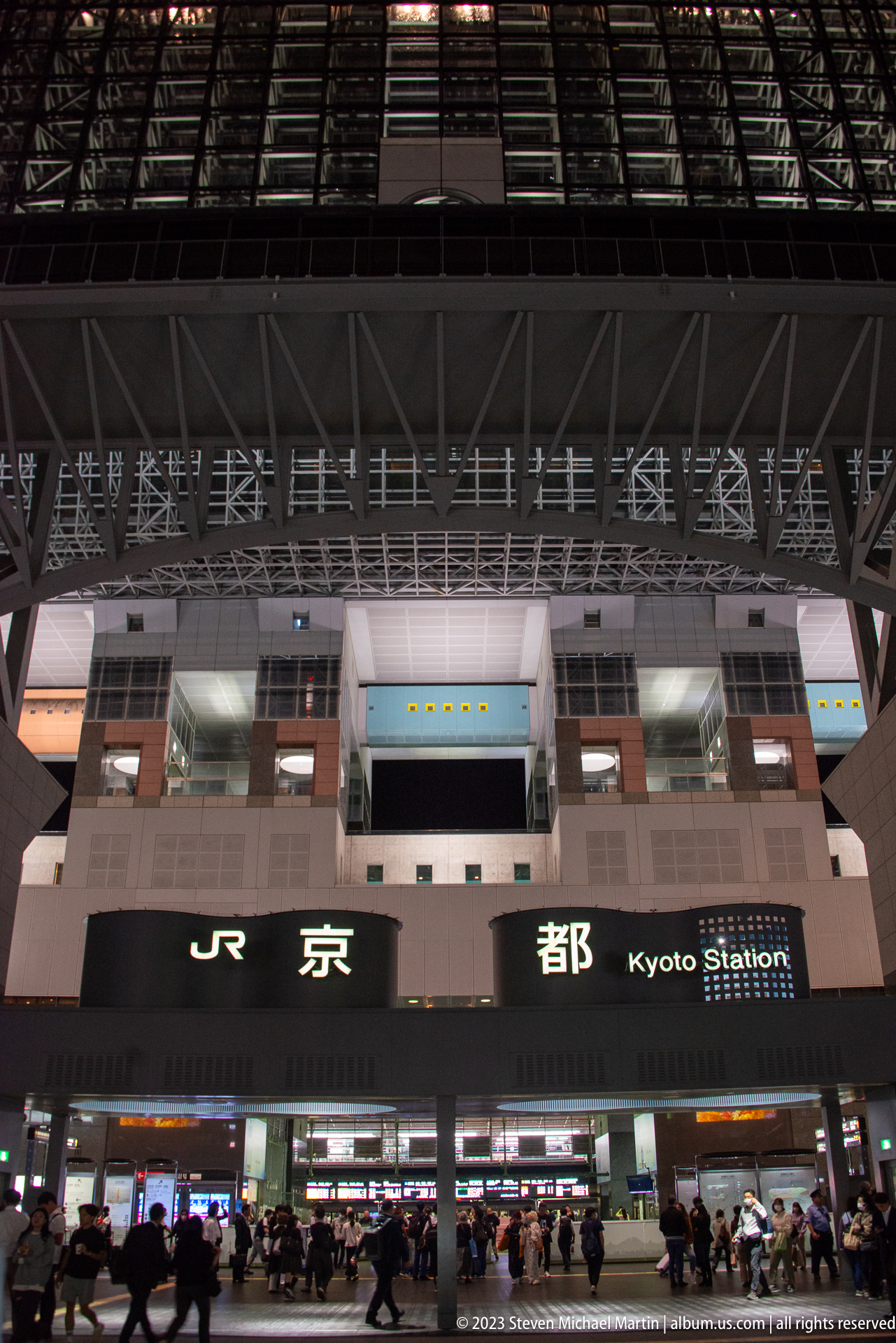
Passengers move beneath the illuminated JR Kyoto Station sign at the station's main exterior entrance. Above them, broad glazed openings, brick-toned walls, and the dark steel roof reveal the building's layered facade, while the active forecourt conveys the continuous flow of arrivals and departures after nightfall.
Caption
Passengers move beneath the illuminated JR Kyoto Station sign at the station's main exterior entrance. Above them, broad glazed openings, brick-toned walls, and the dark steel roof reveal the building's layered facade, while the active forecourt conveys the continuous flow of arrivals and departures after nightfall.
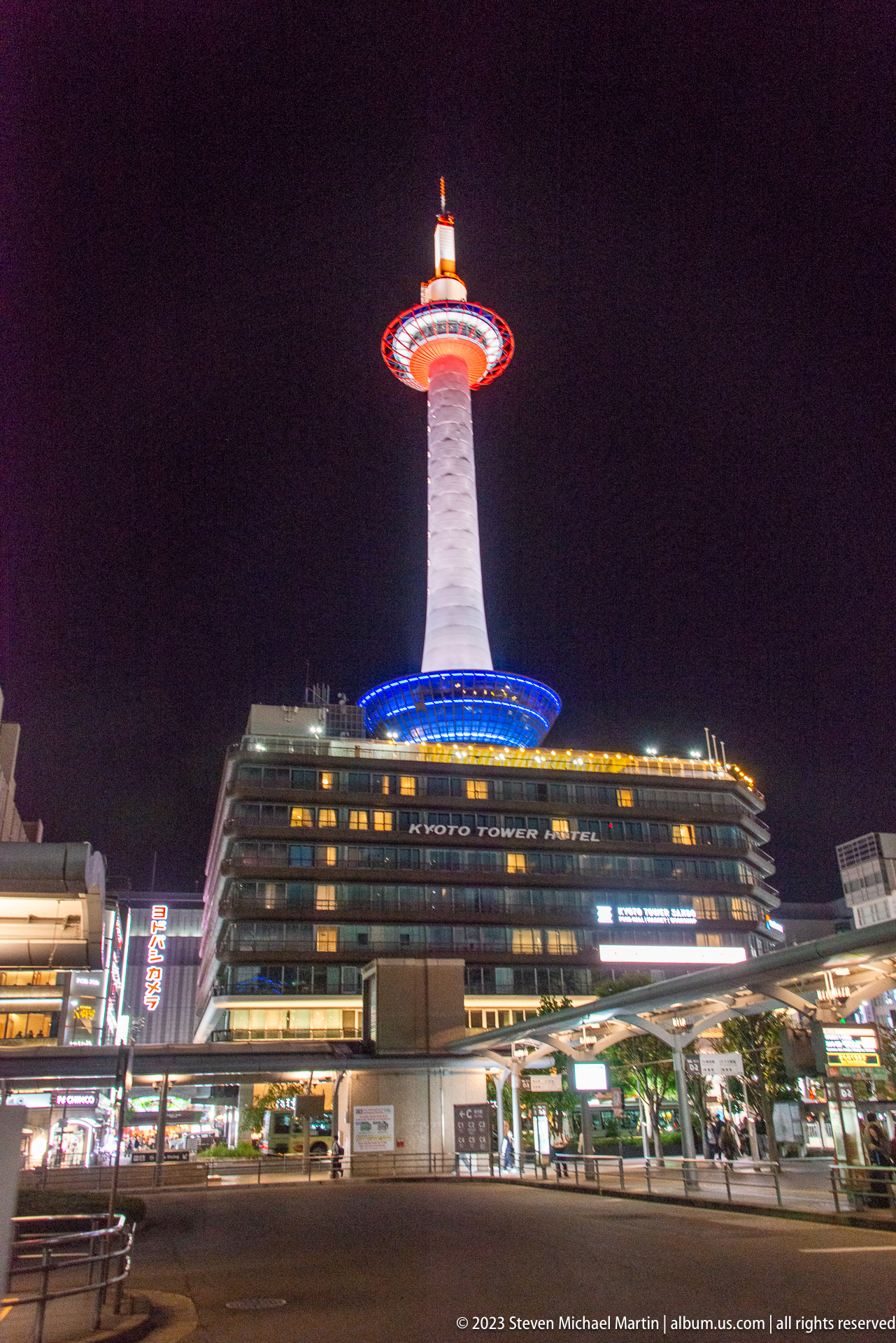
Kyoto Tower rises prominently from the center of the broad building at its base, its illuminated shaft and circular decks glowing above the nighttime streetscape. The wider perspective includes traffic, storefronts, and the tower's full architectural relationship to the commercial block below, presenting the landmark as part of the active station district.
Caption
Kyoto Tower rises prominently from the center of the broad building at its base, its illuminated shaft and circular decks glowing above the nighttime streetscape. The wider perspective includes traffic, storefronts, and the tower's full architectural relationship to the commercial block below, presenting the landmark as part of the active station district.
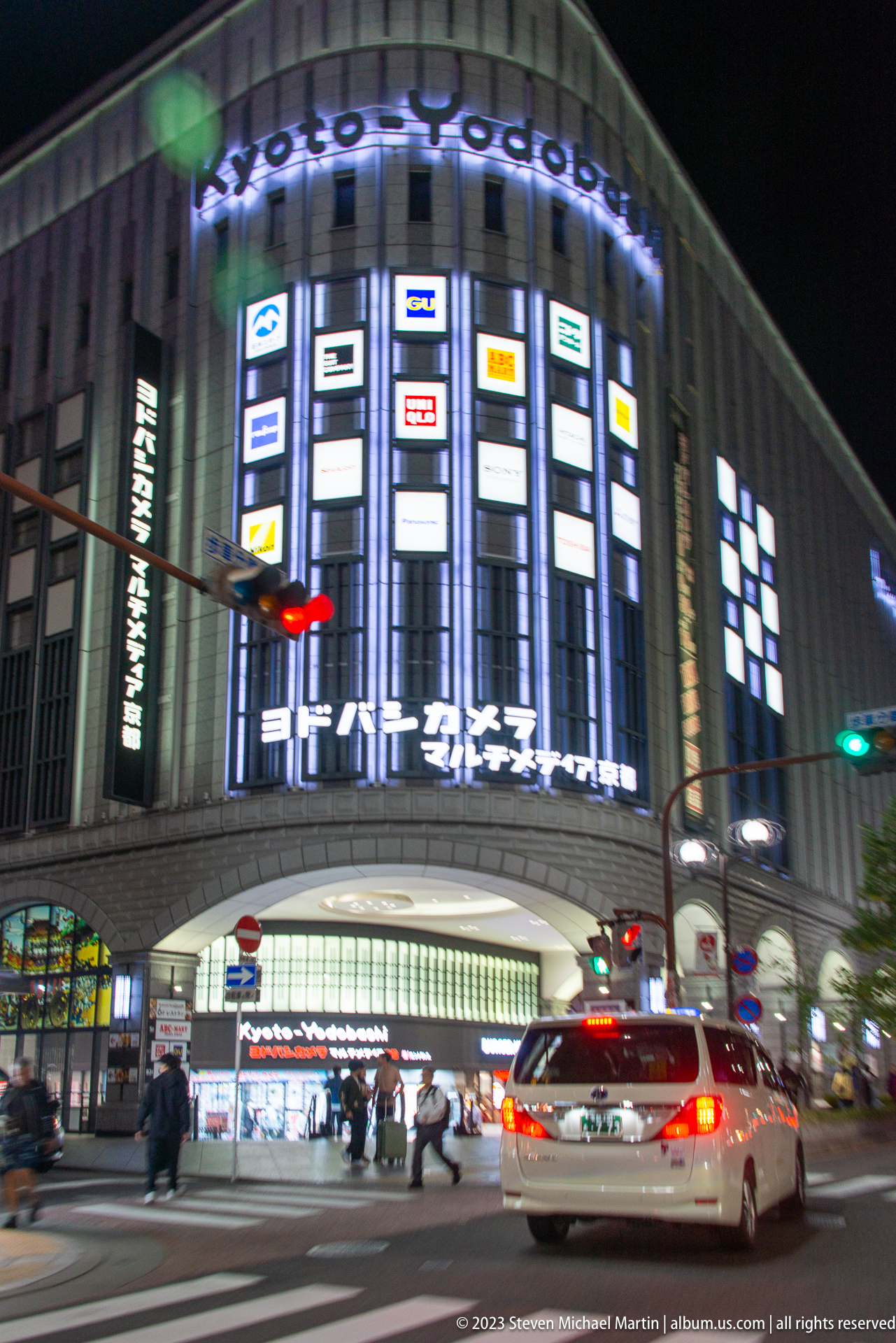
Bright vertical signs and illuminated retail panels cover the facade of Yodobashi Kyoto near the station. A taxi passes through the foreground while pedestrians gather beneath the storefront lighting, creating a lively night scene that contrasts commercial brightness with the dark upper stories of the surrounding city.
Caption
Bright vertical signs and illuminated retail panels cover the facade of Yodobashi Kyoto near the station. A taxi passes through the foreground while pedestrians gather beneath the storefront lighting, creating a lively night scene that contrasts commercial brightness with the dark upper stories of the surrounding city.
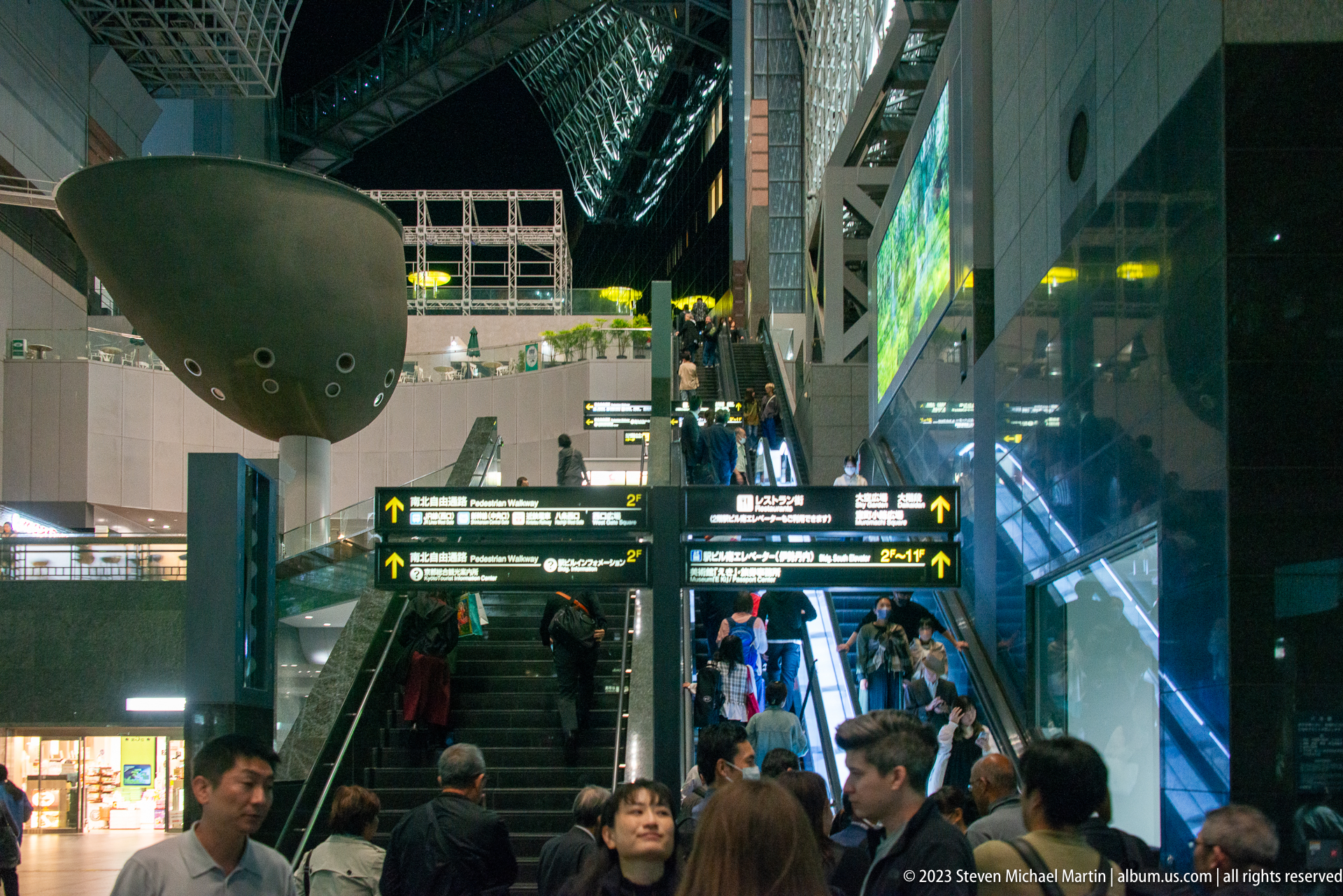
Passengers converge at a busy escalator junction beneath Kyoto Station's suspended pod-like forms and exposed steel roof. Directional signs, layered walkways, glass balustrades, and intersecting routes turn the interior into a complex vertical transport landscape, showing how architectural spectacle and everyday circulation operate together.
Caption
Passengers converge at a busy escalator junction beneath Kyoto Station's suspended pod-like forms and exposed steel roof. Directional signs, layered walkways, glass balustrades, and intersecting routes turn the interior into a complex vertical transport landscape, showing how architectural spectacle and everyday circulation operate together.
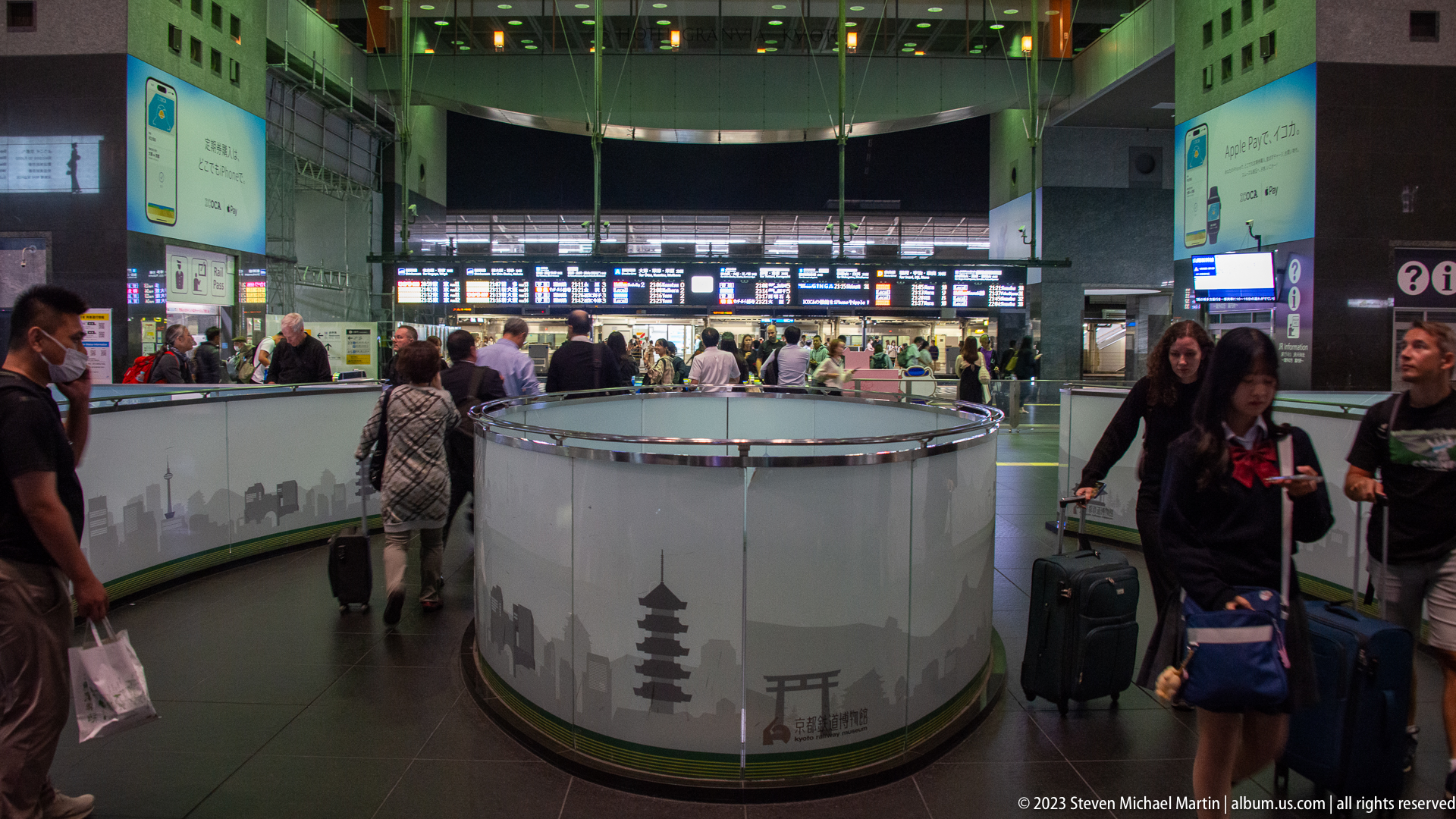
A circular service counter occupies the center of Kyoto Station's concourse, wrapped with silhouettes of Kyoto landmarks and traditional motifs. Travelers pass around it beneath electronic departure boards and overhead signage, combining practical passenger services with visual references to the city's cultural identity.
Caption
A circular service counter occupies the center of Kyoto Station's concourse, wrapped with silhouettes of Kyoto landmarks and traditional motifs. Travelers pass around it beneath electronic departure boards and overhead signage, combining practical passenger services with visual references to the city's cultural identity.
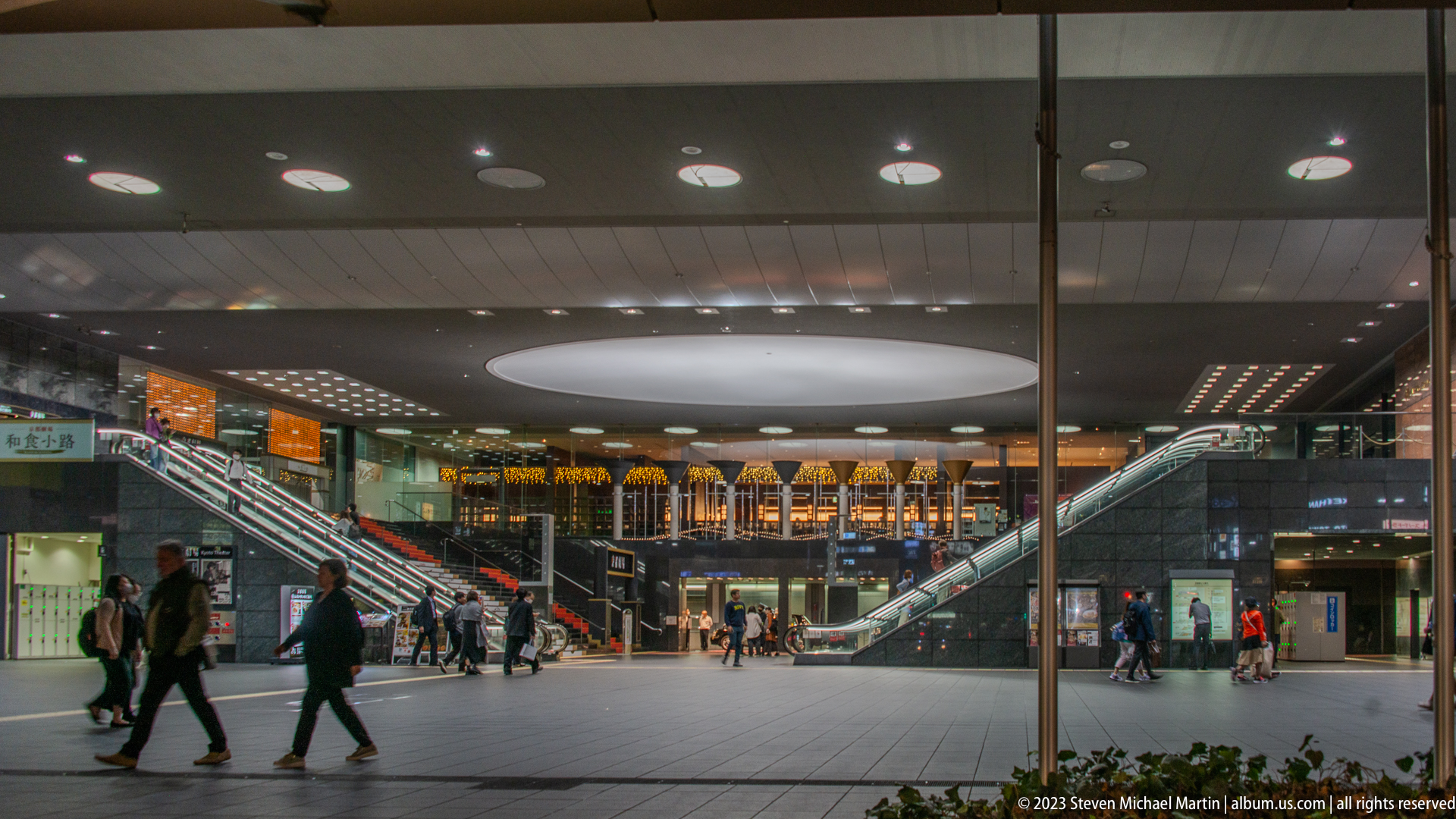
Seen through a large pane of glass, Kyoto Station's open concourse extends toward escalators, shops, and illuminated upper levels. Pedestrians cross the foreground while reflections and interior lighting create depth across the transparent surface, presenting the station as both a transportation space and a continuously active urban interior.
Caption
Seen through a large pane of glass, Kyoto Station's open concourse extends toward escalators, shops, and illuminated upper levels. Pedestrians cross the foreground while reflections and interior lighting create depth across the transparent surface, presenting the station as both a transportation space and a continuously active urban interior.
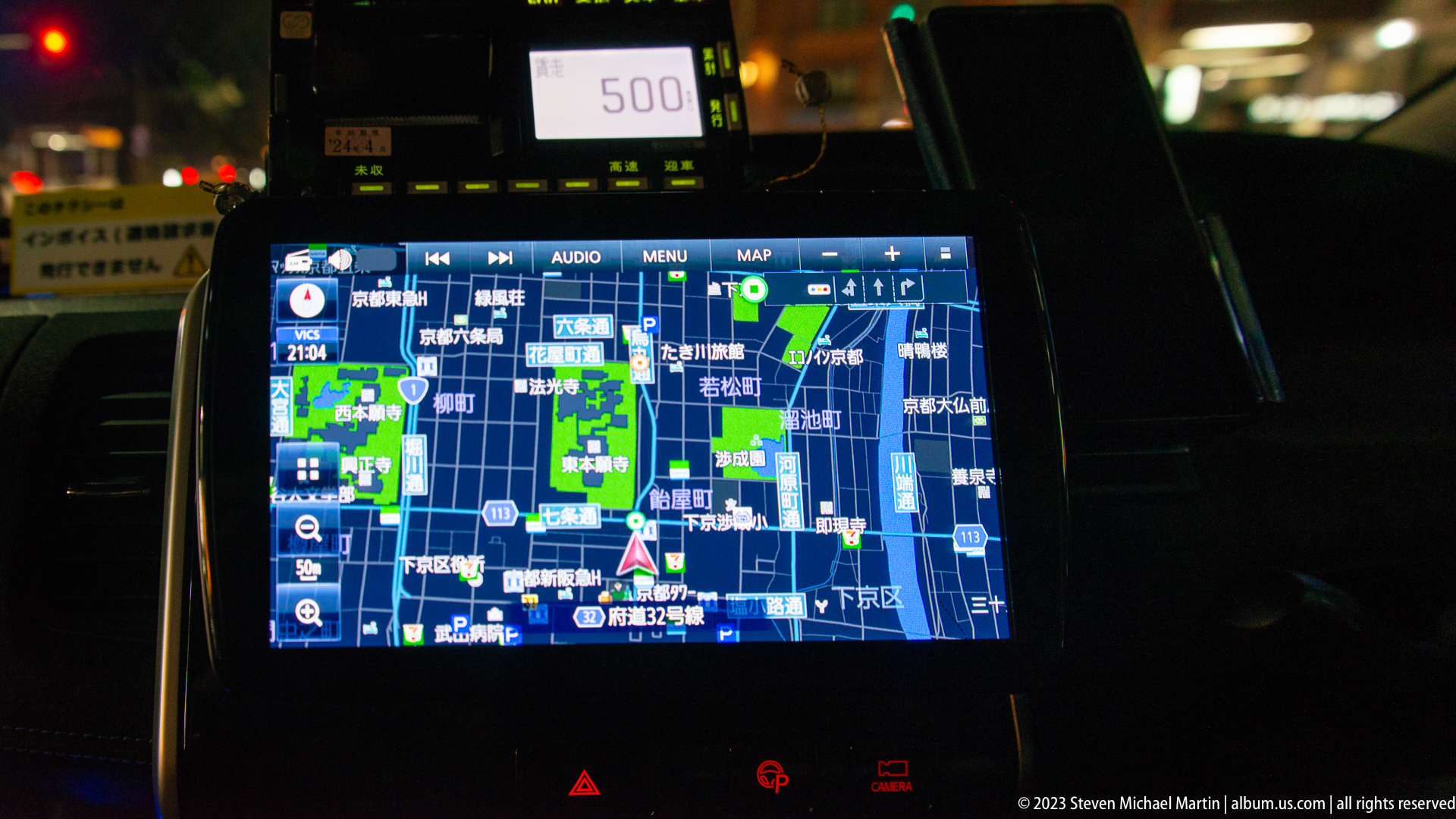
A taxi's dashboard navigation screen displays a dense street map of central Kyoto, surrounded by controls and illuminated indicators. The close view shifts attention from monumental architecture to the digital infrastructure of urban travel, documenting how visitors and drivers navigate the complex street network around Kyoto Station.
Caption
A taxi's dashboard navigation screen displays a dense street map of central Kyoto, surrounded by controls and illuminated indicators. The close view shifts attention from monumental architecture to the digital infrastructure of urban travel, documenting how visitors and drivers navigate the complex street network around Kyoto Station.
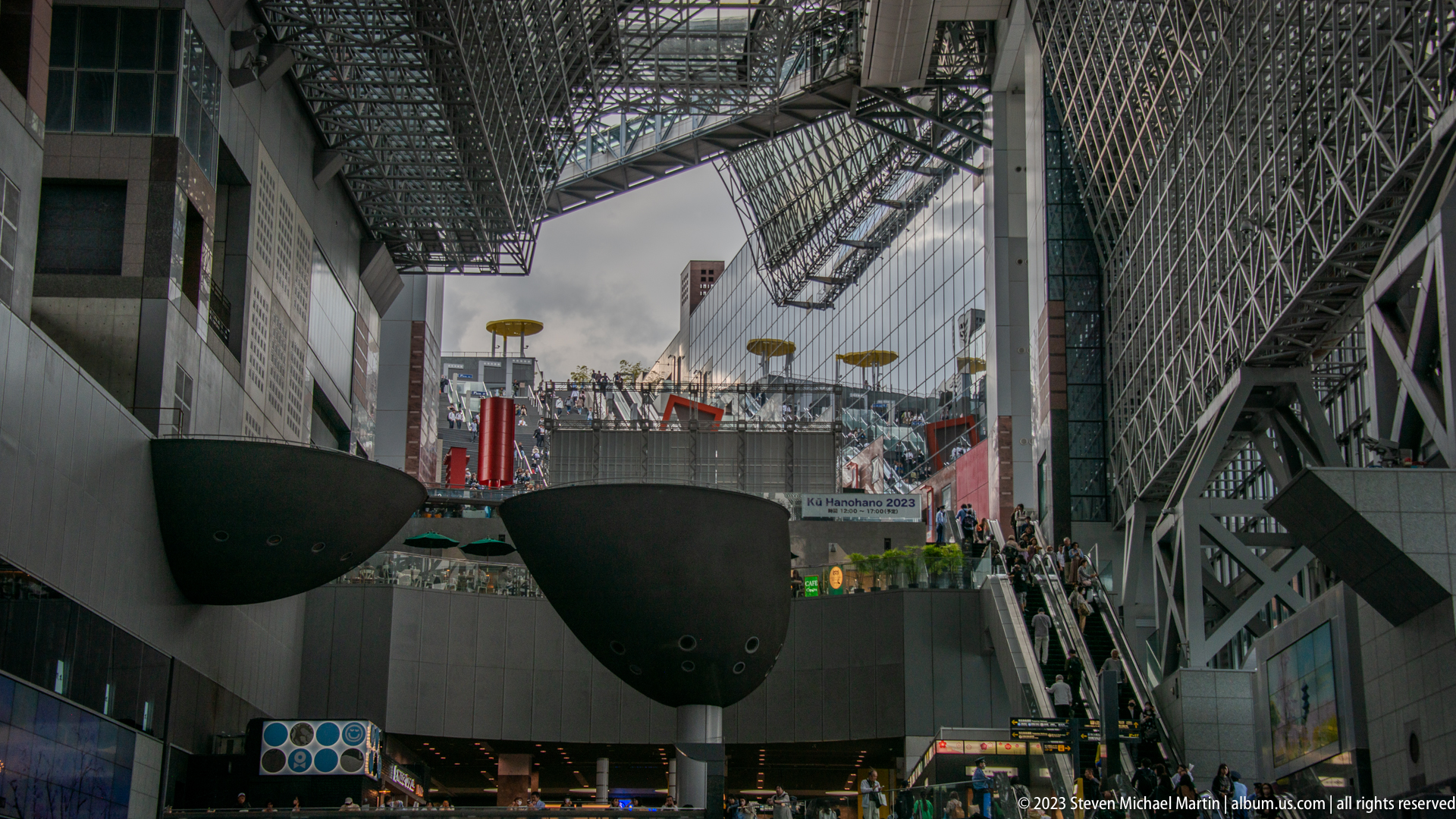
From an elevated vantage point, Kyoto Station's atrium opens across suspended dark forms, crowded terraces, escalators, and the massive steel roof. The broad view reveals how multiple public levels overlap within the building, turning circulation routes and gathering spaces into a single monumental architectural composition.
Caption
From an elevated vantage point, Kyoto Station's atrium opens across suspended dark forms, crowded terraces, escalators, and the massive steel roof. The broad view reveals how multiple public levels overlap within the building, turning circulation routes and gathering spaces into a single monumental architectural composition.
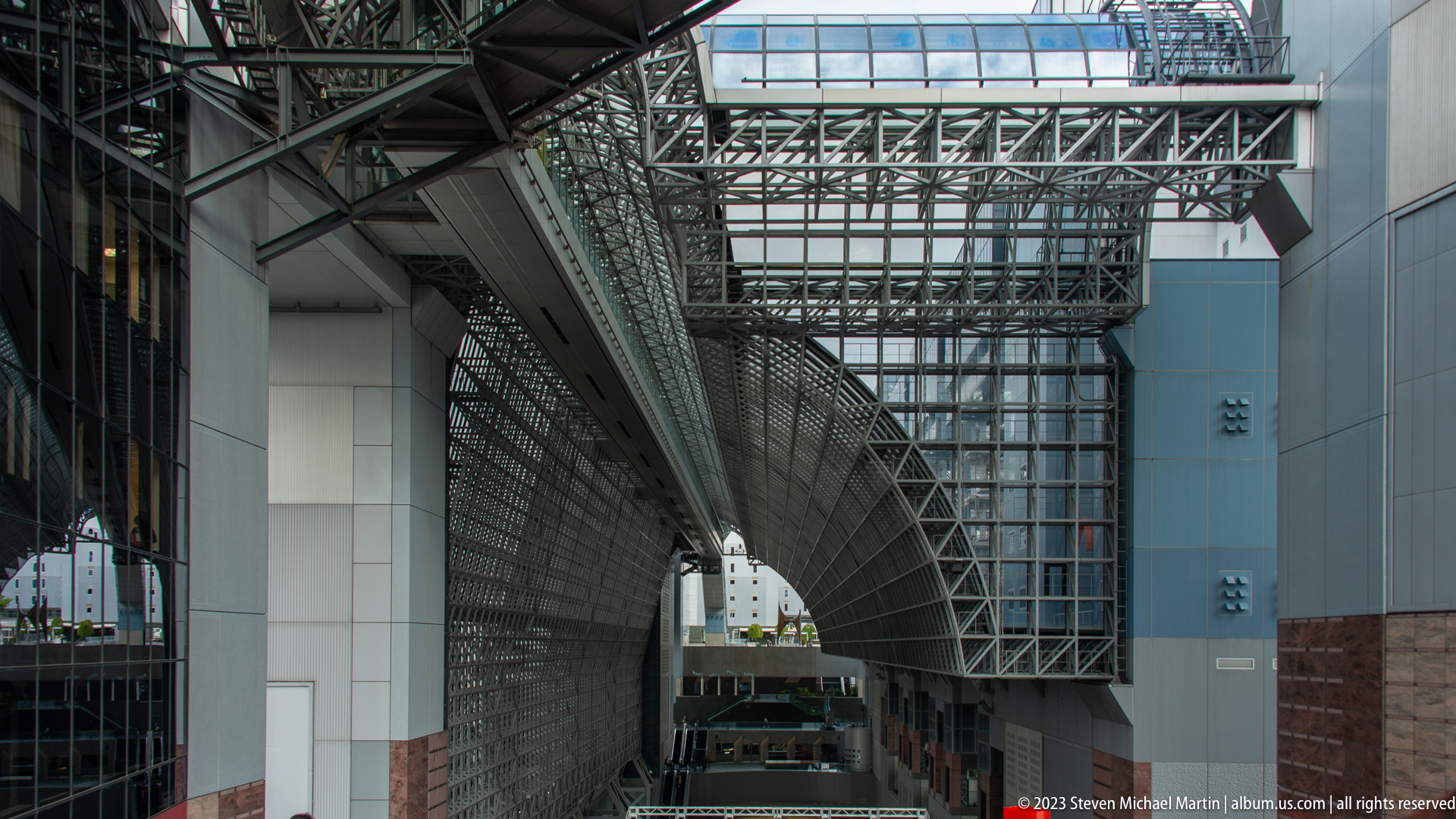
This exterior bay exposes Kyoto Station's layered structural system through a dense arrangement of steel trusses, glazed passages, and suspended circulation elements. The vertical view emphasizes the building's engineering complexity, with bridges and enclosed routes spanning a narrow void between massive walls.
Caption
This exterior bay exposes Kyoto Station's layered structural system through a dense arrangement of steel trusses, glazed passages, and suspended circulation elements. The vertical view emphasizes the building's engineering complexity, with bridges and enclosed routes spanning a narrow void between massive walls.
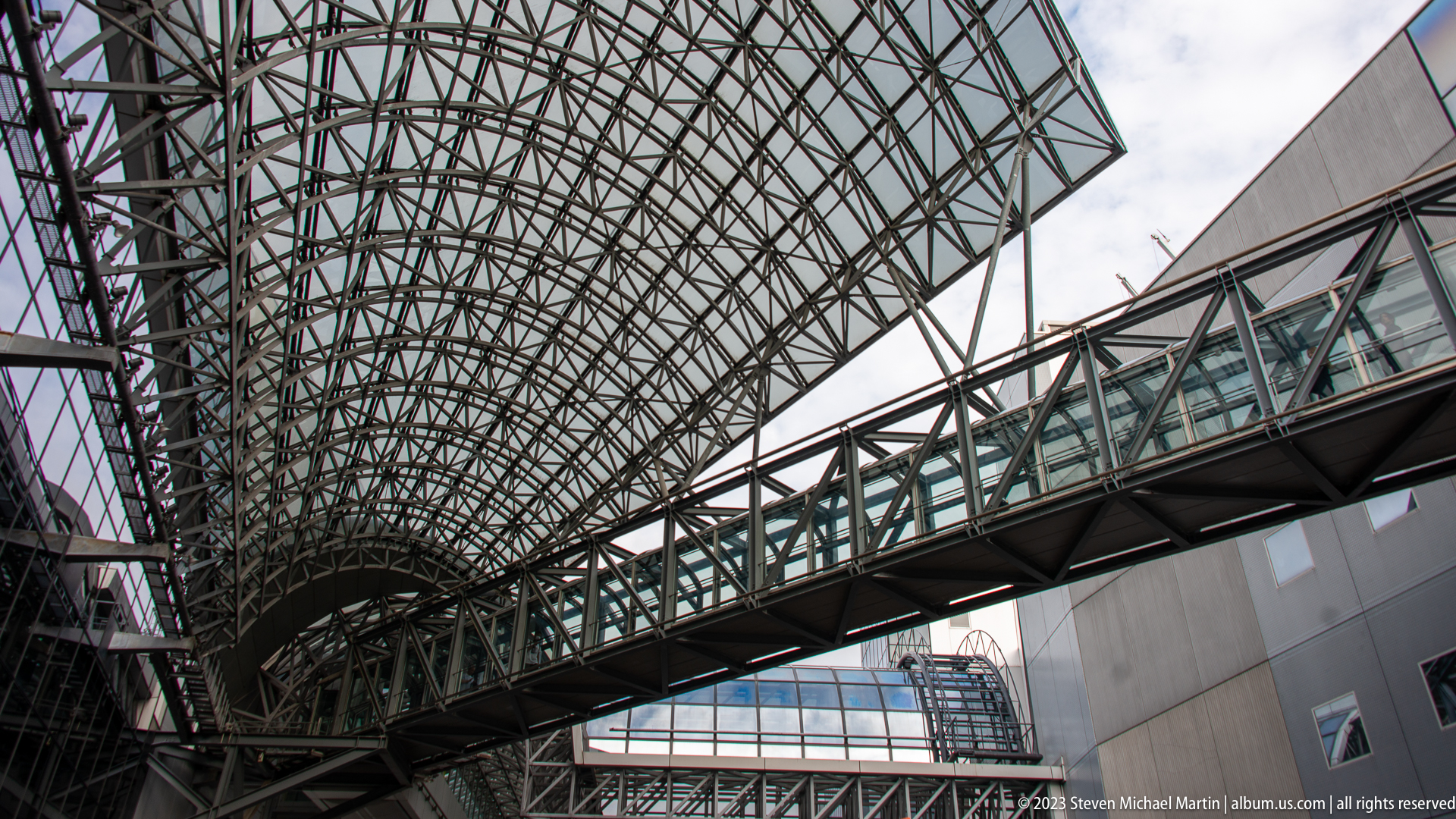
A glass-enclosed pedestrian bridge cuts across the sweeping steel-and-glass roof of Kyoto Station. The upward composition brings structural members, transparent panels, and curved roof geometry into close alignment, highlighting the station's integration of movement routes within its exposed architectural framework.
Caption
A glass-enclosed pedestrian bridge cuts across the sweeping steel-and-glass roof of Kyoto Station. The upward composition brings structural members, transparent panels, and curved roof geometry into close alignment, highlighting the station's integration of movement routes within its exposed architectural framework.
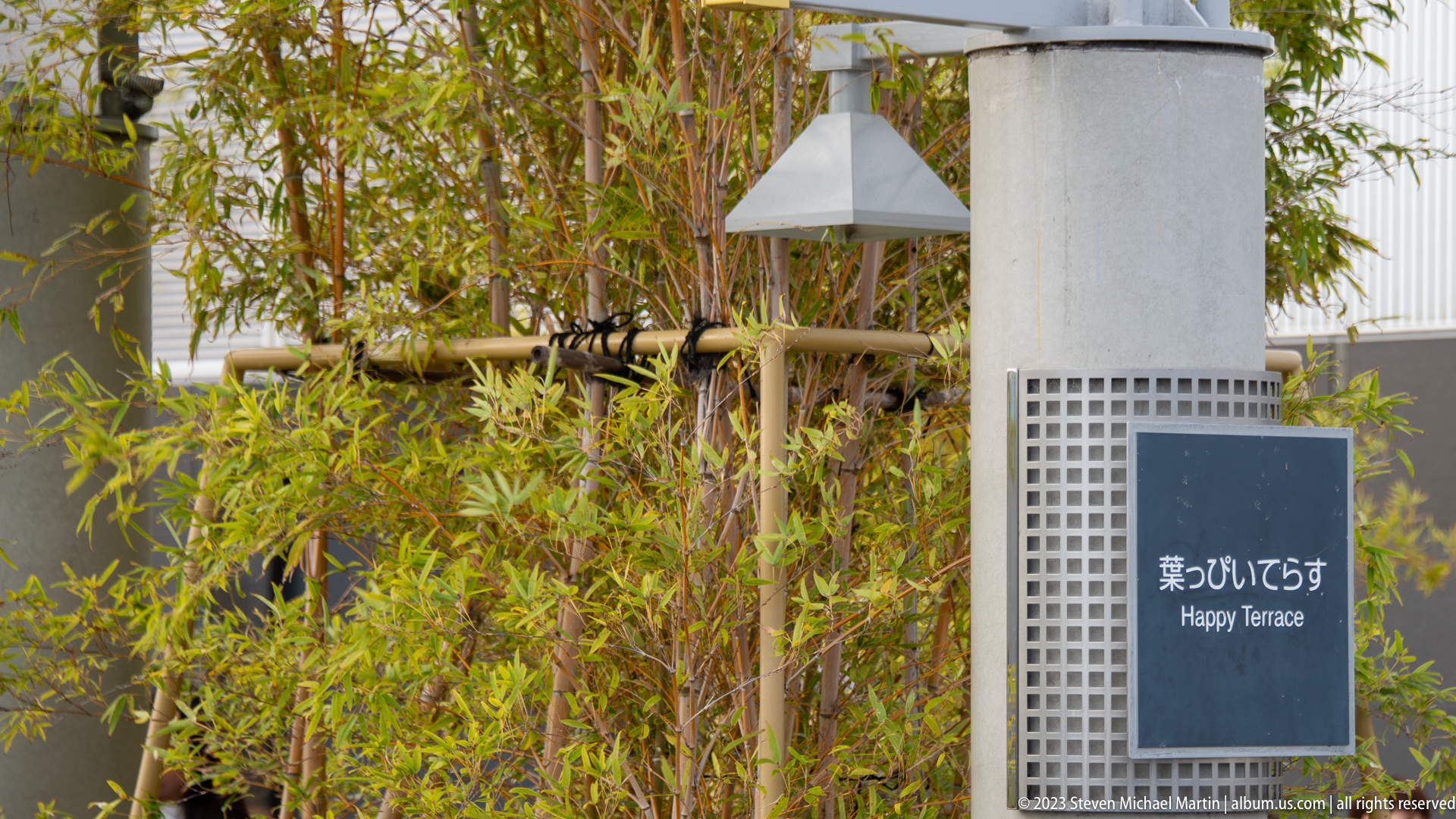
A bilingual sign identifies the Happy Terrace within Kyoto Station's elevated garden area. Bamboo planting, support stakes, and a metal ventilation structure surround the marker, presenting a quieter landscaped counterpoint to the station's vast steel interior and heavily trafficked concourses.
Caption
A bilingual sign identifies the Happy Terrace within Kyoto Station's elevated garden area. Bamboo planting, support stakes, and a metal ventilation structure surround the marker, presenting a quieter landscaped counterpoint to the station's vast steel interior and heavily trafficked concourses.
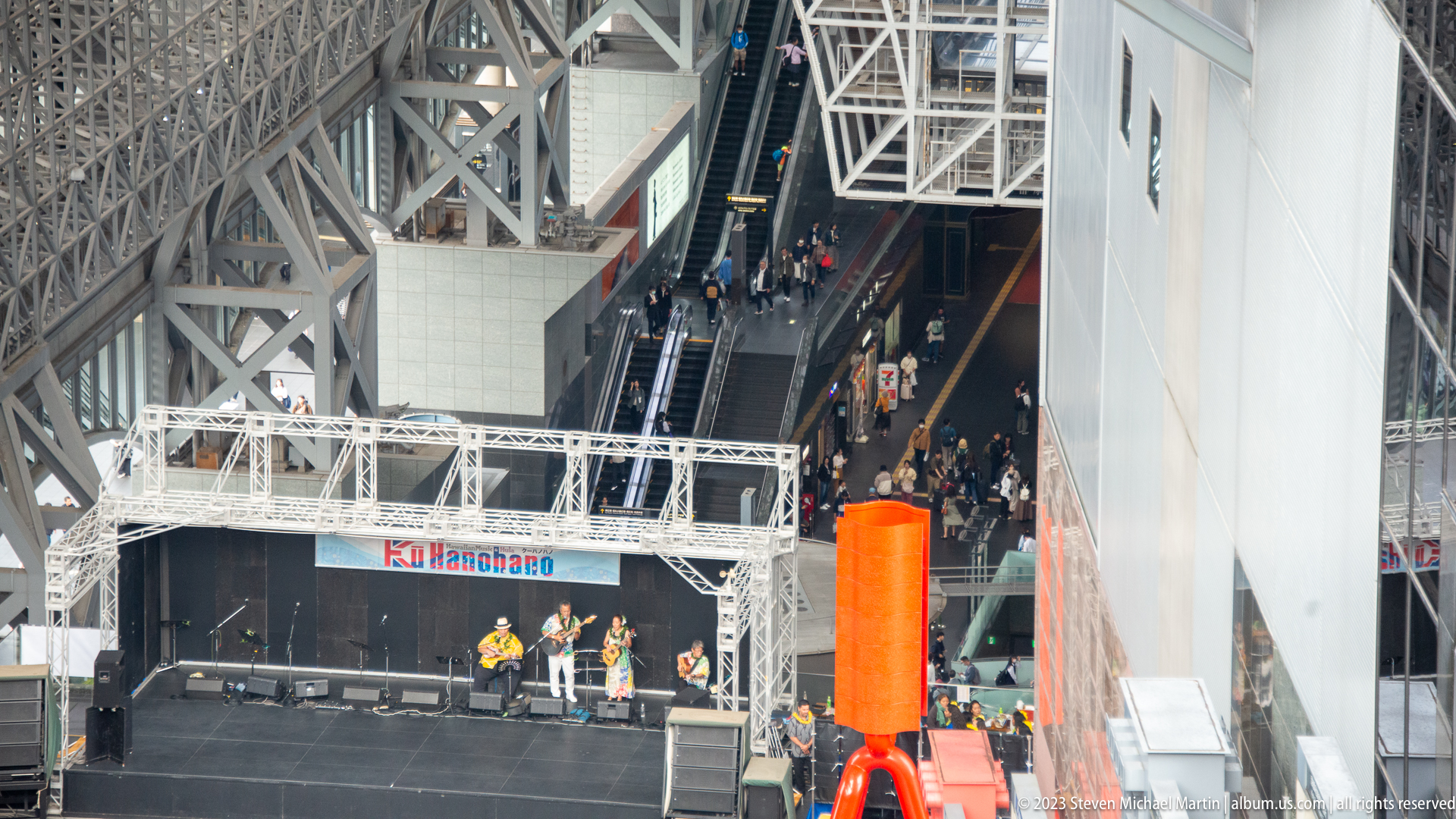
From a high side terrace, the station's event stage appears below a dense network of escalators, trusses, and pedestrian routes. Performers occupy the stage while the large red sculpture rises beside it, giving the plaza a strong visual focus amid Kyoto Station's layered architecture.
Caption
From a high side terrace, the station's event stage appears below a dense network of escalators, trusses, and pedestrian routes. Performers occupy the stage while the large red sculpture rises beside it, giving the plaza a strong visual focus amid Kyoto Station's layered architecture.
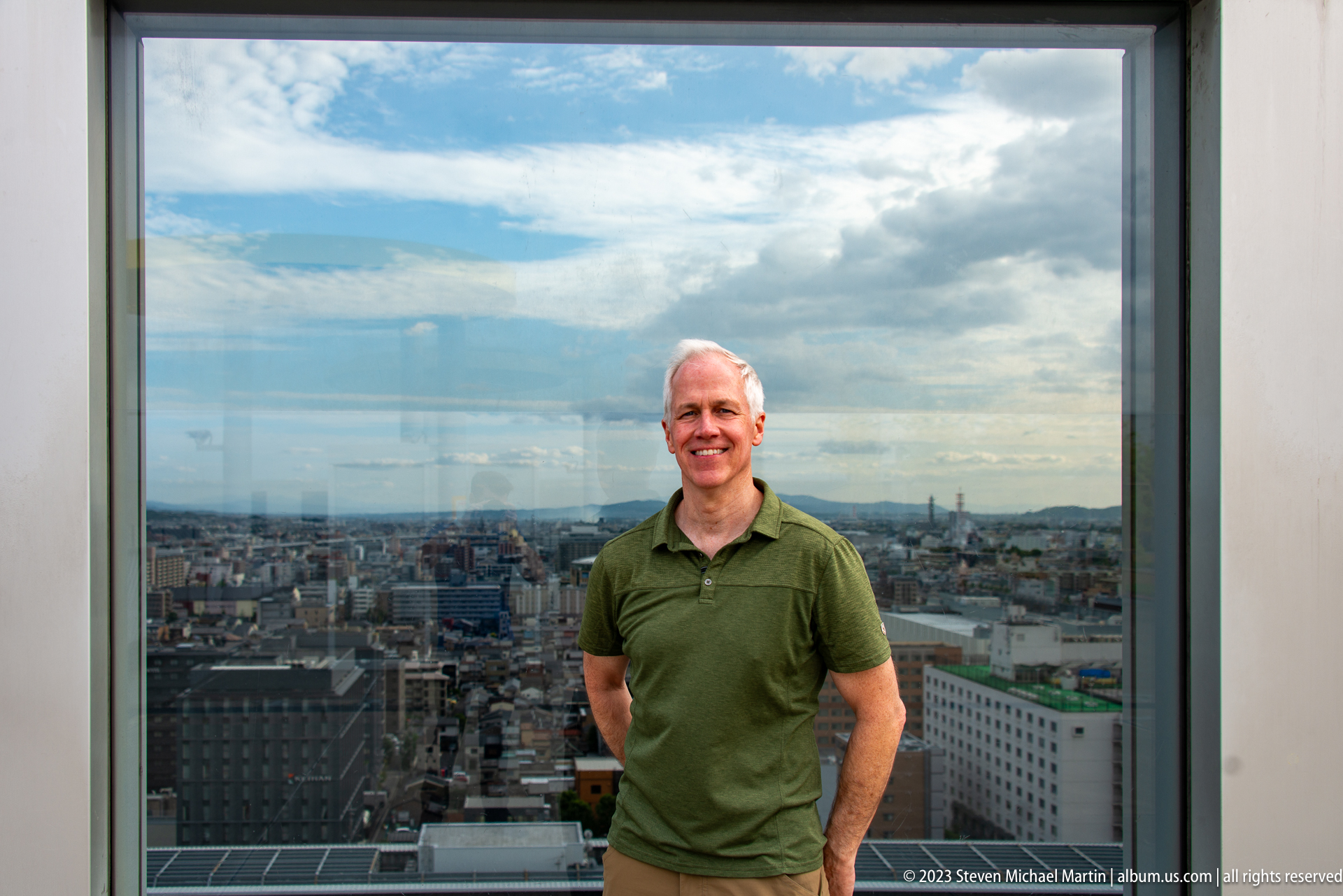
A male visitor stands before a broad window overlooking Kyoto from an upper level of the station complex. The portrait pairs the figure with an expansive city panorama under a bright sky, using the glass wall as a frame between the interior viewpoint and the urban landscape beyond.
Caption
A male visitor stands before a broad window overlooking Kyoto from an upper level of the station complex. The portrait pairs the figure with an expansive city panorama under a bright sky, using the glass wall as a frame between the interior viewpoint and the urban landscape beyond.

A close portrait isolates a male visitor against the softly blurred skyline of Kyoto. The elevated viewpoint and shallow depth of field keep the face prominent while preserving the sense of height and city context associated with Kyoto Station's upper observation areas.
Caption
A close portrait isolates a male visitor against the softly blurred skyline of Kyoto. The elevated viewpoint and shallow depth of field keep the face prominent while preserving the sense of height and city context associated with Kyoto Station's upper observation areas.
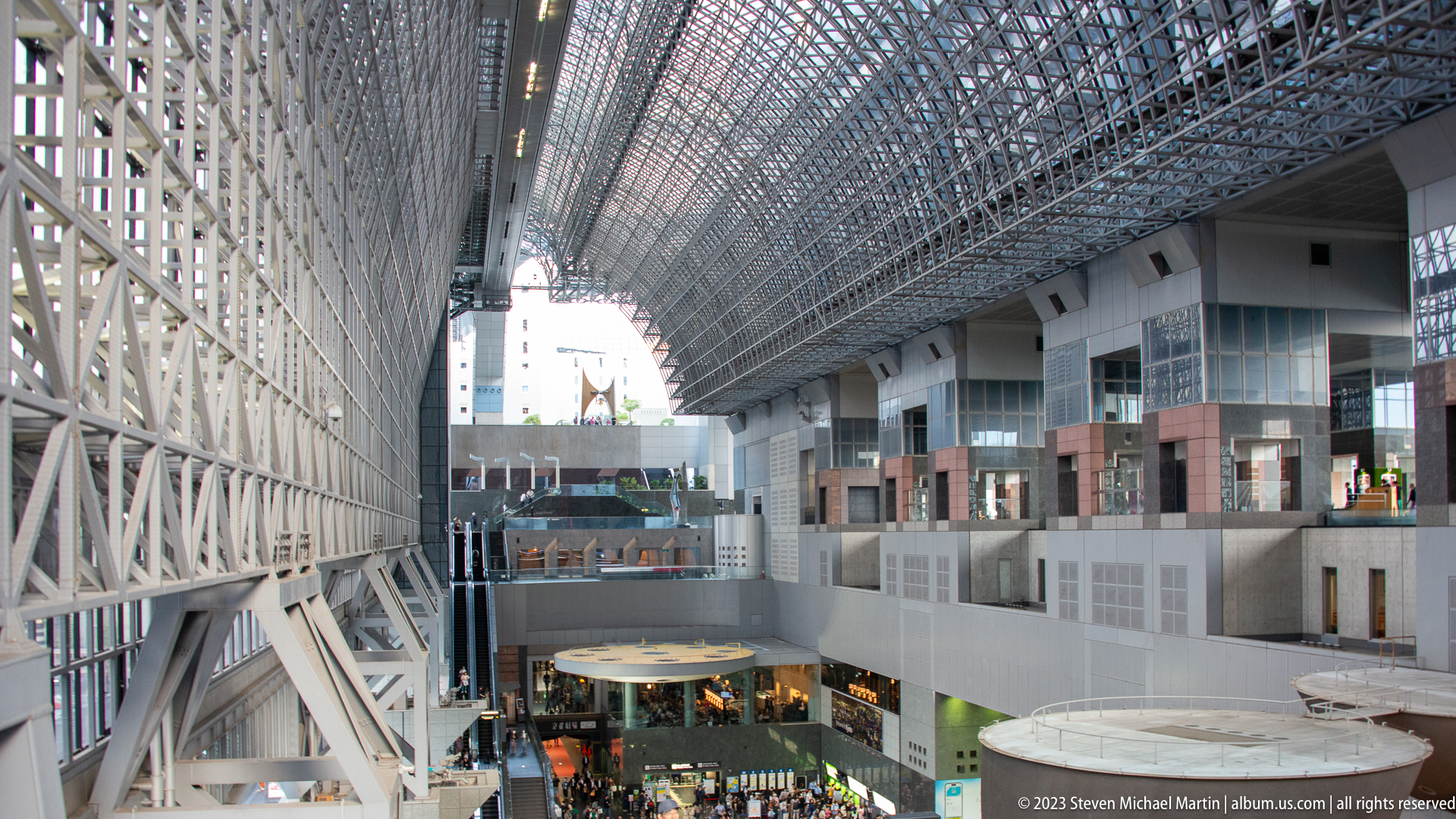
The monumental interior of Kyoto Station is viewed from an upper level, revealing expansive retail floors, suspended circulation routes, and the immense steel-and-glass roof spanning the central atrium. The composition emphasizes the engineering scale of the station while documenting its function as both a transportation hub and public gathering space.
Caption
The monumental interior of Kyoto Station is viewed from an upper level, revealing expansive retail floors, suspended circulation routes, and the immense steel-and-glass roof spanning the central atrium. The composition emphasizes the engineering scale of the station while documenting its function as both a transportation hub and public gathering space.

Rows of brightly decorated glazed doughnuts are arranged in a refrigerated display case inside a food retailer at Kyoto Station. Their expressive icing designs transform familiar pastries into playful novelty desserts, illustrating the presentation style commonly found in Japanese bakery and confectionery shops.
Caption
Rows of brightly decorated glazed doughnuts are arranged in a refrigerated display case inside a food retailer at Kyoto Station. Their expressive icing designs transform familiar pastries into playful novelty desserts, illustrating the presentation style commonly found in Japanese bakery and confectionery shops.
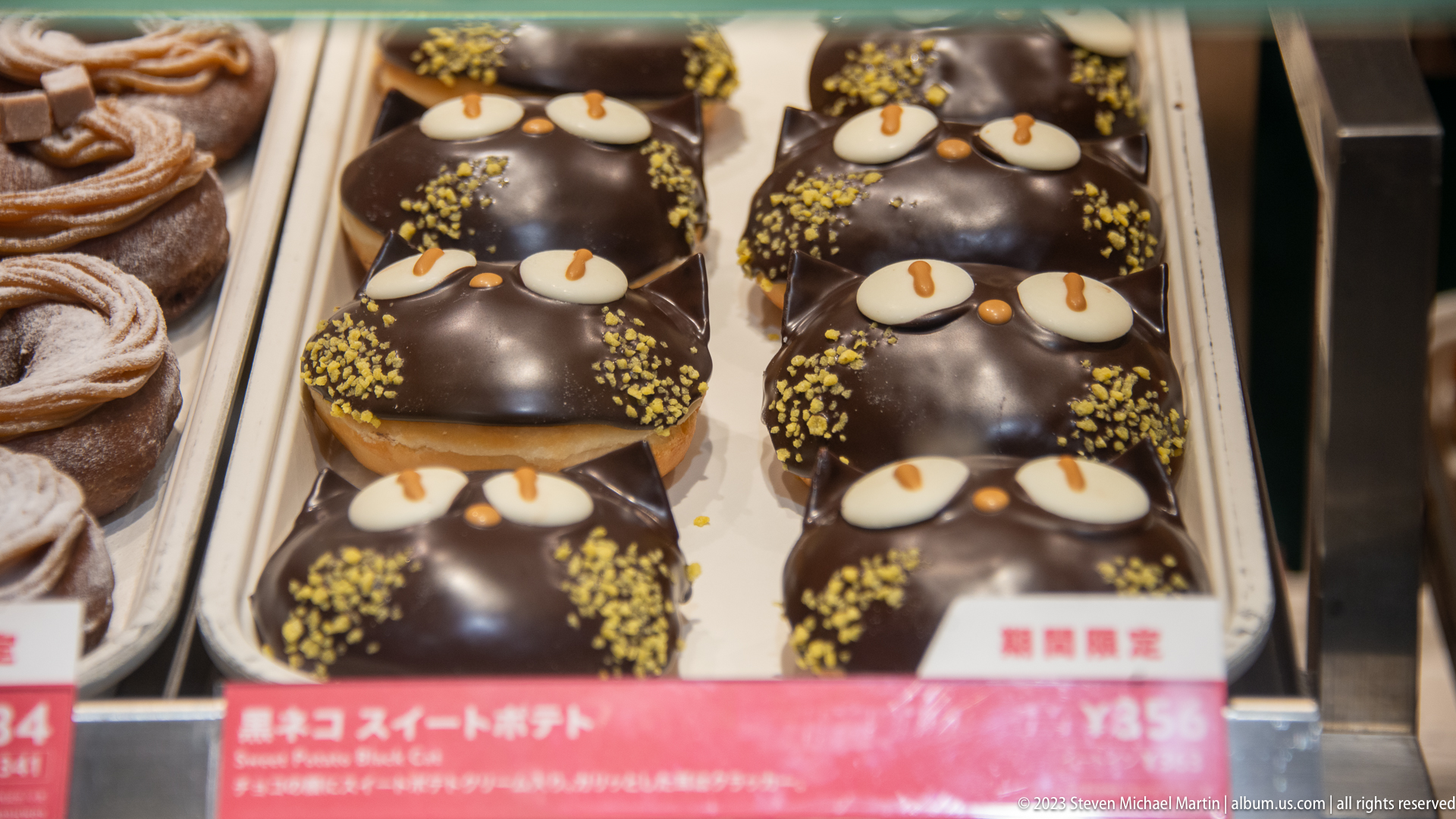
Chocolate-glazed novelty doughnuts with oversized decorative eyes are arranged in neat rows within a refrigerated bakery display. The contrasting toppings, colorful garnish, and carefully organized presentation highlight the emphasis on visual appeal that characterizes many Japanese pastry counters.
Caption
Chocolate-glazed novelty doughnuts with oversized decorative eyes are arranged in neat rows within a refrigerated bakery display. The contrasting toppings, colorful garnish, and carefully organized presentation highlight the emphasis on visual appeal that characterizes many Japanese pastry counters.

Close exterior view of the JR Kyoto Station name mounted on the modern facade beneath dark glazing, emphasizing the station's contemporary identity.
Caption
Close exterior view of the JR Kyoto Station name mounted on the modern facade beneath dark glazing, emphasizing the station's contemporary identity.
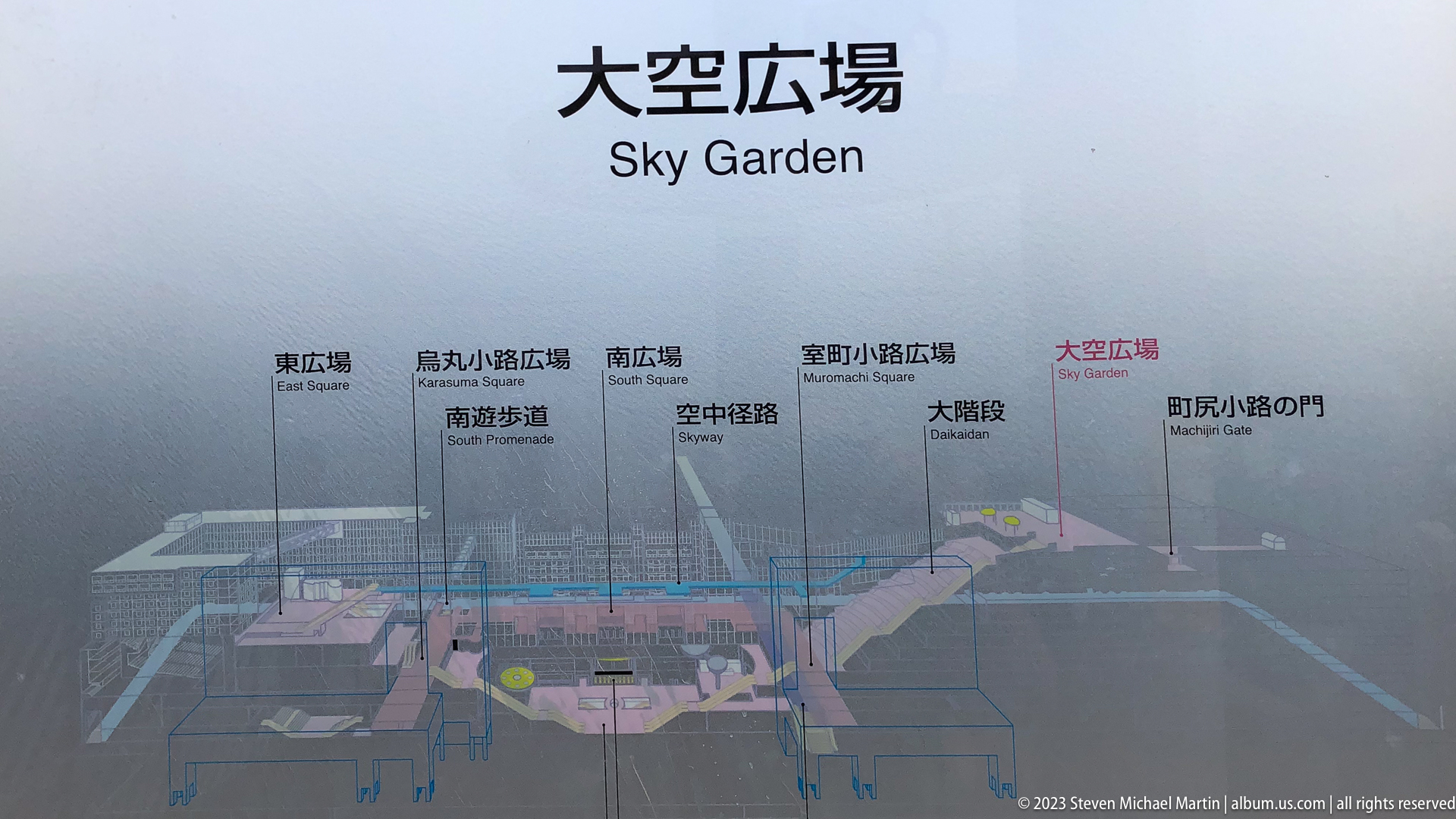
Orientation panel illustrating the layout and circulation of Kyoto Station's Sky Garden observation area and connecting terraces.
Caption
Orientation panel illustrating the layout and circulation of Kyoto Station's Sky Garden observation area and connecting terraces.
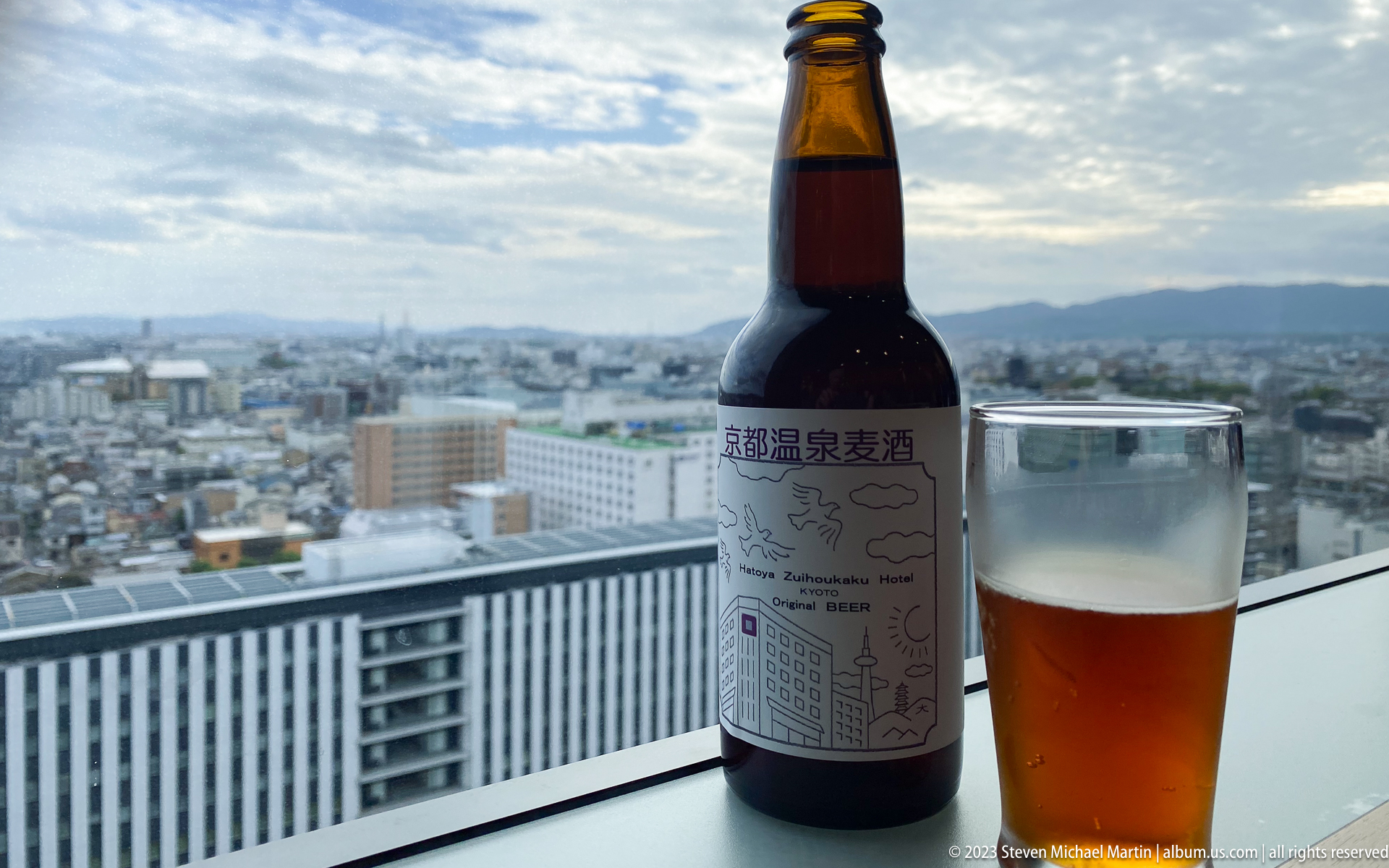
A bottle of local beer and a filled tasting glass are photographed against an elevated panorama of Kyoto, combining regional food culture with the city view.
Caption
A bottle of local beer and a filled tasting glass are photographed against an elevated panorama of Kyoto, combining regional food culture with the city view.
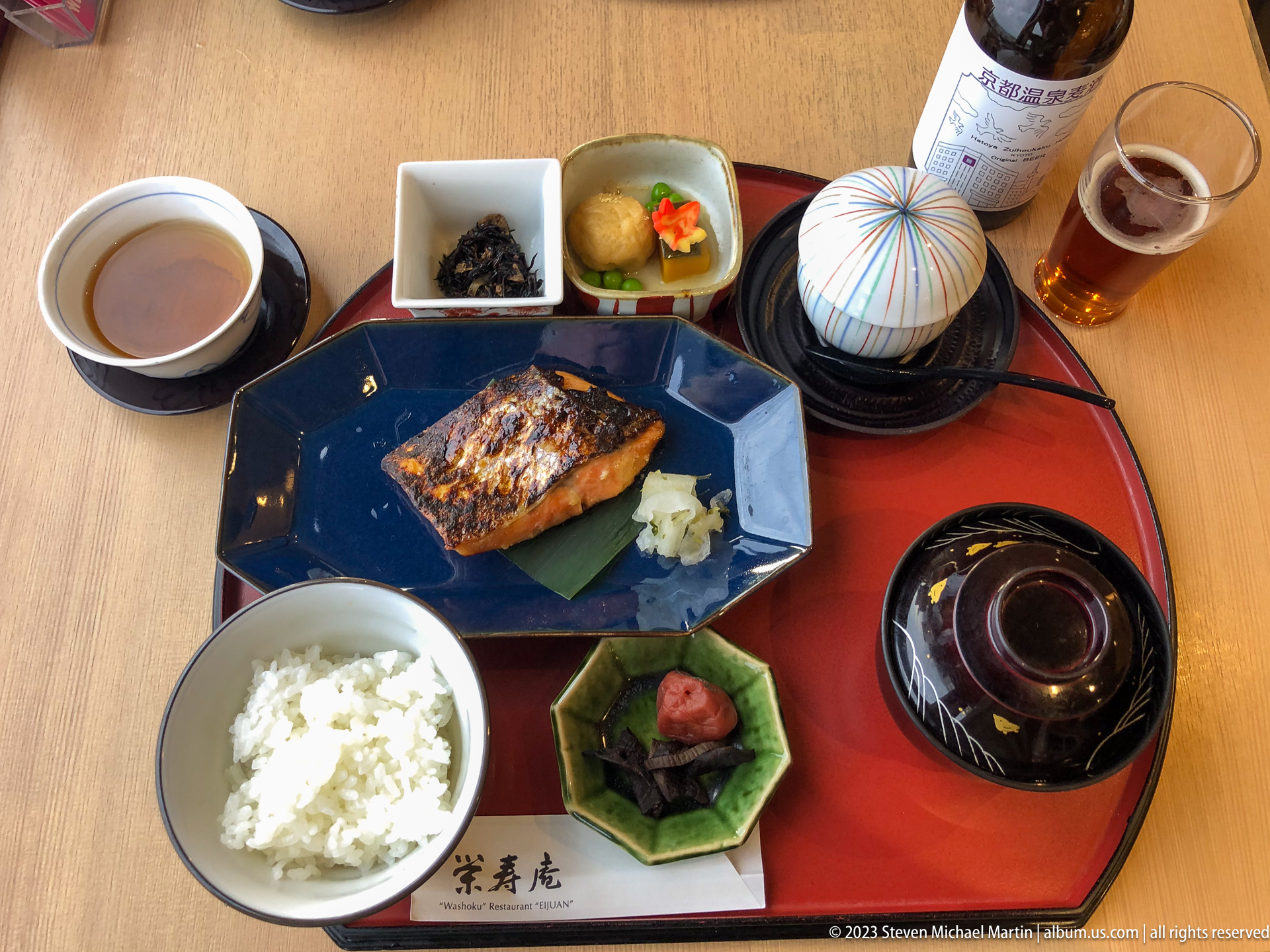
A traditional Japanese set meal including grilled fish, rice, soup, pickles and side dishes is presented on lacquerware, documenting regional dining within the station complex.
Caption
A traditional Japanese set meal including grilled fish, rice, soup, pickles and side dishes is presented on lacquerware, documenting regional dining within the station complex.

A smiling diner holds food with chopsticks beside a large window overlooking Kyoto, illustrating the dining experience within the station complex.
Caption
A smiling diner holds food with chopsticks beside a large window overlooking Kyoto, illustrating the dining experience within the station complex.
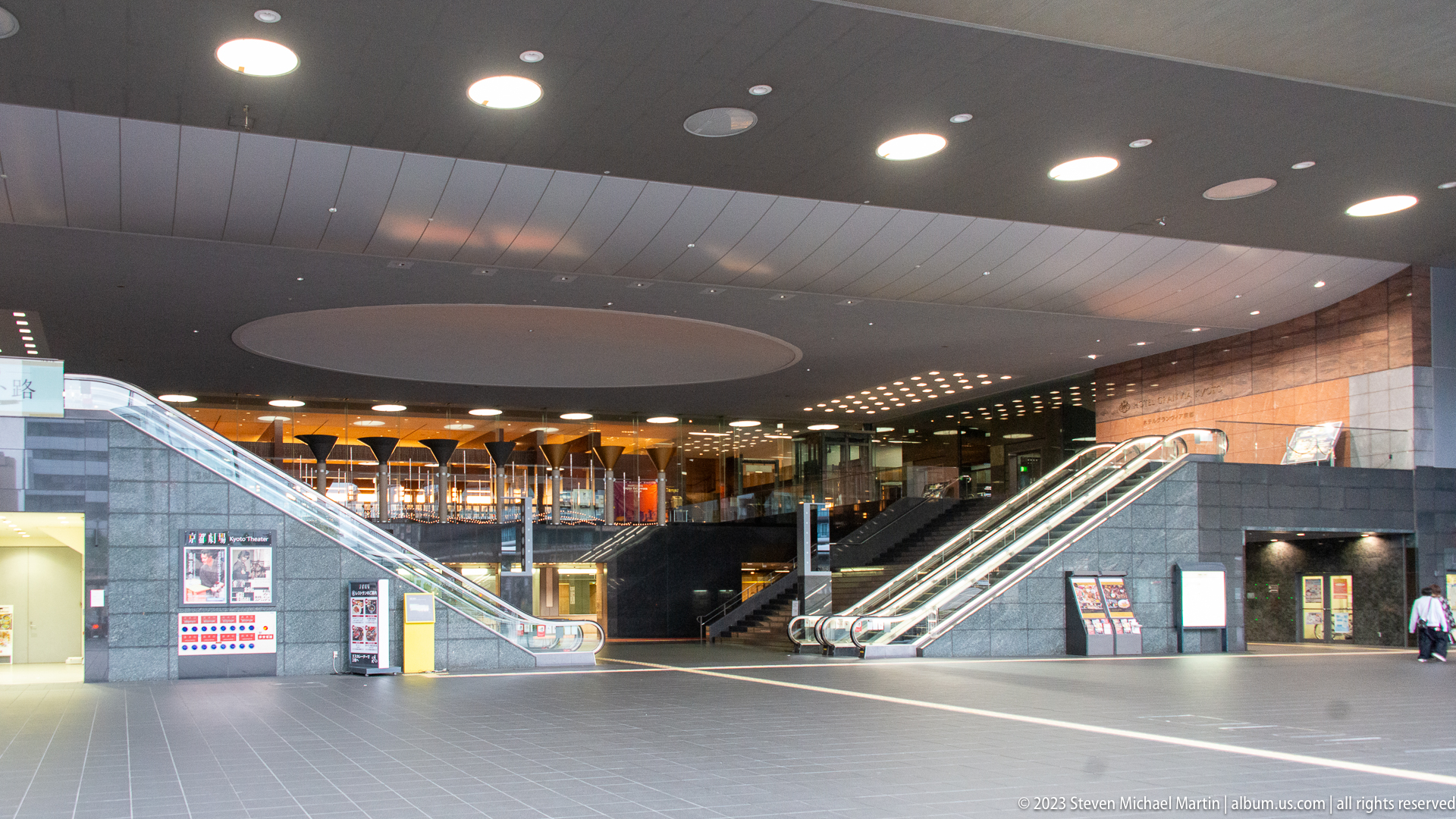
Broad interior concourse emphasizing paired escalators, open circulation space, and the restrained geometry of Kyoto Station's modern interior.
Caption
Broad interior concourse emphasizing paired escalators, open circulation space, and the restrained geometry of Kyoto Station's modern interior.

Portrait of a visitor seated before a traditional Japanese meal inside a Kyoto Station restaurant overlooking the city.
Caption
Portrait of a visitor seated before a traditional Japanese meal inside a Kyoto Station restaurant overlooking the city.
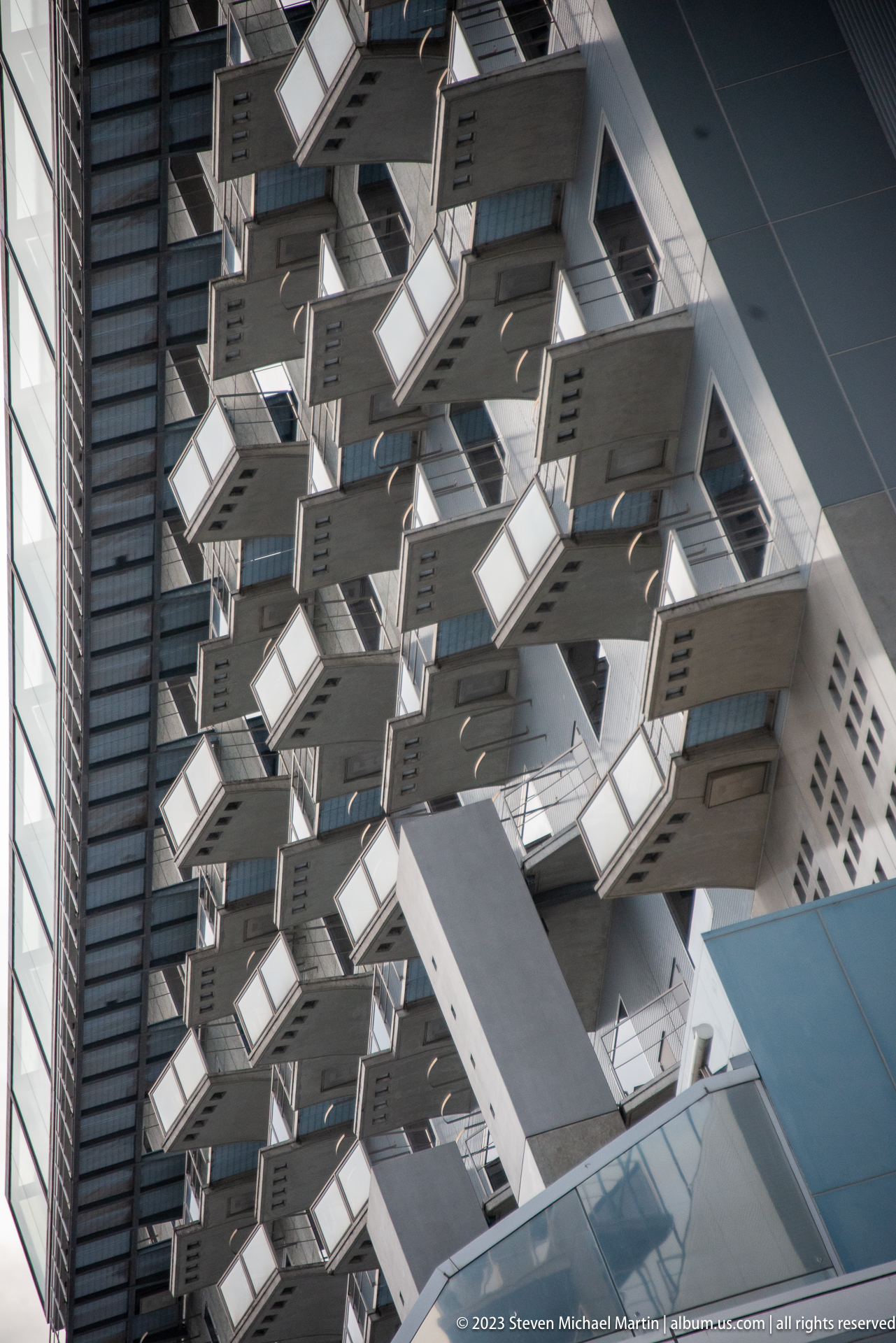
Close view of repeating cantilevered structural elements emphasizing Kyoto Station's engineered design.
Caption
Close view of repeating cantilevered structural elements emphasizing Kyoto Station's engineered design.
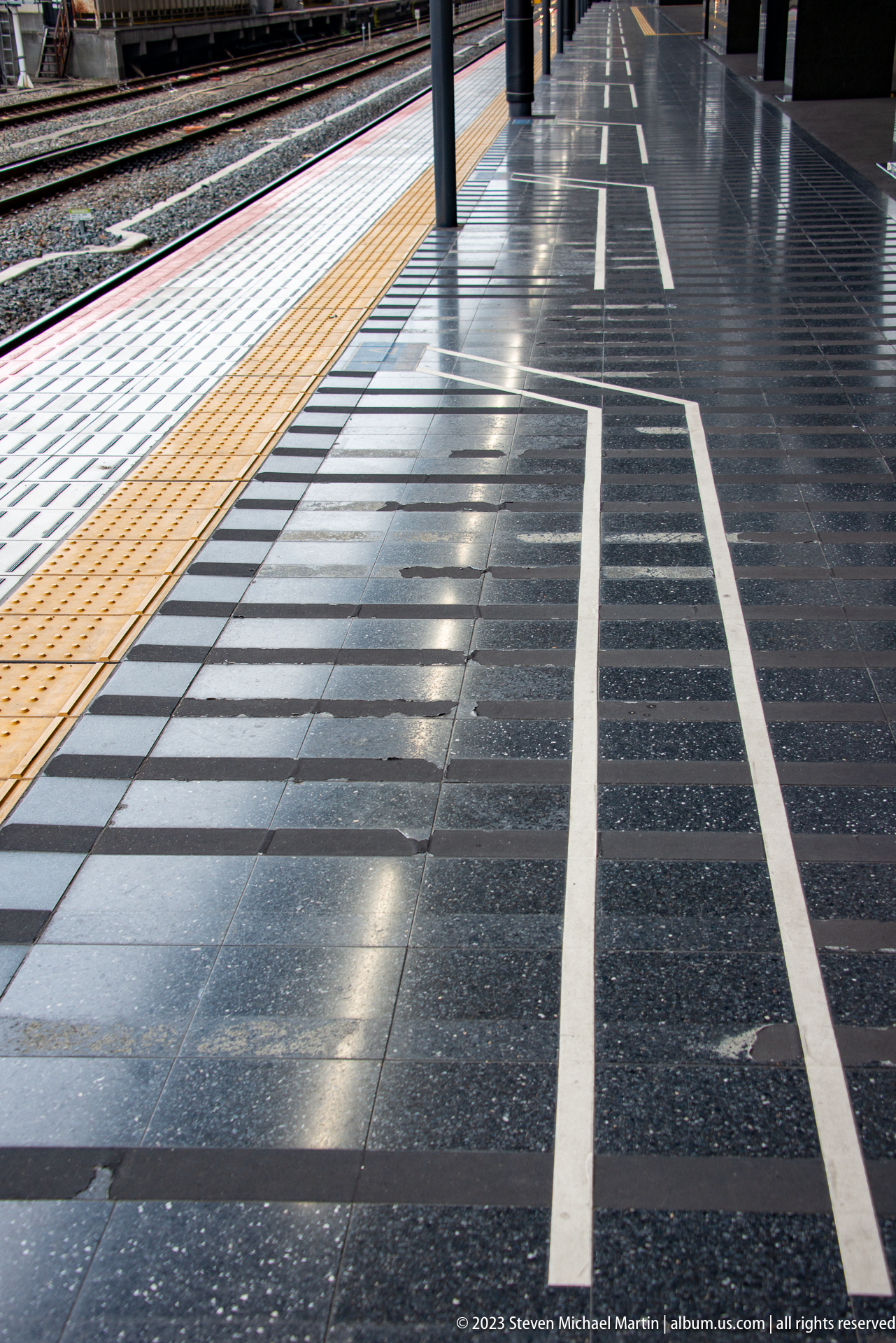
Platform edge with tactile paving and painted boarding position markings used for passenger organization.
Caption
Platform edge with tactile paving and painted boarding position markings used for passenger organization.
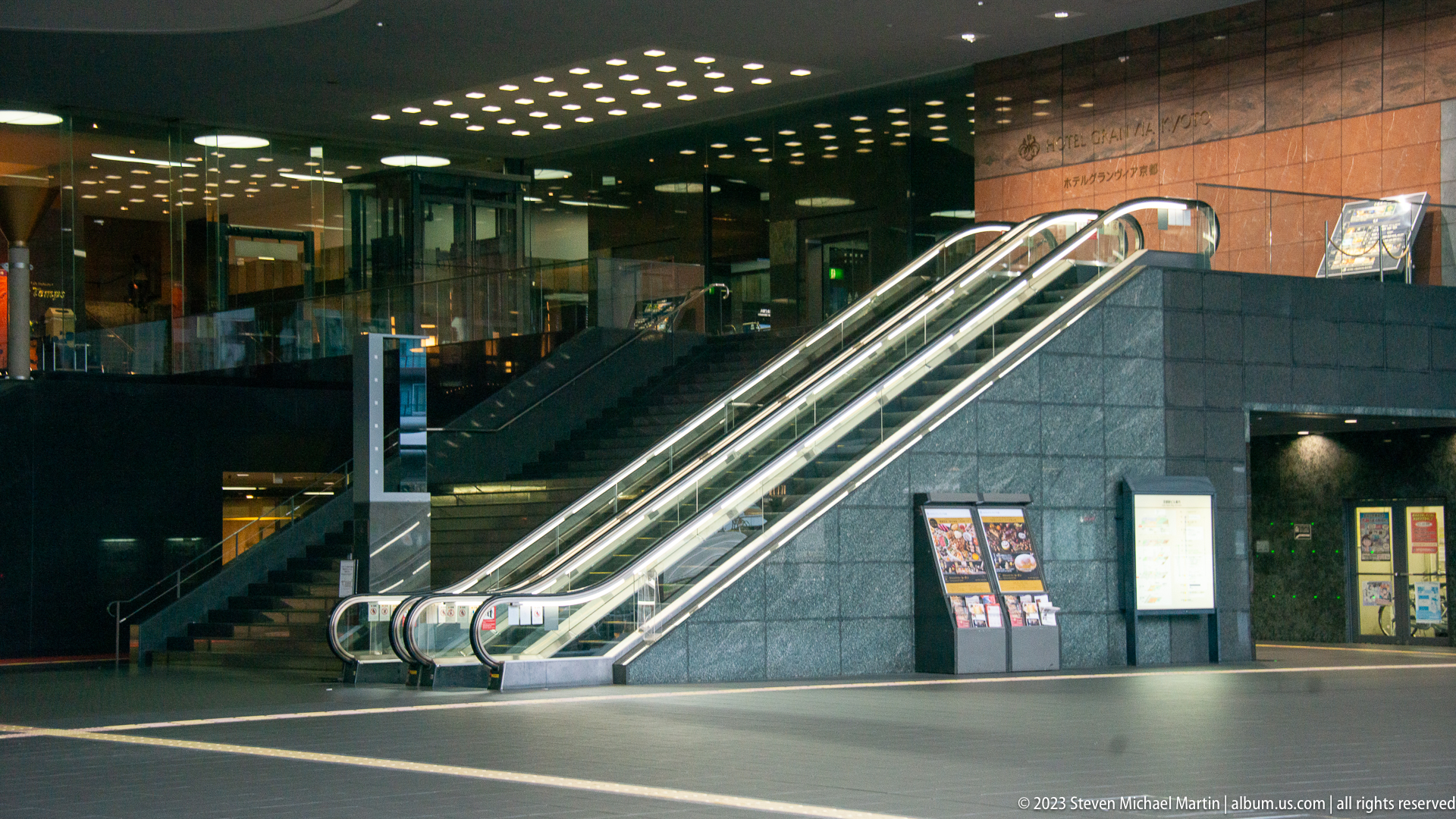
Closer architectural study of the station's paired escalators and surrounding stone-clad walls, emphasizing circulation and contemporary design.
Caption
Closer architectural study of the station's paired escalators and surrounding stone-clad walls, emphasizing circulation and contemporary design.
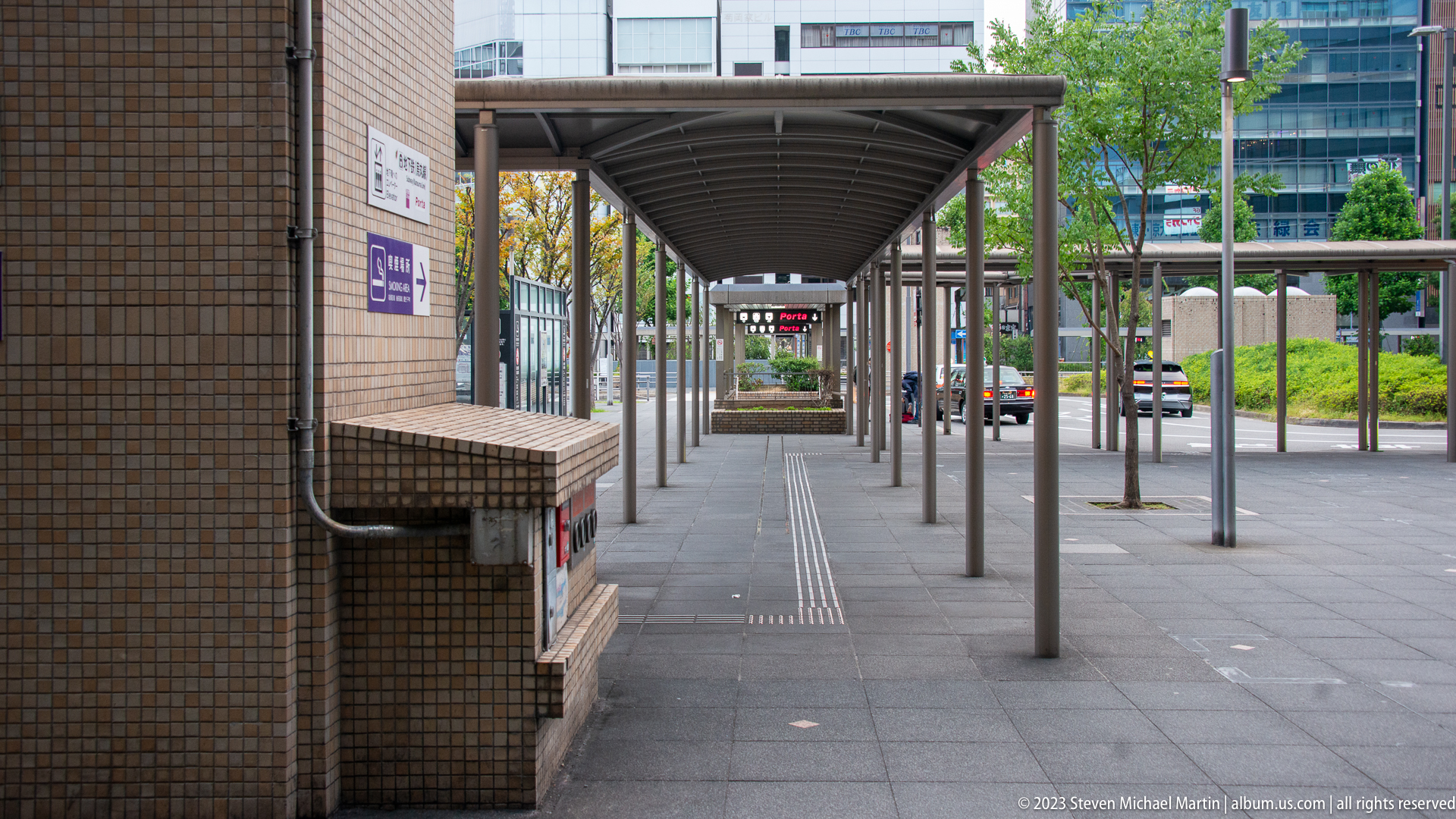
Long covered pedestrian walkway leading toward Kyoto Station with repeating columns and tactile paving.
Caption
Long covered pedestrian walkway leading toward Kyoto Station with repeating columns and tactile paving.
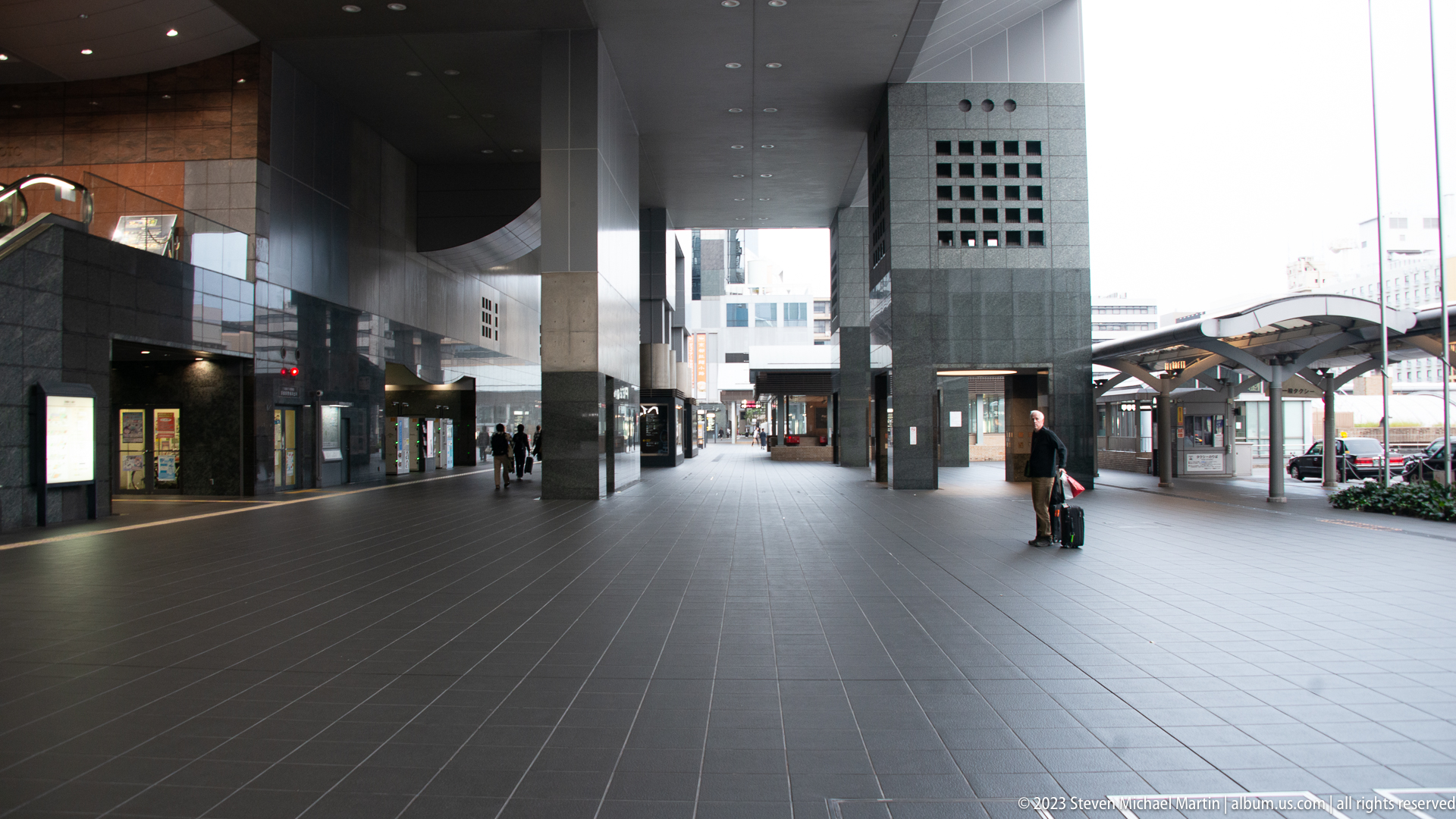
Open exterior forecourt framed by tall structural supports, creating a sheltered arrival space outside Kyoto Station.
Caption
Open exterior forecourt framed by tall structural supports, creating a sheltered arrival space outside Kyoto Station.
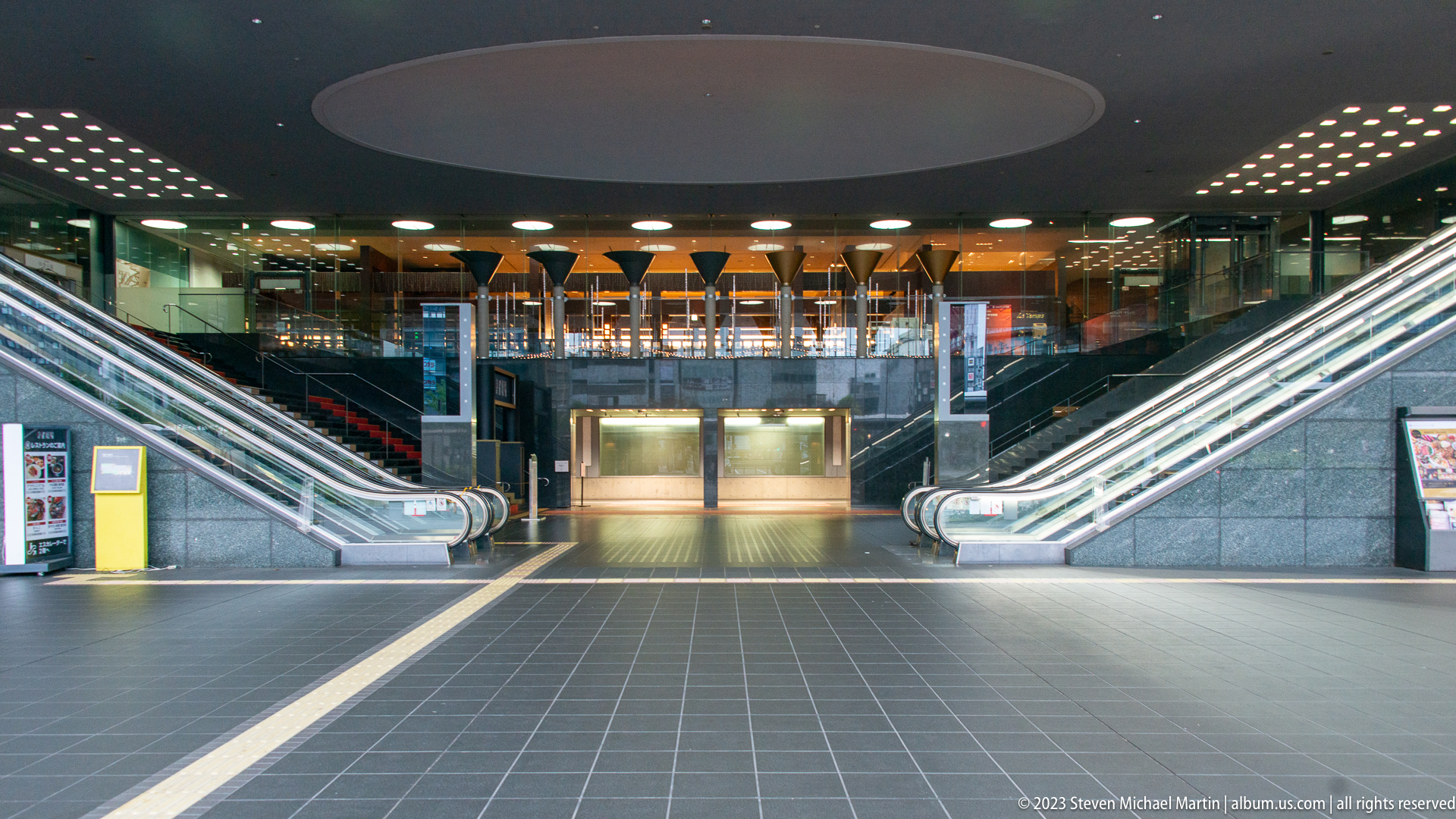
Centered composition of paired escalators and the circular ceiling feature emphasizing the balanced geometry of Kyoto Station's interior.
Caption
Centered composition of paired escalators and the circular ceiling feature emphasizing the balanced geometry of Kyoto Station's interior.
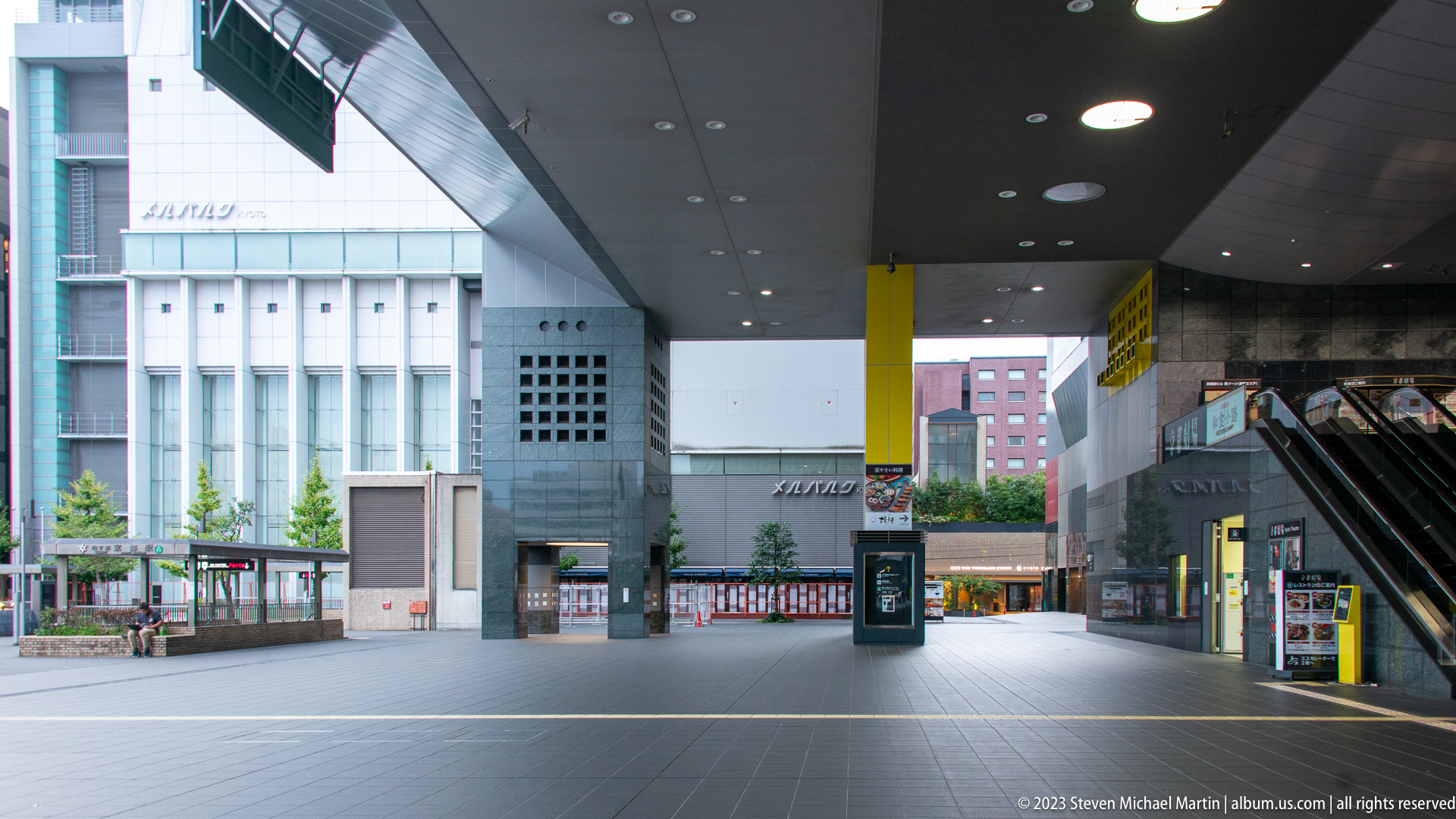
Covered entrance plaza with open circulation, escalators, and access to Kyoto Station.
Caption
Covered entrance plaza with open circulation, escalators, and access to Kyoto Station.
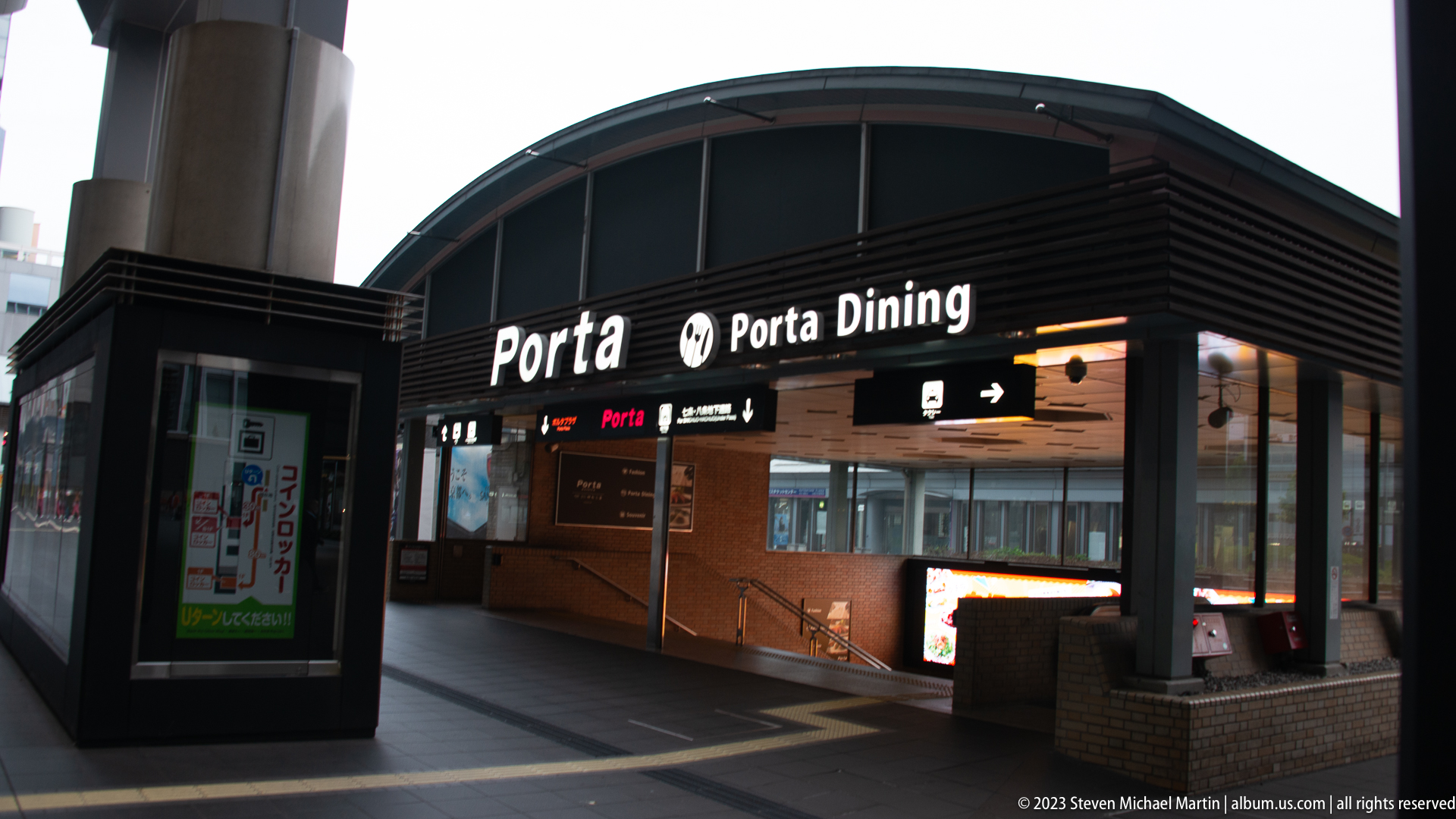
Entrance to Porta Dining beneath Kyoto Station featuring illuminated wayfinding and retail frontage.
Caption
Entrance to Porta Dining beneath Kyoto Station featuring illuminated wayfinding and retail frontage.
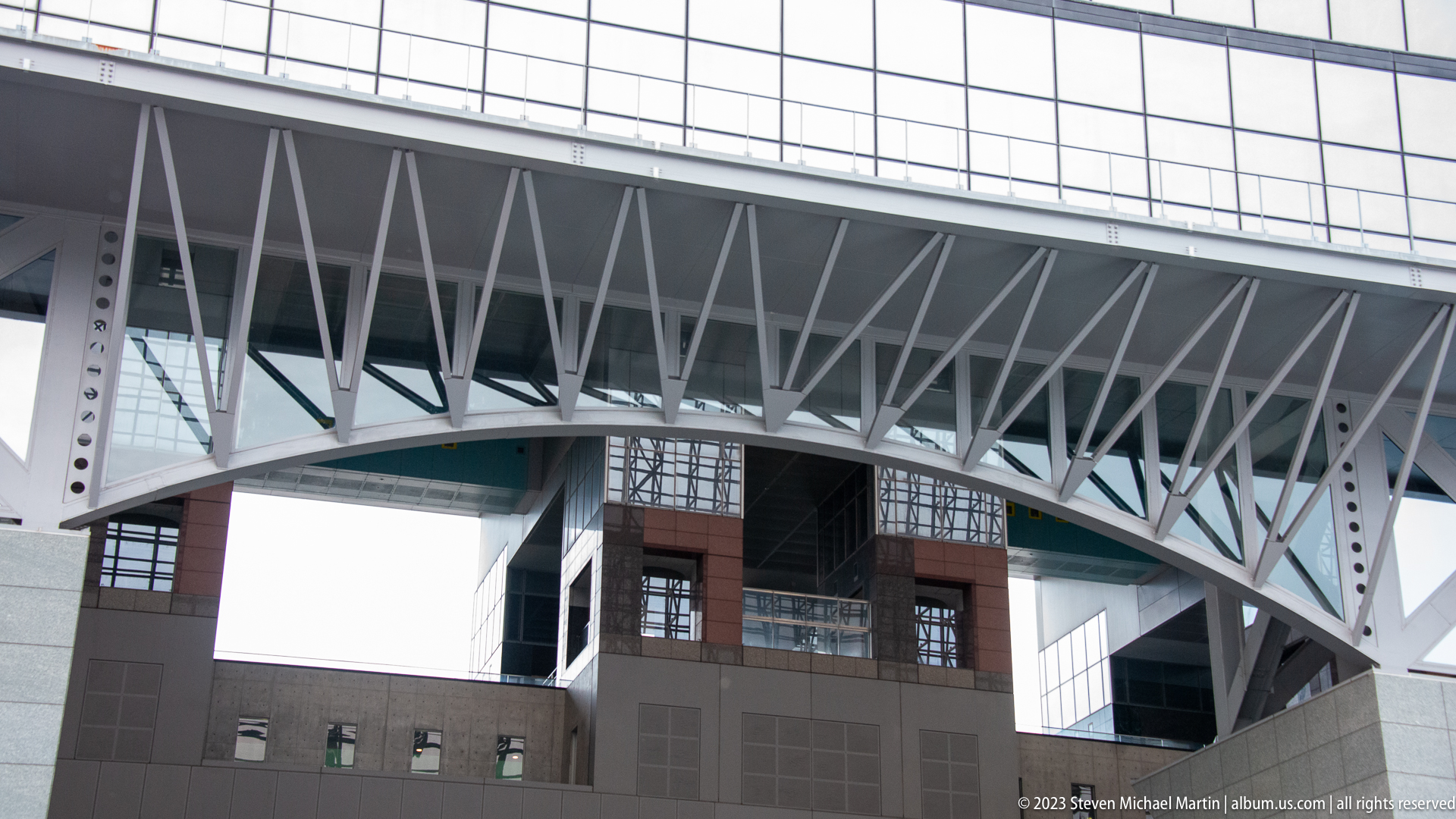
Close architectural study of an elevated bridge and exposed steel framing within Kyoto Station.
Caption
Close architectural study of an elevated bridge and exposed steel framing within Kyoto Station.
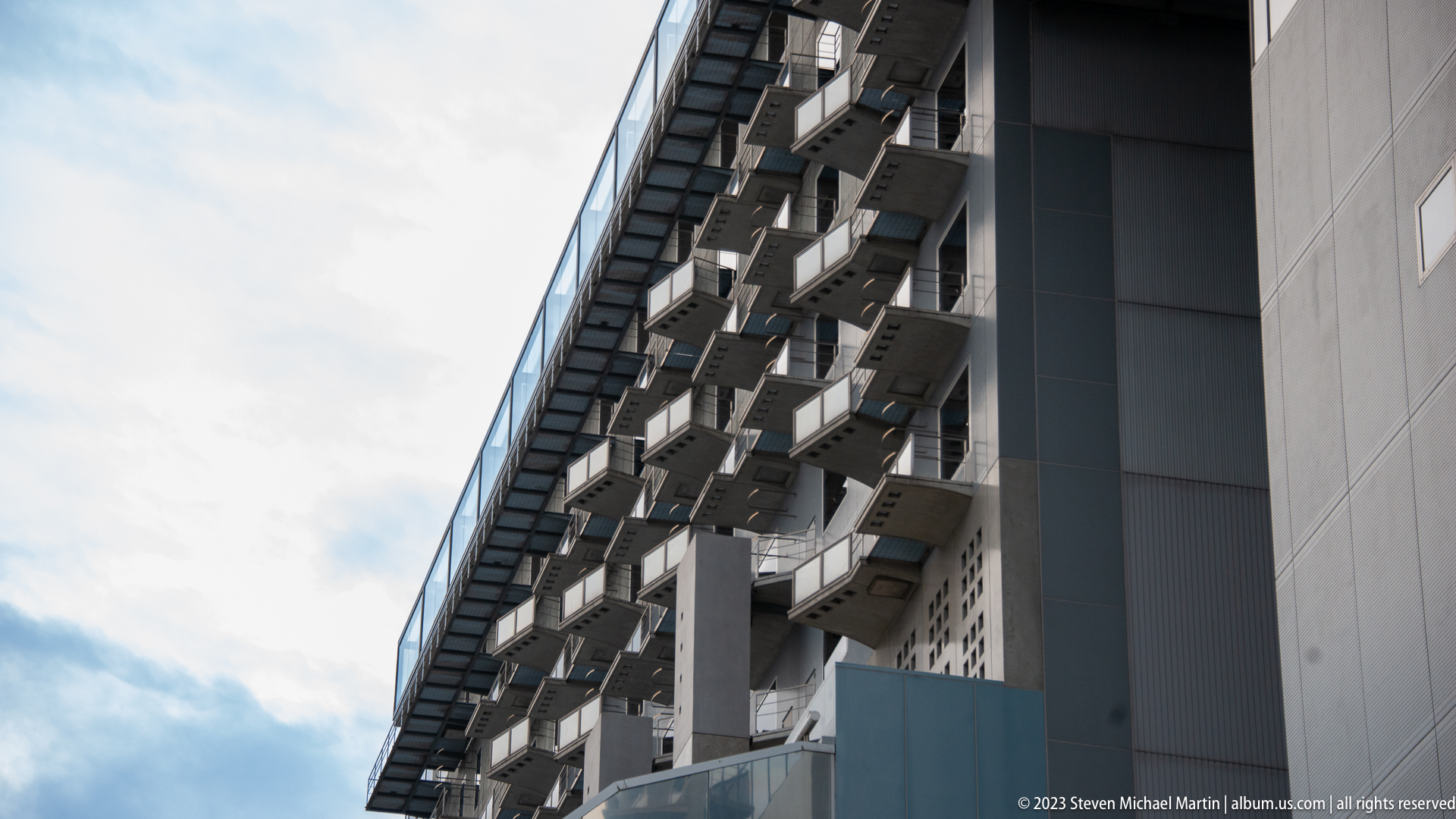
Repetitive projecting balconies and structural rhythm define a contemporary exterior facade of Kyoto Station.
Caption
Repetitive projecting balconies and structural rhythm define a contemporary exterior facade of Kyoto Station.
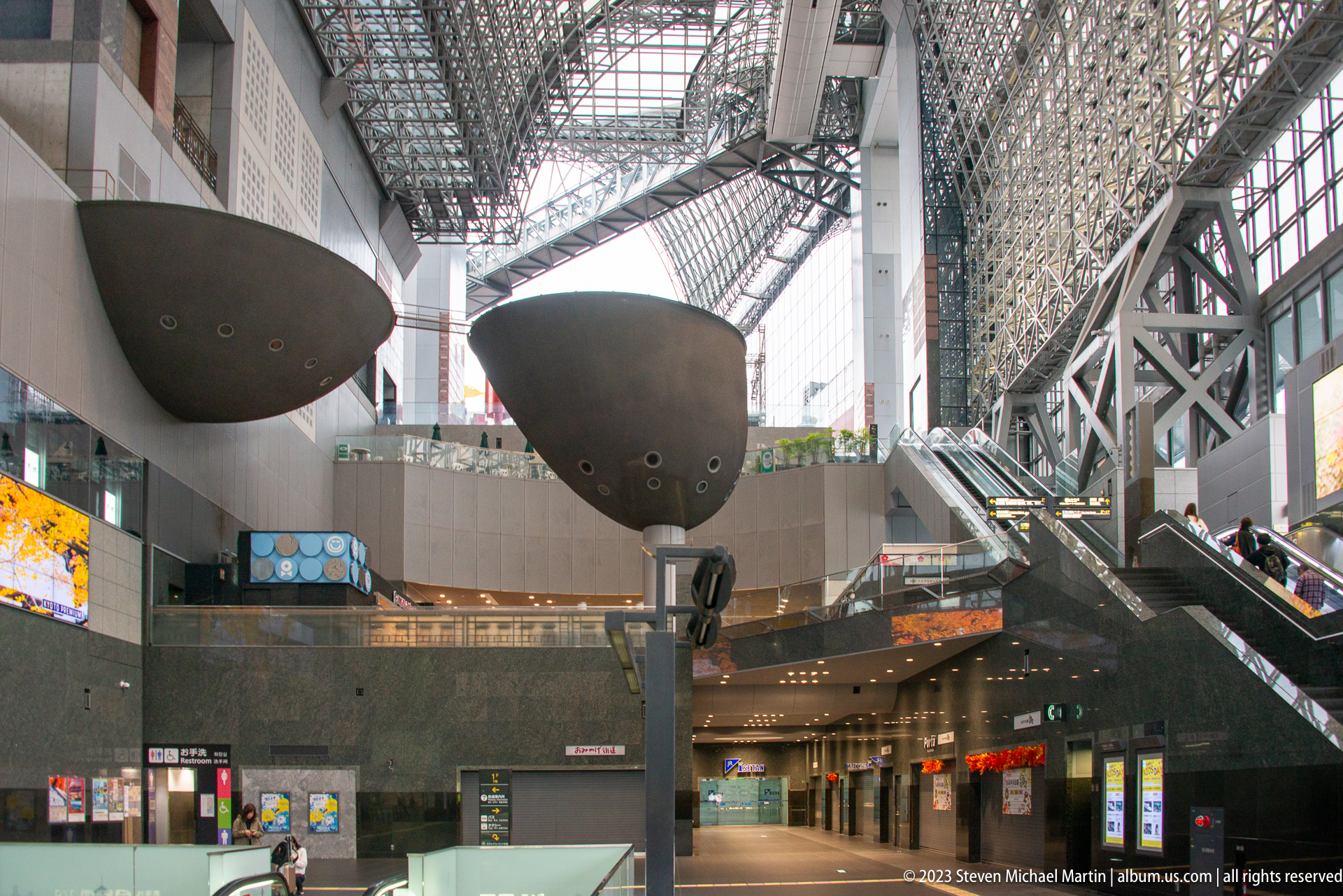
Expansive interior view highlighting the soaring steel-and-glass roof, suspended structural elements, and multi-level circulation within Kyoto Station.
Caption
Expansive interior view highlighting the soaring steel-and-glass roof, suspended structural elements, and multi-level circulation within Kyoto Station.
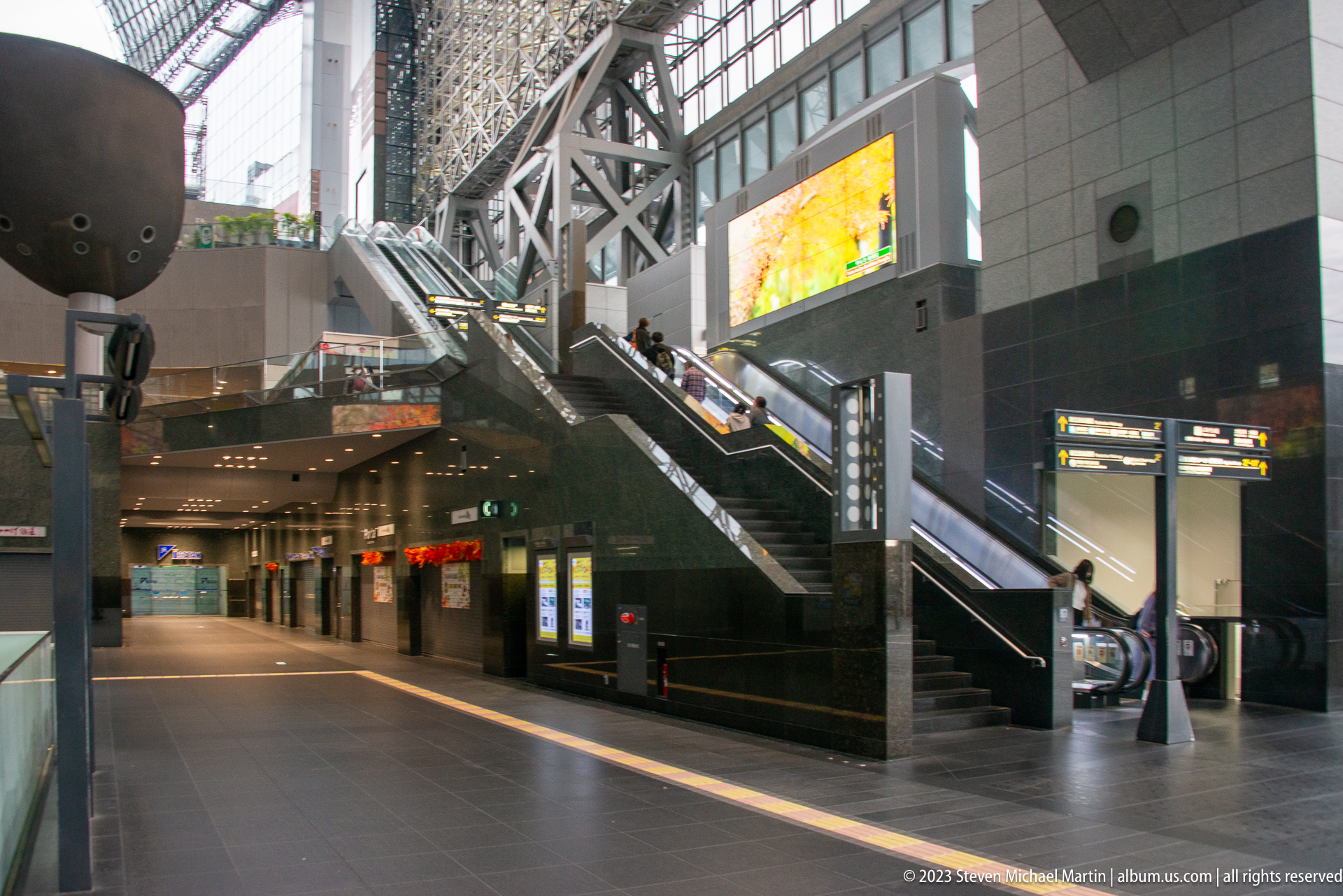
Modern concourse emphasizing escalators, structural framing, digital displays, and passenger circulation.
Caption
Modern concourse emphasizing escalators, structural framing, digital displays, and passenger circulation.
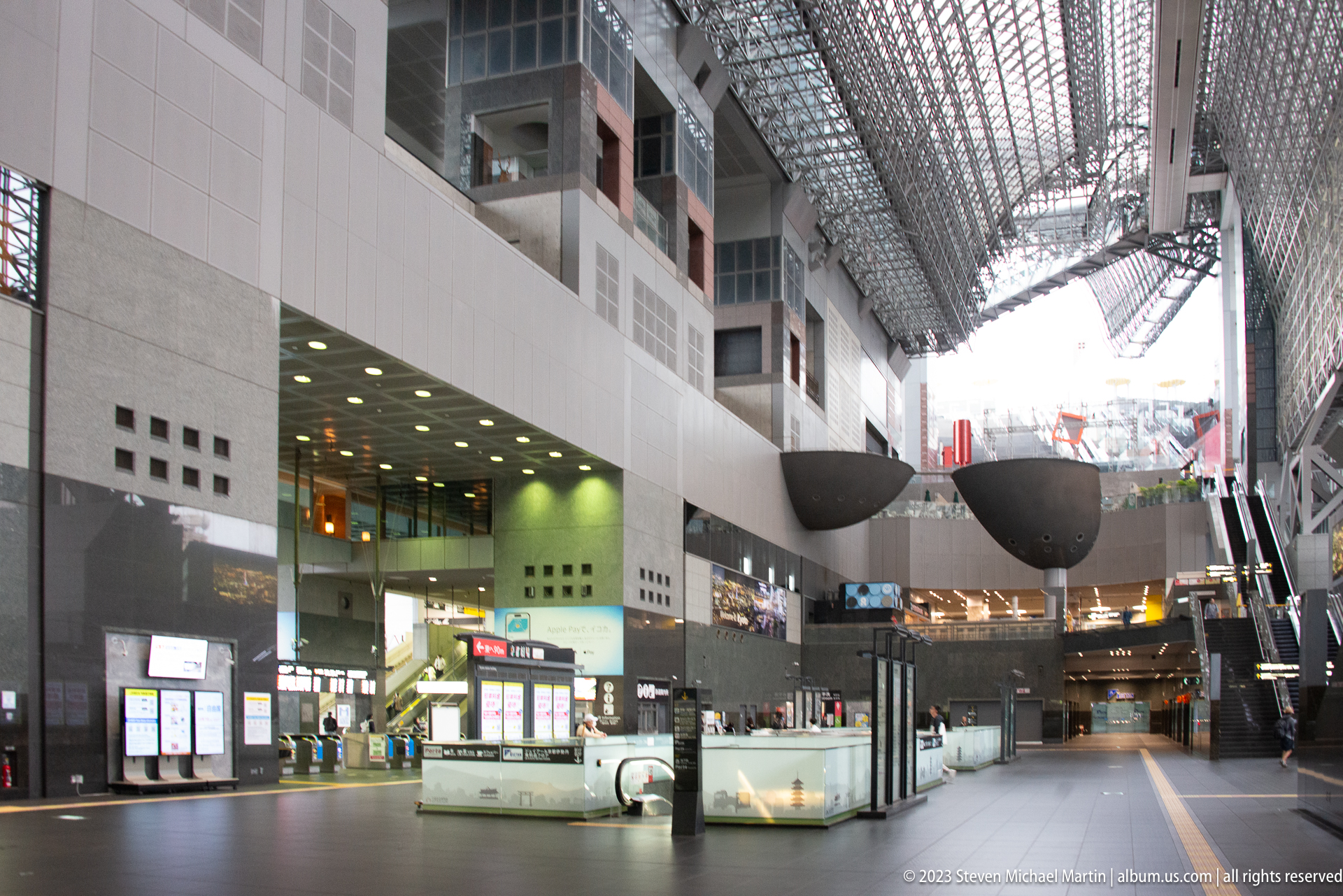
Broad architectural composition documenting the scale of Kyoto Station's central public hall and layered circulation routes.
Caption
Broad architectural composition documenting the scale of Kyoto Station's central public hall and layered circulation routes.
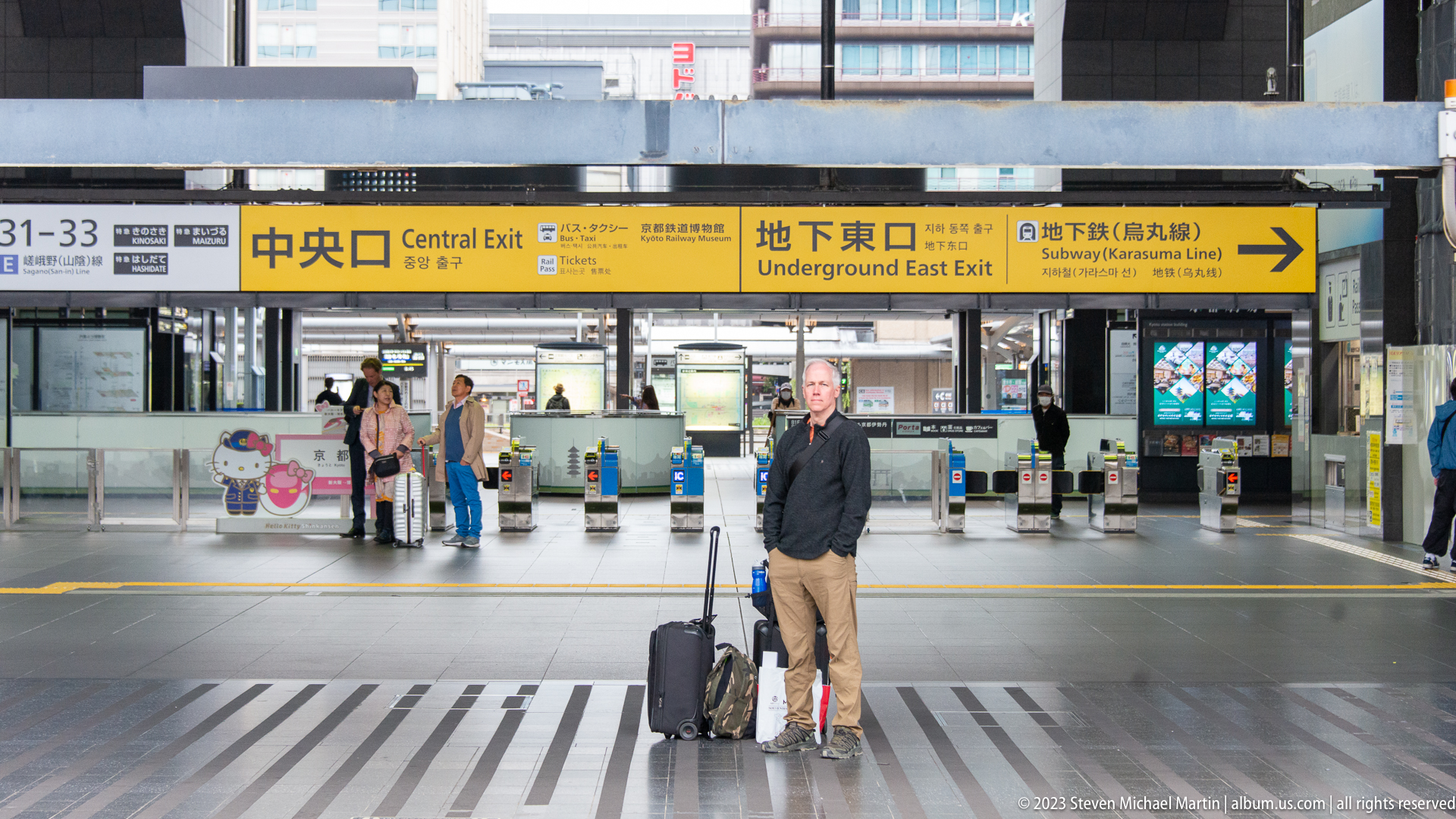
Traveler standing beneath bilingual Central Exit and Underground East Exit signs documenting station wayfinding.
Caption
Traveler standing beneath bilingual Central Exit and Underground East Exit signs documenting station wayfinding.
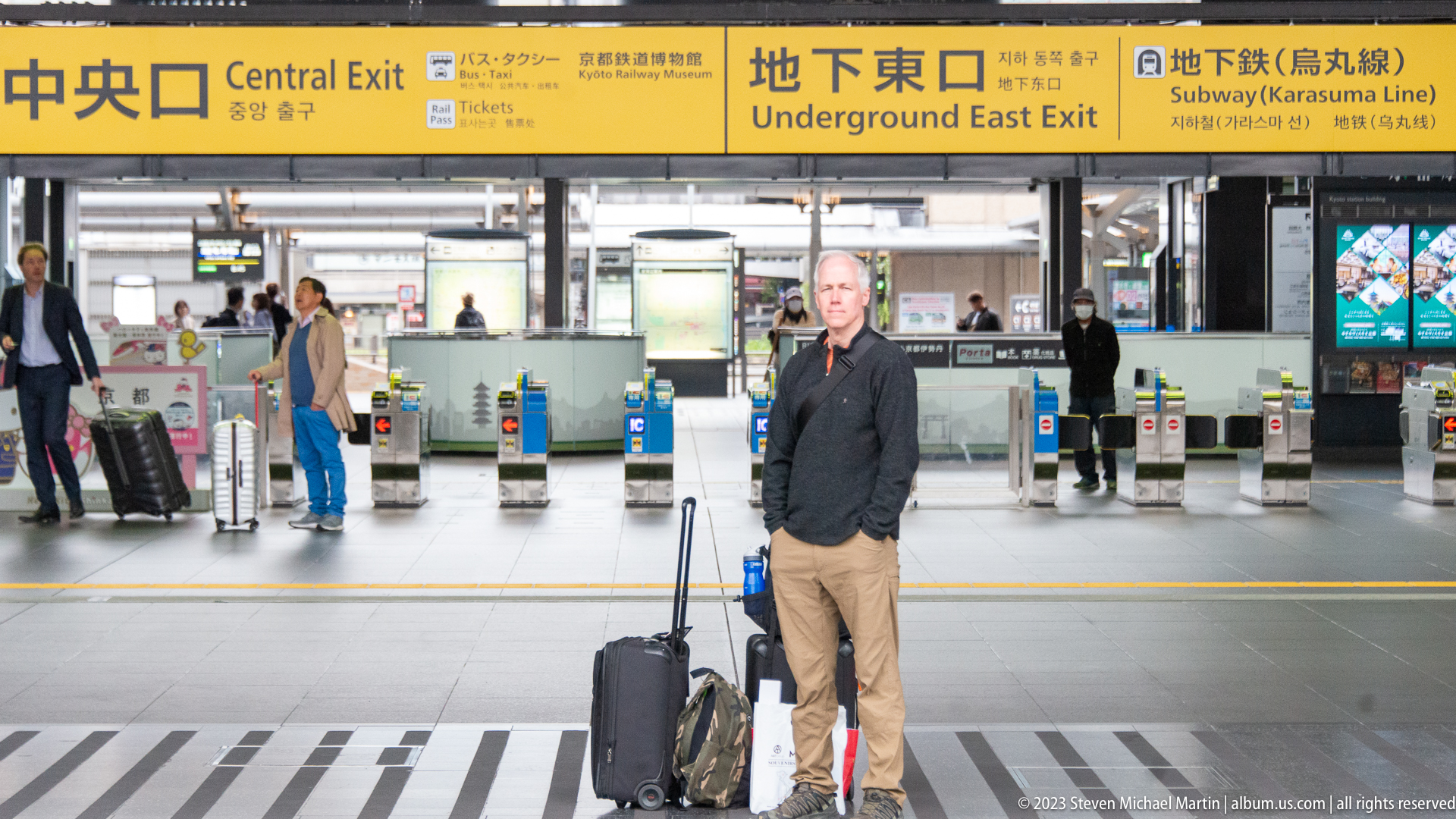
Portrait of a traveler with luggage beneath the bilingual station exit signs emphasizing arrival and departure.
Caption
Portrait of a traveler with luggage beneath the bilingual station exit signs emphasizing arrival and departure.
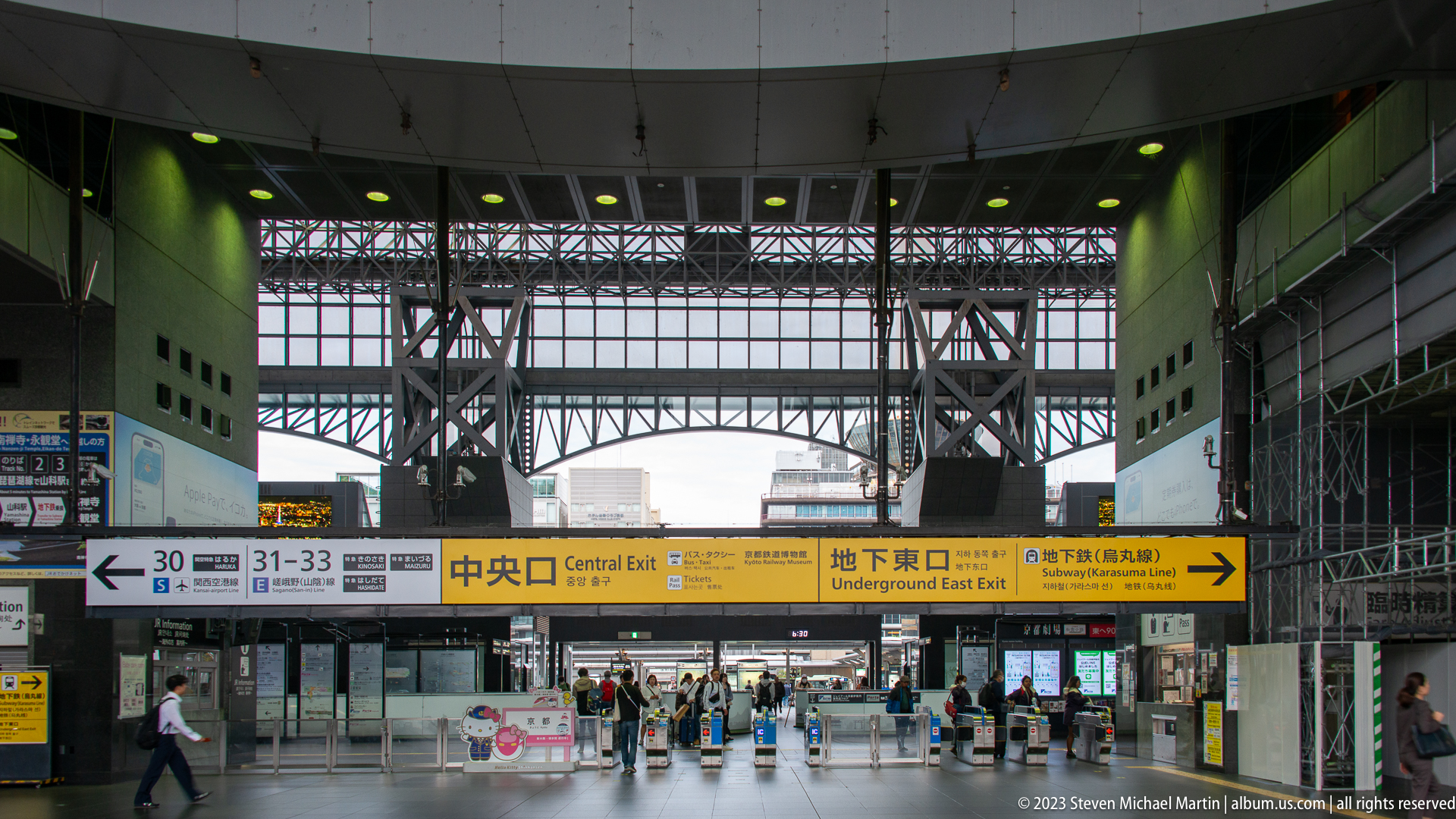
Symmetrical view of Kyoto Station's Central Exit with bilingual directional signs and structural framing above the entrance.
Caption
Symmetrical view of Kyoto Station's Central Exit with bilingual directional signs and structural framing above the entrance.
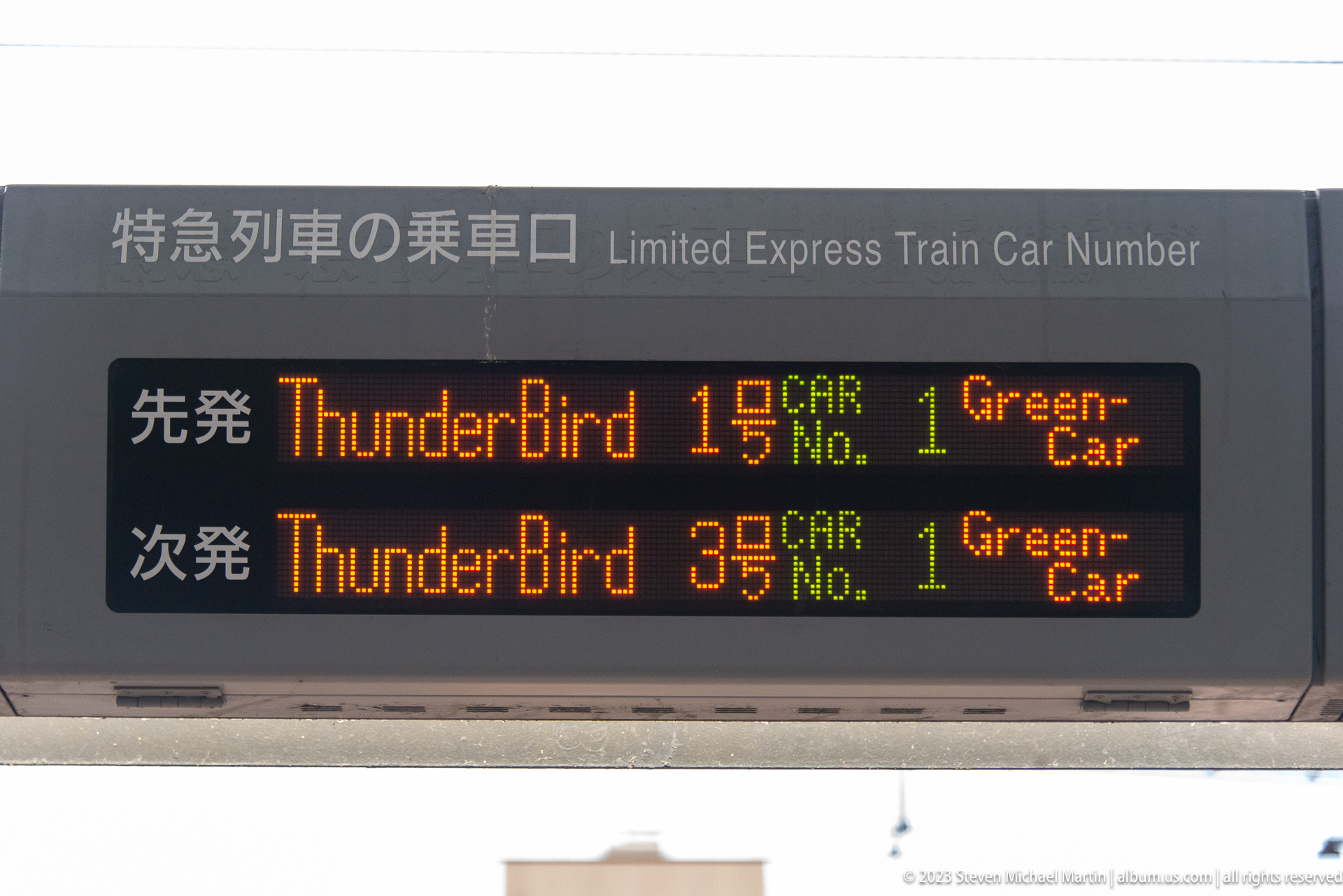
Electronic departure board showing Thunderbird limited express train information at Kyoto Station.
Caption
Electronic departure board showing Thunderbird limited express train information at Kyoto Station.
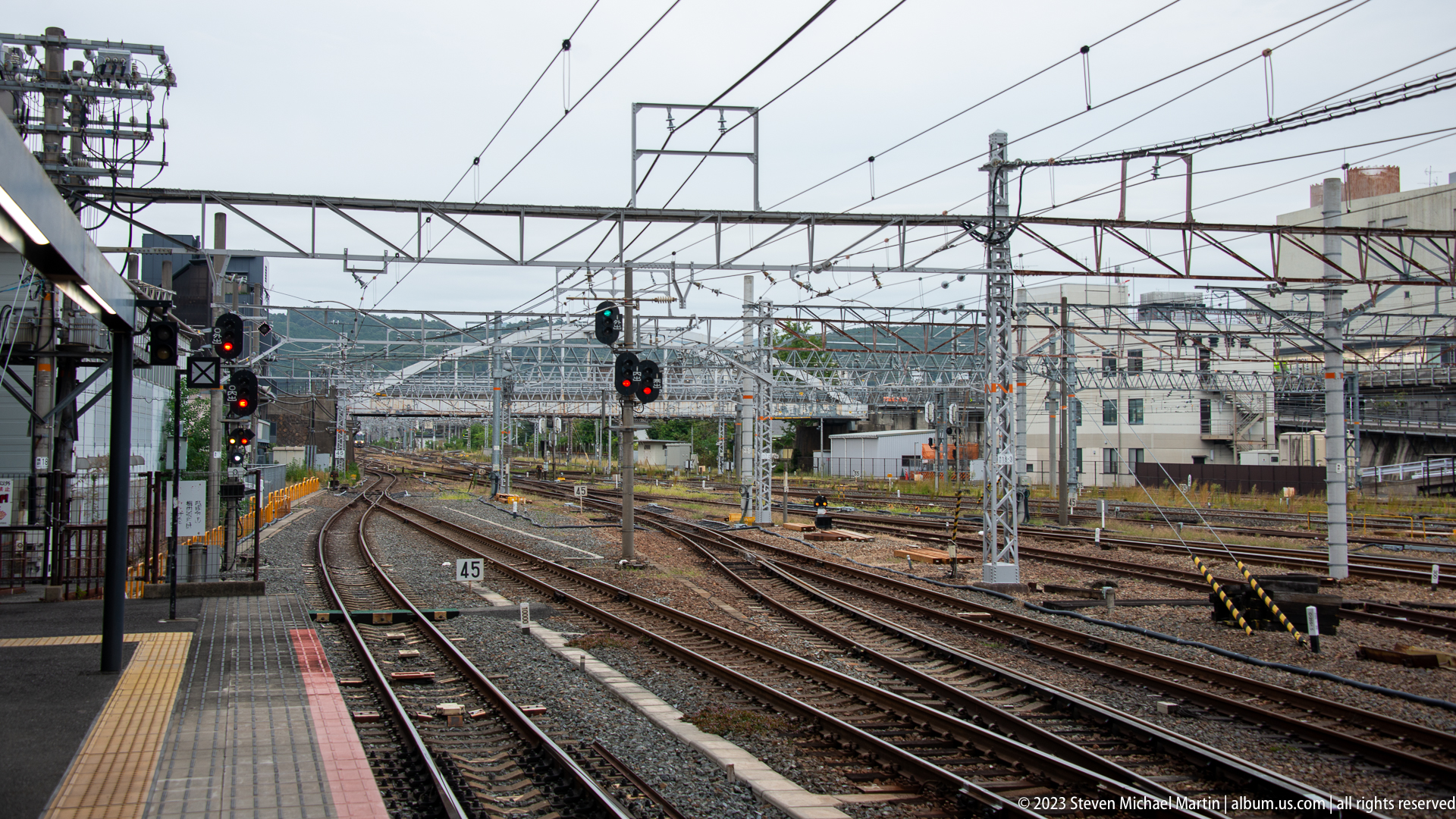
View across multiple railway tracks, switches, overhead catenary, and signaling infrastructure outside Kyoto Station.
Caption
View across multiple railway tracks, switches, overhead catenary, and signaling infrastructure outside Kyoto Station.
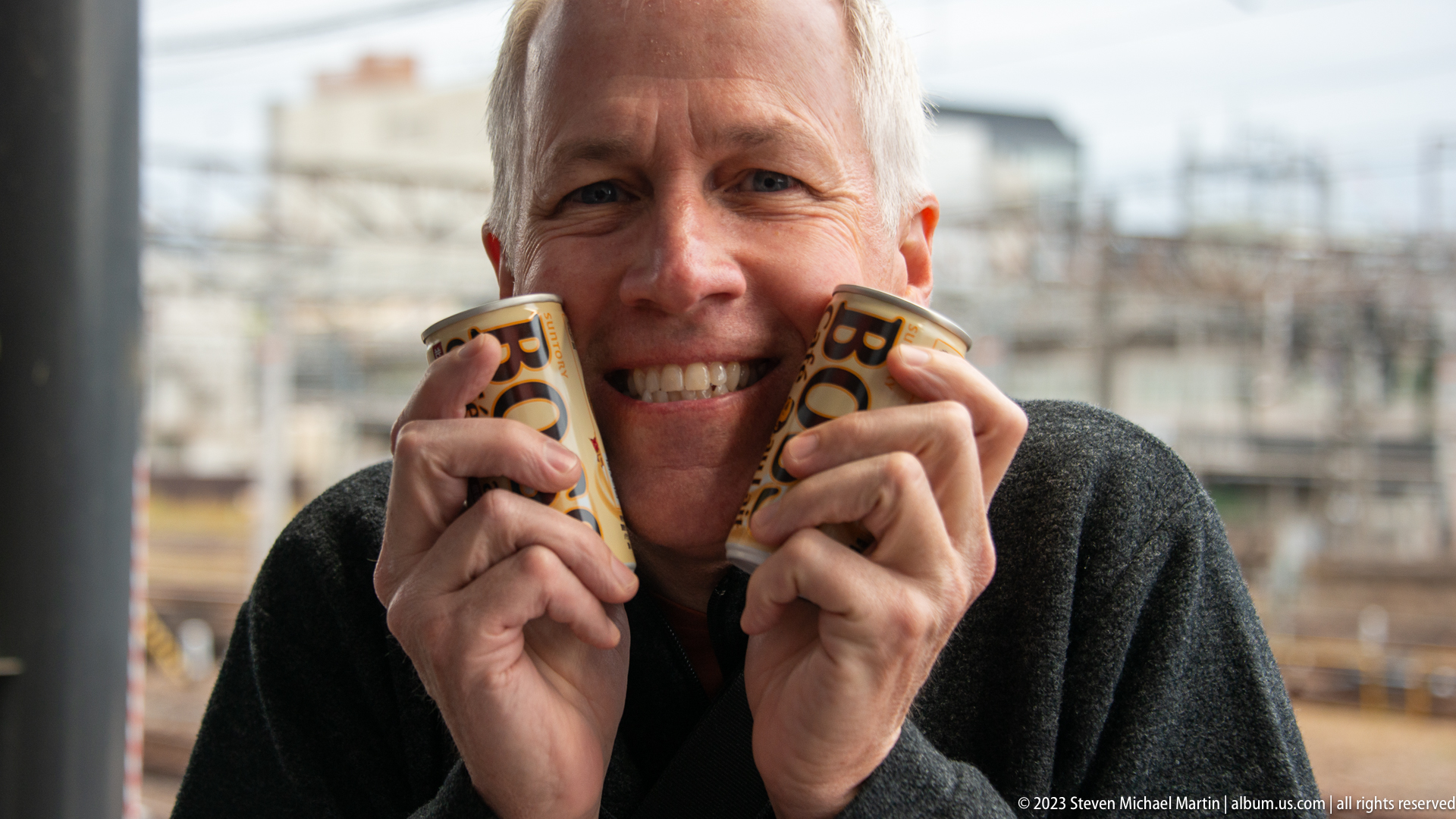
Portrait of a smiling visitor holding two canned Japanese coffee drinks with the station rail yard softly blurred behind.
Caption
Portrait of a smiling visitor holding two canned Japanese coffee drinks with the station rail yard softly blurred behind.
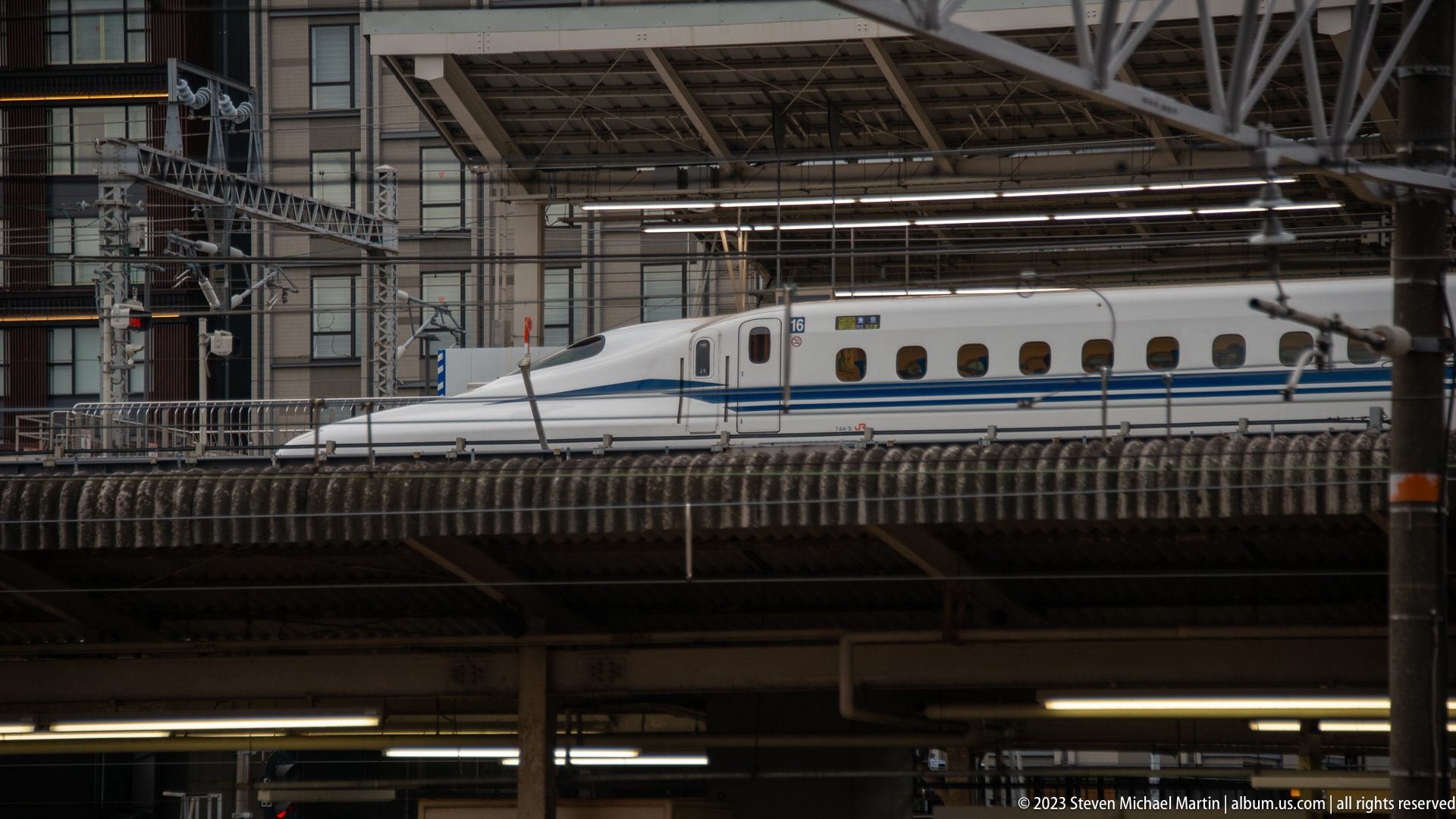
Side view of a Shinkansen train at Kyoto Station emphasizing the streamlined nose and platform environment.
Caption
Side view of a Shinkansen train at Kyoto Station emphasizing the streamlined nose and platform environment.
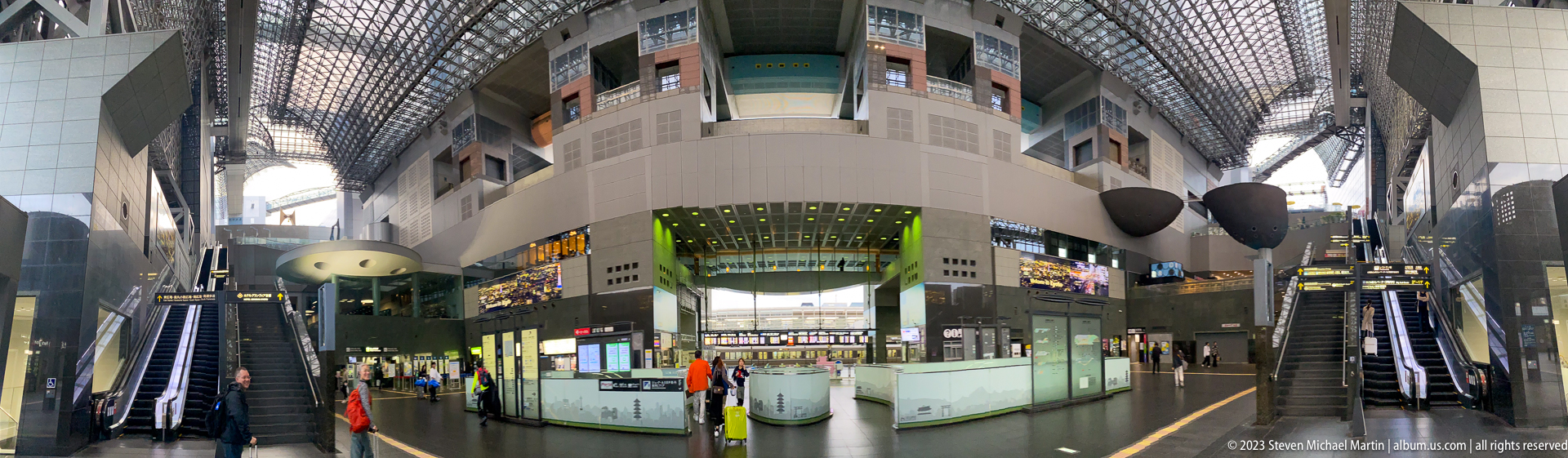
Kyoto Station's central atrium rises around a layered circulation system of escalators, balconies, retail fronts, and service counters. The broad, symmetrical view shows how the building combines railway functions with a vast civic interior, while the exposed roof structure and suspended forms establish the scale and theatrical character of the station's contemporary design.
Caption
Kyoto Station's central atrium rises around a layered circulation system of escalators, balconies, retail fronts, and service counters. The broad, symmetrical view shows how the building combines railway functions with a vast civic interior, while the exposed roof structure and suspended forms establish the scale and theatrical character of the station's contemporary design.
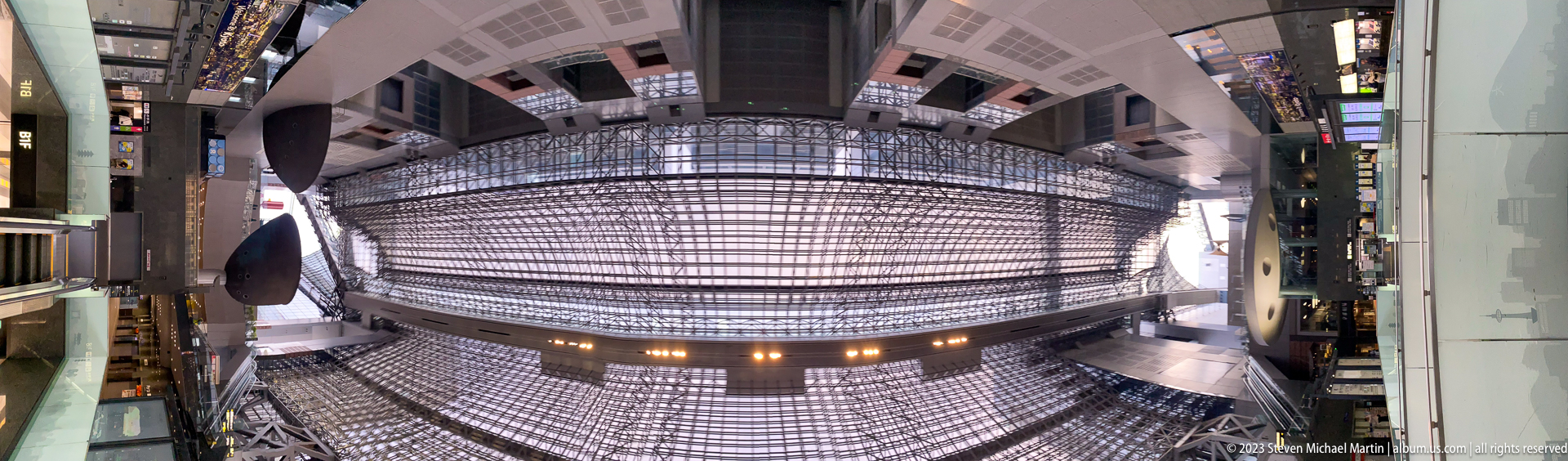
A steep upward view turns Kyoto Station's roof into a dense field of repeating steel members and translucent glazing. The curved perspective emphasizes the immense span of the atrium and the precision of its structural grid, while openings around the perimeter reveal the surrounding multi-level interior and its suspended architectural elements.
Caption
A steep upward view turns Kyoto Station's roof into a dense field of repeating steel members and translucent glazing. The curved perspective emphasizes the immense span of the atrium and the precision of its structural grid, while openings around the perimeter reveal the surrounding multi-level interior and its suspended architectural elements.
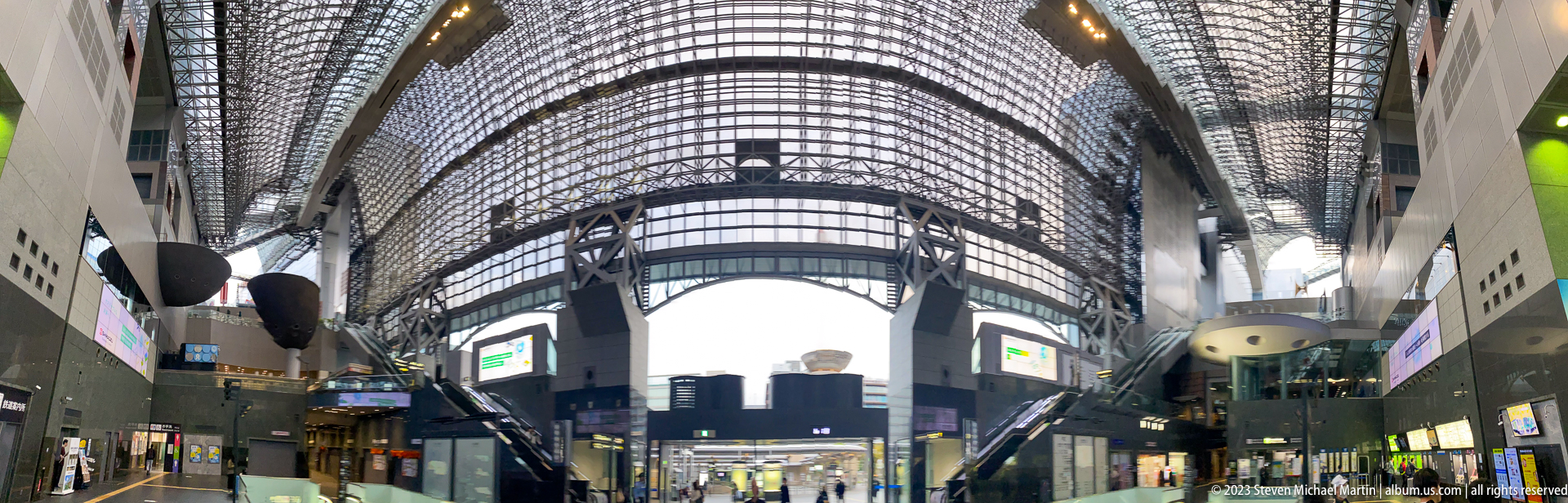
The station's atrium is framed here as a tall architectural canyon, with escalators and commercial levels leading upward toward the glazed roof. A bridge spans the upper interior, while the sweeping steel framework and dark suspended forms create a layered composition that conveys both the height of the building and the complexity of movement within it.
Caption
The station's atrium is framed here as a tall architectural canyon, with escalators and commercial levels leading upward toward the glazed roof. A bridge spans the upper interior, while the sweeping steel framework and dark suspended forms create a layered composition that conveys both the height of the building and the complexity of movement within it.
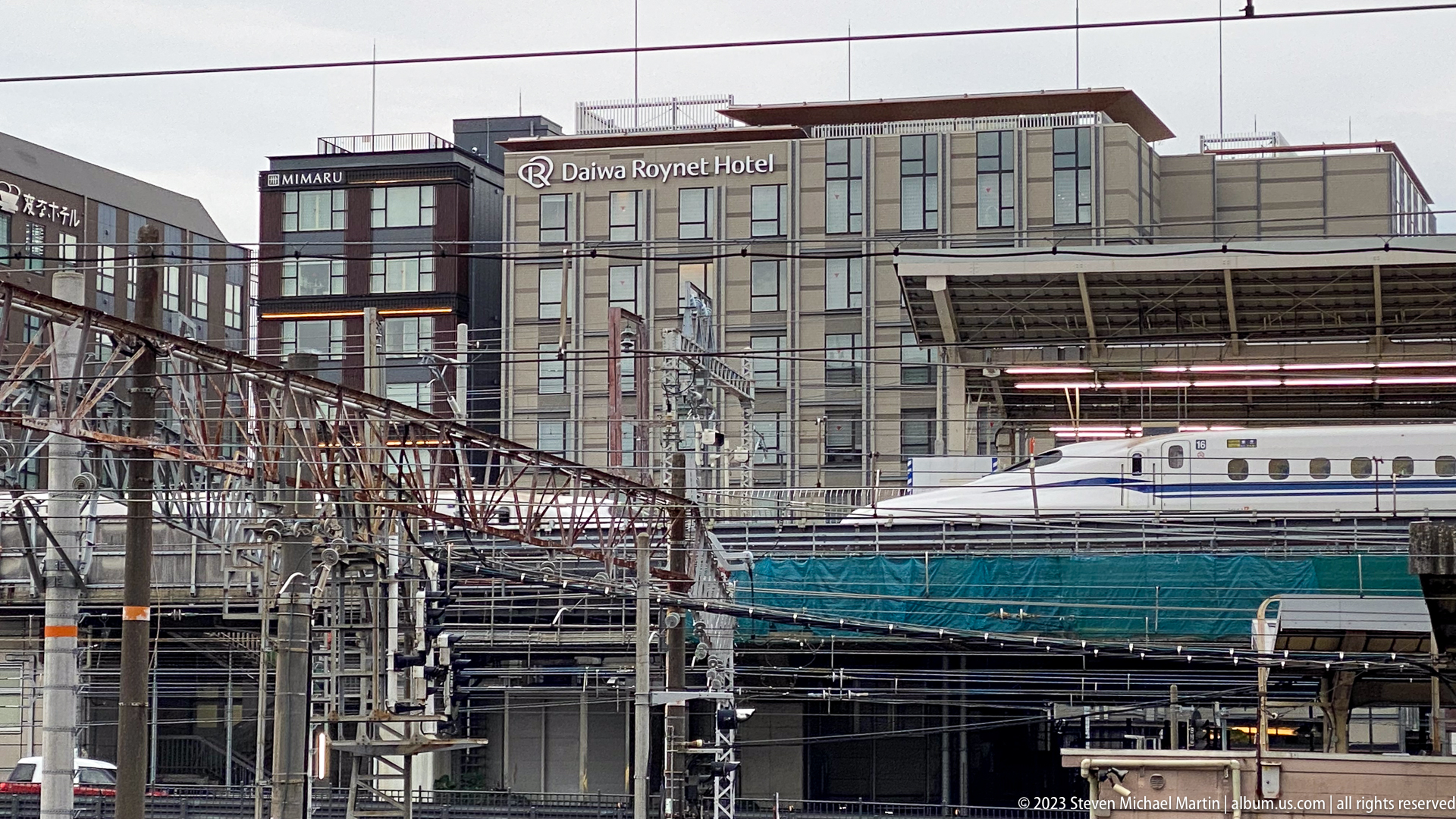
Rail infrastructure with a Shinkansen visible beyond overhead wiring and nearby hotel buildings.
Caption
Rail infrastructure with a Shinkansen visible beyond overhead wiring and nearby hotel buildings.
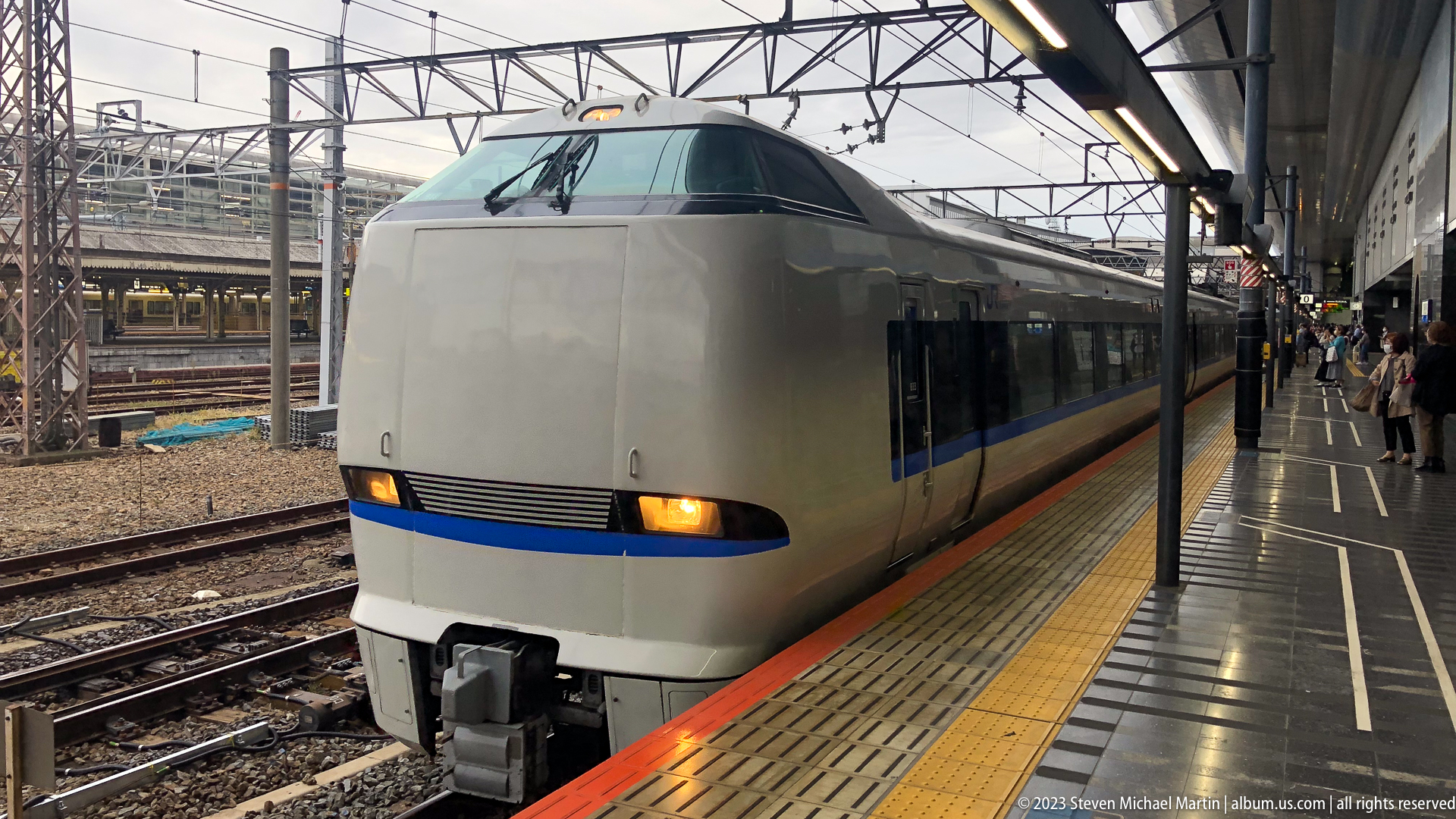
A Limited Express train waits at a platform in Kyoto Station, its streamlined front end positioned beside tactile safety paving and clearly marked boarding zones. Overhead catenary structures, adjacent tracks, and platform infrastructure illustrate the station's role as one of western Japan's principal railway hubs serving regional and long-distance rail services.
Caption
A Limited Express train waits at a platform in Kyoto Station, its streamlined front end positioned beside tactile safety paving and clearly marked boarding zones. Overhead catenary structures, adjacent tracks, and platform infrastructure illustrate the station's role as one of western Japan's principal railway hubs serving regional and long-distance rail services.