Jelling Mounds – Denmark
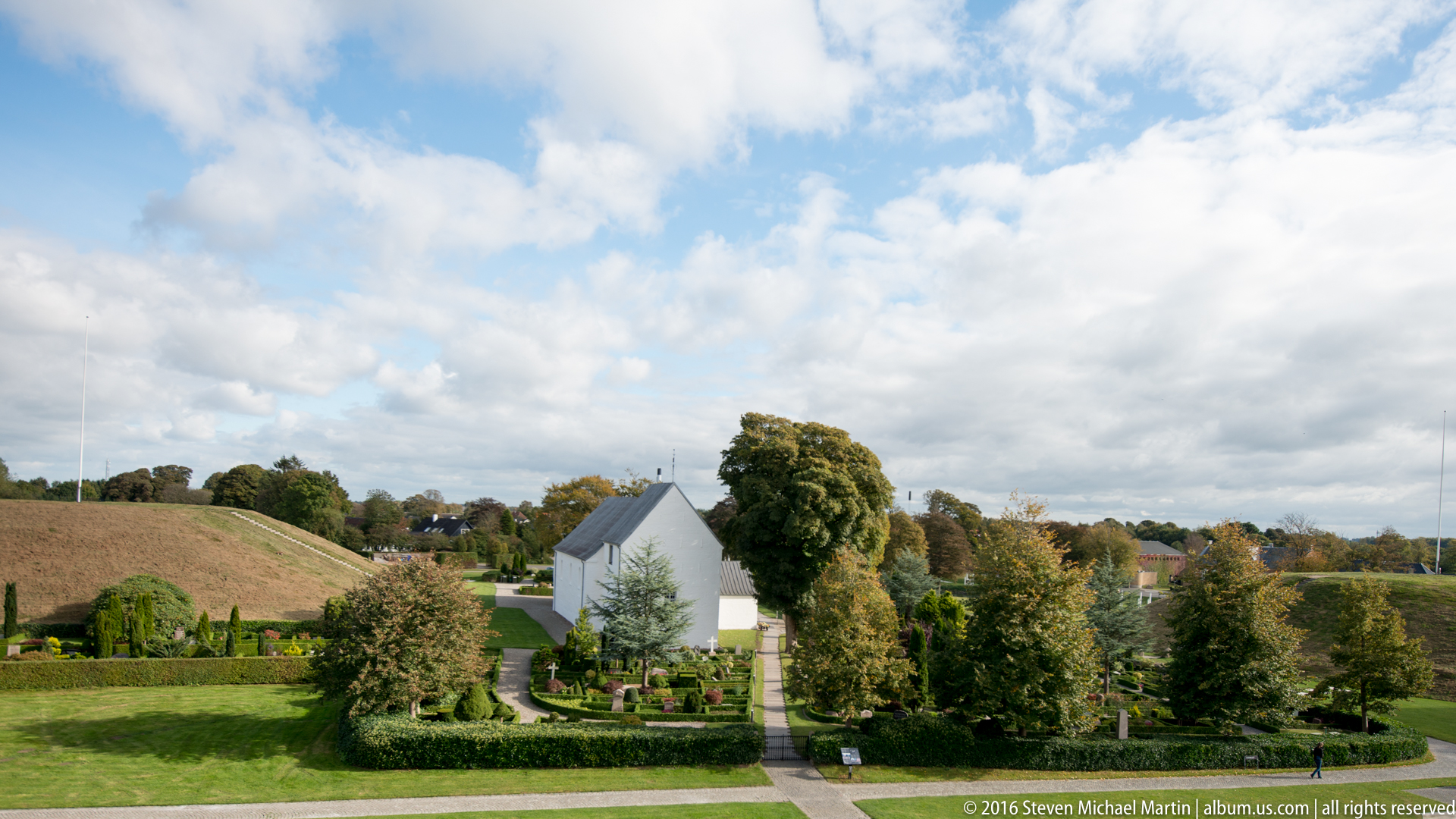
The historic monuments of Jelling Mounds stand among the most important Viking sites in Scandinavia. Located in the town of Jelling, the complex includes two large burial mounds, a church, and the famous Jelling Runestones.
The runestones were erected during the 10th century by the Viking king Harald Bluetooth, who used the monuments to commemorate his parents and to proclaim the unification and Christianization of Denmark.
Because of their historical importance, the Jelling monuments are recognized as a Jelling Mounds, Runic Stones and Church.




Field Guide
📍 Location
Jelling, Vejle Municipality, Denmark
🏛️ Cultural Significance
The Jelling Mounds, runestones, and church form one of Denmark’s most important historical landscapes, marking the transition from pagan traditions to the Christian kingdom that would become medieval Denmark. The site is closely associated with King Gorm the Old and his son Harald Bluetooth, whose monuments established Jelling as a royal and symbolic center in the 10th century.
The two large burial mounds, massive rune-inscribed stones, and later stone church collectively represent the consolidation of royal authority and the adoption of Christianity. The larger runestone erected by Harald Bluetooth explicitly proclaims that he united Denmark and Norway and made the Danes Christian, making this site a foundational landmark in the creation of the Danish state.
Today the monuments stand in a carefully preserved setting that reveals the spatial relationships between pagan burial traditions and emerging Christian architecture, illustrating a pivotal moment in Scandinavian cultural history.
🗿 Notable Features
- North Mound — traditionally associated with King Gorm the Old and among the largest burial mounds in Scandinavia
- South Mound — constructed by Harald Bluetooth, reinforcing dynastic continuity
- Jelling Runestones — often called Denmark’s “birth certificate,” with inscriptions documenting the unification of the kingdom
- Jelling Church — later medieval church occupying the symbolic center of the royal complex
- Stone ship setting — archaeological evidence of an enormous Viking-Age ship-shaped arrangement of stones
📜 Historical Context
During the 10th century, Denmark was transitioning from a collection of regional power centers into a unified kingdom. King Gorm the Old established Jelling as a royal seat, and Harald Bluetooth expanded the complex with monuments that signaled both political authority and religious transformation.
The larger Jelling runestone commemorates Harald’s achievements in uniting Denmark and converting the population to Christianity, reflecting broader cultural changes occurring throughout Scandinavia as new religious and political structures emerged.
Archaeological research has revealed evidence of extensive wooden palisades and monumental alignments that suggest the site once formed a large ceremonial complex. These features emphasize Jelling’s role not only as a burial landscape but also as a statement of royal legitimacy.
🌍 UNESCO Status
Designated a UNESCO World Heritage Site, Jelling represents an exceptional example of the cultural transformation that shaped northern Europe during the Viking Age. The monuments illustrate the emergence of centralized monarchy and the integration of Christian belief systems into Scandinavian society.
📷 Photography Notes
- Early morning light provides soft illumination across the grass-covered mounds
- The runestones photograph well with low-angle light highlighting carved inscriptions
- Wide compositions help convey the spatial relationship between mounds and church
- Elevated viewpoints help illustrate the scale of the burial landscape
- Overcast conditions can enhance texture in stone carvings
- Human figures provide useful scale for the height of the runestones
✨ Highlights
- One of Scandinavia’s most important Viking Age monuments
- Physical representation of Denmark’s early political formation
- Runestones documenting the introduction of Christianity
- Large-scale ceremonial landscape preserved in open setting
- Clear spatial relationship between pagan and Christian elements