Angkor Thom
Angkor Thom served as the royal capital of the Khmer Empire during the late twelfth and early thirteenth centuries under King Jayavarman VII. The walled city reflects advanced urban planning and monumental architecture associated with the height of Angkorian political influence. Its large gates and defensive walls illustrate the importance of ceremonial and administrative centers in Khmer governance.
The layout of Angkor Thom demonstrates symbolic design principles influenced by religious cosmology and royal authority. Causeways, towers, and sculptural decorations represent mythological imagery associated with both Hindu and Buddhist traditions. The city functioned as a political and religious center supporting the expansion of the Khmer Empire.
Angkor Thom illustrates the scale of Khmer imperial ambition and the development of urban design in Southeast Asia. Its preserved structures provide insight into the political organization and cultural identity of the Angkorian period.
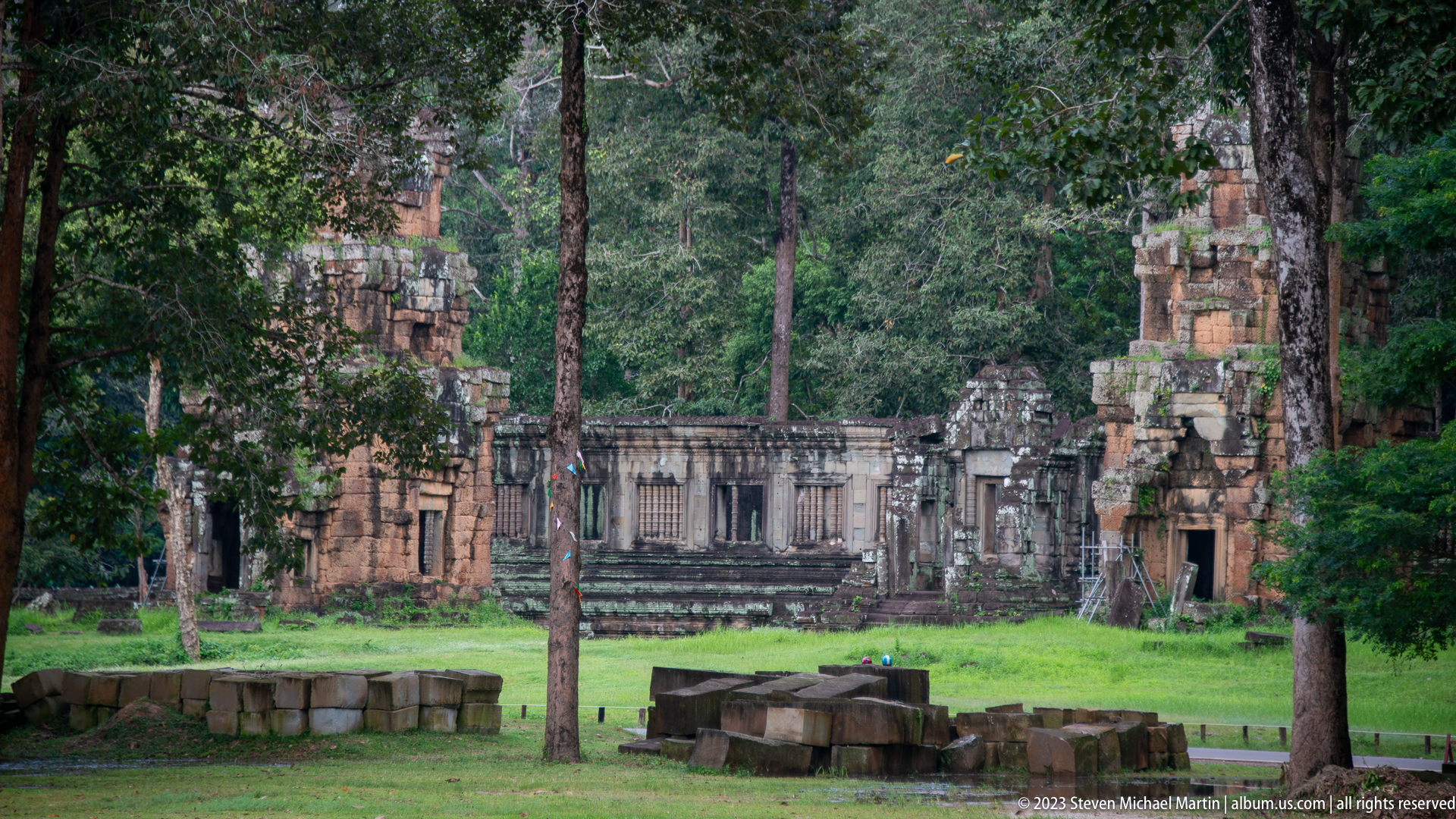
A weathered stone façade with dark openings and collapsed upper masonry stands beyond a broad green lawn. The photograph records ruined temple structure within angkor thom as part of the surviving archaeological and cultural landscape of Angkor Thom.
Caption
A weathered stone façade with dark openings and collapsed upper masonry stands beyond a broad green lawn. The photograph records ruined temple structure within angkor thom as part of the surviving archaeological and cultural landscape of Angkor Thom.

Shallow brown water surrounds mature trees and scattered square stone blocks in a shaded forest setting. The photograph records flooded wooded archaeological area within angkor thom as part of the surviving archaeological and cultural landscape of Angkor Thom.
Caption
Shallow brown water surrounds mature trees and scattered square stone blocks in a shaded forest setting. The photograph records flooded wooded archaeological area within angkor thom as part of the surviving archaeological and cultural landscape of Angkor Thom.

A squat stone guardian animal stands on a tiered pedestal beside temple masonry in a green forest setting. The photograph records weathered guardian lion at angkor thom as part of the surviving archaeological and cultural landscape of Angkor Thom.
Caption
A squat stone guardian animal stands on a tiered pedestal beside temple masonry in a green forest setting. The photograph records weathered guardian lion at angkor thom as part of the surviving archaeological and cultural landscape of Angkor Thom.
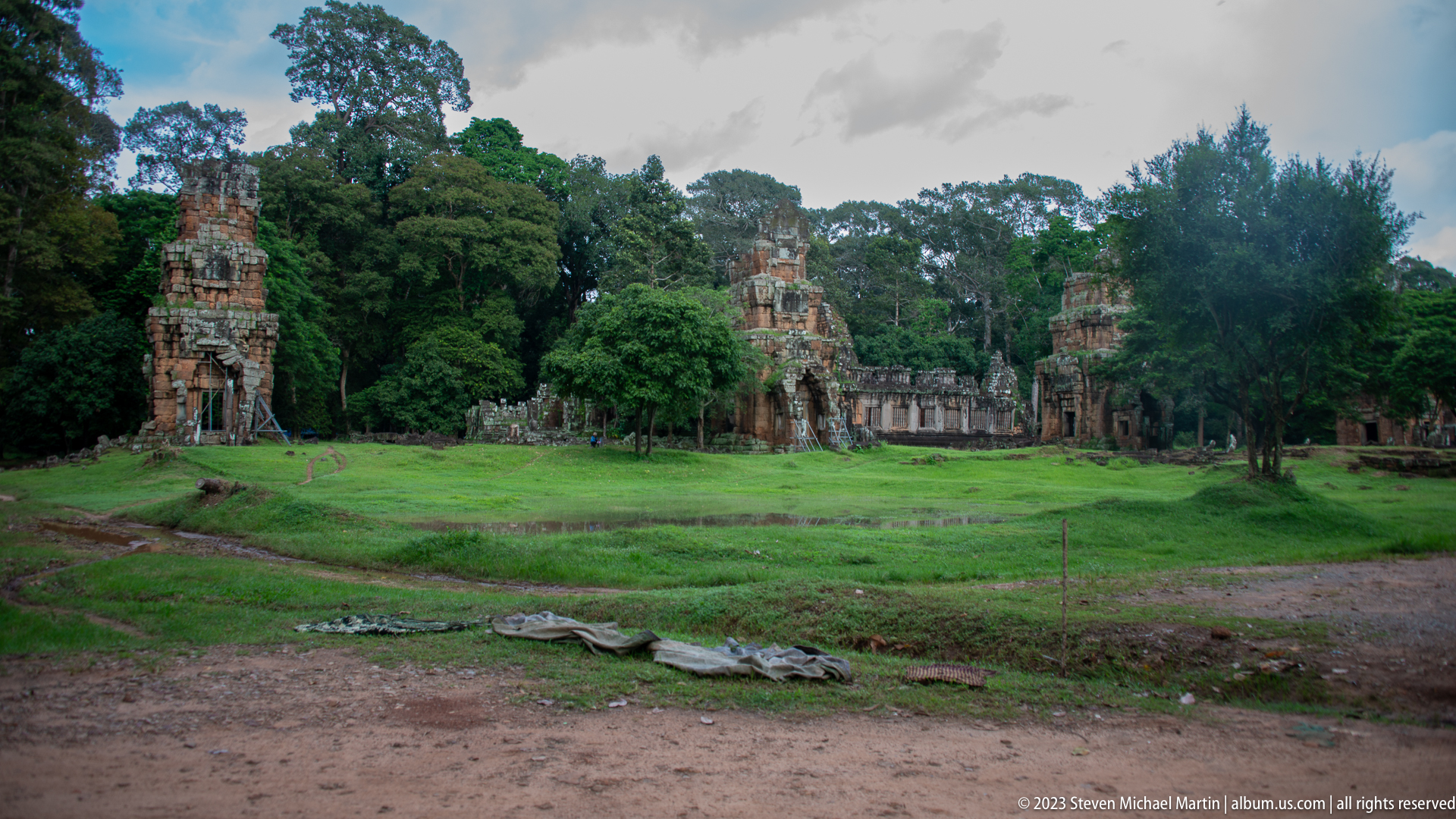
An open green field stretches toward long ruined terraces and trees beneath an overcast sky. The photograph records royal square area of angkor thom as part of the surviving archaeological and cultural landscape of Angkor Thom.
Caption
An open green field stretches toward long ruined terraces and trees beneath an overcast sky. The photograph records royal square area of angkor thom as part of the surviving archaeological and cultural landscape of Angkor Thom.
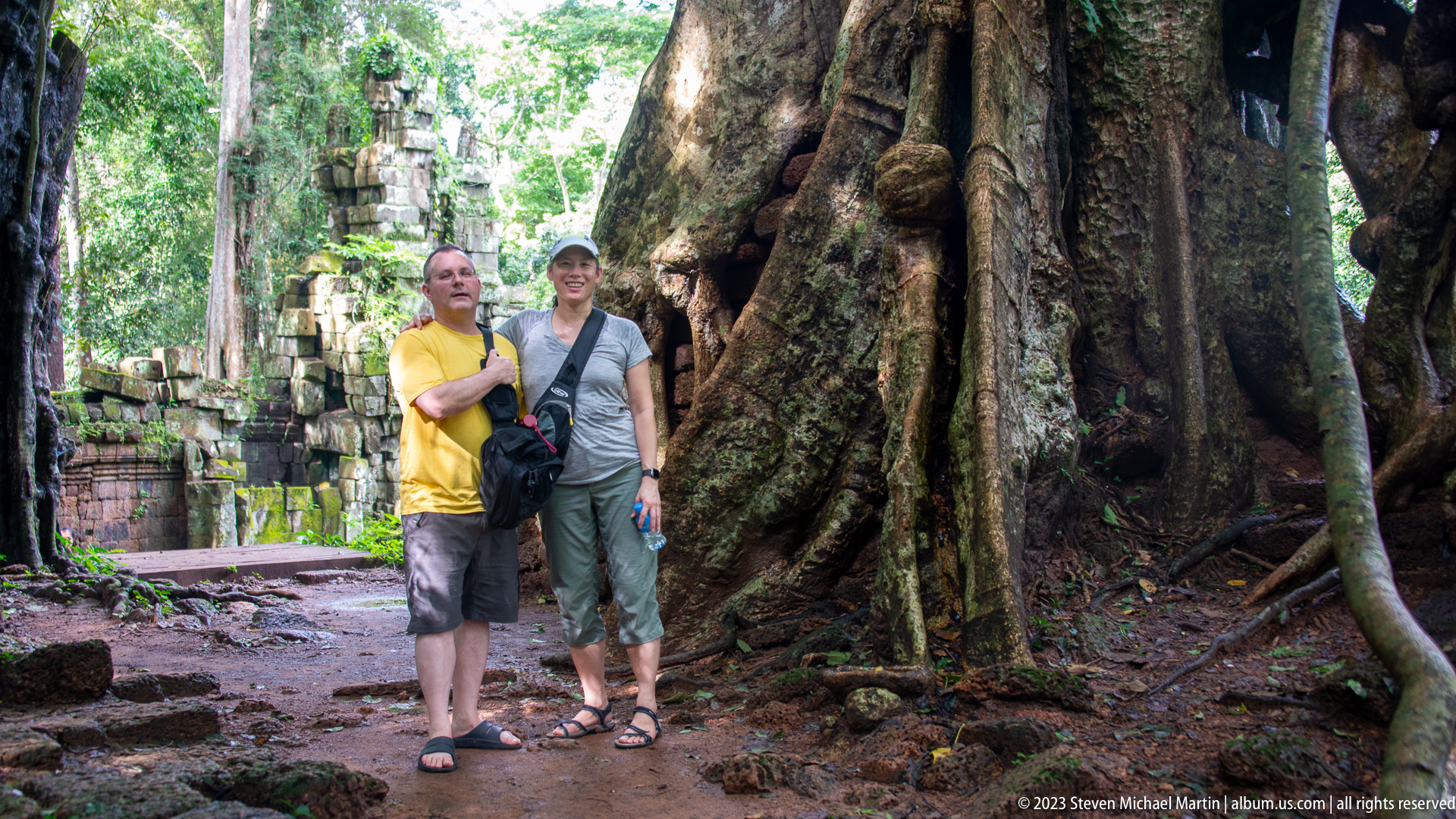
Two visitors pose beneath towering buttress roots, using human scale to show the tree’s extraordinary size. The photograph records visitors beside a monumental tropical tree at angkor thom as part of the surviving archaeological and cultural landscape of Angkor Thom.
Caption
Two visitors pose beneath towering buttress roots, using human scale to show the tree’s extraordinary size. The photograph records visitors beside a monumental tropical tree at angkor thom as part of the surviving archaeological and cultural landscape of Angkor Thom.

The elevated rectangular temple rises in broad receding tiers, its upper gallery and stair darkened by tropical weathering. The photograph records phimeanakas temple within angkor thom as part of the surviving archaeological and cultural landscape of Angkor Thom.
Caption
The elevated rectangular temple rises in broad receding tiers, its upper gallery and stair darkened by tropical weathering. The photograph records phimeanakas temple within angkor thom as part of the surviving archaeological and cultural landscape of Angkor Thom.
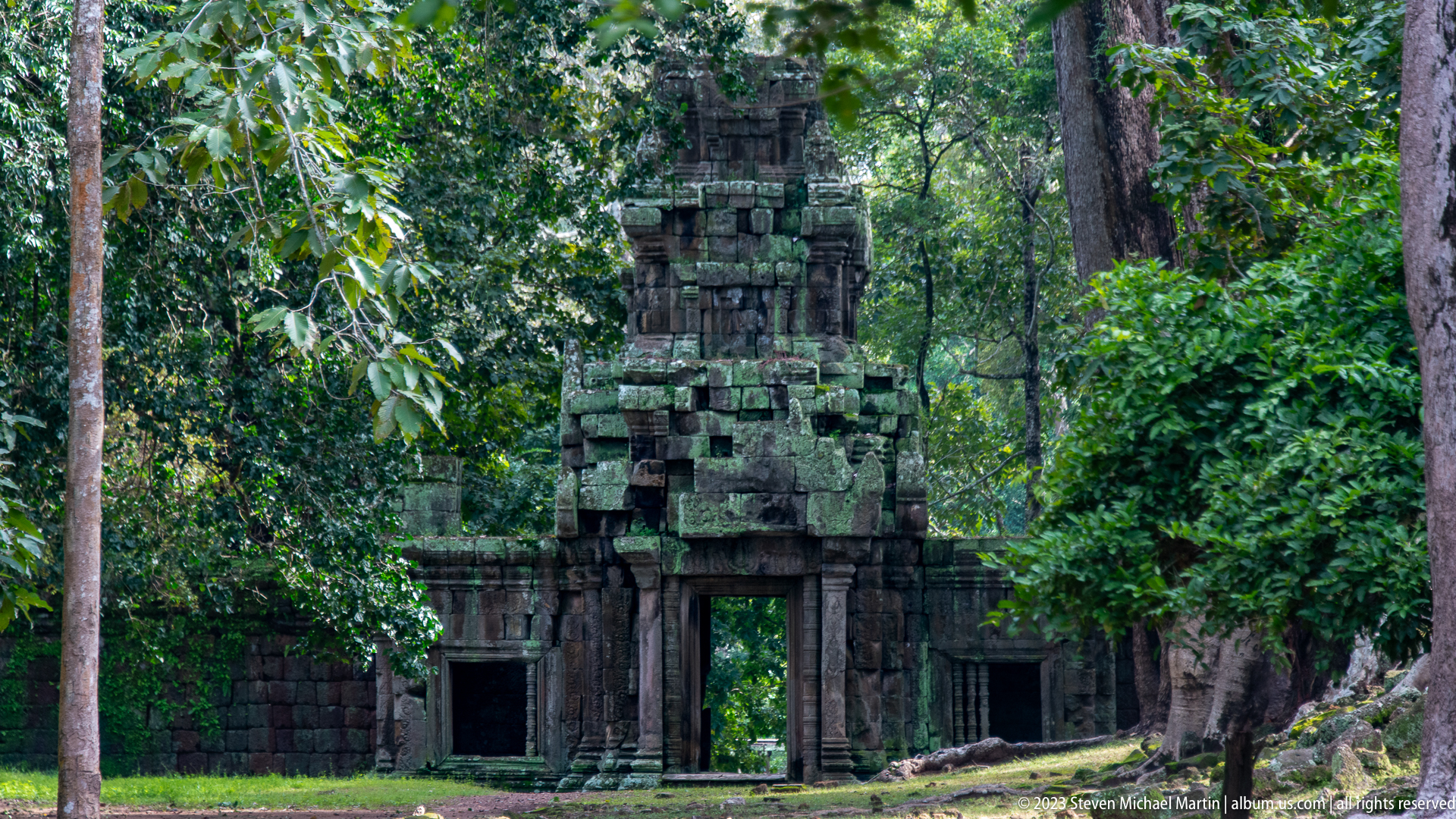
A vertical stone entrance tower with a dark central doorway rises among trees and low side galleries. The photograph records khmer temple gateway within angkor thom as part of the surviving archaeological and cultural landscape of Angkor Thom.
Caption
A vertical stone entrance tower with a dark central doorway rises among trees and low side galleries. The photograph records khmer temple gateway within angkor thom as part of the surviving archaeological and cultural landscape of Angkor Thom.

The same group poses in a wider composition that includes the central tower and side galleries. The photograph records visitors before an angkor thom temple gateway as part of the surviving archaeological and cultural landscape of Angkor Thom.
Caption
The same group poses in a wider composition that includes the central tower and side galleries. The photograph records visitors before an angkor thom temple gateway as part of the surviving archaeological and cultural landscape of Angkor Thom.
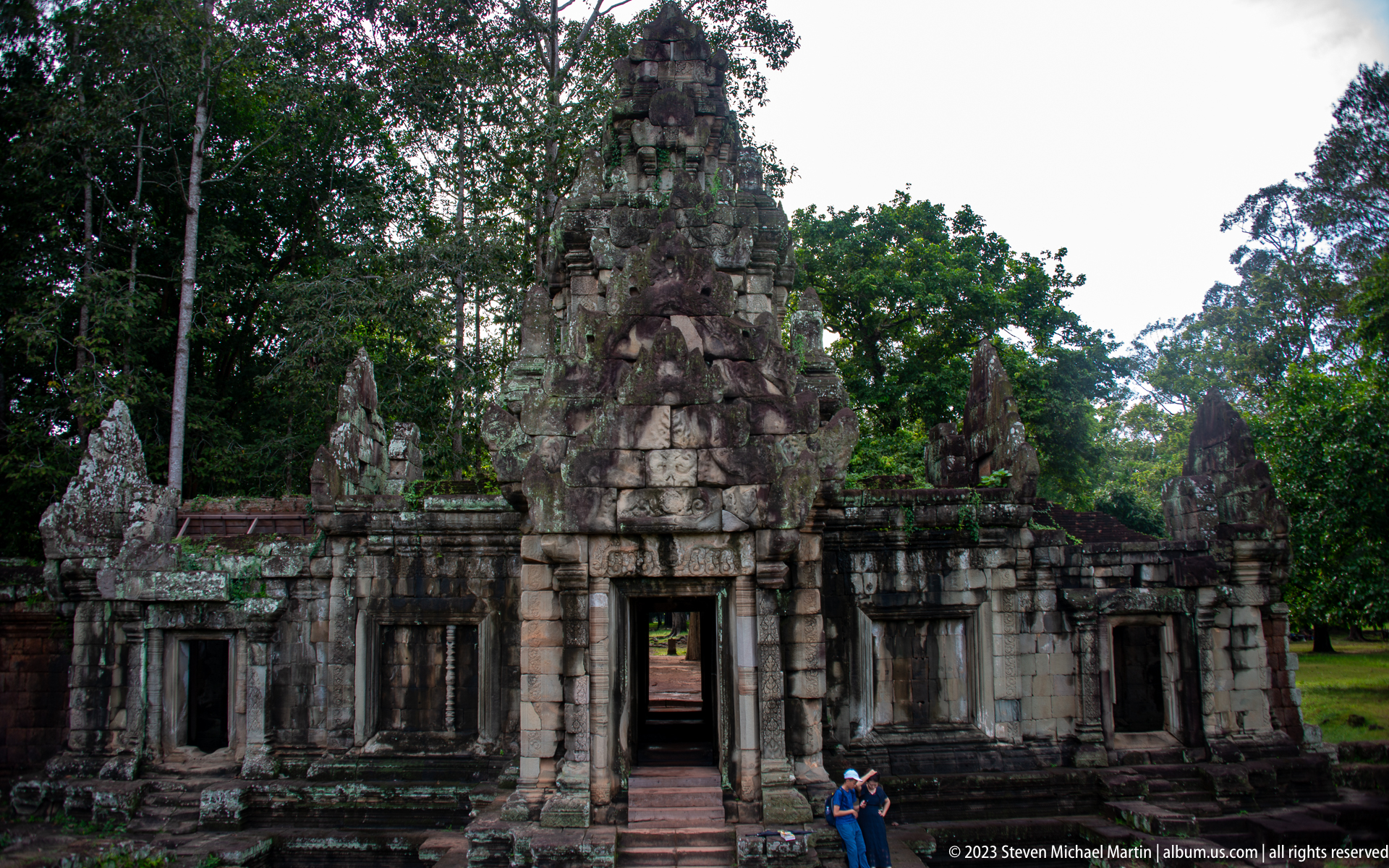
A central doorway rises beneath a weathered tower, flanked by long low stone galleries and trees. The photograph records khmer temple entrance within angkor thom as part of the surviving archaeological and cultural landscape of Angkor Thom.
Caption
A central doorway rises beneath a weathered tower, flanked by long low stone galleries and trees. The photograph records khmer temple entrance within angkor thom as part of the surviving archaeological and cultural landscape of Angkor Thom.
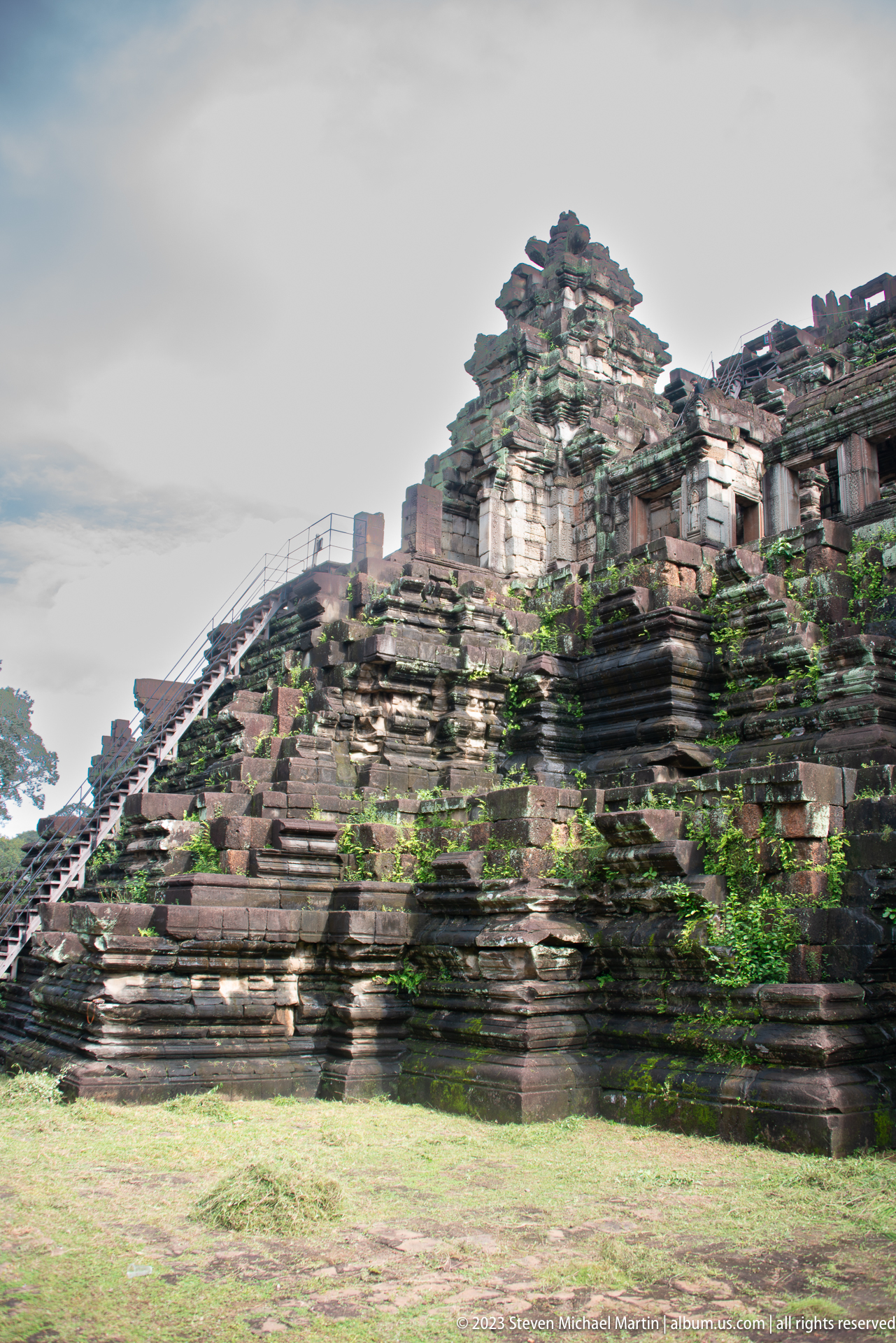
Large sandstone courses rise in receding tiers, heavily stained and colonized by moss and small plants. The photograph records weathered stepped masonry of a khmer temple within angkor thom as part of the surviving archaeological and cultural landscape of Angkor Thom.
Caption
Large sandstone courses rise in receding tiers, heavily stained and colonized by moss and small plants. The photograph records weathered stepped masonry of a khmer temple within angkor thom as part of the surviving archaeological and cultural landscape of Angkor Thom.
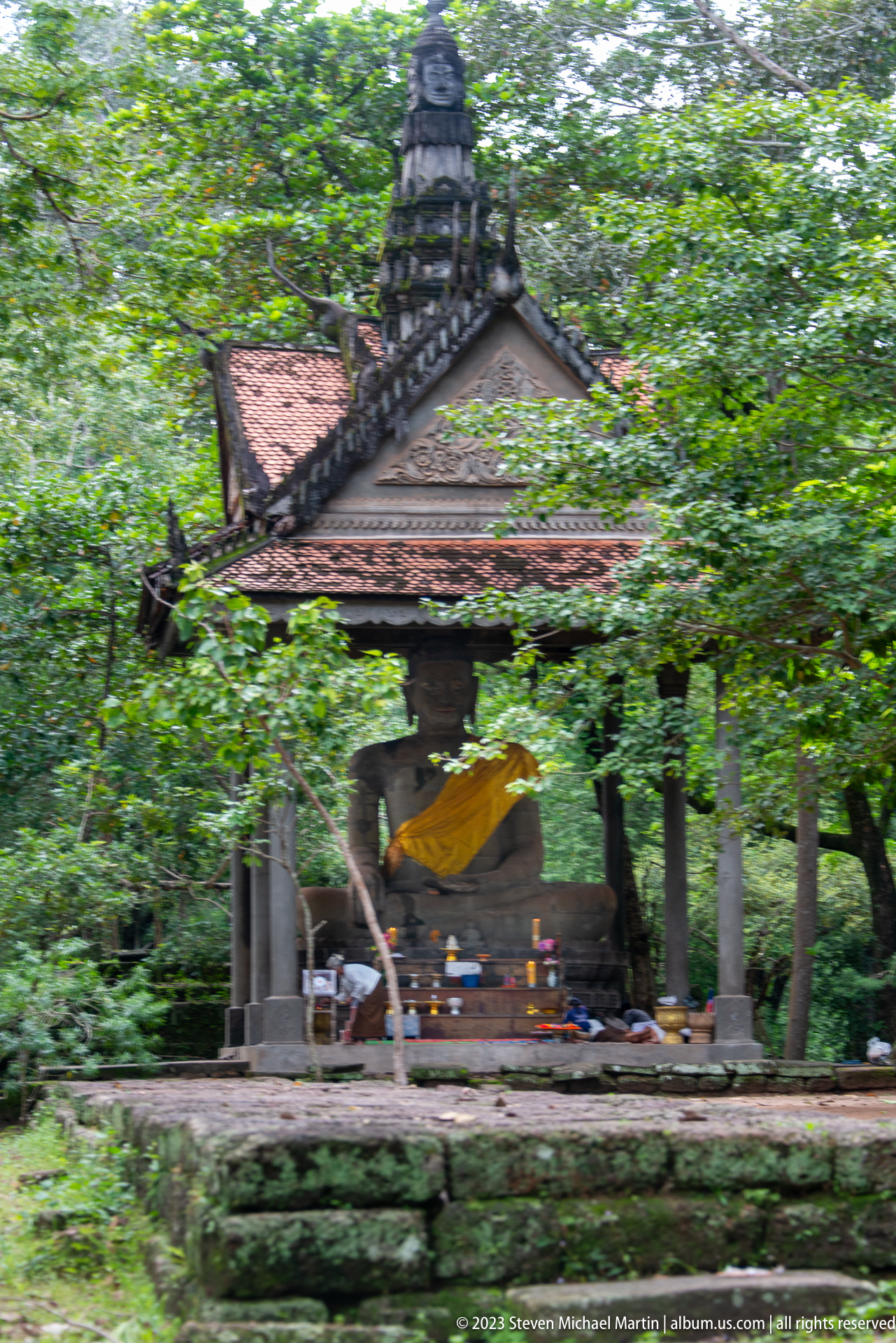
A seated Buddha image wrapped in yellow cloth stands beneath a small tiled pavilion surrounded by dense greenery. The photograph records active roadside or forest shrine within angkor thom as part of the surviving archaeological and cultural landscape of Angkor Thom.
Caption
A seated Buddha image wrapped in yellow cloth stands beneath a small tiled pavilion surrounded by dense greenery. The photograph records active roadside or forest shrine within angkor thom as part of the surviving archaeological and cultural landscape of Angkor Thom.
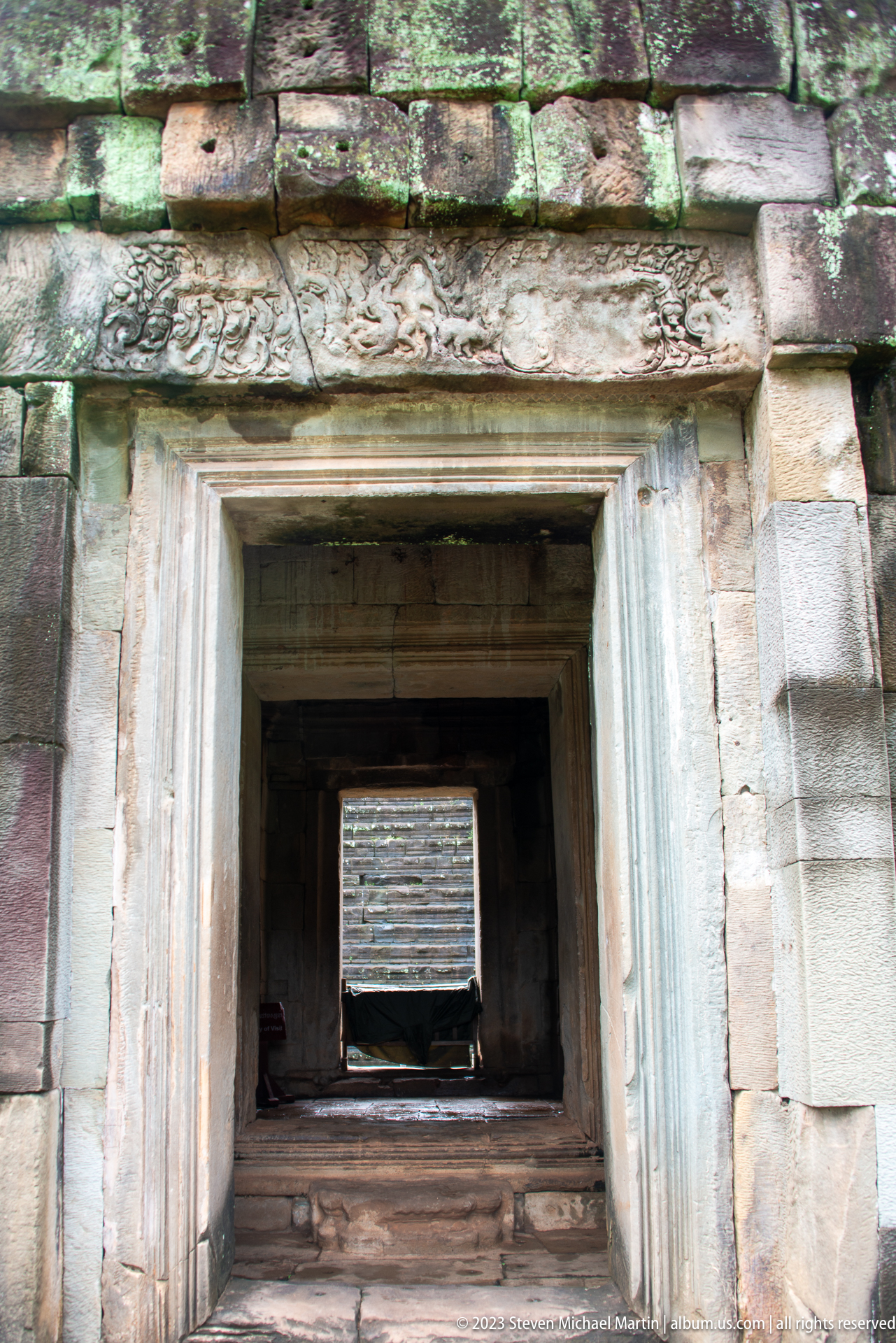
Several rectangular sandstone doorways recede toward a bright opening, creating a strong tunnel-like perspective. The photograph records axially aligned doorframes inside the baphuon as part of the surviving archaeological and cultural landscape of Angkor Thom.
Caption
Several rectangular sandstone doorways recede toward a bright opening, creating a strong tunnel-like perspective. The photograph records axially aligned doorframes inside the baphuon as part of the surviving archaeological and cultural landscape of Angkor Thom.
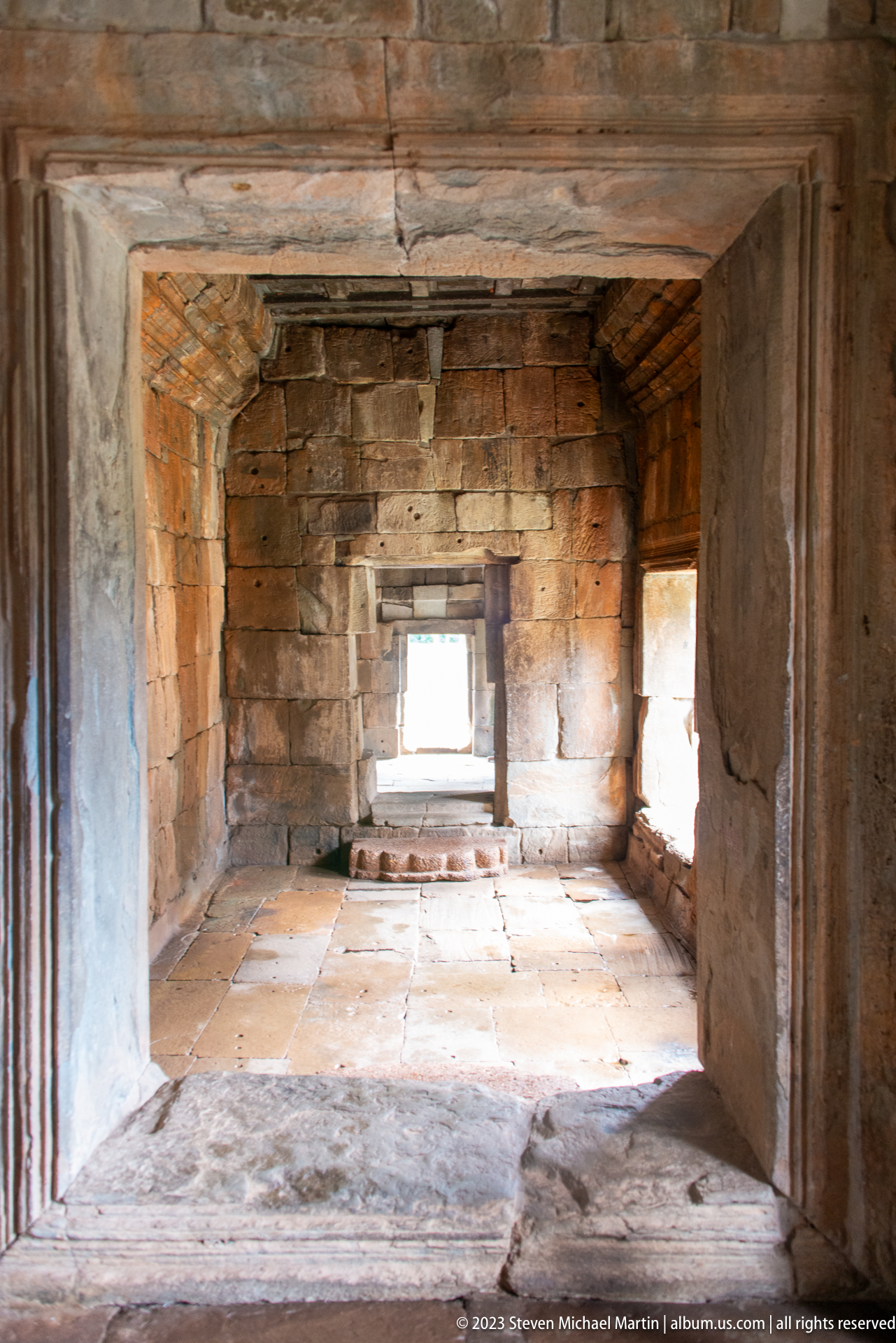
A roofed sandstone passage recedes through warm-toned masonry toward bright rectangular openings. The photograph records interior gallery passage at the baphuon as part of the surviving archaeological and cultural landscape of Angkor Thom.
Caption
A roofed sandstone passage recedes through warm-toned masonry toward bright rectangular openings. The photograph records interior gallery passage at the baphuon as part of the surviving archaeological and cultural landscape of Angkor Thom.

The pavilion and yellow-draped Buddha are shown from farther back on a low rectangular platform beside a forest path. The photograph records active buddhist shrine within angkor thom as part of the surviving archaeological and cultural landscape of Angkor Thom.
Caption
The pavilion and yellow-draped Buddha are shown from farther back on a low rectangular platform beside a forest path. The photograph records active buddhist shrine within angkor thom as part of the surviving archaeological and cultural landscape of Angkor Thom.
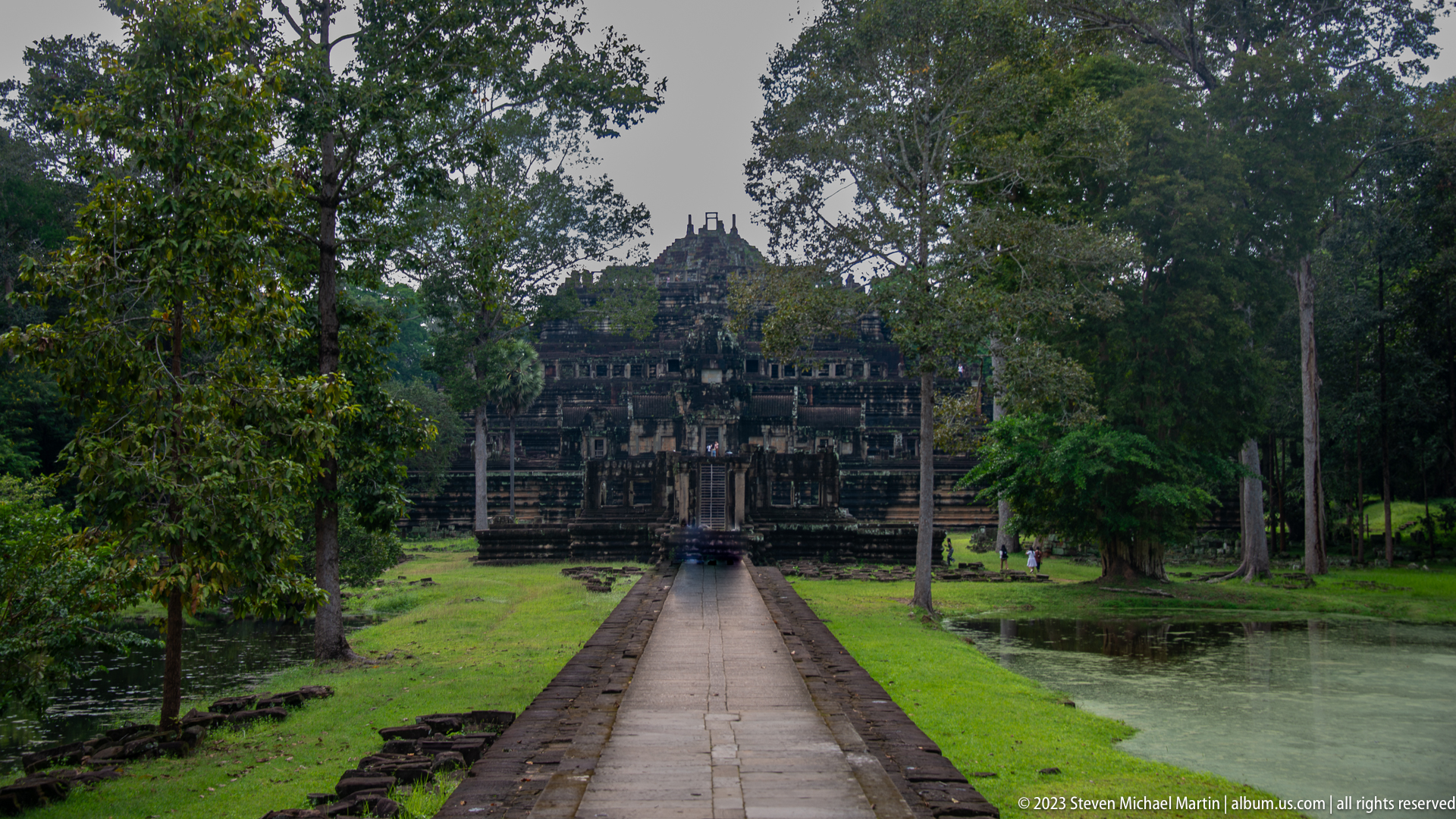
A paved axial approach crosses trimmed lawns toward a massive dark stepped temple framed by trees. The photograph records causeway leading toward the baphuon temple as part of the surviving archaeological and cultural landscape of Angkor Thom.
Caption
A paved axial approach crosses trimmed lawns toward a massive dark stepped temple framed by trees. The photograph records causeway leading toward the baphuon temple as part of the surviving archaeological and cultural landscape of Angkor Thom.
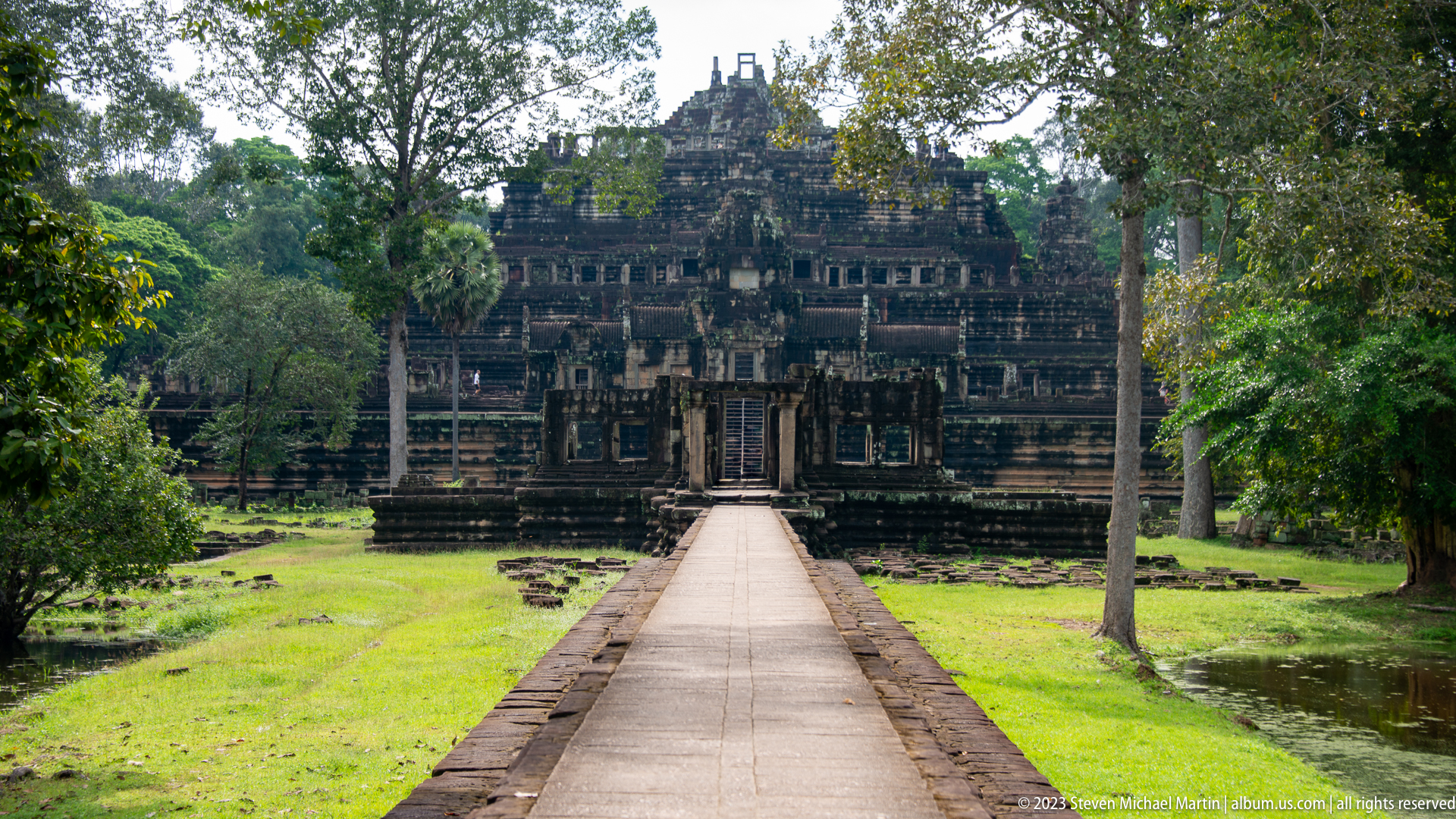
The straight causeway leads directly to the central stair and tiered stone façade of the Baphuon. The photograph records frontal approach to the baphuon temple as part of the surviving archaeological and cultural landscape of Angkor Thom.
Caption
The straight causeway leads directly to the central stair and tiered stone façade of the Baphuon. The photograph records frontal approach to the baphuon temple as part of the surviving archaeological and cultural landscape of Angkor Thom.

A long approach terminates at a steep central stair climbing the temple’s heavily weathered tiered façade. The photograph records central stair and entrance of the baphuon as part of the surviving archaeological and cultural landscape of Angkor Thom.
Caption
A long approach terminates at a steep central stair climbing the temple’s heavily weathered tiered façade. The photograph records central stair and entrance of the baphuon as part of the surviving archaeological and cultural landscape of Angkor Thom.
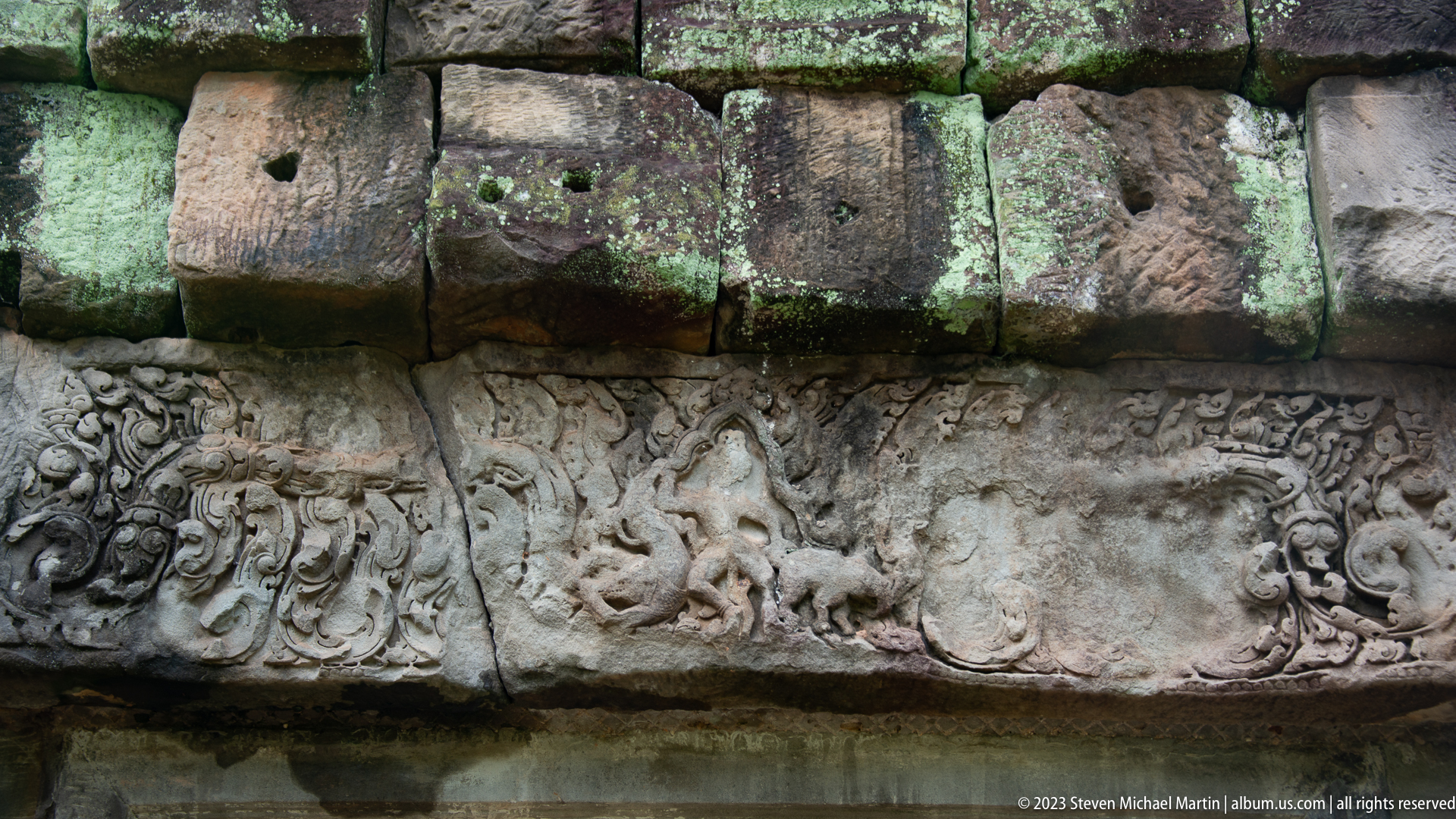
A low carved band shows small figures or animals among curling vegetation beneath large weathered stone blocks. The photograph records decorative bas-relief frieze at the baphuon as part of the surviving archaeological and cultural landscape of Angkor Thom.
Caption
A low carved band shows small figures or animals among curling vegetation beneath large weathered stone blocks. The photograph records decorative bas-relief frieze at the baphuon as part of the surviving archaeological and cultural landscape of Angkor Thom.

A long stone walkway borders a lawn scattered with masonry, with trees and low ruins surrounding the site. The photograph records raised causeway and archaeological remains at the baphuon as part of the surviving archaeological and cultural landscape of Angkor Thom.
Caption
A long stone walkway borders a lawn scattered with masonry, with trees and low ruins surrounding the site. The photograph records raised causeway and archaeological remains at the baphuon as part of the surviving archaeological and cultural landscape of Angkor Thom.

A compact, dark stone tower with eroded upper tiers rises against a canopy of mature trees. The photograph records ruined khmer sanctuary tower within angkor thom as part of the surviving archaeological and cultural landscape of Angkor Thom.
Caption
A compact, dark stone tower with eroded upper tiers rises against a canopy of mature trees. The photograph records ruined khmer sanctuary tower within angkor thom as part of the surviving archaeological and cultural landscape of Angkor Thom.
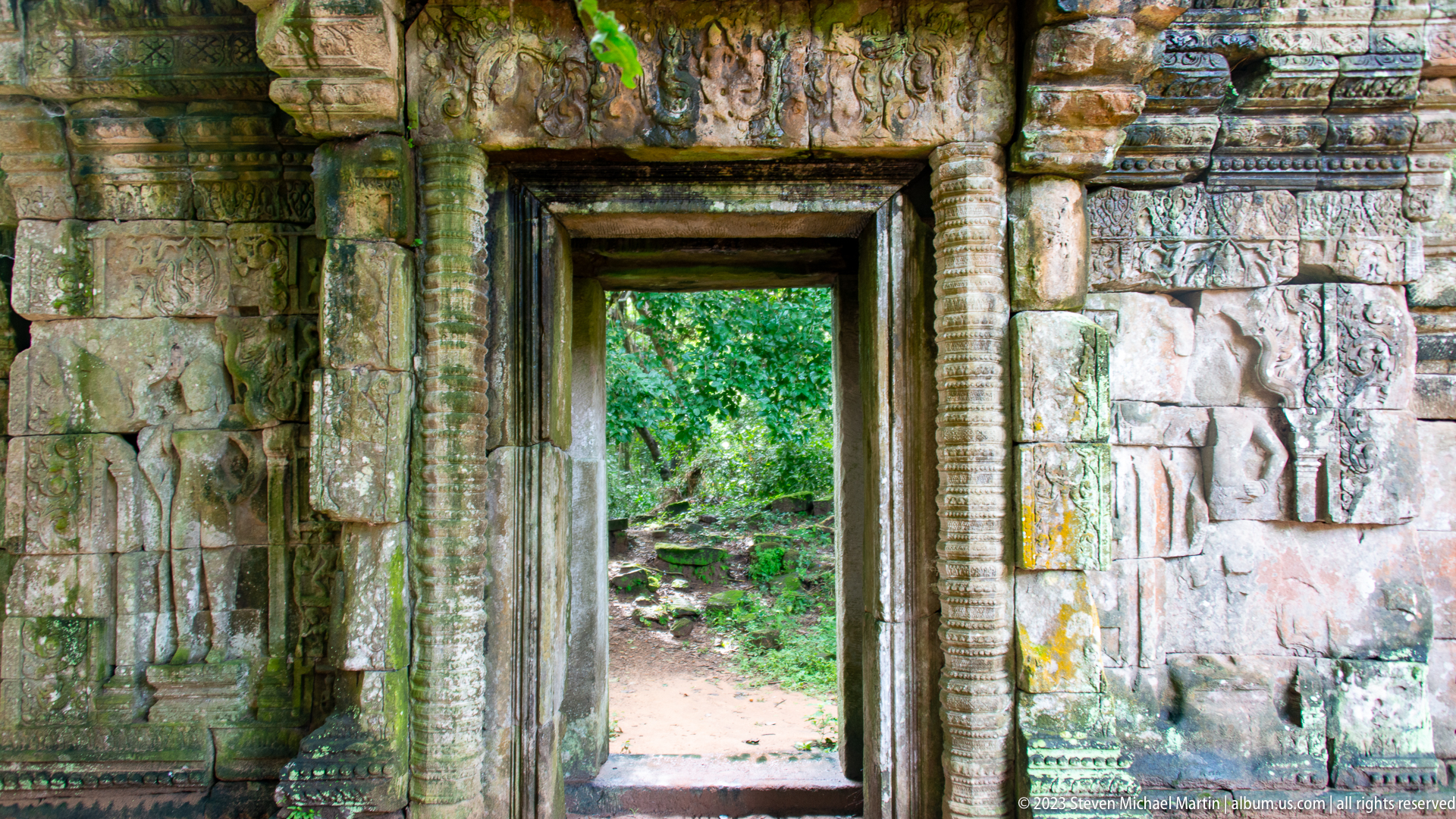
A rectangular doorway with carved jambs and lintel frames sunlit greenery beyond the dark interior. The photograph records decorated sandstone doorway within angkor thom as part of the surviving archaeological and cultural landscape of Angkor Thom.
Caption
A rectangular doorway with carved jambs and lintel frames sunlit greenery beyond the dark interior. The photograph records decorated sandstone doorway within angkor thom as part of the surviving archaeological and cultural landscape of Angkor Thom.

A narrow stair ascends through broad layered masonry to dark upper openings. The photograph records steep axial stair on a khmer temple within angkor thom as part of the surviving archaeological and cultural landscape of Angkor Thom.
Caption
A narrow stair ascends through broad layered masonry to dark upper openings. The photograph records steep axial stair on a khmer temple within angkor thom as part of the surviving archaeological and cultural landscape of Angkor Thom.
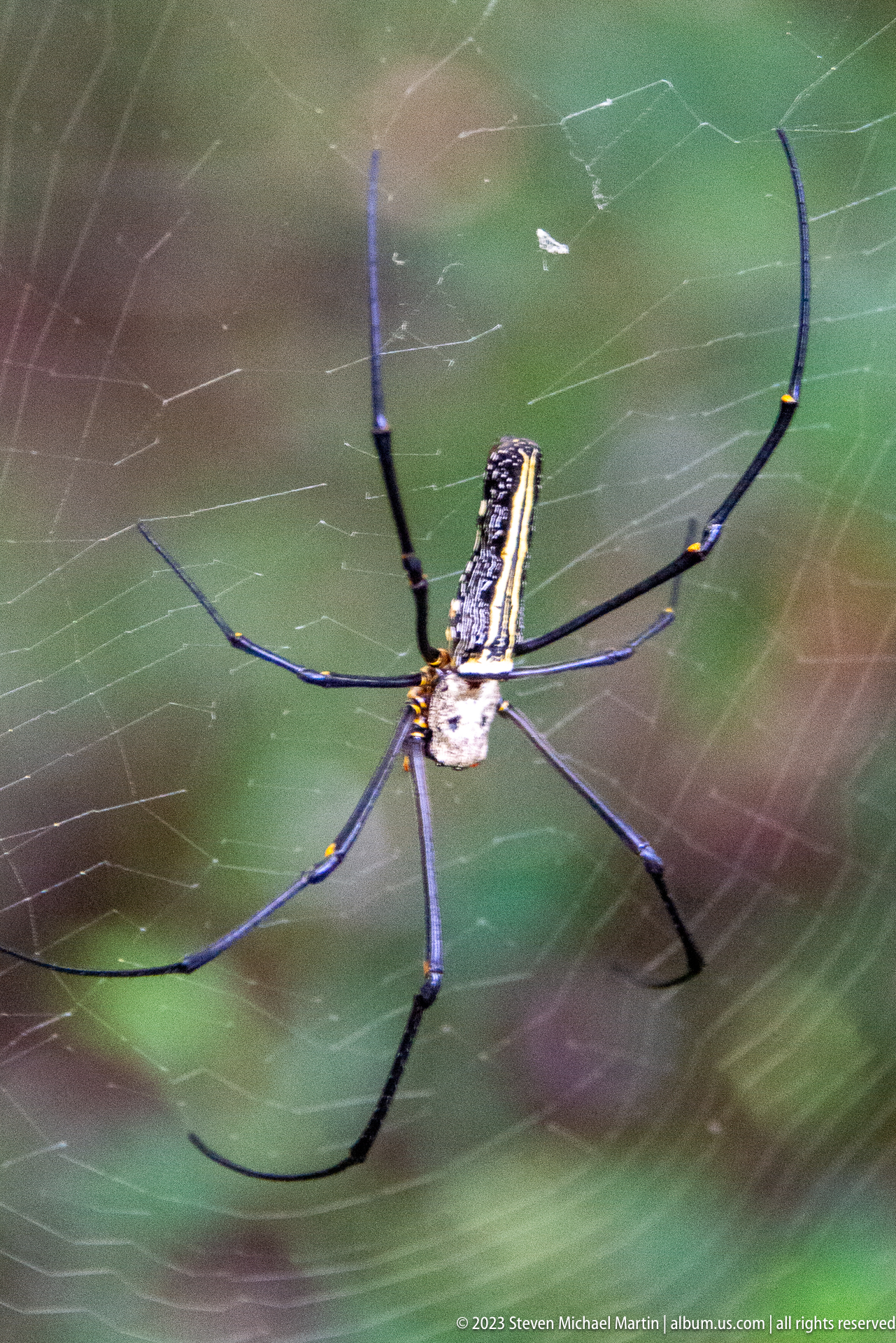
A patterned spider with very long dark legs hangs at the center of a fine web against a blurred green background. The photograph records large orb-weaver spider at angkor thom as part of the surviving archaeological and cultural landscape of Angkor Thom.
Caption
A patterned spider with very long dark legs hangs at the center of a fine web against a blurred green background. The photograph records large orb-weaver spider at angkor thom as part of the surviving archaeological and cultural landscape of Angkor Thom.
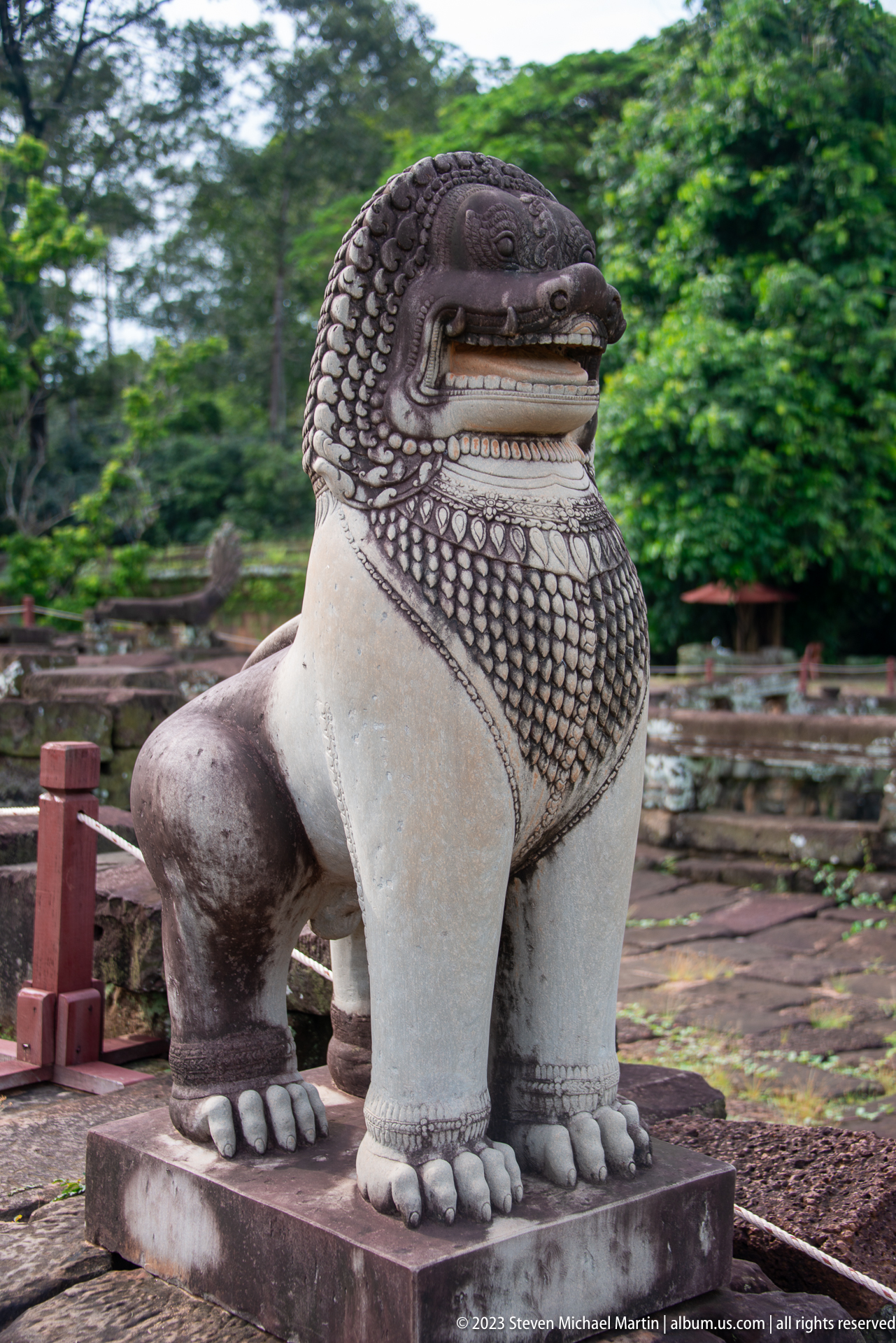
A pale guardian lion with a patterned chest ornament fills the frame above archaeological ruins. The photograph records guardian lion sculpture at angkor thom as part of the surviving archaeological and cultural landscape of Angkor Thom.
Caption
A pale guardian lion with a patterned chest ornament fills the frame above archaeological ruins. The photograph records guardian lion sculpture at angkor thom as part of the surviving archaeological and cultural landscape of Angkor Thom.

A massive horizontal wall of dark sandstone supports a lighter, partly ruined upper structure under a cloudy sky. The photograph records elevated terrace or gallery wall within angkor thom as part of the surviving archaeological and cultural landscape of Angkor Thom.
Caption
A massive horizontal wall of dark sandstone supports a lighter, partly ruined upper structure under a cloudy sky. The photograph records elevated terrace or gallery wall within angkor thom as part of the surviving archaeological and cultural landscape of Angkor Thom.
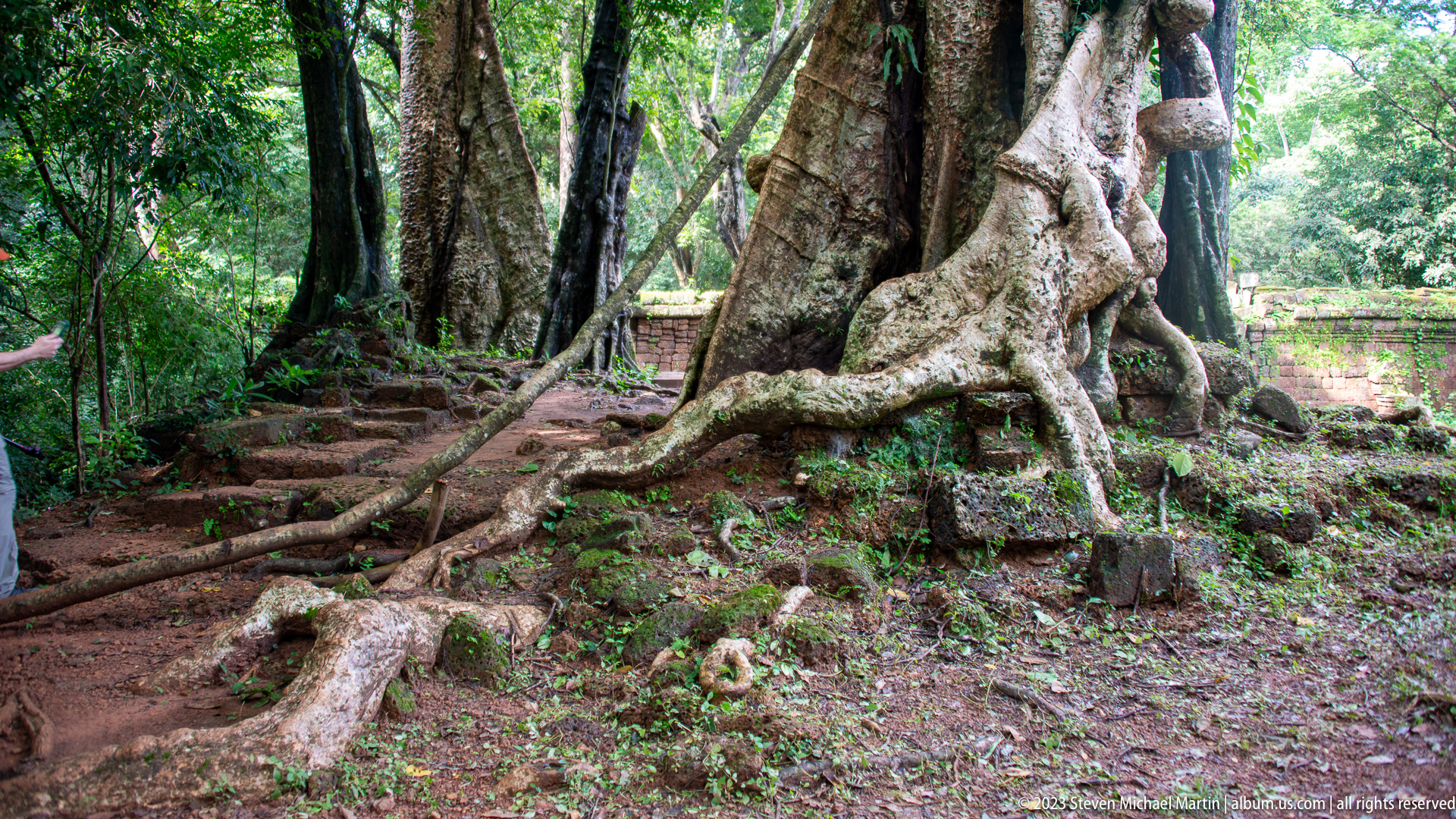
Broad buttress roots extend over soil and masonry in a shaded archaeological landscape. The photograph records mature tree growing among angkor thom ruins as part of the surviving archaeological and cultural landscape of Angkor Thom.
Caption
Broad buttress roots extend over soil and masonry in a shaded archaeological landscape. The photograph records mature tree growing among angkor thom ruins as part of the surviving archaeological and cultural landscape of Angkor Thom.
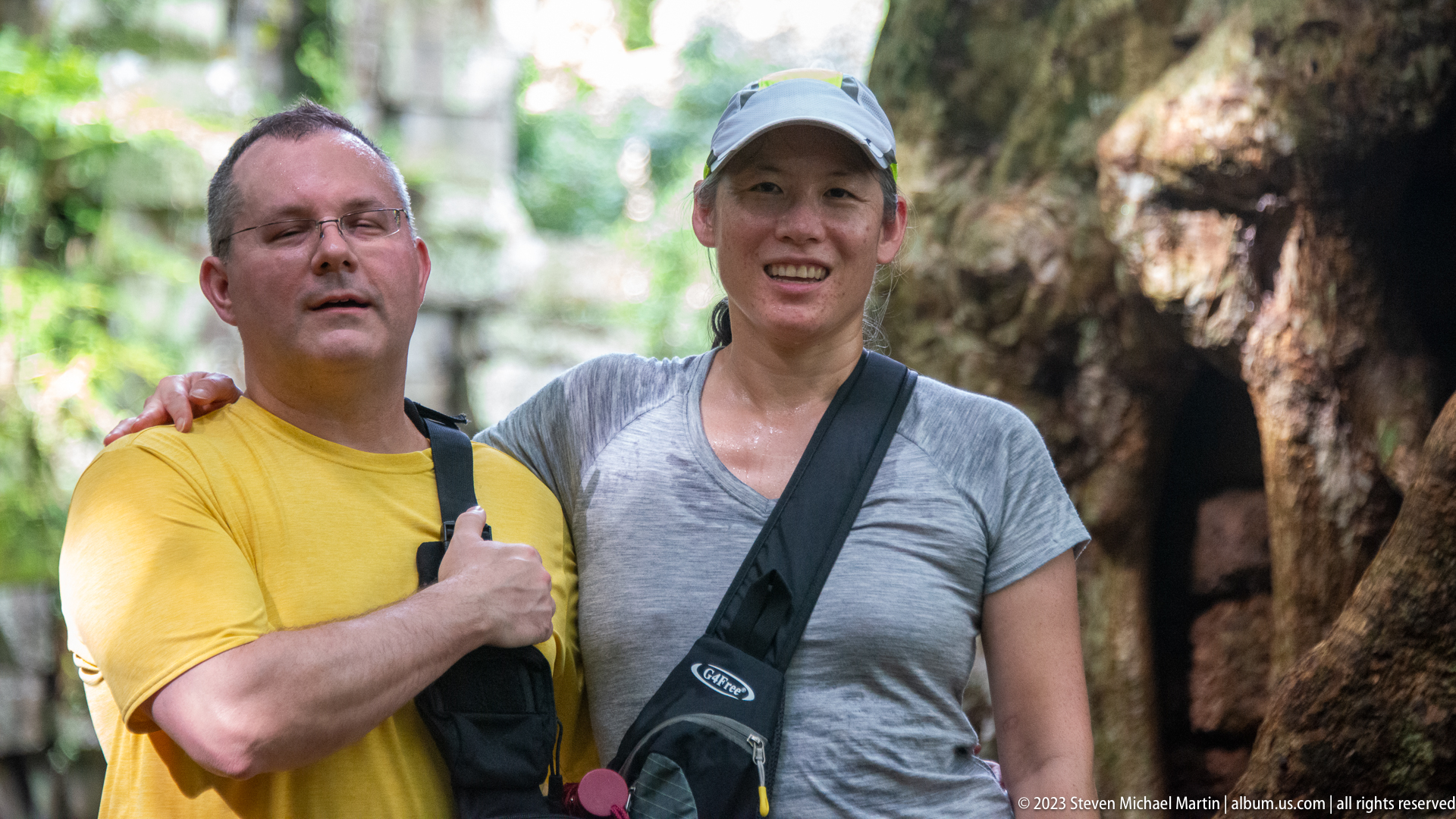
A man in yellow and a smiling woman in gray pose closely together with a massive tree trunk behind them. The photograph records two visitors at angkor thom as part of the surviving archaeological and cultural landscape of Angkor Thom.
Caption
A man in yellow and a smiling woman in gray pose closely together with a massive tree trunk behind them. The photograph records two visitors at angkor thom as part of the surviving archaeological and cultural landscape of Angkor Thom.
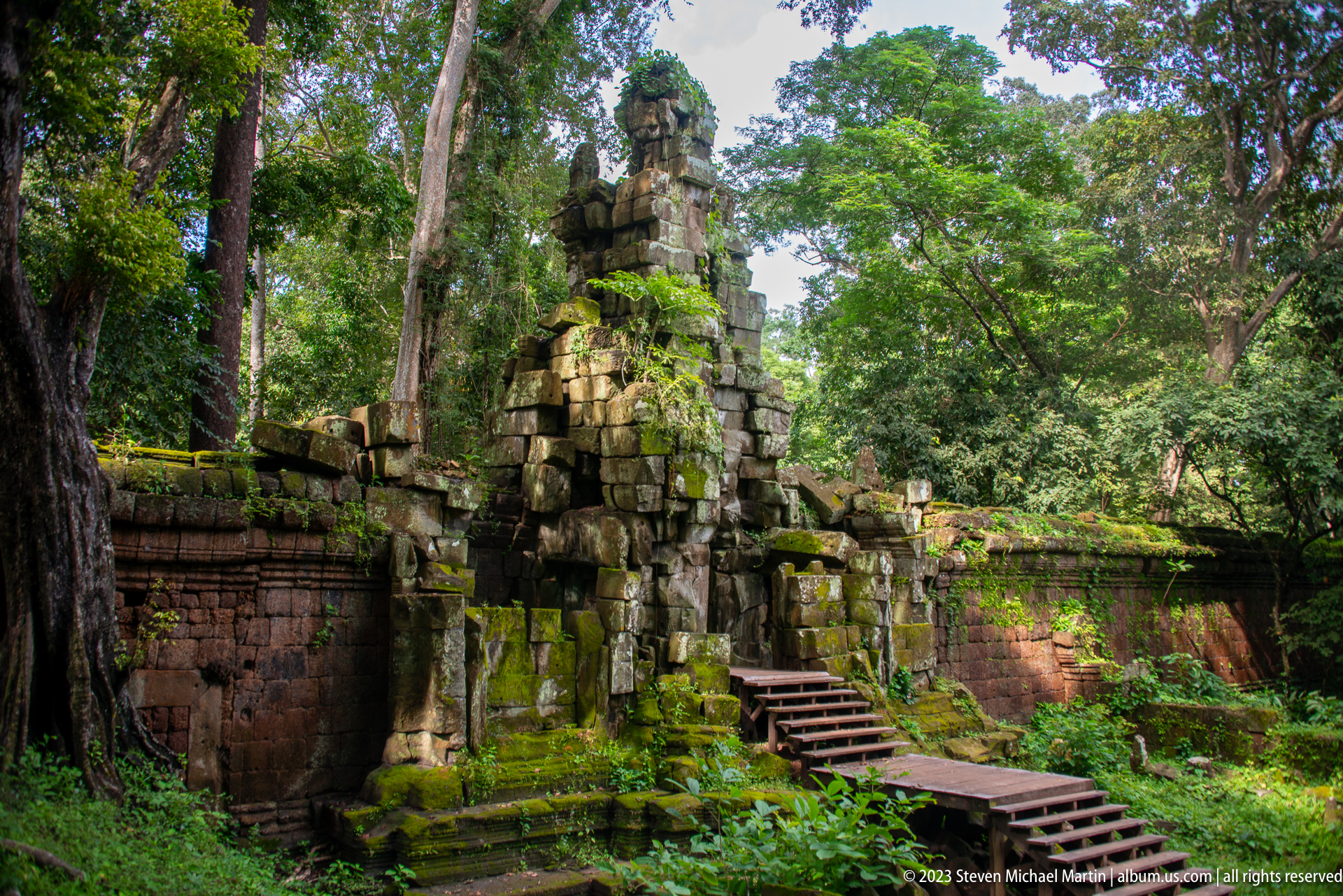
A narrow, weathered entrance rises among dense trees, low brickwork, and scattered stone blocks. The photograph records forest temple gateway within angkor thom as part of the surviving archaeological and cultural landscape of Angkor Thom.
Caption
A narrow, weathered entrance rises among dense trees, low brickwork, and scattered stone blocks. The photograph records forest temple gateway within angkor thom as part of the surviving archaeological and cultural landscape of Angkor Thom.
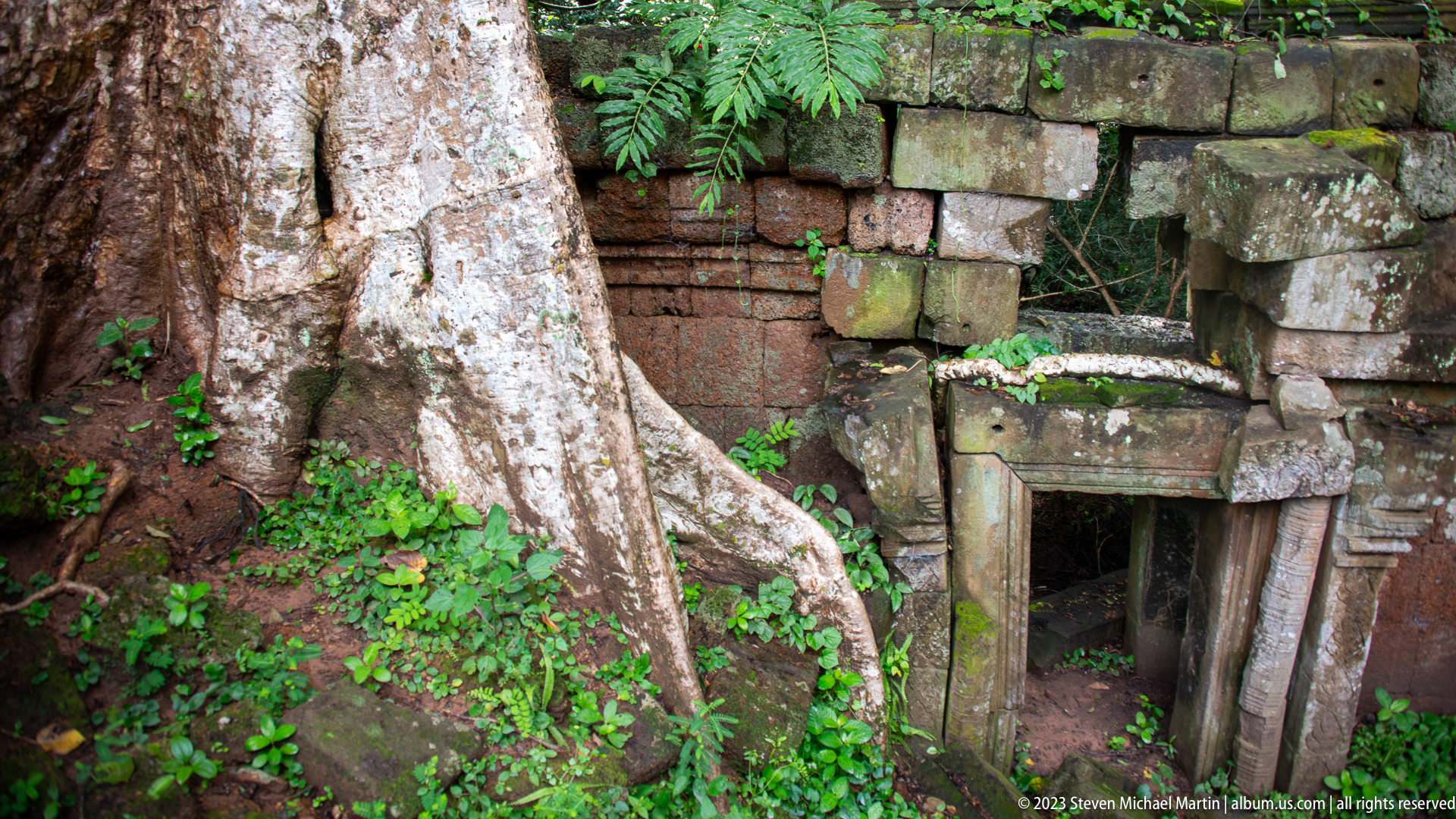
A pale tree trunk and roots crowd a small rectangular opening in a mossy brick wall. The photograph records tree growing into a brick and sandstone structure as part of the surviving archaeological and cultural landscape of Angkor Thom.
Caption
A pale tree trunk and roots crowd a small rectangular opening in a mossy brick wall. The photograph records tree growing into a brick and sandstone structure as part of the surviving archaeological and cultural landscape of Angkor Thom.
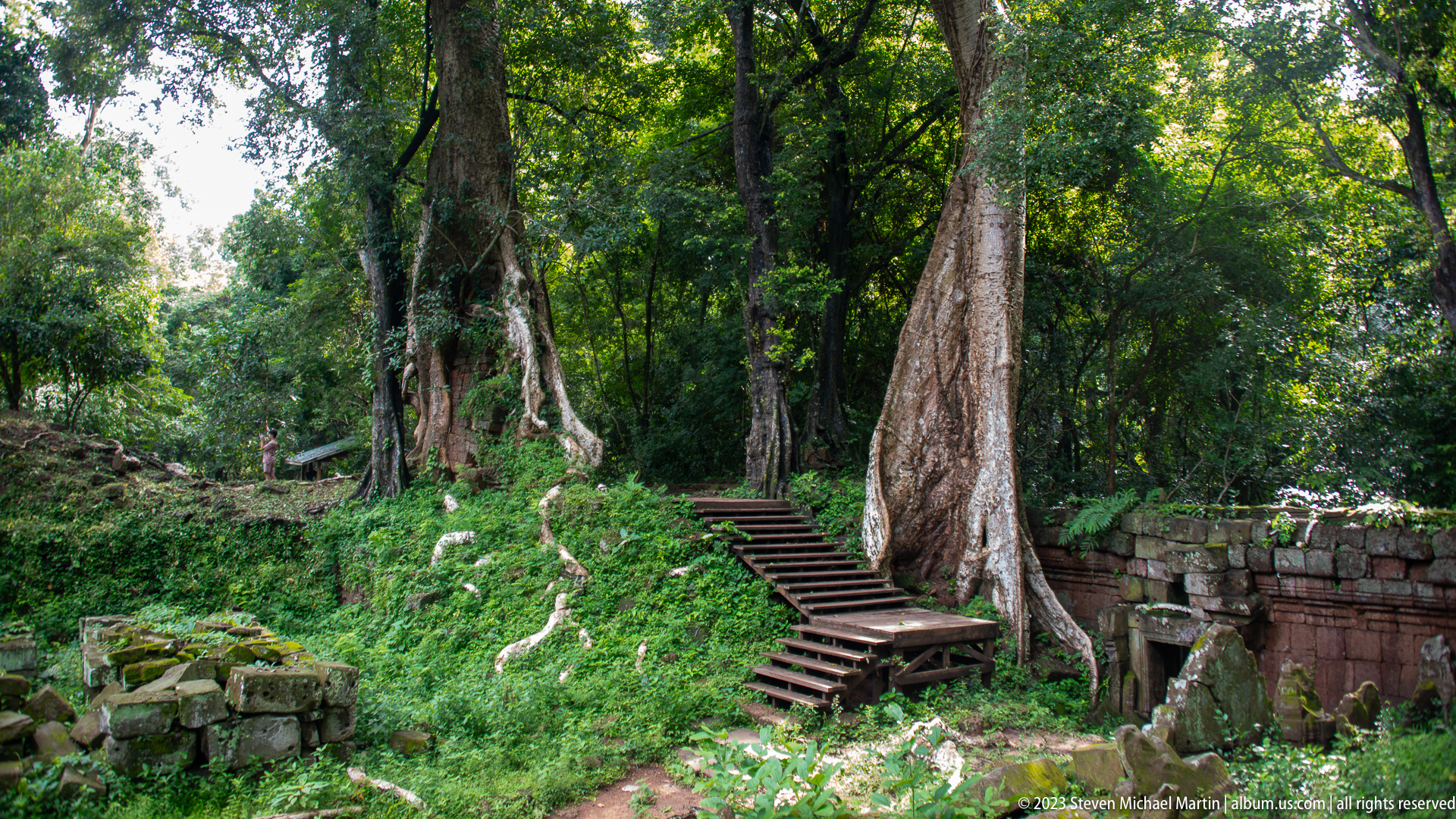
A simple wooden stair rises through low masonry between two tall tree trunks in a shaded grove. The photograph records visitor stair through tree-covered ruins as part of the surviving archaeological and cultural landscape of Angkor Thom.
Caption
A simple wooden stair rises through low masonry between two tall tree trunks in a shaded grove. The photograph records visitor stair through tree-covered ruins as part of the surviving archaeological and cultural landscape of Angkor Thom.

A low rectangular brick monument rises in weathered courses around a steep central stair. The photograph records ruined brick terrace within angkor thom as part of the surviving archaeological and cultural landscape of Angkor Thom.
Caption
A low rectangular brick monument rises in weathered courses around a steep central stair. The photograph records ruined brick terrace within angkor thom as part of the surviving archaeological and cultural landscape of Angkor Thom.
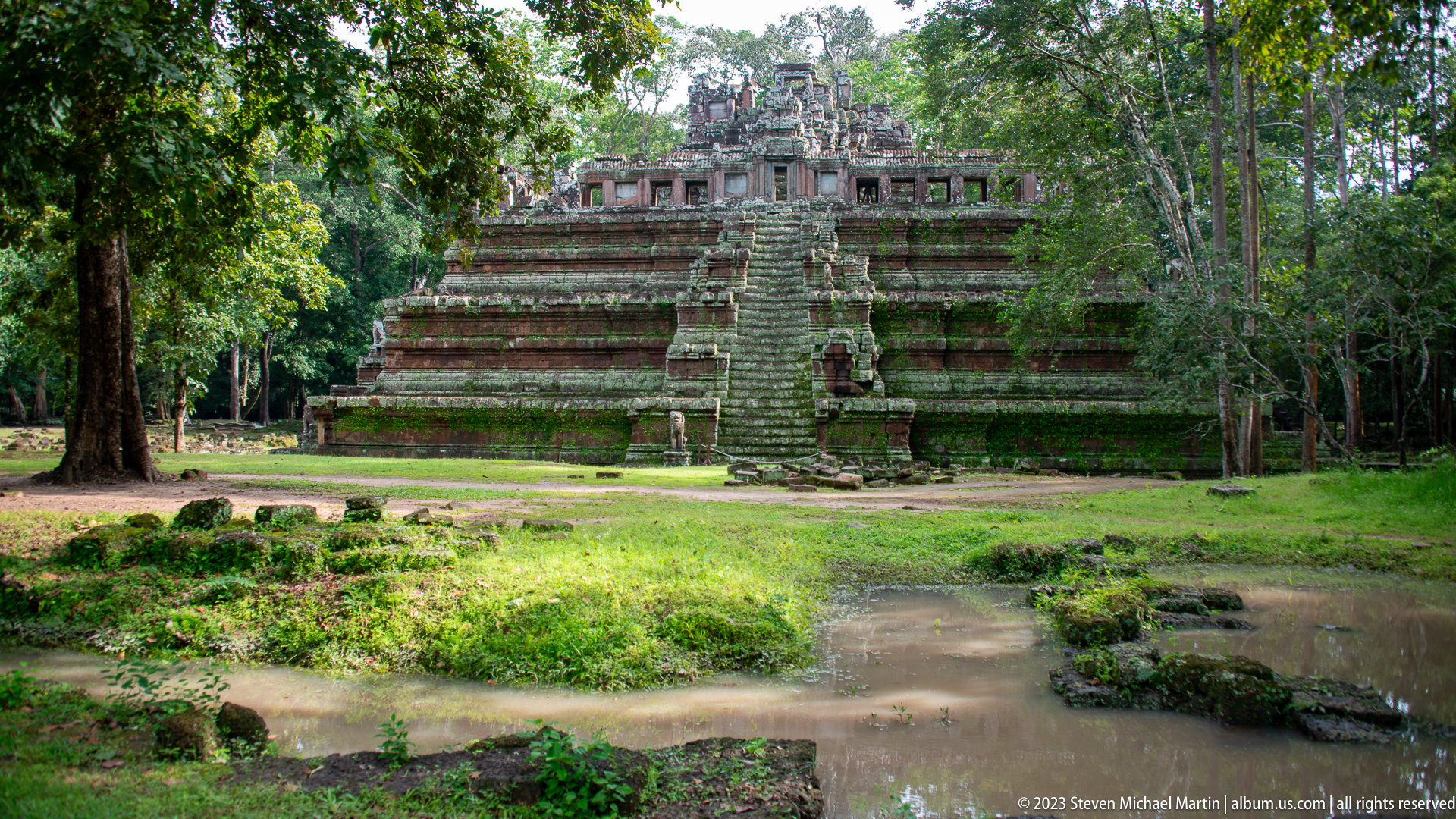
A broad lawn fronts the long, layered sandstone base and upper sanctuary of Phimeanakas. The photograph records phimeanakas temple as part of the surviving archaeological and cultural landscape of Angkor Thom.
Caption
A broad lawn fronts the long, layered sandstone base and upper sanctuary of Phimeanakas. The photograph records phimeanakas temple as part of the surviving archaeological and cultural landscape of Angkor Thom.
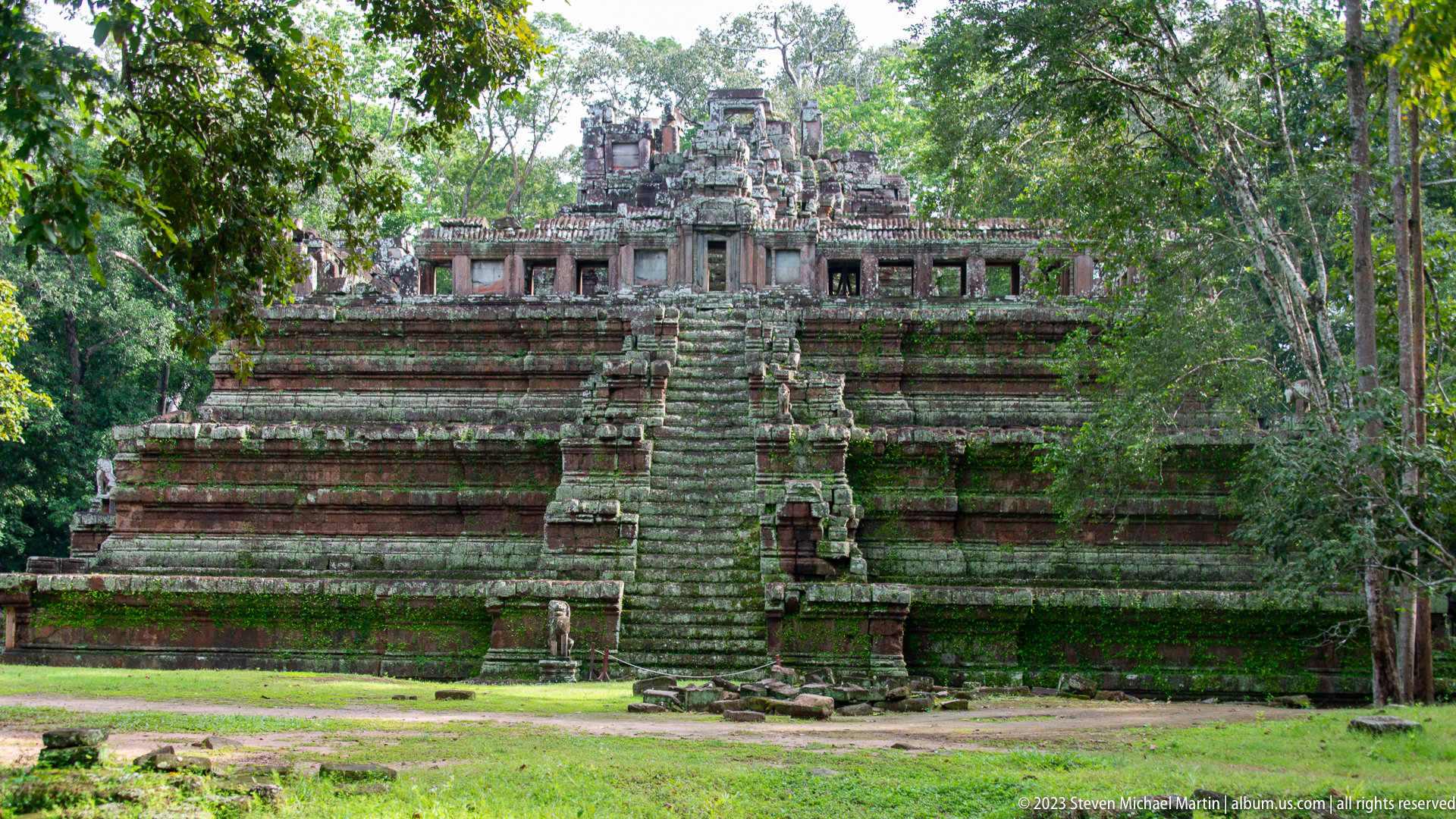
A steep narrow staircase climbs the center of the temple’s horizontally layered, moss-streaked façade. The photograph records central stair of phimeanakas as part of the surviving archaeological and cultural landscape of Angkor Thom.
Caption
A steep narrow staircase climbs the center of the temple’s horizontally layered, moss-streaked façade. The photograph records central stair of phimeanakas as part of the surviving archaeological and cultural landscape of Angkor Thom.
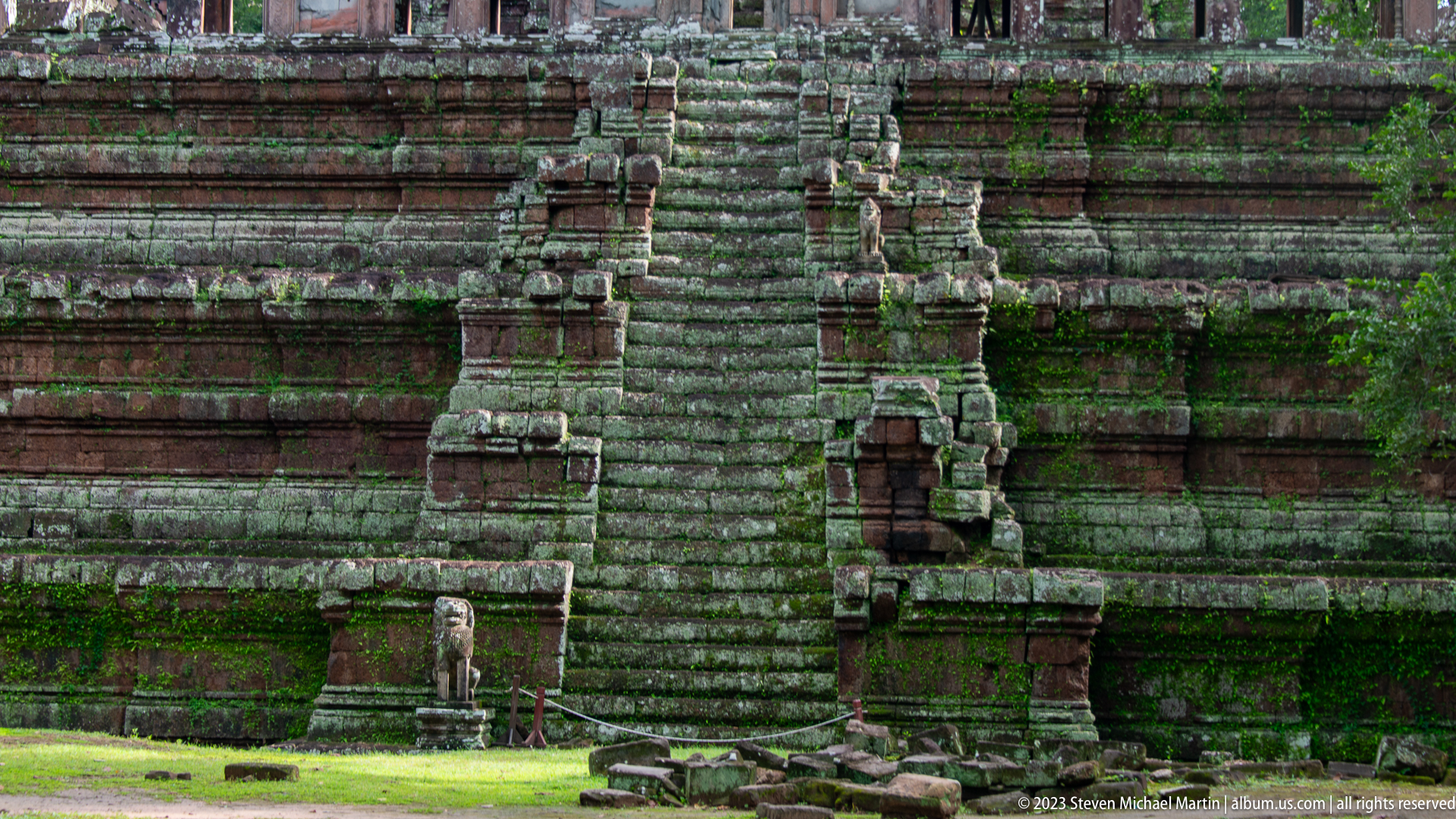
The worn central steps rise sharply between projecting masonry and small guardian figures. The photograph records axial ascent of phimeanakas as part of the surviving archaeological and cultural landscape of Angkor Thom.
Caption
The worn central steps rise sharply between projecting masonry and small guardian figures. The photograph records axial ascent of phimeanakas as part of the surviving archaeological and cultural landscape of Angkor Thom.
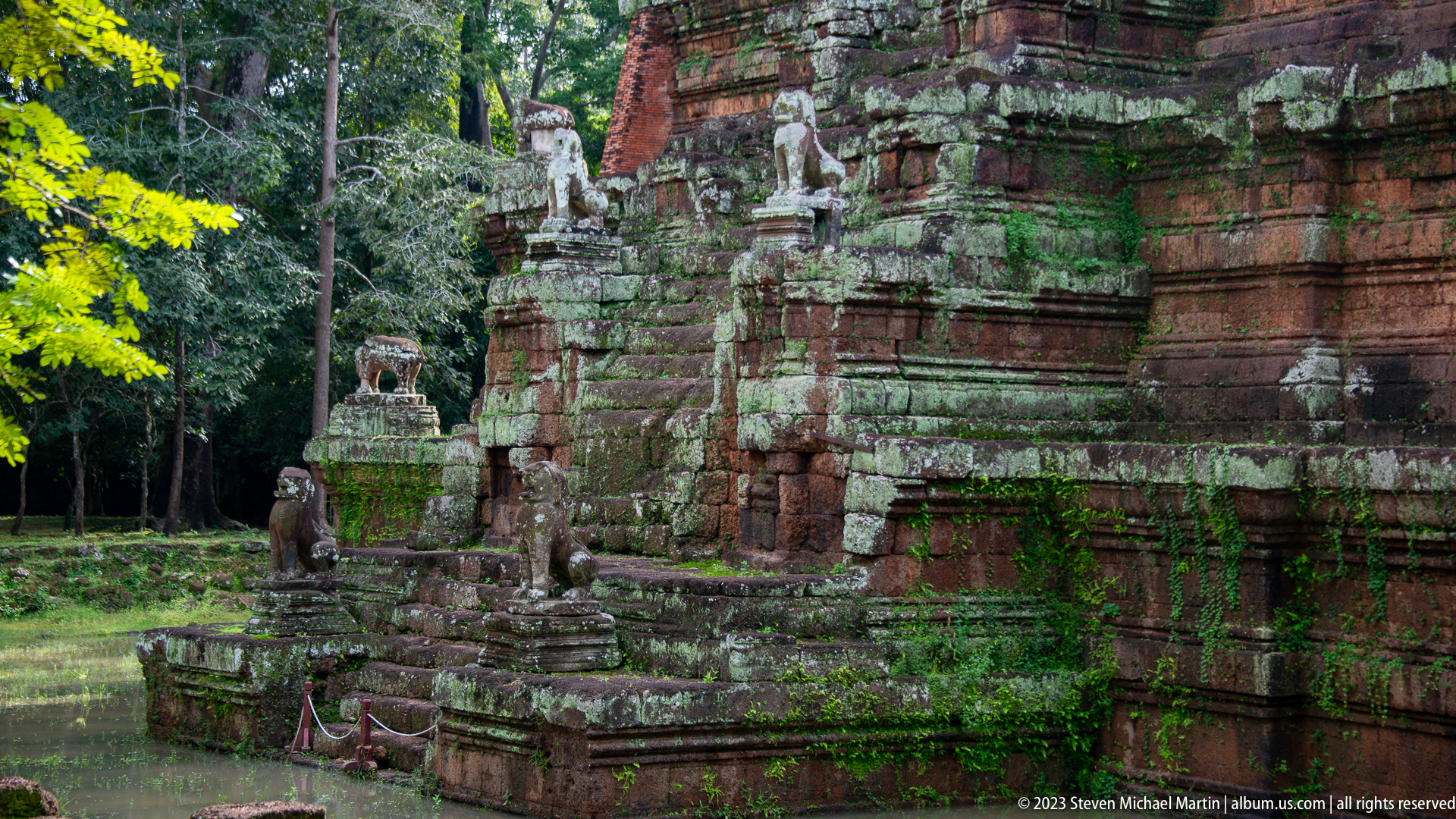
A steep stair climbs between weathered guardian sculptures and layered stone courses covered with moss. The photograph records side stair and guardians at phimeanakas as part of the surviving archaeological and cultural landscape of Angkor Thom.
Caption
A steep stair climbs between weathered guardian sculptures and layered stone courses covered with moss. The photograph records side stair and guardians at phimeanakas as part of the surviving archaeological and cultural landscape of Angkor Thom.
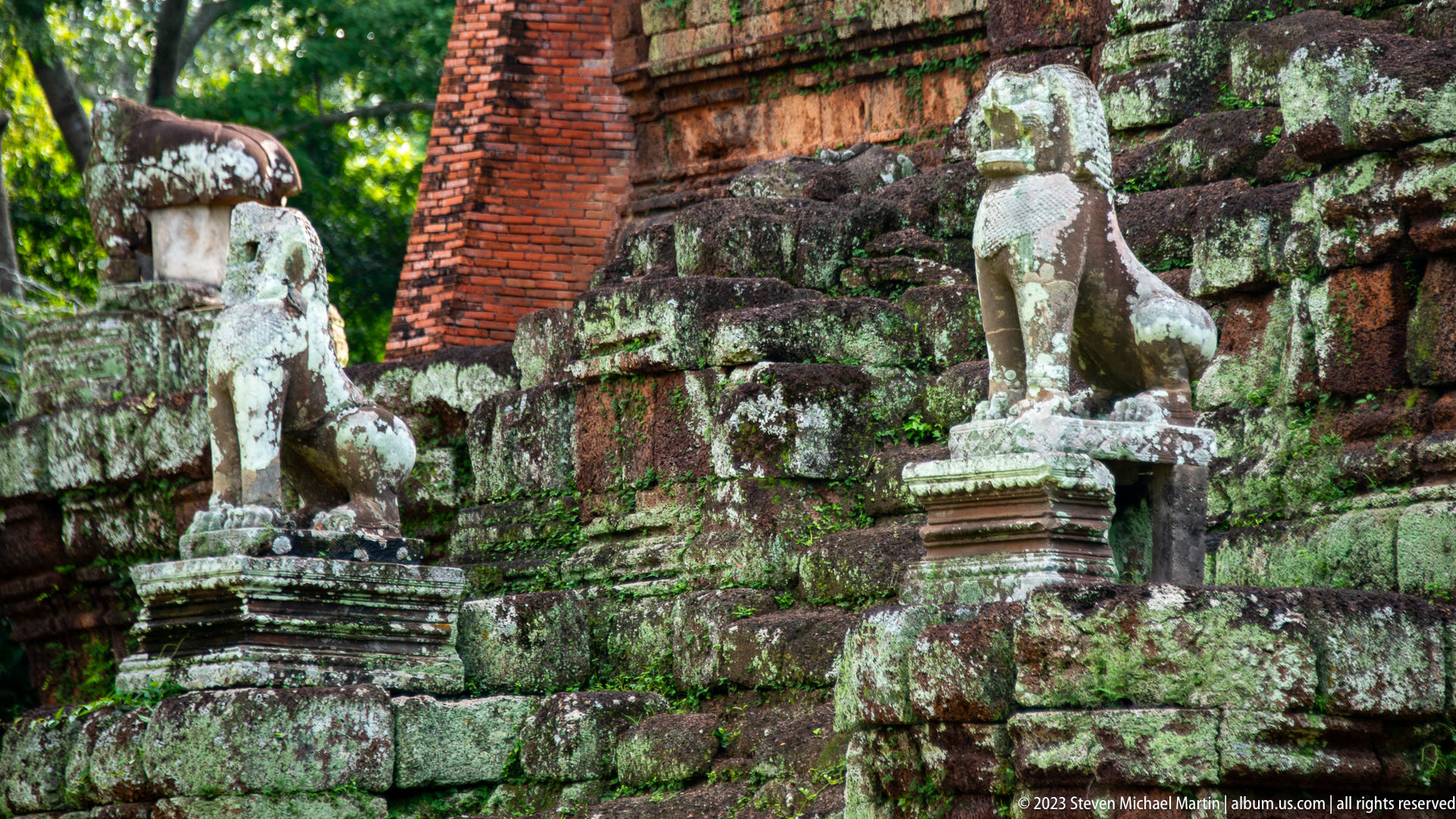
Two pale, eroded lion figures stand on pedestals before mossy brick and sandstone courses. The photograph records guardian lions at phimeanakas as part of the surviving archaeological and cultural landscape of Angkor Thom.
Caption
Two pale, eroded lion figures stand on pedestals before mossy brick and sandstone courses. The photograph records guardian lions at phimeanakas as part of the surviving archaeological and cultural landscape of Angkor Thom.
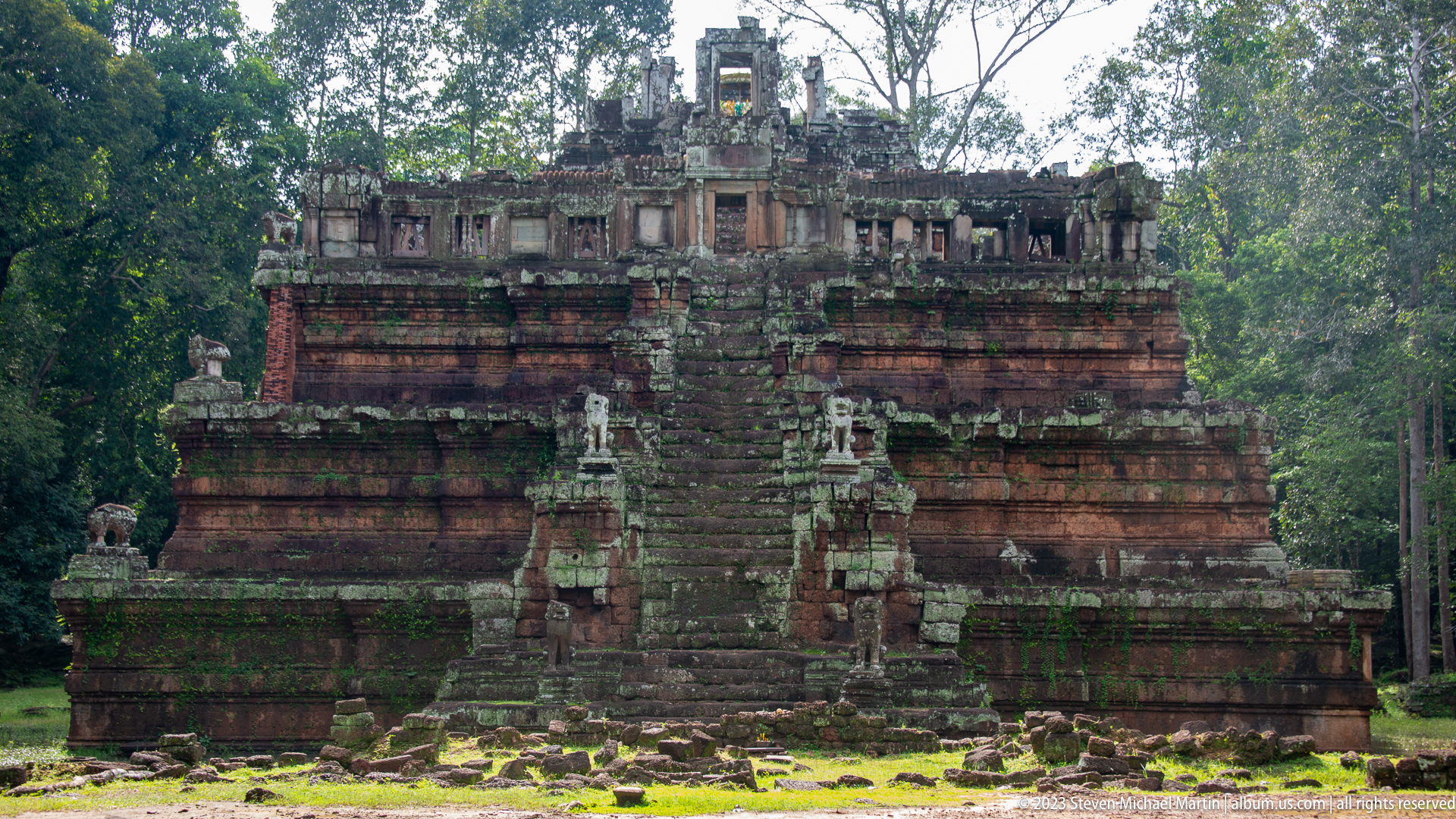
A narrow central stair cuts through a long, low wall of alternating brick and sandstone courses. The photograph records stepped terrace within angkor thom as part of the surviving archaeological and cultural landscape of Angkor Thom.
Caption
A narrow central stair cuts through a long, low wall of alternating brick and sandstone courses. The photograph records stepped terrace within angkor thom as part of the surviving archaeological and cultural landscape of Angkor Thom.
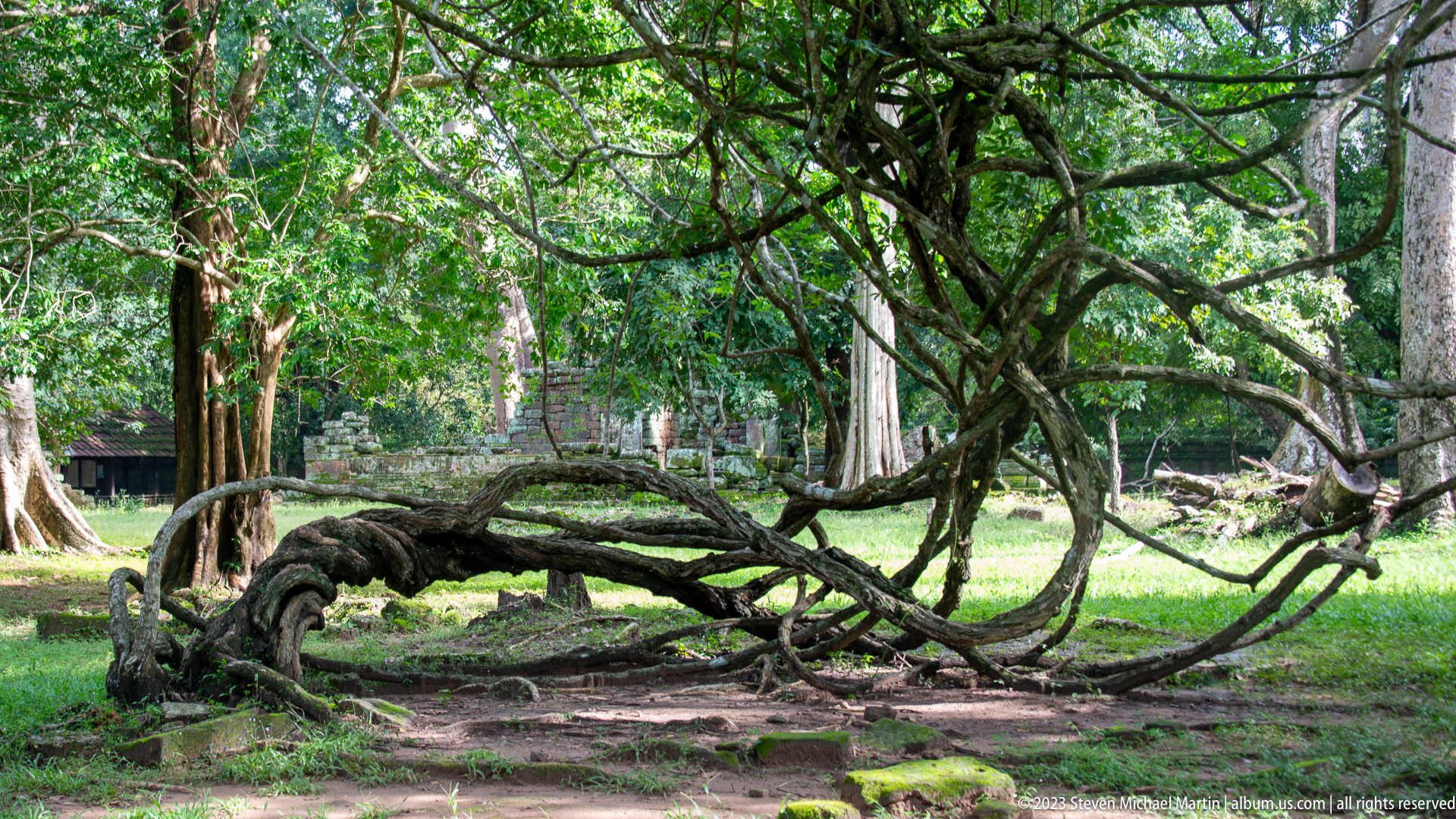
A massive low branch sweeps across the ground beneath a dense forest canopy, with masonry visible beyond. The photograph records mature tree and fallen limb among angkor thom ruins as part of the surviving archaeological and cultural landscape of Angkor Thom.
Caption
A massive low branch sweeps across the ground beneath a dense forest canopy, with masonry visible beyond. The photograph records mature tree and fallen limb among angkor thom ruins as part of the surviving archaeological and cultural landscape of Angkor Thom.
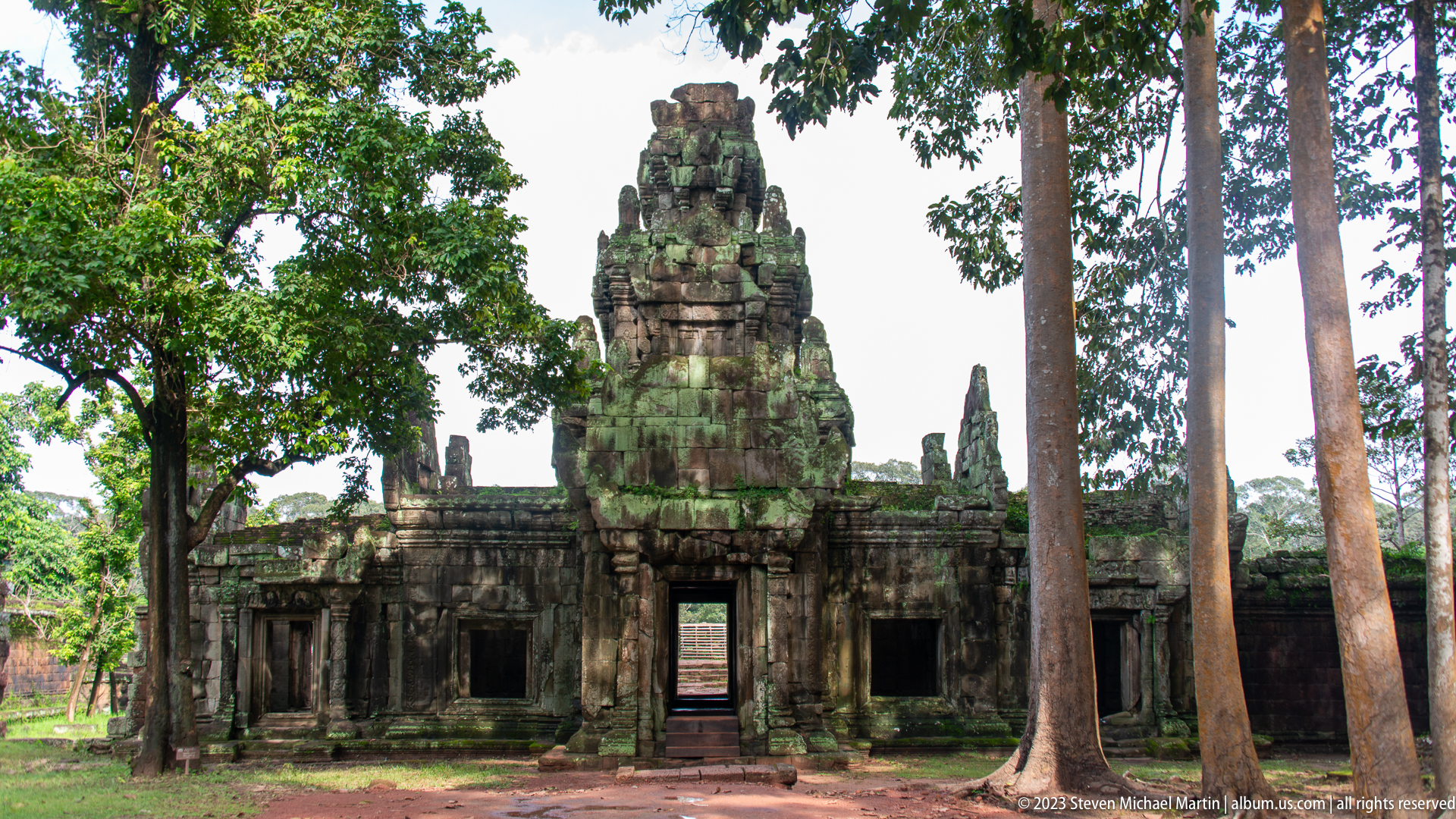
A central towered gateway and flanking low galleries stand in a forest clearing, partly obscured by trees. The photograph records khmer temple gateway within angkor thom as part of the surviving archaeological and cultural landscape of Angkor Thom.
Caption
A central towered gateway and flanking low galleries stand in a forest clearing, partly obscured by trees. The photograph records khmer temple gateway within angkor thom as part of the surviving archaeological and cultural landscape of Angkor Thom.
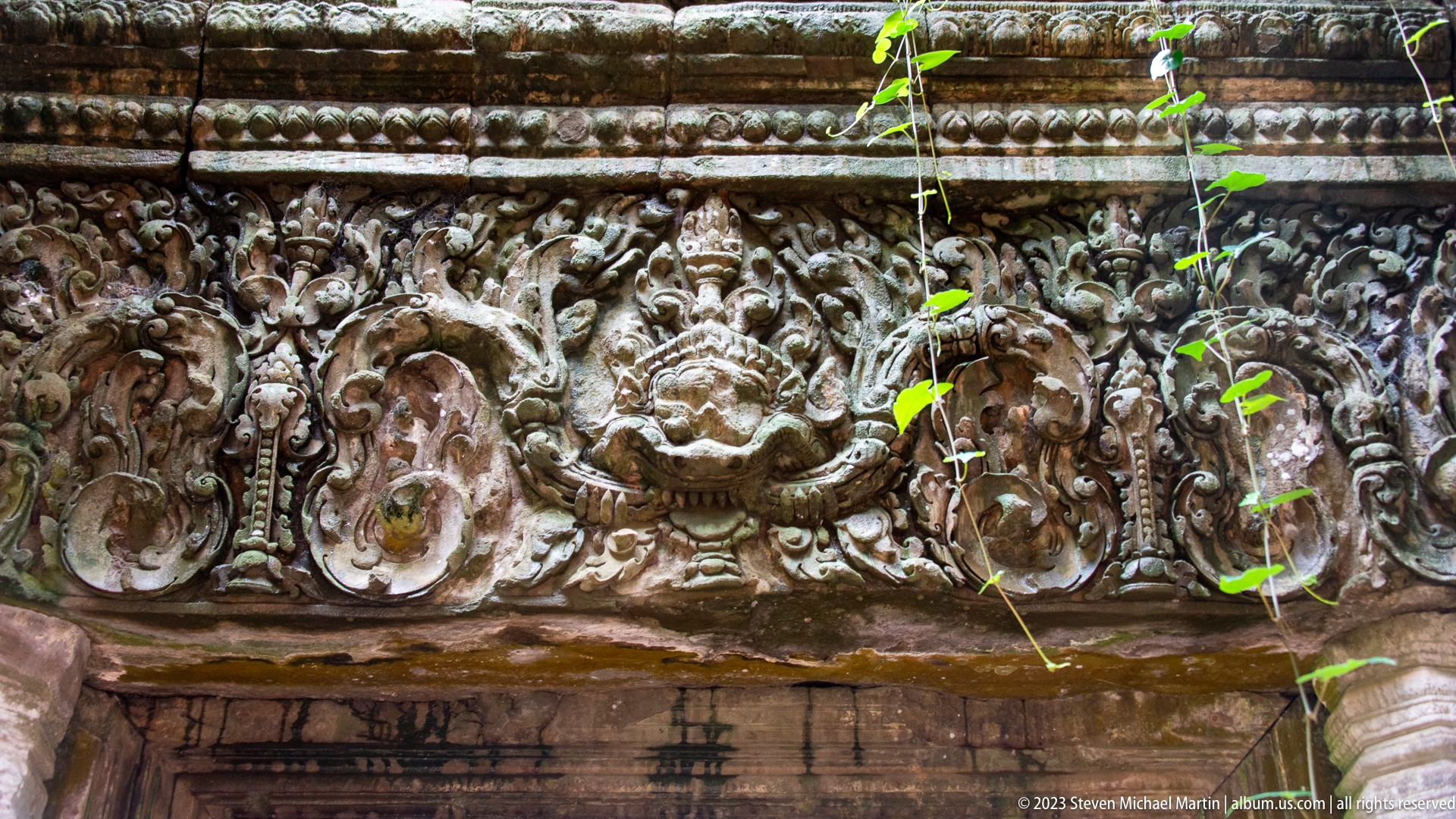
A carved lintel contains dense vegetal scrolls, rounded medallions, and a central mask-like face beneath a molded band. The photograph records decorative khmer lintel at angkor thom as part of the surviving archaeological and cultural landscape of Angkor Thom.
Caption
A carved lintel contains dense vegetal scrolls, rounded medallions, and a central mask-like face beneath a molded band. The photograph records decorative khmer lintel at angkor thom as part of the surviving archaeological and cultural landscape of Angkor Thom.

A deeply carved face with round eyes, broad nose, and open mouth emerges amid curling vegetal ornament. The photograph records kala or guardian face in khmer stone carving as part of the surviving archaeological and cultural landscape of Angkor Thom.
Caption
A deeply carved face with round eyes, broad nose, and open mouth emerges amid curling vegetal ornament. The photograph records kala or guardian face in khmer stone carving as part of the surviving archaeological and cultural landscape of Angkor Thom.
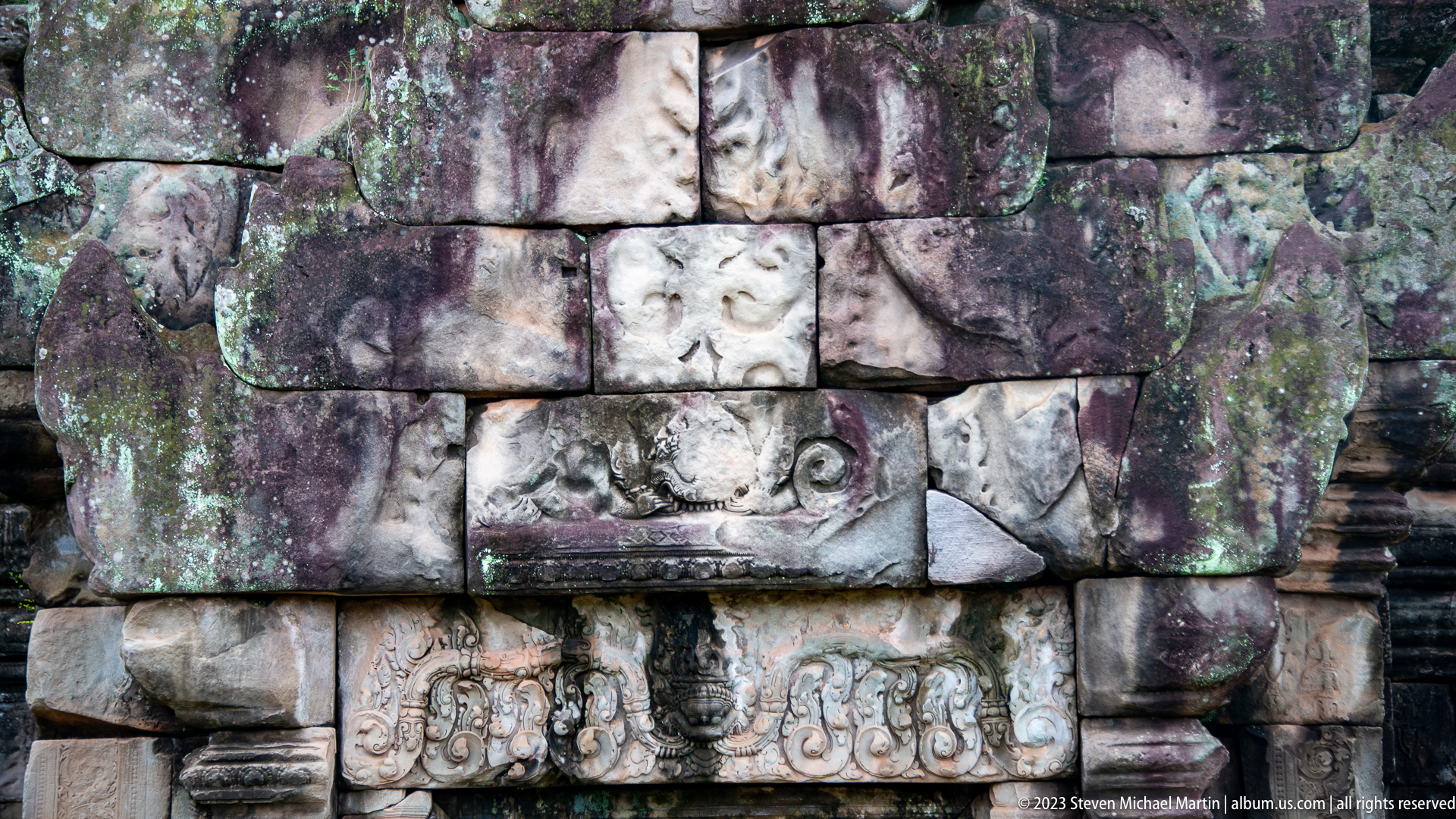
A projecting elephant head is carved into weathered masonry above a lower band of repeating ornamental forms. The photograph records elephant relief at angkor thom as part of the surviving archaeological and cultural landscape of Angkor Thom.
Caption
A projecting elephant head is carved into weathered masonry above a lower band of repeating ornamental forms. The photograph records elephant relief at angkor thom as part of the surviving archaeological and cultural landscape of Angkor Thom.
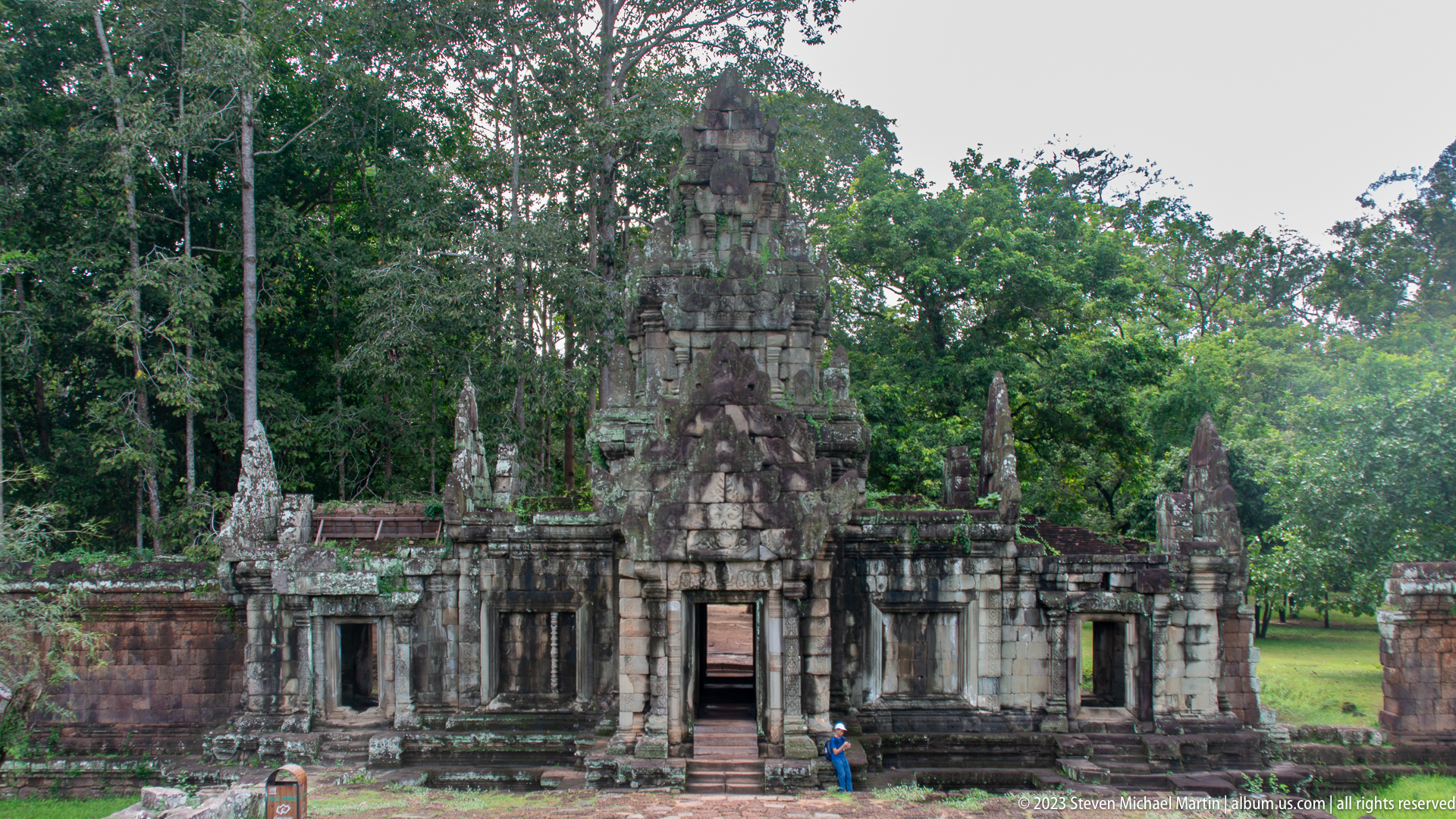
The towered doorway and flanking galleries are shown from farther back across an open court. The photograph records khmer temple entrance within angkor thom as part of the surviving archaeological and cultural landscape of Angkor Thom.
Caption
The towered doorway and flanking galleries are shown from farther back across an open court. The photograph records khmer temple entrance within angkor thom as part of the surviving archaeological and cultural landscape of Angkor Thom.

Four visitors in blue, yellow, gray, and black stand shoulder to shoulder before a weathered Khmer gateway. The photograph records visitors at angkor thom as part of the surviving archaeological and cultural landscape of Angkor Thom.
Caption
Four visitors in blue, yellow, gray, and black stand shoulder to shoulder before a weathered Khmer gateway. The photograph records visitors at angkor thom as part of the surviving archaeological and cultural landscape of Angkor Thom.
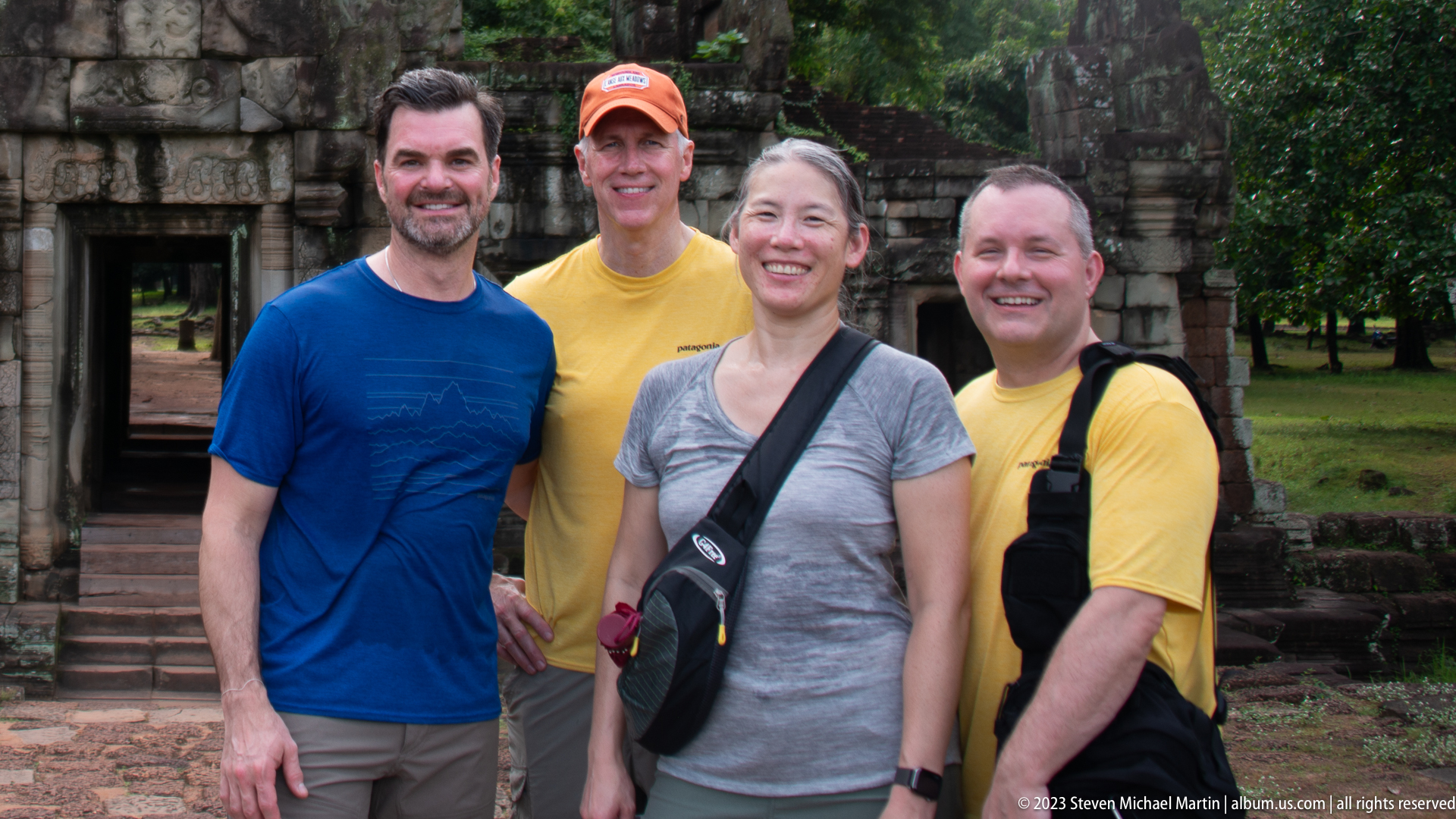
Four visitors pose closely together with a blurred stone temple façade behind them. The photograph records visitors at angkor thom as part of the surviving archaeological and cultural landscape of Angkor Thom.
Caption
Four visitors pose closely together with a blurred stone temple façade behind them. The photograph records visitors at angkor thom as part of the surviving archaeological and cultural landscape of Angkor Thom.
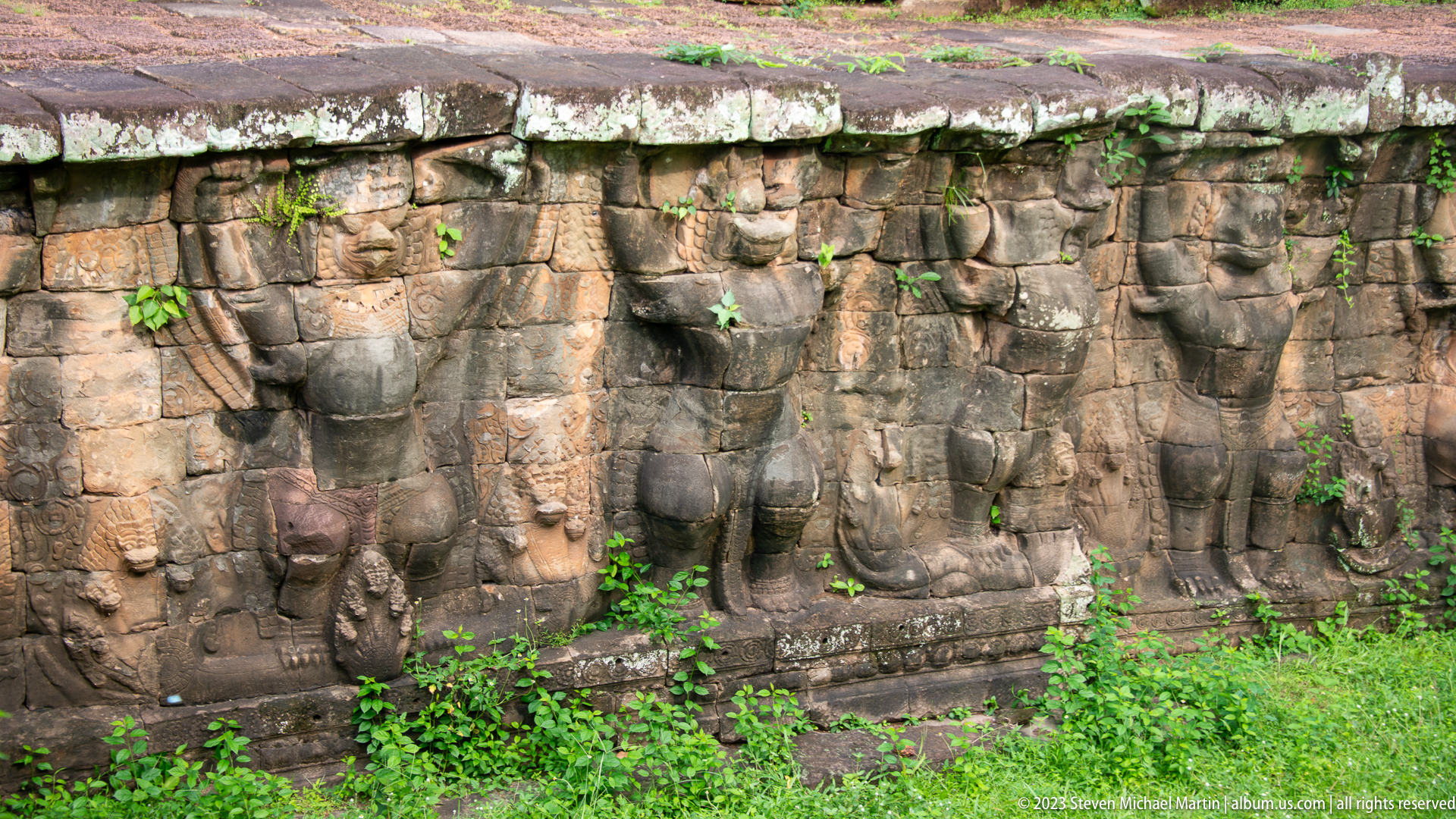
A row of monumental elephant forms projects from a weathered terrace wall above green grass. The photograph records elephant terrace relief at angkor thom as part of the surviving archaeological and cultural landscape of Angkor Thom.
Caption
A row of monumental elephant forms projects from a weathered terrace wall above green grass. The photograph records elephant terrace relief at angkor thom as part of the surviving archaeological and cultural landscape of Angkor Thom.
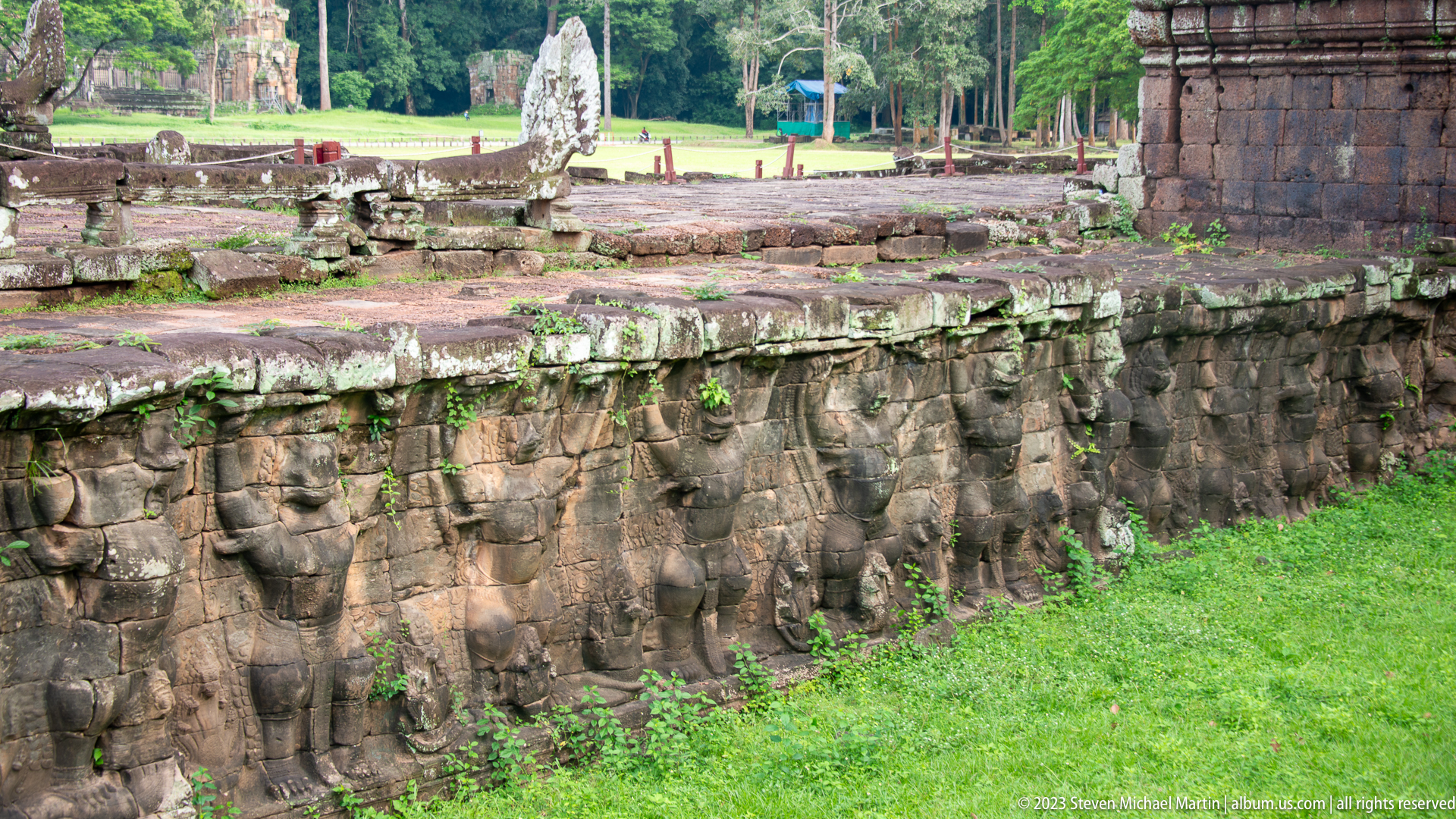
Multiple carved elephants repeat along the long stone terrace, creating a processional sculptural rhythm. The photograph records terrace of the elephants at angkor thom as part of the surviving archaeological and cultural landscape of Angkor Thom.
Caption
Multiple carved elephants repeat along the long stone terrace, creating a processional sculptural rhythm. The photograph records terrace of the elephants at angkor thom as part of the surviving archaeological and cultural landscape of Angkor Thom.

A smiling man stands beside a large eroded stone guardian with temple ruins behind. The photograph records visitor beside a guardian sculpture at angkor thom as part of the surviving archaeological and cultural landscape of Angkor Thom.
Caption
A smiling man stands beside a large eroded stone guardian with temple ruins behind. The photograph records visitor beside a guardian sculpture at angkor thom as part of the surviving archaeological and cultural landscape of Angkor Thom.
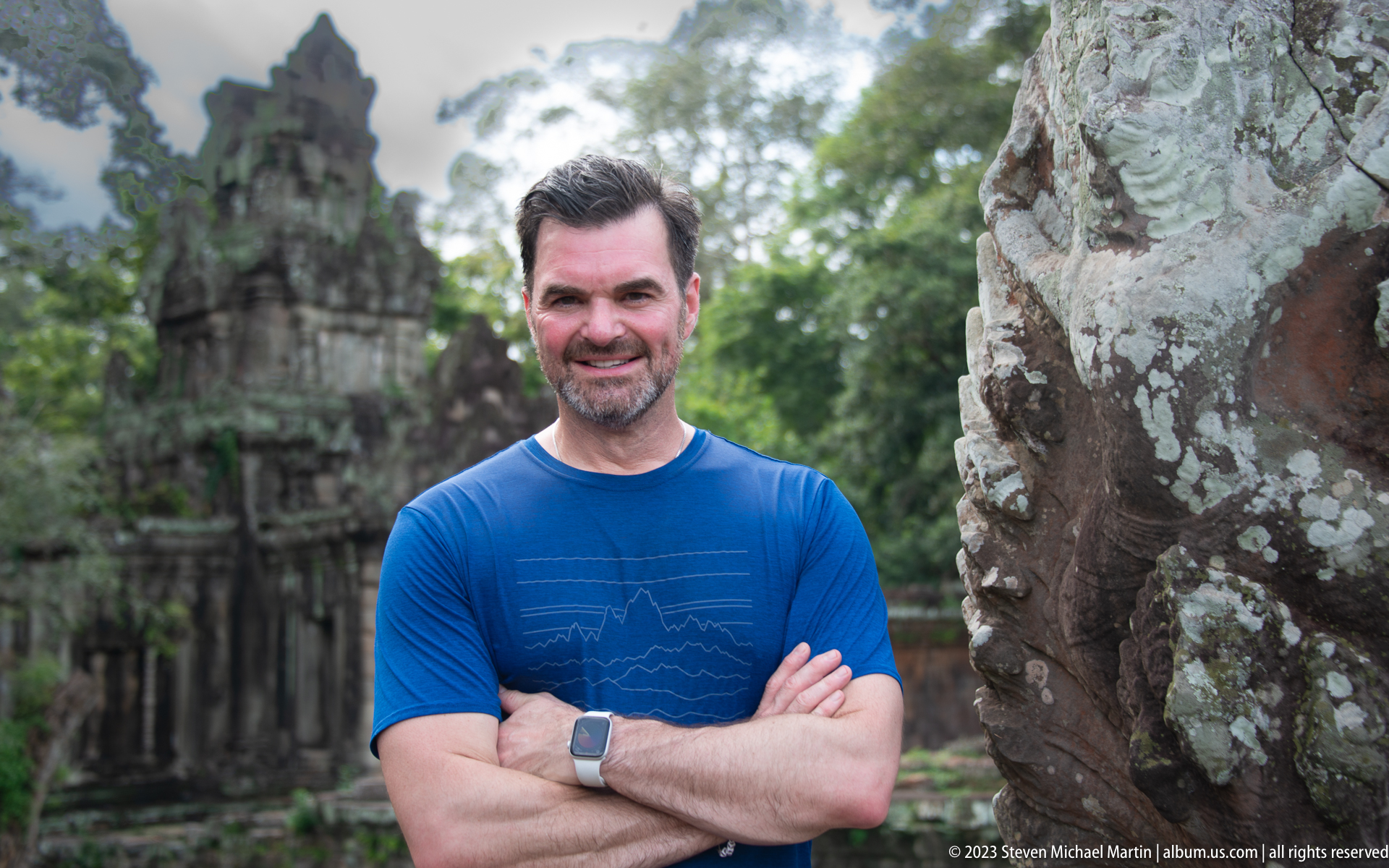
A man in a blue shirt poses with arms crossed beside the weathered stone figure. The photograph records visitor at angkor thom as part of the surviving archaeological and cultural landscape of Angkor Thom.
Caption
A man in a blue shirt poses with arms crossed beside the weathered stone figure. The photograph records visitor at angkor thom as part of the surviving archaeological and cultural landscape of Angkor Thom.
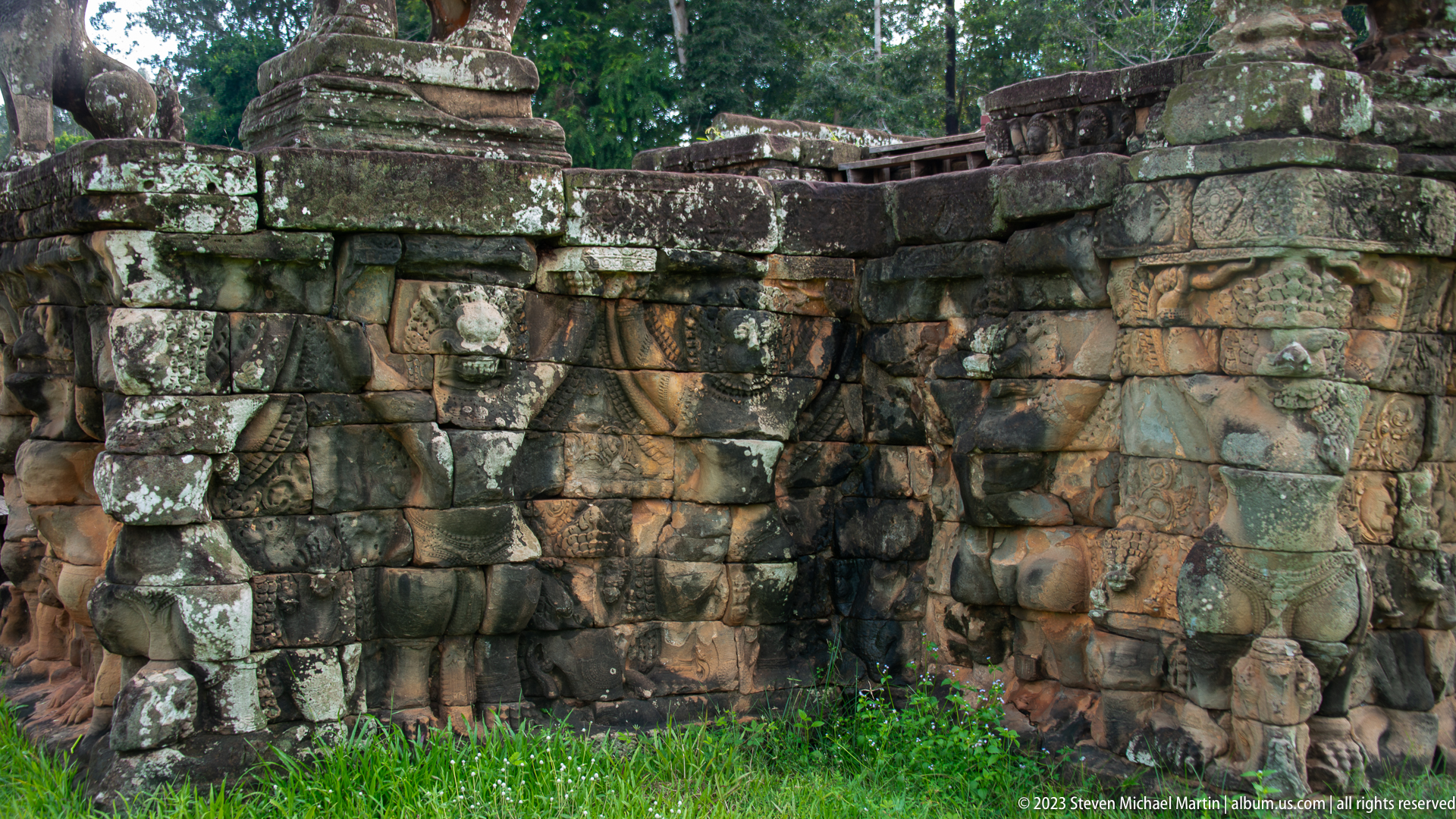
Elephant heads and trunks emerge from a long sandstone wall darkened by age and vegetation. The photograph records terrace of the elephants at angkor thom as part of the surviving archaeological and cultural landscape of Angkor Thom.
Caption
Elephant heads and trunks emerge from a long sandstone wall darkened by age and vegetation. The photograph records terrace of the elephants at angkor thom as part of the surviving archaeological and cultural landscape of Angkor Thom.
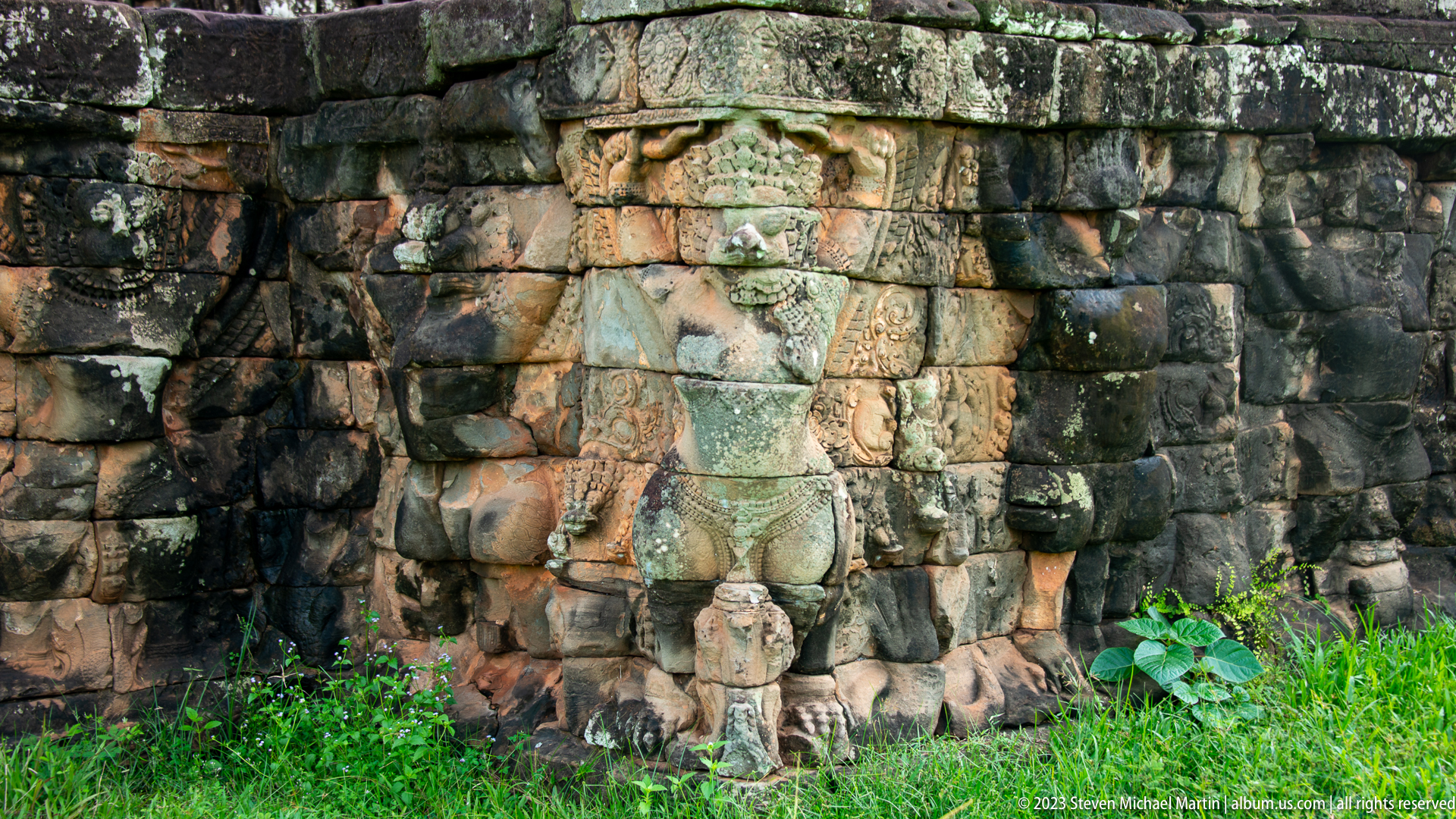
A carved elephant occupies the corner of the terrace wall, its legs and trunk integrated into the masonry. The photograph records terrace of the elephants corner relief as part of the surviving archaeological and cultural landscape of Angkor Thom.
Caption
A carved elephant occupies the corner of the terrace wall, its legs and trunk integrated into the masonry. The photograph records terrace of the elephants corner relief as part of the surviving archaeological and cultural landscape of Angkor Thom.
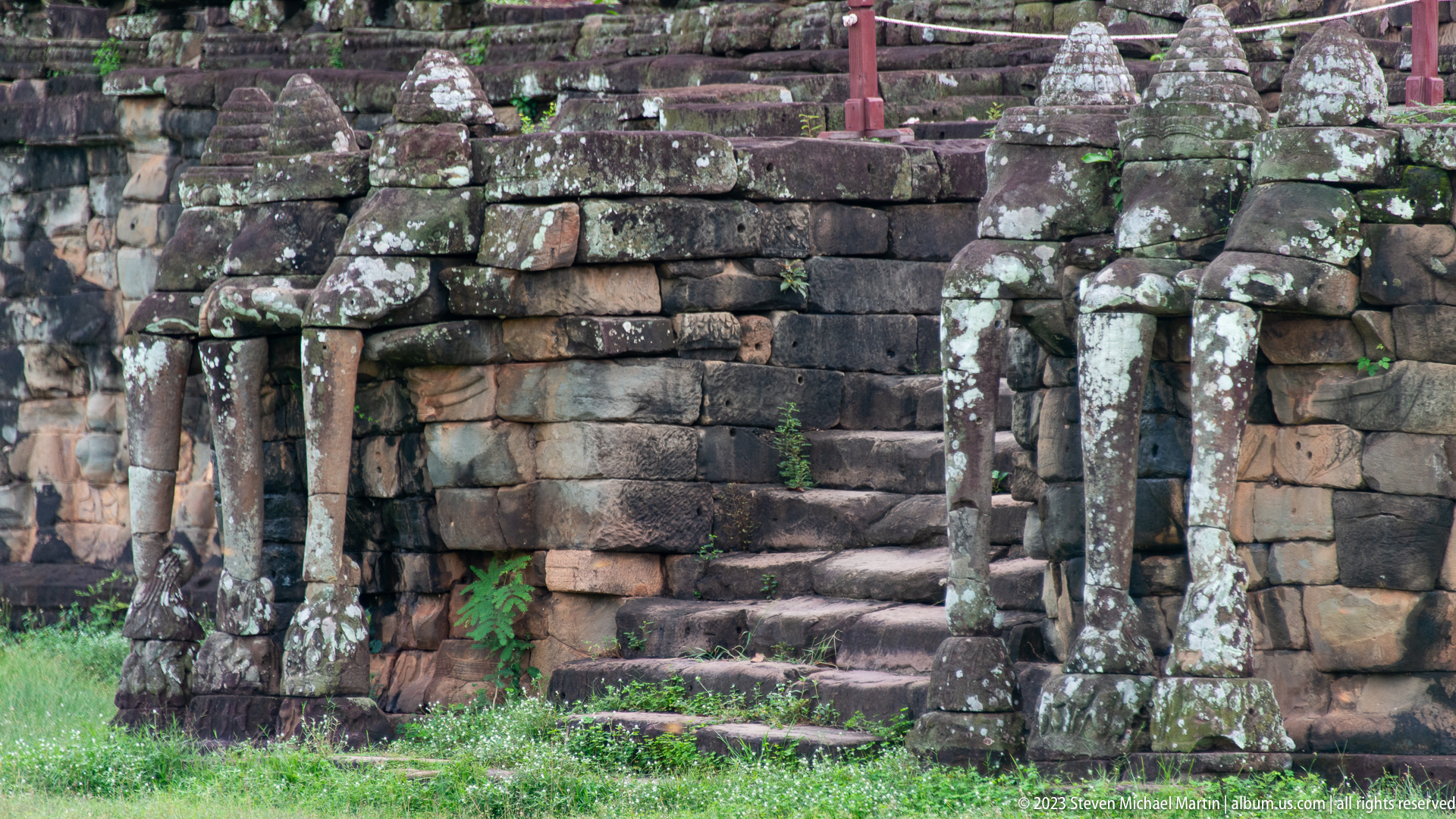
A short central stair ascends through heavy masonry between paired posts and low sculptural balustrades. The photograph records terrace stairway within angkor thom as part of the surviving archaeological and cultural landscape of Angkor Thom.
Caption
A short central stair ascends through heavy masonry between paired posts and low sculptural balustrades. The photograph records terrace stairway within angkor thom as part of the surviving archaeological and cultural landscape of Angkor Thom.
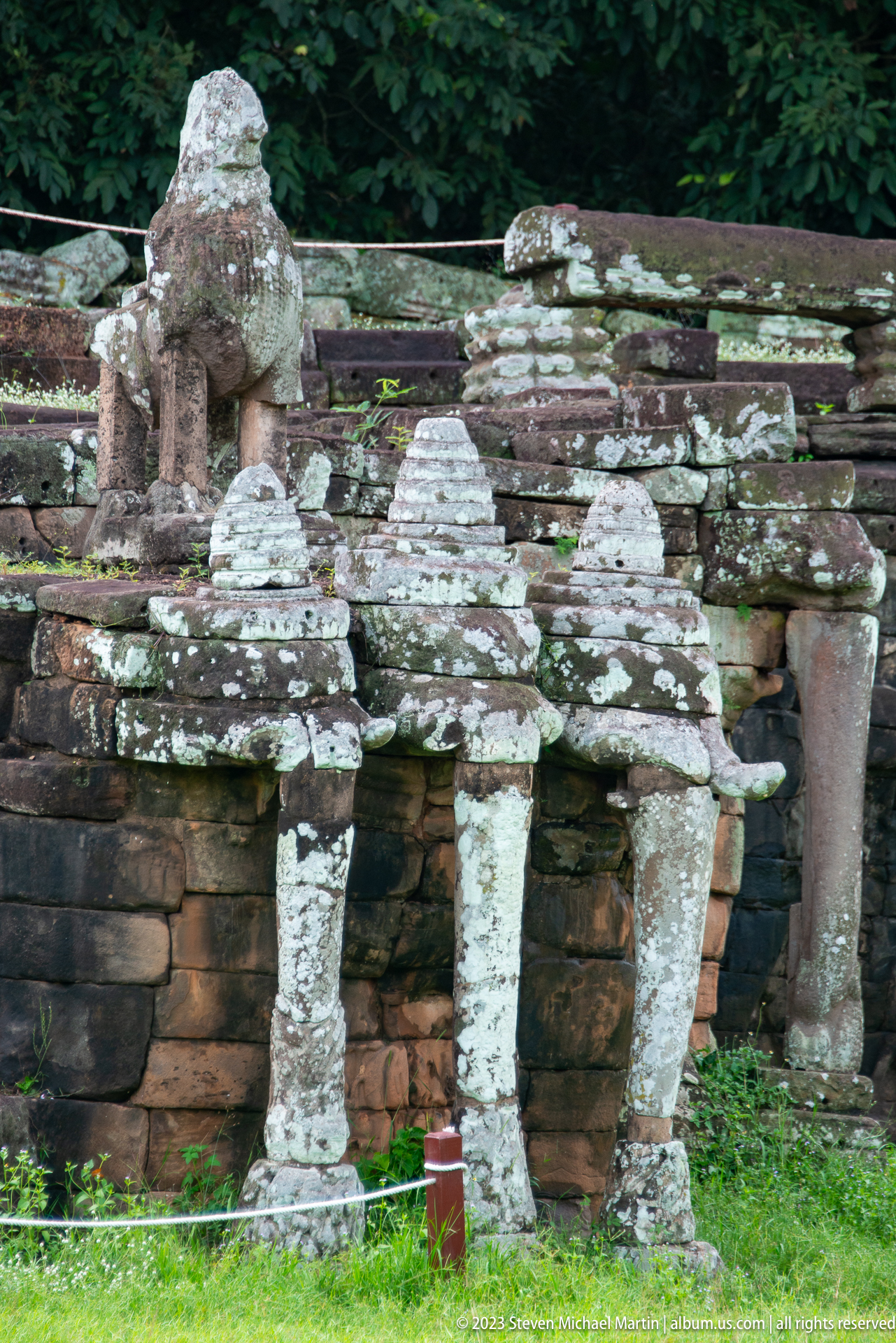
Three miniature tower forms rise above narrow columns and shadowed recesses in weathered sandstone. The photograph records shrine-like architectural elements on an angkor thom terrace as part of the surviving archaeological and cultural landscape of Angkor Thom.
Caption
Three miniature tower forms rise above narrow columns and shadowed recesses in weathered sandstone. The photograph records shrine-like architectural elements on an angkor thom terrace as part of the surviving archaeological and cultural landscape of Angkor Thom.
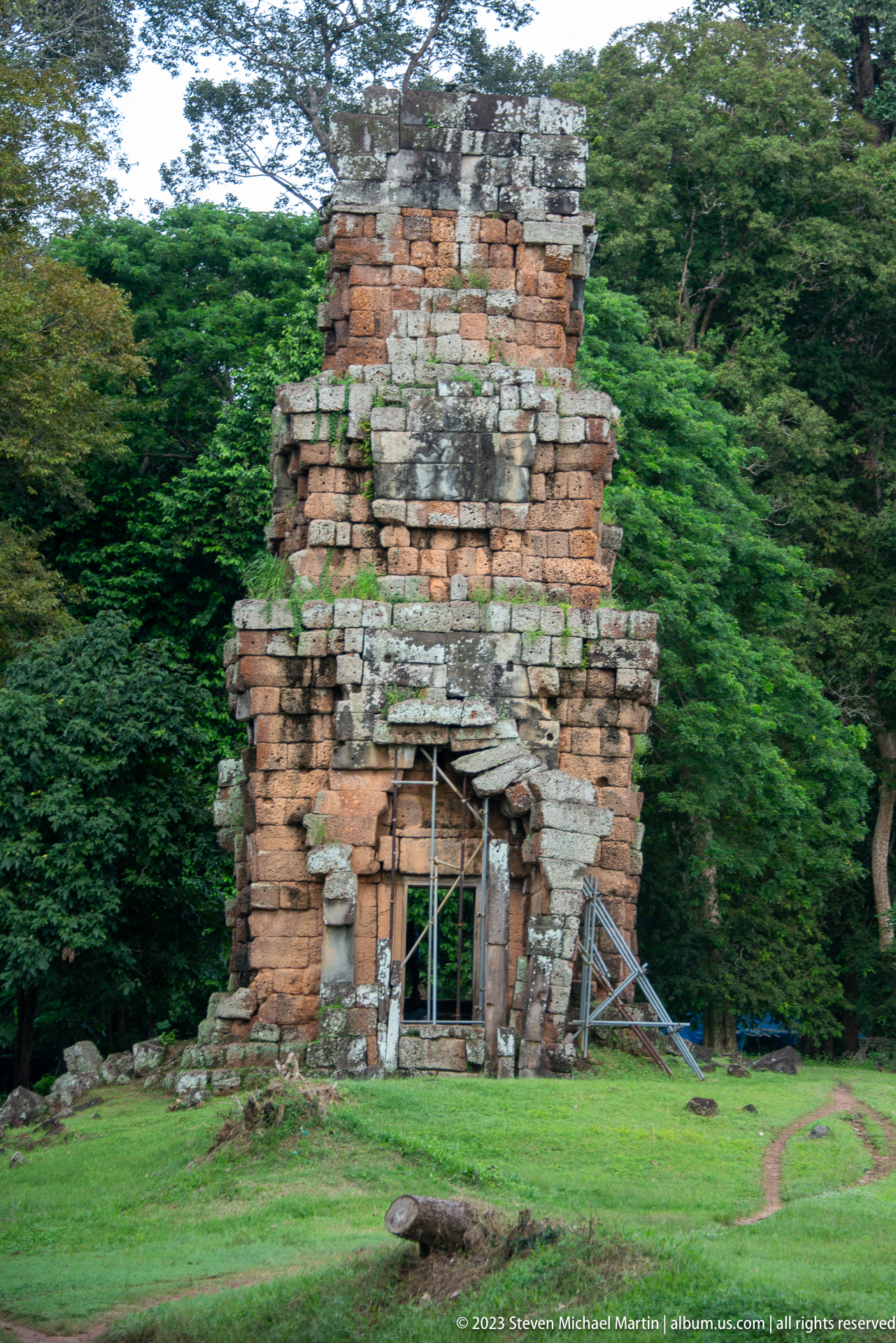
A compact reddish tower rises against dense green trees, its doorway framed by pale stone and temporary supports. The photograph records brick sanctuary tower near the west mebon area as part of the surviving archaeological and cultural landscape of Angkor Thom.
Caption
A compact reddish tower rises against dense green trees, its doorway framed by pale stone and temporary supports. The photograph records brick sanctuary tower near the west mebon area as part of the surviving archaeological and cultural landscape of Angkor Thom.

Layered red brick masonry and a dark arched opening stand amid dense vegetation and scattered stonework. The photograph records brick temple ruin near west mebon as part of the surviving archaeological and cultural landscape of Angkor Thom.
Caption
Layered red brick masonry and a dark arched opening stand amid dense vegetation and scattered stonework. The photograph records brick temple ruin near west mebon as part of the surviving archaeological and cultural landscape of Angkor Thom.

Two weathered lion figures stand above a long carved wall, silhouetted against trees and pale sky. The photograph records guardian lions on an angkor thom terrace as part of the surviving archaeological and cultural landscape of Angkor Thom.
Caption
Two weathered lion figures stand above a long carved wall, silhouetted against trees and pale sky. The photograph records guardian lions on an angkor thom terrace as part of the surviving archaeological and cultural landscape of Angkor Thom.
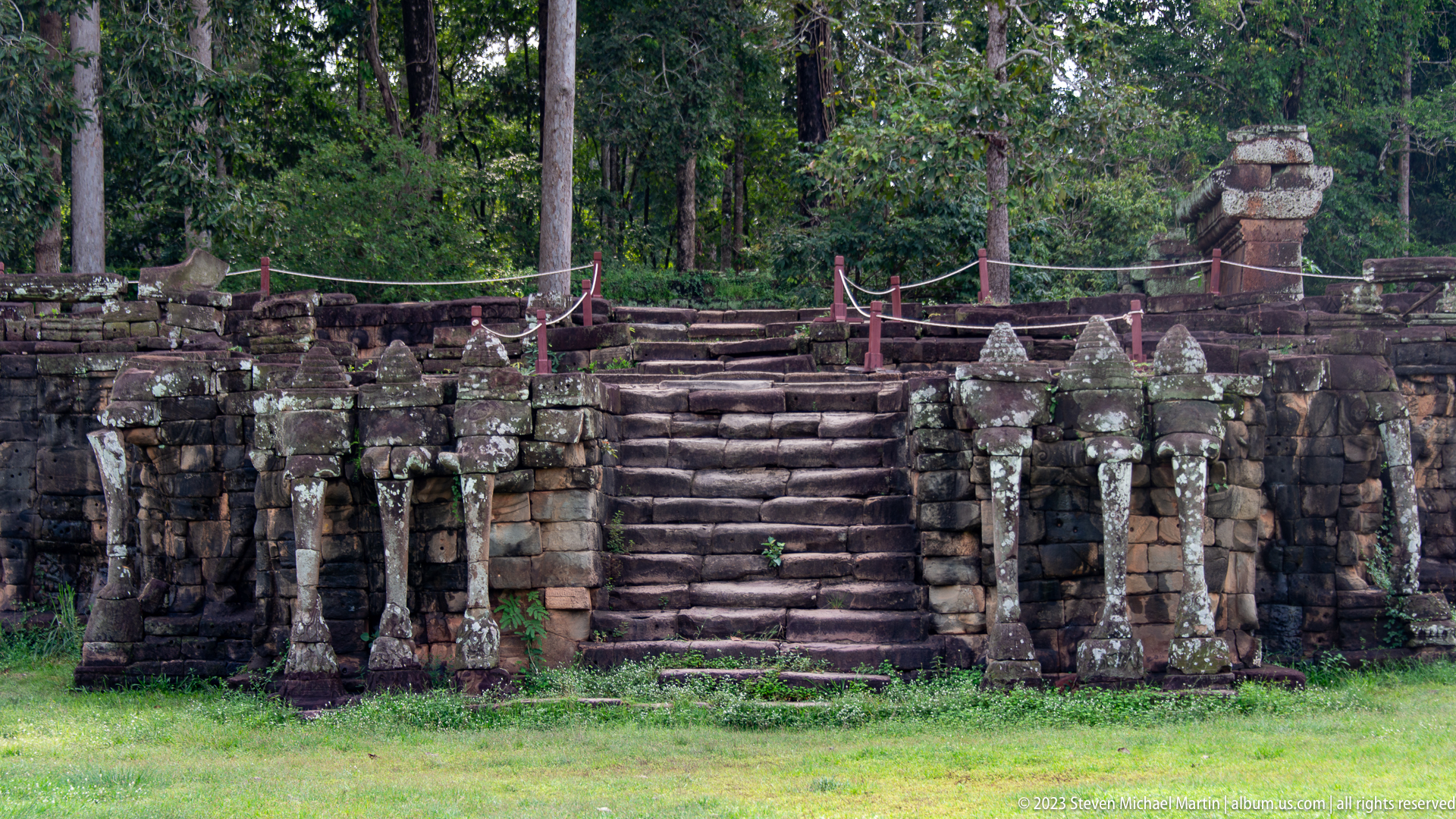
A wide stair rises from a lawn between repeated stone guardians and weathered balustrades. The photograph records terrace stairway at angkor thom as part of the surviving archaeological and cultural landscape of Angkor Thom.
Caption
A wide stair rises from a lawn between repeated stone guardians and weathered balustrades. The photograph records terrace stairway at angkor thom as part of the surviving archaeological and cultural landscape of Angkor Thom.
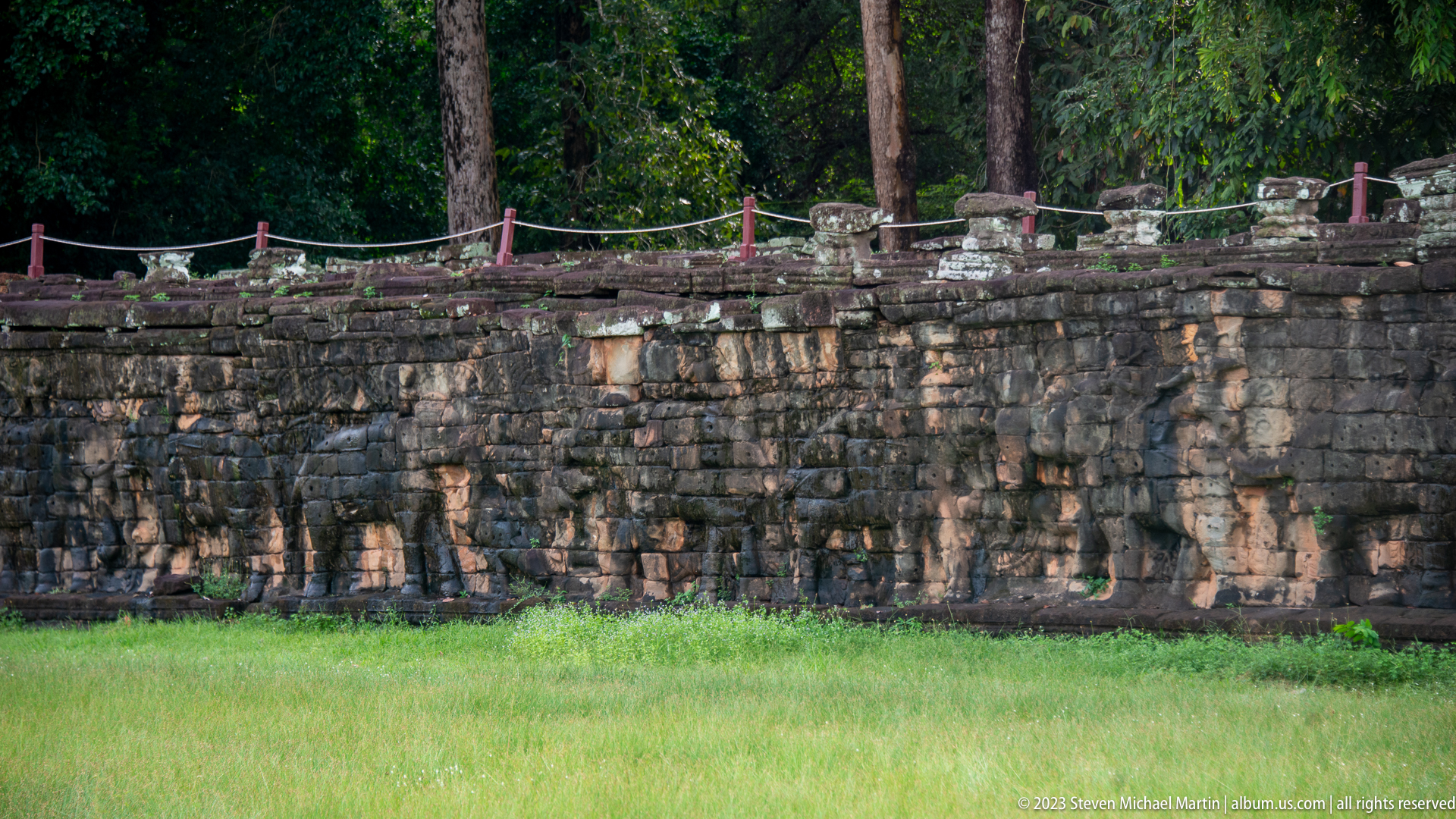
A broad view shows a continuous wall of carved elephants extending horizontally behind a vivid green lawn. The photograph records terrace of the elephants at angkor thom as part of the surviving archaeological and cultural landscape of Angkor Thom.
Caption
A broad view shows a continuous wall of carved elephants extending horizontally behind a vivid green lawn. The photograph records terrace of the elephants at angkor thom as part of the surviving archaeological and cultural landscape of Angkor Thom.
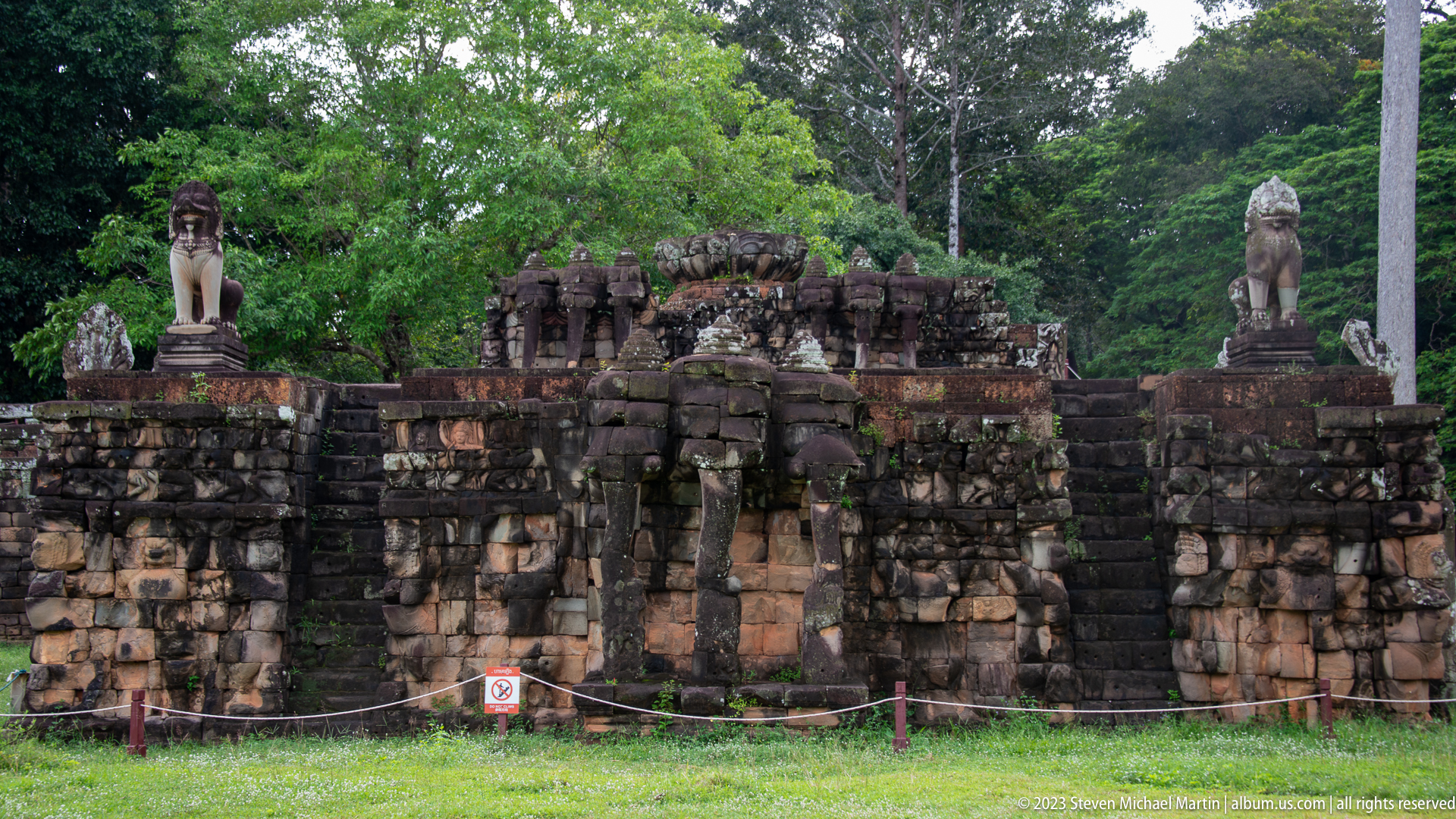
A darker, richly articulated projection interrupts the long terrace wall with steps, columns, and sculptural forms. The photograph records central projecting section of the terrace of the elephants as part of the surviving archaeological and cultural landscape of Angkor Thom.
Caption
A darker, richly articulated projection interrupts the long terrace wall with steps, columns, and sculptural forms. The photograph records central projecting section of the terrace of the elephants as part of the surviving archaeological and cultural landscape of Angkor Thom.
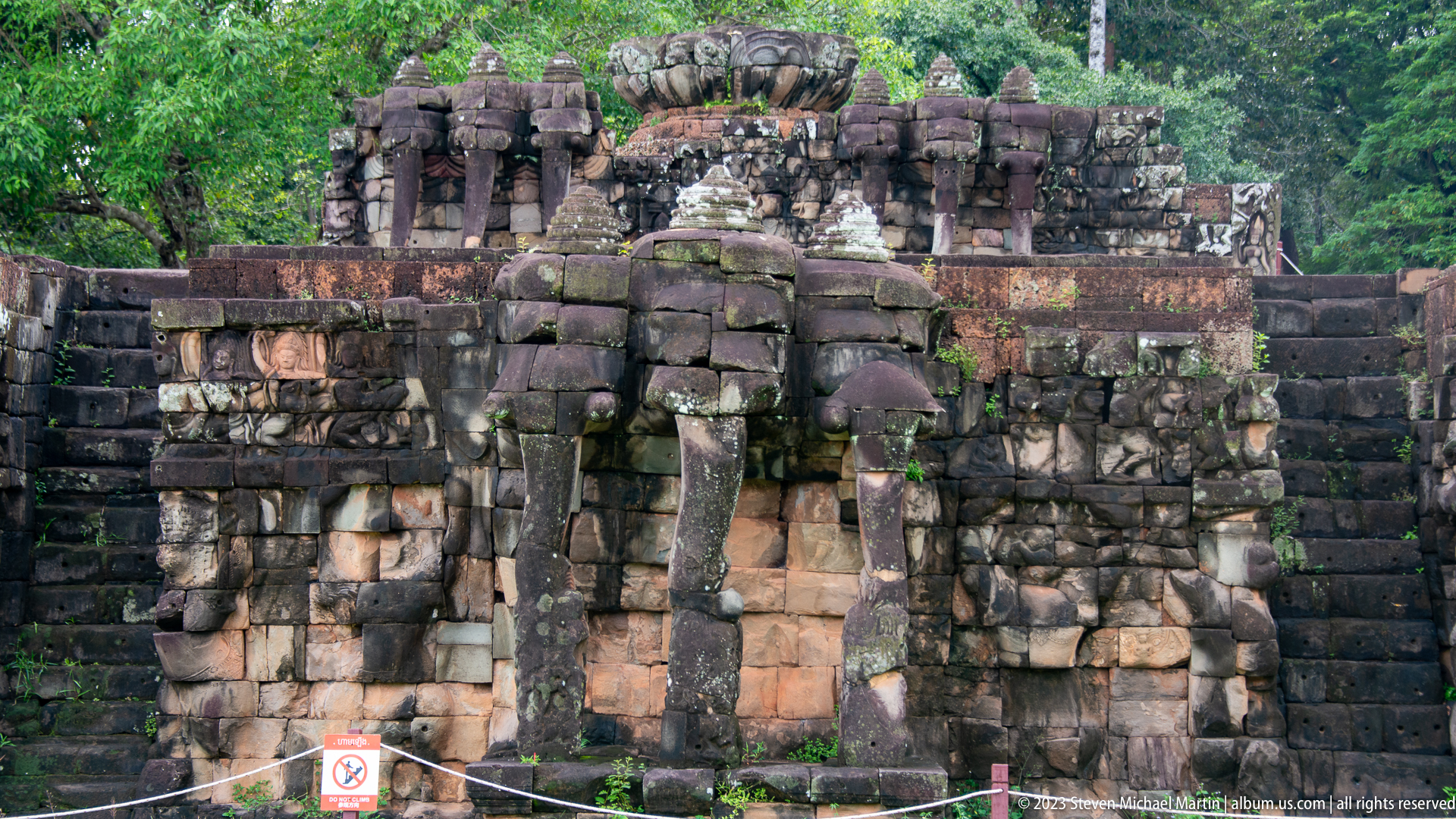
Heavy stone piers, elephant forms, and layered moldings cluster around a central opening in the terrace. The photograph records decorated projection of the terrace of the elephants as part of the surviving archaeological and cultural landscape of Angkor Thom.
Caption
Heavy stone piers, elephant forms, and layered moldings cluster around a central opening in the terrace. The photograph records decorated projection of the terrace of the elephants as part of the surviving archaeological and cultural landscape of Angkor Thom.
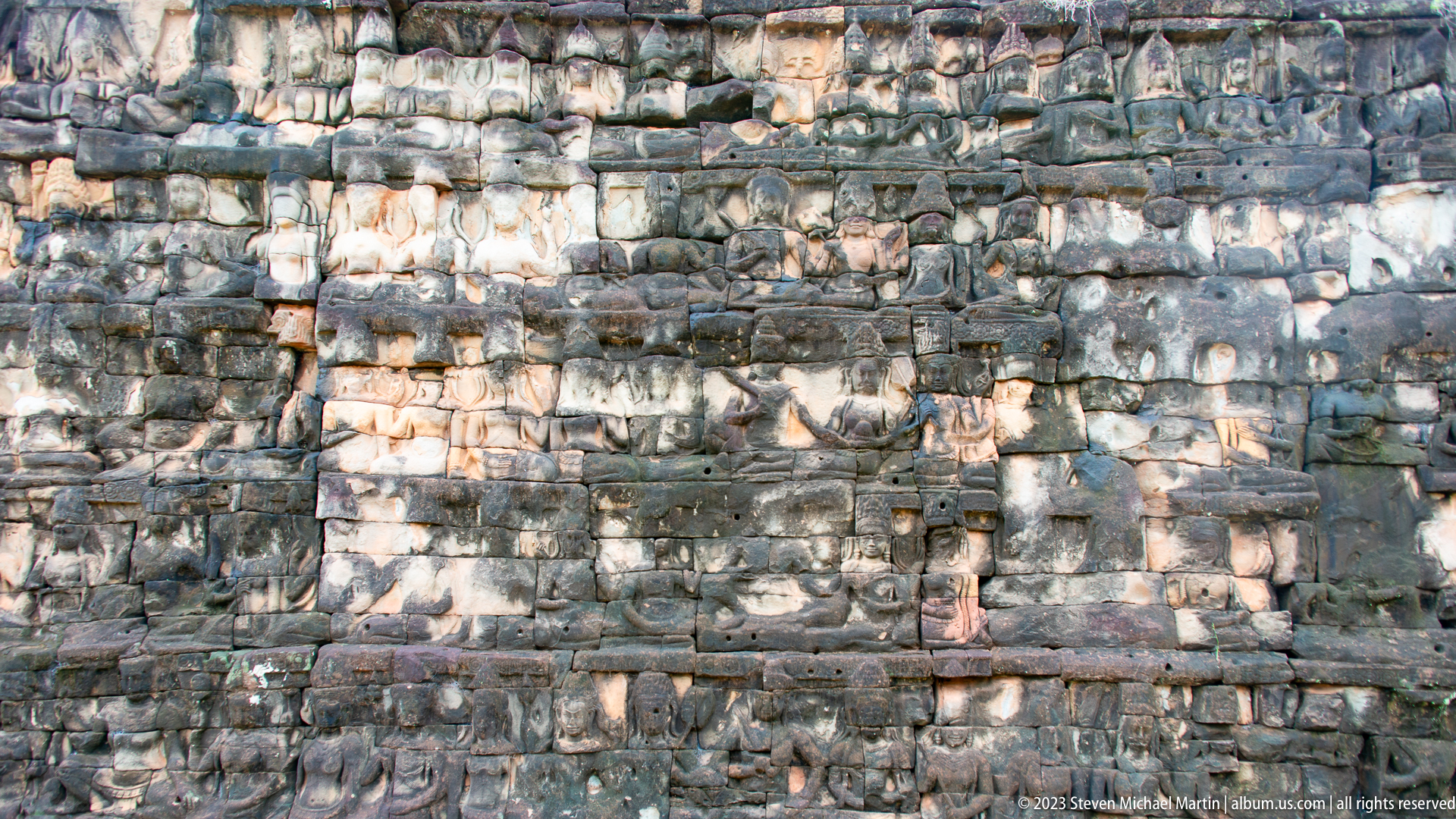
Many small human or divine figures appear in horizontal registers across dark weathered sandstone blocks. The photograph records figure reliefs at the terrace of the leper king as part of the surviving archaeological and cultural landscape of Angkor Thom.
Caption
Many small human or divine figures appear in horizontal registers across dark weathered sandstone blocks. The photograph records figure reliefs at the terrace of the leper king as part of the surviving archaeological and cultural landscape of Angkor Thom.
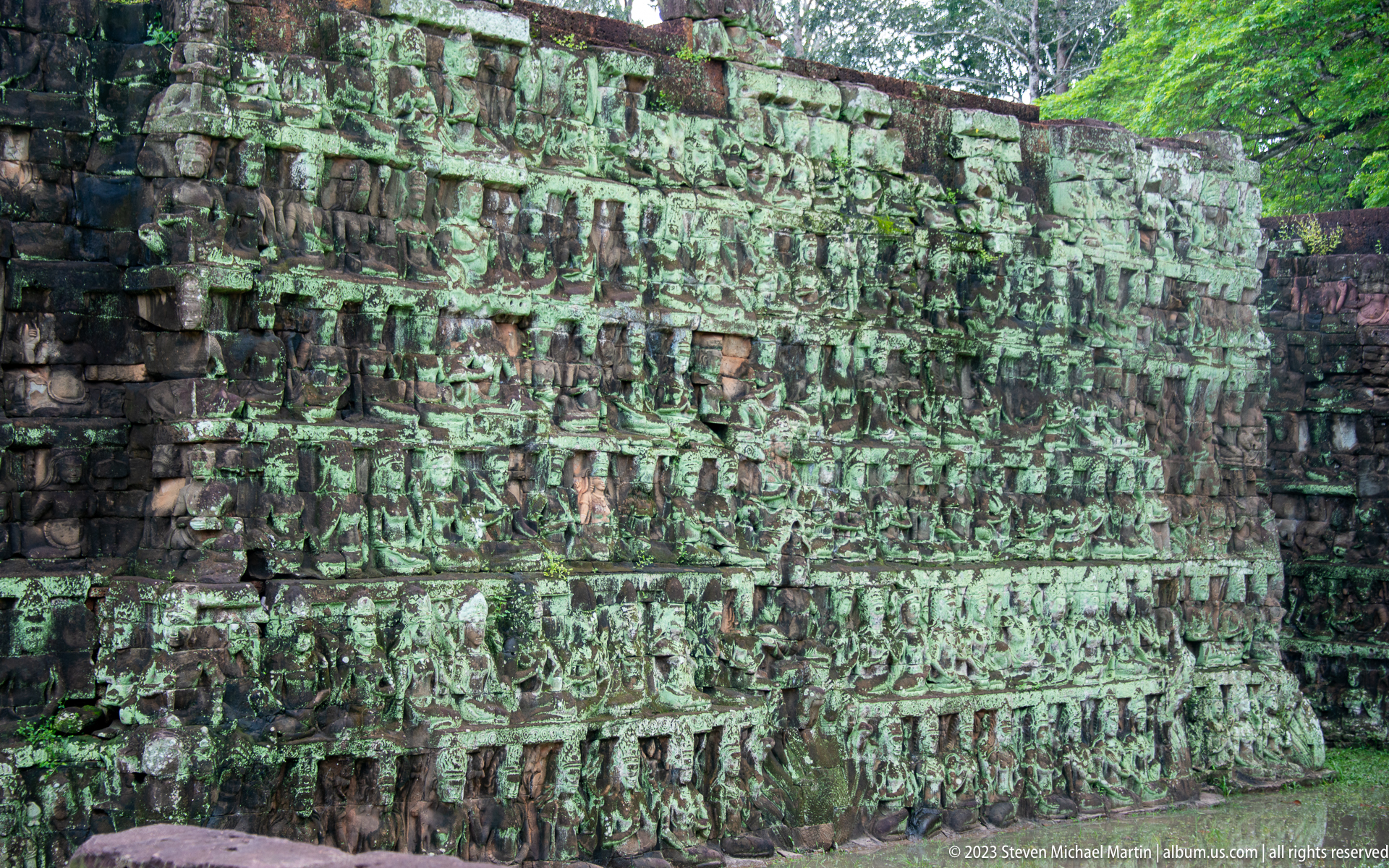
Dense rows of carved figures fill multiple registers, preserving one of Angkor Thom’s most intricate sculptural surfaces. The photograph records inner relief wall of the terrace of the leper king as part of the surviving archaeological and cultural landscape of Angkor Thom.
Caption
Dense rows of carved figures fill multiple registers, preserving one of Angkor Thom’s most intricate sculptural surfaces. The photograph records inner relief wall of the terrace of the leper king as part of the surviving archaeological and cultural landscape of Angkor Thom.
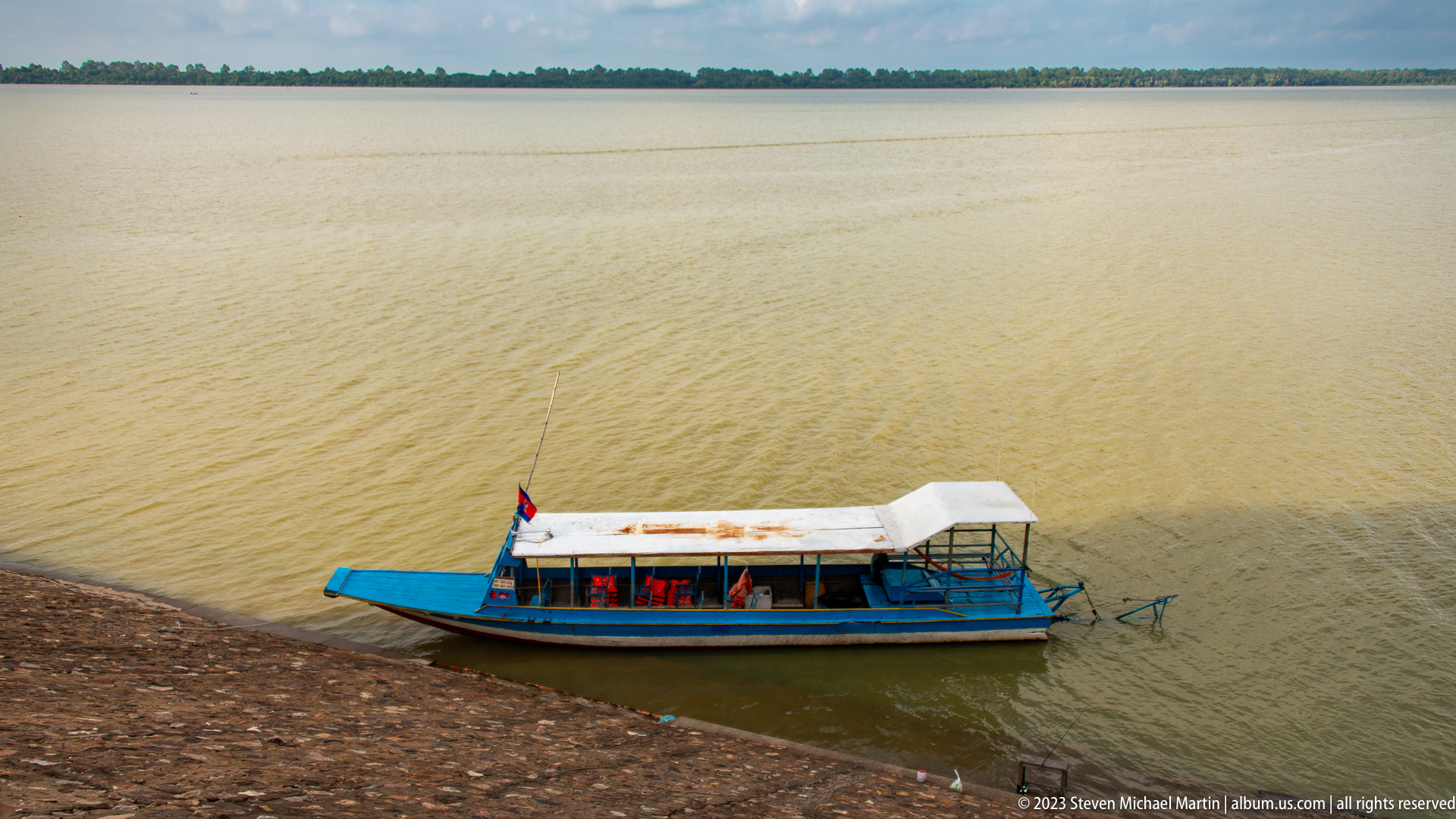
A narrow blue motorboat with a white canopy carries seated passengers across rippled brown water. The photograph records passenger boat on the west baray as part of the surviving archaeological and cultural landscape of Angkor Thom.
Caption
A narrow blue motorboat with a white canopy carries seated passengers across rippled brown water. The photograph records passenger boat on the west baray as part of the surviving archaeological and cultural landscape of Angkor Thom.
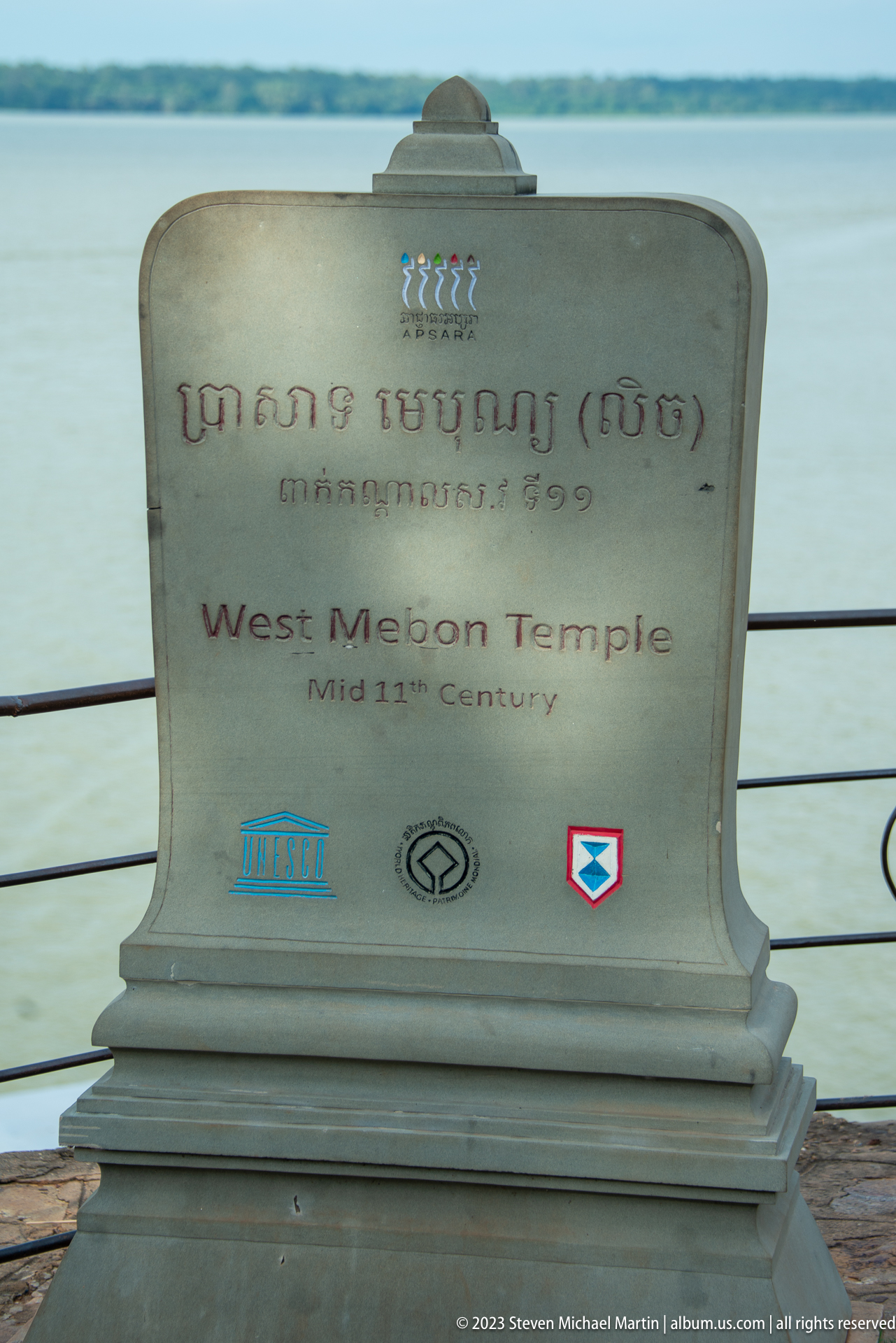
A site sign identifies West Mebon Temple and dates it to the mid-eleventh century, with Khmer and English text. The photograph records west mebon temple identification sign as part of the surviving archaeological and cultural landscape of Angkor Thom.
Caption
A site sign identifies West Mebon Temple and dates it to the mid-eleventh century, with Khmer and English text. The photograph records west mebon temple identification sign as part of the surviving archaeological and cultural landscape of Angkor Thom.

A tiny motorboat travels across a broad expanse of water toward a distant tree-lined shore. The photograph records boat crossing the west baray as part of the surviving archaeological and cultural landscape of Angkor Thom.
Caption
A tiny motorboat travels across a broad expanse of water toward a distant tree-lined shore. The photograph records boat crossing the west baray as part of the surviving archaeological and cultural landscape of Angkor Thom.
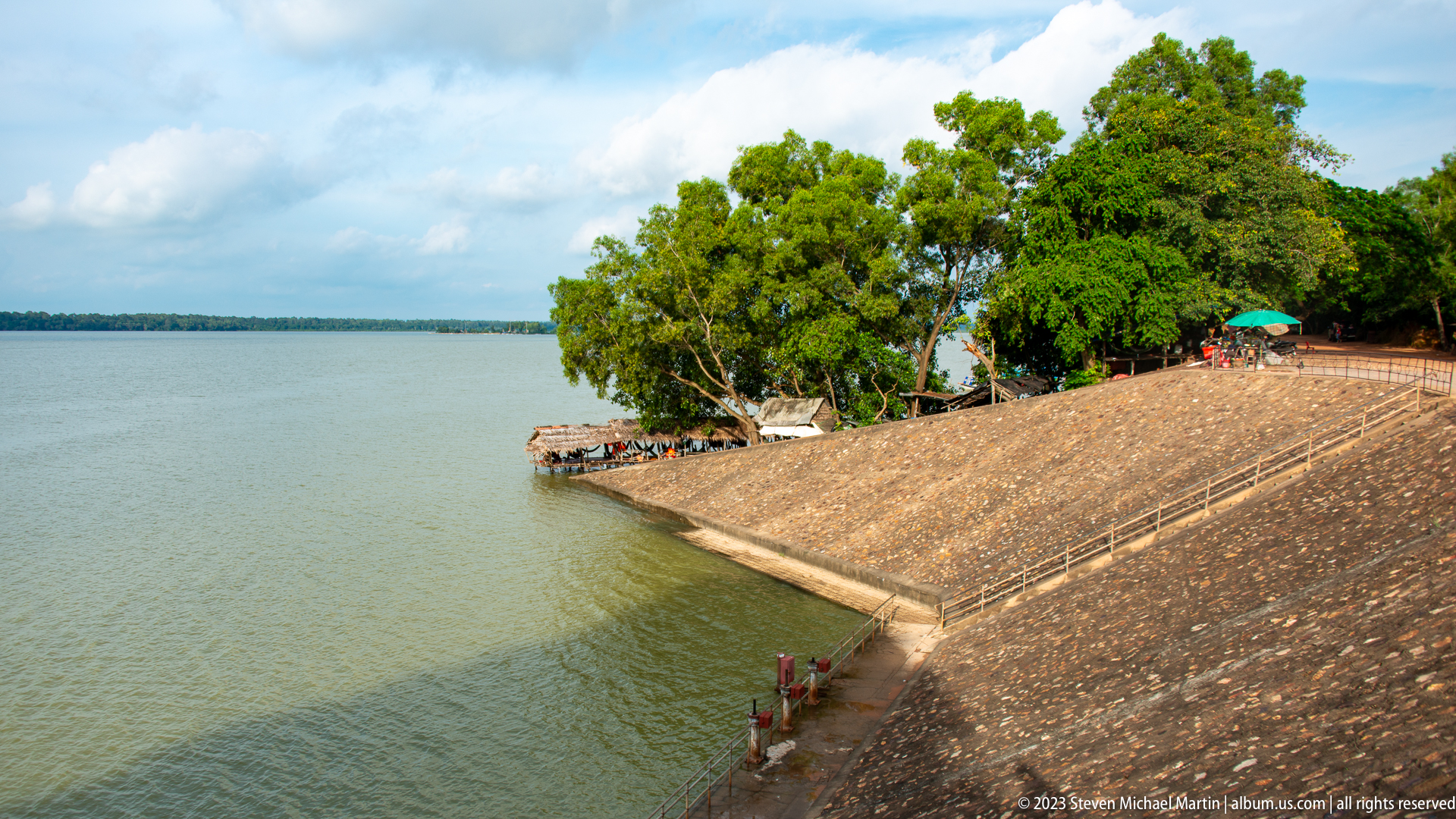
A sloping stone embankment meets calm water beside a cluster of bright green trees under a cloudy sky. The photograph records shoreline of the west baray as part of the surviving archaeological and cultural landscape of Angkor Thom.
Caption
A sloping stone embankment meets calm water beside a cluster of bright green trees under a cloudy sky. The photograph records shoreline of the west baray as part of the surviving archaeological and cultural landscape of Angkor Thom.
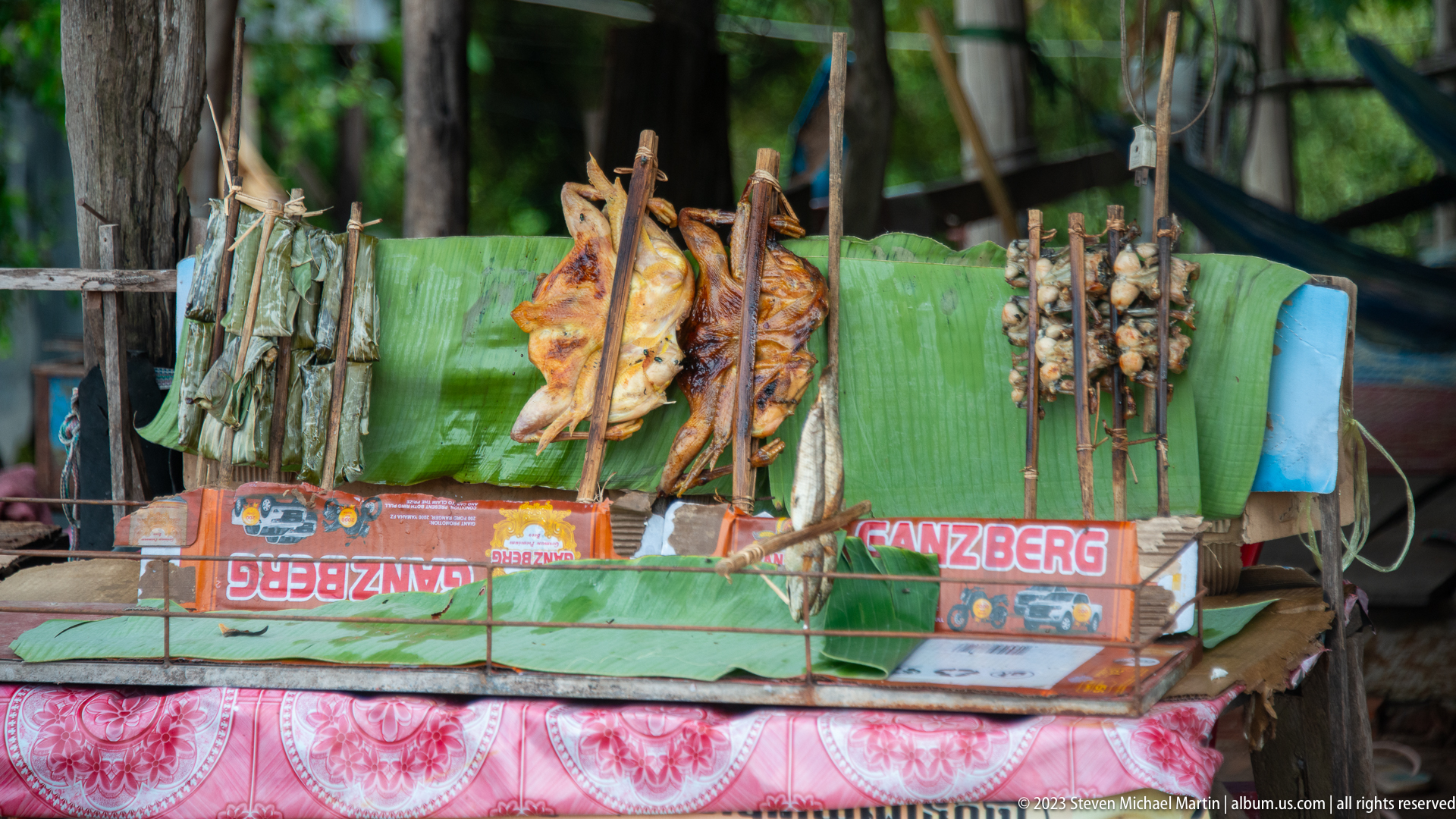
Assorted grilled meat or fish skewers rest on green banana leaves above packaged goods and a vendor counter. The photograph records grilled skewers at a cambodian food stall as part of the surviving archaeological and cultural landscape of Angkor Thom.
Caption
Assorted grilled meat or fish skewers rest on green banana leaves above packaged goods and a vendor counter. The photograph records grilled skewers at a cambodian food stall as part of the surviving archaeological and cultural landscape of Angkor Thom.
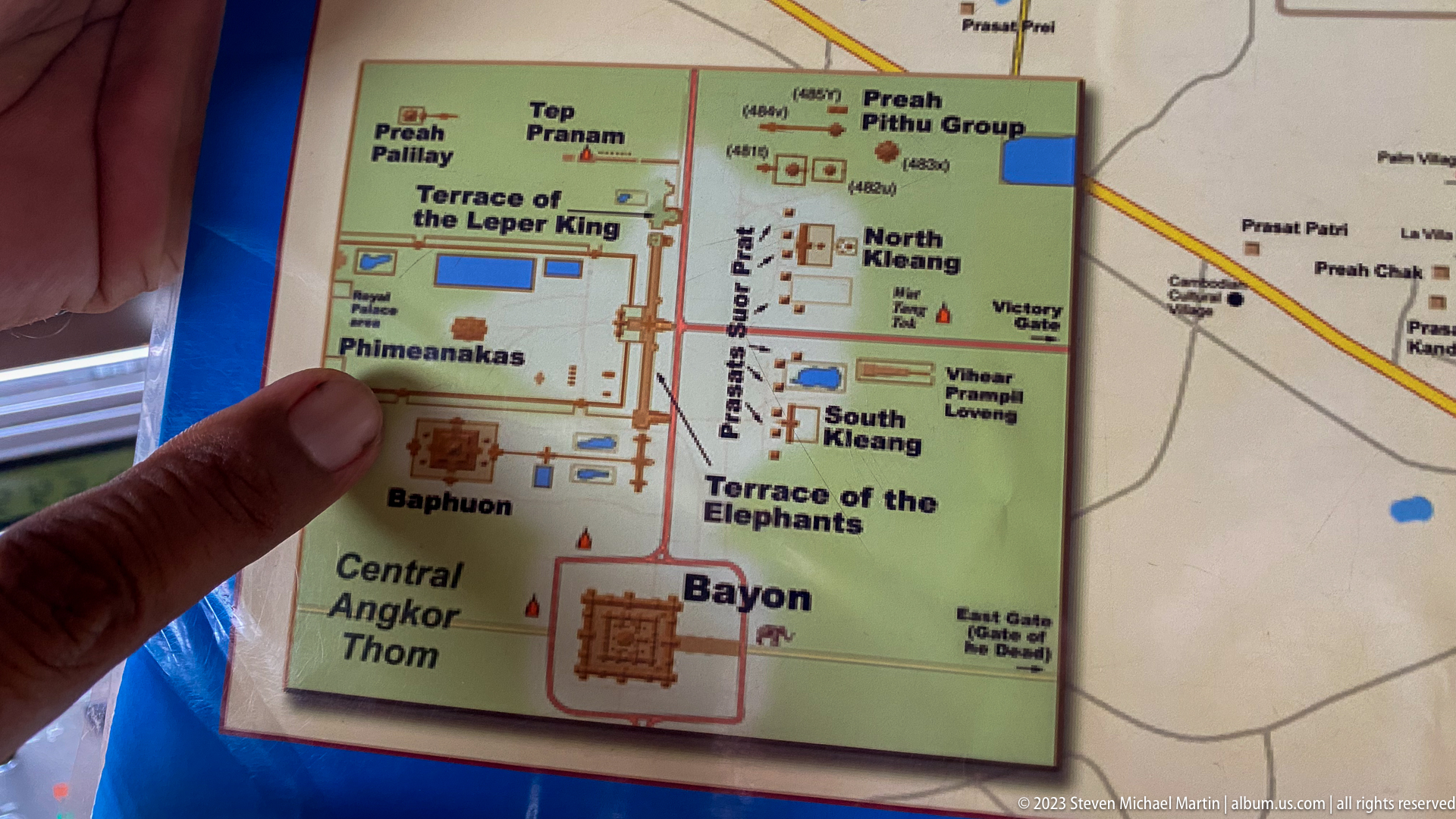
A hand points to a labeled site map showing Angkor Thom, the Terrace of the Leper King, Royal Palace, and Bayon. The photograph records visitor map of angkor thom as part of the surviving archaeological and cultural landscape of Angkor Thom.
Caption
A hand points to a labeled site map showing Angkor Thom, the Terrace of the Leper King, Royal Palace, and Bayon. The photograph records visitor map of angkor thom as part of the surviving archaeological and cultural landscape of Angkor Thom.
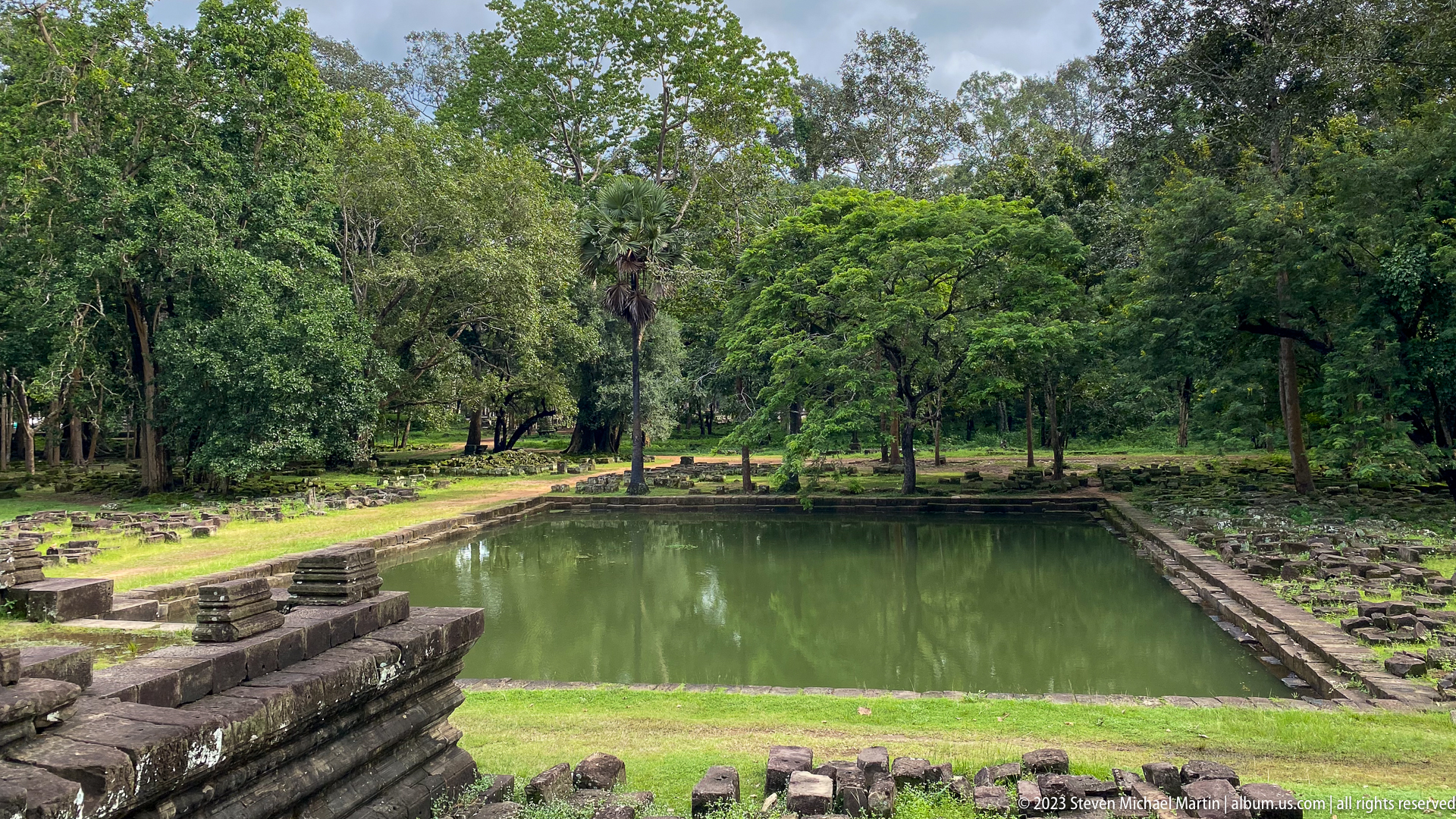
A calm rectangular pool is enclosed by low stone edges, grass, and mature trees. The photograph records ancient reservoir or pond within angkor thom as part of the surviving archaeological and cultural landscape of Angkor Thom.
Caption
A calm rectangular pool is enclosed by low stone edges, grass, and mature trees. The photograph records ancient reservoir or pond within angkor thom as part of the surviving archaeological and cultural landscape of Angkor Thom.
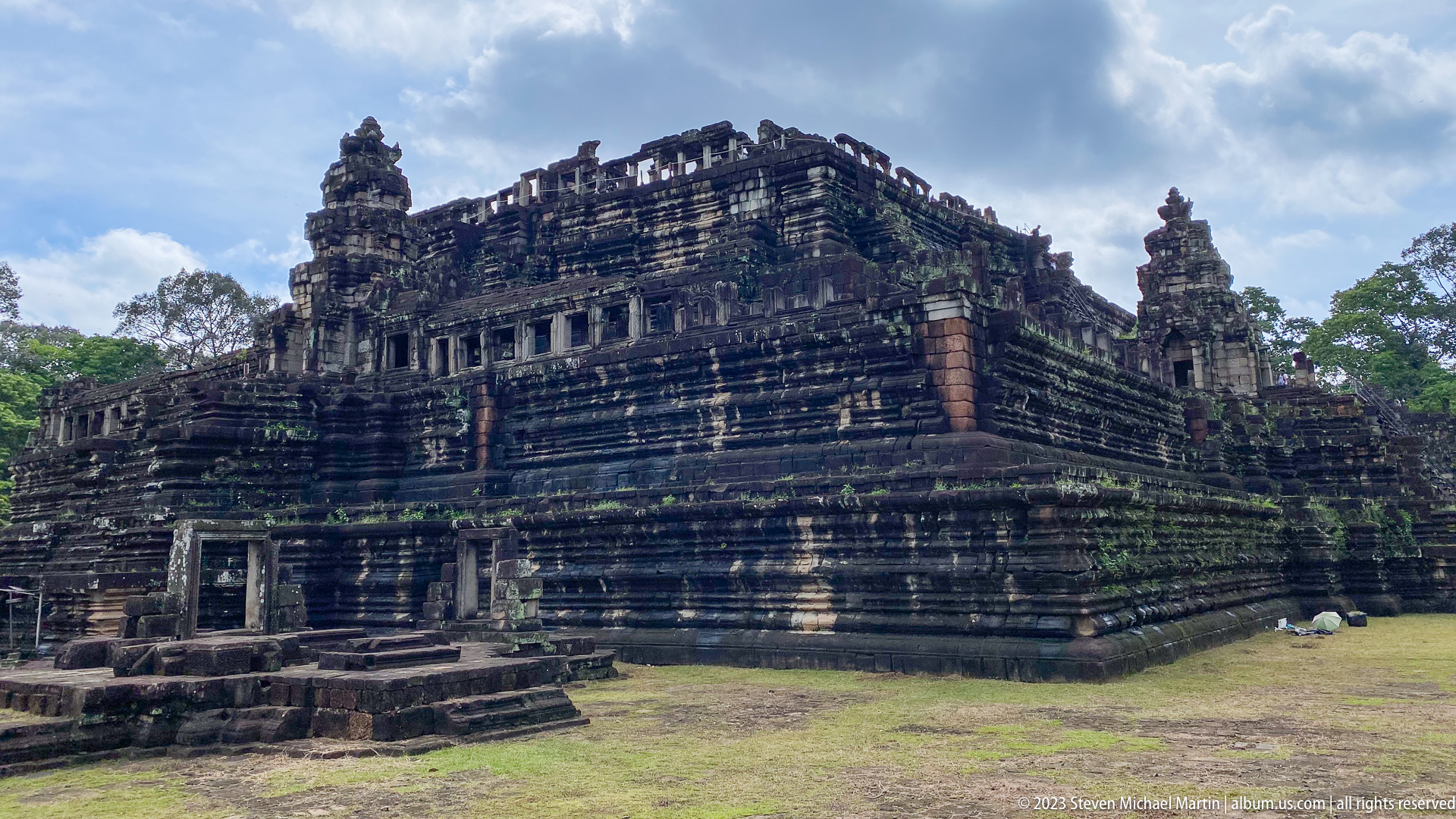
A massive rectangular temple rises in layered dark stone with upper colonnades and corner towers. The photograph records large stepped khmer temple within angkor thom as part of the surviving archaeological and cultural landscape of Angkor Thom.
Caption
A massive rectangular temple rises in layered dark stone with upper colonnades and corner towers. The photograph records large stepped khmer temple within angkor thom as part of the surviving archaeological and cultural landscape of Angkor Thom.
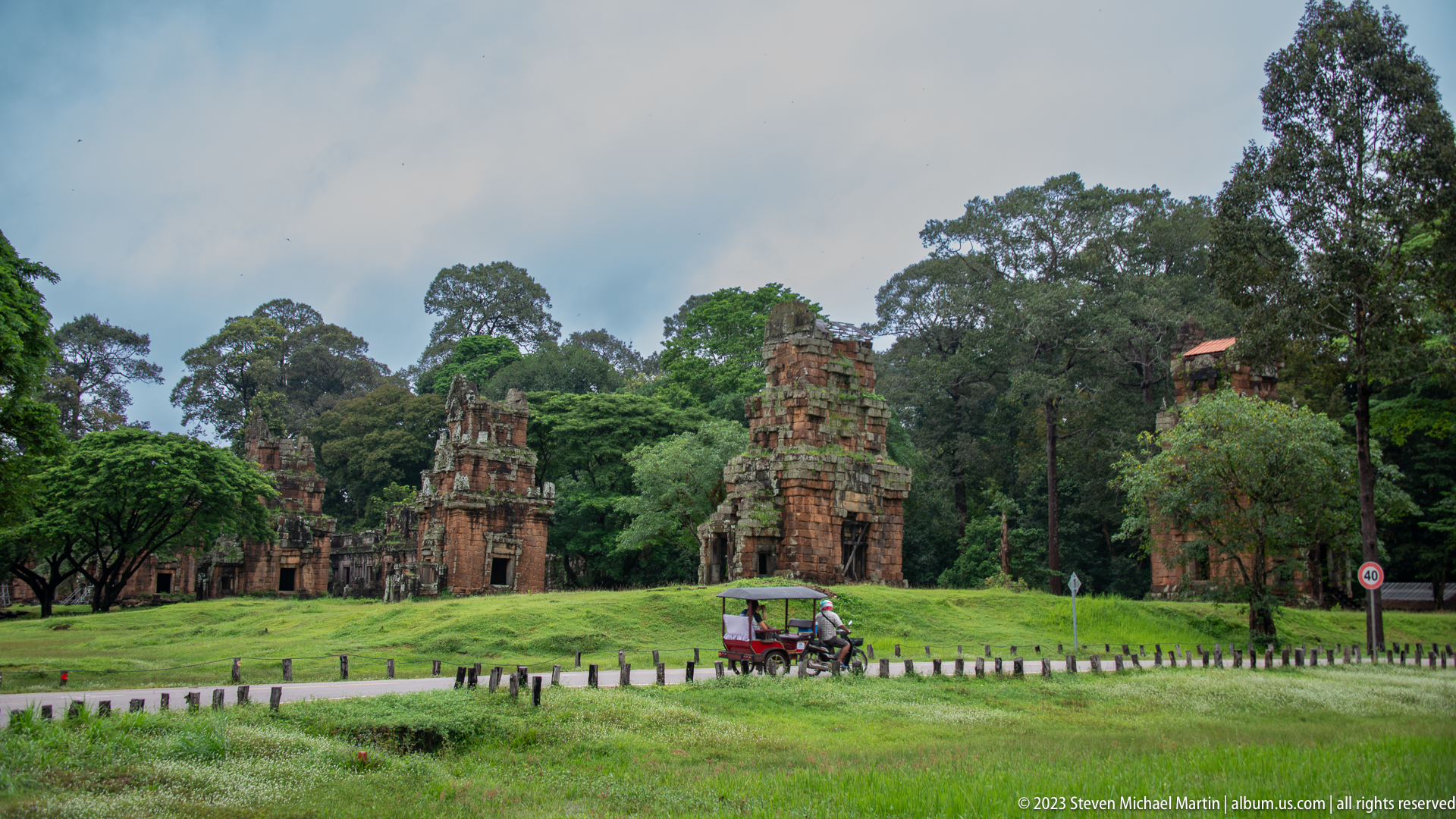
Several weathered towers stand across an open green lawn beneath large trees and a cloudy sky. The photograph records temple ruins within angkor thom as part of the surviving archaeological and cultural landscape of Angkor Thom.
Caption
Several weathered towers stand across an open green lawn beneath large trees and a cloudy sky. The photograph records temple ruins within angkor thom as part of the surviving archaeological and cultural landscape of Angkor Thom.
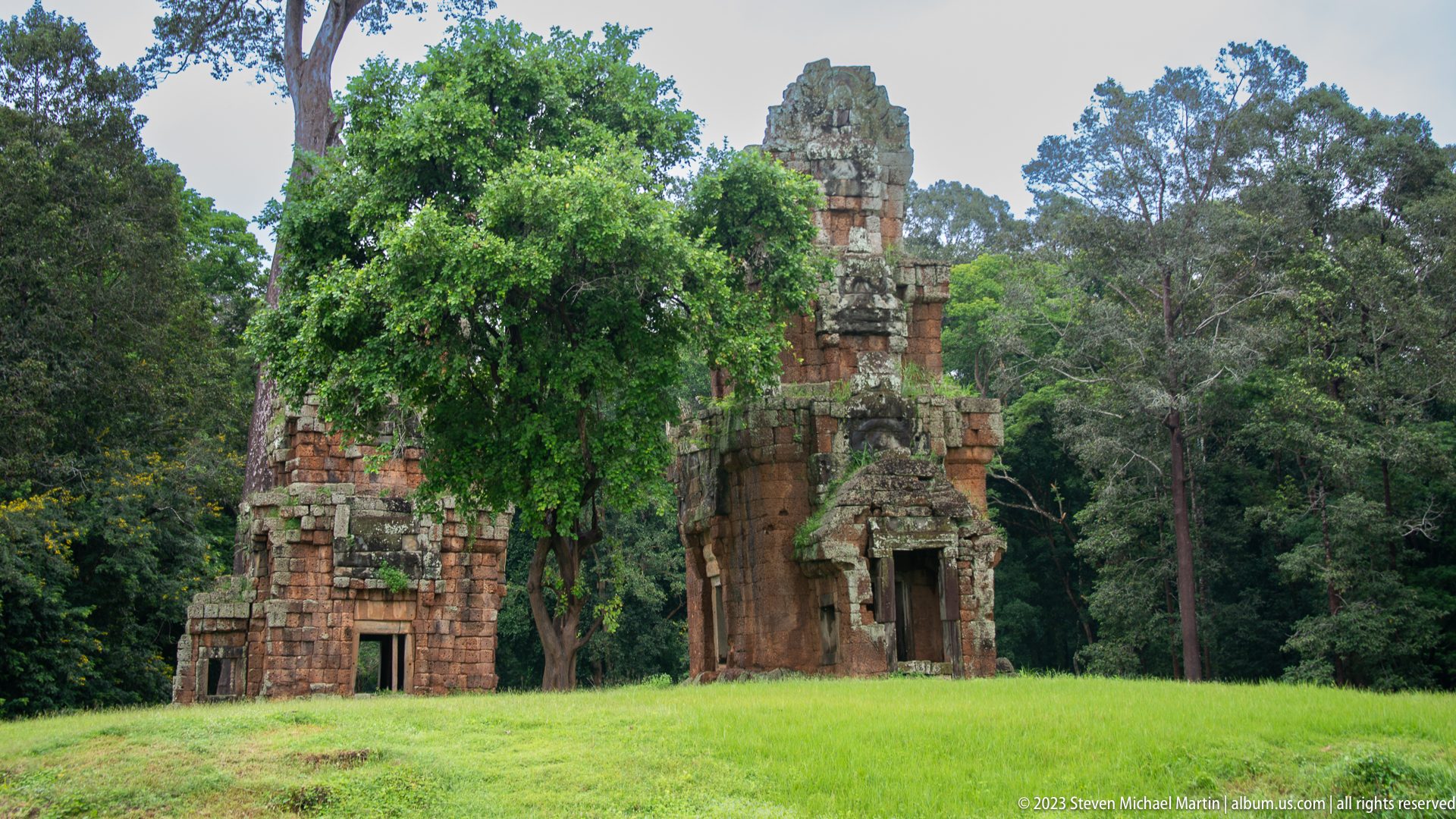
A narrow tower with a dark central opening rises from a lawn, partly covered by vegetation and framed by trees. The photograph records ruined brick and sandstone gateway within angkor thom as part of the surviving archaeological and cultural landscape of Angkor Thom.
Caption
A narrow tower with a dark central opening rises from a lawn, partly covered by vegetation and framed by trees. The photograph records ruined brick and sandstone gateway within angkor thom as part of the surviving archaeological and cultural landscape of Angkor Thom.