Beijing Hutongs
Beijing’s hutongs are narrow lanes that preserve traditional residential patterns developed over many centuries. The arrangement of courtyard houses reflects principles of spatial organization associated with family structure and social hierarchy. These neighborhoods provide insight into daily life within historic sections of the imperial capital.
The layout of hutongs demonstrates urban planning practices that emphasized orientation, privacy, and communal interaction. Grey brick walls, wooden gates, and interior courtyards illustrate architectural traditions that developed during the Yuan, Ming, and Qing dynasties. The scale of these neighborhoods contrasts with the monumental architecture associated with imperial authority.
Hutong districts illustrate the continuity of residential traditions within Beijing’s evolving urban landscape. Their preservation provides a perspective on how ordinary communities lived alongside ceremonial and administrative centers of imperial governance.

An informal curbside produce stall in a Beijing hutong spills from a gray-brick storefront onto the pavement, where vendors sell leafy greens, fruit, eggs, and household goods that serve daily neighborhood needs and blur the boundary between shop interior and public street.
Caption
An informal curbside produce stall in a Beijing hutong spills from a gray-brick storefront onto the pavement, where vendors sell leafy greens, fruit, eggs, and household goods that serve daily neighborhood needs and blur the boundary between shop interior and public street.

On a broad, tree-lined Beijing hutong sidewalk, parked bicycles, scooters, and a black sedan share space with neighborhood residents who sit at outdoor tables eating, talking, and resting, turning the walkway into an informal extension of home and shop life that reinforces everyday community ties.
Caption
On a broad, tree-lined Beijing hutong sidewalk, parked bicycles, scooters, and a black sedan share space with neighborhood residents who sit at outdoor tables eating, talking, and resting, turning the walkway into an informal extension of home and shop life that reinforces everyday community ties.

In a shaded Beijing hutong courtyard, residents gather at small tables to play board games while others walk or use outdoor exercise equipment, reflecting the neighborhood’s tradition of shared communal space and everyday recreation.
Caption
In a shaded Beijing hutong courtyard, residents gather at small tables to play board games while others walk or use outdoor exercise equipment, reflecting the neighborhood’s tradition of shared communal space and everyday recreation.
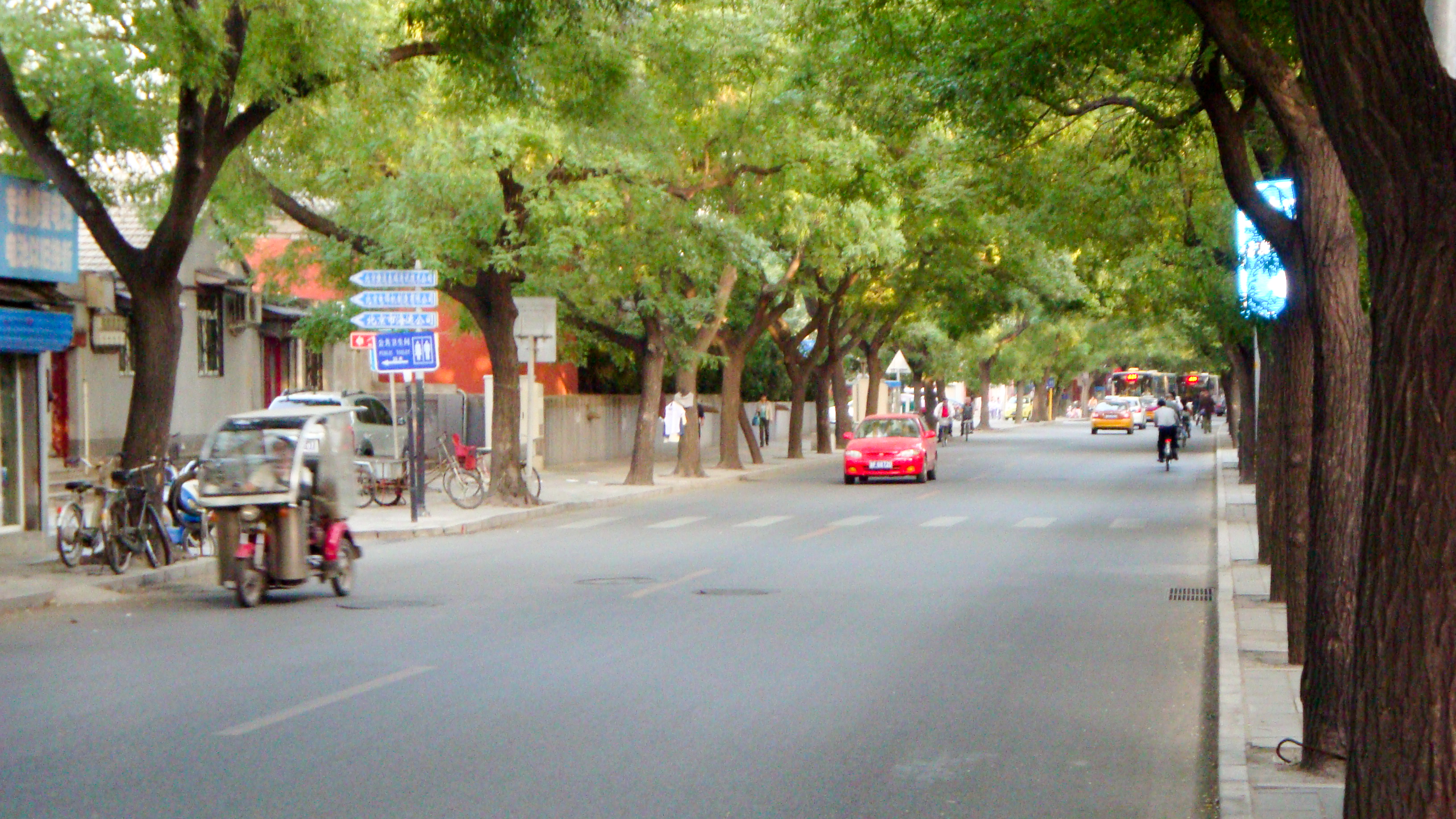
At the edge of a Beijing hutong district, a broad, tree-lined neighborhood street with low-rise buildings and mixed traffic of cars, bicycles, and tricycles reflects everyday mobility under a continuous green canopy.
Caption
At the edge of a Beijing hutong district, a broad, tree-lined neighborhood street with low-rise buildings and mixed traffic of cars, bicycles, and tricycles reflects everyday mobility under a continuous green canopy.

A red-canopied tourist cycle rickshaw rolls past a bicyclist along a narrow Beijing hutong, where pedal-powered sightseeing and everyday transport still share the same traditional lane and gray-walled gatefronts.
Caption
A red-canopied tourist cycle rickshaw rolls past a bicyclist along a narrow Beijing hutong, where pedal-powered sightseeing and everyday transport still share the same traditional lane and gray-walled gatefronts.

Women sort and sell fresh vegetables from heavily loaded cargo tricycles in a narrow Beijing hutong, where informal mobile stalls turn the lane into an everyday street market.
Caption
Women sort and sell fresh vegetables from heavily loaded cargo tricycles in a narrow Beijing hutong, where informal mobile stalls turn the lane into an everyday street market.

A narrow Beijing hutong, its high gray-brick walls enclosing a tight passage, is transformed by rows of red lanterns that bring festive color to the otherwise restrained courtyard lane.
Caption
A narrow Beijing hutong, its high gray-brick walls enclosing a tight passage, is transformed by rows of red lanterns that bring festive color to the otherwise restrained courtyard lane.
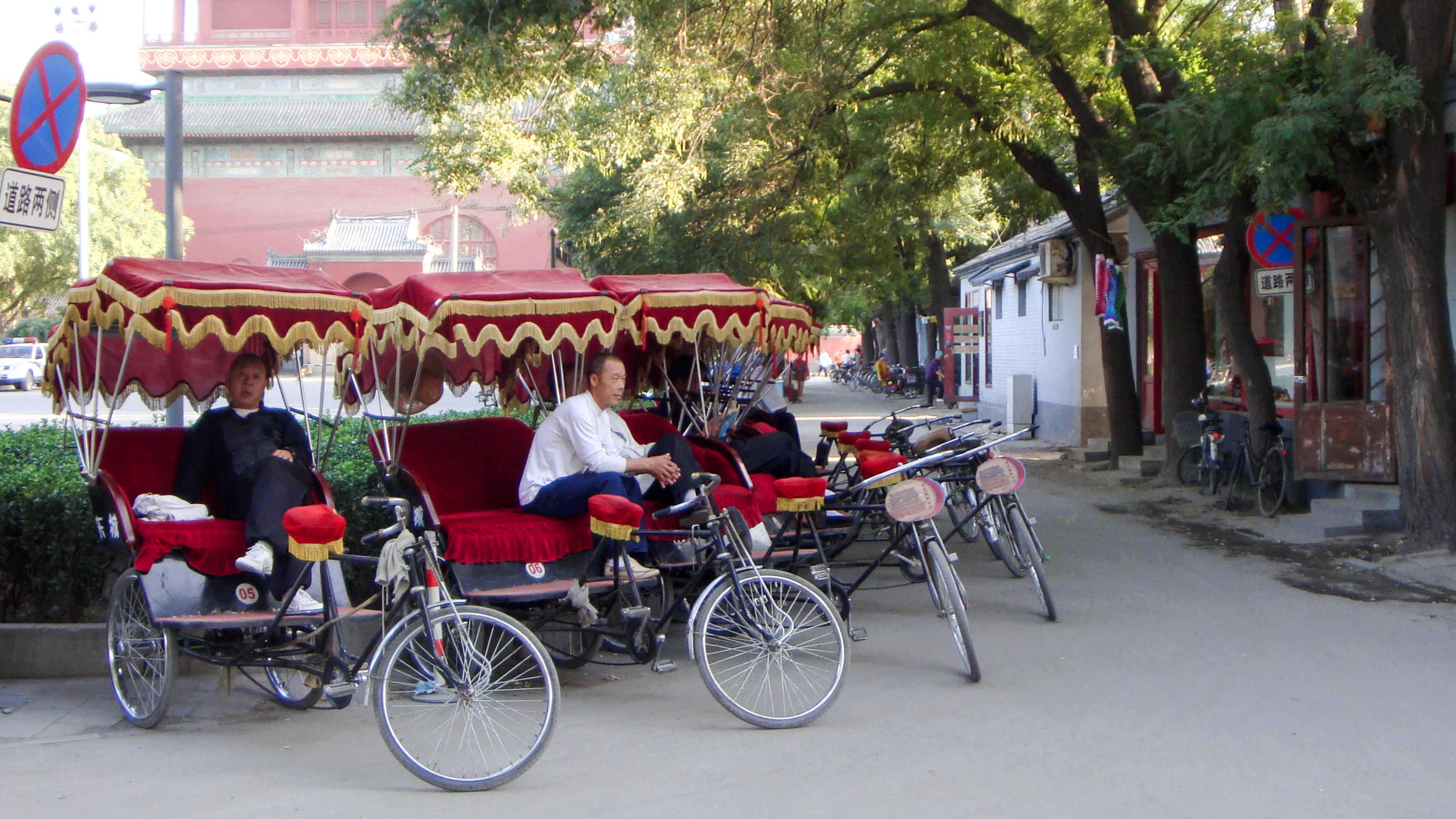
Pedicab drivers wait in an orderly line of red-canopied cycle rickshaws along a tree-shaded Beijing hutong street, ready to take visitors through the historic lanes near major heritage sites.
Caption
Pedicab drivers wait in an orderly line of red-canopied cycle rickshaws along a tree-shaded Beijing hutong street, ready to take visitors through the historic lanes near major heritage sites.

A pair of lion‑mask brass knockers on glossy red courtyard doors in a Beijing hutong fuse practical use with protective symbolism, their auspicious color echoing traditional Chinese beliefs in prosperity and good fortune.
Caption
A pair of lion‑mask brass knockers on glossy red courtyard doors in a Beijing hutong fuse practical use with protective symbolism, their auspicious color echoing traditional Chinese beliefs in prosperity and good fortune.

Enclosed three-wheeled vehicles line the curb outside a gray-brick hutong storefront in Beijing, their compact, inexpensive design well suited to local transport and delivery along the narrow neighborhood streets.
Caption
Enclosed three-wheeled vehicles line the curb outside a gray-brick hutong storefront in Beijing, their compact, inexpensive design well suited to local transport and delivery along the narrow neighborhood streets.

Chinese national flags, rows of red lanterns, and a 九门小吃 snack-shop sign animate a gray-brick Beijing hutong where everyday residences mingle with tourism-oriented food stalls, likely dressed for a holiday or patriotic occasion.
Caption
Chinese national flags, rows of red lanterns, and a 九门小吃 snack-shop sign animate a gray-brick Beijing hutong where everyday residences mingle with tourism-oriented food stalls, likely dressed for a holiday or patriotic occasion.

A wire-framed pigeon loft crowns the gray-brick entrance of a Beijing hutong courtyard house, where red Spring Festival couplets frame the door with auspicious wishes.
Caption
A wire-framed pigeon loft crowns the gray-brick entrance of a Beijing hutong courtyard house, where red Spring Festival couplets frame the door with auspicious wishes.

A large wire-mesh pigeon loft in a Beijing hutong courtyard reflects the city’s long-standing urban pastime of keeping domestic pigeons in communal breeding coops.
Caption
A large wire-mesh pigeon loft in a Beijing hutong courtyard reflects the city’s long-standing urban pastime of keeping domestic pigeons in communal breeding coops.

In a dense Beijing hutong, a row of worn three‑wheeled cargo tricycles stands tilted upright on their metal boxes, their rusted wheels and handlebars stacked high to save precious ground space in a neighborhood where such workhorses are essential for deliveries and recycling collection.
Caption
In a dense Beijing hutong, a row of worn three‑wheeled cargo tricycles stands tilted upright on their metal boxes, their rusted wheels and handlebars stacked high to save precious ground space in a neighborhood where such workhorses are essential for deliveries and recycling collection.