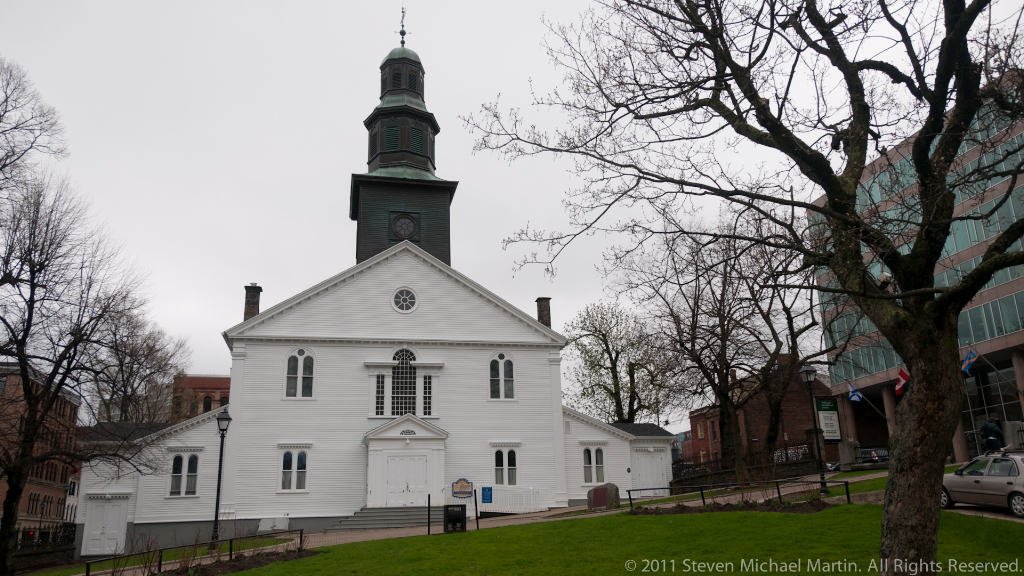
Halifax
Halifax emerged in the 18th century as an important British colonial center following the transfer of Acadian territory from French to British control. Founded in 1749, the city became a strategic military and administrative hub that played a significant role in the political changes affecting Acadian communities throughout the region. Its development reflects broader imperial competition between France and Britain in North America during the colonial period.
During the years surrounding the Great Deportation beginning in 1755, Halifax served as a center of British authority as policies affecting Acadian populations were implemented across Nova Scotia. The events of this period reshaped settlement patterns throughout the region, contributing to the dispersal of Acadian families and the transformation of the cultural landscape. Today, the city’s historic sites and museums help contextualize the broader political forces that influenced Acadian history.
Modern Halifax presents a layered historical environment where colonial architecture, maritime heritage, and contemporary Canadian culture coexist. As a gateway to Nova Scotia’s historic sites, the city provides important context for understanding the historical transitions that shaped the Acadian experience and the evolving identity of Atlantic Canada.