
Ahmed Bey Palace – Constantine, Algeria
The Palace of Ahmed Bey lies in the city of Constantine, dramatically positioned among deep gorges carved by the Rhumel River. Constructed in the early 19th century, the palace was built by Ahmed Bey, the last Ottoman ruler of the region before the French conquest of Algeria.
The palace is known for its beautifully decorated courtyards, marble columns, and elaborate painted ceilings that depict scenes from North African landscapes and historical events. The architecture blends Ottoman design with local artistic traditions.
Today the palace remains one of the most important historic buildings in Constantine and offers a glimpse into the final years of Ottoman rule in Algeria.
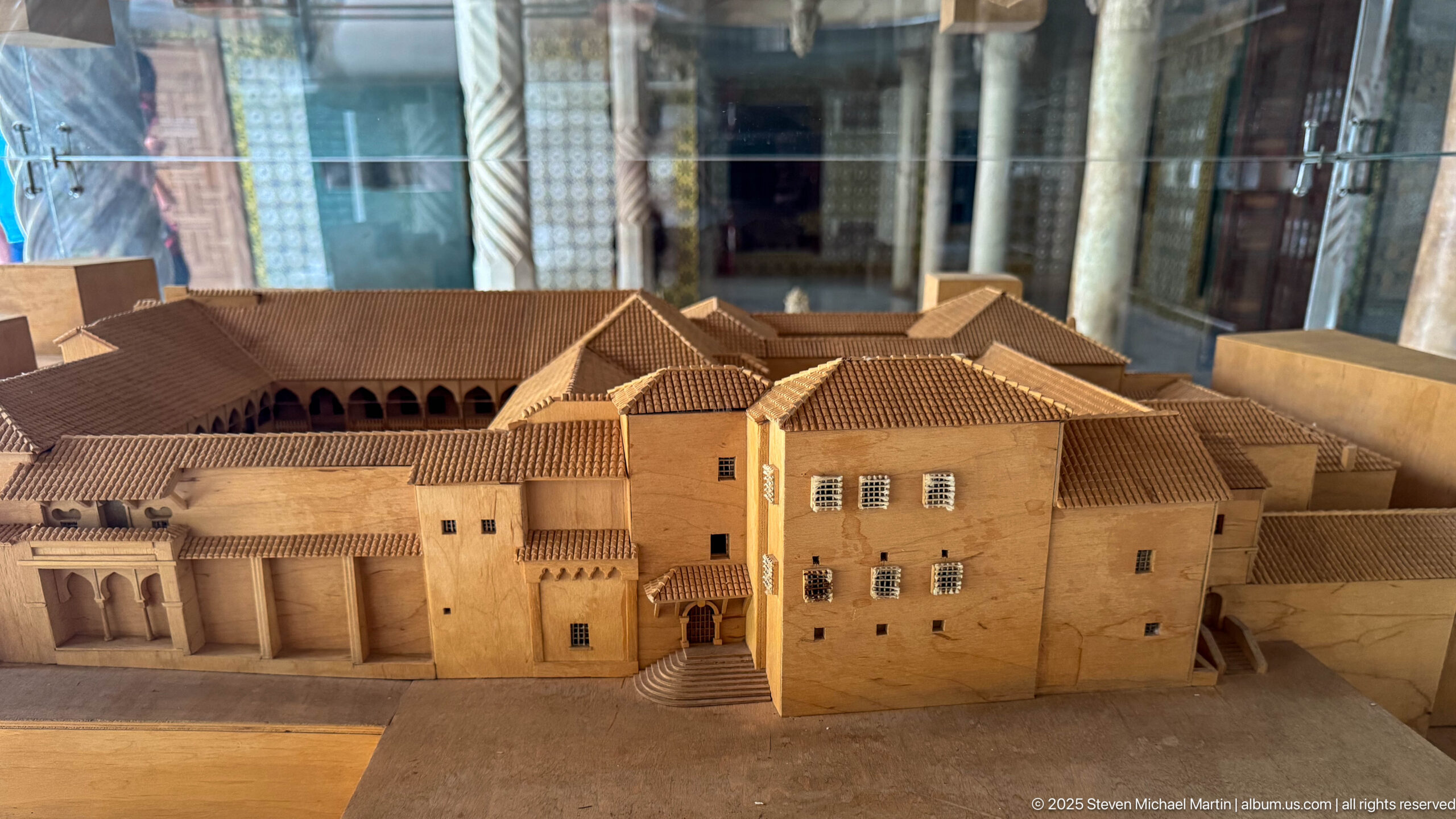
A museum scale model presents the massing of Ahmed Bey Palace as a low complex of pale walls, tiled roofs, projecting wings, and arcaded sections. The frontal viewpoint emphasizes the central entrance block and stepped approach, while the model offers an overview of exterior volumes that are difficult to perceive from within the courtyard-based palace.
Caption
A museum scale model presents the massing of Ahmed Bey Palace as a low complex of pale walls, tiled roofs, projecting wings, and arcaded sections. The frontal viewpoint emphasizes the central entrance block and stepped approach, while the model offers an overview of exterior volumes that are difficult to perceive from within the courtyard-based palace.
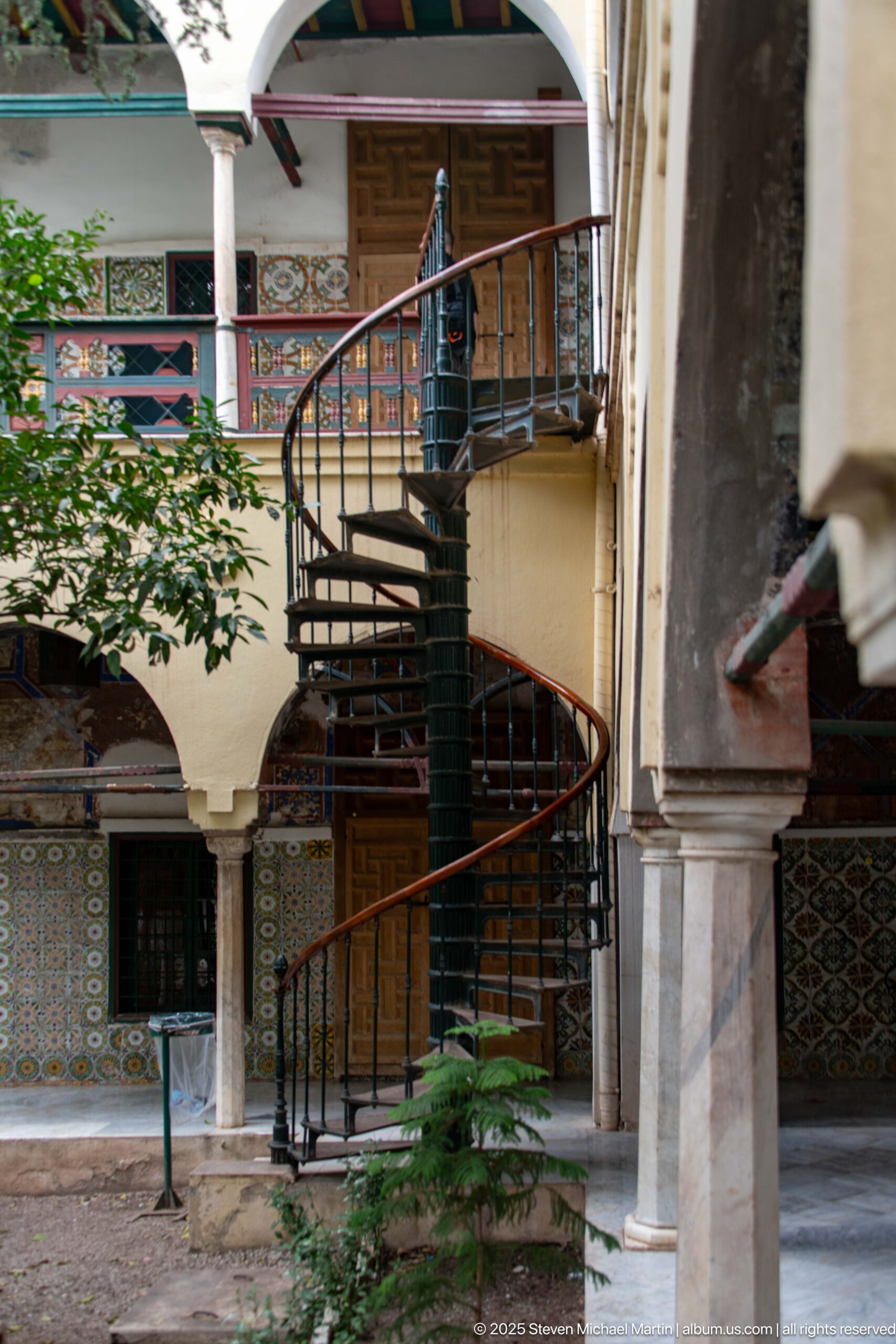
A metal spiral staircase rises between levels of an Ahmed Bey Palace courtyard, introducing a later utilitarian element into the richly decorated historic setting. Painted doors, patterned tilework, stone columns, and an upper gallery surround the stair, while foliage in the foreground softens the contrast between metal structure and ornamental architecture.
Caption
A metal spiral staircase rises between levels of an Ahmed Bey Palace courtyard, introducing a later utilitarian element into the richly decorated historic setting. Painted doors, patterned tilework, stone columns, and an upper gallery surround the stair, while foliage in the foreground softens the contrast between metal structure and ornamental architecture.
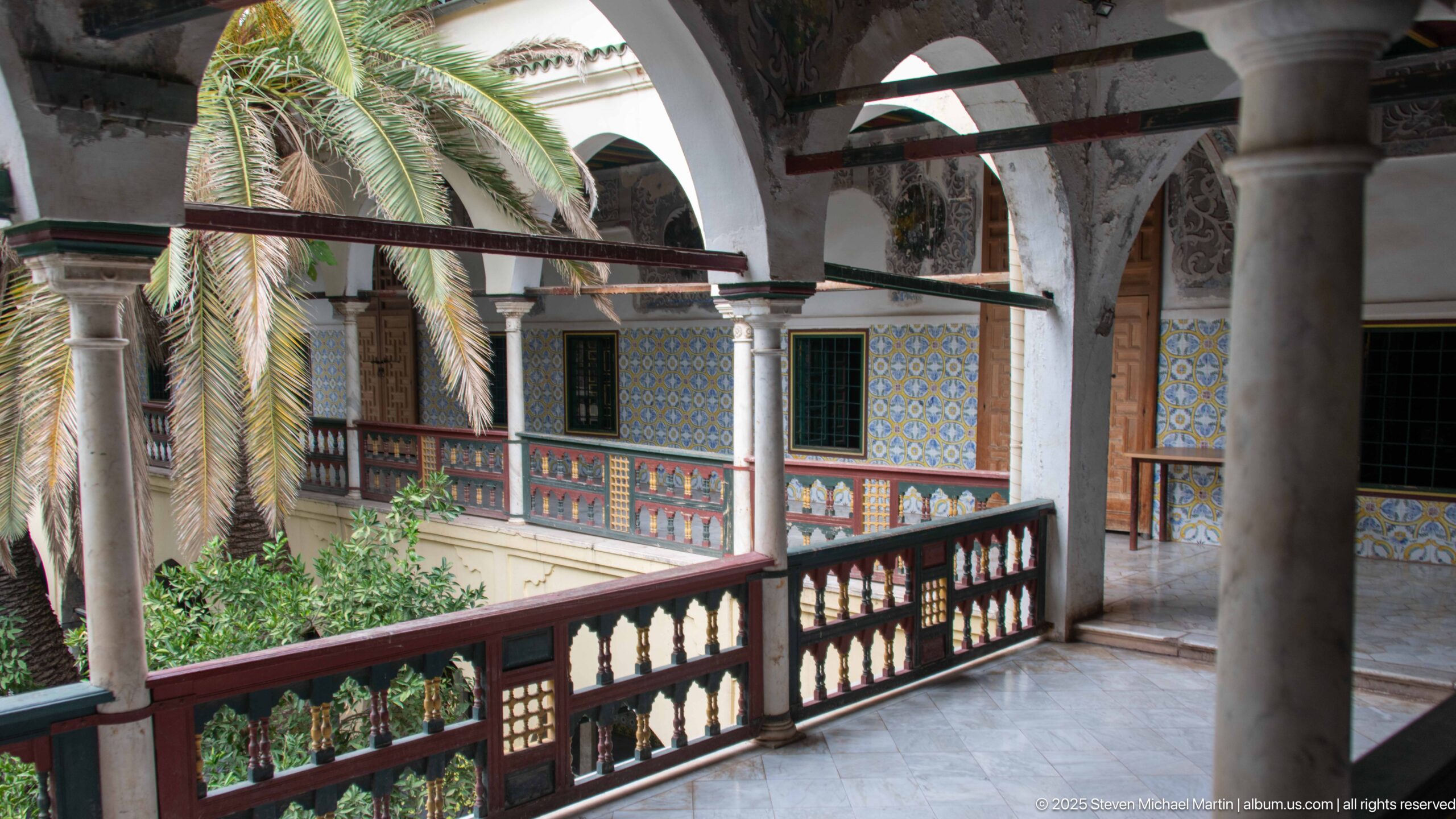
From an upper gallery at Ahmed Bey Palace, stone columns and pointed arches frame a view across the planted courtyard to another decorated balcony. Patterned tile panels and painted balustrades line the opposite walls, while palm fronds rise into the opening, emphasizing the close relationship between the palace’s two-story circulation and interior gardens.
Caption
From an upper gallery at Ahmed Bey Palace, stone columns and pointed arches frame a view across the planted courtyard to another decorated balcony. Patterned tile panels and painted balustrades line the opposite walls, while palm fronds rise into the opening, emphasizing the close relationship between the palace’s two-story circulation and interior gardens.
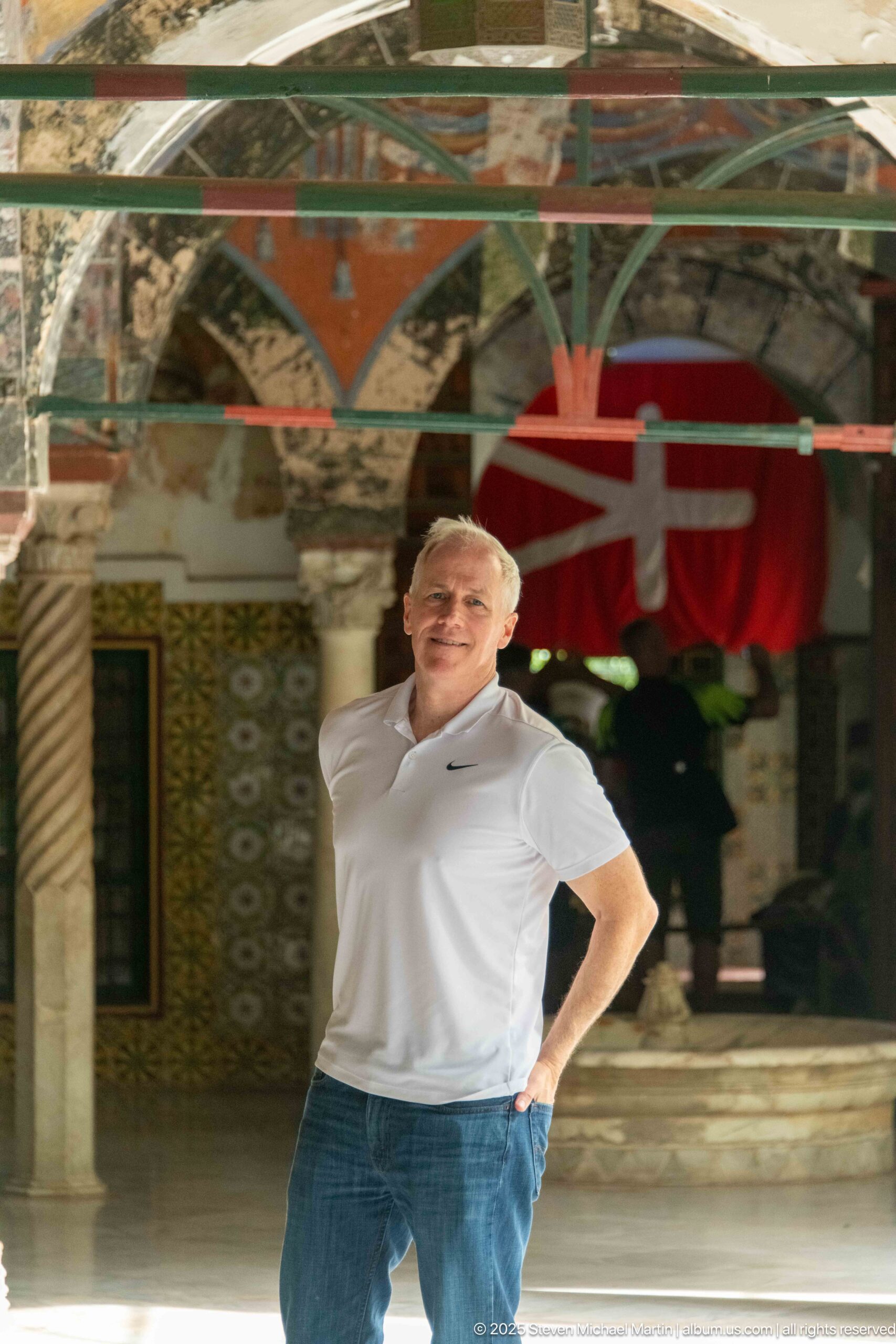
A visitor stands beneath the decorated arcade of Ahmed Bey Palace, framed by stone columns, patterned tilework, painted ceilings, and a red hanging in the background. The portrait places a contemporary human figure within the historic interior and gives an immediate sense of the scale of the surrounding columns and gallery.
Caption
A visitor stands beneath the decorated arcade of Ahmed Bey Palace, framed by stone columns, patterned tilework, painted ceilings, and a red hanging in the background. The portrait places a contemporary human figure within the historic interior and gives an immediate sense of the scale of the surrounding columns and gallery.
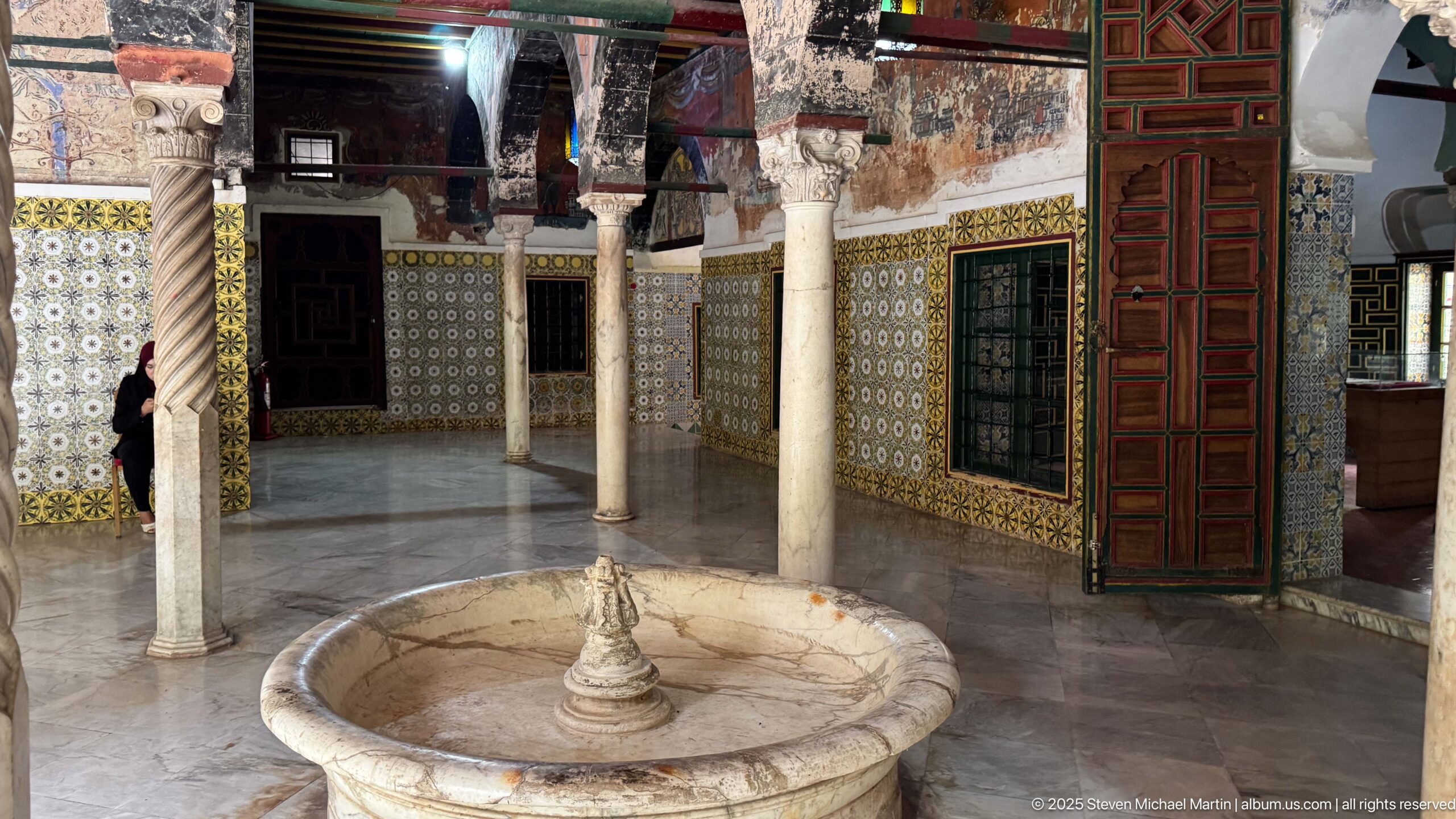
A circular stone fountain occupies the foreground of a richly decorated Ahmed Bey Palace courtyard. Slender columns rise behind the basin beneath painted arches, while patterned tilework, dark window grilles, and a tall red-brown door surround the paved court, placing the water feature at the center of a dense architectural ensemble.
Caption
A circular stone fountain occupies the foreground of a richly decorated Ahmed Bey Palace courtyard. Slender columns rise behind the basin beneath painted arches, while patterned tilework, dark window grilles, and a tall red-brown door surround the paved court, placing the water feature at the center of a dense architectural ensemble.
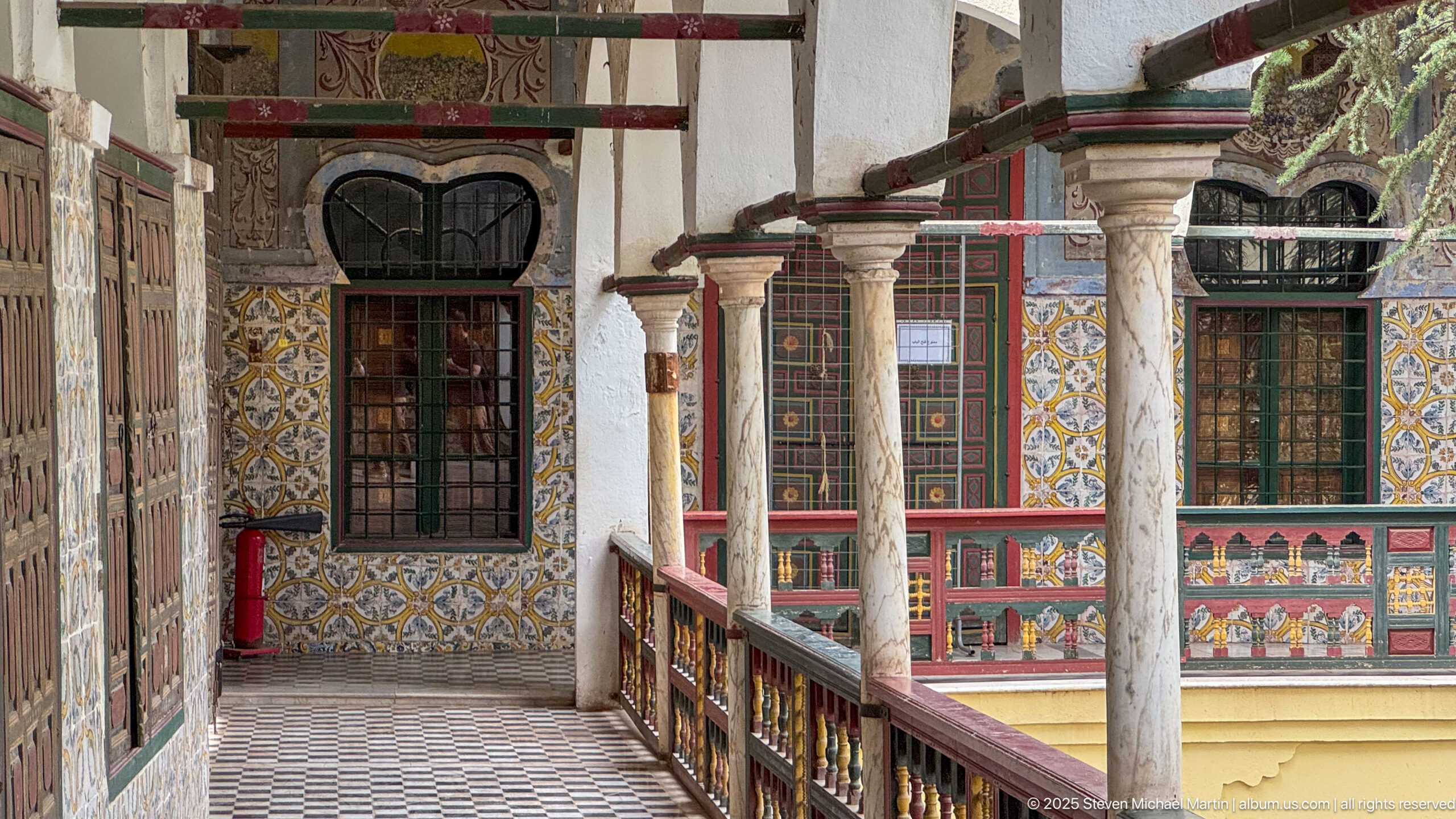
A quiet upper gallery at Ahmed Bey Palace runs between richly patterned tile walls and a painted wooden balustrade overlooking the courtyard. Slender stone columns support the arcade, while dark green window frames and a black-and-white patterned floor reinforce the layered geometry of this circulation space.
Caption
A quiet upper gallery at Ahmed Bey Palace runs between richly patterned tile walls and a painted wooden balustrade overlooking the courtyard. Slender stone columns support the arcade, while dark green window frames and a black-and-white patterned floor reinforce the layered geometry of this circulation space.
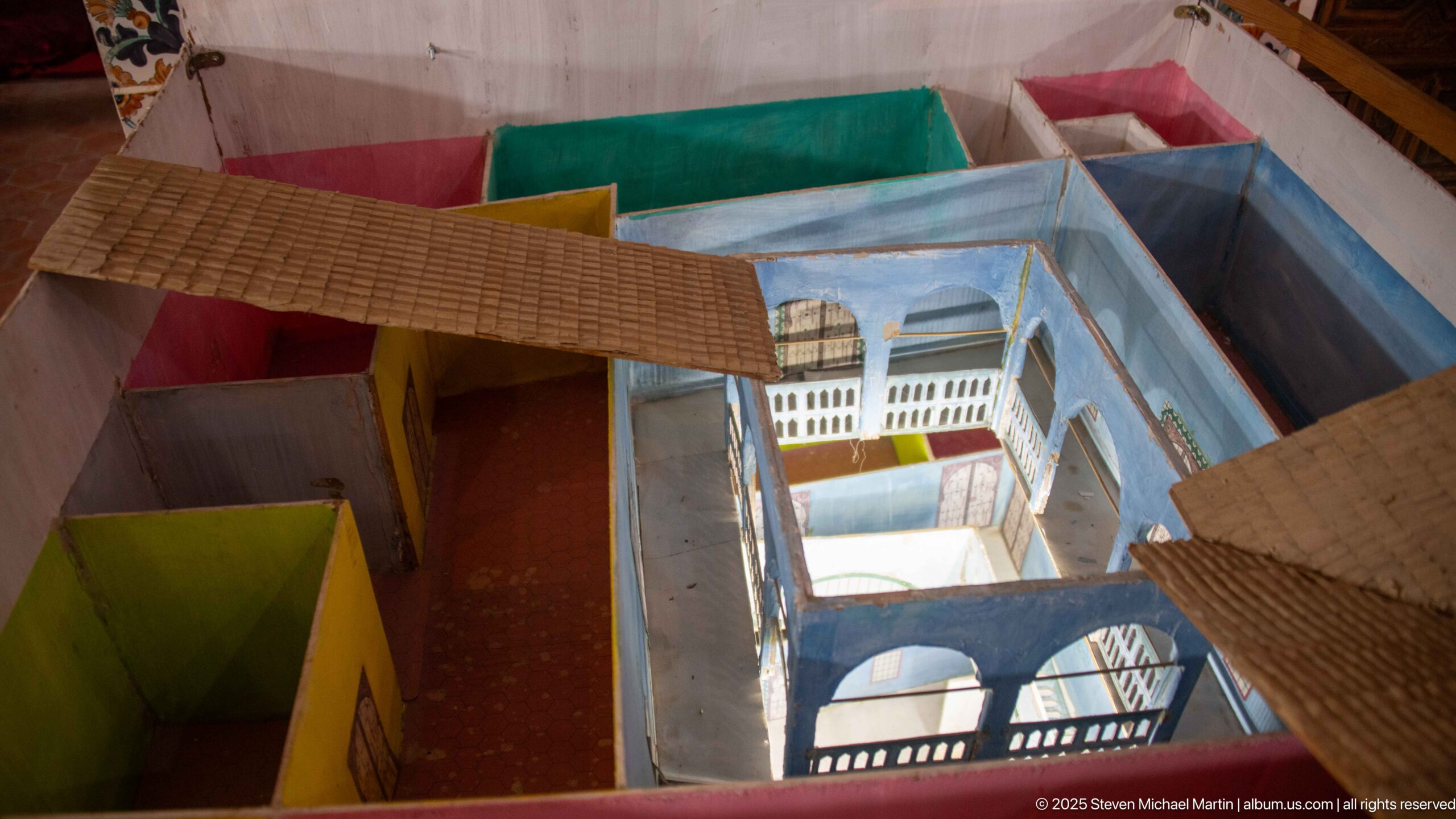
A colorful architectural model offers a cutaway view into a multi-level courtyard complex, with open rooms arranged around a central void and roof sections spanning portions of the structure. Seen from above, the model helps explain the spatial relationship between enclosed rooms, galleries, and the inward-facing courtyard organization associated with the palace.
Caption
A colorful architectural model offers a cutaway view into a multi-level courtyard complex, with open rooms arranged around a central void and roof sections spanning portions of the structure. Seen from above, the model helps explain the spatial relationship between enclosed rooms, galleries, and the inward-facing courtyard organization associated with the palace.
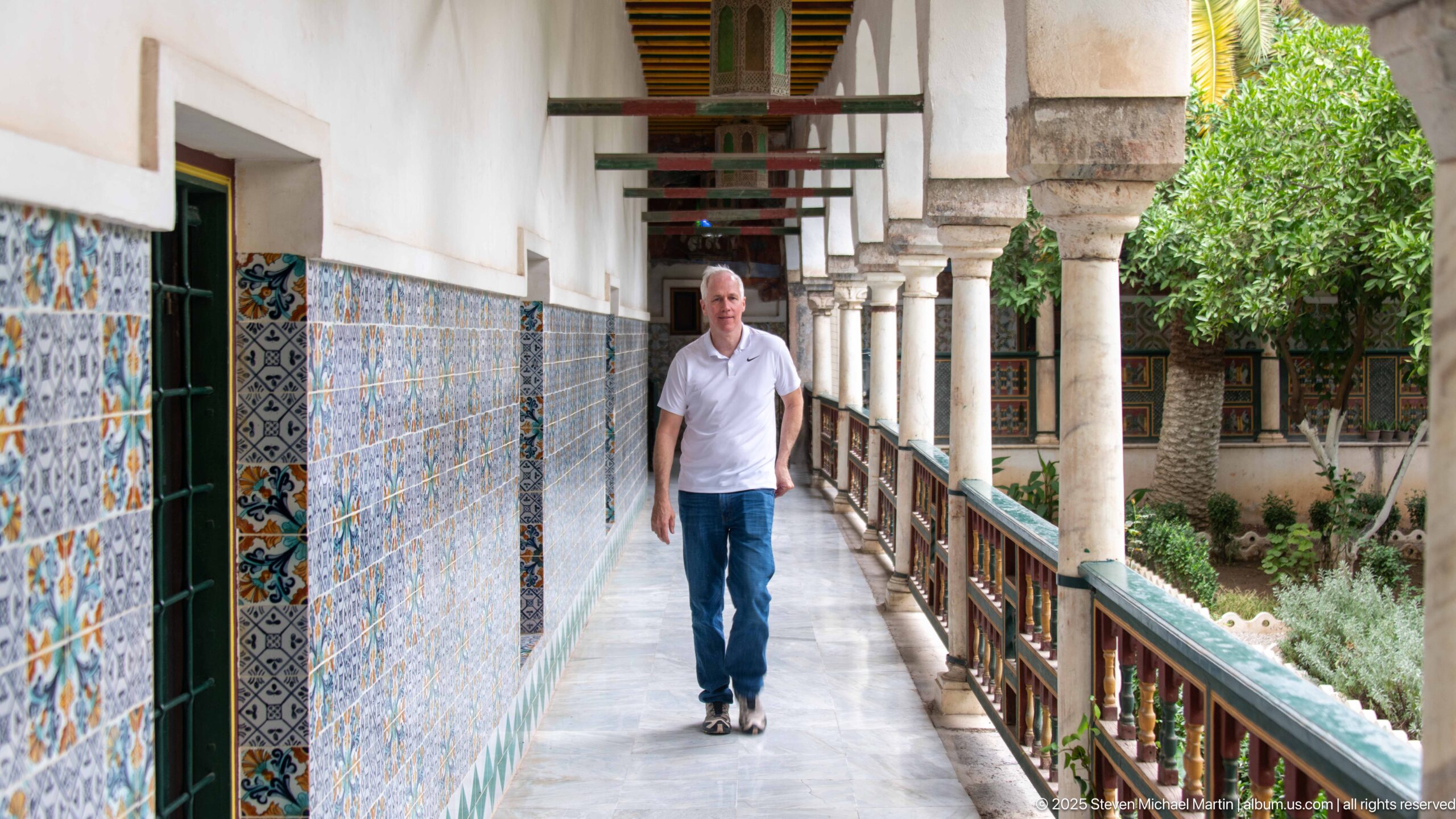
A visitor walks toward the camera along a shaded Ahmed Bey Palace gallery, with a continuous band of blue-and-orange patterned tiles on one side and stone columns opening toward the garden on the other. The long perspective and human figure make the narrow circulation space and scale of its decorative surfaces especially legible.
Caption
A visitor walks toward the camera along a shaded Ahmed Bey Palace gallery, with a continuous band of blue-and-orange patterned tiles on one side and stone columns opening toward the garden on the other. The long perspective and human figure make the narrow circulation space and scale of its decorative surfaces especially legible.
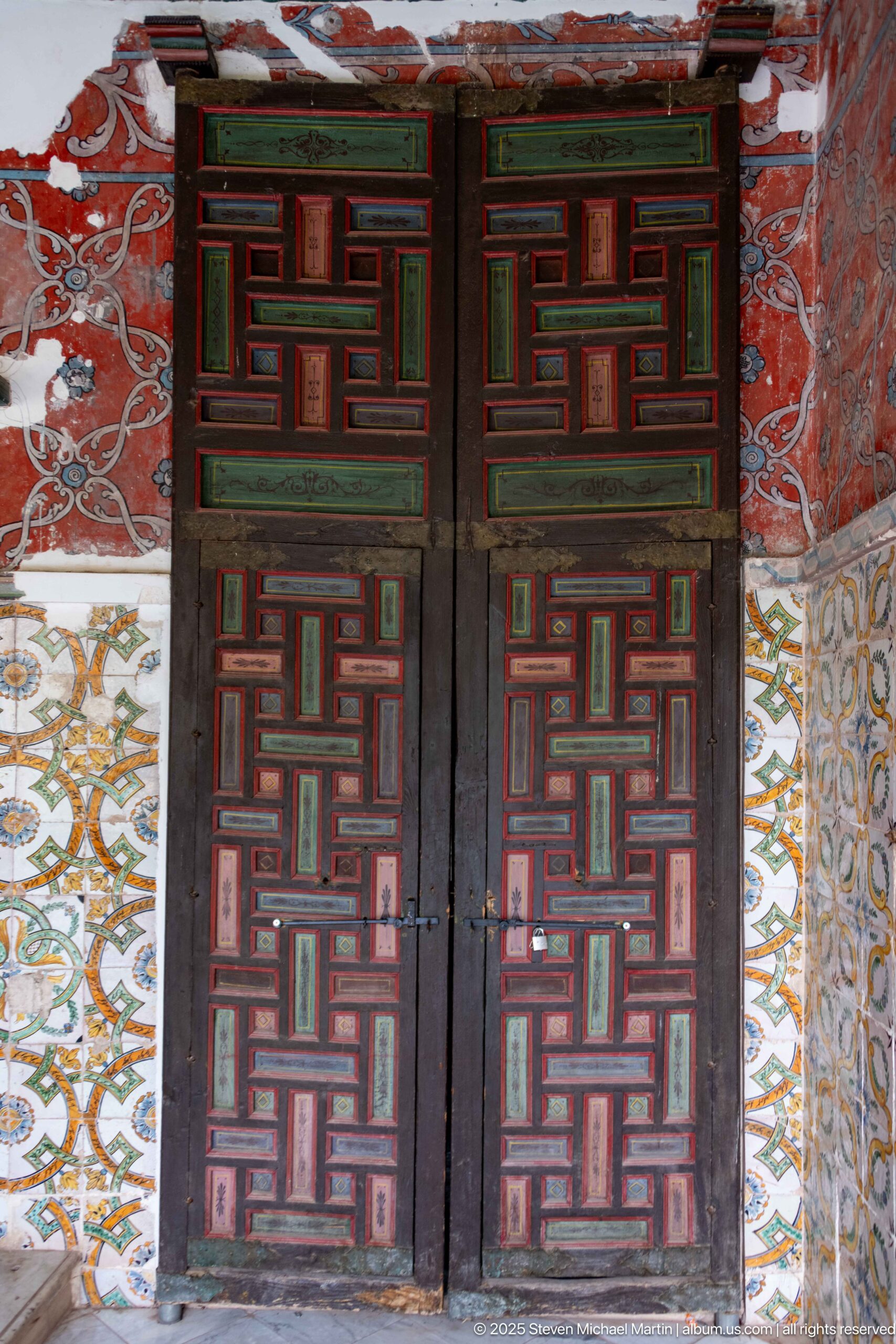
A tall pair of dark wooden doors is divided into intricate rectilinear panels picked out in muted red and green. Set beneath a heavily painted red wall and between contrasting fields of patterned tiles, the doorway shows how geometric woodwork at Ahmed Bey Palace is integrated into broader ensembles of mural and ceramic decoration.
Caption
A tall pair of dark wooden doors is divided into intricate rectilinear panels picked out in muted red and green. Set beneath a heavily painted red wall and between contrasting fields of patterned tiles, the doorway shows how geometric woodwork at Ahmed Bey Palace is integrated into broader ensembles of mural and ceramic decoration.
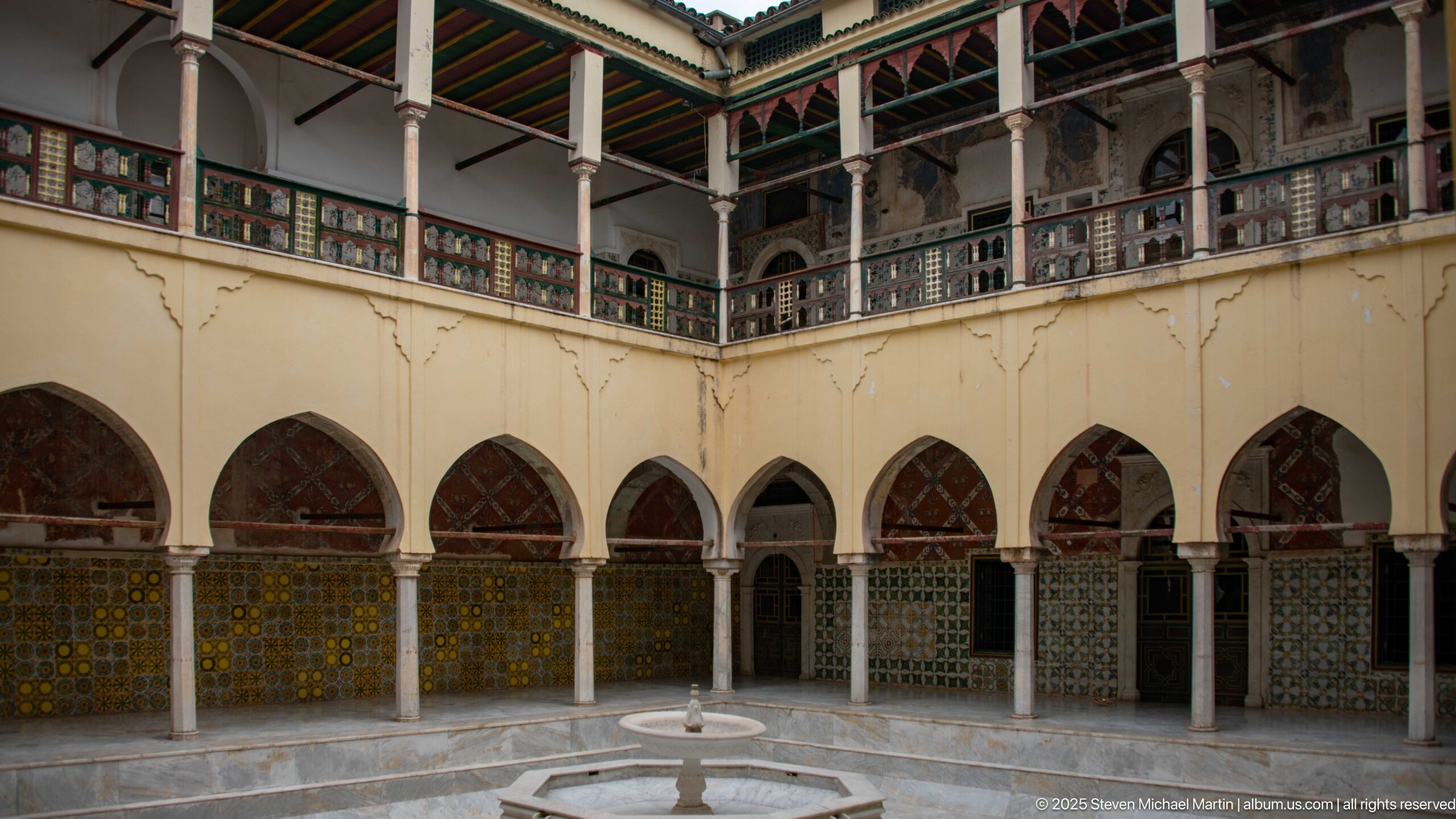
A formal courtyard at Ahmed Bey Palace is enclosed by pointed ground-floor arches and an upper gallery carried on slender columns. Patterned tiles cover the lower walls, painted balustrades ring the upper level, and a small fountain occupies the paved center, giving a clear overview of the court’s architectural organization.
Caption
A formal courtyard at Ahmed Bey Palace is enclosed by pointed ground-floor arches and an upper gallery carried on slender columns. Patterned tiles cover the lower walls, painted balustrades ring the upper level, and a small fountain occupies the paved center, giving a clear overview of the court’s architectural organization.
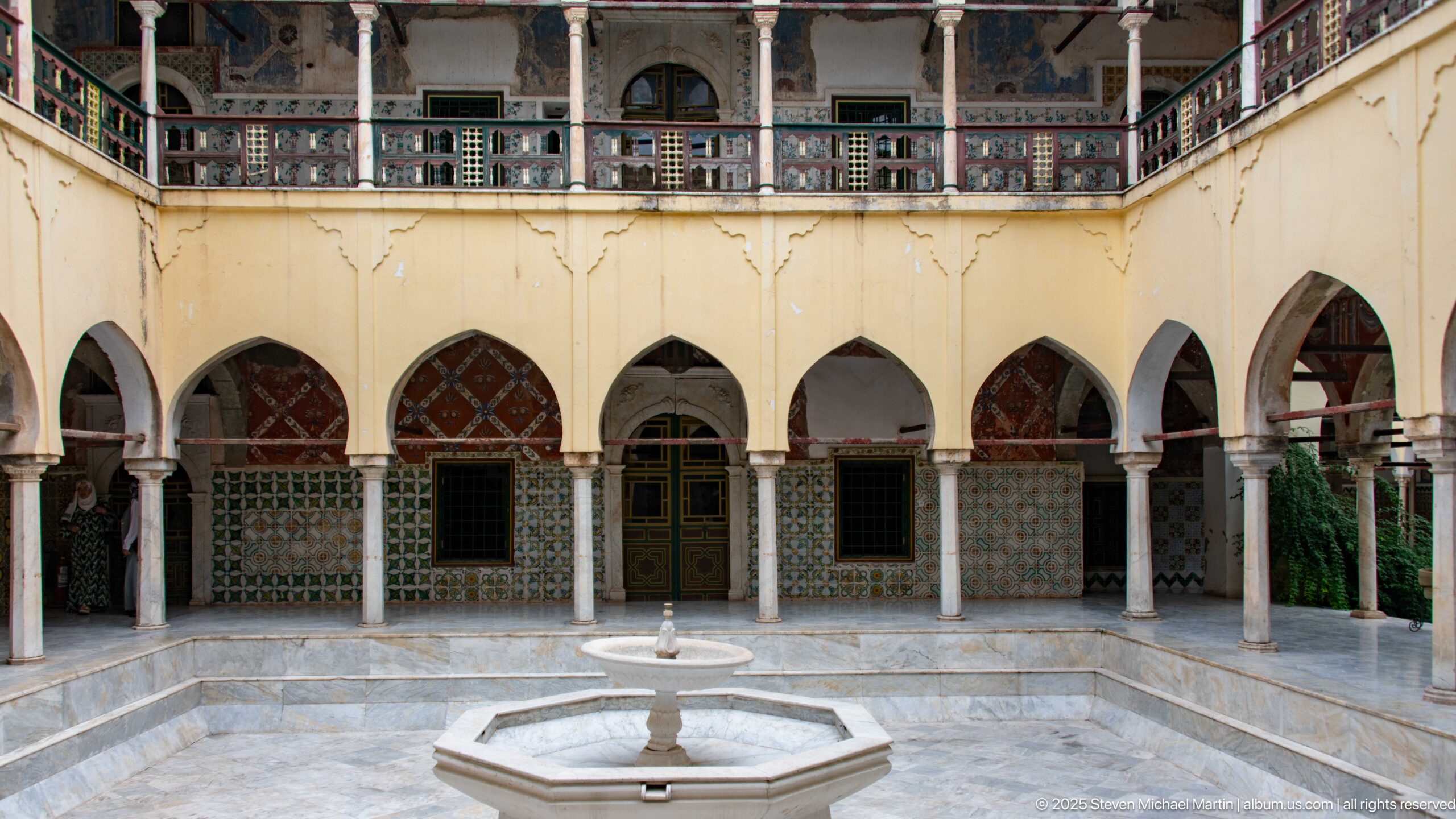
An octagonal basin and small central fountain anchor the foreground of this Ahmed Bey Palace courtyard. Behind it, a regular sequence of pointed arches rests on slender columns above tiled walls and painted doors, while the upper gallery forms a second decorated tier around the open court.
Caption
An octagonal basin and small central fountain anchor the foreground of this Ahmed Bey Palace courtyard. Behind it, a regular sequence of pointed arches rests on slender columns above tiled walls and painted doors, while the upper gallery forms a second decorated tier around the open court.
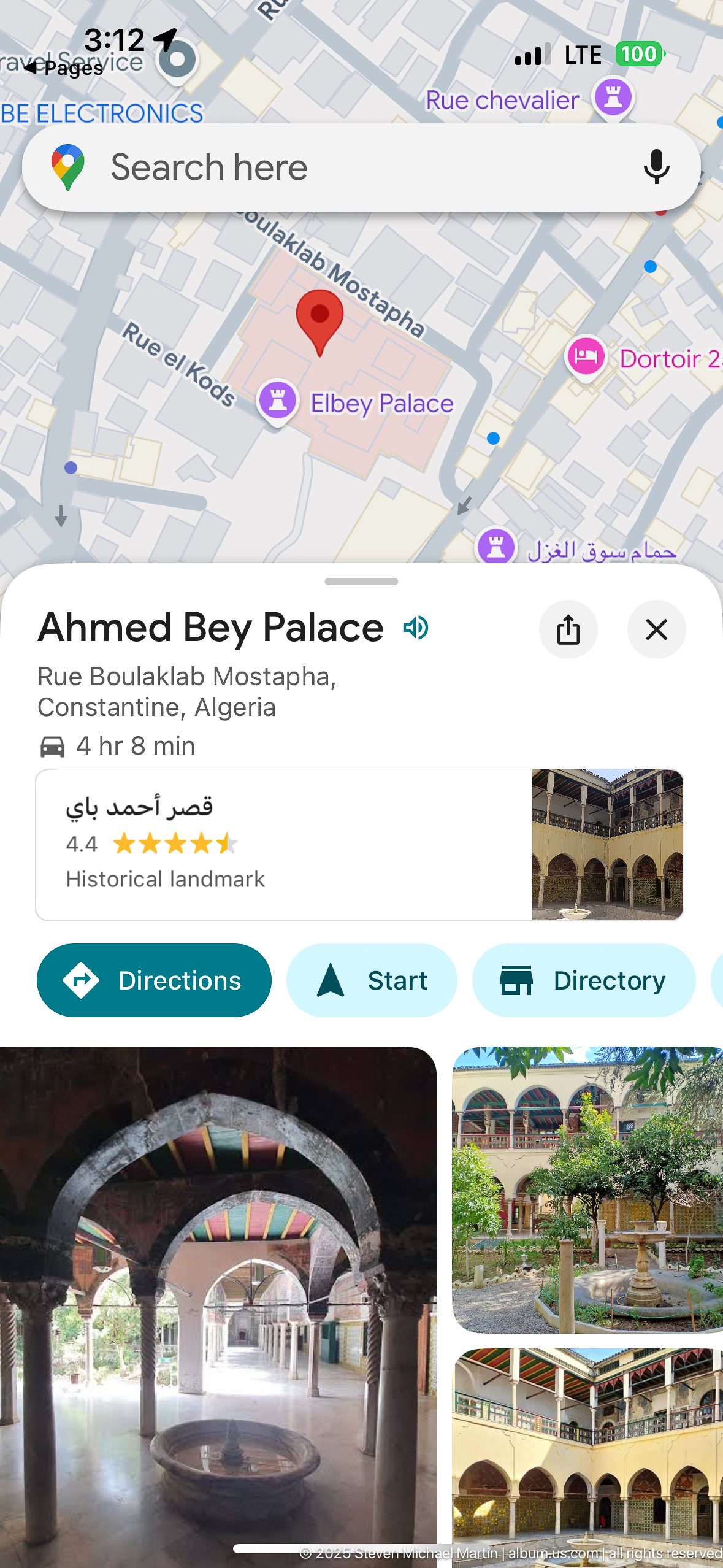
An on-screen map listing locates Ahmed Bey Palace in Constantine, Algeria, providing a geographic introduction to the portfolio before the architectural sequence begins. The listing includes the palace name, its museum classification, and a small set of interior photographs, visually establishing the destination rather than documenting the historic fabric itself.
Caption
An on-screen map listing locates Ahmed Bey Palace in Constantine, Algeria, providing a geographic introduction to the portfolio before the architectural sequence begins. The listing includes the palace name, its museum classification, and a small set of interior photographs, visually establishing the destination rather than documenting the historic fabric itself.
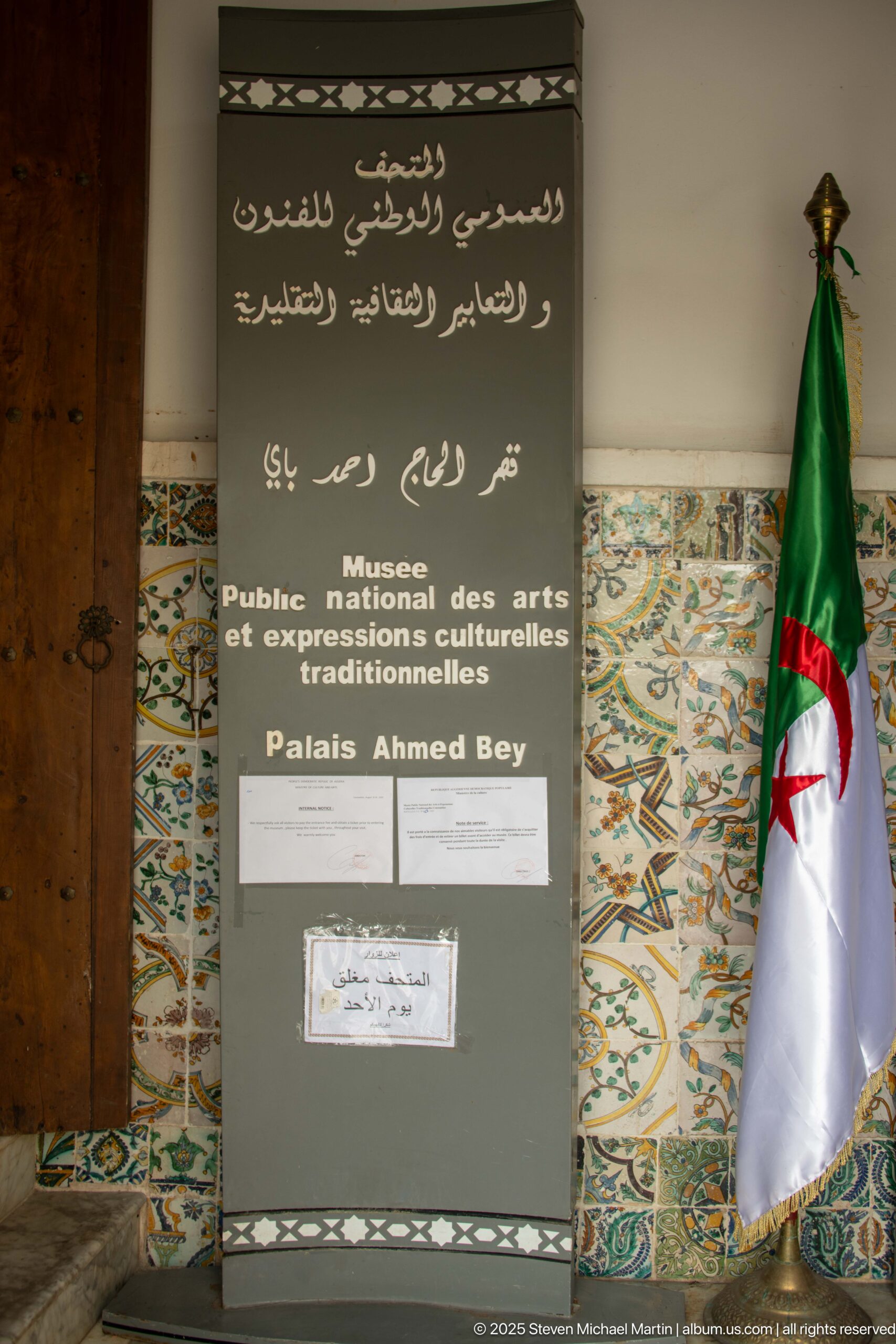
Inside Ahmed Bey Palace, a freestanding bilingual museum panel stands beside the Algerian flag against walls faced with colorful patterned ceramic tiles. The entrance display identifies the National Public Museum of Arts and Traditional Cultural Expressions, linking the historic palace interior to its contemporary museum use.
Caption
Inside Ahmed Bey Palace, a freestanding bilingual museum panel stands beside the Algerian flag against walls faced with colorful patterned ceramic tiles. The entrance display identifies the National Public Museum of Arts and Traditional Cultural Expressions, linking the historic palace interior to its contemporary museum use.
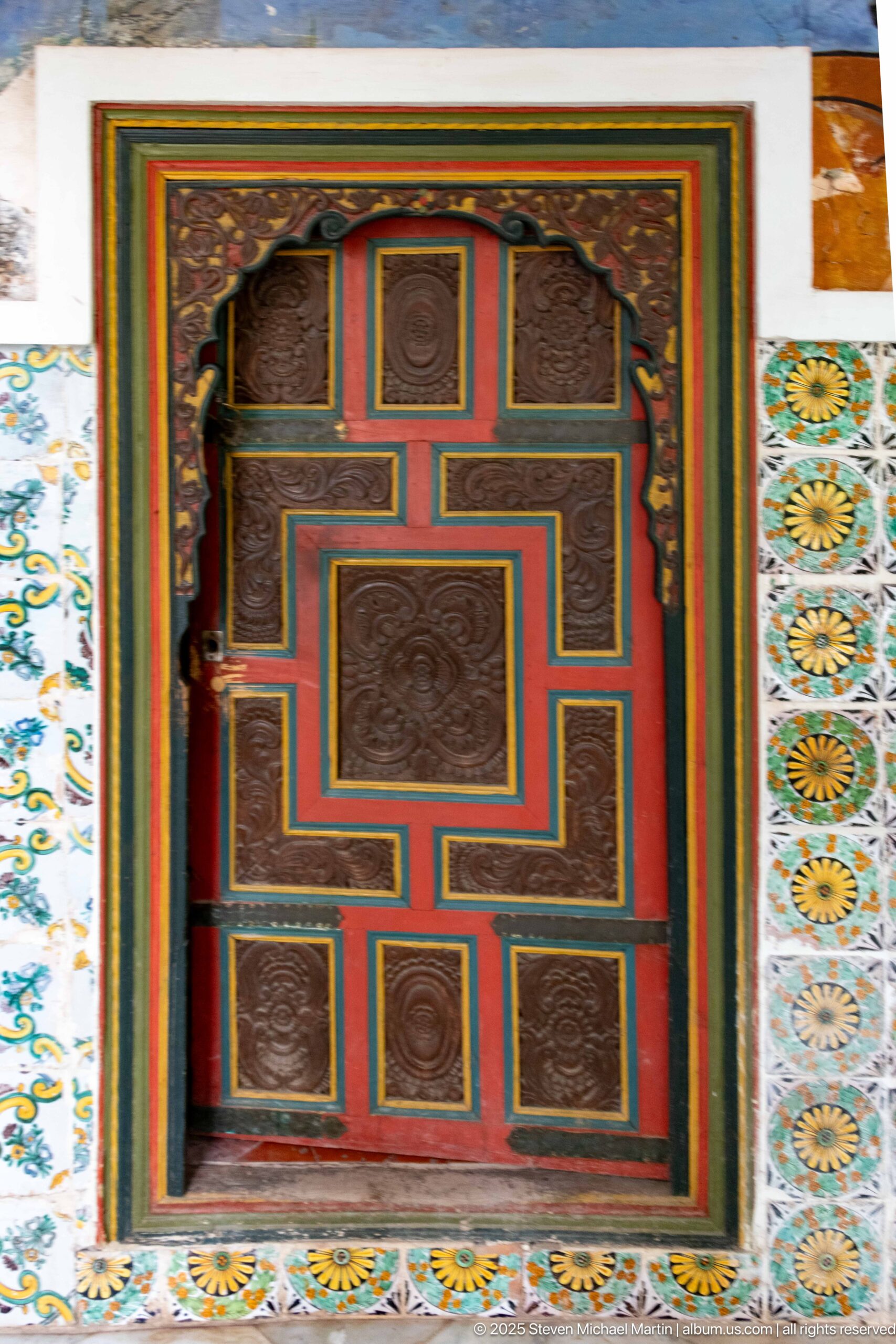
A compact wooden door at Ahmed Bey Palace is organized as a dense grid of recessed geometric panels painted in red, green, yellow, and dark brown. Set within a wall of patterned ceramic tiles, the door demonstrates the palace interior’s layered use of color, geometry, woodwork, and glazed decoration.
Caption
A compact wooden door at Ahmed Bey Palace is organized as a dense grid of recessed geometric panels painted in red, green, yellow, and dark brown. Set within a wall of patterned ceramic tiles, the door demonstrates the palace interior’s layered use of color, geometry, woodwork, and glazed decoration.
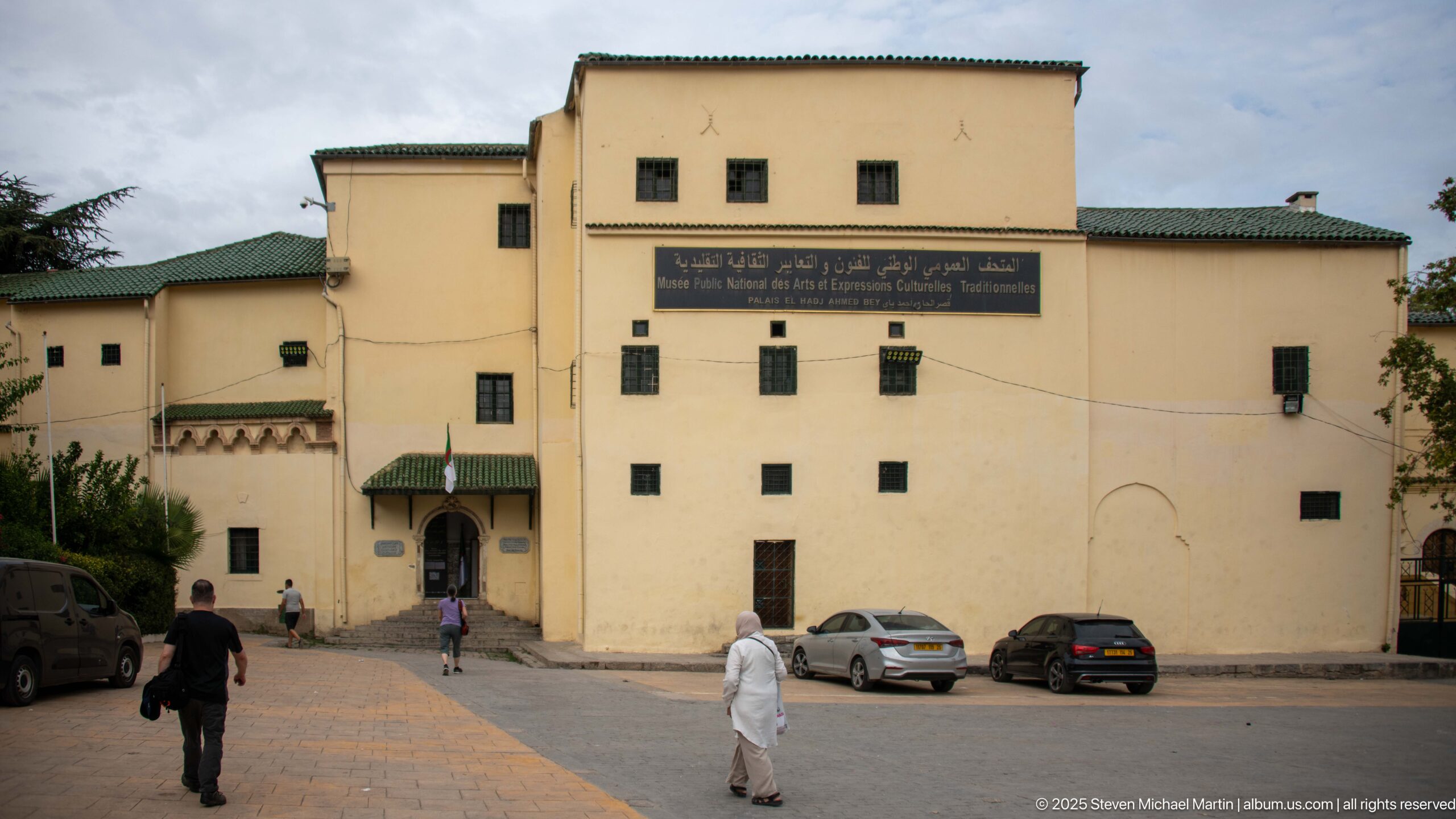
The restrained exterior of Ahmed Bey Palace presents pale rendered walls, small rectangular windows, green-tiled eaves, and a modest entrance opening onto a paved square. A bilingual museum sign identifies the building’s present cultural function, while pedestrians and parked cars give the view contemporary urban scale and context.
Caption
The restrained exterior of Ahmed Bey Palace presents pale rendered walls, small rectangular windows, green-tiled eaves, and a modest entrance opening onto a paved square. A bilingual museum sign identifies the building’s present cultural function, while pedestrians and parked cars give the view contemporary urban scale and context.
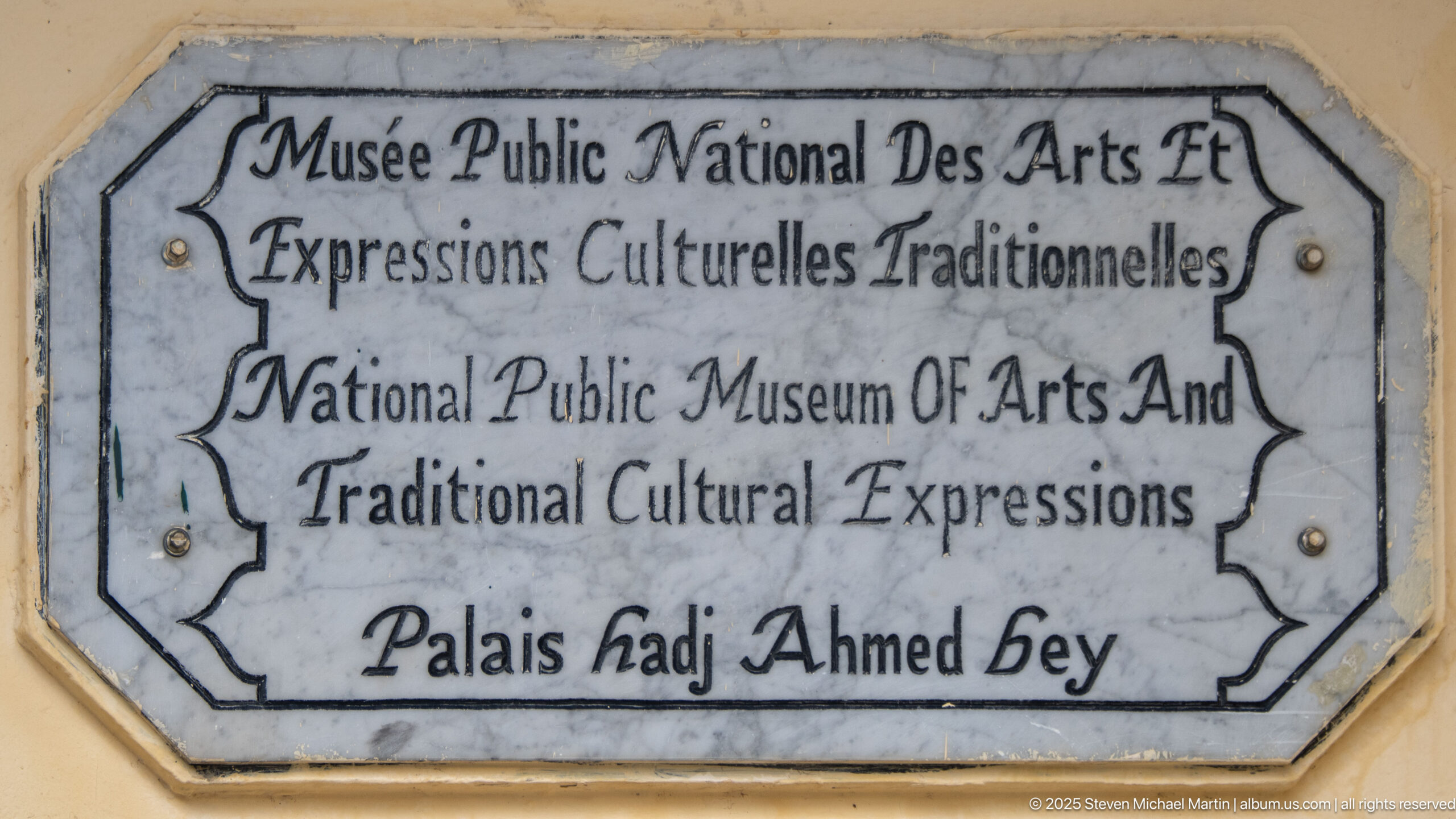
A weathered wall plaque identifies the site in French and English as the National Public Museum of Arts and Traditional Cultural Expressions at Palais Hadj Ahmed Bey. Its hand-lettered appearance and multilingual wording document the palace’s modern museum role while preserving the historic name of the complex.
Caption
A weathered wall plaque identifies the site in French and English as the National Public Museum of Arts and Traditional Cultural Expressions at Palais Hadj Ahmed Bey. Its hand-lettered appearance and multilingual wording document the palace’s modern museum role while preserving the historic name of the complex.
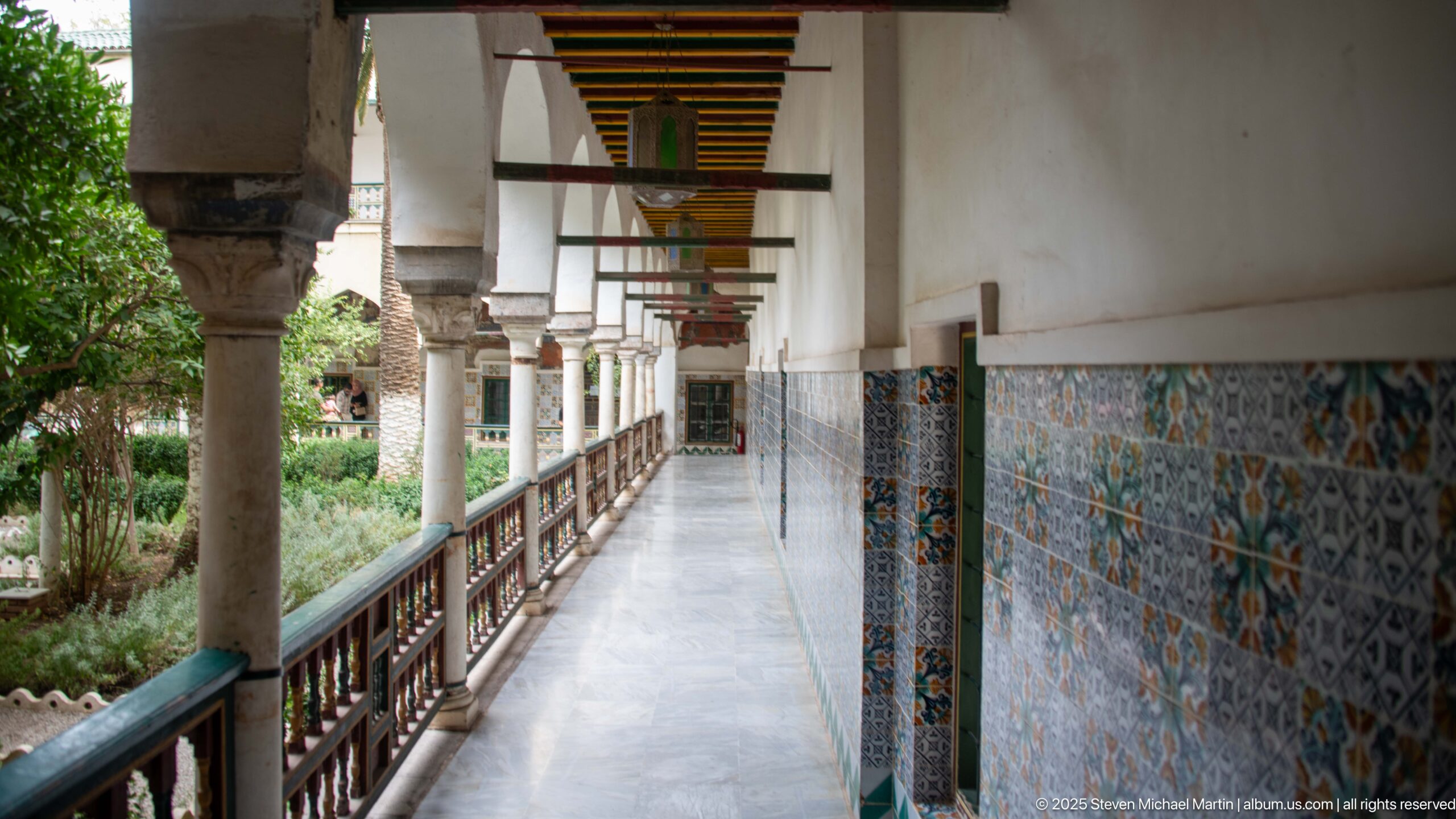
A long courtyard-side gallery at Ahmed Bey Palace pairs a polished stone floor with a high band of multicolored patterned tiles. Slender columns and a painted timber ceiling frame the open garden side, while the uninterrupted perspective emphasizes the palace’s circulation around planted interior courts.
Caption
A long courtyard-side gallery at Ahmed Bey Palace pairs a polished stone floor with a high band of multicolored patterned tiles. Slender columns and a painted timber ceiling frame the open garden side, while the uninterrupted perspective emphasizes the palace’s circulation around planted interior courts.
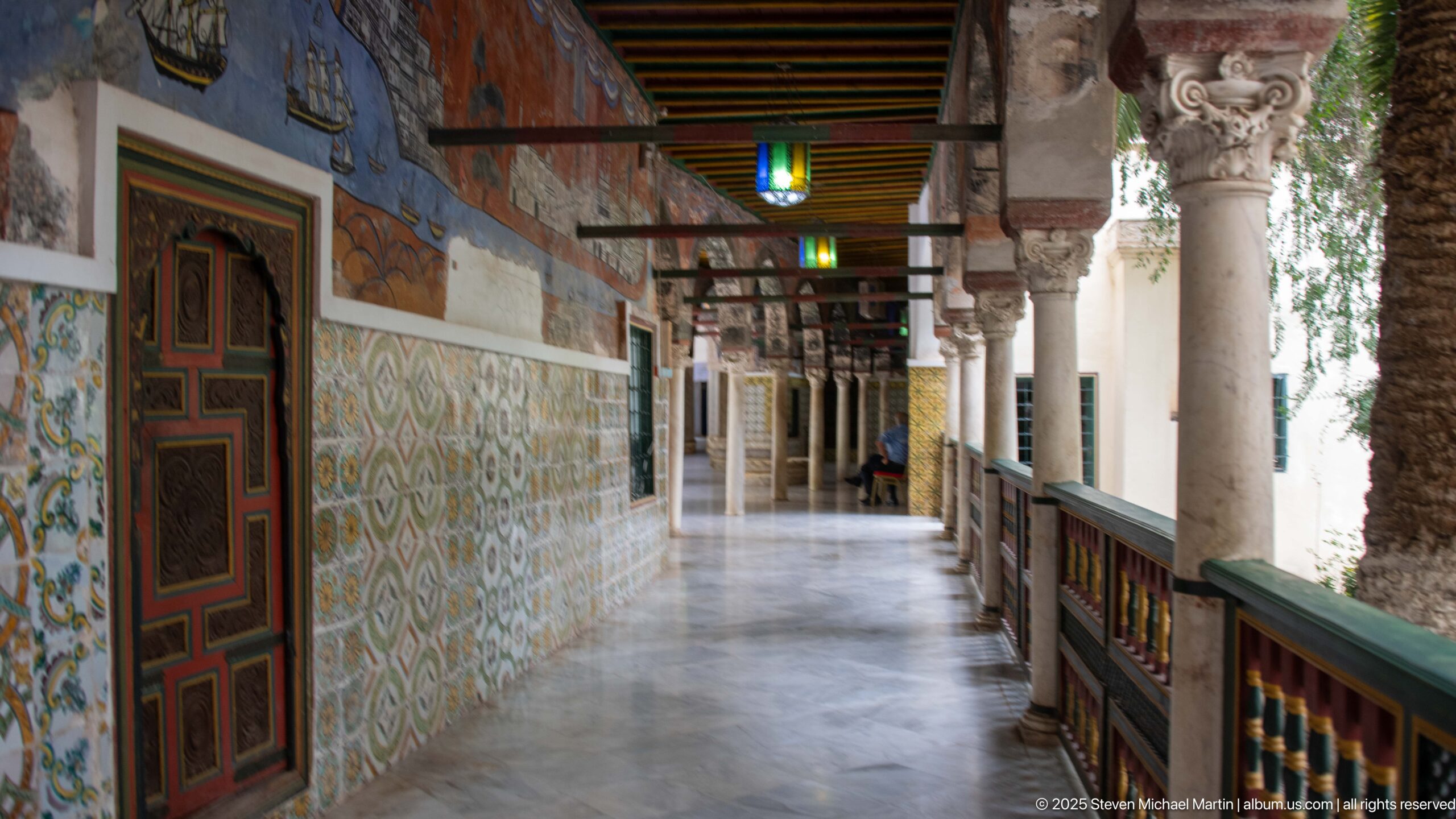
An arcaded passage in Ahmed Bey Palace combines carved stone capitals, painted wall decoration, geometric ceramic tilework, and a richly colored wooden door. Receding columns and roof beams lead the eye along the gallery, showing how architectural structure and dense surface ornament are integrated around the palace courtyard.
Caption
An arcaded passage in Ahmed Bey Palace combines carved stone capitals, painted wall decoration, geometric ceramic tilework, and a richly colored wooden door. Receding columns and roof beams lead the eye along the gallery, showing how architectural structure and dense surface ornament are integrated around the palace courtyard.
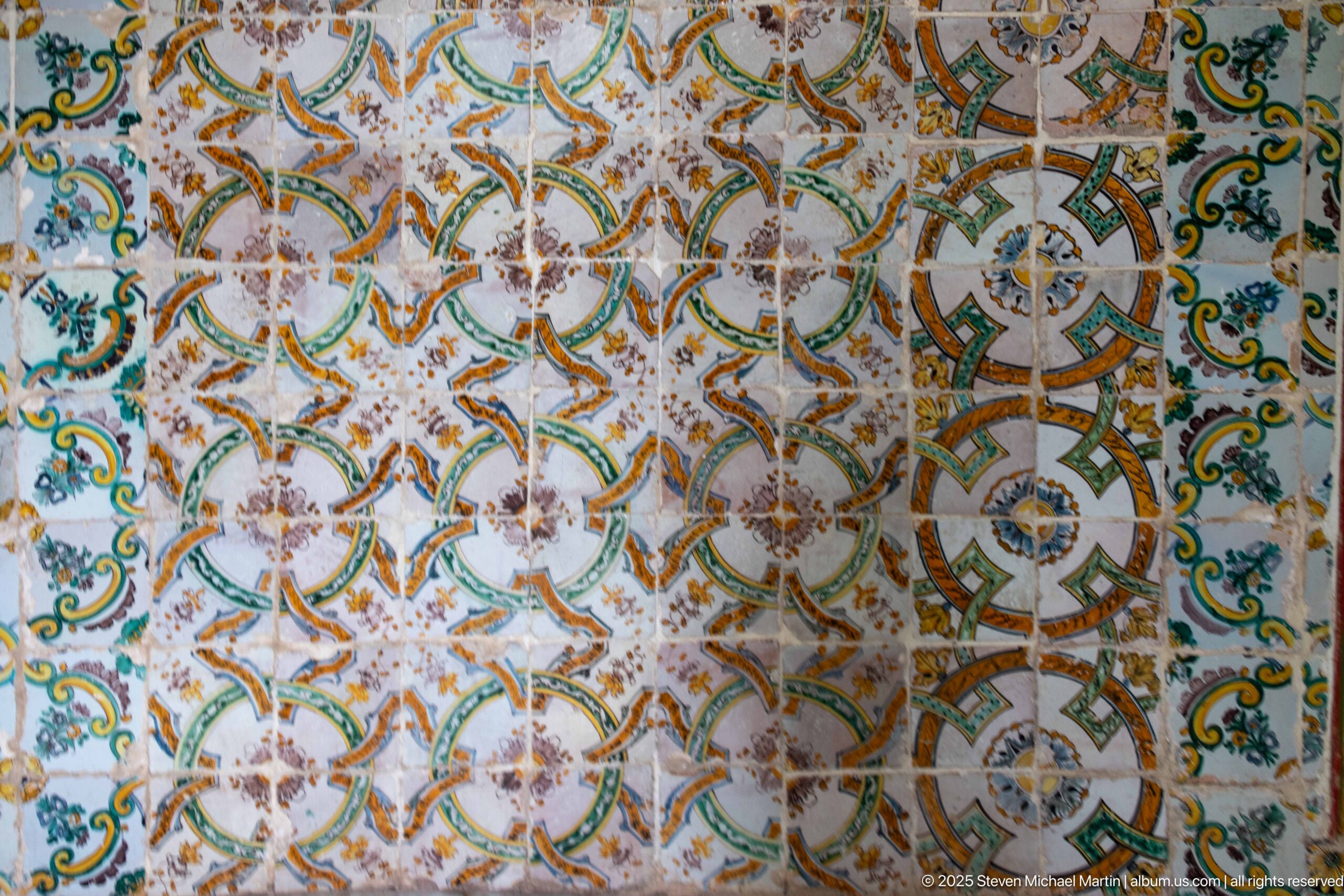
A close view of Ahmed Bey Palace tilework reveals repeating interlaced medallions, stylized foliage, and small floral motifs in green, blue, ochre, and brown. Variations in pattern and visible wear across individual tiles make the surface legible as an assembled decorative field rather than a single painted composition.
Caption
A close view of Ahmed Bey Palace tilework reveals repeating interlaced medallions, stylized foliage, and small floral motifs in green, blue, ochre, and brown. Variations in pattern and visible wear across individual tiles make the surface legible as an assembled decorative field rather than a single painted composition.
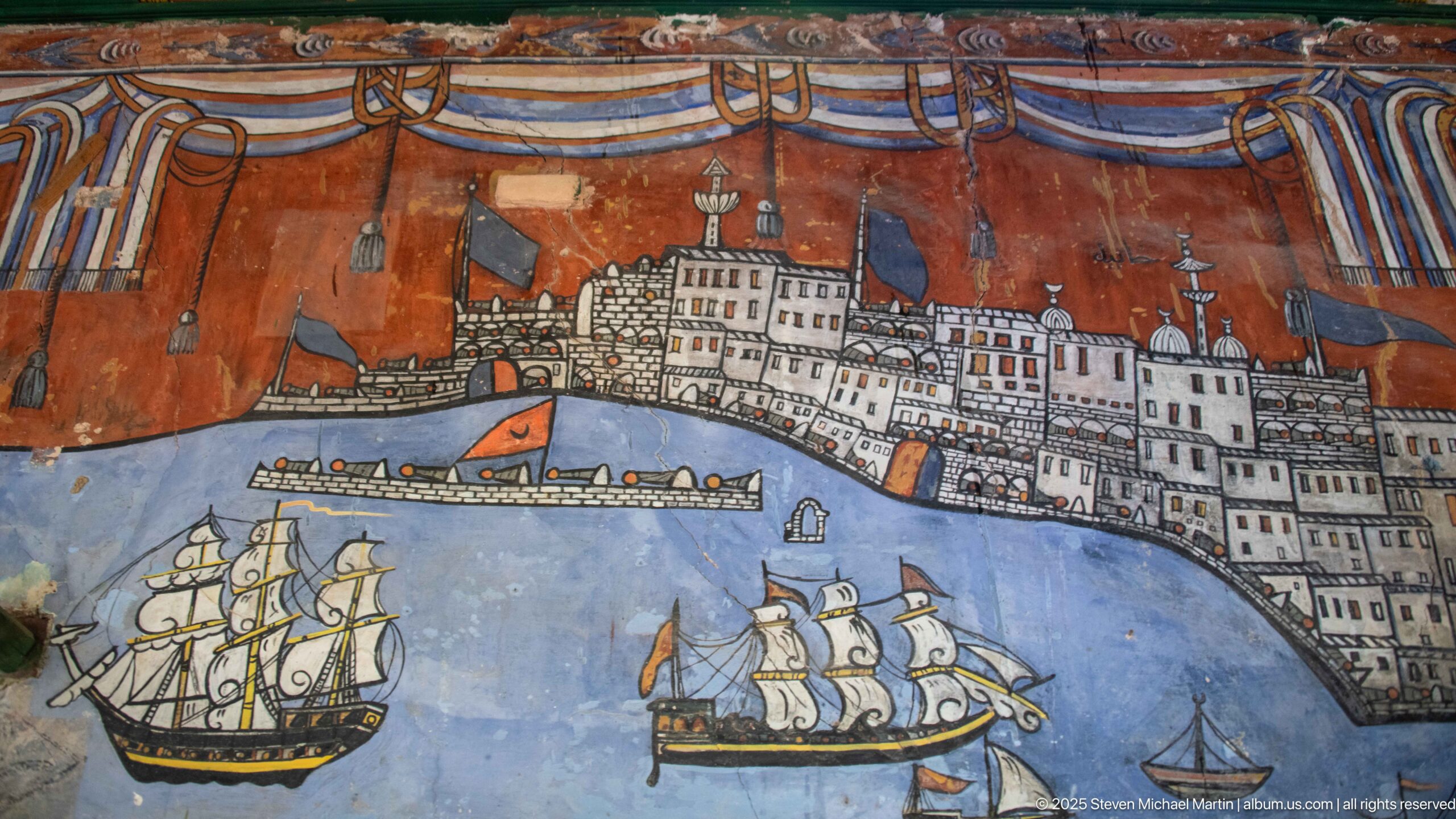
A palace wall painting depicts a fortified coastal city rising above blue water as sailing vessels and a steam-powered ship move across the foreground. Framed by painted drapery and architectural motifs, the scene belongs to the extensive narrative decoration visible throughout Ahmed Bey Palace, though the precise city represented is not certain from this view.
Caption
A palace wall painting depicts a fortified coastal city rising above blue water as sailing vessels and a steam-powered ship move across the foreground. Framed by painted drapery and architectural motifs, the scene belongs to the extensive narrative decoration visible throughout Ahmed Bey Palace, though the precise city represented is not certain from this view.
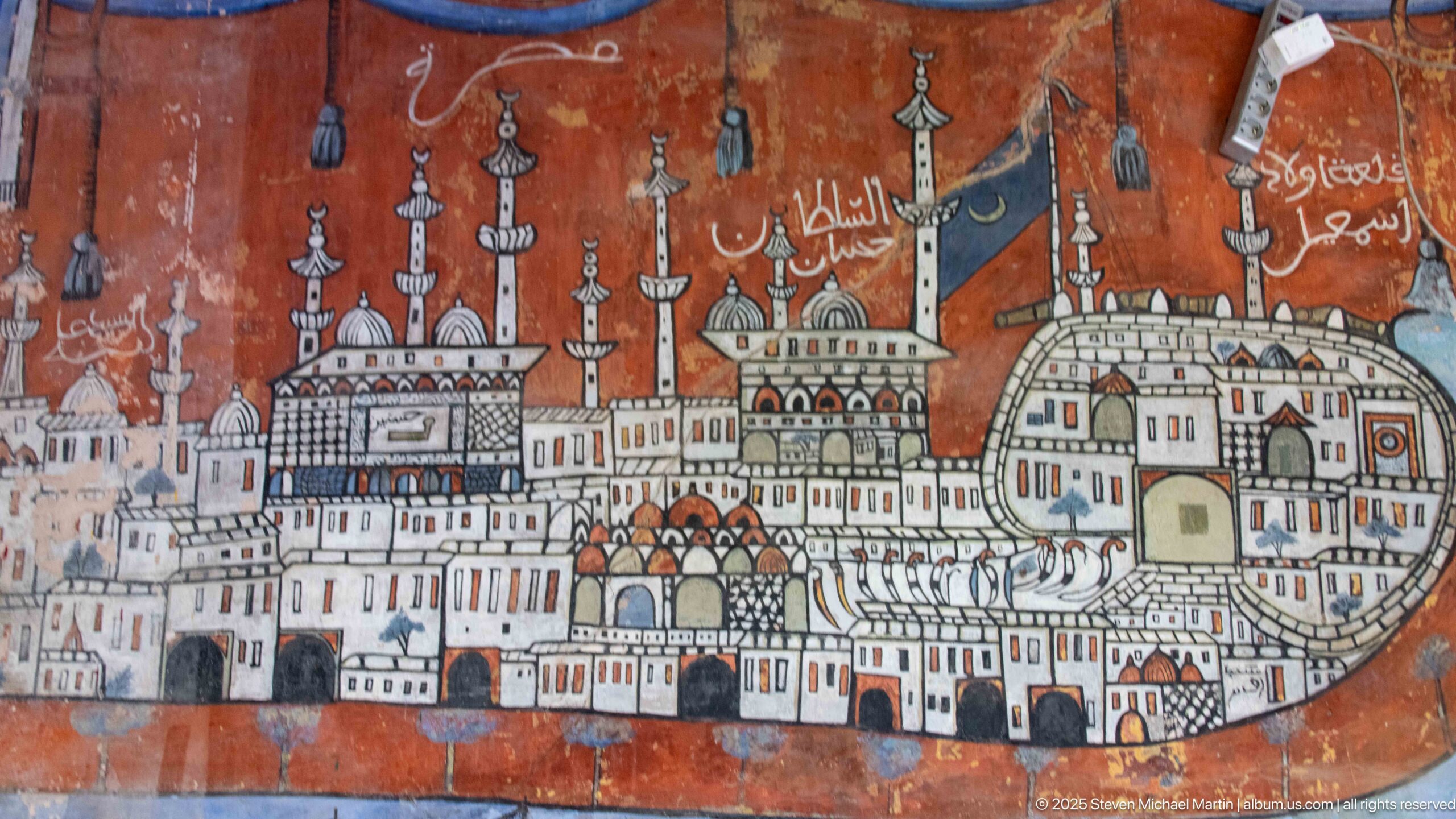
A reddish wall painting presents a dense architectural panorama of domes, minarets, towers, and monumental gateways, accompanied by Arabic inscriptions near the upper edge. The highly schematic cityscape is one of the palace’s narrative mural subjects; the visible proof sheet supports the architectural description but not a secure identification of the represented place.
Caption
A reddish wall painting presents a dense architectural panorama of domes, minarets, towers, and monumental gateways, accompanied by Arabic inscriptions near the upper edge. The highly schematic cityscape is one of the palace’s narrative mural subjects; the visible proof sheet supports the architectural description but not a secure identification of the represented place.
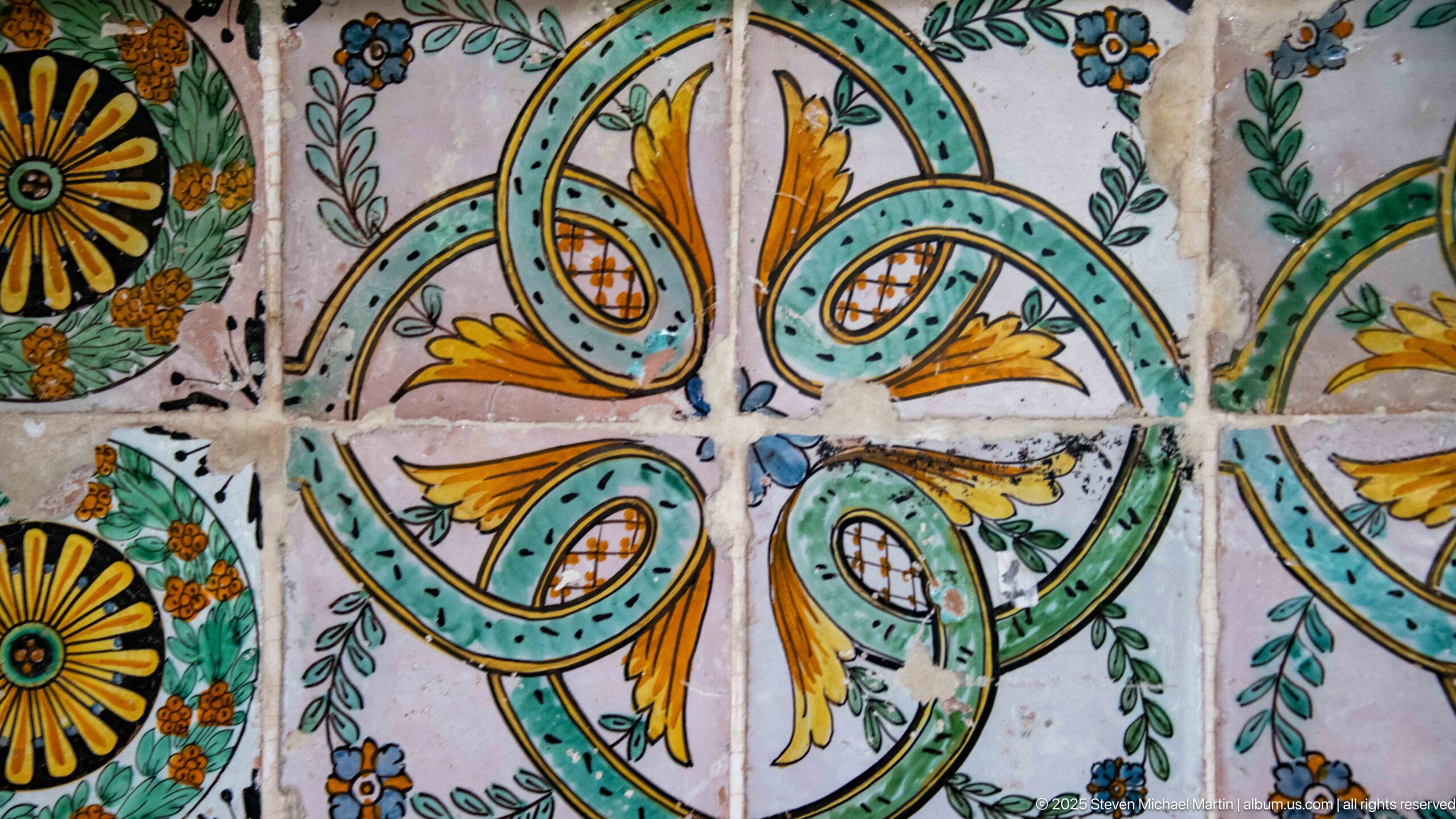
A tight detail isolates a four-lobed vegetal motif outlined in turquoise and green, with ochre leaf forms curling inward around the center. Cracks, chips, and uneven joints remain visible, allowing the decorative pattern at Ahmed Bey Palace to be read together with the material evidence of age and repair.
Caption
A tight detail isolates a four-lobed vegetal motif outlined in turquoise and green, with ochre leaf forms curling inward around the center. Cracks, chips, and uneven joints remain visible, allowing the decorative pattern at Ahmed Bey Palace to be read together with the material evidence of age and repair.
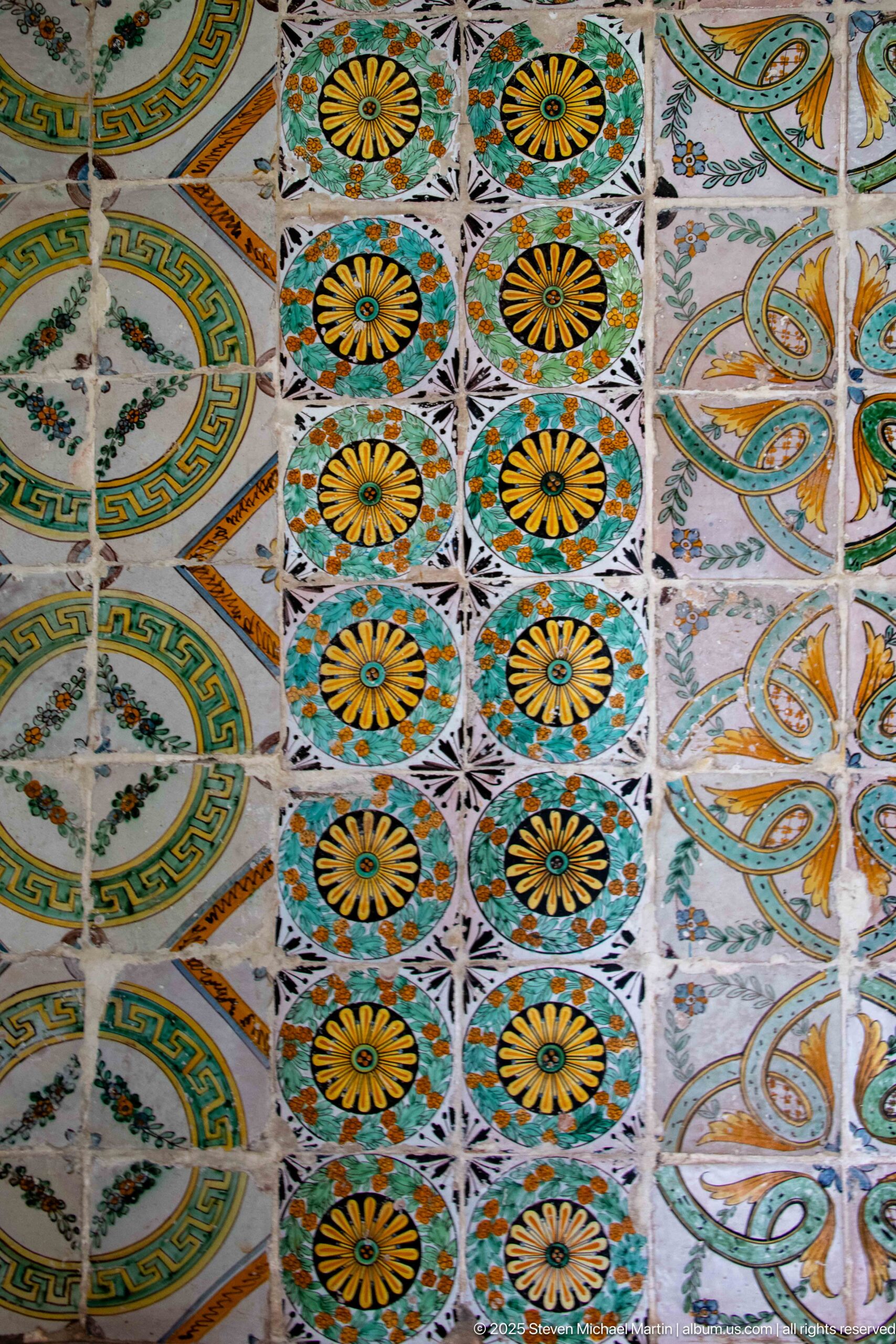
Rows of glazed tiles form alternating bands of rosettes, interlaced green forms, and oval medallions across this Ahmed Bey Palace wall. The close framing highlights both the strong modular rhythm of the decoration and subtle differences in alignment and condition between individual ceramic units.
Caption
Rows of glazed tiles form alternating bands of rosettes, interlaced green forms, and oval medallions across this Ahmed Bey Palace wall. The close framing highlights both the strong modular rhythm of the decoration and subtle differences in alignment and condition between individual ceramic units.
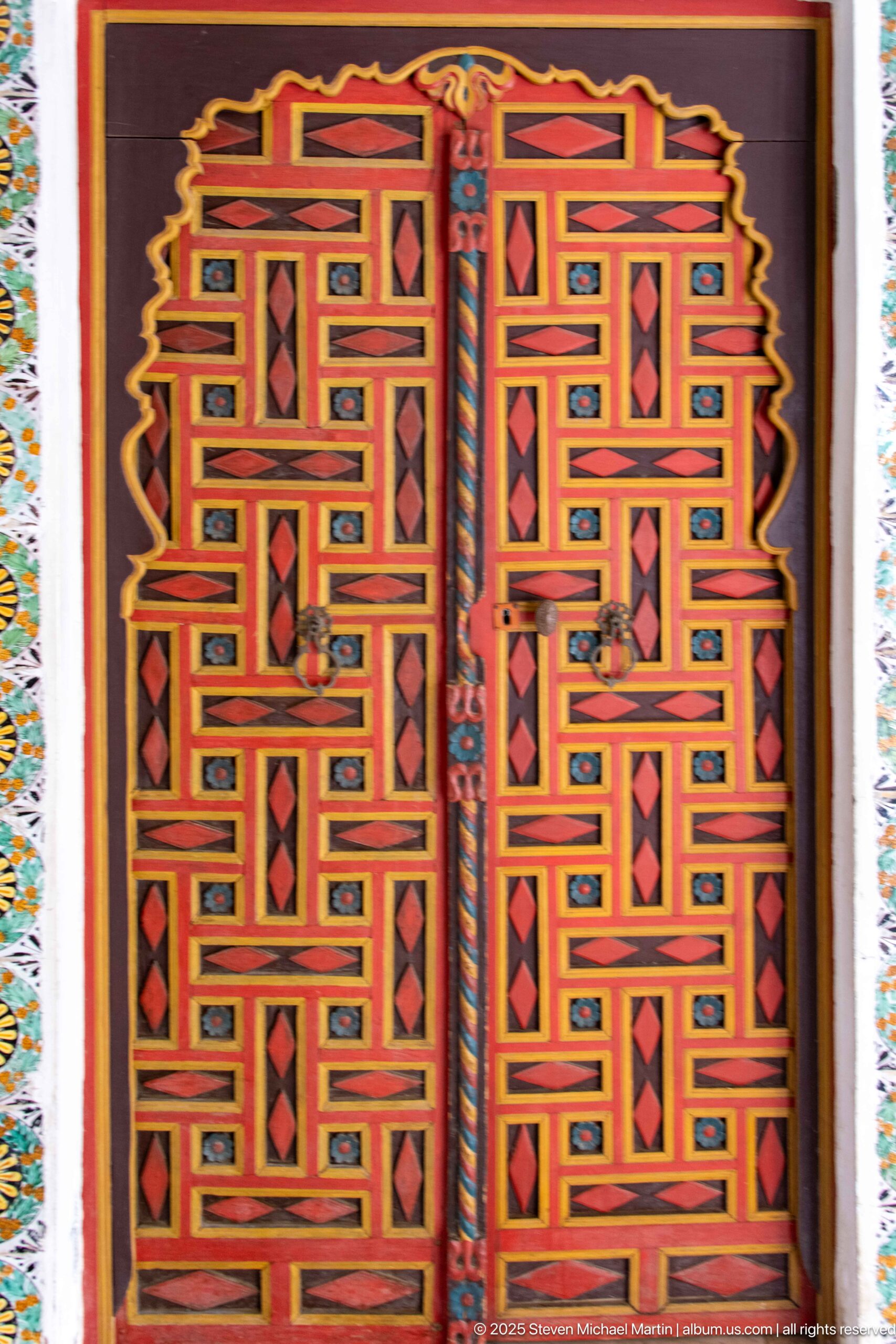
A pair of painted wooden doors uses interlocking rectilinear bands to create a maze-like geometric composition in red, yellow, black, and green. Small diamond panels punctuate the design, and the surrounding tile border reinforces the dense ornamental treatment characteristic of the palace rooms and galleries.
Caption
A pair of painted wooden doors uses interlocking rectilinear bands to create a maze-like geometric composition in red, yellow, black, and green. Small diamond panels punctuate the design, and the surrounding tile border reinforces the dense ornamental treatment characteristic of the palace rooms and galleries.
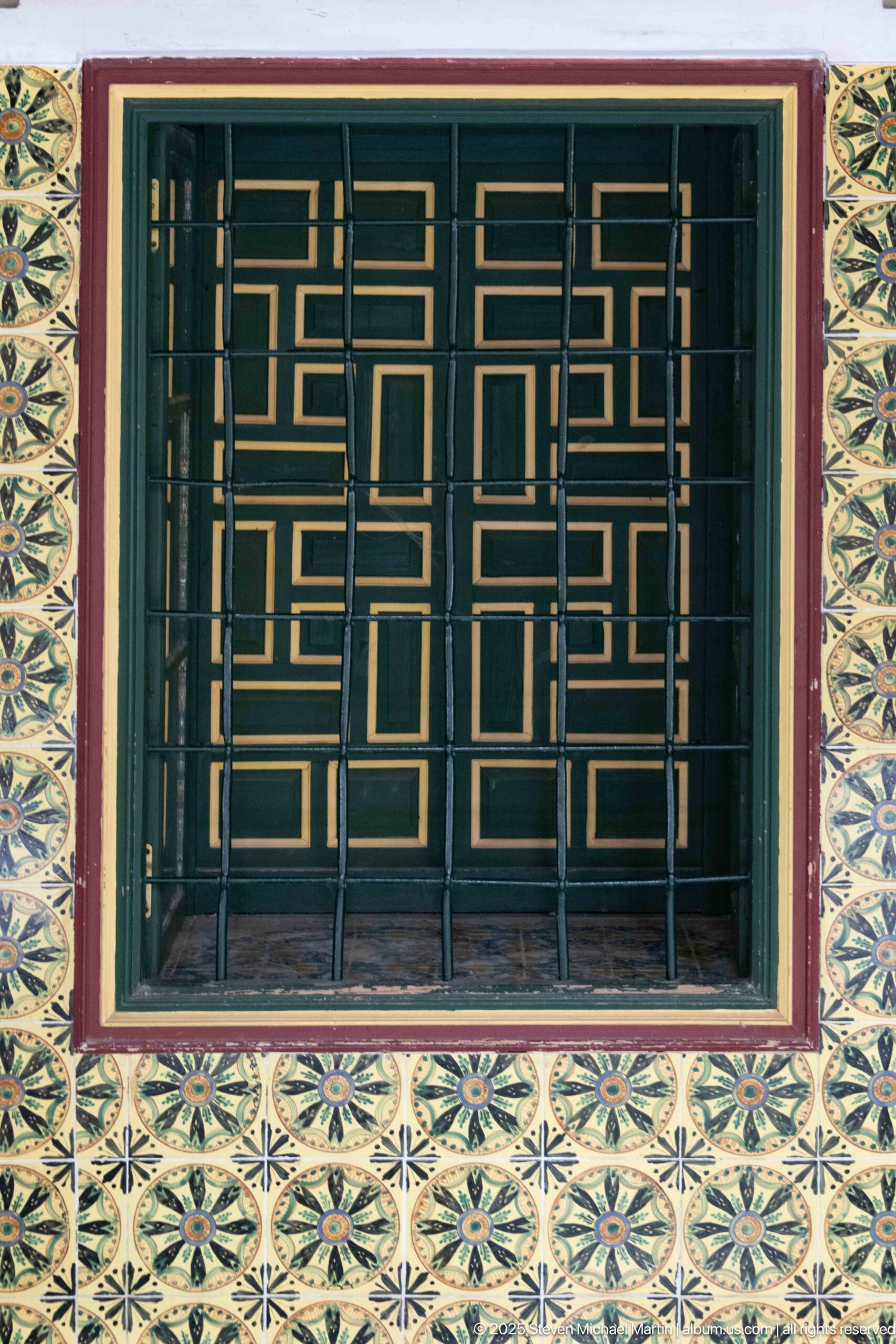
A rectangular palace window is protected by a dark metal grille whose rectilinear pattern echoes the geometry of the painted woodwork behind it. The opening is set within a field of repeating yellow-and-green ceramic tiles, creating a close study of layered security, joinery, and surface ornament.
Caption
A rectangular palace window is protected by a dark metal grille whose rectilinear pattern echoes the geometry of the painted woodwork behind it. The opening is set within a field of repeating yellow-and-green ceramic tiles, creating a close study of layered security, joinery, and surface ornament.
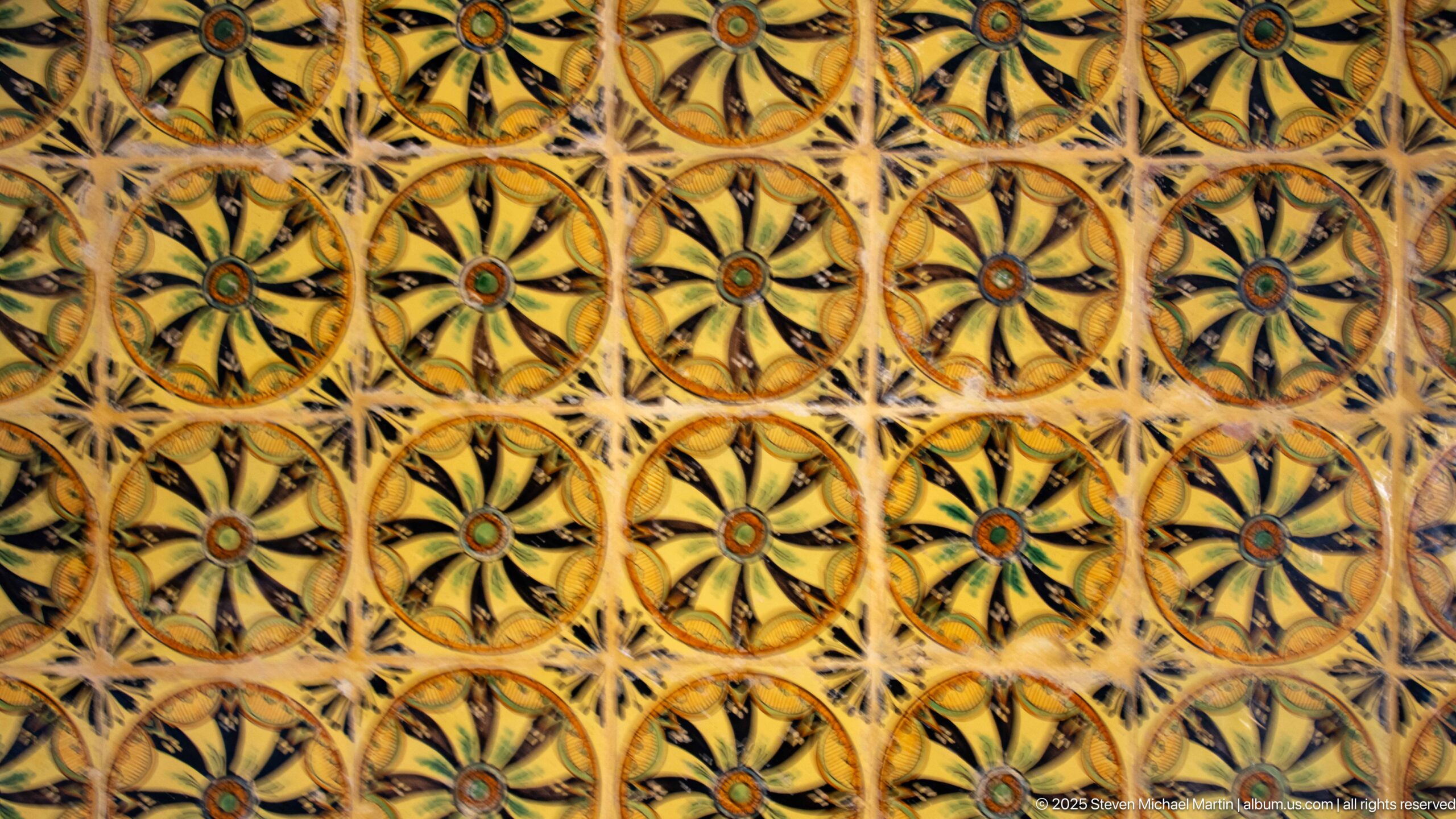
A tightly framed tile field at Ahmed Bey Palace repeats petal-like yellow and black forms around small green-and-red centers. The pattern’s continuous grid creates an almost textile-like surface, while irregular joints and localized wear reveal the individual glazed ceramic tiles from which the design is assembled.
Caption
A tightly framed tile field at Ahmed Bey Palace repeats petal-like yellow and black forms around small green-and-red centers. The pattern’s continuous grid creates an almost textile-like surface, while irregular joints and localized wear reveal the individual glazed ceramic tiles from which the design is assembled.
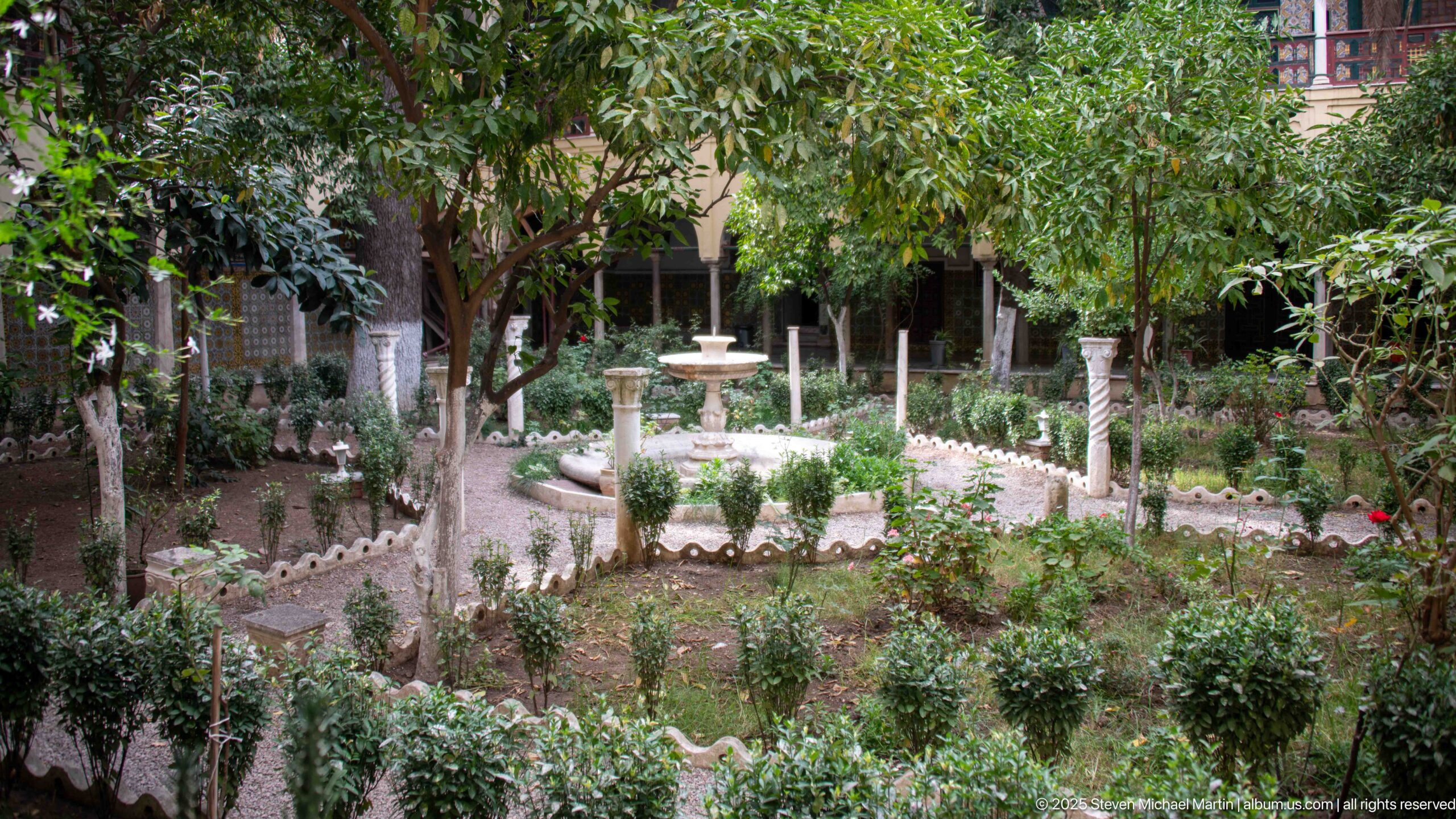
A secluded garden court within Ahmed Bey Palace centers on a small raised fountain amid clipped shrubs, flowering plants, and mature trees. Arcaded palace galleries are partly visible through the foliage, showing how planted courtyards bring shade, water, and greenery into the interior organization of the complex.
Caption
A secluded garden court within Ahmed Bey Palace centers on a small raised fountain amid clipped shrubs, flowering plants, and mature trees. Arcaded palace galleries are partly visible through the foliage, showing how planted courtyards bring shade, water, and greenery into the interior organization of the complex.
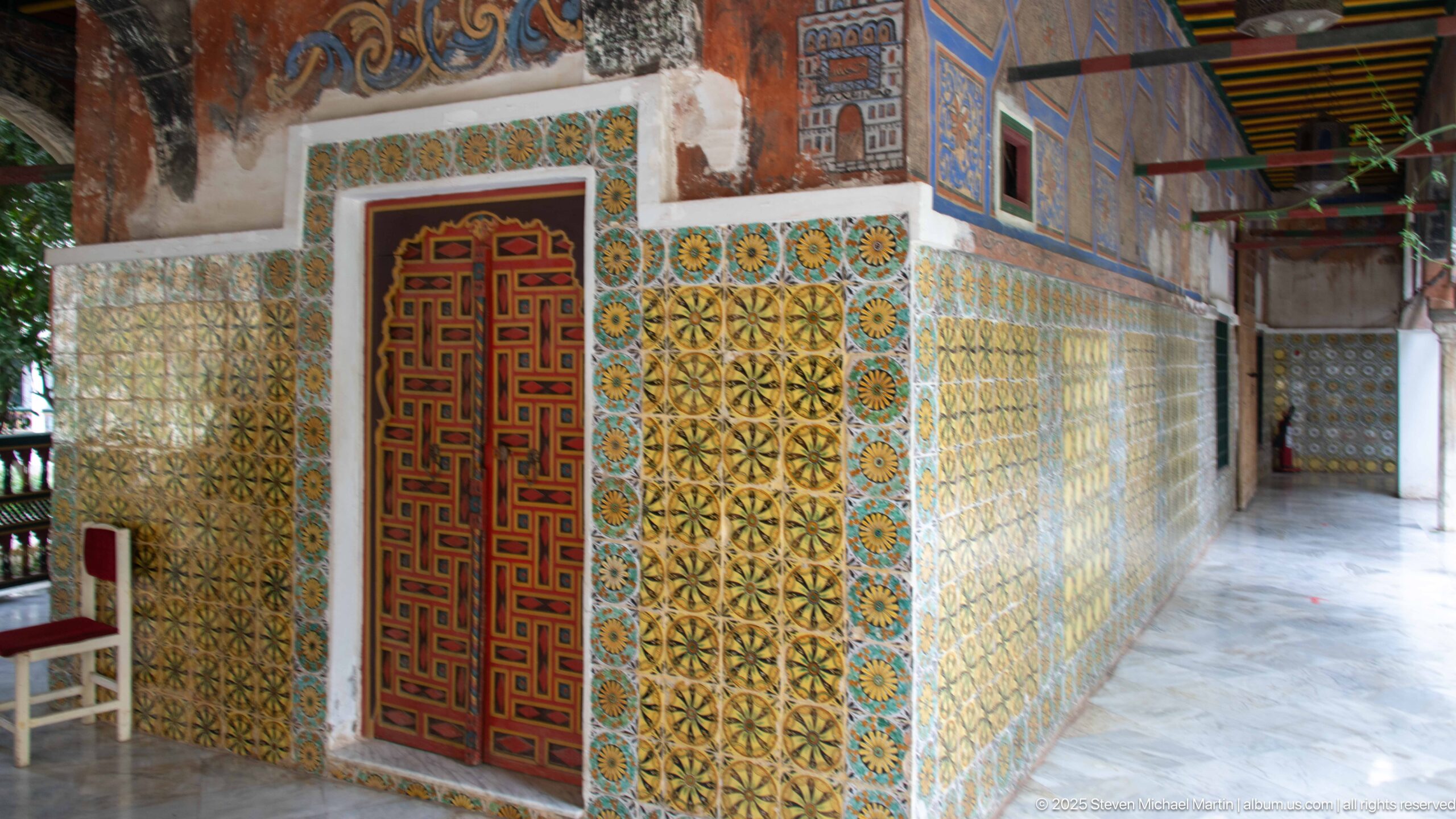
A richly layered wall along an Ahmed Bey Palace gallery combines a red geometric wooden door, broad fields of patterned ceramic tiles, and weathered narrative painting above. The oblique view makes the hierarchy of decoration especially clear: durable glazed surfaces below, painted imagery overhead, and brightly colored woodwork marking the doorway.
Caption
A richly layered wall along an Ahmed Bey Palace gallery combines a red geometric wooden door, broad fields of patterned ceramic tiles, and weathered narrative painting above. The oblique view makes the hierarchy of decoration especially clear: durable glazed surfaces below, painted imagery overhead, and brightly colored woodwork marking the doorway.
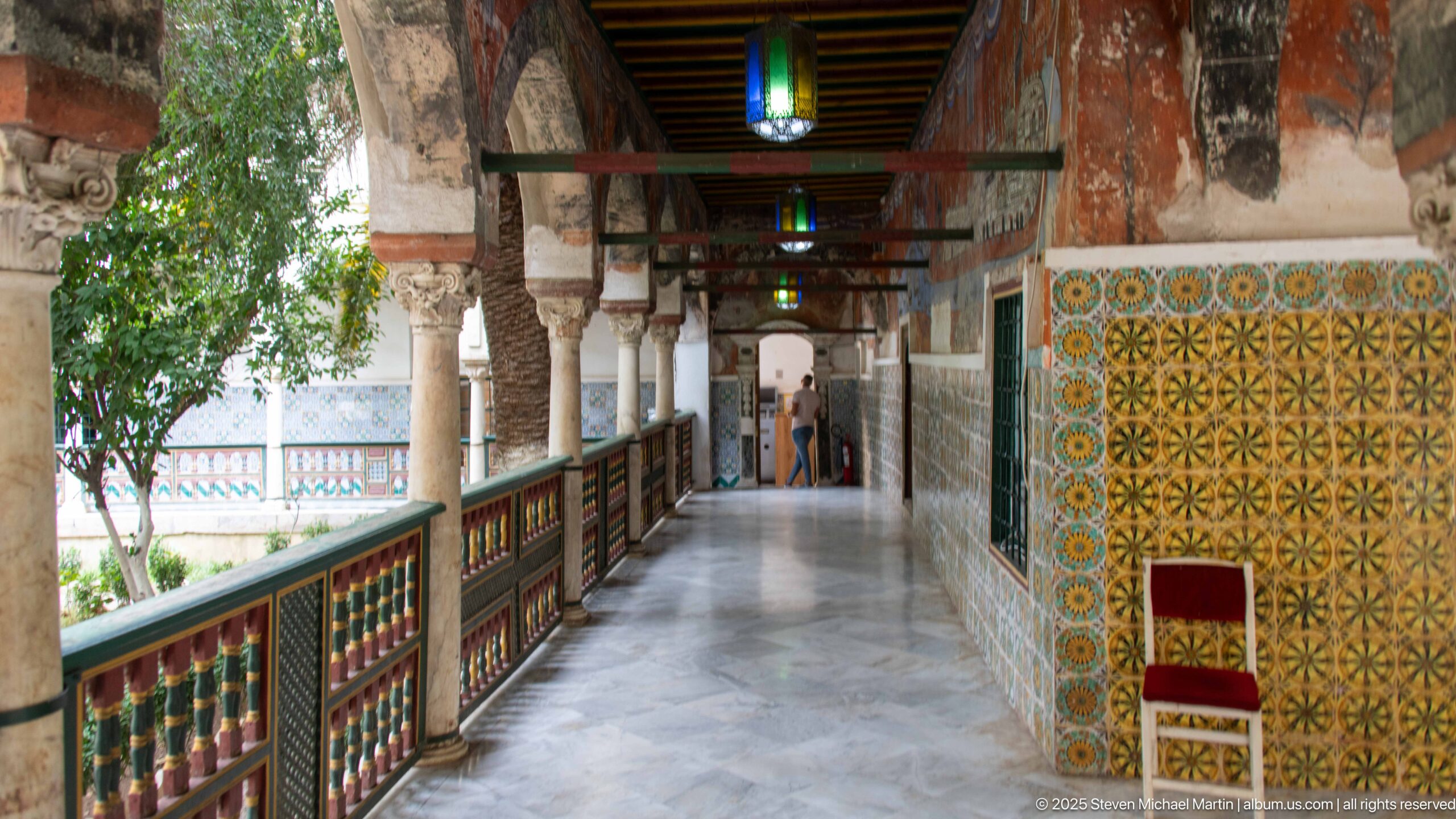
A shaded gallery runs beside a planted courtyard at Ahmed Bey Palace, its rhythm set by stone columns, timber ceiling beams, a painted balustrade, and a broad yellow-green tile dado. Repeated lanterns and the long perspective draw attention to the circulation route while greenery opens along the opposite side.
Caption
A shaded gallery runs beside a planted courtyard at Ahmed Bey Palace, its rhythm set by stone columns, timber ceiling beams, a painted balustrade, and a broad yellow-green tile dado. Repeated lanterns and the long perspective draw attention to the circulation route while greenery opens along the opposite side.
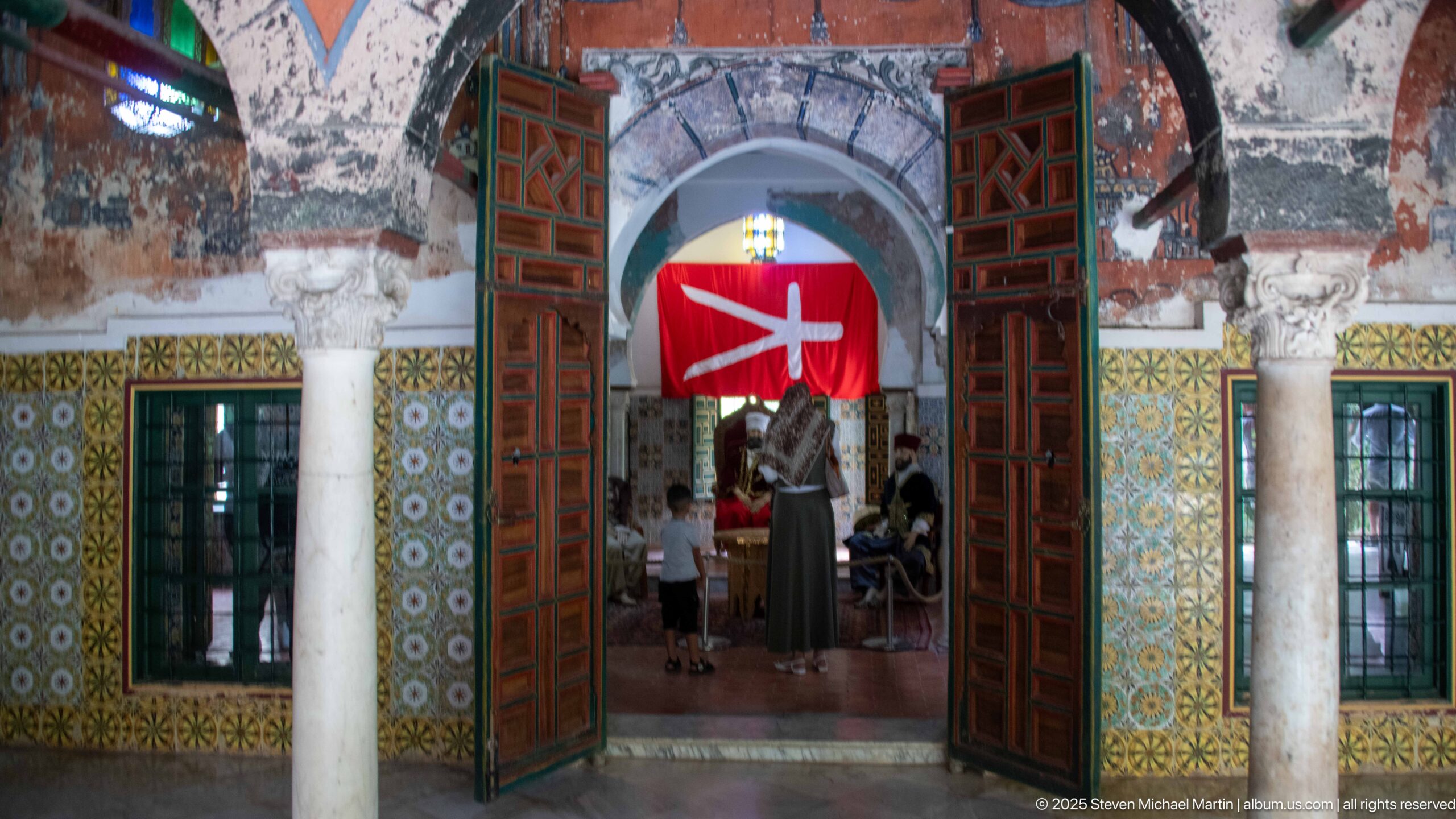
Open painted doors frame an arched passage between decorated spaces at Ahmed Bey Palace. Marble columns with carved capitals flank the threshold, patterned tiles line the lower walls, and a vivid red textile or banner hangs in the room beyond, where visitors provide a sense of scale.
Caption
Open painted doors frame an arched passage between decorated spaces at Ahmed Bey Palace. Marble columns with carved capitals flank the threshold, patterned tiles line the lower walls, and a vivid red textile or banner hangs in the room beyond, where visitors provide a sense of scale.
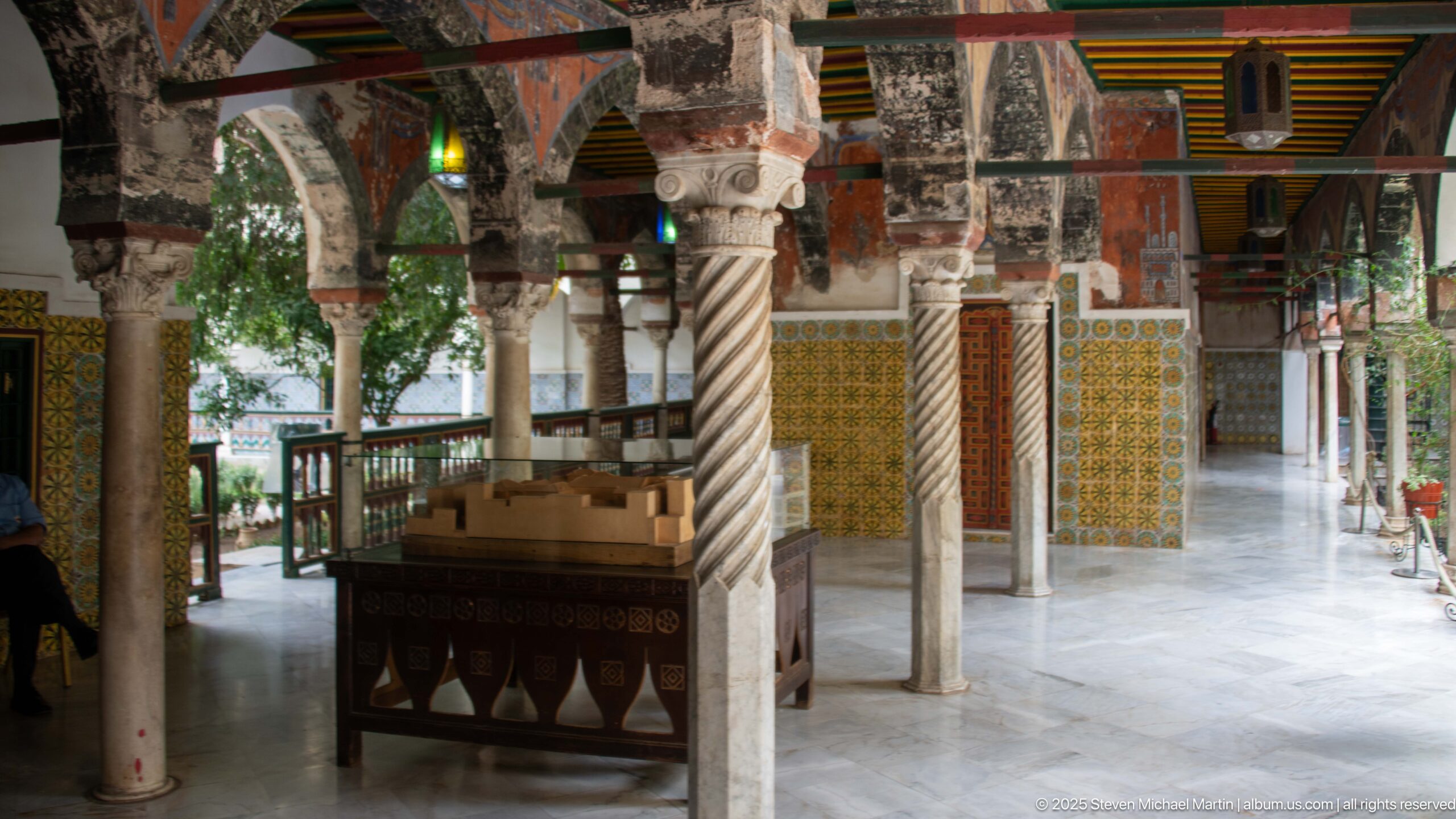
An interior arcade at Ahmed Bey Palace brings together columns of contrasting stone, including a prominent spiral-fluted shaft, beneath weathered painted arches and a striped timber ceiling. A protective display case occupies the foreground, while tiled walls and the open courtyard edge show the dense layering of architectural and museum elements.
Caption
An interior arcade at Ahmed Bey Palace brings together columns of contrasting stone, including a prominent spiral-fluted shaft, beneath weathered painted arches and a striped timber ceiling. A protective display case occupies the foreground, while tiled walls and the open courtyard edge show the dense layering of architectural and museum elements.
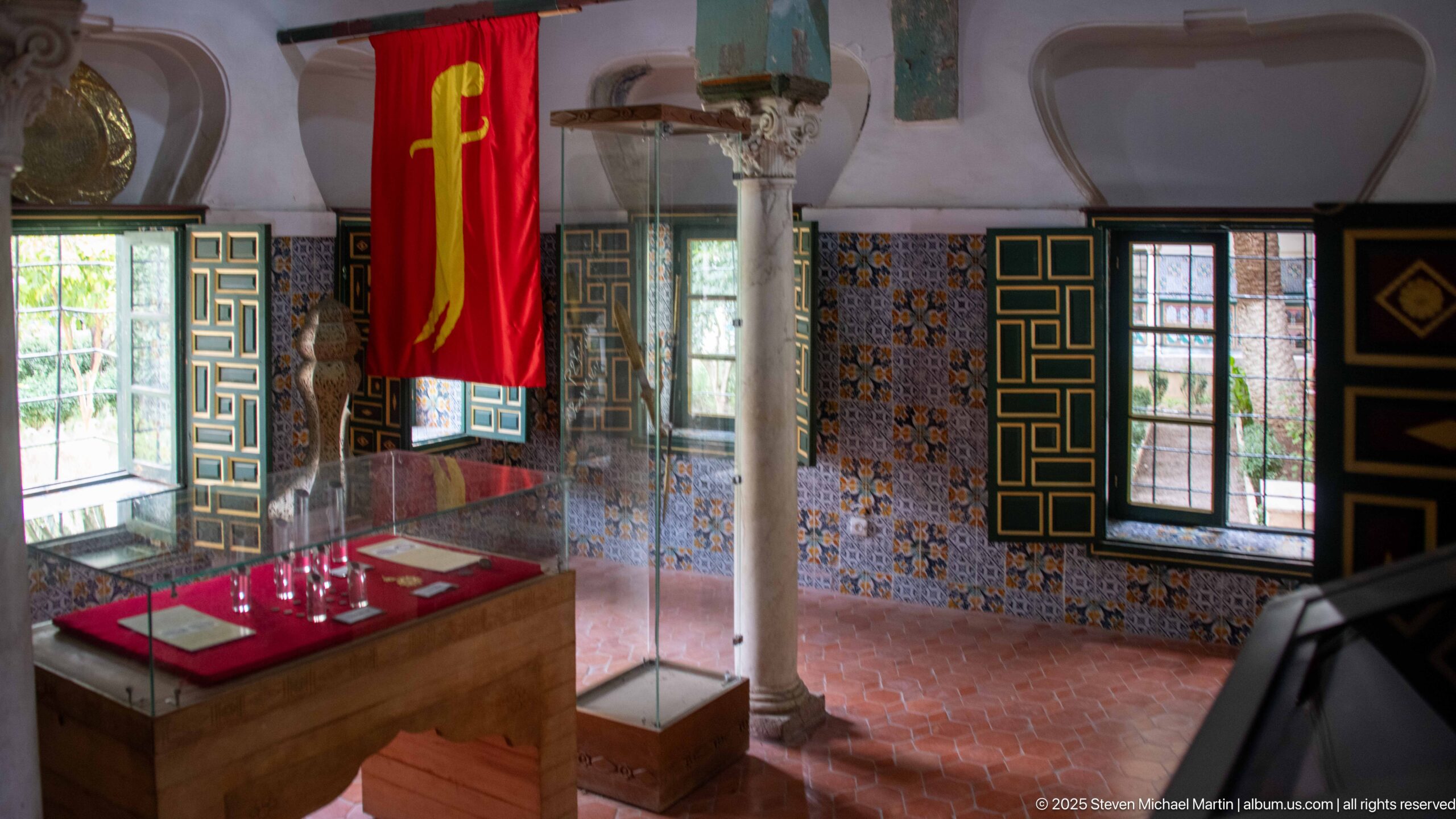
A museum room within Ahmed Bey Palace retains patterned tile walls, painted wooden shutters and doors, a slender stone column, and a brick-toned floor. A glass-topped display case stands beneath a large red hanging banner, illustrating the contemporary exhibition use of rooms whose architectural decoration remains a dominant visual feature.
Caption
A museum room within Ahmed Bey Palace retains patterned tile walls, painted wooden shutters and doors, a slender stone column, and a brick-toned floor. A glass-topped display case stands beneath a large red hanging banner, illustrating the contemporary exhibition use of rooms whose architectural decoration remains a dominant visual feature.
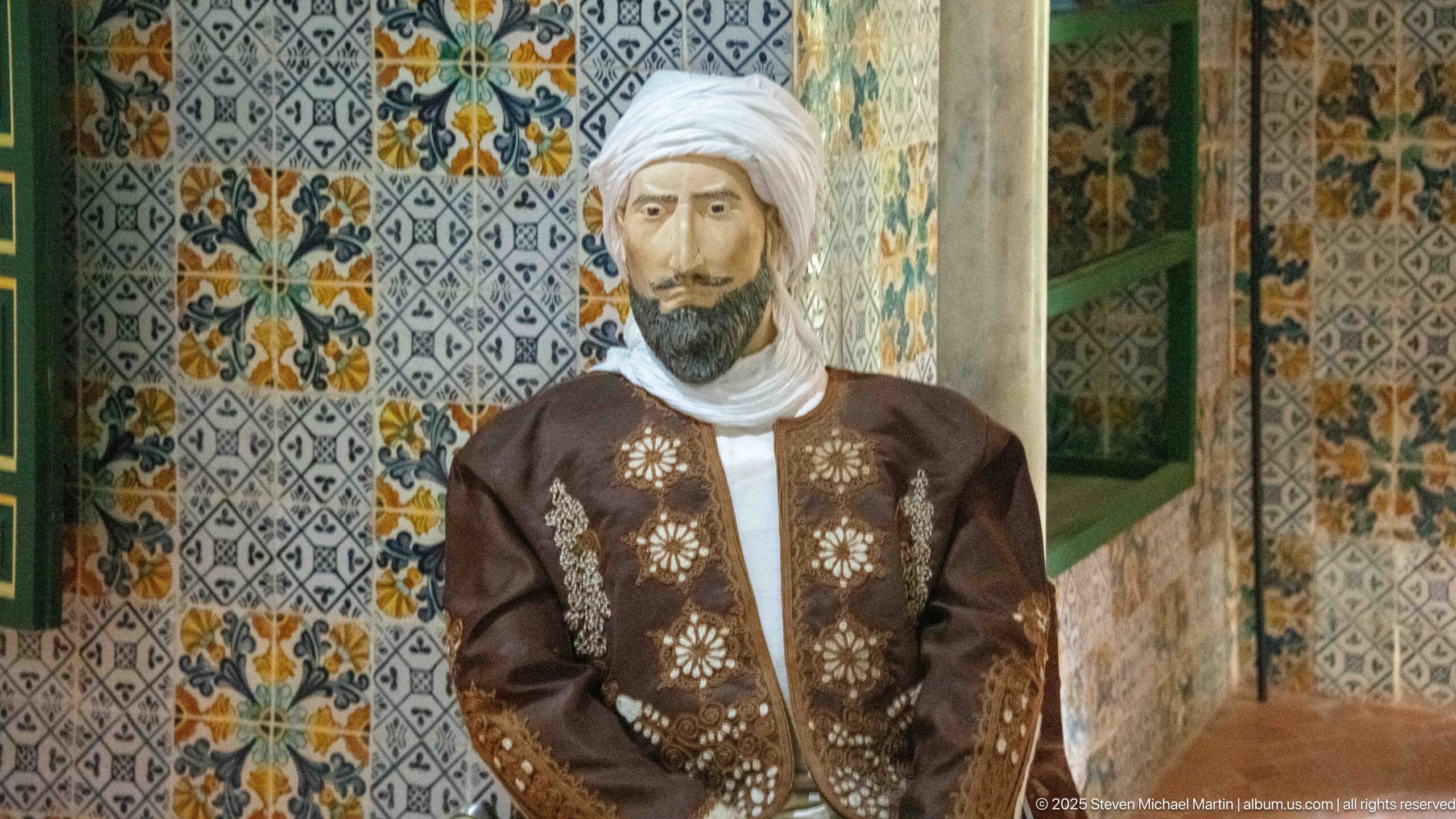
A life-size male mannequin in the palace museum wears a white wrapped turban, dark embroidered jacket, and light-colored undergarment against a backdrop of patterned tiles and painted woodwork. The display presents traditional clothing within the museum setting; the proof sheet does not establish the identity or social role represented by the figure.
Caption
A life-size male mannequin in the palace museum wears a white wrapped turban, dark embroidered jacket, and light-colored undergarment against a backdrop of patterned tiles and painted woodwork. The display presents traditional clothing within the museum setting; the proof sheet does not establish the identity or social role represented by the figure.

A second male mannequin is dressed in a red fez and a dark robe or jacket edged with elaborate gold-colored embroidery. Positioned beside painted geometric woodwork and floral ceramic tiles, the figure forms part of the palace museum’s presentation of traditional attire, though the exact costume type is not identified in the visible scene.
Caption
A second male mannequin is dressed in a red fez and a dark robe or jacket edged with elaborate gold-colored embroidery. Positioned beside painted geometric woodwork and floral ceramic tiles, the figure forms part of the palace museum’s presentation of traditional attire, though the exact costume type is not identified in the visible scene.
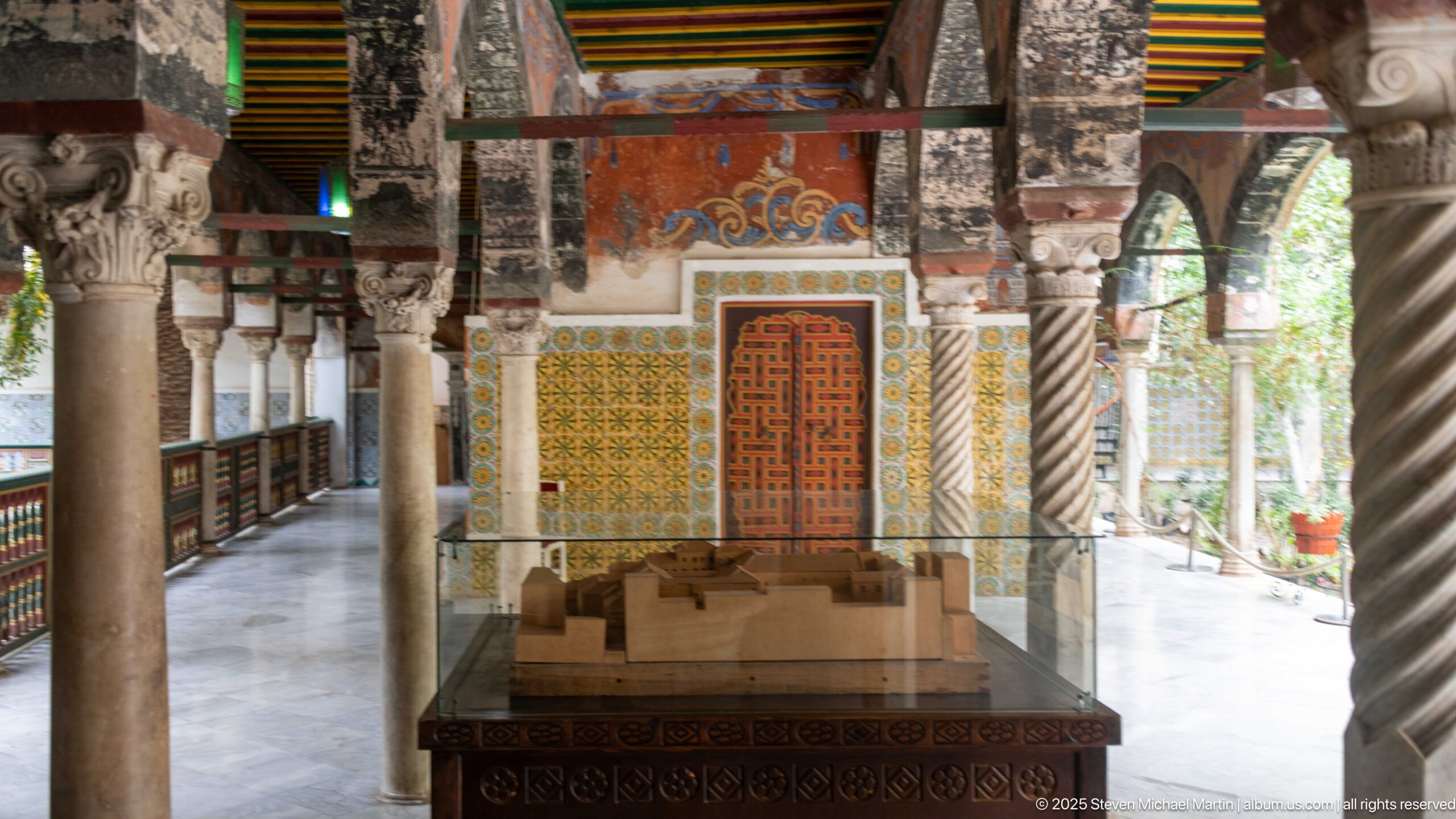
A museum display case containing a small architectural model stands beneath the ornate arcade of Ahmed Bey Palace. Stone columns, a spiral-fluted shaft, painted arches, yellow-green tilework, and a red geometric door surround the case, creating a compact view of the palace’s varied decorative materials and forms.
Caption
A museum display case containing a small architectural model stands beneath the ornate arcade of Ahmed Bey Palace. Stone columns, a spiral-fluted shaft, painted arches, yellow-green tilework, and a red geometric door surround the case, creating a compact view of the palace’s varied decorative materials and forms.

A broad marble-floored corridor extends through a sequence of arches and slender columns at Ahmed Bey Palace. Weathered wall paintings occupy the upper surfaces, patterned tiles line the lower walls, and brightly painted doors punctuate the passage, while the deep axial view reveals the scale and rhythm of the interior gallery.
Caption
A broad marble-floored corridor extends through a sequence of arches and slender columns at Ahmed Bey Palace. Weathered wall paintings occupy the upper surfaces, patterned tiles line the lower walls, and brightly painted doors punctuate the passage, while the deep axial view reveals the scale and rhythm of the interior gallery.
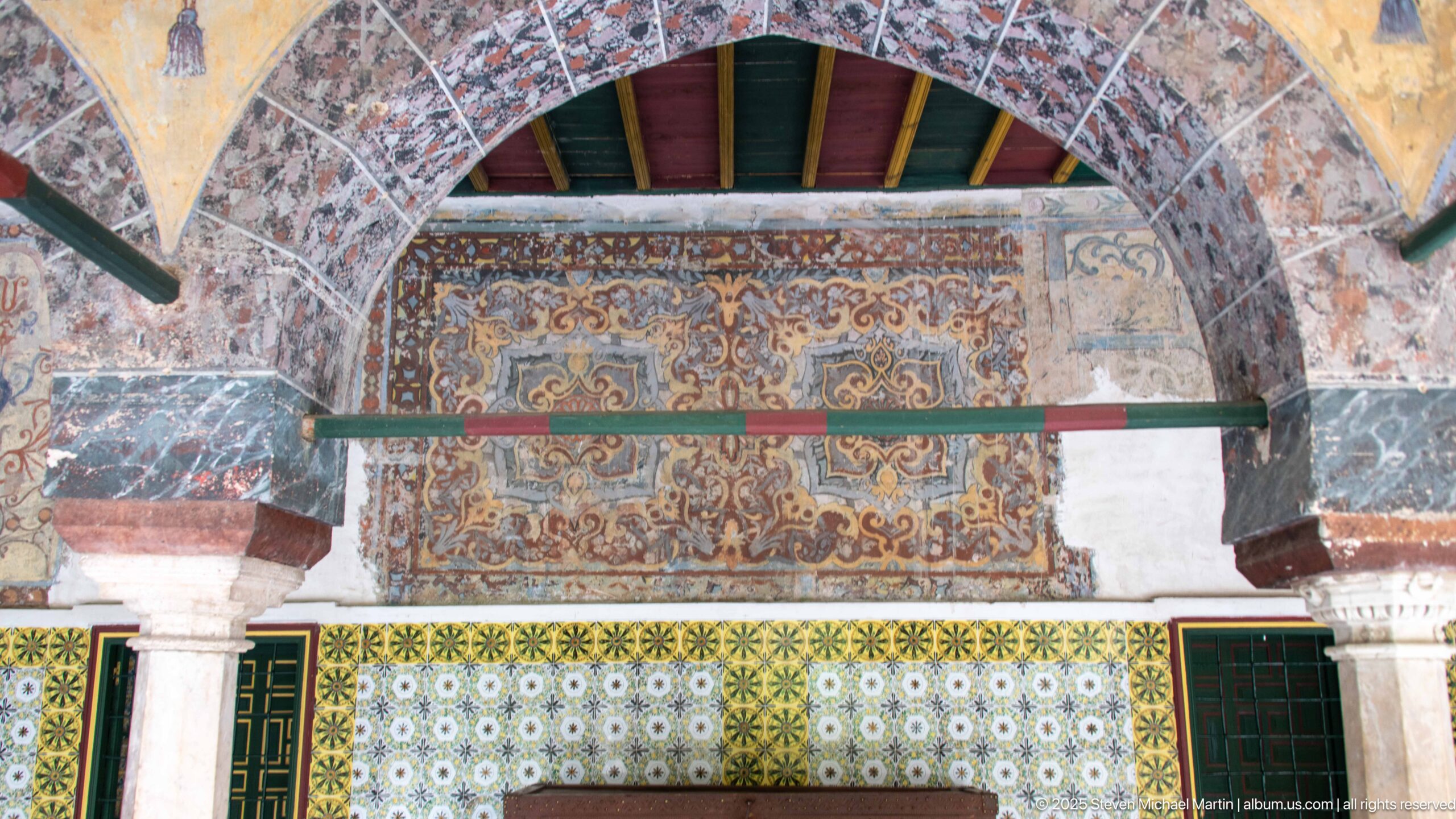
A broad marble arch at Ahmed Bey Palace spans between stone columns beneath a painted timber ceiling. A weathered ornamental mural fills the wall above a dense yellow-green tile dado, creating a layered study of structural stone, painted plaster, glazed ceramic, and colored wood within the palace interior.
Caption
A broad marble arch at Ahmed Bey Palace spans between stone columns beneath a painted timber ceiling. A weathered ornamental mural fills the wall above a dense yellow-green tile dado, creating a layered study of structural stone, painted plaster, glazed ceramic, and colored wood within the palace interior.
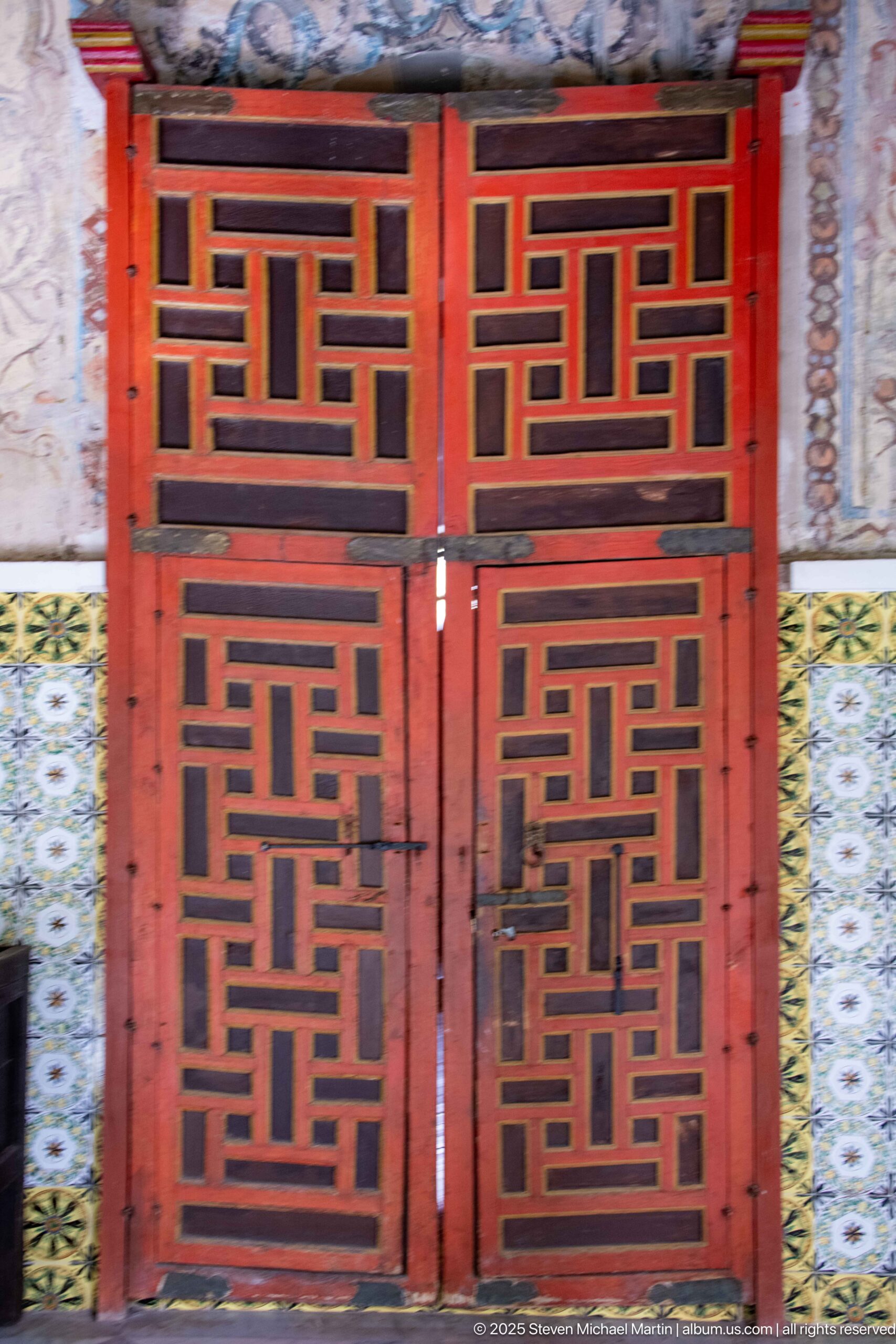
A red-painted double door at Ahmed Bey Palace is divided into stacked rectilinear panels outlined in black, forming an intricate interlocking design. Narrow patterned borders and surrounding ceramic tilework intensify the graphic effect, while the close frontal viewpoint records the craftsmanship and symmetry of the woodwork.
Caption
A red-painted double door at Ahmed Bey Palace is divided into stacked rectilinear panels outlined in black, forming an intricate interlocking design. Narrow patterned borders and surrounding ceramic tilework intensify the graphic effect, while the close frontal viewpoint records the craftsmanship and symmetry of the woodwork.
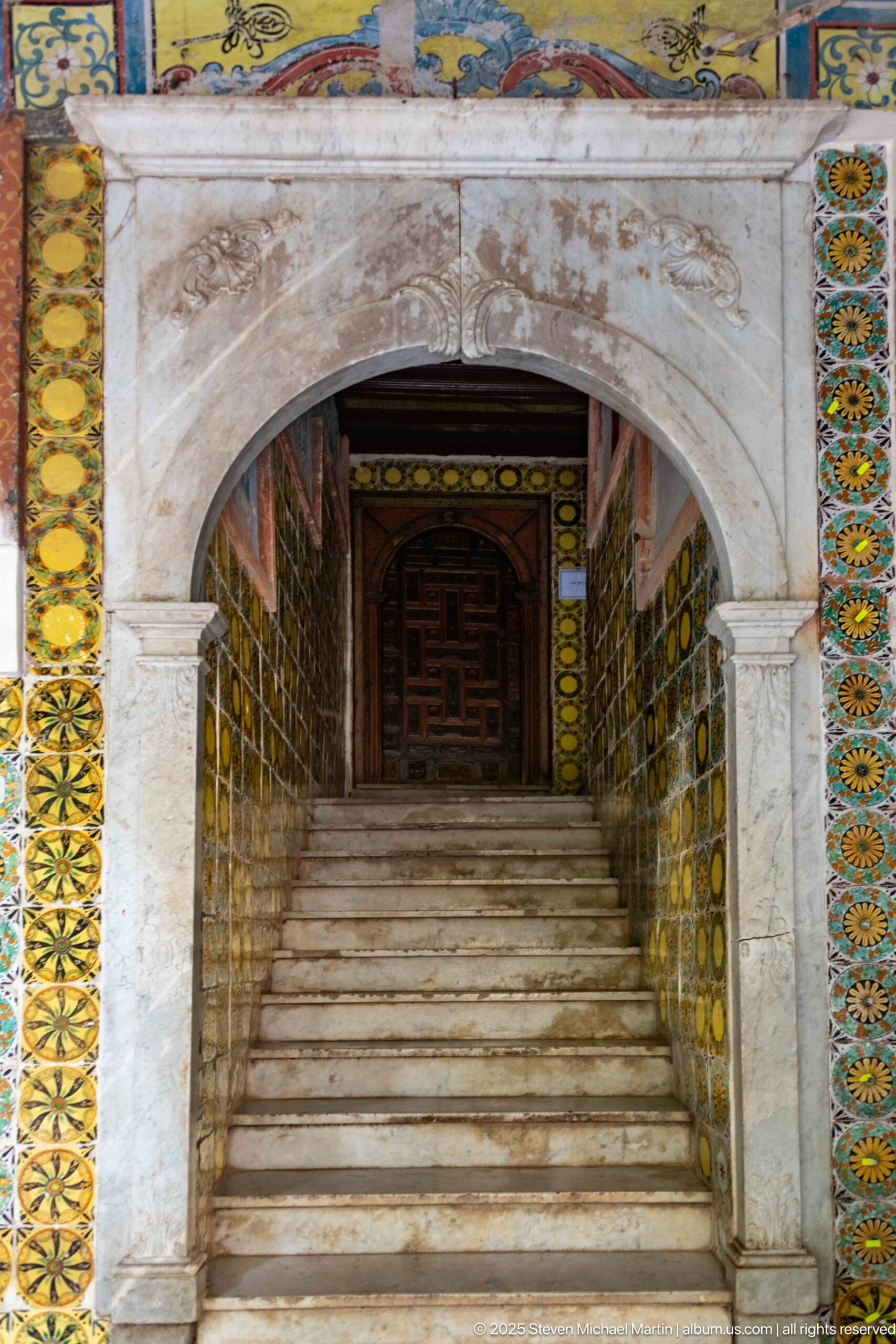
A short marble stairway rises through a rounded stone arch toward a dark carved or paneled wooden doorway inside Ahmed Bey Palace. Yellow, blue, and green patterned tiles line the stair walls, while additional painted decoration above the arch turns this transitional space into a concentrated architectural composition.
Caption
A short marble stairway rises through a rounded stone arch toward a dark carved or paneled wooden doorway inside Ahmed Bey Palace. Yellow, blue, and green patterned tiles line the stair walls, while additional painted decoration above the arch turns this transitional space into a concentrated architectural composition.
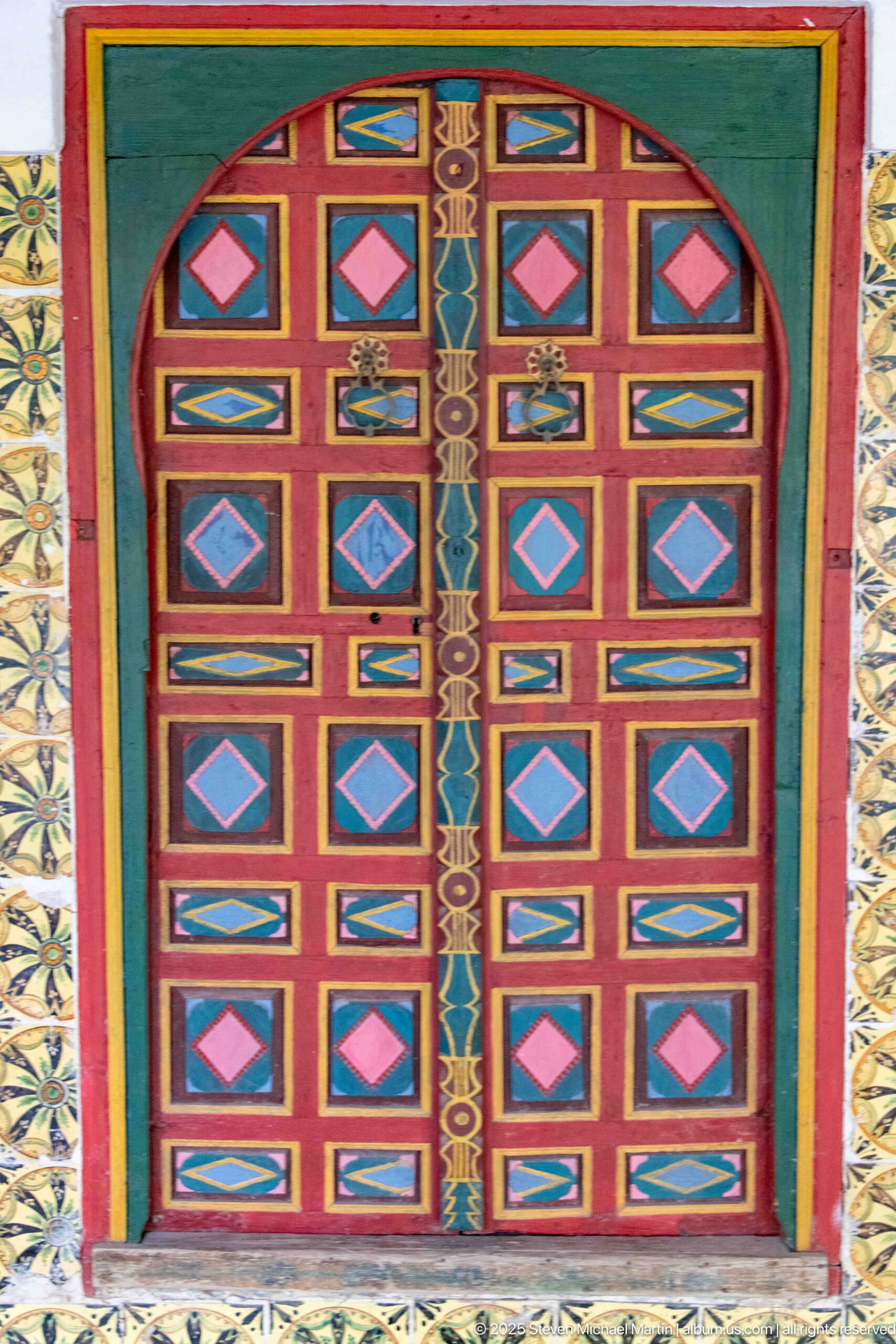
An arched double door at Ahmed Bey Palace is animated by rows of rectangular and diamond-shaped panels in red, blue, yellow, green, and black. The strong bilateral symmetry, central painted border, and surrounding patterned tilework turn the doorway into a concentrated display of geometric ornament and brightly colored woodwork.
Caption
An arched double door at Ahmed Bey Palace is animated by rows of rectangular and diamond-shaped panels in red, blue, yellow, green, and black. The strong bilateral symmetry, central painted border, and surrounding patterned tilework turn the doorway into a concentrated display of geometric ornament and brightly colored woodwork.
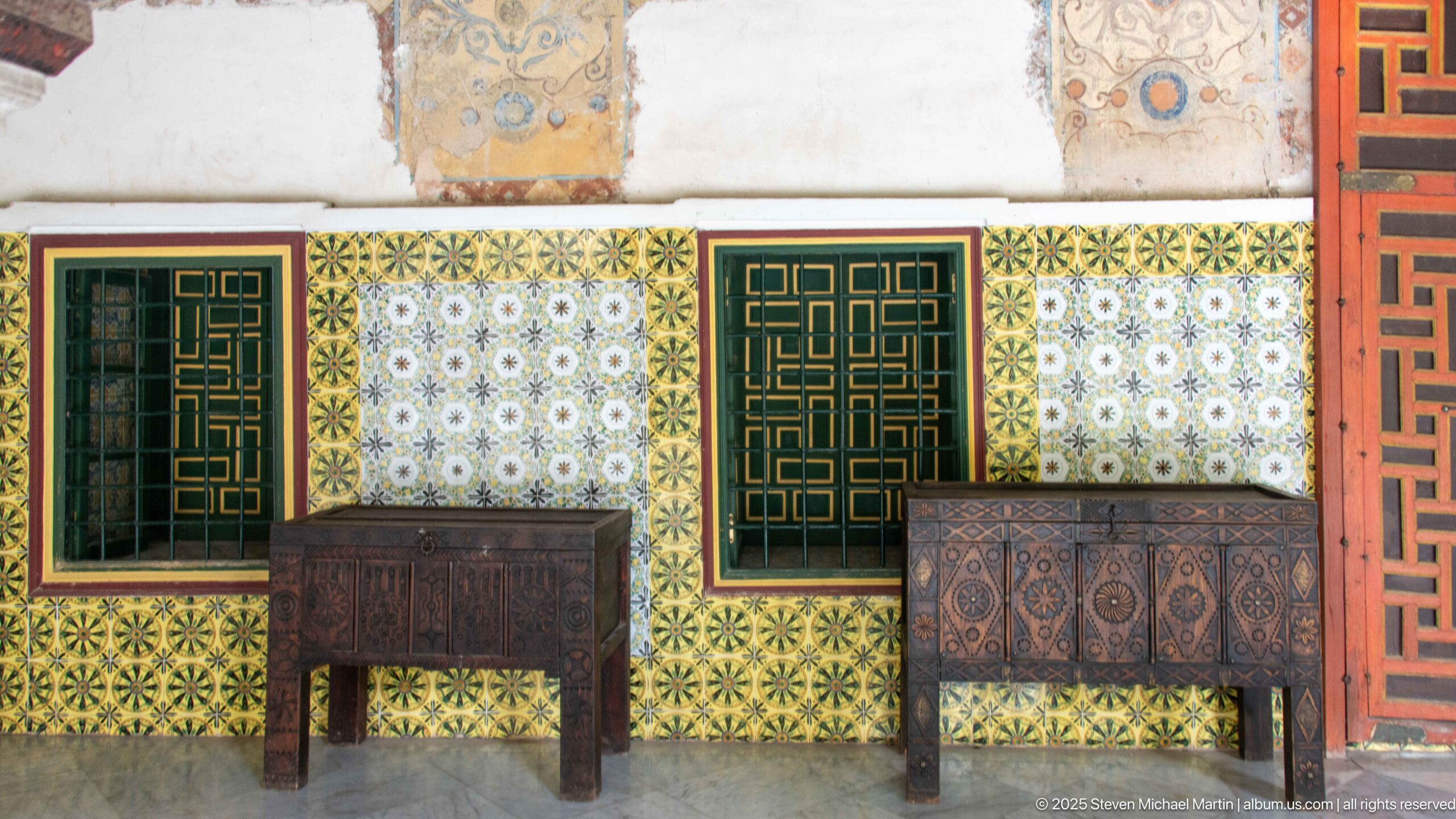
Two small wooden tables stand against a richly patterned wall at Ahmed Bey Palace, each decorated with geometric inlay or marquetry-like surface designs. Green-and-gold window grilles and repeating floral tiles form a highly ordered backdrop, contrasting the two pieces of furniture in scale, proportion, and ornament.
Caption
Two small wooden tables stand against a richly patterned wall at Ahmed Bey Palace, each decorated with geometric inlay or marquetry-like surface designs. Green-and-gold window grilles and repeating floral tiles form a highly ordered backdrop, contrasting the two pieces of furniture in scale, proportion, and ornament.
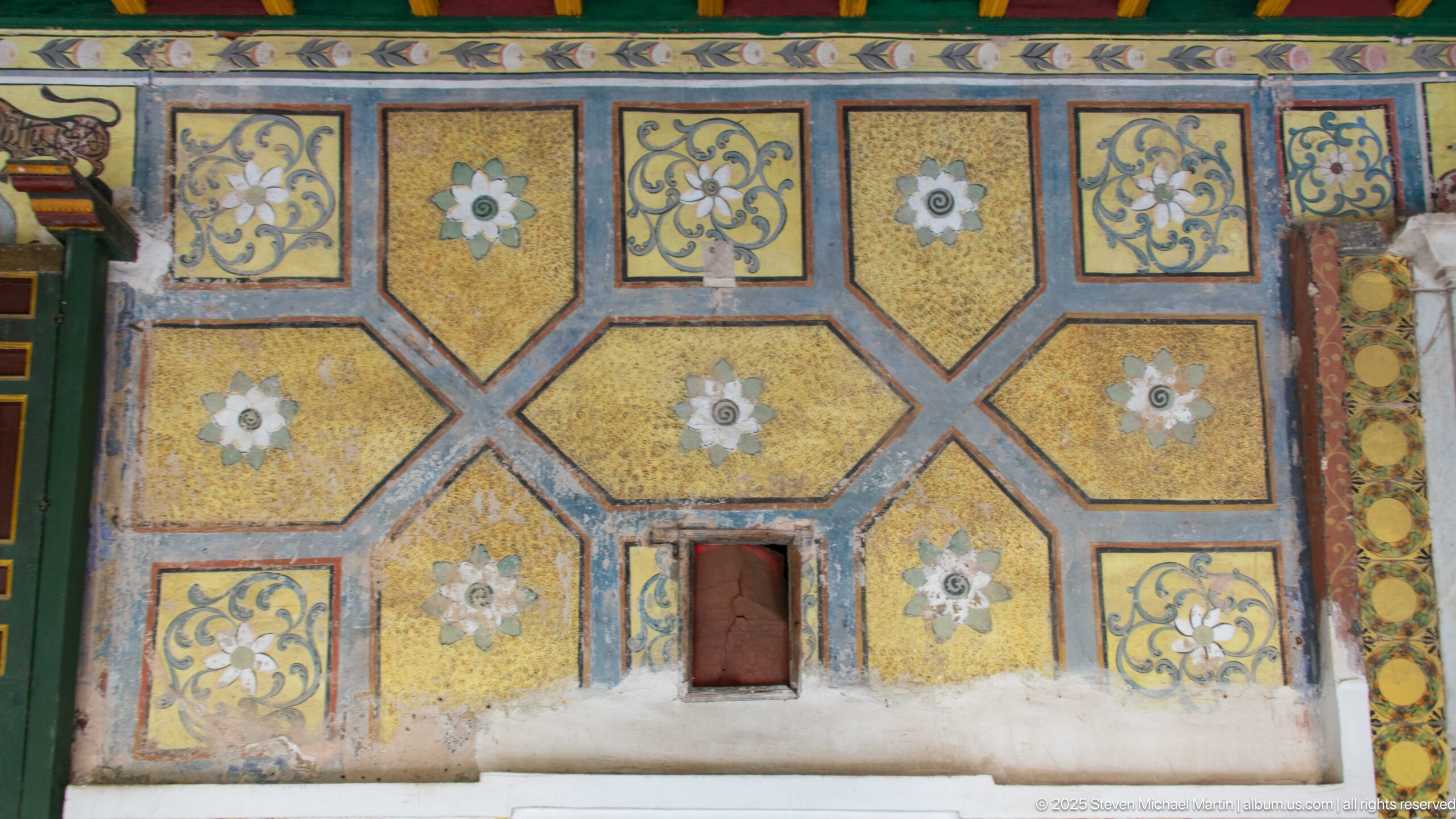
A decorated wall at Ahmed Bey Palace is divided into large geometric panels filled with ochre-toned stippling, stylized floral medallions, and scrolling motifs. A small recessed opening interrupts the symmetrical composition near the base, while a narrow painted frieze runs above, revealing another combination of architectural surface and ornamental painting within the palace.
Caption
A decorated wall at Ahmed Bey Palace is divided into large geometric panels filled with ochre-toned stippling, stylized floral medallions, and scrolling motifs. A small recessed opening interrupts the symmetrical composition near the base, while a narrow painted frieze runs above, revealing another combination of architectural surface and ornamental painting within the palace.
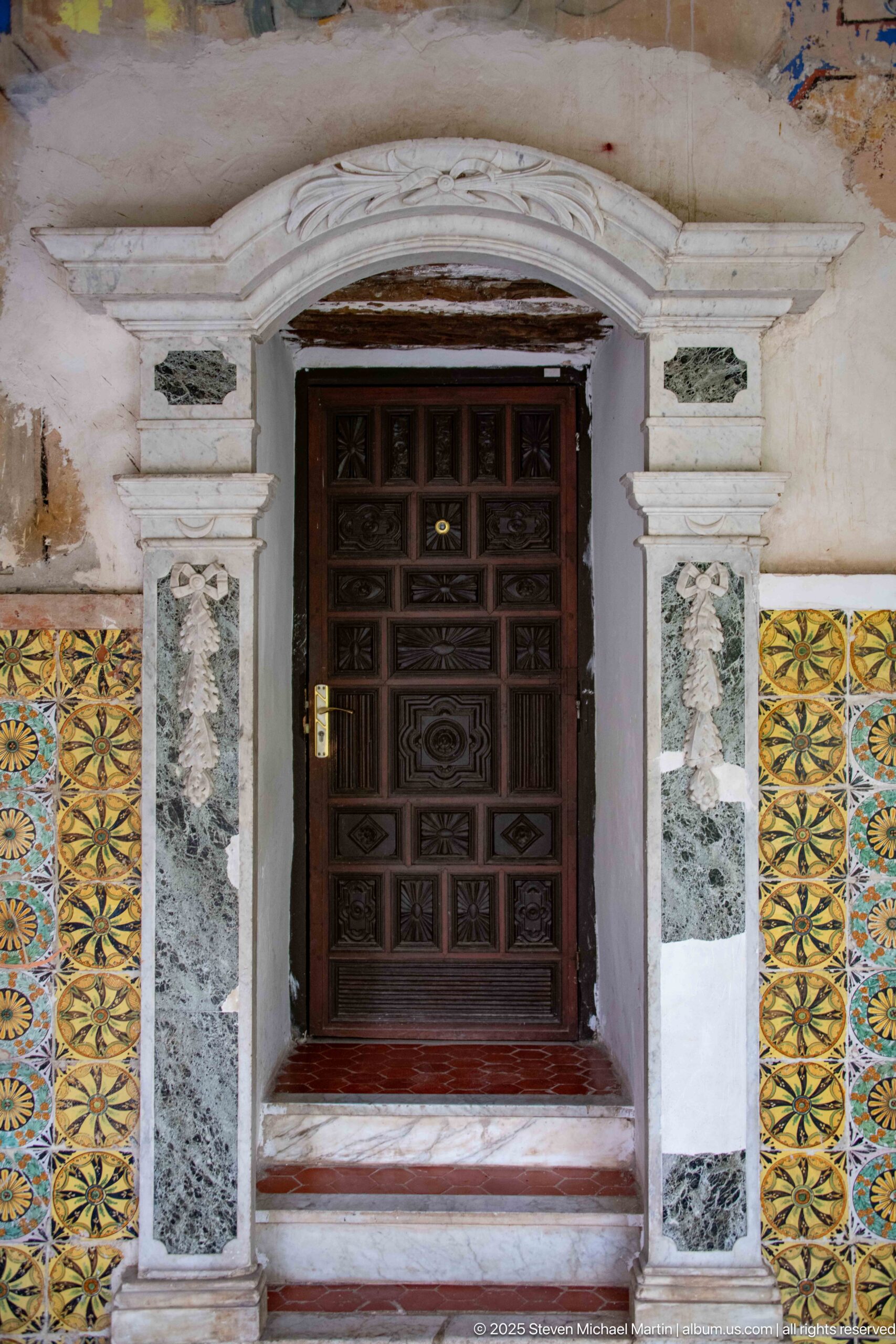
A dark wooden door composed of numerous recessed geometric panels sits within a pale stone surround at Ahmed Bey Palace. Slender inset stone panels flank the opening, a shallow arch crowns it, and patterned ceramic tiles cover the adjoining lower walls, creating a restrained contrast between carved stone, dark wood, and glazed color.
Caption
A dark wooden door composed of numerous recessed geometric panels sits within a pale stone surround at Ahmed Bey Palace. Slender inset stone panels flank the opening, a shallow arch crowns it, and patterned ceramic tiles cover the adjoining lower walls, creating a restrained contrast between carved stone, dark wood, and glazed color.
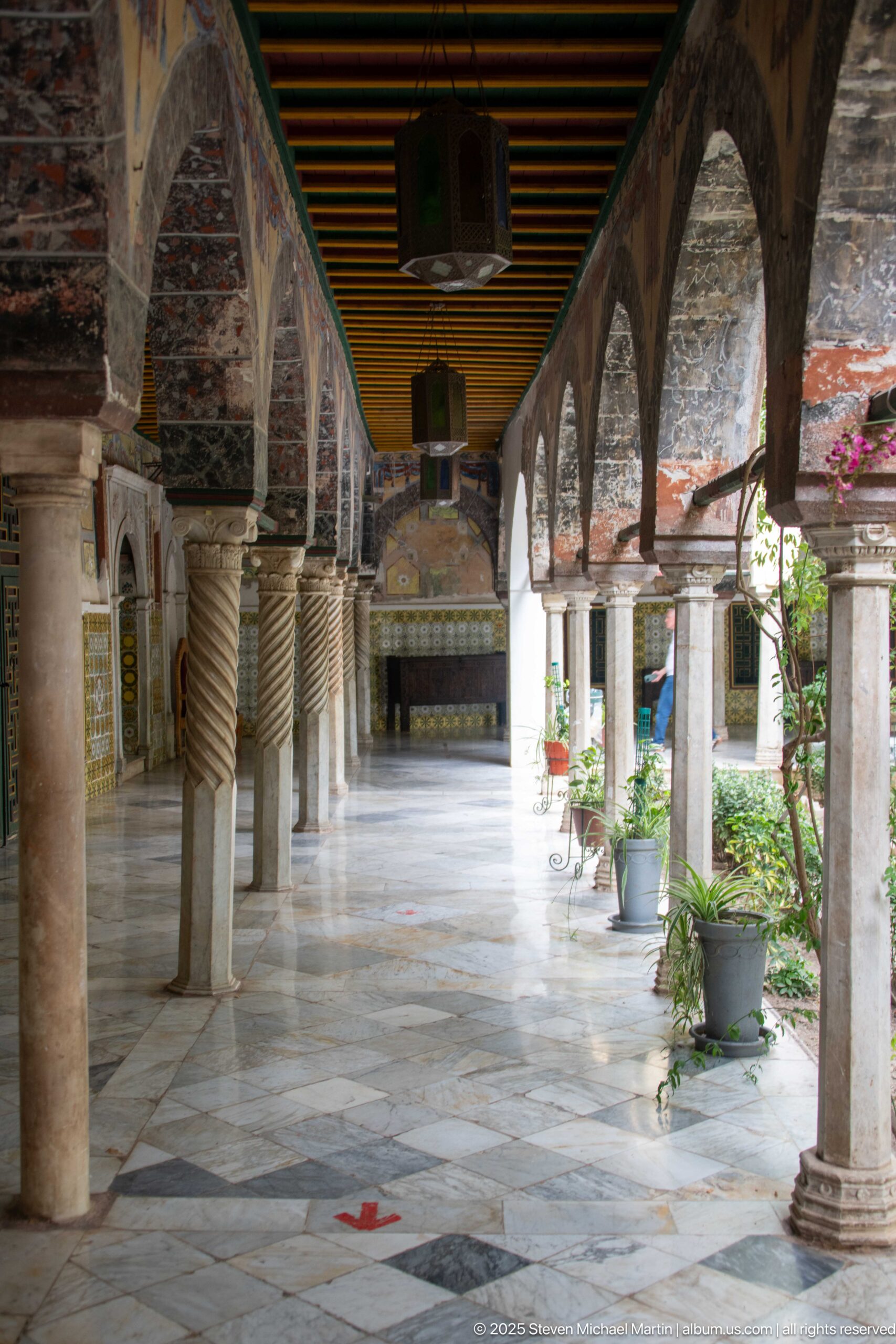
A spacious courtyard gallery at Ahmed Bey Palace recedes beneath repeated pointed arches supported by slender stone columns. A striped painted timber ceiling extends overhead, while the marble floor, potted plants, and open arcade at right create a cool transitional space between the palace rooms and planted courtyard.
Caption
A spacious courtyard gallery at Ahmed Bey Palace recedes beneath repeated pointed arches supported by slender stone columns. A striped painted timber ceiling extends overhead, while the marble floor, potted plants, and open arcade at right create a cool transitional space between the palace rooms and planted courtyard.
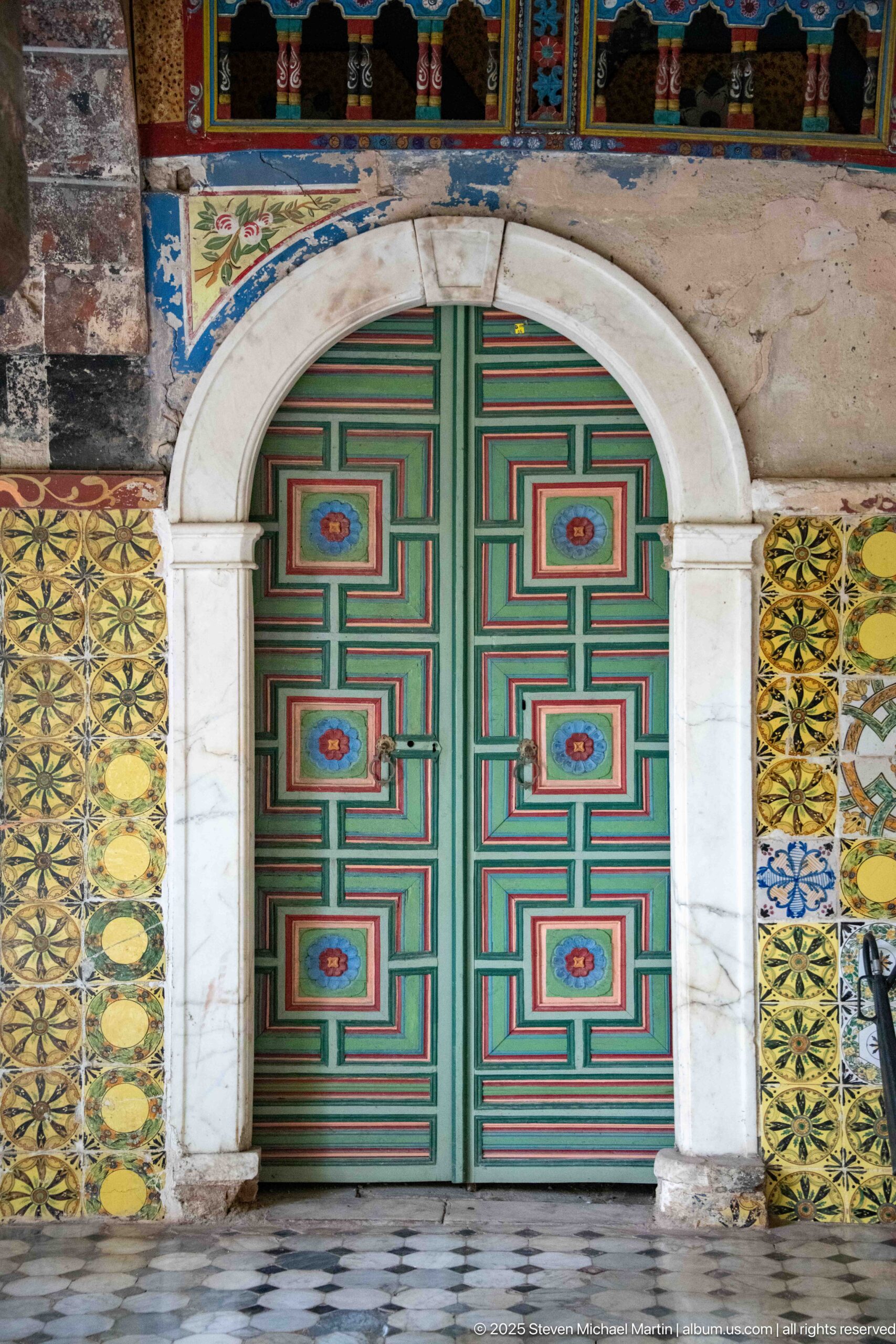
A green double door beneath a rounded pale-stone arch is organized by interlocking red and green bands and small central painted medallions. Dense yellow-and-green tilework spreads across the adjoining wall, while painted decoration above the arch adds another ornamental layer to this carefully framed Ahmed Bey Palace doorway.
Caption
A green double door beneath a rounded pale-stone arch is organized by interlocking red and green bands and small central painted medallions. Dense yellow-and-green tilework spreads across the adjoining wall, while painted decoration above the arch adds another ornamental layer to this carefully framed Ahmed Bey Palace doorway.
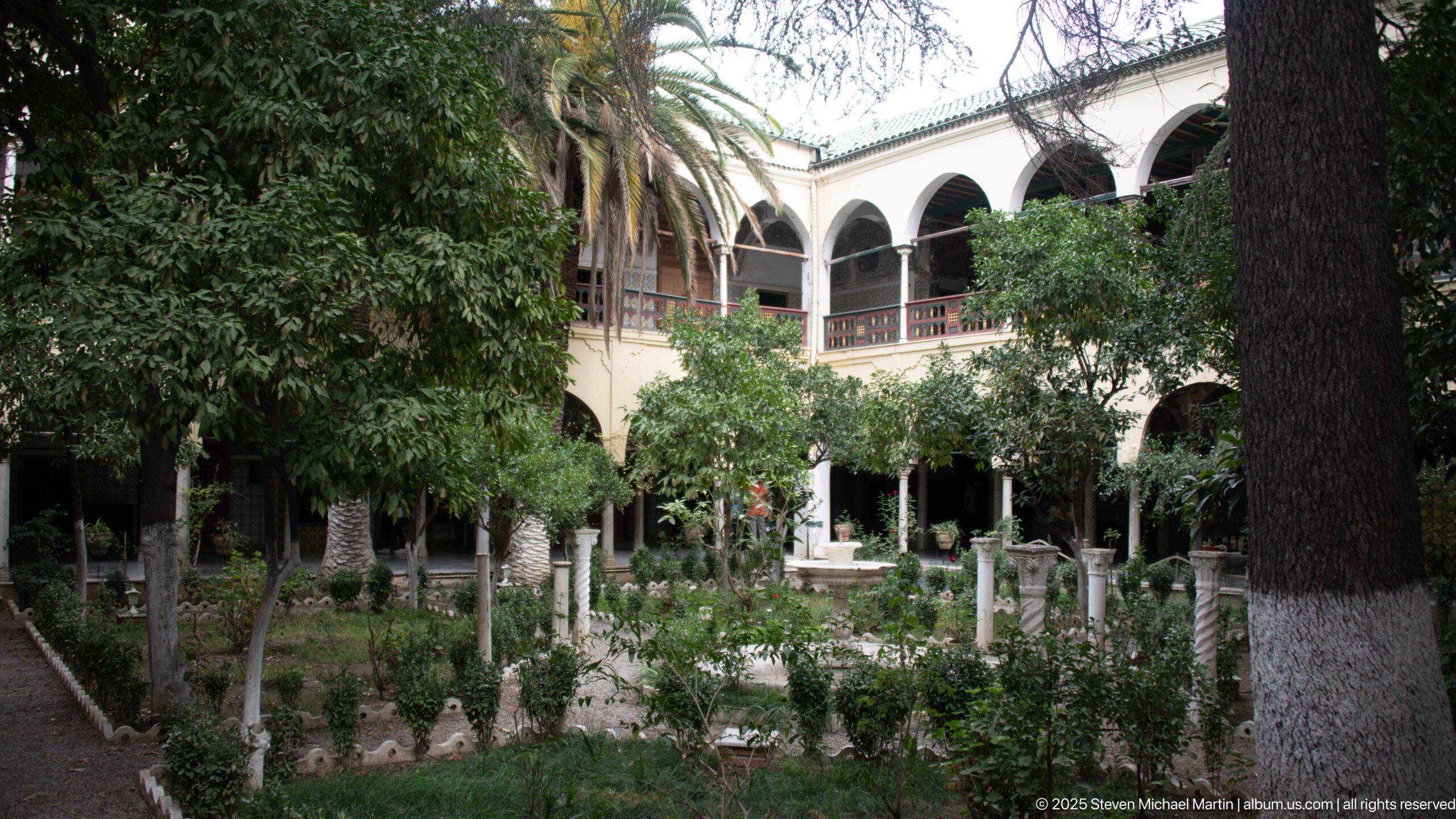
A planted courtyard at Ahmed Bey Palace is enclosed by two levels of arcaded galleries, their pale walls and dark railings partly screened by mature trees and palms. A small fountain stands amid the garden below, while the elevated viewpoint reveals how vegetation and surrounding circulation galleries are organized around the interior court.
Caption
A planted courtyard at Ahmed Bey Palace is enclosed by two levels of arcaded galleries, their pale walls and dark railings partly screened by mature trees and palms. A small fountain stands amid the garden below, while the elevated viewpoint reveals how vegetation and surrounding circulation galleries are organized around the interior court.
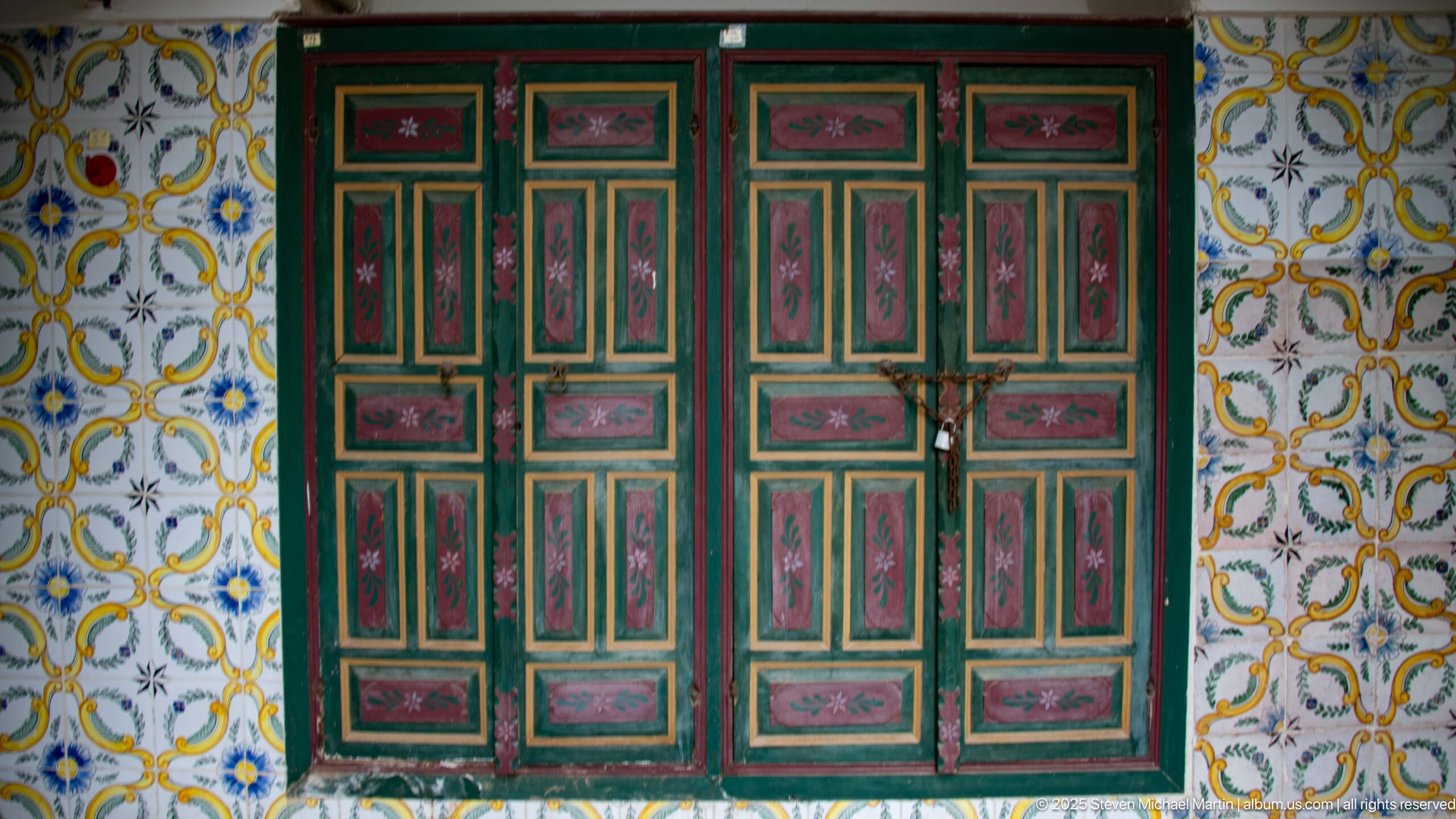
Tall double doors at Ahmed Bey Palace combine dark green framing with red recessed panels painted with delicate floral ornament. The surrounding wall is faced with white tiles carrying looping yellow and green vegetal designs, setting the rectilinear woodwork against a lighter, more fluid decorative pattern.
Caption
Tall double doors at Ahmed Bey Palace combine dark green framing with red recessed panels painted with delicate floral ornament. The surrounding wall is faced with white tiles carrying looping yellow and green vegetal designs, setting the rectilinear woodwork against a lighter, more fluid decorative pattern.
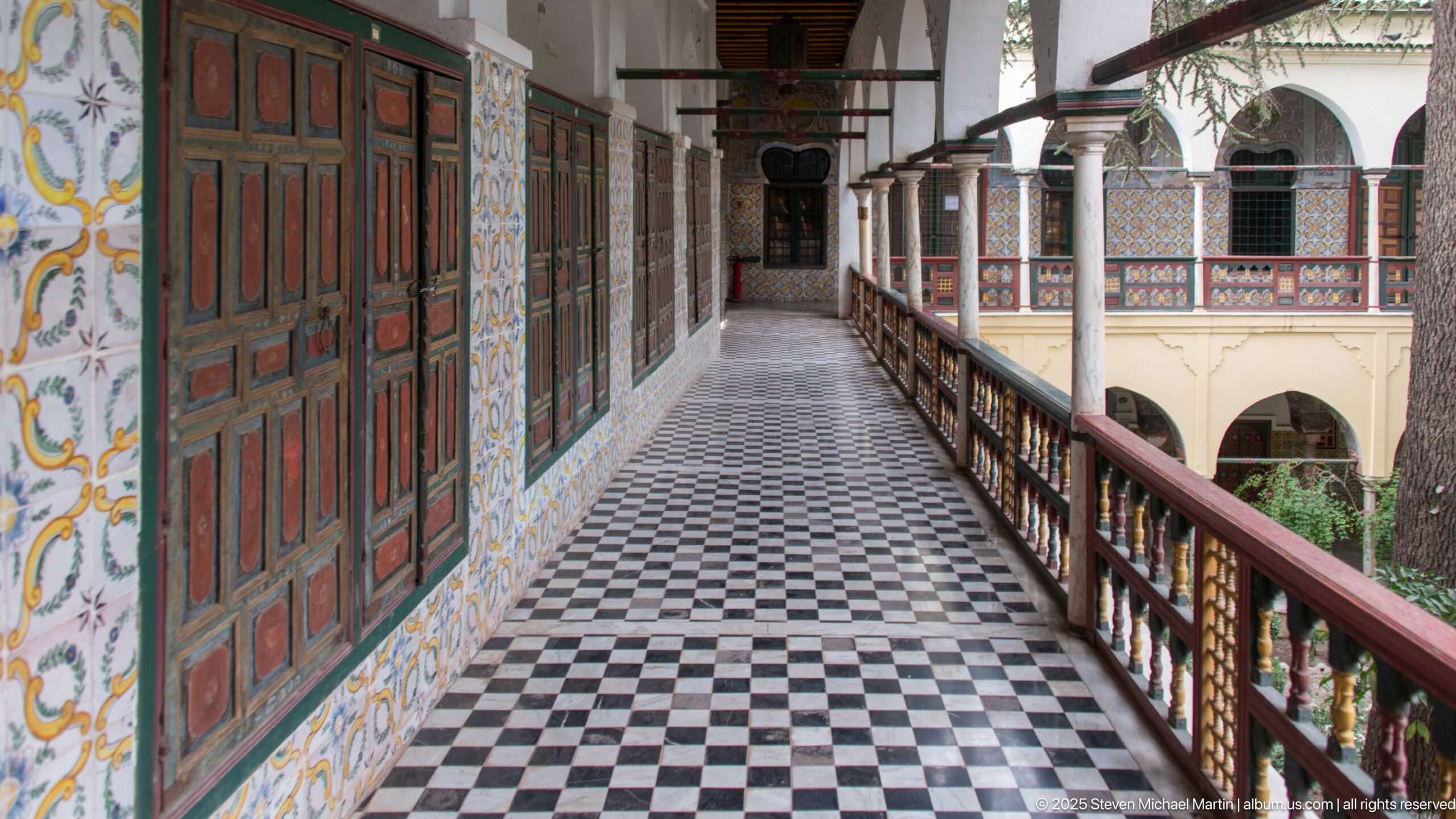
An upper-level gallery at Ahmed Bey Palace runs beside the courtyard on a striking black-and-white checkered floor. Painted doors and windows line a wall edged with colorful tiles, while a wooden balustrade opens toward the opposite arcade, giving this elevated passage a distinctly different rhythm from the marble-floored galleries below.
Caption
An upper-level gallery at Ahmed Bey Palace runs beside the courtyard on a striking black-and-white checkered floor. Painted doors and windows line a wall edged with colorful tiles, while a wooden balustrade opens toward the opposite arcade, giving this elevated passage a distinctly different rhythm from the marble-floored galleries below.
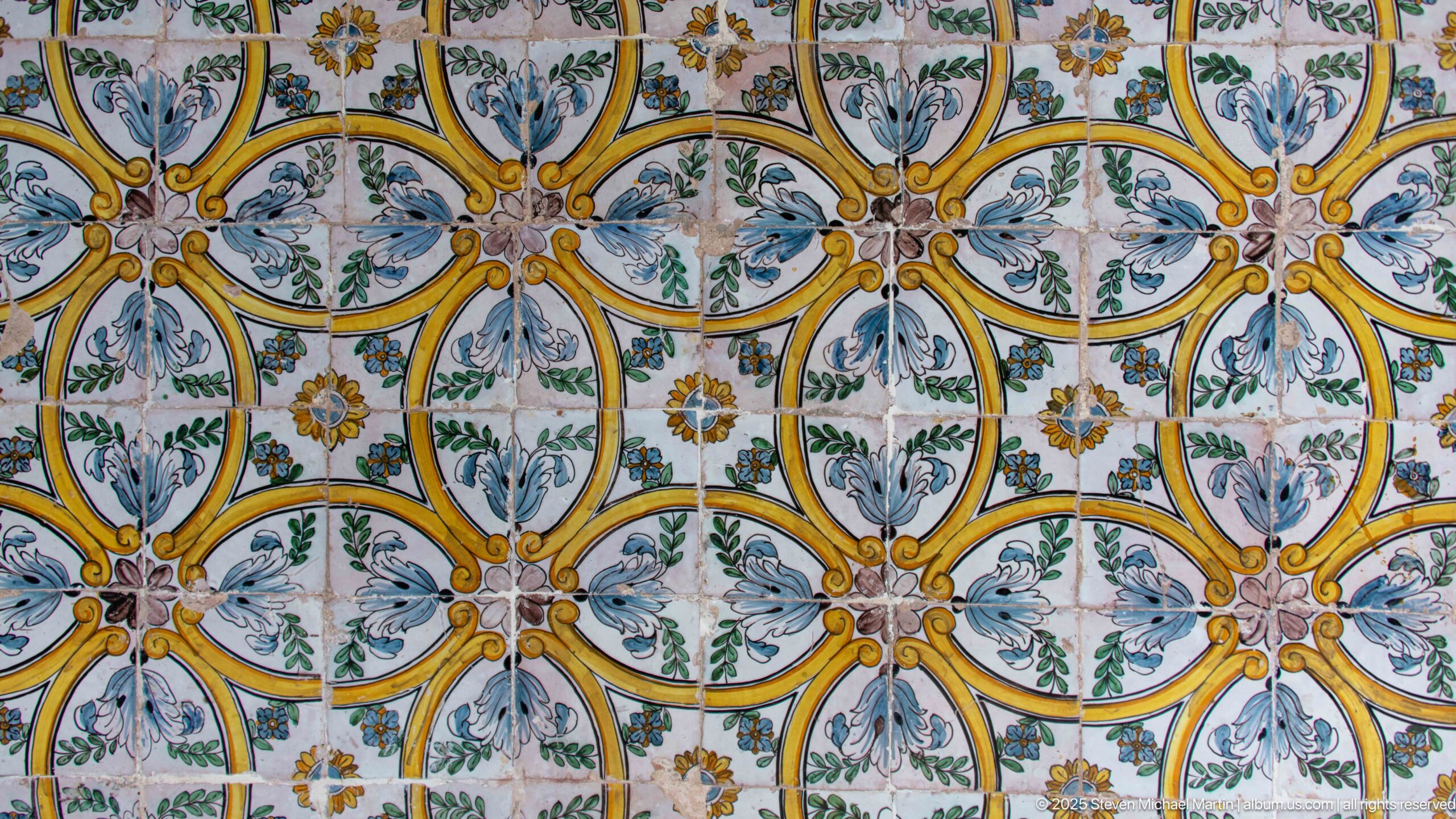
Interlocking yellow ovals organize a dense floral tile pattern at Ahmed Bey Palace, enclosing blue-gray leaves, green stems, and small multicolored blossoms. The repeated units form a continuous lattice across the wall, demonstrating how a limited set of ceramic motifs can produce a visually complex ornamental field.
Caption
Interlocking yellow ovals organize a dense floral tile pattern at Ahmed Bey Palace, enclosing blue-gray leaves, green stems, and small multicolored blossoms. The repeated units form a continuous lattice across the wall, demonstrating how a limited set of ceramic motifs can produce a visually complex ornamental field.
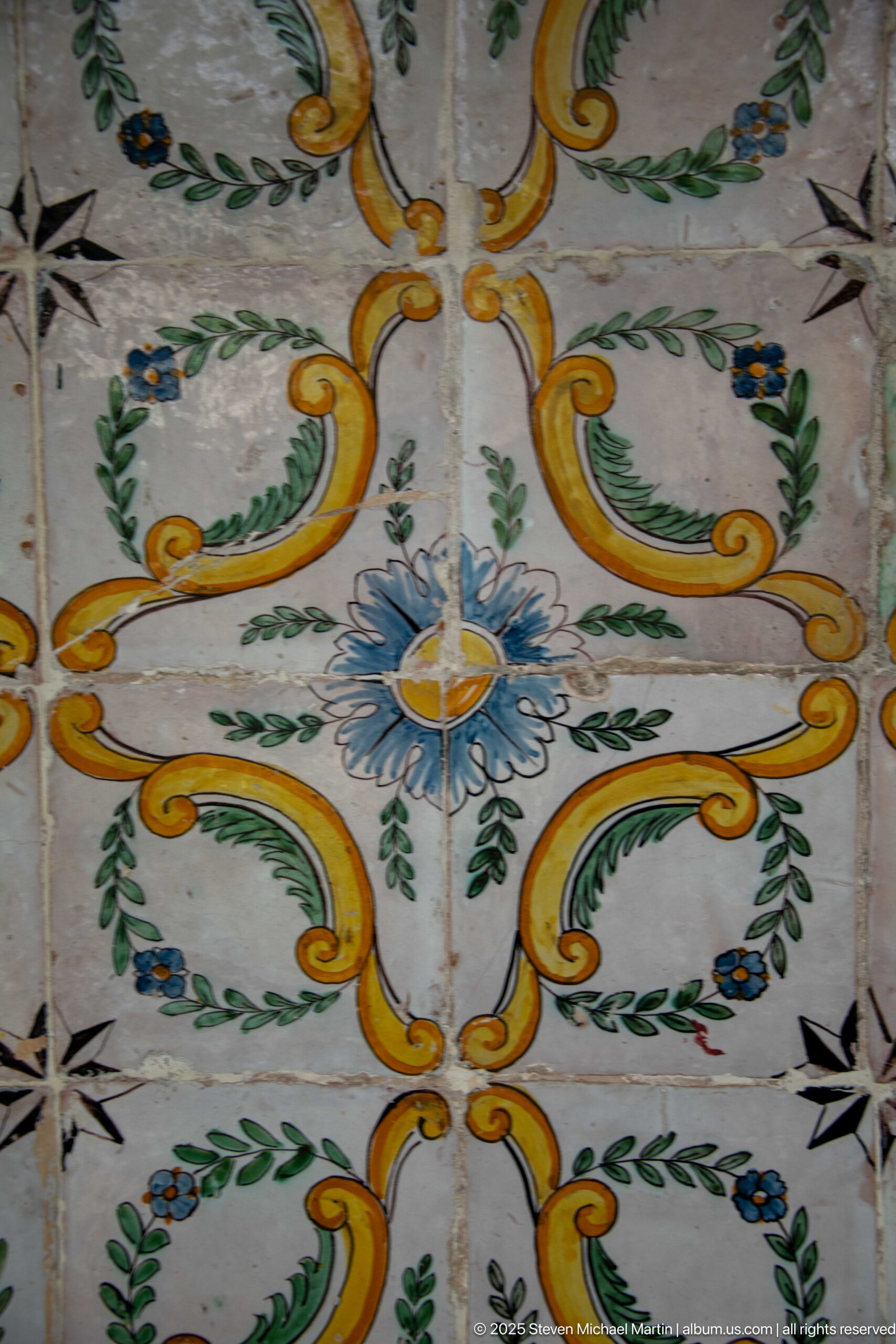
A close study of Ahmed Bey Palace tilework centers on a blue flower-like rosette from which yellow scrolls and green leafy stems radiate across four tiles. Small blue and orange blossoms punctuate the pale ground, while visible seams make the modular construction of the larger ornamental pattern easy to read.
Caption
A close study of Ahmed Bey Palace tilework centers on a blue flower-like rosette from which yellow scrolls and green leafy stems radiate across four tiles. Small blue and orange blossoms punctuate the pale ground, while visible seams make the modular construction of the larger ornamental pattern easy to read.
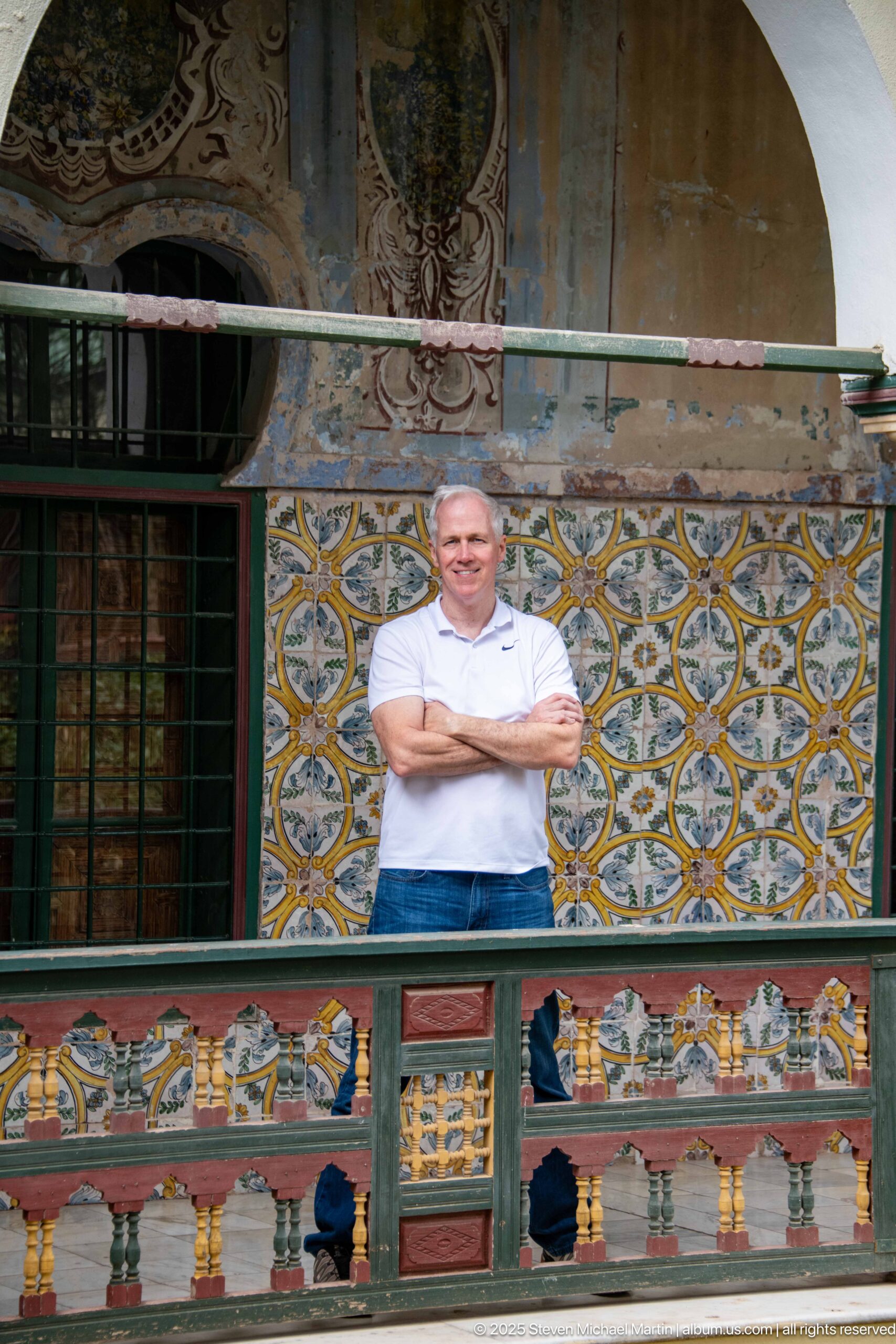
A visitor stands with folded arms behind the painted wooden balustrade of an upper Ahmed Bey Palace gallery. Large patterned tiles fill the wall behind him, with barred windows and weathered painted surfaces above; the portrait uses the figure to convey the scale and dense decoration of the courtyard-facing balcony.
Caption
A visitor stands with folded arms behind the painted wooden balustrade of an upper Ahmed Bey Palace gallery. Large patterned tiles fill the wall behind him, with barred windows and weathered painted surfaces above; the portrait uses the figure to convey the scale and dense decoration of the courtyard-facing balcony.
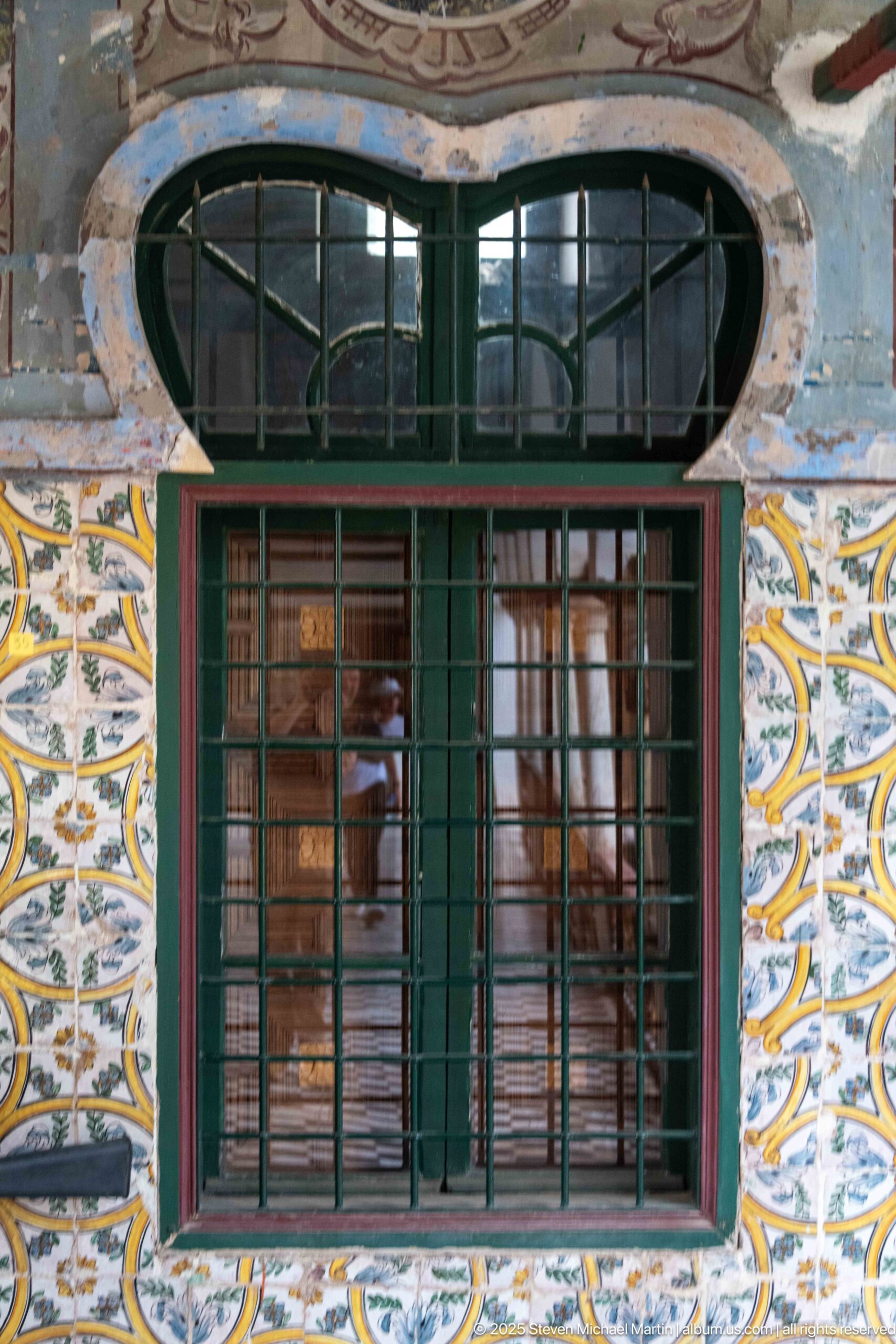
A green-framed window at Ahmed Bey Palace is secured by a dark metal grille and topped by an elongated oval transom with radiating bars. Patterned tiles cover the lower wall around the opening, while faded painted ornament survives above, bringing several layers of material, color, and security treatment into one architectural detail.
Caption
A green-framed window at Ahmed Bey Palace is secured by a dark metal grille and topped by an elongated oval transom with radiating bars. Patterned tiles cover the lower wall around the opening, while faded painted ornament survives above, bringing several layers of material, color, and security treatment into one architectural detail.
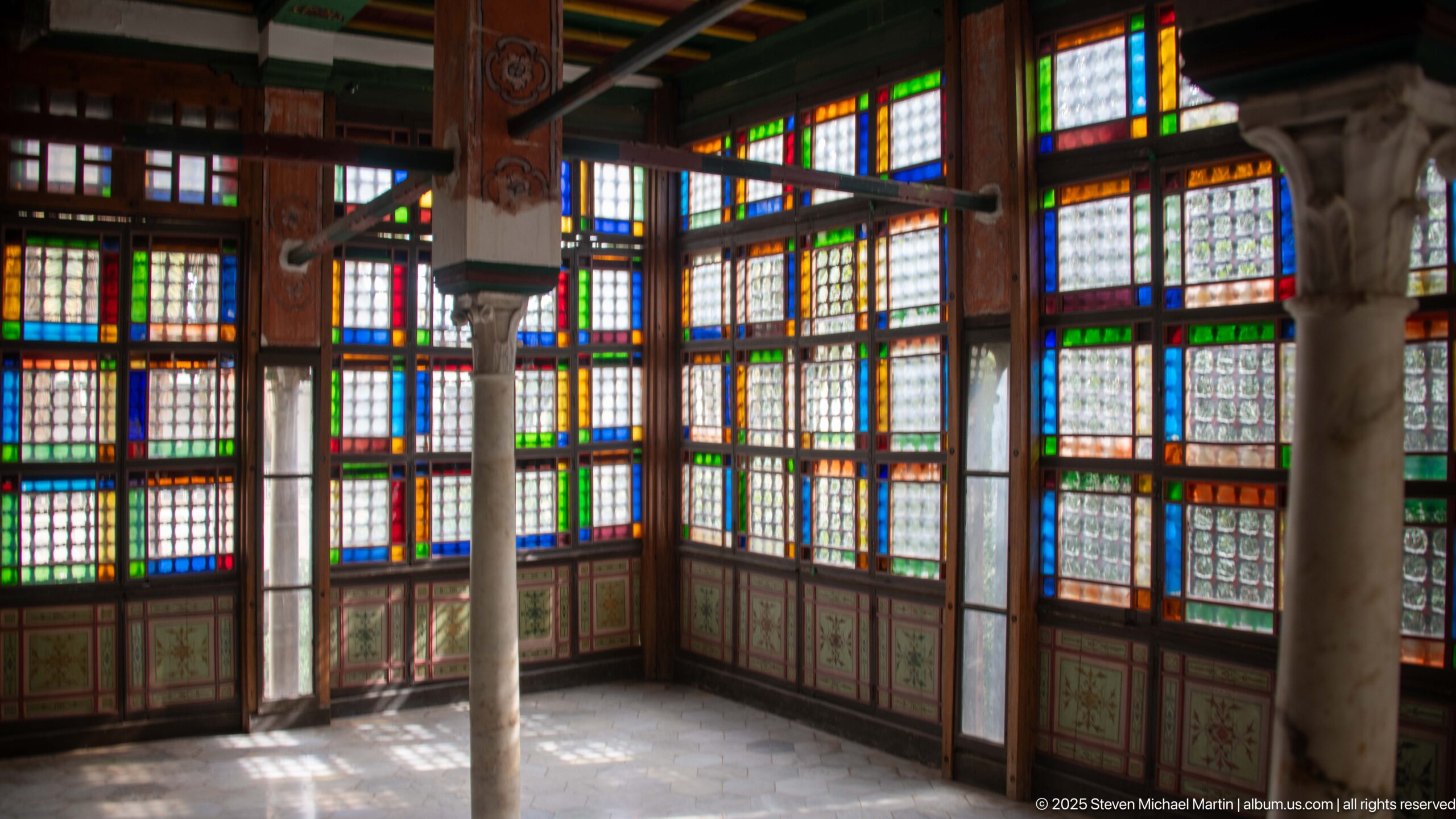
A light-filled room at Ahmed Bey Palace is enclosed by tall wooden window grids filled with clear textured panes and bands of vivid red, blue, green, yellow, and orange glass. Slender columns stand inside the glazed perimeter, while colored light and shadows animate the bare floor and emphasize the room’s unusual transparency.
Caption
A light-filled room at Ahmed Bey Palace is enclosed by tall wooden window grids filled with clear textured panes and bands of vivid red, blue, green, yellow, and orange glass. Slender columns stand inside the glazed perimeter, while colored light and shadows animate the bare floor and emphasize the room’s unusual transparency.
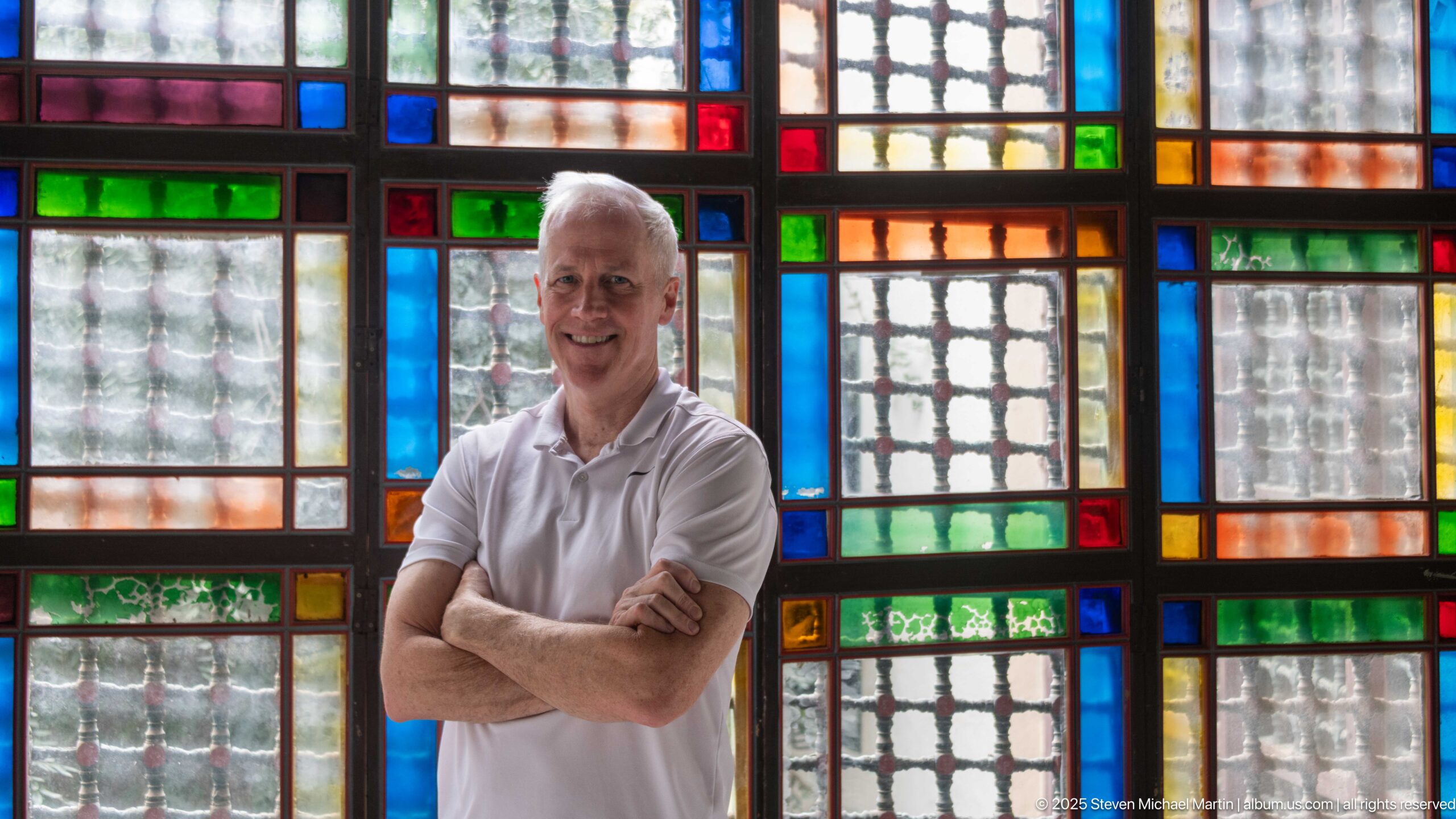
Standing with folded arms, a visitor is silhouetted more strongly against the bright colored glazing of Ahmed Bey Palace. The tighter composition concentrates on the contrast between the white shirt and the surrounding red, blue, green, amber, and textured clear panes, making the decorative window grid the principal architectural context.
Caption
Standing with folded arms, a visitor is silhouetted more strongly against the bright colored glazing of Ahmed Bey Palace. The tighter composition concentrates on the contrast between the white shirt and the surrounding red, blue, green, amber, and textured clear panes, making the decorative window grid the principal architectural context.
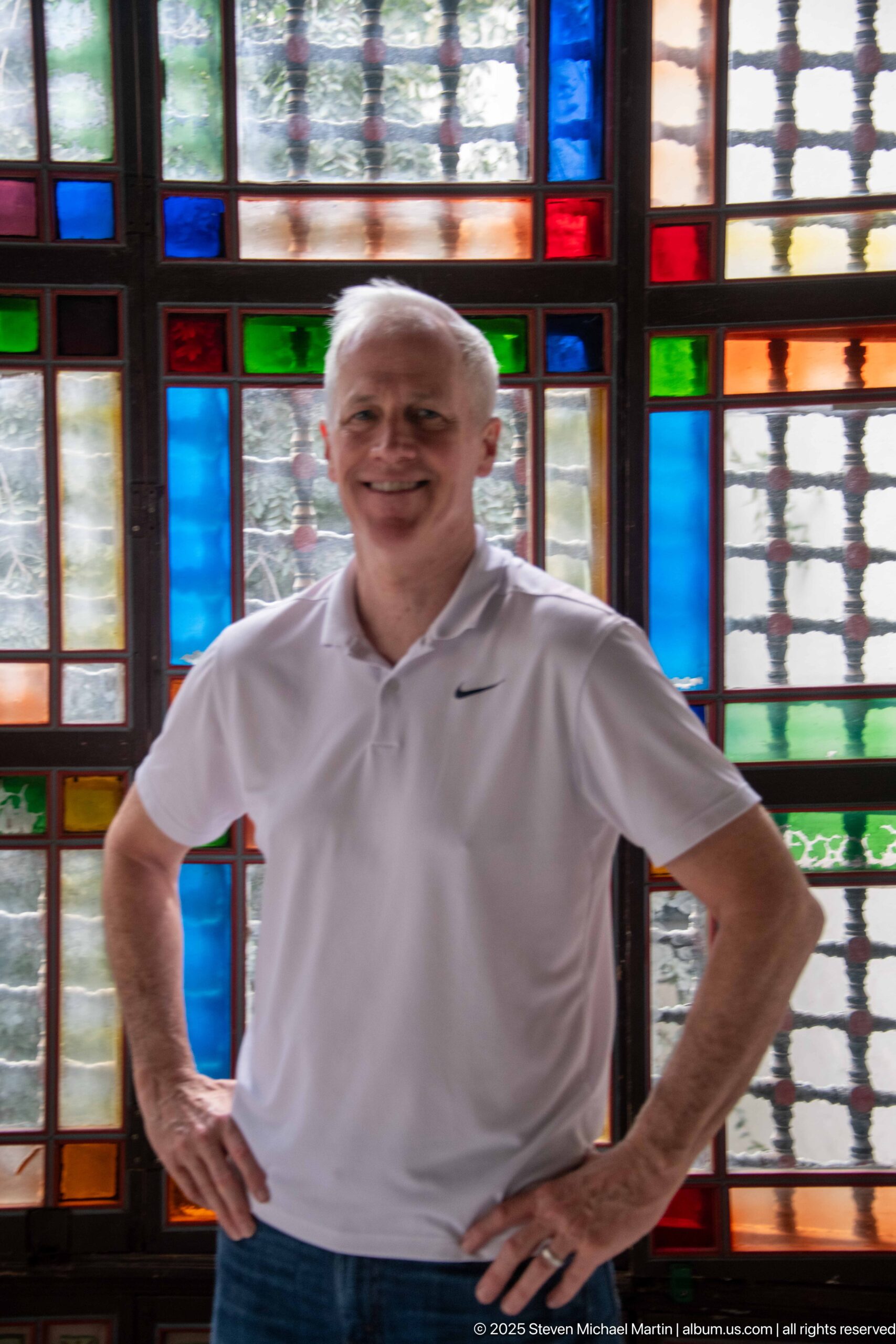
A visitor poses with hands on his hips before the multicolored glazed windows of Ahmed Bey Palace. Bright blue, green, red, and amber panes form a luminous geometric backdrop, while clear patterned glass and dark wooden framing make the human figure stand out against one of the palace’s most visually distinctive interior features.
Caption
A visitor poses with hands on his hips before the multicolored glazed windows of Ahmed Bey Palace. Bright blue, green, red, and amber panes form a luminous geometric backdrop, while clear patterned glass and dark wooden framing make the human figure stand out against one of the palace’s most visually distinctive interior features.
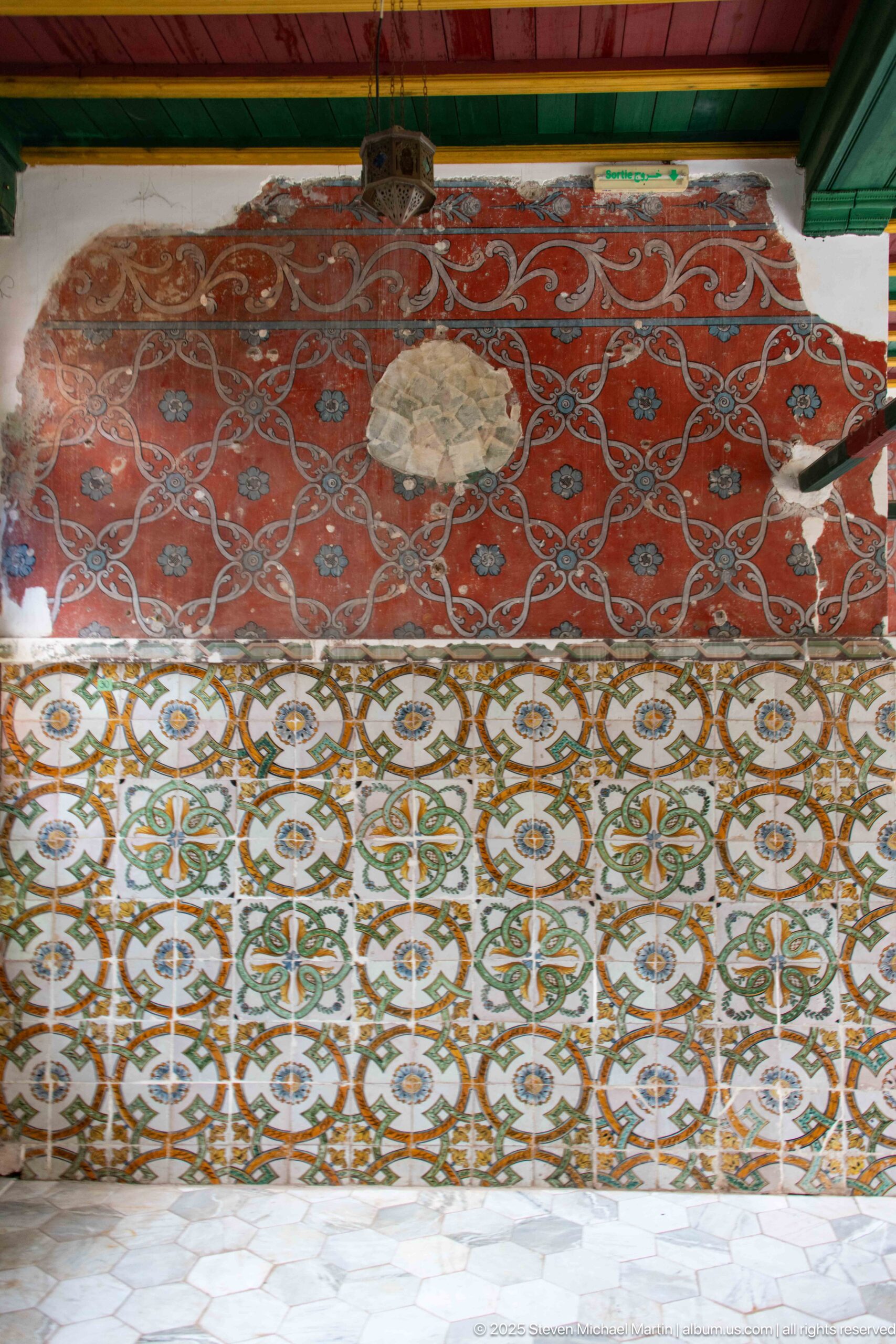
A broad red-painted wall panel at Ahmed Bey Palace carries pale looping lines and scattered floral or vegetal motifs above a continuous patterned tile dado. Areas of loss and abrasion interrupt the painted surface, making the contrast between the weathered mural zone and the more regular glazed ceramic decoration below especially apparent.
Caption
A broad red-painted wall panel at Ahmed Bey Palace carries pale looping lines and scattered floral or vegetal motifs above a continuous patterned tile dado. Areas of loss and abrasion interrupt the painted surface, making the contrast between the weathered mural zone and the more regular glazed ceramic decoration below especially apparent.
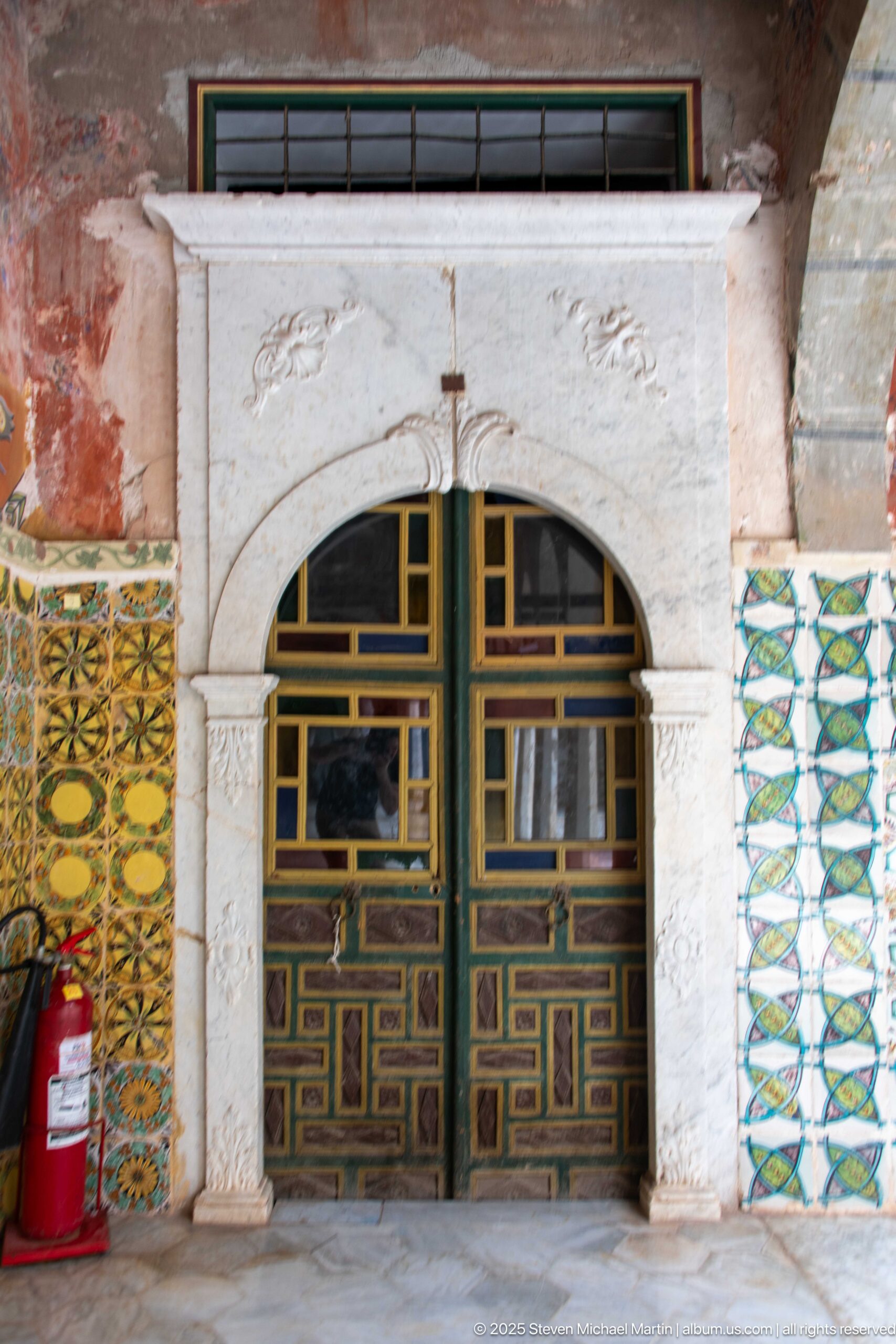
A low double door with green, yellow, and dark geometric panels is set beneath a shallow rounded arch of pale stone. Patterned tile panels flank the doorway, and a modern fire extinguisher at left introduces a conspicuous museum-safety element into the historic Ahmed Bey Palace interior.
Caption
A low double door with green, yellow, and dark geometric panels is set beneath a shallow rounded arch of pale stone. Patterned tile panels flank the doorway, and a modern fire extinguisher at left introduces a conspicuous museum-safety element into the historic Ahmed Bey Palace interior.
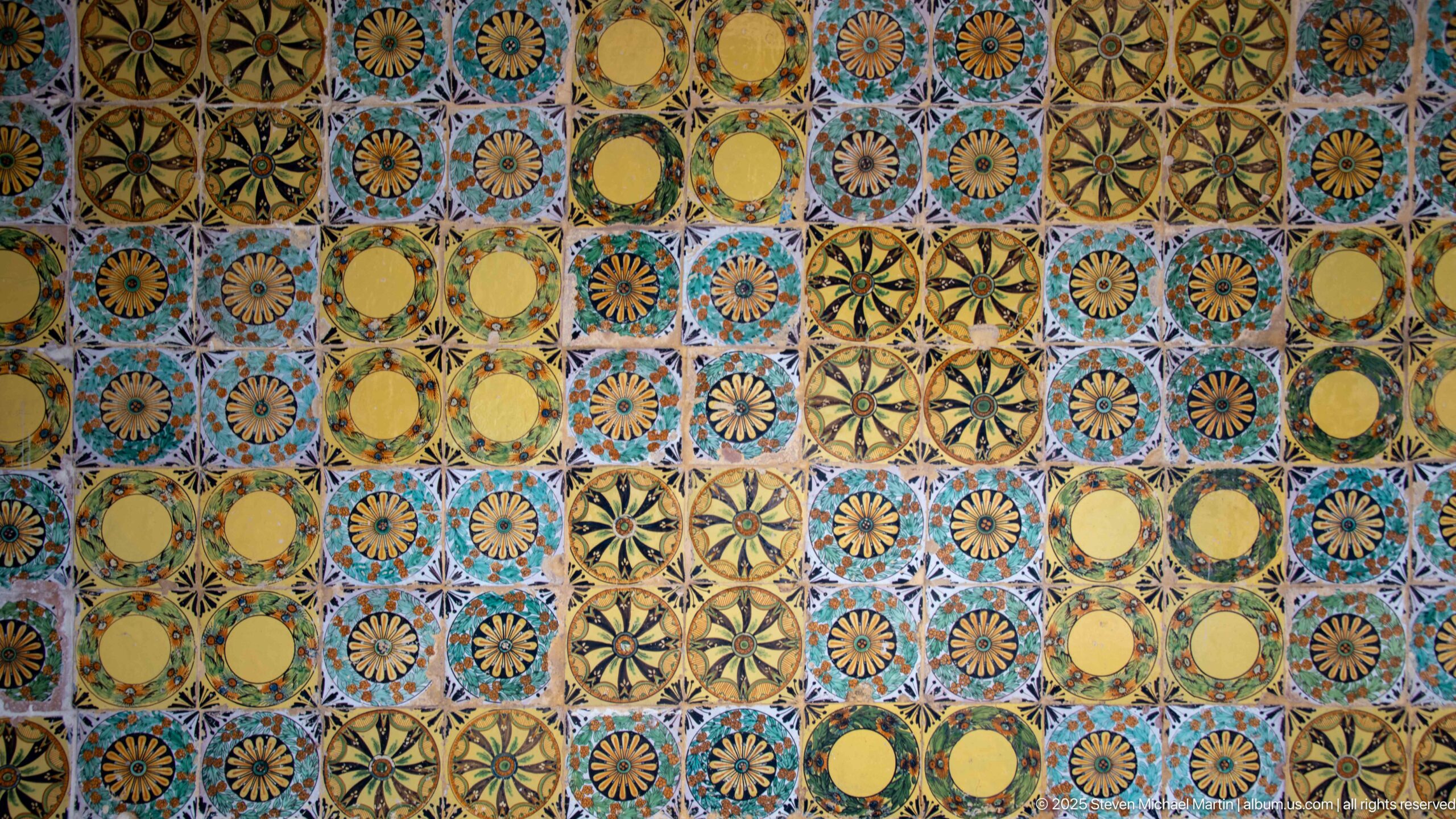
A dense patchwork of ceramic tiles at Ahmed Bey Palace alternates circular yellow medallions, radiating blue-and-brown rosettes, and star-like floral patterns. Changes in motif and arrangement interrupt the grid, making this wall especially useful for comparing several decorative tile designs within a single tightly framed surface.
Caption
A dense patchwork of ceramic tiles at Ahmed Bey Palace alternates circular yellow medallions, radiating blue-and-brown rosettes, and star-like floral patterns. Changes in motif and arrangement interrupt the grid, making this wall especially useful for comparing several decorative tile designs within a single tightly framed surface.
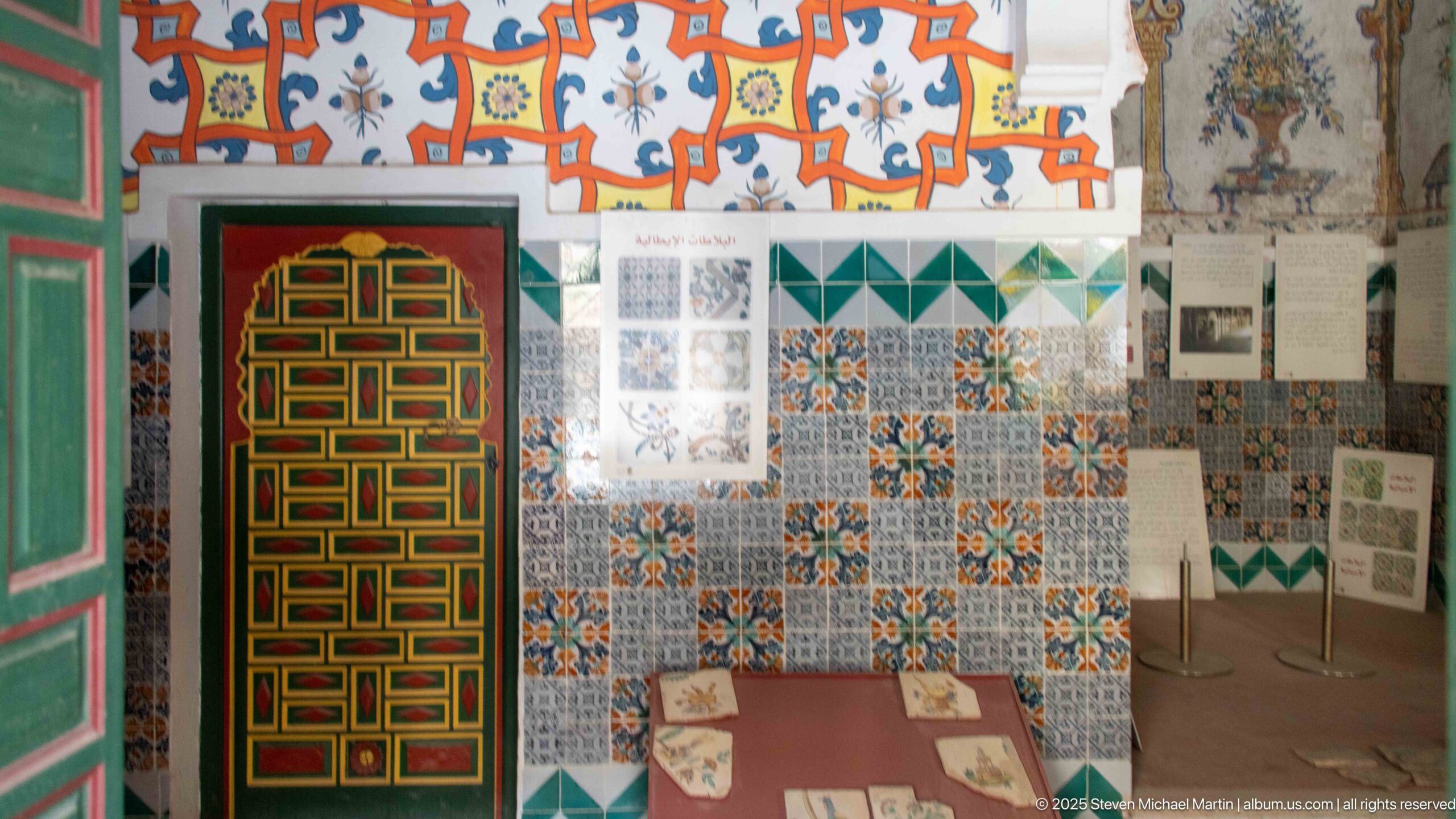
An interpretation area inside Ahmed Bey Palace presents enlarged decorative motifs, diagrams, text panels, and examples of patterned tilework beside a brightly painted geometric door. A low display case occupies the foreground, showing how the museum explains the palace’s ornamental vocabulary within the decorated rooms themselves.
Caption
An interpretation area inside Ahmed Bey Palace presents enlarged decorative motifs, diagrams, text panels, and examples of patterned tilework beside a brightly painted geometric door. A low display case occupies the foreground, showing how the museum explains the palace’s ornamental vocabulary within the decorated rooms themselves.
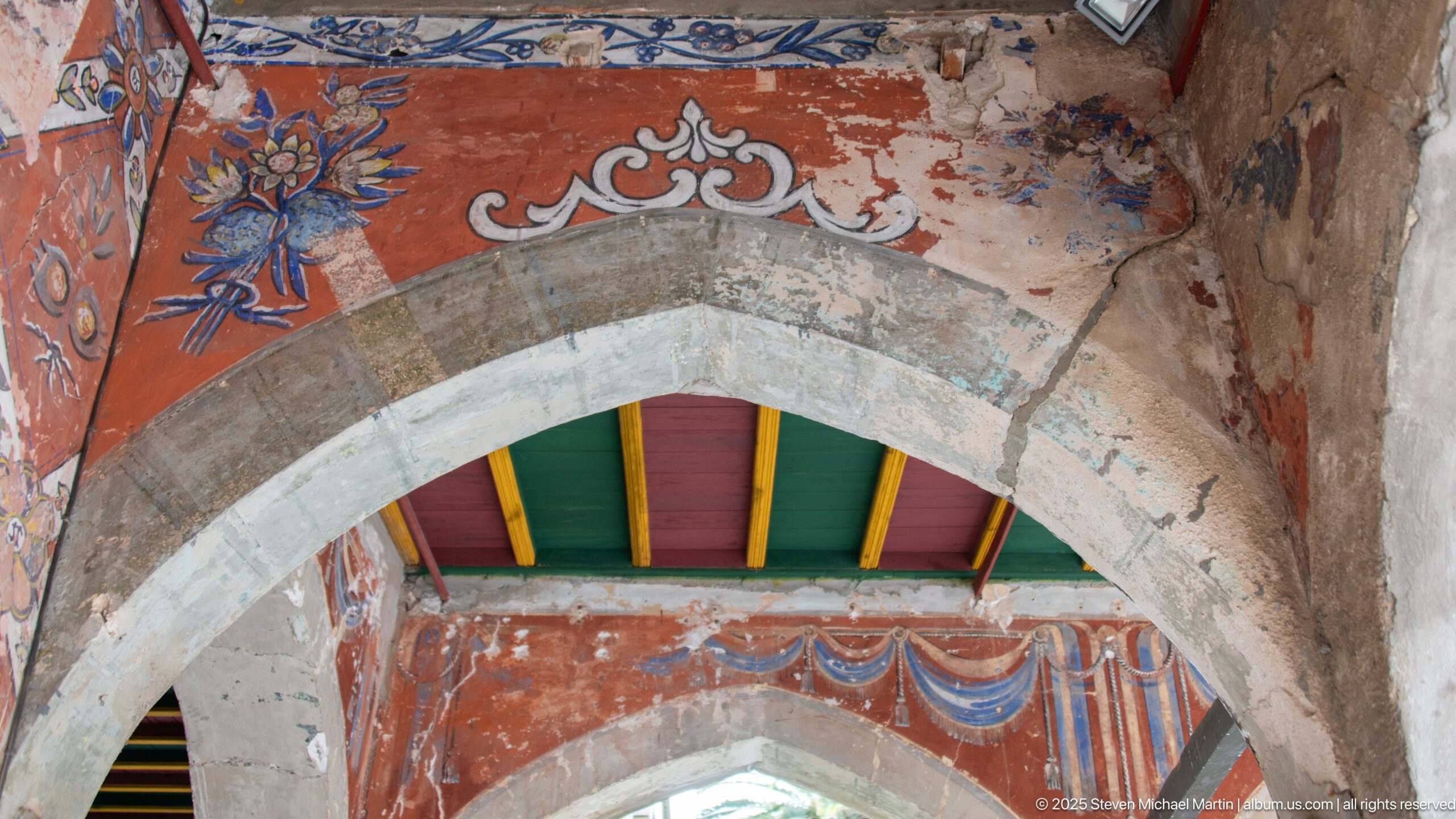
A pointed stone arch at Ahmed Bey Palace cuts through walls covered with weathered red and blue painted decoration. A second arch recedes beyond it beneath a ceiling of green, red, and yellow boards, creating a layered upward view of the palace’s masonry structure and surviving mural ornament.
Caption
A pointed stone arch at Ahmed Bey Palace cuts through walls covered with weathered red and blue painted decoration. A second arch recedes beyond it beneath a ceiling of green, red, and yellow boards, creating a layered upward view of the palace’s masonry structure and surviving mural ornament.
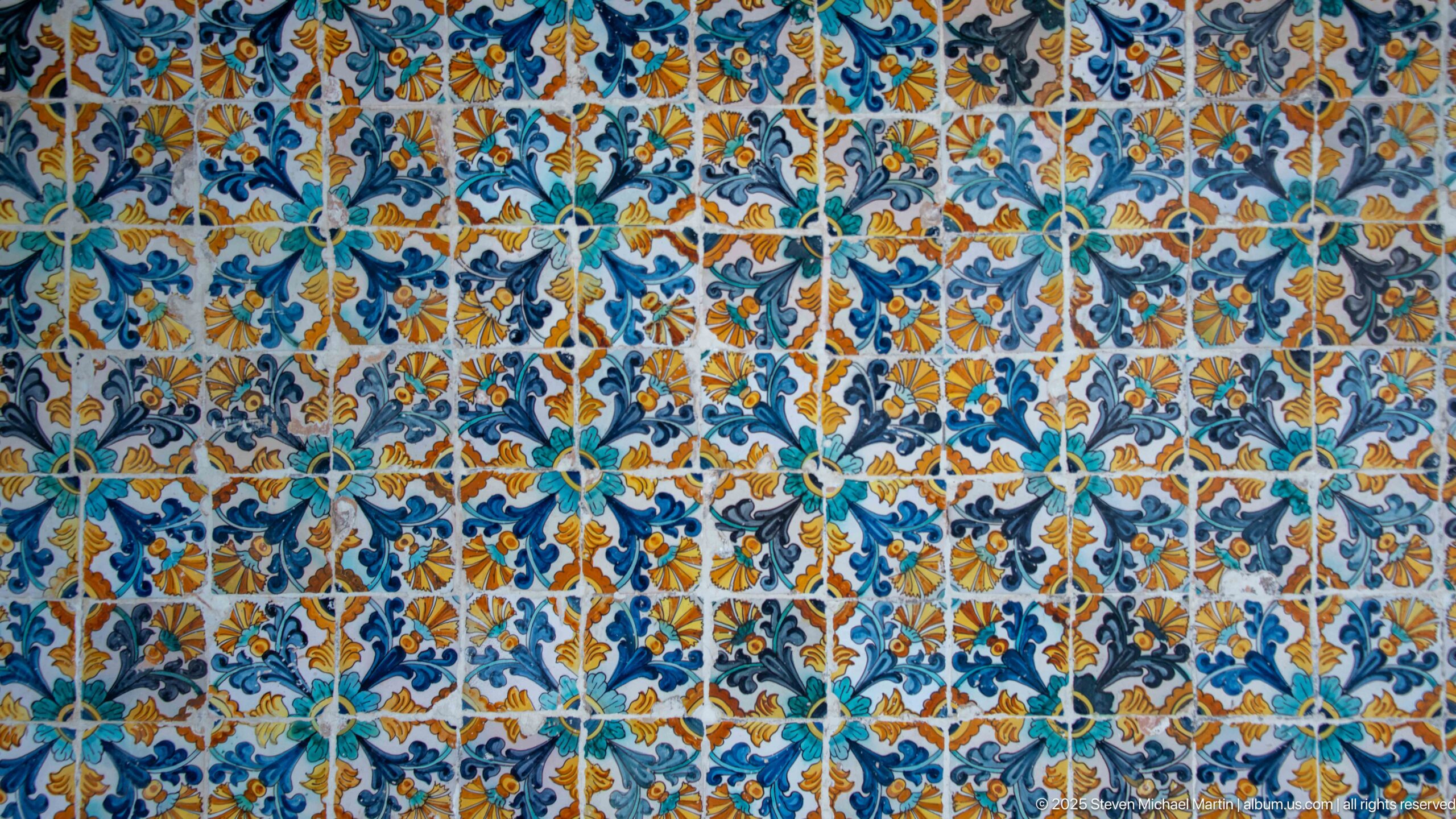
Rows of glazed tiles form a dense vertical floral pattern in blue, turquoise, green, ochre, and white. Repeated stems, leaves, and blossoms create a tapestry-like wall surface at Ahmed Bey Palace, while slight variations between tiles reveal the modular construction beneath the continuous design.
Caption
Rows of glazed tiles form a dense vertical floral pattern in blue, turquoise, green, ochre, and white. Repeated stems, leaves, and blossoms create a tapestry-like wall surface at Ahmed Bey Palace, while slight variations between tiles reveal the modular construction beneath the continuous design.
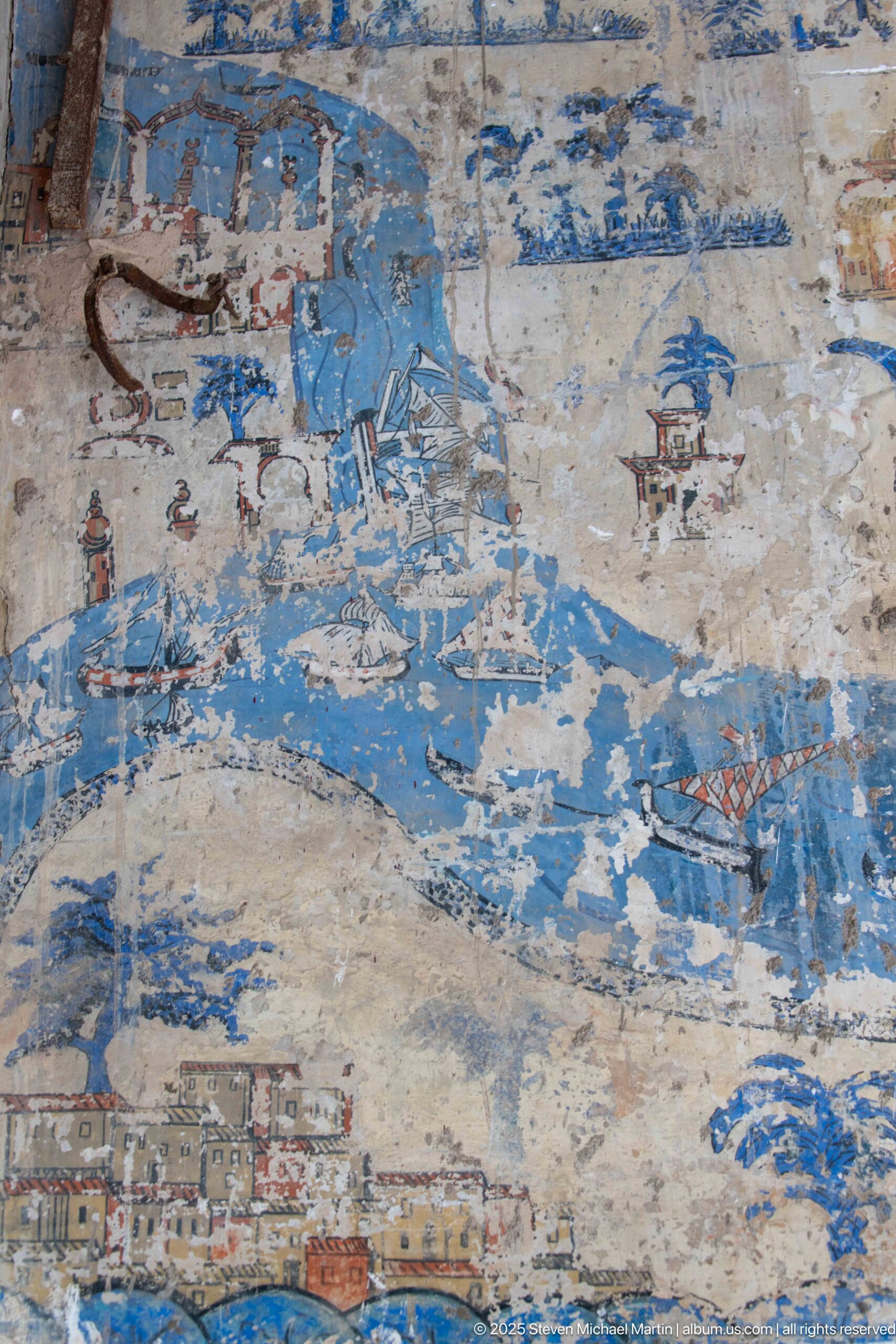
A heavily worn wall painting at Ahmed Bey Palace preserves fragments of a predominantly blue narrative scene, including small buildings and landscape or maritime elements amid extensive areas of loss. The damaged surface makes the original composition difficult to reconstruct, but the surviving pigments clearly document the palace’s broad program of painted imagery.
Caption
A heavily worn wall painting at Ahmed Bey Palace preserves fragments of a predominantly blue narrative scene, including small buildings and landscape or maritime elements amid extensive areas of loss. The damaged surface makes the original composition difficult to reconstruct, but the surviving pigments clearly document the palace’s broad program of painted imagery.
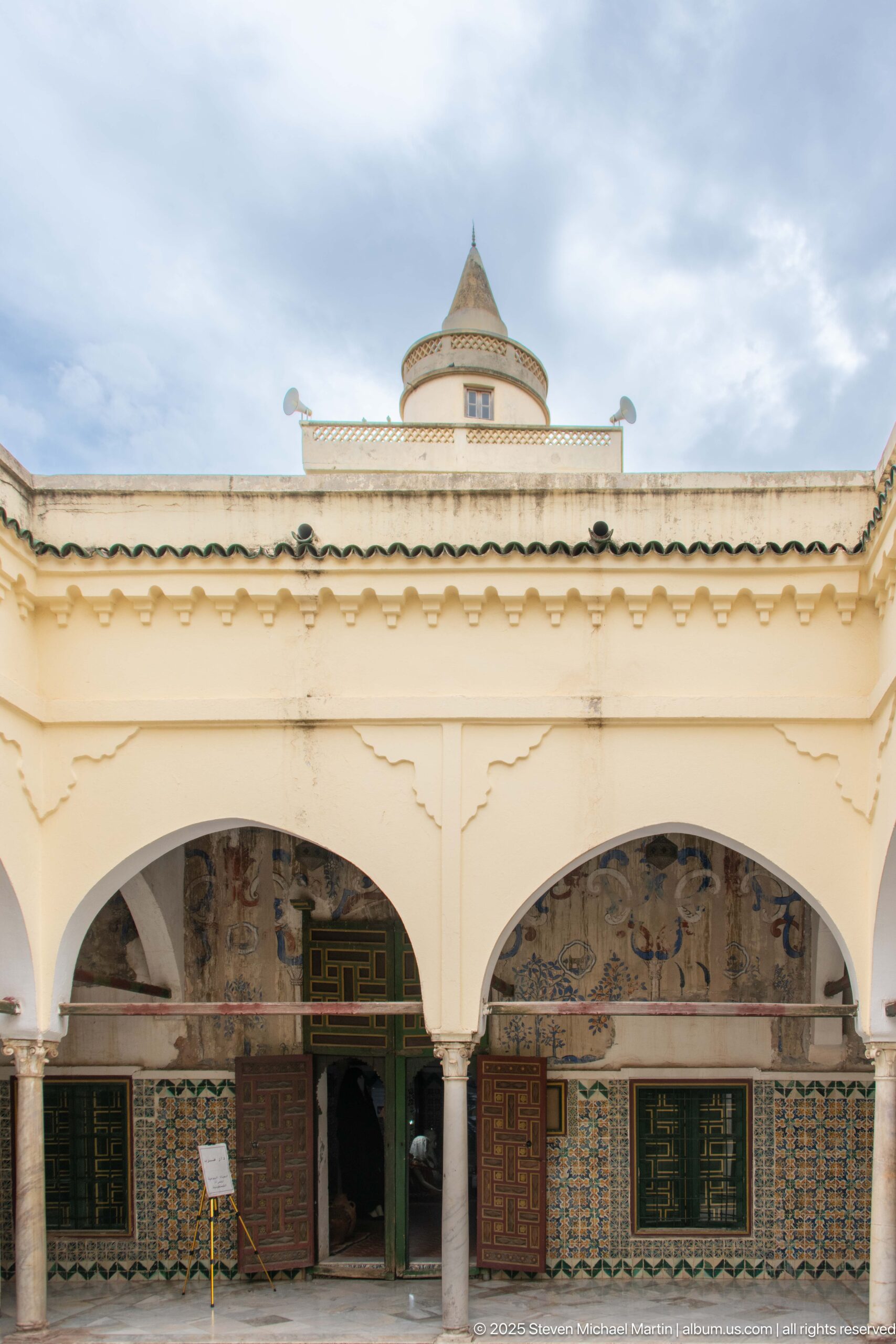
A pale courtyard façade at Ahmed Bey Palace is organized by broad ground-floor arches opening onto decorated rooms with painted doors, murals, and tilework. Above the roofline, a small polygonal pavilion or lantern rises against the cloudy sky, adding a distinctive vertical accent to this otherwise low interior elevation.
Caption
A pale courtyard façade at Ahmed Bey Palace is organized by broad ground-floor arches opening onto decorated rooms with painted doors, murals, and tilework. Above the roofline, a small polygonal pavilion or lantern rises against the cloudy sky, adding a distinctive vertical accent to this otherwise low interior elevation.
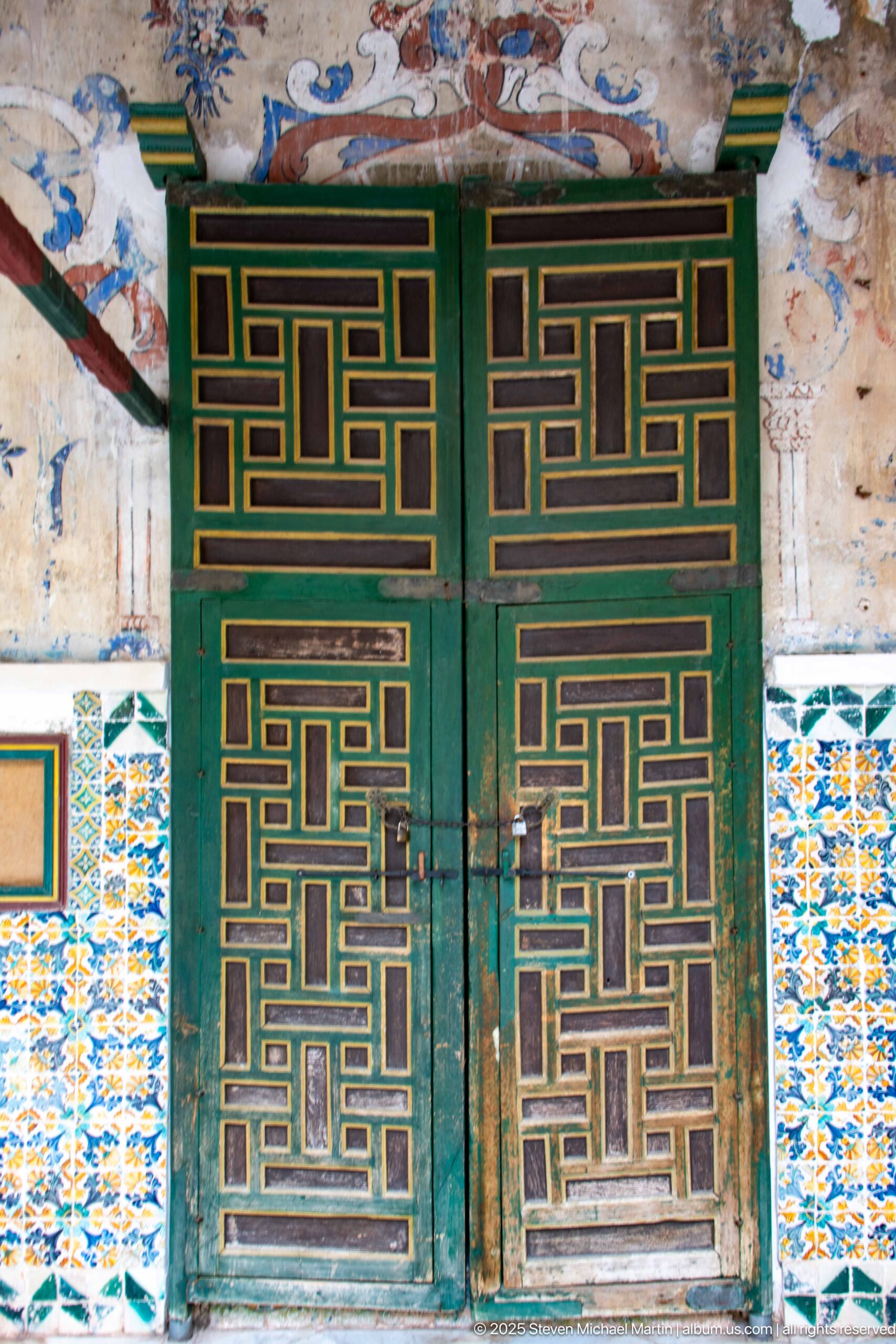
Green double doors at Ahmed Bey Palace are covered with interlocking gold-colored rectilinear bands and set within a wall of blue-and-yellow patterned tiles. Weathered painted imagery survives above the doorway, contrasting the crisp geometry of the woodwork with the more fragmentary mural surface.
Caption
Green double doors at Ahmed Bey Palace are covered with interlocking gold-colored rectilinear bands and set within a wall of blue-and-yellow patterned tiles. Weathered painted imagery survives above the doorway, contrasting the crisp geometry of the woodwork with the more fragmentary mural surface.
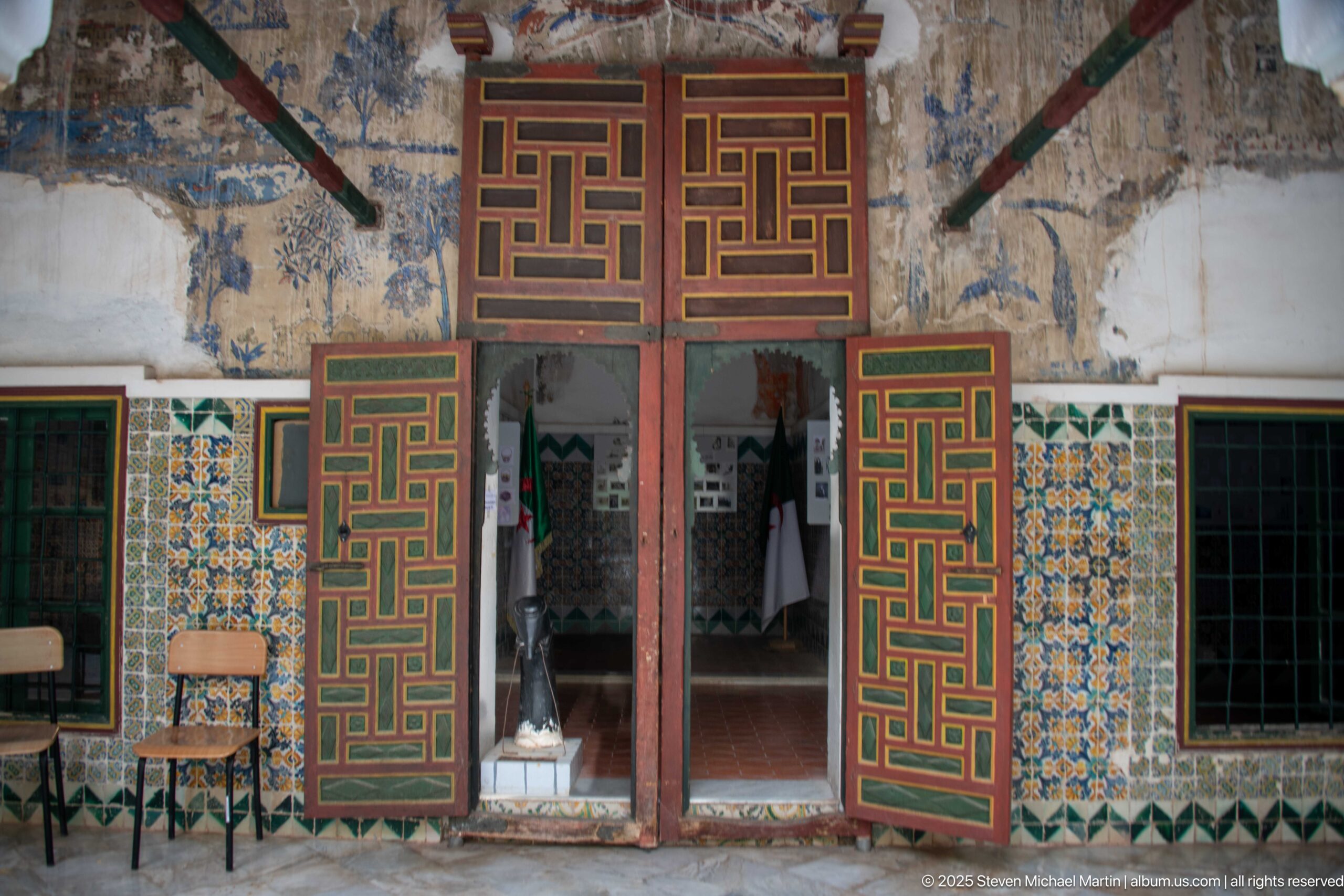
Multiple leaves of a tall polychrome doorway stand open at Ahmed Bey Palace, their red, green, and ochre geometric panels framing a view into a museum room beyond. Patterned tiles line the lower wall and faded painted decoration survives above, while display objects inside reinforce the palace’s present museum function.
Caption
Multiple leaves of a tall polychrome doorway stand open at Ahmed Bey Palace, their red, green, and ochre geometric panels framing a view into a museum room beyond. Patterned tiles line the lower wall and faded painted decoration survives above, while display objects inside reinforce the palace’s present museum function.
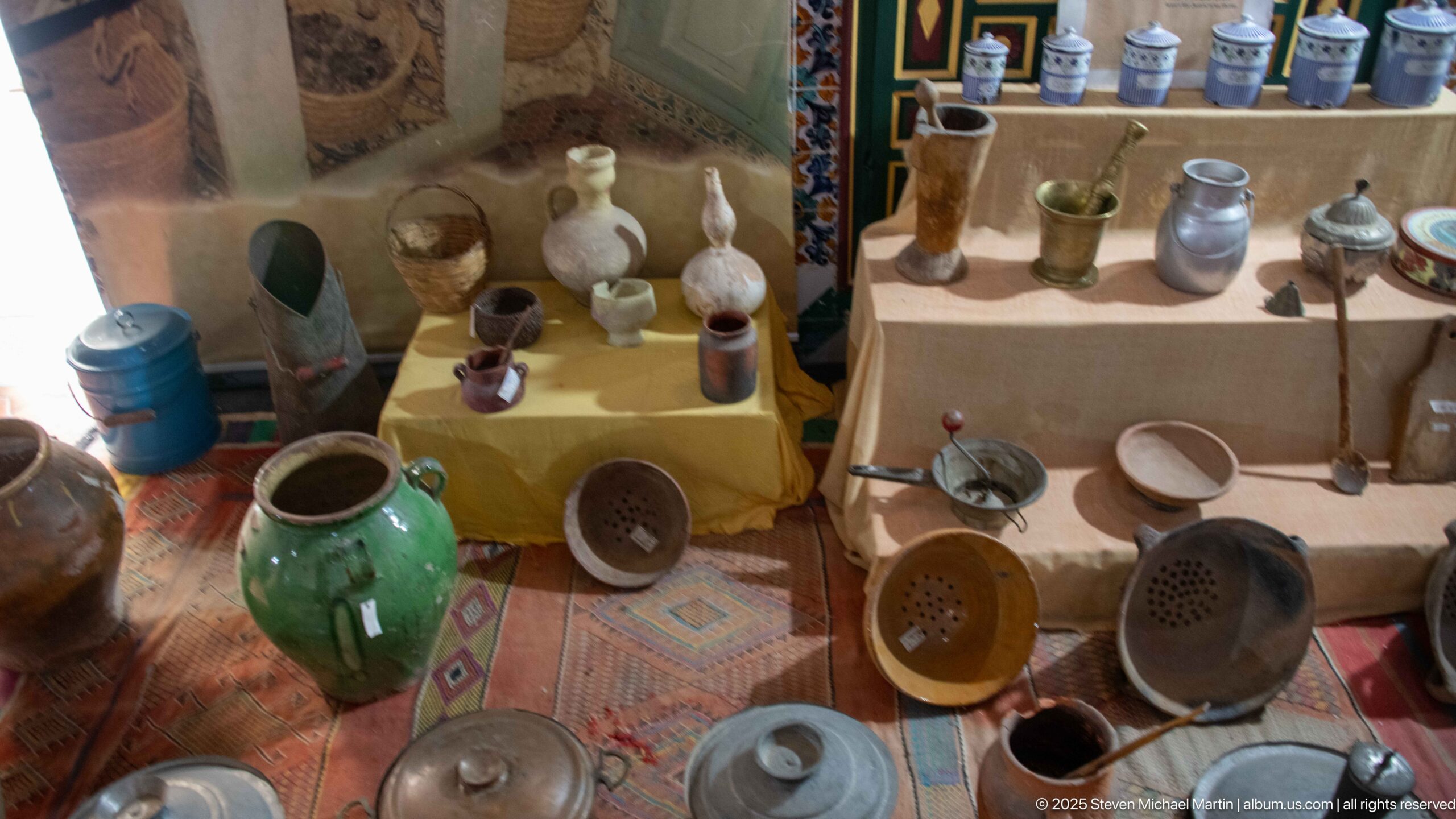
A museum display inside Ahmed Bey Palace assembles ceramic jars, pitchers, cups, metal vessels, sieves, and other household utensils on low platforms and patterned textiles. The varied forms and materials present traditional domestic objects as a collection, while the dense arrangement allows differences in vessel shape, scale, and function to be compared.
Caption
A museum display inside Ahmed Bey Palace assembles ceramic jars, pitchers, cups, metal vessels, sieves, and other household utensils on low platforms and patterned textiles. The varied forms and materials present traditional domestic objects as a collection, while the dense arrangement allows differences in vessel shape, scale, and function to be compared.
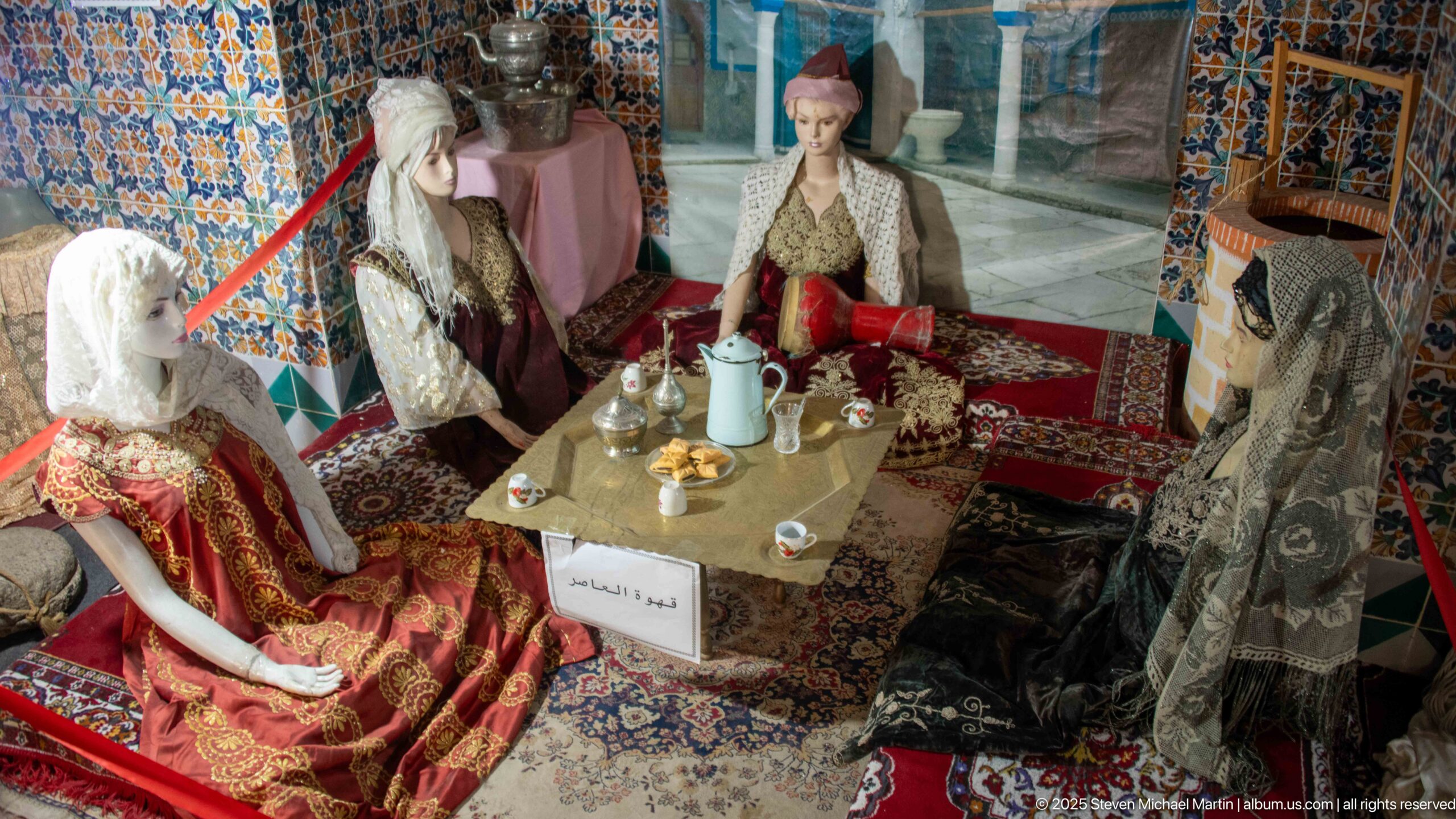
A museum tableau presents four female mannequins in traditional garments gathered around a low tea or coffee setting on layered carpets and cushions. Metal serving pieces and small cups occupy the central table, while patterned tile walls reinforce the domestic setting created for the display of clothing, textiles, and customary household life.
Caption
A museum tableau presents four female mannequins in traditional garments gathered around a low tea or coffee setting on layered carpets and cushions. Metal serving pieces and small cups occupy the central table, while patterned tile walls reinforce the domestic setting created for the display of clothing, textiles, and customary household life.
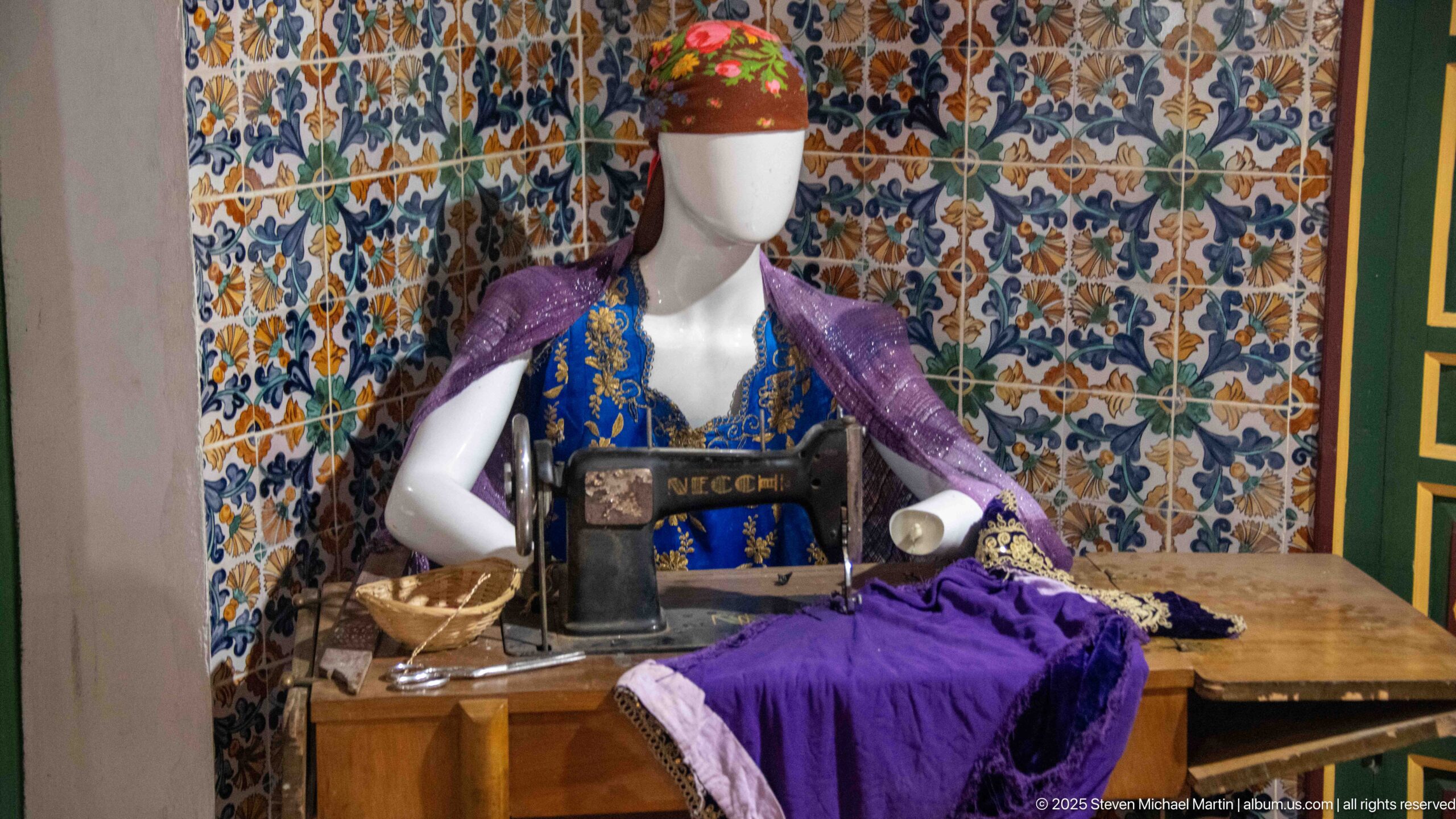
A seated female mannequin in a bright blue bodice, purple wrap, and red floral head covering is posed at a vintage sewing machine inside the palace museum. Purple fabric lies across the table and her lap, while a richly patterned tiled wall provides a decorative backdrop for this presentation of textile work and traditional dress.
Caption
A seated female mannequin in a bright blue bodice, purple wrap, and red floral head covering is posed at a vintage sewing machine inside the palace museum. Purple fabric lies across the table and her lap, while a richly patterned tiled wall provides a decorative backdrop for this presentation of textile work and traditional dress.
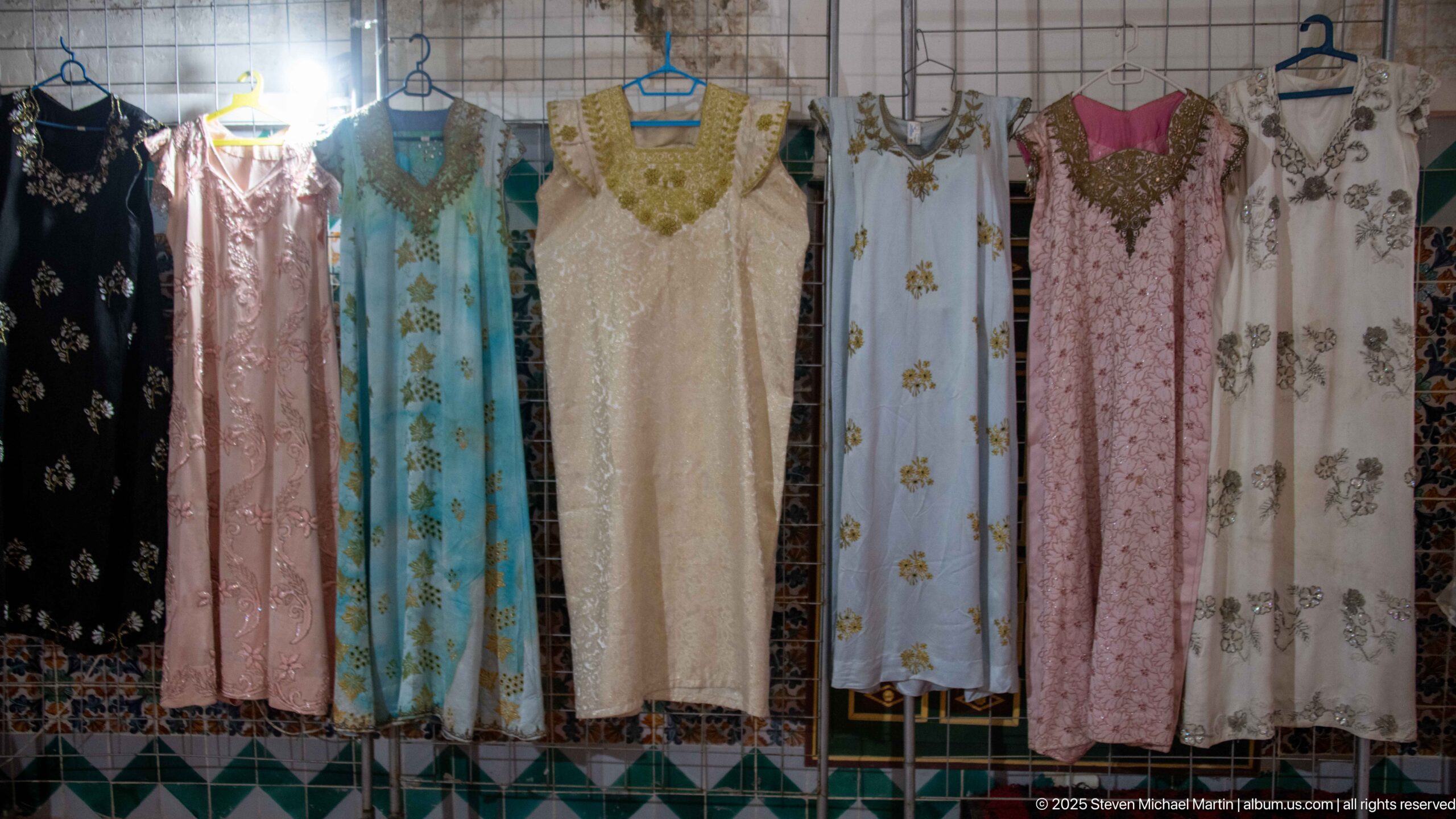
A row of long traditional garments hangs against a tiled museum wall, ranging from pale cream and blue to pink and black. Embroidered necklines, metallic-looking floral motifs, and contrasting panels distinguish the individual pieces, presenting textile ornament and variation in women’s dress as the principal subject.
Caption
A row of long traditional garments hangs against a tiled museum wall, ranging from pale cream and blue to pink and black. Embroidered necklines, metallic-looking floral motifs, and contrasting panels distinguish the individual pieces, presenting textile ornament and variation in women’s dress as the principal subject.
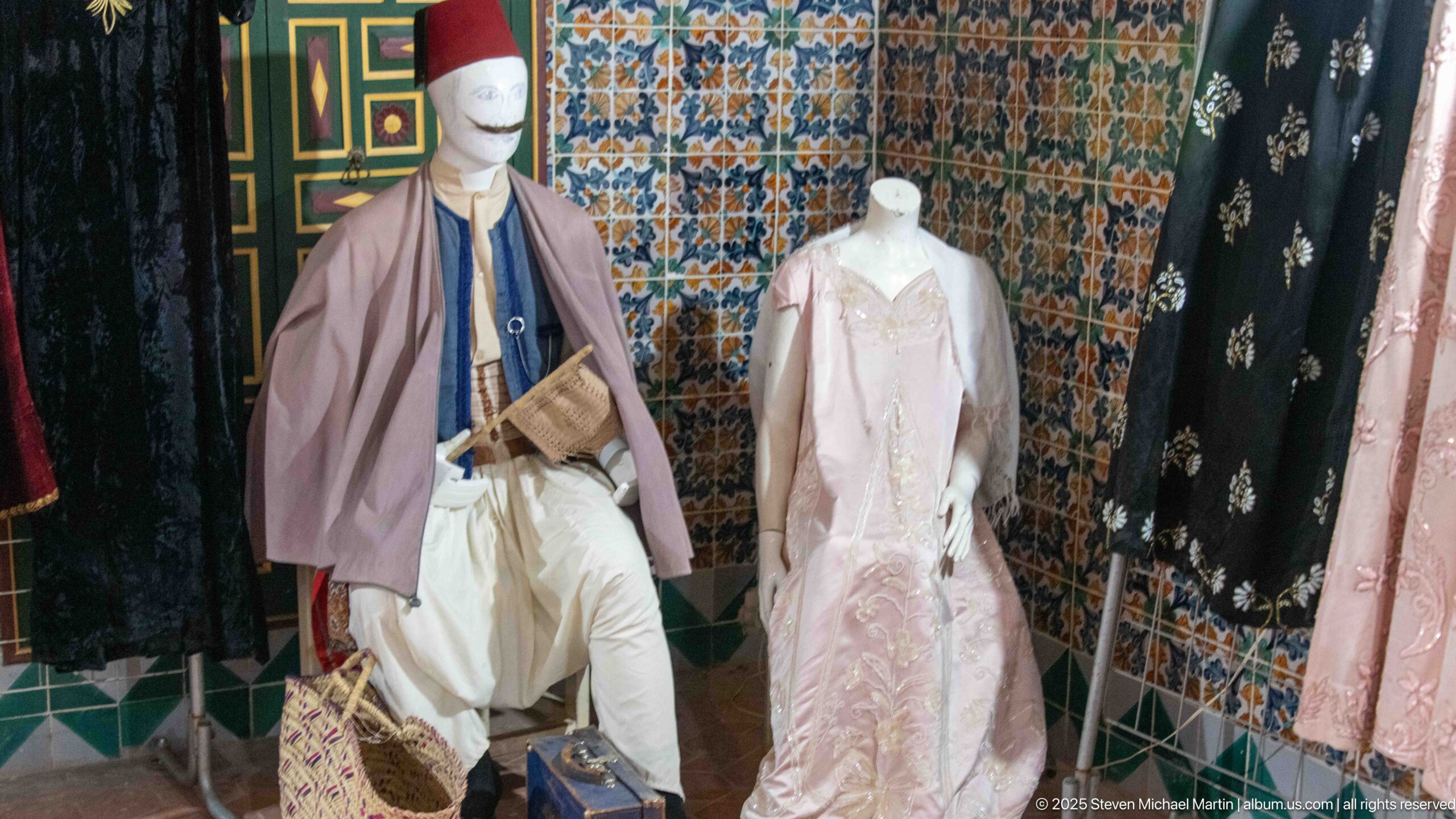
A paired costume display presents a male mannequin in layered garments and headwear beside a female mannequin in a pale embroidered dress. Additional robes hang at the sides, and patterned ceramic tiles cover the walls, creating a compact museum presentation of contrasting traditional clothing ensembles.
Caption
A paired costume display presents a male mannequin in layered garments and headwear beside a female mannequin in a pale embroidered dress. Additional robes hang at the sides, and patterned ceramic tiles cover the walls, creating a compact museum presentation of contrasting traditional clothing ensembles.
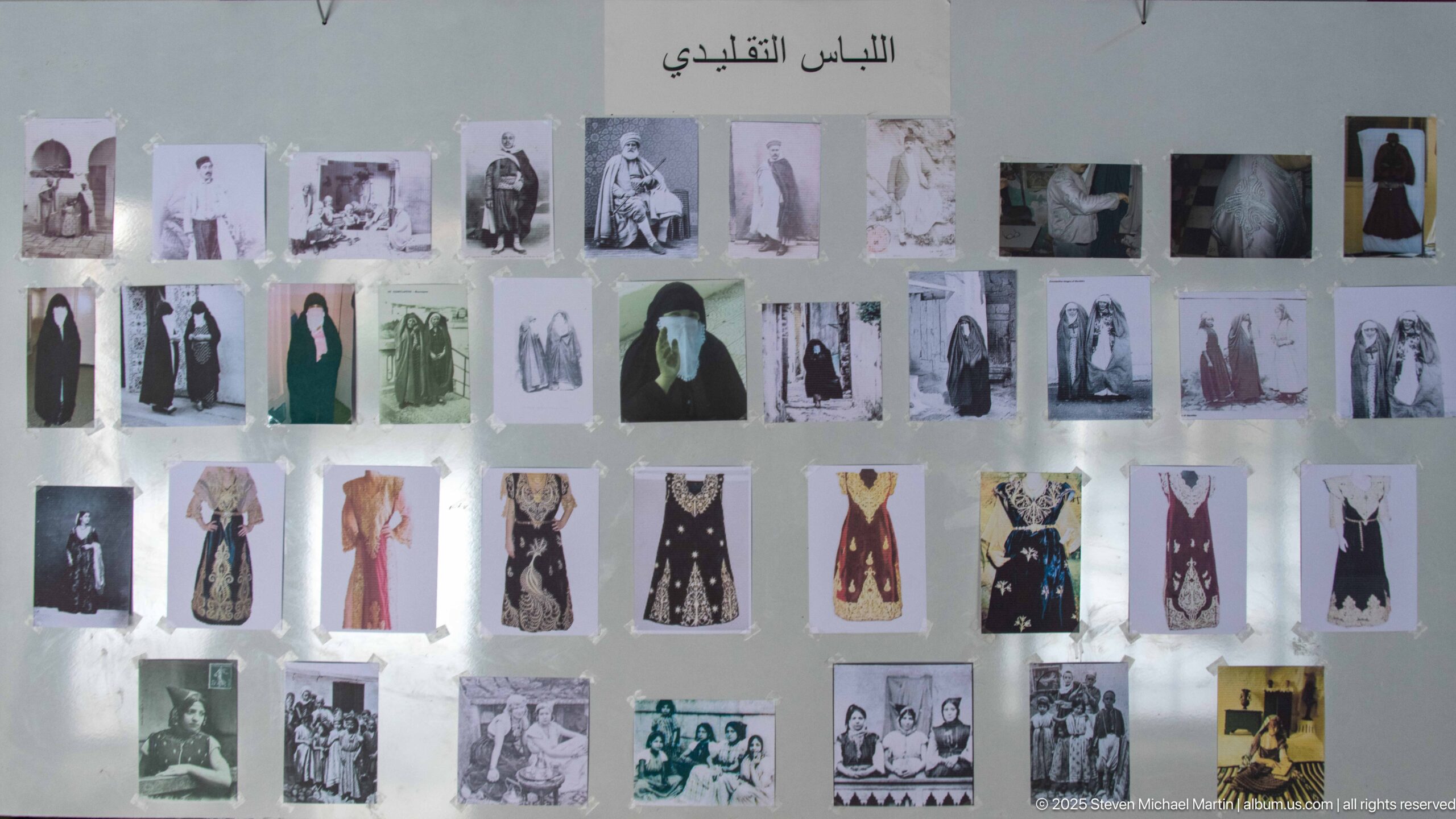
An interpretation panel headed in Arabic for traditional clothing brings together historic photographs, portraits, and color images of garments. The comparative display documents changes and varieties in dress through visual references rather than objects alone, supporting the palace museum’s broader presentation of Algerian cultural traditions.
Caption
An interpretation panel headed in Arabic for traditional clothing brings together historic photographs, portraits, and color images of garments. The comparative display documents changes and varieties in dress through visual references rather than objects alone, supporting the palace museum’s broader presentation of Algerian cultural traditions.
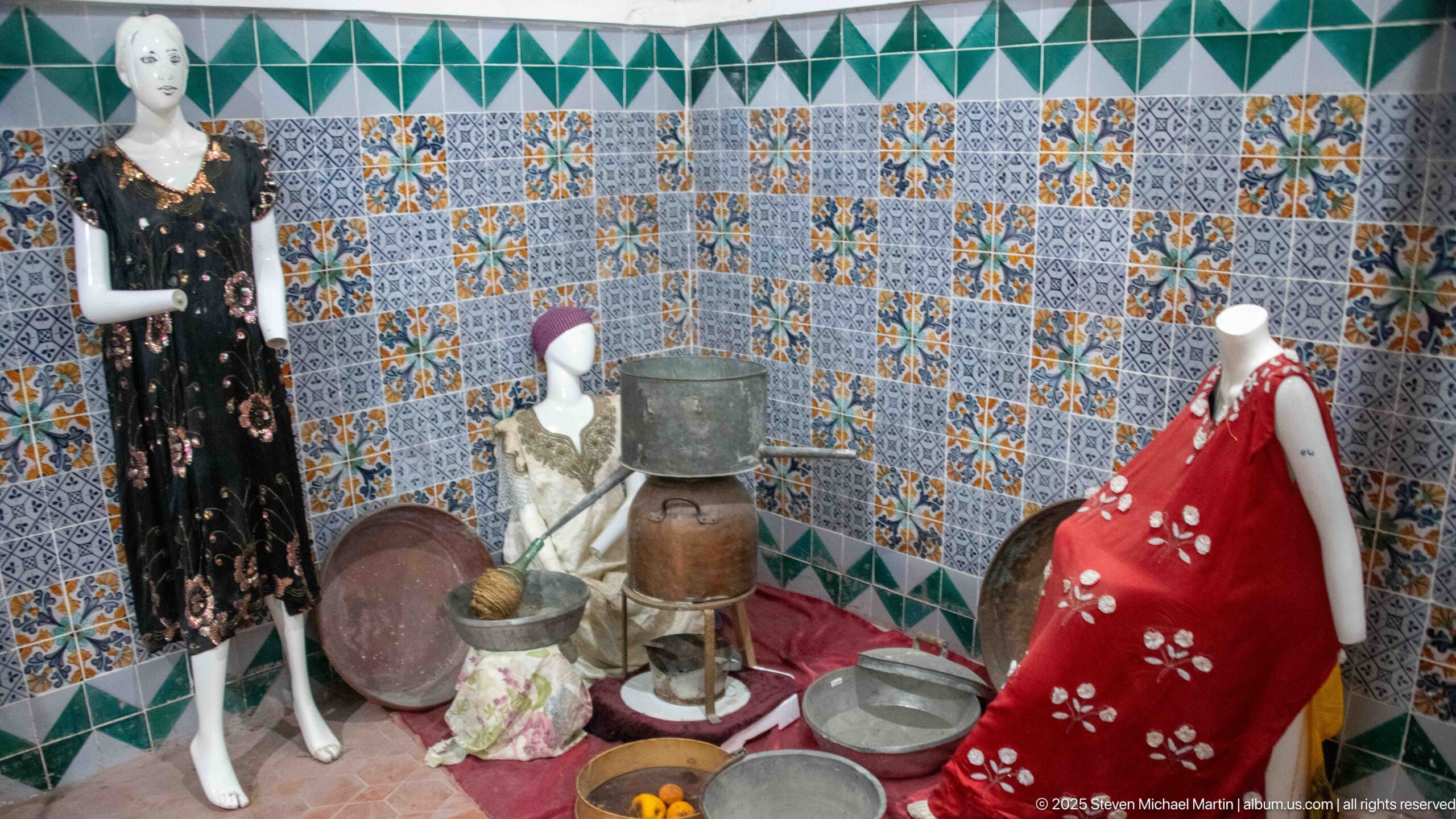
A museum display combines costumed female mannequins with large trays, pots, bowls, and other domestic vessels arranged against richly patterned tile walls. The grouping links traditional clothing with household material culture, using everyday objects and garments to evoke domestic activities rather than presenting each artifact in isolation.
Caption
A museum display combines costumed female mannequins with large trays, pots, bowls, and other domestic vessels arranged against richly patterned tile walls. The grouping links traditional clothing with household material culture, using everyday objects and garments to evoke domestic activities rather than presenting each artifact in isolation.
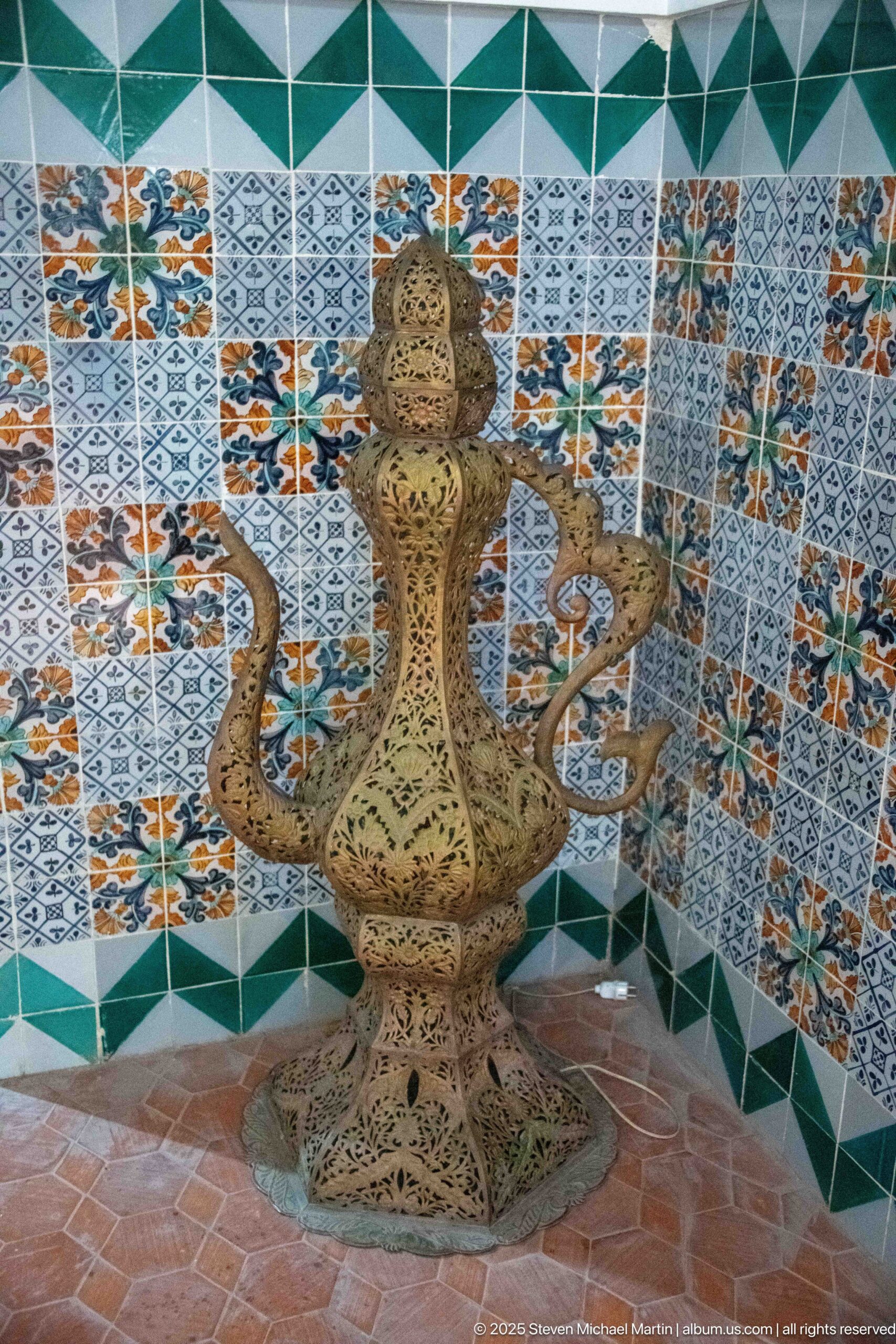
An elaborate brass-colored vessel stands against patterned tilework, its bulbous body, tall neck, flared base, and looping handles covered in dense pierced decoration. The object’s perforated metalwork creates a lace-like surface, although the proof sheet alone does not securely establish whether it functioned as an ewer, incense burner, or another ceremonial or domestic vessel.
Caption
An elaborate brass-colored vessel stands against patterned tilework, its bulbous body, tall neck, flared base, and looping handles covered in dense pierced decoration. The object’s perforated metalwork creates a lace-like surface, although the proof sheet alone does not securely establish whether it functioned as an ewer, incense burner, or another ceremonial or domestic vessel.
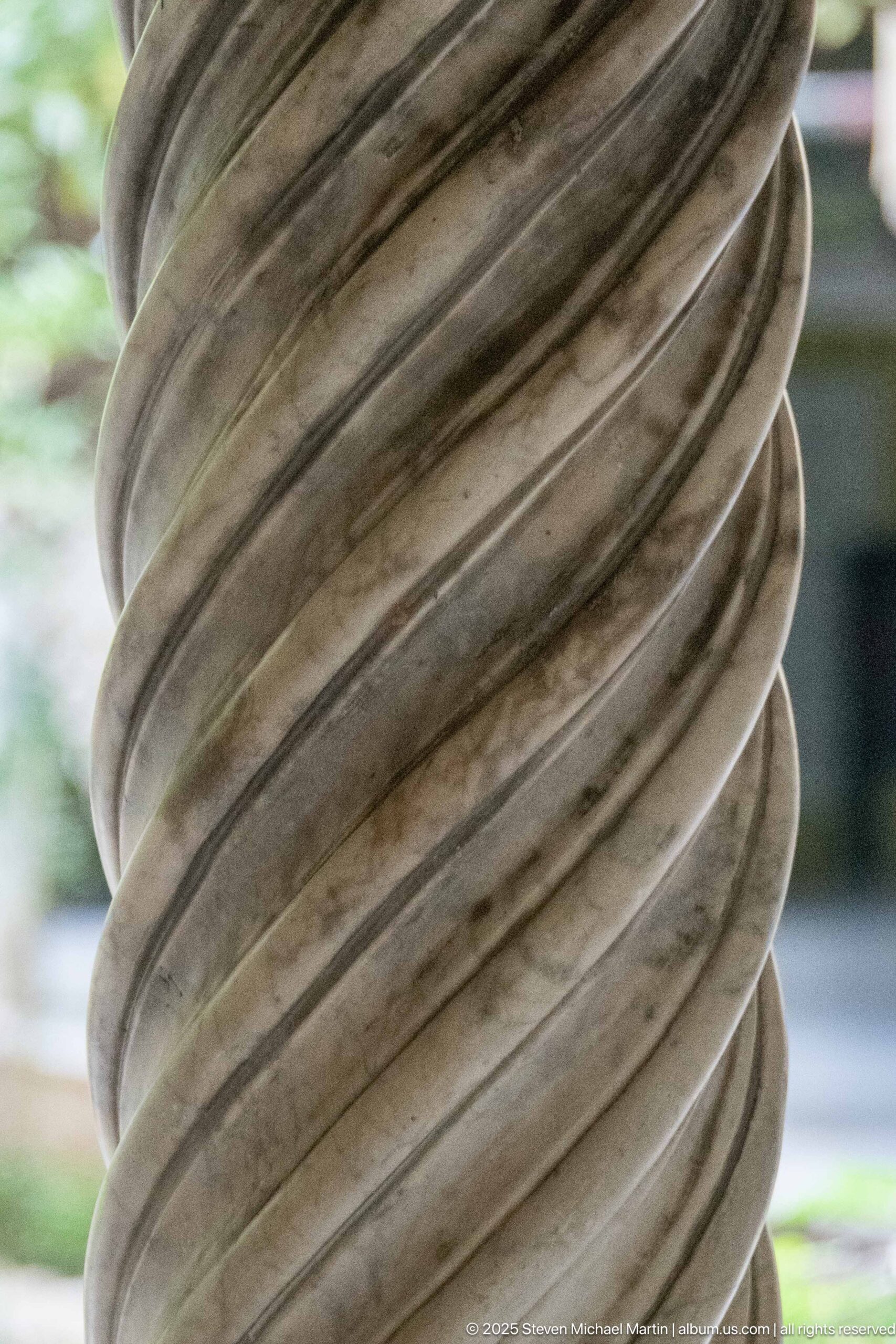
A close view isolates the spiral fluting of a stone column at Ahmed Bey Palace. Deep diagonal channels wrap continuously around the shaft, producing a strong sense of rotation and alternating light and shadow that is less apparent in wider views of the courtyard galleries.
Caption
A close view isolates the spiral fluting of a stone column at Ahmed Bey Palace. Deep diagonal channels wrap continuously around the shaft, producing a strong sense of rotation and alternating light and shadow that is less apparent in wider views of the courtyard galleries.
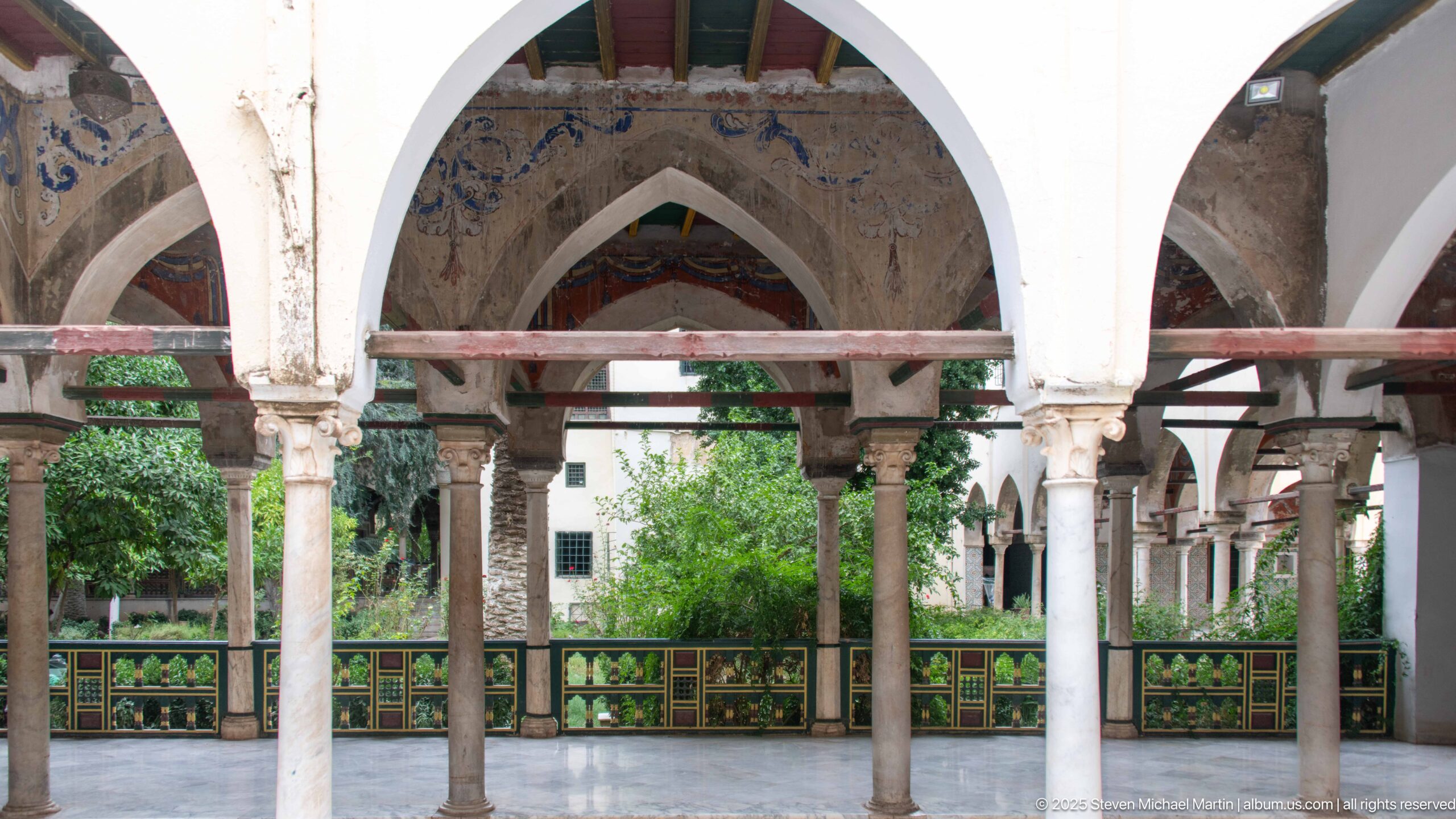
A symmetrical arcade at Ahmed Bey Palace frames the garden through a sequence of pointed arches carried on slender stone columns. Painted and weathered surfaces survive within the deeper archways, while a colorful balustrade and greenery beyond emphasize the gallery’s role as a shaded transition between interior rooms and courtyard.
Caption
A symmetrical arcade at Ahmed Bey Palace frames the garden through a sequence of pointed arches carried on slender stone columns. Painted and weathered surfaces survive within the deeper archways, while a colorful balustrade and greenery beyond emphasize the gallery’s role as a shaded transition between interior rooms and courtyard.
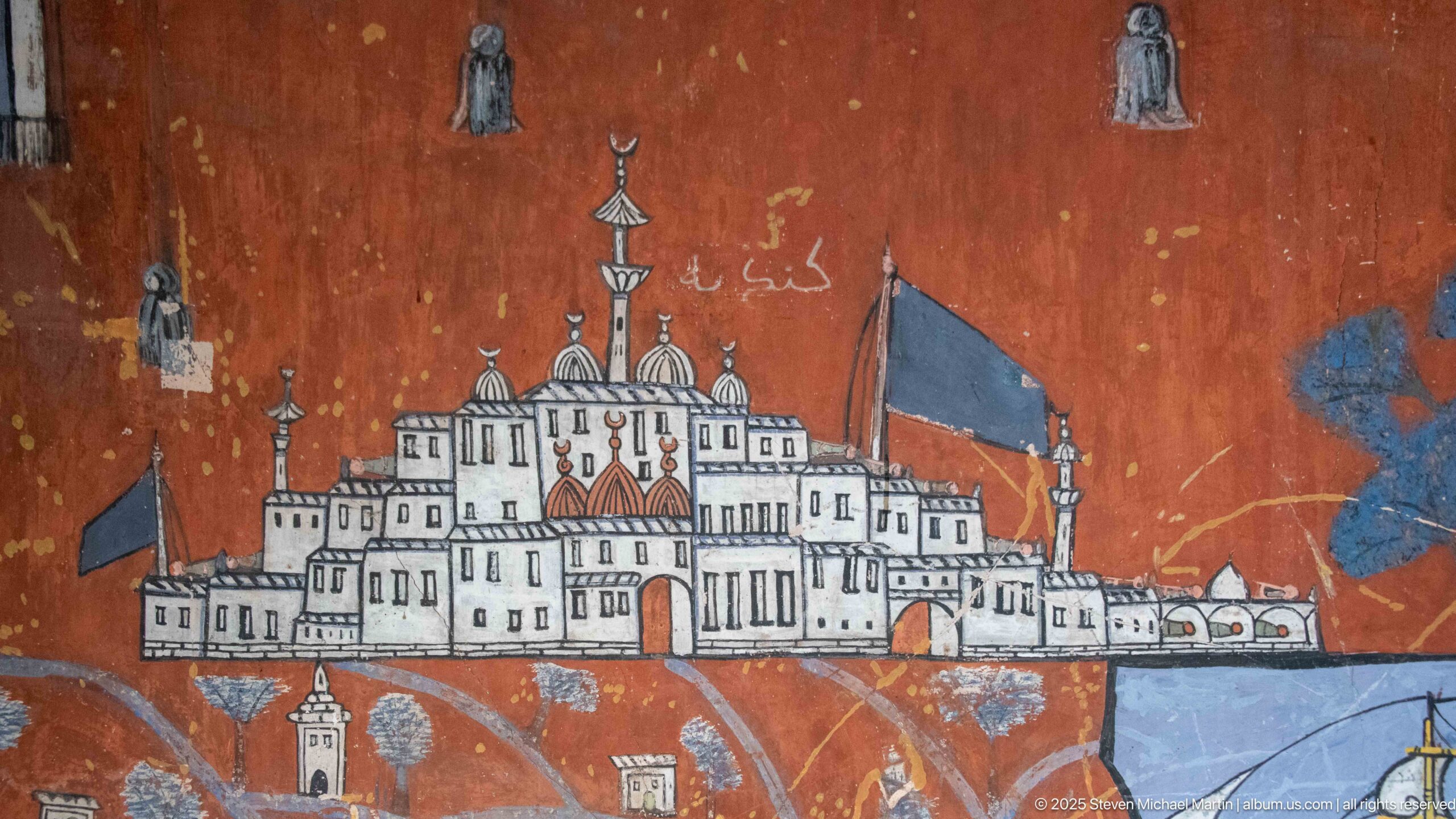
A reddish wall painting depicts a large domed complex with smaller cupolas, towers, flags, and surrounding structures rendered in crisp black-and-white outlines. Arabic writing appears above the architecture, while small painted figures or motifs occupy the upper field; the exact monument represented cannot be verified from the proof sheet.
Caption
A reddish wall painting depicts a large domed complex with smaller cupolas, towers, flags, and surrounding structures rendered in crisp black-and-white outlines. Arabic writing appears above the architecture, while small painted figures or motifs occupy the upper field; the exact monument represented cannot be verified from the proof sheet.
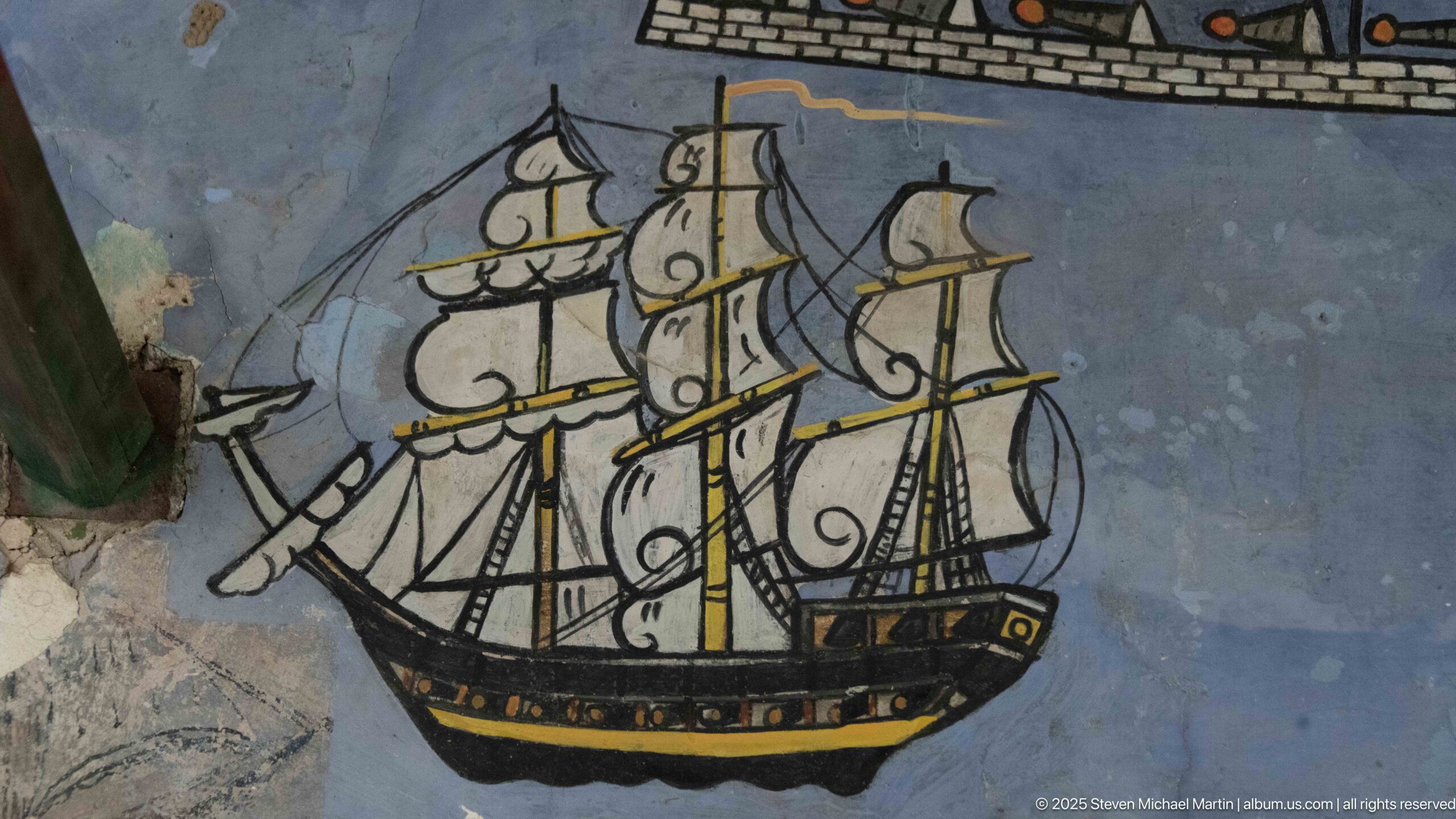
A three-masted sailing vessel with furled and partly set sails is painted against a blue-gray background on a palace wall. Black rigging, yellow spars, and decorative scroll-like details articulate the ship with surprising specificity, making this maritime fragment distinct from the broader city and harbor scenes elsewhere in Ahmed Bey Palace.
Caption
A three-masted sailing vessel with furled and partly set sails is painted against a blue-gray background on a palace wall. Black rigging, yellow spars, and decorative scroll-like details articulate the ship with surprising specificity, making this maritime fragment distinct from the broader city and harbor scenes elsewhere in Ahmed Bey Palace.
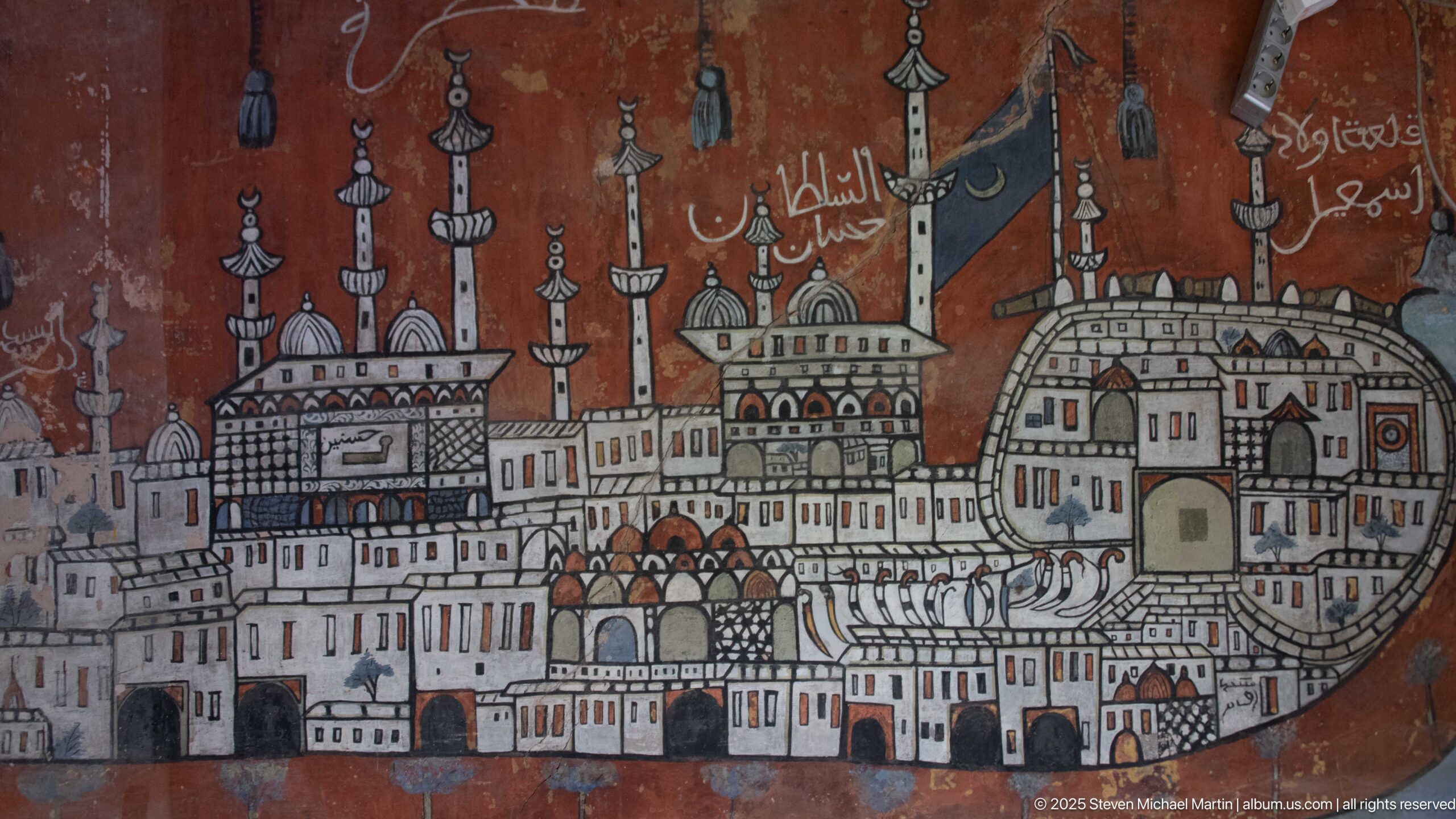
A dense architectural mural spreads across a red ground, assembling minarets, domes, towers, gateways, and tightly packed buildings beneath Arabic inscriptions. The schematic but highly detailed urban panorama belongs to the palace’s narrative wall paintings; the visible architecture is clear, though the precise city represented remains uncertain.
Caption
A dense architectural mural spreads across a red ground, assembling minarets, domes, towers, gateways, and tightly packed buildings beneath Arabic inscriptions. The schematic but highly detailed urban panorama belongs to the palace’s narrative wall paintings; the visible architecture is clear, though the precise city represented remains uncertain.
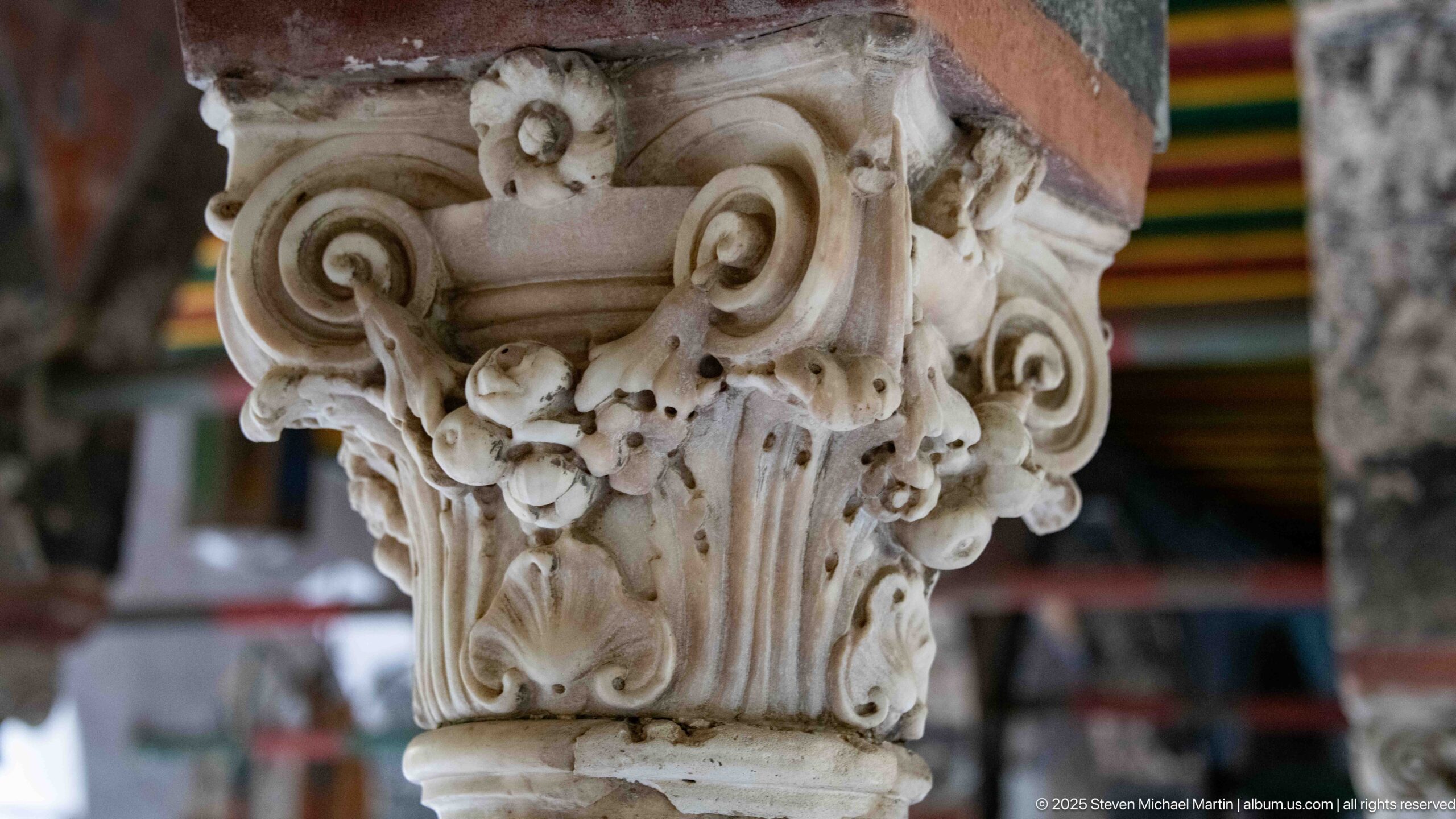
An ornate stone capital at Ahmed Bey Palace combines prominent corner volutes with deeply carved foliage and layered ornamental forms. The close framing reveals drilled recesses, curling leaves, and weathered edges, allowing the sculptural treatment of the column head to be studied independently from the surrounding arcade.
Caption
An ornate stone capital at Ahmed Bey Palace combines prominent corner volutes with deeply carved foliage and layered ornamental forms. The close framing reveals drilled recesses, curling leaves, and weathered edges, allowing the sculptural treatment of the column head to be studied independently from the surrounding arcade.
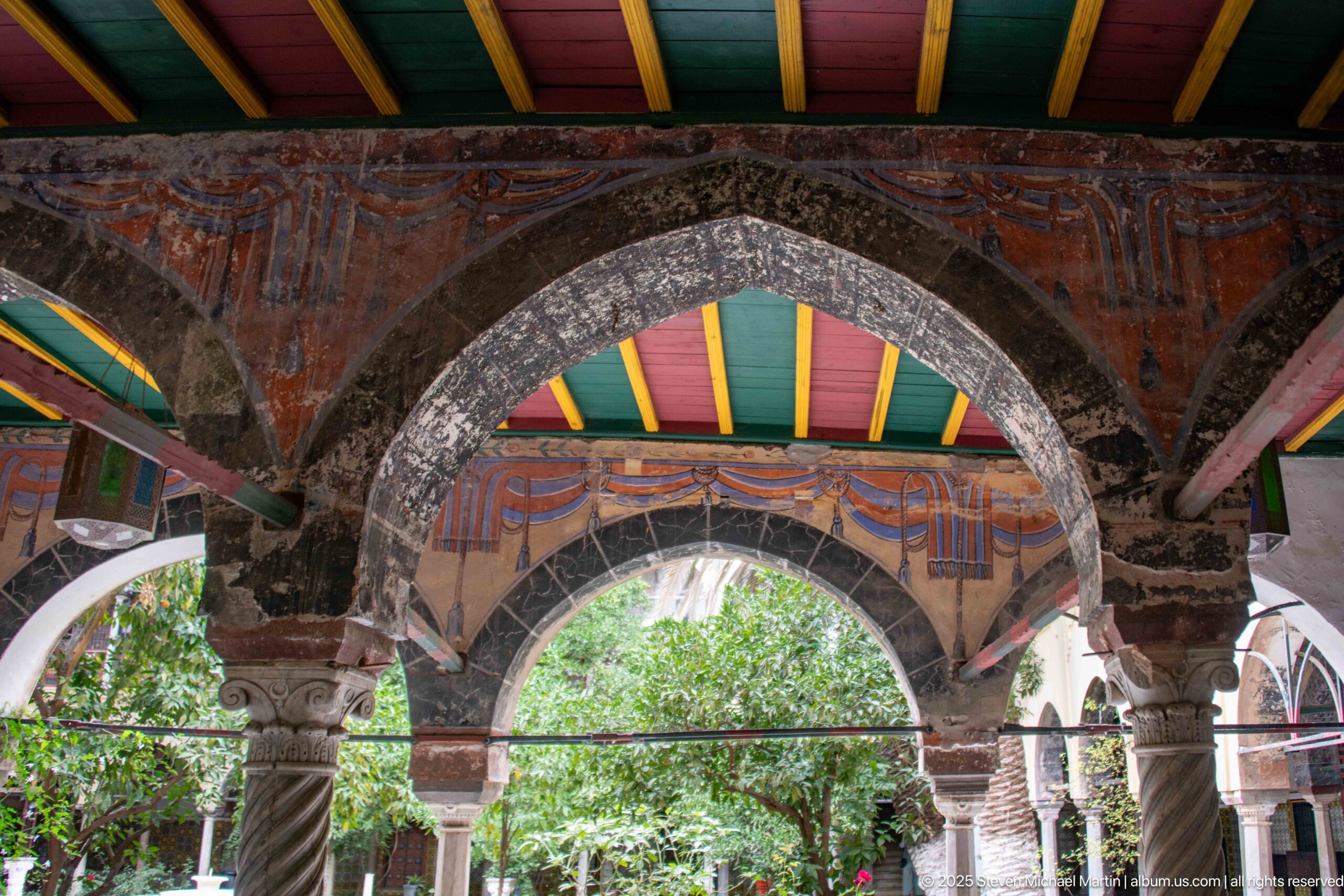
Layered pointed arches at Ahmed Bey Palace rise above a group of stone columns, including spiral-fluted shafts, beneath a vivid ceiling of red, green, and yellow boards. Weathered painted decoration fills the spandrels and inner arch surfaces, while courtyard foliage beyond softens the strongly geometric architectural frame.
Caption
Layered pointed arches at Ahmed Bey Palace rise above a group of stone columns, including spiral-fluted shafts, beneath a vivid ceiling of red, green, and yellow boards. Weathered painted decoration fills the spandrels and inner arch surfaces, while courtyard foliage beyond softens the strongly geometric architectural frame.
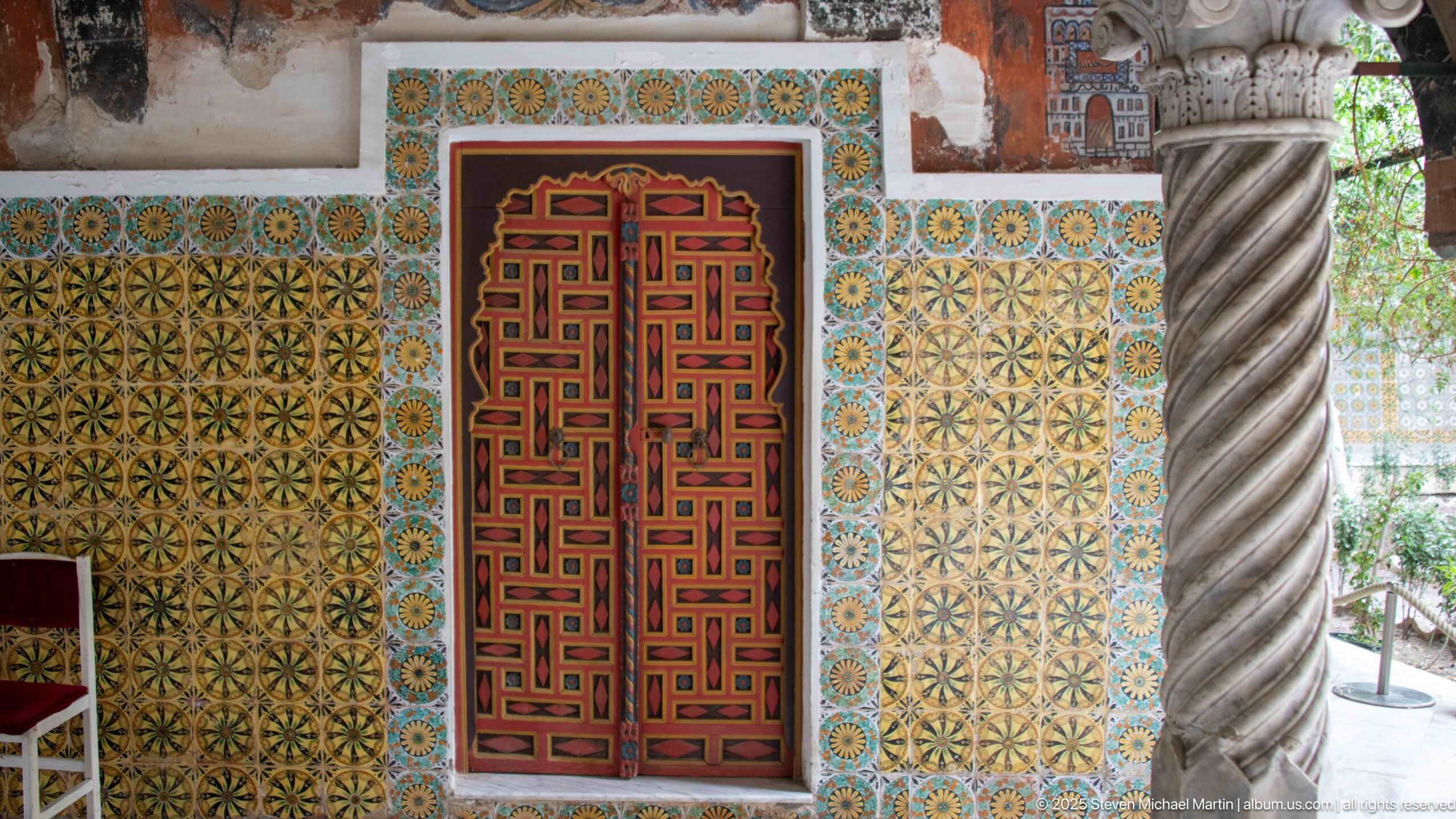
A narrow red double door with interlocking geometric bands is set into a wall densely faced with yellow, green, and blue patterned tiles. A large spiral-fluted stone column dominates the right edge, placing the colorful woodwork and ceramic decoration in direct visual dialogue with one of the palace arcade’s sculptural supports.
Caption
A narrow red double door with interlocking geometric bands is set into a wall densely faced with yellow, green, and blue patterned tiles. A large spiral-fluted stone column dominates the right edge, placing the colorful woodwork and ceramic decoration in direct visual dialogue with one of the palace arcade’s sculptural supports.
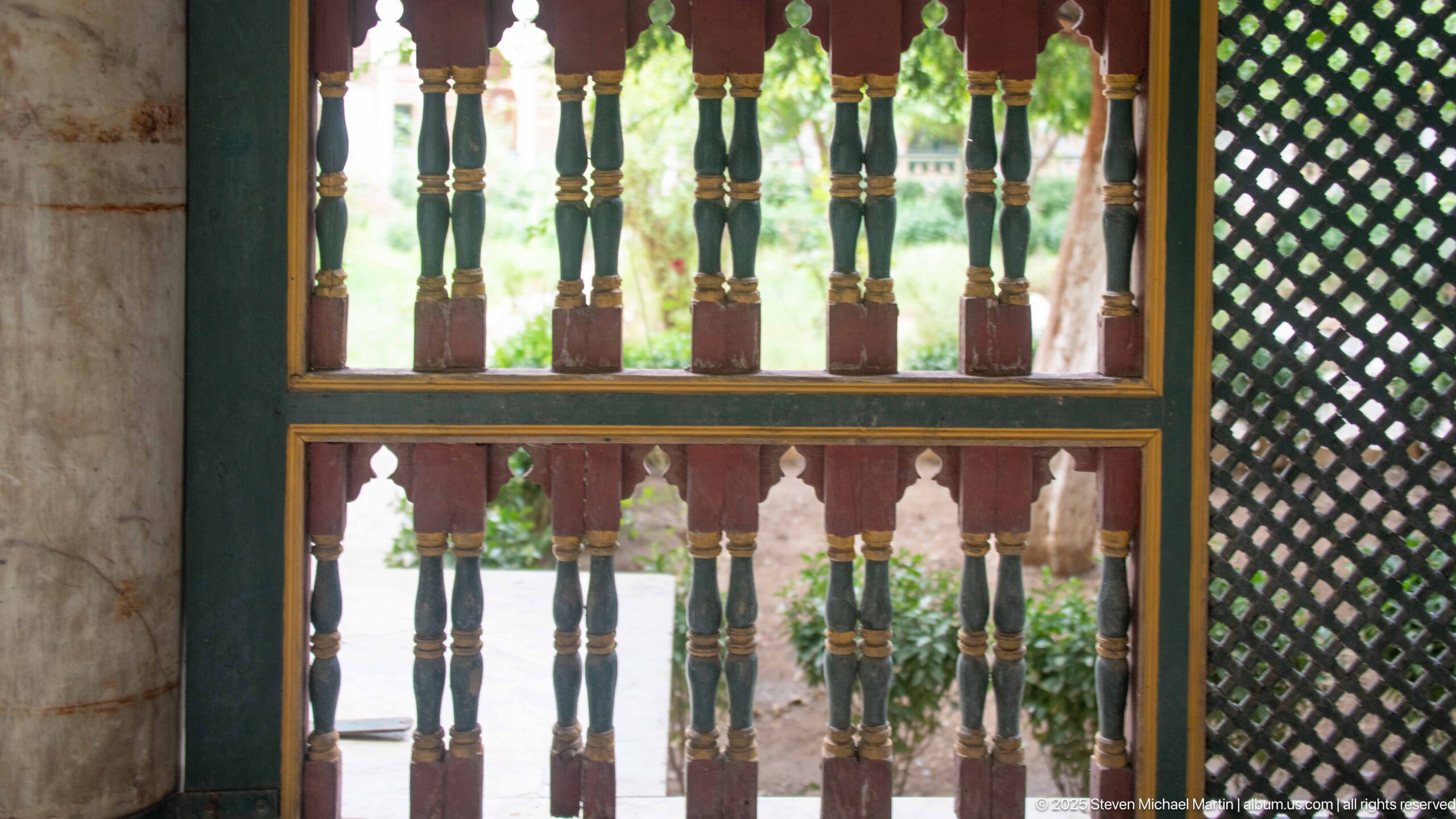
A close architectural detail records two tiers of turned wooden balusters painted in alternating green, red, dark blue, and pale tones, bordered by yellow framing. A dark green lattice screen fills the adjoining panel, showing the varied woodworking used along Ahmed Bey Palace galleries to filter views while maintaining ventilation and visual connection.
Caption
A close architectural detail records two tiers of turned wooden balusters painted in alternating green, red, dark blue, and pale tones, bordered by yellow framing. A dark green lattice screen fills the adjoining panel, showing the varied woodworking used along Ahmed Bey Palace galleries to filter views while maintaining ventilation and visual connection.
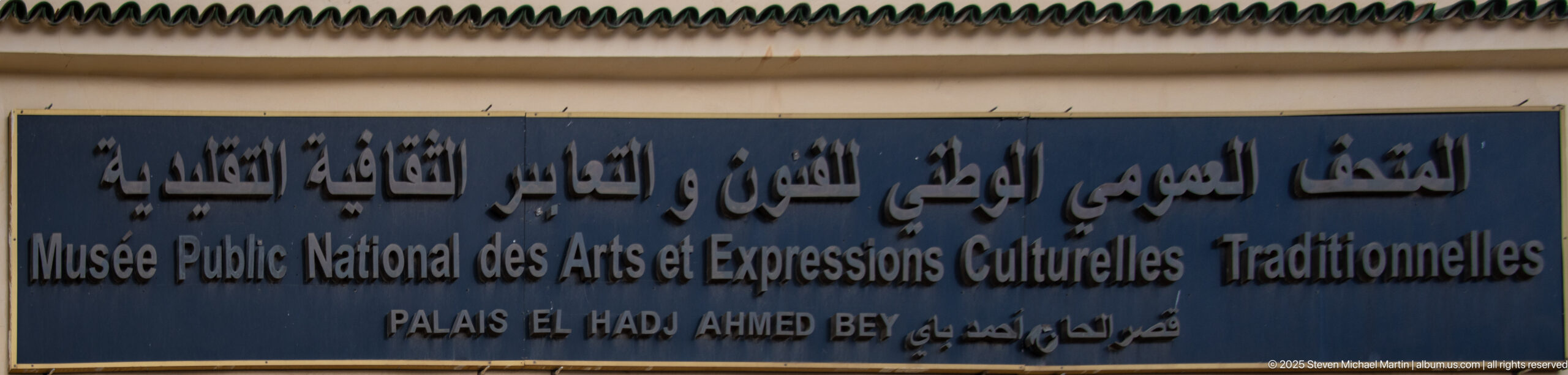
A large exterior sign identifies the institution in Arabic and French as the National Public Museum of Arts and Traditional Cultural Expressions and names Palais El Hadj Ahmed Bey. Mounted on the palace façade, the sign documents the complex’s present museum identity and provides a clear textual confirmation of the site.
Caption
A large exterior sign identifies the institution in Arabic and French as the National Public Museum of Arts and Traditional Cultural Expressions and names Palais El Hadj Ahmed Bey. Mounted on the palace façade, the sign documents the complex’s present museum identity and provides a clear textual confirmation of the site.
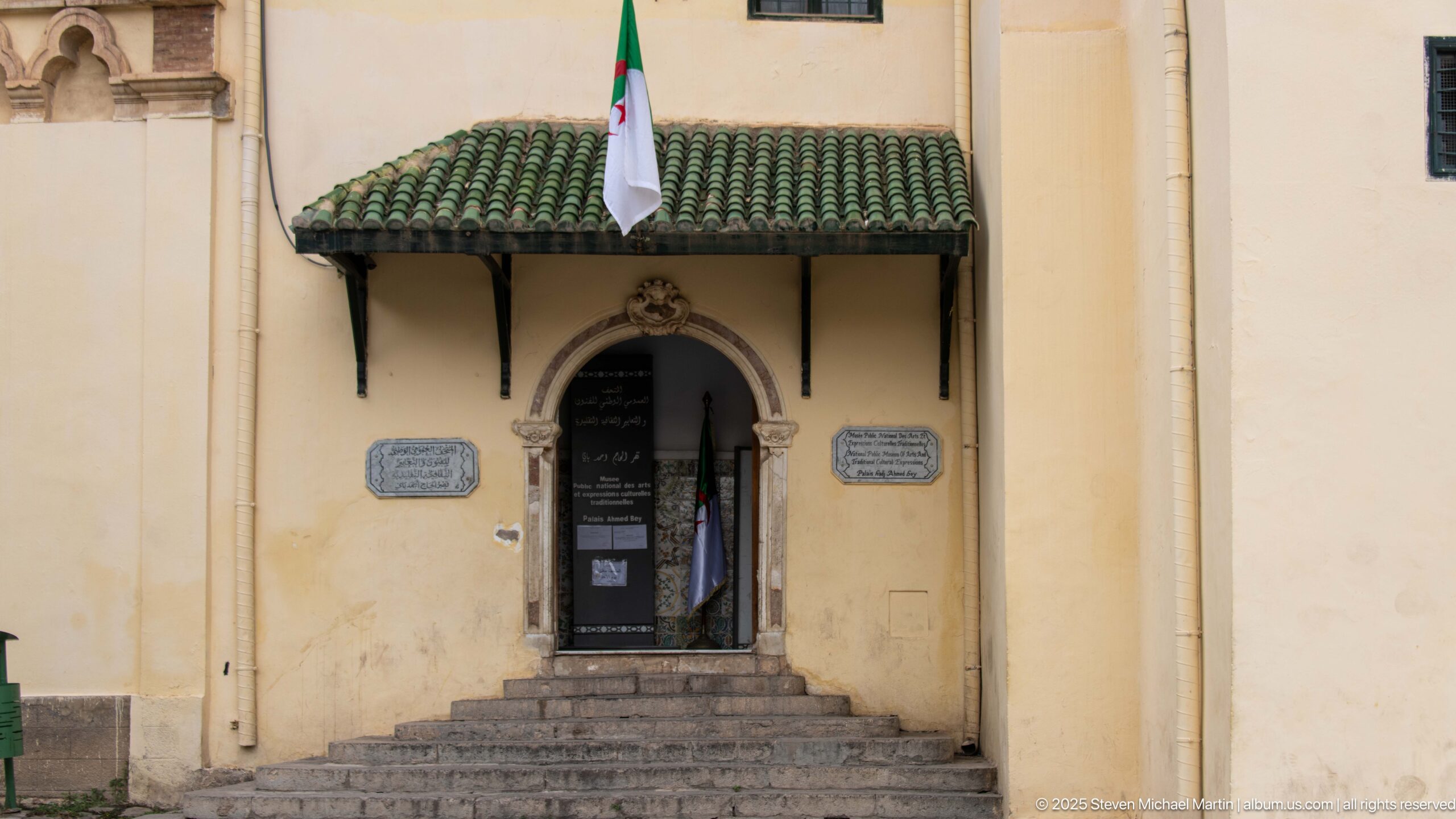
A modest exterior entrance to Ahmed Bey Palace is reached by a short flight of stone steps and sheltered beneath a projecting canopy of green tiles. The Algerian flag rises above the canopy, while plaques flank the arched doorway, giving this view a formal but restrained sense of arrival at the museum.
Caption
A modest exterior entrance to Ahmed Bey Palace is reached by a short flight of stone steps and sheltered beneath a projecting canopy of green tiles. The Algerian flag rises above the canopy, while plaques flank the arched doorway, giving this view a formal but restrained sense of arrival at the museum.
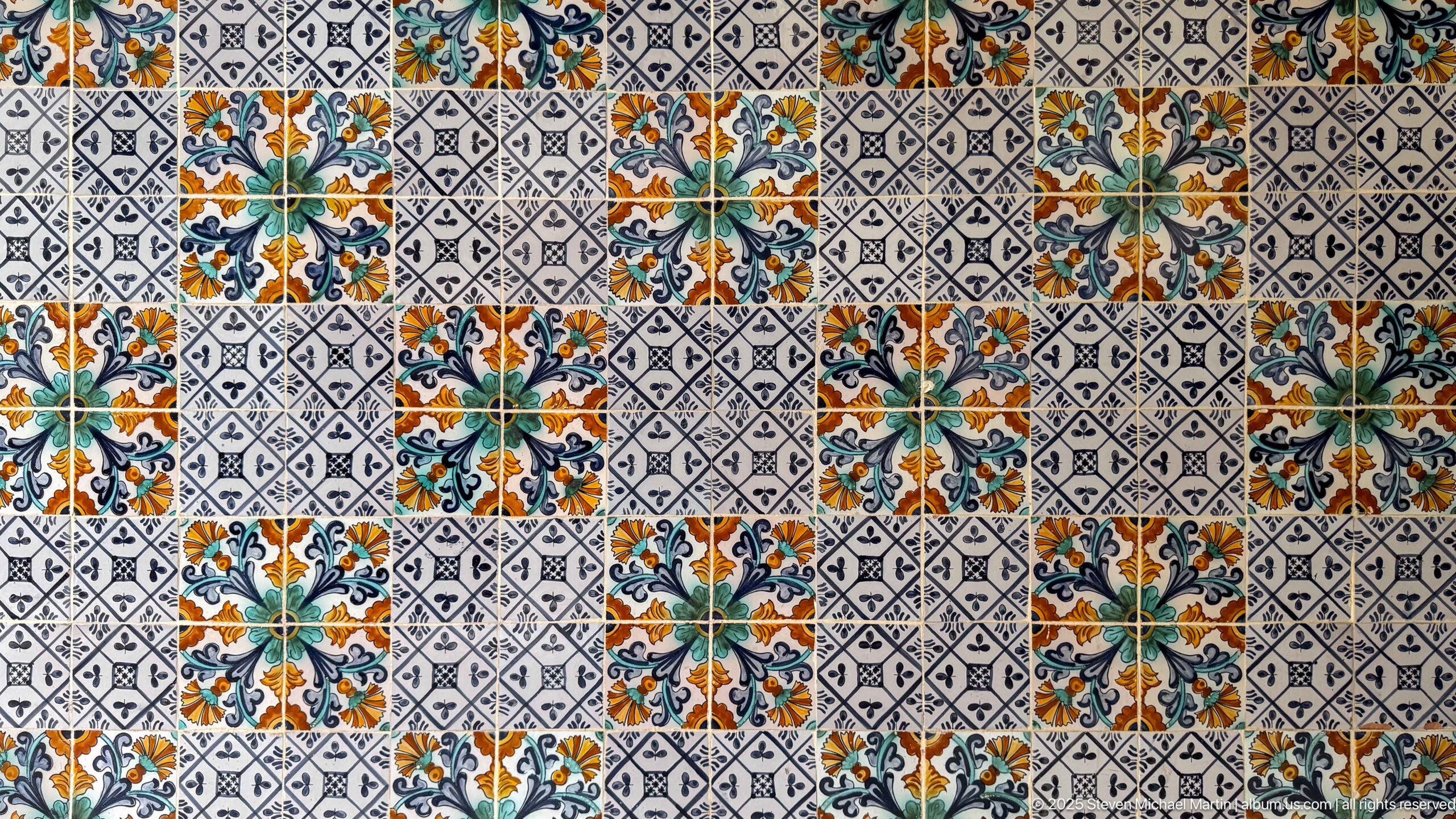
A repeating tile composition alternates large blue, green, and orange floral medallions with a fine black-and-white geometric ground. The contrast between bold colored rosettes and densely patterned filler tiles creates a pronounced grid, offering a close record of another decorative ceramic scheme within Ahmed Bey Palace.
Caption
A repeating tile composition alternates large blue, green, and orange floral medallions with a fine black-and-white geometric ground. The contrast between bold colored rosettes and densely patterned filler tiles creates a pronounced grid, offering a close record of another decorative ceramic scheme within Ahmed Bey Palace.
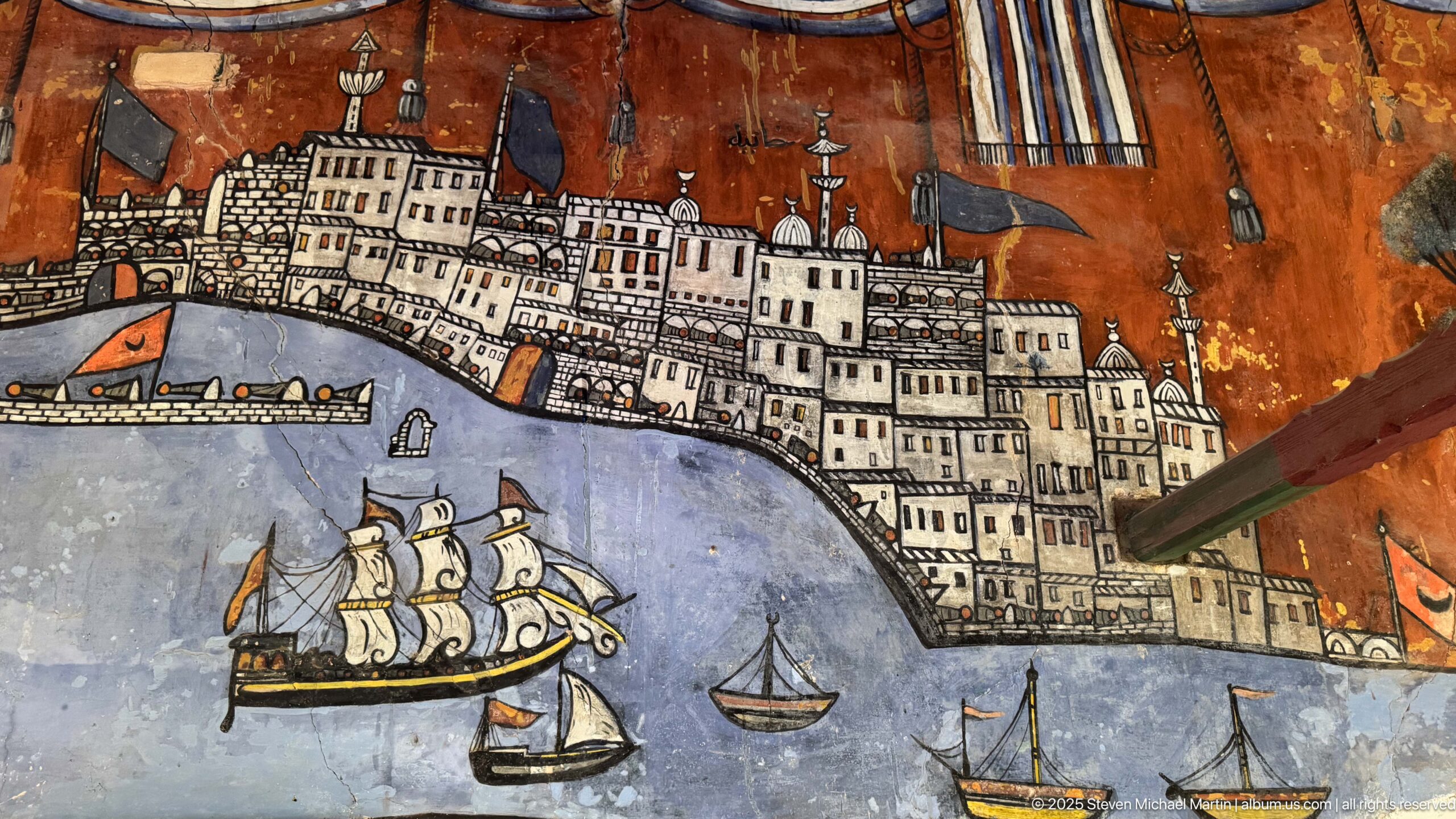
A harbor mural at Ahmed Bey Palace shows a walled waterfront city rising behind several sailing vessels on blue water. Fortifications, towers, dense buildings, flags, and ships create a busy maritime panorama, while the reddish background and painted drapery above connect the scene to the palace’s larger narrative mural cycle.
Caption
A harbor mural at Ahmed Bey Palace shows a walled waterfront city rising behind several sailing vessels on blue water. Fortifications, towers, dense buildings, flags, and ships create a busy maritime panorama, while the reddish background and painted drapery above connect the scene to the palace’s larger narrative mural cycle.
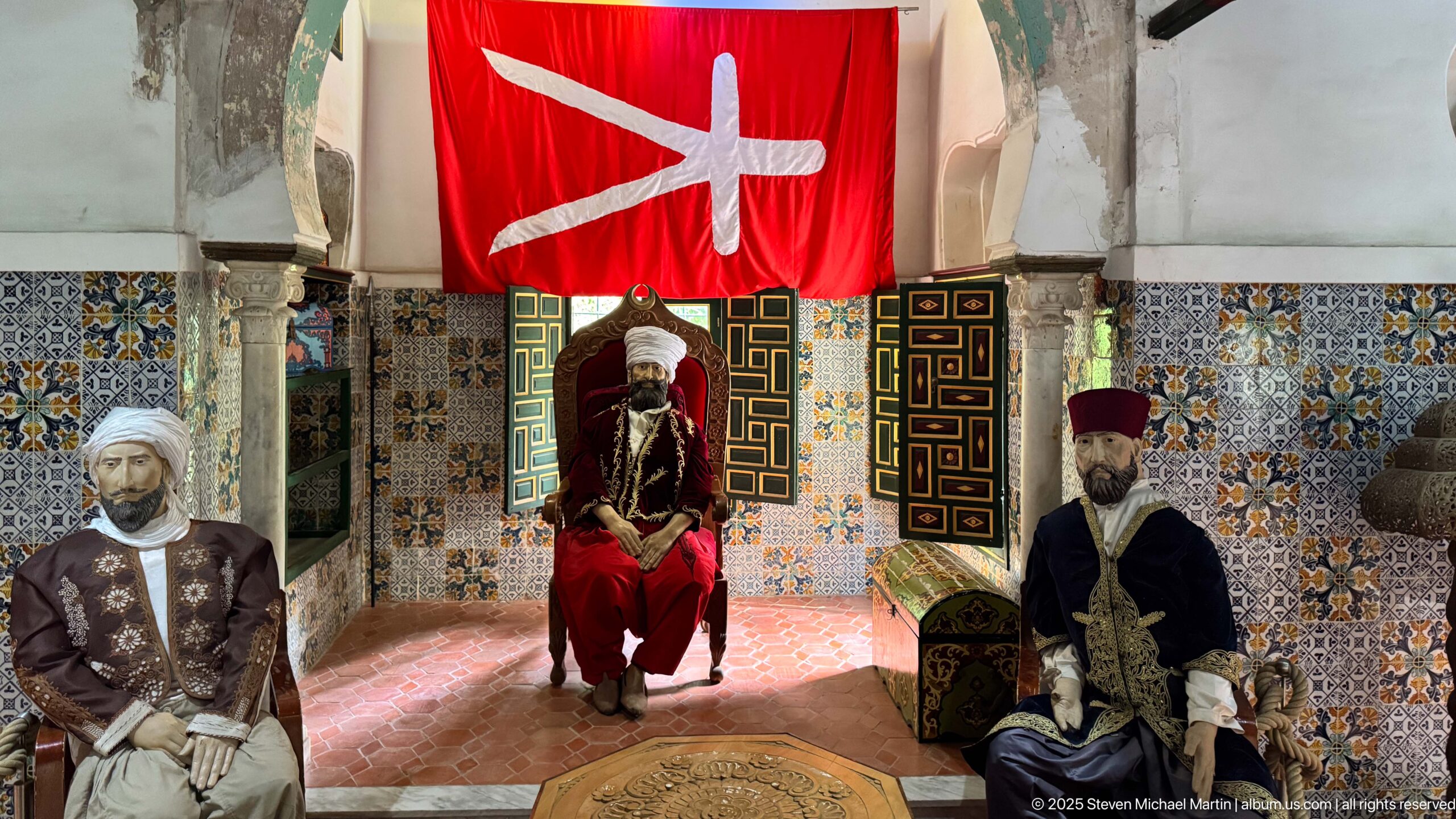
A museum tableau at Ahmed Bey Palace presents three male figures in contrasting traditional costumes, with the central seated mannequin positioned beneath a large red banner bearing a white emblem. Embroidered jackets, headwear, tiled walls, and painted shutters create a ceremonial setting, though the specific identities represented by the figures are not established by the proof sheet.
Caption
A museum tableau at Ahmed Bey Palace presents three male figures in contrasting traditional costumes, with the central seated mannequin positioned beneath a large red banner bearing a white emblem. Embroidered jackets, headwear, tiled walls, and painted shutters create a ceremonial setting, though the specific identities represented by the figures are not established by the proof sheet.
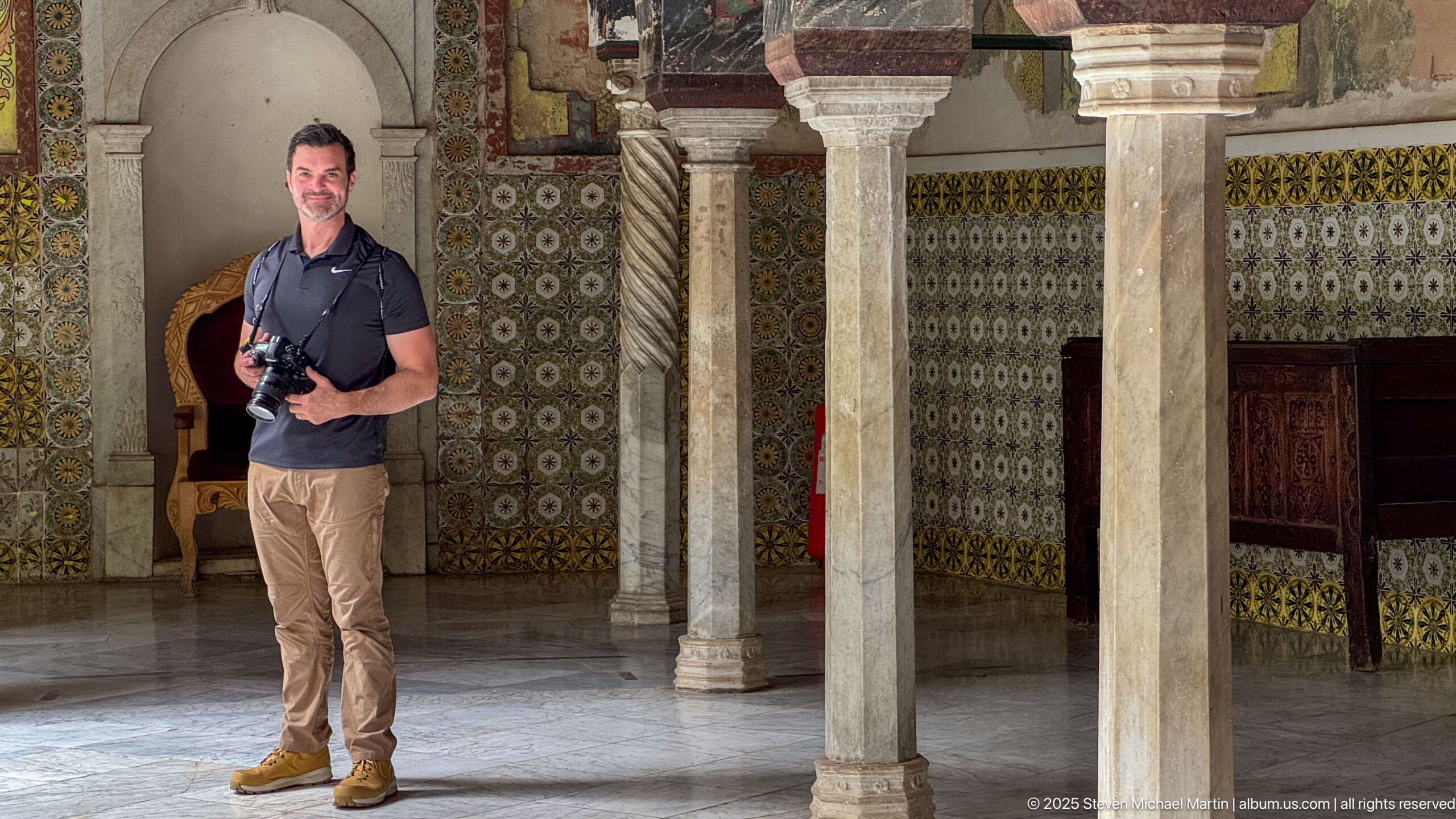
A visitor holding a camera stands between pale stone columns inside Ahmed Bey Palace. Patterned tilework covers the wall behind him, and carved capitals, polished flooring, and a wooden furnishing complete the setting, using the figure to convey the scale of the columns and decorated interior.
Caption
A visitor holding a camera stands between pale stone columns inside Ahmed Bey Palace. Patterned tilework covers the wall behind him, and carved capitals, polished flooring, and a wooden furnishing complete the setting, using the figure to convey the scale of the columns and decorated interior.
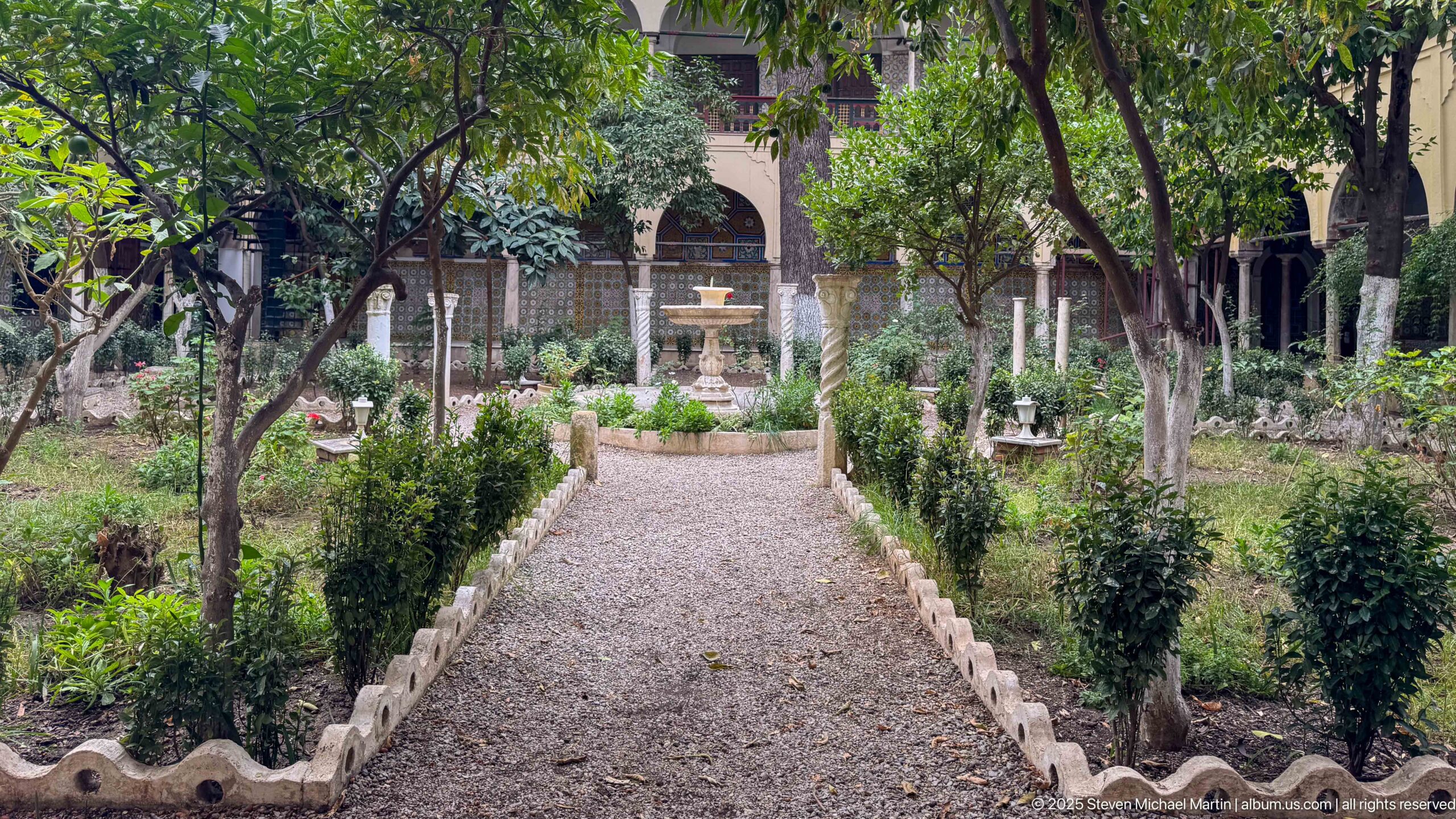
A straight gravel path leads through clipped shrubs and mature trees toward a small fountain in an Ahmed Bey Palace garden court. Arcaded galleries and patterned wall surfaces appear beyond the vegetation, while the centered path creates a formal axial view through the planted interior landscape.
Caption
A straight gravel path leads through clipped shrubs and mature trees toward a small fountain in an Ahmed Bey Palace garden court. Arcaded galleries and patterned wall surfaces appear beyond the vegetation, while the centered path creates a formal axial view through the planted interior landscape.
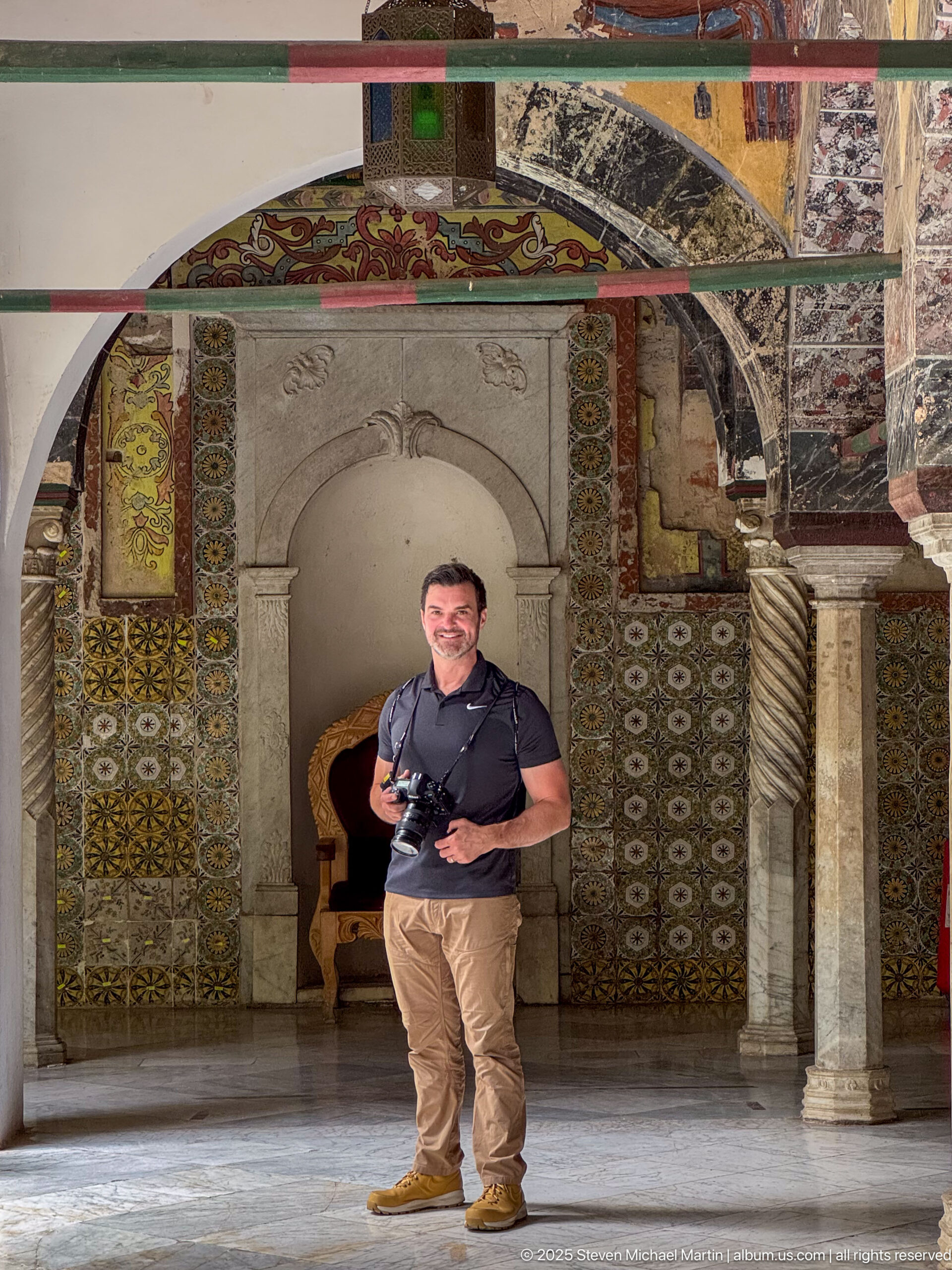
A visitor holding a camera stands beneath a broad interior arch at Ahmed Bey Palace, framed by a spiral-fluted column, pale stone supports, and patterned tilework. Painted ceiling panels and weathered mural surfaces appear overhead, creating a wider environmental portrait that situates the visitor within the palace’s layered decorative architecture.
Caption
A visitor holding a camera stands beneath a broad interior arch at Ahmed Bey Palace, framed by a spiral-fluted column, pale stone supports, and patterned tilework. Painted ceiling panels and weathered mural surfaces appear overhead, creating a wider environmental portrait that situates the visitor within the palace’s layered decorative architecture.
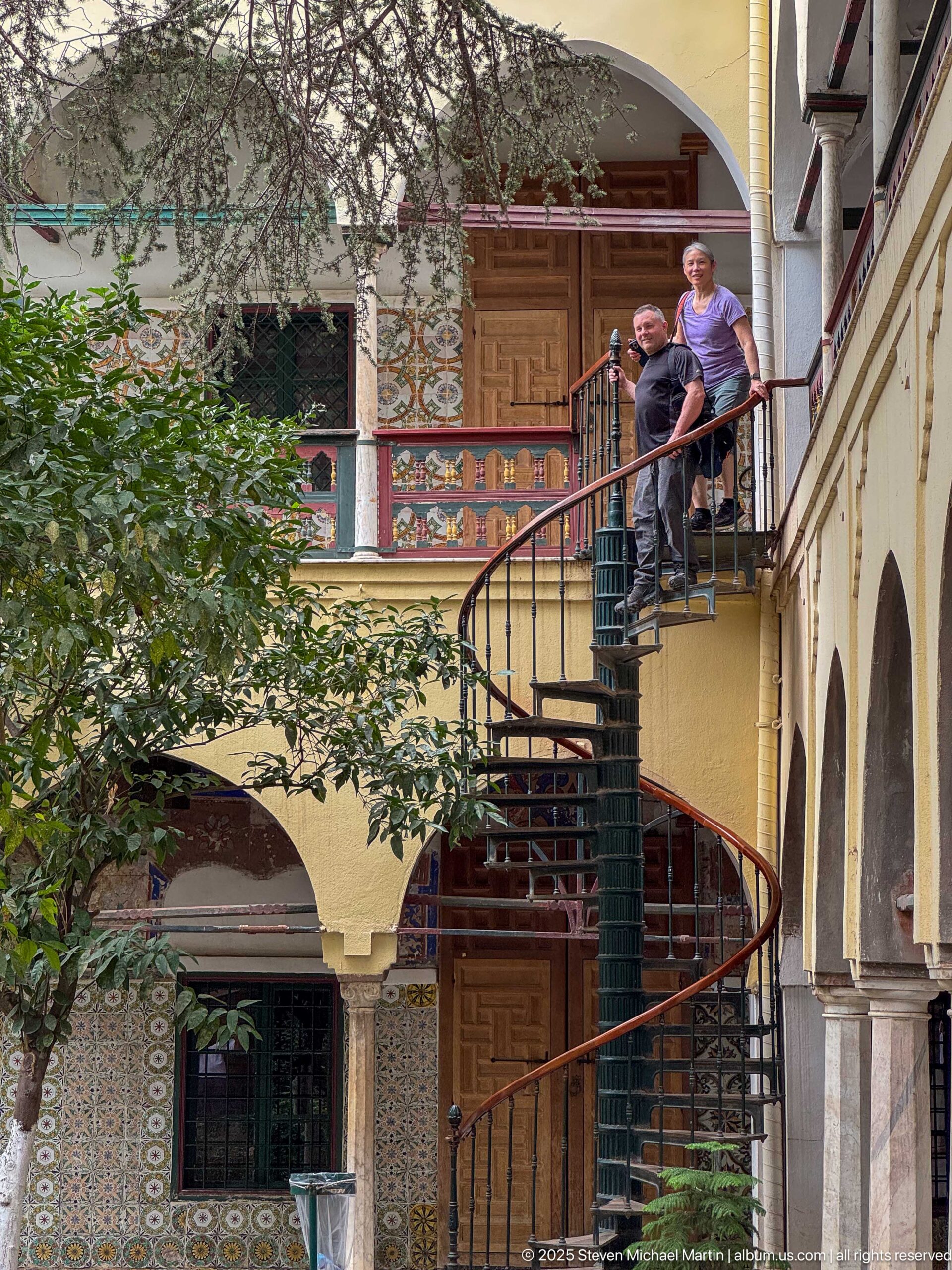
Two visitors pause at the upper landing of a metal spiral staircase within an Ahmed Bey Palace courtyard. The stair coils upward past tiled walls, painted wooden doors, arcaded galleries, and leafy branches, highlighting the vertical connection between the palace’s lower and upper circulation levels.
Caption
Two visitors pause at the upper landing of a metal spiral staircase within an Ahmed Bey Palace courtyard. The stair coils upward past tiled walls, painted wooden doors, arcaded galleries, and leafy branches, highlighting the vertical connection between the palace’s lower and upper circulation levels.
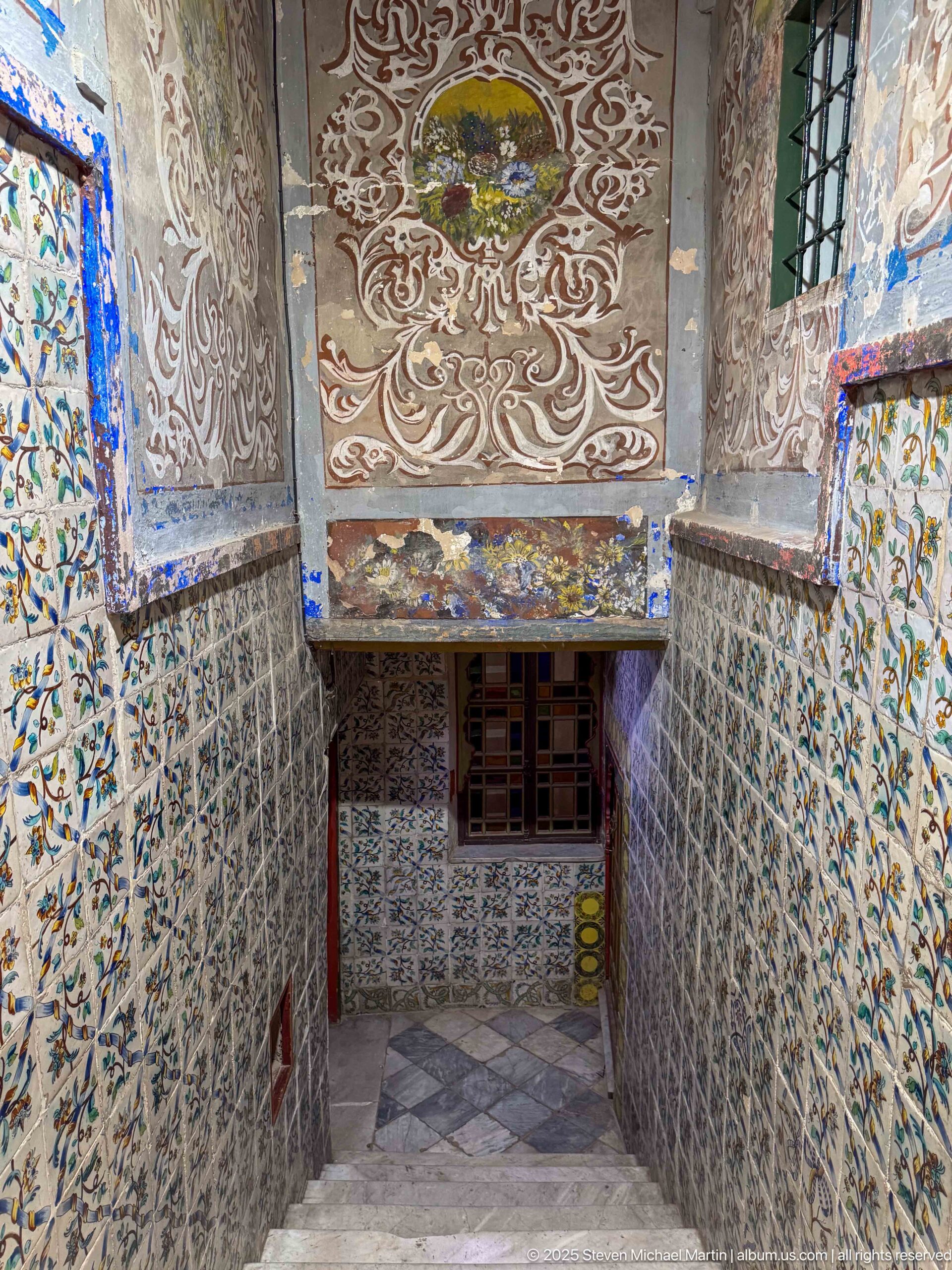
A narrow descending passage at Ahmed Bey Palace is enclosed by dense floral tilework and an elaborately painted overhead surface. A central medallion and scrolling ornament dominate the ceiling, while the patterned walls and geometric stone floor draw the eye toward a small window at the far end.
Caption
A narrow descending passage at Ahmed Bey Palace is enclosed by dense floral tilework and an elaborately painted overhead surface. A central medallion and scrolling ornament dominate the ceiling, while the patterned walls and geometric stone floor draw the eye toward a small window at the far end.
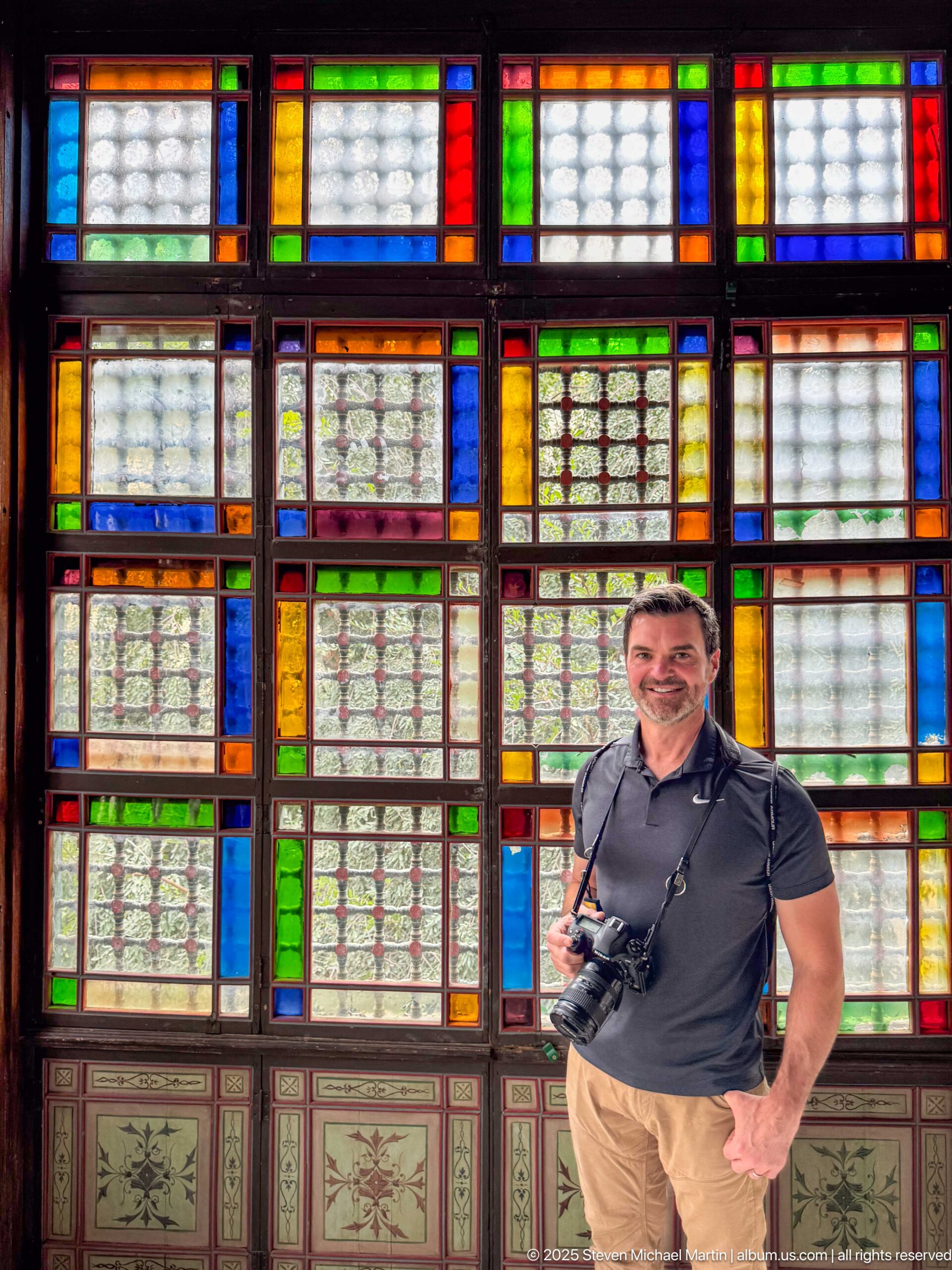
A visitor carrying a camera stands before a wall of vividly colored glass windows at Ahmed Bey Palace. Rectangular panes of red, blue, green, amber, and translucent patterned glass form a luminous grid behind him, with painted lower panels completing the richly decorative interior backdrop.
Caption
A visitor carrying a camera stands before a wall of vividly colored glass windows at Ahmed Bey Palace. Rectangular panes of red, blue, green, amber, and translucent patterned glass form a luminous grid behind him, with painted lower panels completing the richly decorative interior backdrop.
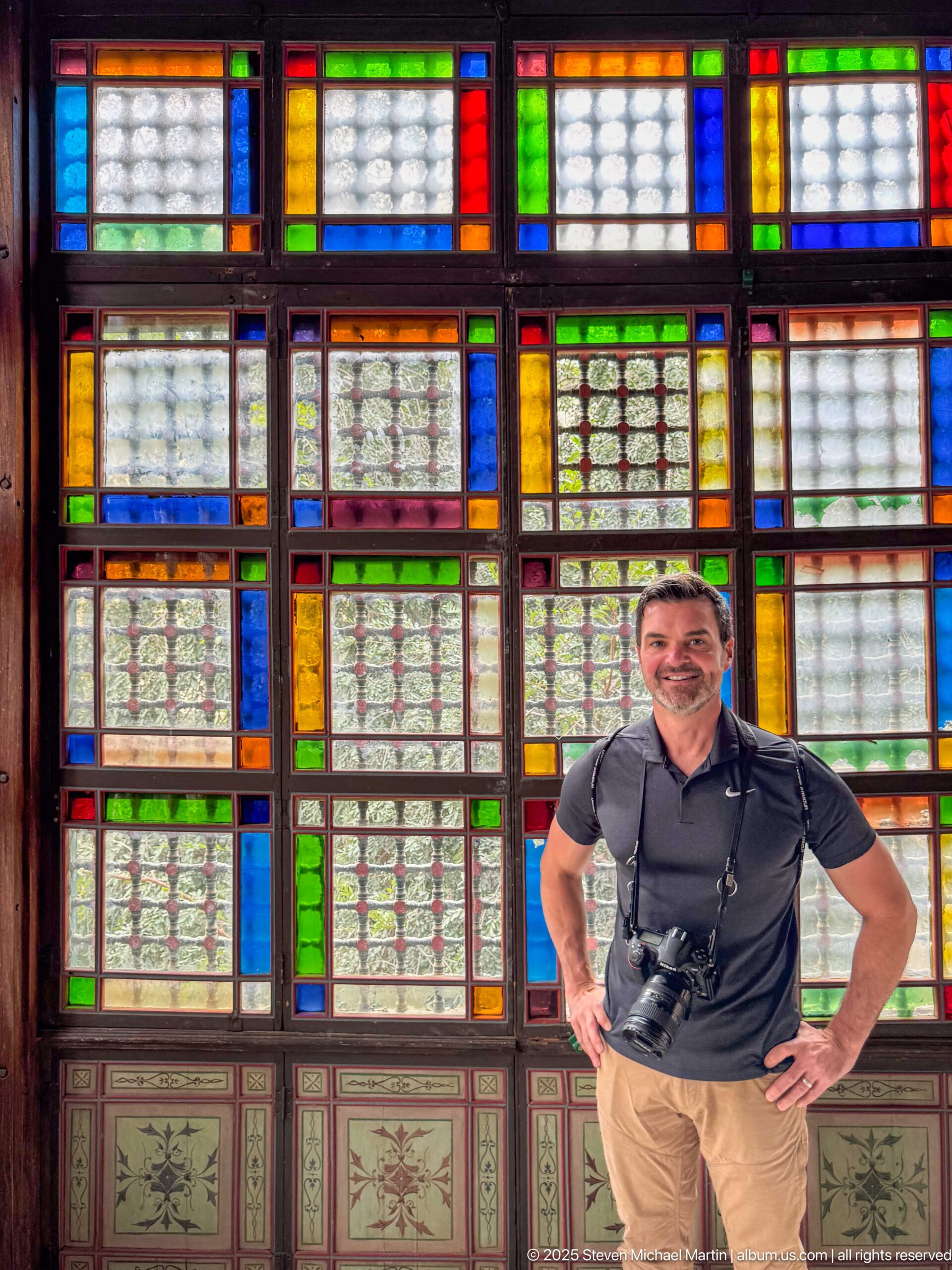
A visitor poses with hands at his hips in front of the palace’s multicolored window wall, a camera hanging from his neck. Bands of brilliant red, blue, green, and amber glass frame patterned translucent panes, turning the architectural glazing into a strong geometric backdrop for the informal portrait.
Caption
A visitor poses with hands at his hips in front of the palace’s multicolored window wall, a camera hanging from his neck. Bands of brilliant red, blue, green, and amber glass frame patterned translucent panes, turning the architectural glazing into a strong geometric backdrop for the informal portrait.
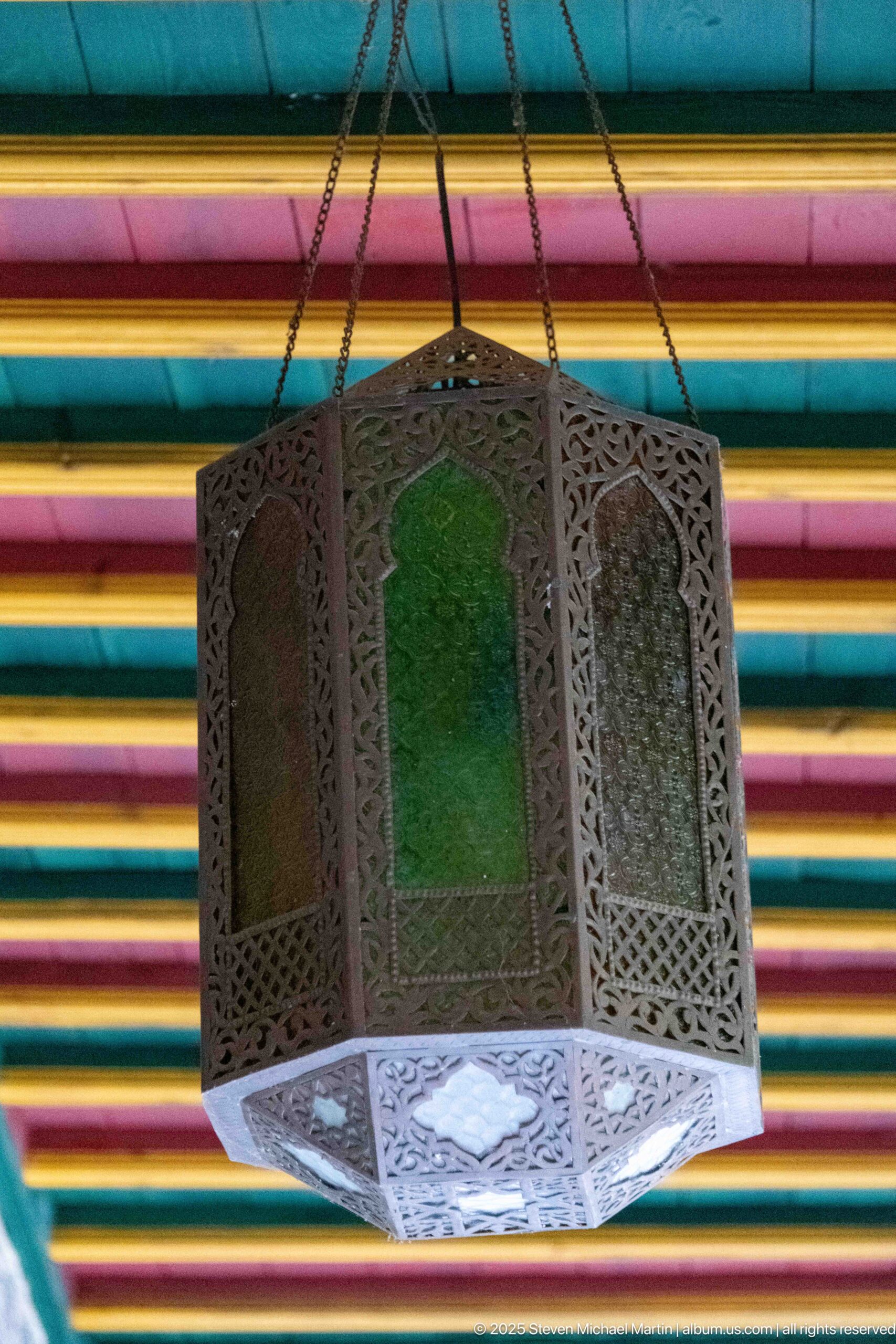
A suspended polygonal lantern hangs beneath the palace’s striped polychrome ceiling. Pierced metal panels surround colored glass inserts in green and muted amber tones, while chains attach the fixture to the beams above; the close view isolates the craftsmanship of the lighting fixture from the surrounding gallery.
Caption
A suspended polygonal lantern hangs beneath the palace’s striped polychrome ceiling. Pierced metal panels surround colored glass inserts in green and muted amber tones, while chains attach the fixture to the beams above; the close view isolates the craftsmanship of the lighting fixture from the surrounding gallery.
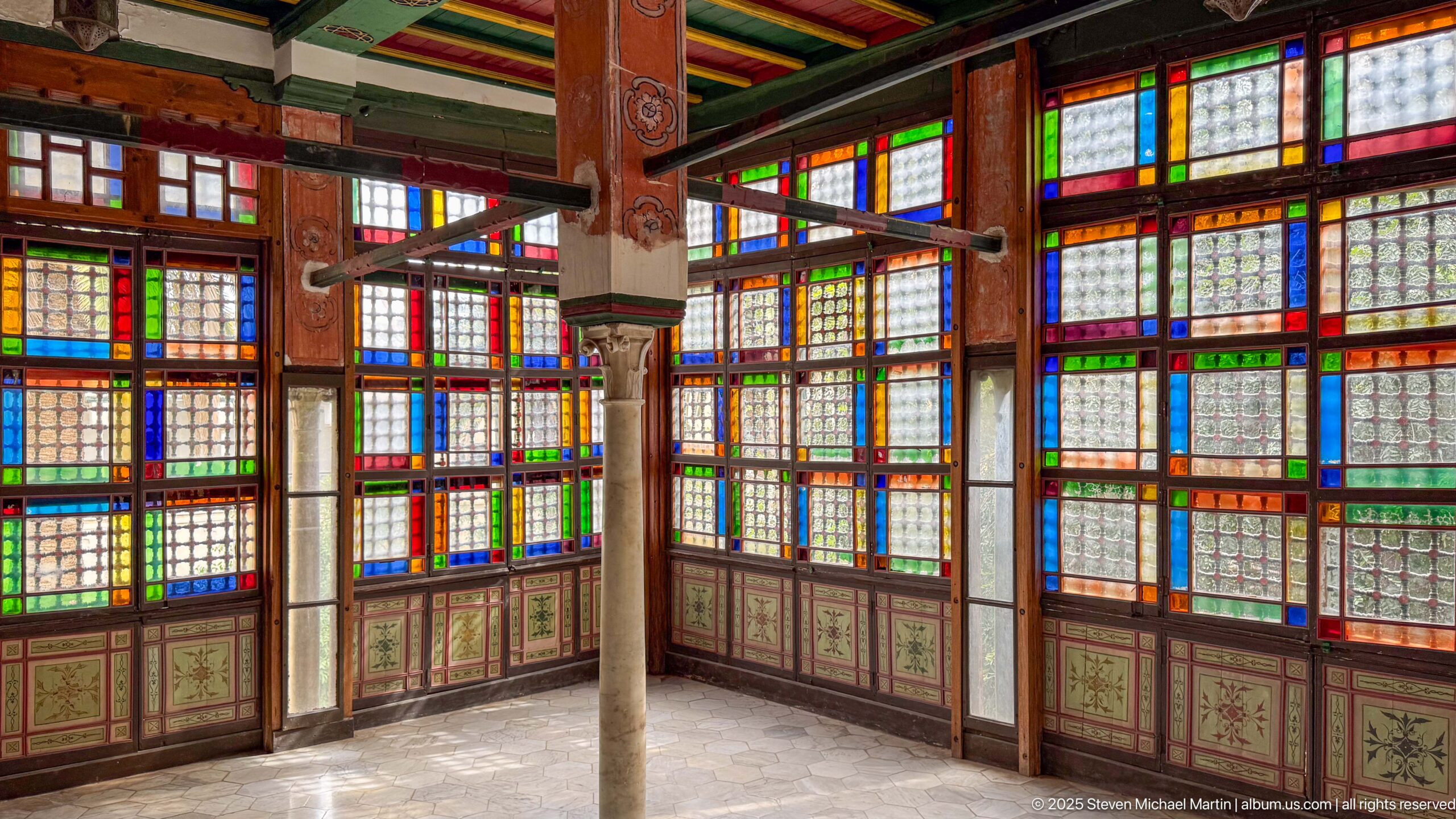
A corner of Ahmed Bey Palace is enclosed by tall banks of colored and patterned glass, creating a bright interior screen of red, green, blue, amber, and translucent panes. Painted panels line the lower wall, while slender columns and the multicolored ceiling structure place the glazing within the palace’s broader decorative program.
Caption
A corner of Ahmed Bey Palace is enclosed by tall banks of colored and patterned glass, creating a bright interior screen of red, green, blue, amber, and translucent panes. Painted panels line the lower wall, while slender columns and the multicolored ceiling structure place the glazing within the palace’s broader decorative program.
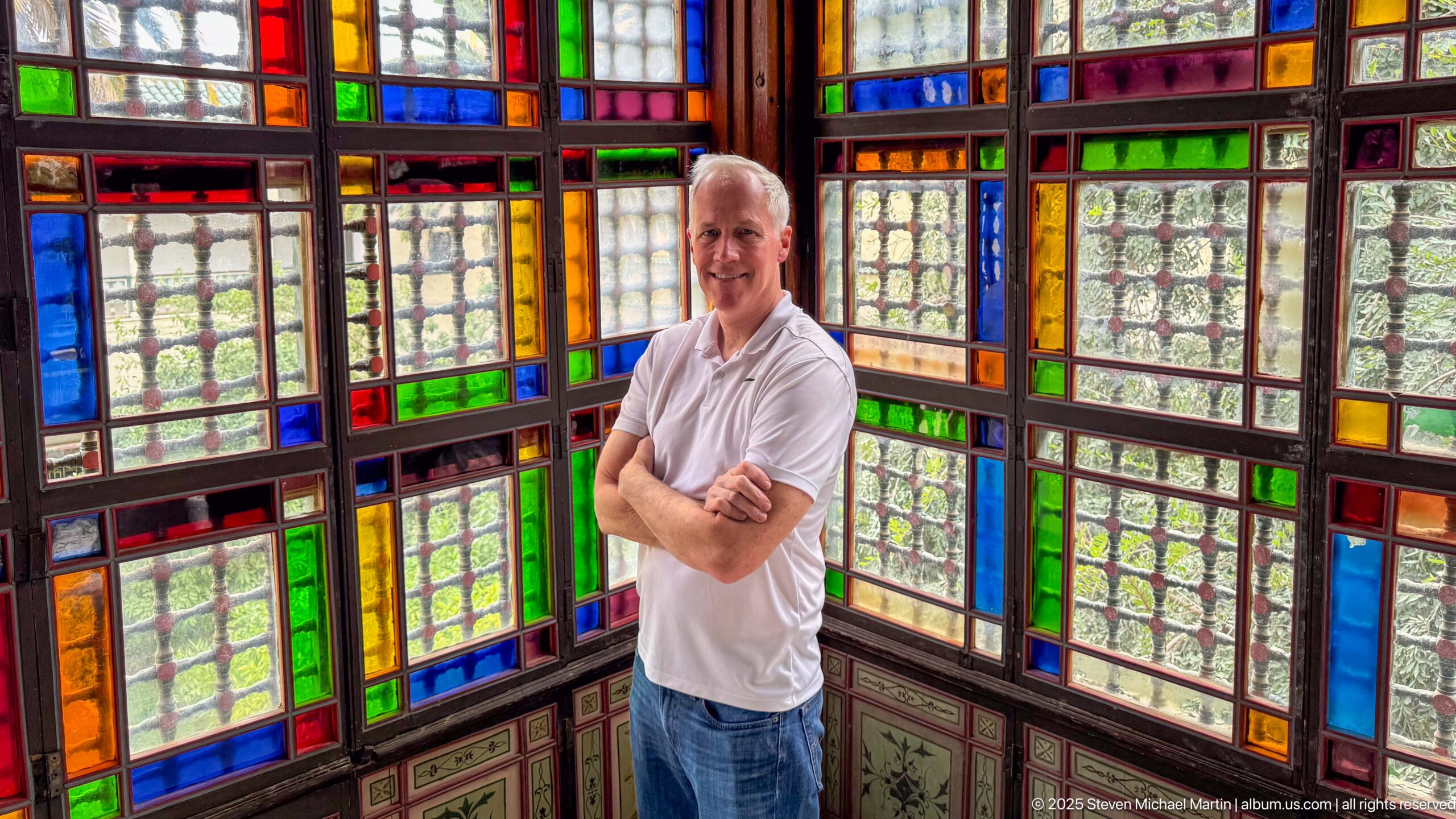
A visitor stands with folded arms in the corner of a room illuminated by Ahmed Bey Palace’s distinctive multicolored glazing. Patterned translucent panes are bordered by saturated red, green, blue, and amber glass, creating a luminous enclosure that contrasts with his pale shirt and gives a clear sense of the room’s scale.
Caption
A visitor stands with folded arms in the corner of a room illuminated by Ahmed Bey Palace’s distinctive multicolored glazing. Patterned translucent panes are bordered by saturated red, green, blue, and amber glass, creating a luminous enclosure that contrasts with his pale shirt and gives a clear sense of the room’s scale.
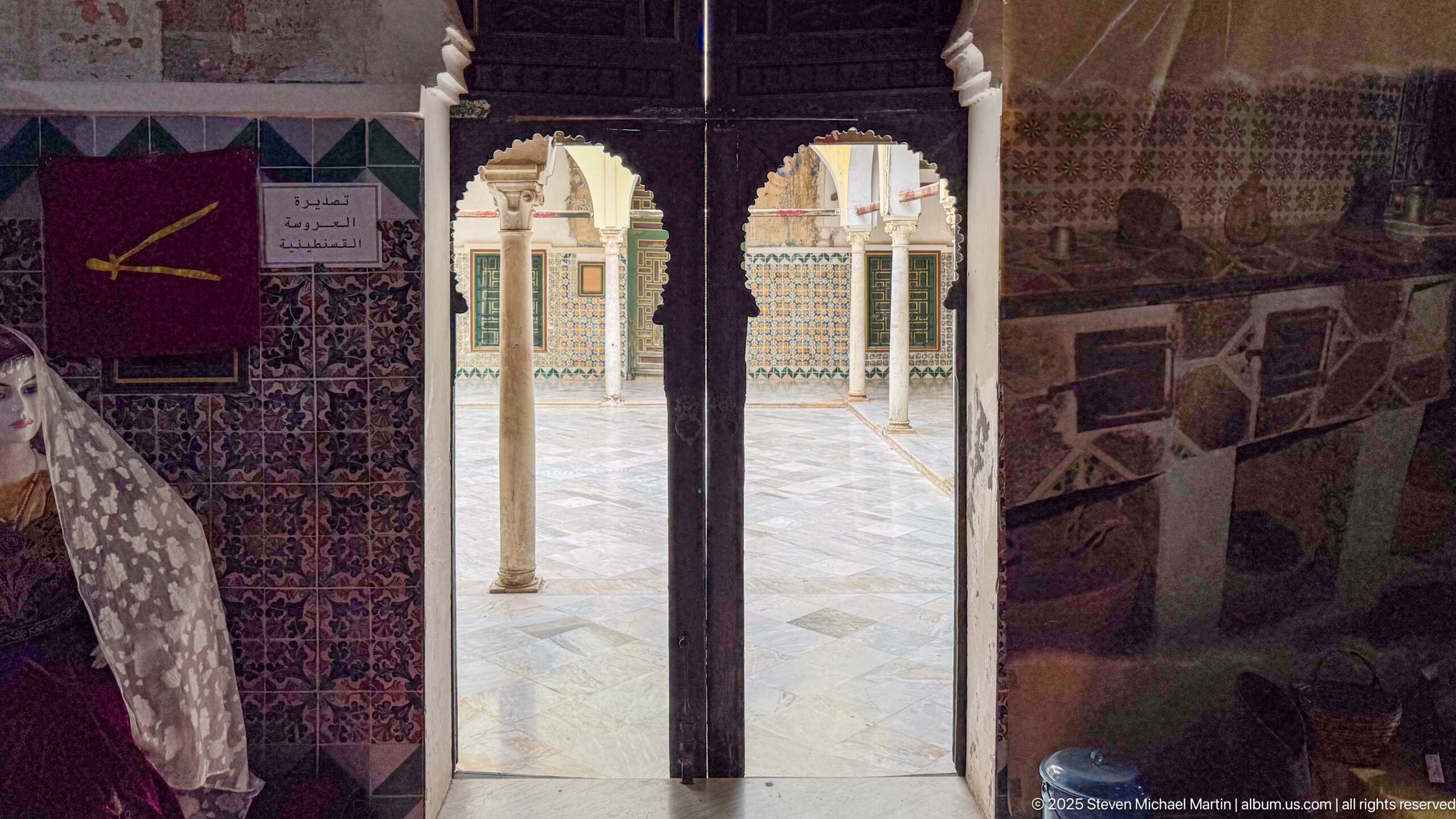
A dark museum room opens through a tall doorway onto the sunlit courtyard of Ahmed Bey Palace, where a slender stone column and tiled walls are visible beyond. Interior displays and patterned wall coverings remain in shadow at either side, creating a strong transition between enclosed exhibition space and the bright palace court.
Caption
A dark museum room opens through a tall doorway onto the sunlit courtyard of Ahmed Bey Palace, where a slender stone column and tiled walls are visible beyond. Interior displays and patterned wall coverings remain in shadow at either side, creating a strong transition between enclosed exhibition space and the bright palace court.
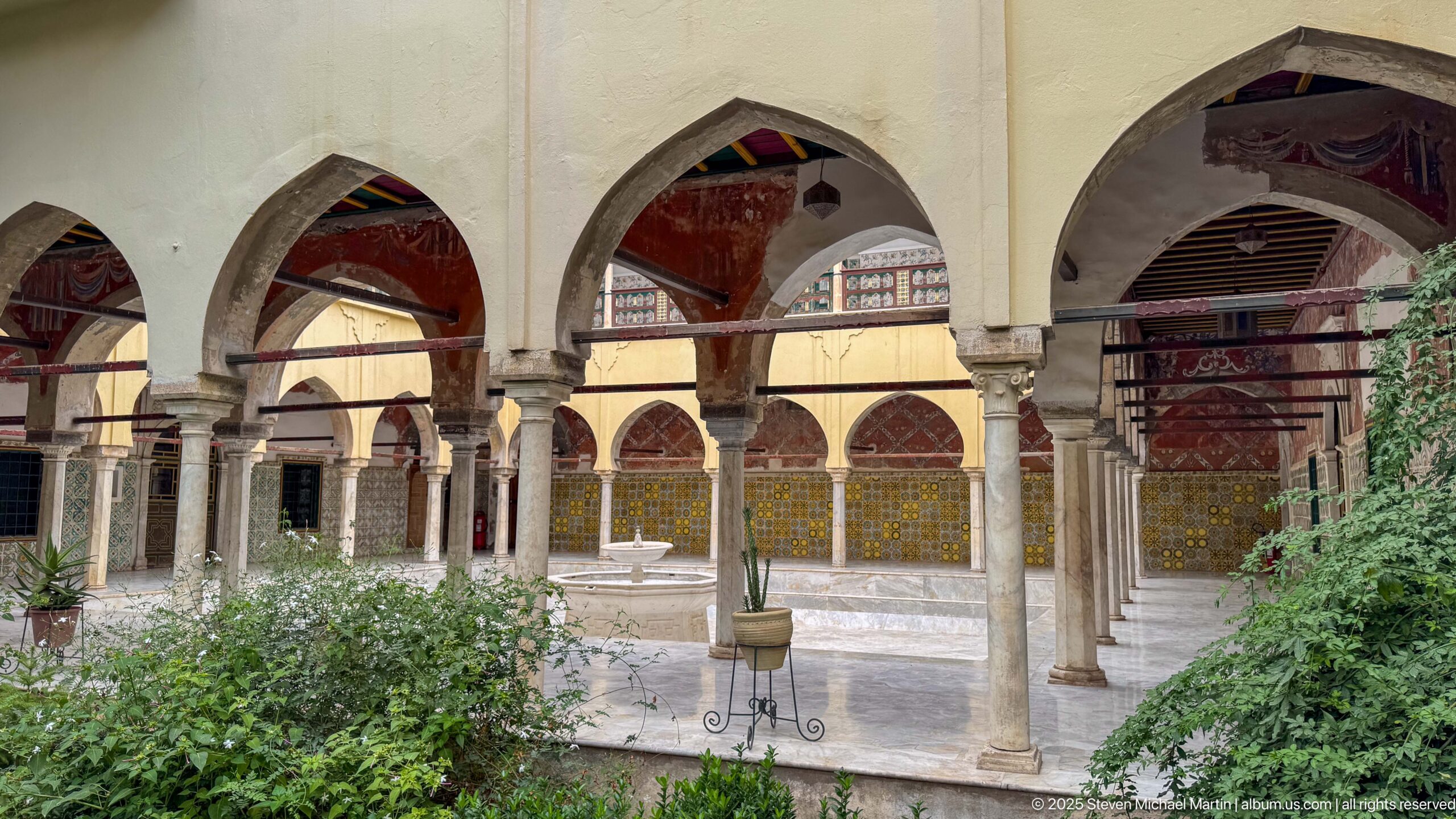
Layered pointed arches and slender stone columns frame an interior garden court at Ahmed Bey Palace. A small fountain stands across the courtyard, while planted greenery fills the foreground and painted architectural surfaces appear beneath the arches, creating a broad contextual view of the palace’s inward-facing circulation and garden spaces.
Caption
Layered pointed arches and slender stone columns frame an interior garden court at Ahmed Bey Palace. A small fountain stands across the courtyard, while planted greenery fills the foreground and painted architectural surfaces appear beneath the arches, creating a broad contextual view of the palace’s inward-facing circulation and garden spaces.
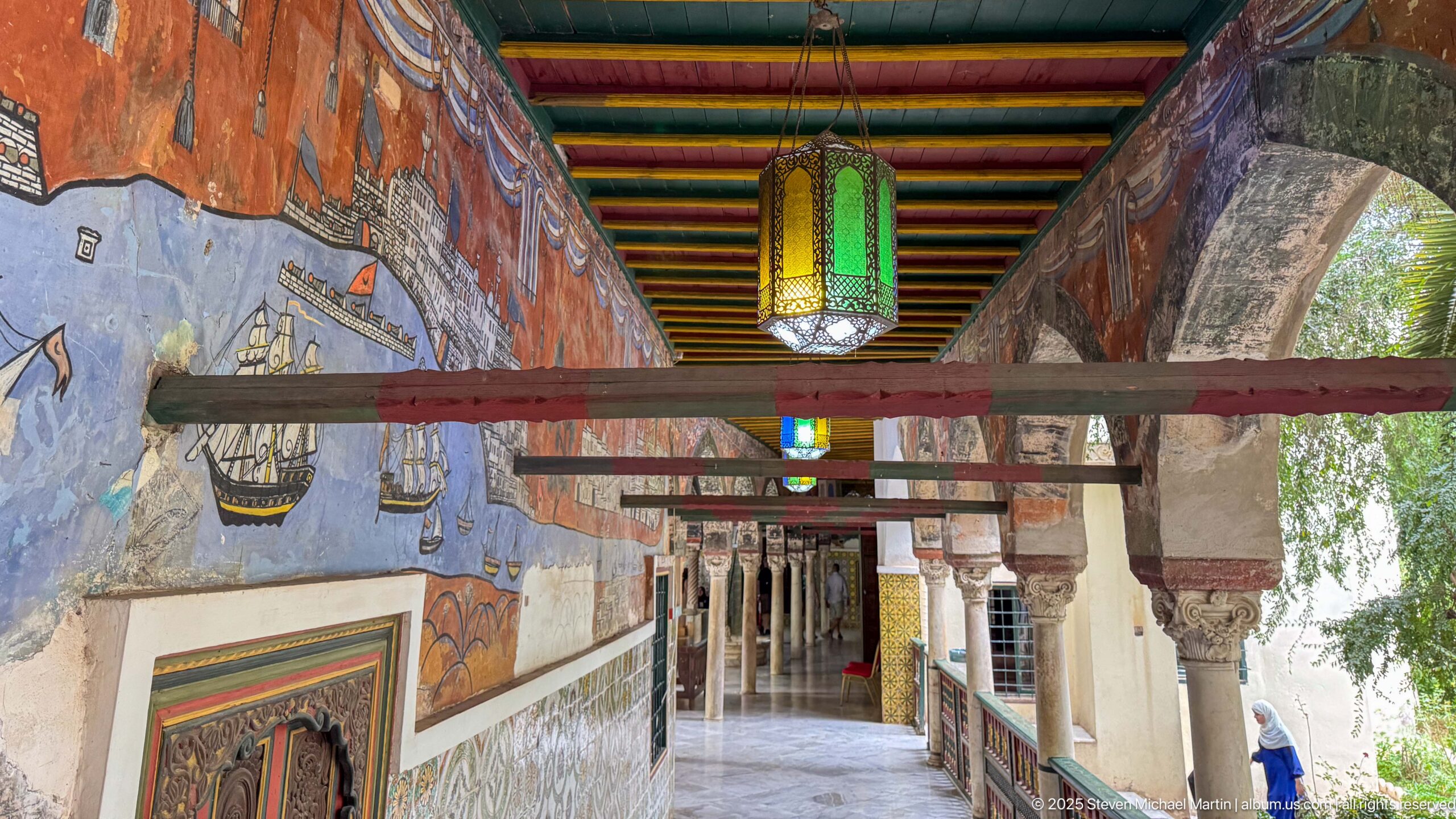
A long open gallery at Ahmed Bey Palace extends beneath brightly painted ceiling boards and hanging lanterns, with narrative wall paintings running continuously along one side. Maritime scenes, architectural motifs, tiled lower walls, stone columns, and the receding perspective bring several of the palace’s decorative traditions together in a single architectural view.
Caption
A long open gallery at Ahmed Bey Palace extends beneath brightly painted ceiling boards and hanging lanterns, with narrative wall paintings running continuously along one side. Maritime scenes, architectural motifs, tiled lower walls, stone columns, and the receding perspective bring several of the palace’s decorative traditions together in a single architectural view.
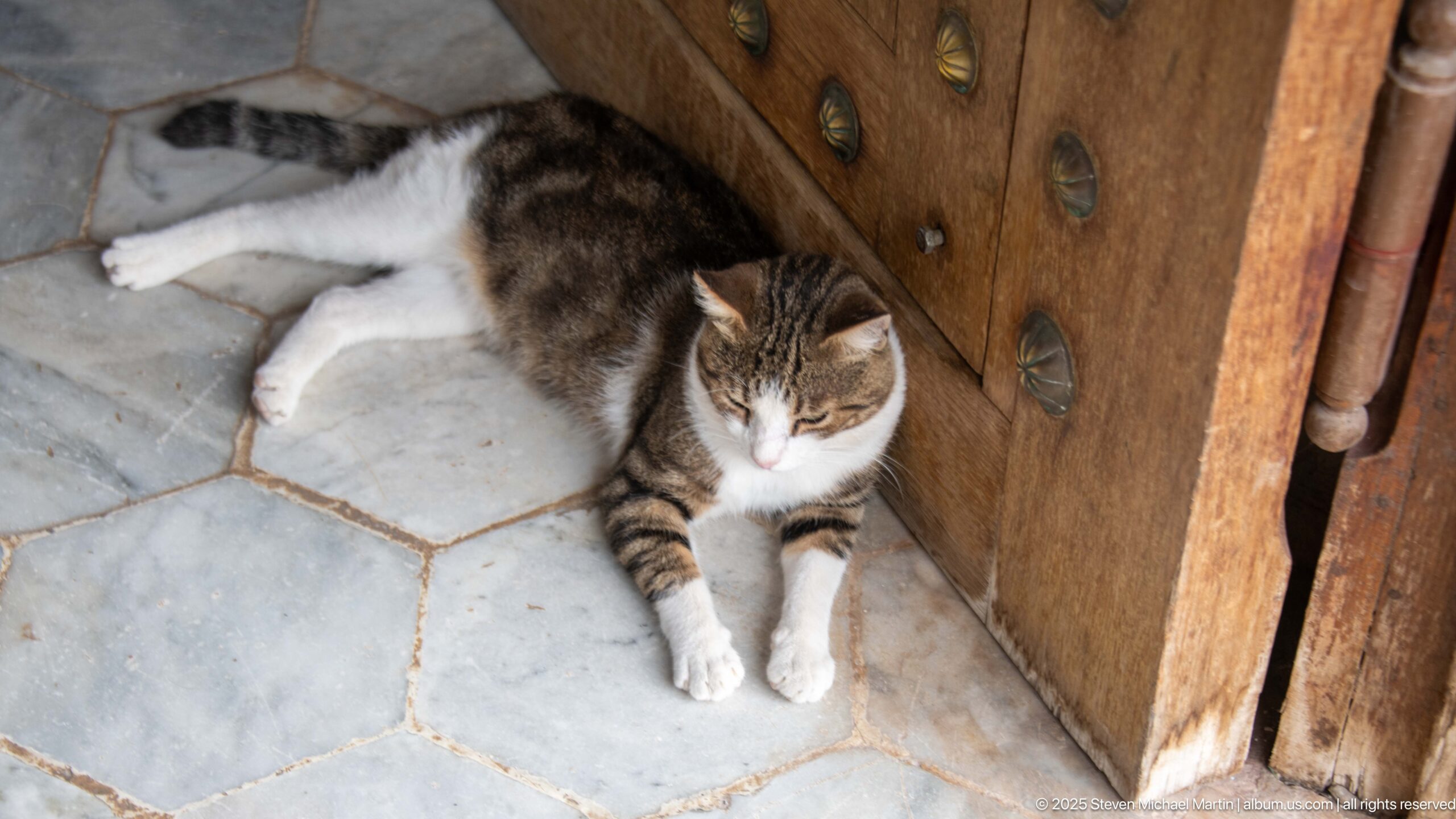
A tabby-and-white cat rests on the pale stone floor beside a heavy wooden door at Ahmed Bey Palace. Its body stretches partly across the threshold while the studded door fills the background, offering an intimate everyday detail amid the palace’s formal architecture and museum displays.
Caption
A tabby-and-white cat rests on the pale stone floor beside a heavy wooden door at Ahmed Bey Palace. Its body stretches partly across the threshold while the studded door fills the background, offering an intimate everyday detail amid the palace’s formal architecture and museum displays.
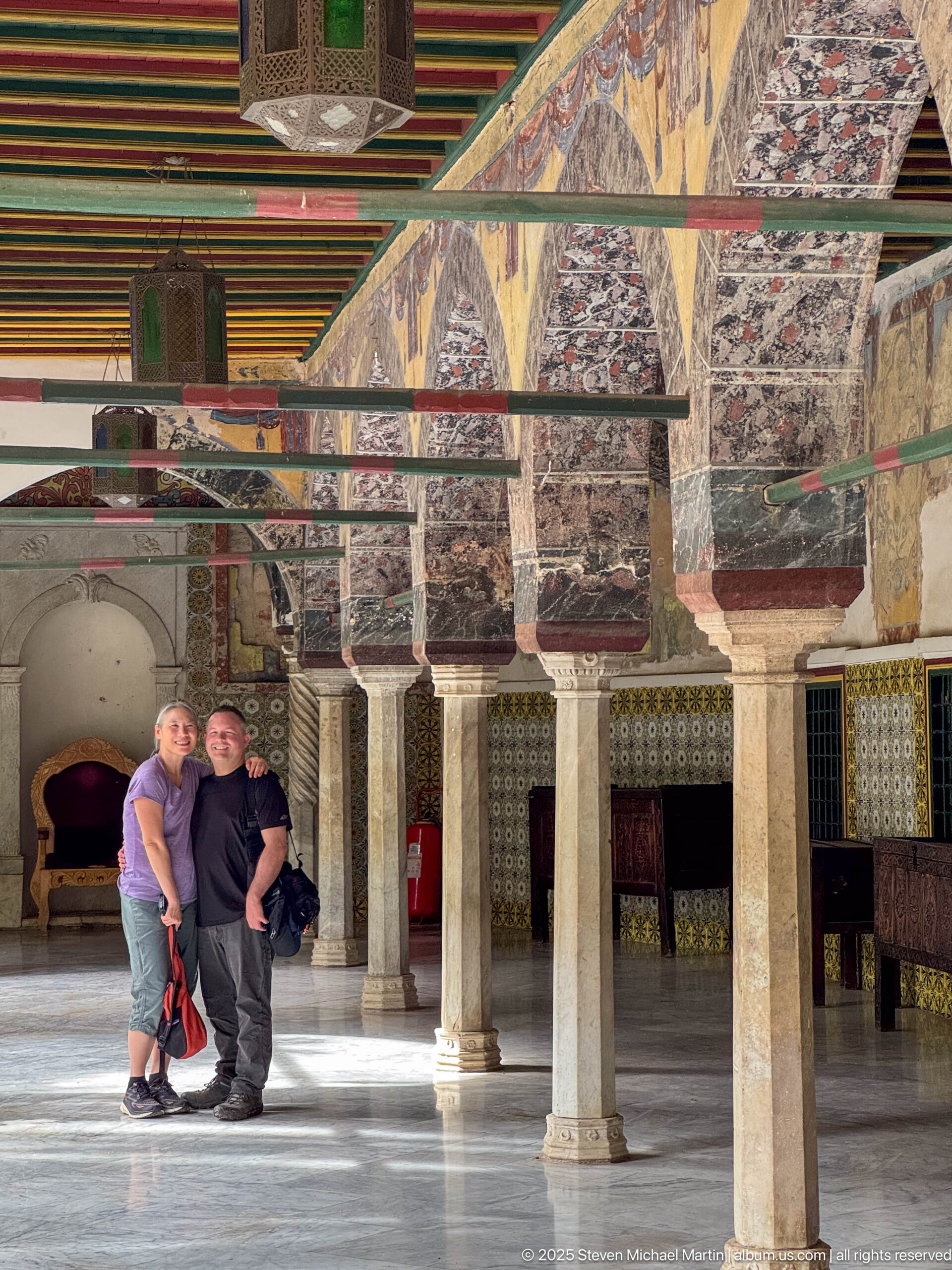
Two visitors stand together beneath the richly decorated arcade of Ahmed Bey Palace. Slender stone columns support arches covered with dense painted scenes, while a multicolored ceiling stretches overhead and patterned tilework lines the walls behind them, using the figures to convey the scale and layered ornament of the interior.
Caption
Two visitors stand together beneath the richly decorated arcade of Ahmed Bey Palace. Slender stone columns support arches covered with dense painted scenes, while a multicolored ceiling stretches overhead and patterned tilework lines the walls behind them, using the figures to convey the scale and layered ornament of the interior.


