School of Aristotle (Mieza)
The School of Aristotle is traditionally identified as the place where Aristotle instructed Alexander the Great and other members of the Macedonian elite. Located near the ancient site of Mieza, the setting includes natural rock formations and shaded groves that create an environment well suited to philosophical discussion. The landscape itself contributes to understanding how education in classical Greece often occurred in spaces closely connected to nature.
The quiet surroundings contrast with the lasting influence of the intellectual traditions associated with Aristotle’s teaching. Philosophy, science, ethics, and political thought developed during this period would later shape cultural and academic traditions across Europe and the Mediterranean world. The site reflects the relationship between environment and intellectual life in antiquity.
Although only limited architectural remains survive, the location provides insight into the cultural context that helped shape one of history’s most influential leaders. The combination of natural setting and historical association encourages reflection on the role of education in the development of classical civilization.
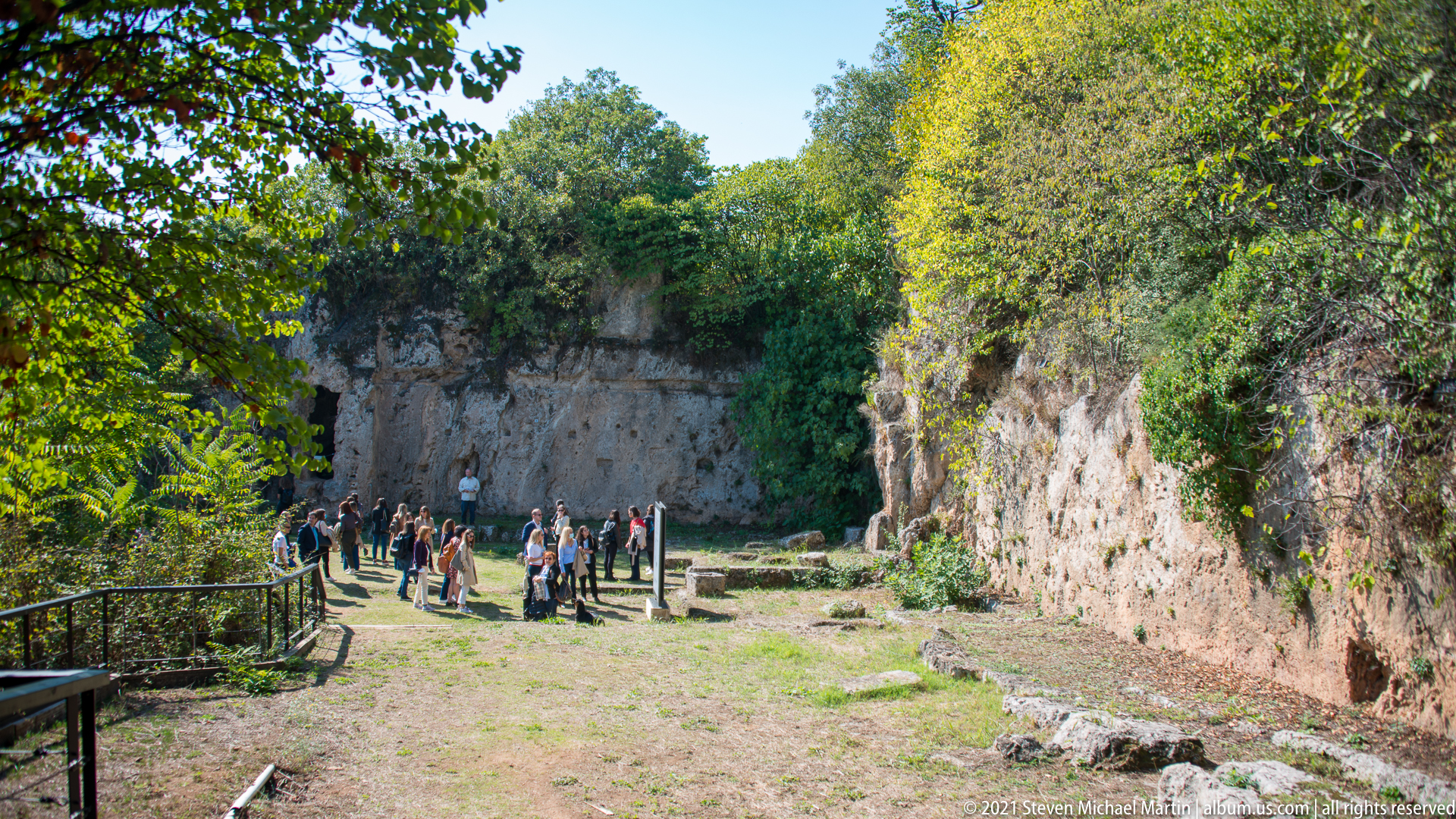
A group of visitors gathers in the open court below the rock-cut cliffs at Mieza, giving a clear sense of the site’s scale. Low archaeological remains line the grassy approach, and dense trees frame the exposed stone on both sides. Unlike the unoccupied architectural studies, this view documents the modern experience of moving through and interpreting the School of Aristotle site.
Caption
A group of visitors gathers in the open court below the rock-cut cliffs at Mieza, giving a clear sense of the site’s scale. Low archaeological remains line the grassy approach, and dense trees frame the exposed stone on both sides. Unlike the unoccupied architectural studies, this view documents the modern experience of moving through and interpreting the School of Aristotle site.
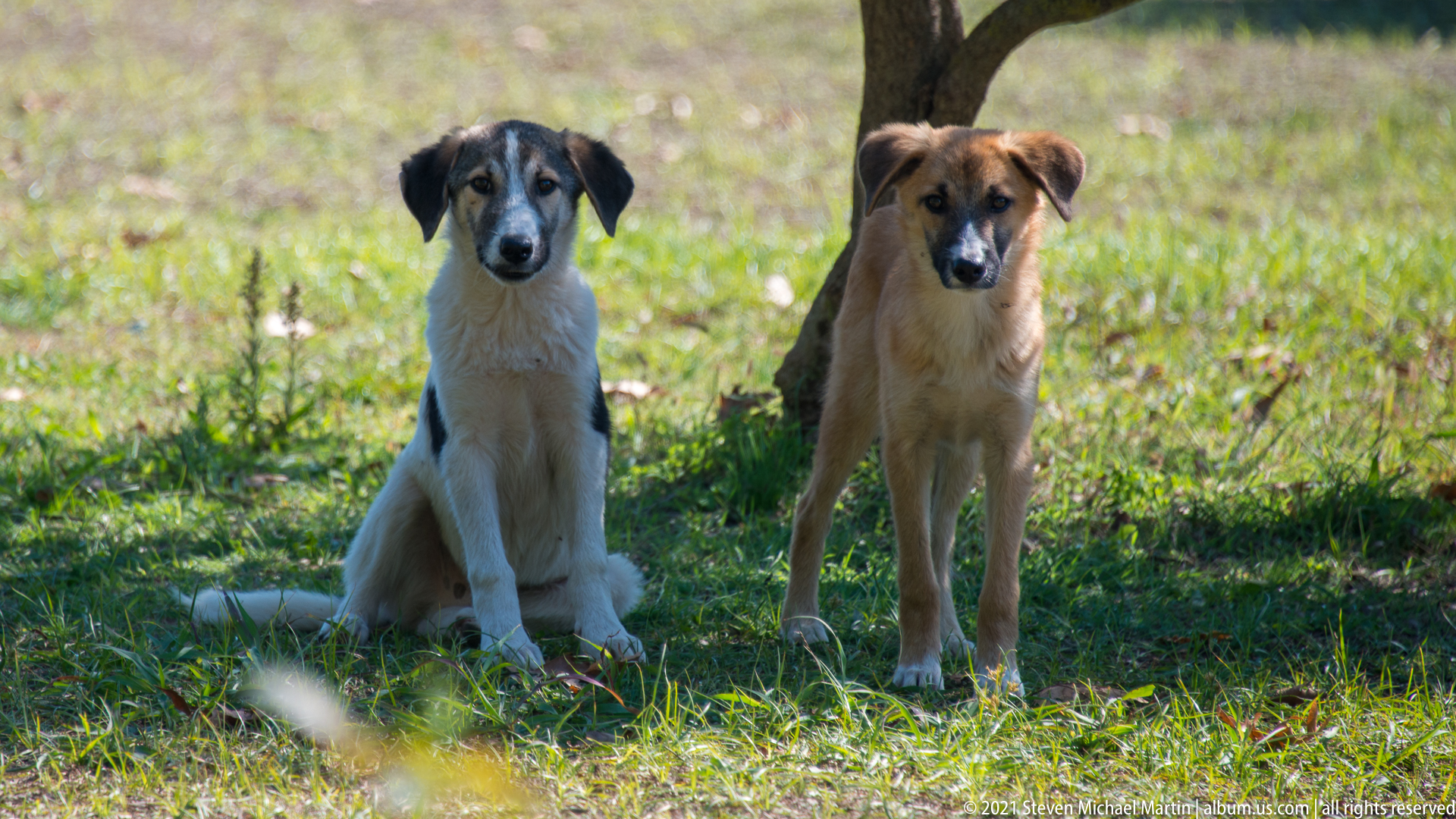
Two young dogs pause together in dappled shade on the grassy grounds near the School of Aristotle. One sits upright with a mostly white coat and dark face markings, while the brown dog beside it stands alert beneath a tree. The paired portrait is a quiet record of everyday animal life around the visitor area, distinct from the portfolio’s archaeological and commemorative subjects.
Caption
Two young dogs pause together in dappled shade on the grassy grounds near the School of Aristotle. One sits upright with a mostly white coat and dark face markings, while the brown dog beside it stands alert beneath a tree. The paired portrait is a quiet record of everyday animal life around the visitor area, distinct from the portfolio’s archaeological and commemorative subjects.
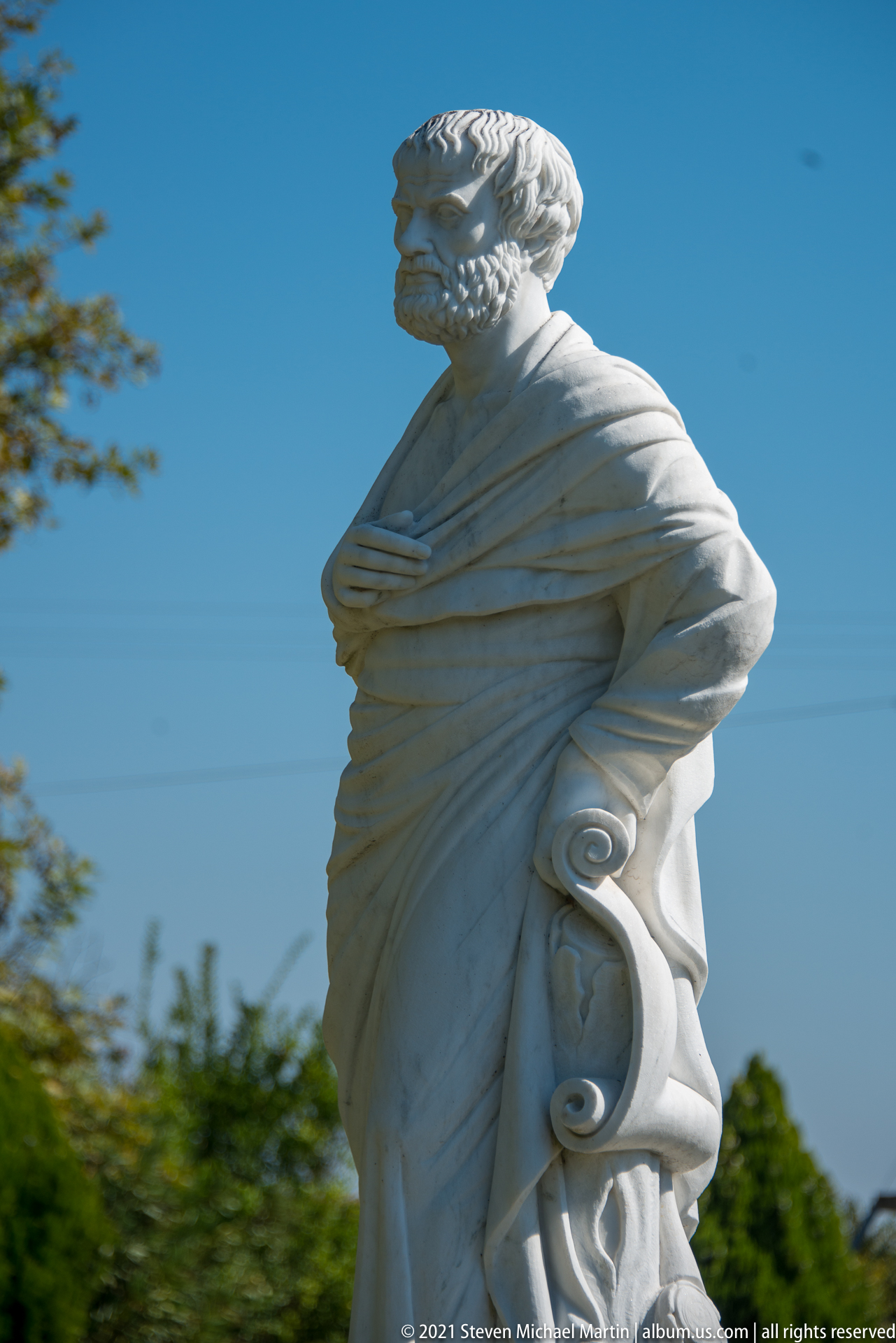
Seen from below against a clear blue sky, the modern statue of Aristotle turns in three-quarter profile, its deeply carved beard and layered drapery strongly modeled by sunlight. Rolled forms beside the figure add a sculptural attribute at the right side. The tighter viewpoint removes most of the landscaped setting and concentrates attention on the commemorative figure’s face, torso, and carved folds.
Caption
Seen from below against a clear blue sky, the modern statue of Aristotle turns in three-quarter profile, its deeply carved beard and layered drapery strongly modeled by sunlight. Rolled forms beside the figure add a sculptural attribute at the right side. The tighter viewpoint removes most of the landscaped setting and concentrates attention on the commemorative figure’s face, torso, and carved folds.
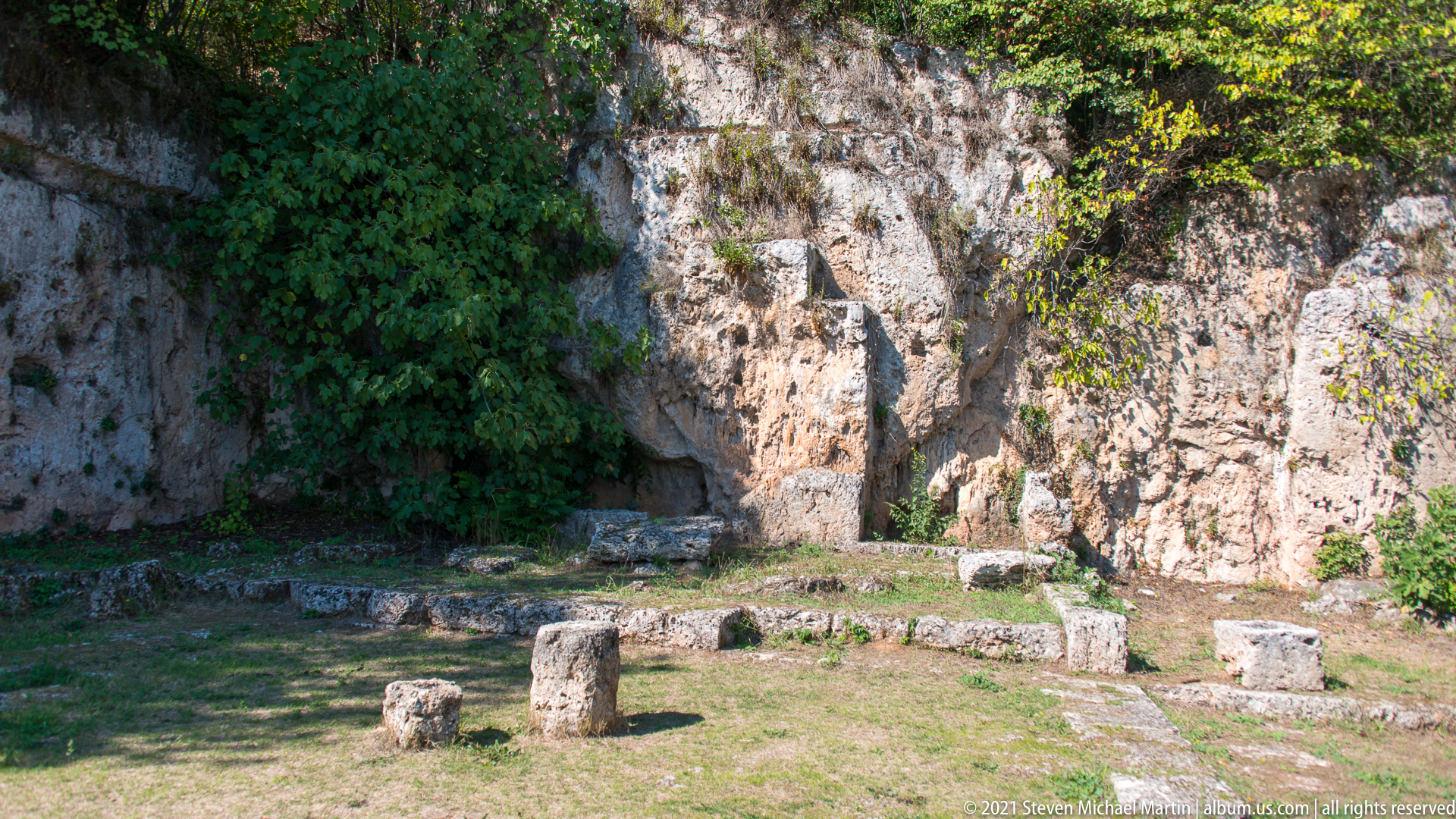
Low stone foundations and scattered squared blocks occupy a grassy court beneath the high, rock-cut face of the Nymphaeum at Mieza. A recessed opening and vertical cuttings interrupt the cliff, while dense vegetation spills over its upper edge. The broad view records how built remains, open ground, and the modified natural rock are organized within the archaeological setting.
Caption
Low stone foundations and scattered squared blocks occupy a grassy court beneath the high, rock-cut face of the Nymphaeum at Mieza. A recessed opening and vertical cuttings interrupt the cliff, while dense vegetation spills over its upper edge. The broad view records how built remains, open ground, and the modified natural rock are organized within the archaeological setting.
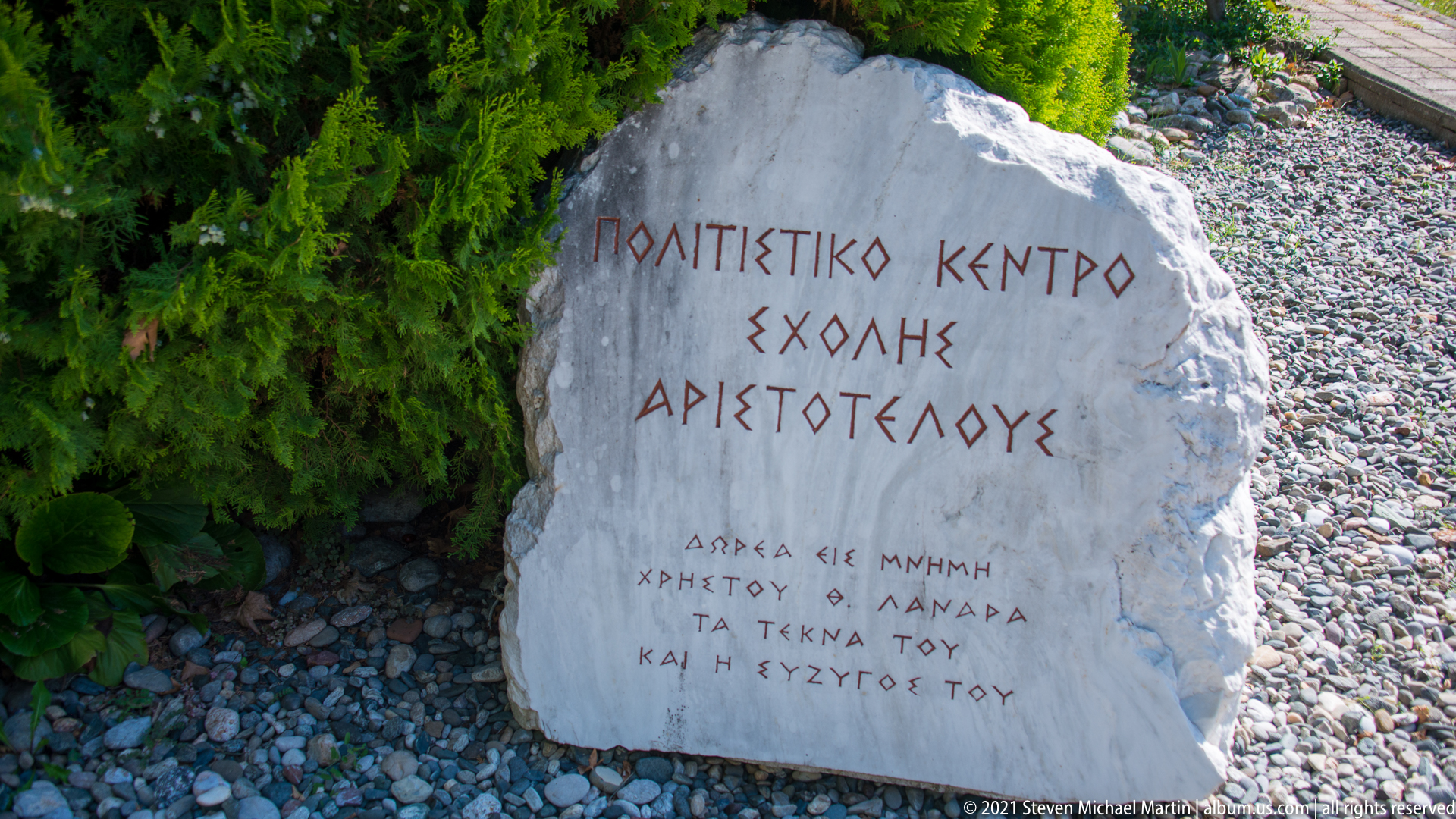
A roughly shaped pale stone bears a red-painted Greek inscription naming the “Cultural Center School of Aristotle.” Smaller Greek lines below record a commemorative dedication. Positioned among gravel and clipped greenery, the marker connects the modern cultural facilities with the philosopher commemorated at Mieza and contrasts deliberately with the ancient rock-cut surfaces elsewhere in the portfolio.
Caption
A roughly shaped pale stone bears a red-painted Greek inscription naming the “Cultural Center School of Aristotle.” Smaller Greek lines below record a commemorative dedication. Positioned among gravel and clipped greenery, the marker connects the modern cultural facilities with the philosopher commemorated at Mieza and contrasts deliberately with the ancient rock-cut surfaces elsewhere in the portfolio.
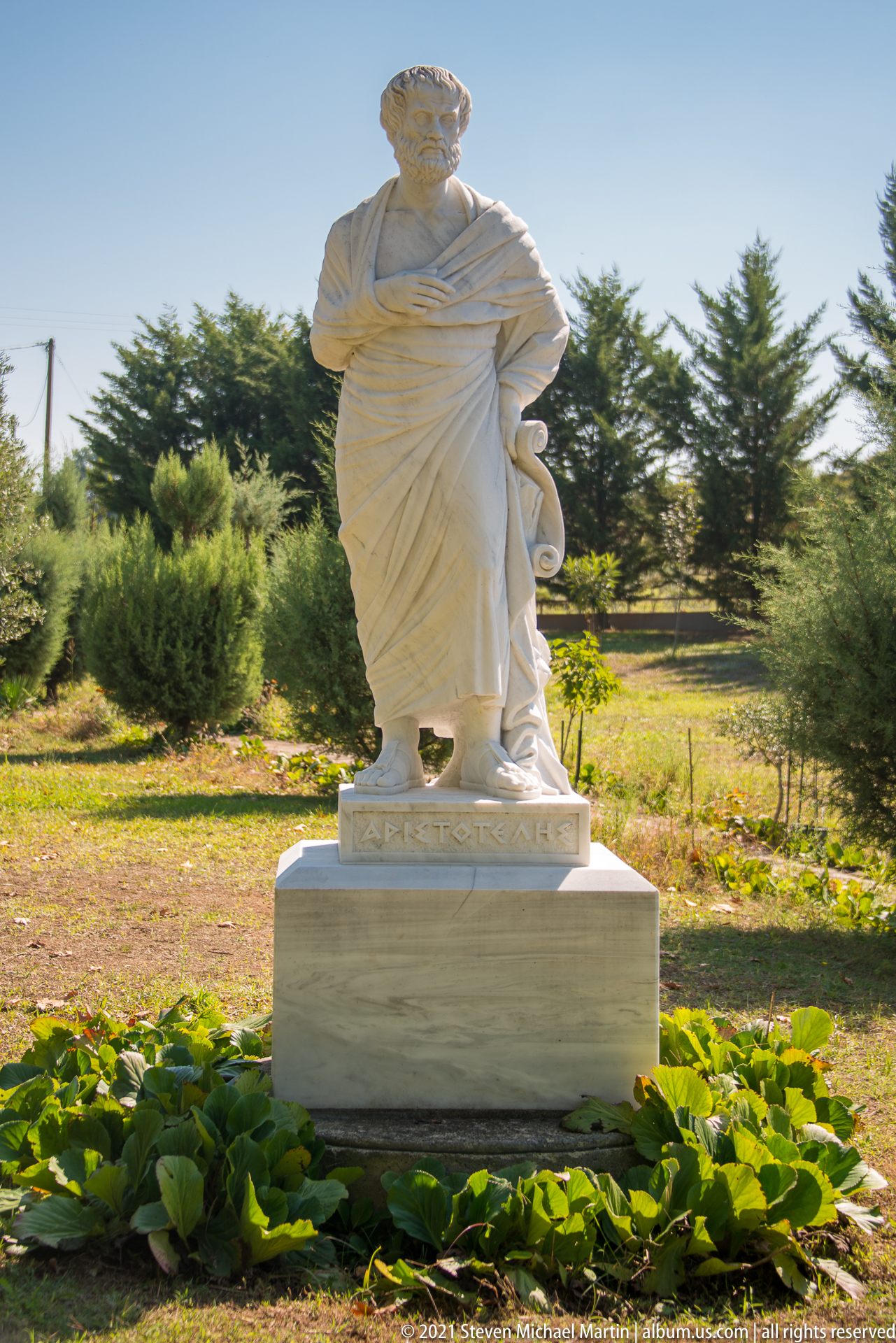
A modern white marble statue represents Aristotle as a standing, bearded philosopher wrapped in a heavy draped garment. Set on a rectangular pedestal amid low greenery, the figure faces slightly to one side and holds the folds of the cloak close to the body. The sculpture provides a contemporary commemorative image of the thinker associated by tradition with the nearby School of Aristotle at Mieza.
Caption
A modern white marble statue represents Aristotle as a standing, bearded philosopher wrapped in a heavy draped garment. Set on a rectangular pedestal amid low greenery, the figure faces slightly to one side and holds the folds of the cloak close to the body. The sculpture provides a contemporary commemorative image of the thinker associated by tradition with the nearby School of Aristotle at Mieza.
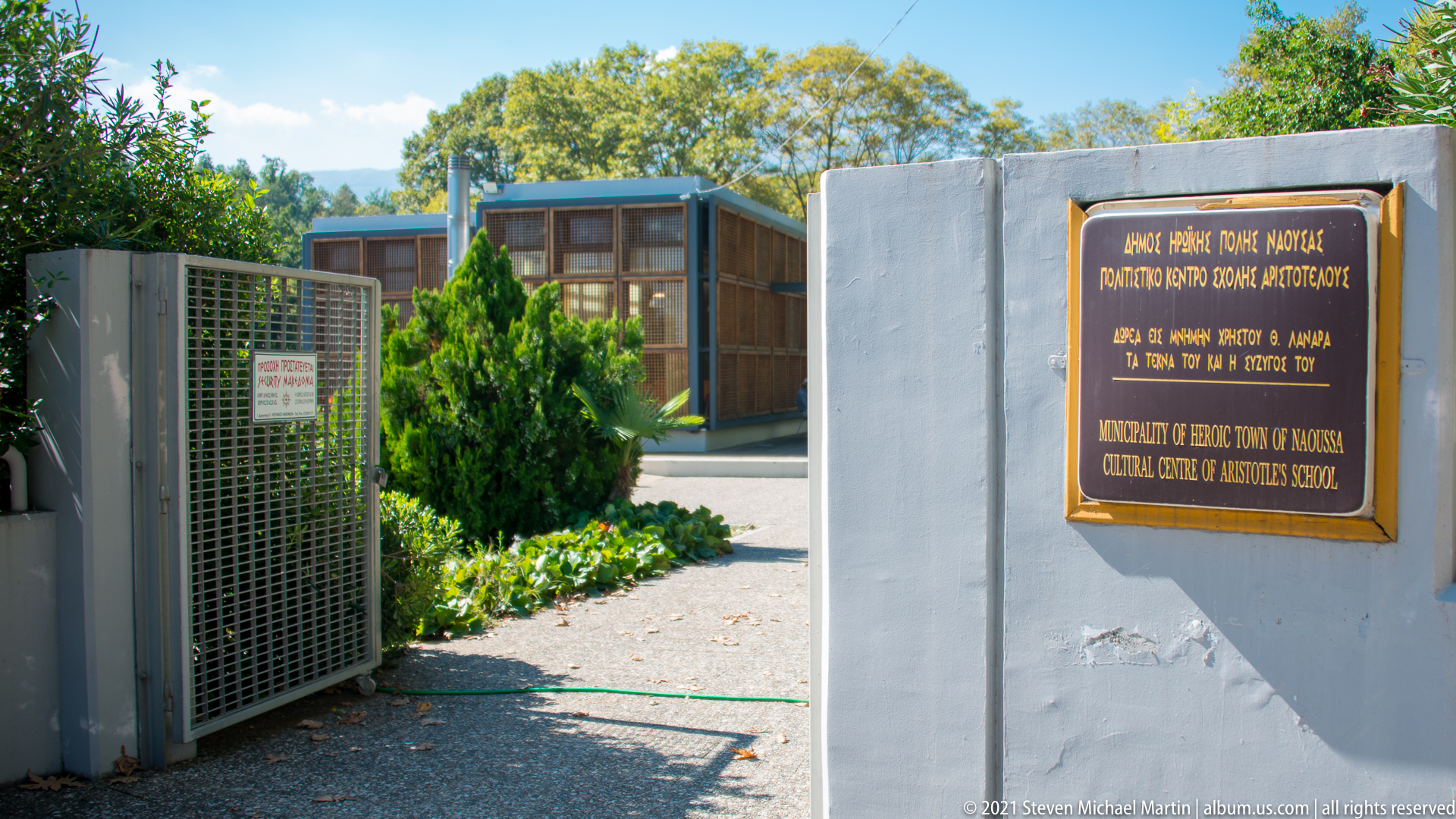
A modern entrance area near the Mieza archaeological site is marked by a dark commemorative plaque mounted on a pale wall. The English inscription identifies a cultural center connected with Aristotle, while contemporary buildings and landscaping extend behind the gateway. This view records the modern commemorative and visitor infrastructure associated with the ancient philosopher’s local tradition.
Caption
A modern entrance area near the Mieza archaeological site is marked by a dark commemorative plaque mounted on a pale wall. The English inscription identifies a cultural center connected with Aristotle, while contemporary buildings and landscaping extend behind the gateway. This view records the modern commemorative and visitor infrastructure associated with the ancient philosopher’s local tradition.
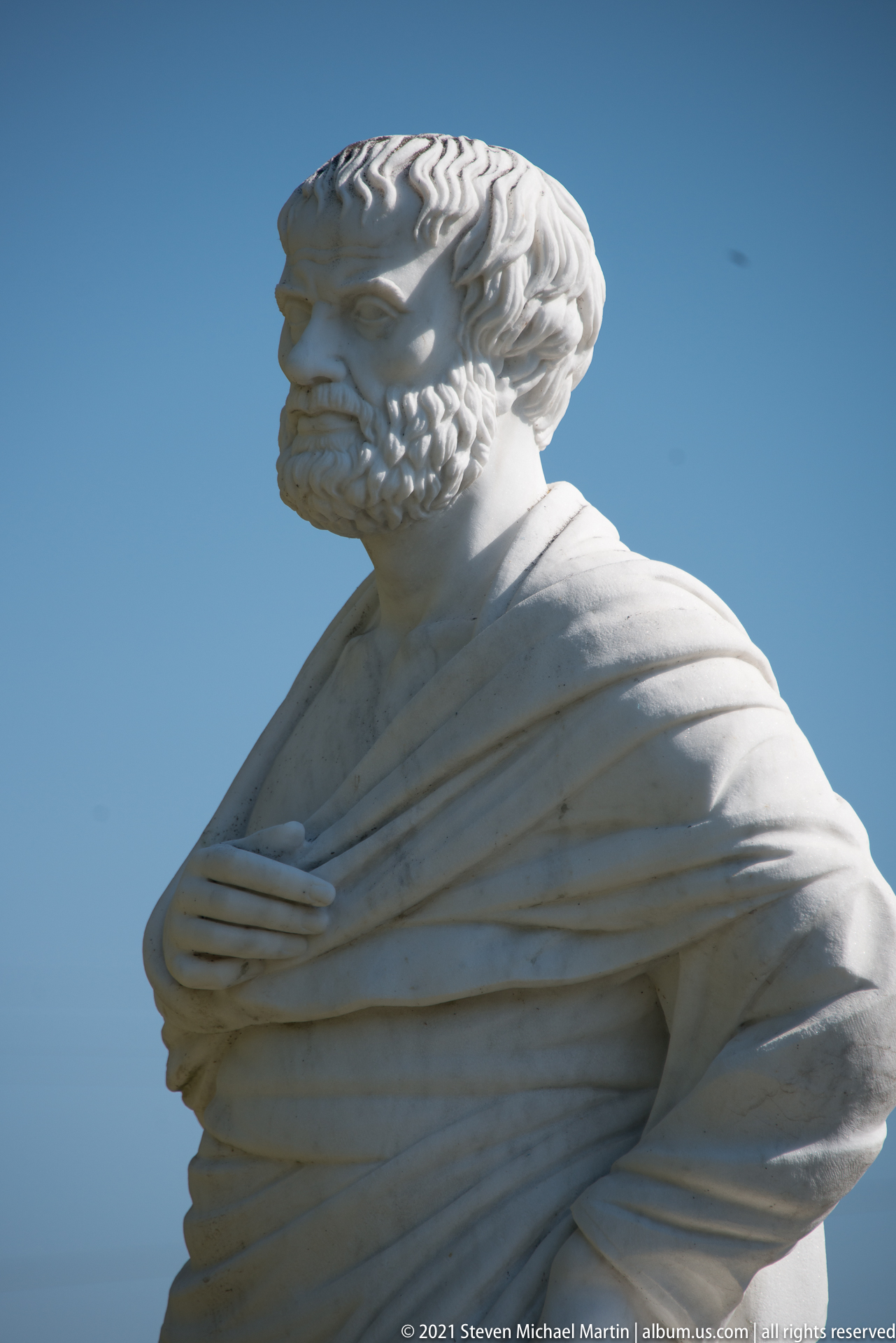
A close crop isolates the head and upper body of the modern Aristotle statue, emphasizing the furrowed brow, full curled beard, and overlapping folds of the cloak. Strong side light sharpens the carved facial planes while the blue sky creates an uncluttered background. This portrait-oriented detail complements the full-length and three-quarter views by concentrating on the sculpture’s idealized philosophical likeness.
Caption
A close crop isolates the head and upper body of the modern Aristotle statue, emphasizing the furrowed brow, full curled beard, and overlapping folds of the cloak. Strong side light sharpens the carved facial planes while the blue sky creates an uncluttered background. This portrait-oriented detail complements the full-length and three-quarter views by concentrating on the sculpture’s idealized philosophical likeness.
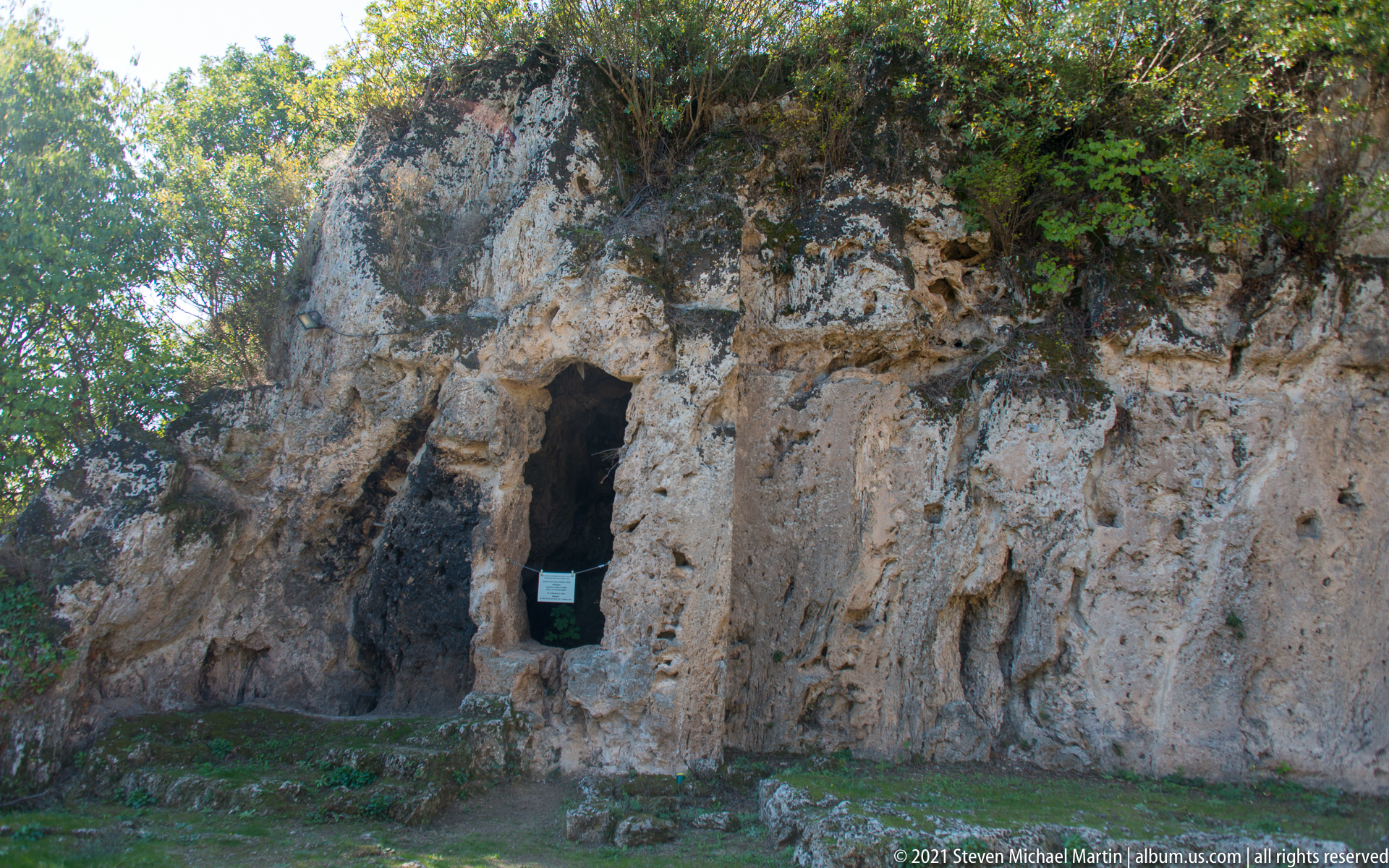
A narrow, roughly cut doorway opens into the limestone face at the archaeological site associated with the Nymphaeum of Mieza and the School of Aristotle. Weathered cavities and irregular tool-shaped surfaces animate the pale rock, while low stone remains occupy the shaded ground in front. The close viewpoint emphasizes the relationship between the carved opening and the natural cliff.
Caption
A narrow, roughly cut doorway opens into the limestone face at the archaeological site associated with the Nymphaeum of Mieza and the School of Aristotle. Weathered cavities and irregular tool-shaped surfaces animate the pale rock, while low stone remains occupy the shaded ground in front. The close viewpoint emphasizes the relationship between the carved opening and the natural cliff.
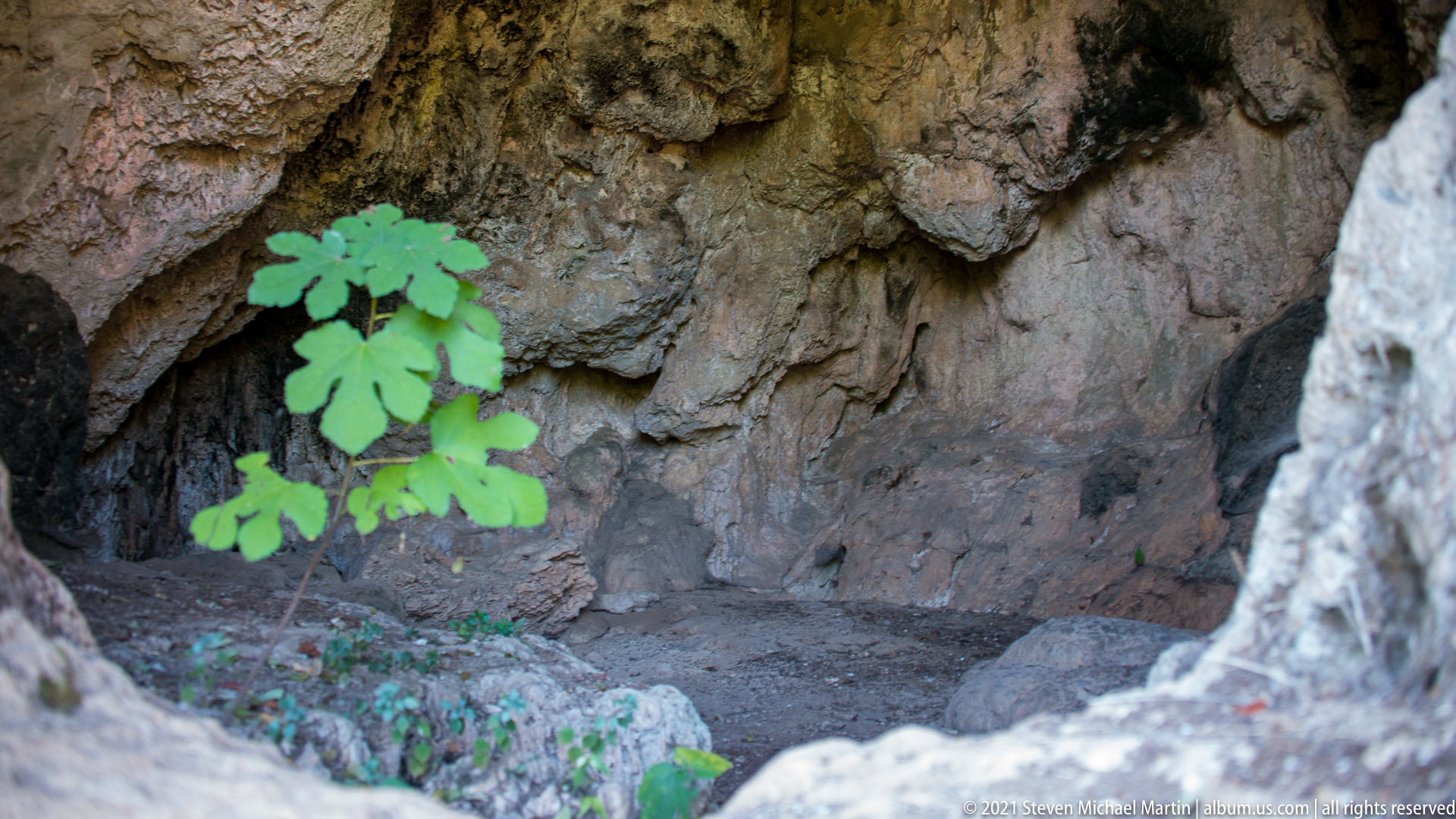
Inside a shallow rock-cut cavity at Mieza, the frame concentrates on an uneven wall, compacted earth floor, and a small leafy plant growing near the entrance. The confined viewpoint reveals the natural and worked textures of the limestone more directly than the wider site views, documenting the sheltered spaces that punctuate the Nymphaeum’s rock face.
Caption
Inside a shallow rock-cut cavity at Mieza, the frame concentrates on an uneven wall, compacted earth floor, and a small leafy plant growing near the entrance. The confined viewpoint reveals the natural and worked textures of the limestone more directly than the wider site views, documenting the sheltered spaces that punctuate the Nymphaeum’s rock face.
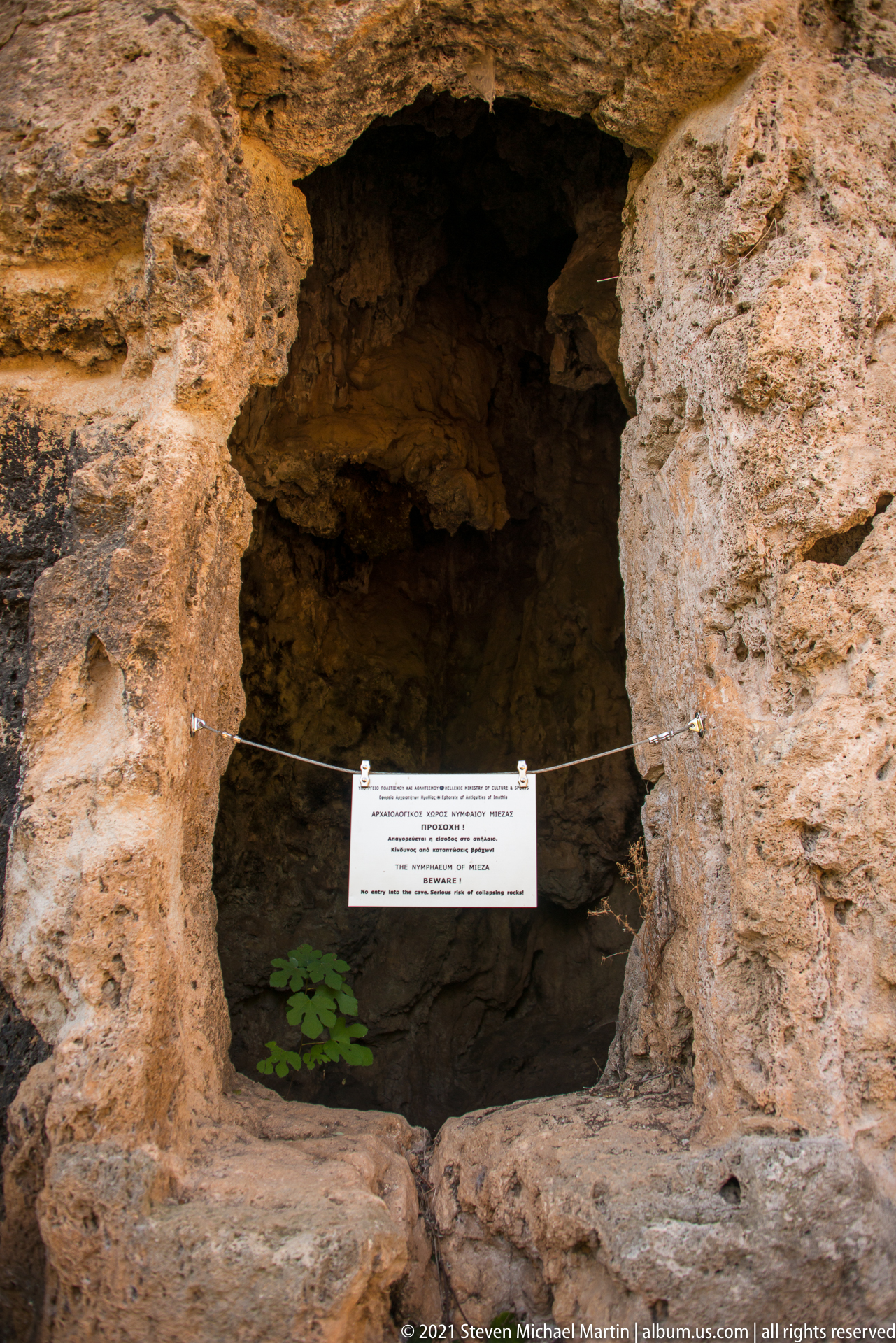
A deep recess carved into the porous rock is isolated in this close study from the Nymphaeum of Mieza. A protective cord spans the opening and an interpretive notice stands within it, underscoring the cavity’s status as part of the archaeological remains. Warm light across the rough stone reveals the irregular contours of the cut face and sheltered interior.
Caption
A deep recess carved into the porous rock is isolated in this close study from the Nymphaeum of Mieza. A protective cord spans the opening and an interpretive notice stands within it, underscoring the cavity’s status as part of the archaeological remains. Warm light across the rough stone reveals the irregular contours of the cut face and sheltered interior.
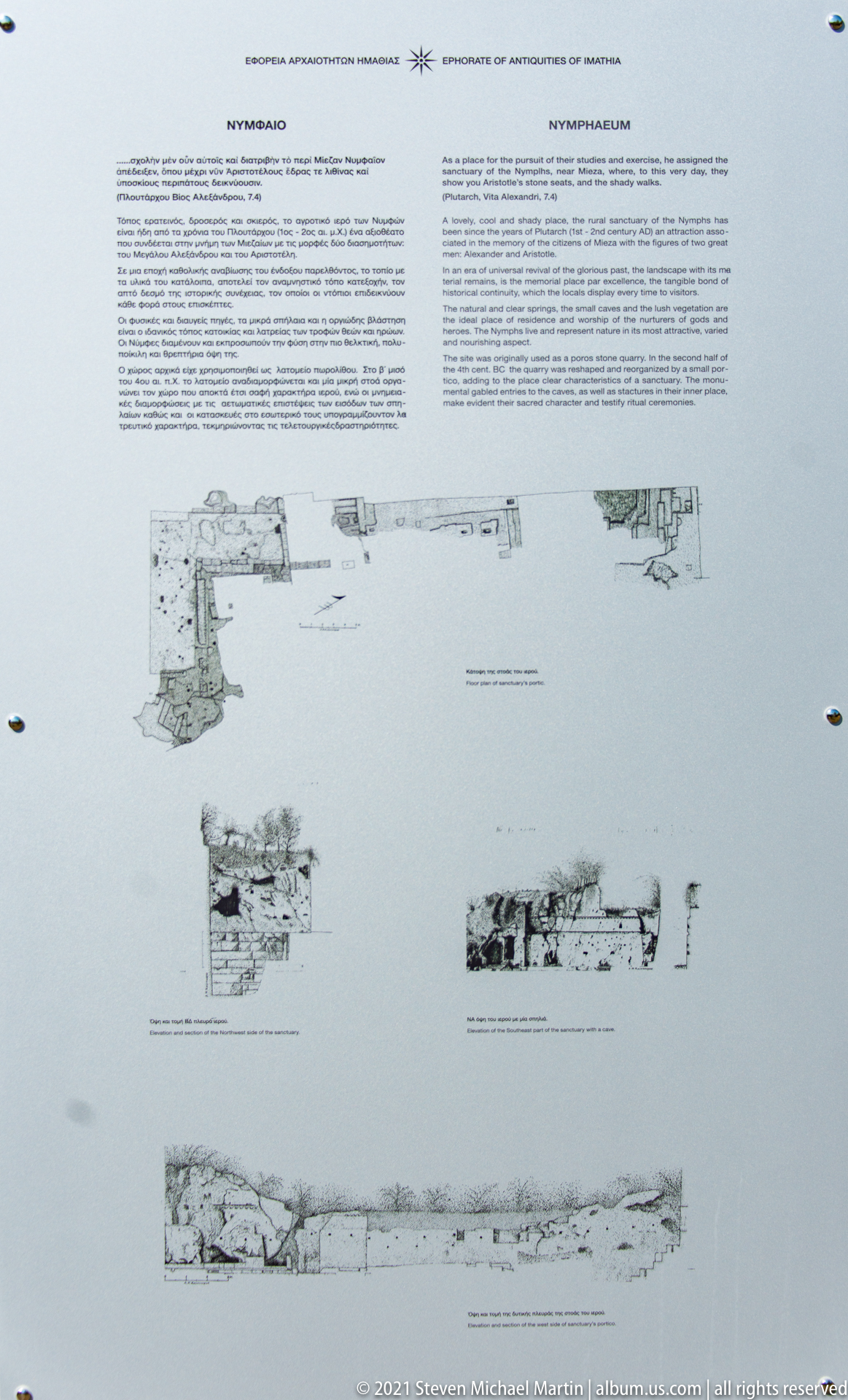
An on-site interpretive panel presents plans, drawings, and explanatory material for the Nymphaeum archaeological remains at Mieza. The diagrams map the rock-cut complex and illustrate selected features, providing visitors with a schematic counterpart to the surviving cliff, cavities, and foundations. The photograph records the site’s modern interpretive infrastructure rather than an ancient feature itself.
Caption
An on-site interpretive panel presents plans, drawings, and explanatory material for the Nymphaeum archaeological remains at Mieza. The diagrams map the rock-cut complex and illustrate selected features, providing visitors with a schematic counterpart to the surviving cliff, cavities, and foundations. The photograph records the site’s modern interpretive infrastructure rather than an ancient feature itself.
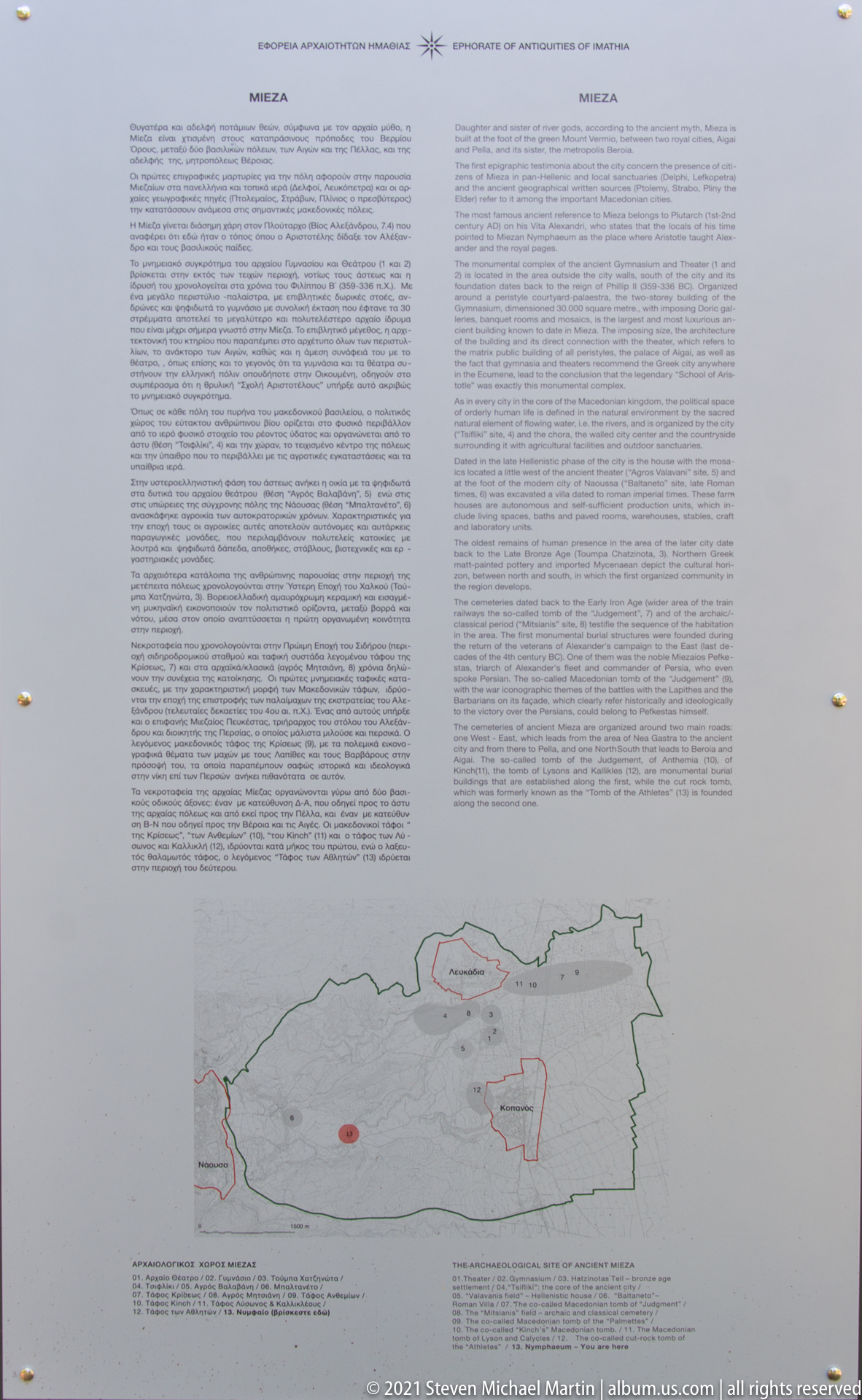
A bilingual interpretive panel combines dense explanatory text with a mapped outline of the wider archaeological landscape of Mieza. Red markings highlight selected zones within the green site boundary, helping visitors place the Nymphaeum and other remains in their broader geographic context. The photograph documents the spatial interpretation supplied at the site rather than the monuments themselves.
Caption
A bilingual interpretive panel combines dense explanatory text with a mapped outline of the wider archaeological landscape of Mieza. Red markings highlight selected zones within the green site boundary, helping visitors place the Nymphaeum and other remains in their broader geographic context. The photograph documents the spatial interpretation supplied at the site rather than the monuments themselves.
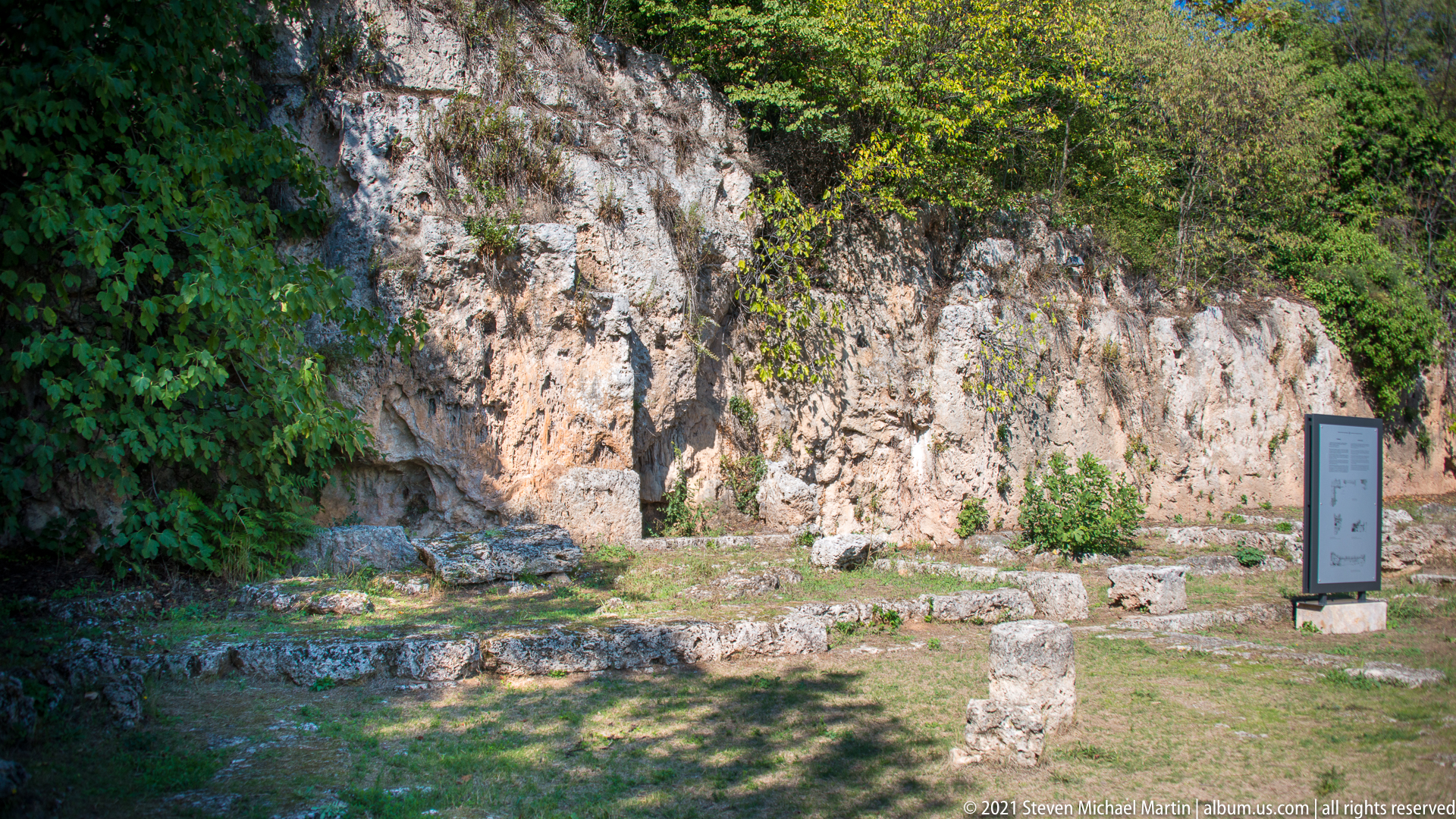
Sunlight and shade divide the archaeological court at Mieza, where low stone courses and isolated blocks extend along the base of the rock-cut cliff. Ivy and shrubs soften the upper edge of the exposed stone, while a modern information panel at right provides scale. This oblique overview emphasizes the length of the modified rock face and the fragmentary ground plan before it.
Caption
Sunlight and shade divide the archaeological court at Mieza, where low stone courses and isolated blocks extend along the base of the rock-cut cliff. Ivy and shrubs soften the upper edge of the exposed stone, while a modern information panel at right provides scale. This oblique overview emphasizes the length of the modified rock face and the fragmentary ground plan before it.
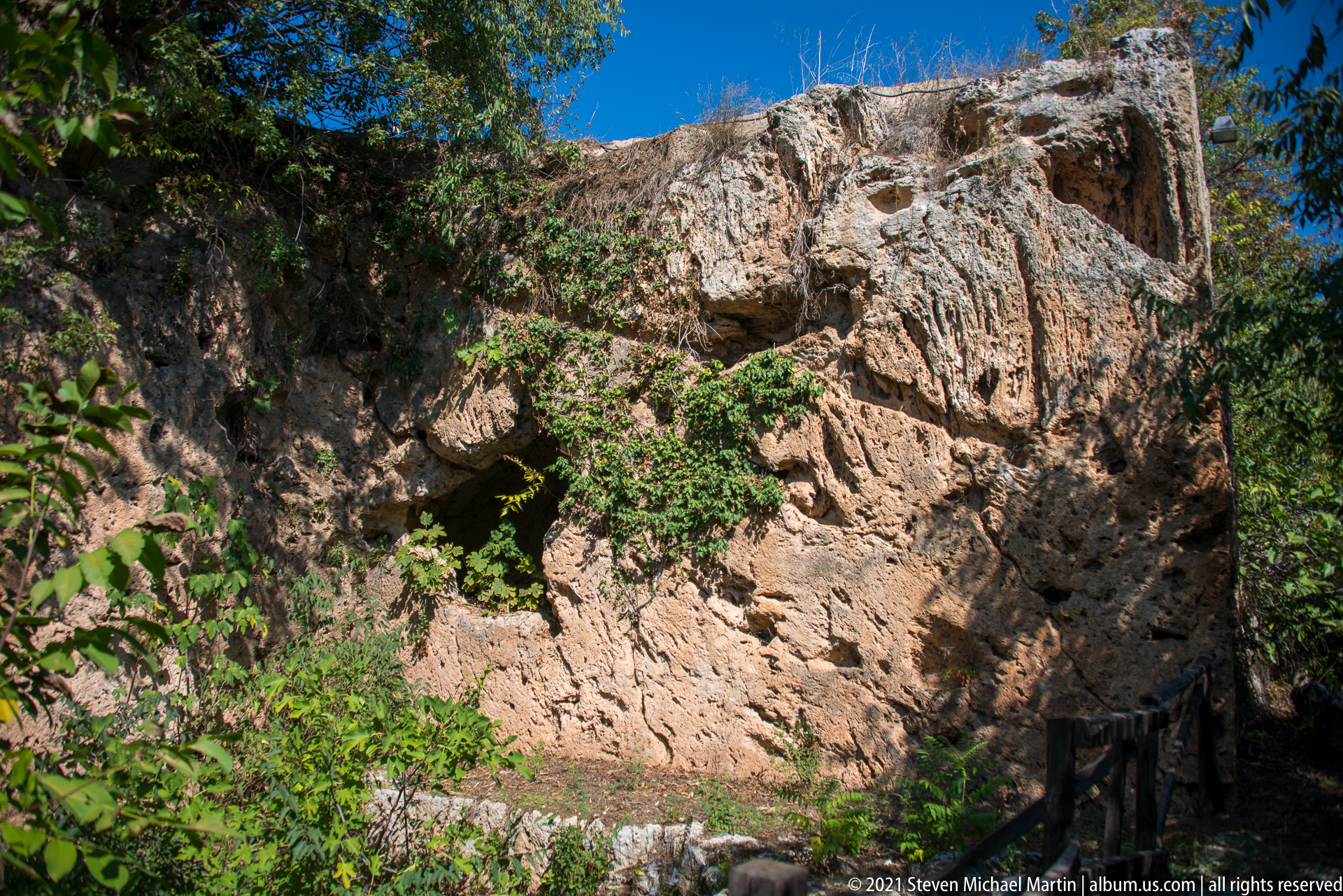
Natural weathering and human modification meet across this rugged section of the Mieza rock face. Several cavities and recesses interrupt the honey-colored stone, with ivy and shrubs rooted in cracks and along the ledges. Seen without the broader court, the cliff becomes the primary subject, revealing the eroded surfaces and openings characteristic of this part of the archaeological site.
Caption
Natural weathering and human modification meet across this rugged section of the Mieza rock face. Several cavities and recesses interrupt the honey-colored stone, with ivy and shrubs rooted in cracks and along the ledges. Seen without the broader court, the cliff becomes the primary subject, revealing the eroded surfaces and openings characteristic of this part of the archaeological site.
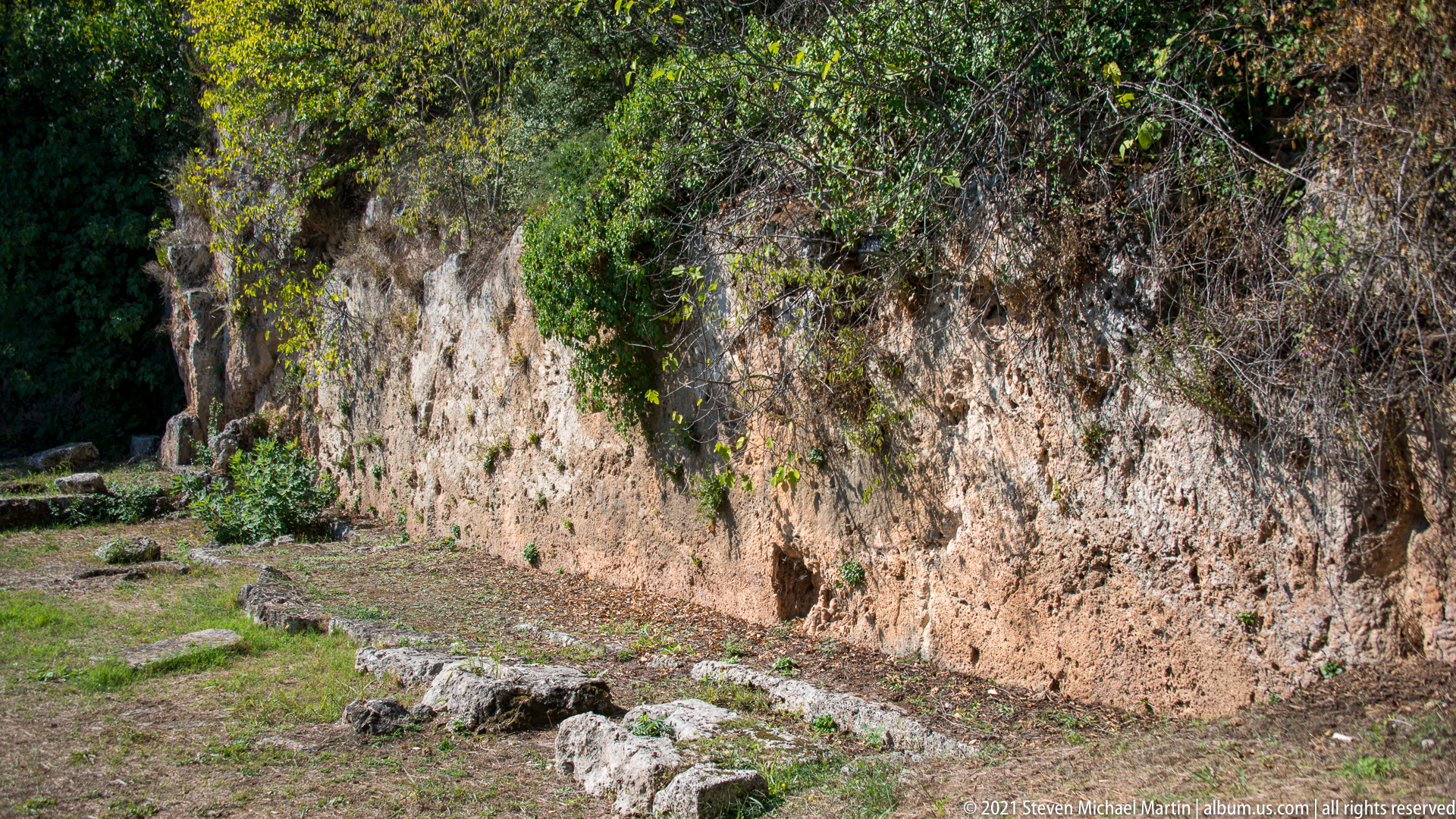
An elongated section of the rock-cut wall at Mieza rises behind fragmentary foundations and scattered stones. The angled viewpoint follows the cliff toward a shaded recess at left, while sunlight exposes small holes, fissures, and color changes across the stone surface. The composition records the transition between the archaeological ground remains and the steep natural-rock boundary.
Caption
An elongated section of the rock-cut wall at Mieza rises behind fragmentary foundations and scattered stones. The angled viewpoint follows the cliff toward a shaded recess at left, while sunlight exposes small holes, fissures, and color changes across the stone surface. The composition records the transition between the archaeological ground remains and the steep natural-rock boundary.
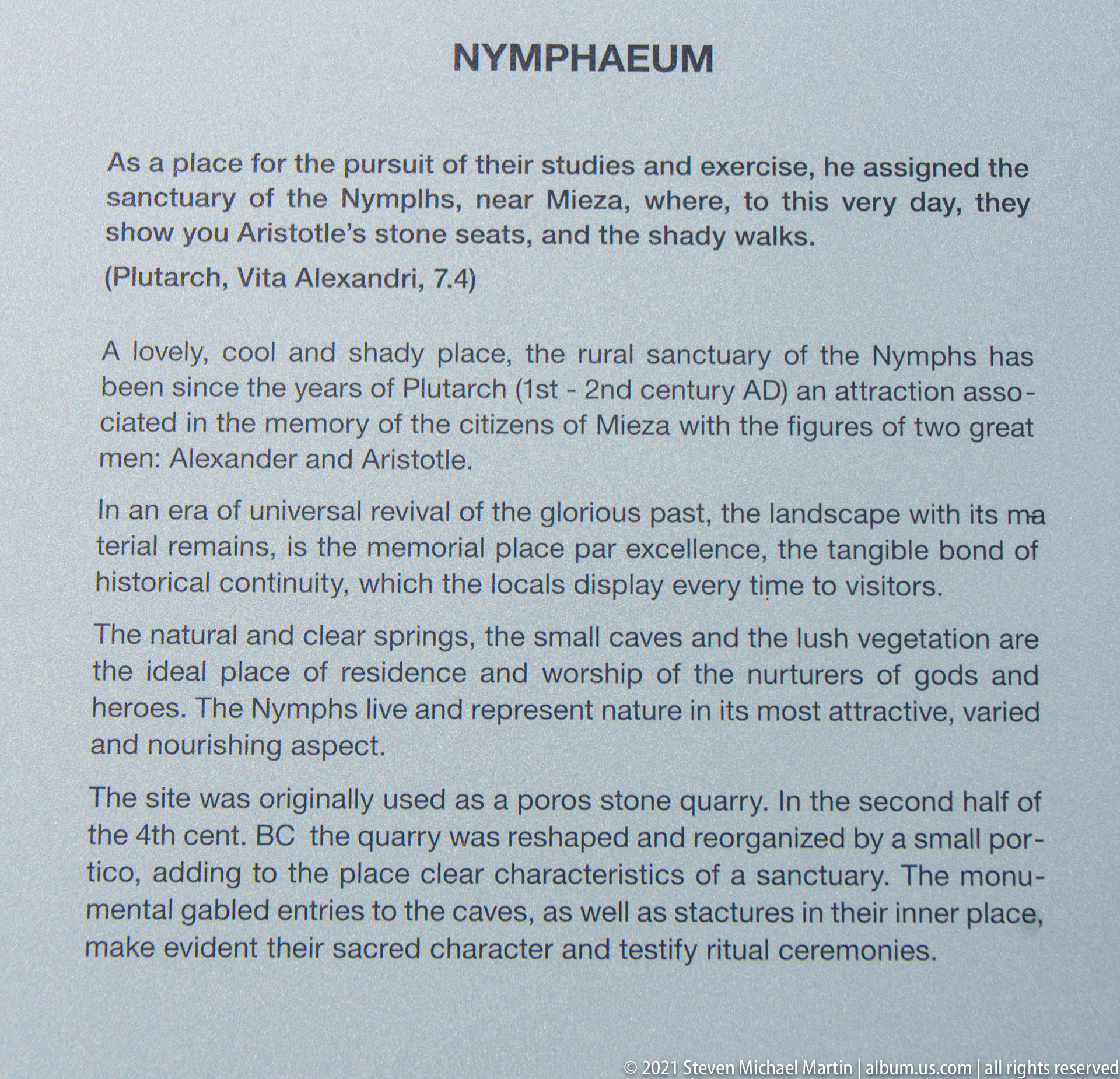
The heading “NYMPHAEUM” anchors this English-language site panel, which explains the sanctuary setting near Mieza and its traditional association with Aristotle and Alexander. The text also describes springs, caves, vegetation, and traces of ancient quarrying and architectural intervention. Framed tightly, the photograph preserves the interpretive narrative presented to visitors at the archaeological site.
Caption
The heading “NYMPHAEUM” anchors this English-language site panel, which explains the sanctuary setting near Mieza and its traditional association with Aristotle and Alexander. The text also describes springs, caves, vegetation, and traces of ancient quarrying and architectural intervention. Framed tightly, the photograph preserves the interpretive narrative presented to visitors at the archaeological site.
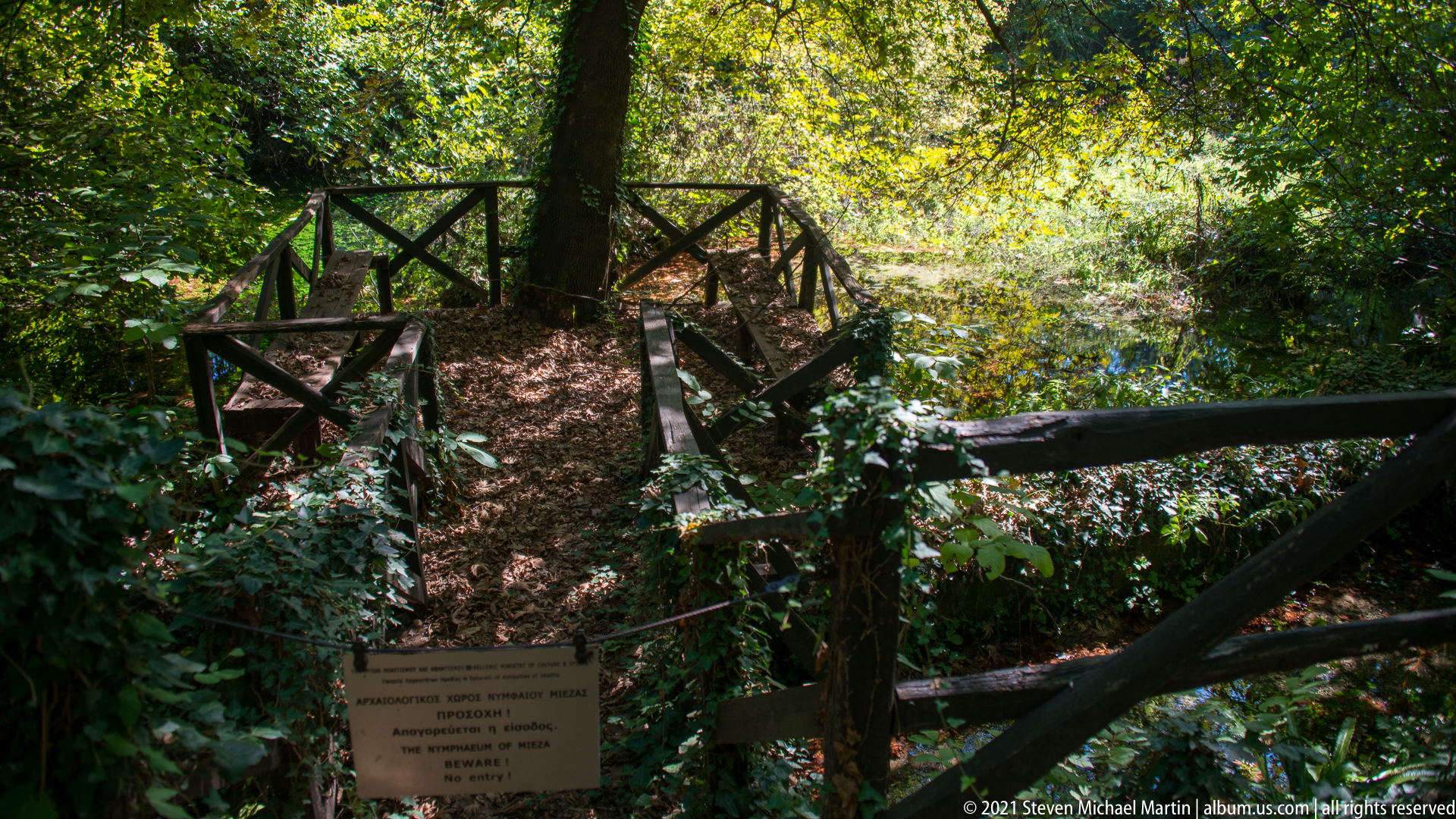
A small wooden footbridge and railings cross a shaded, densely vegetated part of the Mieza site. Leaf litter covers the path, and a low sign marks the route beneath mature trees. The scene shifts attention from exposed archaeological stone to the cool woodland environment that modern visitors traverse around the Nymphaeum and School of Aristotle complex.
Caption
A small wooden footbridge and railings cross a shaded, densely vegetated part of the Mieza site. Leaf litter covers the path, and a low sign marks the route beneath mature trees. The scene shifts attention from exposed archaeological stone to the cool woodland environment that modern visitors traverse around the Nymphaeum and School of Aristotle complex.
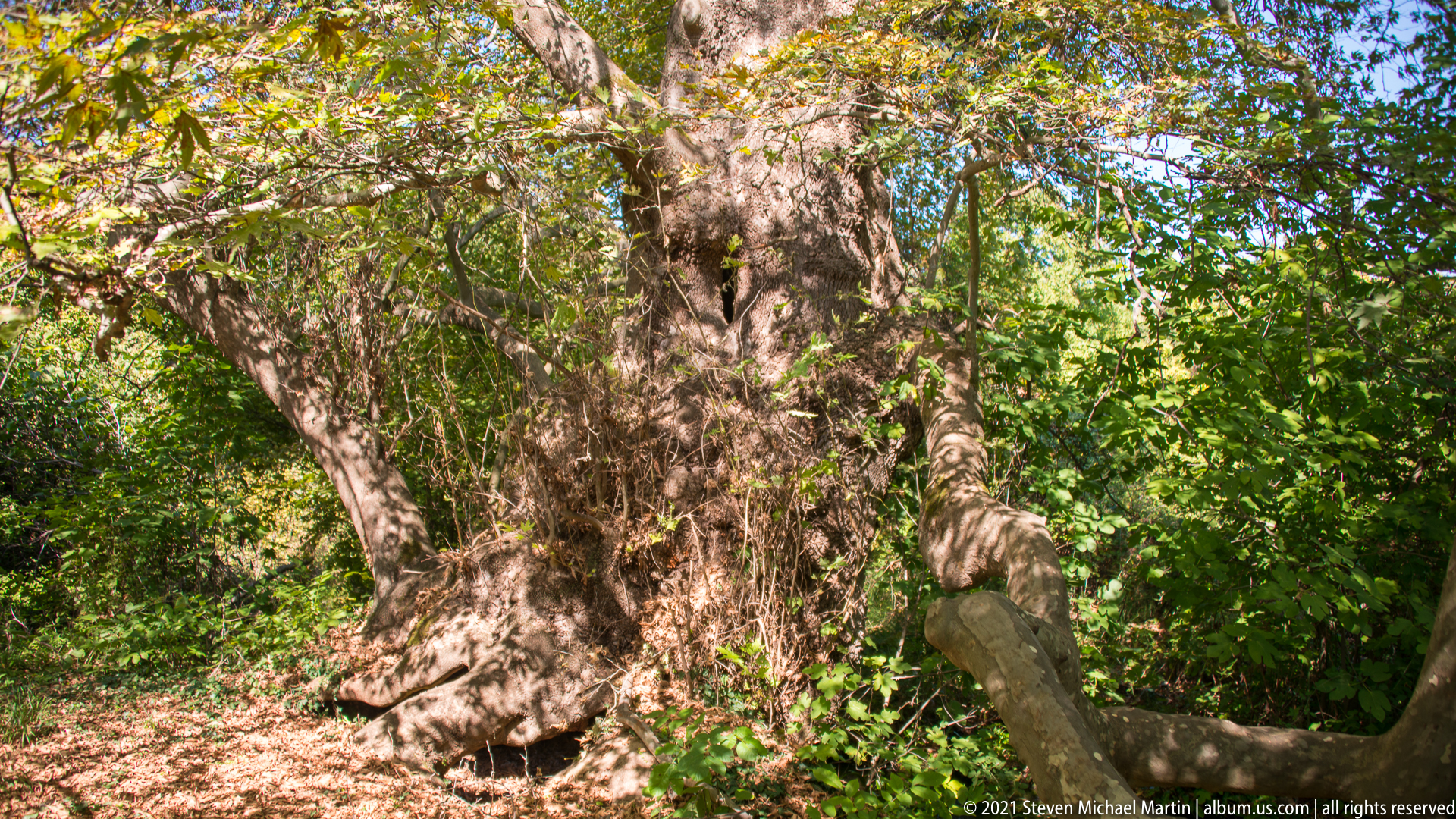
A massive mature tree spreads twisting limbs over the shaded ground at the Mieza archaeological site. Its mottled trunk divides into broad, contorted branches beneath a dense canopy, creating a distinctly different view of the sanctuary landscape from the exposed rock-cut remains. The photograph emphasizes the cool, wooded character repeatedly described in the site’s interpretation of the Nymphaeum setting.
Caption
A massive mature tree spreads twisting limbs over the shaded ground at the Mieza archaeological site. Its mottled trunk divides into broad, contorted branches beneath a dense canopy, creating a distinctly different view of the sanctuary landscape from the exposed rock-cut remains. The photograph emphasizes the cool, wooded character repeatedly described in the site’s interpretation of the Nymphaeum setting.
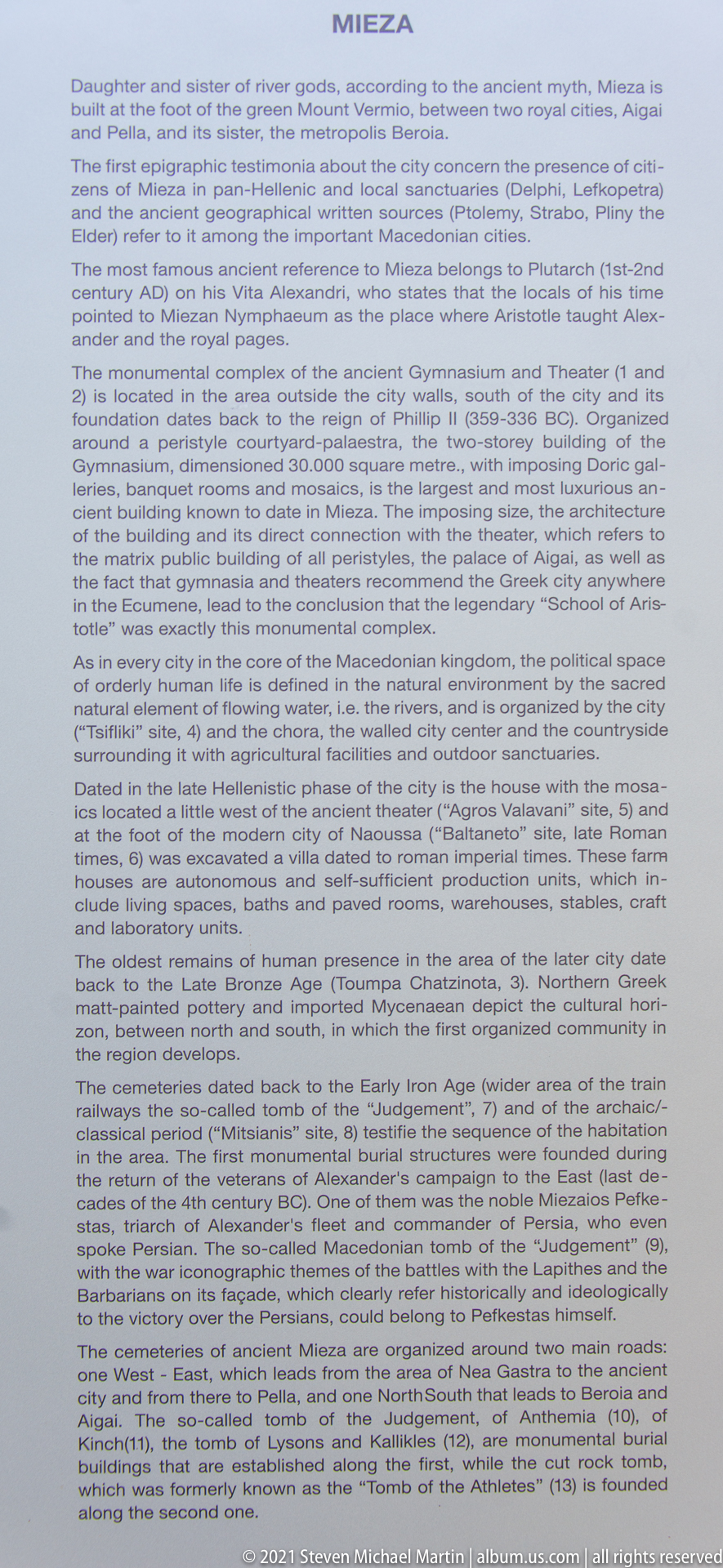
A site panel headed “MIEZA” provides a historical overview of the ancient Macedonian settlement and its archaeological remains. Presented as a full-frame documentary record, the panel preserves the contextual information offered to visitors before or after viewing the Nymphaeum. Its dense English text places the School of Aristotle tradition within the larger setting of Mieza rather than isolating the sanctuary from its surrounding city.
Caption
A site panel headed “MIEZA” provides a historical overview of the ancient Macedonian settlement and its archaeological remains. Presented as a full-frame documentary record, the panel preserves the contextual information offered to visitors before or after viewing the Nymphaeum. Its dense English text places the School of Aristotle tradition within the larger setting of Mieza rather than isolating the sanctuary from its surrounding city.
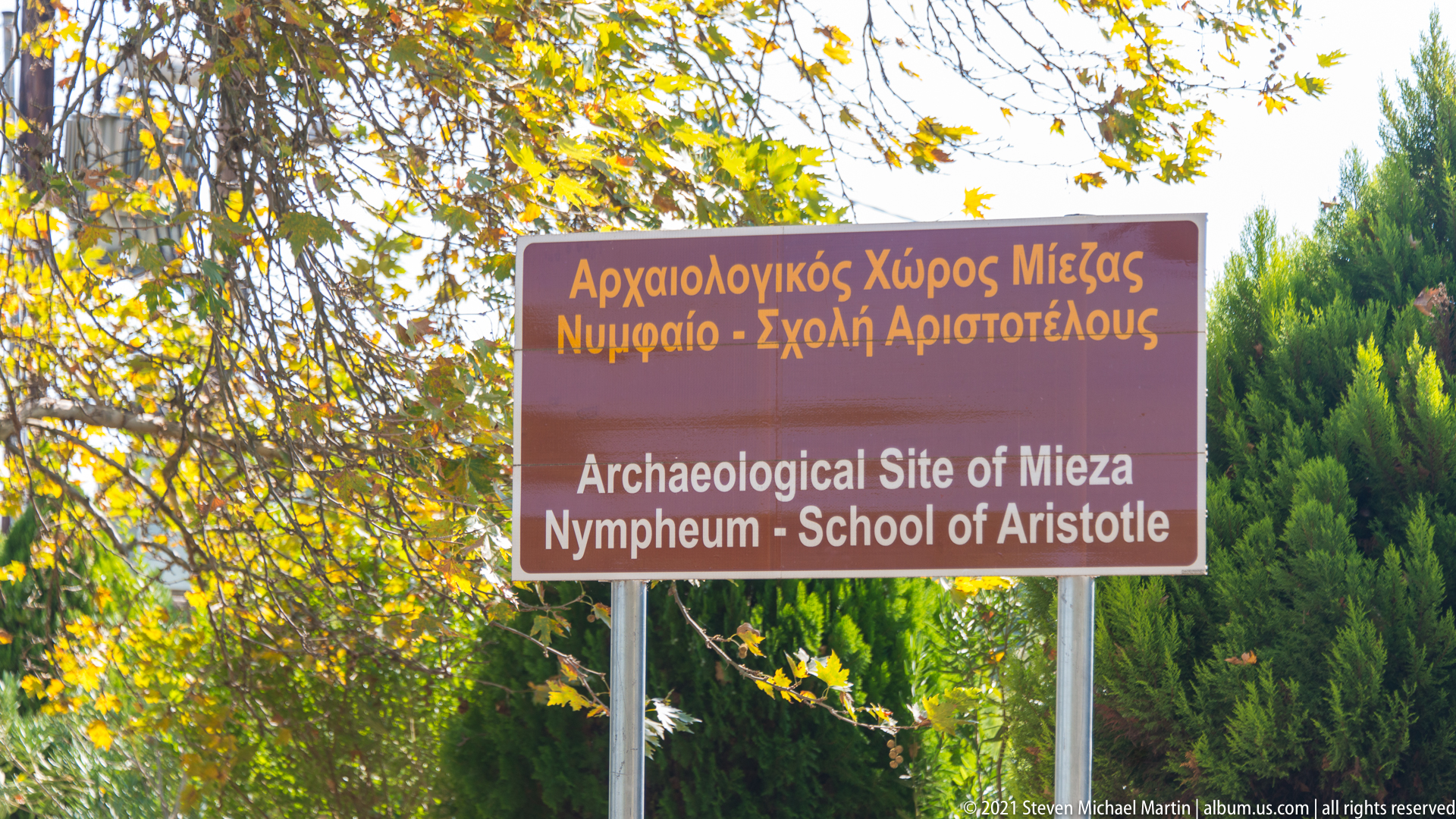
A brown bilingual heritage sign directs visitors to the “Archaeological Site of Mieza, Nymphaeum – School of Aristotle.” Greek lettering appears above the English designation, making the site’s official visitor-facing name explicit. Framed by autumn leaves and evergreens, the sign serves as a clear geographic and institutional marker for the portfolio’s archaeological setting.
Caption
A brown bilingual heritage sign directs visitors to the “Archaeological Site of Mieza, Nymphaeum – School of Aristotle.” Greek lettering appears above the English designation, making the site’s official visitor-facing name explicit. Framed by autumn leaves and evergreens, the sign serves as a clear geographic and institutional marker for the portfolio’s archaeological setting.
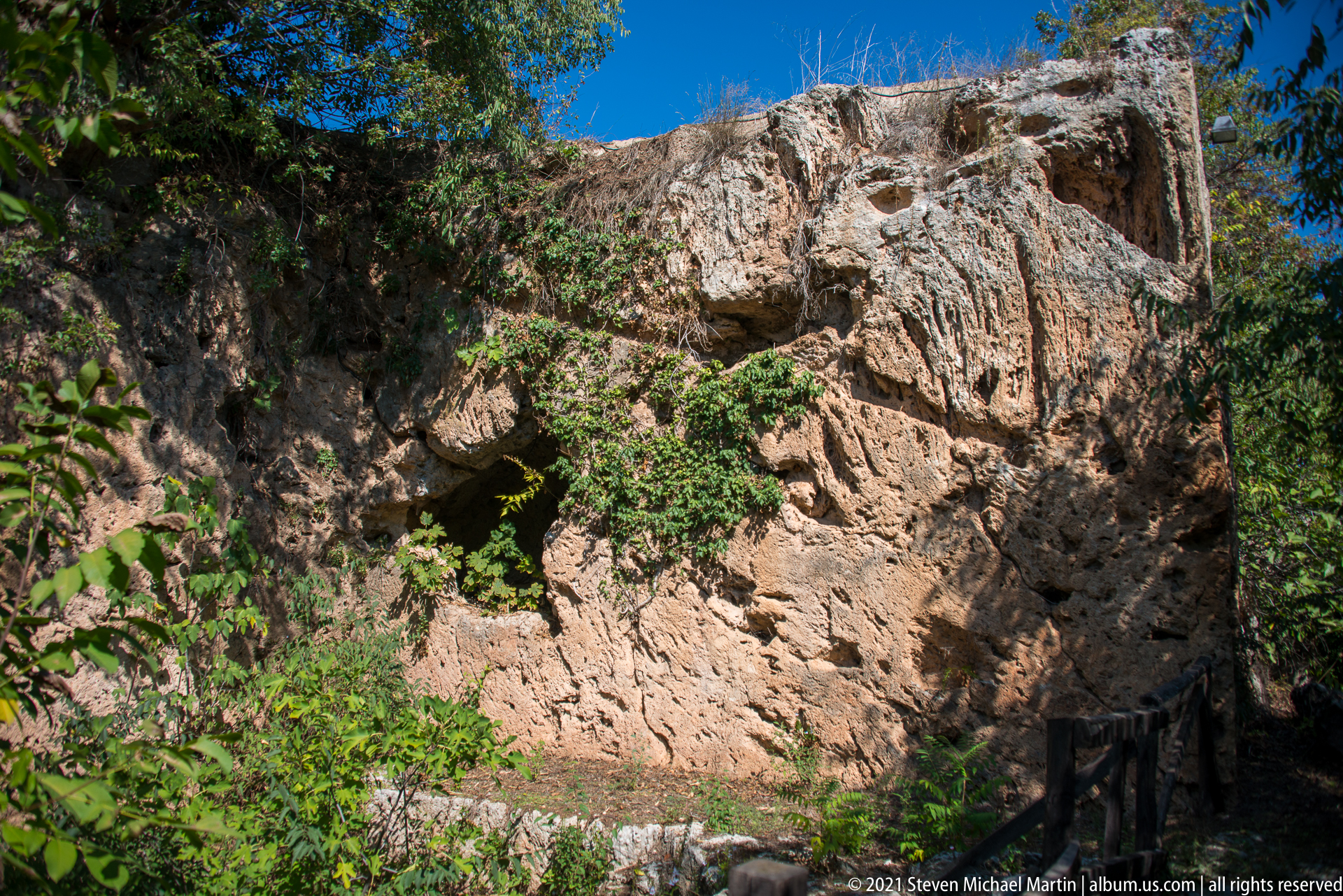
A final view returns to the rugged rock face at Mieza, where deep cavities, vertical fissures, and weathered ledges are interwoven with climbing plants. Bright sun catches the upper stone while the lower recesses remain in shade, making the cliff’s relief especially legible. The composition closes the sequence by foregrounding the physical landscape into which the Nymphaeum’s rock-cut spaces were formed.
Caption
A final view returns to the rugged rock face at Mieza, where deep cavities, vertical fissures, and weathered ledges are interwoven with climbing plants. Bright sun catches the upper stone while the lower recesses remain in shade, making the cliff’s relief especially legible. The composition closes the sequence by foregrounding the physical landscape into which the Nymphaeum’s rock-cut spaces were formed.